



Methods Protoc. 2026, 9(5), 131; https://doi.org/10.3390/mps9050131 - 4 Sep 2026
Viewed by 267
Abstract
►
Show Figures
Carnosine and anserine are bioactive, histidine-containing dipeptides recognized for their antioxidant, pH-buffering, and neuroprotective functions. However, their precise quantification is frequently compromised by their high structural similarity and complex matrix-induced analytical interferences. This study developed and validated an optimized, simplified extraction protocol coupled
[...] Read more.
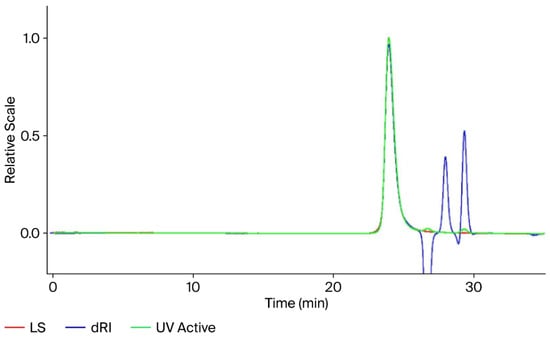
Carnosine and anserine are bioactive, histidine-containing dipeptides recognized for their antioxidant, pH-buffering, and neuroprotective functions. However, their precise quantification is frequently compromised by their high structural similarity and complex matrix-induced analytical interferences. This study developed and validated an optimized, simplified extraction protocol coupled with high-performance liquid chromatography diode array detection (HPLC-DAD) for the simultaneous determination of both dipeptides across diverse meat matrices, including Thai native black-bone chicken (Nin-Kaset), commercial broiler, pork, beef, and buffalo meat. Extraction efficiency was systematically optimized by modulating the solution pH. Under optimized conditions, the validated method demonstrated excellent linearity (1–200 µg mL−1, r2 ≥ 0.9990) with limits of detection and quantification (LOD/LOQ) values at 0.0093/0.0283 mg g−1 for carnosine and 0.0139/0.0420 mg g−1 for anserine. Method accuracy was confirmed by satisfactory recoveries ranging from 96.64% to 102.68%, with repeatability values (RSDs) of 0.70–14.18%. Application to real matrices revealed distinct dipeptide profiles. Pork contained the highest carnosine level (3.59 ± 0.19 mg g−1), whereas white-feather Nin-Kaset exhibited the highest anserine level (6.77 ± 0.40 mg g−1). Overall, the validated framework offers a rapid, cost-effective, and robust approach for routine dipeptide profiling, supporting future applications in food authentication, nutritional evaluation and functional food development.
Full article

Graphical abstract