Skip Content
You are currently on the new version of our website. Access the old version .

Methods and Protocols

Methods and Protocols is an international, peer-reviewed, open access journal aiming to establish and describe new experimental techniques in the fields of Life Sciences, Chemistry, and Biomedical Sciences, published bimonthly online by MDPI.

All Articles (812)

Improved Step-by-Step qPCR Method for Absolute Telomere Length Measurement

  • Ekaterina Sergeevna Arshinova,
  • Nataliia Sergeevna Karpova and
  • Maria Ivanovna Burtovskaya
  • + 2 authors

Telomere length is a crucial marker of cellular aging and genomic stability, with significant implications for age-related diseases and cancers. This study introduces an improved quantitative PCR (qPCR) method for measuring absolute telomere length, addressing the need for accurate and high-throughput assessment in both clinical and research settings. Novel primers were designed for the single-copy gene interferon beta (IFNB1) to serve as an internal control, alongside a series of single-stranded oligonucleotide standards to establish a calibration curve. This approach allows for precise quantification of telomere length in kilobases per single copy gene copy number per chromosome. We validated this method using DNA samples from peripheral blood and buccal swabs from 17 healthy human volunteers, as well as umbilical cord blood from 9 healthy newborn babies, demonstrating its high linearity and reproducibility. Our findings indicate that this improved qPCR technique provides a rapid, cost-effective, and accurate means of measuring absolute telomere length, thereby facilitating large-scale studies and enhancing clinical diagnostics related to telomere biology.

5 February 2026
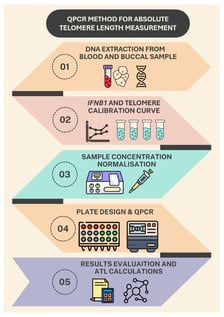
aTL qPCR Method Step by Step Overview.

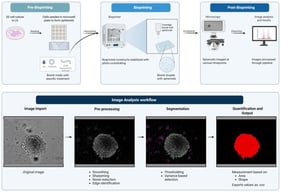
Three-dimensional (3D) culture systems that recapitulate the tumor microenvironment are essential for studying cancer cell behavior, drug response, and cell–matrix interactions. Here, we present a detailed protocol for generating 3D spheroid cultures from murine breast cancer cells using methacrylated gelatin (GelMA)-based bioink and a CELLINK BioX bioprinter. This method enables precise deposition of spheroid-laden GelMA droplets into low-attachment plates, facilitating high-throughput and reproducible 3D culture formation. The protocol includes steps for spheroid formation, GelMA preparation, bioprinting, and post-printing analysis using a customized CellProfiler pipeline. The analysis pipeline takes advantage of the functionality of CellProfiler and ImageJ software (version 2.14.0) packages to create a versatile and accessible analysis tool. This approach provides a robust and adaptable platform for in vitro cancer research, including studies of metastasis, drug resistance, cancer cell lipid metabolism, and TME-associated hypoxia.

2 February 2026

Schematic of bioprinting and image analysis pipeline. Created in BioRender. Amartey, P. (2026) https://BioRender.com/zz2g883. (accessed on 17 January 2026).

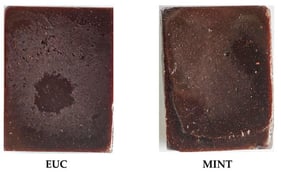
Rosin, a renewable natural resin derived from pine trees, is a promising biomass material for sustainable product development, though its distinct intrinsic odor limits broader use. This study implemented a comprehensive analytical strategy to mitigate the odor by incorporating essential oils (EOs)—eucalyptus (EUC) and peppermint (MINT)—and to conduct a multi-analytical characterization of the modified rosin jewelry. By integrating complementary analytical techniques, including LC-Q/TOF-MS for non-volatile components and GC-Q/TOF-MS for volatile organic compounds (VOCs), we achieved a systematic chemical profiling of the materials. The core composition of rosin, dominated by abietic acid (>48%), remained stable across all samples. The incorporation of EOs significantly altered the VOC profiles: The total VOC signal (summed peak area) in MINT-modified rosin was 2.57-fold that of the EUC-modified sample, with monoterpenoids comprising 87.62% of its VOC signature. Eucalyptol and limonene were tentatively identified as the major components in the EUC sample, whereas menthone, menthol, and limonene predominated in the MINT sample. Multivariate statistical analysis highlighted that variations in specific VOCs—particularly menthone, menthol, eucalyptol, and allo-ocimene—were closely associated with differences in the scent profiles of each modification. This work illustrates how a multi-technique analytical strategy can both guide and assess the functional modification of sustainable biomass materials. The findings offer a practical approach to improving rosin’s functional properties while providing a methodological framework for the integrated characterization of complex biomaterials, supporting the development of eco-friendly products aligned with green chemistry and sustainable design principles.

2 February 2026

Rosin resin materials incorporated with natural essential oils. EUC denotes the rosin sample incorporating eucalyptus essential oil; MINT denotes the rosin sample incorporating peppermint essential oil.

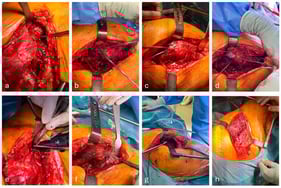
Introduction: Management of trochanteric fractures in revision hip surgery has a high incidence of non-union and complications. Fixation devices are often bulky, prone to breakage, and necessitate reoperation. This study describes a novel soft tissue and bony abductor repair that reduces the forces on bony fragments without the need for prominent metalwork. Methods: This novel surgical technique involves fixation of the abductor mechanism with polyester and polyethylene sutures that are woven through the abductors and secured to the femoral shaft with a proprietary suture cerclage tape with cerclage wire supplementation in select cases. All patients undergoing fixation were retrospectively reviewed with a minimum follow-up period of 12 months. Outcomes relating to dislocation, reoperation, fracture union and the incidence of symptomatic Trendelenburg gait were recorded. Results: A total of 17 patients underwent this novel intervention. There were no dislocations or reoperations for prominent metalwork at the last follow-up. One patient had evidence of greater trochanter (GT) non-union, and three had GT displacement of over 3 mm. Eight (47.1%) patients were independently mobile and seven (41.2%) were mobile with only one walking aid. No patients required plate or bolt fixation. Conclusions: GT fractures and abductor deficiency are difficult to manage, with most reported methods utilising bulky metalwork to treat a soft tissue injury. We describe a novel combined soft tissue and bony fixation without the need for excessive metalwork. Our pilot study demonstrates satisfactory outcomes of this intervention that are technically reproducible and more appropriately addresses the deforming forces involved with a low complication profile.

28 January 2026

Step by step illustration of abductor repair, using Arthrex FiberTape. Abductor deficiency visualised in a patient with an intertrochanteric neck of femur fracture (a). FiberTape weaved through the proximal abductors (b). Double whipstitch weaved along the edges of the abductors, gaining control of the abductor tendon (c). Cerclage wire tensed in a figure of eight, passed through an interosseus, tunned in the greater trochanter (d). FiberTape cerclage tensioned around femoral shaft with proximal FiberTape passed through the tensioner loop. It is essential to tie the proximal FiberTape while the FiberTape cerclage is held under tension (e). Complete reconstruction of abductors visualised (f). Femoral canal prepped for cemented hemiarthroplasty (g). Final construct demonstrating abductor repair with a cemented hemiarthroplasty stem in situ (h).

News & Conferences

Issues

Open for Submission

Editor's Choice

Reprints of Collections

Women's Special Issue Series: Analytical Methods
Reprint

Women's Special Issue Series: Analytical Methods

Editors: Victoria Samanidou, Verónica Pino, Natasa Kalogiouri

Get Alerted

Add your email address to receive forthcoming issues of this journal.

XFacebookLinkedIn
Methods Protoc. - ISSN 2409-9279