



molecules-logo

Journal Browser

Journal Browser

Advances in Metal Complexes: A Themed Issue in Honor of the Contributions of Professor Heinrich Lang

A Special Issue of Molecules (ISSN 1420-3049) belonging to the section "Organometallic Chemistry".

Deadline for manuscript submissions: 31 October 2026 | Viewed by 1760

Editors


E-Mail Website
Guest Editor
Institute for Inorganic Chemistry, Graz University of Technology, 8010 Graz, Austria
Interests: molecular spectroscopy; intermolecular interactions; solid state structures; insulating liquids; equipment

E-Mail Website
Guest Editor
Applied Chemistry Department, College of Material Science & Engineering, Nanjing University of Aeronautics & Astronautics, Nanjing 210016, China
Interests: materials; synthesis and application research of functional polymer materials; synthesis and application research of high-purity metal organic compounds
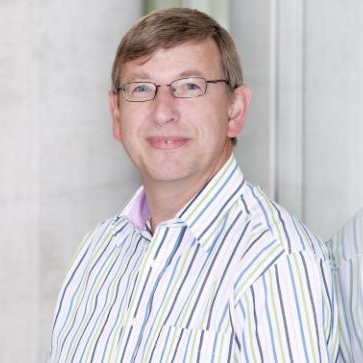
E-Mail Website
Guest Editor
Department of Chemistry, Universitat Konstanz, 78464 Konstanz, Germany
Interests: organometallic chemistry; ruthenium complexes; (spectro)electrochemistry; metallocenes; valence tautomerism; mixed-valent chemistry; luminescent platinum complexes; metallamacrocyclic complexes
Special Issues, Collections and Topics in MDPI journals

E-Mail Website
Guest Editor
Department of Organic Chemistry, Faculty of Chemistry, University of Łódź, Tamka 12, 91-403 Łódź, Poland
Interests: organometallic chemistry; synthesis of active molecules

Special Issue Information

Dear Colleagues,

We are delighted to announce a Special Issue of Molecules in honor of Professor Heinrich Lang on the occasion of his retirement. With this Special Issue, we will celebrate his many contributions to organometallic and materials chemistry. Throughout his career, Heinrich Lang has left deep footprints. Having graduated from Gottfried Huttner and finishing his PhD in 1985, he worked as a post-doc with Dietmar Seyferth at the Massachusetts Institute of Technology (MIT), before returning to Heidelberg. After finishing his habilitation in 1992, he received a Heisenberg fellowship (German Science Foundation, DFG) and was a visiting scientist at the University of Utrecht and the MIT in Boston, before accepting a chair position at the TU Chemnitz in 1996, where he remained ever since, refusing an offer from TU Kaiserslautern.

The scientific achievement of Heinrich Lang includes more than 840 publications, spanning a wide range of different areas, from heterometallic complexes with up to seven different metal ions “welded” together in a single complex, to in-depth investigations into the electronic and electrostatic contributions to the stabilization of mixed-valent states of multimetal complexes, to homogeneously catalyzed C-C and C-O cross-coupling reactions, and twin polymerizations. He also had a keen interest in materials chemistry as demonstrated through his pioneering work on metal and metal oxide nanoparticles, the elaboration of precursors and their processing through the inkjet printing of metal and metal–oxide structures, the elaboration of CVD, CCVD and ALD methods for fabricating structures for applications in micro- and nanoelectronics, and his work on metal porphyrins and phthalocyanines toward electrically conductive and magnetic materials. He contributed to two Clusters of Excellence and to several Collaborative Research Centers settled at the TU Chemnitz or other institutions. Professor Heinrich Lang‘s achievements led to him being ranked among the top 1% researchers of his field worldwide and made the TU Chemnitz a hotspot for materials-oriented metal and metal–organic chemistry.

The scientific community also owes Heinrich Lang the organization of many meetings and workshops, which attracted scientists from all over the world. He established a dense network of scientific collaborations, acting as the visiting scientist to the University of Canterbury, New Zealand, The Yarmouk University in Jordany, the Indian Institute of Roorkee, the University of Durham, UK, and the University of Innsbruck in Austria. Beyond that, he served his home institution in several different functions such as Dean, Study Dean, member of the senate, and vice-rector for research and young scientists.

This Special Issue aims to pay tribute to his lifelong dedication to advancing chemical science, featuring a diverse collection of research articles, reviews, and perspectives that reflect the many facets of his research interests.

We look forward to honoring Professor Heinrich Lang´s distinguished career and the breadth of his work through this Special Issue. We invite researchers and scholars from across the globe to contribute to this Special Issue. Manuscripts, reviews, and other contributions should be submitted by deadline to be considered for inclusion.

Prof. Dr. Frank Uhlig
Prof. Dr. Yingzhong Shen
Prof. Dr. Rainer Winter
Prof. Dr. Konrad Kowalski
Guest Editors

Manuscript Submission Information

Manuscripts should be submitted online at www.mdpi.com by registering and logging in to this website. Once you are registered, click here to go to the submission form. Manuscripts can be submitted until the deadline. All submissions that pass pre-check are peer-reviewed. Accepted papers will be published continuously in the journal (as soon as accepted) and will be listed together on the special issue website. Research articles, review articles as well as short communications are invited. For planned papers, a title and short abstract (about 250 words) can be sent to the Editorial Office for assessment.

Submitted manuscripts should not have been published previously, nor be under consideration for publication elsewhere (except conference proceedings papers). All manuscripts are thoroughly refereed through a single-anonymized peer-review process. A guide for authors and other relevant information for submission of manuscripts is available on the Instructions for Authors page. Molecules is an international peer-reviewed open access semimonthly journal published by MDPI.

Please visit the Instructions for Authors page before submitting a manuscript. The Article Processing Charge (APC) for publication in this open access journal is 2700 CHF (Swiss Francs). Submitted papers should be well formatted and use good English. Authors may use MDPI's English editing service prior to publication or during author revisions.

Keywords

  • metal–organic chemistry
  • metal clusters
  • mixed-valent compounds
  • homogeneous catalysis
  • materials chemistry
  • molecular electronics

Benefits of Publishing in a Special Issue

  • Ease of navigation: Grouping papers by topic helps scholars navigate broad scope journals more efficiently.
  • Greater discoverability: Special Issues support the reach and impact of scientific research. Articles in Special Issues are more discoverable and cited more frequently.
  • Expansion of research network: Special Issues facilitate connections among authors, fostering scientific collaborations.
  • External promotion: Articles in Special Issues are often promoted through the journal's social media, increasing their visibility.
  • Reprint: MDPI Books provides the opportunity to republish successful Special Issues in book format, both online and in print.

Further information on MDPI's Special Issue policies can be found here.

Published Papers (4 papers)

Order results
Result details
Select all
Export citation of selected articles as:

Research

14 pages, 4178 KB  
Article
Benzimidazole-Regulated 1D 4-Fluorosalicylic Acid MOF Composite Material Design and Its Application in Glucose Sensing
by Haixia Wu, Dianheng Yu, Jinliang Hu, Fang Wang, Songtao Zhang, Kailu Guo and Huan Pang
Molecules 2026, 31(17), 3096; https://doi.org/10.3390/molecules31173096 - 3 Sep 2026
Viewed by 223
Abstract
Metal–organic frameworks (MOFs) have significant potential in electrochemical sensors, but the guest molecules and residual solvents in the pores often block the active sites and limit the reaction kinetics. One-dimensional nanostructures can provide direct conduction pathways and shorten ion diffusion distances, thereby enhancing [...] Read more.
Metal–organic frameworks (MOFs) have significant potential in electrochemical sensors, but the guest molecules and residual solvents in the pores often block the active sites and limit the reaction kinetics. One-dimensional nanostructures can provide direct conduction pathways and shorten ion diffusion distances, thereby enhancing electron transport and electrode contact. Meanwhile, fluorine-incorporated MOF materials leverage the high electronegativity of fluorine to substitute oxygen, suppress oxidation to widen the voltage window, and improve stability through enhanced hydrophobicity. In this work, 4-fluorosalicylic acid (4FSA) was used as the ligand and benzimidazole (Bim) was introduced to adjust the coordination environment, and one-dimensional Bim4FSA-MOF nanorods were successfully constructed. While the guest molecules were largely removed, the nickel sites were thereby activated and the pore size was enlarged. Due to the synergistic effect of one-dimensional nanostructure-promoted electron transport and the Ni(OH)2/NiOOH dynamic active center, the B-250 composite exhibited excellent performance in a glucose electrochemical sensor. The optimized sensor delivered a detection limit of 0.022 μM and a detection time of 0.9 s, along with a sensitivity value of 2986.45 μA mM−1 cm−2, which provides a new strategy for the design of efficient MOF-based electrochemical sensor interface. Full article
Show Figures

Figure 1

10 pages, 1043 KB  
Article
Ag8(PEt3)6[Ge9(Hyp)2]4: Insight into the Formation Mechanism of the Intermetalloid Cluster Ag12[Ge9(Hyp)2]6
by Kevin Woern, Claudio Schrenk and Andreas Schnepf
Molecules 2026, 31(16), 2897; https://doi.org/10.3390/molecules31162897 - 20 Aug 2026
Viewed by 259
Abstract
Recently we could demonstrate that the reaction of the bissilylated metalloid cluster K2[Ge9(Hyp)2] (Hyp = Si(SiMe3)3) with phosphine-stabilized silver chlorides gives the intermetalloid cluster Ag12[Ge9(Hyp)2]6, [...] Read more.
Recently we could demonstrate that the reaction of the bissilylated metalloid cluster K2[Ge9(Hyp)2] (Hyp = Si(SiMe3)3) with phosphine-stabilized silver chlorides gives the intermetalloid cluster Ag12[Ge9(Hyp)2]6, featuring a silver core of twelve silver atoms surrounded by six [Ge9(Hyp)2] units. Thereby, the silver atoms in the core appear to have an oxidation state of less than +I, indicating that a redox chemistry also takes place during the formation. We now present a possible precursor or intermediate to the intermetalloid cluster in this reaction system with the formula Ag8(PEt3)6[Ge9(Hyp)2]4. In this compound only four [Ge9(Hyp)2] units are arranged in a plane and connected via eight silver atoms. This compound seems to contain only silver cations, shedding further light on the complex solution and coordination chemistry of [Ge9(Hyp)2]2− with transition metal cations. As the intermetalloid cluster Ag12[Ge9(Hyp)2]6 can be obtained from dissolved crystals of Ag8(PEt3)6[Ge9(Hyp)2]4, this indicated that the Ag8 compound might be an intermediate (kinetic product) on the way to the Ag12 compound (thermodynamic product). Full article
Show Figures

Graphical abstract

16 pages, 5226 KB  
Article
Introducing Chlorido Cerium Complexes with the Methoxy Kläui Ligand [Co(η5-C5H5){P(O)(OMe)2}3]
by Peter Ferber and Christoph Janiak
Molecules 2026, 31(16), 2865; https://doi.org/10.3390/molecules31162865 - 17 Aug 2026
Viewed by 250
Abstract
The treatment of Ce(OH)4 in thionyl chloride and dimethoxyethane (DME) resulted in the formation of a highly unstable red Ce(IV) complex with the composition [CeCl4(DME)2] (1). From the reaction of 1 with the Na[Co(η5-C [...] Read more.
The treatment of Ce(OH)4 in thionyl chloride and dimethoxyethane (DME) resulted in the formation of a highly unstable red Ce(IV) complex with the composition [CeCl4(DME)2] (1). From the reaction of 1 with the Na[Co(η5-C5H5){P(O)(OMe)2}3] (NaLOMe) salt containing the anionic tripodal Kläui ligand η5-cyclopentadienyltris(dimethylphosphonato)cobaltate(III), the two new cerium(III) complexes [Ce(LOMe)2(H2O)2]Cl·2.5H2O (2), 1D-[Ce(μ-Cl)(LOMe)(H2O)3]Cl (3) and the cerium(IV) complex [CeCl2(LOMe)2]·acetone (4) were obtained and structurally characterized. The complexes 3 and 4 are the first cerium complexes featuring the LOMe ligand together with chlorido ligands. Due to the potential exchange of the chloride counterions with other ligands in 24, these complexes could serve as precursors in molecular cerium coordination chemistry. The assigned cerium oxidation states are supported by the bond valence sum (BVS) method. The 31P-NMR spectra with δ(31P) = 160.20 ppm (2) and 159.43 ppm (3) are diagnostic of cerium(III). Full article
Show Figures

Graphical abstract

21 pages, 5626 KB  
Article
Synthesis, Characterization, and Molecular Structure of Some Uranyl Complexes Supported by Hybrid Salicylaldimine/Calix[4]arene Ligands
by André Busching, Christian Zocher, Martin Börner, Marco Wenzel, Jan J. Weigand and Berthold Kersting
Molecules 2026, 31(13), 2357; https://doi.org/10.3390/molecules31132357 - 3 Jul 2026
Viewed by 554
Abstract
Three new hybrid bis(salicylaldiminato)/calix[4]arene ligands H4L1–H4L3 have been synthesized and investigated with regard to their coordination behavior toward the UO22+ cation. The ligands H4L1 and H4L2, derived from bis-1,3-amino-ethoxy-functionalized calix[4]arenes and 3-methoxy-2-hydroxy-salicylaldehydes, react [...] Read more.
Three new hybrid bis(salicylaldiminato)/calix[4]arene ligands H4L1–H4L3 have been synthesized and investigated with regard to their coordination behavior toward the UO22+ cation. The ligands H4L1 and H4L2, derived from bis-1,3-amino-ethoxy-functionalized calix[4]arenes and 3-methoxy-2-hydroxy-salicylaldehydes, react readily with uranyl nitrate in the presence of NEt3 to support mononuclear neutral complexes with a 1:1 metal:ligand stoichiometry, namely [UO2(H2L1)] (6) and [UO2(H2L2)] (7). Ligand H4L3, with an additional alanyl linker connecting the bis(2-amino-ethoxy)-calix[4]arene backbone and the 3-methoxy-2-hydroxy-salicylaldehyde arms, supports a neutral, mixed-ligand dinuclear uranyl complex [(UO2)2(MeO)2(H2L3)] (8). The ligands H4L1 and H4L2 act as pentadentate O4N ligands for the UO22+ ion to produce a distorted pentagonal bipyramidal coordination environment (O6N donor set). The ligand H4L3 supports a binuclear [UO2(μ-OMe)2UO2]2+ core unit, whose terminal coordination sites are occupied by the donors of the two pendant arms of H4L3. The spectroscopic properties (NMR, IR, UV-Vis, ESI-MS) suggest that the complexes 6 and 7 retain their integrity in solution state. The structures are further stabilized by intramolecular hydrogen bonding interactions, as implied by computational analyses (NCI plots). These findings provide valuable insight into the influence of spatial flexibility and donor arrangement on the uranyl coordination chemistry of calix[4]arene-based ligand systems. Full article
Show Figures

Graphical abstract

Back to TopTop