Journal Description
Logistics
Logistics
is an international, scientific, peer-reviewed, open access journal of logistics and supply chain management published monthly online by MDPI.
- Open Access— free for readers, with article processing charges (APC) paid by authors or their institutions.
- High Visibility: indexed within Scopus, ESCI (Web of Science), RePEc, and other databases.
- Rapid Publication: manuscripts are peer-reviewed and a first decision is provided to authors approximately 19.6 days after submission; acceptance to publication is undertaken in 4.6 days (median values for papers published in this journal in the second half of 2025).
- Journal Rank: JCR - Q2 (Operations Research and Management Science) / CiteScore - Q1 (Information Systems and Management)
- Recognition of Reviewers: reviewers who provide timely, thorough peer-review reports receive vouchers entitling them to a discount on the APC of their next publication in any MDPI journal, in appreciation of the work done.
Impact Factor:
3.6 (2024);
5-Year Impact Factor:
3.8 (2024)
Latest Articles
Blockchain in Mining and Mineral Supply Chains: A Systematic Mapping Review of Traceability, Governance, and Operational Coordination
Logistics 2026, 10(5), 118; https://doi.org/10.3390/logistics10050118 - 20 May 2026
Abstract
Background: Blockchain and distributed ledger technologies are increasingly proposed to strengthen traceability, governance, visibility, and coordination in mining and mineral supply chains, but mining-specific evidence remains fragmented. Methods: We conducted a systematic mapping review of peer-reviewed articles indexed in Scopus and
[...] Read more.
Background: Blockchain and distributed ledger technologies are increasingly proposed to strengthen traceability, governance, visibility, and coordination in mining and mineral supply chains, but mining-specific evidence remains fragmented. Methods: We conducted a systematic mapping review of peer-reviewed articles indexed in Scopus and Web of Science to examine application contexts, functional roles, technical architectures, evidence types, and adoption constraints of blockchain-enabled systems in these settings. Results: The review shows that blockchain is used across five functional domains: traceability and provenance; governance and secure data control; operational monitoring and inspection; energy and market coordination; and sustainability and environmental surveillance. Permissioned and consortium-based architectures predominated and were commonly combined with sensors, external storage, identity mechanisms, and smart contracts. Evidence was strongest for technical feasibility under simulated, experimental, comparative, or bounded pilot conditions, whereas durable economic, social, and governance outcomes remained less substantiated. Conclusions: Blockchain is most credible in mining contexts when it supports controlled coordination, auditable recordkeeping, and process integrity. Its practical value depends on reliable physical-to-digital data capture, workable governance arrangements, interoperability, and validation under real institutional and operational conditions.
Full article
Open AccessSystematic Review
Reconfigurable Manufacturing Systems: A Systematic Review and Classification Framework with Implications for Supply Chain Resilience
by
Evripidis P. Kechagias, Sotiris P. Gayialis, Nikolaos A. Panayiotou and Georgios A. Papadopoulos
Logistics 2026, 10(5), 117; https://doi.org/10.3390/logistics10050117 - 20 May 2026
Abstract
Background: Reconfigurable Manufacturing Systems (RMSs) address the deficiencies of previous manufacturing systems with expandable capacity and capability to respond to dynamic demand. While research on RMSs has been ongoing for decades, comprehensive classifications and categorizations of RMS research and their supply chain
[...] Read more.
Background: Reconfigurable Manufacturing Systems (RMSs) address the deficiencies of previous manufacturing systems with expandable capacity and capability to respond to dynamic demand. While research on RMSs has been ongoing for decades, comprehensive classifications and categorizations of RMS research and their supply chain implications are sparse. Methods: The PRISMA 2020 guidelines were used for a systematic literature review on the Scopus database covering peer-reviewed publications from 1990 to 2025, and 247 papers were analyzed based on a four-stream classification framework (research scope, industry sectors, type of research, and RMS characteristics) that was inductively derived. Furthermore, a three-level conceptual model connecting RMS characteristics with manufacturing capabilities and supply chain resilience was established. Results: RMS research, particularly post 2020, has seen significant growth. However, RMSs are mainly oriented to heavy industries, while process industries and supply chain implications have been understudied. The dominance of theoretical research over experimental/practical research points to a theory-practice gap. Modularity is the most frequent RMS characteristic, underpinning the others, while diagnosability, despite its operational importance, is the least studied one. Conclusions: RMSs have significant potential as a supply chain resilience enabler through their characteristics. Nevertheless, this relationship is mostly theoretical and untested in practice, requiring interdisciplinary and application-oriented research.
Full article
Open AccessArticle
How Sustainability Practices Translate into Business Performance: The Mediating Role of Traceability Implementation in Food Supply Chain Operations
by
Nattakan Jakkranuhwat, Ravipim Chaveesuk and Thanit Puthpongsiriporn
Logistics 2026, 10(5), 116; https://doi.org/10.3390/logistics10050116 - 20 May 2026
Abstract
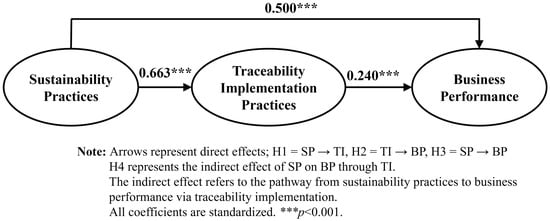
Background: Global food supply chains increasingly require sustainable and transparent operations; however, empirical evidence linking sustainability practices to firm performance remains inconsistent. This study examines how sustainability practices are translated into measurable business performance outcomes through traceability implementation in Thailand’s export-oriented food-processing
[...] Read more.
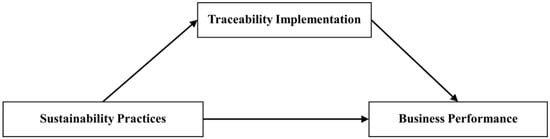
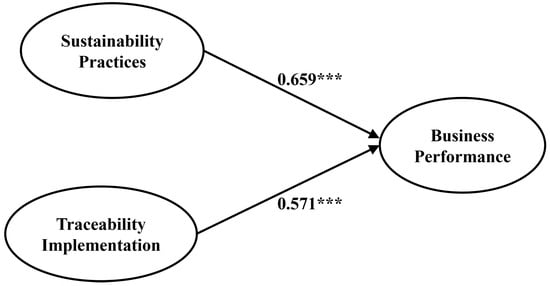
Background: Global food supply chains increasingly require sustainable and transparent operations; however, empirical evidence linking sustainability practices to firm performance remains inconsistent. This study examines how sustainability practices are translated into measurable business performance outcomes through traceability implementation in Thailand’s export-oriented food-processing sector. Methods: Grounded in Stakeholder Theory, traceability implementation was conceptualized as an accountability-oriented operational mechanism enabling the systematic verification of sustainability-related activities. Data were collected from 362 export-oriented food-processing firms in Thailand and analyzed using covariance-based Structural Equation Modeling (SEM). Results: The findings indicate that sustainability practices significantly influence both traceability implementation and business performance, while traceability implementation partially mediates the sustainability–performance relationship. The results further suggest that sustainability practices generate both direct and indirect performance benefits through structured monitoring, documentation, and verification routines. Conclusions: This study demonstrates that sustainability practices become more performance-relevant when institutionalized through traceable and verifiable operational processes. The findings highlight the importance of integrating traceability implementation into sustainability strategies to strengthen transparency, stakeholder confidence, and competitiveness within export-oriented food supply chain contexts.
Full article
(This article belongs to the Section Sustainable Supply Chains and Logistics)
►▼
Show Figures

Figure 1
Open AccessArticle
Downstream Food Waste in Restaurant Supply Chains: Behavioural Drivers and Implications for Sustainable Logistics in a Mediterranean Context
by
Maria Karra, Antonia Koumpoti, Marina Saridi and Foivos Anastasiadis
Logistics 2026, 10(5), 115; https://doi.org/10.3390/logistics10050115 - 15 May 2026
Abstract
►▼
Show Figures
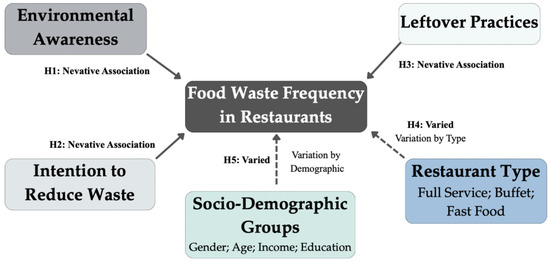
Background: Food waste at the consumption stage creates inefficiencies in food supply chains, with restaurants acting as downstream nodes where consumer behaviour affects operations. This study examines the behavioural drivers of plate waste in restaurants in Greece, within a Mediterranean context, and
[...] Read more.
Background: Food waste at the consumption stage creates inefficiencies in food supply chains, with restaurants acting as downstream nodes where consumer behaviour affects operations. This study examines the behavioural drivers of plate waste in restaurants in Greece, within a Mediterranean context, and considers their implications for sustainable logistics. Methods: A cross-sectional online survey was conducted with 228 restaurant consumers in Greece. Data were analysed using descriptive statistics, Spearman’s rank-order correlation, and one-way ANOVA to examine associations between behavioural factors, restaurant type, socio-demographic characteristics, and self-reported food waste frequency. Results: Environmental awareness, intention to reduce food waste, and likelihood of taking leftovers home were negatively associated with self-reported food waste frequency. Perceiving food waste as a serious societal problem was not significantly associated with waste behaviour. Restaurant type had no significant effect, while socio-demographic effects were limited. Conclusions: Consumer-level behavioural factors explain restaurant food waste more consistently than structural restaurant characteristics. Behaviourally informed interventions, including portion flexibility and facilitated leftover retention, may improve both food waste reduction and restaurant efficiency.
Full article

Figure 1
Open AccessArticle
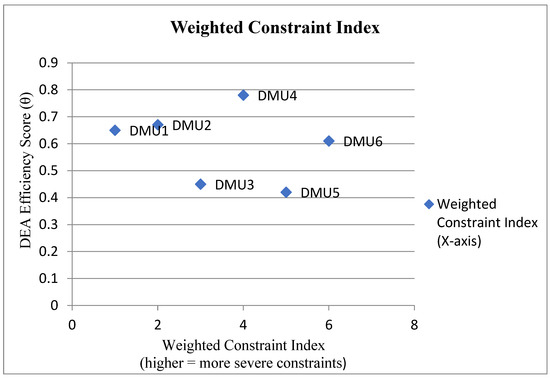
Integrating Efficiency and Priority in Circular Energy Supply Chains: A DEA-Informed BWM Analysis of Second-Life EV Battery Ecosystems in Emerging Economies
by
Ilyas Masudin, Dian Palupi Restuputri, Dwi Iryaning Handayani and Erly Ekayanti Rosyida
Logistics 2026, 10(5), 114; https://doi.org/10.3390/logistics10050114 - 14 May 2026
Abstract
►▼
Show Figures
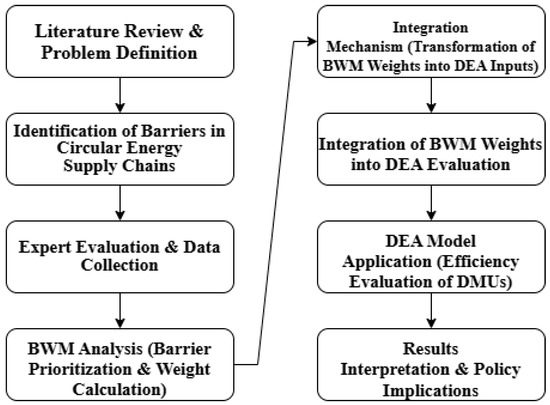
Background: The global transition to low-carbon energy systems has intensified the need for circular approaches in energy supply chains, yet studies on second-life EV battery ecosystems in emerging economies remain fragmented between barrier prioritization and efficiency assessment. Methods: This study addresses
[...] Read more.
Background: The global transition to low-carbon energy systems has intensified the need for circular approaches in energy supply chains, yet studies on second-life EV battery ecosystems in emerging economies remain fragmented between barrier prioritization and efficiency assessment. Methods: This study addresses this gap by integrating the Best–Worst Method (BWM) and Data Envelopment Analysis (DEA) to connect subjective expert-based prioritization with objective efficiency benchmarking. Using expert panel inputs and scenario-based circular energy configurations representing emerging economy conditions, the results indicate that technical barriers (28.4%) and economic barriers (24.9%) dominate the priority structure, with battery performance uncertainty and high initial investment as the most critical constraints. Results: DEA results show that configurations with formal reverse logistics and certification mechanisms achieve frontier efficiency (θ = 1.000), whereas fragmented informal configurations exhibit the lowest efficiency (θ = 0.712). High-tech configurations with weak regulation demonstrate that technological investment alone is insufficient without institutional development. Conclusions: The novelty lies in developing a context-sensitive BWM–DEA framework that embeds barrier priorities into efficiency evaluation, an approach rarely explored in prior circular supply chain research. The study provides a holistic decision-support tool for policymakers and industry stakeholders seeking to accelerate circular energy transitions in emerging economies.
Full article

Figure 1
Open AccessArticle
Motives for Sustainable Supply Chain Management Practices Adoption Among Established Non-Service Sector Enterprises: A Cross-Country Study
by
Oluwafemi Joshua Dele-Ijagbulu and Progress Hove-Sibanda
Logistics 2026, 10(5), 113; https://doi.org/10.3390/logistics10050113 - 13 May 2026
Abstract
►▼
Show Figures
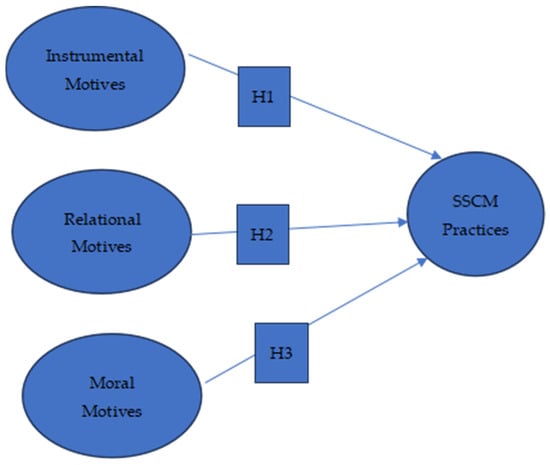
Background: Although industrialisation of the 20th century advanced economic prosperity, it resulted in significant environmental deterioration and other industrialisation-related deleterious environmental impact. However, extant research has mainly focused on outcomes rather than on the underlying motives for sustainable supply chain management (SSCM)
[...] Read more.
Background: Although industrialisation of the 20th century advanced economic prosperity, it resulted in significant environmental deterioration and other industrialisation-related deleterious environmental impact. However, extant research has mainly focused on outcomes rather than on the underlying motives for sustainable supply chain management (SSCM) adoption, while limited studies focus on cross-country evidence from non-service small and medium enterprises (SMEs) in Africa. This study investigates the motives for adopting SSCM practices among SMEs operating in non-service sector-based industries in Ghana, Kenya, Nigeria, and South Africa. Methods: A quantitative approach was employed, drawing on instrumental, relational, and moral theoretical lenses. Data were collected through an online survey of 378 SME owners/managers using purposive and convenience sampling and analysed using comparative statistical techniques. Results: The findings reveal that relational and moral motives are the strongest drivers of SSCM adoption, with moral motives strongest in Ghana and Nigeria, moderate in South Africa, and weakest in Kenya. Significant cross-country differences and a notable motive-adoption gap were identified, highlighting the role of institutional and operational constraints. Conclusions: The study contributes novel cross-country empirical evidence from Africa and highlights the need for context-specific SSCM strategies that strengthen governance and capacity to translate ethical intent into practice.
Full article

Figure 1
Open AccessArticle
Dynamic Resource-Capability View, Agility, and Resilience in Supply Chain: An Organizational Strategy Perspective
by
Sudhir Rana and Umesh Bamel
Logistics 2026, 10(5), 112; https://doi.org/10.3390/logistics10050112 - 12 May 2026
Abstract
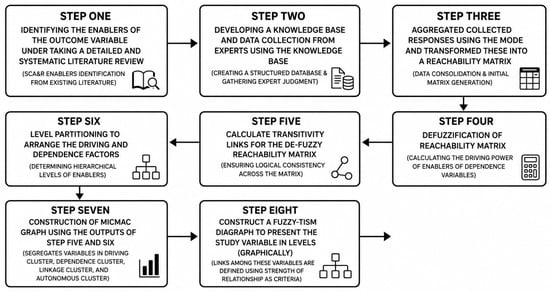
Background: Research on what promotes agility and resilience in the supply chain from an organizational strategy perspective is limited. This paper profiles the factors that can enable supply chain agility and resilience, with a special emphasis on organizational strategy. Method: Using
[...] Read more.
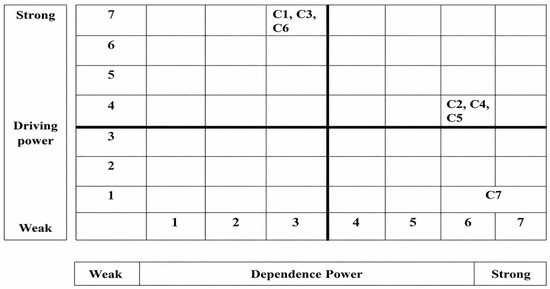
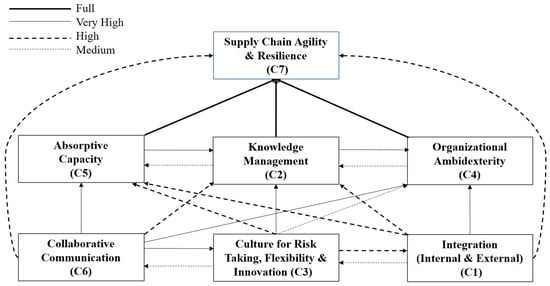
Background: Research on what promotes agility and resilience in the supply chain from an organizational strategy perspective is limited. This paper profiles the factors that can enable supply chain agility and resilience, with a special emphasis on organizational strategy. Method: Using an exploratory approach, the study first identifies the enablers of supply chain agility and resilience and then applies Fuzzy Total Interpretive Structural Modeling (Fuzzy TISM) to rank them. Data were collected from experts using a literature-derived knowledge base. Results: The findings reveal key resource and knowledge-based enablers (Integration, both internal and external; Knowledge Management; Culture for Flexibility, Risk Management, Innovation, Organizational Ambidexterity, Absorptive Capacity, and Collaborative Communication) that strengthen resilience and agility, offering insights into mitigating disruptions caused by macro- and micro-level factors and global interdependencies. Conclusions: The study contributes by exploring the enablers of supply chain agility and resilience through an organizational strategy lens. By applying a rent-yielding mechanism grounded in resource and dynamic capability theories, the study advances theoretical maturity in this domain from an emerging-country context.
Full article
(This article belongs to the Special Issue Logistics and Supply Chain Challenges and Solutions in the Turbulent World)
►▼
Show Figures

Figure 1
Open AccessArticle
Digital Pathways to Efficiency: A Multi-Stakeholder Assessment of Sri Lanka’s Marine Fish Supply Chain Logistics
by
Kariyawasam Pinikahana Gamage Lahiru Sandaruwan, Robert Jeyakumar Nathan, Shavindya Laksirini Sumanasekara, Thomas Ntangere and Maria Fekete Farkas
Logistics 2026, 10(5), 111; https://doi.org/10.3390/logistics10050111 - 11 May 2026
Abstract
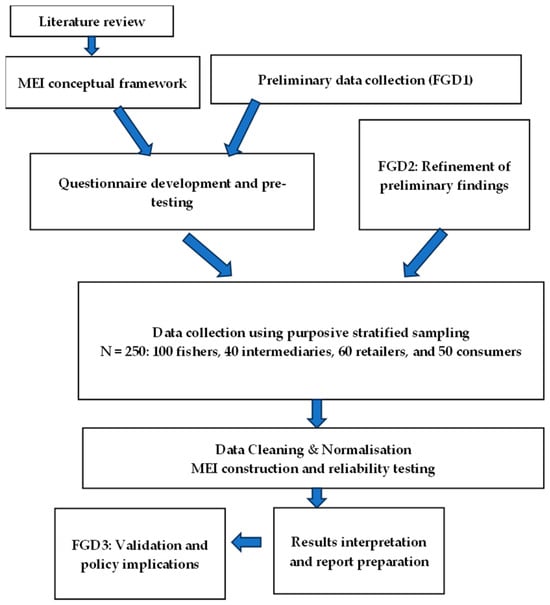
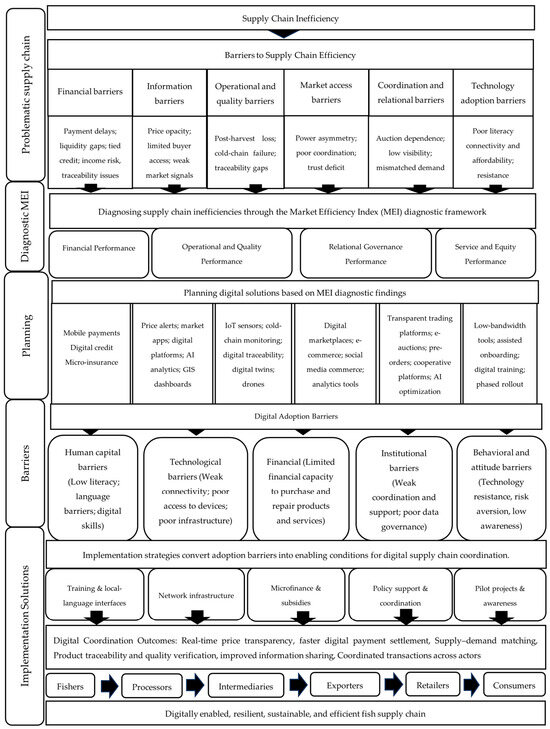
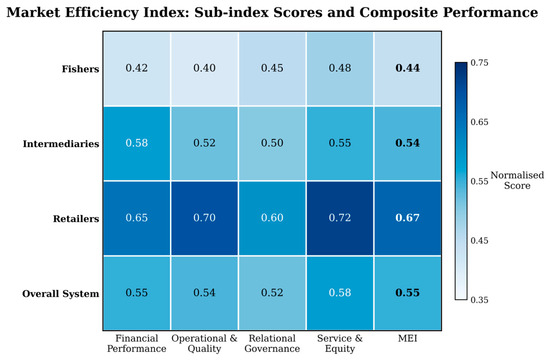
Background: Studies of fish supply chain efficiency often rely on price spreads or frontier-based measures, which do not fully capture actor-level coordination performance in heterogeneous, informal supply chains. This study addresses this gap by developing a composite Market Efficiency Index (MEI) that
[...] Read more.
Background: Studies of fish supply chain efficiency often rely on price spreads or frontier-based measures, which do not fully capture actor-level coordination performance in heterogeneous, informal supply chains. This study addresses this gap by developing a composite Market Efficiency Index (MEI) that integrates financial performance, operational quality, service equity, and relational governance. Methods: The MEI, a multidimensional alternative to frontier-based measures, was developed and applied to data collected from 250 supply chain actors in Sri Lanka. Results: The results show a clear efficiency gradient along the supply chain, with fishers scoring the lowest (MEI = 0.44), intermediaries moderate (MEI = 0.54), and retailers the highest (MEI = 0.67), yielding an overall system efficiency of 0.55 and relational governance emerging as the weakest system-level dimension. These results indicate persistent structural differences in value distribution and in how well the fish supply chain functions as a cohesive network, driven by liquidity constraints, information asymmetry, and weak cold-chain infrastructure. Conclusions: A multidimensional supply chain assessment provides a more effective basis for diagnosing coordination constraints and enables targeted digital interventions that offer feasible pathways to improve transparency, liquidity, and inclusiveness in smallholder-dominated fish supply chains.
Full article
(This article belongs to the Special Issue Logistics and Supply Chain Challenges and Solutions in the Turbulent World)
►▼
Show Figures

Figure 1
Open AccessArticle
Demystifying the Digital Transformation of Humanitarian Supply Chains Through AidTech
by
Apostolos Panagiotopoulos, Vasileios Karyotis, Georgios N. Dimitrakopoulos, Vassiliki Choleva-Tsiringkaki and Panos Kourouthanassis
Logistics 2026, 10(5), 110; https://doi.org/10.3390/logistics10050110 - 9 May 2026
Abstract
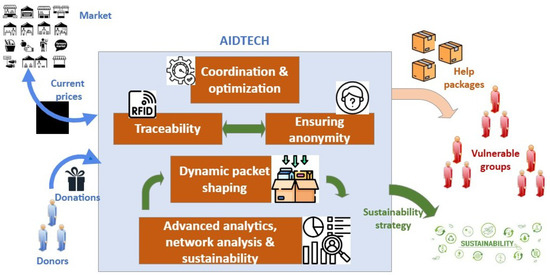
Background: Humanitarian campaigns are more popular with more initiatives organized than ever by public and private bodies. Simultaneously, more peculiar challenges, such as zero-waste and transparency, are required compared to traditional supply chains. This work investigates the current technological landscape for shaping
[...] Read more.
Background: Humanitarian campaigns are more popular with more initiatives organized than ever by public and private bodies. Simultaneously, more peculiar challenges, such as zero-waste and transparency, are required compared to traditional supply chains. This work investigates the current technological landscape for shaping the next generation of humanitarian aid management systems, focusing on algorithmic and operational aspects, matching them to a new architecture for a target-platform, called AidTech. Methods: The methodology follows a systematic literature coverage, identifying cross-disciplinary trends from operations research, computer science and sustainable logistics. We examine the convergence of optimization, artificial intelligence, and blockchain-enabled traceability toward efficient and transparent humanitarian logistics. The employed methods include adaptive scheduling, resource allocation algorithms and privacy–preserving collaboration for meeting special constraints imposed by the humanitarian scope. Results: The findings focus on the architectural perspective of humanitarian supply chains and highlight that modern humanitarian infrastructures will increasingly rely on hybrid optimization methods integrating graph theory, dynamic routing under stochastic demand, multi-criteria decision analysis and distributed ledger technologies. Conclusions: We conclude that these paradigms, when combined under a unified cyber–physical architecture, e.g., AidTech, can substantially improve responsiveness, equity and sustainability in crisis management, further shaping future humanitarian logistics.
Full article
(This article belongs to the Section Humanitarian and Healthcare Logistics)
►▼
Show Figures

Figure 1
Open AccessArticle
Simulation Model and Intelligent Optimization Methods for Freight Transportation Under the Digital Transformation of the Transport System of the Republic of Kazakhstan
by
Aizhan Kamysbayeva, Alisher Khussanov, Botagoz Kaldybayeva, Oleksandr Prokhorov, Zhakhongir Khussanov, Aibarsha Dosmakanbetova, Baurzhan Korganbayev and Aikerim Issayeva
Logistics 2026, 10(5), 109; https://doi.org/10.3390/logistics10050109 - 8 May 2026
Abstract
Background: In the context of the digital transformation of transport systems and the increasing complexity of logistics flows, the role of intelligent route forming methods capable of accounting for the spatial structure of transport networks, time constraints and resource limitations is growing.
[...] Read more.
Background: In the context of the digital transformation of transport systems and the increasing complexity of logistics flows, the role of intelligent route forming methods capable of accounting for the spatial structure of transport networks, time constraints and resource limitations is growing. This issue is particularly relevant for the Republic of Kazakhstan, which is characterized by a vast territory, a distributed network of transport nodes and significant transit potential. Methods: This article presents an integrated model for the intelligent optimization of freight transportation based on the combined use of the Google OR-Tools library and simulation modeling in the AnyLogic environment with the application of geographic information technologies. The main variants of vehicle routing problems are implemented, including VRPTW, CVRP, and MDVRP. Results: The developed model enables both identification of optimal routes and simulation of their execution in a dynamic environment, forming the basis for a digital twin of the transport system. Experimental studies demonstrate the impact of time constraints, capacity limitations, and spatial structure on routing solutions. Conclusions: The results confirm the effectiveness of the proposed approach for logistics flow distribution in a distributed transport system and its potential for decision support in the digital transport sector.
Full article
Open AccessArticle
Dynamic Analysis of the Impact of U.S. Tariff Policies on Automotive Production in Mexico
by
Laura Valentina Bocanegra-Villegas, Cuauhtémoc Sánchez-Ramírez and Jorge Luis García-Alcaraz
Logistics 2026, 10(5), 108; https://doi.org/10.3390/logistics10050108 - 7 May 2026
Abstract
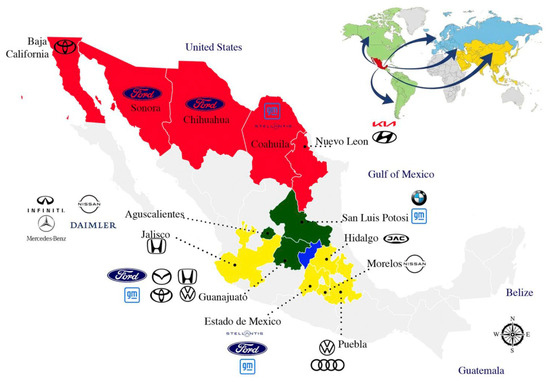
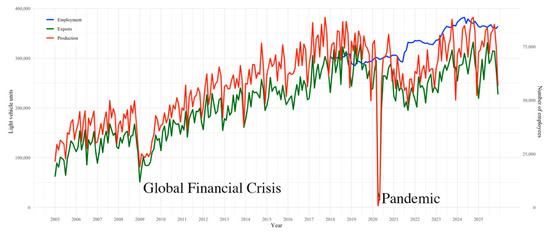
Background: A system dynamics model was developed to assess how United States (U.S.) tariff policies impact production, exports, labor, and Gross Domestic Product (GDP) in the Mexican automotive sector. Methods: Beginning with a baseline scenario without tariffs, the model introduces increases
[...] Read more.
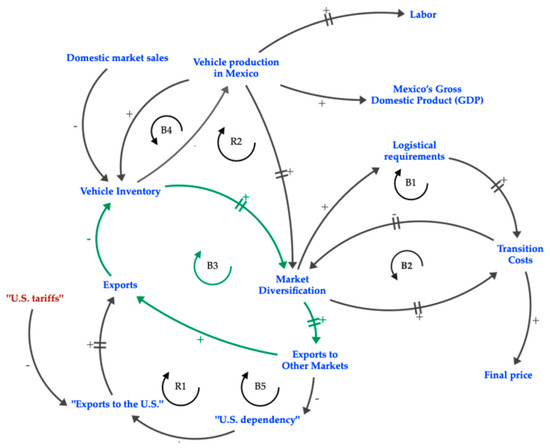
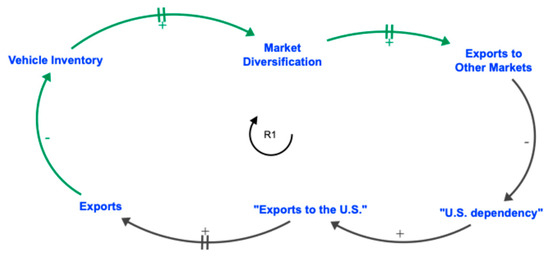
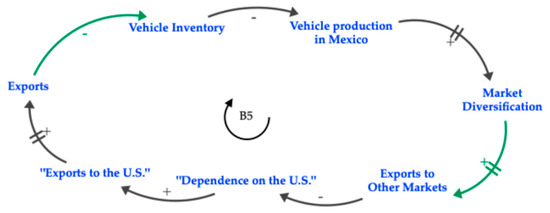
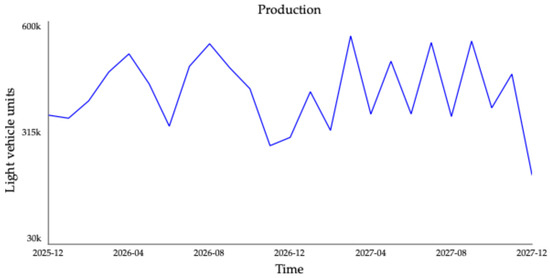
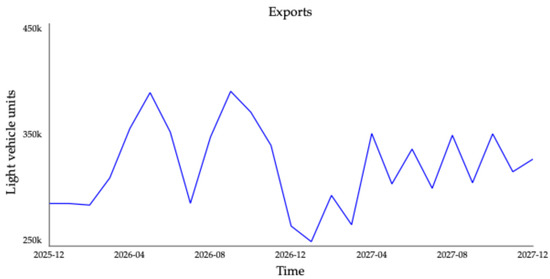
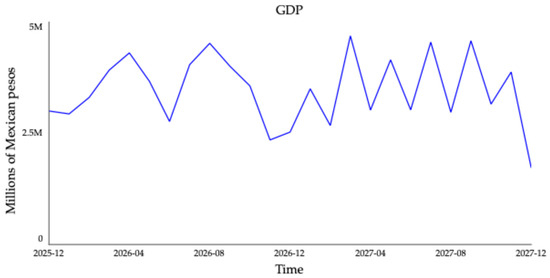
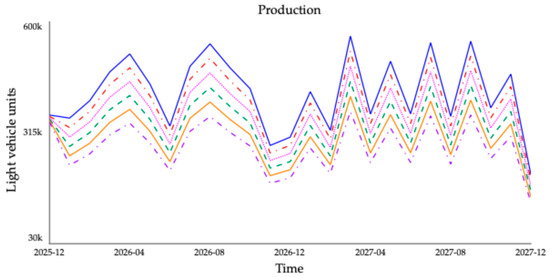
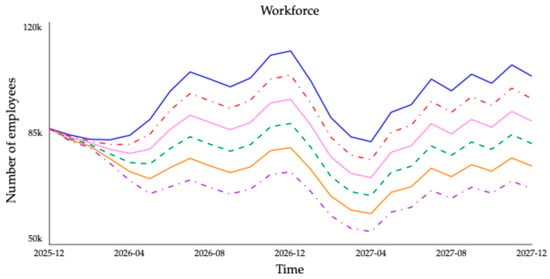
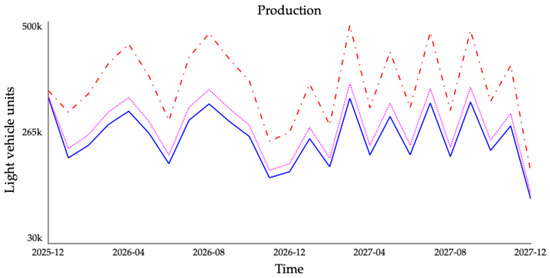
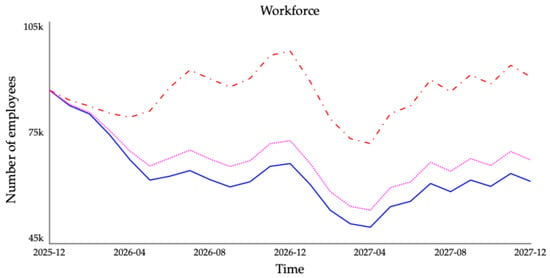
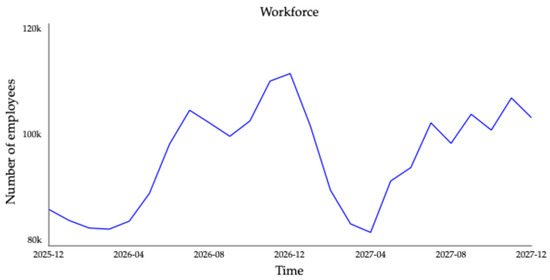
Background: A system dynamics model was developed to assess how United States (U.S.) tariff policies impact production, exports, labor, and Gross Domestic Product (GDP) in the Mexican automotive sector. Methods: Beginning with a baseline scenario without tariffs, the model introduces increases of up to 25% in exports to the U.S. Additionally, it analyzes a tariff increase alongside variations in demand elasticity (−0.5 to −1.6) over a 24-month period. Results: The results indicate that a 25% tariff leads to a sustained decrease in production, GDP, and exports, although adjustments in employment occur with some delay. Specifically, production volume contracts by 34.9%, and exports contract by 31.3%. Furthermore, a greater absolute elasticity of demand corresponds to a more significant decrease in production. Conclusions: The findings indicate that geographic diversification is not an immediate substitute for the current export structure, as it requires significant logistical, organizational, and capital adjustments. Reducing dependence on the U.S. market would involve reconfiguring supply chain management, diversifying suppliers, and adapting distribution networks to gain greater flexibility. The sector’s vulnerability therefore lies in its high concentration in a single destination market, which restricts production adaptability in Mexico and weakens the capacity to respond efficiently to disruptions in the supply chain.
Full article
(This article belongs to the Section Supplier, Government and Procurement Logistics)
►▼
Show Figures

Figure 1
Open AccessArticle
From IT Capability to Manufacturing Flexibility: The Role of Knowledge Acquisition and Customer–Supplier Integration
by
Pattama Lenuwat
Logistics 2026, 10(5), 107; https://doi.org/10.3390/logistics10050107 - 5 May 2026
Abstract
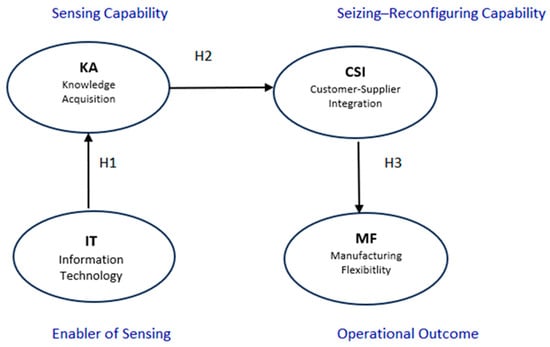
Background: This study examines how information technology (IT) capability contributes to manufacturing flexibility (MF) through knowledge acquisition (KA) and customer–supplier integration (CSI), drawing on dynamic capability theory. Methods: Survey data were collected from 137 manufacturing firms in Thailand and analyzed using
[...] Read more.
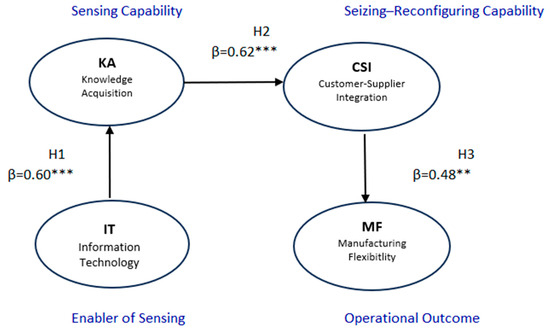
Background: This study examines how information technology (IT) capability contributes to manufacturing flexibility (MF) through knowledge acquisition (KA) and customer–supplier integration (CSI), drawing on dynamic capability theory. Methods: Survey data were collected from 137 manufacturing firms in Thailand and analyzed using structural equation modeling to test the proposed relationships. Results: The findings show that IT capability significantly enhances KA, which subsequently strengthens CSI. While IT does not directly influence MF, its effect is transmitted through a sequential pathway in which IT improves KA, KA facilitates CSI, and CSI is the only construct directly associated with MF. These results identify CSI as the central conversion mechanism through which IT-enabled information and externally acquired knowledge are translated into operational adaptability. Conclusions: The study demonstrates that externally acquired knowledge generates value only when embedded in collaborative interorganizational routines, such as joint planning and synchronized decision-making. It further highlights the complementary roles of learning-oriented and integration capabilities in enabling manufacturing flexibility. Managerially, firms should prioritize IT investments that strengthen customer–supplier integration rather than focusing solely on technological sophistication.
Full article
(This article belongs to the Special Issue Advancing Circular Supply Chains: Integrating Logistics, Supply Chain Management and Circular Economy Practices)
►▼
Show Figures

Figure 1
Open AccessArticle
Medical Aesthetics Clinic Location Selection Using SMART Single-Valued Neutrosophic TOPSIS
by
Napat Harnpornchai and Worrawat Saijai
Logistics 2026, 10(5), 106; https://doi.org/10.3390/logistics10050106 - 2 May 2026
Abstract
Background: Location decision plays a key role in strategic logistics and business success. The beauty business in Thailand has continuously grown, and medical aesthetics clinic location is one of the critical factors for business success. The problem is also related to sustainable urban
[...] Read more.
Background: Location decision plays a key role in strategic logistics and business success. The beauty business in Thailand has continuously grown, and medical aesthetics clinic location is one of the critical factors for business success. The problem is also related to sustainable urban service accessibility. Methods: This paper presents, for the first time, a systematic selection of medical aesthetics clinic location as a multi-criteria decision-making (MCDM) problem. The Simple Multi-Attribute Rating Technique (SMART) and Single-Valued Neutrosophic TOPSIS (SVN-TOPSIS) are combined to solve the location selection problem. SMART determines criterion weights, whereas SVN-TOPSIS evaluates alternatives using linguistic terms understandable to non-technical decision makers. Results: The proposed SMART SVN-TOPSIS is applied to a real investment problem in which two investors select the best clinic location from five alternatives with nine criteria. Siam Square—the heart of shopping, fashion, and youth culture in Bangkok—is recommended as the top location. Conclusions: The results indicate that the proposed method is capable of generating a consistent ranking of alternatives and differentiating between locations that exhibit similar evaluation characteristics. The findings may also support sustainable urban service planning and healthcare-related facility location decisions.
Full article
(This article belongs to the Section Humanitarian and Healthcare Logistics)
Open AccessArticle
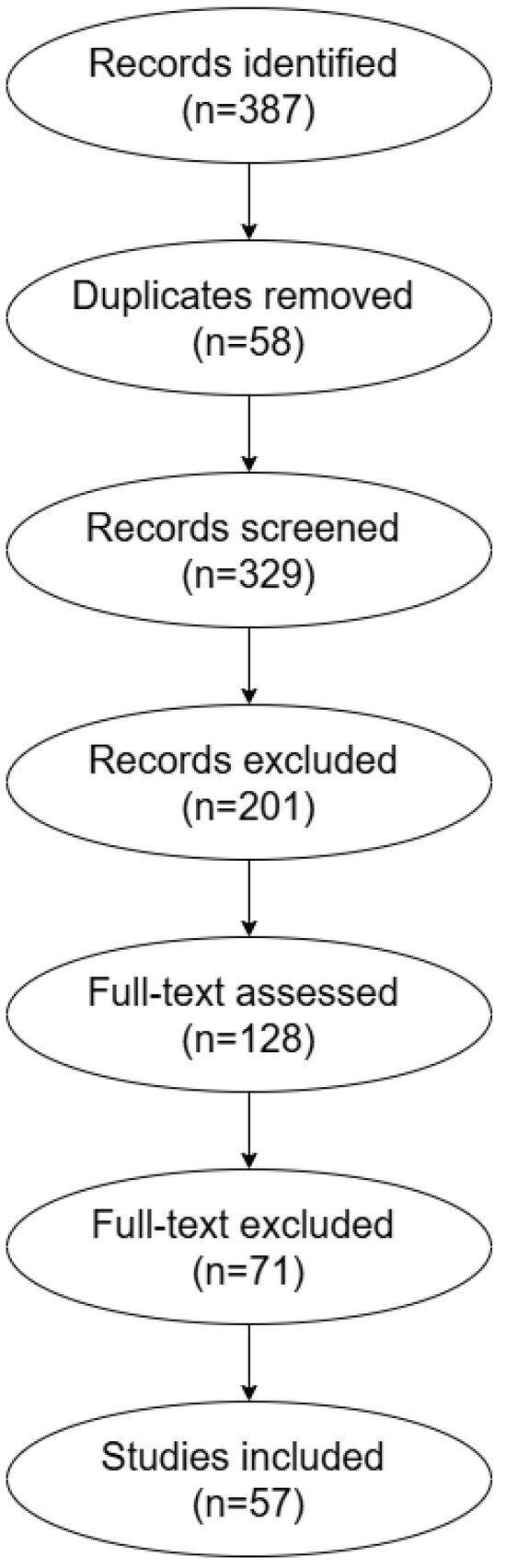
Supply Chain Management Research in the MENA Region (2000–2025): A PRISMA-Guided Systematic Review of Theories, Themes, and Research Gaps
by
Sara Elzarka and Islam El-Nakib
Logistics 2026, 10(5), 105; https://doi.org/10.3390/logistics10050105 - 1 May 2026
Abstract
►▼
Show Figures
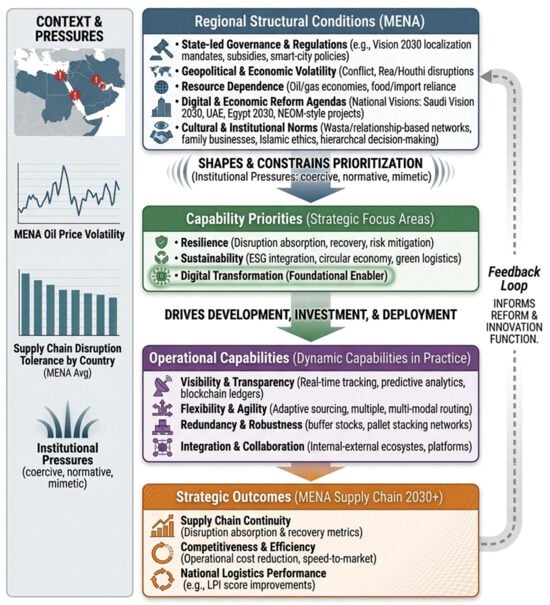
Background: Supply chain management (SCM) research has expanded across the Middle East and North Africa (MENA), yet the field remains fragmented. Limited synthesis exists on how regional conditions shape research themes, theories, and methods. Methods: This study applies the PRISMA 2020
[...] Read more.
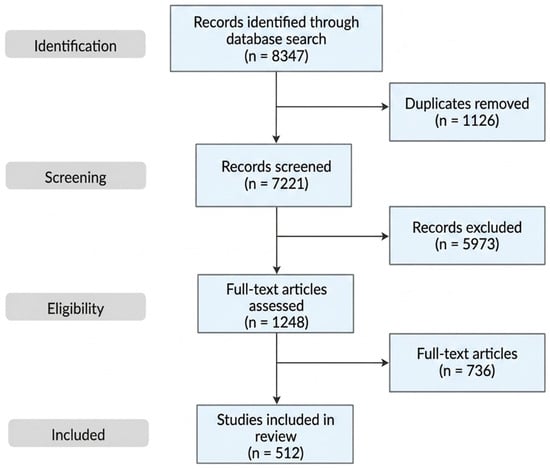
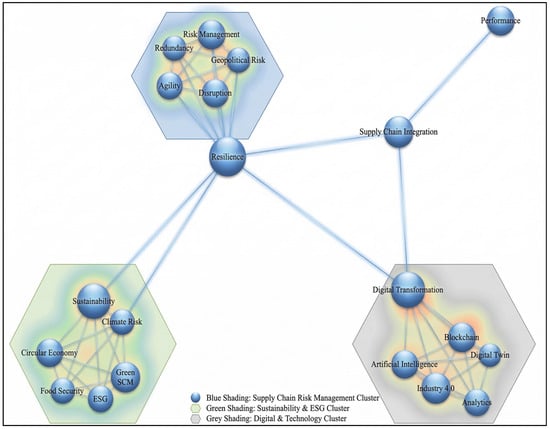
Background: Supply chain management (SCM) research has expanded across the Middle East and North Africa (MENA), yet the field remains fragmented. Limited synthesis exists on how regional conditions shape research themes, theories, and methods. Methods: This study applies the PRISMA 2020 protocol to review SCM articles indexed in Scopus and Web of Science from January 2000 to March 2025. After screening and eligibility assessment, 512 peer-reviewed studies were retained. Bibliometric mapping and thematic coding were used to identify publication trends, research streams, theoretical lenses, and methodological patterns. Results: SCM research increased sharply after 2015, reflecting national diversification agendas, logistics reform, digitalization, and exposure to global supply chain disruptions. Three dominant streams were identified: resilience, sustainability, and digital transformation. Research output is concentrated in Saudi Arabia and the United Arab Emirates, while cross-country comparative studies remain scarce. Empirical studies rely mainly on cross-sectional surveys and SEM-based analysis, with limited longitudinal, qualitative, mixed-method, and comparative work across the region. Conclusions: The study develops an integrative SCM capability framework linking regional structural conditions, capability development, and supply chain outcomes. The findings support managers and policymakers seeking resilient, sustainable, and digitally enabled supply chains, and define clear future research priorities for the MENA region.
Full article

Figure 1
Open AccessArticle
The Role of Artificial Intelligence in Logistics Firm Performance with Supply Chain Consistency and Logistics Capabilities in Saudi Arabia
by
Sura Alayed and Sultan Alateeg
Logistics 2026, 10(5), 104; https://doi.org/10.3390/logistics10050104 - 1 May 2026
Abstract
►▼
Show Figures
Background: Rapid adoption of artificial intelligence (AI) in logistics enhances operational efficiency and firm performance; however, empirical evidence on its capability-driven impact remains limited, particularly in Saudi Arabia’s e-commerce sector. This study’s purpose is to examine the influence of AI on logistics firm
[...] Read more.
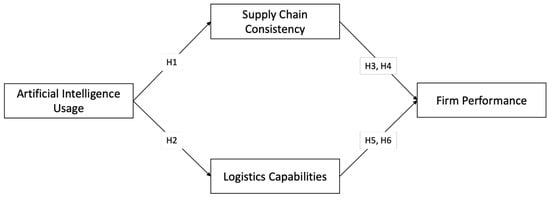
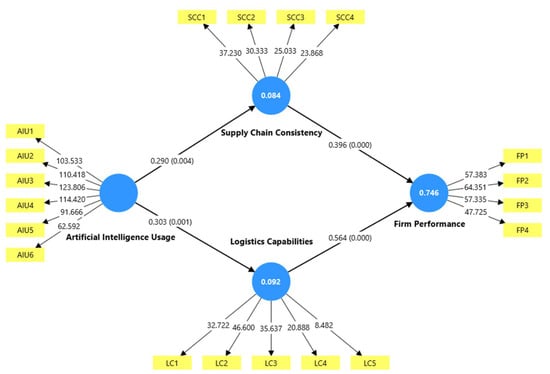
Background: Rapid adoption of artificial intelligence (AI) in logistics enhances operational efficiency and firm performance; however, empirical evidence on its capability-driven impact remains limited, particularly in Saudi Arabia’s e-commerce sector. This study’s purpose is to examine the influence of AI on logistics firm performance through the mediation role of supply chain consistency and logistics capabilities. Methods: A quantitative study was conducted and data were collected using a convenience sampling technique from 275 employees working in the Saudi Arabian logistics firms. Partial Least Squares Structural Equation Modeling was used to perform data analysis. Results: The study findings indicated that AI usage has significant and positive influence on supply chain consistency (β = 0.290) and logistics capabilities (β = 0.303). Furthermore, supply chain consistency (β = 0.115) and logistics capabilities (β = 0.171) play mediating role between AI usage and firm performance. The research model exhibits substantial predictive capability, explaining 74.6% (R2 = 0.746) of the variance in firm performance, while AI usage explains a smaller portion of the variance in supply chain consistency 8.4% (R2 = 0.084) and logistics capabilities 9.2% (R2 = 0.092). Conclusions: The findings demonstrate that AI-based logistics operations provide extensive support to streamline operations and reduce costs.
Full article
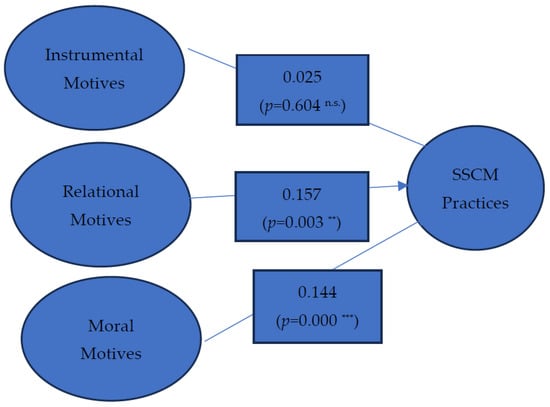
Figure 1
Open AccessSystematic Review
Triple A: How Analytics, AI, and Algorithms Are Improving Inventory Management in Healthcare
by
Laquanda Leaven Johnson and Oghenetejiri Ebakivie
Logistics 2026, 10(5), 103; https://doi.org/10.3390/logistics10050103 - 1 May 2026
Abstract
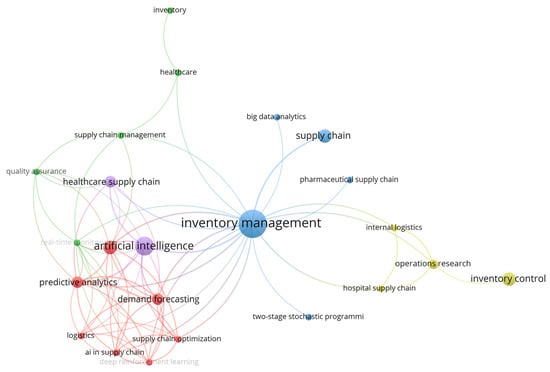
Background: Healthcare inventory management is critical for ensuring timely access to supplies and reducing stockouts. As supply chains grow more complex, algorithms, AI, and analytics techniques have emerged as tools for forecasting, tracking, classification, and procurement. Yet empirical validation across diverse contexts
[...] Read more.
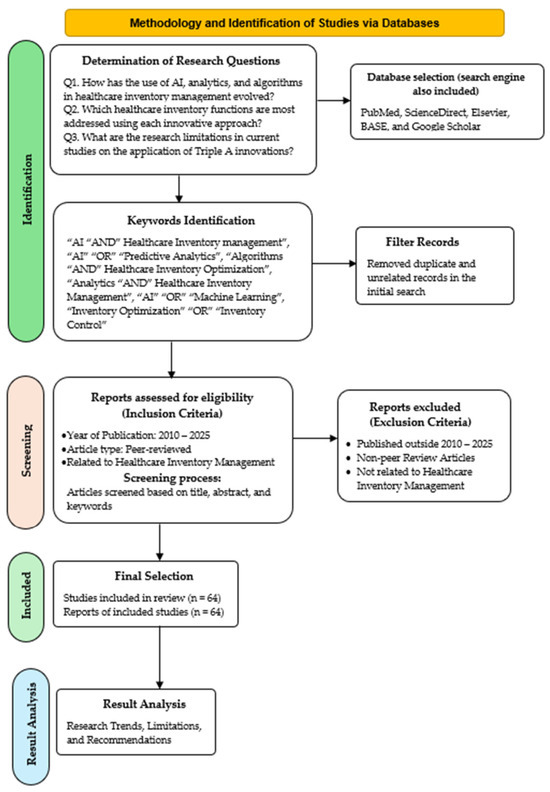
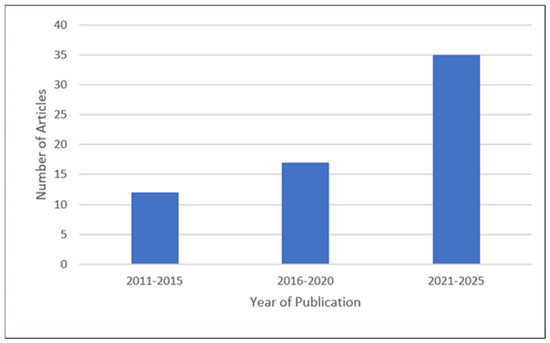
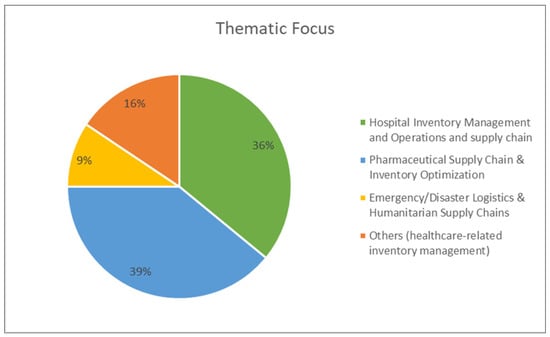
Background: Healthcare inventory management is critical for ensuring timely access to supplies and reducing stockouts. As supply chains grow more complex, algorithms, AI, and analytics techniques have emerged as tools for forecasting, tracking, classification, and procurement. Yet empirical validation across diverse contexts remains inadequate, and existing reviews treat these approaches as separate streams rather than an integrated system. Methods: To evaluate these capabilities, a systematic review of 64 peer-reviewed articles published between 2011 and 2025 was conducted using a descriptive and content analysis approach on the use of Triple A (Analytics, AI, and Algorithms) techniques in inventory frameworks across various healthcare contexts, such as hospitals, pharmaceutical supply chains, and humanitarian supply chains. Results: Integrating multiple Triple A approaches consistently outperforms single-method strategies, particularly with RFID and IoT tools. Key findings often overlooked are: emergency procurement and classification, which remain neglected despite the highest patient safety stakes, and key procurement drivers—organizational conditions, supplier reliability, and team capacity. Data quality, interoperability, and cybersecurity further constrain generalizability. Conclusions: Bridging these gaps requires integrated Triple A approaches rather than single methods. Phased implementation, cloud-based platforms, and privacy-by-design offer practical pathways for building resilience under real-world constraints.
Full article
(This article belongs to the Section Humanitarian and Healthcare Logistics)
►▼
Show Figures

Figure 1
Open AccessArticle
Integration of Nursing and Pharmacy Inventory Decisions with DDD-Based EOQ: UK Institutional Calibration and Robustness Analysis
by
Dilek Gümüş and Öner Gümüş
Logistics 2026, 10(5), 102; https://doi.org/10.3390/logistics10050102 - 1 May 2026
Abstract
Background: This study develops a transparent, decision-focused framework that integrates the World Health Organization’s defined daily dose (DDD) standard with the planned-backorder economic order quantity (EOQ) model to manage nursing and pharmacy workflows within a unified economic and operational scale. Method: Demand was
[...] Read more.
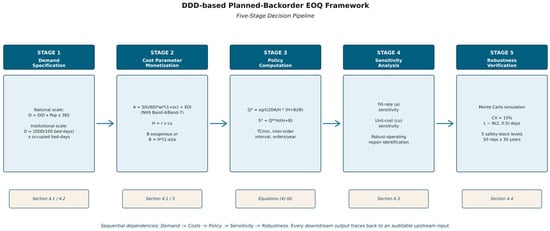
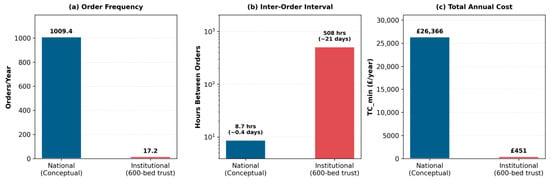
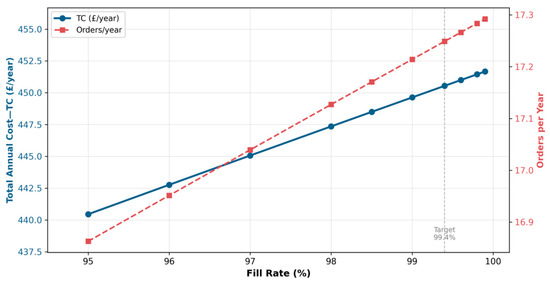
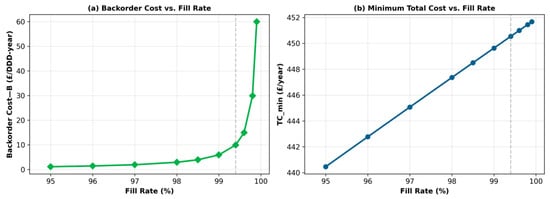
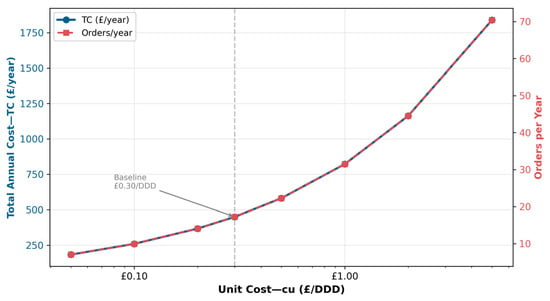
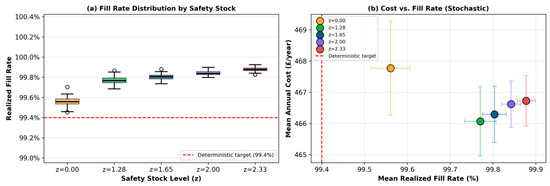
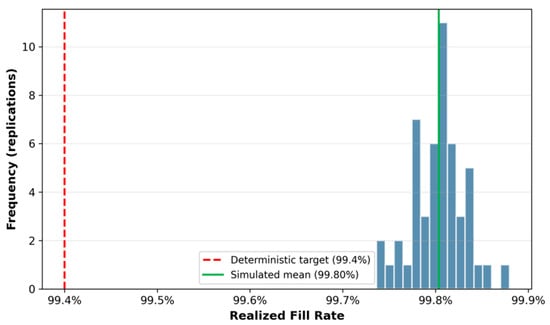
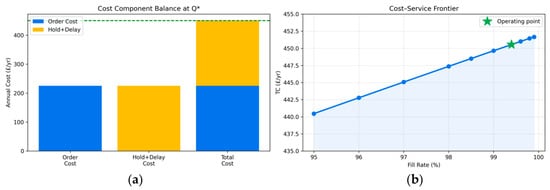
Background: This study develops a transparent, decision-focused framework that integrates the World Health Organization’s defined daily dose (DDD) standard with the planned-backorder economic order quantity (EOQ) model to manage nursing and pharmacy workflows within a unified economic and operational scale. Method: Demand was expressed in DDD per year, and process-based costs were monetized according to National Health Service (NHS) workflow steps, where the holding cost was computed as H = r × cu and the delay cost B was derived from the target fill rate via a closed-form shadow-price relationship. The model was calibrated for a typical NHS acute-care hospital with 600 beds (D ≈ 130,305 DDD/year). Results: Calibration resulted in an ideal order quantity of 7554 DDD, an inter-order interval of 21 days, and a minimum annual total cost of £451. In the national conceptual scenario, the fill rate is about 99.4%, and the minimum annual total cost is £26,366. At this optimum, cost components are symmetrically balanced, with order cost and combined holding–delay cost contributing equally. Conclusions: This repeatable framework, based on the DDD scale, enhances management visibility regarding the cost–service balance, thereby confirming the policy’s robustness.
Full article
(This article belongs to the Section Humanitarian and Healthcare Logistics)
►▼
Show Figures

Figure 1
Open AccessArticle
Profit Maximization of Ethanol Distribution on Manifold Surfaces: A Stochastic Nonlinear Programming Approach
by
Emre Tokgoz, Iddrisu Awudu and Theodore Trafalis
Logistics 2026, 10(5), 101; https://doi.org/10.3390/logistics10050101 - 1 May 2026
Abstract
►▼
Show Figures
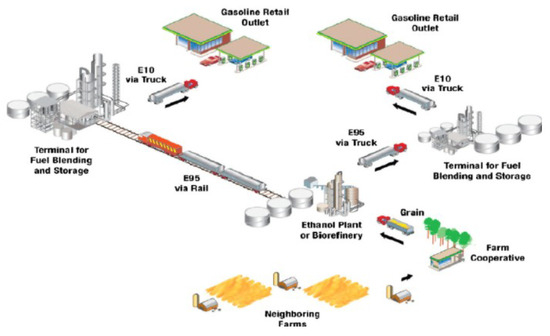
Background. Ethanol distribution in the energy supply chain can be maximized by solving a Location Routing Problem (LRP). Manifold LRP (MLRP) expands on the classic domain assumptions of LRP to manifold surfaces, and it can be applied to profit maximization in ethanol supply
[...] Read more.
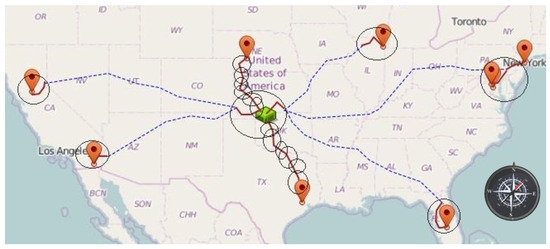
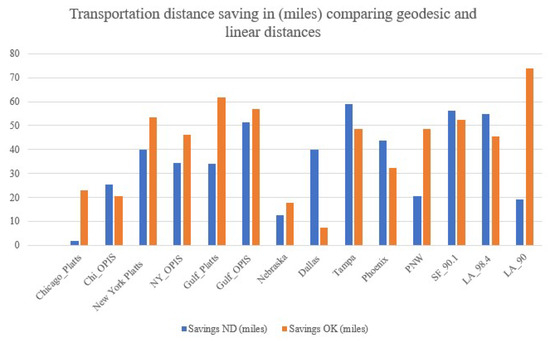
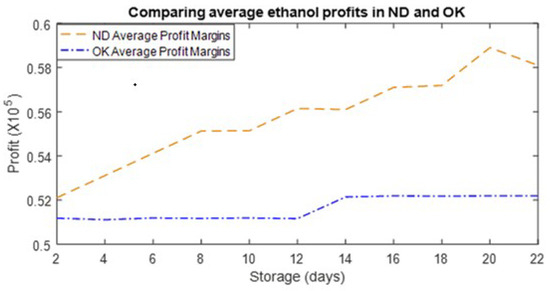
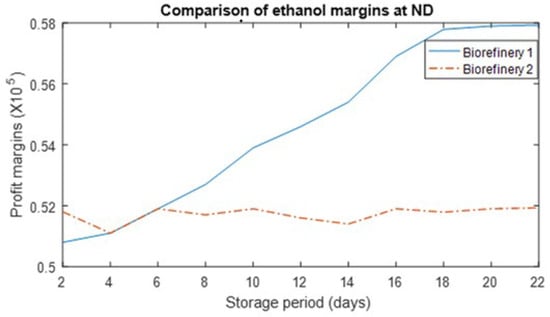
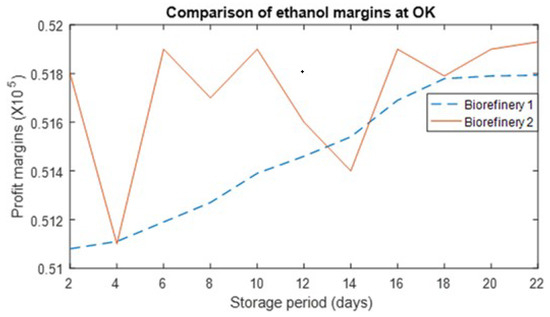
Background. Ethanol distribution in the energy supply chain can be maximized by solving a Location Routing Problem (LRP). Manifold LRP (MLRP) expands on the classic domain assumptions of LRP to manifold surfaces, and it can be applied to profit maximization in ethanol supply chains. Methods. In this work, a hybrid MLRP (H-MLRP) is introduced as a new mixed integer nonlinear programming NP-hard problem assuming discrete facility allocation that requires a mix of truck and train transportation for ethanol distribution from the facility to its customers. Ethanol supply chain profit can be maximized by solving a stochastic nonlinear integer programming problem (SNLP) using ethanol raw materials, production quantity, logistics, railcar shipments, and transit times as the decision variables. H-MLRP and SNLP are combined as a two-stage optimization methodology to design a biofuel energy distribution system for making optimal decisions to maximize ethanol profit. Results. A case study demonstrated the effectiveness of the proposed method on the relocation of an ethanol producer that is currently located in North Dakota (ND) to Oklahoma (OK). In this case study, customer demand destinations and suppliers of raw materials are located in different regions of the United States. Conclusions. The results indicate a good use of the new model for decision-making.
Full article
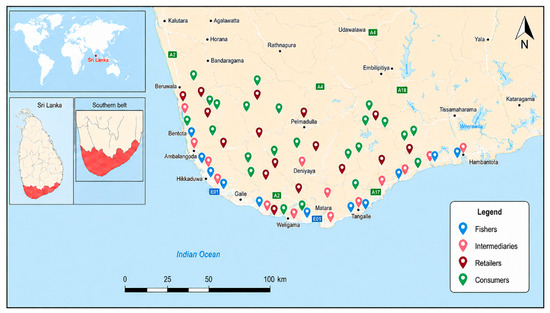
Figure 1
Open AccessArticle
Non-Label-Based Goods Identification in Large-Scale Warehousing and Automated Logistics Operations Using Vision-Based OCR
by
Mohammad Hori Najafabadi, Paria Mahmoudi and Bernd Noche
Logistics 2026, 10(5), 100; https://doi.org/10.3390/logistics10050100 - 1 May 2026
Abstract
►▼
Show Figures
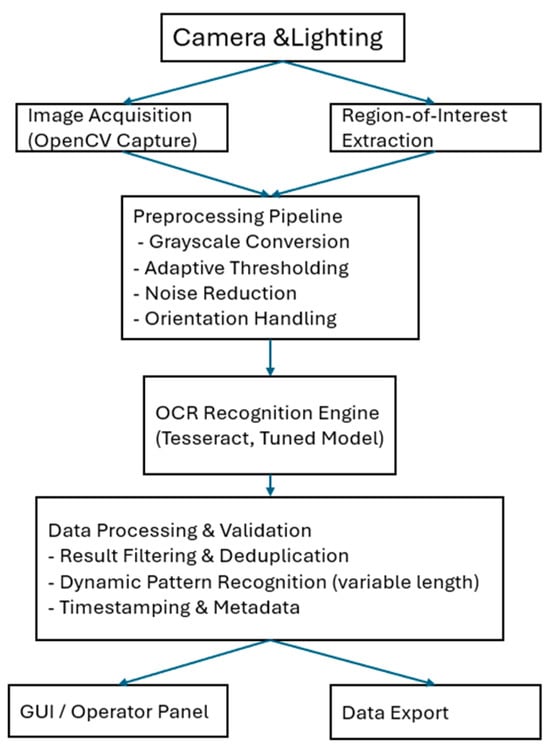
Background: Automated identification of logistics units is a critical requirement in high-volume warehouse operations, particularly in retails that handle millions of cartons annually. Although barcode-based systems are widely used, they generate recurring costs for labeling, printing, quality control and readability issues, often
[...] Read more.
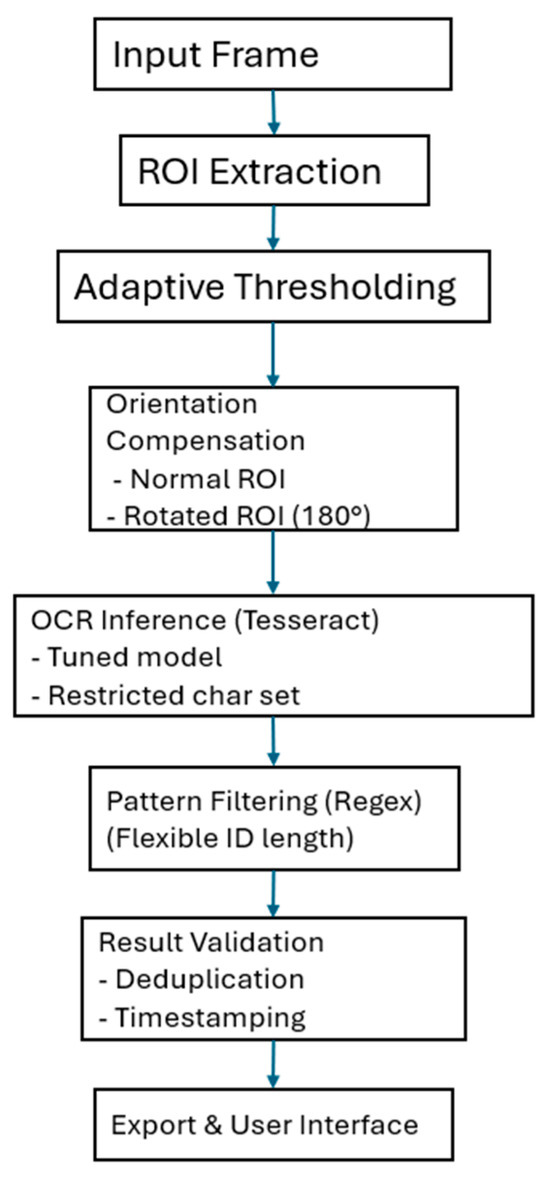
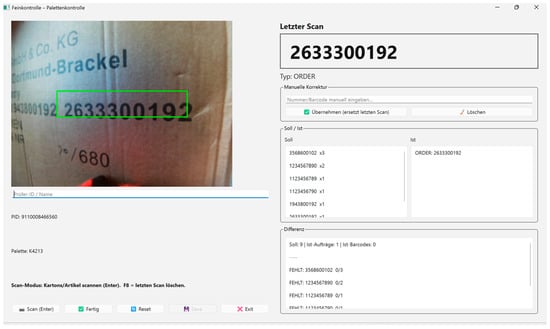
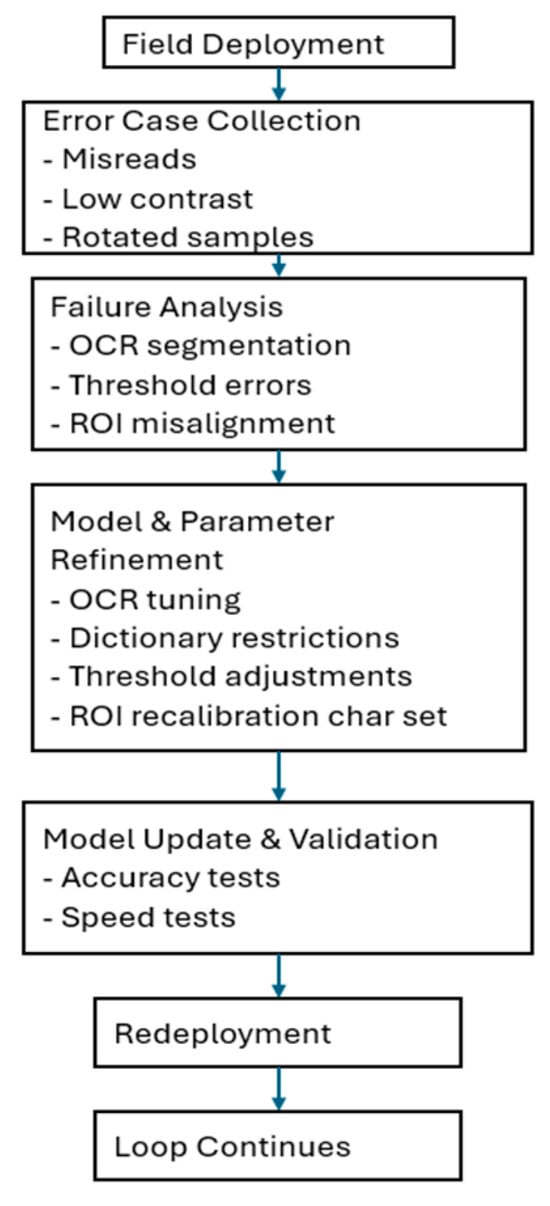
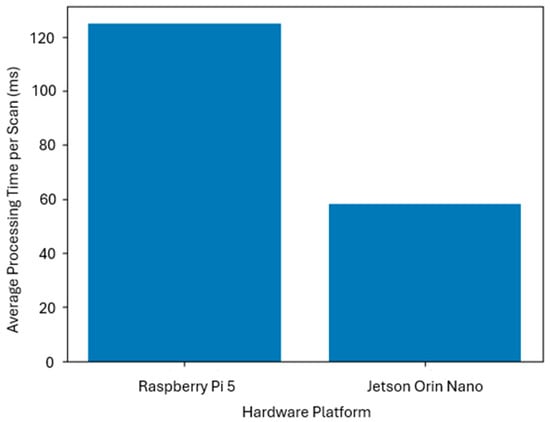
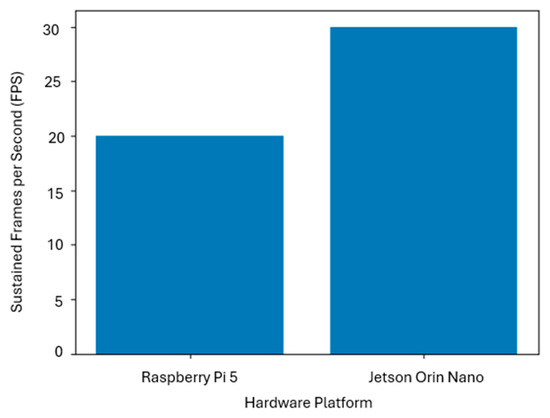
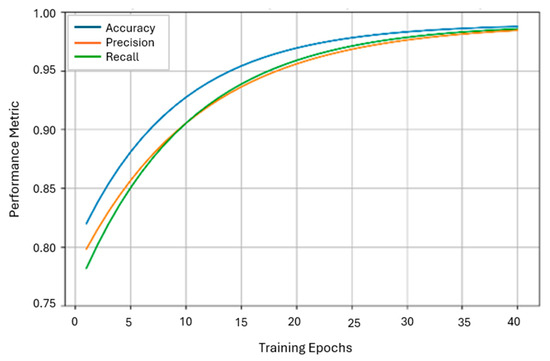
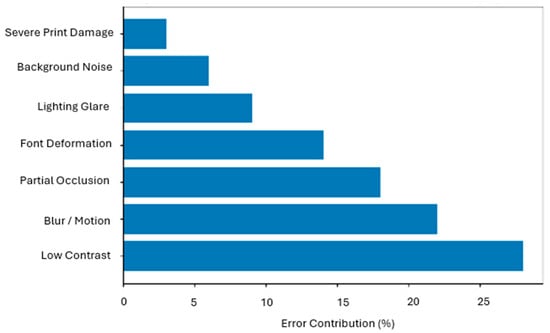
Background: Automated identification of logistics units is a critical requirement in high-volume warehouse operations, particularly in retails that handle millions of cartons annually. Although barcode-based systems are widely used, they generate recurring costs for labeling, printing, quality control and readability issues, often leading to manual intervention and delays. Methods: This study presents a low-cost and flexible vision-based identification system that directly reads carton identifiers using optical character recognition (OCR). This system designed for edge deployment on resource-constrained hardware and incorporates a rotation-invariant preprocessing pipeline to support robust recognition under real conditions. Proposed approach was tested in two German retails. Results: Tests show recognition accuracies 96% to 98% under operational conditions, with real-time processing performance in the range of 58 to 125 ms per scan, depending on the hardware. These indicate that the system can be integrated into high-throughput logistics workflows. Additionally, the study provides insights into the economic implications of replacing barcode-based identification. Based on site-specific observations and labeling costs, the system shows the potential to reduce manual intervention and lower operational expenses in large-scale retails. Conclusions: Findings suggest that OCR can serve a cost-efficient alternative to barcode systems in environments where flexibility, robustness, and low deployment cost are critical.
Full article
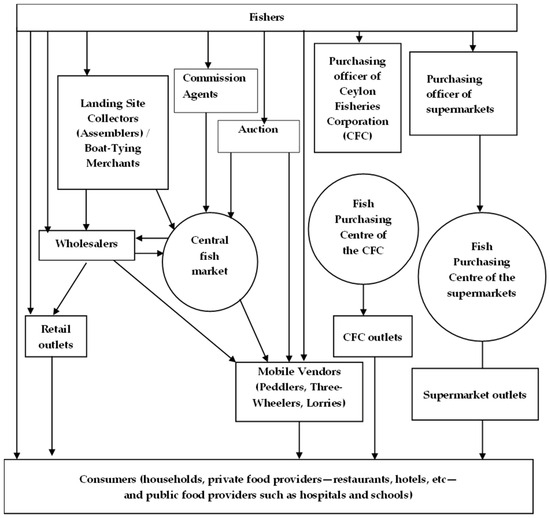
Figure 1
Open AccessArticle
A Mathematical Model to Maximize the Pre-Processing, Storage, and Transportation Associated with Grain Flow in Brazil
by
Jonathan Vieira, Alvaro Neuenfeldt Júnior, Paulo Carteri Coradi, Olinto Araújo and Vanessa Alves
Logistics 2026, 10(5), 99; https://doi.org/10.3390/logistics10050099 - 1 May 2026
Abstract
: In the grain logistics context, pre-processing operations such as reception, pre-cleaning, drying, storage, and shipping are performed at farm, collecting, intermediate, sub-terminal, and terminal storage units to preserve quality, reduce losses, and
[...] Read more.
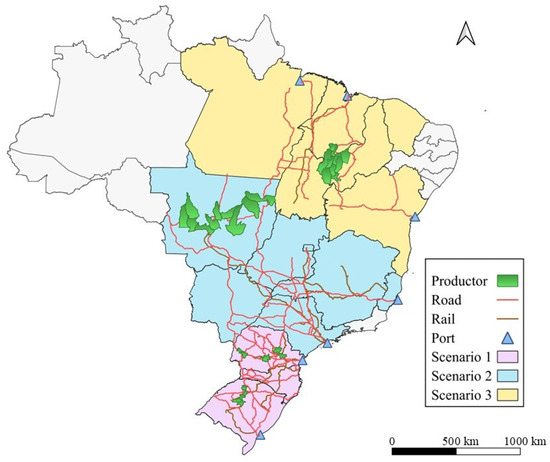
: In the grain logistics context, pre-processing operations such as reception, pre-cleaning, drying, storage, and shipping are performed at farm, collecting, intermediate, sub-terminal, and terminal storage units to preserve quality, reduce losses, and add value in the products. However, high transportation costs and limited static storage capacity reduce the selling prices. The objective of this article is to maximize profit associated with pre-processing, storage, and transportation along the grain flow in Brazil. : A generic post-harvest logistics network is represented as a graph connecting producers, multi-level storage units, agribusiness facilities, and ports. A multi-period, multi-level mathematical model is applied in a case study framework explored in three scenarios, covering pre-cleaning, drying, storage, and transportation costs from production areas to commercialization nodes. : In all three scenarios, road transport resulted in transportation costs ranging from approximately US$ 49 million to US$ 492 million, mainly over long distances. : The location and static capacity of collecting and intermediate storage units strongly influenced transport, storage use, CO2 emissions, and post-harvest efficiency. Also, the flow concentration increased heavy-vehicle traffic, reducing overall logistics performance.
Full article
►▼
Show Figures

Figure 1
Highly Accessed Articles
Latest Books
E-Mail Alert
News
Topics
Topic in
Computers, Informatics, Information, Logistics, Mathematics, Algorithms
Decision Science Applications and Models (DSAM)
Topic Editors: Daniel Riera Terrén, Angel A. Juan, Majsa Ammuriova, Laura CalvetDeadline: 30 June 2026
Topic in
Applied Sciences, Drones, Infrastructures, Logistics, Modelling, Energies, Technologies, Future Transportation
New Technological Solutions, Research Methods, Simulation and Analytical Models That Support the Development of Modern Transport Systems, 2nd Edition
Topic Editors: Artur Kierzkowski, Tomasz Nowakowski, Agnieszka A. Tubis, Franciszek Restel, Tomasz Kisiel, Anna Jodejko-Pietruczuk, Mateusz Zaja̧c, Viktoria Ivannikova, Michał Stosiak, Andrija VidovićDeadline: 31 August 2026
Topic in
Logistics, Sustainability, Systems, JMSE, Platforms
Digital Technologies in Supply Chain Risk Management
Topic Editors: Zongsheng Huang, Decui LiangDeadline: 31 December 2026
Topic in
Logistics, Sustainability, World
Research on Public Procurement for Sustainability
Topic Editors: Paul Davis, David McKevittDeadline: 31 March 2027
Special Issues
Special Issue in
Logistics
New Progresses and Main Implications in Additive Manufacturing for Operations and Supply Chain Management
Guest Editors: Antonio Maria Coruzzolo, Alessandra Cantini, Francesco Lolli, Filippo De CarloDeadline: 31 July 2026
Special Issue in
Logistics
Artificial Intelligence and Business Analytics Applications in Supply Chain Operations
Guest Editors: Hokey Min, Seong-Jong JooDeadline: 16 October 2026
Special Issue in
Logistics
Decarbonization of Maritime Logistics and Global Supply Chains
Guest Editors: Amir Alizadeh-Masoodian, Jay GoldenDeadline: 30 November 2026
Special Issue in
Logistics
Supply Chain 4.0: Lean, Agile, Green Practices
Guest Editors: Sandeep Jagtap, Rashmi Ranjan Panigrahi, Subhodeep Mukherjee, Harshad SonarDeadline: 15 January 2027