Article

Digital Pathways to Efficiency: A Multi-Stakeholder Assessment of Sri Lanka’s Marine Fish Supply Chain Logistics


by
Kariyawasam Pinikahana Gamage Lahiru Sandaruwan
1,2,
Robert Jeyakumar Nathan
3,4,*,
Shavindya Laksirini Sumanasekara
5,
Thomas Ntangere
1 and
Maria Fekete Farkas
1,6
1
Doctoral School of Economics and Regional Sciences, Hungarian University of Agriculture and Life Sciences, Szent István Campus, Páter Károly u. 1, 2100 Gödöllő, Hungary
2
National Aquatic Resources Research and Development Agency, Crow Island, Mattakkuliya, Colombo 00500, Sri Lanka
3
Centre for Management and Marketing Innovation, CoE for Business Innovation and Communication, Multimedia University, Cyberjaya 63100, Selangor, Malaysia
4
Academies Australasia College, Middle Road, Singapore 188954, Singapore
5
Sri Lanka Export Development Board, No. 42 Nawam Mawatha, Colombo 00200, Sri Lanka
6
Institute of Agricultural and Food Economics, Hungarian University of Agriculture and Life Sciences, Páter Károly u. 1, 2100 Gödöllő, Hungary
*
Author to whom correspondence should be addressed.
Logistics 2026, 10(5), 111; https://doi.org/10.3390/logistics10050111
Submission received: 22 February 2026 / Revised: 25 April 2026 / Accepted: 28 April 2026 / Published: 11 May 2026

Abstract

Background: Studies of fish supply chain efficiency often rely on price spreads or frontier-based measures, which do not fully capture actor-level coordination performance in heterogeneous, informal supply chains. This study addresses this gap by developing a composite Market Efficiency Index (MEI) that integrates financial performance, operational quality, service equity, and relational governance. Methods: The MEI, a multidimensional alternative to frontier-based measures, was developed and applied to data collected from 250 supply chain actors in Sri Lanka. Results: The results show a clear efficiency gradient along the supply chain, with fishers scoring the lowest (MEI = 0.44), intermediaries moderate (MEI = 0.54), and retailers the highest (MEI = 0.67), yielding an overall system efficiency of 0.55 and relational governance emerging as the weakest system-level dimension. These results indicate persistent structural differences in value distribution and in how well the fish supply chain functions as a cohesive network, driven by liquidity constraints, information asymmetry, and weak cold-chain infrastructure. Conclusions: A multidimensional supply chain assessment provides a more effective basis for diagnosing coordination constraints and enables targeted digital interventions that offer feasible pathways to improve transparency, liquidity, and inclusiveness in smallholder-dominated fish supply chains.

1. Introduction

1.1. Background and Context

Global fish supply chains face compounding systemic pressures. Rising fuel costs, climate variability, market volatility, and post-pandemic economic shocks have collectively undermined production continuity, disrupted coordination, and distorted value distribution across the sector [1]. Fisheries play a critical role in providing affordable nutrition and sustaining rural livelihoods worldwide. Sustainable Development Goal 14 explicitly recognises small-scale fisheries governance as central to poverty reduction and food security [2]. The fundamental challenge for the sector is to continue delivering these social benefits while operating under growing systemic pressure.
In marine fisheries, biological perishability further intensifies these pressures. Post-harvest quality degradation begins immediately upon capture, driven by enzymatic autolysis and microbial proliferation [3], while time–temperature failures during handling, transport, and storage accelerate spoilage, eroding both market value and nutritional quality. In tropical developing-country contexts, limited cold-chain infrastructure requires rapid and reliable coordination across dispersed landing sites, intermediaries, and retail outlets. Evidence consistently shows that production growth alone is insufficient when post-harvest inefficiencies degrade quality and weaken overall supply chain performance [3].
Recognising these challenges, the FAO’s Blue Transformation initiative aims to sustainably expand aquaculture, manage fisheries effectively, and upgrade value chains by 2030, ensuring aquatic food systems contribute to food security, nutrition, and ecosystem sustainability [4]. In developed contexts, this transformation relies heavily on digital technologies spanning marine conservation, post-harvest loss reduction, cold-chain optimisation, and financial operations [5]. However, in developing countries, the feasibility and inclusiveness of such interventions depend critically on understanding existing governance structures and coordination constraints. One such structure is boat-tying, a pre-transaction arrangement in which fishers receive financial advances from buyers in exchange for exclusive selling commitments, typically at below-market prices [6,7,8]. While providing short-term financial relief, these arrangements weaken bargaining power and restrict competition at landing sites [9,10,11]. Understanding how informal institutions shape efficiency and equity is, therefore, central to inclusive market design.
Digitalisation has transformed supply chain coordination across sectors, yet higher levels of digital maturity may introduce new coordination risks and dependency structures within buyer–supplier relationships [12]. Industry 4.0 extends this transformation by emphasising human-centred coordination, resilience, and sustainability alongside technological integration [13,14]. Logistics networks increasingly resemble interconnected information systems in which physical and digital flows co-evolve, highlighting the importance of coordination architectures across service networks [15].
Digital interventions in weakly coordinated supply chains characterised by informal financial dependence and unequal power relations may worsen existing inequalities by benefiting already advantaged intermediaries while offering fewer gains to vulnerable upstream producers [6,16,17]. Effective digitalisation, therefore, requires solutions to be carefully matched to real, evidence-based constraints rather than applied as generic technological fixes [6,16,17]. Many developing-country fisheries face similar structural challenges—fragmented markets, informal governance, liquidity-constrained producers, and limited cold-chain infrastructure—conditions documented across small-scale fisheries in South and Southeast Asia, Sub-Saharan Africa, and the Pacific [6,17]. Sri Lanka serves as the study context because it typifies this broader set of challenges and represents an active policy environment seeking to introduce digital technologies into the fishing sector. The findings are therefore analytically relevant beyond the national context.

1.2. Problem Statement

In Sri Lanka, fish provides approximately 48% of the national animal protein intake [18], underscoring its vital role in nutrition and the economy. The fisheries sector contributes around 1% of GDP and 2.4% of export earnings while supporting more than 2.7 million livelihoods, with marine fisheries accounting for nearly 86% of total production [19]. Despite this importance, the domestic fish marketing system exhibits persistent inefficiencies that undermine producer welfare and consumer outcomes. Fish distribution operates through fragmented, multi-layered channels involving informal credit relationships, auction systems, wholesaler networks, and modern retail chains, yet the efficiency of these arrangements remains poorly understood [6]. Sector governance is guided by the Fisheries and Aquatic Resources Act No. 2 of 1996 and implemented through institutions, including the Ministry of Fisheries, the Department of Fisheries, and the National Aquatic Resources Research and Development Agency (NARA), which together support marine fisheries development, post-harvest management, and market access initiatives [20].
Structural constraints within the supply chain—including liquidity pressures, information asymmetries, delayed and informal payment arrangements, post-harvest losses, and limited access to cold chains—significantly hinder efficiency and disproportionately disadvantage upstream producers [21,22]. Although multiple supply chain configurations coexist, their relative performance across stakeholders has not been systematically assessed, limiting evidence-based policymaking and targeted interventions.
Despite growing research interest, significant evidence gaps remain, motivating researchers and practitioners to address these issues. Most studies assess efficiency from the perspective of isolated actor groups rather than evaluating the chain as an integrated system [23,24]. Efficiency is commonly operationalised narrowly in terms of price spreads or marketing margins, which cannot distinguish coordination costs from rent extraction or account for service accessibility and relational governance [25,26]. Furthermore, digitalisation proposals are rarely grounded in systematic empirical diagnosis of coordination failures and often fail to give sufficient attention to local institutional realities and actor capacity constraints [6,27].

1.3. Research Objectives

The main objective of this study is to assess the efficiency of Sri Lanka’s fish supply chain from a multi-stakeholder perspective and to identify digital market solutions to improve coordination, value distribution, and overall system performance. This aim is pursued through three specific objectives:
To diagnose multi-stakeholder efficiency across fishers, intermediaries, retailers, and consumers using an integrated Market Efficiency Index (MEI).
To identify structural barriers—including liquidity constraints, information asymmetries, coordination failures, and governance gaps—shaping value distribution patterns and post-harvest losses.
To link diagnosed inefficiencies to feasible digital improvement pathways, ensuring technical accessibility, cost-effectiveness, and institutional compatibility.

1.4. Contribution and Novelty

This study advances fisheries supply chain research in three important ways. First, it extends the analytical boundary beyond fishing activities and species-specific assessments to examine the entire domestic marine fish supply network, from fishers to final consumers. While existing fisheries studies predominantly focus on harvesting or biological resources, and supply chain studies often remain actor-specific or descriptive, this research provides a system-wide, multi-stakeholder perspective on market functioning. Second, the study develops a composite MEI that integrates financial outcomes, operational–quality performance, service–equity dimensions, and relational–governance conditions. This multidimensional diagnostic approach moves beyond conventional price-spread or margin analyses, which cannot distinguish between necessary marketing costs and inefficiencies, enabling the identification of both high-performing nodes and structurally weak segments within the supply chain. Third, the study translates empirically identified inefficiencies into context-appropriate digital upgrading pathways. Drawing on field engagement with supply-chain actors, expert consultations, and existing literature, digital solutions are matched to observed constraints rather than proposed as generic technological fixes. Importantly, this approach recognises the role of intermediaries in coordination and does not assume their displacement. To the authors’ knowledge, this is the first study to provide an integrated, evidence-based digitalisation roadmap for improving domestic marine fish supply chain performance in Sri Lanka, shifting the focus of digital fisheries research from production technologies toward market coordination, equity, and post-harvest efficiency [28].

2. Literature Review and Conceptual Framework

2.1. Supply Chain Structure and Efficiency in Fish Markets

Fish supply chains organise the movement of products from producers to consumers and perform essential functions, including aggregation, transportation, storage, quality control, and financing [29]. In fisheries, these functions are especially critical because biological perishability, weather dependence, and spatial dispersion impose severe coordination constraints. Supply chain structure shapes information flows, price formation, and value distribution, thereby influencing overall market efficiency.
Fish markets differ markedly from other agricultural systems because quality deterioration begins immediately after harvest and accelerates in the absence of adequate icing, hygienic handling, and cold-chain infrastructure. Time–temperature sensitivity makes the speed of distribution and handling practices decisive for both economic returns and food quality [30]. Seasonal supply variation and weather-related uncertainty further compound these challenges by increasing price volatility and coordination risk, particularly in small-scale fisheries characterised by dispersed landing sites.
Early analytical frameworks emphasised channel length as the primary determinant of efficiency, assuming that shorter supply chains reduce transaction costs and increase producer price shares. Empirical evidence shows that such outcomes can occur when fishers possess sufficient market access, bargaining power, and organisational capacity [31,32]. Similar patterns have been observed in horticultural markets, where direct marketing reduces price spreads under favourable institutional and infrastructural conditions [33].
More recent research challenges this simplified view. Multi-tier fish supply chains can generate efficiency gains when intermediaries exploit economies of scale in transport, storage, quality grading, and information acquisition that individual producers cannot achieve on their own [34,35]. Intermediaries frequently provide advance payments, informal credit, and guaranteed offtake arrangements, services that are particularly valuable in environments characterised by liquidity constraints and high production risk. Evidence from South and Southeast Asia indicates that intermediaries often operate on relatively narrow margins, with competitive auctions and dense trading networks enabling efficient allocation even within complex, multi-layered supply chains [34,36].
From a governance perspective, fish supply chains can be interpreted through the lenses of transaction cost economics and relational contracting. High perishability, price volatility, and spatial dispersion increase transaction costs related to search, bargaining, monitoring, and enforcement, rendering spot-market exchange risky in small-scale fisheries [3]. As a result, actors rely on relational arrangements—such as repeated transactions, advance payments, and informal credit—that substitute for formal contracts [37]. Empirical studies highlight substantial governance heterogeneity across small-scale fisheries, where the coordination role of intermediaries is shaped by local institutions, infrastructure constraints, and liquidity conditions rather than uniform market power [38,39].

2.2. Multidimensional Measurement of Fish Supply Chain Performance

Supply chain performance in fisheries is inherently multidimensional, reflecting system complexity and stakeholder heterogeneity. Effectiveness concerns meeting consumer requirements for quality, availability, and accessibility, while efficiency concerns the resources required to achieve these outcomes [40]. Performance disparities among actors often stem from governance asymmetries and uneven implementation capacity rather than from technical inefficiency alone [41]. High margins may therefore reflect either rent extraction or legitimate compensation for coordination, risk absorption, and quality preservation. Financial, operational, service-equity, and relational dimensions interact through unavoidable trade-offs, particularly under conditions of perishability, liquidity constraints, and weak contract enforcement common in small-scale fisheries.
Assessing fish supply chain performance nevertheless faces persistent challenges arising from data limitations, attribution complexity, and multidimensional efficiency criteria. Price spread and margin analyses remain widely used because of their tractability and modest data requirements. Yet, they cannot reliably distinguish necessary marketing costs from excess profits or capture non-price dimensions such as product quality, service accessibility, and governance relationships [31,40]. Price transmission studies provide insights into coordination and market power, yet they typically require high-frequency datasets rarely available in developing-country fisheries. Nonlinear ARDL approaches show that asymmetric transmission often reflects buyer concentration and weak fishers’ bargaining capacity rather than cost-based adjustments alone [42].
Composite indicator frameworks have emerged as a particularly suitable response to these limitations, integrating quantitative financial indicators with qualitative assessments of governance, coordination, and stakeholder experience within a single evaluative structure. By combining multiple performance dimensions, composite indicators enable the systematic evaluation of complex systems in which a single metric cannot capture performance outcomes. Evidence from research in financial markets, energy systems, manufacturing, and tourism demonstrates that composite indicator frameworks can provide more comprehensive and interpretable assessments of system performance than single-dimension measures [43,44,45,46,47]. Unlike frontier-based techniques such as Data Envelopment Analysis, which require relatively homogeneous decision-making units, composite indicators can accommodate heterogeneous actors performing different functions within complex multi-stakeholder systems.
Despite a substantial body of research examining fish marketing systems, most empirical studies evaluate supply chain efficiency using single-dimension indicators—such as price spreads, marketing margins, or producer price shares—which provide only limited insight into overall market performance and seldom capture how financial outcomes, operational performance, governance conditions, and service accessibility interact within the supply chain [48,49,50]. For example, fisheries marketing studies in Malawi and India typically assess efficiency using the Acharya or Shepherd indices. In contrast, recent aquaculture value chain research in Bangladesh incorporates additional performance indicators yet still focuses on limited dimensions of supply chain functioning. Moreover, most studies examine individual actor groups rather than analysing the supply chain from producers to consumers as an integrated system [51,52]. Table 1 summarises the dominant measurement approaches used in previous studies and compares them with the multidimensional framework developed in this research. The comparison shows that the MEI proposed in this study is distinctive in integrating four complementary dimensions of market performance—financial outcomes, operational quality, service equity, and relational governance—and applying this assessment across the entire fisheries supply chain rather than focusing on isolated actor groups.

3. Methodology

3.1. Summary of the Methodological Framework

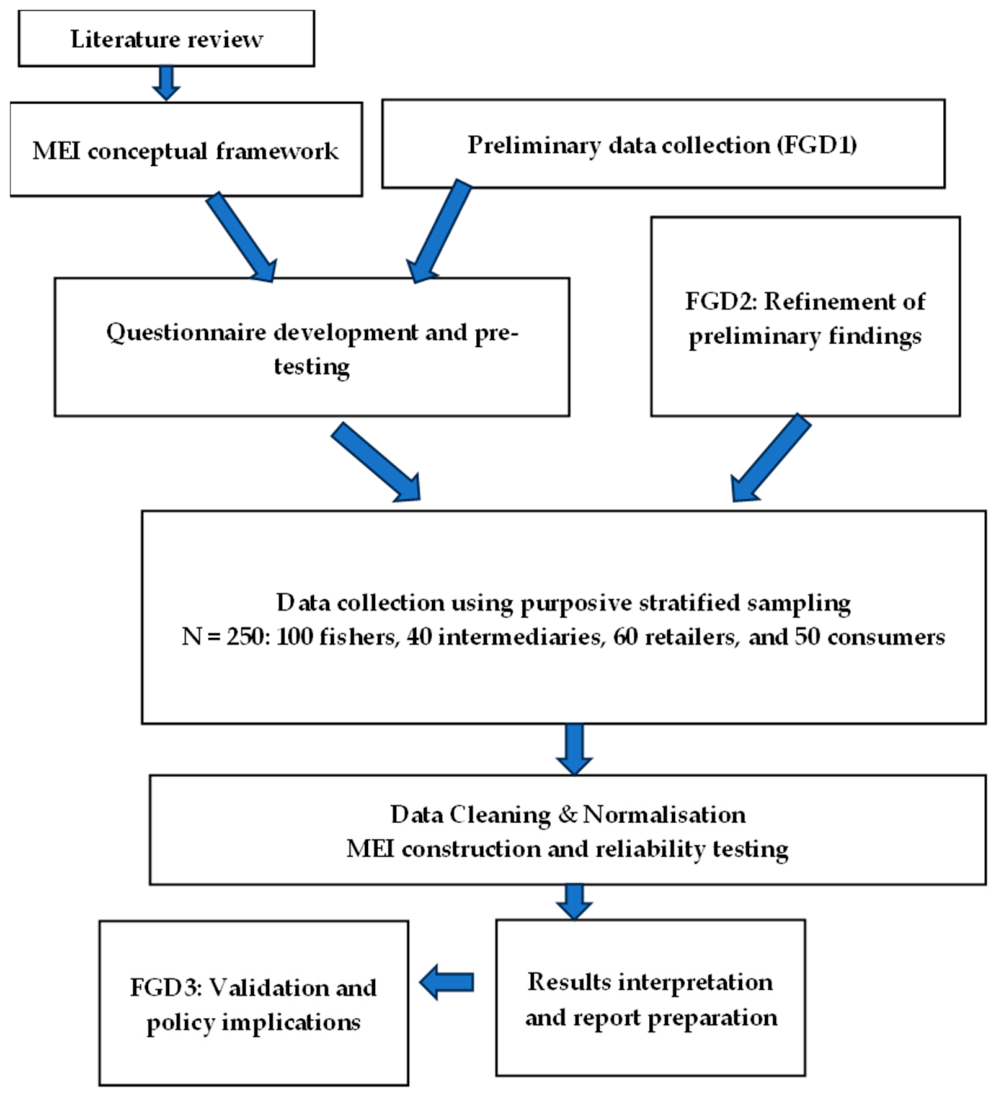
This study adopts a sequential mixed-method research design integrating quantitative survey analysis with qualitative stakeholder consultation. The process begins with a literature review, which informed the development of the MEI conceptual framework and guided preliminary data collection through an initial focus group discussion (FGD1). These two streams jointly informed the development and pre-testing of the questionnaire. FGD2 was conducted to interpret preliminary findings, which further shaped the primary data collection stage. Primary data were collected from 250 respondents—comprising 100 fishers, 40 intermediaries, 60 retailers, and 50 consumers—using purposive stratified sampling across 17 landing sites, market locations, and households. The collected data were then cleaned and normalised, followed by MEI construction and reliability testing. The interpretation of results and report preparation were subsequently carried out, with FGD3 conducted to validate and draw policy implications. The overall methodological framework is summarised in Figure 1.

3.2. Study Area and Site Selection

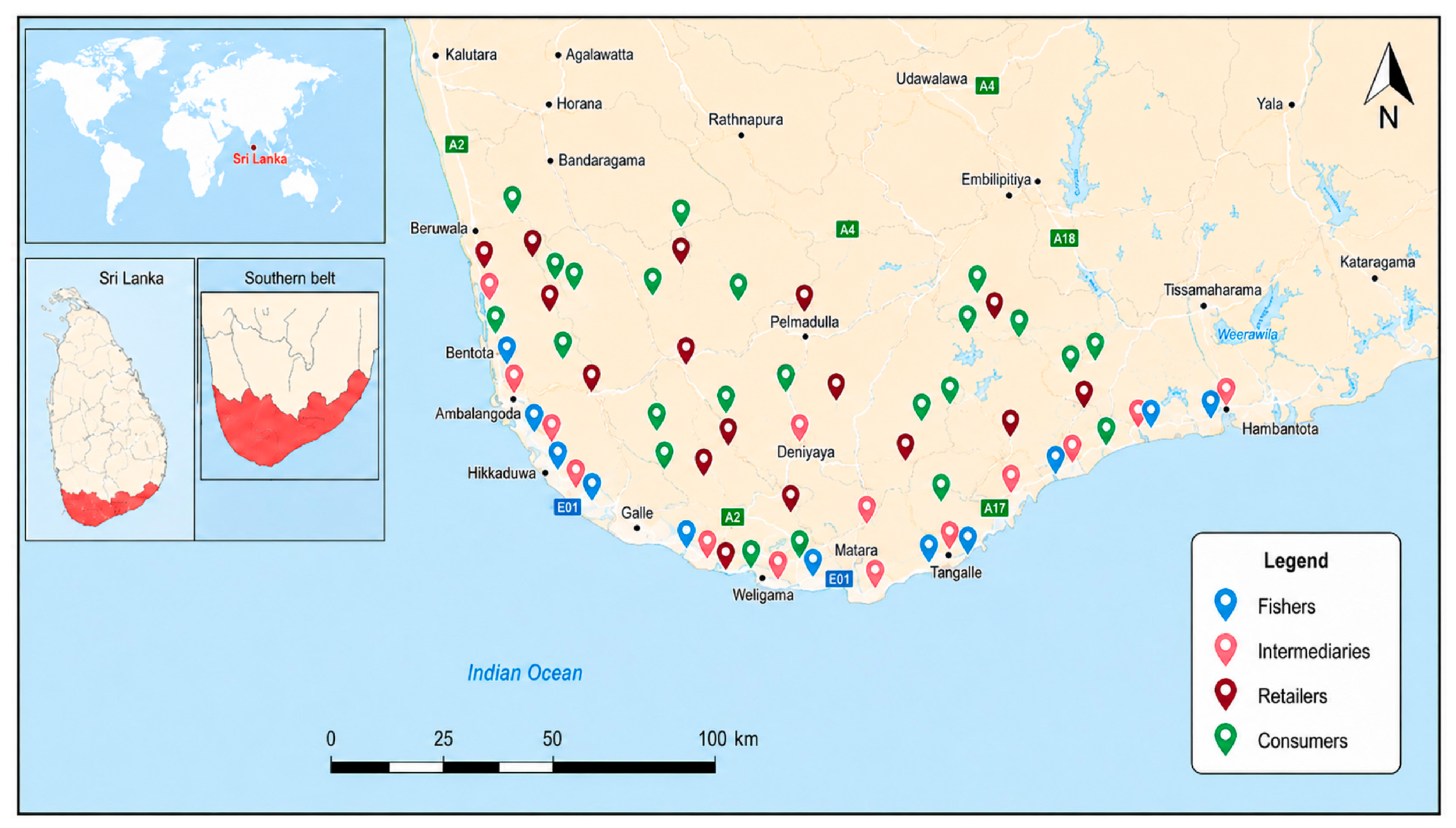
The study was conducted in Sri Lanka’s Southern Province, covering the Galle, Matara, and Hambantota districts, a major marine fisheries region with a dense network of coastal landing sites that supply both coastal and inland markets [6,19]. Seventeen landing sites were purposively selected to capture geographic spread and contrasting value chain governance contexts, including formal auction-based systems, boat-tying and credit-based arrangements (Figure 2), and mixed marketing structures. Those with experience selling through multiple channels were prioritised to enable meaningful comparison of prices, payment timing, trust, flexibility, and credit conditions [60].
Intermediaries and retailers were identified through referrals, direct observation, and snowball sampling. They included collectors, auction actors, wholesalers, boat-tying merchants, mobile vendors, fixed retailers, supermarket suppliers, and CFC personnel. Consumers were recruited across different retail formats to capture variation in purchasing behaviour and access conditions. Data were collected between January and August 2025 to minimise seasonal disturbances. While fisher and intermediary interviews were concentrated along the coastal belt, retailer and consumer data were collected across all three districts with an approximately even spatial distribution, ensuring province-wide coverage of downstream market actors.

3.3. Research Design and Scope

This study adopted a cross-sectional, multi-stakeholder design to evaluate the performance of the domestic fish supply chain. The design captures perspectives from producers, intermediaries/retailers, and consumers. This reflects the multidimensional nature of supply chain efficiency, which extends beyond costs and margins to encompass financial, operational, and quality performance, service and equity performance, and relational governance [31,40]. Operational–quality efficiency captures physical losses, quality assurance, and traceability performance. The study focuses on the domestic market where welfare effects on Sri Lankan fishers and consumers are most direct. Export-oriented chains were excluded. They operate under different governance structures, quality standards, and contractual arrangements, requiring separate analysis [61,62].

3.4. Sampling Strategy and Sample Composition

Purposive stratified sampling was used to ensure representation of the principal stakeholder groups involved in the domestic fish supply chain. Four analytical strata were defined in advance—fishers, intermediaries, retailers, and consumers—reflecting their distinct functional roles in production, exchange, distribution, and final purchase. Within each stratum, respondents were purposively selected for their active involvement in supply chain transactions and ability to provide relevant operational information [6,63]. This approach was adopted because a comprehensive sampling frame covering all actor categories was unavailable, and several groups—particularly intermediary traders—were mobile, informal, or difficult to identify through list-based procedures.
For fishers, administrative records maintained by village fisheries inspectors [64] indicated approximately 39,620 registered fishers across the three study districts. A minimum sample size of approximately 96 respondents was required, calculated using the standard finite population sampling formula at a 95% confidence level and a 10% margin of error [65]. Interviews were conducted with 100 fishers, incorporating a small additional buffer to ensure adequate representation within the stratum.
For intermediaries, retailers, and consumers, no comparable sampling frame existed. These groups were identified through the referral-based tracing process described in Section 3.1, and respondents were selected purposively to ensure coverage of diverse actor types and marketing roles. Sample sizes for these groups were therefore determined by analytical relevance and supply chain diversity rather than proportional representation to an unknown population. The final sample comprised 250 respondents: 100 fishers, 40 intermediaries, 60 retailers, and 50 consumers.

3.5. Data Collection Procedures

Primary quantitative data were collected using three structured questionnaires tailored to fishers, intermediaries/retailers, and consumers. Instruments captured (i) transaction data—prices, quantities, costs, payment timing, and losses—and (ii) service-equity and perception indicators measured using a five-point Likert scale: 1 = very low, 2 = low, 3 = moderate, 4 = high, and 5 = very high [40,56]. All response categories were presented to respondents during the interview and verbally explained by the enumerator to ensure consistent understanding across actor groups with varying literacy levels.
Questionnaires were pre-tested with 15 respondents and revised for clarity. Data collection followed supply-chain tracing logic from landing sites to downstream actors. Direct observation at landing and retail points complemented survey data, particularly for handling practices and visible quality management. Secondary sources provided contextual validation, including documented loss estimates and market statistics.
All primary data were collected through interviews conducted with informed consent. Participation was voluntary, and respondents were free to withdraw at any time. No personal identifiers were recorded, and all responses were anonymised before analysis.
Because the study focuses on actors actively engaged in the domestic fish supply chain, purposive sampling was used to ensure that respondents had direct operational experience and relevant supply chain knowledge. A comprehensive registry covering all actor categories is unavailable in Sri Lanka, and existing partial registries for fishing vessels or licensed fishers are often incomplete or difficult to operationalise in field surveys. Many offshore fishers are migratory or temporarily shift to alternative livelihoods, making list-based random selection impractical. Purposive sampling, therefore, enabled the identification of active participants at landing sites and market locations during fieldwork and facilitated the inclusion of respondents representing the four stakeholder groups described in Section 3.3, with variation in age, literacy levels, and attitudes toward digital technologies. However, because participants were not selected through probabilistic procedures, potential sampling bias should be acknowledged. The findings should therefore be interpreted as reflecting conditions among the selected actors rather than statistically representative estimates of the entire fisheries sector. To mitigate this limitation, respondents were drawn from multiple landing sites and market locations across the Southern Province, ensuring coverage of diverse trading environments. In addition to the structured survey instruments, FGDs were conducted at key stages of the research to support instrument refinement, contextual interpretation of findings, and validation of stakeholder classifications, as described in Section 3.7.

3.6. Market Efficiency Indicators and Variable Definitions

Market efficiency was assessed across four performance domains: Financial Performance, Operational and Quality Performance, Relational Governance, and Service and Equity Performance, consistent with value-chain assessment frameworks [31,40]. All variables correspond directly to indicators reported in Tables 4–7. Indicators were computed at the stakeholder level and subsequently normalised and aggregated as described in Section 3.6.

3.6.1. Financial Performance Variables

Financial Performance captures cost efficiency, profitability, and value distribution within the supply chain. Following established approaches in agricultural marketing and value chain analysis [66,67,68], the sub-index comprises four indicators: operational cost (reversed), profit margin, net share of final price, and stage value share. Buying price, selling price, income, and consumer prices are used to support price-formation analysis, but are not included as standalone variables in the sub-index.
Profit at stage i is given by:
π i = S P i B P i C i
where S P i is the selling price (USD/kg), B P i is the buying price (USD/kg), and C i is the operational cost per kilogram (USD/kg). Operational cost comprises marketing and handling expenditures, including transport, ice, labour, storage, rent, and commissions. For fishers, operational costs include total fishing operation expenses, whereas for intermediaries and retailers, fish procurement costs are excluded. Operational cost ( C i ) is included as a reverse-direction indicator, where lower values indicate stronger financial efficiency.
Profit Margin expresses profit (π) as a proportion of the selling price (SP):
P M i = π i S P i
Net Share of Final Price captures the proportion of the final consumer price retained as profit:
N S F P i = π i P c
where P c denotes the final consumer price (USD/kg).
Stage Value Share decomposes the consumer price into sequential stage contributions:
C S i = ( P i P i 1 ) P c
where P i is the selling price at stage i , and P i 1 is the buying price at that stage.
Buying price, selling price, income (defined as S P B P ), and consumer prices are reported in Table 4 to support price-formation analysis and serve as building blocks for derived indicators; however, they are not included as standalone variables in the Financial Performance sub-index.

3.6.2. Operational and Quality Performance Variables

Operational and Quality Performance reflects physical losses, economic penalties from quality deterioration, and infrastructure capacity, as shown in Table 5. Drawing on the fisheries supply chain literature, in which post-harvest loss and cold-chain capacity serve as standard measures of physical efficiency in perishable food systems [69,70,71], four indicators are included.
Post-harvest physical loss measures the proportion of fish discarded due to spoilage:
P H L ( % ) = Q l o s s Q i n × 100
where Q l o s s is quantity discarded and Q i n is the quantity handled.
Post-harvest quality loss is the percentage of handled fish that deteriorates, reducing market value without resulting in full discard.
Quality-related price loss captures the monetary penalty per kilogram resulting from deterioration:
Q P L = P e x p e c t e d P a c t u a l
where P e x p e c t e d is the expected price under acceptable quality conditions and P a c t u a l is the realised price following deterioration.
Cold-chain capacity and handling, and consistency of quality standards, are perception-based indicators measured on five-point Likert scales (1 = very low; 5 = very high), reflecting access to refrigeration, icing, insulated transport, hygienic handling practices, and perceived uniformity of grading and quality control.

3.6.3. Relational Governance Variables

Relational Governance reflects coordination, transparency, and trust within trading relationships, as shown in Table 6. Governance conditions—including bargaining power, information sharing, and contractual relationships—are recognised in global value chain and agri-food supply chain research as critical determinants of coordination efficiency and value distribution [66,67,72]. Seven indicators are measured on five-point Likert scales (1 = very low; 5 = very high): trust, bargaining power, information sharing, traceability, perceived price fairness, stability of trading relationships, and loyalty.

3.6.4. Service and Equity Performance Variables

Service and Equity Performance captures inclusiveness, accessibility, and functional responsiveness of market participation, as shown in Table 7. Building on the value chain literature, where market access, payment fairness, and channel flexibility serve as standard indicators of smallholder participation conditions [71,73,74]. Six indicators are measured on five-point Likert scales (1 = very low; 5 = very high): market access conditions, payment fairness, buyer and channel choice flexibility, availability of trading partners, time convenience, and complaint resolution.
Mathematical Symbols and Variable Definitions

SP = selling price (USD/kg); BP = buying price (USD/kg); C = operational cost (USD/kg); π = profit (USD/kg); Pc = consumer price (USD/kg); Pi = selling price at stage i (USD/kg); Pi−1 = buying price at stage i (USD/kg); Q l o s s = quantity lost (kg); Q i n = quantity handled (kg); P e x p e c t e d = expected price under acceptable quality (USD/kg); P a c t u a l = realised price after quality deterioration (USD/kg).
Table 2 summarises the four MEI performance dimensions, their indicators, and supporting literature. Collectively, these dimensions reflect a multidimensional view of supply chain efficiency by integrating financial outcomes, operational performance, relational coordination, and equitable service conditions that jointly shape overall chain performance.
Table 2. MEI Performance Dimensions, Indicators, and Supporting Literature.
Performance DimensionIndicatorsKey Supporting Literature
Financial performanceOperational cost (reversed), profit margin, net share of final price, stage value share[66,67]
Operational and quality performancePost-harvest physical loss, quality-related price loss, cold-chain capacity, and quality consistency[69,70]
Relational governanceTrust, bargaining power, information sharing, traceability, perceived price fairness, relationship stability, loyalty[66,67,72]
Service and equity performanceMarket access, payment fairness, buyer/channel choice flexibility, availability of trading partners, time convenience, complaint resolution[71,73]
Source: Author’s own compilation based on literature survey.

3.7. Normalisation and Composite Index Construction

The construction of the MEI followed a sequential procedure designed to ensure transparency and reproducibility. First, respondent-level indicators representing financial performance, operational and quality conditions, relational governance, and service equity dimensions were compiled from the survey data. Second, outliers were identified and removed using the interquartile range (IQR) criterion to minimise the influence of extreme observations. Third, indicators were classified by direction, distinguishing variables in which higher values indicate improved performance from those in which higher values indicate poorer performance. Fourth, indicators were normalised using min–max or reverse min–max transformation to place all variables on a comparable scale. Fifth, the normalised respondent-level values were averaged within each stakeholder group to obtain group-level indicator scores. Sixth, indicators were aggregated into four conceptually defined sub-indices corresponding to financial performance, operational and quality performance, relational governance, and service equity performance. Seventh, stakeholder-level MEI scores were calculated by aggregating the four sub-indices with equal weights; finally, the overall system MEI was computed as the mean of the stakeholder-group MEI scores. The detailed formulas used for normalisation, sub-index construction, and MEI aggregation are presented in the subsections below.
Outliers were identified at the respondent level using the interquartile range (IQR) criterion, defined as values below Q1 − 1.5 × IQR or above Q3 + 1.5 × IQR. They were removed before normalisation to reduce the influence of extreme observations on the composite index. Following outlier removal, indicator values were normalised at the individual respondent level (n = 250) before aggregation to stakeholder-group profiles, ensuring that scaling reflects the empirical distribution of observations rather than relative rankings across aggregated stakeholder means and avoiding distortions that may arise when normalising across a small number of group-level observations. A linear min–max transformation was applied to rescale indicators to a common 0–1 range before aggregation. This approach preserves proportional differences among observations while allowing variables measured in different units to be combined within a composite framework. Unlike z-score standardisation, which centres values around zero and can generate negative scores that complicate interpretation in policy-oriented composite indices, min–max normalisation produces bounded values that are directly interpretable as relative performance positions across actors. This procedure follows standard guidance for composite indicator construction [75,76,77].
Indicators were classified by direction before normalisation. For indicators where higher values represent better performance (e.g., profit margin, producer price share, cold-chain capacity, consistency of quality standards, and all Likert-scale service and relational indicators), min–max normalisation was applied:
X i j * = X i j m i n ( X j ) m a x ( X j ) m i n ( X j )
For indicators where higher values represent poorer performance (e.g., post-harvest physical loss, post-harvest quality loss, quality-related price loss, and marketing costs), reverse min–max normalisation was applied:
X i j * = m a x ( X j ) X i j m a x ( X j ) m i n ( X j )
where X i j denotes the observed value of the indicator j for respondent i , and m i n ( X j ) and m a x ( X j ) represent the minimum and maximum observed respondent-level values of the indicator j after outlier removal.
For Likert-scale indicators (1–5), empirical bounds rather than theoretical limits were used to preserve sample-based variation. Empirical minimum and maximum values were computed across all respondents, pooled, rather than within stakeholder groups, thereby maintaining cross-group comparability and preventing artificial inflation of between-group differences.
Following normalisation, respondent-level indicator scores were averaged within each stakeholder group (fishers, intermediaries, retailers) to generate group-level indicator means.
These indicators were then grouped into four conceptually coherent sub-indices:
  • Financial Performance (4 indicators): operational cost (reversed), profit margin, net share of final price, and stage value share.
  • Operational and Quality Performance (5 indicators): post-harvest physical loss, post-harvest quality loss, quality-related price loss, cold-chain and handling capacity, and consistency of quality standards.
  • Relational Governance (7 indicators): trust, bargaining power, information sharing, traceability, perceived price fairness, stability of trading relationships, and loyalty.
  • Service and Equity Performance (6 indicators): market access conditions, payment fairness, buyer/channel choice flexibility, availability of trading partners, time convenience, and complaint resolution/responsiveness.
For the stakeholder group g and sub-index k , the sub-index score was calculated as the unweighted mean of its constituent indicators:
S I g k = 1 n k j = 1 n k X g j *
where n k denotes the number of indicators included in the sub-index k .
The MEI for the stakeholder group g was then computed as the unweighted mean of the four sub-indices:
M E I g = 1 4 k = 1 4 S I g k
The overall system MEI was calculated as the unweighted mean of the stakeholder-group MEI scores. Consumers were surveyed to triangulate perceptions of service conditions, quality, and relational transparency across the supply chain; however, they were excluded from the MEI computation because they do not perform production, marketing, or coordination functions.
Equal weighting was adopted for MEI aggregation because the four sub-indices represent conceptually distinct dimensions of supply chain efficiency, and there is no strong theoretical or empirical basis for assigning differential importance to them. This approach avoids introducing subjective bias into the aggregation process and follows established guidance for composite indicator construction [76], and is widely used in multidimensional indices for policy analysis, including the Human Development Index [46,75].
Nonetheless, alternative weighting schemes could place greater emphasis on specific dimensions—for instance, assigning greater importance to financial performance relative to relational governance—and may therefore modestly affect the interpretation of comparative performance across stakeholder groups. For example, greater weight on financial performance could shift absolute MEI scores toward actors with stronger financial positions, particularly retailers. In contrast, greater weight on relational governance or service equity could increase the salience of non-financial constraints affecting more vulnerable actors. The present study adopts equal weighting to preserve transparency and comparability within an exploratory diagnostic framework; however, future research could test stakeholder-informed, expert-derived, or data-driven weighting structures as an additional sensitivity exercise.
Two robustness checks were conducted. First, stakeholder ranking patterns were examined across individual sub-indices. Rankings were consistent across all four dimensions, with retailers outperforming other actors throughout, indicating that no single dominant sub-index drives the overall MEI. Second, the MEI was recalculated using z-score standardisation in place of min–max normalisation. The relative ranking of stakeholder groups remained unchanged, with fishers recording the lowest efficiency scores, intermediaries occupying an intermediate position, and retailers recording the highest efficiency scores. Together, these checks confirm that the reported efficiency gradient is robust to both the aggregation structure and the normalisation procedure.

3.8. Data Analysis Procedures

Qualitative validation was incorporated through three FGDs conducted at different stages of the research; full details are provided in Section 3.8.
Quantitative analysis was conducted in R version 4.4.1 using the packages dplyr, tidyr, and stats for data cleaning, descriptive statistics, normalisation, and composite index construction. All index computations were implemented using base R functions to ensure reproducibility.
The internal consistency of perception-based indicators was evaluated using Cronbach’s alpha. The relational governance scale (7 items) yielded an alpha of 0.76; the service–equity scale (6 items) yielded an alpha of 0.82; and the operational–quality perception items (cold-chain capacity, handling quality, and quality consistency) yielded an alpha of 0.79. All values exceed the commonly accepted reliability threshold of 0.70, indicating satisfactory internal consistency for the perception-based constructs included in the composite index.
Identified inefficiencies were then systematically linked to potential digital interventions and evaluated for technical feasibility, economic inclusiveness, and institutional compatibility within the Sri Lankan domestic fish market context, ensuring that recommended interventions directly address empirically diagnosed structural constraints rather than technology-driven assumptions.

3.9. Qualitative Data Collection, Interpretation, and Validation

Three FGDs were conducted across successive stages of the research to strengthen construct validity, support contextual interpretation of supply chain conditions, and provide stakeholder-informed validation of findings and policy implications.
The first FGD, conducted before the main survey, involved 15 participants—including fishers, intermediaries, retailers, fisheries officers, and digital technology specialists. Participants reviewed preliminary efficiency indicators identified from the literature, assessed their relevance to local fisheries supply chain conditions, prioritised key dimensions, and suggested practical measurement characteristics that informed the final specification of the MEI variables and questionnaire instruments.
The second FGD, involving 12 participants from the fisheries sector and digital technology specialists from both industry and academia, was conducted after preliminary quantitative analysis. Participants provided descriptive explanations of observed efficiency patterns across supply chain actors, discussed potential digital solutions to operational, governance, and coordination constraints, and identified practical barriers to their implementation.
The third FGD, conducted after preparation of the initial study draft, involved 18 participants from the fisheries sector, related institutions, and academic and policy specialists. Participants reviewed the key empirical findings, assessed whether the observed patterns among fishers, intermediaries, and retailers were consistent with operational conditions in the fisheries supply chain, and explored institutional governance constraints and policy measures needed to address the identified inefficiencies.
FGD sessions were audio-recorded with participant consent and subsequently transcribed using automated speech recognition software. Relevant segments were identified through a structured review of transcripts, focusing on indicator relevance, efficiency patterns, opportunities for digital solutions, and policy implications. Key themes were coded manually using a simple categorical scheme aligned with the study’s analytical framework, then synthesised to inform indicator specification, qualitative interpretation of quantitative findings, and policy recommendations. This process did not constitute a full qualitative thematic analysis but rather a structured information extraction procedure designed to triangulate and contextualise the quantitative results.

4. Results

All prices are reported in nominal USD in 2025 using an average exchange rate of approximately 1 USD = 300 LKR. The sample comprises mixed-species transactions dominated by demersal and small pelagic catches.

4.1. Supply Chain Structure and Actor Roles in the Domestic Fish Marketing System

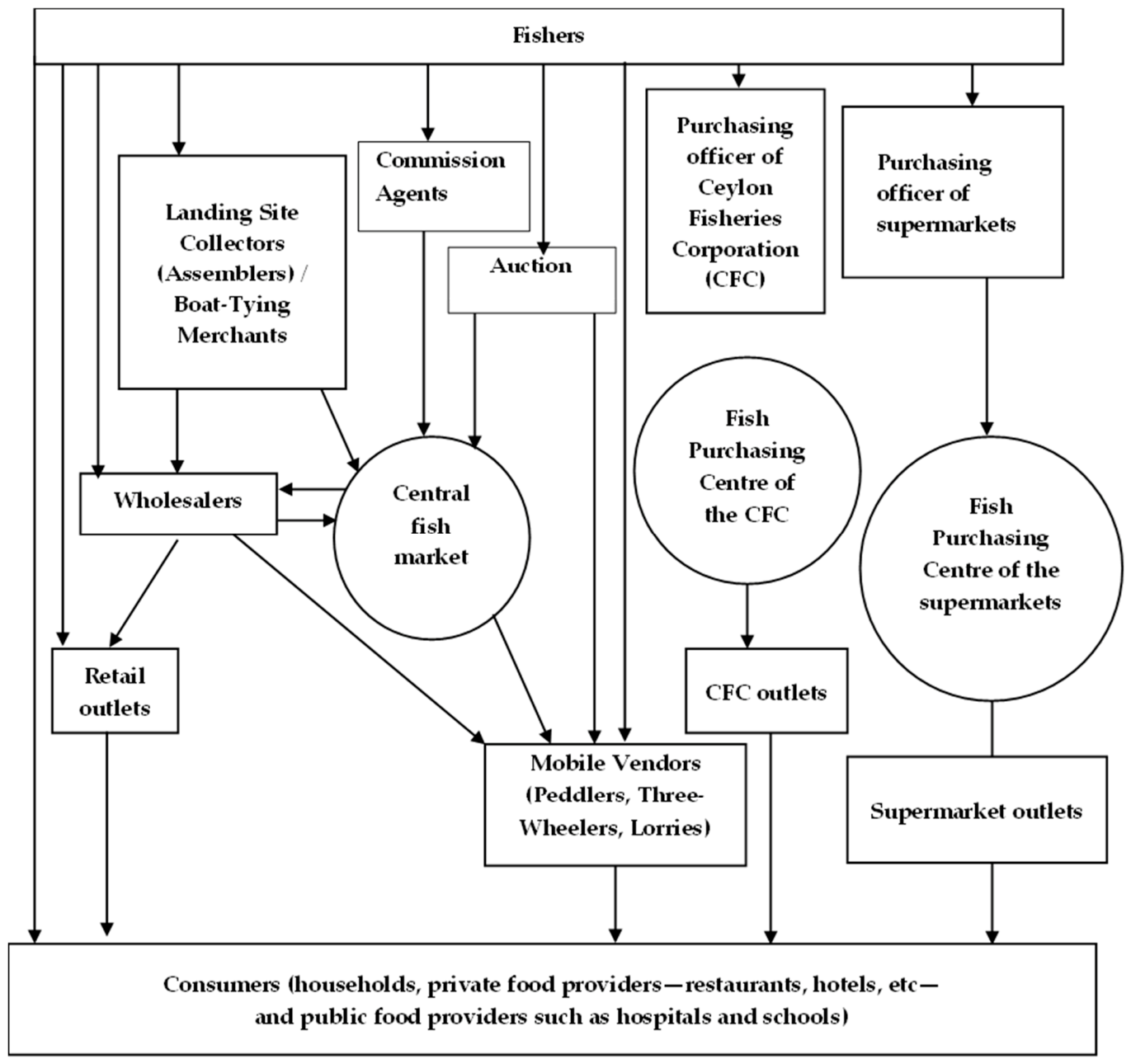
Figure 3 illustrates the structure of domestic fish marketing channels in Sri Lanka, tracing the movement of fish from capture to final consumption.
The mapping reveals a complex, multi-layered system in which actors can be analytically grouped into four principal categories: fishers, intermediaries, retailers, and end consumers. These actors interact through multiple institutional arrangements, including auction systems, merchant-based procurement, wholesale redistribution, and retail distribution channels. The analysis focuses exclusively on domestic marine fresh fish channels (wild-caught seafood only); export-oriented dried fish and imported fish channels are excluded because they operate under distinct governance and pricing mechanisms.
Fishers land their catch at coastal landing sites where first-sale transactions occur. Fish may be purchased by landing site collectors (assemblers), sold through auction mechanisms, or procured directly by buyers representing the Ceylon Fisheries Corporation. Approximately 21% of fish volume is sold through formal auction systems with competitive bidding, while about 39% of fishers actively negotiate with buyers, offering the best price. The remaining fishers operate under boat-tying arrangements, in which advance financing obligates them to sell exclusively to a predetermined buyer, restricting price negotiation and limiting producers’ price shares while providing access to credit, equipment, and operational support.
Following initial transactions, fish are distributed through a network of intermediaries and wholesale markets. A significant share of fish moving to inland regions passes through the Peliyagoda wholesale market in Colombo (Manning Market), which functions as the primary national redistribution hub. From this central market, fish are transported to secondary wholesale markets and retail outlets in mid-country and inland areas. Each additional stage introduces handling, transportation time, and distance, which increase transaction costs, product losses, and ultimately consumer prices.
Retail distribution occurs through several channels, as summarised in Table 3, which presents the characteristics of the principal supply chain actors. Mobile vendors serve neighbourhood markets using transport modes that vary with delivery distance. Peddlers typically use push bicycles for very short deliveries; motorbikes serve peri-urban areas; and three-wheelers and small lorries are used for longer routes to inland markets. Some mobile vendors also operate as commission agents, connecting wholesalers with retailers and earning fees for facilitating transactions. Additional retail channels include market stalls, supermarkets, and public retail outlets operated by the Ceylon Fisheries Corporation.
The decision-making profiles of the principal actor groups differed in age, experience, gender composition, and education. Supply chain actors were overwhelmingly male; all respondents among fishers, beach collectors, wholesalers, and mobile vendors were male, reflecting the gendered structure of marine fisheries in Sri Lanka’s Southern Province. Female participation was limited among market-stall retailers (15%) but was highest among consumers (60%), consistent with women’s central role in household food purchasing. Mean ages ranged from 34 years among market-stall retailers to 51 years among wholesalers, while average experience broadly followed a similar pattern, peaking at 29 years among wholesalers and remaining lower among retail actors (14–15 years). Educational attainment was relatively uniform across supply chain actors, with Ordinary Level as the modal qualification, whereas consumers most commonly reported Advanced Level education.
Table 3. Fish Supply Chain Structure and Key Actors.
Actor CategoryMain RoleAvg.
Volume Handled (kg/day)
Avg.
Distance from Landing Site (km)
Transport ModeKey Value-Adding Activities
FishersHarvesting and first sale82.00 ± 55.340 (landing site sale)BoatsRemoving fish from nets, sorting, and limited icing
Beach collectors (assemblers)Aggregation and primary distribution843.34 ± 42.122.16 ± 0.54Three-wheelers/pickupsBulk handling, initial sorting, short-distance transport
WholesalersBulk trade and redistribution3204.45 ± 951.0035.34 ± 8.54Lorries (non-refrigerated)Storage, grading, transportation
Retailers—Mobile VendorsFinal sale (small-scale)73.00 ± 28.0234.78 ± 29.47Bicycles/motorcyclesRemoving gills and guts, slicing, transporting, and selling
Retailers—Market StallsFinal sale (small-scale)156.00 ± 55.3493.56 ± 18.43Three-wheelersDisplay, slicing, selling
SupermarketsLarge-scale commercial retail415.00 ± 46.4375.05 ± 22.68Refrigerated trucksCold-chain storage, packaging, processing
Ceylon Fisheries Corporation outletsPublic retail distribution334.78 ± 34.3463.83 ± 10.32Refrigerated trucksCold storage and regulated retail distribution
ConsumersHousehold consumption0.51 ± 0.25NANAHousehold preparation and consumption
NA: Not Applicable. Volumes and distances are indicative averages derived from field observations and secondary literature. Source: Author’s own elaboration based on Survey data 2025.

4.2. Financial Performance and Price Formation Across Supply-Chain Actors

Table 4 reports buying and selling prices, income, operational costs, profits, and profit margins for key supply-chain actors. For the traditional channel (fisher–intermediary–retailer), the table additionally decomposes the final consumer price (USD 6.33/kg) into stage-wise contributions, providing a structural view of price formation and value capture. For supermarkets and CFC outlets, which operate as direct retail channels, the contribution to consumer price reflects the total value added as a share of their respective consumer prices, rather than a stage-wise decomposition. Income is defined as the difference between selling and buying prices, while operational costs include marketing and handling expenditures but exclude fish procurement costs for intermediaries and retailers; for fishers, costs encompass all expenses of the fishing operation.
In the traditional channel, the final consumer price averaged USD 6.33/kg; supermarket and CFC consumer prices averaged USD 7.00/kg and USD 6.50/kg, respectively. Operational cost (USD/kg) includes transport, handling, ice, labour, storage, rent, and commissions; for fishers, it reflects total fishing operation expenses, while for intermediaries and retailers, fish procurement costs are excluded. Profit margin (%) is calculated as profit relative to the selling price. The net share of the final price (%) is computed as profit per kilogram divided by the final consumer price. Stage value share (%) represents each stage’s contribution to the final consumer price. Reported values reflect average prices across multiple species and product forms.
Table 4. Financial Performance Indicators across Supply-Chain Actors.
Performance IndicatorFishersIntermediariesRetailers (Traditional)SupermarketsCFC Outlets
Operational Cost (USD/kg)1.77 ± 0.590.74 ± 0.181.02 ± 0.211.58 ± 0.122.08 ± 0.28
Profit Margin (USD/kg)0.56 ± 0.380.59 ± 0.101.65 ± 0.251.56 ± 0.110.53 ± 0.09
Profit as Share of Selling Price (%)24.04 ± 11.2016.18 ± 1.6026.05 ± 4.3322.29 ± 2.538.10 ± 1.81
Contribution to Consumer Price (%)36.84 ± 18.5021.05 ± 2.2342.11 ± 6.34NANA
Note: Values are reported as mean ± standard deviation based on survey observations. Stage value share represents the proportion of the final consumer price captured at each stage of the traditional domestic supply chain and sums to 100% across fishers, intermediaries, and traditional retailers. Stage value share is not reported for supermarkets and Ceylon Fisheries Corporation outlets because these operate as independent retail channels with separate consumer prices. NA = not applicable. Source: Author’s own elaboration based on survey data, 2025.

4.3. Operational and Quality Performance by Stakeholder

Table 5 presents operational and structural conditions across supply-chain stakeholders. Fishers experience the highest post-harvest losses and the most limited cold-chain capacity, reflecting weak infrastructure at the point of harvest. Intermediaries achieve lower physical and quality losses but operate with moderate handling capacity. Retailers demonstrate stronger quality preservation and market access.
Table 5. Operational and Quality Conditions by Stakeholder.
Performance IndicatorFishersIntermediariesRetailersConsumers
Post-harvest physical loss (%)8.12 ± 3.835.28 ± 0.793.18 ± 0.62NA
Post-harvest quality loss (%)41.54 ± 28.048.34 ± 1.869.38 ± 1.49NA
Quality-related price loss (USD/kg)0.71 ± 0.270.32 ± 0.080.18 ± 0.05NA
Cold-chain and handling capacity (1–5)2.22 ± 1.013.83 ± 0.564.10 ± 0.68NA
Consistency of quality standards (1–5)4.04 ± 0.724.34 ± 0.443.73 ± 0.533.38 ± 0.61
Note: NA = not applicable as consumers are end users and do not engage in post-harvest handling or cold chain operations. Source: Author’s own elaboration based on survey data, 2025.
Consumer-reported indicators reveal inconsistent quality standards and market access, particularly between coastal and inland markets. Operational conditions are systematically weaker in inland and mid-country markets due to longer transport distances, cumulative handling, limited access to the cold chain, and weaker buyer competition compared with coastal markets.
Post-harvest physical loss (%) refers to the proportion of fish discarded or spoiled to the point of being unmarketable. Post-harvest quality loss (%) captures deterioration in freshness and handling quality that reduces market value without resulting in physical discard. Quality-related price loss (USD/kg) reflects the monetary penalty per kilogram associated with such quality deterioration. Cold-chain and handling capacity, consistency of quality standards, and market access conditions are perception-based indicators reported by each actor group and measured on a 1–5 Likert scale (1 = very low; 5 = very high).

4.4. Relational and Governance Indicators Across Supply-Chain Actors

Table 6 reports relational equity indicators across supply-chain actors, measured on a 1–5 Likert scale (1 = very low; 5 = very high). Intermediaries exhibit the strongest bargaining power (4) and the most stable trading relationships (4), reflecting their strategic position in connecting fishers to downstream markets. Retailers achieve the highest scores in trust (4), information sharing (4), perceived price fairness (4), and relationship stability (4), suggesting stronger relational governance at the retail stage. Fishers report comparatively weaker bargaining power (2) and perceived price fairness (2), despite relatively high traceability (4), indicating that product knowledge does not translate into negotiating advantage. Consumers report moderate scores across most indicators but low bargaining power (2), traceability (2), and perceived price fairness (2), highlighting limited transparency and influence at the end of the chain.
Table 6. Relational Governance Indicators across Supply-Chain Actors.
Performance IndicatorFishersIntermediariesRetailersConsumers
Trust (1–5)3.45 ± 1.863.90 ± 1.404.61 ± 0.633.63 ± 0.54
Bargaining power (1–5)2.11 ± 0.934.09 ± 0.573.28 ± 0.232.10 ± 0.82
Information sharing (1–5)3.93 ± 1.043.21 ± 1.024.55 ± 0.353.24 ± 0.84
Traceability (1–5)4.88 ± 0.423.07 ± 0.602.27 ± 0.412.48 ± 0.39
Perceived price fairness (1–5)2.02 ± 0.843.93 ± 1.454.37 ± 0.15 2.87 ± 0.18
Stability of trading relationships (1–5)3.65 ± 1.184.04 ± 0.044.36 ± 0.273.69 ± 0.68
Loyalty (1–5)4.24 ± 0.213.16 ± 0.753.43 ± 0.834.49 ± 0.32
Note: Relational equity indicators are actor-reported perceptions measured on a 1–5 Likert scale (1 = very low; 5 = very high) and are analytically distinct from the operational-quality and service-equity indicators reported in Table 5 and Table 7. Source: Author’s own elaboration based on survey data, 2025.

4.5. Service–Equity Conditions Across Supply-Chain Actors

Table 7 summarises service–equity conditions across supply-chain actors, capturing how access, fairness, flexibility, reliability, and responsiveness shape day-to-day market interactions. Indicators are based on actor-reported perceptions, reflect the inclusiveness and functionality of market services, and are analytically distinct from financial and operational performance.
Table 7. Service–Equity Conditions across Supply-Chain Actors.
Service–Equity DimensionFishersIntermediariesRetailersConsumers
Market access conditions (1–5)2.32 ± 0.453.33 ± 1.454.67 ± 0.234.01 ± 0.44
Payment fairness (1–5)2.38 ± 0.684.52 ± 0.334.37 ± 0.453.27 ± 0.23
Buyer/channel choice flexibility (1–5)3.26 ± 0.233.05 ± 0.464.12 ± 0.513.31 ± 0.94
Availability of trading partners (1–5)3.29 ± 0.16 4.03 ± 0.153.68 ± 0.703.40 ± 1.03
Time convenience (1–5)3.03 ± 0.783.64 ± 0.374.32 ± 0.362.85 ± 0.63
Complaint resolution/responsiveness (1–5)2.03 ± 0.563.56 ± 0.754.18 ± 0.542.68 ± 0.51
Note: Values are actor-reported perceptions measured on a five-point Likert scale (1 = very low; 5 = very high). Market access conditions reflect the ease of reaching buyers or sellers. Payment fairness captures perceptions of pricing and settlement equity. Buyer/channel choice flexibility reflects the ability to switch trading partners or market outlets. Availability of trading partners captures the reliability of access to supply sources or buyers. Time convenience reflects transaction speed and the suitability of timing. Complaint resolution/responsiveness captures the perceived effectiveness of addressing disputes or service problems. Source: Author’s own elaboration based on survey data, 2025.

4.6. Composite Market Efficiency Indices

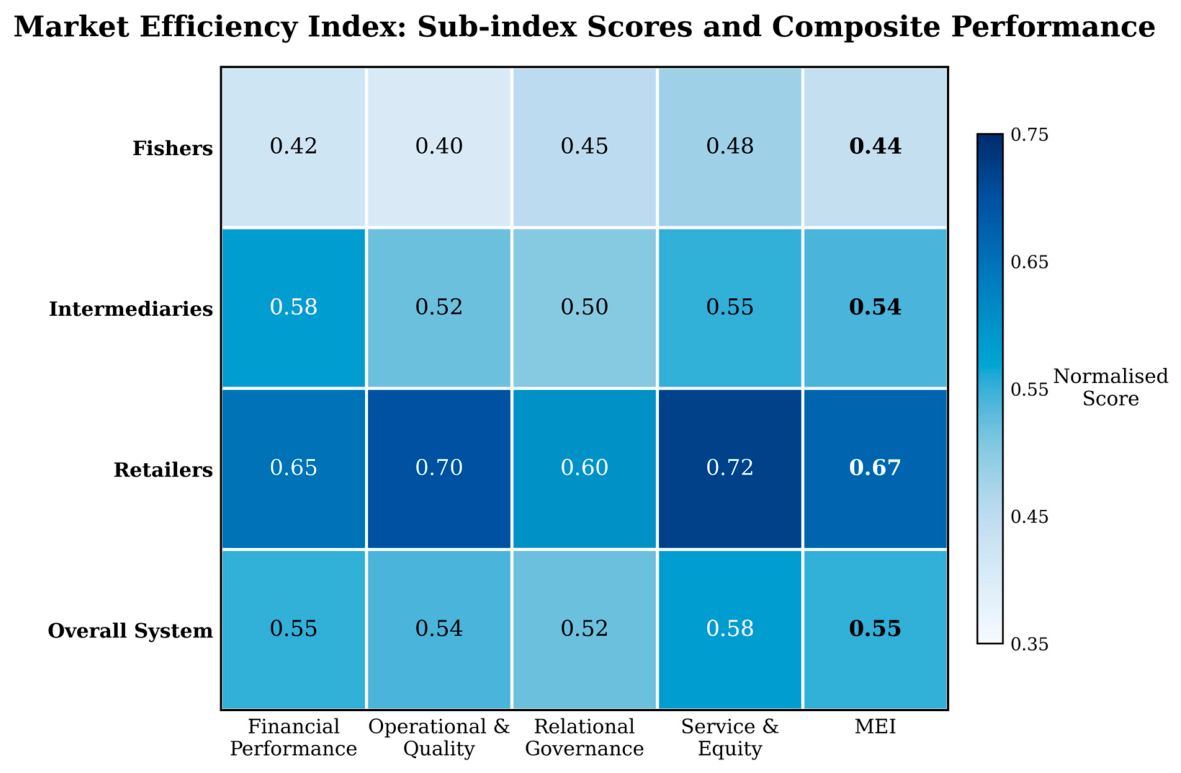
Figure 4 presents the MEI results as a heatmap of normalised sub-index scores (0–1) across four performance dimensions for each actor group. The final column reports the composite MEI score for each actor, the bottom row presents system-level dimension averages, and the bottom-right cell shows the overall system MEI. This visual summary allows comparison of both actor-level and system-level performance patterns.
Retailers scored highest (MEI = 0.67), driven by strong performance in Service and Equity (0.72) and Operational Quality (0.70). Fishers score lowest (MEI = 0.44), reflecting weaker performance in the Financial (0.42) and Operational Quality (0.40) dimensions. At the system level, Relational Governance is the weakest dimension (0.52), indicating that coordination quality and transparency represent the most constrained aspect of supply chain functioning.
The results reveal systematic efficiency differentials among supply chain actors, driven by positional advantages in market information, storage capacity, and buyer access, as well as by differences in handling and transaction practices. Fishers’ low efficiency scores stem primarily from liquidity constraints, information asymmetry, and limited access to cold chains, whereas retailers achieve higher scores due to superior infrastructure and market proximity. Post-harvest losses remain substantial, particularly in quality deterioration (41% for fishers and 8% for intermediaries), reflecting constraints in the cold chain and handling. These diagnosed barriers provide the empirical foundation for the targeted digital intervention roadmap presented in Section 4.7 and discussed further in Section 5.

4.7. Supply Chain Barriers and Digital Intervention Pathways

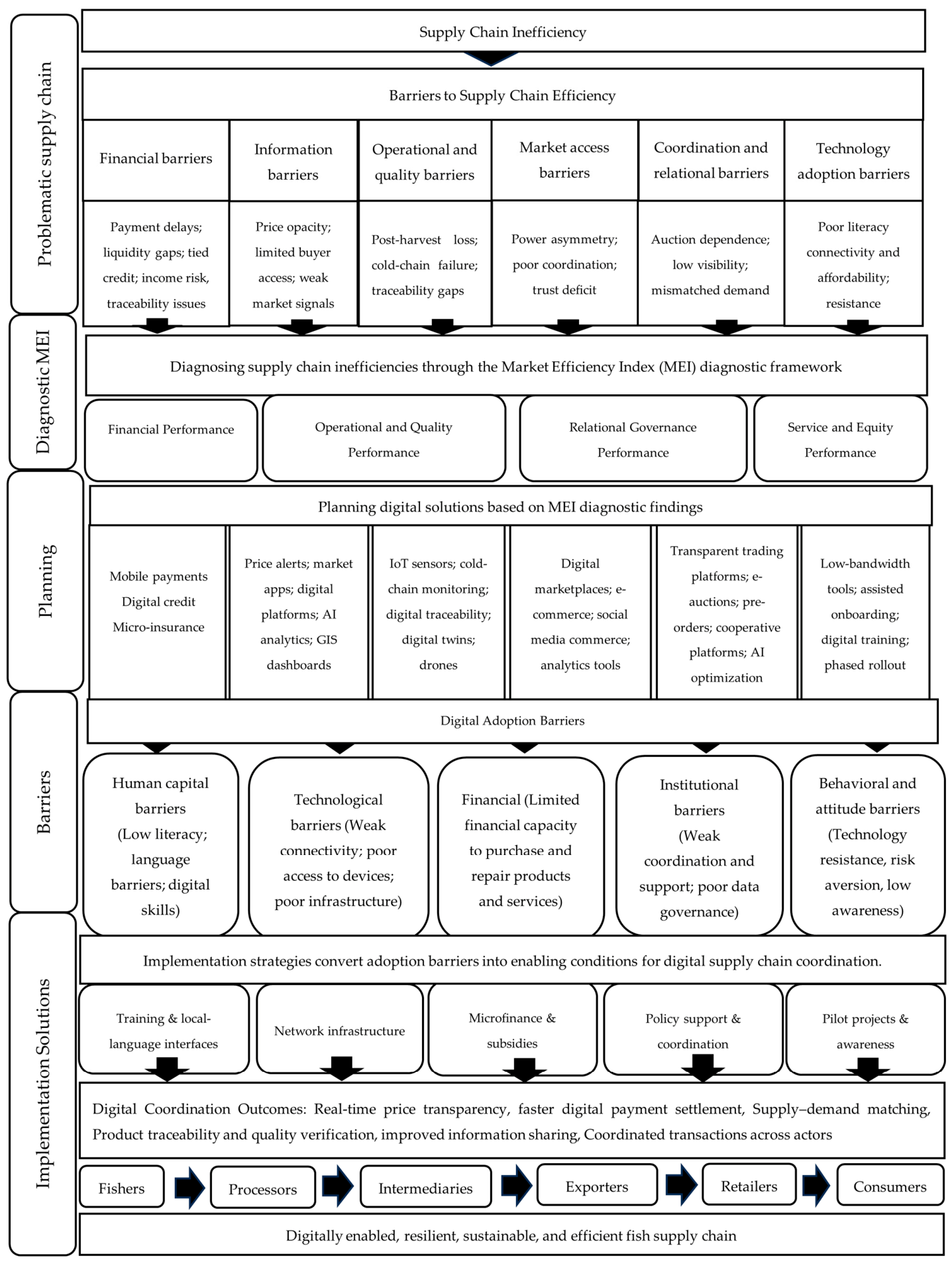
The barrier categories in Table 8 were derived from three sources: empirical MEI results and related survey indicators; qualitative insights from focus group discussions and open-ended responses; and the relevant literature on fisheries supply chain constraints and digital coordination mechanisms.
Recurrent issues were grouped into five broad domains: financial, information, operational and quality, marketing, and relational and coordination barriers. The corresponding digital technologies were identified through a review of the agrifood, fisheries, and digital supply chain literature [78]. They were selected based on technical feasibility, contextual applicability to fisheries supply chains in developing economies, and evidence of prior application in agri-food or fisheries supply chain contexts. Each technology was mapped to the relevant barrier category based on its primary coordination function, and the table presents a structured synthesis that links empirically identified constraints to literature-supported digital response options and phased implementation pathways [79].
The MEI diagnostic results indicated that liquidity constraints and payment delays affecting fishers are associated with mobile payment platforms and electronic settlement systems, which can also generate digital transaction records relevant to formal microfinance access. Information asymmetry in price formation was associated with SMS-based price alerts, mobile dashboards, and digital market information systems suited to low-literacy contexts. Gaps in cold-chain infrastructure, contributing to post-harvest losses of 15–25% among intermediaries, were addressed through IoT-based temperature sensors, digital cold-chain monitoring, and traceability tools that support quality-based pricing. Income volatility associated with climate exposure was matched to parametric insurance products delivered through mobile platforms. At higher tiers, artificial intelligence applications relevant to perishable food logistics—including demand forecasting, dynamic price discovery, route optimisation, cold-chain diagnostics, and supply-risk prediction—were identified as longer-horizon options for fisheries supply chains. Machine learning models applied to price and catch data can help identify favourable selling windows. At the same time, AI-driven cold-chain diagnostics can flag quality risks before value is lost. Table 8 presents a comprehensive mapping of identified barriers to corresponding digital interventions, organised by tier of technological complexity and infrastructural prerequisites.
FGDs and open-ended responses identified several constraints to the adoption of digital technology in the domestic fish supply chain. Participants reported challenges related to digital literacy, language barriers, weak telecommunications infrastructure in some coastal areas, limited financial capacity to acquire technological tools, and concerns regarding the reliability and maintenance of digital equipment. Behavioural and institutional factors, including reluctance to adopt unfamiliar technologies, low awareness of digital solutions, and weak institutional coordination—were also identified as constraints. Table 9 summarises the identified barriers and the enabling conditions suggested by participants.

5. Discussion

5.1. Implications for Theory

This study contributes to research on logistics and supply chain management in small-scale perishable food chains in developing countries. In these settings, supply chains are often fragmented, formal support systems are weak, and exchange depends heavily on informal relationships. These conditions make the relational view of the firm especially relevant. This view links performance to the quality of ties between actors rather than to resources held within them, and the findings extend that logic to a setting where such ties operate largely outside formal contracts [80,81,82]. Five contributions emerge. First, efficiency is shaped not only by prices and costs but also by coordination and governance conditions. Second, informal arrangements can weaken price efficiency while still providing credit and continuity where formal institutions are weak. Third, efficiency varies markedly across actors, and these differences are difficult to capture with single-actor or aggregated models, particularly because factors such as individual capabilities, resource access, and operational contexts can significantly influence performance outcomes. Fourth, information asymmetry at multiple points in the chain affects both upstream distribution and downstream consumer confidence, making traceability and signalling efficiency mechanisms rather than only safety tools. Fifth, the MEI offers a practical diagnostic framework for analysing structurally diverse chains, where conventional frontier methods may be less suitable. Each contribution is discussed below in relation to the findings and the relevant SCM literature [80,83,84].

5.1.1. Coordination and Governance in the Supply Chain

Sri Lanka’s domestic fish supply chain is highly heterogeneous, reflecting geographic dispersion, institutional diversity, and socio-economic variation. Small-scale marine fishers land catches at coastal sites, while offshore fishers use fisheries harbours. Fish then moves through multiple pathways involving collectors, auctioneers, commission agents, wholesalers, transporters, retailers, and consumers. The Ceylon Fisheries Corporation (CFC) operates alongside private-sector actors, including modern retail chains and informal traditional channels, with a mandate to stabilise prices through market participation rather than regulation.
Retail formats vary widely. Mobile vendors serve neighbourhoods and peri-urban areas through repeated, trust-based interactions, while fixed market stalls near landing sites and urban centres enable direct inspection and price negotiation. Supermarkets cater primarily to urban middle- and high-income consumers, emphasising hygiene, refrigeration, and standardised quality at premium prices. CFC outlets provide relatively stable marketing channels for fishers but face operational rigidities, delayed payments, and high labour costs. Informal institutions also play a central role in governing market transactions. Boat-tying arrangements link fishers to specific buyers through advance financing, while auction systems provide competitive price discovery at the landing stage. Together, these institutional arrangements shape market coordination and price formation across the supply chain.
The arrangements just described—boat-tying ties, auction coordination, and layered intermediation—indicate that efficiency in this chain emerges from links among actors rather than from any single firm. This aligns with supply network theory, which explains performance through interdependence across connected actors. In small-scale perishable systems, such interdependence is intensified because uneven access to information and market timing translates quickly into uneven performance [85,86,87].

5.1.2. Informal Governance and Institutional Voids

From a market-efficiency perspective, boat-tying arrangements tend to operate as a source of allocative inefficiency. Because fishers receiving advance financing are obligated to sell exclusively to specific buyers, competitive price discovery is restricted, and producer bargaining power is weakened. Buyers may therefore procure fish at below-market prices while selling into downstream markets at competitive rates, capturing a disproportionate share of value. This pattern is reflected empirically in the MEI results, where fishers recorded the lowest bargaining power and producer price share scores across all stakeholder groups. However, these arrangements persist because they provide essential coordination services in an environment where formal financial institutions and support systems remain weak. Informal credit, fuel supply, guaranteed purchase of catches, and emergency assistance at sea allow fishing operations to continue despite high production risk. Consequently, eliminating boat-tying without first establishing substitute mechanisms for credit provision and operational support could disrupt supply chain continuity, suggesting that policy interventions should prioritise formalising the supportive functions these arrangements provide rather than simply prohibiting them.
This finding connects to institutional voids theory. That theory explains why informal arrangements emerge when formal systems for credit, risk sharing, and exchange support are weak. The result supports that logic but also suggests that such arrangements can do more than fill a gap. In this case, they help maintain continuity in a risky perishable chain even while distorting price signals [88,89].

5.1.3. Actor Heterogeneity and Value Capture

The results reveal a clear efficiency gradient along the supply chain. Fishers record the lowest Market Efficiency Index (MEI = 0.44), intermediaries occupy an intermediate position (MEI = 0.54), and retailers—particularly supermarkets—achieve the highest scores (MEI = 0.67). Overall system efficiency remains moderate (MEI = 0.55), indicating a market that functions but underperforms due to persistent structural frictions. The gradient is not random: downstream actors benefit from superior market information, storage capacity, and proximity to consumers, while upstream producers face constrained bargaining power, weak infrastructure, and restricted access to buyers, regardless of their effort. This pattern holds across all four MEI performance dimensions, suggesting that position in the chain—not individual firm behaviour—drives the observed distribution of efficiency.
This efficiency gradient is further shaped by structural differences in the roles actors occupy within the supply chain. Upstream actors operate primarily at the production stage, where income depends on biological uncertainty, weather conditions, and volatile catch volumes. In contrast, downstream actors function in trading and distribution roles that allow greater control over transaction timing, market selection, and price negotiation. Intermediaries and retailers, therefore, benefit from stronger market connectivity and greater flexibility in coordinating supply flows. At the same time, fishers remain structurally constrained by the immediacy of landing-site transactions and limited influence over downstream marketing channels. These positional differences within the supply chain structure contribute to the efficiency gradient observed across stakeholders and highlight how market organisation itself shapes performance outcomes independently of individual actors’ behaviour, a pattern reflected consistently across all four MEI performance dimensions.
Fishers’ low efficiency scores stem primarily from financial and relational constraints. Chronic liquidity shortages, unstable incomes, and immediate cash needs leave little scope to delay sales or compare buyers, while limited access to cold storage and high perishability force immediate sale irrespective of price. Intermediaries perform coordination functions that add genuine value through aggregation, transport, credit provision, and risk absorption. However, operational inefficiencies such as weak cold chains and repeated handling generate post-harvest losses of 15–25%. Retailers achieve higher efficiency scores through stronger cold-chain management, more consistent product availability, and closer proximity to consumers. However, formal retail channels remain concentrated in higher-income urban markets while traditional vendors continue to play a central role in food access for coastal and rural communities.
The gradient sits within a Global Value Chain reading, where value capture is shaped by control over coordination points in the chain. Classical GVC analysis centres this capture in a single lead firm—typically a global buyer or brand. The evidence here points to a different structure: in domestic small-scale perishable chains, coordination authority and value capture are distributed across several intermediary tiers rather than concentrating in one. This suggests GVC’s lead-firm framing requires adjustment when applied to fragmented domestic chains, where power operates polycentrically rather than hierarchically [90,91].

5.1.4. Information Asymmetry and Value Distribution

Key operational bottlenecks within the supply chain include post-harvest losses driven by weak cold-chain infrastructure and repeated handling during transport, as well as delayed and informal payment arrangements that constrain liquidity and reinforce producer dependence on intermediaries. Prices escalate from approximately USD 2.33 at the landing stage to USD 6.33 at retail, a 171% increase across a transport distance of less than 150 km. While processing activities such as cleaning, scaling, and evisceration reduce edible weight by 25–33%, depending on species, this alone does not account for the magnitude of escalation, pointing to cumulative transaction costs and weak price transmission across supply chain stages. Such patterns raise concerns about inequitable value distribution, particularly where downstream actors retain margins during price declines while passing cost increases upstream—a dynamic consistently documented across agri-food supply chains more broadly.
Information asymmetry at the consumer interface generates additional efficiency losses. Qualitative reports from consumers and retailers during fieldwork indicated occasional concerns about species identification and freshness verification, particularly in longer supply chains where visual inspection is more difficult and cold-chain integrity may be weaker. These concerns were reported anecdotally rather than systematically measured and are interpreted as perceived quality-risk signals rather than prevalence estimates. While reported instances of post-consumption discomfort were infrequent, they nonetheless contribute to negative perceptions regarding product safety and quality reliability. These information failures, whether actual or perceived, can erode consumer confidence and constrain demand despite adequate supply availability.
Both patterns fit the information asymmetry theory. Upstream, fishers and early intermediaries lack downstream market information that would strengthen their bargaining position. Downstream, consumers face uncertainty over freshness and species identity, which can weaken demand even when supply is adequate. The evidence extends the theory by showing that informational weakness can create two linked failures in perishable chains: unequal value distribution upstream and reduced confidence downstream. Traceability and signalling should therefore be understood not only as food safety tools but also as efficiency mechanisms [92,93].

5.1.5. MEI as a Diagnostic Framework

Taken together, the observed efficiency gradient can be interpreted as the combined effect of differences across the four MEI dimensions rather than as a single constraint. Lower scores among fishers are consistent with weaker financial conditions, the lowest cold-chain and handling capacity across actor groups (2.22/5), lower bargaining power (2.11/5), and less favourable service and payment conditions, which together restrict both value capture and quality preservation. Intermediaries occupy an intermediate position because their coordination role provides advantages in market access and transaction management, even though they continue to face handling losses and operating costs. Retailers perform more strongly because their downstream position supports better quality control, stronger financial performance, and more favourable service conditions. At the system level, Relational Governance records the lowest dimension score (0.52), indicating that coordination quality remains the most binding constraint on overall supply chain performance. These patterns reflect the combined influence of structural constraints—such as limited cold-chain infrastructure, market access, and governance arrangements—and behavioural factors, including bargaining dynamics and information asymmetry. Distinguishing between these elements is analytically important because structural conditions define the operating environment, while behavioural factors shape how actors respond to those constraints.
The efficiency gradient identified in Sri Lanka is consistent with evidence from fisheries and agrifood supply chains in other developing-country contexts. In Bangladesh, intermediaries play a critical coordination role by aggregating volumes and stabilising prices, yet producer price shares remain constrained by liquidity dependencies and limited bargaining power [58,94]. A related pattern is observed in India, where tied credit arrangements, similar to boat-tying, often induce forced sales and reduce producers’ price shares when fishers lack storage facilities, alternative buyers, or timely market information [95,96,97]. Evidence from Vietnam further indicates that auction transparency and cold-chain capacity—rather than supply chain length alone—are key determinants of marketing efficiency and price formation [36,98]. Collectively, these comparative cases indicate that producer disadvantage in small-scale fisheries supply chains is not context-specific but reflects a recurring structural pattern in which market connectivity, coordination capacity, and institutional arrangements shape value distribution across actors.
This cross-country consistency strengthens the methodological contribution of the MEI. Conventional efficiency methods, such as DEA and stochastic frontier analysis, usually require comparable decision-making units and input-output structures. This makes it difficult to apply across actors as different as fishers, auctioneers, intermediaries, and supermarket retailers. The MEI addresses this problem by combining financial, operational, relational governance, and service dimensions within a single framework. Its diagnostic value lies in showing not only where performance is weak, but also which dimension drives that weakness. In this case, relational governance emerges as the strongest constraint. This makes the framework relevant for other perishable supply chains where actor heterogeneity, informal coordination, and infrastructure gaps are common [51,52,99].

5.2. Implications for Practice and Policy

The findings have three practical implications. First, the lowest MEI scores were recorded for fishers on relational governance and service-equity dimensions, indicating that the most binding inefficiencies in the chain are coordination failures rather than purely technical or logistical ones. This is consistent with transaction-cost arguments that informal credit and tied trading relationships persist where formal contract enforcement and financial intermediation are weak [100,101,102]. and it suggests that digital interventions in this setting will be effective primarily where they compensate for weak institutional functions—such as verifiable transaction records, enforceable price information, and traceable quality signals—rather than merely adding a technological layer to existing practice.
Second, the persistence of arrangements such as boat-tying invites a different reading from the dominant disintermediation argument in digital supply chain studies. These arrangements perform credit and risk-sharing functions that digital tools are unlikely to fully replace in this context, and their removal without substitute mechanisms would likely transfer rather than resolve the underlying coordination failure. This challenges the idea that digitalization should remove intermediaries [12,103]. and suggests that intermediaries in Sri Lanka’s domestic fish supply chain are more usefully treated as candidates for digital re-tooling than for elimination. The tiered structure of Table 8 reflects this position: lower-tier tools improve transparency and settlement functions that complement existing relational arrangements. At the same time, higher tiers pursue coordination gains that depend on prior institutional development.
Third, the framing of digital adoption as an Industry 4.0–5.0 transition requires qualification when applied to developing-economy fisheries supply chains [13,14]. The qualitative constraints summarised in Table 9—literacy, language, connectivity, affordability, and trust—are not transitional frictions that disappear with diffusion; they are structural conditions that determine which tools are feasible. Treating them as enabling conditions rather than barriers reframes the policy problem from technology deployment to capacity formation and explains why low-burden interfaces such as SMS and USSD, together with intermediary-mediated delivery models, are likely to outperform direct-to-fisher applications even when more advanced technologies are available [4,104,105].
Figure 5 integrates these elements into a single diagnostic-to-implementation framework. Its contribution relative to existing supply chain efficiency frameworks—which, drawing on transaction cost economics and value chain analysis, treat efficiency as a function of marketing margins and cost distribution—is that it makes the coordination conditions themselves the object of measurement. The MEI allows relational governance and service equity to be compared across heterogeneous actors within the same chain, and the linkage to Table 8 connects these diagnostics to specific coordination mechanisms. This addresses a recognised gap between the supply chain efficiency literature and the digital transformation literature, which, in fisheries contexts, has so far developed largely in parallel.
For policy, three priorities follow directly from the MEI pattern rather than from general digital advocacy. Payment governance is the most binding constraint at the landing stage, where the combination of low relational governance and low service-equity scores reflect credit dependency that no information-side intervention alone will resolve. Cold-chain investment addresses the value loss documented among intermediaries and is the area where the link between physical infrastructure and digital monitoring is tightest [106]. Market information access remains the lowest-cost entry point, but produces a smaller welfare gain unless paired with the first two. The empirical pattern suggests that payment governance and cold-chain investment should not be treated as secondary to information platforms. It also questions the common tendency to begin digital fisheries programmes with information platforms simply because they are technically easier to implement.

5.3. Limitations of the Study and Future Research Directions

This study has several limitations that should be acknowledged. First, the analysis is confined to Sri Lanka’s Southern Province and therefore does not capture regional variation in market structures, infrastructure quality, or institutional arrangements across the country. Second, the cross-sectional design captures relative performance patterns during January–August 2025 but cannot establish causal relationships or dynamic adjustments over time. Third, the scope is limited to the domestic fresh marine capture fish supply chain; export-oriented channels, imported fish, dried fish value chains, inland freshwater fisheries, and aquaculture products were excluded due to their distinct governance mechanisms, cost structures, and quality standards. Fourth, the purposive stratified sampling approach, while necessary to ensure representation of diverse actors in fragmented and informal markets, may introduce selection bias toward more accessible or cooperative respondents. Fifth, the Market Efficiency Index is constructed as a diagnostic composite indicator for comparative assessment rather than as a causal or frontier-based efficiency estimator. Although it integrates financial, operational quality, service equity, and relational governance dimensions, it does not measure technical efficiency in the econometric sense. Consequently, cross-actor comparisons should be interpreted as structured performance contrasts rather than precise efficiency estimates. Finally, gender-differentiated roles in processing, retailing, and household fish marketing were not explicitly analysed. However, qualitative observations suggest that these roles may influence service delivery, coordination practices, and value distribution across the supply chain.
While the present study adopted a composite index approach suited to heterogeneous actor groups, future research could apply frontier-based approaches, such as stochastic frontier analysis or data envelopment analysis, in which sample homogeneity allows formal estimation of technical and allocative efficiency. Regression-based or structural modelling approaches may also help identify causal drivers of efficiency differences, drawing on larger individual-level datasets that support robust econometric estimation. Expanding the analysis to include all fish product types using nationally representative data would provide a more comprehensive assessment of sector-wide performance. Longitudinal studies covering multiple monsoon cycles would allow separation of structural inefficiencies from seasonal variation. Finally, pilot testing of specific digital interventions—such as mobile payments, price information systems, or traceability tools—combined with quasi-experimental evaluation designs would generate robust evidence on their causal impacts and scalability. As digital infrastructure and institutional readiness improve in coastal fishing communities, future research could examine how human-centric digital systems inspired by emerging Industry 5.0 principles—including intelligent human–machine collaboration, advanced analytics, and sustainability-oriented innovation—might strengthen decision support, coordination, and resilience in small-scale fisheries supply chains [107].

6. Conclusions

An integrated multidimensional index capturing financial, operational, service-equity, and relational performance was applied to evaluate actor-level efficiency across Sri Lanka’s domestic marine fresh-fish supply chain. A pronounced efficiency gradient emerged across chain stages: fishers recorded the lowest scores (MEI = 0.44), followed by intermediaries (MEI = 0.54), while retailers performed strongest (MEI = 0.67), yielding an overall system efficiency of 0.55. This gradient reflects structural coordination constraints shaped by differences in coordination capacity, market access, and service conditions across actors, rather than disparities in skills or effort.
The findings demonstrate that inefficiencies observed across Sri Lanka’s fish markets are fundamentally logistics coordination challenges—rooted in information asymmetry, liquidity constraints, cold-chain fragmentation, and relational lock-in—rather than production constraints. This reframing suggests that digital logistics strategies can serve as a key lever for systemic improvement.
Liquidity shortages, tied-credit arrangements, limited market information, and a lack of storage drive Low Fisher efficiency. At the same time, intermediaries provide essential coordination services but incur significant post-harvest losses. Digital technologies offer targeted pathways to ease liquidity constraints, improve information flows, strengthen cold-chain accountability, and enhance coordination—without displacing intermediaries [108]. Effective improvement requires phased digitalisation, supported by public-sector roles that enable interoperable payment systems, establish basic data standards, and build capacity [109]. The study provides a replicable diagnostic framework for improving perishable food logistics performance in developing-country contexts. By reframing small-scale fish markets as digitally transformable logistics systems, this study contributes to emerging Industry 4.0 debates on resilient, human-centric, and sustainable supply chain design in turbulent environments.

Author Contributions

Conceptualization, K.P.G.L.S., methodology, K.P.G.L.S., R.J.N. and S.L.S.; investigation, K.P.G.L.S. and S.L.S.; formal analysis, K.P.G.L.S., R.J.N., S.L.S. and T.N.; writing—original draft preparation, K.P.G.L.S., S.L.S. and T.N.; writing—review and editing, K.P.G.L.S., R.J.N. and M.F.F.; supervision, R.J.N. and M.F.F. All authors have read and agreed to the published version of the manuscript.

Funding

This research was funded by the Ministry of Higher Education Malaysia under the Fundamental Research Grant Scheme. Grant number [FRGS/1/2024/SS01/MMU/02/11].

Institutional Review Board Statement

The study was conducted in accordance with the Declaration of Helsinki, and the protocol was approved by the Ethics Committee of Doctoral School of Economics and Regional Studies MATEEA24072025 on 24 July 2025.

Informed Consent Statement

Informed consent was obtained from all subjects involved in the study.

Data Availability Statement

The data presented in this study are available on request from the corresponding author due to confidentiality constraints. The dataset contains respondent-level operational and location-linked information that may permit indirect identification of participants within a small, traceable supply chain setting. Data supporting the findings may be made available by the corresponding author upon reasonable request for academic purposes, subject to confidentiality and consent conditions. Data will also be provided to the journal or reviewers upon request for peer-review purposes.

Acknowledgments

We thank the National Aquatic Resources Research and Development Agency for supporting the data collection. We also acknowledge the Stipendium Hungaricum Scholarship, provided by the Tempus Public Foundation in Hungary, for the opportunity it offers to form international research collaborations to address local and international issues. We express gratitude to the Research Management Centre (RMC) of Multimedia University, Malaysia, for their administrative support.

Conflicts of Interest

The authors declare no conflicts of interest.

References

  1. Gonçalves, F.H.; van Senten, J.; Schwarz, M.H. The Economic Contributions of the Virginia Seafood Industry and the Effects of Virginia Seafood Products in Retail Stores and Restaurants in 2023. Fishes 2025, 10, 373. [Google Scholar] [CrossRef]
  2. Liu, S. Using Sustainable Development Goal Indicator 14.7.1 to Measure Sustainable Fishery: The Statistical Limitations. Fishes 2024, 9, 57. [Google Scholar] [CrossRef]
  3. Torell, E.C.; Jamu, D.M.; Kanyerere, G.Z.; Chiwaula, L.; Nagoli, J.; Kambewa, P.; Brooks, A.; Freeman, P. Assessing the Economic Impacts of Post-Harvest Fisheries Losses in Malawi. World Dev. Perspect. 2020, 19, 100224. [Google Scholar] [CrossRef]
  4. FAO. The State of World Fisheries and Aquaculture 2024, Blue Transformation in Action; FAO: Rome, Italy, 2024. [Google Scholar]
  5. Rowan, N.J. The Role of Digital Technologies in Supporting and Improving Fishery and Aquaculture across the Supply Chain—Quo Vadis? Aquac. Fish. 2023, 8, 365–374. [Google Scholar] [CrossRef]
  6. Hasini, K.K.L.; De Silva, W.N.; Santos, J. Small Pelagic Fish Value Chain and Its Contribution to Local Food Security: A Case Study in Gandara Fishing Village in the Southern Coast of Sri Lanka. Trop. Agric. Res. 2020, 31, 60. [Google Scholar] [CrossRef]
  7. Tháy, P.T.T.; Flaaten, O.; Skonhoft, A. Middlemen: Good for Resources and Fishermen? Environ. Dev. Econ. 2019, 24, 437–456. [Google Scholar] [CrossRef]
  8. Parappurathu, S.; Ramachandran, C.; Baiju, K.K.; Xavier, A.K. Formal versus Informal: Insights into the Credit Transactions of Small-Scale Fishers along the South West Coast of India. Mar. Policy 2019, 103, 101–112. [Google Scholar] [CrossRef]
  9. Drury O’Neill, E.; Crona, B. Assistance Networks in Seafood Trade—A Means to Assess Benefit Distribution in Small-Scale Fisheries. Mar. Policy 2017, 78, 196–205. [Google Scholar] [CrossRef]
  10. Penca, J.; Said, A.; Cavallé, M.; Pita, C.; Libralato, S. Sustainable Small-Scale Fisheries Markets in the Mediterranean: Weaknesses and Opportunities. Marit. Stud. 2021, 20, 141–155. [Google Scholar] [CrossRef]
  11. Crona, B.; Nyström, M.; Folke, C.; Jiddawi, N. Middlemen, a Critical Social-Ecological Link in Coastal Communities of Kenya and Zanzibar. Mar. Policy 2010, 34, 761–771. [Google Scholar] [CrossRef]
  12. Burger, M.; Kessler, M.; Arlinghaus, J. Aiming for Industry 4.0 Maturity? The Risk of Higher Digitalisation Levels in Buyer-Supplier Relationships. In Proceedings of the Procedia CIRP; Elsevier B.V.: Amsterdam, The Netherlands, 2021; Volume 104, pp. 1529–1534. [Google Scholar]
  13. Erboz, G.; Yumurtacı Hüseyinoğlu, I.Ö.; Szegedi, Z. The Partial Mediating Role of Supply Chain Integration between Industry 4.0 and Supply Chain Performance. Supply Chain Manag. Int. J. 2022, 27, 538–559. [Google Scholar] [CrossRef]
  14. Kessler, M.; Arlinghaus, J.C. A Framework for Human-Centred Production Planning and Control in Smart Manufacturing. J. Manuf. Syst. 2022, 65, 220–232. [Google Scholar] [CrossRef]
  15. Sarraj, R.; Ballot, E.; Pan, S.; Montreuil, B. Analogies between Internet Network and Logistics Service Networks: Challenges Involved in the Interconnection. J. Intell. Manuf. 2014, 25, 1207–1219. [Google Scholar] [CrossRef]
  16. Thompson, B.S.; Rust, S. Blocking Blockchain: Examining the Social, Cultural, and Institutional Factors Causing Innovation Resistance to Digital Technology in Seafood Supply Chains. Technol. Soc. 2023, 73, 102235. [Google Scholar] [CrossRef]
  17. Purcell, S.W.; Crona, B.I.; Lalavanua, W.; Eriksson, H. Distribution of Economic Returns in Small-Scale Fisheries for International Markets: A Value-Chain Analysis. Mar. Policy 2017, 86, 9–16. [Google Scholar] [CrossRef]
  18. Bimalka, D.M.O.; Nugawela, N.P.P.S.; Liyanage, N.P.P.; Mahaliyana, A.S. The First Island-Wide Survey on Quantifying Household Fish and Seafood Consumption in Sri Lanka. Fish. Res. 2025, 285, 107382. [Google Scholar] [CrossRef]
  19. Ministry of Fisheries, Aquatic and Ocean Resources (Sri Lanka). Annual Fisheries Statistical Bulletin 2023; Ministry of Fisheries, Aquatic and Ocean Resources: Colombo, Sri Lanka, 2024. Available online: https://www.fisheries.gov.lk/web/images/downloads/pdfs/2024/Fisheries_Statistics_-2023_final_2024.10.02_compressed.pdf (accessed on 10 March 2026).
  20. Basnayake, R.; De Silva, A. Institutional Innovations towards Sustainable Small-Scale Fisheries: An Assessment of Co-Management Approach in Lobster and Giant Freshwater Prawns Fisheries, Sri Lanka. Res. World Agric. Econ. 2025, 6, 624–638. [Google Scholar] [CrossRef]
  21. Ben Abdallah, M.; Farkas, M.F.; Lakner, Z. Analysis of Meat Price Volatility and Volatility Spillovers in Finland. Agric. Econ. 2020, 66, 84–91. [Google Scholar] [CrossRef]
  22. Fleming, A.; Hobday, A.J.; Farmery, A.; van Putten, E.I.; Pecl, G.T.; Green, B.S.; Lim-Camacho, L. Climate Change Risks and Adaptation Options across Australian Seafood Supply Chains—A Preliminary Assessment. Clim. Risk Manag. 2014, 1, 39–50. [Google Scholar] [CrossRef]
  23. Ahi, P.; Jaber, M.Y.; Searcy, C. A Comprehensive Multidimensional Framework for Assessing the Performance of Sustainable Supply Chains. Appl. Math. Model. 2016, 40, 10153–10166. [Google Scholar] [CrossRef]
  24. Deb, P.; Sivashankar, P.; Bhandari, N. Fish Price Pass-Through Along the Spatial Markets in Sri Lanka. J. Agric. Appl. Econ. 2025, 58, 38–62. [Google Scholar] [CrossRef]
  25. Conforti, P. Price Transmission in Selected Agricultural Markets; FAO: Rome, Italy, 2004. [Google Scholar]
  26. Hridoy, S.I.; Tabassum, N.; Ethen, D.Z.; Mahfuza, E.J.; Hasif, M.A.M.; Hasan, M.M.; Palash, M.S. A Study on Supply Chain Analysis and Marketing Margin of Catfish Seed in Mymensingh District, Bangladesh. Asian J. Econ. Bus. Account. 2024, 24, 219–229. [Google Scholar] [CrossRef]
  27. Isaacs, M. Small-Scale Fisheries Reform: Expectations, Hopes and Dreams of “a Better Life for All”. Mar. Policy 2006, 30, 51–59. [Google Scholar] [CrossRef]
  28. Wu, D.; Ma, Y.; Cai, S. The Impact of New Quality Productivity on Fishery Industrial Chain Resilience: Evidence from a Dual Machine Learning Model. Fishes 2026, 11, 25. [Google Scholar] [CrossRef]
  29. Yadav, V.S.; Singh, A.R.; Gunasekaran, A.; Raut, R.D.; Narkhede, B.E. A Systematic Literature Review of the Agro-Food Supply Chain: Challenges, Network Design, and Performance Measurement Perspectives. Sustain. Prod. Consum. 2022, 29, 685–704. [Google Scholar] [CrossRef]
  30. Tadifa, G.C.; Banicod, R.J.S.; Peralta, D.M.; Ramos, C.A.M.; Montojo, U.M. A Study on Postharvest Losses in Fisheries Owing to Changes in Market Supply and Demand in the Philippines. Philipp. J. Fish. 2022, 29, 97–114. [Google Scholar] [CrossRef]
  31. Abad, A.; Abdul Muqeet Maaz, M.; Salman Shamsi, M. A New Method For Assessing The Marketing Efficiency Of Agricultural Marketing Channels. Agric. Resour. Econ. 2024, 10, 143–166. [Google Scholar] [CrossRef]
  32. Mgale, Y.J.; Yunxian, Y. Marketing Efficiency and Determinants of Marketing Channel Choice by Rice Farmers in Rural Tanzania: Evidence from Mbeya Region, Tanzania. Aust. J. Agric. Resour. Econ. 2020, 64, 1239–1259. [Google Scholar] [CrossRef]
  33. Deep, V.; Girdhar, A. Price Spread and Marketing Efficiency of Potato Marketing in Yamuna Nagar District of Haryana. Int. J. Agric. Food Sci. 2025, 7, 128–132. [Google Scholar] [CrossRef]
  34. Ali, H.; Haque, M.M.; Murshed-e-Jahan, K. Transformation of the Farm Segment of the Aquaculture Value Chain in Southern Bangladesh. Aquaculture 2025, 596, 741730. [Google Scholar] [CrossRef]
  35. Van Holt, T.; Weisman, W. Global Production Network Mapping for Transforming Socio-Ecological Systems. Curr. Opin. Environ. Sustain. 2016, 20, 61–66. [Google Scholar] [CrossRef]
  36. Nguyen, D.N.; Nguyen, N.T.; Nguyen, N.V.; Ho, C.M. Distribution of Product Value Chain: Do Farmers Receive the Lowest Benefits? The Case of Snubnose Pompano Fishery*. J. Distrib. Sci. 2024, 22, 45–56. [Google Scholar] [CrossRef]
  37. Twumasi, M.A.; Jiang, Y.; Danquah, F.O.; Chandio, A.A.; Asiamah, B.K. Determinants of Credit Constraint of Artisanal Fishermen in Ghana. Cienc. Rural 2020, 50, e20190119. [Google Scholar] [CrossRef]
  38. Kimani, P.; Wamukota, A.; Manyala, J.O.; Mlewa, C.M. Actors’ Perceptions of Government Performance in Support of Value Chain Development in Marine Small-Scale Fisheries in Kenya. Mar. Policy 2020, 122, 104221. [Google Scholar] [CrossRef]
  39. Uddin, M.T.; Goswami, A.; Rahman, M.S.; Dhar, A.R. How Can Governance Improve Efficiency and Effectiveness of Value Chains? An Analysis of Pangas and Tilapia Stakeholders in Bangladesh. Aquaculture 2019, 510, 206–215. [Google Scholar] [CrossRef]
  40. Aramyan, L.H. Measuring Supply Chain Performance in the Agri-Food Sector; Wageningen University: Wageningen, The Netherlands, 2007. [Google Scholar]
  41. McDaniel, T.; Süle, E.; Vastag, G. Achieving Sustainable Supply Chains: Applying Group Concept Mapping to Prioritise and Implement Sustainable Management Practices. Logistics 2025, 9, 99. [Google Scholar] [CrossRef]
  42. Ben Abdallah, M.; Farkas, M.F.; Lakner, Z. Analysis of Dairy Product Price Transmission in Hungary: A Nonlinear ARDL Model. Agriculture 2020, 10, 217. [Google Scholar] [CrossRef]
  43. Xu, C.; Xu, C.; Zhan, L.; Li, G. Establishment and Validation of a Novel Composite Index for Energy Efficiency Evaluation of Data Centre Chilled Water Systems Based on AHP and Entropy Weight Method. Energy Build. 2025, 337, 115677. [Google Scholar] [CrossRef]
  44. Mattera, R.; Di Sciorio, F.; Trinidad-Segovia, J.E. A Composite Index for Measuring Stock Market Inefficiency. Complexity 2022, 2022, 9838850. [Google Scholar] [CrossRef]
  45. Dolge, K.; Kubule, A.; Blumberga, D. Composite Index for Energy Efficiency Evaluation of Industrial Sector: Sub-Sectoral Comparison. Environ. Sustain. Indic. 2020, 8, 100062. [Google Scholar] [CrossRef]
  46. Fattoruso, G.; Ammirato, S.; Felicetti, A.M.; Violi, A. A New Composite Indicator for Manufacturing Efficiency. In Proceedings of the Procedia Computer Science; Elsevier B.V.: Amsterdam, The Netherlands, 2022; Volume 217, pp. 1316–1322. [Google Scholar]
  47. Wang, Q.; Yang, L.; Yue, Z. Research on Development of Digital Finance in Improving Efficiency of Tourism Resource Allocation. Resour. Environ. Sustain. 2022, 8, 100054. [Google Scholar] [CrossRef]
  48. Lekshmi, P.S.S.; Narayanakumar, R.; Salim, S.S. Market Efficiency Indicators in Marine Fish Marketing in Goa, India. J. Agric. Sci. 2020, 12, 112. [Google Scholar] [CrossRef]
  49. Phiri, W.; Limuwa, M.; Dzanja, J. Are Fish Markets in Central Malawi Profitable and Efficient? Performance of Diploxatodon Spp. (Ndunduma) Markets in Salima and Lilongwe Districts. Businesses 2022, 2, 201–213. [Google Scholar] [CrossRef]
  50. Akbari, N.; Failler, P.; Pan, H.; Drakeford, B.; Forse, A. The Impact of Fisheries on the Economy: A Systematic Review on the Application of General Equilibrium and Input–Output Methods. Sustainability 2023, 15, 6089. [Google Scholar] [CrossRef]
  51. Ye, Y.; Link, J.M. A Composite Fishing Index to Support the Monitoring and Sustainable Management of World Fisheries. Sci. Rep. 2023, 13, 10571. [Google Scholar] [CrossRef]
  52. Villasante, S.; Rodríguez, D.; Antelo, M.; Quaas, M.; Österblom, H. The Global Seafood Market Performance Index: A Theoretical Proposal and Potential Empirical Applications. Mar. Policy 2012, 36, 142–152. [Google Scholar] [CrossRef]
  53. Aswathy, N.; Rajesh, K.M.; Viswambharan, D.; Rohit, P. Benefit Sharing in the Value Chain of Indian Mackerel Rastrelliger Kanagurta in Karnataka: A Policy Perspective. Indian J. Fish. 2020, 67, 123–128. [Google Scholar] [CrossRef]
  54. Kashyap, D.; Devi, R.; Phukan, B.; Baishya, S.; Dutta, M.P.; Bhuyan, S.; Sarmah, T.D.; Hussain, I.A. Marketing Efficiency Across the Marketing Channels in Dry Fish Business in North East India. Environ. Ecol. 2013, 31, 1732–1735. [Google Scholar]
  55. Thu, N.D.H.; Cao Le, Q.; Le Thi Minh, H.; Nang Thu Tran, T.; Lebailly, P. Market Structure and Market Performance of Tuna Value Chain: A Case Study of Yellowfin Tuna and Bigeye Tuna Value Chain in Three South Central Provinces of Vietnam. Int. J. Econ. Financ. Issues 2021, 11, 94–113. [Google Scholar] [CrossRef]
  56. Kimani, P.; Wamukota, A.; Manyala, J.O.; Mlewa, C.M. Factors Influencing Financial Performance in Marine Small-Scale Fisheries Value Chain in Kenya. Mar. Policy 2020, 122, 104218. [Google Scholar] [CrossRef]
  57. Zaman, B.; Mandal, A.K.; Sattar Mandal, M.A. Value Chain and Efficiency Analysis of Pangasius and Tilapia Marketing in Selected Areas of Bangladesh. Discov. Agric. 2025, 3, 179. [Google Scholar] [CrossRef]
  58. Ali, H.; Belton, B.; Haque, M.M.; Hernandez, R.; Murshed-e-Jahan, K. Wholesalers and the Transformation of the “Hidden Middle” of the Aquaculture Value Chain in Bangladesh. Food Secur. 2026, 18, 53–76. [Google Scholar] [CrossRef]
  59. Midhun, V.M.; Velavan, C.; Palanichamy, N.V.; Ramesh, D. A Study on Price Spread and Marketing Efficiency of Honey Value Chains in Thrissur District of Kerala. Asian J. Agric. Ext. Econ. Sociol. 2022, 668–676. [Google Scholar] [CrossRef]
  60. Ministry of Fisheries, Aquatic and Ocean Resources (Sri Lanka). Annual Fisheries Statistical Bulletin 2024; Ministry of Fisheries, Aquatic and Ocean Resources: Colombo, Sri Lanka, 2025. [Google Scholar]
  61. Bandara, T.; Abeywickrama, L.M.; Radampola, K. Growth Performance and Competitiveness of Finfish and Frozen Shrimp Exports in Sri Lanka. Indian J. Fish. 2020, 67, 118–126. [Google Scholar] [CrossRef]
  62. Gestsson, H.; Knútsson, Ö.; Thordarson, G. The Value Chain of Yellowfin Tuna in Sri Lanka. In Proceedings of the Fifteenth Biennial Conference of the International Institute of Fisheries Economics & Trade (IIFET); International Institute of Fisheries Economics & Trade (IIFET): Montpellier, France, 2010; pp. 1–12. [Google Scholar]
  63. Onuwa, G.; Obasi, P.; Eze, C. Determinants of Market Margins among Okra Traders. J. Agribus. Rural Dev. 2022, 65, 263–270. [Google Scholar] [CrossRef]
  64. Ahmed, S.K. How to Choose a Sampling Technique and Determine Sample Size for Research: A Simplified Guide for Researchers. Oral Oncol. Rep. 2024, 12, 100662. [Google Scholar] [CrossRef]
  65. Cochran, W.G. Sampling Techniques, 3rd ed.; John Wiley & Sons: Hoboken, NJ, USA, 1977. [Google Scholar]
  66. Amentae, T.K.; Hamo, T.K.; Gebresenbet, G.; Ljungberg, D. Exploring Wheat Value Chain Focusing on Market Performance, Post-Harvest Loss, and Supply Chain Management in Ethiopia: The Case of Arsi to Finfinnee Market Chain. J. Agric. Sci. 2017, 9, 22. [Google Scholar] [CrossRef]
  67. Aliyi, I.; Faris, A.; Ayele, A.; Oljirra, A.; Bayessa, M. Profitability and Market Performance of Smallholder Vegetable Production: Evidence from Ethiopia. Heliyon 2021, 7, e08008. [Google Scholar] [CrossRef]
  68. Yıldırım, Ç. Measuring Network Efficiency of the Aquaculture Value Chain in Turkey. Aquaculture 2023, 576, 739896. [Google Scholar] [CrossRef]
  69. Horton, P.; Bruce, R.; Reynolds, C.; Milligan, G. Food Chain Inefficiency (FCI): Accounting Conversion Efficiencies Across Entire Food Supply Chains to Re-Define Food Loss and Waste. Front. Sustain. Food Syst. 2019, 3, 79. [Google Scholar] [CrossRef]
  70. Kaur, M.; Kaur, J. Performance Score to Estimate Agricultural Market Hygiene and Infrastructure. J. Agric. Food Res. 2022, 9, 100332. [Google Scholar] [CrossRef]
  71. Kumar, R.; Singh, P.; Kumar, A.; Manda, S.; Bhukal, S. Marketing Scenario, Price Spread and Marketing Efficiency of Ber (Zizyphus mauritiana L.) in Sonepat District of Haryana. Int. J. Agric. Ext. Soc. Dev. 2025, 8, 14–18. [Google Scholar] [CrossRef]
  72. Gereffi, G.; Humphrey, J.; Sturgeon, T. The Governance of Global Value Chains. Rev. Int. Polit. Econ. 2005, 12, 78–104. [Google Scholar] [CrossRef]
  73. Barrett, C.B.; Bachke, M.E.; Bellemare, M.F.; Michelson, H.C.; Narayanan, S.; Walker, T.F. Smallholder Participation in Contract Farming: Comparative Evidence from Five Countries. World Dev. 2012, 40, 715–730. [Google Scholar] [CrossRef]
  74. Rosales, R.M.; Pomeroy, R.; Calabio, I.J.; Batong, M.; Cedo, K.; Escara, N.; Facunla, V.; Gulayan, A.; Narvadez, M.; Sarahadil, M.; et al. Value Chain Analysis and Small-Scale Fisheries Management. Mar. Policy 2017, 83, 11–21. [Google Scholar] [CrossRef]
  75. Greco, S.; Ishizaka, A.; Tasiou, M.; Torrisi, G. On the Methodological Framework of Composite Indices: A Review of the Issues of Weighting, Aggregation, and Robustness. Soc. Indic. Res. 2019, 141, 61–94. [Google Scholar] [CrossRef]
  76. OECD. Handbook on Constructing Composite Indicators: Methodology and User Guide; OECD: Paris, France, 2008. [Google Scholar]
  77. Komorowski, M.; Marshall, D.C.; Salciccioli, J.D.; Crutain, Y. Exploratory Data Analysis. In Secondary Analysis of Electronic Health Records; MIT Critical Data, Ed.; Springer International Publishing: Cham, Switzerland, 2016; pp. 185–203. [Google Scholar] [CrossRef]
  78. Sengupta, T.; Narayanamurthy, G.; Moser, R.; Pereira, V.; Bhattacharjee, D. Disruptive Technologies for Achieving Supply Chain Resilience in the COVID-19 Era: An Implementation Case Study of Satellite Imagery and Blockchain Technologies in the Fish Supply Chain. Inf. Syst. Front. 2022, 24, 1107–1123. [Google Scholar] [CrossRef]
  79. Oludapo, S.; Carroll, N.; Helfert, M. Why Do so Many Digital Transformations Fail? A Bibliometric Analysis and Future Research Agenda. J. Bus. Res. 2024, 174, 114528. [Google Scholar] [CrossRef]
  80. Freitas, K.A.d.; Pagell, M.; Paiva, E.L. The Collective View of Operations and Supply Chain Resilience: Shifting from Protecting the Firm to Stabilising Wider Social Systems. Int. J. Oper. Prod. Manag. 2026, 46, 1–31. [Google Scholar] [CrossRef]
  81. Ebrahim-Khanjari, N.; Hopp, W.; Iravani, S.M.R. Trust and Information Sharing in Supply Chains. Prod. Oper. Manag. 2012, 21, 444–464. [Google Scholar] [CrossRef]
  82. Sodhi, M.S.; Tang, C.S. Supply-Chain Research Opportunities with the Poor as Suppliers or Distributors in Developing Countries. Prod. Oper. Manag. 2014, 23, 1483–1494. [Google Scholar] [CrossRef]
  83. Steiner, A.A.; Lerman, L.V.; Kai, D.A.; Benitez, G.B. Digital Corporate Governance at Diversity, Equity, and Inclusion in Operations and Supply Chain Management: A Mixed-Method Approach. Int. J. Prod. Econ. 2026, 291, 109724. [Google Scholar] [CrossRef]
  84. Fernando, W.M.; Ratnayake, R.M.C.; Thibbotuwawa, A.; Perera, H.N. Supply Chain Inefficiencies Undermining Smallholder Farmer Sustainability: Insights from a Developing Economy. Sustain. Futur. 2026, 11, 101638. [Google Scholar] [CrossRef]
  85. Hald, K.S.; Spring, M. Actor–Network Theory: A Novel Approach to Supply Chain Management Theory Development. J. Supply Chain Manag. 2023, 59, 87–105. [Google Scholar] [CrossRef]
  86. Du, N.; Qin, Z.; Yan, Y. Interactions between Supply Chain Financing and Information Transparency. Int. J. Prod. Econ. 2026, 292, 109837. [Google Scholar] [CrossRef]
  87. Hearnshaw, E.J.S.; Wilson, M.M.J. A Complex Network Approach to Supply Chain Network Theory. Int. J. Oper. Prod. Manag. 2013, 33, 442–469. [Google Scholar] [CrossRef]
  88. Domingues, I.; Queiroz, M.M.; Wamba, S.F. Institutional Voids in Supply Chains and Digital Transformation: Returning to the Roots to Reframe the Future. Manag. Rev. Q. 2026. [Google Scholar] [CrossRef]
  89. Amankwah-Amoah, J.; Debrah, Y.A.; Nuertey, D. Institutional Legitimacy, Cross-Border Trade and Institutional Voids: Insights from the Cocoa Industry in Ghana. J. Rural Stud. 2018, 58, 136–145. [Google Scholar] [CrossRef]
  90. Jordan, N.R.; Wilson, D.S.; Noble, K.; Miller, K.; Conway, T.M.; Cureton, C. A Polycentric Network Strategy for Regional Diversification of Agriculture: Theory and Implementation. Front. Sustain. Food Syst. 2023, 7, 1012759. [Google Scholar] [CrossRef]
  91. da Silva de Camargo Barros, R.; Florêncio de Almeida, L. Triple-A Approach and Global Value Chain Governance (GVC): The Case of Brazilian Beef. J. Rural Stud. 2024, 107, 103241. [Google Scholar] [CrossRef]
  92. Kidane, D.G. Price Transmission and Asymmetry in a Changing Seafood Supply Chain. Aquac. Econ. Manag. 2025, 29, 428–448. [Google Scholar] [CrossRef]
  93. Acharjee, D.C.; Gosh, K.; Alam, G.M.M.; Haque, A.B.M.M.; Sayem, S.M.; Hossain, M.I. Price Transmission Asymmetry of Selected Fishes in Bangladesh: An Econometric and Value Chain Analysis. Aquac. Econ. Manag. 2023, 27, 638–665. [Google Scholar] [CrossRef]
  94. Pomeroy, R.; Navy, H.; Ferrer, A.J.; Purnomo, A.H. Linkages and Trust in the Value Chain for Small-Scale Aquaculture in Asia. J. World Aquac. Soc. 2017, 48, 542–554. [Google Scholar] [CrossRef]
  95. Stephen UvA-DARE (Digital Academic Repository). Fishing for Space: Socio-Spatial Relations of Indian Trawl Fishers in the Palk Bay, South Asia, in the Context of Trans-Boundary Fishing; Universiteit van Amsterdam: Amsterdam, The Netherlands, 2015. [Google Scholar]
  96. Vijayan, V.; Suresh, A.; Sabu, S.S.; Padi, H.P. Fish for Food and Nutrition Security in India: A Comprehensive Framework Analysis. Food Secur. 2025, 17, 749–765. [Google Scholar] [CrossRef]
  97. Solomon, P. Can Cooperatives Be a Tool for Poverty Reduction? Social Capital Perspectives of Fisher’s Cooperatives in India. Mar. Policy 2023, 147, 105373. [Google Scholar] [CrossRef]
  98. Sogn-Grundvåg, G.; Zhang, D.; Henriksen, E.; Joensen, S.; Bendiksen, B.I.; Hermansen, Ø. Fish Quality and Market Performance: The Case of the Coastal Fishery for Atlantic Cod in Norway. Mar. Policy 2021, 127, 104449. [Google Scholar] [CrossRef]
  99. Mohideen Bawa, M.I. Development of Simple Average Price Index (Sapi) for Fish Markets in Addalaichenai Divisional Secretariat (Ads): Final Consumers’ Point of View in Sri Lanka. 2013. Available online: https://www.researchgate.net/publication/263673149_DEVELOPMENT_OF_SIMPLE_AVERAGE_PRICE_INDEX_SAPI_FOR_FISH_MARKETS_IN_ADDALAICHENAI_DIVISIONAL_SECRETARIAT_ADS_FINAL_CONSUMERS’_POINT_OF_VEW_IN_SRI_LANKA (accessed on 1 March 2026).
  100. Attaran, M. Digital Technology Enablers and Their Implications for Supply Chain Management. Supply Chain Forum 2020, 21, 158–172. [Google Scholar] [CrossRef]
  101. Tang, H.; Xu, G. Digital Wings: The Effect of Digital Technology Adoption on Market Power. J. Econ. Manag. Strategy 2025, 34, 991–1017. [Google Scholar] [CrossRef]
  102. Albuainain, A.; Ashby, S. Enablers and Barriers in FinTech Adoption: A Systematic Literature Review of Customer Adoption and Its Impact on Bank Performance. FinTech 2025, 4, 49. [Google Scholar] [CrossRef]
  103. Zhang, J.; Jiang, Q.; Wang, C.; Zhao, Z. How Digital Transformation of Chinese Fishery Listed Companies Enhances Supply Chain Efficiency. Isr. J. Aquac. Bamidgeh 2025, 77, 32–44. [Google Scholar] [CrossRef]
  104. Jiang, Y.; Huang, L.; Liu, Y.; Wang, S. Impact of Digital Development and Technology Innovation on the Marine Fishery Economy Quality. Fishes 2024, 9, 266. [Google Scholar] [CrossRef]
  105. Kruk, S.R.L.; Toonen, H.M.; Bush, S.R. Digital Sustainability Assurance Governing Global Value Chains: The Case of Aquaculture. Regul. Gov. 2024, 18, 1153–1170. [Google Scholar] [CrossRef]
  106. Chen, Y. Improving Market Performance in the Digital Economy. China Econ. Rev. 2020, 62, 101482. [Google Scholar] [CrossRef]
  107. Lezoche, M.; Panetto, H.; Kacprzyk, J.; Hernandez, J.E.; Alemany Díaz, M.M.E. Agri-Food 4.0: A Survey of the Supply Chains and Technologies for the Future Agriculture. Comput. Ind. 2020, 117, 103187. [Google Scholar] [CrossRef]
  108. Sogn-Grundvåg, G.; Zhang, D.; Dreyer, B. Competition in a Fish Auction: The Case of Atlantic Cod in Northern Norway. Fish. Res. 2021, 235, 105826. [Google Scholar] [CrossRef]
  109. Sariisik, G.; Demir, S. Industry 5.0: A Human-Centric Paradigm for Sustainable and Resilient Industrial Transformation. J. Soc. Perspect. Stud. 2025, 2, 50–66. [Google Scholar] [CrossRef]
Figure 1. Methodological Framework of the Study.
Logistics 10 00111 g001
Figure 2. Location of Interviewed Fish Supply Chain Actors across the Southern Province of Sri Lanka. Source: Author’s own elaboration based on Survey data 2025. Note: The figure shows the study area in Sri Lanka’s Southern Province, covering the Galle, Matara, and Hambantota districts, as well as the locations where respondents were interviewed. Colour-coded markers indicate stakeholder groups: blue = fishers, pink = intermediaries, brown = retailers, and green = consumers.
Logistics 10 00111 g002
Figure 3. Structure of Domestic Fresh Fish Marketing Channels in Sri Lanka. Note: Rectangular boxes represent individual supply chain actors involved in fish production, trading, and retail distribution. Circular symbols represent market nodes or aggregation points where multiple actors interact, including auction markets, processing centres, and the Peliyagoda central fish market, which functions as the primary national redistribution hub linking coastal landing sites with inland markets. Arrows indicate the main directions of fish flow between actors and market nodes. Source: Author’s own elaboration based on Survey data 2025.
Logistics 10 00111 g003
Figure 4. Market Efficiency Index: Sub-Index Scores and Composite Performance. Note: Normalised scores (0–1). MEI (black-bordered column) = unweighted mean of four sub-indices. System averages (black-bordered row) = unweighted mean of actor scores per dimension. Emphasised black-bordered corner cell = overall system MEI. Source: Author’s own elaboration based on survey data, 2025.
Logistics 10 00111 g004
Figure 5. Conceptual framework linking MEI-based supply chain diagnosis, digital coordination solutions, and phased implementation pathways. Source: Author’s own elaboration based on survey data, 2025.
Logistics 10 00111 g005
Table 1. Comparison of measurement approaches used in previous agri-food supply chain efficiency studies and the multidimensional framework applied in this research.
StudyStudy RegionMethodFinancial PerformanceOperational QualityService EquityRelational GovernancePrimary Actors/ Nodes Covered
Market Efficiency Indicators in Marine Fish Marketing [48]Goa, IndiaGross marketing margin; Fisher’s share in consumer rupee; coefficient of variationLanding, wholesale, retail nodes
Benefit Sharing of Indian Mackerel Value Chain [53]Kerala, IndiaPrice spread; Fisher’s share in consumer rupee; Shepherd indexFishers, intermediaries, retail nodes
Market Efficiency, Performance, and Profitability of the Fish market [49]Salima, and Lilongwe, MalawiAcharya index; gross margin; ROCEFishers, processors, wholesalers, retailers
Market Efficiency in Dried Fish Businesses [54]North-East, IndiaPrice spread; Shepherd index; Acharya indexProducers, assemblers, wholesalers, retailers, consumers
Determinants of Marketing Channel Choice by Rice Farmers [32]Mbeya, TanzaniaAcharya marketing efficiency index; channel choice analysisFarmers, collectors, traders, wholesalers, retailers
Market Performance of the Tuna Value Chain [55]Central province, VietnamStructure–Conduct–Performance frameworkLimitedFishers, middlepersons, processors
Financial Performance in the Marine Small-Scale Fisheries Value Chain [56]Mombasa, Mayungu, Shimoni and Vanga, KenyaSCP-based regression frameworkFishers, intermediaries, processors
Efficiency Analysis of Pangasius–Tilapia Value Chain [57]Cover 10 districts in BangladeshComposite index; Shepherd and Acharya indicesLimitedFarmers, commission agents, wholesalers, retailers
Performance of the Aquaculture Value Chain in Bangladesh [58]13 districts, southern BangladeshValue chain performance indicators: margin and loss analysisFarm, wholesale, retail nodes
Marketing Efficiency of Honey Value Chains [59]Thrissur District, KeralaPrice spread analysis; Shepherd marketing efficiency indexBeekeepers, processors, wholesalers, retailers, consumers
This Study: Offshore Marine Fish Supply Chain, Sri Lanka (MEI)Southern province, Sri LankaComposite Market Efficiency IndexFishers, intermediaries, retailers, consumers
Note: ✓ = explicitly measured; Limited = partially addressed; ✗ = not measured.
Table 8. Supply Chain Barriers, Digital Coordination Mechanisms, and Phased Implementation Pathways.
BarrierDigital TechnologiesCoordination MechanismImplementation Tier
1. Financial barriers (delayed payments; liquidity constraints; dependence on tied credit; lack of formal credit history; income volatility)Mobile payment platforms, digital wallets, and platform-based settlement systemsFaster digital settlement systems can help reduce payment delays and improve liquidity, potentially lowering reliance on informal credit arrangements.Tier 1 (0–2 years)
FinTech-enabled transaction records; platform-based credit scoring; mobile microloans; digital savings platformsDigital transaction histories may enable the creation of credit profiles, improving access to formal financial servicesTier 2 (2–5 years)
Parametric micro-insurance; crowdfunding platforms; peer-to-peer lendingRisk-sharing mechanisms can help stabilise incomes and reduce vulnerability to operational shocksTier 2 (2–5 years)
2. Information barriers (lack of price transparency; limited access to buyers; delayed market signals)SMS price alerts; mobile dashboards; messaging apps; market information systemsReal-time price dissemination can improve market transparency and strengthen fishers’ bargaining positionsTier 1 (0–2 years)
Digital trading platforms; crowdsourced data systemsExpanded digital marketplaces may improve connectivity between fishers and buyersTier 2 (2–5 years)
AI predictive analytics; GIS dashboardsData-driven forecasting can support more coordinated supply planning and demand anticipation.Tier 3 (5+ years)
3. Operational and quality barriers (post-harvest losses; weak cold chain; quality disputes; lack of traceability)Digital quality logs; QR tagging; traceability systemsDigital traceability can improve accountability across handling stages and reduce quality disputesTier 2 (2–5 years)
IoT temperature sensors; digital cold-chain monitoringSensor-based monitoring may help detect temperature deviations and reduce post-harvest lossesTier 3 (5+ years)
4. Marketing barriers (weak market access; low visibility of landing sites; limited branding)Social media marketing tools, WhatsApp Business, and digital storefrontsDigital visibility tools can expand direct market access and improve product visibility for small-scale fishersTier 1 (0–2 years)
Digital marketplaces; B2B e-commerce platformsPlatform-based trading may facilitate broader buyer networks and improve demand matching.Tier 2 (2–5 years)
5. Relational and coordination barriers (power asymmetries; opaque pricing; weak coordination; lack of trust)Transparent trading platforms, online auctions, and digital pre-order systemsTransparent digital transactions can improve price visibility and strengthen trust across actors.Tier 2 (2–5 years)
Digital cooperative management platforms; AI prescriptive analyticsCollective digital platforms may support coordinated decision-making and joint supply planningTier 3 (5+ years)
Note: Implementation tiers indicate indicative adoption timelines based on current levels of digital literacy, infrastructure availability, and institutional readiness in Sri Lanka’s domestic fish markets. Tier 1 (0–2 years) prioritises low-cost, low-complexity interventions that can be implemented using existing mobile communication infrastructure. Tier 2 (2–5 years) includes intermediate solutions that require moderate investment in digital capacity and supporting systems. Tier 3 (5+ years) represents advanced technologies that depend on broader improvements in broadband connectivity, data governance, and institutional coordination. The phased structure reflects a gradual digital transition while prioritising immediately feasible interventions. Source: Author’s own elaboration based on survey data (2025), stakeholder consultations, and literature review.
Table 9. Barriers and Institutional Requirements for Digital Technology Adoption in the Fish Supply Chain.
Barrier CategorySpecific Barriers IdentifiedPotential Enabling Conditions
Human capital barriersLow literacy among fishers; language barriers, as many digital tools operate primarily in English; limited digital skillsTraining programs, local-language interfaces, and simplified mobile applications could facilitate adoption.
Technological barriersWeak internet coverage in coastal landing sites; unstable mobile connectivity; limited access to appropriate digital devicesExpansion of telecommunications infrastructure and improved network reliability could facilitate adoption.
Financial barriersLow-income levels and limited financial capacity to purchase digital equipment or maintain digital servicesAccess to microfinance, subsidised devices, or mobile-based financial services could facilitate adoption.
Infrastructure and service barriersLack of repair centres, spare parts, and after-sales technical support for digital equipmentDevelopment of local technical service networks and maintenance support could facilitate adoption.
Institutional barriersWeak coordination among fisheries institutions; limited extension support; uncertainty about data ownership and privacy in digital platformsStrengthened institutional coordination, extension services, and clear digital governance frameworks could facilitate adoption.
Behavioural and cultural barriersReluctance to adopt unfamiliar technologies; fear of technological change; low awareness of digital opportunitiesDemonstration projects, pilot programs, and awareness initiatives could facilitate adoption.
Source: Author’s own elaboration based on FGD data, 2025.
Disclaimer/Publisher’s Note: The statements, opinions and data contained in all publications are solely those of the individual author(s) and contributor(s) and not of MDPI and/or the editor(s). MDPI and/or the editor(s) disclaim responsibility for any injury to people or property resulting from any ideas, methods, instructions or products referred to in the content.