



Molecular Mechanisms and Treatment Strategies in Metabolic Syndromes and Neurological Disorders
A special issue of Cells (ISSN 2073-4409). This special issue belongs to the section "Cellular Neuroscience".
Deadline for manuscript submissions: 20 November 2026 | Viewed by 423
Editors

Interests: aging; neurodegenerative disease; neuron inflammation; epigenetic regulation; sex-difference; target drug

Interests: neurotransmitter release; membrane trafficking; brain circuitry; optogenetics
Special Issues, Collections and Topics in MDPI journals
Special Issue Information
Dear Colleagues,
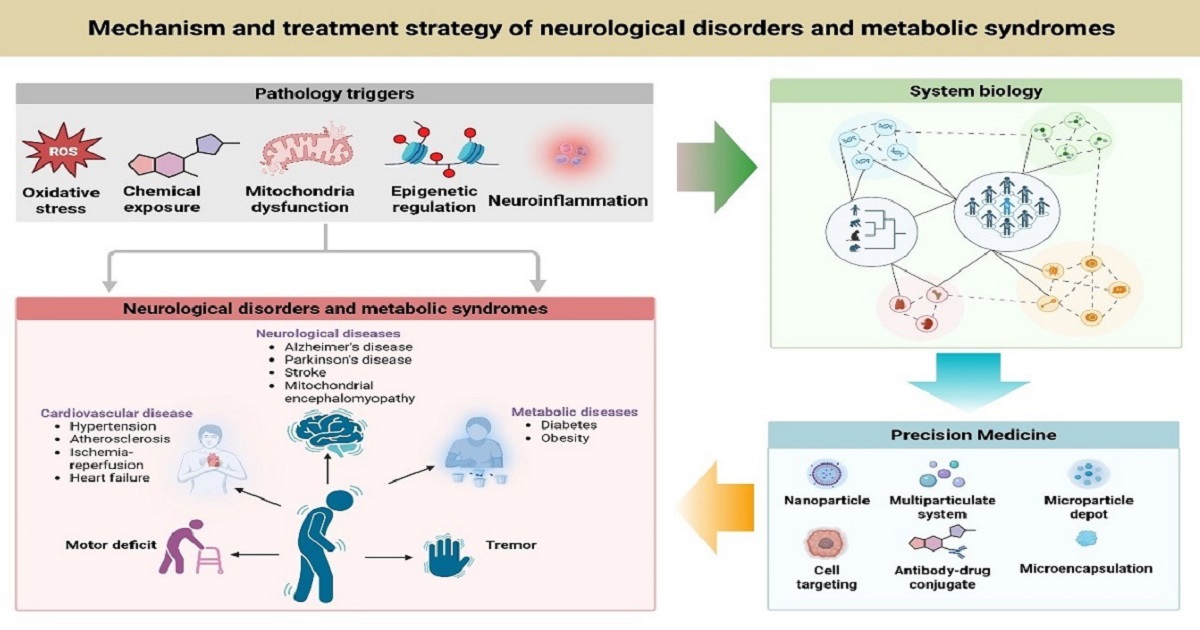
Metabolic syndromes and neurological disorders represent two of the most pressing health issues of our time. Individually, they impose immense social and economic burdens, but mounting evidence also underscores their deep interconnection. Neurological function is tightly coupled with metabolic status: glucose and lipid homeostasis, mitochondrial function, and systemic energy balance directly influence neuronal survival, synaptic activity, and cognitive resilience. Conversely, disruptions to the nervous system can exacerbate metabolic imbalance through neuroinflammation, impaired signaling, and autonomic dysfunction.
The mechanisms underlying these disorders are complex and multifactorial. Genetic predisposition, epigenetic programming, and environmental factors converge in cellular pathways involving oxidative stress, mitochondrial dynamics, protein misfolding, autophagy, phagocytosis, and inflammatory polarization. All of these contribute not only to classical neurological diseases such as Alzheimer’s, Parkinson’s, epilepsy, and brain injury but also to the neurological manifestations of obesity, diabetes, infection, the gut microbiota, osteoporosis, renal injury, cardiovascular and cerebrovascular diseases, and other metabolic syndromes. Increasingly, shared mechanisms are being recognized across these disease classes, highlighting common therapeutic entry points.
Treatment strategies are evolving accordingly. Beyond symptomatic relief, current approaches are designed to modulate core pathogenic pathways. Small-molecule drugs targeting mitochondrial metabolism, insulin signaling, or neuroinflammation are being tested alongside biologics such as antibodies, antisense oligonucleotides, and gene therapies. Lifestyle interventions—nutritional modulation, exercise, and circadian rhythm optimization—continue to show promise both in prevention and as adjunct therapies. Novel platforms, including stem-cell-based replacement, precision epigenetic editing, and systems biology-guided personalized medicine, are opening up new horizons for intervention. Moreover, systems biology-guided drug combinations are allowing us to address the limitations of traditional reductionist strategies by targeting parallel pathways within disease networks. Acting on multiple nodes simultaneously, these therapies can restore balance to disrupted systems, improve efficacy, lower required dosages, and reduce resistance. These approaches highlight the transition toward precision medicine, where computational predictions and experimental validation converge to deliver tailored, multi-targeted interventions.
The aim of this Special Issue is to showcase research articles and reviews that illuminate the molecular and cellular mechanisms linking neurological disorders and metabolic syndromes and to highlight emerging treatment strategies grounded in these insights. By bringing together diverse perspectives, we hope to provide a reference for experts in the field, as well as for researchers who are first entering this rapidly expanding and interdisciplinary area of biomedical science.
Dr. Shaohua Qi
Prof. Dr. George Augustine
Guest Editors
Manuscript Submission Information
Manuscripts should be submitted online at www.mdpi.com by registering and logging in to this website. Once you are registered, click here to go to the submission form. Manuscripts can be submitted until the deadline. All submissions that pass pre-check are peer-reviewed. Accepted papers will be published continuously in the journal (as soon as accepted) and will be listed together on the special issue website. Research articles, review articles as well as communications are invited. For planned papers, a title and short abstract (about 250 words) can be sent to the Editorial Office for assessment.
Submitted manuscripts should not have been published previously, nor be under consideration for publication elsewhere (except conference proceedings papers). All manuscripts are thoroughly refereed through a single-anonymized peer-review process. A guide for authors and other relevant information for submission of manuscripts is available on the Instructions for Authors page. Cells is an international peer-reviewed open access semimonthly journal published by MDPI.
Please visit the Instructions for Authors page before submitting a manuscript. The Article Processing Charge (APC) for publication in this open access journal is 2700 CHF (Swiss Francs). Submitted papers should be well formatted and use good English. Authors may use MDPI's English editing service prior to publication or during author revisions.
Keywords
- neurological disorders
- metabolic syndromes
- neurodegenerative disease
- systems biology
- precision medicine
- target therapy
Benefits of Publishing in a Special Issue
- Ease of navigation: Grouping papers by topic helps scholars navigate broad scope journals more efficiently.
- Greater discoverability: Special Issues support the reach and impact of scientific research. Articles in Special Issues are more discoverable and cited more frequently.
- Expansion of research network: Special Issues facilitate connections among authors, fostering scientific collaborations.
- External promotion: Articles in Special Issues are often promoted through the journal's social media, increasing their visibility.
- Reprint: MDPI Books provides the opportunity to republish successful Special Issues in book format, both online and in print.
Further information on MDPI's Special Issue policies can be found here.
