Dear Colleagues,
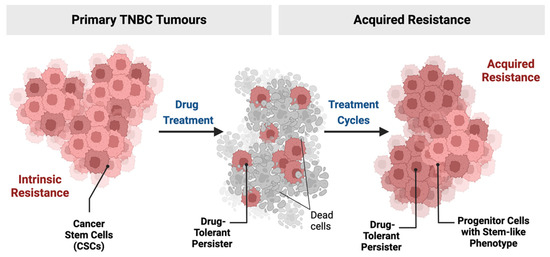
Adult stem cells are fundamental for tissue homeostasis and repair in adult organisms. They are influenced by different pathways to maintain self-renewal and multipotency potential. In cancer, the constitutive activation of these specific pathways implicates the modulation of these stem cells and can sustain the long-term clonal maintenance of the neoplasm. The behavior and characterization of such cells and their plasticity are still not well understood. Tumor relapse that is responsible for most of the deaths of cancer patients has been linked to cancer stem cells that are not efficiently targeted by the current therapies. Advances in the last few years have demonstrated that a small pool of drug-tolerant cancer cells, not essentially always cancer stem cells, are responsible for treatment failure. Novel insights into the discovery of stem cell function and persistence in cancer provide promising directions for future cancer therapeutic applications.
The purpose of this Collection is to contribute to the definition of the stemness and drug-persistence properties in tumoral cells. Furthermore, by disentangling the heterogeneity within tumors, we aim to identify the key players and properties that enable cells to cause cancer growth and spreading; and to describe the mechanisms involved in cell plasticity to understand how cancer cells survive conventional therapies. The Collection will include molecular stem cell signatures, drug-resistance mechanisms, novel in vitro and in vivo models for studying stemness and studies that describe the potential applications of cells to cancer therapy. To this end, we are looking for experiments using mouse models, clinical association analyses, high-throughput approaches, next-generation sequencing, single cell technologies, patient-derived material and 3D organoids, which demonstrate intra-tumor heterogeneity. This Collection welcomes both reviews and original research articles.
Prof. Dr. Cinzia Allegrucci
Prof. Dr. Paloma Ordóñez-Morán
Collection Editors
Manuscript Submission Information
Manuscripts should be submitted online at www.mdpi.com by registering and logging in to this website. Once you are registered, click here to go to the submission form. All submissions that pass pre-check are peer-reviewed. Accepted papers will be published continuously in the journal (as soon as accepted) and will be listed together on the collection website. Research articles, review articles as well as communications are invited. For planned papers, a title and short abstract (about 250 words) can be sent to the Editorial Office for assessment.
Submitted manuscripts should not have been published previously, nor be under consideration for publication elsewhere (except conference proceedings papers). All manuscripts are thoroughly refereed through a single-blind peer-review process. A guide for authors and other relevant information for submission of manuscripts is available on the Instructions for Authors page. Cancers is an international peer-reviewed open access semimonthly journal published by MDPI.
Please visit the Instructions for Authors page before submitting a manuscript.
The Article Processing Charge (APC) for publication in this open access journal is 2900 CHF (Swiss Francs).
Submitted papers should be well formatted and use good English. Authors may use MDPI's
English editing service prior to publication or during author revisions.