



Special Issue "Cities and Infrastructure"

A special issue of Buildings (ISSN 2075-5309). This special issue belongs to the section "Construction Management, and Computers & Digitization".

Deadline for manuscript submissions: 30 April 2022.

Special Issue Editors

Dr. Sara Shirowzhan
E-Mail Website
Guest Editor
Dr. Brian Lee
E-Mail Website
Guest Editor
City Planning, City Planning Discipline, School of Architecture and Built Environment, Faculty of Built Environment, The University of New South Wales, Sydney, NSW 2052, Australia
Interests: transport planning; travel behaviour; smart transport; machine learning applications
Dr. Cynthia Changxin Wang
E-Mail Website
Guest Editor
School of Built Environment, University of New South Wales, Sydney, NSW 2052, Australia
Interests: BIM; ICT applications in construction industry; digital twins; construction sustainability

Special Issue Information

Dear Colleagues,

This Special Issue is interdisciplinary and intends to cover a wide range of issues related to our cities and infrastructure. Rapid urbanisation and the advancement of digital technologies provide opportunities to transform cities into smarter, more sustainable and resilient environments. Sustainable development goals (SDGs) provide directions for making cities “inclusive, safe, resilient and sustainable” (SDG No.11) and building “resilient infrastructure, [that] promote[s] inclusive and sustainable industrialization and foster innovation” (SDG No.9).

This Special Issue seeks papers, reports, and review articles that present novel tools, advanced methodologies, or case studies devoted to bridging the gaps between the theory and practices in cities and infrastructure development and SDGs.

COVID-19 has presented significant changes and challenges in the ways we live, communicate, carry out tasks in cities, and develop our infrastructure projects. In this Special Issue, we are also keen to share the lessons learnt from adopting digital technologies in managing and planning cities and infrastructure, and the applied analytics on city and infrastructure data before and during the pandemic, which provide better insights on the changes of patterns and activities during this extraordinary period.

Potential topics for this Special Issue include but are not limited to cities, transport, construction challenges, application of digital technologies and information systems such as GIS, BIM, digital twin, visualisation methods, machine learning, computer vision, sensing technologies, big geospatial data management for improving smart cities, and other management topics related to cities and infrastructure and the spatiotemporal changes of cities during COVID-19.

Dr. Sara Shirowzhan
Dr. Brian Lee
Dr. Cynthia Changxin Wang
Guest Editors

Manuscript Submission Information

Manuscripts should be submitted online at www.mdpi.com by registering and logging in to this website. Once you are registered, click here to go to the submission form. Manuscripts can be submitted until the deadline. All papers will be peer-reviewed. Accepted papers will be published continuously in the journal (as soon as accepted) and will be listed together on the special issue website. Research articles, review articles as well as short communications are invited. For planned papers, a title and short abstract (about 100 words) can be sent to the Editorial Office for announcement on this website.

Submitted manuscripts should not have been published previously, nor be under consideration for publication elsewhere (except conference proceedings papers). All manuscripts are thoroughly refereed through a single-blind peer-review process. A guide for authors and other relevant information for submission of manuscripts is available on the Instructions for Authors page. Buildings is an international peer-reviewed open access monthly journal published by MDPI.

Please visit the Instructions for Authors page before submitting a manuscript. The Article Processing Charge (APC) for publication in this open access journal is 1600 CHF (Swiss Francs). Submitted papers should be well formatted and use good English. Authors may use MDPI's English editing service prior to publication or during author revisions.

Keywords

  • BIM and GIS applications
  • sustainable development goals
  • construction management
  • infrastructure management
  • city planning
  • transport planning
  • city and building analytics
  • advances in digital technologies for the built environment
  • machine learning applications
  • digital twins and Internet of Things
  • built environment—challenges and trends
  • spatiotemporal changes and analysis
  • COVID-19—disruptions and effects

Published Papers (1 paper)

Order results
Result details
Select all
Export citation of selected articles as:

Research

Article
Spatiotemporal Changes in Vertical Heterogeneity: High-Rise Office Building Floor Space in Sydney, Australia
Buildings 2021, 11(8), 374; https://doi.org/10.3390/buildings11080374 - 21 Aug 2021
Viewed by 316
Abstract
Mixed-use development is increasingly popular in land use planning and zoning, fostering a combination of residential, commercial, and cultural uses into one space. However, there is a lack of understanding of the vertical mix office space within a high-rise commercial building and the [...] Read more.
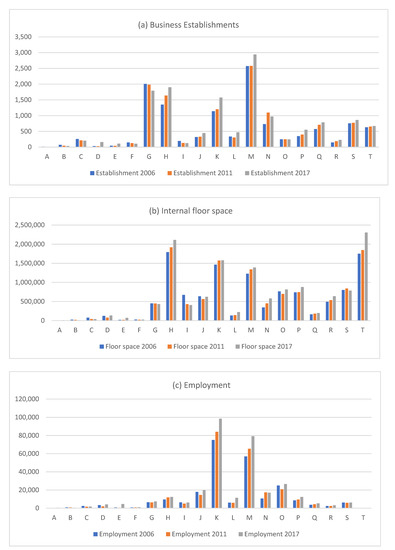
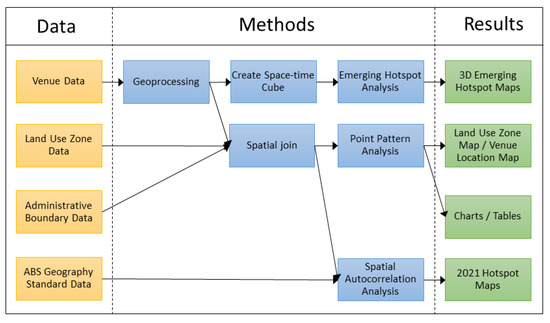
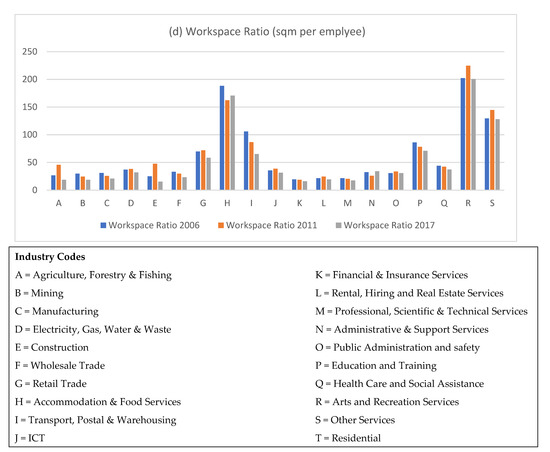
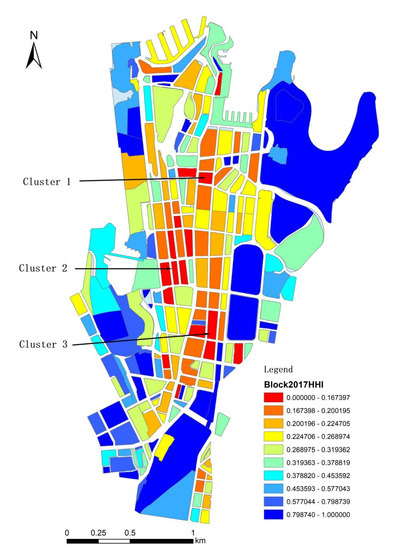
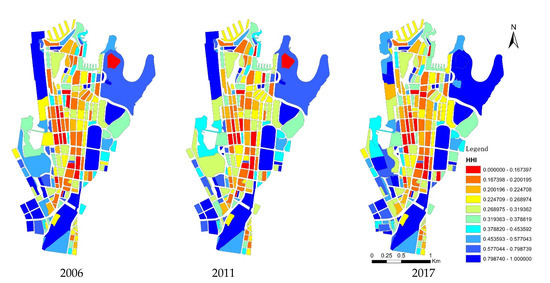
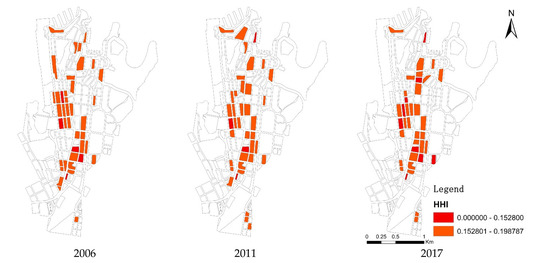
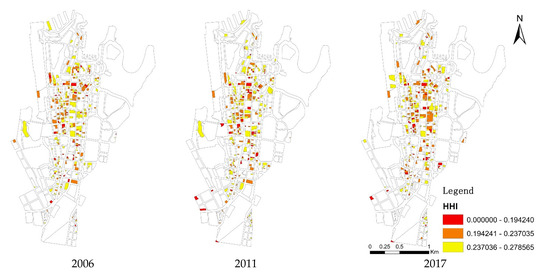
Mixed-use development is increasingly popular in land use planning and zoning, fostering a combination of residential, commercial, and cultural uses into one space. However, there is a lack of understanding of the vertical mix office space within a high-rise commercial building and the dynamics of the industry mix between buildings. This paper examines the spatiotemporal patterns of industry mix between and within office buildings in Sydney CBD from 2006 to 2017, using the data obtained from the City of Sydney floor space and employment surveys. This is the first study that identifies the dynamics of an industrial ecosystem in central Sydney, which has transformed to homophily land blocks, with increasing vertically heterogeneous office buildings, over the past decade. In addition, the study found that the significant clustering of anchor tenants, such as finances, hospitalities, and knowledge-based industries, are apparent. Full article
(This article belongs to the Special Issue Cities and Infrastructure)
Show Figures

Figure 1
Back to TopTop