


Abstract
Hydraulic fracturing has made the production of gas more economical. Shale gas possesses the potential to arise as a main natural gas source worldwide. It has been assessed that the top 42 countries, including the U.S., are predicted to own 7299 trillion cubic feet (tcf) of technically recoverable shale gas resources. The main goal of this paper is to serve as a guide of different shale gas extraction methods. The significance of these methods and possible pros and cons are determined. Each technique was explained with the support of literature review. Specifically, this paper revealed that some fracking methods such as pulsed arc electrohydraulic discharges (PAED), plasma stimulation and fracturing technology (PSF), thermal (cryogenic) fracturing, enhanced bacterial methanogenesis, and heating of rock mass are at the concept stage for conventional and other unconventional resources. Thus, these found to be significant for stimulating natural gas wells, which provides very good production results. This paper also discovered that fracking remains the recommended technique used by the oil and gas industries.
1. Introduction
The hydraulic fracturing application in oil and gas exploration is not new. It was first tested in 1947 and first applied in the industry around 1949. Since then, the industry has been using hydraulic fracturing for stimulation of reservoirs and enhanced oil recovery (EOR). Certainly, it is one of the fundamental aspects of developing natural gas resources. The act of extracting natural gas from shale formations (shale gas) has been considered unconventional by petroleum engineers.
Recent industrial improvement in horizontal drilling has made harvesting natural gas at an economic rate from shale formations possible. In 1968, the high-volume hydraulic fracturing (using procedures characteristically with a magnitude of an order greater than the conventional fracking methods) began to be used. This trend was later supplemented by horizontal drilling shale formation in the late 1980s and the application of chemical mixing (more recognized as "slickwater fracturing") since 1997. Shale formations have a permeability so low that in the 1990s producing from these rocks competitively was not possible. However, most shale resources could be extracted onshore and required less equipment as compared to the conventional. In engineering practice, the term “unconventional resources” does not have a formal actual definition behind it [1]. Generally, it means that resources extracted by the methods do not fulfil the standards for conventional production. Those standards can include a complex combination of reservoir characteristics: the existing exploration and production practice, the economic condition, and the scale, rate and period of production from the resource, which can unavoidably change over time. Nonetheless, sandstone and carbonate reservoirs are classified as conventional, whereas all the others (such as gas hydrates, coalbed methane, tight gas sands, shale gas and fractured reservoirs) are unconventional. According to Meckel and Thomasson [2], basins with permeability higher than 0.1 md were considered as conventional. Thus, the conventional resource is the first level that most of the oil and gas industry starts extraction with, and this paper also focused on conventional resource techniques towards different fracturing methods.
In addition, with the technological breakthrough from the introduction of hydraulic fracturing (also widely known as fracking) through the application of horizontal drilling, the extraction of natural gas from shale formation has become more pervasive in North America [3]. Shale gas count was only 2% or 0.01 trillion cubic meters (tcm) of gas production in the U.S. in 2000; by 2010, production had increased the figure to 23% (0.14 tcm) [4]. According to the U.S. Energy Information Administration (EIA) data [5], it is clear that the growth of U.S. shale gas production from the year 2013 to 2018 was exponential, around 11,415 billion cubic feet to 22,054 billion cubic feet respectively. However, as pointed by Solarin et al. [6], forecasting is not a sustainable means in getting the accurate values of subsequent shale oil and gas production. In fact, the recent issue of 2019 novel coronavirus disease (COVID-19) has proven this. The impact of COVID-19 has made unprecedented changes in the energy industry with many uncertainties. It was expected that, due to the COVID-19 pandemic, the liquid fuels and petroleum and demand will reduce by 5.2 million b/d in 2020 but is expected to increase by 6.4 million b/d in 2021 [7]. Crucially, due to the fluctuation of energy prices, environmental and urbanization factors, this type of research is necessary in order to figure out the significance of these factors. The operation of high-volume fracking could involve some hazards particularly to the environment. Thus, the main goal of this paper is to serve as a summary of the development of different shale gas extraction methods through the literature. A description is given for each introduced method. The procedure is then described which includes the effect and significance of such technologies.
2. Shale Gas Extraction with Countries’ Production
Shale is a type of sedimentary rock formed from the compaction of fine-grained silt and clay particles called “mud”. This process can be a rich source of oil and gas, since the particles are fine-grained and interstitial spaces are small. Therefore, this results in difficulties for the movement of fluids (such as oil, gas and water). Although the spaces are small, they can hold up a considerable volume of the rock. These traits make shale not only a reservoir rock but also a source rock and cap rock. Significantly, shale gas possesses the potential to become a main natural gas source worldwide. It was found that Russia and USA contributed more than 40% in the natural gas extraction of the total world supply between 2000 to 2011 [8]. It is also assessed that the top 42 countries, including the U.S., are predicted to own around 7299 trillion cubic feet (tcf) of technically recoverable shale gas resources [9]. However, as more areas are discovered and assessed, the gas basins are expected to increase. Shale gas reserves can theoretically provide world energy needs for the upcoming 60 years based on recent reserve evaluations and consumption [10].
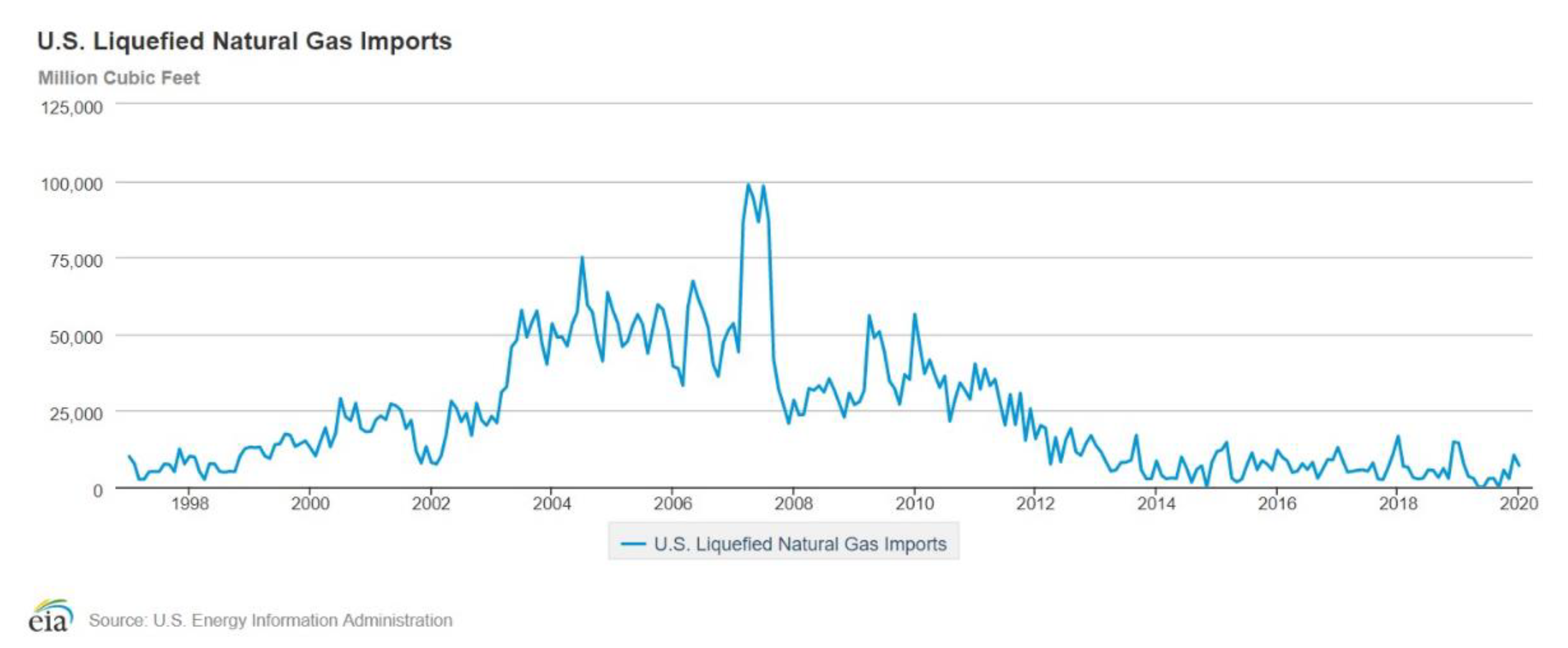
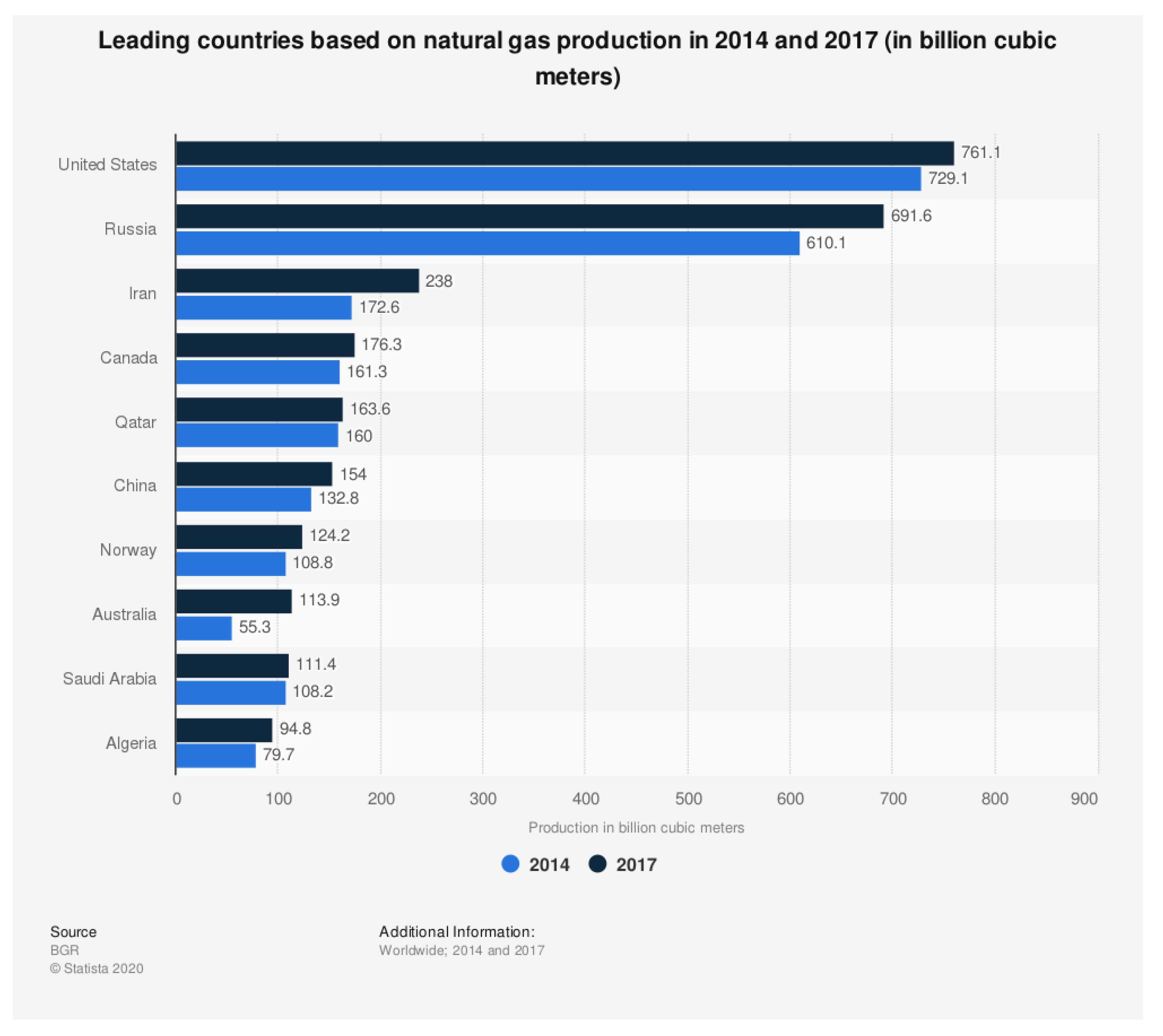
The revolution of unlocking enormous native gas resources has changed the U.S. oil and gas market. The exponential increase in natural gas extraction has decreased the country’s dependence on imported gas, specifically liquefied natural gas (LNG) imports to fulfil its demand. However, according to Energy Information Administration (EIA), it is estimated that there are 482 trillion cubic feet of unproved technically recoverable U.S. shale gas resources [11,12]. Projected proved and unproved shale gas resources made up 25% (542 trillion cubic feet) of a total U.S. dry gas resource of 2203 tcf [4]. The technically recoverable resources can be characterized by the volumes of oil and natural gas which can be developed with existing technology despite the oil and natural gas costs [13]. Nonetheless, the increase in gas production that peaked at about 771 billion cubic feet (Bcf) in 2007 also reduces the reliance of the U.S. on gas imports (see Figure 1). The liquefied natural gas (LNG) imports have decreased drastically to 0 billion cubic feet in November 2014. This was the first time to have the 0 billion cubic feet [14]. However, more recently, in February 2019, the U.S. net natural gas exports had a sum of 3.3 billion cubic feet/day [15], while Canada and Mexico have increased their exports of LNG to many countries [16]. Thus, the United States of America has become the biggest in the world in terms of country natural gas [17], as shown in Figure 2.
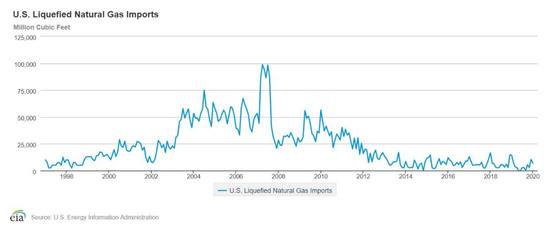
Figure 1.
U.S. liquefied natural gas imports (1985–2020). Reproduced from U.S. Energy Information Administration [14]. EIA: 2020.
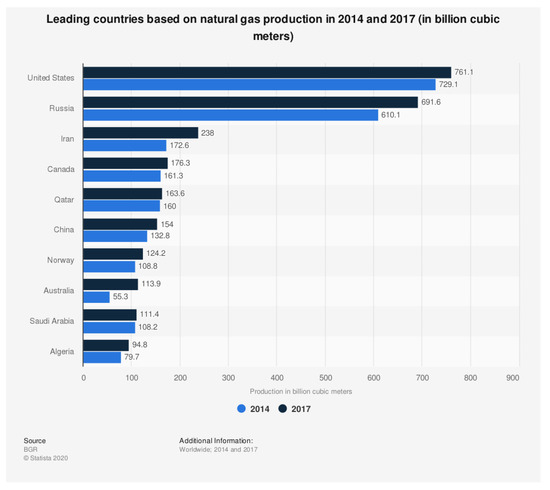
Figure 2.
Leading countries based on natural gas production in 2014 and 2017. Reproduced from, [18], Statista: 2020.
The global recession in 2008 led to several factors that caused the steep drop in oil price in 2014. Emerging economies such as China, India and Brazil slowed down and reduced their demand for oil. Two North American countries, the United States of America (USA) and Canada, started to produce oil and managed to cut down their oil imports significantly. Meanwhile, Saudi Arabia, among the countries holding the largest oil reserves in the world, decided to keep its production stable, with the hope that the USA and Canada would be pushed to stop their operations owing to economic issues [19]. However, with economic growth in Asia region and Oceania regions, it was forecasted that natural gas demand growth will rise by 770 billion cubic meters and double from 2015 to 2040 [20]. Due to these economic factors, shale gas is expected to be more essential than shale oil [21]. Thus, shale gas research extraction is apparent for the growth of natural gas for any country.
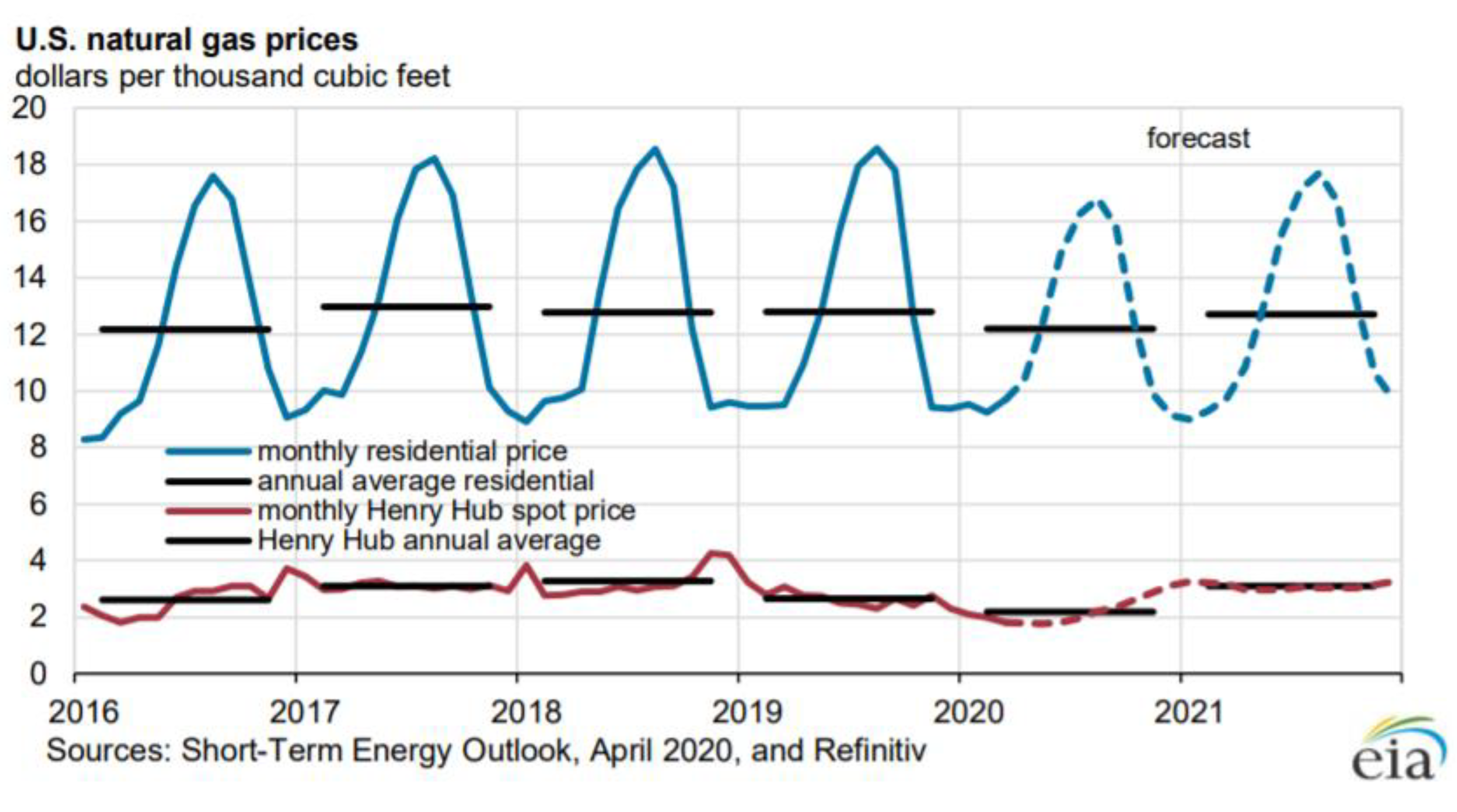
When there is reduction in the demand of U.S. natural gas, which may result in oversupply, the natural gas prices will reach their record lows. According to EIA [7], the Henry Hub natural gas spot prices in 2020 average $2.11/MMBtu, and are expected to increase in 2021 with an annual average of $2.98/MMBtu (see Figure 3). In addition, U.S. natural gas prices have changed so much that U.S. crude oil prices and gas prices index have deviated from the rest of the world. Since 2009, hydrocarbon prices in the country have been propagating in various ways. As a result, there has been a huge surge in the oil and gas price ratios [22]. At the same time, U.S. gas prices have shown a significant decline compared to the Europe gas prices and Asia-Pacific’s LNG prices, since they are in line with crude oil prices [22].
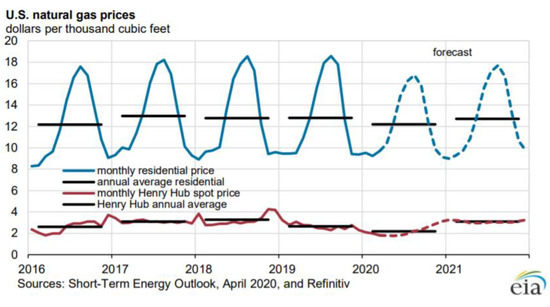
Figure 3.
Henry Hub natural gas spot price (2016–2021). Reproduced from U.S. Energy Information Administration [7], EIA: 2020.
Shale gas transformation has had positive impacts on the U.S. economy by forming additional job opportunities. It makes gas-consuming industries more competent and a source of revenue for state and federal government. Some of the specific impacts can be seen as follows:
2.1. Expansion of Gas-Powered Plants: Cheaper Electricity
Gas prices have dropped significantly as result of the rise in shale gas production. This allows power plants to generate electricity at a much lower cost [23]. In April 2015, natural gas generation surpassed coal generation as the primary energy supply on monthly bases for the first time ever in the history of the United States [24]. Ample and secure supplies of low-priced gas have led to the development of gas-based power plants in the United State. For the last ten years, electric energy produced from gas-based stations has increased by 50% or more as power plants replaced coal with gas [22]. This trend is pleasing as the carbon footprint of natural gas is as low as half that of coal.
2.2. Feedstock Price Reduction
U.S. petrochemical manufacturers use gas as their feedstocks have sufficiently profited from the dropped input budgets. This has made them more competitive over companies outside the United State. In the early years of this century, high feedstock costs lead to many companies migrating their process plant to the Middle East and Asia. However, many manufacturers have decided to reverse this trend, including Chevron Phillips Chemical, Exxon Mobil and Dow Chemical, investing more of their capital in the U.S. petrochemical business [22].
2.3. Creation of Job Opportunities
The growth of shale gas productions has created new jobs around the United States. In 2010, it was predicted that shale gas operations have offered 601,000 employment opportunities to the workers within the value chain [25].
2.4. One of the Main Sources of US Government Revenue
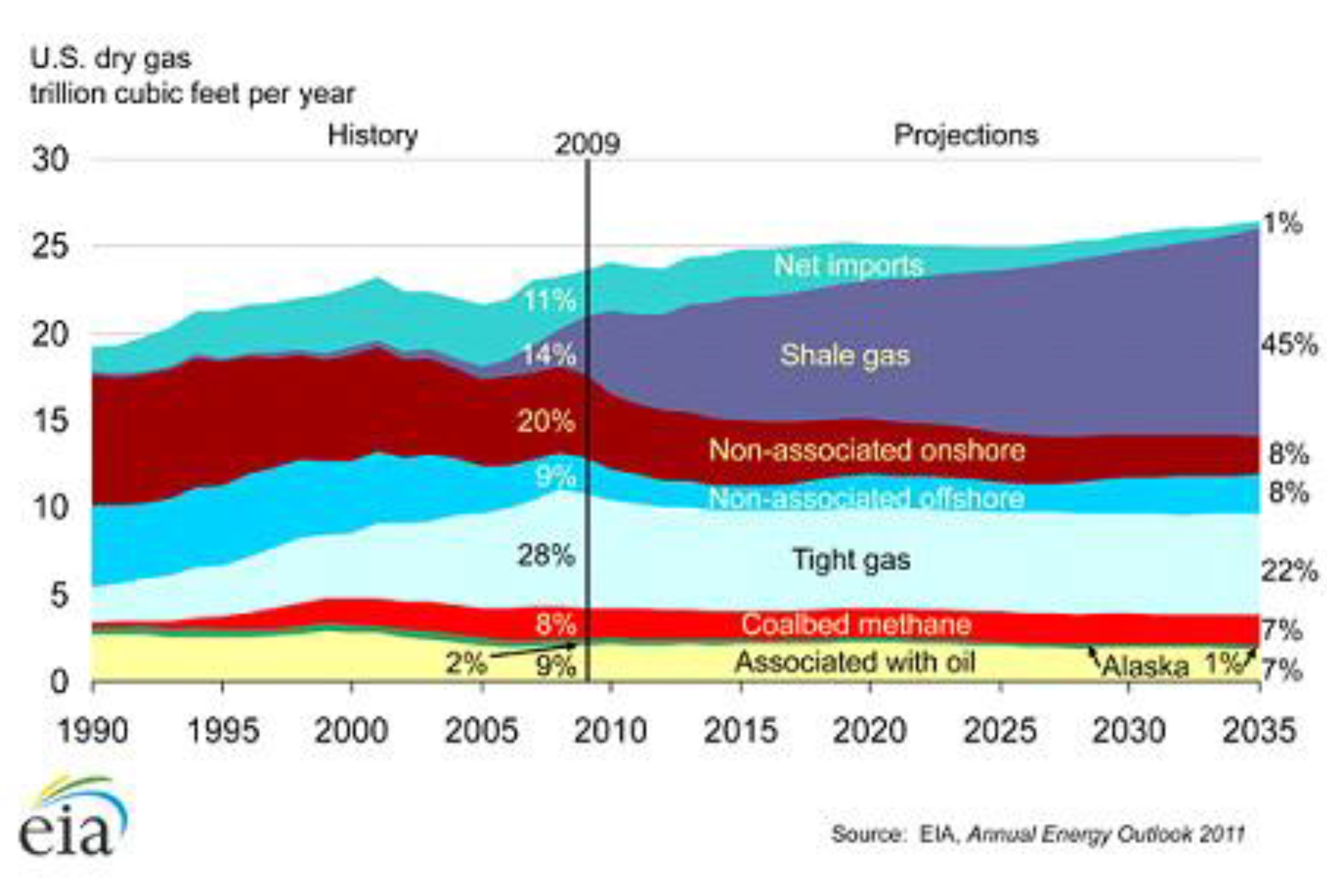
The U.S. government has gained benefits from shale gas development through the good amount of revenues that the industry has provided to the country. It was predicted that the government had received around USD $18.6 billion in taxes (about USD $9.6 billion in federal taxes/USD $8.8 billion in state and local taxes) from the industry [25]. These drastic changes have led to the transformation of U.S. position for energy supplies. It further intensely reformed the way the trade flow behaves in the global gas market. Furthermore, 14% of entire U.S. natural gas supply was made up of shale gas in 2009, and the number is predicted to continue to surge and reach 45% of U.S. total natural gas supply in 2035 [26], see Figure 4.
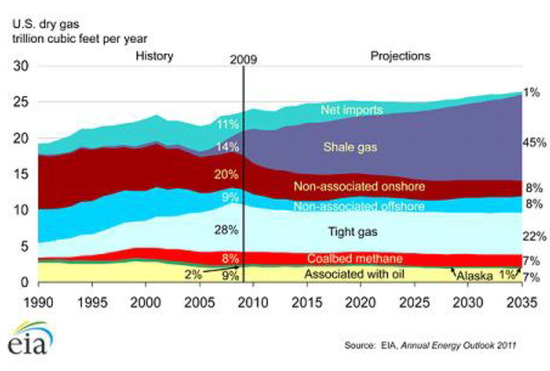
Figure 4.
U.S. natural gas supply projections (1990–2035) Reproduced from U.S. Energy Information Administration [26], EIA: 2020.
In just a few years, from being one of the main importers of LNG, the U.S. is predicted to become a gas leading exporter for several years to come. For example, in Annual Energy Outlook 2006 [27], the U.S. EIA had projected that, by 2030, the country LNG imports would achieve about 334.5 million metric standard cubic metres per day (mmscmd). Furthermore, it is estimated that the U.S. would export 47.6 mmscmd of LNG by the year 2030 [4]. Therefore, the accomplishment of U.S. has achieved from shale gas extraction that has given rise to bigger attention over the possibility for this industry to alter energy markets in the other countries. In one of the evaluations for the European region, Poland has the biggest technically recoverable shale reserves (145.8 tcf) [28]. Meanwhile, Argentina (801.5 tcf), China (1115.2 tcf) and South Africa (389.7 tcf) have the main supply base in South America, Asia and Africa, respectively [9].
Kersting et al. [29] argued that the shale gas production has limited impact outside U.S. before the year 2030. Therefore, U.S. has gained from shale gas extraction, which indicates that it has the most predicted reserves. U.S. has taken 8% of the world total technically recoverable reserves. Economically, however, the current market has massive potential for exploring shale gas resources across the globe. More efficient technologies that increase shale gas production reduce the costs and make the shale gas economically feasible to produce. Looking at South America, Argentina makes about 56% of the investments in the shale gas business. These are being encouraged by the Argentinean government with the intention to alleviate the falling-off of the conventional oil and gas industry as well as reducing the reliance of imports from Bolivia.
Also in Europe, several countries are currently in their progress in shale gas exploration [30]. Two countries from this region, namely France and Poland, keep about 45% of the assessed shale gas resources. However, it was suggested to reduce the reliance on Russian imports and reach zero carbon discharge. Therefore, the environmental factors associated with hydraulic fracturing have made some of the European countries reconsider their plans on producing shale gas resources. In fact, this may also be the reason why Bulgaria and France have banned fracking in their counties.
In the Asian region, China is currently holding the shale basin with the earth’s largest resources. It makes up about 15% of the total reserves and nearly 81% of the resources in the region. The Chinese have used significant and diligent methods in harvesting the potential of their large shale gas reserves. Thus, to improve their knowledge and expertise, Chinese National Oil Companies (NOCs) have been actively linking their shale gas businesses with the U.S. through acquiring shares and making joint ventures.
3. The Shale Gas Extraction Technologies
3.1. Water Usage in Shale Gas Exploration
Shale gas exploration involves a massive amount of water. Five categories of water components in shale gas exploration have been explained.
3.1.1. Seepage from Inappropriately Built Gas Wells
One of the crucial aspects to consider regarding hazards in fracking which affects environment, human health and money is well integrity [31]. There are signs that show leaks of wastewater that can contaminate shallow aquifer in zones next to shale gas production. Over time, both brine water and fracking fluids from the shale gas site, as well as secondary processes, were triggered by the high methane content in the groundwater (i.e., sulfate reduction). They could possibly influence the water quality in aquifers where shale gas wastewater pollution can be found [32]. Hence, contamination of wastewater is an indication of upcoming water quality deprivation, as it was detected in previous conventional oil and gas wells.
3.1.2. Insufficient Attention Given to Waste Management
While it is essential to make certain that there is zero well failure, the management takes great responsibilities. Shale gas exploration and extraction consume a huge amount of water. If care is not taken seriously enough, there would be a risk of contamination caused by leaks, spills or fracking fluid dumping and wastewaters that are inappropriately treated [33].
3.1.3. Accumulation of Harmful Substances
Similar to extracting the conventional oil and gas wells, producing from a shale gas site may pose a risk of buildup of metals and harmful radioactive substances on pond, river and stream deposits near stray water dumping or spill sites. Nonetheless, instances of such accidental discharge are virtually non-existent or unreported. The extra long-term influence by gradually liberating poisonous substances and radioactive elements to the ecosystem around the affected zones can be seen. For example, Mrdjen and Lee [34] found that, out of 36 drinking water wells, nine had been affected by stray gas (methane and ethane) due to neighboring hydraulic fracturing activities in Northeastern Pennsylvania.
3.1.4. Over Usage of Valuable Water Resources
A massive amount of water is needed for shale gas development. However, water scarcity may occur in lands where water supply is limited or may occur from overexploitation of water [35].
3.1.5. Induced Seismicity
It is rare to receive a report of fracking causing tremors felt. However, reinjecting wastewater formed from the fracking procedure into deep wastewater wells can “induce” small earthquakes. Stray gas and water contamination dumping sites classically remain functional much longer and have much more liquid reinjected than wells. Those that are hydraulically fractured can elevate pressure levels of the underground rock higher than the fracking process, where the possibility of induced quakes may be increased. Most wastewater injection sites have no sign of tremors. It requires a mixture of many causes for injection to make earthquakes be felt [36].
3.2. Hydraulic Fracturing
Hydraulic fracturing technologies use a fluid as the medium to break reservoir formation. Hydraulic fractures are created by the means of fluid injection. It is accomplished by thrusting the fracturing fluid into the drilled borehole with a force high enough to elevate downhole pressure to surpass the strength of the formation (fracture pressure). Today, the name “hydraulic fracturing” is typically applied to address the method of breaking reservoir rocks with water-based liquids. In applied science and engineering terms, hydraulics is a division of science with the specific focus on the physical properties of fluids, mainly liquids, in motion. In view of defining this term, this work classifies “hydraulic fracturing” under all methods that use liquids (as well as emulsions and foams) as the fracturing medium.
Utilizing water as a base liquid for hydraulic fracturing is a later advancement. As presented by Montgomery [37], the initial fracking operations were at first performed with gelled crude and later with gelled kerosene. Before 1952, numerous fracturing operations were carried out with refined crude oils. These liquids were cheap, allowing more volumes of fluids for bringing down expenses. In 1953, however, water began to be utilized as a fracking liquid, and various gelling mediums were created. Surfactants were mixed as additives to limit emulsions with the fracturing liquid. Afterwards, other clay-stabilizers were created, allowing the utilization of water in a bigger number of drilling sites with different formations. Thus, different developments such as foams and the mixing of alcohol have increased the utilization of water in more underground structures. In aqueous liquids, however, corrosives, water and saline solutions were utilized then as the base liquid in roughly 96% of all fracking operations applying a propping medium [38]. During the early 1970s, a noteworthy development in fracking liquids was the utilization of metal-based cross-linking mediums to improve the thickness of water-based fracking liquids for formations with a greater degree of hotness. On the other hand, gel stabilizers were created as more fracking operations have included high-temperature formations with their first use as the application of roughly five percent methanol. Afterwards, non-gel stabilizers that can be utilized on its own or mixed with the methanol were produced. Enhancements in cross-linkers and gelling mediums have brought about frameworks that allow the liquid to arrive at the base of the wellbore in high-temperature formations before cross-linking—hence limiting the impacts resulting from high shear [37]. The fracking liquid is a critical element of hydraulic fracturing, not only about the specialized traits (rheology, the capability to be applied in different downhole environments, and so forth), but also its effect on the surrounding environment. In fact, a few of the key concerns on the environment related to shale gas extraction at the moment are because of the water consumption: the high volumes of water involved and leaked underground, the requirement to treat flowback fluid, the possible occurrence of pollution of aquifers by seepage of chemicals utilized in the fracking liquids, and so on.
3.2.1. Hydraulic Fracturing of Shales
No single method of hydraulic fracturing has totally functioned for all. Every shale play has their own properties that need to be encountered. For instance, various techniques have been tested in the Appalachian reservoir, including the utilization of CO2, CO2 foam as well as slickwater and N2 fracking. To meet particular formation conditions, the content of fracking liquids must be changed. Slickwater fracturing, which is utilized widely in Canadian and U.S. shale reservoirs, is suitable for complex formations that are fragile and has naturally formed fracture and substantial water tolerance. Brittle formations need the usage of proppant of better performance to attain the anticipated permeability. As a rule, a fracking fluid is the mixture of three core elements: fracking fluid = base liquid + additives + proppant.
The mixing of highly pressured gas (usually either CO2 or N2) “energized” a fracking fluid. This method offers a significant amount of the energy needed to retrieve the fluid and decrease the amount of water placed on reservoirs that are not water tolerant. However, it has the drawback that it lessens the proppant volume that can settle in the fractures.
In general, water-based fluids are the easiest and best cost-appealing way to fracture a shale reservoir. Nonetheless, substitutes for water-based fluids have considerably achieved better results than water usage in many formations. For instance, foams have been broadly applied around the 1970s in depleted conventional wells whereby water fracturing was not suitable. In some formations, the relations between the reservoirs and the water-based fluids may be unfavourable to hydrocarbon extraction [39]. There are some criteria proposed to rethink choosing fluids that are waterless. These include:
1 Reservoirs’ water tolerance
The base mineral structure of a certain shale formation influences the production efficiency of oil, gas and water. For instance, liquefied petroleum gas (LPG), CO2, oil-based fluids and high-grade foams are suggested for reservoirs with low water tolerance to avoid unnecessary particles movement and soil swelling. In many shale formations, proppant efficiency reduces significantly with the application of water because the formation-fluid relations soften the shale resulting in proppant settling.
2 Water trapping
In under-saturated gas reservoirs, the intrusion of water can be very harmful to gas yield when there is any extra water that is left and trapped owing to capillary retention. The surge in water concentration (known as water blocking or water trapping) greatly decreases the gas relative permeability [40].
3 Proppant transplant
Foam and other gelled waterless fluids can carry proppant much more efficiently than slickwater fluids. At decent foam grades (gas volume fraction characteristically greater than 0.5), the network between gas bubbles results in a high energy release that causes a high effective viscosity. At foam grades (smaller than 0.5), however, the network between bubbles is negligible so the fluid viscosity is similar to that of the base fluid (which is normally gelled).
4 Water accessibility and price
Companies are restricted by the machines and the fluids readily accessible on spot. In zones susceptible to water scarcity, fresh water can be hard to find. In some countries, the local regulation even controls water consumption, which has encouraged some companies to apply non-aqueous fracturing operations. On the other hand, the availability and the price of liquefied petroleum gas (LPG), CO2 and N2 are place dependent. Most of the expenses rely on the accessibility of the fluid. The usage of a huge amount of gases involves the preparation of many trucks, special storing trucks, and specific pumping units. Moreover, application of LPG will need extra safety procedures.
3.2.2. Water-Based Hydraulic Fracturing
In fracturing operation, there is no single type of fluid that can work for all. It is therefore important to select the type of fluid to be used cautiously as it will decide what chemical additives should be chosen, whether flowback treatment of that fluid is required, and others. Even though the fluids discussed in this section consist mainly of water, there are some different types of water-based fluids based on the additives that are added. Table 1 compares the characteristics of two sides of water-based fluid technologies.

Table 1.
Comparison between the characteristics of two side of water-based fluid technologies.
The following include four (4) notable water-based fluids:
1 Slickwater
Slickwater fracturing is the simplest and most common form of water-based fluid in shale gas exploration. The fluid contains mainly water and sand. The most significant advantages of slickwater fracturing are less gel damage, low cost and larger stimulated formation. However, some factors that need to be considered during slickwater fracturing include proppant settling, high water consumption, and smaller fracture widths [41].
2 Linear fluid/ linear gel
Linear fluid is formed by mixing polymers to water. Polymers are powders that expand and form a gel with a high viscosity when added to a solution containing water. The increase of viscosity makes the proppant flow better than slickwater. Normally, the polymers used are guar, hydroxypropyl guar (HPG), hydroxyethyl cellulose (HEC), carboxymethyl hydroxypropy1 guar (CMHPG) and carboxymethyl hydroxyethyl1 cellulose (CMHEC) [42]. The linear gel can fail in both low-permeability and high-permeability formations. In low-permeability formations, the linear gel forms a thick filter block that can reduce conductivity; in high-permeability formations, it forms no filter and results in a great fluid loss [38].
3 Crosslinked fluid
Crosslinked fluid is made to enable gelling polymers to have higher performance without raising their concentration. Organometallic crosslinked fluid is also another type of fluid developed by Halliburton. The polymers that are mainly used are HPG, CMHPG, zirconate and titanate complexes of Guar [43]. Therefore, they are very stable for good proppant carriage at high temperatures and have more expectable rheology. Borate crosslinked gel uses borate ions to crosslink the gelling polymers and increase the viscosity more than linear gel [44]. As guar and HPG are the polymers applied normally, it was reported that HPG is more stable at higher temperatures than guar [45]. This crosslink process is reversible and is accomplished by changing the PH of the fluid, which makes it have good cleanup property for recovered permeability and conductivity. It is verified that borate crosslinked gel can be used in both low and high permeability reservoirs and is compatible with formations with temperature as high as 300 [43].
4 Viscoelastic surfactant gel fluid (VES)
This fluid has been mentioned in the 1980s to lessen friction and for well treatment, but their use for hydraulic fracturing is comparatively more recent. In principle, surfactants are used with inorganic salts to produce ordered structures that make them more viscous. It is said that VES has high zero-shear viscosity and, with less loading, it can transport proppant efficiently [46].
The VES is based on ionic structures and can be increased by mixing more electrolytes or surfactants. Below are some of the traits of VES:
- Little additives are mixed without having to dampen polymers.
- No biocides are included.
- No extra flowback surfactants included because of naturally having low interfacial tension.
- Do not involve extra clay control additives.
In short, what the operators are focusing on is removing the need to use clean fresh water by using more complex mixture and maintaining the traits of a good fracturing fluid (stated in Table 1).
5 Zipper fracturing
Zipper fracturing can be done by the drilling of two parallel horizontal wells. Then, both of the wells are fractured at the same time, which forces the ends of the fractures to force through to the opposite well. Besides saving drilling cost and time along with reducing surface footprint, this process induces fractures more deep and effective than a single horizontal well, which allows both wells to yield more hydrocarbon at the same time [47]. The high pressure leads to longer fractures. This is because it generates pressures that are due to the amount of proppant and fluid pumped [48,49].
6 Exothermic hydraulic fracturing
This method is about the concept of injecting chemicals during the hydraulic fracturing operation, which produces heat and gas in response to the reaction. This heat and volume surge then generate a pressure that creates fractures [50]. The method was tried in a research laboratory using cores from tight formations in Saudi Arabia. It was found that both permeability and pore connectivity of tested cores displayed a substantial increase after that treatment. However, a possible limitation of this method is the localized effect. It requires proper stimulation for that heat and gas to reach the formation far away from the well.
7 Hydraulic fracturing enhanced by water pressure blasting
Water pressure blasting is an approach that brings the use of water and explosives together. A well is drilled to the desired depth and a gel explosive is injected. The hole is then injected with water and sealed (at a pressure low enough where no fracture is formed). By activating the explosives, water pressure blasting is accomplished. The process will produce energy that breaks the formation and circular fractures. The operation is then continued with normal hydraulic fracturing to extend the fractures even more. It is stated that experiments in coal seam gas wells have verified the process and are able to increase the number and length of stimulated fractures [51]. This approach shows that it can improve the way the fractures are originated and reduce water consumption. However, it can be doubted that this method is economical to the shale gas industry without any proper proposal on the depth of operation (since shale gas formation is far deeper than coal seam formation).
3.2.3. Foam-Based Fluids
Foams can be utilized as fracturing fluid. Foams are two-phase fluids produced when a big part of the inner phase capacity (normally more than half of the whole volume) is spread as tiny disperse units through a continuous liquid form [52]. Owing to its viscous and less dense traits, foams are very special and flexible. Researchers have proven that the viscosity of this fluid strongly relies on foam grade (the gas portion of the overall mixture) and foam texture (the consistency of bubbles in the mixture) [53].
In recent studies, CO2 has been found to be useful in the fracturing operation. The fluid tested is comprised of 75% volume foam of N2 gas in liquid CO2 as the base fluid stabilized by a CO2-soluble foam [54]. The strength of this fluid is the extra viscosity gained by the foam. The abundance of N2 also lessens the cost of the fluid. Table 2 shows the kind of foams that can be made for fracturing [42].
Table 2.
Kinds of foams used for fracturing.
3.2.4. Oil-Based Fluids
Oil-based fluid is a type of fracturing fluid with high-viscosity utilized in hydraulic fracturing processes. It provides the best solution for reservoirs which are very reactive to water [55]. In the Gasfrac process, LPG is gelled beforehand to increase the proppant transport ability of the fluid [56]. LPG is not gelled in the ecorpstim system. The system utilizes fine sand and carbon fullerenes as floating proppants. Then, it mixes and dissolves into the reservoir which is retrievable usually within 24 h of production. Table 3 shows the potential benefits and drawbacks of using LPG for fracturing.
Table 3.
Summary of the benefit and drawbacks of shale gas extraction technologies.
3.2.5. Acid-Based Fluids
The distinction between proppant fracturing and acid fracturing is their means of creating fractures. Proppant fracturing breaks the formation mechanically through high pressure, while acid fracturing creates fractures chemically by dissolving the formation. Thus, to make acid fluids work, the formation needs to be partially soluble in acid (containing limestone or carbonate).
Although some shale rocks may be comprised of a good percentage of limestone and carbonate (for instance, some high carbonate formations such as the Eagle Ford shale in the USA), the acid-soluble part of the formation is not a continuous phase. It makes it hard to create a desired long fracture. High fluid loss because of acid reaction with the rock is also another factor that makes long fractures difficult to create [57].
3.2.6. Methanol-Based Fluids
A methanol-based fluid can be used as fracturing fluid. The ways to increase the viscosity of methanol have been introduced in the water-based fluid section, which vary from foaming to gelling the methanol with polymers. Methanol can also be energized with CO2 and N2 to tackle severely under-pressured formations. Thus, methanol has been commonly utilized as additives for fracturing such as friction reducer, corrosion inhibitor, flowback enhancer, etc. [58]. Methanol fracturing has been tested successfully in some low permeability formations, but the real application in the shale gas industry is yet to be seen since the processes would require great safety measures.
3.2.7. Emulsion-Based Fluids
An emulsion is a blend of two or more liquids that are not miscible and can be applied to fracturing processes. There are some formations which can hold the water content in the foams (liquid trapping). The formation results in damage owing to increased irreducible water saturation. Emulsion-based fluids, in this case, can reduce the water quantity by replacing a percentage of the water content in the foam with methanol for example. In a study where 40% methanol is used in the aqueous system, the well yielded impressive production outcomes in some Canadian gas reservoirs [59]. Significantly, emulsion-based fluids have been applied in some low-permeability reservoirs. However, no direct usage of fluid of this kind has been found in the recent study.
3.2.8. Cryogenic Fluids
1 Liquid CO2
Studies have shown that CO2 can be utilized in different methods, which include:
- Liquid CO2 (commercially used).
- Supercritical CO2 (concept stage).
- CO2 foam (described in previous section foam-based fluids).
- CO2 thermal hydraulic fracturing (concept stage).
In the 1960s, liquid CO2 has been applied in fracturing processes. At first, it acted as an additive to fracturing processes and acid treatment to increase the fluid recovery [60]. The idea of using CO2 as a base-fluid was started in 1981 [61]. The utilization of supercritical CO2 is comparatively recent [62,63,64]. Furthermore, what makes liquid CO2 special is its physical properties. The same as water, it is inert, making it able to change its form as a solid, liquid, gas and supercritical fluid based on its temperature and pressure. In site processes, liquid CO2 is stored at 2 MPa and −35 . It is then mixed with proppant and pumped into the well, and the fluid is heated upon reaching the bottom hole. CO2 is collected as a gas during flowback. Specifically, supercritical CO2 is formed when the compound is heated and pressured until it surpasses its critical point (31.1 and 7.39 MPa). It has special physical and chemical properties which make it have a good penetration rate while causing no damage to the formation. Table 3 shows the potential benefits and drawbacks of using liquid CO2 as the base fluid for fracturing.
In terms of cost implications, high pumping rates are needed—low viscosity fluid requires more pumping power for proppant transport. Proppant selection and price are amongst the economic analysis factors for reducing the cost of operation and maximize net present value [65]. In addition, frictional losses related to CO2 increase the power needed as well [46]. Secondly, less rig time is required, but no swabbing of the well is needed. This means no waste fluid needs to be disposed, and the well is evaluated faster [61]. Liquid CO2 is the significant and commercially used method in the shale gas industry. Furthermore, some studies have encouraged the usage of liquid CO2 in shale reservoirs [66,67].
2 Liquid nitrogen
Liquid Nitrogen (N2) can be used as fracturing fluid. This fluid is cold (−184 °C to −195 °C) and can create thermal tensile stresses, which induces fractures when exceeding the tensile strength of the formation. In theory, the thermal shock of a super cold fluid in contact with a warm rock can cause fractures to form [68].
To make sure this fluid can be used safely, the surface manifold and wellhead must all be made of stainless steel. There are also situations where operators use specific fibreglass tubes to shield the casing from the cold gas. Table 3 also explains the potential benefits and drawbacks of using this fluid. The usage of gaseous N2 as a component (in foams, mists etc.) is common in the petroleum business. The usage of liquid N2 in the industry is limited and perhaps owing to the expenses required. Hence, the technology is commercially available and has been tested on shale reservoirs [68].
3 Liquid helium
Liquid helium (He) can be used as fracturing fluid. It is a method established with the idea of only using inert materials for fracturing operation. A moveable pressure was installed at optimal distances in a drilled horizontal well, which allowed engineered pressure for each separated section [69]. This is done to amplify the effect of the surge in volume of helium under exothermic conditions, where the volume rises 757 times when heated from liquid to gas. As described in Table 3, the use of liquid He in this business is unclear. Though Chimera Energy Corp has claimed the method as a game changer, there is very little information available to verify it.
3.3. Pneumatic fracturing
In this method, a gas is injected into the formation at a pressure above the overburden pressure and at a flow volume more than the natural permeability of the formation. Generally, the method does not include the use of the proppant in the processes to preserve fracture stability. In addition, the induced fractures are assumed to be self-propping. In theory, there is no maximum depth limit for this method. Owing to the effects of gas compressibility, the pressure required during injection is two to three times more than hydraulic fracturing would need.
So far, most projects that involve pneumatic fracturing have depths that varied from 3 to 15 m (with the deepest recorded as 60 m). It is advised to include proppant for a depth of more than 30 m as the increased overburden pressure can hinder self-propping. Like the potential benefits and drawbacks of this method described in Table 3, the significance of Pneumatic fracturing method in the shale gas industry may include:
- To be conducted in shallow shale reservoirs [70]. This aims to ease the process of removing volatile pollutants.
- Gaseous N2 has also been used for shale gas extraction [71]. In addition, it has been used in Devonian shale reservoirs in Ohio (USA) for natural gas production since 1985 [72].
3.4. Fracturing with Dynamic Loading
3.4.1. Explosive Fracturing
In this method, solid propellants are burned at suitable spots in the reservoir through a process with a technical name called deflagration. It is a burning procedure that occurs without any oxygen from outside sources. This method of fracturing creates a result which is different from the explosives as the peak pressure is lower and burns for a longer time. The fracture length of this method is normally in the range of a few feet to a few tens of feet at most. There are different technologies that have been commercialized, though some may be similar to another:
- Gasgun [73]
- High energy gas fracturing [74]
- Dynamic gas pulse loading [75]
- Stimgun [76]
- Dry Fracturing explosive propellant system (EPS) (at concept stage) [71]
3.4.2. Electric Fracturing
Electricity can be used to create mechanical load that fractures the formations.
1 Pulsed arc electrohydraulic discharges (PAED)
An energy wave is produced from the electrical reaction between two conductors positioned in a wellbore full of water. The pressure produced can increase up to 200 MPa while the time interval is about a hundredth of a microsecond. This spreads to the formation by the water in the wellbore and forms fractures based on their closeness to the well [77,78,79].
2 Plasma stimulation and fracturing technology (PSF)
This technique was developed in the Texas Tech University [80]. PSF induces numerous circular self-propped fractures by a quick expansion of plasma using a patented high-energy electrical power release method. The fractures are self-propped owing to shear movement. Combining the plasma device with a pulse stepping algorithm extends the fracture produced by PSF up to 50 ft.
3.5. Other Methods
3.5.1. Thermal (Cryogenic) Fracturing
A method named “CO2 thermal hydraulic fracturing” is proposed as a mix of conventional hydraulic fracturing and fracturing induced by thermal stresses [60]. A huge amount of liquid CO2 is injected and remains in its liquid form in the reservoir, chilling down the targeted formation. A temperature decrease of around 50–100 is required to create sufficient thermal stress in the formation that induces fractures. The creators claimed that two years of monthly treatments are needed before gas extraction can be done to increase enough fracture distance away from the stimulated area.
3.5.2. Mechanical Cutting of the Rock
The slot-drill is a cable saw system that works like a down-hole hacksaw. The process begins with the drilling of a well to target depth and then cementing of a casing. The hole is then drilled directionally to produce a shape of “J”. The drill string is then pulled back and a metal cable is then fixed on one end of the drill pipe. The cable is held at some magnitude of tension as the pipe is put back into the hole by its own weight. Under the tension, the cable hugs the inner radius of the curved hole. It moves from side to side, and fractures cut upon each downward movement. The mechanical force is a function of cable tension and radius of well curvature, which can be controlled to a certain extent. Normally, the cut is done upward, but it can also be made directionally. The process can usually last for two to five days. The cuttings are carried back to the surface by drilling fluid; see Table 3 for the potential benefits and drawbacks of slot-drill.
3.5.3. Enhanced Bacterial Methanogenesis
Most of the time, there are parts of the shale formation that have not experienced enough burial to create pressure and temperature needed to change the organic matter into hydrocarbon or coal. This process is called thermogenic methanization. Recent studies have found that biogenic methanization, where methane is produced from organic matter as the by-product of the normal metabolism of microorganisms, which can occur in shale formations [81]. Table 3 provides the potential benefits and drawbacks of enhanced bacterial methanogenesis.
3.5.4. Heating of Rock Mass
The same as its name, this method uses the heating of the formation. For example, heating rock by steam injection or by other appropriate means, to enhance thermal maturity of organic matter and increase the permeability (see Table 3 for the potential benefits and drawbacks of this method).
4. Conclusions
This paper serves as a comprehensive guide and review for different fracturing technologies. Many promising methods were recognized. Some are already commercially available, while others are under development or are at the concept stage. It is clear that fracking remains the favoured technique used by the oil and gas industry. Some fracking methods such as pulsed arc electrohydraulic discharges (PAED), plasma stimulation and fracturing technology (PSF), Thermal (cryogenic) fracturing, enhanced bacterial methanogenesis, and heating of rock mass are at the concept stage for conventional other unconventional resources. Therefore, these concepts were found to be significant for stimulating natural gas wells, which provides very good production results. Table 3 explains the summary of the potential benefits and drawbacks of shale gas extraction technologies.
Author Contributions
Conceptualization, M.S.L., K.U.D. and N.A.W.A.Z.; Methodology, K.U.D.; Software, K.U.D.; Validation, K.U.D.; Formal Analysis, K.U.D.; Investigation, M.S.L. and N.A.W.A.Z.; Resources, K.U.D. and N.A.W.A.Z.; Data Curation, M.S.L. and K.U.D.; Writing—Original Draft Preparation, K.U.D. and N.A.W.A.Z.; Writing—Review & Editing, M.S.L. and K.U.D.; Visualization, K.U.D.; Supervision, M.S.L. and N.A.W.A.Z.; Project Administration, M.S.L. and K.U.D.; Funding Acquisition, M.S.L. All authors have read and agreed to the published version of the manuscript.
Funding
The authors would like to thank the Yayasan Universiti Teknologi PETRONAS (YUTP) for funding the publication of this project.
Conflicts of Interest
The authors declare no conflict of interest.
References
- Cander, H. What Are Unconventional Resources? A Simple Definition Using Viscosity and Permeability; AAPG: Long Beach, CA, USA, 2012. [Google Scholar]
- Meckel, L.D.; Thomasson, M.R. Pervasive Tight Gas Sandstone Reservoirs: An Overview; AAPG: Long Beach, CA, USA, 2008. [Google Scholar]
- Gunningham, N. A shale gas revolution for China? AU—Gunningham, Neil. Clim. Policy 2014, 14, 302–320. [Google Scholar] [CrossRef]
- Turnure, J. Fuel demand in the transportation sector. In Annual Energy Outlook 2012; Government Printing Office: Washington, DC, USA, 2012. [Google Scholar]
- US EIA Administration. Natural Gas; US EIA: Washington, DC, USA, 2020.
- Solarin, S.A.; Gil-Alana, L.A.; Lafuente, C. An investigation of long range reliance on shale oil and shale gas production in the U.S. market. Energy 2020, 195. [Google Scholar] [CrossRef]
- US EIA Administration. Short-Term Energy Outlook (STEO). In Today in Energy; US Energy Information Administration: Washington, DC, USA, 2020. [Google Scholar]
- Kan, S.; Chen, B.; Meng, J.; Chen, G. An extended overview of natural gas use embodied in world economy and supply chains: Policy implications from a time series analysis. Energy Policy 2020, 137, 111068. [Google Scholar] [CrossRef]
- US EIA Administration. Technically Recoverable Shale Oil and Shale Gas Resources: An Assessment of 137 Shale Formations in 41 Countries Outside the United States; US Energy Information Administration, US Department of Energy: Washington, DC, USA, 2013.
- Petroleum, B. Statistical Review of World Energy; British Petroleum: London, UK, 2017. [Google Scholar]
- Wang, Q.; Chen, X.; Jha, A.N.; Rogers, H. Natural gas from shale formation—The evolution, evidences and challenges of shale gas revolution in United States. Renew. Sustain. Energy Rev. 2014, 30, 1–28. [Google Scholar] [CrossRef]
- EIA. The Annual Energy Outlook 2012 with Projections 2035. In Energy Information Administration (EIA); US EIA: Washington, DC, USA, 2012. [Google Scholar]
- U.S. Department of Energy. Natural Gas From Shale: Questions and Answers; Office of Fossil Energy: Washington, DC, USA, 2013. Available online: https://www.energy.gov/sites/prod/files/2013/04/f0/complete_brochure.pdf (accessed on 17 January 2020).
- US EIA. Liquefied Natural Gas Imports; US EIA: Washington, DC, USA, 2020. [Google Scholar]
- Tsai, K. U.S. net natural gas exports in first-half 2019 doubles year-ago levels for second year. In Natural Gas Monthly; U.S. Energy Information Administration: Washington, DC, USA, 2019. [Google Scholar]
- Shan, H. United States Has Been a Net Exporter of Natural Gas for More Than 12 Consecutive Months; U.S. Energy Information Administration: Washington, DC, USA, 2019.
- Andruleit, H.; Franke, D.; Ladage, S.; Lutz, R.; Pein, M.; Rebscher, D.; Schauer, M.; Schmidz, S.; von Goerme, G. BGR Energy Study 2018. In Data and Development Concerning German and Global Energy Supplies; BGR: Hannover, Germany, 2019. [Google Scholar]
- Statista. Leading Countries Based on Natural Gas Production in 2014 and 2017; Statista: Hamburg, Germany, 2020. [Google Scholar]
- DePersio, G. Why Did Oil Prices Drop So Much in 2014? Investopedia: New York, NY, USA, 2015. [Google Scholar]
- Winter, J.; Dobson, S.; Fellows, G.K.; Lam, D.; Craig, P. An Overview of Global Liquefied Natural Gas Markets and Implications for Canada. School Public Policy Publ. 2018, 11, 21. [Google Scholar]
- Ediger, V.Ş.; Berk, I. Geostrategic challenges in the oil and gas sectors. In Energy Economy, Finance and Geostrategy; Dorsman, A.B., Ediger, V.Ş., Karan, M.B., Eds.; Springer International Publishing: New York, NY, USA, 2018; pp. 173–197. [Google Scholar]
- Young, E. Shale gas key considerations for India-E&Y | shale gas | oil shale. In Scribd; Ernst & Young Pvt. Ltd.: Gurgaon, India, 2013. [Google Scholar]
- US EIA Administration. Natural Gas Prices; US EIA: Washington, DC, USA, 2019.
- Hodge, T. Natural gas expected to surpass coal in mix of fuel used for U.S. power generation in 2016. 2016. Available online: https://www.eia.gov/todayinenergy/detail.php?id=25392y/detail.php?id=25392 (accessed on 21 May 2020).
- Bonakdarpour, M.; Flanagan, B.; Holling, C.; Larson, J.W. The Economic and Employment Contributions of Shale Gas in the United States; IHS Global Insight (USA) Inc.: Washington, DC, USA, 2011. [Google Scholar]
- US EIA Administration. Review of emerging resources: US shale gas and shale oil plays. In Independent Statistics & Analysis; U.S. Energy Information Administration: Washington, DC, USA, 2011. [Google Scholar]
- Benneche, J.; Brown, B.; Cochener, J.; Daymude, M.; Doman, L.; Eynon, R.; Haney, B.; Hewlett, J.; Hossner, E.; Kearney, D.; et al. Annual Energy Outlook 2007: With Projections to 2030; Energy Information Administration: Washington, DC, USA, 2007. Available online: http://large.stanford.edu/courses/2012/ph240/park1/docs/0383-2007.pdf (accessed on 21 May 2020).
- Chew, K. Shale Gas and Shale Liquids Plays in Europe; 2017. Available online: https://www.eia.gov/analysis/studies/worldshalegas/ (accessed on 21 May 2020).
- Kersting, J.; Duscha, V.; Schleich, J.; Keramidas, K. The impact of shale gas on the costs of climate policy. Clim. Policy 2018, 18, 442–458. [Google Scholar] [CrossRef]
- Businesswire. Ernst and Young, Shale gas in Europe: Revolution or Evolution; Businesswire: Sanfansisco, CA, USA, 2011. [Google Scholar]
- Vengosh, A.; Jackson, R.B.; Warner, N.; Darrah, T.H.; Kondash, A. A critical review of the risks to water resources from unconventional shale gas development and hydraulic fracturing in the United States. Environ. Sci. Technol. 2014, 48, 8334–8348. [Google Scholar] [CrossRef] [PubMed]
- Vidic, R.D.; Brantley, S.L.; Vandenbossche, J.M.; Yoxtheimer, D.; Abad, J.D. Impact of shale gas development on regional water quality. Science 2013, 340, 1235009. [Google Scholar] [CrossRef]
- Ball, A.S.; Stewart, R.J.; Schliephake, K. A review of the current options for the treatment and safe disposal of drill cuttings. Waste Manag. Res. 2012, 30, 457–473. [Google Scholar] [CrossRef] [PubMed]
- Mrdjen, I.; Lee, J. High volume hydraulic fracturing operations: Potential impacts on surface water and human health. Int. J. Environ. Health Res. 2016, 26, 361–380. [Google Scholar] [CrossRef]
- Hirst, N.; Khor, C.S.; Buckle, D.S. Shale Gas and Climate Change; Grantham Institute for Climate Change Briefing Paper: London, UK, 2013; Volume 3. [Google Scholar]
- Rubinstein, J.L.; Mahani, A.B. Myths and facts on wastewater injection, hydraulic fracturing, enhanced oil recovery, and induced seismicity. Seismol. Res. Lett. 2015, 86, 1060–1067. [Google Scholar] [CrossRef]
- Montgomery, C.T.; Smith, M.B. Hydraulic fracturing: History of an enduring technology. J. Pet. Technol. 2010, 62, 26–40. [Google Scholar] [CrossRef]
- Gandossi, L. An overview of hydraulic fracturing and other formation stimulation technologies for shale gas production. Eur. Commis. Jt. Res. Cent. Tech. Rep. 2013. [Google Scholar] [CrossRef]
- Ribeiro, L.; Sharma, M. Fluid selection for energized fracture treatments. Soc. Pet. Eng. 2013. [Google Scholar] [CrossRef]
- Parekh, B.; Sharma, M.M. Cleanup of water blocks in depleted low-permeability reservoirs. Soc. Pet. Eng. 2004. [Google Scholar] [CrossRef]
- Mohanty, K.K.; Gaurav, A.; Gu, M. Improvement of Fracturing for Gas Shales; RPSEA (Research Partnership to Secure Energy for America): Houston, TX, USA, 2012. [Google Scholar]
- US EPA. Evaluation of Impacts to Underground Sources of Drinking Water by Hydraulic Fracturing of Coalbed Methane Reservoirs; US EPA: Washington, DC, USA, 2004.
- Halliburton. Fracturing Fluid Systems; Halliburton: Houston, TX, USA, 2011. [Google Scholar]
- Dawson, J.C.; Chen, X. Method and Materials for Hydraulic Fracturing with Delayed Crosslinking of Gelling Agents. Google Patents US10113405B2, 30 October 2018. [Google Scholar]
- Barati, R.; Liang, J.T. A review of fracturing fluid systems used for hydraulic fracturing of oil and gas wells. J. Appl. Polym. Sci. 2014, 131. [Google Scholar] [CrossRef]
- US EPA. Proceedings of the Technical Workshops for the Hydraulic Fracturing Study: Chemical & Analytical Methods; US EPA: Washington, DC, USA, 2011; p. 122. [Google Scholar]
- Rafiee, M.; Soliman, M.Y.; Pirayesh, E. Hydraulic fracturing design and optimization: A modification to zipper frac. Soc. Pet. Eng. 2012. [Google Scholar] [CrossRef]
- Zhang, J.; Liu, X.; Wei, X.; Liang, L.; Xiong, J.; Li, W. Uncertainty analysis of factors influencing stimulated fracture volume in layered formation. Energies 2019, 12, 4444. [Google Scholar] [CrossRef]
- Kumar, A.; Seth, P.; Shrivastava, K.; Manchanda, R.; Sharma, M.M. Well interference diagnosis through integrated analysis of tracer and pressure interference tests. In Proceedings of the Unconventional Resources Technology Conference (URTEC), Austin, TX, USA, 23–25 July 2018. [Google Scholar]
- Al-Nakhli, A.R.; Abass, H.H.; Al-Ajwad, H.A.; Kwak, H.T.; Al-Harith, A.M.; Al-Otaibi, A. Unconventional Gas. Stimulation by Creating Synthetic Sweetspot. Soc. Pet. Eng. 2013. [Google Scholar] [CrossRef]
- Huang, B.; Liu, C.; Fu, J.; Guan, H. Hydraulic fracturing after water pressure control blasting for increased fracturing. Int. J. Rock Mech. Min. Sci. 2011, 48, 976–983. [Google Scholar] [CrossRef]
- Reidenbach, V.G.; Harris, P.C.; Lee, Y.N.; Lord, D.L. Rheological study of foam fracturing fluids using nitrogen and carbon dioxide. SPE Prod. Eng. 1986, 1, 31–41. [Google Scholar] [CrossRef]
- Edrisi, A.R.; Kam, S.I. A new foam rheology model for shale-gas foam fracturing applications. Soc. Pet. Eng. 2012. [Google Scholar] [CrossRef]
- Gupta, D.V.S. Field application of unconventional foam technology: Extension of liquid CO2 technology. Soc. Pet. Eng. 2003. [Google Scholar] [CrossRef]
- Lestz, R.S.; Wilson, L.; Taylor, R.S.; Funkhouser, G.P.; Watkins, H.; Attaway, D. Liquid petroleum gas fracturing fluids for unconventional gas reservoirs. J. Can. Pet. Technol. 2007, 46. [Google Scholar] [CrossRef]
- GasFrac. A Completely Closed System with Automated Remote Operations. 2013. Available online: http://www.gasfrac.com/safer-energy-solutions.html (accessed on 12 April 2018).
- PetroWiki and Society of Petroleum Engineers. Acid Fracturing; PetroWiki and Society of Petroleum Engineers: Dallas, TX, USA, 2012. [Google Scholar]
- Saba, T.; Mohsen, F.; Garry, M.; Murphy, B.; Hilbert, B. White Paper: Methanol Use In Hydraulic Fracturing Fluids; Exponent: Maynard, MA, USA, 2012. [Google Scholar]
- Gupta, D.V.; Hlidek, B.T.; Hill, E.S.W.; Dinsa, H.S. Fracturing Fluid for low Permebility Gas. Reservors: Emulsion of Carbon Dioxide With Aqueous Methonol Base Fluid: Chemistry and Applications. Soc. Pet. Eng. 2007. [Google Scholar] [CrossRef]
- Mueller, M.; Amro, M.; Haefner, F.K.A.; Hossain, M.M. Stimulation of tight gas reservoir using coupled hydraulic and CO2 cold-frac technology. Soc. Pet. Eng. 2012. [Google Scholar] [CrossRef]
- Sinal, M.L.; Lancaster, G. Liquid CO fracturing: Advantages and limitations. J. Can. Pet. Technol. 1987, 26. [Google Scholar] [CrossRef]
- Al-Adwani, F.A.; Langlinais, J.; Hughes, R.G. Modeling of an underbalanced-drilling operation using supercritical carbon dioxide. SPE Drill. Complet. 2009, 24, 599–610. [Google Scholar] [CrossRef]
- Gupta, A. Feasibility of supercritical carbon dioxide as a drilling fluid for deep underbalanced drilling operations. In Proceedings of the SPE Annual Technical Conference and Exhibition, Dallas, TX, USA, 9–12 October 2006. [Google Scholar]
- Gupta, A.P.; Gupta, A.; Langlinais, J. Feasibility of supercritical carbon dioxide as a drilling fluid for deep underbalanced drilling operation. Soc. Pet. Eng. 2005. [Google Scholar] [CrossRef]
- Jia, B.; Tsau, J.-S.; Barati, R. A review of the current progress of CO2 injection EOR and carbon storage in shale oil reservoirs. Fuel 2019, 236, 404–427. [Google Scholar] [CrossRef]
- Ishida, T.; Aoyagi, K.; Niwa, T.; Chen, Y.; Murata, S.; Chen, Q.; Nakayama, Y. AE Monitoring of Hydraulic Fracturing Laboratory Experi-ment With Supercritical And Liquid State CO2. Int. Soc. Rock Mech. Rock Eng. 2012. [Google Scholar] [CrossRef]
- Wang, H.; Li, G.; Shen, Z. A feasibility analysis on shale gas exploitation with supercritical carbon dioxide. Energy Sour. Part A Rec. Util. Environ. Effects 2012, 34, 1426–1435. [Google Scholar] [CrossRef]
- Grundmann, S.R.; Rodvelt, G.D.; Dials, G.A.; Allen, R.E. Cryogenic nitrogen as a hydraulic fracturing fluid in the devonian shale. Soc. Pet. Eng. 1998. [Google Scholar] [CrossRef]
- Businesswire. Chemical Engineer Announces Details of Chimera Energy Corp’s Revolutionary Non-Hydraulic Shale Oil Extraction; Businesswire: Sanfansisco, CA, USA, 2012. [Google Scholar]
- Skovronek, H.S. Accutech Pneumatic Fracturing Extraction And Hot Gas Injection, Phase 1. Applications Analysis Report; Science Applications International Corp.: Hackensack, NJ, USA, 1993. [Google Scholar]
- Rogala, A.; Krzysiek, J.; Bernaciak, M.; Hupka, J. Non-aqueous fracturing technologies for shale gas recovery. Phys. Problems Mineral Proc. 2013, 49, 313–322. [Google Scholar]
- Gottschling, J.C.; Royce, T.N. Nitrogen gas and sand: A new technique for stimulation of Devonian shale. J. Pet. Technol. 1985, 37, 901–907. [Google Scholar] [CrossRef]
- GasGun. Propellant Stimulations of Oil & Gas Wells; Pengo: Bakersfield, CA, USA, 2013. [Google Scholar]
- Yang, W.; Zhou, C.; Qin, F.; Li, D. High-Energy Gas Fracturing (HEGF) Technology: Research and Application. In Proceedings of the European Petroleum Conference, Cannes, France, 16–18 November 1992. [Google Scholar] [CrossRef]
- Loman, G.; Phillips, D.T.; Cicon, H.N. Stimulation Of Horizontal Wells Using The Dynamic Gas Pulse Loading Technique. In Proceedings of the International Conference on Horizontal Well Technology, Alberta, AB, Canada, 18–20 November 1996. [Google Scholar] [CrossRef]
- StimGun. StimGun Propellant-Assisted Perforating System; Baker Hughes: Houston, TX, USA, 2012. [Google Scholar]
- Chen, W. Fracturation électrique des géomatériaux Etude de l’endommagement et de la perméabilité. Ph.D. Thesis, Physique, Université de Pau et des Pays de l’Adour, Pau, France, 8 December 2010. Available online: https://tel.archives-ouvertes.fr/tel-00577790 (accessed on 12 April 2018).
- Rey-Bethbeder, F.; Jacques, A.; Martin, J.; de Ferron, A.S.; Reess, T.; Gibert, A.; Maurel, O.; Laborderie, C.; Pijaudier-Cabot, G. Electrical Reservoir Fracturing. European Patent Office EP2686518A2, 13 March 2012. [Google Scholar]
- Rey-Bethbeder, F.; Jacques, A.; Martin, J.; de Ferron, A.S.; Reess, T.; Gibert, A.; Maurel, O.; Laborderie, C.; Pijaudier-Cabot, G. Electrical and Static Fracturing of a Reservoir. Google patent US20140008073A1, 14 Febuary 2017. [Google Scholar]
- Awal, M.R. Environmentally Compliant Geoenergy: Advanced Geomechanics Research. Texas, USA. 2013. Available online: http://www.depts.ttu.edu/pe/research/geoenergy/ (accessed on 12 April 2018).
- Meslé, M.; Périot, C.; Dromart, G.; Oger, P. Biostimulation to identify microbial communities involved in methane generation in shallow, kerogen-rich shales. J. Appl. Microbiol. 2013, 114, 55–70. [Google Scholar] [CrossRef]
- Rowan, T. Spurring the devonian: Methods of fracturing the lower huron in southern west. Virginia and eastern kentucky. In SPE Eastern Regional Meeting; Society of Petroleum Engineers: Charleston, WV, USA, 2009. [Google Scholar]
- Brannon, H.D.; Kendrick, D.E.; Luckey, E.; Stipetich, A. Multi-stage fracturing of horizontal wells using ninety-five quality foam provides improved shale gas production. SPE 2009, 124, 767. [Google Scholar]
- Lenoir, J.C.; Bataille, C. Les techniques alternatives à la fracturation hydraulique pour l’exploration et l’exploitation des hydrocarbures non conventionnels. 2013. Available online: http://www.senat.fr/notice-rapport/2013/r13-174-notice.html (accessed on 3 May 2019).
- ecorpStim. Pure Propane Stimulation; eCORP Stimulation Technologies, LLC: Houston, TX, USA, 2013. [Google Scholar]
- ecorpStim. Non-Flammable Propane Stimulation; eCORP Stimulation Technologies, LLC: Houston, TX, USA, 2013. [Google Scholar]
- Gupta, D.V.; Carman, P.S. Associative Polymer System Extends the Temperature Range of Surfactant Gel Frac Fluids. Soc. Pet. Eng. 2011. [Google Scholar] [CrossRef]
- Chen, W.; Maurel, O.; Reess, T.; de Ferron, A.S.; La Borderie, C.; Pijaudier-Cabot, G.; Rey-Bethbeder, F.; Jacques, A. Experimental study on an alternative oil stimulation technique for tight gas reservoirs based on dynamic shock waves generated by pulsed arc electrohydraulic discharges. J. Pet. Sci. Eng. 2012, 88, 67–74. [Google Scholar] [CrossRef]
- Martin, J. Etude et caractérisation d’onde de pression générée par une décharge électrique dans l’eau. Ph.D. Thesis, L’Universite De Pau Et Des Pays De L’Adour, Pau, France, 14 June 2013. Available online: https://www.theses.fr/2013PAUU3024/abes (accessed on 3 May 2019).
- Odunowo, T.O.; Moridis, G.J.; Blasingame, T.A.; Olorode, O.M.; Freeman, C.M. Evaluation of well performance for the slot-drill completion in low-and ultralow-permeability oil and gas reservoirs. SPE J. 2014, 19, 748–760. [Google Scholar] [CrossRef]
- Jia, B.; Tsau, J.-S.; Barati, R. Investigation of Shale-Gas-Production Behavior: Evaluation of the Effects of Multiple Physics on the Matrix. SPE Reservoir. Eval. Eng. 2020, 23, 68–80. [Google Scholar] [CrossRef]
- Vidal, O.; Dubacq, B. Thermodynamic modelling of clay dehydration, stability and compositional evolution with temperature, pressure and H2O activity. Geochim. Cosmochim. Acta 2009, 73, 6544–6564. [Google Scholar] [CrossRef]
- Kobchenko, M.; Panahi, H.; Renard, F.; Dysthe, D.K.; Malthe-Sorenssen, A.; Mazzini, A.; Scheibert, J.; Jamtveit, B.; Meakin, P. Fracturing controlled primary migration of hydrocarbon fluids during heating of organic-rich shales. J. Geophys. Res. 2011. Available online: https://hal.archives-ouvertes.fr/hal-00554879v1 (accessed on 21 January 2020). [CrossRef]
© 2020 by the authors. Licensee MDPI, Basel, Switzerland. This article is an open access article distributed under the terms and conditions of the Creative Commons Attribution (CC BY) license (http://creativecommons.org/licenses/by/4.0/).