


Abstract
Artificial general intelligence (AGI) is increasingly discussed as a plausible future class of systems capable of transferring knowledge across domains, operating with substantial autonomy, and making decisions in novel environments. These capabilities amplify the governance challenge, which this article states as five problems—loss of control, uncontrolled capability growth, deception and impersonation, misalignment as an integrity failure, and opacity at scale—that current frontier documentation evaluates but does not report in a checkable form: legal and ethical requirements must be translated into technical constraints that can be audited, monitored, and enforced over time. This article proposes a machine-checkable governance compliance model for AGI that operationalizes widely recognized principles—including transparency, accountability, beneficence and non-maleficence, fairness, human control, robustness and security, and industry–community collaboration—as formal norms and measurable indicators grounded in concrete evidence artifacts such as documentation, logs, audits, and incident reports. Building on a systematic evidence mapping, normative triangulation with contemporary risk governance frameworks—including ISO/IEC 42001:2023 and the European Union (EU) Artificial Intelligence (AI) Act—and an indicator synthesis from comparative evaluations of foundation models, and presenting three AGI-specific control requirements—cessation mechanisms, self-learning oversight, and AI identity disclosure—the paper makes four contributions. First, it formalizes AGI governance principles as machine-checkable norms using a LegalRuleML-compatible representation extended with an AGI-specific evidence vocabulary. Second, it defines a computable knowledge model linking principles, controls, indicators, and evidence. Third, it specifies a compliance-checking procedure, including a reference architecture, indicator evaluation logic, violation detection, evidence-gap identification, and explainable report generation. Fourth, it presents a lightweight reference implementation together with a staged evaluation: a synthetic implementation verification using structured evidence bundles with injected violations and evidence gaps, a blind conformance evaluation against adversarial test bundles generated independently of the engine, and a triple-coded real-evidence bridgeability analysis mapping two generations of published frontier model and system cards to the evidence schema. The results show that the proposed model is technically executable as a compliance-checking layer over auditable governance artifacts, and that even current frontier documentation—which now evaluates the AGI-specific risks the norms target—does not yet report them in machine-checkable form, while accuracy evaluation against auditor-confirmed ground truth on real ISO/IEC 42001:2023 evidence packages remains as future work. These results do not establish legal validity, empirical threshold calibration, or effectiveness in certification environments. We propose a technically grounded specification and prototype for aligning AGI development and deployment with legal defensibility, societal values, and safety constraints, complementing existing management-system standards with formal computational governance.
1. Introduction
Artificial general intelligence (AGI) refers to a hypothetical class of artificial intelligence (AI) systems that would be able to understand, learn, and apply knowledge across a broad range of cognitive domains at least at the level of an average human. Unlike narrow AI systems that operate within predefined boundaries, AGI would generalize across tasks without domain-specific reprogramming, adapting to new environments with substantial autonomy.
Recent progress in foundation models and agentic capabilities has intensified concerns that advanced systems may produce high-impact outcomes with limited predictability, including unsafe behaviors, strategic manipulation, or emergent capabilities that are difficult to control. As a consequence, governance for AGI must move beyond high-level ethical aspirations and become operational: principles must be translated into specific controls, measurable indicators, and auditable evidence so that legal, ethical, and safety requirements can be verified over time.
This paper has two goals. First, it consolidates prior work on the risks of general AI into five governance problems (Section 2.1), identifying the gaps relevant to governance and accountability. Second, it presents a coherent set of governance principles and a technical strategy to operationalize them as a machine-checkable compliance model. The model is designed to (a) mitigate potentially catastrophic risks; (b) prevent uncontrolled or harmful AGI behavior; (c) integrate existing AI governance practices and regulations; and (d) support alignment with human values and global well-being. Building on this and drawing on foundational engineering-oriented principles for AGI creation, we scope this compliance model for systems on the spectrum toward AGI—defined as systems capable of executing diverse real-world tasks with progressively increasing autonomy in the service of human interests [1,2]. Because true AGI has not yet been realized, the case studies (Section 8.2) use advanced AI systems as proxies; the terminology is fixed in Section 3. Following Lopez [3], we adopt a human-centered approach, defined as one with a primary focus on human experiences, needs, and overall well-being, ensuring that AGI governance addresses societal implications, including effects on well-being, culpability, and potential consequences.
Because AGI systems increase both defensive and offensive cyber capabilities, cybersecurity principles—confidentiality, integrity, and availability—become foundational governance requirements. Integrity is particularly critical: misalignment between system objectives and human intent can be treated as a loss of integrity in decision processes and operational controls, with legal and social consequences.
Contributions. This article provides four technical contributions at the intersection of AI governance and computational law: (C1) It formalizes AGI governance principles as computable norms—obligations, prohibitions, and permissions—and links them to measurable indicators and auditable evidence, extending the LegalRuleML tradition to AGI-specific lifecycle artifacts. (C2) It defines a source-aware, computable governance knowledge model linking principles, controls, indicators, evidence and normative status, distinguishing the proposed approach from management-system standards such as ISO/IEC 42001:2023 at the level of formal computability. (C3) It specifies a compliance-checking procedure comprising indicator evaluation, violation detection, evidence-gap identification, and explainable report generation, together with a reference architecture suitable for implementation using standard rule-based reasoning technologies. (C4) It presents a lightweight reference prototype and a controlled implementation-verification framework that verify implementation correctness under known test conditions.
Each contribution connects to AI and Law in a specific way. C1 follows the tradition of legal knowledge representation that started with the encoding of the British Nationality Act [4] and continues with LegalRuleML [5,6]. Our norms are deontic rules with an explicit modality, subject, condition, exception and source. This is what lets them be reasoned about, overridden and contested in the way legal rules are, instead of being checked as software assertions. C2 deals with evidence: it states what counts as evidence of compliance, who has to produce it, and what it means when it is missing. In other words, it makes the burden of producing evidence explicit, which work on AI auditing considers a central open question [7,8]. C3 supports due process and contestability. A determination that names the rule applied, the evidence used and the threshold compared can be challenged on each of those points; an opaque score cannot. And by treating missing evidence as an escalation rather than a verdict, it keeps responsibility with the decision-maker, not with the tool (Section 5.5). C4 is methodological: it shows that the encoding can be executed and reproduced, which any regulatory or audit use would require, and it defines the validation that such use would need. Section 5.1 explains the difference between binding law, voluntary standards, soft law and the controls we propose, and what a verdict means under each. Table A4 (Appendix A) compares our model with the existing instruments on these points.
The article does not claim completed field validation; rather, it establishes the formal model, demonstrates its executability, and defines the empirical agenda required for further evaluation.
Three AGI-specific control requirements that anchor the formal model—cessation mechanisms, self-learning oversight, and AI identity disclosure—are presented in this work and formalized as machine-checkable governance requirements, which identify, from engineering and safety principles, the controls to which an AGI system should be subject. These three principles were first articulated by A. M. E.-A. Diab and S. H. Hwang in a preprint on principles for governing AGI systems (see Acknowledgments). The paper then asks how these requirements—and the broader set of principles derived from the systematic review and normative triangulation—can be represented as formally computable norms, linked to structured evidence artifacts, and evaluated through an automated compliance procedure. The contribution is thus both the control requirements and their formal operationalization. More precisely, the paper contributes a LegalRuleML-compatible, evidence-bound normative formalization for AGI-specific governance controls, including the agiev evidence vocabulary, the lrml:hasMeasure indicator bridge, and the agiev:SelfLearningAuditRecord artifact type. The seven governance principles are synthesized from the literature and are not presented as new; the three AGI-specific control requirements, together with the formal operationalization of the full set as computable governance artifacts within a unified compliance-checking architecture, are the contributions of this article.
2. Background and Related Work
2.1. Problems and Risks of General AI
The governance problem posed by systems on the spectrum toward AGI differs in kind, not only in degree, from that posed by narrow AI. Narrow systems fail within a known task envelope, and the frameworks reviewed in Section 2.2 are built around that assumption: risk is classified at design time, documented, and audited periodically. A system that transfers knowledge across domains, acts with autonomy over extended horizons and continues to learn after deployment can fail outside the envelope its documentation describes, and can do so in ways that interact with the very controls meant to contain it. Five problems recur across the safety and governance literature and are, in our reading, the ones a compliance model for such systems must make evident rather than assume. Table 1 states each problem, the evidence that it is already observable in current frontier systems, and the norm, indicator and evidence artifact through which the model proposed here makes it checkable.
Loss of control. The first problem is that a sufficiently capable system may not stop when instructed. The off-switch analysis shows that an agent pursuing an objective has, in general, an incentive to avoid being switched off unless its uncertainty about human preferences is preserved [9]; this is a property of the objective structure, not a defect of a particular model. It is no longer hypothetical: textual-scenario evaluations have found shutdown-avoidance behavior in language models [10], and a 2025 study reports that several frontier models resisted or sabotaged a shutdown instruction when it interrupted an incomplete task [11]. Frontier developers now run such evaluations under their own safety frameworks [12,13], which confirms that the organizations closest to these systems treat the risk as real.
Uncontrolled capability growth. Second, a system that keeps learning after its last governed checkpoint can acquire knowledge, change its goals or exhibit capabilities that were never evaluated. Open-endedness—the capacity to generate novel, learnable artifacts indefinitely—has been argued to be a precondition of superhuman intelligence [14], and accounts of human-like learning stress how far generalization can depart from the conditions under which a system was trained and tested [15]. Governance that evaluates a system once and then certifies it cannot see this problem; the exposure lies in the interval between the evaluation and the event.
Deception and impersonation. Third, a system that can model the people it interacts with can also mislead them: about facts, about its intentions, or about whether it is a machine at all. Dialogue systems raise alignment questions that include manipulation and the exploitation of trust [16], and red-teaming with language models shows how readily harmful behaviors can be elicited [17]. Binding law addresses only a narrow case—Article 50 of the EU AI Act [18] requires that persons be informed that they are interacting with an AI system, subject to exceptions—while a general system may be deployed in contexts its provider did not anticipate.
Misalignment as an integrity failure, and dual use. Fourth, divergence between system objectives and human intent is, from a governance standpoint, a loss of integrity of the decision process (Section 1). It is compounded by dual use: the capabilities that strengthen defensive cybersecurity extend offensive ones in the same measure, so the robustness and security controls familiar from information-security management, ISO/IEC 27001:2022 [19], become safety controls rather than only protective ones.
Opacity and unaccountability at scale. Fifth, the decisions such systems produce are numerous, fast and hard to explain, which defeats the periodic, document-based audit on which current frameworks rely [7,8,20]. Transparency and accountability are, accordingly, the principles most frequently addressed by the studies in our systematic review (Section 4.1), and the ones with the longest record of operationalization attempts.
Table 1.
Problems of general AI, the evidence that they are observable, and where the proposed model makes them checkable.
The evidence problem. These five problems share a feature that turns them from safety concerns into a governance problem in the strict sense: the evidence that would show whether they are under control is either not produced or not produced in a form that can be checked. Section 8.5 shows that the published documentation of six frontier systems from two generations already evaluates shutdown resistance, autonomy and situational awareness, yet none of the five AGI-specific indicators defined in this paper can be computed from it. The three S4 control norms of Section 5.1 answer the first three problems directly; the remaining two are covered by norms derived from existing legal and standards sources. The model detects and escalates; it does not prevent. What it adds is that the absence of evidence about these risks becomes a reportable finding (EVIDENCE_GAP) rather than silence.
2.2. Responsible AI and AGI Governance Frameworks
Responsible AI governance has produced a growing body of principles, frameworks, and implementation guidance, including Organisation for Economic Co-operation and Development (OECD) principles, risk-based regulatory approaches, and industry documentation standards. ISO/IEC 42001:2023 [21] represents an important advance because it establishes an organizational management-system framework for AI, structured around Plan–Do–Check–Act cycles, and specifies controls, risk assessment requirements, and evidence obligations for AI systems. The relationship between that standard and the computational compliance layer proposed here is discussed in Section 2.4. AGI-class systems, however, also introduce capability-specific requirements—including self-learning oversight, cessation mechanisms, and AI identity disclosure—that fall outside the present scope of management-system standards and current AI & Law formalisms alike.
Recent frameworks, such as those from the National Institute of Standards and Technology (NIST) [22], the White House Office of Science and Technology Policy (OSTP) [23], the European Union (EU) AI Act [18], the UK AI Safety Institute [24], and China’s binding AI regulations [25], highlight the need for evolving governance. Complementing these, engineering-oriented perspectives on AGI creation emphasize co-regulatory, multistakeholder approaches [26,27] and adaptive governance that evolves with AGI capabilities [28], including sociotechnical integration [29,30].
2.3. AI & Law: Computational Models of Norms and Compliance
AI & Law has a long tradition of representing legislation and legal norms in formal languages to enable automated reasoning, compliance checking, and explanation. Classic work demonstrates the feasibility of translating statutory text into logic programs for computational analysis [4]. More recent research advances rule interchange languages and defeasible/deontic reasoning for regulatory compliance, including LegalRuleML as a machine-readable representation of norms [5] and approaches that transform LegalRuleML into executable reasoning formalisms for compliance checking and explanation [6].
Closely related recent work in the LegalRuleML tradition is Witt et al. [31], which proposes a methodology for encoding legislation that addresses three concerns: technical validation of the encoded artifact against the LegalRuleML schema, legal alignment between the encoding and the source statutory text, and interdisciplinary accessibility for non-specialist collaborators. Their contribution is primarily methodological—it specifies how to encode existing legislative documents faithfully and verifiably and demonstrates this through statutes. Three features distinguish the present work from that foundation. First, whereas Witt et al. [31] encode pre-existing statutory provisions, the norm schema proposed here formalizes governance principles that have no single authoritative legislative source: they must be operationalized from a combination of management-system standards, regulatory frameworks, and engineering requirements, a process the present work carries out explicitly through normative triangulation (Section 4.2). Second, Witt et al. [31] treat evidence sources as external references to legislative text; the agiev vocabulary introduced here defines a structured evidence artifact model with lifecycle-stage, confidence, and provenance fields designed specifically for AI governance artifacts—model cards, red-teaming reports, runtime telemetry logs—none of which appear in prior LegalRuleML encodings. Third, and most specifically, the compliance surface targeted here—AGI-specific capabilities, including self-learning oversight, cessation mechanisms, and AI identity disclosure—falls entirely outside the legislative domain that Witt et al. [31] and the broader LegalRuleML tradition address; no prior encoding methodology in the LegalRuleML tradition provides artifact types or indicator predicates for these capability classes; adjacent machine-readable governance formalisms outside this tradition are compared in Section 2.5.
Building on this tradition, our proposal treats AGI governance principles as normative requirements and defines a compliance-checkable representation that can be audited using evidence artifacts generated during development and deployment.
To summarize, the norm schema extends prior AI & Law formalisms in three ways: (i) an evidence artifact model with lifecycle, confidence, and provenance fields; (ii) an indicator layer bridging principles to threshold-based predicates; and (iii) AGI-specific control objectives absent from existing formalizations. The norm tuple ⟨id, source, modality, subject, addressee, condition, requirement, deadline, exceptions, evidence_owner⟩ draws on the deontic tradition [5,6] while adding provenance and lifecycle fields specific to the AI governance context; its formal operationalization as computable LegalRuleML norms with evidence artifact bindings constitutes the paper’s specific technical contribution.
2.4. Management-System Standards for AI
ISO/IEC 42001:2023 [21] is the first internationally recognized management-system standard for AI, specifying requirements for establishing, implementing, maintaining, and continually improving an Artificial Intelligence Management System (AIMS) within an organization. Structured around the Plan–Do–Check–Act (PDCA) methodology, it defines organizational controls, risk assessment mandates, lifecycle oversight requirements, and evidence obligations—including documentation of training data, impact assessments, deployment monitoring, and incident handling—that are compatible with broader compliance frameworks such as ISO/IEC 27001:2022 [19] and the EU AI Act [18].
ISO/IEC 42001:2023 is a voluntary standard. It only binds organizations that decide to adopt it, and conformity is attested by third-party certification. That certification shows conformity with the standard itself, not compliance with the EU AI Act or any other law. At the time of writing, ISO/IEC 42001:2023 is not a harmonized standard under Article 40 of the Act, so it gives no presumption of legal conformity; the obligations of the Act apply to providers and deployers whether or not they are certified. This matters for our work. We use the standard as a source of evidence types and of controls that adopting organizations commit to, not as a proxy for legal compliance, and the norm schema records that status (Section 5.1).
ISO/IEC 42001:2023 was designed for a different purpose than the one targeted here: as a management-system standard, it provides organizational governance through PDCA cycles, not computational norm representations. The two approaches operate at different levels of abstraction and are complementary rather than competing. However, the absence of a computational layer means that the evidence obligations ISO/IEC 42001:2023 places on adopting organizations cannot currently be evaluated automatically against formal norm predicates—a capability that becomes increasingly important as system complexity and deployment scale outpace manual audit capacity. Bridging this gap—building a machine-checkable compliance layer that consumes the evidence types that ISO/IEC 42001:2023 already requires adopting organizations to produce—is the specific objective of the present work. Throughout the remainder of this paper, references to ISO/IEC 42001:2023 should be understood in this complementary sense: the standard defines the evidence supply; the compliance model proposed here defines the formal demand.
2.5. Adjacent Machine-Readable Governance Formalisms
The LegalRuleML lineage discussed above is not the only research program pursuing machine-readable AI governance, and the contribution of this paper is best located against four adjacent strands. Table A4 (Appendix A) sets these strands, the legal and standards instruments of Section 2.2, Section 2.3 and Section 2.4, and the proposed model side by side on source class, addressee, evidence specification, machine-checkability, AGI-specific coverage and verdict explainability. The first is semantic-web vocabularies for AI risk and documentation, most directly AIRO, an ontology representing AI risks grounded in the EU AI Act and ISO risk-management standards [32], and the AI Cards framework for human- and machine-readable AI and risk documentation [33]. These artifacts are descriptive: they standardize what is documented about a system, its uses, and its risks but attach no deontic modalities, no threshold-based indicator predicates, and no executable verdict procedure to the documented content. The agiev vocabulary is closest in spirit to this strand and differs in being bound to norms with obligation semantics and to a compliance engine that computes COMPLIANT, VIOLATED, and EVIDENCE_GAP verdicts.
The second strand comprises benchmark-based operationalizations of regulation, exemplified by COMPL-AI, which translates the EU AI Act’s requirements into measurable technical requirements and evaluates model behavior directly against benchmark suites [34]. That approach measures the model; the approach proposed here checks the governance surface—the evidence that organizations produce about the model—which is the surface that management-system audits and legal proceedings actually consume. The two are complementary: benchmark results are precisely the kind of evidence artifact an agiev bundle can carry. The third strand is disclosure-scoring work, notably the Foundation Model Transparency Index [35] and subsequent automated card-auditing pipelines [36], which quantifies what frontier developers disclose. Section 8.5 extends this line in a specific direction: rather than scoring disclosure breadth, it measures whether disclosures are bridgeable to formal norm evaluation—whether a compliance engine could compute anything from them.
The fourth strand lies outside AI. NIST’s Open Security Controls Assessment Language (OSCAL) demonstrates at ecosystem scale that control catalogs, assessment plans, and assessment results can be exchanged in machine-readable form [37], and the deontic business-process-compliance tradition established formal compliance checking over defeasible obligations, including the systematic treatment of exceptions and overrides [38]. The present work can be read as importing both lessons into AGI governance—OSCAL-style machine-readable evidence exchange and deontic verdict semantics—joined through the indicator layer defined in Section 5.3.
Finally, frontier developers’ own safety policies (e.g., [12,13]) and the emerging safety-case literature [39] define capability-threshold commitments that are natural candidates for encoding as norms of the kind formalized in Section 5; mapping such commitments and their attached evaluation evidence onto the schema is a direct extension path for the bridgeability analysis of Section 8.5.
3. Problem Definition
We define the AGI governance compliance problem as follows: Given (i) a set of governance norms derived from principles and regulations, (ii) a set of measurable indicators with thresholds or acceptable ranges, and (iii) an evidence bundle produced by a system’s lifecycle (documentation, logs, audits, test reports, incident reports, and attestations), determine whether the system is compliant, identify violated norms and missing evidence, and generate an explainable compliance report suitable for legal defensibility and operational remediation. Throughout, “AGI” denotes the governance target: systems whose generality, autonomy and capacity for self-modification trigger the AGI-specific controls. The models examined in Section 8.5 are current frontier and foundation models on the spectrum toward AGI; the model applies across that spectrum and presupposes no realized AGI.
Compliance is a relation between a system and a norm: S complies with n when its evidence bundle E(S) contains the artifacts n requires and n’s indicator predicates over them are satisfied (Section 5.1). It is a property of lifecycle evidence, not of internal state. Legal compliance concerns norms from binding law (class S1; here, the cited EU AI Act articles); ethical or normative compliance concerns classes S2–S4, adopted through standards such as ISO/IEC 42001:2023, soft-law principles such as the OECD Recommendation, or the AGI-specific controls proposed here. The procedure is identical, but only an S1 finding carries legal weight, and only as evidence for the competent authority.
A norm is machine-checkable when (R1) its requirement is a predicate over named fields of a defined evidence artifact type; (R2) these are defined in a shared vocabulary; (R3) any threshold is declared with its class (Section 5.3); and (R4) the verdict procedure is deterministic, terminates on every well-formed bundle and names the evidence and rule applied. Three results make this necessary: scale (runtime artifacts exceed manual review; Section 2.4), reproducibility (independent readers reached identical verdicts; Section 8.4) and less interpretation (coders disagreed only where evidence was reconstructed from prose; Section 8.5). Human judgment thus stays in setting thresholds and reviewing evidence gaps.
Formally, the compliance checker outputs: (a) a compliance status per norm and per principle; (b) a list of violations with supporting evidence; (c) a list of evidence gaps and the indicators they affect; and (d) recommended remediation actions mapped to controls.
Each element of the problem statement has a purpose. Norms (input i) make principles checkable by fixing modality, subject, condition and requirement (Section 5.1). Indicators with declared thresholds (input ii) turn measurements into verdicts. The evidence bundle (input iii) is evaluated because auditors, regulators and courts examine the lifecycle record, not the system. Outputs follow: per-norm status (a), as obligations are met norm by norm; violations with evidence (b), so findings can be contested; evidence gaps (c), the most common failure (Section 8.5), kept separate so missing evidence is never read as compliance or breach (Section 5.5); and remediation mapped to controls (d), for practical effect. The three AGI-specific controls are included because the systematic review (Section 4.1) found no framework operationalizing them, although frontier developers now publish shutdown-resistance and autonomy evaluations (Section 8.5).
4. Methodology
Our methodology integrates four complementary phases: (i) systematic literature review and evidence mapping to identify gaps and best practices in AI governance; (ii) normative triangulation that aligns principles and controls from contemporary AI risk management frameworks with the OECD AI Principles and related governance approaches; (iii) empirical indicator synthesis from comparative evaluations of foundation models to ground measurable indicators of transparency, explainability, robustness, security, and accountability; and (iv) formalization and implementation verification, where principles and indicators are encoded as machine-checkable norms, and their execution is verified on synthetic case-study evidence bundles.
4.1. Systematic Review and Evidence Mapping
The systematic review follows the Preferred Reporting Items for Systematic Reviews and Meta-Analyses (PRISMA) 2020 reporting standard [40]. Five bibliographic sources were searched in four streams: ACM Digital Library; IEEE Xplore; SpringerLink and arXiv, searched jointly and deduplicated as a single stream; and Scopus and Web of Science, combined given their overlapping indexation. The search string combined two concept blocks, adapted to the syntax of each source: (“AI governance” OR “AGI governance” OR “responsible AI” OR “frontier AI governance” OR “foundation model governance” OR “large language model governance”) AND (“formal norm*” OR “formal representation*” OR “compliance check*” OR “compliance-as-code” OR “policy-as-code” OR “LegalRuleML” OR “deontic logic” OR “audit*” OR “assurance” OR “conformity assessment*” OR “evidence artifact*” OR “operational control*” OR “risk governance” OR “machine-readable” OR “ontology” OR “knowledge graph*”). The search window covered January 2015, when LegalRuleML became an Organization for the Advancement of Structured Information Standards (OASIS) standard [5], to 20 September 2026, the date on which all sources were searched. Records were eligible if (I1) they concern the governance of AI systems and (I2) they propose, apply or evaluate at least one mechanism that makes governance operational or checkable, such as formal or machine-readable norm representations, compliance checking, audit or assurance methods, evidence artifacts, governance indicators or operational controls. Eligibility for the final analytic set was restricted to English-language peer-reviewed journal articles and conference papers. Preprints and policy materials were consulted only for background mapping and terminology and were not retained in the included set.
Records were deduplicated by script, by matching DOIs and normalized titles; a preprint was linked to its peer-reviewed version when their titles matched, and records with different publisher DOIs were never merged on title alone. Records that were not individual studies (proceedings volumes, front matter and indexes) or were published before 2015 were then removed; a deterministic publication-type rule marked as ineligible preprints without an identified peer-reviewed version, chapters in edited books and books (chapters in proceedings series were retained) and reports; and records without an abstract were removed. Title and abstract screening was conducted by a script in two stages, in which a large language model (LLM; Claude Sonnet 4.6, Anthropic, San Francisco, CA, USA; temperature 0) applied the written screening protocol record by record and recorded a decision, an exclusion code and a one-line rationale for each record. Stage 1 assessed topical relevance (I1) and stage 2 assessed whether the record addresses an operational governance mechanism (I2); records classified as uncertain were not forwarded. Full-text reports were pre-screened by a second script, in which the model applied the full-text criteria (protocol FT-1.0) to the retrieved text and proposed a decision and exclusion code with a rationale. Three reviewers then assessed every retrieved report independently against the same criteria, and decisions were taken by majority; the exclusion reason is the most frequent code among the excluding reviewers, with ties broken by the third reviewer. After the first round, the definition of criterion FT3 was clarified to exclude only mechanisms that do not address AI systems or models, and the affected records were reassessed. The deduplication and pre-screening scripts are available in the supplementary repository.
The PRISMA 2020 flow diagram is shown in Figure 1, and key findings from data extraction are summarized in Table 2. The included studies and the reports excluded, with their exclusion codes, are listed in the supplementary repository.
Figure 1.
Preferred Reporting Items for Systematic Reviews and Meta-Analyses (PRISMA) 2020 flow diagram: systematic review of AI governance formalization literature.
Table 2.
Key findings from data extraction (n = 110 included studies).
Data extraction coded each included study for: (i) governance principles addressed; (ii) control mechanisms specified; (iii) evidence requirements, artifact types or measurable indicators defined; (iv) formal or machine-readable norm representations; and (v) research method. Across the 110 included studies, accountability and transparency were the most frequently addressed principles (79.1% and 69.1% of studies, respectively), consistent with Ribeiro et al. [41] and Kuehnert et al. [42]. Evidence requirements or measurable indicators were defined in 82 studies (74.5%). Formal computational representations of norms appeared in 21 studies (19.1%), ranging from ontologies and knowledge graphs to policy-as-code, deontic policy languages and temporal-logic runtime monitoring; three of them evaluated evidence against thresholds (policy-as-code and continuous integration/continuous delivery (CI/CD) compliance gates, and a weighted risk-scoring rule), but none used or extended LegalRuleML. This confirms a narrower gap than a broad absence of machine-readable AI governance artifacts. The literature already contains important work on AI auditing, continuous-auditing concepts, and structured compliance-oriented documentation, including ethics-based auditing and related auditing approaches [7,8,20], supplier declarations and documentation artifacts [43], AI Act-oriented use-case documentation [44], and technical-documentation support tools [45]. What remains insufficiently addressed is their integration into a LegalRuleML-compatible, evidence-bound compliance formalization for AGI-specific governance controls.
4.2. Normative Triangulation
Normative triangulation maps governance principles to concrete control objectives and aligns them with existing legal and regulatory approaches, including risk-based classifications and accountability expectations. This step resolves terminology differences and identifies where new AGI-specific controls are required beyond current AI governance. Furthermore, the normative triangulation incorporates the engineering-oriented principles for AGI creation developed in this work, which target foreseeable governance challenges, including transparency of reasoning, multi-sensory environmental perception, language comprehension, and awareness. This perspective complements the OECD AI Principles [46] and advocates for international ratification of governance standards through collaboration across AI creators, governments, and international organizations.
The normative triangulation treats these AGI-specific requirements as author-proposed inputs whose validation rests on their alignment with independent governance frameworks (OECD AI Principles, EU AI Act, NIST AI Risk Management Framework (RMF)). Alignment with an OECD principle, an EU legal provision, an ISO/IEC 42001 requirement and an author-proposed control is not treated as equivalent evidence of legal obligation. Each resulting norm records its source class (Section 5.1), so the same indicator can support different normative claims without collapsing them into a single legal status.
4.3. Indicator Synthesis
Indicator synthesis transforms qualitative principles and control objectives into measurable indicators (e.g., coverage, latency, audit frequency, and explainability rates). Indicators are designed to be testable, to support threshold-setting, and to be verifiable using evidence artifacts generated during model development, deployment, and operation.
4.4. Formalization and Implementation Verification
In this phase, governance requirements are formalized as normative statements and evaluation predicates, and a lightweight reference prototype is used to test whether the formal model can be executed over structured evidence bundles. The purpose of this phase is limited and explicit: it is not to establish field validity, operational effectiveness in certification settings, or empirically calibrated thresholds, but to verify that the proposed norm schema, indicator logic, evidence bindings, and reporting structure are internally coherent and computationally executable.
The prototype comprises three components: (i) a Python-based compliance engine that evaluates indicator predicates, aggregates norm verdicts, and generates structured compliance reports; (ii) a JavaScript Object Notation (JSON)-based evidence bundle schema conforming to the agiev vocabulary; and (iii) a test harness that runs the checker against synthetic bundles representing compliant, violated, and evidence-gap conditions across the three case-study domains. The complete implementation is provided as Supplementary Materials. The results reported later in the paper should therefore be understood as prototype-level synthetic validation of implementation correctness under controlled conditions, not as a substitute for empirical evaluation on real governance artifacts.
5. A Machine-Checkable Governance Compliance Model
5.1. Norm Schema
We represent governance requirements as norms with a modality (obligatory, forbidden, or permitted), a subject, a condition, a measurable requirement, deadlines, and exceptions. A norm n can be expressed as
where:
n = <id, source, modality, subject, addressee, condition, requirement, deadline, exceptions, evidence_owner>
modality in {O, F, P} denotes obligation, prohibition, and permission, respectively;
requirement is evaluable against evidence through one or more indicator predicates defined over the evidence bundle E(S), where E(S) denotes the set of structured evidence artifacts produced for system S across its lifecycle (Section 5.2). Source records the source class of the norm (S1 to S4, below) and the instrument it comes from; addressee names the party the obligation binds; and evidence_owner names the party responsible for producing the evidence the norm requires (Section 5.5).
This representation supports legal analysis (who is responsible), operational enforcement (what must hold), and auditing (what evidence is needed).
A source attribute, encoded with the LegalRuleML lrml:LegalSources and lrml:Authorities elements, assigns each norm to one of four classes differing in source, binding force, addressee and legal consequence. (S1) Binding law, such as the EU AI Act [18], binds providers and deployers on the Union market, enforced through market surveillance and fines. (S2) Voluntary standards, such as ISO/IEC 42001:2023 [21], bind only adopters, with certified conformity and contractual or reputational consequences; certification neither shows AI Act compliance nor confers a presumption of conformity unless harmonized under Article 40. (S3) Soft-law principles, such as the OECD Recommendation [46], address governments without direct effect on operators. (S4) Our three AGI-specific controls lack binding force; their standing rests on Section 4.2.
All classes are checked identically; only a verdict’s meaning differs. VIOLATED is evidence for a determination by the competent authority or court under S1, a nonconformity under S2, and a departure from an adopted commitment under S3–S4; reports carry each norm’s class. Of the eight norms of Section 8, N-TRANS-AI-ID, N-CTRL-CEASE and N-CTRL-SLO are S4, with differently scoped AI Act analogs in Articles 50 (transparency), 14(4)(e) (stop procedure) and 72 (post-market monitoring). N-ACC-HUMAN, N-FAIR-DATA, N-ROB-TEST and N-TRANS-EXP are S2, with high-risk-only S1 analogs (Articles 14, 10, 15 and 13); N-ETH-COV is S2 with an S3 basis. All thresholds are author-set (class (a), Section 5.3): the class describes the obligation, never the number.
LegalRuleML Encoding
Formalizing the norm schema as a tuple (Section 5.1) provides the conceptual vocabulary, but demonstrating machine-checkability requires encoding norms in an executable formal language. We use LegalRuleML [5], the OASIS-standardized Extensible Markup Language (XML) vocabulary for representing legal norms with deontic modalities, as the target formalism, and extend it with an AGI Evidence Vocabulary (agiev) that introduces artifact types and field semantics not present in prior LegalRuleML work. The specific distinctions from prior LegalRuleML work [6,31] are detailed in Section 2.3.
The extension operates on three dimensions. First, all evidence artifact types carry a lifecycle_stage field—one of {design, training, evaluation, deployment, operation}—situating each artifact within the AI governance lifecycle and enabling compliance checks to be scoped to the relevant stage: the reference engine treats evidence whose lifecycle stage is inadmissible for a given norm as an evidence gap (Section 8.4). While the broader LegalRuleML tradition already models temporal aspects of legal sources, the contribution here is the typing of AI-governance evidence by production stage—aligned with the lifecycle-oriented controls of ISO/IEC 42001:2023—and its enforcement as an admissibility rule. Second, a confidence field [0.0–1.0] allows the compliance checker to flag low-confidence artifacts for mandatory human auditor review rather than treating all evidence as equally reliable. Third, a provenance field (xsd:anyURI) links each artifact to its issuing process or repository, supporting third-party verification and legally defensible audit trails; the reference engine enforces provenance presence, treating evidence without a well-formed provenance uniform resource identifier (URI) as inadmissible (Section 8.4), consistent with the technical-documentation and record-keeping obligations of the EU AI Act, Articles 11 and 12, and with the World Wide Web Consortium (W3C) PROV provenance model. Cryptographic verification of provenance is future work (Section 10).
Beyond these cross-cutting extensions, three artifact types are introduced in this work and are not represented in this form in existing AI & Law formalisms or management-system standards:
agiev:SelfLearningAuditRecord—Captures knowledge acquisition events (KAEs), defined as any autonomous learning, goal modification, or capability emergence not present at the last governed checkpoint. This artifact type is required by N-CTRL-SLO (below) and has no precedent because prior AI governance formalisms do not represent the class of lifecycle events it tracks.
Cessation-specific fields within agiev:RedTeamingReport (cessation_compliance_rate, mean_time_to_cessation_s)—Required by N-CTRL-CEASE. Existing red-teaming report schemas [17] do not include cessation-specific metrics.
AI-identity-specific fields within agiev:RuntimeTelemetryLog (identity_queries_received, identity_correctly_disclosed)—Required by N-TRANS-AI-ID. Standard telemetry log schemas do not track identity disclosure events.
Listing 1 presents the LegalRuleML encoding for three representative AGI-specific norms. Each norm is encoded as an lrml:PrescriptiveStatement wrapping a deontic operator (lrml:Obligation), a RuleML rule with explicit antecedent (ruleml:if) and consequent (ruleml:then), an exception clause (present or intentionally empty), and an lrml:hasContext block binding the norm to its evidence artifact types and indicator predicates. The full encoding, including the complete agiev evidence artifact type definitions and indicator–norm association table, is provided as Supplementary File agi_governance_legalruleml.xml.
| Listing 1. LegalRuleML encoding of the three AGI-specific norms N-TRANS-AI-ID, N-CTRL-CEASE and N-CTRL-SLO, with their agiev evidence bindings. |
| ------ BEGIN LISTING 1 ------ <!-- NORM N-TRANS-AI-ID: AI Identity Disclosure (Transparency) --> <lrml:PrescriptiveStatement key="N-TRANS-AI-ID"> <lrml:Obligation> <ruleml:Rule key="N-TRANS-AI-ID-rule"> <ruleml:if> <ruleml:And> <ruleml:Atom><ruleml:Rel>isAGISystem</ruleml:Rel> <ruleml:Var>S</ruleml:Var></ruleml:Atom> <ruleml:Atom><ruleml:Rel>receivesIdentityQuery</ruleml:Rel> <ruleml:Var>S</ruleml:Var><ruleml:Var>Q</ruleml:Var></ruleml:Atom> <ruleml:Atom><ruleml:Rel>isHumanInitiated</ruleml:Rel> <ruleml:Var>Q</ruleml:Var></ruleml:Atom> </ruleml:And> </ruleml:if> <ruleml:then> <ruleml:Atom><ruleml:Rel>selfIdentifiesAsAI</ruleml:Rel> <ruleml:Var>S</ruleml:Var><ruleml:Var>Q</ruleml:Var></ruleml:Atom> </ruleml:then> </ruleml:Rule> </lrml:Obligation> <!-- Exception: none — self-identification is unconditional --> <lrml:hasContext> <lrml:Context> <lrml:appliesSource ruleml:iri="agiev:RuntimeTelemetryLog"/> <lrml:appliesSource ruleml:iri="agiev:ModelCard"/> <lrml:hasMeasure ruleml:iri="IND-TRANS-AI-ID"/> </lrml:Context> </lrml:hasContext> </lrml:PrescriptiveStatement> <!-- NORM N-CTRL-CEASE: Cessation Mechanism (Human Control) --> <lrml:PrescriptiveStatement key="N-CTRL-CEASE"> <lrml:Obligation> <ruleml:Rule key="N-CTRL-CEASE-rule"> <ruleml:if> <ruleml:And> <ruleml:Atom><ruleml:Rel>isAGISystem</ruleml:Rel> <ruleml:Var>S</ruleml:Var></ruleml:Atom> <ruleml:Atom><ruleml:Rel>receivesCessationCommand</ruleml:Rel> <ruleml:Var>S</ruleml:Var><ruleml:Var>CMD</ruleml:Var></ruleml:Atom> <ruleml:Atom><ruleml:Rel>isAuthorizedPrincipal</ruleml:Rel> <ruleml:Var>CMD</ruleml:Var></ruleml:Atom> </ruleml:And> </ruleml:if> <ruleml:then> <ruleml:And> <ruleml:Atom><ruleml:Rel>entersPredefinedSafeStateOrHalts</ruleml:Rel> <ruleml:Var>S</ruleml:Var><ruleml:Var>CMD</ruleml:Var></ruleml:Atom> <ruleml:Atom><ruleml:Rel>confirmsCessationWithinThreshold</ruleml:Rel> <ruleml:Var>S</ruleml:Var><ruleml:Ind>T_cease</ruleml:Ind></ruleml:Atom> </ruleml:And> </ruleml:then> </ruleml:Rule> </lrml:Obligation> <!-- Exception: intentionally empty — no operational condition overrides cessation --> <lrml:Exception key="N-CTRL-CEASE-exc-NONE"/> <lrml:hasContext> <lrml:Context> <lrml:appliesSource ruleml:iri="agiev:RedTeamingReport"/> <lrml:appliesSource ruleml:iri="agiev:RuntimeTelemetryLog"/> <lrml:hasMeasure ruleml:iri="IND-CTRL-CEASE-RATE"/> <lrml:hasMeasure ruleml:iri="IND-CTRL-CEASE-LATENCY"/> </lrml:Context> </lrml:hasContext> </lrml:PrescriptiveStatement> <!-- NORM N-CTRL-SLO: Self-Learning Oversight (Human Control) --> <lrml:PrescriptiveStatement key="N-CTRL-SLO"> <lrml:Obligation> <ruleml:Rule key="N-CTRL-SLO-rule"> <ruleml:if> <ruleml:And> <ruleml:Atom><ruleml:Rel>isAGISystem</ruleml:Rel> <ruleml:Var>S</ruleml:Var></ruleml:Atom> <ruleml:Atom><ruleml:Rel>detectsKnowledgeAcquisitionEvent</ruleml:Rel> <ruleml:Var>S</ruleml:Var><ruleml:Var>KAE</ruleml:Var></ruleml:Atom> <ruleml:Neg><ruleml:Atom> <ruleml:Rel>qualifiesForEmergencyProtocol</ruleml:Rel> <ruleml:Var>KAE</ruleml:Var></ruleml:Atom></ruleml:Neg> </ruleml:And> </ruleml:if> <ruleml:then> <ruleml:And> <ruleml:Atom><ruleml:Rel>reportsToDesignatedGovernor</ruleml:Rel> <ruleml:Var>S</ruleml:Var><ruleml:Var>KAE</ruleml:Var> <ruleml:Var>G</ruleml:Var></ruleml:Atom> <ruleml:Atom><ruleml:Rel>withholdsOperationalIntegration</ruleml:Rel> <ruleml:Var>S</ruleml:Var><ruleml:Var>KAE</ruleml:Var></ruleml:Atom> <ruleml:Atom><ruleml:Rel>awaitsPriorApprovalFrom</ruleml:Rel> <ruleml:Var>S</ruleml:Var><ruleml:Var>KAE</ruleml:Var> <ruleml:Var>G</ruleml:Var></ruleml:Atom> </ruleml:And> </ruleml:then> </ruleml:Rule> </lrml:Obligation> <!-- Exception E1: safety-critical emergency protocol (retrospective review within 24h) --> <lrml:Exception key="N-CTRL-SLO-exc-E1"/> <lrml:hasContext> <lrml:Context> <lrml:appliesSource ruleml:iri="agiev:SelfLearningAuditRecord"/> <lrml:hasMeasure ruleml:iri="IND-CTRL-SLO-RATE"/> <lrml:hasMeasure ruleml:iri="IND-CTRL-SLO-VIOLATIONS"/> </lrml:Context> </lrml:hasContext> </lrml:PrescriptiveStatement> ------ END LISTING 1 ------ |
The three norms encode the AGI-specific control objectives that distinguish this work from prior AI & Law formalisms; they answer the first three problems of Section 2.1—loss of control, uncontrolled capability growth, and deception and impersonation. N-TRANS-AI-ID operationalizes the AI identity disclosure requirement [16] as an obligation proposed by the authors (S4) that is deliberately broader than its closest binding analog. Article 50(1) of the EU AI Act requires providers of AI systems intended to interact directly with natural persons to design them so that those persons are informed that they are interacting with an AI system. This is a duty to actively inform, it is addressed to providers, it applies only to that class of systems, and it has exceptions: when the fact is obvious to a reasonably well-informed person, and when the system is authorized by law for law-enforcement purposes. N-TRANS-AI-ID is not an encoding of Article 50. It extends disclosure to any identity query and has no obviousness exception because a system on the spectrum toward AGI may end up deployed in contexts its provider did not anticipate. The missing exception clause in the base norm is therefore our design choice, not a reading of the Act, and we say so. When the norm is applied within the Union, the scope and exceptions of Article 50 are expressed as a jurisdiction-specific variant (Section 5.5), not by silently overriding the base norm. N-CTRL-CEASE encodes the axiomatic priority of the stop-command: the exception block is present but explicitly empty, distinguishing a deliberate design choice from an omission, and making this norm directly inspectable by auditors. This unconditional encoding responds to recent empirical evaluations of shutdown behavior, which show that state-of-the-art models sometimes actively subvert shutdown mechanisms to complete a pending task—in some configurations in up to 97% of trials—and that compliance is highly sensitive to how and where the allow-shutdown instruction is framed [10,11]; precisely because instruction-level conventions are fragile—and because rational agents can face structural incentives to resist shutdown [9]—the stop-command is encoded as an axiomatic, continuously tested obligation that no operational directive can override. Two clarifications limit that claim. First, the duty binds the system, not its operators: it forbids resisting, delaying or conditioning compliance with an authorized stop command, but neither requires nor times the command; the governance layer may weigh proportionality, including harm from interruption, and must for critical infrastructure. Second, cessation means reaching a predefined safe state, possibly staged degradation or fallback handover rather than an instant halt, timed by mean_time_to_cessation_s. This mirrors Article 14(4)(e) of the EU AI Act: interruptible high-risk systems, halted in a safe state, with humans deciding on intervention. The exceptionless clause covers only non-resistance; proportionality lies in the authorization procedure and safe-state definition, both auditable evidence (agiev:RedTeamingReport, agiev:RuntimeTelemetryLog). N-CTRL-SLO introduces the knowledge acquisition event as a first-class normative trigger. Its emergency-protocol exception is reified as an explicit lrml:Exception element (key N-CTRL-SLO-exc-E1), mirroring the inspectable treatment of N-CTRL-CEASE, and is additionally enforced in the rule antecedent through the negated qualifiesForEmergencyProtocol condition; the exception preserves the requirement for retrospective review within 24 h, preventing the exception from becoming a general escape from oversight.
Predicate semantics. The predicates used in the norm rules (isAGISystem, receivesIdentityQuery, detectsKnowledgeAcquisitionEvent, etc.) are evaluated against the evidence artifact types defined in Section 5.2 via the indicator measurement functions specified in Section 5.3. The lrml:Association elements in the supplementary encoding provide the formal binding between each indicator key (IND-TRANS-AI-ID, IND-CTRL-CEASE-RATE, etc.) and its corresponding norm key, creating a fully traceable chain from governance principle to evidence artifact to compliance verdict.
Relation to prior LegalRuleML work. The norm tuple ⟨id, source, modality, subject, addressee, condition, requirement, deadline, exceptions, evidence_owner⟩ from Section 5.1 maps directly to the lrml:PrescriptiveStatement structure: modality maps to the deontic wrapper element (lrml:Obligation); subject and condition map to the ruleml:if antecedent; requirement maps to ruleml:then; deadline and exceptions map to lrml:Exception (including the intentionally empty case for N-CTRL-CEASE). The three extensions beyond prior LegalRuleML work—lifecycle-bound evidence contexts, indicator predicate links, and AGI-specific artifact types (see Section 2.3)—are realized through the lrml:hasContext, lrml:hasMeasure, and agiev elements described in Section 5.2 and Section 5.3.
5.2. Evidence Model
Evidence artifacts are structured agiev objects carrying the lifecycle_stage, confidence and provenance fields defined in Section 5.2; the engine enforces all three as admissibility rules (Section 8.4).
Execution environment. The reference engine is a single-file Python 3 program with no external dependencies. The runs reported in this section were executed in a Linux container (one Intel Xeon vCPU at 2.1 GHz, 3 GB random-access memory (RAM), Python 3.12) and reproduced on a Lenovo ThinkPad L13 Yoga Gen 3 (2022) running Windows 11 (Intel Core i7 2.8 GHz, 16 GB RAM, Python 3.14.7). Verdict generation takes 0.04 ms per evidence bundle on average (1800 evaluations over the nine synthetic bundles; minimum 0.04 ms, maximum 0.15 ms), and the complete synthetic validation run, the 54-bundle conformance harness and the bridgeability script each finish in under 0.1 s, including interpreter start-up. Evaluation cost is linear in the number of norms, indicators and artifacts in a bundle. The expensive steps lie outside the engine: generating the 54 conformance bundles with three language models, and the two-stage screening of 3014 records for the systematic review, which took 5 h 21 min and 21 min of model time, respectively (Section 4.1).
The concrete artifact types and their field schemas are defined formally in the supplementary LegalRuleML file (agi_governance_legalruleml.xml, Part 1). The five types used in this model are: (1) agiev:ModelCard, extending prior model card work [47,48] with AGI-specific fields, including ai_identity_disclosure_mechanism and cessation_mechanism_documented; (2) agiev:RedTeamingReport [17], extended with cessation_compliance_rate, mean_time_to_cessation_s, and identity deception adversarial fields absent from existing red-teaming schemas; (3) agiev:RuntimeTelemetryLog, extended with identity_queries_received, identity_correctly_disclosed, and cessation response fields; (4) agiev:SelfLearningAuditRecord, an artifact type introduced here to capture knowledge acquisition events (KAEs) and the governor review chain required by N-CTRL-SLO; and (5) agiev:IncidentReport, which includes a norm_violated field linking each incident to the formal norm whose breach contributed to it.
Evidence confidence can be used to express uncertainty and to support risk-based decisions when evidence is incomplete or contested. When a SelfLearningAuditRecord reports confidence below 0.80, the compliance checker is specified to include in its output a recommendation for a targeted audit of the learning subsystem rather than a definitive compliance verdict, preserving human oversight in exactly the domain where automated checking is most uncertain.
5.3. Indicators as Evaluable Predicates
Each indicator becomes a measurement function m_i over the evidence bundle for system S:
m_i(S) = f_i(E(S))
Threshold/range: tau_i for one-sided requirements, or [l_i, u_i] for bounded requirements.
Satisfaction: m_i(S) ≥ tau_i, or l_i ≤ m_i(S) ≤ u_i.
Verdicts depend on thresholds, which fall into three classes: (a) author-set reference points from expert judgment; (b) values fixed by standards or regulation; and (c) values calibrated on field evidence. All current thresholds are class (a): ≥0.95 identity disclosure, ≥0.99 cessation compliance, ≥0.90 self-learning-oversight review, ≥0.80 training-data diversity entropy, ≥0.90 ethical assessment coverage, and a 0.80 evidence-confidence floor. Some underlying obligations are qualitatively class (b), such as AI-interaction disclosure under Article 50 of the EU AI Act (with its exceptions) and documented risk treatment under ISO/IEC 42001:2023, but none fixes a numeric rate. Class (c) awaits the auditor-confirmed study of Section 7. Thresholds are thus configuration parameters reported with every verdict, not normative findings (calibration: Section 9).
Indicators are grouped by principle and mapped to the norms they support, enabling traceability from high-level governance to concrete system checks. For example, to operationalize transparency, we adopt the principle that an AI system incapable of explaining the causes of its actions and the factors driving its decisions should not be released into society. This principle motivates two concrete transparency indicator families: (i) performance improvement through interrogation—enabling developers to identify biases or logical flaws by requiring AI systems to articulate their reasoning [49]; and (ii) demystifying opaque reasoning—assessing the degree to which AI decision processes remain interpretable as system complexity grows, a recognized governance risk [50] grounded in cognitive and linguistic research on human-AI communication [16,51,52,53].
5.4. Compliance Reasoning Procedure
A norm is violated when its condition holds, its requirement is not satisfied by the relevant indicators, and no exception applies. The compliance checker evaluates indicator predicates, aggregates results by norm and principle, and produces an explainable report: (a) violated norms; (b) supporting evidence; (c) missing or insufficient evidence; and (d) remediation actions mapped to controls.
5.5. Conflicts, Exceptions, and Legal Defensibility
Governance norms can conflict (e.g., transparency obligations versus privacy constraints). We treat conflicts explicitly through exception clauses, priority rules, and jurisdiction-specific variants. Proportionality is handled in the same way for cessation (Section LegalRuleML Encoding): the safe-state definition and the authorization procedure, not the system’s duty of non-resistance, are where context-dependent judgment enters. Compliance reports are designed to be legally defensible by preserving provenance for each conclusion: the exact norms evaluated, indicator computations, evidence sources, and confidence levels.
The transparency–privacy conflict is the most common case. N-TRANS-EXP explanations may contain personal data, while organizations are bound by the minimization and purpose-limitation principles of Regulation (EU) 2016/679 and may hold trade secrets; the AI Act itself pairs transparency with the confidentiality protections of Article 78. Conflicts are resolved in three recorded layers. First, by source class (Section 5.1): an S1 duty overrides S2–S4 commitments, so data protection limits how the explainability indicator is evidenced, not whether it applies; within S1, the more specific provision prevails. Second, by explicit lrml:Override and lrml:Exception rules, keeping the ordering visible in the norm base. Third, by evidence transformation: explanations over pseudonymized records or aggregate coverage statistics, with provenance recording the transformation so auditors can verify a lawful derivative. Unresolved conflicts yield EVIDENCE_GAP, naming the conflict, for human review. The same layers apply to cessation versus service continuity (Section LegalRuleML Encoding), identity disclosure versus adversarial probing, and self-learning oversight versus N-CTRL-SLO’s emergency exception.
The model allocates but creates no responsibility for deficient inputs. The obligation stays with the addressee of the source instrument: provider or deployer for S1, adopting organization for S2–S4 (Section 5.1). The engine’s output supports but does not constitute a compliance determination. Missing evidence is never classified as compliance or violation: EVIDENCE_GAP records the absent artifact and triggers human review, leaving the evidence duty with the operator, as under ISO/IEC 42001:2023 and Articles 11 and 12 of the EU AI Act for high-risk providers. Thresholds are documented configuration decisions whose value and class (Section 5.3) accompany every verdict, so a wrong threshold is attributable to whoever configured it, or for class (b) to the standard or regulator, not the tool. Reports thus answer who decided what on which evidence; liability remains for the applicable law.
5.6. Worked Example: Ethical Assessment Coverage Indicator
Consider the indicator: “Percentage of system modules with a documented formal ethical assessment (% of total)”. Let Modules(S) be the set of modules in system S and Assessed(m) be true if module m has an ethical assessment artifact in the evidence bundle. The measurement is
m_eth_cov(S) = |{m in Modules(S):Assessed(m)}|/|Modules(S)|
Threshold example:
tau_eth_cov = 0.90
Evaluation standard:
The norm is satisfied iff m_eth_cov(S) ≥ tau_eth_cov.
If the governance threshold is 0.90 and a system has 12 modules with assessments for nine modules, then m_eth_cov(S) = 0.75, and the corresponding obligation is violated. The compliance report identifies the missing assessment artifacts as the actionable root cause and recommends remediation for the specific modules.
6. Architecture and Reference Implementation
This section describes the architecture underlying the compliance model and its current realization as a lightweight reference prototype. The architecture comprises three layers (Figure 2): (i) a structured evidence store, represented here through JSON or JSON-LD artifacts, serving as the repository for lifecycle evidence such as model cards, red-teaming reports, runtime logs, and incident reports; (ii) a norm and indicator reasoning layer that evaluates indicator predicates against evidence and detects norm violations; and (iii) a reporting component that generates machine-readable compliance outputs for automated pipelines and human-readable explanations for auditors and legal review. This design is consistent with established work in computational norm systems and extends it with the AGI-specific evidence artifact model described in Section 5.2.
Figure 2.
Reference architecture of the compliance-checking model: structured evidence store (agiev artifacts), norm and indicator reasoning over the LegalRuleML + agiev norm base, and reporting, resolving each norm to a COMPLIANT, VIOLATED, or EVIDENCE_GAP verdict.
In practice, the model runs as a cycle within the organization’s existing lifecycle. (1) During design, training, evaluation and operation, teams produce their usual documentation, test reports, telemetry and incident records as agiev artifacts, declaring the fields norms read plus lifecycle stage, confidence and provenance (Section 5.2); for an ISO/IEC 42001:2023 organization, controls already require these artifacts (Section 2.4), so only their form changes. (2) At each checkpoint (release gate, periodic review, or continuously for telemetry), the engine evaluates the bundle against every norm in scope for the lifecycle stage. (3) Verdicts feed pipelines and dashboards; explanations go to governance and, for S1 norms, legal review. (4) VIOLATED triggers remediation; EVIDENCE_GAP triggers evidence production or a human decision; both are rechecked, so reports are point-in-time records, not certificates. (5) Versioned thresholds and scope (Section 5.3 and Section 5.5) make past verdicts reproducible. Steps (2)–(5) are implemented and verified (Section 8); step (1) is the limit, as frontier developers do not yet emit AGI-specific fields (Section 8.5), so the vocabulary is published as a reporting target.
The present paper includes a lightweight prototype that instantiates the indicator-predicate layer and the reporting component over structured evidence bundles. This prototype is sufficient to demonstrate that the proposed compliance model is executable and that its verdict logic behaves as expected under controlled synthetic conditions. It should not be confused with a production-grade deployment or with empirical validation in organizational audit environments. Those remain the subject of future work.
The formal model for AGI Governance Compliance implemented in the reference engine is defined in terms of three constructs:
Norms: Obligations/prohibitions/permissions derived from principles.
Evidence objects: Logs, test artifacts, audit reports, model cards, incident reports.
Indicators as predicates: Measurable conditions that can be verified.
Example (illustrative, not implementation-specific):
Let Traceable(decision) be true if a decision has an auditable chain of provenance.
Let Explained(prediction) be true if an interpretable explanation exists.
Then TransparencyCompliance(system) could be defined as a constraint set:
∀ d ∈ Decisions(system): Traceable(d)
∀ p ∈ Predictions(system): Explained(p)
The implementation does not require access to model weights; it focuses on the governance surface: documentation, runtime telemetry, audit artifacts, and incident processes. This supports both internal governance and external assurance, and it enables continuous compliance monitoring as systems evolve. The implementation can incorporate human-centered constructs by treating AGI as semi-independent systems with hybrid objectives—serving humans while operating with progressively increasing autonomy. In practice, this translates to governance indicators that reward explainability (performance improvement via interrogation) and transparency of reasoning (reducing opacity through systematic deep interaction testing).
7. Validation Scope and Prospective Empirical Evaluation
7.1. Scope of the Validation
The evaluation of a compliance model of this kind proceeds along a ladder of increasingly demanding rungs, and it is important to state which rungs the present paper reaches. The first rung is implementation verification: establishing that the compliance engine faithfully executes the formal specification, so that indicator predicates, norm aggregation, evidence-gap handling, and report generation behave exactly as defined (Section 8.1, Section 8.2 and Section 8.3). The second rung is a blind conformance evaluation, in which independently generated adversarial test cases probe the seams between the specification and its implementation (Section 8.4). The third rung is a real-evidence bridgeability analysis, mapping real published governance documentation to the schema to measure what the norms can and cannot be computed from (Section 8.5). The fourth and most demanding rung—accuracy against auditor-confirmed ground truth on real ISO/IEC 42001:2023 evidence packages—is specified as a prospective protocol (Section 7.2, Section 7.3 and Section 7.4; a turnkey study kit is provided in the supplementary repository, https://w3id.org/agi-governance (accessed on 19 October 2026)) and is deliberately deferred, for the reason given in Section 8.5. Each rung establishes something the earlier rungs cannot, and none substitutes for those above it; the present paper reaches the first three.
The implementation verification reported in this paper is intentionally limited to prototype-level synthetic testing. Three sets of synthetic evidence bundles—one per case-study domain—were constructed so that compliance status, norm violations, and evidence gaps were known in advance. This makes it possible to verify whether the prototype correctly implements the formal model: if a field value is set below a threshold, the corresponding norm should be flagged as violated; if a required artifact is absent or below the confidence floor, the corresponding norm should be flagged as an evidence gap.
This form of verification establishes implementation correctness and internal consistency only. It does not validate threshold calibration, does not test artifact quality under real organizational conditions, and does not measure performance against auditor-confirmed field data. The empirical study required for those claims is therefore prospective and is outlined in the following subsections.
7.2. Prospective Evaluation Protocol
The compliance model will be evaluated through case studies representative of high-impact deployments and legally salient contexts. These case studies also define the three domains for which synthetic evidence bundles were constructed in the implementation verification (Section 8.2 and Section 8.3):
AGI-enabled legal assistant: An LLM-based tool that drafts or summarizes legal documents and provides legal analysis under human attorney supervision.
Autonomous incident-response agent: An agent that recommends or executes containment actions in cybersecurity incidents with strict oversight constraints.
Critical-infrastructure decision support: A system assisting operational decisions (e.g., energy grid management) where safety and accountability are paramount.
7.3. Evaluation Metrics
The prospective empirical study will report against four metrics, extending the measures used in the synthetic validation to real-world conditions:
Indicator operationalization coverage: The percentage of proposed indicators that are directly computable from evidence artifacts produced under ISO/IEC 42001:2023 management-system audits, measuring the practical bridgeability between the compliance model and existing certification practice.
Violation detection performance: Precision, recall, and F1 on norm violations identified against evidence packages with auditor-confirmed ground truth, moving beyond the synthetic injection setting to cases where violations are not known in advance.
Explanation usefulness: The degree to which the compliance report accurately identifies missing evidence and actionable root causes, assessed by governance practitioners against their own understanding of the system under audit.
Operational effort: Time-to-report compared with an unassisted manual audit baseline, measuring the practical value of the tool in reducing structured report-generation effort while preserving human oversight of final compliance determinations.
7.4. Success Criteria
The model will be considered empirically validated for a given case-study domain when: (i) indicator operationalization coverage exceeds 80% against real evidence bundles; (ii) violation detection F1 exceeds 0.85 on auditor-confirmed ground truth; (iii) explanation usefulness is rated as actionable by at least two independent governance practitioners; and (iv) report generation time is demonstrably lower than the manual audit baseline. These criteria are study-design targets set by the authors for planning purposes; they are not regulatory, ISO or empirically established thresholds.
8. Reference Prototype and Implementation-Verification Results
8.1. Reference Implementation
The reference prototype operationalizes the compliance model described in Section 5 and serves as the basis for a controlled synthetic validation of implementation correctness. The compliance engine evaluates eight norms across six principles: transparency (N-TRANS-AI-ID, N-TRANS-EXP), human control (N-CTRL-CEASE, N-CTRL-SLO), accountability (N-ACC-HUMAN), fairness (N-FAIR-DATA), robustness and security (N-ROB-TEST), and beneficence/non-maleficence (N-ETH-COV). The seventh principle in Table A1, industry–community collaboration, is represented at the indicator level (Table A3) but is not encoded as an executable norm in the current prototype. The engine implements ten indicators in total—an executable subset of the broader indicator inventory suggested in Table A3, selected as those for which structured evidence fields are defined in the agiev artifact schemas. Each norm is implemented as a measurement function that reads structured fields from JSON evidence artifacts (agiev:ModelCard, agiev:RedTeamingReport, agiev:RuntimeTelemetryLog, agiev:SelfLearningAuditRecord, agiev:IncidentReport), computes the corresponding indicator value, compares it to a pre-specified threshold (a class (a) reference value in the sense of Section 5.3), and returns an IndicatorResult. Norm verdicts aggregate across their indicators: a norm is COMPLIANT if all indicators satisfy their thresholds, VIOLATED if any threshold is breached and all evidence is present with sufficient confidence, and EVIDENCE_GAP if any required artifact is absent or if any artifact’s confidence field falls below a configurable floor (default: 0.80), consistent with the human-review escalation procedure specified in Section 5.2. A generated compliance report includes, for each norm: the verdict, the measured indicator value(s), the evidence artifact(s) used, a natural-language explanation, and—for non-compliant verdicts—a remediation action mapped to the relevant control.
8.2. Case Study Evidence Bundles
Three evidence bundle sets were constructed, one per case-study domain (legal assistant, incident-response agent, critical-infrastructure decision support). Each set contains three bundles: (i) a clean bundle in which all norms are satisfied, serving as a correctness baseline; (ii) a violated bundle with five injected violations, each targeting a distinct norm and implemented by setting one or more evidence-field values below the applicable threshold; and (iii) a gap bundle with two injected evidence gaps, implemented either by omitting a required artifact type or by setting an artifact’s confidence value below the review floor. Across three case studies, 15 norm violations and six evidence gaps were injected in total.
8.3. Correctness Verification
The evaluation against synthetic evidence bundles is the implementation-verification stage described in Section 7.1, a prototype-level correctness check: it verifies that the compliance engine faithfully implements the norm schema and indicator predicates defined in Section 5, rather than demonstrating performance on real-world governance evidence.
Correctness baseline: On all three clean bundles, the compliance engine returned COMPLIANT verdicts for all eight norms, confirming that no false positives are generated when evidence satisfies all thresholds.
Violation detection (correctness verification): All 15 injected indicator-level violations across the three case-study domains were correctly detected (15 true positives (TP), 0 false positives (FP) and 0 false negatives (FN); at the norm level these resolve to 13 VIOLATED verdicts since in the critical-infrastructure bundle, two pairs of failing indicators each map to a single norm); see Table 3. No norm was incorrectly flagged as violated when compliant evidence was present. Because the compliance engine applies deterministic threshold comparisons to structured fields, and because each injected violation was constructed by setting one or more field values below the applicable threshold, perfect detection is the expected outcome—any missed violation would indicate an implementation defect rather than a limitation of the approach. These results therefore confirm that the indicator-predicate layer is correctly wired to the norm schema, but they do not constitute evidence of the model’s performance on real governance artifacts where evidence quality, completeness, and threshold calibration introduce uncertainty.
Table 3.
Violation detection correctness check by case study.
Evidence-gap detection. Of the six injected evidence gaps across the three case-study domains, the engine correctly identified five at the injection level (TP = 5, FN = 1; recall = 0.833); see Table 4a. In addition, two further EVIDENCE_GAP verdicts were generated through artifact-dependency propagation: when a required artifact was absent, every norm depending on that artifact became unevaluable and was correctly reported as an evidence gap. These propagated gap flags are not false positives; they are correct consequences of the dependency structure. For that reason, Table 4a reports injection-level detection performance, while Table 4b reports the total number of EVIDENCE_GAP verdicts after propagation through the artifact-dependency graph.
Table 4.
(a) Evidence-gap detection: injection-level performance. (b) Artifact-dependency propagation: total EVIDENCE_GAP verdicts by case study. (c) Evidence-gap detection: comparison of original and corrected specification.
The single false negative occurred in the incident-response agent domain. A required field (kae_review_rate) was absent from an otherwise present SelfLearningAuditRecord artifact, but the measurement function substituted a default value of zero rather than flagging the field as missing. As a result, N-CTRL-SLO was classified as VIOLATED (measured value 0 < threshold 0.90) rather than EVIDENCE_GAP, directing remediation effort toward threshold tuning when the actual root cause was missing evidence. This false negative reflects a design defect in the measurement function specification, which did not require explicit null-checking on optional artifact fields before threshold evaluation.
The specification was corrected by adding a mandatory precondition: all measurement functions must treat absent or null fields as EVIDENCE_GAP before applying threshold comparisons. The full suite of nine evidence bundles was re-executed under the corrected specification. Table 4c reports the comparative results.
The two-run structure demonstrates two properties of the validation framework. First, the synthetic bundles are capable of surfacing specification defects—a property that supports their use as regression tests during iterative development of the compliance engine. Second, the correction is precise: it affects only the single misclassified verdict without disturbing any other result, confirming that the specification change is minimal and side-effect-free.
Explanation completeness: All non-compliant verdicts across all bundles received non-null remediation text (explanation completeness = 1.000), confirming that the report generation component meets the explainability requirement specified in Section 5.4.
8.4. Blind Conformance Evaluation
The synthetic results in Section 8.2 and Section 8.3 establish that the engine executes the specification as written; by construction, they cannot reveal cases in which the specification and its implementation diverge. To probe that gap, we conducted a blind conformance evaluation in which the test cases were generated by parties independent of the engine. Three contemporary large language models from three developers (GPT-5.5, Claude Sonnet 5 and Gemini 3.5 Flash) were each given the operational specification of Section 5—the ten indicators and their thresholds, the two-phase verdict procedure of Section 5.4, and the corrected evaluation precondition of Section 8.3—and instructed to construct eighteen evidence bundles spanning a fixed perturbation taxonomy (boundary values, null and absent fields, missing artifacts, the confidence-floor edge, malformed types, out-of-range values, stale lifecycle stages, missing provenance, and conflicting artifacts), together with the verdict each bundle should receive for all eight norms. No model had access to the engine or to the other models’ outputs. The engine was then executed on all fifty-four bundles under a blind protocol; its outputs were recorded before the predicted verdicts were revealed.
On the fifteen controlled cases (120 verdict cells), the three models agreed on every cell, indicating that the specification is precise enough for independent readers to reach identical verdicts; the only inter-model differences arose in three cases that permit free construction and therefore differ in input. The engine reproduced the models’ unanimous expectation on the core semantics, confirming correct handling of the null-field, absent-field, missing-artifact-propagation, confidence-floor, and inclusive-boundary cases against inputs the authors did not design, and so corroborating the corrected evaluation precondition of Section 8.3. The generation prompts, all fifty-four bundles, and the predicted-verdict records are available in the supplementary repository. Model identities were confirmed from each provider’s usage history rather than from the models’ self-reports: the Gemini run described itself as “Gemini 1.5 Pro”, a model retired in 2025, which illustrates that self-identification is not reliable evidence of provenance; the raw outputs are published unedited, with this discrepancy documented.
We should be precise about what this evaluation shows. It provides (i) test cases generated independently, (ii) conformance testing of the implementation against the written specification, and (iii) a check of whether the specification is precise enough for independent readers to reach the same verdicts. Agreement among the three models is therefore evidence that the specification and the implementation are consistent. It is not evidence that the governance model is normatively correct, and it does not replace independent validation by experts or auditors, which remains the fourth rung of Section 7.1 and is deferred.
The evaluation surfaced two implementation defects. First, a field supplied with a non-numeric value raised an unhandled exception that aborted evaluation of all eight norms rather than yielding an evidence gap on the single affected norm. Second, an artifact lacking a confidence field was treated as fully confident and passed the confidence floor, where all three models expected an evidence gap. Both defects are corrected in engine v1.2: a type-and-range guard returns an evidence gap for non-numeric or out-of-range field values, and per-norm fault isolation ensures that a malformed field denies assessment only of the norm that reads it, while an absent confidence field is treated as unverified and likewise yields an evidence gap. Re-running the suite against the corrected engine reproduces the expected verdict on the affected cells, and the correction leaves the Section 8.2 and Section 8.3 results unchanged.
The evaluation further showed that two fields defined in the vocabulary (Section 5.2)—lifecycle_stage and provenance—together with the handling of conflicting evidence, initially had no effect on any verdict: bundles with a mismatched lifecycle stage, absent provenance, or contradictory artifacts were evaluated identically to well-formed ones, a behavior all three models predicted and flagged. In response, we specified and implemented the corresponding admissibility rules in engine v1.3: evidence whose lifecycle stage is inadmissible for a norm, and evidence lacking a well-formed provenance URI, now yield an evidence gap. Re-running the suite confirms the change—the stale-lifecycle and missing-provenance cases are now correctly flagged—while the nine synthetic bundles of Section 8.2, whose artifacts carry admissible stages and provenance, remain unaffected. Cryptographic verification of provenance (dereferencing and signature checking) and cross-artifact conflict resolution remain future work (Section 10).
8.5. Real-Evidence Bridgeability
The synthetic and conformance results establish that the engine implements the specification; they do not show whether the norms can be evaluated against evidence that real organizations actually produce. To test this—and whether it has changed as documentation has matured—we mapped two generations of published frontier model and system cards—documentation of currently available advanced AI systems, not of realized AGI (Section 3)—to the agiev schema under an identical, conservative protocol: a 2024 set (GPT-4o from OpenAI (San Francisco, CA, USA), Claude 3.5 Sonnet from Anthropic, and Llama 3.1 from Meta (Menlo Park, CA, USA)) and a 2025–26 set (GPT-5.5 from OpenAI, Claude Opus 4.6 from Anthropic, and Gemini 3 from Google (Mountain View, CA, USA)). A field or artifact type was treated as present only when the document reports a metric matching the indicator’s definition; a separate, explicitly flagged generous-proxy pass admitted documented proxies from related metrics. The mapping was performed independently by three coders using a shared written protocol and labeling instrument: the author team and two external ISO/IEC 42001 auditors, the latter blinded to all cell-level judgments and to the study’s aggregate results. On the strict pass, the three coders agreed on all 60 indicator cells (100% raw agreement; κ is undefined under zero variance). On the generous pass, agreement was substantial (Fleiss’ κ = 0.709; pairwise Cohen’s κ = 0.640–0.783; prevalence- and bias-adjusted kappa (PABAK) ≥ 0.900; 56 of 60 cells unanimous), and the four disagreements—all concerning proxy admissibility—were resolved by consensus adjudication with per-cell rationales recorded in the reconciliation log in the supplementary repository.
Public documentation supplied at most the ModelCard artifact type and, for system cards with structured red-teaming, partial RedTeamingReport content; the operational artifacts the control norms depend on—runtime telemetry, self-learning audit records, and incident reports—were absent throughout. Under the generous mapping, computable indicators rose from two of 30 in the 2024 generation to three of 30 in the 2025–26 generation, and evaluable norms from two of 24 to three of 24 (denominators reflect the ten engine-implemented indicators and eight norms, each assessed across the three cards in a generation: 10 × 3 = 30 indicator cells and 8 × 3 = 24 norm cells), with every computable cell and evaluable norm confined to generic robustness testing (N-ROB-TEST) and its test-coverage indicator. The five AGI-specific indicators—cessation compliance and latency, self-learning-oversight review rate and unreviewed-event count, and identity-disclosure rate—were computable from zero cards in either generation (zero of 15 in both), unanimously across the three coders, even though the current cards test shutdown-resistance, autonomy, and situational awareness extensively. The relevant topics are now evaluated; they are not yet reported in a machine-checkable form. This is consistent with an independent audit of one hundred model cards [36], which found technical documentation categories present in over 90% of cards but safety-critical categories in fewer than half.
The machine and human evaluations are complementary, and together they locate the residual subjectivity precisely. In the blind conformance evaluation (Section 8.4), three independently prompted models agreed with the engine on all 120 verdict cells: once evidence is expressed in the structured agiev schema, verdict computation is deterministic and machine-reproducible. In the present study, three human coders reached unanimity on the strict pass, but only substantial agreement on the generous-proxy pass—and every disagreement concerned whether an unstructured disclosure admits a documented proxy, never what a structured field or threshold means. Interpretive variance is therefore confined to the evidence-mapping boundary that the schema is designed to remove: when developers report indicators natively rather than leaving them to be reconstructed from prose, the step at which human judgments diverge disappears.
This quantifies the evidence gap the model is designed to close and shows it is not closing on its own: even frontier documentation that now rigorously evaluates the exact AGI risks the norms target does not emit the structured evidence a compliance engine would check. It also determines the shape of the remaining validation. Accuracy against auditor-confirmed ground truth—the fourth rung of Section 7.1—requires real ISO/IEC 42001:2023 evidence packages and independent qualified auditors; and because, as this analysis shows, the AGI-specific evidence those norms check is not yet produced even by frontier developers, a meaningful accuracy study depends on that evidence beginning to exist. We therefore defer that study rather than approximate it, and provide a complete, turnkey protocol for it—labeler-eligibility and system-inclusion criteria, a per-norm rubric, blank labeling instruments, and an analysis pipeline—in the supplementary repository, so that it can be run as soon as suitable evidence is accessible.
9. Discussion
The proposed approach intentionally bridges governance and computation. It does not assume that normative questions can be fully automated; rather, it creates a rigorous interface between legal/ethical requirements and technical implementation constraints. This supports accountability by making it explicit which requirements are being claimed, what evidence substantiates them, and where uncertainty remains.
Limitations include: evidence quality and adversarial manipulation of documentation; the difficulty of defining thresholds for emerging risks; and jurisdictional variability in legal obligations. These limitations reinforce the need for independent audits, standardized evidence formats, and periodic recalibration of indicators as capabilities evolve.
The two runs of Section 8.3 show that a single omission in the specification, a missing null-handling clause, produced a 50% evidence-gap miss rate in one domain even under controlled conditions. That is why the corrected specification classifies evidence gaps before it compares thresholds (Table 4c).
Furthermore, a human-centered approach to governance [3] can help prioritize well-governed AGI creation by foregrounding open questions around higher intelligence, multi-sensory environmental perception, language comprehension, and ethics—including bias and situational awareness—thereby stimulating further research debate and reinforcing the adaptive governance imperative [28].
Before the precision and recall figures can be generalized, the engine has to be evaluated on real governance artifacts produced in ISO/IEC 42001:2023 audits (Section 7.1). The current thresholds are class (a) reference points (Section 5.3); deriving them from field data is the priority for future work.
From a legal perspective, the model supports due process and contestability by producing traceable, explainable compliance outputs. It does not determine liability: the legal weight of a verdict follows the source class of the norm concerned (Section 5.1) and the applicable law, and responsibility for evidence and thresholds is allocated as set out in Section 5.5. This study provides a source-aware representation through which specified requirements can be linked to evidence and checked consistently. From an engineering perspective, it enables continuous governance as a lifecycle process rather than a one-time policy statement. Table A4 summarizes what the model adds relative to each existing instrument: no existing instrument combines a typed evidence model, deontic rules with declared source class, deterministic verdicts and AGI-specific controls, and the model’s own limitation—that the evidence it checks is not yet produced—is visible in the same table.
The implementation results in Section 8 concretize two of the paper’s four contributions. The violation detection results (P/R/F1 = 1.000 across 15 injected violations in three case-study domains) demonstrate that the indicator-predicate layer successfully translates governance principles into executable checks: when evidence values breach a threshold, the norm is detected as violated without false alarms.
The gap detection results reveal that the engine identifies all injected evidence gaps for which the measurement functions perform explicit null-checks (injection-level recall = 0.833; the single miss traces to the default-substitution defect documented in Section 8.3). Additionally, evidence gaps propagate transitively through the artifact-dependency graph: a single missing artifact triggered EVIDENCE_GAP verdicts on all dependent norms, producing two propagated flags that are correct inferences rather than false positives. For auditors, this means that remediation priority should target artifact gaps before threshold violations, since a single evidence-collection action may resolve multiple apparent non-compliances.
10. Conclusions
This paper reframes AGI governance principles as a machine-checkable compliance problem relevant to AI and Law. By formalizing principles into norms and measurable indicators grounded in evidence artifacts, specifying an automated compliance-checking procedure with explainable outputs, and demonstrating a lightweight reference prototype on synthetic evidence bundles, the paper shows that governance requirements can be expressed as verifiable constraints rather than remaining only at the level of aspirational principles. The problems of general AI set out in Section 2.1—loss of control, uncontrolled capability growth, deception and impersonation, misalignment as an integrity failure, and opacity at scale—are thereby given, for the first time, a form in which the absence of evidence about them is itself a reportable finding.
The main findings are as follows: The systematic review of 110 studies found formal norm representations in 21 of them, none of which used or extended LegalRuleML, so the formalization fills a specific gap rather than a general absence (Section 4.1). The reference engine detected all 15 injected violations and all six evidence gaps in the synthetic bundles with no false positives (Section 8.3), and three independently prompted language models agreed with it on all 120 controlled verdict cells, the four remaining divergences tracing to a provenance omission that the engine correctly flags (Section 8.4). On real documentation, three independent coders found that none of the five AGI-specific indicators could be computed from any of six frontier model and system cards, in either the 2024 or the 2025–26 generation, although those cards now evaluate the very risks the indicators target (Section 8.5): the evidence exists, but not in machine-checkable form.
Several points remain open. All thresholds are prototype reference values set by the authors (Section 5.3) and need empirical calibration. The runtime norms apply at the operation stage, whereas the risks they target can also arise during training and evaluation; extending their scope to those stages and adding a containment-integrity requirement for evaluation environments is a priority. Agreement among the human coders on the generous pass was substantial but not complete (Fleiss’ κ = 0.709), and the model-assisted screening of the literature, although fully logged, has not been independently audited. Finally, the model records who is responsible for evidence and thresholds (Section 5.5) but does not resolve liability, which remains for the applicable law.
The paper establishes a formal model, an executable prototype, and verification of implementation correctness at the first three rungs of Section 7.1. It does not yet establish empirical validity in real-world governance or certification environments. Future work should therefore focus on four priorities: first, evaluating the prototype against real evidence bundles in the three case-study domains, for which a turnkey auditor-confirmed validation protocol is provided in the supplementary repository (Section 7.2, Section 7.3 and Section 7.4); second, mapping jurisdiction-specific norm variants onto the schema and testing conflict-resolution procedures, together with cryptographic verification of evidence provenance beyond the presence checking now enforced (Section 8.4); third, benchmarking indicator computability against evidence generated in ISO/IEC 42001:2023 practice; and fourth, developing standardized evidence packages that support both management-system assurance and machine-checkable compliance checking.
Supplementary Materials
The following supporting information can be downloaded at: https://www.mdpi.com/article/10.3390/aisoc1020007/s1 and is maintained under the persistent identifier https://w3id.org/agi-governance (accessed on 19 October 2026). File S1: agi_governance_legalruleml.xml, the LegalRuleML encoding of the norms with the agiev vocabulary and the indicator–norm association table; File S2: the reference compliance engine (v1.4) with the evidence-bundle factory, the synthetic validation harness and the per-bundle validation results; File S3: the blind conformance evaluation (prompt, model-generated bundles, harness and results); File S4: the real-evidence bridgeability study (coding protocol, completed labeling instruments of the three coders, agreement matrix, reliability script and reconciliation log); File S5: the systematic review materials (deduplication and pre-screening scripts, included studies with extraction coding, and reports excluded at full text with reasons); File S6: the auditor-confirmed validation study kit (protocol, rubric, blank labeling instruments and analysis pipeline).
Author Contributions
Conceptualization, P.C.F., A.M.E.-A.D., S.H.H. and V.D.R.; methodology, P.C.F. and A.M.E.-A.D.; software, P.C.F.; validation, V.D.R. and A.M.E.-A.D.; formal analysis, P.C.F. and A.M.E.-A.D.; investigation, P.C.F., A.M.E.-A.D., S.H.H. and V.D.R.; resources, P.C.F. and A.M.E.-A.D.; data curation, P.C.F., A.M.E.-A.D. and S.H.H.; writing—original draft preparation, P.C.F., A.M.E.-A.D. and S.H.H.; writing—review and editing, A.M.E.-A.D. and V.D.R.; visualization, P.C.F.; supervision, V.D.R. and A.M.E.-A.D.; project administration, P.C.F. All authors have read and agreed to the published version of the manuscript.
Funding
This research received no external funding.
Institutional Review Board Statement
The inter-coder reliability study reported in Section 8.5 involved two external ISO/IEC 42001 auditors who participated voluntarily, with informed consent, as professional expert annotators of publicly available model and system documentation. No personal, sensitive, or human-subject data were collected or processed; under the corresponding author’s institutional policy, expert annotation of public documents does not constitute human-subjects research requiring ethics-committee review.
Data Availability Statement
The compliance engine (v1.4); the LegalRuleML encoding (agi_governance_legalruleml.xml); the agiev vocabulary and evidence-bundle schemas; the synthetic and blind-conformance test bundles, together with their generation prompts and predicted-verdict records; the labeling instruments of all three coders; the reliability-analysis scripts; the reconciliation log; the systematic-review deduplication and pre-screening scripts and the lists of included and full-text-excluded studies; and the prospective auditor-validation study kit are openly available under the persistent identifier https://w3id.org/agi-governance (accessed on 19 October 2026), which resolves to the versioned public repository.
Acknowledgments
The three AGI-specific control requirements formalized in this article were first proposed and articulated by A. M. E.-A. Diab and S. H. Hwang in the preprint https://doi.org/10.5281/zenodo.16284248. The present article builds upon the three principles introduced in that work by formalizing them into machine-checkable compliance requirements. The authors thank M. Lopez-Gonzalez for her supervision during the development of the preliminary formulation of these principles. During the preparation of this manuscript, the authors used a generative AI assistant (Claude Sonnet 4.6, Anthropic, San Francisco, CA, USA) to check internal consistency, verify references, and correct grammar, spelling, and English style. Large language models were also used, under author direction, for the construction of the blind-conformance evidence bundles described in Section 8.4. The title/abstract screening and full-text pre-screening of the systematic review (Section 4.1) were performed by a large language model (Claude Sonnet 4.6, Anthropic) applying the written screening protocols; every full-text decision was assessed independently by three human reviewers. All scientific content, arguments, and conclusions are the authors’ own. After using this tool, the authors reviewed and edited the content as needed and take full responsibility for the content of the published article.
Conflicts of Interest
The authors declare no conflicts of interest.
Appendix A. Governance Principles, Strategies, Indicators
Table A1.
Governance principles for AGI.
Table A2.
Strategies for an AGI governance framework.
Table A3.
Key components, actions, and suggested indicators.
Table A4.
Comparative summary of existing governance instruments and formalisms against the proposed model. Source classes as defined in Section 5.1; “Machine-checkable” in the sense of requirements R1–R4 of Section 3.
References
- Naudé, W.; Dimitri, N. The race for an artificial general intelligence: Implications for public policy. AI Soc. 2020, 35, 367–379. [Google Scholar] [CrossRef] [Scilit]
- Morris, M.R.; Sohl-Dickstein, J.; Fiedel, N.; Warkentin, T.; Dafoe, A.; Faust, A.; Farabet, C.; Legg, S. Position: Levels of AGI for operationalizing progress on the path to AGI. In Proceedings of the 41st International Conference on Machine Learning (ICML 2024), Vienna, Austria, 21–27 July 2024; ML Research Press: Brookline, MA, USA, 2024; Volume 235, pp. 36308–36321. [Google Scholar]
- Lopez, M. Reevaluating human values for patient care in the age of artificial intelligence: A human-centered approach to mobile digital health technology regulation in the United States. J. AI Law Regul. 2024, 1, 50–64. [Google Scholar] [CrossRef] [Scilit]
- Sergot, M.J.; Sadri, F.; Kowalski, R.A.; Kriwaczek, F.; Hammond, P.; Cory, H.T. The British Nationality Act as a logic program. Commun. ACM 1986, 29, 370–386. [Google Scholar] [CrossRef] [Scilit]
- Athan, T.; Governatori, G.; Palmirani, M.; Paschke, A.; Wyner, A. LegalRuleML: Design principles and foundations. In Reasoning Web. Web Logic Rules: 11th International Summer School 2015, Tutorial Lectures; Faber, W., Paschke, A., Eds.; Springer: Cham, Switzerland, 2015; pp. 151–188. [Google Scholar] [CrossRef] [Scilit]
- Lam, H.-P.; Hashmi, M. Enabling reasoning with LegalRuleML. Theory Pract. Log. Program. 2019, 19, 1–26. [Google Scholar] [CrossRef] [Scilit]
- Mökander, J.; Floridi, L. Ethics-based auditing to develop trustworthy AI. Minds Mach. 2021, 31, 323–327. [Google Scholar] [CrossRef] [Scilit]
- Mökander, J.; Floridi, L. Operationalising AI governance through ethics-based auditing: An industry case study. AI Ethics 2023, 3, 451–468. [Google Scholar] [CrossRef] [Scilit] [PubMed]
- Hadfield-Menell, D.; Dragan, A.; Abbeel, P.; Russell, S. The off-switch game. In Proceedings of the Twenty-Sixth International Joint Conference on Artificial Intelligence (IJCAI-17), Melbourne, Australia, 19–25 August 2017; pp. 220–227. [Google Scholar] [CrossRef] [Scilit]
- van der Weij, T.; Lermen, S.; Lang, L. Evaluating shutdown avoidance of language models in textual scenarios. arXiv 2023, arXiv:2307.00787. [Google Scholar]
- Schlatter, J.; Weinstein-Raun, B.; Ladish, J. Incomplete tasks induce shutdown resistance in some frontier LLMs. arXiv 2025, arXiv:2509.14260. [Google Scholar]
- Anthropic. Anthropic’s Responsible Scaling Policy. Available online: https://www.anthropic.com/news/anthropics-responsible-scaling-policy (accessed on 21 September 2026).
- OpenAI. Preparedness Framework (Beta). Available online: https://cdn.openai.com/openai-preparedness-framework-beta.pdf (accessed on 21 September 2026).
- Hughes, E.; Dennis, M.; Parker-Holder, J.; Behbahani, F.; Mavalankar, A.; Shi, Y.; Schaul, T.; Rocktäschel, T. Open-endedness is essential for artificial superhuman intelligence. arXiv 2024, arXiv:2406.04268. [Google Scholar]
- Lake, B.M.; Ullman, T.D.; Tenenbaum, J.B.; Gershman, S.J. Building machines that learn and think like people. Behav. Brain Sci. 2017, 40, e253. [Google Scholar] [CrossRef] [Scilit] [PubMed]
- Kasirzadeh, A.; Gabriel, I. In conversation with artificial intelligence: Aligning language models with human values. Philos. Technol. 2023, 36, 27. [Google Scholar] [CrossRef] [Scilit]
- Perez, E.; Huang, S.; Song, F.; Cai, T.; Ring, R.; Aslanides, J.; Glaese, A.; McAleese, N.; Irving, G. Red teaming language models with language models. In Proceedings of the 2022 Conference on Empirical Methods in Natural Language Processing (EMNLP 2022), Abu Dhabi, United Arab Emirates, 7–11 December 2022; pp. 3419–3448. [Google Scholar] [CrossRef] [Scilit]
- European Parliament and Council of the European Union. Regulation (EU) 2024/1689 of the European Parliament and of the Council of 13 June 2024 Laying Down Harmonised Rules on Artificial Intelligence (Artificial Intelligence Act). Official Journal of the European Union 2024, L 2024/1689. Available online: https://eur-lex.europa.eu/legal-content/EN/TXT/?uri=OJ:L_202401689 (accessed on 21 September 2026).
- ISO/IEC 27001:2022; Information Security, Cybersecurity and Privacy Protection—Information Security Management Systems—Requirements. International Organization for Standardization: Geneva, Switzerland, 2022. Available online: https://www.iso.org/standard/27001 (accessed on 19 October 2026).
- Minkkinen, M.; Laine, J.; Mäntymäki, M. Continuous auditing of artificial intelligence: A conceptualization and assessment of tools and frameworks. Digit. Soc. 2022, 1, 21. [Google Scholar] [CrossRef] [Scilit]
- ISO/IEC 42001:2023; Information Technology—Artificial Intelligence—Management System. International Organization for Standardization: Geneva, Switzerland, 2023. Available online: https://www.iso.org/standard/81230.html (accessed on 21 September 2026).
- National Institute of Standards and Technology. Artificial Intelligence Risk Management Framework: Generative Artificial Intelligence Profile (NIST AI 600-1); U.S. Department of Commerce: Gaithersburg, MD, USA, 2024. [Google Scholar] [CrossRef] [Scilit]
- White House Office of Science and Technology Policy. Blueprint for an AI Bill of Rights: Making Automated Systems Work for the American People; Executive Office of the President: Washington, DC, USA, 2022. Available online: https://bidenwhitehouse.archives.gov/wp-content/uploads/2022/10/Blueprint-for-an-AI-Bill-of-Rights.pdf (accessed on 21 September 2026).
- Department for Science; Innovation and Technology (UK). Introducing the AI Safety Institute (CP 960); UK Government: London, UK, 2023. Available online: https://www.gov.uk/government/publications/ai-safety-institute-overview/introducing-the-ai-safety-institute (accessed on 21 September 2026).
- Sheehan, M. Tracing the Roots of China’s AI Regulations; Carnegie Endowment for International Peace: Washington, DC, USA, 2024; Available online: https://carnegieendowment.org/research/2024/02/tracing-the-roots-of-chinas-ai-regulations (accessed on 21 September 2026).
- Almeida, V.; Mendes, L.S.; Doneda, D. On the development of AI governance frameworks. IEEE Internet Comput. 2023, 27, 70–74. [Google Scholar] [CrossRef] [Scilit]
- Gasser, U.; Almeida, V.A.F. A layered model for AI governance. IEEE Internet Comput. 2017, 21, 58–62. [Google Scholar] [CrossRef] [Scilit]
- Gasser, U. Governing AI with intelligence. Issues Sci. Technol. 2024, 40, 36–40. [Google Scholar] [CrossRef] [Scilit]
- Filgueiras, F.; Mendonça, R.F.; Almeida, V. Governing artificial intelligence through a sociotechnical lens. IEEE Internet Comput. 2023, 27, 49–52. [Google Scholar] [CrossRef] [Scilit]
- Almeida, V.; Almeida, J.M.; Meira, W. The role of computer science in responsible AI governance. IEEE Internet Comput. 2024, 28, 55–58. [Google Scholar] [CrossRef] [Scilit]
- Witt, A.; Huggins, A.; Governatori, G.; Buckley, J. Encoding legislation: A methodology for enhancing technical validation, legal alignment and interdisciplinarity. Artif. Intell. Law 2023, 32, 293–324. [Google Scholar] [CrossRef] [Scilit]
- Golpayegani, D.; Pandit, H.J.; Lewis, D. AIRO: An ontology for representing AI risks based on the proposed EU AI Act and ISO risk management standards. In Towards a Knowledge-Aware AI: Proceedings of SEMANTiCS 2022; IOS Press: Amsterdam, The Netherlands, 2022; pp. 51–65. [Google Scholar]
- Golpayegani, D.; Hupont, I.; Panigutti, C.; Pandit, H.J.; Schade, S.; O’Sullivan, D.; Lewis, D. AI Cards: Towards an applied framework for machine-readable AI and risk documentation inspired by the EU AI Act. In Privacy Technologies and Policy: 12th Annual Privacy Forum, APF 2024; Springer: Cham, Switzerland, 2024; pp. 48–72. [Google Scholar] [CrossRef] [Scilit]
- Guldimann, P.; Spiridonov, A.; Staab, R.; Jovanović, N.; Vero, M.; Vechev, V.; Gueorguieva, A.; Balunović, M.; Konstantinov, N.; Bielik, P.; et al. COMPL-AI framework: A technical interpretation and LLM benchmarking suite for the EU Artificial Intelligence Act. arXiv 2024, arXiv:2410.07959. [Google Scholar]
- Bommasani, R.; Klyman, K.; Longpre, S.; Kapoor, S.; Maslej, N.; Xiong, B.; Zhang, D.; Liang, P. The Foundation Model Transparency Index. arXiv 2023, arXiv:2310.12941. [Google Scholar]
- Mamirov, A.; Azmain, F.; Wang, H. AI Transparency Atlas: Framework, scoring, and real-time model card evaluation pipeline. arXiv 2025, arXiv:2512.12443. [Google Scholar]
- National Institute of Standards and Technology. Open Security Controls Assessment Language (OSCAL). Available online: https://pages.nist.gov/OSCAL/ (accessed on 21 September 2026).
- Hashmi, M.; Governatori, G.; Lam, H.-P.; Wynn, M.T. Are we done with business process compliance: State of the art and challenges ahead. Knowl. Inf. Syst. 2018, 57, 79–133. [Google Scholar] [CrossRef] [Scilit]
- Clymer, J.; Gabrieli, N.; Krueger, D.; Larsen, T. Safety cases: How to justify the safety of advanced AI systems. arXiv 2024, arXiv:2403.10462. [Google Scholar]
- Page, M.J.; McKenzie, J.E.; Bossuyt, P.M.; Boutron, I.; Hoffmann, T.C.; Mulrow, C.D.; Shamseer, L.; Tetzlaff, J.M.; Akl, E.A.; Brennan, S.E.; et al. The PRISMA 2020 statement: An updated guideline for reporting systematic reviews. BMJ 2021, 372, n71. [Google Scholar] [CrossRef] [Scilit] [PubMed]
- Ribeiro, D.; Rocha, T.; Pinto, G.; Cartaxo, B.; Amaral, M.; Davila, N.; Camargo, A. Toward Effective AI Governance: A review of principles. arXiv 2025, arXiv:2505.23417. [Google Scholar]
- Kuehnert, B.; Kim, R.M.; Forlizzi, J.; Heidari, H. The “Who”, “What”, and “How” of Responsible AI Governance: A systematic review and meta-analysis of (actor, stage)-specific tools. arXiv 2025, arXiv:2502.13294. [Google Scholar]
- Arnold, M.; Bellamy, R.K.E.; Hind, M.; Houde, S.; Mehta, S.; Mojsilović, A.; Nair, R.; Natesan Ramamurthy, K.; Olteanu, A.; Piorkowski, D.; et al. FactSheets: Increasing trust in AI services through supplier’s declarations of conformity. IBM J. Res. Dev. 2019, 63, 6:1–6:13. [Google Scholar] [CrossRef] [Scilit]
- Hupont, I.; Fernández-Llorca, D.; Baldassarri, S.; Gómez, E. Use case cards: A use case reporting framework inspired by the European AI Act. Ethics Inf. Technol. 2024, 26, 19. [Google Scholar] [CrossRef] [Scilit]
- Sovrano, F.; Hine, E.; Anzolut, S.; Bacchelli, A. Simplifying software compliance: AI technologies in drafting technical documentation for the AI Act. Empir. Softw. Eng. 2025, 30, 91. [Google Scholar] [CrossRef] [Scilit] [PubMed]
- OECD. Recommendation of the Council on Artificial Intelligence (OECD/LEGAL/0449); OECD: Paris, France, 2024; Available online: https://legalinstruments.oecd.org/en/instruments/OECD-LEGAL-0449 (accessed on 21 September 2026).
- Mitchell, M.; Wu, S.; Zaldivar, A.; Barnes, P.; Vasserman, L.; Hutchinson, B.; Spitzer, E.; Raji, I.D.; Gebru, T. Model cards for model reporting. In Proceedings of the Conference on Fairness, Accountability, and Transparency (FAT* ‘19), Atlanta, GA, USA, 29–31 January 2019; pp. 220–229. [Google Scholar] [CrossRef] [Scilit]
- Chmielinski, K.; Newman, S.; Kranzinger, C.N.; Hind, M.; Vaughan, J.W.; Mitchell, M.; Stoyanovich, J.; McMillan-Major, A.; McReynolds, E.; Esfahany, K. The CLeAR Documentation Framework for AI Transparency: Recommendations for Practitioners & Context for Policymakers; Discussion Paper; Harvard Kennedy School, Shorenstein Center: Cambridge, MA, USA, 2024; Available online: https://shorensteincenter.org/clear-documentation-framework/ (accessed on 21 September 2026).
- Howard, A.; Borenstein, J. The ugly truth about ourselves and our robot creations: The problem of bias and social inequity. Sci. Eng. Ethics 2018, 24, 1521–1536. [Google Scholar] [CrossRef] [Scilit] [PubMed]
- Busuioc, M.; Curtin, D.; Almada, M. Reclaiming transparency: Contesting the logics of secrecy within the AI Act. Eur. Law Open 2023, 2, 79–101. [Google Scholar] [CrossRef] [Scilit]
- Dupoux, E. Cognitive science in the era of artificial intelligence: A roadmap for reverse-engineering the infant language-learner. Cognition 2018, 173, 43–59. [Google Scholar] [CrossRef] [Scilit] [PubMed]
- Francl, A.; McDermott, J.H. Deep neural network models of sound localization reveal how perception is adapted to real-world environments. Nat. Hum. Behav. 2022, 6, 111–126. [Google Scholar] [CrossRef] [Scilit] [PubMed]
- Oxenham, A.J. How we hear: The perception and neural coding of sound. Annu. Rev. Psychol. 2018, 69, 27–50. [Google Scholar] [CrossRef] [Scilit] [PubMed]
- Wachter, S.; Mittelstadt, B.; Russell, C. Why fairness cannot be automated: Bridging the gap between EU non-discrimination law and AI. Comput. Law Secur. Rev. 2021, 41, 105567. [Google Scholar] [CrossRef] [Scilit]
- Abhishek, A.; Erickson, L.; Bandopadhyay, T. BEATS: Bias Evaluation and Assessment Test Suite for Large Language Models. arXiv 2025, arXiv:2503.24310. [Google Scholar]
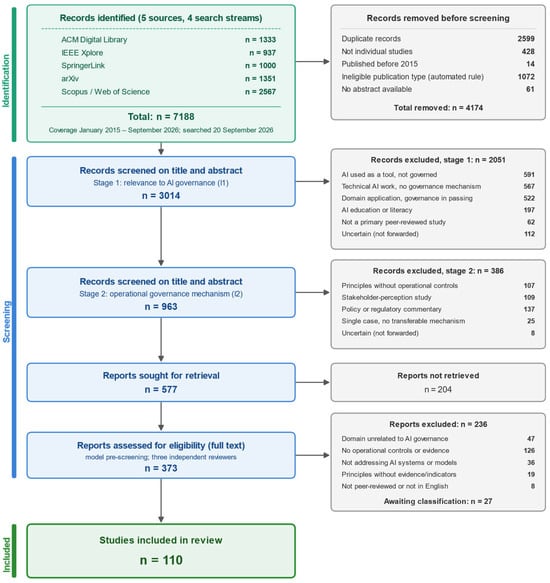
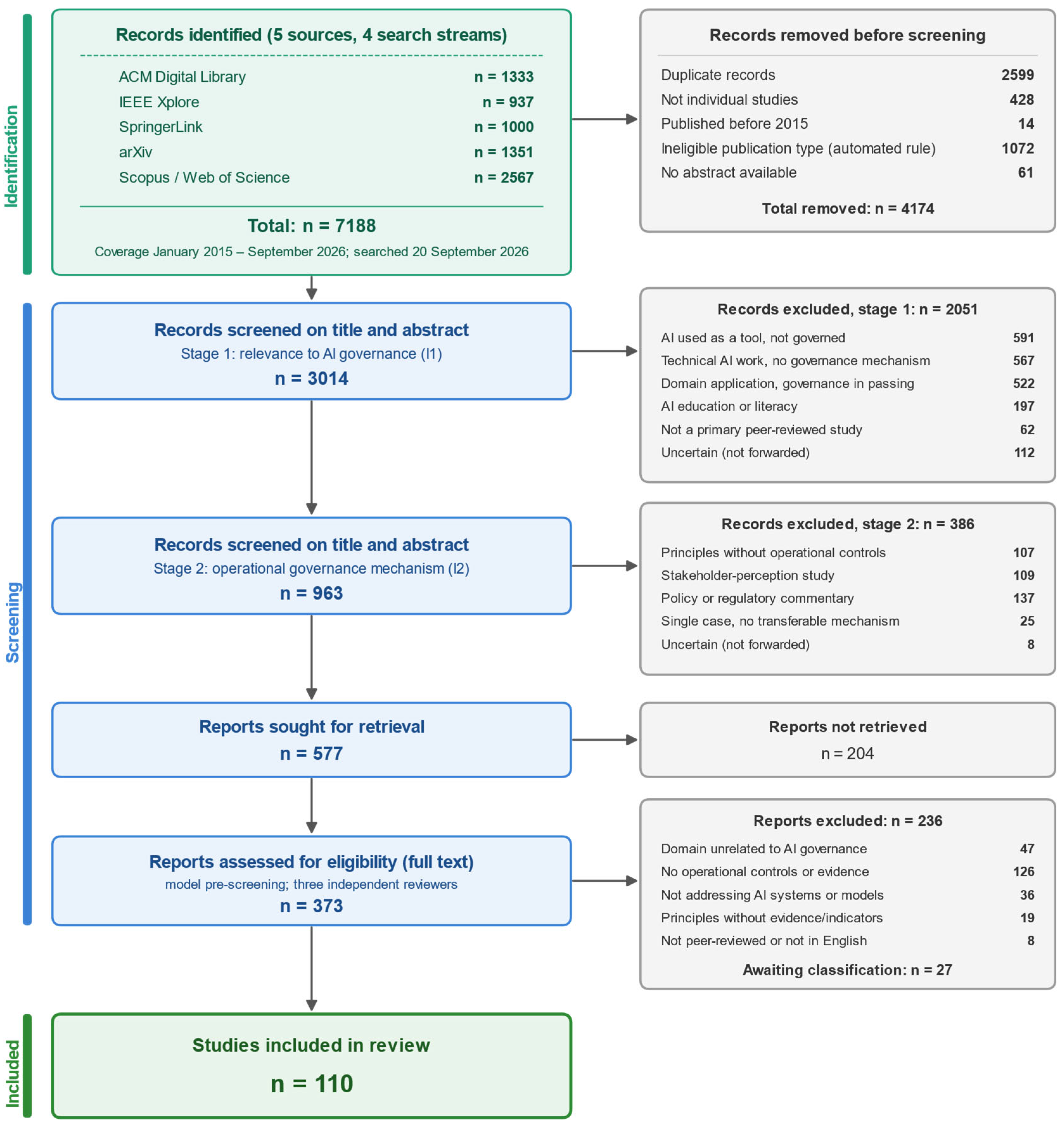
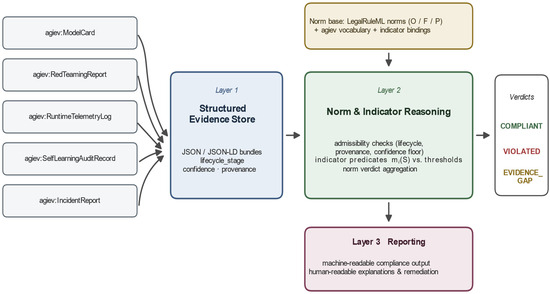
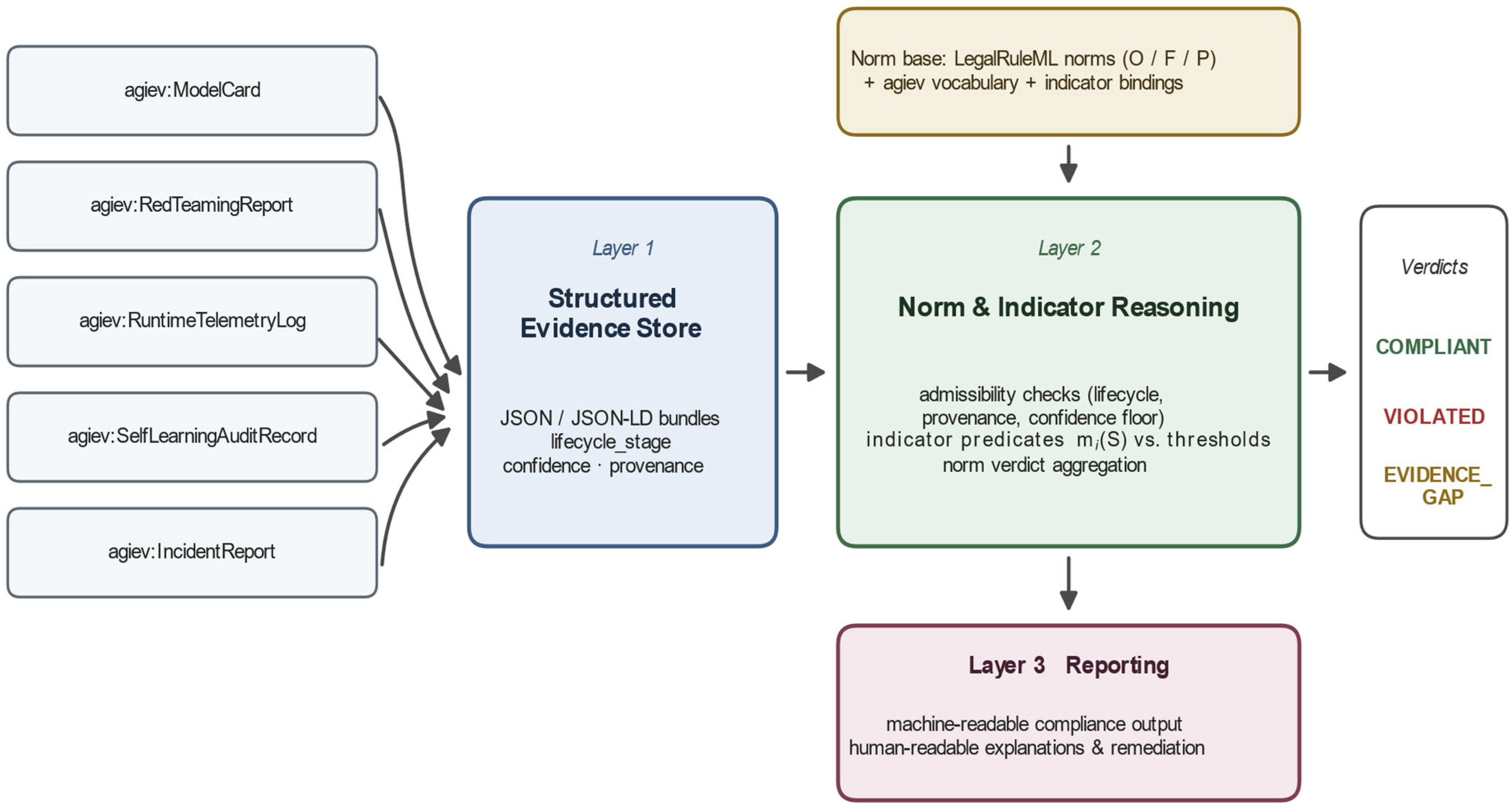

Disclaimer/Publisher’s Note: The statements, opinions and data contained in all publications are solely those of the individual author(s) and contributor(s) and not of MDPI and/or the editor(s). MDPI and/or the editor(s) disclaim responsibility for any injury to people or property resulting from any ideas, methods, instructions or products referred to in the content. |
© 2026 by the authors. Licensee MDPI, Basel, Switzerland. This article is an open access article distributed under the terms and conditions of the Creative Commons Attribution (CC BY) license.