Skip Content
You are currently on the new version of our website. Access the old version .

Anesthesia Research

Anesthesia Research is an international, peer-reviewed, open access journal on anesthesia research and practices published quarterly online by MDPI.

All Articles (53)

Background/Objectives: Fluoroscopically guided cervical nerve root corticosteroid injections are used for the treatment and diagnosis of radicular pain. Including a local anesthetic with the injected corticosteroid may decrease the pain associated with the procedure and add immediate diagnostic value. However, little is known about the safety of including a local anesthetic with a corticosteroid in these injections. Methods: A total of 299 consecutive cervical nerve root injections, performed between 2016 and 2024, were reviewed. Demographic and injection information (level/laterality and inclusion/exclusion of 1% preservative-free lidocaine with dexamethasone injectate) were documented. Charts were reviewed for major complications and increased pain post-procedure. Categorical data were compared between groups using Fisher’s exact test or Chi-square testing. Results: Injections were performed with 10 mg of dexamethasone only in 263 cases and with a mixture of 10 mg of dexamethasone and 1 mL of 1% lidocaine in 36 cases. There was no statistically significant difference in the incidence of major complications (p ≈ 1) or immediately increased pain post-procedure (p = 0.799). Conclusions: With proper technique, there is no evidence from this case–control study or in the available literature to suggest that including lidocaine with corticosteroid increases risks associated with cervical nerve root injections. However, serious adverse events are theoretically possible with injection of local anesthetic into a radicular artery, the vertebral artery, or subdural space. Given that such risks are not associated with the use of non-particulate steroids alone, large multi-institutional studies are needed to draw confident conclusions on the risks and benefits of the inclusion of local anesthetics with non-particulate corticosteroids for cervical transforaminal epidural steroid injection to inform clinical practice.

6 February 2026
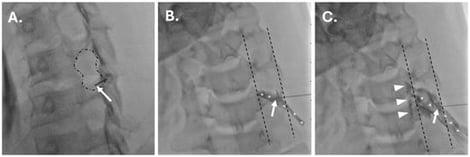
Representative images during a fluoroscopic cervical transforaminal epidural steroid injection. On the foraminal oblique projection (A), the needle (arrow) is positioned in the posteroinferior aspect of the foramen (outlined by dashed line). On the anteroposterior projection during injection of iodinated contrast (B,C), the needle is positioned just across the articular pillars (bracketed by dashes), and there is perineural flow (asterisks) and subsequently transforaminal epidural flow (arrowheads in C) of contrast without evidence of vascular uptake.

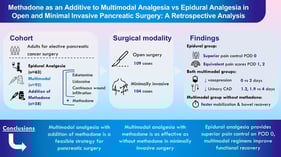
Background: Epidural analgesia (EA) is widely used in pancreatic surgery but is associated with hypotension and delayed recovery. The shift towards minimally invasive surgery has led to the exploration of alternative multimodal analgesia strategies. Methadone, with its unique pharmacological properties, may further optimize recovery. Methods: This retrospective cohort study included 213 patients undergoing pancreatic resection, receiving EA (n = 63), multimodal analgesia without methadone (MA; n = 92), or with methadone (MM; n = 58). MA and MM included intravenous ketamine, lidocaine and continuous wound infiltration. Primary outcome was maximum daily postoperative pain scores. Secondary outcomes included opioid consumption, vasopressor use, mobilization, bowel recovery, urinary catheter duration, and ICU/hospital stay. Results: Compared with EA, pain scores were slightly higher in MM (mean difference 2.22; 95% CI 1.22–3.90; p = 0.01) and in MA (mean difference 2.06; 95% CI 0.99–4.30; p = 0.06). Opioid use was comparable between MM and EA (OR 0.99, 95% CI [0.98, 1.00], p = 0.20), and significantly lower in MA (OR 0.97, 95% CI [0.96, 0.98], p < 0.001). Both MA and MM demonstrated reduced vasopressor requirements (both 0 vs. 2.0 median days) and shorter urinary catheterization durations (MA 1.2 MM 1.9 vs. EA 4.0 median days). MA improved mobilization (0 vs. 1 median days; OR 0.52, p = 0.03) and bowel recovery (OR 0.76, p = 0.02). ICU stay was longer in EA due to routine ICU admission for open surgery. Conclusions: Multimodal analgesia, with or without methadone, offers alternative strategies in pancreatic surgery. While EA provides superior pain control, multimodal regimens are associated with improved functional recovery.

22 January 2026

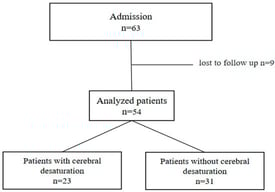
Study flow diagram.
  • Feature Paper
  • Article
  • Open Access

Background: Postoperative cognitive dysfunction (POCD) is a significant complication following thoracic surgery. One-lung ventilation (OLV) during these procedures can lead to cerebral desaturation, potentially contributing to POCD. This study investigated the correlation between intraoperative cerebral oximetry, measured by near-infrared spectroscopy (NIRS), and neurocognitive function changes in patients undergoing thoracic surgery. Methods: In this prospective, observational pilot study, 54 adult patients undergoing OLV for thoracic surgery were enrolled. Cerebral oxygen saturation (rScO2) was monitored continuously using NIRS. Patients were categorized into two groups: Group N (normal NIRS values) and Group D (decreased NIRS values, defined as a drop of ≥20% from baseline or an absolute value <50%). Neurocognitive function was assessed preoperatively, on the 3rd postoperative day, and at 3 months using the Addenbrooke’s Cognitive Examination-Revised (ACE-R) battery. The correlation between intraoperative rScO2 values, postoperative complications, and neurocognitive outcomes was analyzed. Results: A significant association was found between intraoperative cerebral desaturation and a decline in ACE-R scores. Group D showed a significant decrease in ACE-R scores on the 3rd postoperative day and at 3 months compared to their baseline, while Group N showed no significant change. The most pronounced decline in Group D was observed in the “Fluency” cognitive domain. Interestingly, there was a significant difference in ICU admission rates (p = 0.004) between the two groups, with more admissions in Group D, despite no significant difference in intraoperative hypotension or peripheral desaturation. Patients with pre-existing hypertension were more likely to experience cerebral desaturation. Conclusion: Intraoperative cerebral desaturation, as detected by NIRS, is a strong predictor of both early and late postoperative neurocognitive decline and increased postoperative morbidity in thoracic surgery patients. This underscores the value of NIRS as a sensitive monitoring tool to identify patients at risk and guide timely interventions. These findings suggest a need for further research, including larger randomized controlled trials, to confirm these associations and evaluate the impact of a protocol-driven NIRS intervention strategy on patient outcomes.

4 January 2026

Study flowchart.

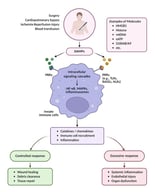
Damage-associated molecular patterns (DAMPs) are endogenous molecules released during cellular stress or injury that trigger sterile inflammation. In perioperative settings, common triggers include surgical trauma, ischemia–reperfusion injury, cardiopulmonary bypass, blood transfusion, and mechanical ventilation. When released extracellularly, DAMPs activate innate immune receptors such as Toll-like receptors (TLRs) and the receptor for advanced glycation end products (RAGE), initiating signaling cascades that amplify inflammation, disrupt endothelial integrity, and promote coagulation and metabolic imbalance. This sterile inflammatory response may extend local tissue injury into systemic organ dysfunction, manifesting clinically as acute lung injury, acute kidney injury, myocardial dysfunction, disseminated intravascular coagulation, and perioperative neurocognitive disorders. Recognizing the central role of DAMPs reframes these complications as predictable consequences of endogenous danger signaling rather than solely as results of infection or hemodynamic instability. This understanding supports the use of established strategies such as protective ventilation and restrictive transfusion to minimize DAMP release. Emerging evidence also suggests that anesthetic agents may influence DAMP-mediated inflammation: propofol and dexmedetomidine appear to exert anti-inflammatory effects, whereas volatile anesthetics show variable results. Although clinical data remain limited, anesthetic choice and perioperative management may significantly affect systemic inflammatory burden and recovery. Future research validating DAMPs as biomarkers and therapeutic targets may inform precision anesthetic strategies aimed at modulating sterile inflammation, ultimately enhancing perioperative outcome.

20 December 2025

Schematic representation of the sources and types damage-associated molecular patterns (DAMPs). (A) Endogenous DAMPs released from an injured cell. The figure illustrates the major subcellular origins of DAMPs, including mitochondrial DAMPs (mitochondrial DNA, extracellular ATP, N-formyl peptides), cytosolic DAMPs (heat shock proteins, S100 proteins, uric acid), and nuclear DAMPs (extracellular DNA, histones, HMGB1). Elements of the extracellular matrix such as biglycan, low-molecular-weight hyaluronan, and heparan sulfate are also shown as extracellular-derived DAMPs. (B) Transfusion-derived DAMPs associated with different blood products. Red blood cell units may contain cell-free hemoglobin and heme, mitochondrial and nuclear DNA fragments, microparticles, and ATP. Platelet units may release platelet-derived microparticles and HMGB1. Plasma products, including fresh frozen plasma, may contain plasma-derived microparticles. Explanation in the text. Created in BioRender. Maisat, W. (2025) https://BioRender.com/7ldsmk0.

News & Conferences

Issues

Open for Submission

Editor's Choice

Get Alerted

Add your email address to receive forthcoming issues of this journal.

XFacebookLinkedIn
Anesth. Res. - ISSN 2813-5806