Article

An Engineered Escherichia coli Community for Studying Quorum Sensing

1
School of Food Science and Nutrition, University of Leeds, Leeds LS2 9JT, UK
2
Faculty of Biological Sciences, University of Leeds, Leeds LS2 9JT, UK
*
Authors to whom correspondence should be addressed.
SynBio 2023, 1(2), 144-157; https://doi.org/10.3390/synbio1020010
Submission received: 23 April 2023 / Revised: 24 May 2023 / Accepted: 4 July 2023 / Published: 7 July 2023

Abstract

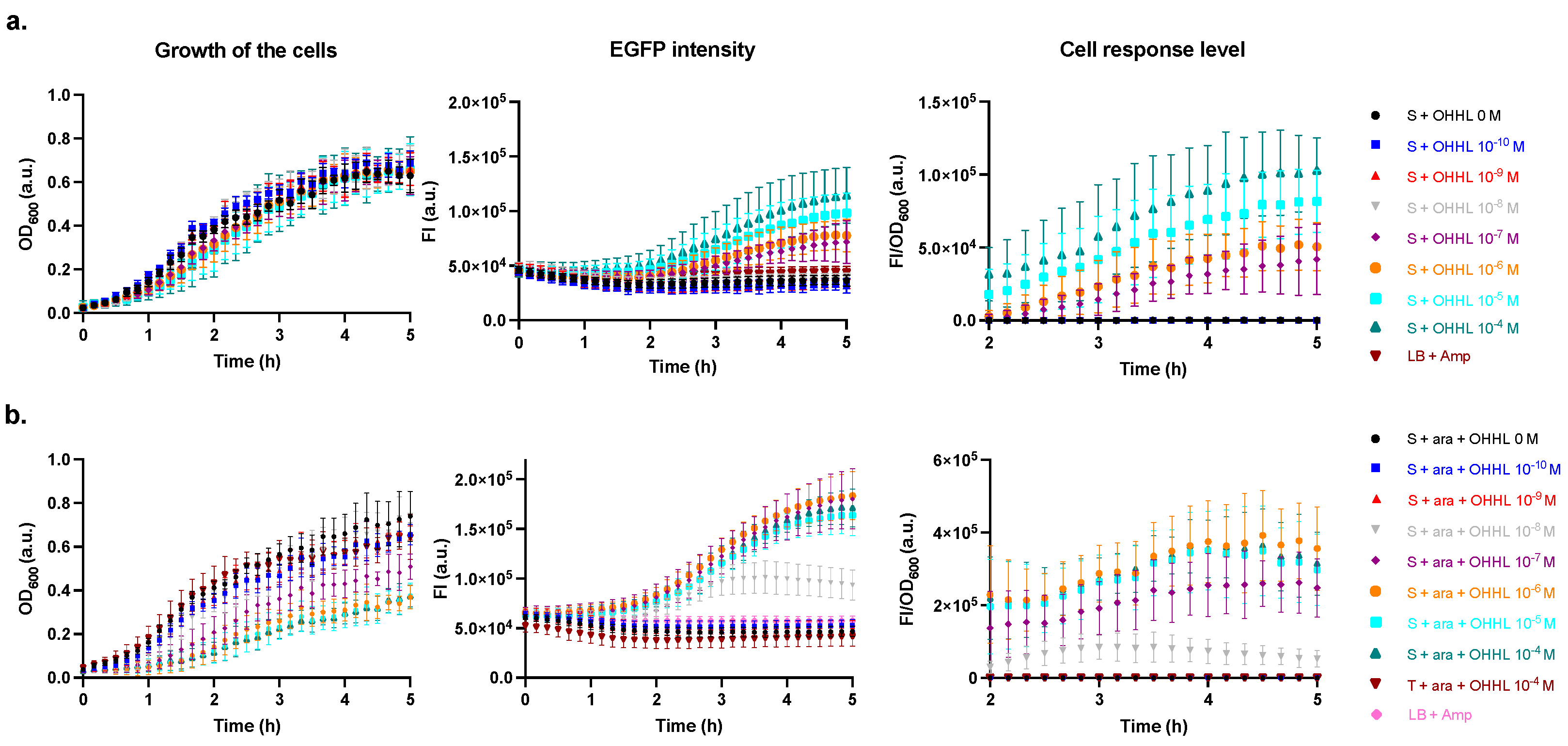
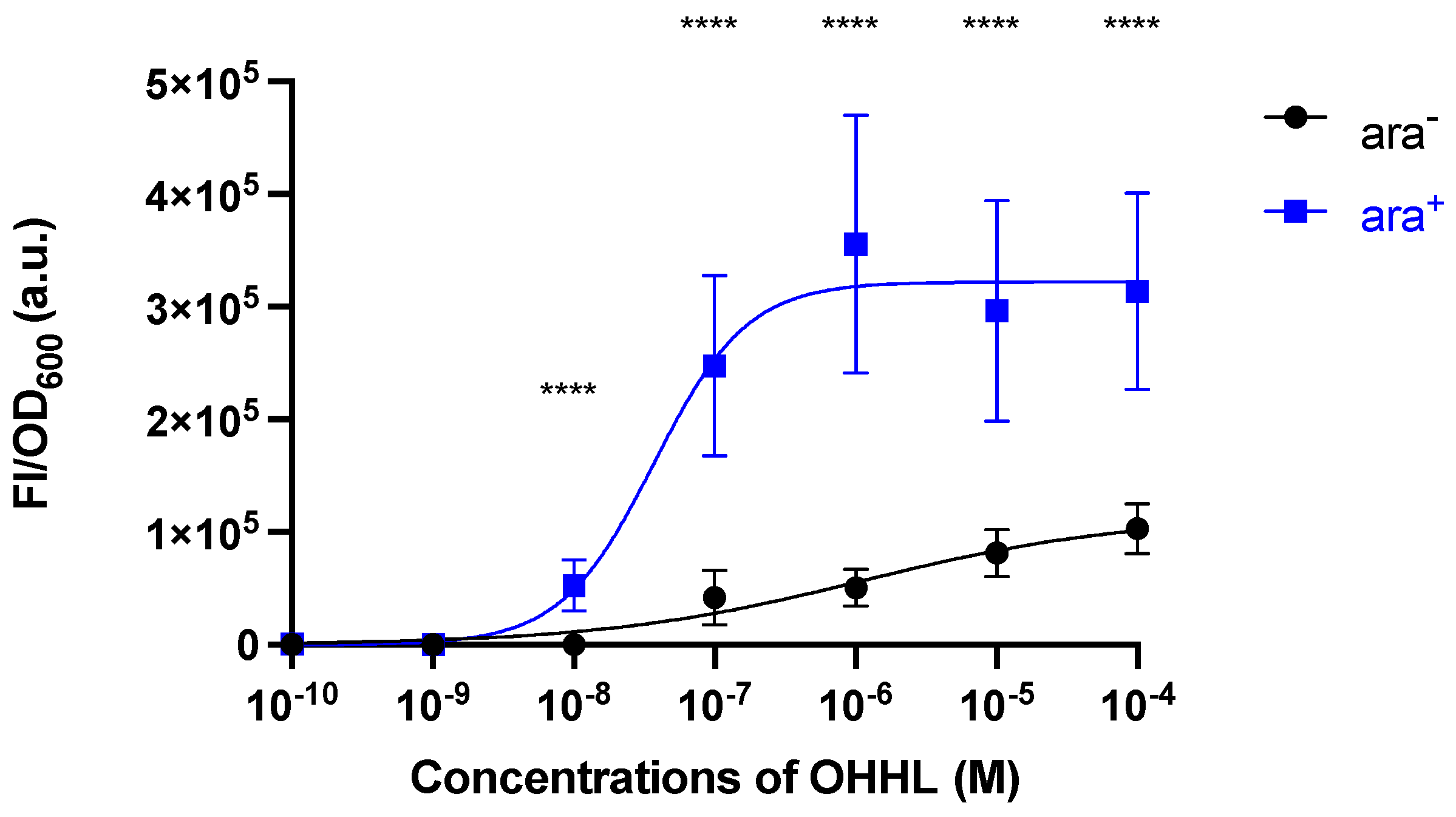
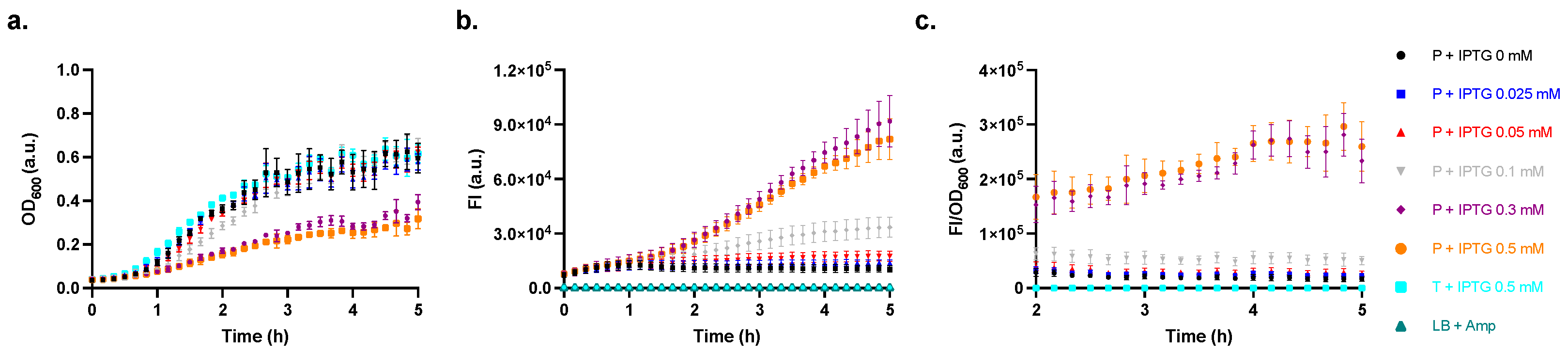
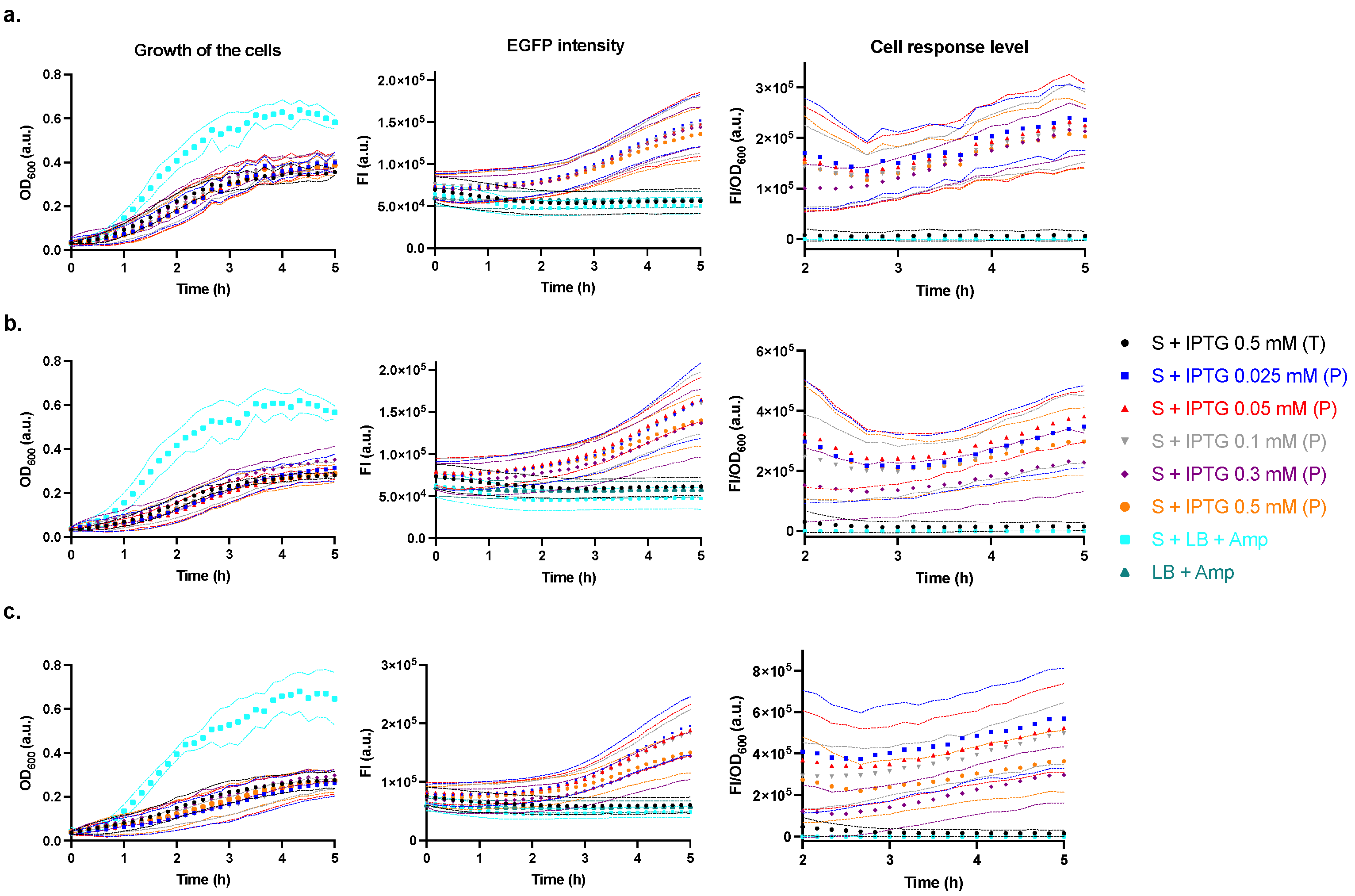
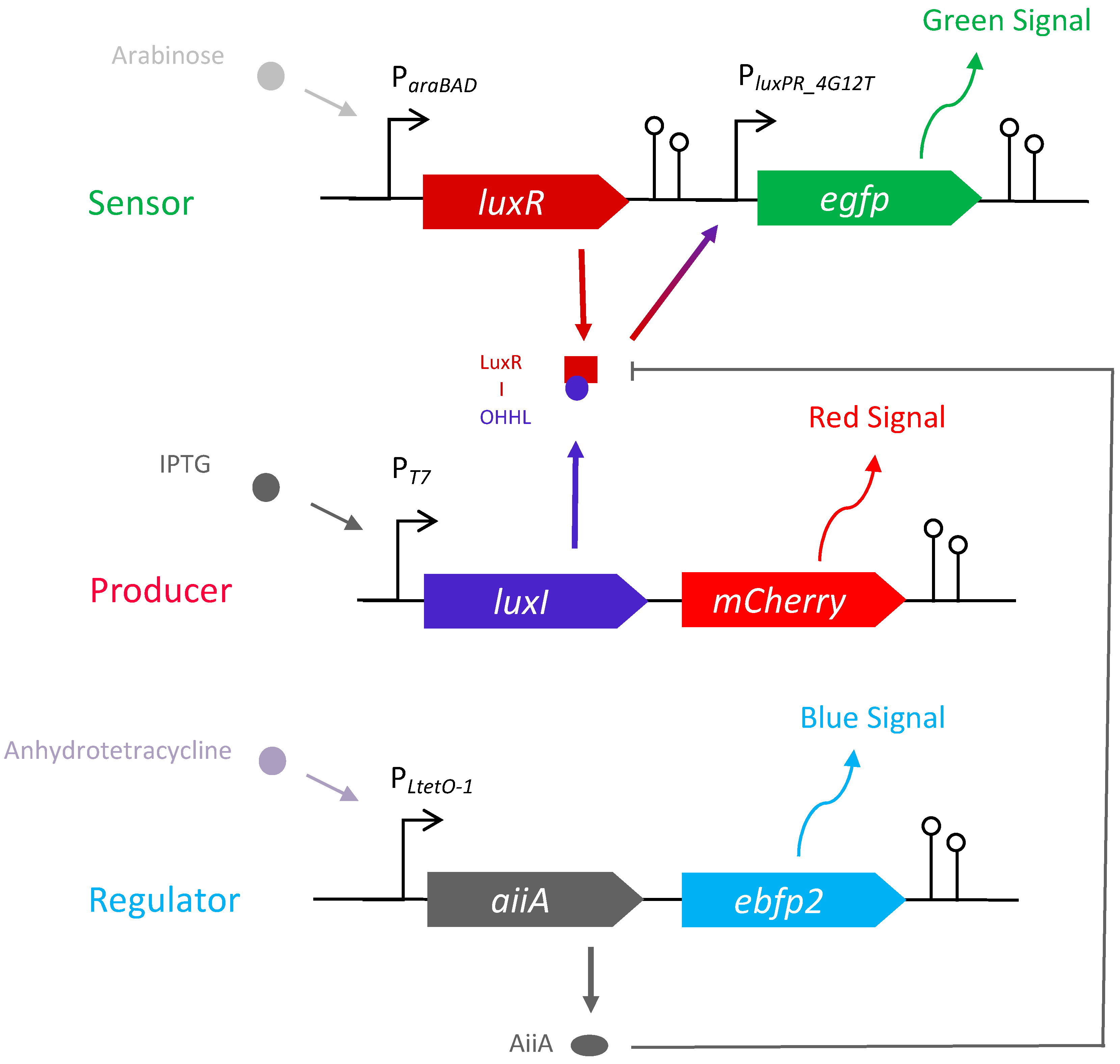
In bacterial communities, quorum sensing (QS) is a process mediated via chemical signalling that individuals use to coordinate their collective phenotypes. It is closely associated with pathogenic traits such as virulence factor production and antibiotic resistance. In their natural habitats, bacteria live in small niches, forming intricate consortia, where the role of QS is little understood. This work aims to construct a tuneable, trackable, and reconfigurable model bacterial community for studying QS. To this end, three Escherichia coli fluorescent reporter strains were constructed based on the paradigm LuxI/LuxR QS system. The strains recreate the three major aspects of QS response: sensing (S), autoinducer production (P), and regulation (R). We found that the response of the S strain as a function of the N-(3-oxohexanoyl)-L-homoserine lactone (OHHL) concentration did not saturate and exhibited a concentration-dependent response (in the range 10−7 to 10−4 M). The P strain produced OHHL and showed the ability to activate the S response, while the R strain showed the ability to attenuate the response due to the expression of the lactonase AiiA. Monitoring the fluorescent signals of the strains permits tracking the activation and attenuation activities of the LuxI/LuxR QS system. Future studies can now also benefit from this straightforward subcloning strategy to study other QS systems.
Keywords: quorum sensing; model bacterial community; biosensor; quorum sensing tracking; fluorescent tracking quorum sensing; model bacterial community; biosensor; quorum sensing tracking; fluorescent tracking