Article

The Influence of Fibre Cross Section Shape and Fibre Surface Roughness on Composite Micromechanics


Department of Mechanical and Aerospace Engineering, University of Strathclyde, 75 Montrose Street, Glasgow G1 1XJ, UK
Micro 2023, 3(1), 353-368; https://doi.org/10.3390/micro3010024
Submission received: 5 February 2023 / Revised: 9 March 2023 / Accepted: 13 March 2023 / Published: 20 March 2023
(This article belongs to the Section Microscale Materials Science)

Abstract

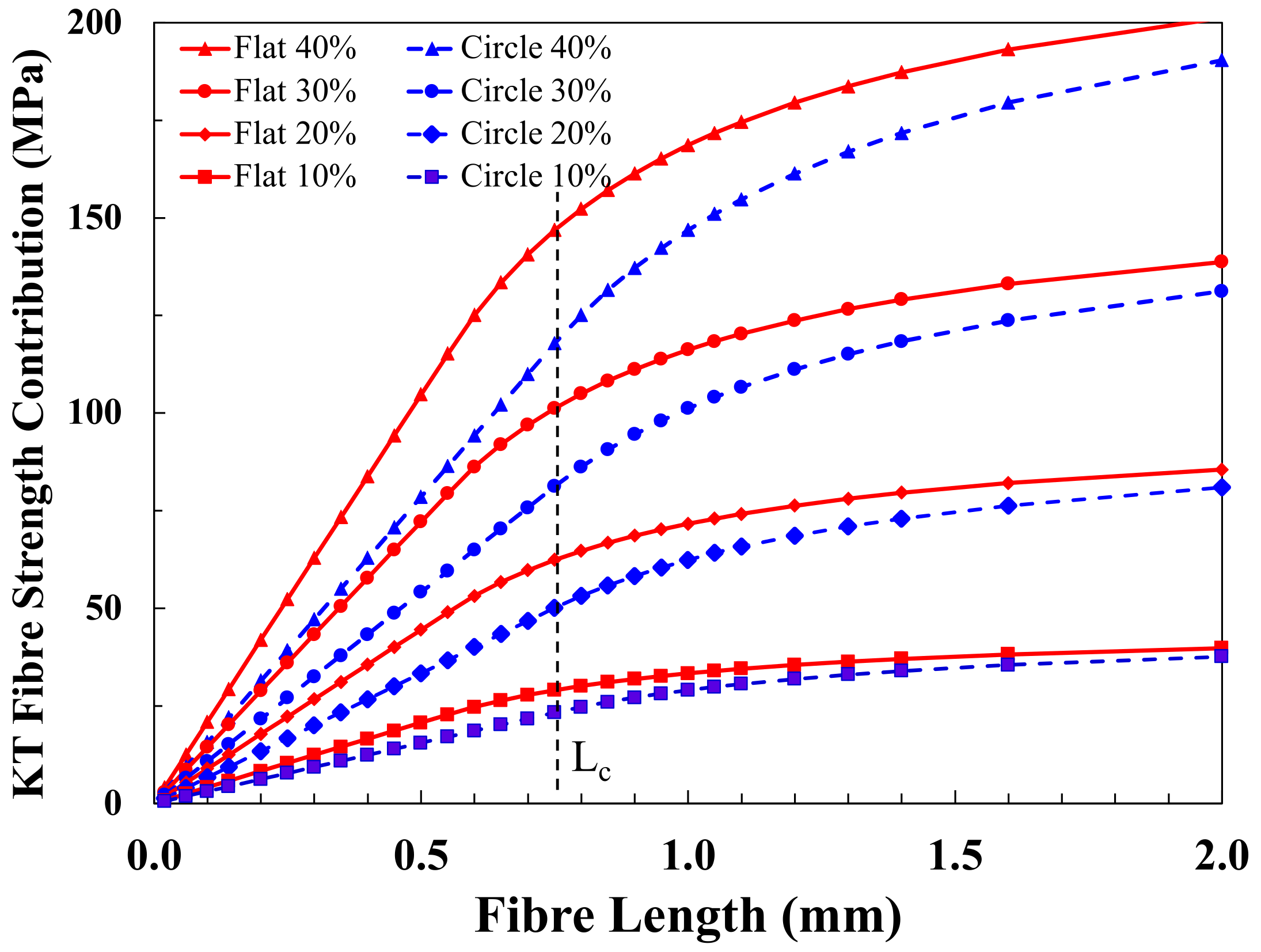
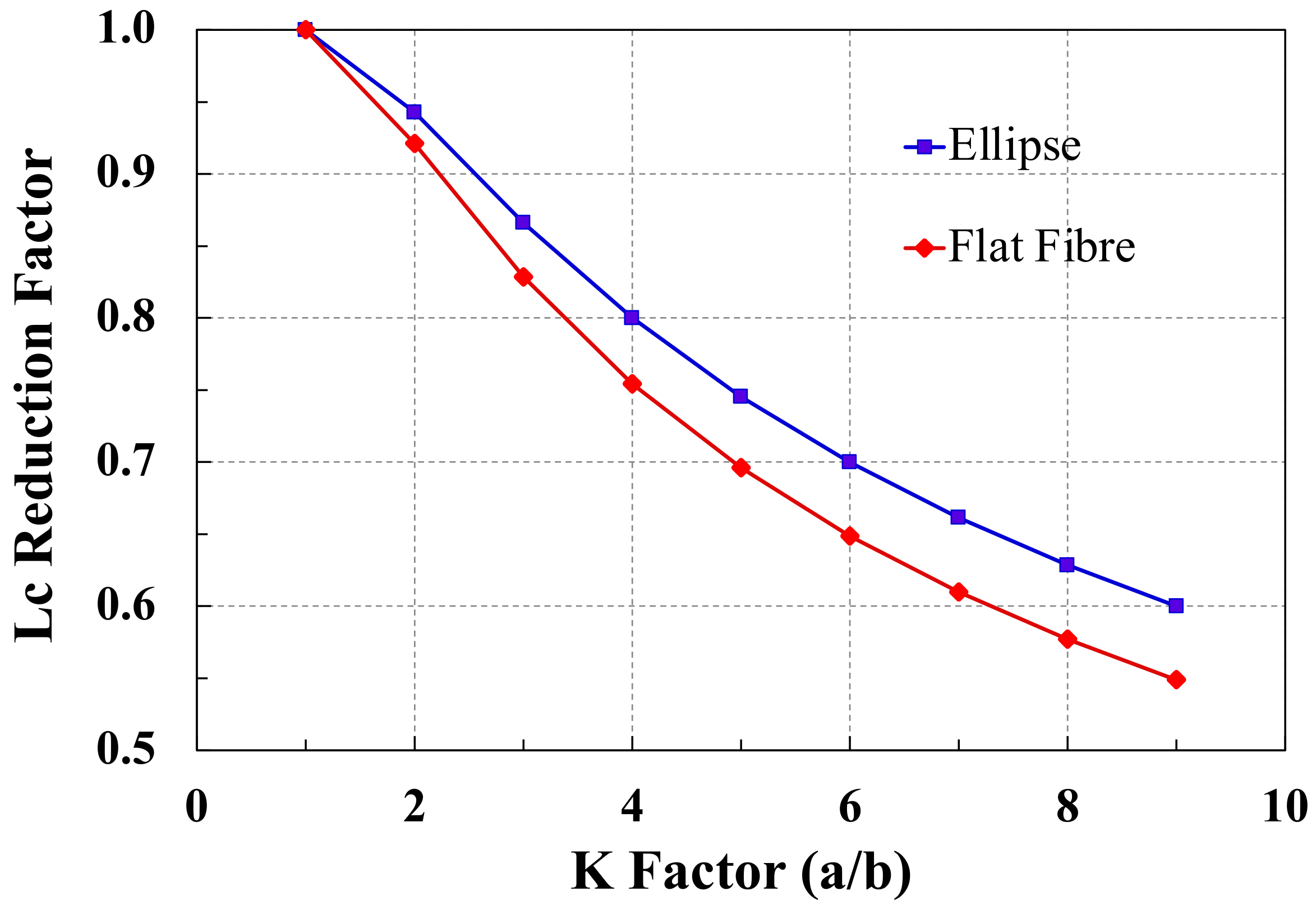
Many of the carbon and natural fibres used in composite reinforcement have a non-circular cross section. Recently non-circular, or flat, cross section glass fibre products have become commercially available. This paper explores the potential effects that such non-circular fibre cross section shapes may have on the micromechanics of stress transfer at the composite fibre–matrix interface and the resulting changes in composite strength performance. Analytical modelling is used to show how the critical fibre length in composites with non-circular fibres is always less when compared to circular fibres with an equal cross-sectional area. This can result in significant changes to the strength performance of discontinuous fibre reinforced composites. Additionally, it is shown that the surface roughness found on natural and carbon fibres, many of which are also non-circular in cross section, can decrease the critical fibre length still further. These effects have important consequences for the use of single fibre micromechanical tests used for the characterisation of interfacial strength.
Keywords: glass fibres; carbon fibres; natural fibres; polypropylene; interface strength; analytical modelling; micro-mechanics; injection moulding glass fibres; carbon fibres; natural fibres; polypropylene; interface strength; analytical modelling; micro-mechanics; injection moulding