You are currently viewing a new version of our website. To view the old version click .
Conservation
  • Article
  • Open Access

3 December 2025

Environmental Correlates of Facultative Paedomorphosis in Newts from a Greek Biodiversity Hotspot: Is Staying Young Enough to Stay Alive?


,
,
,
,

,
and
1
Molecular Ecology and Conservation Genetics Lab, Department of Biological Applications and Technology, University of Ioannina, 45110 Ioannina, Greece
2
Institute of Biology Leiden, Leiden University, 2300 RA Leiden, The Netherlands
3
Naturalis Biodiversity Center, 2300 RA Leiden, The Netherlands
4
Management Unit of Northern Pindos National Park, Natural Environment & Climate Change Agency, 11525 Athens, Greece
Conservation2025, 5(4), 79;https://doi.org/10.3390/conservation5040079 
(registering DOI)

Abstract

Facultative paedomorphosis, the retention of larval traits in sexually mature individuals, plays a crucial role in species ecology and evolution and is influenced by complex interactions between environmental factors. Here, we compile all known cases of paedomorphosis in all newt species in Greece and report 20 new localities, mainly in Northern Pindos National Park. Our results indicate that paedomorphosis tends to occur more frequently in stable aquatic environments in combination with unfavourable external conditions (lack of precipitation and higher temperatures). Furthermore, species-specific patterns related to the occurrence of paedomorphosis were also unveiled: Mesotriton alpestris prefers high-elevation and permanent ponds; Lissotriton graecus occurs predominantly in artificial, lowland ponds; and Triturus macedonicus is associated with a stable hydroperiod and fish absence. Overall, conservation strategies should explicitly account for paedomorphic populations, emphasizing the value of artificial ponds, which are able to support this life-history strategy. Lastly, the Northern Pindos Mountain Range emerges as a major European intra-specific diversity hotspot.

1. Introduction

During ontogeny, organismal development typically follows a temporally and spatially precise sequence of events [1,2,3]. However, the signalling pathways that regulate these processes exhibit a degree of flexibility and can be influenced by various factors [4,5,6]. One of the major ways in which this developmental flexibility is manifested is through shifts in the timing of ontogenetic events, called heterochronies [7,8,9]. Facultative paedomorphosis is a heterochronic process influenced by environmental conditions, in which mature individuals can either maintain juvenile traits due to developmental delays or metamorphosize into their typical adult state [7,9,10]. These processes play a significant role in both micro- and macroevolution, influencing species morphology, as well as the structure and dynamics of ecological communities [8,11,12,13,14].
Alternative phenotypes produced by polyphenism greatly benefit species with complex life cycles, such as amphibians [15,16,17,18]. Thus, amphibians are model organisms for studying heterochronies [19]. The choice between different morphs boosts adaptive potential and allows for environmental risk management by diversifying resource consumption among individuals [20,21,22]. Efficient resource and habitat partitioning aids the survival of high-density populations by lowering intraspecific competition, while promoting sympatric differentiation [11,13,18,22]. These benefits suggest that paedomorphosis is a valuable asset for the survival of amphibian species that are subjected to detrimental terrestrial and aquatic conditions, such as habitat loss, limited food availability, inbreeding, predation, and diseases [23,24,25]. Under these pressures, facultative paedomorphosis may prove to be an evolutionary “lifeboat”, allowing amphibians to be more resilient in unpredictable environments [10,26].
The complex nature of heterochronies and the presence of paedomorphic amphibian populations in a wide range of environments make it extremely difficult to establish a connection with the environmental factors involved [14,22,27]. Previous research has suggested that environmental factors, such as altitude, temperature, predation, water permanency and depth, oxygen content, dispersal limitation, and aquatic vegetation, are potentially correlated with paedomorphosis, although their effects vary across species and locations [14,28,29,30,31,32,33]. Affecting all these parameters, climate change is emerging as a major factor that shapes the expression of alternative morphs [34,35]. Understanding the factors influencing paedomorphosis is essential for understanding its evolutionary role and informing conservation strategies.
To increase the impact of amphibian conservation, conservationists need to consider the significance of facultative paedomorphosis [11,36,37,38]. The traditional species-centric prioritization of biodiversity hotspots [39,40] has been widely criticized for overlooking intraspecific diversity [41,42,43,44]. Similarly, the concept of Evolutionary Significant Units (ESUs), which include populations that exhibit genetic variation, reproductive isolation, phylogenetic monophyly, and unique morphological traits, rarely considers polyphenisms [45,46,47,48,49,50]. Given the evolutionary importance of paedomorphic populations, their conservation should be integrated into management actions.
Previous studies have focused on locating hotspots of amphibian paedomorphosis in Europe. Such hotspots have been described in Larzac, France [37] and Montenegro [38]. In Greece, 11 cases of facultative paedomorphosis in newts have been reported from ten different sites [32,51,52,53,54,55,56,57] referring to four newt species; the Macedonian crested newt, Triturus macedonicus (Karaman, 1922), the Alpine newt, Ichthyosaura alpestris, nunc Mesotriton alpestris (Laurenti, 1768) [58], the Greek smooth newt, Lissotriton graecus (Wolterstorff, 1906) and the Schmidtler’s smooth newt, L. schmidtleri (Raxworthy, 1988). Most of these sites are located in the Epirus region around the Ioannina district. This area includes the Northern Pindos National Park, which is a hotspot of inter- and intraspecific amphibian diversity [32,59].
In this study, we examined the distribution and ecological characteristics of paedomorphosis in Greek newts and we investigated how climatic and landscape features are associated with the occurrence of facultative paedomorphosis across three newt species, using Generalized Linear Models (GLMs). Specifically, we focused on the Northern Pindos National Park, a region characterized by diverse aquatic and terrestrial habitats, where M. alpestris, L. graecus and T. macedonicus occur. By testing environmental drivers based on an information-theoretic approach [38,60], we aimed to provide insights into the adaptive significance of paedomorphosis and inform conservation strategies for newt populations in a climatically changing world.

2. Materials and Methods

2.1. Sampling and Data Preparation

We conducted field surveys during the April–July 2021 breeding season and 135 breeding ponds were examined in Northern Pindos National Park, referring to three newt species: Mesotriton alpestris, Lissotriton graecus and Triturus macedonicus. Individuals were collected via dipnet survey and paedomorphs and their sex were identified based on cloacal external morphology [61]. We calculated the frequency of occurrence of paedomorphosis in the different newt species and performed a chi-square test using R Statistical Software v. 4.4.2 [62] to identify any differences in the recorded proportions of this trait.
Further field-based data included pond type and fish presence. The pond type (artificial or natural) was determined based on direct observations, whereas fish presence or absence was assessed through visual observations and dip-net sampling.
To strengthen our analysis, we expanded the original dataset and included six additional sites of paedomorphosis reported in the literature [32,51,52,53,54,55,56,57], as well as four newly identified sites from field surveys conducted outside the park, following the same sampling methodology. The compiled data were then divided into two distinct datasets.
The first dataset included basic site information and a few environmental variables for all Greek paedomorphic populations, as well as the number and/or proportion of paedomorphs and their sex, wherever these were available (Table S1). The second dataset included a broader set of environmental variables for all the study sites in the Northern Pindos National Park, regardless of presence or absence of paedomorphosis. A few additional sites where paedomorphosis was recorded from outside the park, referring to the same three newt species, were also included to improve representation of cases of paedomorphosis (Table S2).

2.2. Basic Statistics

Based on the first dataset, we conducted basic statistical analyses using non-parametric tests in R due to the limited set of environmental parameters (Table S1). Only altitude, hydroperiod, pond type and landscape were considered for all sites. The landscape type was determined based on CORINE Land cover 2018 dataset, provided by Copernicus Land Monitoring Service [63] using QGIS v. 3.24 [64] and adapted into four groups: forest, open, agriculture and urban. For these tests, both Lissotriton species were considered as one species group (Lissotriton sensu lato species), as only one record of paedomorphosis for L. schmidtleri has been made to date [57].
For altitudinal distribution, we used the Kruskal–Wallis H test to detect differences among the three species groups, followed by the Mann–Whitney U test for pairwise comparisons. For pond type, we applied a binomial test for pond preference and chi-square test was used to assess landscape preferences.

2.3. Regression Analysis

Based on the second dataset, we investigated the influence of various environmental factors on the occurrence of facultative paedomorphosis using regression analysis (Table S2). For each pond, field-based data (fish presence and pond type), as well as hydrological, climatic and spatial data were recorded to investigate their effects on the distribution of facultative paedomorphosis (Table 1).
Table 1. Environmental and spatial variables used in the regression analysis. Categorical variables were numerically encoded as indicated.
Hydroperiod (temporary or permanent pond) and altitude were assessed based on annual satellite imagery series and elevation data, respectively, from Google Earth Pro [65]. We also calculated the Topographic Wetness Index (TWI), based on a digital elevation model using QGIS, which is a function of slope and water supply [66] and reflects the wetness and soil moisture for a radius 100 m around the pond.
Climatic variables were obtained from WorldClim 2.1 at a resolution of 2.5 arc-minutes, which was the only available spatial resolution corresponding to the study period (2020–2021) [67]. We extracted 26 temperature-related environmental layers, including the minimum temperature in January 2021 (Tmin), the maximum temperature in July 2020 (Tmax), and monthly layers from April 2020 to March 2021, which were used to calculate the mean annual temperature (Tmean), as well as the mean annual precipitation for that year.
Additionally, to better assess terrestrial landscape effects, we utilized remote sensing data. We used the Human Influence Index (HII), an open-data proxy of human influence on terrestrial ecosystems at a 300 m resolution, based on population density, infrastructure, accessibility and use of electric energy [68], extracting the value of each pond.
Finally, we derived the percentages of six land cover types (forest, shrubland, grassland, cropland, bare ground and urban areas) from Copernicus Global Land Cover 2019 dataset, available through the Copernicus Land Monitoring Service, at a 100 m resolution [63]. Instead of the typical principal component analysis (PCA) approach [60,69], we calculated a habitat suitability index to assess the suitability of the surrounding environment and the availability of shelters.
Forests and shrubs were assumed to provide the highest shelter availability [70,71,72] and were weighted by a factor of 1. Grassland and arable land, while still important for dispersal, were considered to provide intermediate shelter availability [73,74,75] and were therefore weighted by 0.5. Bare ground and urban areas were assumed to provide no shelter and were assigned a weight of 0, as bare areas increase amphibians’ risk of desiccation [76,77,78,79] and predation [80], while urban areas are associated with high road mortality [73,81]. Our Shelter Availability Index (SAI) is then defined as:
S A I =   F + S × 1   + G + C × 0.5 + B + U × 0   100 ,
which simplifies to:
S A I =   F + S   + G + C × 0.5   100
where F, S, G, C, B and U represent the percentage cover of forest, shrubland, grassland, cropland, bare ground and urban area, respectively. The resulting index ranges from 0 (least suitable due to shelters availability) to 1 (most suitable due to shelters availability).
Both climatic and remote sensing data were obtained in R, using extract() function from the “terra” package for spatial data analysis [82].
The Pearson correlation coefficient (r) was calculated to evaluate the relationships between the environmental variables. Variables with |r| < 0.3 were considered weakly correlated, 0.3 ≤ |r| ≤ 0.7 as moderately correlated, and |r| > 0.8 as strongly correlated [83]. Generalized linear models (GLMs) with binomial errors were then constructed for L. graecus, M. alpestris and T. macedonicus, as well as for the paedomorphosis across all three species, including all combinations of environmental variables and excluding interactions with |r| > 0.8. In such cases, interacting variables were combined using PCA to prevent bias in the regression analysis [83]. Categorical variables were encoded as required for the analysis [84] (Table 1).
We found strong correlation for Tmax, Tmin, Tmean and Altitude variables. From PCA, we extracted the first principal component (PC1), which accounted for 92.4% of the total variance and with an eigenvalue > 1 (Table S3). All original variables loaded equally on PC1, representing an environmental gradient, where low PC1 scores correspond to cold, high-elevation sites, while high PC1 scores to warm, low-elevation sites.
To avoid further issues of collinearity, the “car” package in R was used to calculate variance inflation factors (VIF), and models with VIF > 5 were excluded [83]. Model selection was based on Akaike’s Information Criterion (AIC) and Δ-AIC using the dredge() function from the “MuMin” package [85]. Furthermore, we applied Moran’s I test using 999 permutations and an alpha value of 0.05 [86], to investigate spatial autocorrelation in the residuals of the selected models, using the residuals() and moran.mc() functions from the “spdep” package [87]. Additionally, we performed a Likelihood-ratio test (LRT) between the simpler (null) model and the more complex (alternative) model, considering only these models performed significantly better than the null model [88], using the “epiDisplay” package [89]. Lastly, Nagelkerke’s R2 (R2N) was calculated to measure the proportion of the variance explained by each selected model [90] using the “rcompanion” package [91].

3. Results

3.1. Frequency of Paedomorphosis

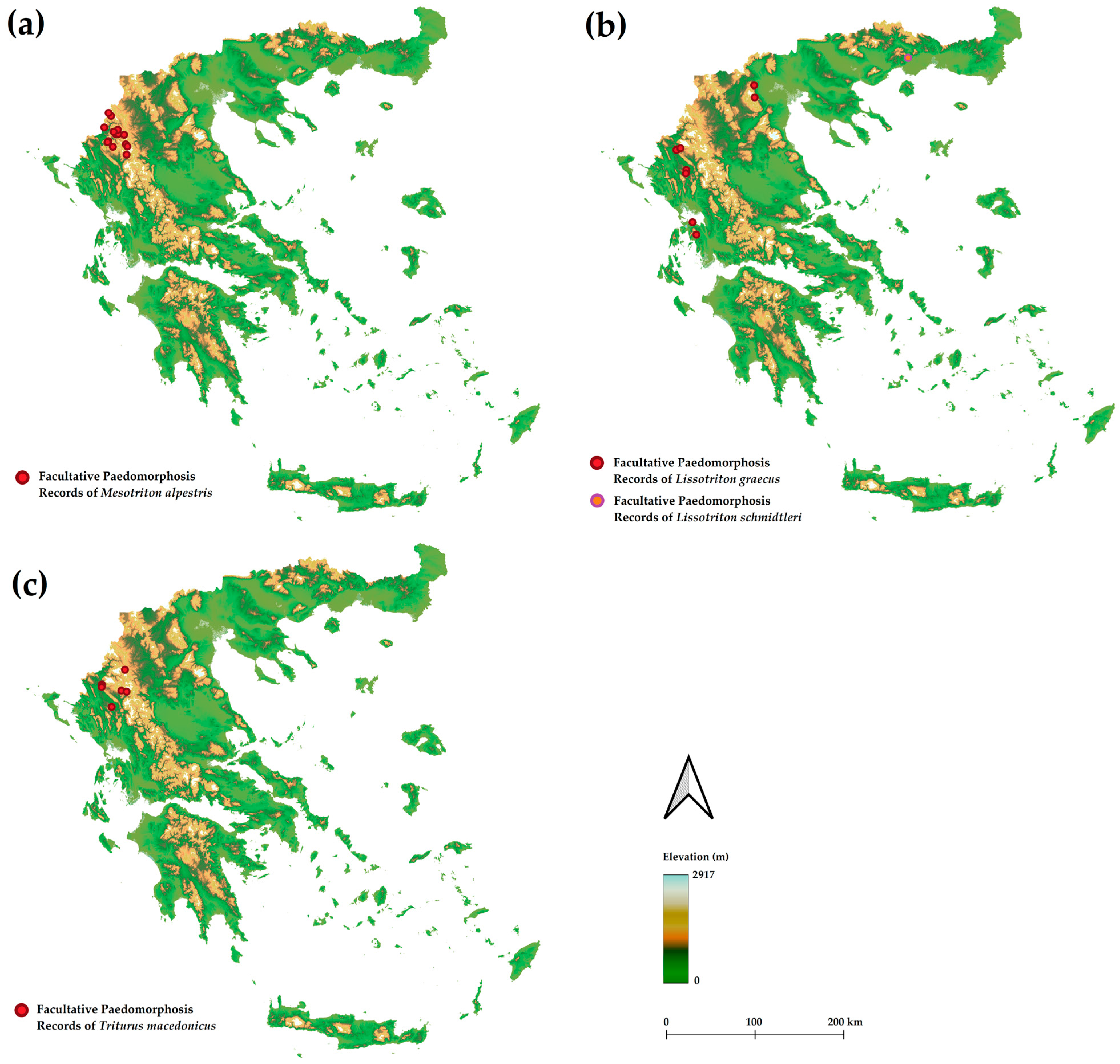
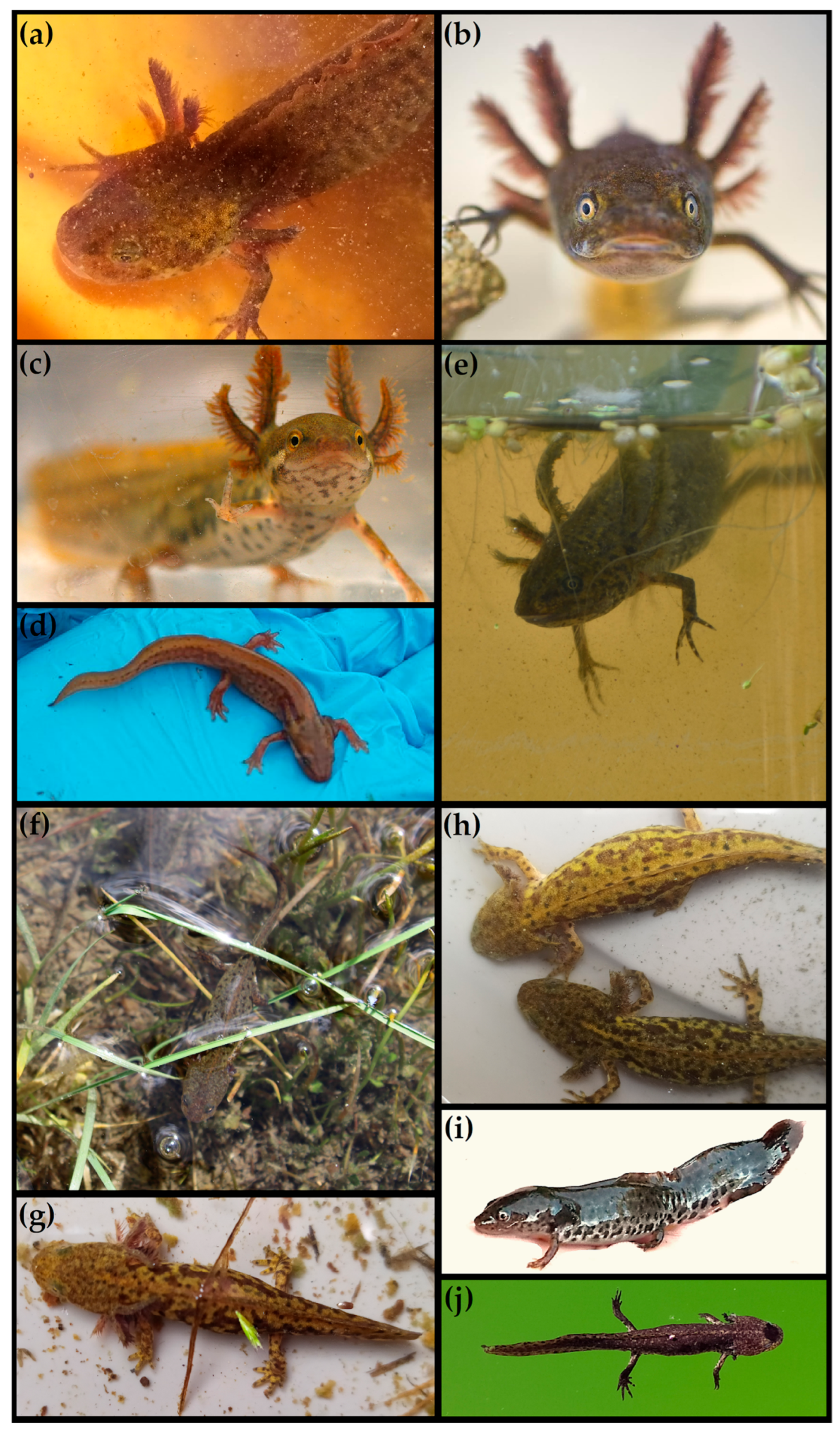
A review of the literature revealed ten previously documented sites of newt paedomorphosis in Greece (Table S1). In this study, we report an additional 20 sites, increasing the total number of recorded paedomorphosis occurrences in the country. Among these, two sites host sympatric newt populations, each containing paedomorphic individuals, bringing the total number of populations with paedomorphs to 33. Of these, 12 were Lissotriton sensu lato species, seven were T. macedonicus and 14 were M. alpestris (Figure 1 and Figure A1).
Figure 1. Paedomorphic newt individuals photographed during fieldwork. (a,b) Macedonian crested newt, Triturus macedonicus; (ce) Greek smooth newt, Lissotriton graecus; (fj) Alpine newt, Mesotriton alpestris. Photo credits: (a,e,g,h,j) T.D.; (b) A.B.; (c,i) K.S.; (d,f) A.P.
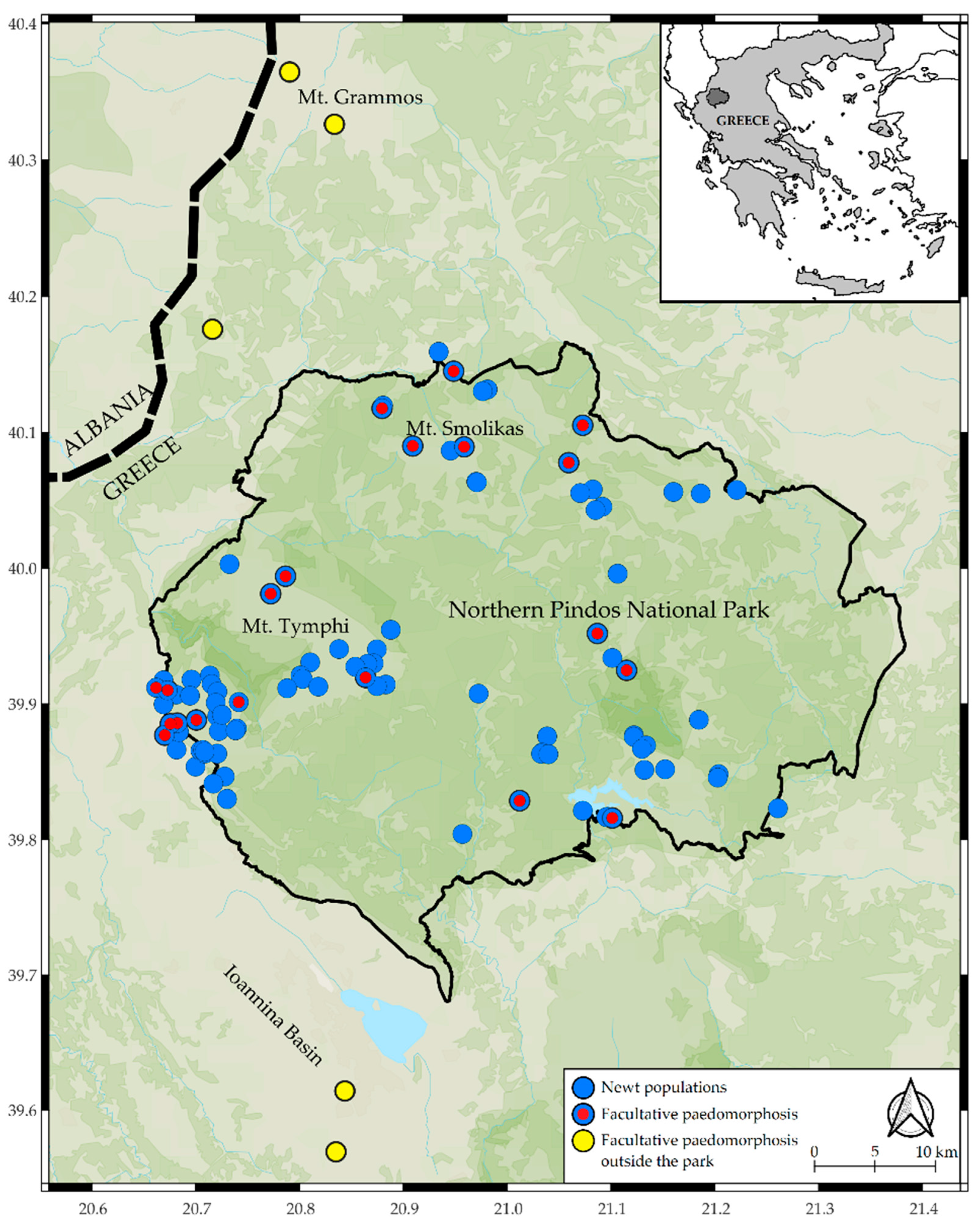
Of the 135 breeding ponds surveyed in the National Park, we identified 22 paedomorphic populations, 18 of which were new: five paedomorphic populations of L. graecus out of 33 (15.2%), 11 of M. alpestris out of 68 (16.2%), and six of T. macedonicus out of 45 (13.3%). These 22 paedomorphic populations were found at 20 different sites, with two cases of sympatric paedomorphosis (Figure 2). No significant differences were found in the proportion of paedomorphic individuals between species (Χ2 = 0.17, N = 146, df =2, p = 0.918) suggesting that the likelihood of paedomorphosis is comparable (≈15%) among L. graecus, M. alpestris and T. macedonicus in the Northern Pindos National Park.
Figure 2. Distribution of surveyed breeding ponds and observed paedomorphosis within and around the Northern Pindos National Park, northwestern Greece.

3.2. Characteristics of Paedomorphosis in Greece

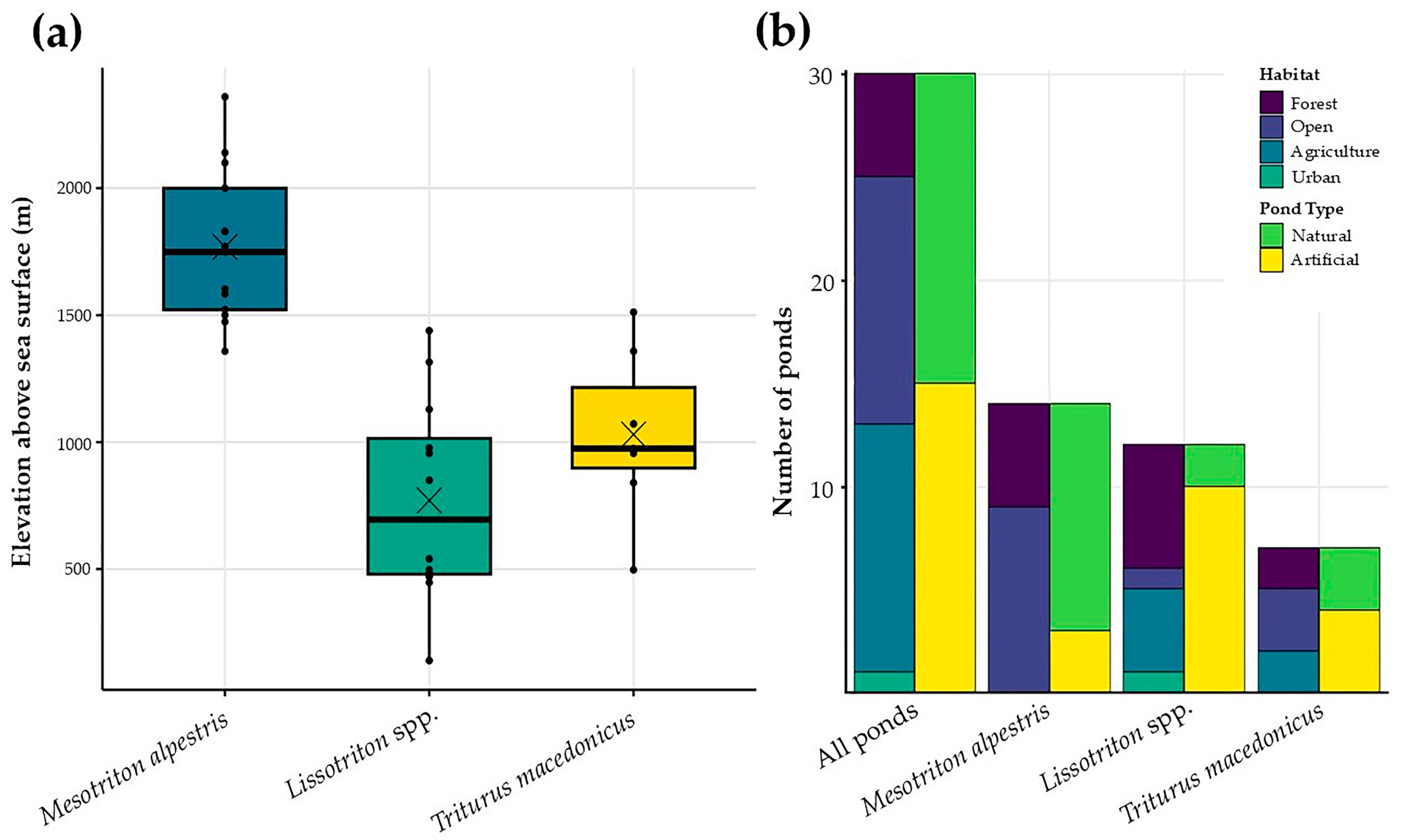
The distribution of paedomorphic M. alpestris, Lissotriton spp. and T. macedonicus populations ranged from 1199 to 2360 m, 497 to 1512 m and 140 to 1439 m, respectively (Figure 3a). The Kruskal–Wallis H test showed that altitudinal distribution differed significantly (H = 21.39, p < 0.01) among paedomorphic populations of the three different species groups. More specifically, the Mann–Whitney U test revealed a significant difference in the altitudinal distribution of paedomorphosis in M. alpestris compared to Lissotriton spp. (U = 165.0, p < 0.01) and T. macedonicus (U = 92.5, p < 0.01). However, there was no significant difference between Lissotriton spp. and T. macedonicus (U = 26.0, p > 0.05).
Figure 3. Distribution of paedomorphic populations in Greece across elevation, habitat types and pond origin. (a) Box plot showing the altitudinal distribution of paedomorphic populations in Greece for three newt taxa. The box spans the interquartile range and the horizontal line indicates the median elevation. Individual populations are plotted as black dots, and the mean elevation is indicated by a black “x”; (b) Stacked barplot showing the number of ponds with paedomorphic populations per species and across all species combined. Each bar is subdivided by habitat (Forest, Open, Agriculture, Urban), and pond type (Natural or Artificial).
29 out of the 30 sites where paedomorphosis has been recorded were permanent ponds (Table S1). Based on binomial tests (Table S4), paedomorphic M. alpestris showed a non–significant but marginal preference for natural ponds (p = 0.057), whereas the probability of the successful use of natural ponds by paedomorphic Lissotriton spp. was only 16.7%, demonstrating a strong preference of this species for artificial ponds (p = 0.039). No significant preference was observed by paedomorphic T. macedonicus for any pond type (Figure 3b).
Regarding landscape preferences, the chi-square test revealed that paedomorphic M. alpestris preferred open areas (Χ2 = 6.29, p = 0.001). However, no significant preferences were found for the other species groups (Figure 3b and Table S5).

3.3. Correlations Among Variables

The Pearson correlation test revealed 32 statistically significant correlations between the variables (Figure S1), 14 of which were of moderate strength (0.3 ≤ |r| ≤ 0.7), while Tmax, Tmin, Tmean and Altitude were strongly correlated (|r| > 0.8). The remaining 12 pairs of variables were weakly correlated (|r| < 0.3).
Specifically, ponds with fish were more likely to be artificial (r = 0.29), located at lower altitudes (r = −0.27), and associated with higher human influence (r = 0.22) and higher water accumulation (r = 0.29). Artificial ponds tended to occur in warmer areas, showing moderate positive correlations with temperatures (Pond type/Tmax: r = 0.48; Pond type/Tmin: r = 0.44; Pond type/Tmean: r = 0.48), as well as with precipitation (r = 0.32). They also correlated positively with human influence (r = 0.38), whereas natural ponds were more frequent at higher altitudes, as indicated by the strong negative correlation between pond type and altitude (r = −0.62).
Warmer temperatures were weakly associated with the Topographic Wetness Index (Tmax/TWI: r = 0.28; Tmin/TWI: r = 0.20; Tmean/TWI: r = 0.22) and with shelter availability (Tmax/SAI: r = 0.22; Tmin/SAI: r = 0.24; Tmean/SAI: r = 0.25). In addition, moderate correlations were found with human influence (Tmax/HII: r = 0.44; Tmin/HII: r = 0.35; Tmean/HII: r = 0.39).
Altitude was moderately negatively correlated with both the topographic wetness (r = −0.36) and human influence (r = −0.54), and moderately positively correlated with shelter availability (r = 0.33). These patterns indicate that higher-altitude sites tend to be less affected by human activity, with landscapes that are more natural and potentially better structured in terms of shelter opportunities. Regarding indices, TWI was positively associated with both HII (r = 0.31) and SAI (r = 0.29), while shelter availability was weakly related to human influence (r = 0.26).

3.4. Regression Models

Residuals in any selected model were not spatially autocorrelated for the distribution of paedomorphic populations of any newt species. We observed significant differences in LRT, which means that the predictors in selected models explained meaningful variation in the response.
The best AIC model suggested that paedomorphosis in M. alpestris was only negatively associated with PC1 (Table 2). Other models with higher Δ-AIC, but still with good explanation, suggested a positive correlation with variables of Hydroperiod and SAI. Furthermore, the remaining of the models indicated that paedomorphic M. alpestris were also negatively associated with HII and TWI. Fish presence was excluded from the analysis, since fish were absent in all Alpine newt ponds (Table 2).
Table 2. Candidate regression models explaining the distribution of newt populations with paedomorphosis on the basis of environmental features. Models are ranked according to their Δ-AIC.
The best model showed that the distribution of paedomorphosis in L. graecus was positively associated with the variables of PC1 and pond type but negatively associated with precipitation. The rest of the selected models, which can be considered equal, also contained fish presence, TWI, SAI and hydroperiod variables (Table 2).
The best AIC model indicated that the distribution of paedomorphosis in T. macedonicus was associated with PC1 and negatively correlated with precipitation. Models with higher but still equivalent AIC values indicated negative correlation with fish presence and positive with hydroperiod variables (Table 2).
Lastly, for all paedomorphic incidents for all three newt species, the best model showed that paedomorphosis was positively associated with hydroperiod and negatively with precipitation. Nevertheless, the rest of the models included fish presence and PC1 as strong predictors, with negative and positive effect in the occurrence of this trait, respectively (Table 2).

4. Discussion

4.1. Frequency of Paedomorphosis

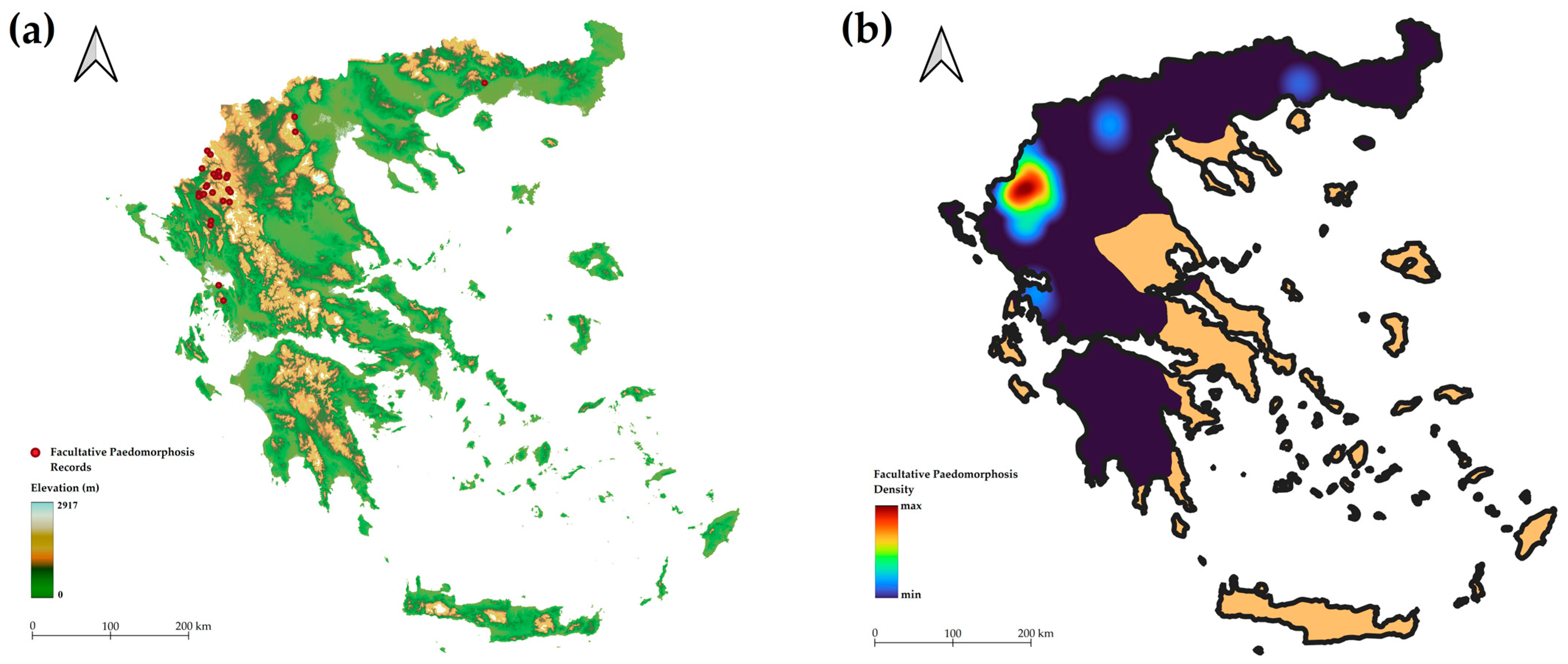
Our study significantly expands current knowledge and highlights the importance of newt paedomorphosis in Greece, increasing the documented cases from 11 to 33, an increase of 200% (Table S1, Figure A1 and Figure 4). The results demonstrate that paedomorphosis in Greece is more widespread than previously expected, with all three studied species exhibiting facultative paedomorphosis across a broad ecological range. Additionally, the occurrence of sympatric paedomorphic populations at two additional sites further highlights the ecological uniqueness and importance of the area. While six cases of sympatry involving L. graecus and T. macedonicus have been recorded to date, five in the Montenegrin karst area [38] and one in Ioannina basin [56], we confirmed the first sympatry of paedomorphic M. alpestris and T. macedonicus (Site 27 on Table S1).
Figure 4. Distribution of known sites of paedomorphosis in newts across Greece. (a) Map showing all recorded localities of paedomorphic newts based on published and field data; (b) Kernel density map indicating concentration areas of paedomorphosis within European newts, highlighting the Northern Pindos as an interspecific hotspot for this trait.
Within the Northern Pindos National Park, 22 paedomorphic populations were detected, with comparable frequencies across all three species (13–16%). These proportions of facultative paedomorphosis are comparable to those reported from the Montenegrin karst region, despite the park covering a smaller area (1970 km2). Including the surrounding paedomorphic population of Mt. Grammos and the Ioannina Basin, the Northern Pindos appears to be one of the most significant hotspots for facultative paedomorphosis in Europe (Figure 2 and Figure 4), alongside Larzac, France [37] and the Montenegrin karst area, Montenegro [38].
Overall, recorded paedomorphosis was highly prevalent in M. alpestris and Lissotriton sensu lato species, whereas in T. macedonicus it was observed only in a small number of individuals per population (Table S1). This pattern aligns with previous findings, which reported that paedomorphosis seems to be more frequent in M. alpestris and Lissotriton sp. but remains relatively rare in crested newts [22,37,38]. The female sex-bias of paedomorphs across most cases was expected for all three species, supporting the male-escape hypothesis [56,92,93,94].

4.2. Environmental Variables

The analysis revealed important insights regarding the study area, encompassing both natural processes and human interventions. The presence of non-native fish was positively associated with HII, TWI, low altitude and artificial ponds, highlighting the role of humans in their intentional introduction, primarily into lowland, permanent and artificial water bodies.
Similarly, artificial ponds occur in areas with higher human activity, at lower altitudes, and are associated with permanent hydroperiod. In contrast, natural ponds are less common in warmer and drier areas.
Temperature variables (Tmax, Tmin and Tmean) showed positive correlations with the HII, possibly linked to the urban heat island effect [95], and with the TWI, since wet lowland areas in the study area tend to be warmer. Additionally, higher temperatures were associated with greater availability of shelters (SAI), suggesting that warmer lowlands provide a richer microhabitat structure (shrubs, stones and logs) compared to colder mountainous areas, where open subalpine landscapes predominate.
Notably, the negative relationship between TWI and SAI suggests that the wetter lowland areas are often open and structurally poor in microhabitats. Conversely, the positive relationship between TWI and HII is better explained by the fact that low, wet landscapes tend to concentrate human activities. A key finding is that human presence negatively correlates with SAI, confirming that the loss of natural vegetation and landscape homogenization reduce the availability of microhabitats and shelters, which are essential for the terrestrial phase of amphibians [79,96].

4.3. Species-Specific Patterns of Paedomorphosis Occurrence

Our results also confirmed that environmental variables associated with paedomorphosis show species-specific patterns [38].
Paedomorphosis in M. alpestris is associated with permanent hydroperiod, making it essential for the natural ponds at higher altitudes where the species occurs. The negative correlation with the HII suggests that the phenomenon is favoured in natural, less-disturbed landscapes, such as open alpine valleys and wet meadows, while the negative relationship with the TWI may suggest that paedomorphosis occurs more often in areas where water is not consistently available, possibly reflecting a resilience strategy under such conditions [31]. In any case, we cannot exclude the possibility that both correlations are influenced by the species’ occurrence at high altitudes.
Interestingly, the positive correlation with shelter availability underscores the role of terrestrial environment, not only in the dispersal and hibernation of metamorphosed individuals [70,72,78,96], but also in the survival of paedomorphic individuals during their brief terrestrial migration [31]. Finally, the negative relationship with PC1 reflects both the presence of the phenomenon at higher altitudes and the potential negative effect of rising temperatures on its expression. Future studies should focus on changes in the structure of newt populations, especially in emblematic populations such as those of Mt. Tymfi and Mt. Smolikas, where the frequency of paedomorphs is very high (over 50% of the population; [32]).
Paedomorphosis in L. graecus shows similar patterns to M. alpestris regarding permanent hydroperiod and shelter availability, as well as the negative relationship with TWI, confirming the importance of this strategy in less-humid habitats and under conditions of environmental instability, which may reflect aspects of its biology [97]. In contrast to M. alpestris, Lissotriton graecus, consistent with previous studies [38,98,99], showed a strong association with artificial ponds at lower altitudes, where temperatures are higher and precipitation is lower. Lastly, paedomorphosis in L. graecus was associated with the absence of fish.
This is the first study to identify potential variables influencing paedomorphosis in T. macedonicus. Similarly to L. graecus, paedomorphic individuals seem to prefer permanent fishless ponds at lower altitudes, indicated by higher temperatures and lower levels of precipitation. Unlike the two other species, no clear preference for pond type emerged suggesting that stable aquatic environments remain critical.

4.4. Paedomorphosis in Greek Newts and Conservation Implications

In addition to the species-specific variables, we adopted a holistic approach to examine which environmental factors contribute to this relatively frequent phenomenon. Our results demonstrated that paedomorphosis in newts is positively associated with permanent hydroperiods and warmer, lower-altitude areas (PC1), but negatively associated with rainfall availability and the presence of non-native fish. These findings are inconsistent with the hypothesis that cooler, stable alpine habitats generally favour paedomorphosis [28]. This hypothesis is particularly relevant to our findings only for M. alpestris and contrast results from the Montenegrin karst area, where no relationship between altitude and paedomorphosis was observed in this species [38]. We believe that the observed association between paedomorphosis of M. alpestris and higher elevation likely reflects the presence of alpine lakes in our study area, which provide long-lasting hydroperiods [32], rather than a direct effect of altitude or lower temperature.
Our results are supported by previous observations [100,101,102,103] and experimental evidence [31,92], suggesting that climate change may be associated with a paradoxical increase in paedomorphosis in newt populations. Warmer conditions and reduced precipitation will reduce soil moisture, which is important for amphibian dispersal [104]. In addition, the energetic cost of metamorphosis [10,105], physiological constraints associated with activity and body condition [106] and fragmented terrestrial habitats and landscape changes [14,74,102,107], make terrestrial dispersal costly and an aquatic lifestyle selectively advantageous. Under these conditions, paedomorphosis may be favoured as a life-history strategy, since it allows population persistence through trophic niche differentiation and reduces cannibalism [18], without the need to disperse [11]. This hypothesis aligns with mesocosm experiments, which suggest that paedomorphosis occurs more frequently in drying ponds, where larvae delay metamorphosis and retain gills as an adaptive response [31,87,98]. Future studies should test this statement under different climate change scenarios to assess how facultative paedomorphosis is affected.
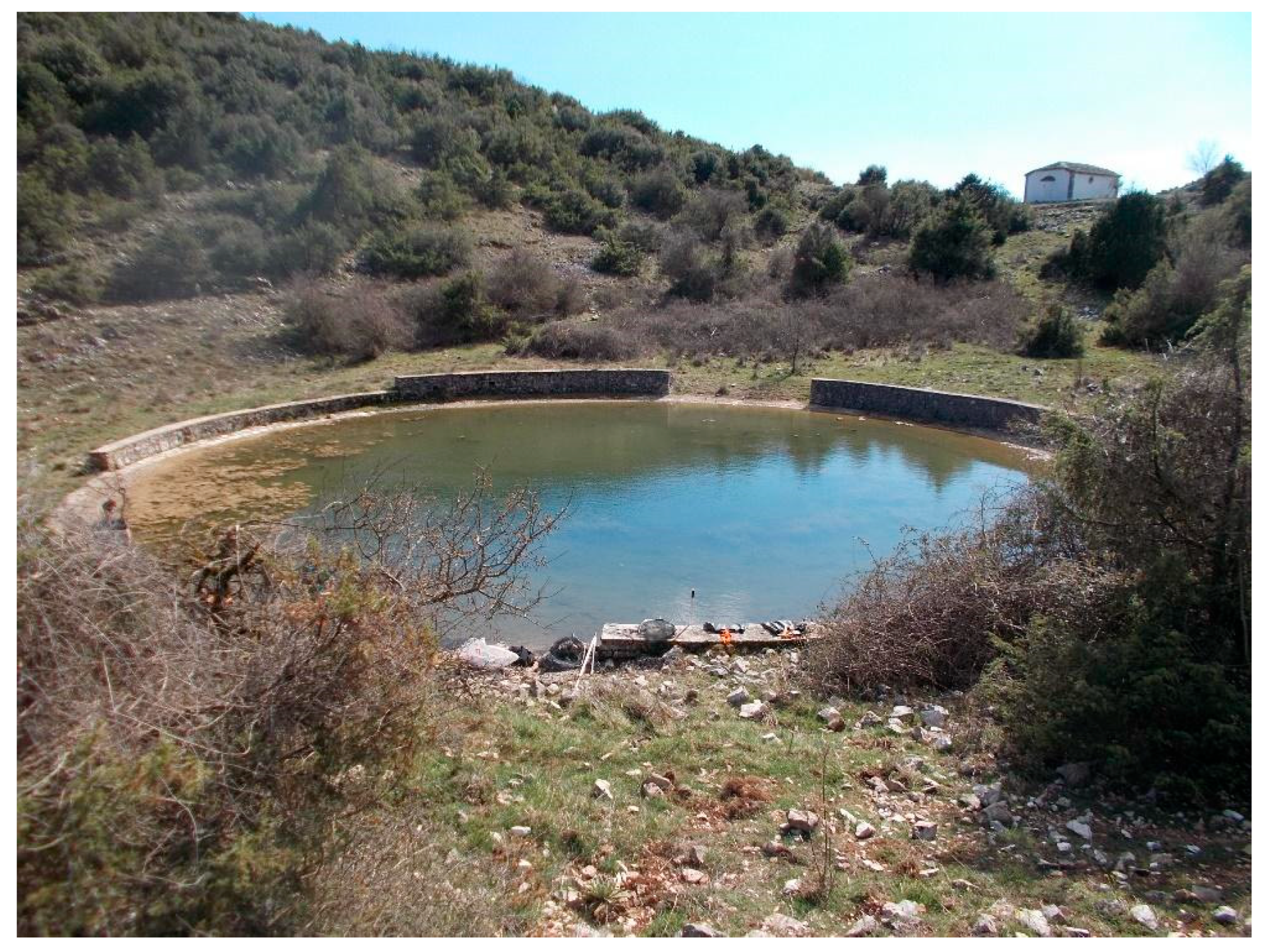
As annual precipitation decreases and temperatures rise, pond drying may become more frequent, threatening paedomorphic populations by forcing newts to metamorphose and disperse [11,31]. Since stable aquatic conditions are essential for the persistence of paedomorphosis [10,94,107,108,109,110], this issue can ultimately lead to extinction of this trait. Permanent ponds are strong predictors of paedomorphosis, as shown by data from the Northern Pindos National Park, the broader Greek distribution in Greece, and the Montenegrin karst study [38]. Specifically, artificial ponds created under traditional land-use practices (Figure A2) will become the only suitable aquatic habitats for newt populations, playing a crucial role in conserving amphibian populations [111,112,113,114,115,116,117,118] as they maintain permanent water even during dry periods, support the expression of both morphs, preserve evolutionary potential and prevent inbreeding [74,119]. Therefore, creating new artificial ponds in suitable habitats, alongside the targeted restoration and monitoring of existing ponds supporting paedomorphic populations, should be prioritized.
The presence of non-native fish poses a major threat to paedomorphic populations, a well-supported finding by multiple in situ studies [11,38,120,121] and experimental evidence [122]. Fish introductions, driven by human activities such as recreational fishing and biological mosquito control, are widespread in our study area [59,69]. Therefore, prohibiting arbitrary fish introductions and their removal are essential for conserving both paedomorphic and metamorphic populations [69,114,119,123,124,125].
Our findings emphasize the significance of Greece, particularly the Northern Pindos Mountain Range, as a hotspot of intraspecific diversity (Figure 4). Since ecological factors, in addition to genetic factors [10,126], have a high contribution to the expression of these alternative phenotypes, it seems that within the examined area there are suitable microenvironments and favourable conditions for the expression and maintenance of paedomorphosis in newts. The high frequency of paedomorphic populations further enhances the conservation value of the region, highlighting the importance of protecting not only species but also the populations that support phenotypic plasticity. This makes Greece and the broader Balkan Peninsula critical areas for conserving evolutionary resilience in amphibians, similar to other Mediterranean areas [52,108,110,127].

Supplementary Materials

The following supporting information can be downloaded at: https://www.mdpi.com/article/10.3390/conservation5040079/s1, Table S1. Known occurrences of paedomorphosis in Greek newt species, compiled from published records and field surveys conducted in this study [32,51,52,53,54,55,56,57,128]; Table S2. Complete dataset of surveyed breeding ponds and environmental variables used in the regression analyses. The dataset covers all study sites in the Northern Pindos National Park and the labelled “EXTRA” sites from known paedomorphic occurrences outside the park; Table S3. Results of the principal component analysis (PCA) based on environmental variables: maximum temperature (Tmax), minimum temperature (Tmin), mean temperature (Tmean), and altitude across surveyed breeding ponds. The table shows loadings of the contributing variables and the percentage of variance explained by each principal component; Table S4. Binomial test results for differences in paedomorphosis occurrence between artificial and natural ponds per newt taxon. Significant values (p < 0.05) are highlighted in bold; Table S5. Chi-square test results for the association between paedomorphosis occurrence and landscape type (Forest, Open, Agriculture and Urban) per newt taxon. Significant values (p < 0.05) are highlighted in bold; Figure S1. Pearson correlation heatmap showing the relationships among environmental variables used in the regression analysis. Significant values (p < 0.05) are highlighted in bold.

Author Contributions

Conceptualization, K.S. and A.B.; methodology, K.S., T.D. and A.B.; software, T.D.; validation, K.S.; formal analysis, T.D., A.T. and K.S.; investigation, T.D., A.T., A.P., E.-A.T., A.B., K.S. and A.K.; resources, K.S. and A.K.; data curation, T.D. and A.T.; writing—original draft preparation, T.D. and A.T.; writing—review and editing, K.S., E.-A.T., A.B., A.P., A.K., T.D. and A.T.; visualization, T.D. and A.T.; supervision, K.S.; project administration, K.S.; funding acquisition, K.S. All authors have read and agreed to the published version of the manuscript.

Funding

This research was funded by the Management Agency of Northern Pindos National Park/ΥΜΕΠΕΡAA Operational Programme Transport Infrastructure, Environment and Sustainable Development MIS 5033216.

Institutional Review Board Statement

The animal study protocol was approved by the Institutional Review Board of the Ministry of Environment and Energy of Greece (protocol code 28162/962 and date of approval 25 April 2021).

Data Availability Statement

The datasets generated and analyzed during the current study are provided in the Supplementary Materials. Further details or clarifications can be obtained from the authors upon reasonable request.

Acknowledgments

We thank the personnel of the Management Unit of Northern Pindos National Park for assisting in the field and the three anonymous reviewers for their insightful comments and suggestions. T.D. would like to thank Martha Charitonidou in early understanding of GLMs concept, essential for this final result.

Conflicts of Interest

The authors declare no conflicts of interest. The funders had a role in the decision to publish the results.

Abbreviations

The following abbreviations are used in this manuscript:
AICAkaike’s Information Criterion
GLMGeneralized Linear Model
HIIHuman Influence Index
LRTLikelihood-ratio Test
PC1First Principal Component
PCAPrincipal Component Analysis
SAIShelter Availability Index
TWITopographic Wetness Index
VIFVariance Inflation Factors

Appendix A

Figure A1. Distribution of known sites of paedomorphosis for each newt species across Greece based on published and field data (Table S1). (a) Alpine newt, Mesotriton alpestris (n = 14); (b) Lissotriton species: Greek smooth newt, L. graecus (n = 11), and Schmidtler’s smooth newt, L. schmidtleri (n = 1); (c) Macedonian crested newt, Triturus macedonicus (n = 7).
Figure A2. Typical artificial pond for traditional sheep and goats farming in northwestern Greece. This pond corresponds to Site 22 of Table S1, and hosts both paedomorphs of the Macedonian crested newt, Triturus macedonicus, and the Greek smooth newt, Lissotriton graecus. Photo credits: K.S.

References

  1. Gilbert, S.F. Ecological developmental biology: Developmental biology meets the real world. Dev. Biol. 2001, 233, 1–12. [Google Scholar] [CrossRef] [PubMed]
  2. Keyte, A.L.; Smith, K.K. Heterochrony and developmental timing mechanisms: Changing ontogenies in evolution. Semin. Cell Dev. Biol. 2014, 34, 99–107. [Google Scholar] [CrossRef]
  3. Kremnev, S.V. Evolutionary and ontogenetic plasticity of conserved signaling pathways in animals’ development. Russ. J. Dev. Biol. 2022, 53, 65–81. [Google Scholar] [CrossRef]
  4. Ryan, T.J.; Semlitsch, R.D. Intraspecific heterochrony and life history evolution: Decoupling somatic and sexual development in a facultatively paedomorphic salamander. Proc. Natl. Acad. Sci. USA 1998, 95, 5643–5648. [Google Scholar] [CrossRef]
  5. Bolker, J.A. Modularity in development and why it matters to Evo-Devo. Am. Zool. 2000, 40, 770–776. [Google Scholar] [CrossRef]
  6. Butuzova, O.; Minarsky, A.; Bessonov, N.; Soulé, C.; Morozova, N. Determinism and variability of the morphogenesis pathways. Dev. Biol. 2021, 479, 1–10. [Google Scholar] [CrossRef]
  7. Gould, S.J. Ontogeny and Phylogeny; Harvard University Press: Cambridge, MA, USA, 1977. [Google Scholar]
  8. McKinney, M.L.; McNamara, K.J. Heterochrony. In Heterochrony: The Evolution of Ontogeny; McKinney, M.L., McNamara, K.J., Eds.; Springer: New York, NY, USA, 1991; pp. 1–12. [Google Scholar] [CrossRef]
  9. Iordansky, N. Paedomorphosis, neoteny, and evolution. Zool. Zh. 2005, 84, 1176–1187. [Google Scholar]
  10. Whiteman, H.H. Evolution of facultative paedomorphosis in salamanders. Q. Rev. Biol. 1994, 69, 205–221. [Google Scholar] [CrossRef]
  11. Denoël, M.; Joly, P.; Whiteman, H. Evolutionary ecology of facultative paedomorphosis in newts and salamanders. Biol. Rev. Camb. Philos. Soc. 2005, 80, 663–671. [Google Scholar] [CrossRef] [PubMed]
  12. Voss, S.R.; Smith, J.J. Evolution of salamander life cycles. Genetics 2005, 170, 275–281. [Google Scholar] [CrossRef]
  13. McNamara, K.J. Heterochrony: The Evolution of Development. Evol. Educ. Outreach 2012, 5, 203–218. [Google Scholar] [CrossRef]
  14. Denoël, M.; Ficetola, G.F. Heterochrony in a complex world: Disentangling environmental processes of facultative paedomorphosis in an amphibian. J. Anim. Ecol. 2014, 83, 606–615. [Google Scholar] [CrossRef]
  15. Levins, R. Evolution in Changing Environments: Some Theoretical Explorations; Princeton University Press: Princeton, NJ, USA, 1968. [Google Scholar] [CrossRef]
  16. Moran, N.A. Adaptation and constraint in the complex life cycles of animals. Annu. Rev. Ecol. Syst. 1994, 25, 573–600. [Google Scholar] [CrossRef]
  17. Bonett, R.M.; Blair, A.L. Evidence for complex life cycle constraints on salamander body form diversification. Proc. Natl. Acad. Sci. USA 2017, 114, 9936–9941. [Google Scholar] [CrossRef]
  18. Lejeune, B.; Sturaro, N.; Lepoint, G.; Denoël, M. Facultative paedomorphosis as a mechanism promoting intraspecific niche differentiation. Oikos 2018, 127, 427–439. [Google Scholar] [CrossRef]
  19. Bonett, R.M.; Ledbetter, N.M.; Hess, A.J.; Herrboldt, M.A.; Denoël, M. Repeated ecological and life cycle transitions make salamanders an ideal model for evolution and development. Dev. Dyn. 2022, 251, 957–972. [Google Scholar] [CrossRef] [PubMed]
  20. Kaplan, R.H.; Cooper, W.S. The evolution of developmental plasticity in reproductive characteristics: An application of the “adaptive coin-flipping” principle. Am. Nat. 1984, 123, 393–410. [Google Scholar] [CrossRef]
  21. Smith, T.B.; Skúlason, S. Evolutionary significance of resource polymorphisms in fishes, amphibians, and birds. Annu. Rev. Ecol. Syst. 1996, 27, 111–133. [Google Scholar] [CrossRef]
  22. Denoël, M.; Joly, P. Adaptive significance of facultative paedomorphosis in Triturus alpestris (Amphibia, Caudata): Resource partitioning in an alpine lake. Freshw. Biol. 2001, 46, 1387–1396. [Google Scholar] [CrossRef]
  23. Pechmann, J.H.K.; Scott, D.E.; Semlitsch, R.D.; Caldwell, J.P.; Vitt, L.J.; Gibbons, J.W. Declining amphibian populations: The problem of separating human impacts from natural fluctuations. Science 1991, 253, 892–895. [Google Scholar] [CrossRef]
  24. Wake, D.B.; Vredenburg, V.T.; Wake, D.B.; Vredenburg, V.T. Are we in the midst of the sixth mass extinction? A view from the world of amphibians. Proc. Natl. Acad. Sci. USA 2008, 105, 11466–11473. [Google Scholar] [CrossRef] [PubMed]
  25. Luedtke, J.A.; Chanson, J.; Neam, K.; Hobin, L.; Maciel, A.O.; Catenazzi, A.; Borzée, A.; Hamidy, A.; Aowphol, A.; Jean, A.; et al. Ongoing declines for the world’s amphibians in the face of emerging threats. Nature 2023, 622, 308–314. [Google Scholar] [CrossRef]
  26. Wilbur, H.; Collins, J.P. Ecological aspects of amphibian metamorphosis. Science 1973, 182, 1305–1314. [Google Scholar] [CrossRef]
  27. Emel, S.L.; Bonett, R.M. Considering alternative life history modes and genetic divergence in conservation: A case study of the Oklahoma salamander. Conserv. Genet. 2011, 12, 1243–1259. [Google Scholar] [CrossRef]
  28. Sprules, W.G. The adaptive significance of paedogenesis in North American species of Ambystoma (Amphibia: Caudata): An hypothesis. Can. J. Zool. 1974, 52, 393–400. [Google Scholar] [CrossRef]
  29. Harris, R.N. Density-dependent paedomorphosis in the salamander Notophthalmus viridescens dorsalis. Ecology 1987, 68, 705–712. [Google Scholar] [CrossRef]
  30. Semlitsch, R.D. Paedomorphosis in Ambystoma talpoideum: Effects of density, food, and pond drying. Ecology 1987, 68, 994–1002. [Google Scholar] [CrossRef]
  31. Denoël, M. How do paedomorphic newts cope with lake drying? Ecography 2003, 26, 405–410. [Google Scholar] [CrossRef]
  32. Denoël, M. Distribution and characteristics of aquatic habitats of newts and yellow-bellied toads in the district of Ioannina (Epirus, Greece). Herpetozoa 2004, 17, 49–64. [Google Scholar]
  33. Oromi, N.; Michaux, J.; Denoël, M. High gene flow between alternative morphs and the evolutionary persistence of facultative paedomorphosis. Sci. Rep. 2016, 6, 32046. [Google Scholar] [CrossRef]
  34. Kirk, M.A.; Reider, K.E.; Lackey, A.C.R.; Thomas, S.A.; Whiteman, H.H. The role of environmental variation in mediating fitness trade-offs for an amphibian polyphenism. J. Anim. Ecol. 2023, 92, 1815–1827. [Google Scholar] [CrossRef]
  35. Kirk, M.A.; Lackey, A.C.R.; Reider, K.E.; Thomas, S.A.; Whiteman, H.H. Climate mediates the trade-offs associated with phenotypic plasticity in an amphibian polyphenism. J. Anim. Ecol. 2024, 93, 1747–1757. [Google Scholar] [CrossRef]
  36. Whiteman, H.H.; Howard, R.D. Conserving alternative amphibian phenotypes: Is there anybody out there? In Status and Conservation of Midwestern Amphibians; Lannoo, M.J., Ed.; University of Iowa Press: Iowa City, AI, USA, 1998; pp. 317–324. [Google Scholar] [CrossRef]
  37. Denoël, M. Priority areas of intraspecific diversity: Larzac, a global hotspot for facultative paedomorphosis in amphibians. Anim. Conserv. 2007, 10, 110–116. [Google Scholar] [CrossRef]
  38. Denoël, M.; Ficetola, G.F.; Ćirović, R.; Radović, D.; Džukić, G.; Kalezić, M.L.; Vukov, T.D. A multi-scale approach to facultative paedomorphosis of European newts (Salamandridae) in the Montenegrin karst: Distribution pattern, environmental variables, and conservation. Biol. Conserv. 2009, 142, 509–517. [Google Scholar] [CrossRef]
  39. Reid, W.V. Biodiversity hotspots. Trends Ecol. Evol. 1998, 13, 275–280. [Google Scholar] [CrossRef]
  40. Myers, N.; Mittermeier, R.A.; Mittermeier, C.G.; Da Fonseca, G.A.B.; Kent, J. Biodiversity hotspots for conservation priorities. Nature 2000, 403, 853–858. [Google Scholar] [CrossRef] [PubMed]
  41. Pasachnik, S.A.; Echternacht, A.C.; Fitzpatrick, B.M. Gene trees, species and species trees in the Ctenosaura palearis clade. Conserv. Genet. 2010, 11, 1767–1781. [Google Scholar] [CrossRef]
  42. Fitzpatrick, B.M.; Ryan, M.E.; Johnson, J.R.; Corush, J.; Carter, E.T. Hybridization and the species problem in conservation. Curr. Zool. 2015, 61, 206–216. [Google Scholar] [CrossRef]
  43. Marchese, C. Biodiversity hotspots: A shortcut for a more complicated concept. Glob. Ecol. Conserv. 2015, 3, 297–309. [Google Scholar] [CrossRef]
  44. Quilodrán, C.S.; Montoya-Burgos, J.I.; Currat, M. Harmonizing hybridization dissonance in conservation. Commun. Biol. 2020, 3, 391. [Google Scholar] [CrossRef] [PubMed]
  45. Moritz, C. Defining ‘Evolutionarily Significant Units’ for conservation. Trends Ecol. Evol. 1994, 9, 373–375. [Google Scholar] [CrossRef]
  46. Waples, R.S. Evolutionarily significant units and the conservation of biological diversity under the endangered species act. Am. Fish. Soc. Symp. 1995, 17, 8–27. [Google Scholar]
  47. Crandall, K.A.; Bininda-Emonds, O.R.P.; Mace, G.M.; Wayne, R.K. Considering evolutionary processes in conservation biology. Trends Ecol. Evol. 2000, 15, 290–295. [Google Scholar] [CrossRef]
  48. Hoelzel, A.R.; Bruford, M.W.; Fleischer, R.C. Conservation of adaptive potential and functional diversity. Conserv. Genet. 2019, 20, 1–5. [Google Scholar] [CrossRef]
  49. Hoelzel, A.R. Where to now with the evolutionarily significant unit? Trends Ecol. Evol. 2023, 38, 1134–1142. [Google Scholar] [CrossRef]
  50. Molinari, J. A bare-bones scheme to choose between the species, subspecies, and ‘evolutionarily significant unit’ categories in taxonomy and conservation. J. Nat. Conserv. 2023, 72, 126335. [Google Scholar] [CrossRef]
  51. Breuil, M.; Parent, G.-H. Essai de caracterisation du Triton alpestre hellénique Triturus alpestris veluchiensis. Historique et présentation de nouvelle Données. Alytes 1987, 6, 131–151. [Google Scholar]
  52. Denoël, M.; Duguet, R.; Džukić, G.; Kalezić, M.; Mazzotti, S. Biogeography and ecology of paedomorphosis in Triturus alpestris (Amphibia, Caudata). J. Biogeogr. 2001, 28, 1271–1280. [Google Scholar] [CrossRef]
  53. Denoël, M.; Schabetsberger, R. Resource partitioning in two heterochronic populations of Greek alpine newts, Triturus alpestris veluchiensis. Acta Oecol. 2003, 24, 55–67. [Google Scholar] [CrossRef]
  54. Sotiropoulos, K.; Legakis, A.; Polymeni, R.M. Patterns of morphometric variation in the smooth newt (Lissotriton vulgaris) from Greece: Environmental correlates. J. Nat. Hist. 2008, 42, 435–450. [Google Scholar] [CrossRef]
  55. Papaioannou, H.; Batistatou, A.; Mavrogiorgou, M.C.; Konidaris, C.; Frillingos, S.; Briasoulis, E.; Vareli, K.; Sainis, I. High incidence of dorsal dark spots in north-western Greek populations of alpine newts Ichthyosaura alpestris (Salamandridae, Caudata). Herpetol. Notes 2015, 8, 589–598. [Google Scholar]
  56. Sotiropoulos, K.; Moustakas, K.; Konstantinidis, K.; Mantzana-Oikonomaki, V.; Siarabi, S.; Bounas, A. First record of facultative paedomorphosis in the Macedonian crested newt (Triturus macedonicus) and an additional record for the Greek smooth newt (Lissotriton vulgaris) from Greece: Implications on species conservation and preservation of alternative ontogenetic trajectories. Herpetol. Notes 2017, 10, 255–260. [Google Scholar]
  57. Sotiropoulos, K.; Moustakas, K.; Toli, E.-A. First record of facultative paedomorphosis in the Turkish smooth newt, Lissotriton schmidtleri (Raxworthy, 1988), from Greece. Herpetol. Notes 2020, 13, 1041–1044. [Google Scholar]
  58. Mutz, T.; Böhme, W. Ichthyosaura as a generic nomen for the Alpine Newt (Caudata: Salamandridae): A doubtful case of literarian archeology. Salamandra 2025, 61, 41–52. [Google Scholar]
  59. Danelis, T.; Theodoropoulos, A.; Toli, E.-A.; Bounas, A.; Korakis, A.; Sotiropoulos, K. Defining evolutionary conservation units in the Macedonian crested newt, (Amphibia; Salamandridae), in a biodiversity hotspot. Diversity 2023, 15, 671. [Google Scholar] [CrossRef]
  60. Denoël, M.; Perez, A.; Cornet, Y.; Ficetola, G.F. Similar local and landscape processes affect both a common and a rare newt species. PLoS ONE 2013, 8, e62727. [Google Scholar] [CrossRef]
  61. Denoël, M. On the identification of paedomorphic and overwintering larval newts based on cloacal shape: Review and guidelines. Curr. Zool. 2016, 63, 165–173. [Google Scholar] [CrossRef]
  62. R Core Team. R: A Language and Environment for Statistical Computing; R Foundation for Statistical Computing: Vienna, Austria, 2021; Available online: https://www.R-project.org (accessed on 24 July 2025).
  63. Copernicus Land Monitoring Service. Copernicus Land Monitoring Service (CLMS); European Environment Agency (EEA): Copenhagen, Denmark, 2021. [Google Scholar]
  64. QGIS Development Team. QGIS Geographic Information System; QGIS Association: Zurich, Switzerland, 2022; Available online: http://qgis.osgeo.org (accessed on 24 July 2025).
  65. Google Earth. Google Earth Pro, version 7.3; Google LLC: Mountain View, CA, USA, 2025.
  66. Beven, K.J.; Kirkby, M.J. A physically based, variable contributing area model of basin hydrology/Un modèle à base physique de zone d’appel variable de l’hydrologie du bassin versant. Hydrol. Sci. J. 1979, 24, 43–69. [Google Scholar] [CrossRef]
  67. Fick, S.E.; Hijmans, R.J. WorldClim 2: New 1 km spatial resolution climate surfaces for global land areas. Int. J. Climatol. 2017, 37, 4302–4315. [Google Scholar] [CrossRef]
  68. Sanderson, E.; Fisher, K.; Robinson, N.; Sampson, D.; Duncan, A.; Royte, L. The March of the Human Footprint. EcoEvorXiv 2022, preprint. [Google Scholar] [CrossRef]
  69. Bounas, A.; Keroglidou, M.; Toli, E.-A.; Chousidis, I.; Tsaparis, D.; Leonardos, I.; Sotiropoulos, K. Constrained by aliens, shifting landscape, or poor water quality? Factors affecting the persistence of amphibians in an urban pond network. Aquat. Conserv. Mar. Freshw. Ecosyst. 2020, 30, 1037–1049. [Google Scholar] [CrossRef]
  70. Jehle, R.; Arntzen, J.W. Post-breeding migrations of newts (Triturus cristatus and T. marmoratus) with contrasting ecological requirements. J. Zool. 2000, 251, 297–306. [Google Scholar] [CrossRef]
  71. Langton, T.E.S.; Beckett, C.L.; Foster, J.P. Great Crested Newt Conservation Handbook; Froglife: Halesworth, UK, 2001. [Google Scholar]
  72. Malmgren, J.; Andersson, P.-Å.; Ekdahl, S. Modelling terrestrial interactions and shelter use in Great crested newts (Triturus cristatus). Amphib. Reptil. 2007, 28, 205–215. [Google Scholar] [CrossRef]
  73. Gustafson, D.H.; Malmgren, J.C.; Mikusiński, G. Terrestrial habitat predicts use of aquatic habitat for breeding purposes—A study on the Great crested newt (Triturus cristatus). Ann. Zool. Fenn. 2011, 48, 295–307. [Google Scholar] [CrossRef]
  74. Denoël, M.; Ficetola, G.F.; Sillero, N.; Džukić, G.; Kalezić, M.L.; Vukov, T.; Muhovic, I.; Ikovic, V.; Lejeune, B. Traditionally managed landscapes do not prevent amphibian decline and the extinction of paedomorphosis. Ecol. Monogr. 2019, 89, e01347. [Google Scholar] [CrossRef]
  75. Albero, L.; Martínez-Solano, Í.; Hermida, M.; Vera, M.; Tarroso, P.; Bécares, E. Open areas associated with traditional agriculture promote functional connectivity among amphibian demes in Mediterranean agrosystems. Landsc. Ecol. 2023, 38, 3045–3059. [Google Scholar] [CrossRef]
  76. Walters, P.J.; Greenwald, L. Physiological adaptations of aquatic newts (Notophthalmus viridescens) to a terrestrial environment. Physiol. Zool. 1977, 50, 88–98. [Google Scholar] [CrossRef]
  77. Roe, A.W.; Grayson, K.L. Terrestrial movements and habitat use of juvenile and emigrating adult Eastern red-spotted newts, Notophthalmus viridescens. J. Herpetol. 2008, 42, 22–30. [Google Scholar] [CrossRef]
  78. Jarvis, L.E. Terrestrial ecology of juvenile great crested newts (Triturus cristatus) in a woodland area. Herpetol. J. 2016, 26, 287–296. [Google Scholar]
  79. González-del-Pliego, P.; Scheffers, B.R.; Freckleton, R.P.; Basham, E.W.; Araújo, M.B.; Acosta-Galvis, A.R.; Medina Uribe, C.A.; Haugaasen, T.; Edwards, D.P. Thermal tolerance and the importance of microhabitats for Andean frogs in the context of land use and climate change. J. Anim. Ecol. 2020, 89, 2451–2460. [Google Scholar] [CrossRef]
  80. Shaffer, H.B.; Austin, C.C.; Huey, R.B. The consequences of metamorphosis on salamander (Ambystoma) locomotor performance. Physiol. Zool. 1991, 64, 212–231. [Google Scholar] [CrossRef]
  81. Schmidt, B.R.; Zumbach, S. Amphibian Road Mortality and How to Prevent It: A Review. In Urban Herpetology; Mitchell, J.C., Jung Brown, R.E., Bartholomew, B., Eds.; Society for the Study of Amphibians & Reptiles: Salt Lake City, UT, USA, 2008; pp. 157–167. [Google Scholar]
  82. Hijmans, R.J. Terra: Spatial Data Analysis, version 1.8-70; The R Project Community: Vienna, Austria, 2020. [CrossRef]
  83. Bowerman, B.L.; O’Connell, R.T. Linear Statistical Models: An Applied Approach, 2nd ed.; PWS-Kent Publishing Company: Boston, MA, USA, 1990. [Google Scholar]
  84. Alkharusi, H. Categorical Variables in Regression Analysis: A Comparison of Dummy and Effect Coding. Int. J. Educ. 2012, 4, 202–210. [Google Scholar] [CrossRef]
  85. Barton, K. MuMIn: Multi-Model Inference, version 1.47.5; The R Project Community: Vienna, Austria, 2024. Available online: https://CRAN.R-project.org/package=MuMIn (accessed on 16 October 2025).
  86. Lichstein, J.W.; Simons, T.R.; Shriner, S.A.; Franzreb, K.E. Spatial autocorrelation and autoregressive models in ecology. Ecol. Monogr. 2002, 72, 445–463. [Google Scholar] [CrossRef]
  87. Bivand, R.; Wong, D.W.S. Comparing implementations of global and local indicators of spatial association. TEST 2018, 27, 716–748. [Google Scholar] [CrossRef]
  88. Maggini, R.; Lehmann, A.; Zimmermann, N.E.; Guisan, A. Improving Generalized Regression Analysis for the Spatial Prediction of Forest Communities. J. Biogeogr. 2006, 33, 1729–1749. [Google Scholar] [CrossRef]
  89. Chongsuvivatwong, V. epiDisplay: Epidemiological Data Display Package, version 3.5.0; The R Foundation for Statistical Computing: Vienna, Austria, 2022. Available online: https://cran.r-project.org/web/packages/epiDisplay/index.html (accessed on 15 October 2025).
  90. Nagelkerke, N.J.D. A note on a general definition of the coefficient of determination. Biometrika 1991, 78, 691–692. [Google Scholar] [CrossRef]
  91. Mangiafico, S. Rcompanion: Functions to Support Extension Education Program Evaluation, version 2.5.0; Rutgers Cooperative Extension: New Brunswick, NJ, USA, 2016. [CrossRef]
  92. Mathiron, A.G.E.; Lena, J.-P.; Baouch, S.; Denoël, M. The ‘male escape hypothesis’: Sex-biased metamorphosis in response to climatic drivers in a facultatively paedomorphic amphibian. Proc. R. Soc. B 2017, 284, 20170176. [Google Scholar] [CrossRef]
  93. Toli, E.-A.; Moustakas, K.; Siarabi, S.; Bounas, A.; Sotiropoulos, K. Contrasting sex ratios between coexisting alternative morphs of the smooth newt, Lissotriton vulgaris: An example of fitness advantage? In Program & Abstracts, Proceedings of the 19th European Congress of Herpetology, Salzburg, Austria, 18–23 September 2017; The Societas Europaea Herpetologica (SEH): Bonn, Germany, 2017. [Google Scholar] [CrossRef]
  94. Bruni, G.; Tessa, G.; Angelini, C. Body size, age and population structure of Triturus carnifex (Urodela: Salamandridae) in the context of facultative paedomorphosis. Acta Herpetol. 2018, 13, 177–183. [Google Scholar] [CrossRef]
  95. Meng, F.; Yan, S.; Tian, G.; Wang, Y. Surface urban heat island effect and its spatiotemporal dynamics in metropolitan area: A case study in the Zhengzhou metropolitan area, China. Front. Environ. Sci. 2023, 11, 1247046. [Google Scholar] [CrossRef]
  96. Scheffers, B.R.; Edwards, D.P.; Diesmos, A.; Williams, S.E.; Evans, T.A. Microhabitats reduce animal’s exposure to climate extremes. Glob. Change Biol. 2014, 20, 495–503. [Google Scholar] [CrossRef]
  97. Bell, G. The life of the Smooth newt (Triturus vulgaris) after metamorphosis. Ecol. Monogr. 1977, 47, 279–299. [Google Scholar] [CrossRef]
  98. Litvinchuk, S.N.; Rudyk, A.M.; Borkin, L.J. Observations on paedomorphic newts (Triturus vulgaris) from the former Soviet Union. Russ. J. Herpetol. 1996, 3, 39–48. [Google Scholar]
  99. Gvoždík, V.; Javůrková, V.; Kopecký, O. First evidence of a paedomorphic population of the smooth newt (Lissotriton vulgaris) in the Czech Republic. Acta Herpetol. 2013, 8, 53–57. [Google Scholar] [CrossRef]
  100. Covaciu-Marcov, S.-D.; Cicort-Lucaciu, A. Notes on the presence of facultative paedomorphosis in the Smooth newt Lissotriton vulgaris (Linnaeus, 1758) in Western Romania. North-West. J. Zool. 2007, 3, 47–52. [Google Scholar]
  101. Covaciu-Marcov, S.-D.; Cicort-Lucaciu, A.-Ș. Big and nonmetamorphic Triturus cristatus larvae from North-Western Romania. Biharean Biol. 2009, 3, 73–74. [Google Scholar]
  102. Covaciu-Marcov, S.D.; Sas, I.; Cicort-Lucaciu, A.Ş.; Bogdan, H.V. Lissotriton vulgaris paedomorphs in South-Western Romania: A consequence of a human modified habitat? Acta Herpetol. 2011, 6, 15–18. [Google Scholar]
  103. Gherghel, I.; Strugariu, A.; Ghira, I. On the presence of paedomorphosis in Lissotriton vulgaris (Amphibia: Salamandridae) from Danube Delta. Herpetol. Rom. 2010, 4, 62–64. [Google Scholar]
  104. Haggerty, C.J.E.; Crisman, T.L.; Rohr, J.R. Effects of forestry-driven changes to groundcover and soil moisture on amphibian desiccation, dispersal, and survival. Ecol. Appl. 2019, 29, e01870. [Google Scholar] [CrossRef]
  105. Denoël, M.; Hervant, F.; Schabetsberger, R.; Joly, P. Short- and long-term advantages of an alternative ontogenetic pathway: Benefits of paedomorphosis in newts. Biol. J. Linn. Soc. 2002, 77, 105–112. [Google Scholar] [CrossRef]
  106. Lukanov, S.; Atanasova, I. Correlation between individual body condition and seasonal activity in Buresch’s crested newt, Triturus ivanbureschi. Diversity 2025, 17, 350. [Google Scholar] [CrossRef]
  107. Covaciu-Marcov, S.-D.; Rosioru, C.; Cicort-Lucaciu, A.-Ș.; Sas-Kovacs, I. Lissotriton vulgaris (Amphibia) paedomorphs in Carei Plain natural protected area, North-Western Romania. North-West. J. Zool. 2013, 9, 217–220. [Google Scholar]
  108. Ceacero, F.; Donaire-Barroso, D.; García-Muñoz, E.; Beltrán, J.F.; Tejedo, M. On the occurrence of facultative paedomorphosis in the three newt species of Southern Iberian Peninsula (Amphibia, Salamandridae). Amphib. Reptil. 2010, 31, 571–575. [Google Scholar] [CrossRef]
  109. Pizzuti Piccoli, A. First record of paedomorphosis for the Smooth Newt Lissotriton vulgaris meridionalis (Boulenger, 1882), (Amphibia, Urodela) in the “Bosco di Palo” Natural Park (Northern Latium, Italy). Herpetol. Rom. 2013, 7, 23–27. [Google Scholar]
  110. Çiçek, K.; Ayaz, D. New data on facultative paedomorphism of the smooth newt, Lissotriton vulgaris, in Western Anatolia, Turkey. J. Freshw. Ecol. 2011, 26, 99–103. [Google Scholar] [CrossRef]
  111. Scillitani, G.; Scalera, R.; Carafa, M.; Tripepi, S. Conservation and biology of Triturus italicus in Italy (Amphibia, Salamandridae). Ital. J. Zool. 2004, 71, 45–54. [Google Scholar] [CrossRef]
  112. Garcia-Gonzalez, C.; Garcia-Vazquez, E. The value of traditional troughs as freshwater shelters for amphibian diversity. Aquat. Conserv. 2011, 21, 74–81. [Google Scholar] [CrossRef]
  113. Caballero–Diaz, C.; Sanchez–Montes, G.; Butler, H.; Vrendenburg, V.; Martinez-Solano, I. The Role of artificial breeding sites in amphibian conservation: A case study in rural areas in central Spain. Herpetol. Conserv. Biol. 2020, 15, 87–104. [Google Scholar]
  114. Smith, R.K.; Meredith, H.; Sutherland, W.J. Amphibian Conservation. In What Works in Conservation; Sutherland, W.J., Dicks, L.V., Petrovan, S.O., Smith, R.K., Eds.; Open Book Publishers: Cambridge, UK, 2020; pp. 9–66. [Google Scholar] [CrossRef]
  115. Stellati, L.; Mirabasso, J.; Luiselli, L.; Bologna, M.A.; Vignoli, L.; Bissattini, A.M. Can we share? feeding strategy in three syntopic newts in artificial habitats. Diversity 2021, 13, 32. [Google Scholar] [CrossRef]
  116. Arillo, A.; Canessa, S.; Costa, A.; Oneto, F.; Ottonello, D.; Rosa, G.; Salvidio, S. Artificial tanks for amphibian conservation in Mediterranean rural landscapes. Bull. Environ. Life Sci. 2022, 4, 4–11. [Google Scholar] [CrossRef]
  117. Bissattini, A.M.; D’Ambrosio, D.; Buono, V.; Bologna, M.A.; Vignoli, L. Home is where the newts are: Suitability of artificial aquatic sites for the Italian crested newt in a traditional farming landscape in Central Italy. Anim. Conserv. 2025; in press. [Google Scholar] [CrossRef]
  118. Costa, A.; Bernabò, I.; Rosa, G.; Salvidio, S.; Romano, A. Artificial water sites increase amphibian resilience in a changing Mediterranean landscape. Agric. Ecosyst. Environ. 2025, 394, 109912. [Google Scholar] [CrossRef]
  119. Bernabò, I.; Iannella, M.; Cittadino, V.; Corapi, A.; Romano, A.; Andreone, F.; Biondi, M.; Gallo Splendore, M.; Tripepi, S. Survived the glaciations, will they survive the fish? Allochthonous ichthyofauna and alpine endemic newts: A road map for a conservation strategy. Animals 2023, 13, 871. [Google Scholar] [CrossRef] [PubMed]
  120. Denoël, M.; Džukić, G.; Kalezić, M.L. Effects of widespread fish introductions on paedomorphic newts in Europe. Conserv. Biol. 2005, 19, 162–170. [Google Scholar] [CrossRef]
  121. Seglie, D.; Evangelista, M. On the discovering and paedomorphosis of Ichthyosaura alpestris apuanus in a lowland river floodplain (Scrivia, NW Italy). In Proceedings of the Atti VIII Congresso Nazionale Societas Herpetologica Italica, Chieti, Italy, 22–26 September 2010; Di Tizio, L., Di Cerbo, A.R., Di Francesco, N., Cameli, A., Eds.; Ianieri Edizioni: Pescara, Italy, 2010; pp. 119–125. [Google Scholar]
  122. Toli, E.A.; Chavas, C.; Denoël, M.; Bounas, A.; Sotiropoulos, K. A Subtle threat: Behavioral and phenotypic consequences of invasive mosquitofish on a native paedomorphic newt. Biol. Invasions 2020, 22, 1299–1308. [Google Scholar] [CrossRef]
  123. Denoël, M.; Winandy, L. The importance of phenotypic diversity in conservation: Resilience of palmate newt morphotypes after fish removal in Larzac ponds (France). Biol. Conserv. 2015, 192, 402–408. [Google Scholar] [CrossRef]
  124. De Troyer, N.; Eurie Forio, M.A.; Roels, K.; De Meester, L.; Lemmens, P.; Declerck, S.A.J.; Martens, K.; Goethals, P. Key management rules for agricultural Alpine newt breeding ponds based on habitat suitability models. Glob. Ecol. Conserv. 2020, 23, e01086. [Google Scholar] [CrossRef]
  125. Pupins, M.; Nekrasova, O.; Marushchak, O.; Tytar, V.; Theissinger, K.; Čeirāns, A.; Skute, A.; Georges, J.-Y. Potential threat of an invasive fish species for two native newts inhabiting wetlands of Europe vulnerable to climate change. Diversity 2023, 15, 201. [Google Scholar] [CrossRef]
  126. Denoël, M. Insights from paedomorphic newts in introduced populations. NeoBiota 2025, 99, 249–263. [Google Scholar] [CrossRef]
  127. Alarcos, G. Ejemplares pedomórficos de tritón jaspeado (Triturus marmoratus) y larvas de gallipato (Pleurodeles waltl) con longitudes más grandes de lo habitual en Zamora y Salamanca. Bol. Asoc. Herpetol. Esp. 2020, 31, 50–53. [Google Scholar]
  128. Daftsios, T.; Sagonas, K.; Strachinis, I. Extending the known vertical distribution for the highly adaptive Triturus macedonicus (Karaman, 1922). Herpetozoa 2024, 37, 107–110. [Google Scholar] [CrossRef]
Disclaimer/Publisher’s Note: The statements, opinions and data contained in all publications are solely those of the individual author(s) and contributor(s) and not of MDPI and/or the editor(s). MDPI and/or the editor(s) disclaim responsibility for any injury to people or property resulting from any ideas, methods, instructions or products referred to in the content.

Article Metrics

Citations

Article Access Statistics

Multiple requests from the same IP address are counted as one view.