
Review

Virtual Reality-Assisted Cognitive Behavioural Interventions for Alcohol Use Disorder: A Scoping Review of Therapeutic Mechanisms with Potential Implications for Anxiety, Depression, and Precision Digital Mental Health

by
Maria Teresa Moreira
1,2,*,
Andreia Lima
3,
Diana Ribeiro Martins
1,
Maria Inês Guimarães
2,4,
Inês Lopes Cardoso
2,
Carla Sílvia Fernandes
5,
Telmo Lima da Costa
6 and
Salomé Ferreira
3
1
Fernando Pessoa School of Health, Fernando Pessoa Education and Culture Foundation, 4200-256 Porto, Portugal
2
RISE-Health, Faculty of Health Sciences, University Fernando Pessoa, 4200-256 Porto, Portugal
3
School of Health, Polytechnic Institute of Viana do Castelo, The Health Sciences Research Unit: Nursing (UICISA:E), 4910-023 Viana do Castelo, Portugal
4
CEISUC—Centre for Health Studies and Research, University of Coimbra, 3004-512 Coimbra, Portugal
5
Porto Nursing School (ESEP), Center for Health Technology and Services Research (HealthRISE), 4200-072 Porto, Portugal
6
Faculty of Engineering, University of Porto (FEUP), 4200-465 Porto, Portugal
*
Author to whom correspondence should be addressed.
Psychiatry Int. 2026, 7(3), 129; https://doi.org/10.3390/psychiatryint7030129
Submission received: 2 April 2026 / Revised: 28 April 2026 / Accepted: 26 May 2026 / Published: 8 June 2026

Abstract

Background: Alcohol use disorder (AUD) is a major public health concern frequently associated with anxiety and depressive disorders, highlighting the need for innovative and personalised mental health interventions. Virtual reality (VR) has emerged as a digital tool that may support cognitive behavioural therapy (CBT) by enabling immersive and controlled exposure to relevant stimuli. Methods: This scoping review aimed to map how VR is integrated into CBT-oriented interventions for adults with AUD, with a focus on therapeutic mechanisms and their potential relevance for precision digital mental health. The review followed Joanna Briggs Institute methodology and PRISMA-ScR guidelines. Searches were conducted in PubMed, CINAHL, and Psychology and Behavioural Sciences Collection for studies published in the last ten years in English, Portuguese, or Spanish. Two independent reviewers performed screening and data extraction. Results: Eight studies were included, encompassing approaches such as cue exposure, simulation of high-risk environments, and covert sensitisation. The studies explored mechanisms including craving induction and regulation, identification of individual triggers, emotional processing, and enhancement of self-efficacy. The evidence base was characterised by small sample sizes, heterogeneous designs, and limited longitudinal data. Conclusions: This review provides a structured mapping of current applications of VR within CBT frameworks for AUD and highlights key therapeutic mechanisms that may have transdiagnostic relevance. However, the existing evidence remains preliminary, and findings should be interpreted with caution. The results support the exploration of VR within emerging precision digital mental health approaches, while underscoring the need for further rigorous and standardised research.

1. Introduction

Alcohol use disorder (AUD) is a major global public health concern, contributing significantly to morbidity, mortality, and social burden. Alcohol consumption is associated with millions of deaths worldwide and remains one of the leading preventable risk factors for disease and disability [1]. Beyond its physical consequences, AUD is frequently associated with co-occurring mental health conditions, particularly anxiety and depressive disorders, which may complicate treatment and negatively influence recovery trajectories [2,3]. These overlapping clinical presentations highlight the need for therapeutic approaches that address complex emotional, cognitive, and behavioural processes in an integrated and personalised manner.
Cognitive behavioural therapy (CBT) is a well-established, evidence-based intervention widely used in the treatment of substance use disorders, including AUD. It focuses on identifying and modifying maladaptive cognitive patterns and behaviours, promoting adaptive coping strategies, and preventing relapse [4,5,6]. Core components of CBT in this context include recognising triggers, managing cravings, regulating emotions, and developing self-efficacy [4]. However, traditional CBT approaches may be limited in recreating real-world high-risk situations in clinical settings, potentially constraining opportunities for experiential learning and the generalisation of coping skills.
In recent years, the integration of digital technologies into mental health care has expanded rapidly, offering new possibilities for enhancing therapeutic interventions. Among these, virtual reality (VR) enables immersive, interactive, and controlled environments in which individuals can be exposed to realistic and personalised scenarios [7,8,9,10]. Within CBT frameworks, VR has been applied to simulate high-risk contexts, facilitate exposure-based interventions, and support the rehearsal of coping strategies in a safe environment. These features are particularly relevant in AUD, where contextual cues and environmental triggers play a central role in craving and relapse processes [9].
The mechanisms targeted by VR-assisted interventions—such as cue reactivity, emotional dysregulation, avoidance behaviours, and maladaptive cognitive patterns—are not exclusive to alcohol use disorder (AUD) but are also central to anxiety and depressive disorders. These shared processes are widely recognised within transdiagnostic frameworks, which emphasise common underlying mechanisms across mental health conditions rather than disorder-specific symptoms [2,3].
In this context, virtual reality (VR) offers a valuable means of operationalising these mechanisms in controlled yet ecologically valid environments. By enabling immersive, personalised exposure to emotionally salient, context-specific stimuli, VR may facilitate modulation of cognitive, emotional, and behavioural responses. This capacity is particularly relevant in the context of cognitive behavioural therapy (CBT), where experiential learning, exposure, and behavioural rehearsal are central components of intervention [4,5,6].
These features align with emerging models of precision digital mental health, which aim to tailor interventions to individual characteristics, behavioural patterns, and environmental triggers [4]. Through the simulation of personalised high-risk situations and adaptive therapeutic environments, VR may support more targeted and flexible interventions across different mental health conditions.
However, despite this conceptual overlap, the current evidence base remains limited to studies conducted in populations with alcohol use disorder. Therefore, the extent to which these findings can be generalised to other psychiatric conditions, such as anxiety and depression, remains uncertain and should be interpreted with caution. At present, the available evidence is largely exploratory and should be considered primarily for feasibility and hypothesis generation rather than for established clinical effectiveness.
Previous systematic reviews have examined VR-based interventions in substance use disorders, primarily focusing on effectiveness outcomes and exposure paradigms [11]. However, the existing literature is characterised by considerable heterogeneity in study designs, intervention types, and targeted mechanisms, as well as small sample sizes and limited longitudinal evidence. In this context, a scoping review is particularly appropriate for mapping how VR is being integrated within cognitive-behavioural approaches, identifying key therapeutic mechanisms, and exploring the diversity of current applications, rather than determining effectiveness.

2. Materials and Methods

2.1. Study Design

This scoping review was conducted in accordance with the Joanna Briggs Institute (JBI) methodology and is reported following the Preferred Reporting Items for Systematic Reviews and Meta-Analyses extension for Scoping Reviews (PRISMA-ScR) guidelines (Table S1) [12,13]. A scoping review approach was selected due to the exploratory and heterogeneous nature of the field, aiming to map the existing evidence, identify key concepts and therapeutic mechanisms, and describe how virtual reality (VR) is integrated within cognitive behavioural therapy (CBT)-oriented interventions, rather than to assess effectiveness. The review protocol was registered on the Open Science Framework (OSF): https://osf.io/dru5z/overview, https://doi.org/10.17605/OSF.IO/DRU5Z (accessed on 12 March 2026).

2.2. Eligibility Criteria

The inclusion criteria were defined according to the Population–Concept–Context (PCC) framework recommended for scoping reviews [12]:
Population: Adults diagnosed with alcohol use disorder (AUD) or presenting problematic alcohol use; Concept: Interventions incorporating virtual reality within cognitive behavioural therapy frameworks or targeting CBT-related mechanisms (e.g., exposure, cognitive restructuring, coping strategies); Context: Clinical or experimental settings involving therapeutic or intervention-based applications.
Studies published in English, Portuguese, or Spanish within the last ten years were included. Interventions were considered CBT-oriented when they either explicitly incorporated CBT frameworks or targeted key CBT-related mechanisms (e.g., exposure, cognitive restructuring, coping strategies), even if not delivered as full therapeutic protocols.
Exclusion criteria comprised: studies not involving VR-based interventions; studies not related to CBT or its core components; studies not focused on alcohol use; purely technical or validation studies without a therapeutic component; and review articles. However, reference lists of relevant reviews were screened to identify additional eligible studies.

2.3. Information Sources and Search Strategy

A systematic search was conducted in the following electronic databases: PubMed, CINAHL Plus with Full Text, and Psychology and Behavioural Sciences Collection (via EBSCO). These databases were selected due to their comprehensive coverage of the biomedical, nursing, and behavioural sciences literature.
An initial exploratory search was performed to identify relevant keywords and index terms. The final search strategy combined terms related to “virtual reality”, “cognitive behavioural therapy”, and “alcohol use disorder”, using Boolean operators (AND/OR). The search strategy was adapted to each database.
To ensure comprehensiveness, citation tracking of included studies and relevant reviews was performed (Table 1).

2.4. Screening and Eligibility Assessment

All retrieved records were imported into the Rayyan® (Rayyan Systems Inc., Cambridge, MA, USA) platform for screening and duplicate removal. Two independent reviewers screened titles and abstracts against the predefined eligibility criteria.
Full-text screening was conducted for all potentially relevant studies. Disagreements between reviewers were resolved through discussion or consultation with a third reviewer.
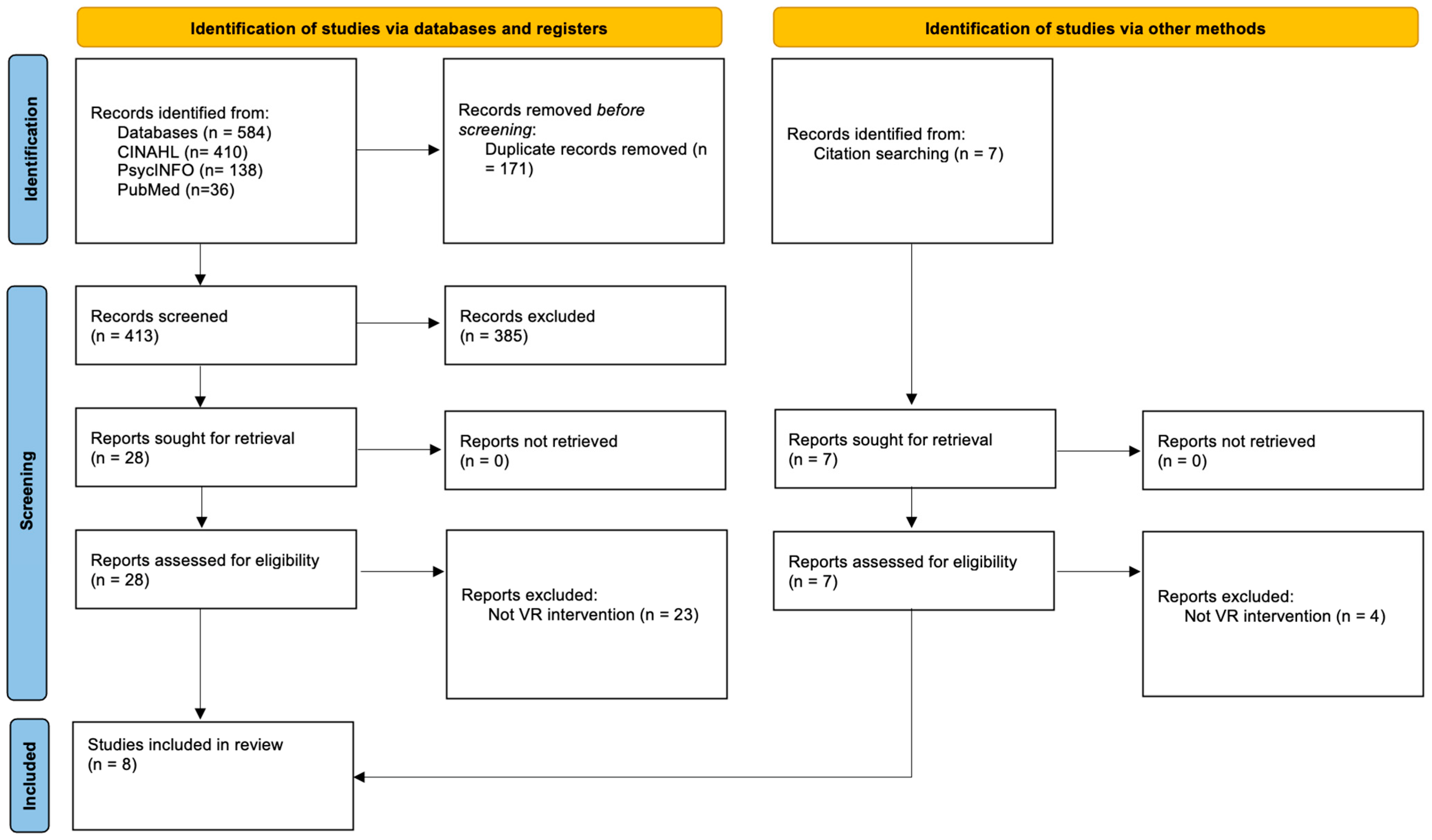
The study selection process is presented in a PRISMA-ScR flow diagram.

2.5. Data Extraction

Data were extracted using a structured form developed for this review. Extracted variables included: author(s), year of publication, country, study design, sample characteristics, type of VR intervention, CBT components or targeted mechanisms, and reported outcomes.
The data extraction process was performed independently by two reviewers to ensure accuracy and consistency.

2.6. Data Synthesis

A descriptive and narrative synthesis was conducted to map the characteristics of the included studies. The analysis focused on identifying patterns in intervention types, therapeutic mechanisms (e.g., craving, emotional regulation, self-efficacy), and methodological approaches.
Due to the heterogeneity of study designs and outcomes, no quantitative synthesis or meta-analysis was conducted. Consistent with scoping review methodology, the aim was to describe and categorise the available evidence rather than to assess effectiveness or compare interventions.

3. Results

3.1. Results of the Study Selection Process

The database search identified records across PubMed, CINAHL, and Psychology and Behavioural Sciences Collection. After duplicates were removed, titles and abstracts were screened against predefined eligibility criteria. A total of 409 records were excluded for not meeting the inclusion criteria, including studies not addressing virtual reality (VR)-based interventions, not involving adults with alcohol use disorder (AUD), or not incorporating cognitive behavioural therapy (CBT) or related mechanisms. Full-text assessments were conducted for the remaining studies. Citation tracking identified seven additional records, four of which were excluded following a full-text review. A final sample of eight studies was included in this scoping review [14,15,16,17,18,19,20] (Figure 1).

3.2. Characteristics of Included Studies

The eight included studies [14,15,16,17,18,19,20] were conducted across different geographical contexts and clinical or experimental settings, reflecting the emerging and heterogeneous nature of VR-based interventions in AUD. Sample sizes were generally small and varied across studies, including both individuals formally diagnosed with AUD and participants with problematic alcohol use. Notably, several studies included non-clinical populations (e.g., heavy or social drinkers), whereas others focused on individuals with diagnosed AUD [14,15,16,17]. Differences in clinical status may influence the observed mechanisms, particularly regarding cue reactivity and craving responses, potentially limiting direct comparability across studies.
The VR interventions identified included various approaches. Some studies used cue exposure paradigms with alcohol-related stimuli, while others simulated high-risk settings like bars or social gatherings to mimic real-world contexts. Other methods involved covert sensitisation techniques aimed at creating aversive responses to alcohol cues, as well as combined interventions that integrated exposure with cognitive or behavioural training components. The interventions also varied in duration, level of immersion, and the degree to which CBT principles were incorporated, ranging from structured CBT-supported protocols to more exploratory VR applications (Table 2). An updated search was performed in January 2026 using the same databases and strategy. Although recent publications, including reviews and ongoing clinical trials, were identified, no additional studies satisfied the predefined inclusion criteria.

3.3. Study Design Classification

The methodological designs of the included studies varied considerably. A small number of studies adopted randomised controlled trial designs to compare VR-assisted interventions with standard treatment or control conditions [19]. Several studies were classified as feasibility or pilot studies, primarily aimed at assessing the acceptability, usability, and practical implementation of VR in clinical settings [20]. Other studies employed observational or experimental designs to investigate cue reactivity, behavioural responses, or neurocognitive processes associated with alcohol-related stimuli [14,15]. Overall, the body of evidence is predominantly exploratory, with relatively few studies designed to evaluate intervention outcomes under controlled conditions.

3.4. Targeted Therapeutic Mechanisms

Across the included studies, VR-based interventions primarily targeted mechanisms central to AUD, particularly cue reactivity and craving induction [14,15,16].
In addition, several studies explored emotional processing and behavioural responses within simulated environments, enabling participants to identify individual triggers and rehearse coping strategies. Some interventions also aimed to enhance self-efficacy and support elements of cognitive restructuring through repeated exposure and behavioural adaptation.
These processes are widely recognised as key contributors to relapse. In this context, a distinction can be made between mechanisms related to the elicitation of responses (e.g., craving induction, cue reactivity) and those related to their modulation (e.g., craving regulation, emotional processing and coping strategies).

3.5. Patterns of VR Use Within CBT Frameworks

The analysis revealed different patterns in how VR was integrated into CBT-oriented approaches. In some studies, VR was used as an adjunct to traditional CBT, particularly to enhance exposure-based components and support the identification of triggers. In other cases, VR functioned as a standalone tool primarily focused on inducing craving and observing behavioural responses. Additionally, some interventions combined VR with cognitive or behavioural training tasks, reflecting a hybrid approach. The degree of integration between VR and CBT varied across studies, indicating a lack of standardisation in their current application within therapeutic frameworks.

3.6. Heterogeneity of Interventions and Outcomes

Substantial heterogeneity was observed across the included studies [14,15,16,17,18,19,20]. Differences were identified in the types of VR technology used, levels of immersion, and characteristics of the simulated environments. Intervention protocols varied in duration, frequency, and structure, and the extent to which CBT components were incorporated was inconsistent. Furthermore, outcome measures differed considerably, including self-reported craving, behavioural responses, and neurocognitive indicators. This variability limits direct comparison between studies but highlights the diversity of approaches currently being explored in this field. It remains unclear whether the observed effects are primarily attributable to exposure mechanisms, novelty effects, increased engagement, or broader behavioural activation processes [15,18,21].

3.7. Summary of Main Findings

The included studies [14,15,16,17,18,19,20] indicate that VR is being used as a flexible tool to support CBT-related processes in AUD, particularly for exposure, emotional processing, and behavioural adaptation. However, the current evidence base is characterised by small sample sizes, a predominance of exploratory and feasibility designs, limited longitudinal follow-up, and a lack of standardised intervention protocols.

4. Discussion

This scoping review aimed to map how virtual reality (VR) is being integrated within cognitive behavioural therapy (CBT)-oriented interventions for alcohol use disorder (AUD), with a particular focus on therapeutic mechanisms and their potential relevance for precision digital mental health. The findings indicate that VR is being used in diverse ways to operationalise core CBT processes, particularly by simulating controlled environments that enable the elicitation and modulation of craving, the identification of individual triggers, and the rehearsal of coping strategies. VR may reduce the gap between clinical exposure and real-world drinking contexts by reproducing socially and emotionally salient environments that are difficult to recreate in conventional psychotherapy settings [14,16,18].
The included studies indicate that VR-based interventions primarily target mechanisms central to AUD, such as cue reactivity and craving regulation, which are widely recognised as key components of relapse processes [14,15,16]. The findings suggest that VR interventions may operate through two partially distinct therapeutic pathways: mechanisms related to craving elicitation and cue activation, and mechanisms associated with craving modulation, emotional regulation, and coping rehearsal [15,16,17,18,19]. At the same time, these mechanisms are not exclusive to AUD and are also involved in anxiety and depressive disorders, especially concerning emotional reactivity, avoidance behaviours, and maladaptive cognitive patterns. The immersive characteristics of VR may enhance attentional engagement and contextual salience, potentially facilitating stronger activation of maladaptive emotional and behavioural responses during therapeutic exposure [14,18]. This overlap highlights the potential transdiagnostic relevance of VR-assisted CBT approaches and aligns with emerging views in precision mental health, which emphasise tailoring interventions to individual traits and contextual factors [4]. While these findings suggest potential transdiagnostic relevance, it is important to emphasise that the included studies focused exclusively on AUD populations. Therefore, implications for anxiety and depression remain conceptual and should be interpreted as hypothesis-generating rather than empirically established.
Importantly, differences between clinical and non-clinical populations should be considered when interpreting these findings. Mechanisms such as cue reactivity and craving may manifest differently in individuals with established AUD compared to non-dependent drinkers, which may limit direct clinical extrapolation.
A key contribution of this review is the identification of distinct patterns of VR integration within CBT frameworks. VR was used as an adjunct to traditional therapy, as a standalone exposure tool, or as part of hybrid interventions combining behavioural and cognitive components. This variability reflects the field’s current developmental stage, in which intervention protocols are not yet standardised and various approaches are being explored. The ability of VR to simulate personalised, context-specific environments is especially relevant to precision digital mental health, as it allows for the adaptation of therapeutic content to individual triggers and experiences. VR environments may also enable dynamic adaptation of therapeutic stimuli according to individual behavioural responses, emotional activation, and contextual triggers, aligning with emerging models of precision psychiatry and personalised digital therapeutics [4,20,21].
The findings also highlight substantial heterogeneity across studies, including differences in intervention design, VR technology, levels of immersion, and outcome measures. The substantial variability in immersion levels, interaction modalities, exposure protocols, and therapeutic integration limits the comparability of findings and complicates the identification of active therapeutic components [14,15,16,17,18,19,20,21]. In addition, most studies were characterised by small sample sizes and exploratory designs, with a predominance of feasibility and pilot studies. Only a limited number of studies employed randomised controlled designs, and longitudinal follow-up data were scarce. These characteristics limit the ability to draw conclusions about the effectiveness of VR-assisted interventions and reinforce the appropriateness of a scoping review to map existing evidence rather than evaluate outcomes [12].
Importantly, the present review differs from previous systematic reviews in the field [11,22], which have primarily focused on evaluating the effectiveness of VR-based interventions for substance use disorders. In contrast, this study adopts a scoping approach to map therapeutic mechanisms and patterns of integration within CBT-oriented frameworks, providing a complementary perspective to outcome-focused reviews. By focusing on mechanisms such as craving, emotional processing, and self-efficacy, this review contributes to a more detailed understanding of how VR may support therapeutic processes beyond outcome-based evaluations. Importantly, the current literature remains more informative regarding therapeutic mechanisms, feasibility, and experiential processes than regarding established clinical effectiveness [20,21].
The findings of this review suggest that VR may represent a promising tool for enhancing the delivery of CBT-oriented interventions, particularly by enabling personalised and ecologically valid exposure scenarios. This may have broader relevance for other mental health conditions, such as anxiety and depression, where similar underlying mechanisms are involved. The sense of presence generated by immersive VR environments may play a particularly important role in emotional activation and ecological validity, potentially influencing both therapeutic engagement and cue reactivity [14,18].
From clinical and research perspectives, integrating VR into CBT has several potential implications. The use of immersive environments may enhance ecological validity by allowing patients to engage with realistic scenarios that are difficult to reproduce in traditional therapeutic settings. Furthermore, the capacity to personalise these environments may facilitate the development of tailored interventions, consistent with precision mental health approaches. However, the lack of standardised protocols and the variability in implementation highlight the need for further research to establish best practices and to evaluate the feasibility of integrating VR into routine clinical care. It should be noted that not all included studies implemented full CBT protocols; several focused primarily on isolated mechanisms such as cue exposure or craving induction. Therefore, the term “CBT-oriented” should be interpreted as reflecting partial or mechanism-level integration rather than comprehensive therapeutic interventions.
Nevertheless, the current evidence remains preliminary, and further research is required to establish the effectiveness, standardisation, and scalability of these approaches.
This review has several limitations that should be considered. First, the search was limited to selected databases and to studies published in English, Portuguese, and Spanish, which may have restricted the breadth of the evidence base. While the selected databases provide substantial coverage of the biomedical and behavioural sciences literature, the diversity of indexing sources in this field may pose challenges to achieving fully comprehensive retrieval.
Second, no formal methodological quality appraisal was conducted, consistent with the objectives of a scoping review, which limits the ability to assess the strength and robustness of the evidence. Third, the included studies exhibited considerable heterogeneity in terms of design, population characteristics, and intervention approaches, which restricts direct comparability across findings. In addition, some studies involved non-clinical populations (e.g., heavy or social drinkers), which may limit the generalisability of results to individuals with diagnosed alcohol use disorder.
An additional consideration relates to the heterogeneity of study populations. Several included studies involved participants without a formal AUD diagnosis, such as heavy or social drinkers. While these studies contribute to understanding cue reactivity and behavioural responses, their findings may not be directly transferable to clinical populations with established dependence and treatment needs. This distinction should be considered when interpreting the applicability of results to therapeutic contexts.
Finally, the relatively small number of included studies reflects the early stage of research in this area. Furthermore, the distinction between full CBT interventions and studies targeting isolated CBT-related mechanisms should be considered when interpreting the findings, as several included studies primarily focused on cue exposure or craving induction rather than comprehensive psychotherapeutic protocols [14,15,18]. Additionally, some redundancy in the Boolean search strategy may have reduced search efficiency. While this approach was intended to maximise sensitivity, the variability of terminology within the field of digital mental health presents inherent challenges for comprehensive retrieval.
Despite these limitations, this review provides a structured mapping of current VR applications within CBT frameworks for AUD and highlights key therapeutic mechanisms with potential transdiagnostic relevance. These findings support the role of VR as a promising, yet still emerging, tool within precision digital mental health, particularly in addressing processes shared by AUD, anxiety, and depression.
Future research should focus on developing standardised intervention protocols, implementing well-designed randomised controlled trials, and including longitudinal follow-up to assess the sustainability of therapeutic effects. Additionally, further studies are needed to explore the applicability of VR-assisted CBT approaches in populations with anxiety and depressive disorders, in order to better understand their transdiagnostic potential.
From an implementation perspective, several practical considerations must be addressed before VR-assisted CBT can be integrated into routine clinical care. These include the cost and accessibility of VR technology, the need for specialised therapist training, and issues related to patient acceptability and engagement. Additionally, potential adverse effects, such as cybersickness, may limit usability for some individuals. Ethical and data privacy concerns also arise, particularly regarding the collection of behavioural and physiological data in immersive environments. Addressing these factors will be essential to translating experimental and feasibility findings into scalable, sustainable clinical applications.

5. Future Directions

Future research should focus on the development of standardised protocols for VR-assisted CBT interventions in alcohol use disorder. In particular, there is a need for well-designed randomised controlled trials with larger sample sizes and longitudinal follow-up to assess the durability of therapeutic effects.
Additionally, further work is required to clarify the roles of specific therapeutic mechanisms, including distinguishing between processes related to cue reactivity and those involved in emotional regulation and behavioural adaptation. The integration of physiological and behavioural data within VR environments may also support more precise and personalised interventions. Future developments may integrate physiological monitoring, eye-tracking, biosensors, and artificial-intelligence-driven adaptive VR environments to support more responsive and personalised therapeutic interventions.
Finally, future studies should explore the applicability of VR-assisted CBT approaches in other mental health conditions, such as anxiety and depression, in order to better understand their transdiagnostic potential and relevance within precision digital mental health frameworks.

6. Conclusions

This scoping review provides a structured overview of how virtual reality (VR) is currently being integrated into cognitive behavioural therapy (CBT)-oriented interventions for alcohol use disorder (AUD). The findings highlight the use of VR to target key therapeutic mechanisms, including craving, emotional processing, and self-efficacy; however, the evidence base remains limited and heterogeneous.
Although these mechanisms have potential transdiagnostic relevance for conditions such as anxiety and depression, current findings should be interpreted cautiously. The existing literature is largely exploratory, with small sample sizes, variable intervention designs, and limited longitudinal data.
Future research should prioritise the development of standardised protocols, rigorous controlled studies, and the evaluation of long-term outcomes. At present, VR-assisted CBT should be understood as an emerging and promising area of investigation rather than an established clinical approach. Current evidence supports its conceptual and therapeutic potential, particularly in relation to exposure-based and transdiagnostic mechanisms, although substantial methodological and clinical validation remains necessary.

Supplementary Materials

The following supporting information can be downloaded at: https://www.mdpi.com/article/10.3390/psychiatryint7030129/s1, Table S1: Preferred Reporting Items for Systematic reviews and Meta-Analyses extension for Scoping Reviews (PRISMA-ScR) Checklist.

Author Contributions

Conceptualization, M.T.M. and A.L.; methodology, M.T.M.; validation, M.T.M., A.L., D.R.M., M.I.G., I.L.C., C.S.F. and S.F.; formal analysis, M.T.M.; investigation, M.T.M.; data curation, M.T.M.; writing—original draft preparation, M.T.M.; writing—review and editing, A.L., D.R.M., M.I.G., I.L.C., C.S.F., T.L.d.C. and S.F.; supervision, M.T.M.; project administration, M.T.M. All authors have read and agreed to the published version of the manuscript.

Funding

This research received no external funding.

Institutional Review Board Statement

Not applicable.

Informed Consent Statement

Not applicable.

Data Availability Statement

No new data were created or analyzed in this study.

Conflicts of Interest

The authors declare no conflicts of interest.

Abbreviations

The following abbreviations are used in this manuscript:
AUDAlcohol Use Disorder
CBTCognitive Behavioural Therapy
VRVirtual Reality
VR-CBTVirtual Reality–Assisted Cognitive Behavioural Therapy
JBIJoanna Briggs Institute
PRISMA-ScRPreferred Reporting Items for Systematic Reviews and Meta-Analyses Extension for Scoping Reviews
OSFOpen Science Framework

References

  1. World Health Organization. Global Status Report on Alcohol and Health 2024; WHO: Geneva, Switzerland, 2024. [Google Scholar]
  2. Craske, M.G.; Stein, M.B. Anxiety. Lancet 2016, 388, 3048–3059. [Google Scholar] [CrossRef] [Scilit] [PubMed]
  3. Disner, S.G.; Beevers, C.G.; Haigh, E.A.P.; Beck, A.T. Neural mechanisms of the cognitive model of depression. Nat. Rev. Neurosci. 2011, 12, 467–477. [Google Scholar] [CrossRef] [Scilit] [PubMed]
  4. Fernandes, B.S.; Williams, L.M.; Steiner, J.; Leboyer, M.; Carvalho, A.F.; Berk, M. The new field of precision psychiatry. BMC Med. 2017, 15, 80. [Google Scholar] [CrossRef] [Scilit] [PubMed]
  5. National Institute on Alcohol Abuse and Alcoholism. Alcohol Use Disorder: A Comparison Between DSM-IV and DSM-5; NIAAA: Bethesda, MD, USA, 2023.
  6. Nakao, M.; Shirotsuki, K.; Sugaya, N. Cognitive behavioral therapy for management of mental health and stress-related disorders. Biopsychosoc. Med. 2021, 15, 16. [Google Scholar] [CrossRef] [Scilit] [PubMed]
  7. Dobson, K.S.; Dozois, D.J.A. Handbook of Cognitive-Behavioral Therapies, 4th ed.; Guilford Press: New York, NY, USA, 2019. [Google Scholar]
  8. Beck, J.S. Cognitive Behavior Therapy: Basics and Beyond, 2nd ed.; Guilford Press: New York, NY, USA, 2011. [Google Scholar]
  9. Bohil, C.J.; Alicea, B.; Biocca, F.A. Virtual reality in neuroscience research and therapy. Nat. Rev. Neurosci. 2011, 12, 752–762. [Google Scholar] [CrossRef] [Scilit] [PubMed]
  10. Wen, Y.; Shen, X.; Shen, Y. Improving immersive experiences in virtual natural settings for public health: A systematic review and meta-analysis. PLoS ONE 2024, 19, e0297986. [Google Scholar] [CrossRef] [Scilit] [PubMed]
  11. Gregory, V.L.; Wall, D.A.; White-Traut, S.N.; McBride, B.L.; Lipsey, A.D. Digital cognitive-behavioral therapy for substance use: Systematic review and meta-analysis. Am. J. Drug Alcohol Abus. 2024, 50, 771–785. [Google Scholar] [CrossRef] [Scilit] [PubMed]
  12. Aromataris, E.; Lockwood, C.; Porritt, K.; Pilla, B.; Jordan, Z. JBI Manual for Evidence Synthesis; Joanna Briggs Institute: Adelaide, Australia, 2024. [Google Scholar] [CrossRef] [Scilit]
  13. Tricco, A.C.; Lillie, E.; Zarin, W.; O’Brien, K.K.; Colquhoun, H.; Levac, D.; Moher, D.; Peters, M.D.J.; Horsley, T.; Weeks, L.; et al. PRISMA Extension for Scoping Reviews (PRISMA-ScR): Checklist and explanation. Ann. Intern. Med. 2018, 169, 467–473. [Google Scholar] [CrossRef] [Scilit] [PubMed]
  14. Ghiţă, A.; Hernández-Serrano, O.; Fernández-Ruiz, Y.; Monras, M.; Ortega, L.; Mondon, S.; Teixidor, L.; Gual, A.; Porras-García, B.; Ferrer-García, M.; et al. Cue-elicited anxiety and alcohol craving as indicators of the validity of ALCO-VR software: A virtual reality study. J. Clin. Med. 2019, 8, 1153. [Google Scholar] [CrossRef] [Scilit] [PubMed]
  15. Choi, Y.J.; Lee, J.H. The effect of virtual covert sensitization on reducing alcohol craving in heavy social drinkers. Virtual Real. 2015, 19, 111–117. [Google Scholar] [CrossRef] [Scilit]
  16. Hernández-Serrano, O.; Ghiţă, A.; Fernández-Ruiz, J.; Monràs, M.; Gual, A.; Gacto, M.; Porras-García, B.; Ferrer-García, M.; Gutiérrez-Maldonado, J. Determinants of cue-elicited alcohol craving and perceived realism in virtual reality among patients with alcohol use disorder. J. Clin. Med. 2021, 10, 2241. [Google Scholar] [CrossRef] [Scilit] [PubMed]
  17. Ryu, C.-H. The Crime Prevention Policy and Virtual Reality Therapy (VRT): Focused on Virtual Reality Cognitive Behavior Therapy (VR-CBT) for Alcohol-Dependent Patients in the National Probation Service. Korean Assoc. Addict. Crime Rev. 2017, 7, 65–92. [Google Scholar]
  18. Simon, J.; Etienne, A.M.; Bouchard, S.; Quertemont, E. Alcohol craving in drinkers after cue exposure in a virtual environment: The role of sense of presence. Front. Hum. Neurosci. 2020, 14, 124. [Google Scholar] [CrossRef] [Scilit] [PubMed]
  19. Son, J.H.; Lee, S.H.; Seok, J.W.; Kee, B.S.; Lee, H.W.; Kim, H.J.; Lee, T.K.; Han, D.H. Virtual reality therapy for the treatment of alcohol dependence: A PET/CT study. J. Stud. Alcohol Drugs 2015, 76, 620–627. [Google Scholar] [CrossRef] [Scilit] [PubMed]
  20. Zhang, J.; Chen, M.; Yan, J.; Wang, C.; Deng, H.; Wang, J.; Gu, J.; Wang, D.; Li, W.; Wang, C. Effects of virtual reality-based cue exposure therapy on craving and physiological responses in alcohol-dependent patients: A randomised controlled trial. BMC Psychiatry 2023, 23, 951. [Google Scholar] [CrossRef] [Scilit] [PubMed]
  21. Thaysen-Petersen, D.; Hammerum, S.K.; Vissing, A.C.; Oestrich, I.H.; Nordentoft, M.; Düring, S.W.; Fink-Jensen, A. Virtual reality-assisted cognitive behavioral therapy for alcohol use disorder: A randomized feasibility study. Front. Psychiatry 2024, 15, 1337898. [Google Scholar] [CrossRef] [Scilit] [PubMed]
  22. Ghiţă, A.; Gutiérrez-Maldonado, J. Applications of virtual reality in individuals with alcohol misuse: A systematic review. Addict. Behav. 2018, 81, 1–11. [Google Scholar] [CrossRef] [Scilit] [PubMed]
Figure 1. PRISMA-ScR flow diagram illustrating the study selection process.
Psychiatryint 07 00129 g001
Table 1. Database search strategy and corresponding results.
Database: CINAHL Complete (via EBSCO)
Filters: last 10 years, English, Portuguese, Spanish,
Results: 410
Search strategy (22 January de 2025)
 
Boolean string: (TI alcohol OR AB alcohol OR SU alcohol OR TI “alcohol use disorder” OR AB “alcohol use disorder” OR SU “alcohol use disorder” OR TI alcoholism OR AB alcoholism OR SU alcoholism OR TI “alcohol drinking” OR AB “alcohol drinking” OR SU “alcohol drinking” OR TI “substance-related disorders” OR AB “substance-related disorders” OR SU “substance-related disorders”) AND (TI “cognitive behavioral therapy” OR AB “cognitive behavioral therapy” OR SU “cognitive behavioral therapy” OR TI “virtual reality exposure therapy” OR AB “virtual reality exposure therapy” OR SU “virtual reality exposure therapy” OR TI “virtual reality” OR AB “virtual reality” OR SU “virtual reality” OR TI psychotherapy OR AB psychotherapy OR SU psychotherapy OR TI “behavior therapy” OR AB “behavior therapy” OR SU “behavior therapy”)
Database: Psychology and Behavioral Sciences Collection
Filters: last 10 years, English, Portuguese, Spanish
Results: 138
 
Search strategy (22 January 2025)
Boolean string:: (TI alcohol OR AB alcohol OR SU alcohol OR TI “alcohol use disorder” OR AB “alcohol use disorder” OR SU “alcohol use disorder” OR TI alcoholism OR AB alcoholism OR SU alcoholism OR TI “alcohol drinking” OR AB “alcohol drinking” OR SU “alcohol drinking” OR TI “substance-related disorders” OR AB “substance-related disorders” OR SU “substance-related disorders”) AND (TI “cognitive behavioral therapy” OR AB “cognitive behavioral therapy” OR SU “cognitive behavioral therapy” OR TI “virtual reality exposure therapy” OR AB “virtual reality exposure therapy” OR SU “virtual reality exposure therapy” OR TI “virtual reality” OR AB “virtual reality” OR SU “virtual reality” OR TI psychotherapy OR AB psychotherapy OR SU psychotherapy OR TI “behavior therapy” OR AB “behavior therapy” OR SU “behavior therapy”)
 
Database: PubMed
Filters: last 10 years, English, Portuguese, Spanish
Results: 36
Search strategy (22 January 2025)
 
Boolean string: (alcohol [Title/Abstract] OR “alcohol use disorder” [Title/Abstract] OR “alcohol use disorder” [MeSH Terms] OR alcoholism [Title/Abstract] OR alcoholism [MeSH Terms] OR “alcohol drinking” [Title/Abstract] OR “substance-related disorders” [Title/Abstract]) AND (“cognitive behavioral therapy” [Title/Abstract] OR “virtual reality exposure therapy” [Title/Abstract] OR “virtual reality” [Title/Abstract] OR psychotherapy [Title/Abstract] OR “behavior therapy” [Title/Abstract]) AND (“clinical setting” [Title/Abstract] OR “outpatient clinics” [Title/Abstract] OR “inpatient care” [Title/Abstract] OR “health services” [Title/Abstract] OR “treatment outcome” [Title/Abstract])
Table 2. Summary of the results.
Author (Year, Country)Study ObjectiveStudy DesignSample (N)PopulationVR InterventionCBT Components/MechanismsKey Findings
Ghiţă et al. (2019, Spain) [14].To validate the ALCO-VR system in eliciting craving and anxietyExperimental study27AUD and social drinkers (mixed sample)Exposure to virtual alcohol-related environmentsCue reactivity and trigger identificationVR environments successfully induced craving and anxiety responses
Choi & Lee (2015, South Korea) [15].To evaluate the effect of virtual covert sensitisation on alcohol cravingRandomised controlled trial40Social and light drinkers (non-clinical)Virtual exposure with covert sensitisation vs. controlCraving induction and aversive conditioningSignificant reduction in craving, particularly among heavy drinkers
Hernández-Serrano et al. (2021, Spain) [16].To assess predictors of change in craving during VR-CETLongitudinal comparative study42Individuals with AUDVR cue exposure therapy + treatment as usual vs. treatment as usualCraving regulation and exposureGreater reduction in craving in the VR group compared to standard treatment
Ryu et al. (2017, South Korea) [17].To evaluate neurocognitive and behavioural effects of VR-CBTQuantitative study with EEG11Individuals with AUDVR-CBT intervention (anger control focus)Impulse control and emotional regulationNo significant differences observed; results limited by small sample size
Simon et al. (2020, Brazil) [18].To compare craving responses following VR exposureCross-sectional study39Occasional and heavy drinkers (non-clinical)Exposure to virtual alcohol-related cuesCraving and sense of presenceHigher craving in heavy drinkers; sense of presence influenced responses
Son et al. (2015, South Korea) [19].To assess neural effects of VR therapy in alcohol dependenceNeuroimaging study (PET/CT)12Individuals with alcohol dependence (AUD)VR therapy with aversive conditioningCraving modulationBrain metabolic changes consistent with reduced craving
Zhang et al. (2023, China) [20].To evaluate the effects of virtual reality-based cue exposure therapy on craving and physiological responses in alcohol-dependent patients.RCT 44Individuals with AUDVR-based cue exposure therapy combined with conventional treatmentCue exposure, craving regulation, physiological reactivityVR cue exposure therapy reduced psychological craving and some physiological responses associated with alcohol-related cues, suggesting potential therapeutic benefits in alcohol dependence treatment.
Thaysen-Petersen et al. (2024, Denmark) [21].To assess feasibility of VR-CBT in AUDRandomised feasibility studyNot specifiedIndividuals with AUDVR-supported CBT with high-risk scenario simulationTrigger identification and exposureVR enhanced identification of triggers; feasibility supported
Disclaimer/Publisher’s Note: The statements, opinions and data contained in all publications are solely those of the individual author(s) and contributor(s) and not of MDPI and/or the editor(s). MDPI and/or the editor(s) disclaim responsibility for any injury to people or property resulting from any ideas, methods, instructions or products referred to in the content.