1. Introduction
The digital and mobile internet revolution has continued to shape how digital nativesor young people, communicate, seek expression, and consume content in digital spaces. Globally, young people account for more than 60% of social media platform users, and they continue to exhibit high levels of technological adaptability and consumption patterns (
Nwafor et al., 2022;
Yu et al., 2024). In Africa, particularly in Nigeria, the youth extensively use social media as a tool for entertainment, political participation, identity construction, peer interaction, social comparison, and validation (
Bhanye et al., 2023;
Adjin-Tetty & Yeboah-Benin, 2025). Given their fluid and interactive nature, users leverage the affordances of social media platforms (Facebook, Instagram, TikTok, X (formerly Twitter)) to curate self-presentation (
Zhang & Zhang, 2025;
Hjetland et al., 2022), engage in social interactions, and evaluate their social worth based on feedback.
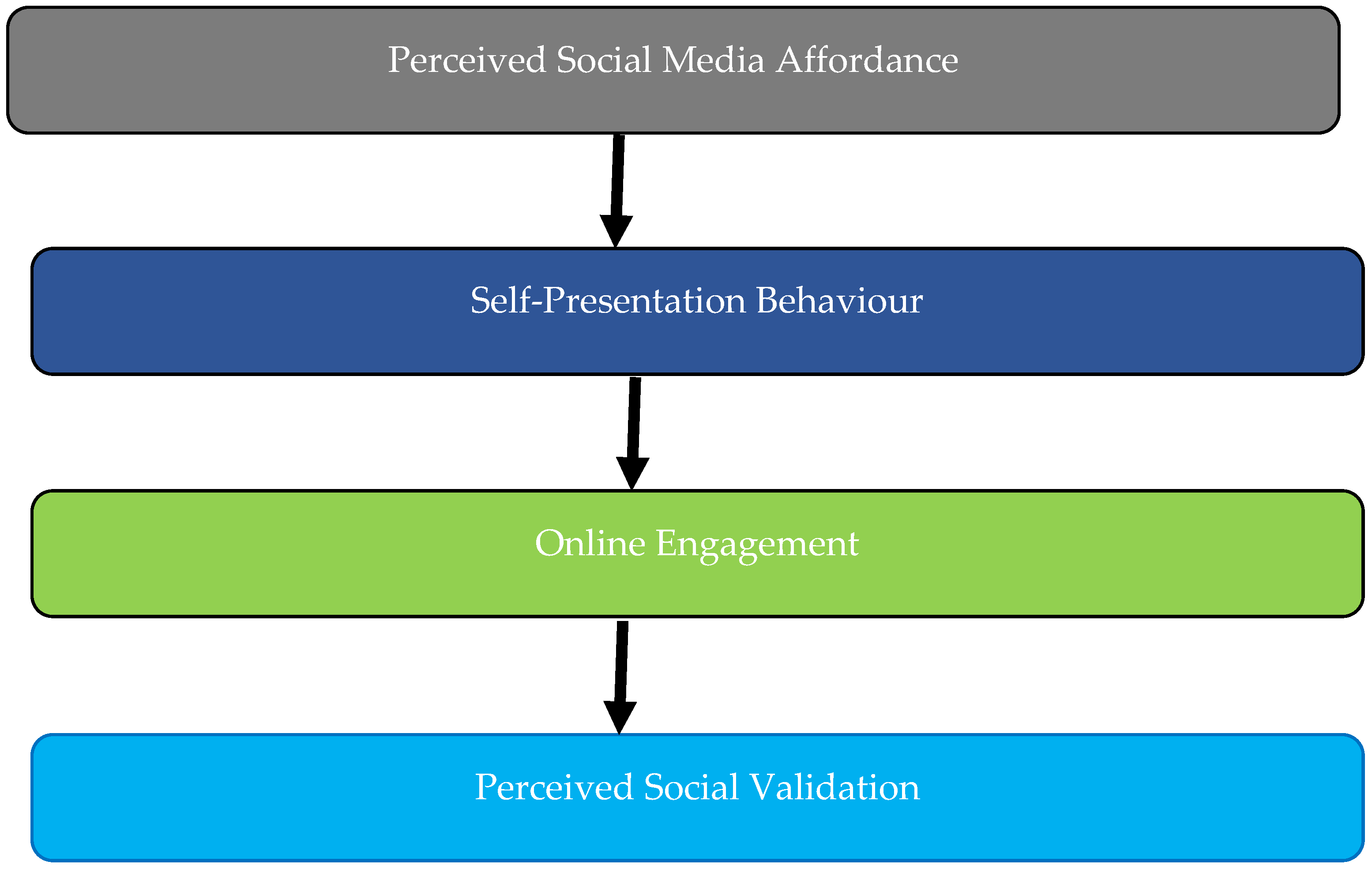
In this study, we systematically differentiate among three related but conceptually distinct phases of youths’ social media use. Firstly, social media affordances are viewed as perceived action potentials (such as visibility, editability, interactivity, and persistence) that influence what is technologically feasible in a given platform environment (
Lane et al., 2023;
Vaast & Kaganer, 2013;
Gibson, 1977). Secondly, self-presentation and online engagement are conceived as sociability practices that explain how youths selectively and strategically utilise these potentials to curate their identities and interact with others. Thirdly, social validation denotes the socio-psychological outcomes of sociability practices (e.g., youths’ biased sense of being recognised, approved of, or valued by their online audiences). These explicitly distinguish three analytical levels: structural (platform-level design possibilities representing affordances), behavioural (engagement represents users’ practices), and outcome (social feedback, a consequence of social validation).
Within the online milieu, social media affordances are conceptualised as the possibilities for action enabled by platform features such as likes, comments, shares, stories, visibility settings, and editing tools (
Ronzhyn et al., 2023;
Scharlach & Hallinan, 2023;
Dvir-Gvirsman, 2023). These features facilitate or constrain user behaviour and empower individuals to selectively present aspects of their identities, a process known as self-presentation (
Srivastava & Nayak, 2025;
Brown et al., 2022;
Conle & Dyke, 2004). Through the attention metrics and feedback mechanisms of several platforms, the youth also leverage these affordances to present themselves or engage with peers. When youths interact online, they seek acknowledgement and approval, which in various contexts translates into feelings of validation and social recognition.
There is a growing reliance on digital validation as a significant feature of online engagement and practices. Nevertheless, this desire to pursue approval and validation on online platforms has both positive and negative mental effects, ranging from enhanced confidence, greater social capital, and stronger connections to perceived low self-esteem, anxiety, and identity confusion. Both disinformation and misinformation constitute adverse outcomes of an over-reliance on and consistent desire for digital recognition. A number of these positive and negative outcomes have been documented worldwide and are generally redefining young people’s social construction, identity presentation, and well-being in both online and offline digital spaces (
Marciano et al., 2024;
Gungor, 2023;
Zsila & Reyes, 2023;
Keum et al., 2022).
In Nigeria, scholarship on social media penetration, usage, and digital culture among youths is extensive. However, several studies that have explored Nigerian youths’ use of social media focus more on their political and activist participation, entrepreneurship, education, the promotion of reading culture, and online/digital marketing (
Ciroma et al., 2025;
Akaerele-popoola et al., 2022;
Nwafor & Muoboghare, 2022;
Uzuegbunam, 2015). A few studies have explored self-presentation and identity curation, online visibility, and validation (
Enyinnaya, 2025;
Dunu & Abaneme, 2024;
Akor & Odey, 2022;
Gever & Okoro, 2020), ignoring how Nigerian youths leverage platform affordances to shape their self-presentation behaviours and how these influence their online engagement and social validation experiences. This creates a gap in the streams of scholarship on Nigerian youths’ digital media culture and consumption regarding peer networks, the utilisation of affordances for social validation, and self-presentation behaviours. To address this gap, an empirical study is needed to explore the intersections and relationships among social media affordances, self-presentation, online engagement, and social validation. Understanding how these constructs intersect broadens the scholarship on youth’s digital culture and the socio-psychological implications of social-mediated communication. The purpose of this study is to investigate the relationship among social media affordances, social validation, and self-presentation among Nigerian youths within an integrative framework of Affordance theory, Dramaturgical theory, and Uses and Gratification Theory. The following research questions guide the study:
To what extent do perceived social media affordances predict self-presentation behaviours among Nigerian youths?
Does perceived social media validation significantly predict self-presentation and online engagement?
Does online engagement significantly predict perceived social validation among Nigerian youths?
Do self-presentation and online engagement sequentially explain the relationship between social media affordances and social validation?
4. Results
The analysis of data, results, and their interpretation are presented here. Demographic data are presented first, followed by descriptive analyses of the study’s variables (presented in bar charts and tables), Pearson correlations, regression, and regression-based sequential mediation to test the hypotheses.
Table 5 presents the distribution of respondents’ demographic characteristics. The gender distribution showed that females slightly outnumbered males, accounting for 51.9%, while males (
n = 231) accounted for 48.1% of the respondents. Most respondents are young adults within the primary age groups 18–24 and 25–31, accounting for 45% and 35% of active social media users, respectively, who are more likely to engage with different platforms to seek validation and self-presentation goals. Most respondents were undergraduates (192 or 40%), followed by degree holders (144 or 30%), while 96 (20%) were postgraduate certificate holders. The data also showed that more than two-thirds (340), accounting for 70.8% of respondents, use any social media daily; 87 (18.1%) use platforms several times a week. Twenty-nine (6%) respondents use any of the platforms weekly, while 24 (5%) rarely use any of the platforms. Facebook (174 or 36.3%) remains the most frequently used platform among Nigerian youths, followed by TikTok (130 or 27%), then by Instagram (98 or 20.4%), and X (formerly Twitter) (46), accounting for 9.6%, while 32 were WhatsApp users. These platforms were measured based on their use for social validation and self-representation and may not reflect other activities for which they are used.
4.4. Social Validation Features of Nigerian Youths in Digital Spaces
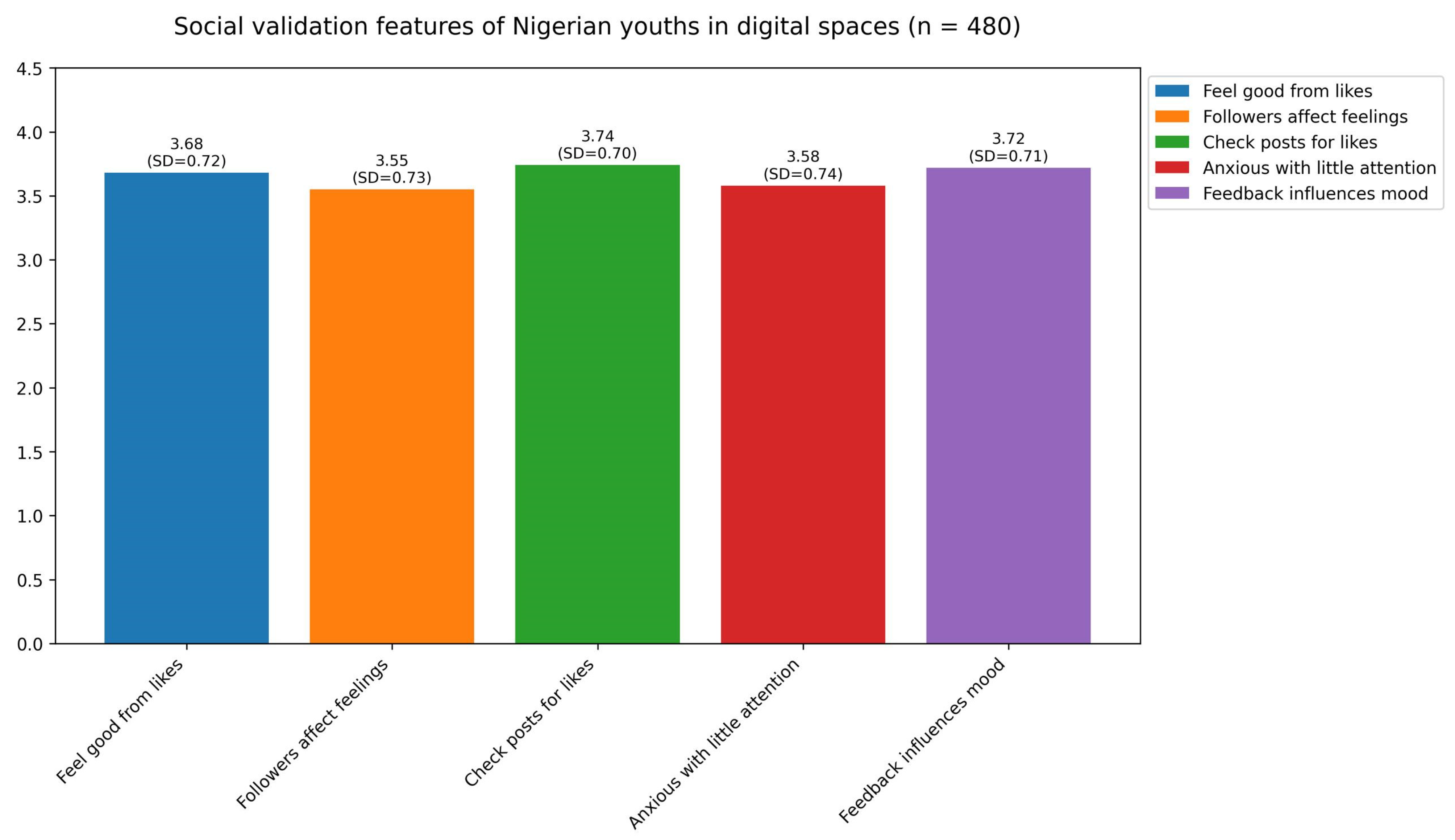
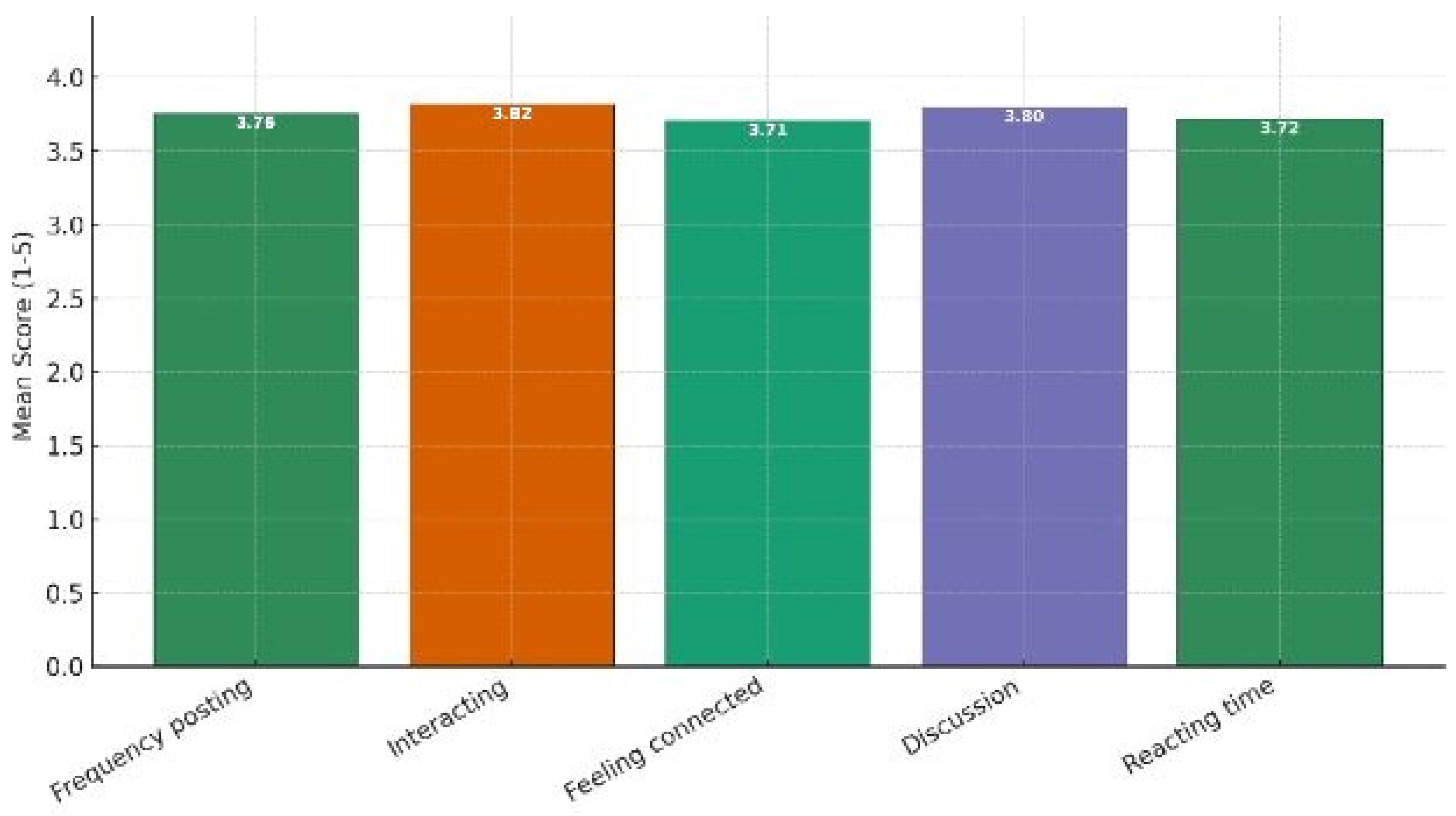
Figure 5 is a bar chart that presents descriptive statistics on social validation features among Nigerian youths in the digital space. Mean scores range from 3.55 to 3.74, indicating how social validation moderates self-presentation through social media affordances. Respondents feel good when they receive likes or positive comments on their posts (M = 3.68, SD = 0.72). The number of followers respondents have amassed affects how they feel about themselves (M = 3.55, SD = 0.73). Respondents often check their posts for new likes or comments (M = 3.74, SD 0.70), while respondents express anxiety when their posts receive little attention (M = 3.58, SD = 0.74). Also, social media feedback influences respondents’ mood and self-esteem (M = 3.72, SD = 0.71). Overall, the higher mean values indicate strong agreement that social media affordances strongly moderate Nigerian youth’s social validation, self-presentation, and online engagement.
As shown in
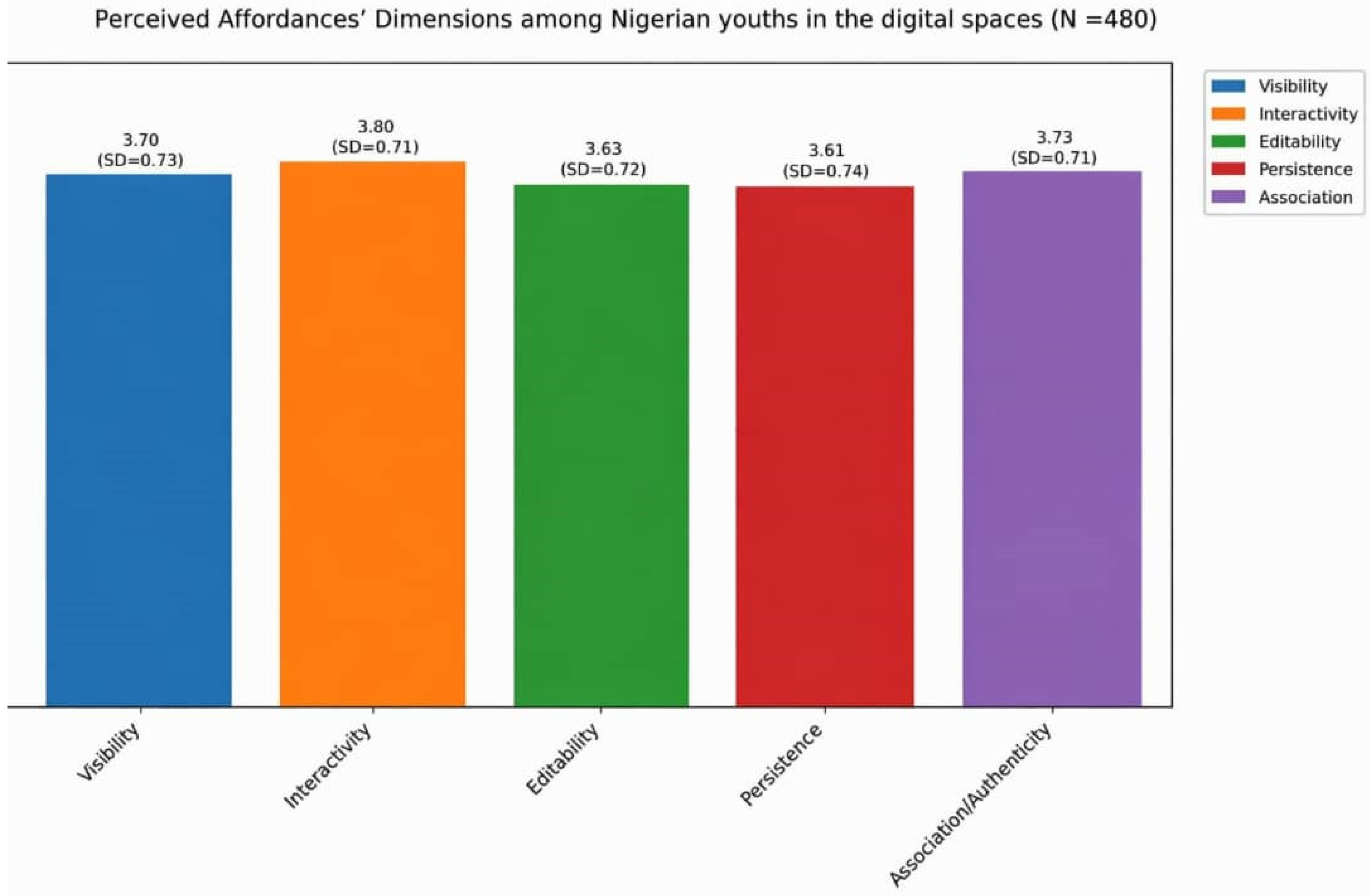
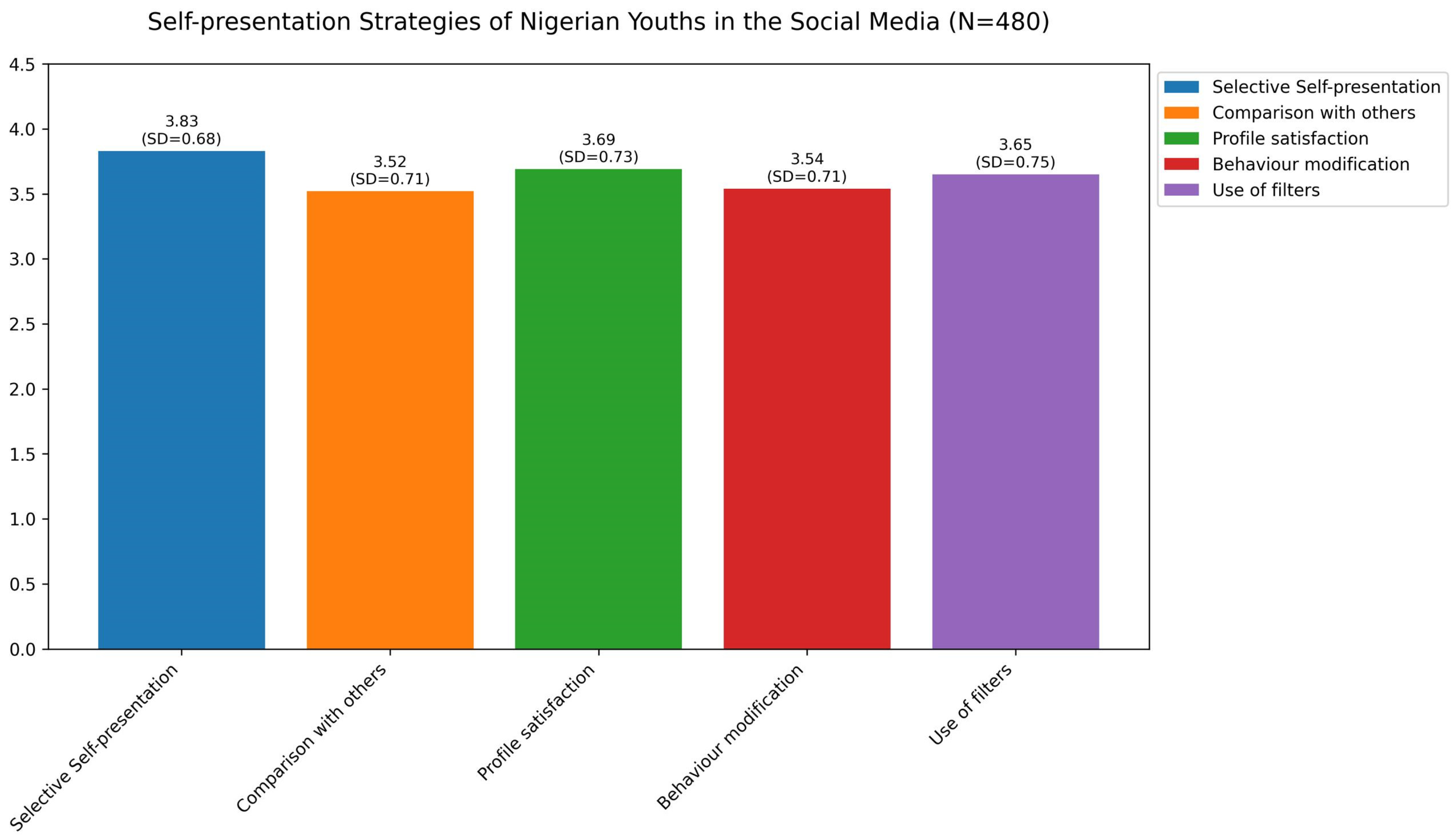
Table 6, descriptive statistics for both the independent and dependent variables indicate that items cluster around the mid-to-high agreement range (means ≈ 3.5–3.8 on a 5-point scale), indicating that Nigerian youth generally agree with the statements about affordances, self-presentation, engagement, and validation. The highest means are selective self-presentation (C1 = 3.83) and interacting with posts (D2 = 3.82), showing that respondents most strongly believe in selectively curating their representation and actively interacting with others’ content.
Table 6. also indicates that the lowest means are compared with others (C2 = 3.52) and persistence (B4 = 3.61). This shows a weaker but still positive agreement on social comparison and persistence of content. Furthermore, standard deviations are consistent, ranging from 0.68 to 0.75, suggesting moderate individual variability.
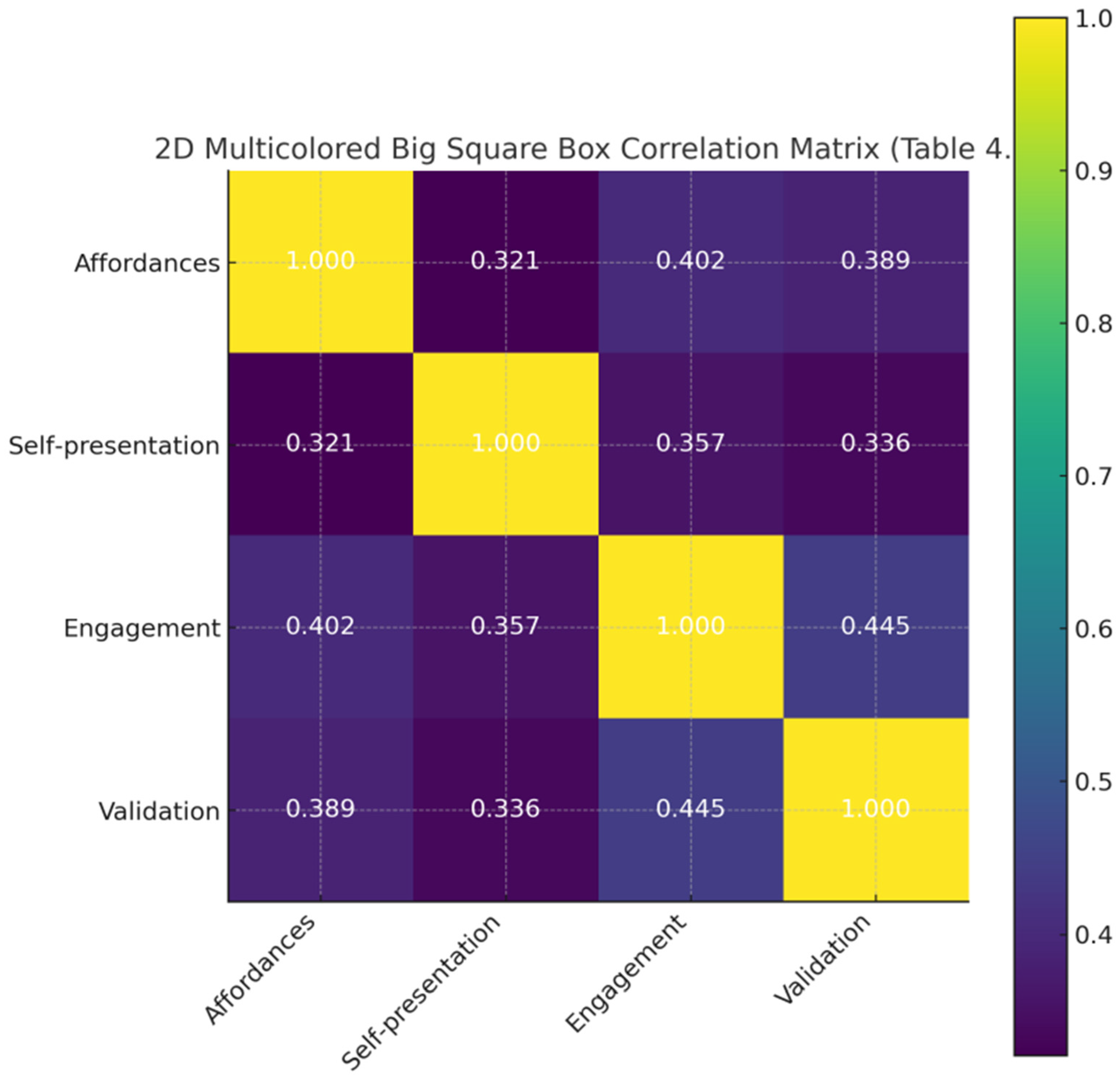
Table 7 (correlation analysis) reveals moderate, positive, and statistically significant relationships among social media affordances, self-presentation, online engagement, and perceived social validation. Affordances correlated with self-presentation (r = 0.321,
p < 0.01), engagement (r = 0.402,
p < 0.01), and validation (r = 0.389,
p < 0.01). Self-presentation and engagement shared a moderate association (r = 0.357,
p < 0.01), while engagement showed the strongest link with validation (r = 0.445,
p < 0.01). These patterns indicate an interdependent, reinforcing system in which platform features enable identity work and social interaction, which in turn generate measurable social welfare. These results generally suggest that youth who report higher selective/self-presentational behaviour also report greater online engagement and may receive more validation and attention. This is also consistent with theories where a performed identity invites interaction and feedback.
Though our data suggest that affordances are particularly significant under specific conditions, the positive association between perceived affordances, self-presentation, engagement, and validation in the correlation analysis may seem inevitable given that these behaviours rely on platform features. Descriptively, the influence of these constructs is intensified among youths who use social media daily and those who focus their activities on highly visual and interactive platforms (TikTok and Instagram). Their influence is also amplified in network platforms where visibility and feedback have social credence. However, in these contexts, visibility, editability, and persistence affordances intensify self-presentation and the link between engagement and perceived validation.
The correlation matrix gradient is the diagrammatic representation of the strength and pattern of relationships among the four primary constructs: affordances, self-presentation, engagement, and validation (
Figure 6). Within the bigger square matrix are small coloured squares that correspond to the correlation value between two constructs. The variations are represented by colour intensity, indicating a strong or weak relationship among constructs or between constructs. The darker colours indicate greater strength, while lighter colours indicate weaker strength. The numerical value inside each cell confirms the precise statistical relationship. The gradation of the matrix represents four relationship dimensions or typologies: relationships involving affordances, self-presentations, engagement, and social validation.
Author Contributions
Conceptualization, G.U.N. and N.O.O.; methodology, S.E.A.; software, G.U.N., validation, G.U.N. and B.A.O.; formal analysis, N.O.O.; investigation, S.E.A.; resources, B.A.O.; data curation, G.U.N. and S.E.A.; writing—original draft preparation, G.U.N.; writing—review and editing, G.U.N.; visualization, G.U.N.; supervision, N.O.O.; project administration: B.A.O. All authors have read and agreed to the published version of the manuscript.
Funding
This research received no external funding.
Institutional Review Board Statement
This study was conducted in accordance with the guidelines of the Declaration of Helsinki and approved by the Research Ethics Committee in the Research Management Office (RMO) of Chukwuemeka Odumegwu Ojukwu University, Anambra State, Nigeria (approval code: COOU/RMO/REC/2025/017; approval date: 10 September 2025).
Informed Consent Statement
Informed consent was obtained from all participants in the study before data collection.
Data Availability Statement
The data presented in this study are available on reasonable request from the corresponding author. The data are not publicly available due to ethical restrictions and the need to protect participant anonymity.
Conflicts of Interest
The authors declare no conflict of interest.
References
- Abdullah, T. O., Hale, B. J., & Lasis, M. I. (2023). Understanding motivations for plural identity on Facebook among Nigerian users: A uses-and-gratifications perspective. Journalism and Media, 4(3), 710–726. [Google Scholar] [CrossRef] [Scilit]
- Adjin-Tetty, T., & Yeboah-Benin, A. (2025). The African youth and communicative behaviour in digital spaces. Ghana Social Science Journal, 22(1), 1–5. [Google Scholar]
- Akaerele-popoola, O. E., Azeez, A. L., & Adeniyi, A. (2022). Twitter, civil activism, and EndSARS protest in Nigeria as a developing democracy. Cogent Social Sciences, 8(1), 2095744. [Google Scholar] [CrossRef] [Scilit]
- Akor, G. B., & Odey, B. E. (2022). The influence of social media self-presentation on tertiary institutions’ students’ self-esteem in Cross River State. Comprehensive Research and Reviews Journal, 01(01), 011–024. [Google Scholar] [CrossRef] [Scilit]
- Alsaleh, A. (2024). The impact of technological advancement on culture and society. Science Report, 14(1), 32140. [Google Scholar] [CrossRef] [Scilit]
- Awopetu, R. G., Benjamin, O., Kolawole, S. O., & Newton, R. T. (2024). The systematic review of social media addiction and mental health of Nigerian university students: The good, the bad and ugly. European Journal of Theoretical and Applied Sciences, 2(1), 69. [Google Scholar] [CrossRef] [Scilit] [PubMed]
- Back, M. D., Stopfer, J. M., Vazire, S., Gaddis, S., Schmukle, S. C., Egloff, B., & Gosling, S. D. (2010). Facebook profiles reflect actual personality, not self-idealisation. Psychological Science, 21(3), 372–374. [Google Scholar] [CrossRef] [Scilit]
- Ballara, N. (2023). The power of social validation: A literature review on how likes, comments, and shares shape user behaviour on social media. International Journal of Research Publication and Review, 4(7), 3355–3367. [Google Scholar] [CrossRef] [Scilit]
- Bhanye, J., Shayamunda, R., & Taviral, R. C. (2023). Social media in the African context: A review study on benefits and pitfalls. In The Palgrave handbook of global social problems. Palgrave Macmillan. [Google Scholar] [CrossRef] [Scilit]
- Bibian, O. E., & Ma’rof, A. A. (2024). The impact of social media usage, social support, peer influence, and social identity on the self-concept of youths in Enugu East Local Government Council, Nigeria. International Journal of Academic Research in Business & Social Sciences, 14(12), 865–882. [Google Scholar]
- Brown, O., Smith, L. G., Davidson, B. I., & Ellis, D. A. (2022). The problem with the internet: An affordance-based approach for psychological research on networked technologies. Acta Psychological, 228, 103650. [Google Scholar] [CrossRef] [Scilit]
- Bullingham, L., & Vasconcelos, A. C. (2013). The presentation of self in the online world: Goffman and the study of online identities. Journal of Information Science, 39(1), 101–112. [Google Scholar] [CrossRef] [Scilit]
- Ciroma, Z. I., Abubakar, A. M., & Bashir, A. B. (2025). Patterns, perceptions, and academic implications of social media use among tertiary institution students in Yobe State, Nigeria. African Multidisciplinary Journal of Sciences and Artificial Intelligence, 2(3), 508–520. [Google Scholar] [CrossRef] [Scilit]
- Conle, G., & Dyke, M. (2004). Understanding and using technological affordances: A response to Boyle and Cook. ALT-J, 12(3), 301–308. [Google Scholar] [CrossRef]
- Dessart, L., Veloutsou, C., & Morgan-Thomas, A. (2015). Capturing consumer engagement: Duality, dimensionality and measurement. Journal of Marketing Management, 32(5–6), 399–426. [Google Scholar] [CrossRef] [Scilit]
- Dinh, T., & Lee, Y. (2025). Understanding the psychological drivers of online self-presentation: A survey study on social media exposure, social comparison, social network type and FOMO. BMC Psychology, 13, 781. [Google Scholar] [CrossRef] [Scilit] [PubMed]
- Dunu, I. V., & Abaneme, E. C. (2024). Exploring self-presentation on online dating sites among young female adults in Nigeria. University of Nigeria Journal of Interdisciplinary Communication Studies, 28, 31–51. [Google Scholar]
- Dvir-Gvirsman, S. (2023). The meaning of like: How social media editors and users make sense of social media engagement. Journalism Practice, 19(5), 1017–1034. [Google Scholar] [CrossRef] [Scilit]
- Enyinnaya, J. (2025). Fashioning identity: A technocultural analysis of Igbo women designers’ self-presentation on Instagram. Social Media + Society, 11(1), 1–13. [Google Scholar] [CrossRef] [Scilit]
- Erubami, J. A., Ufuohu-Biri, E., Anorue, L. I., Nwabunze, U. O., & Orekyeh, E. S. (2021). Generational dichotomies in public perception of social media coverage of the Nigerian # EndSARS protests: Implications for networked communication. Cogent Arts & Humanities, 8(1), 1988192. [Google Scholar] [CrossRef] [Scilit]
- Fox, J., & McEwan, B. (2017). Distinguishing technologies for social interaction: The perceived social affordances of communication channels scale. Communication Monographs, 84(3), 298–318. [Google Scholar] [CrossRef] [Scilit]
- Gakahu, N. (2024). Image-centrism in Africa’s political communication: A social semiotic analysis of self-presentation practices by women political candidates in Kenya’s social media space. Information, Community & Society, 27(8), 1687–1711. [Google Scholar] [CrossRef] [Scilit]
- Gever, V. C., & Okoro, N. (2020). Influence of Facebook users’ self-presentation tactics on their response to persuasive political messages. Library Philosophy and Practice (e-Journal), 3656, 1–20. [Google Scholar]
- Gibson, J. J. (1977). The theory of affordances. In R. Shaw, & J. Bransford (Eds.), Perceiving, acting, and knowing: Towards an ecological psychology (pp. 67–82). Lawrence Erlbaum. [Google Scholar]
- Goffman, E. (1959). The presentation of self in everyday life. Doubleday-Anchor. [Google Scholar]
- Gungor, S. E. (2023). Positive and negative correlates of social media use, including aggression, trauma and suicide. European Psychiatry, 66, S36–S37. [Google Scholar] [CrossRef]
- Hayes, M., Magner, C., & Ryder, M. (2025). Professional online engagement: A concept analysis informing nursing practice and education. Teaching and Learning in Nursing, 21(1), e248–e256. [Google Scholar] [CrossRef] [Scilit]
- Hegazi, O., Alalalmeh, S., Alfaresi, A., Dashtinezhad, S., Bahada, A., Shahwan, M., Jairoun, A. A., Babalola, T. K., & Yasin, H. (2022). Development, validation, and utilisation of a social media use and mental health questionnaire among Middle Eastern and Western Adults: A pilot study from the UAE. International Journal of Environmental Research and Public Health, 19(23), 16063. [Google Scholar] [CrossRef] [Scilit]
- Hjetland, G. J., Finseras, R. T., Sivertsen, B., Colman, I., Hella, R. T., & Skogen, J. C. (2022). Focus on self-presentation on social media across sociodemographic variables, lifestyles, and personalities: A cross-sectional study. International Journal of Environmental Research on Public Health, 19(17), 11133. [Google Scholar] [CrossRef] [Scilit] [PubMed]
- Hogan, B. (2010). The presentation of self in the age of social media: Distinguishing performances and exhibitions online. Bulletin of Science, Technology & Society, 30, 377–386. [Google Scholar] [CrossRef] [Scilit]
- Hrincu, V., Zaleski, G., & Robillard, J. (2024). Ethical considerations at the intersection of social media and dementia prevention research. The Journal of Prevention of Alzheimer’s Disease, 11(2), 274–284. [Google Scholar] [CrossRef] [Scilit]
- Hu, C., Cao, R., Huang, J., & Wei, Y. (2022). The effect of self-discrepancy on online behaviour: A literature review. Frontier Psychology, 13, 883736. [Google Scholar] [CrossRef] [Scilit]
- Hussey, I., Alsalti, T., & Arslan, R. (2025). An Aberrant abundance of Cronbach’s alpha values at. 70. Advances in Method and Practices in Psychological Science, 8(1), 1–18. [Google Scholar] [CrossRef] [Scilit]
- Igbinosa, E. D., & Saheed, A. A. (2024). The impact of national youth policy on youth political participation in Nigeria. International Journal of Humanities Social Science and Management (IJHSSM), 4(4), 191–202. [Google Scholar]
- Jiang, S., & Ngien, A. (2020). The effects of Instagram use, social comparison, and self-esteem on social anxiety: A survey study in Singapore. Social Media+ Society, 6(2), 2056305120912488. [Google Scholar] [CrossRef] [Scilit]
- Katz, E., Blumer, J. G., & Gurevitch, M. (1973). Uses and gratifications research. Public Opinion Quarterly, 37(4), 509–523. [Google Scholar] [CrossRef] [Scilit]
- Kaushik, V., & Walsh, C. (2019). Pragmatism as a research paradigm and its implications for social work research. Social Science, 8(9), 255. [Google Scholar] [CrossRef] [Scilit]
- Keum, B. T., Wang, Y. W., Callaway, J., Abebe, I., Cruz, T., & O’Connor, S. (2022). Benefits and harms of social media use: A latent profile analysis of emerging adults. Current Psychology, 42(27), 23506–23518. [Google Scholar] [CrossRef] [Scilit]
- Khan, F., Si, X., & Khan, K. (2019). Social media affordances and information sharing: Evidence from Chinese public organisations. Data and Information Management, 3(3), 135–154. [Google Scholar] [CrossRef] [Scilit]
- Kim, D. H., & Ellison, N. B. (2022). From observation on social media to offline political participation: The social media affordances approach. New Media & Society, 24(120), 2614–2634. [Google Scholar]
- Lane, J. N., Leonardi, P. M., Contractor, N. S., & DeChurch, L. A. (2023). Teams in the digital workplace: Technology’s role for communication, collaboration, and performance. Small Group Research, 55(1), 139–183. [Google Scholar] [CrossRef] [Scilit]
- Lee, H. Y., Jamieson, J. P., Reis, H., Beevers, C., Josephs, R. A., Mullarkey, M. C., O’brien, J., & Yeager, D. S. (2020). Getting fewer likes than others on social media elicits emotional distress among victimised adolescents. Child Development, 1(6), 2141–2159. [Google Scholar] [CrossRef] [Scilit]
- Liu, Y., & Kie, K. (2025). Development and validity test of impression management efficacy scale based on self-presentation behaviour of Chinese youth on social media. Frontier Psychology, 16, 1494083. [Google Scholar] [CrossRef] [Scilit]
- Manata, B., & Spottswood, E. (2021). Extending Rice et al. (2017): The measurement of social media affordances. Behaviour & Information Technology, 41(6), 1323–1336. [Google Scholar] [CrossRef] [Scilit]
- Marazziti, D., Diolaiuti, F., & Mucci, F. (2025). Privacy: Impact of social media—A study on university students. International Journal of Social Psychiatry, 8. [Google Scholar] [CrossRef] [Scilit] [PubMed]
- Marciano, L., Lin, J., Sato, T., Sabor, S., & Viswanath, K. (2024). Does social media use make us happy? A meta-analysis on social media and positive well-being outcomes. SSM—Mental Health, 6, 100331. [Google Scholar] [CrossRef] [Scilit]
- Marwick, A. E., & Boyd, D. (2011). I tweet honestly, I tweet passionately: Twitter users, context collapse, and the imagined audience. New Media & Society, 13(1), 114–133. [Google Scholar] [CrossRef] [Scilit]
- McGowan, Y., Banire, B., Buns, H., Sutherland, D., Stewart, S., Klein, M., & Meire, S. (2025). Attention to Instagram features in female youth with anxiety symptoms. Comprehensive Psychiatry, 143, 152641. [Google Scholar] [CrossRef] [Scilit]
- Michikyan, M. (2022). Self-esteem and real self and false self presentation on Facebook among emerging adults: The moderating role of social anxiety. Emerging Adulthood, 10(6), 1361–1375. [Google Scholar] [CrossRef] [Scilit]
- Milli, S., Carrol, M., Wang, Y., Pandey, S., Zhao, S., & Dragan, A. (2025). Engagement, user satisfaction and the amplification of divisive content on social media. PNAS Nexus, 4(3), pgaf062. [Google Scholar] [CrossRef] [Scilit]
- Muyidi, A. (2025). Exploring how social media usage shapes self-presentation strategies among young Saudi Arabian adults. Frontier Psychology, 16, 1562917. [Google Scholar] [CrossRef] [Scilit]
- National Youth Council of Nigeria (NYCN). (2023). Build the youth, build the nation. Available online: https://www.nationalyouthcouncilofnigeria.org/ (accessed on 18 February 2026).
- Nesi, J., & Prinstein, M. J. (2015). Using social media comparison and feedback-seeking: Gender and popularity moderate associations with depressive symptoms. Journal of Abnormal Child Psychology, 43(8), 1427–1438. [Google Scholar] [CrossRef] [Scilit]
- Nichols, A. L. (2020). Self-presentation theory/impression management. In B. J. Carducci, C. Nave, J. S. Mio, & R. E. Riggio (Eds.), The Wiley encyclopedia of personality and individual difference: Clinical, applied and cross-cultural research. John Wiley & Sons. [Google Scholar] [CrossRef] [Scilit]
- Nor, F. M., Iqbal, N., & Shaari, A. H. (2025). The role of false self-presentation and social comparison in excessive social media use. Behavioural Sciences, 15(5), 675. [Google Scholar] [CrossRef] [Scilit] [PubMed]
- Nwafor, G. U., Guanah, J. S., & Okowa-Nwaebi, L. (2022). Facebook users’ perception of the social menace of domestic violence against men in Imo state, Nigeria. International Journal of Gender Studies and Research, 7(2), 182–196. [Google Scholar]
- Nwafor, G. U., & Muoboghare, N. (2022). Exploring the usefulness of Facebook in creating awareness about child sexual abuse in Anambra State, Nigeria. International Journal of Management & Entrepreneurship Research, 4(12), 574–587. [Google Scholar] [CrossRef] [Scilit]
- Nwolu, J. O., Nnabuife, C. C., & Nnabuife, C. O. (2021). The role of social media in enhancing entrepreneurship skills among Nigerian youths: COVID-19 total lockdown and post ere. UNIZIK Journal Business, 4(1), 43–52. [Google Scholar] [CrossRef] [Scilit]
- Pervin, N., & Mokhtar, M. (2022). The interpretivist research paradigm: A subjective notion of a social context. Internat ional Journal of Academic Research in Progressive Education and Development, 11(2), 419–428. [Google Scholar] [CrossRef] [Scilit]
- Punch. (2019, May 28). Nigeria’s new youth age classification. Punch. Available online: https://punchng.com/nigerias-new-youth-age-classification/ (accessed on 18 February 2026).
- Rice, R. E., Evans, S. K., Pearce, K., Sivunen, A., Vitak, J., & Treem, J. W. (2017). Organisational media affordances: Operationalisation and associations with Aedia use. Journal of Communication, 67(1), 106–130. [Google Scholar] [CrossRef] [Scilit]
- Robson, J. (2018). Performance, structure and ideal identity: Reconceptualising teachers’ engagement in online social spaces. British Journal of Educational Technology, 49(3), 439–450. [Google Scholar] [CrossRef] [Scilit]
- Ronzhyn, A., Cardenal, A. S., & Batlle, R. A. (2023). Defining affordances in social media research: A literature review. New Media & Society, 25(11), 3165–3188. [Google Scholar] [CrossRef] [Scilit]
- Santos, M., & Valenzuela, S. (2025). Social media affordances. In A. Nai, M. Grömping, & D. Wirz (Eds.), Elgar encyclopedia of political communication. Edward Elgar. [Google Scholar]
- Sarfraz, A., Ahmad, A., Zeshan, F., Hamid, M., & Alshalali, T. A. N. (2025). Unmasking deception: Detection of fake profiles in online social ecosystems. Journal of Big Data, 12, 214. [Google Scholar] [CrossRef] [Scilit]
- Scharlach, R., & Hallinan, B. (2023). The value of affordances of social media engagement features. Journal of Computer-Mediated Communication, 28(6), zmad040. [Google Scholar] [CrossRef] [Scilit]
- Shahzady, R. (2024). The role of social media in micro-entrepreneurship for young startups. The International Journal of Law and Policy, 2(6), 10–22. [Google Scholar] [CrossRef] [Scilit]
- Soh, S., Talaifar, S., & Harari, G. M. (2024). Identity development in the digital context. Social and Personality Psychology Compass, 18(2), e12940. [Google Scholar] [CrossRef] [Scilit]
- Srivastava, A., & Nayak, B. K. (2025). Investigating the effect of technology affordances with user experience level on how short-video platforms lead Users to flow experience. In A. Chakrabarti, V. Singh, P. S. Onkar, & M. Shahid (Eds.), Responsible and resilient design for society, volume 6 (ICoRD 2025). Lecture Notes in Mechanical Engineering. Springer. [Google Scholar] [CrossRef] [Scilit]
- Stapleton, P., Luiz, G., & Chatwin, H. (2017). Generation validation: The role of social comparison in use of Instagram among emerging adults. Cyberpsychology, Behaviour, and Social Networking, 20(3), 142–149. [Google Scholar] [CrossRef] [Scilit]
- Statista. (2024). Number of social media users worldwide from 2010 to 2024. Available online: https://www.statista.com/forecasts/278414/number-of-worldwide-social-network-users/ (accessed on 17 November 2025).
- Tewatia, M., & Majumdar, S. (2022). Humans of Instagram: Exploring influencer identity discourses on Instagram. Journal of Digital Social Research, 4(4), 52–75. [Google Scholar] [CrossRef] [Scilit]
- Thygesen, M. (2024). Navigating the intersection of dramaturgy and artistic research in contemporary theatre education. European Journal of Cultural Management and Policy, 14, 12288. [Google Scholar] [CrossRef] [Scilit]
- Treem, J. W., & Leonardi, P. M. (2012). Social media use in organisations: Exploring the affordances of visibility, editability, persistence, and association. Communication Yearbook, 36, 143–189. [Google Scholar] [CrossRef] [Scilit]
- Uzuegbunam, C. E. (2015). Young people’s engagement with social media for social transformation: A study of Nigerian university students. Online Journal of Communication and Media Technologies, 5(2015), 171–194. [Google Scholar] [CrossRef] [Scilit]
- Vaast, E., & Kaganer, E. (2013). Social media affordances and governance in the workplace: An examination of organisational policies. Journal of Mediated-Computer Communication, 19, 78–101. [Google Scholar] [CrossRef] [Scilit]
- Wang, X., Chen, M., & Jiang, W. (2024). Why is one social media platform not enough? A typology of platform-swinging behaviour and associated affordance preferences. Social Media+ Society, 10(2), 20563051241254373. [Google Scholar] [CrossRef] [Scilit]
- Yan, C., Holden, S. M., & Ariati, J. (2021). Social media and psychological well-being among youth: The multidimensional model of social media use. Clinical Child and Family Psychology Review, 24(3), 631–650. [Google Scholar] [CrossRef] [Scilit]
- Yang, C., Holden, S. M., & Carter, M. D. K. (2017). Social media self-presentation scale. APA PsycTests. [Google Scholar] [CrossRef] [Scilit]
- Yang, H., & Zhang, S. (2022). Social media affordances and fatigue: The role of privacy concerns, impression management concerns, and self-esteem. Technology in Society, 71, 102142. [Google Scholar] [CrossRef] [Scilit]
- Yang, J., & Zhang, M. (2023). Beyond structural inequality: A sociotechnical approach to digital divide in the platform environment. Humanities and Social Sciences Communication, 10(1), 813. [Google Scholar] [CrossRef] [Scilit]
- Yu, J., Bekerian, D. A., & Osback, C. (2024). Navigating the digital landscape: Challenges and barriers to effective information use on the internet. Encyclopedia, 4(4), 1665–1680. [Google Scholar] [CrossRef] [Scilit]
- Yufada, E. M., & Simanjuntak, T. N. (2023). Evolving concept and popularity of influencers: A literature review. Journal Komunikasi Professional, 7(2), 194–215. [Google Scholar] [CrossRef] [Scilit]
- Zhang, S., & Zhang, G. (2025). The impact of platform affordance on the representation of iconic architecture: A case study of Markhal across visual social media. Archnet-IJAR International Journal of Architectural Research, 19(2), 390–410. [Google Scholar] [CrossRef] [Scilit]
- Zhou, Y., Zhu, L., Wu, C., Wang, H., Wang, Q., & Yuan, Q. (2023). Effect of social media affordances on knowledge contribution in online Q&A communities: A self-determination perspective. Industrial Management & Data Systems, 123(8), 2038–2054. [Google Scholar] [CrossRef] [Scilit]
- Zsila, A., & Reyes, M. E. S. (2023). Pros & cons: Impacts of social media on mental health. BMC Psychology, 11, 201. [Google Scholar] [CrossRef] [Scilit]
| Disclaimer/Publisher’s Note: The statements, opinions and data contained in all publications are solely those of the individual author(s) and contributor(s) and not of MDPI and/or the editor(s). MDPI and/or the editor(s) disclaim responsibility for any injury to people or property resulting from any ideas, methods, instructions or products referred to in the content. |





 ,
,