Abstract
This paper presents a detailed step-by-step design and construction of an indoor and outdoor air quality monitoring device, composed of electronic sensors capable of measuring gases such as Carbon Monoxide (CO), Nitrogen Dioxide (NO2), Ozone (O3), in addition to measuring temperature and humidity, as well as concentrations of PM2.5 and PM10 particulate matter suspended in the environment. The device features the ESP32 microprocessor board that integrates IoT wireless connectivity via Wi-Fi, which allows for longer processing time and wireless communication. To evaluate the accuracy of the Q-air device, measurements were taken at strategic sites in the city of Barranquilla, which were compared with data from stationary monitoring stations in the city, the results obtained by Q-Air showed a margin of error less than 1.6%, demonstrating accuracy and efficiency.
Keywords:
air quality; monitoring; portable; PCB; microsensors; detection; particulates; IOT; mechatronics 1. Introduction
Air pollution, being one of the main environmental challenges, has significant impacts on health and the environment globally. This problem, generated largely by the growth of the secondary sector and the increase in private transportation, is the third largest social cost factor after water pollution and natural disasters. According to the World Health Organization (WHO), it is estimated that 7 million people die annually due to pollutants and greenhouse gases in high concentrations, with 91% of countries failing to meet established standards [1].
Air pollution, mainly caused by the burning of fossil fuels, represents an environmental and health risk in developed and developing countries. Pollutants such as carbon monoxide, nitrogen dioxide, ozone, sulfur dioxide, total hydrocarbons and particulate matter affect air quality, contributing to respiratory and heart disease (Minambiente, n.d.) [2].
Despite the global quotas established to reduce emissions, air quality assessment is limited by expensive monitoring stations and their restricted geographical location. This results in superficial information and a lack of accuracy, especially in areas not covered by these stations.
In response to this problem, an innovative approach has emerged involving a mobile air quality measurement device. This device, based on an ESP32 microprocessor, monitors pollutant concentrations in real-time, providing an accurate assessment of air quality in both open and closed spaces, through which the concentrations of atmospheric pollutants such as Carbon Monoxide (CO), Nitrogen Dioxide (NO2), Ozone (O3), Particulate Matter (PM2.5 and PM10), Temperature, and Humidity. This advance seeks to address the limitations of conventional monitoring stations by improving the coverage and accessibility of air pollution information.
2. Materials, Methodology, Air Quality Index
2.1. Materials
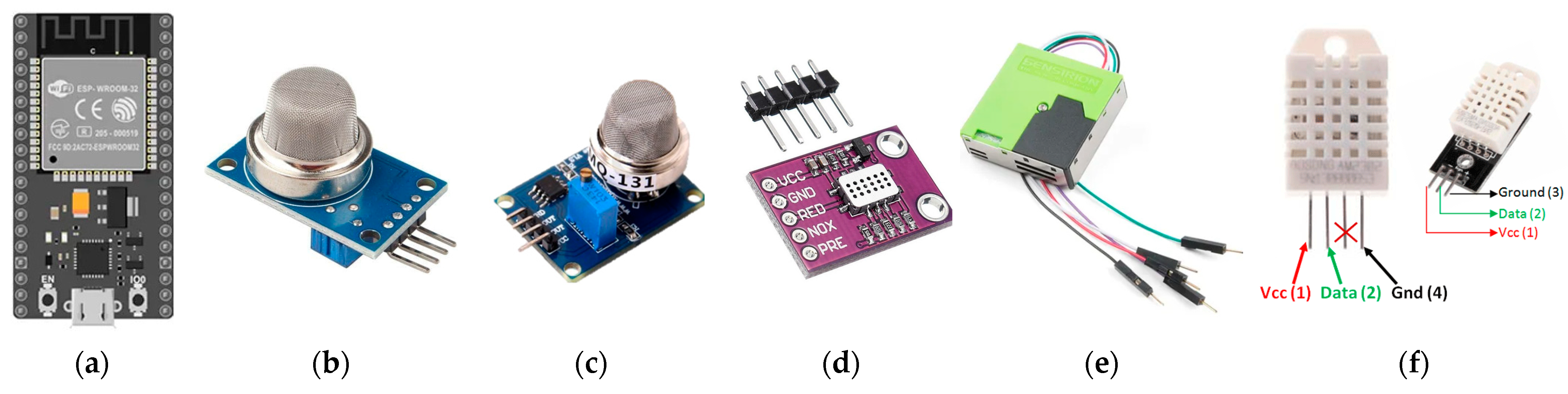
A wide range of sensors were used in the development of the air quality measuring device to provide a comprehensive assessment of environmental factors, as shown in Figure 1. The MQ135 sensor detects carbon dioxide (CO2) gas and nitrogen monoxide (NO). The MQ131 sensor measures the concentration of ozone (O3), a crucial indicator for assessing air quality and the presence of atmospheric pollutants. The MICS4514 measures nitrogen dioxide (NO2) and carbon monoxide (CO) gas, providing a comprehensive view of pollution. The SPS30, a laser particle sensor provides detailed information on the size and concentration of suspended particles. In addition, the DHT22 (AM2302) measures temperature and humidity, complementing the air quality assessment with additional environmental data. These sensors were strategically selected to address the diversity of pollutants and environmental conditions that affect air quality. The ESP32 low-power microcontroller is the central unit of the device, responsible for data management and processing. Together, they provide accurate and comprehensive data that is critical to understanding and addressing the challenges associated with air pollution [3,4,5,6,7,8].
Figure 1.
(a) ESP32. (b) MQ135. (c) MQ131. (d) MICS4514. (e) SPS30. (f) DHT22.
Table 1 shows the information from where the main equipment was sourced.
Table 1.
Sensors and microcontroller manufacturing and acquisition details.
2.2. Methodology
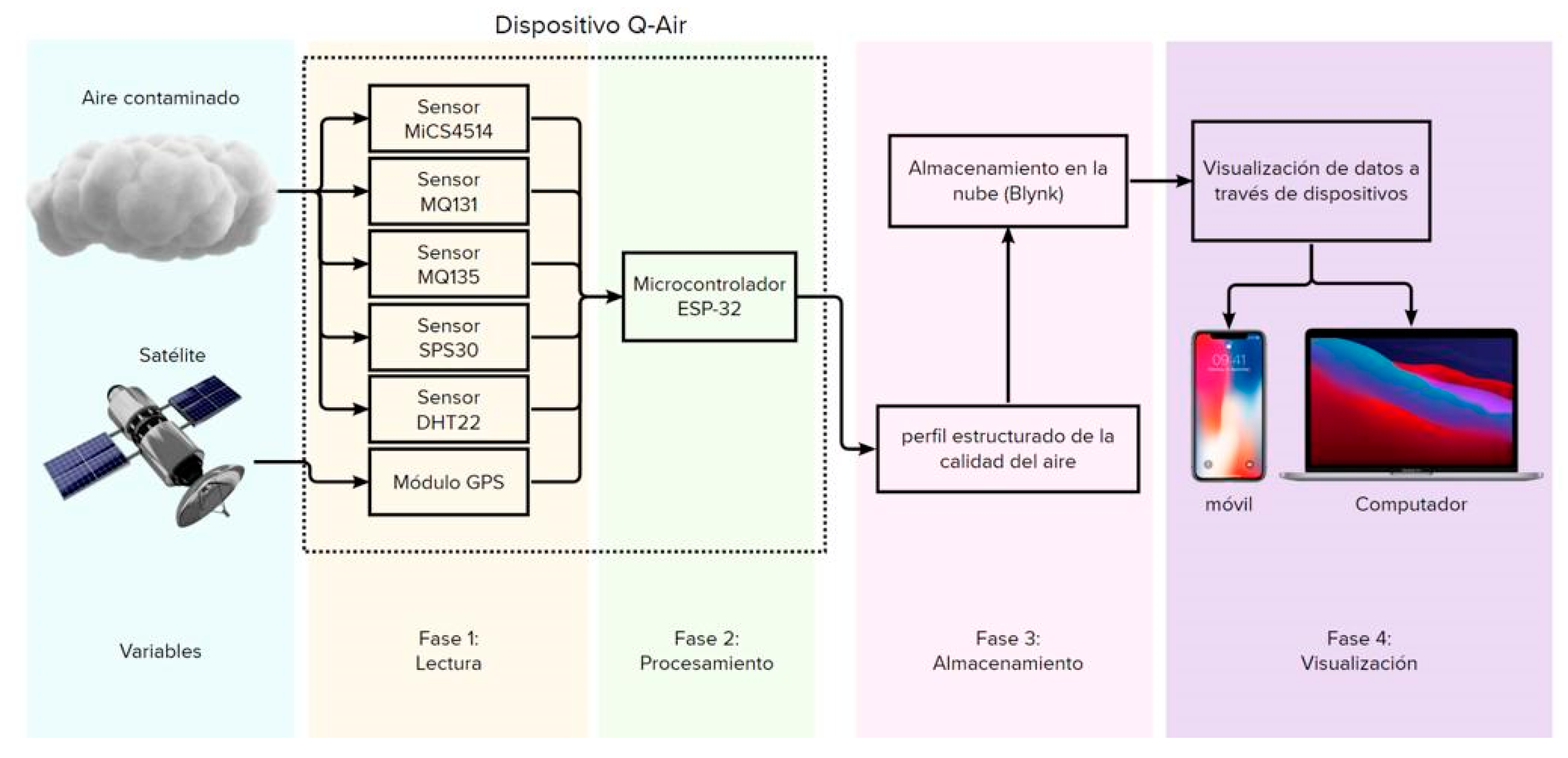
This section will present the methodology followed during the development of the project, which consists of 4 phases that include reading, processing, storage, and visualization, in Figure 2 you can see the block diagram of the Q-Air device.
Figure 2.
Block diagram of the device (Q-Air) [9].
- Phase 1:
- Reading
The integrated sensors are responsible for, by means of defined time intervals, capturing the location and performing simultaneous measurements of the concentrations of particulate matter (PM10 and PM2.5) and specific components present in the air flowing through the device (Carbon Monoxide (CO), Nitrogen Dioxide (NO2), Ozone (O3)), as well as ambient characteristics such as temperature and humidity.
- Phase 2:
- Processing
The measurements previously taken are received by the ESP32 microprocessor, which is responsible for analyzing, processing and characterizing the data to transform them into understandable proportions and units, subsequently, these results are published in a cloud server (Blynk) through an MQTT communication protocol.
- Phase 3:
- Storage
The data published by ESP32 are tabulated to create a measurement profile called “Personal Air Quality Profile” in which general and specific statistics are generated for each of the measured variables.
- Phase 4:
- Visualization
Through the application of the cloud service provider (Blynk), the user will be able to view the measurements and statistics made through any device with an internet connection, and their respective analysis in the desired time intervals (hour, day, week, and month).
2.3. Air Quality Index
The Air Quality Index (AQI) is an indicator used to measure air quality in a given geographic area and is based on the concentration of atmospheric pollutants. The AQI is a numerical value calculated from the measurement of different pollutants such as nitrogen dioxide (NO2), ozone (O3), carbon monoxide (CO) and PM10 and PM2.5 particles, which can affect the health of people and the environment. The AQI is expressed on a numerical scale ranging from 0 to 500, where 0 represents excellent air quality and 500 indicates very poor air quality, making it a risk to human health and the environment. This index is used by environmental authorities to inform the population about the state of air quality and to take preventive measures in case of exceeding certain pollution thresholds. In addition, the AQI can be used by the general population to make informed decisions about exposure to polluted air.
Table 2 sets out each rank of the Air Quality Index (AQI) which has an associated color-coded classification that describes the air quality in terms of the health effects it may have on the population.
Table 2.
Air Quality Index Overview [2,10].
Table 3 establishes the cut-off points for the air quality index.
Table 3.
Air Quality Index cut-off points (SOSTENIBLE, 2017) [2,10].
3. Prototype Design, Printed Circuit Board (PCB) Design, Assembly, Data Display Interface Design
3.1. Prototype Design
The design of Q-Air was done in SolidWorks software 2022. First, a CAD design of each component of the system was made and then the container which the components will be. Finally, the elements of the system were integrated using the assembly section, to finally perform a simulation of the complete device.
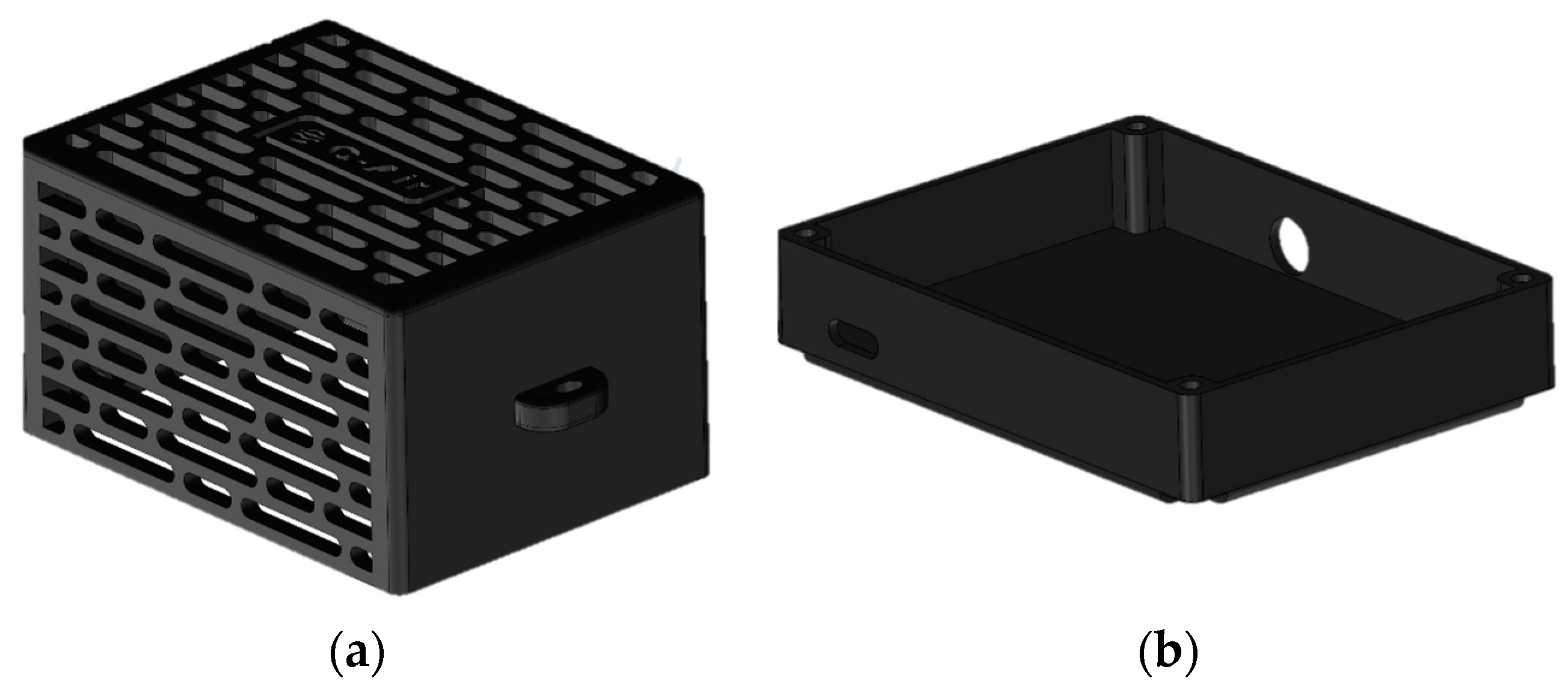
The housing of the Q-Air device Figure 3, image (a) features a series of openings to allow air to enter the device, to read and monitor the concentrations of gases and particulate matter in the environment, has a grip on the outside to be anchored to key rings.
Figure 3.
(a) Housing. (b) Lid [9].
The cover of the Q-Air device Figure 3, image (b) has two holes to integrate the electronics for charging the device and turning it on/off.
3.2. PCB Desing
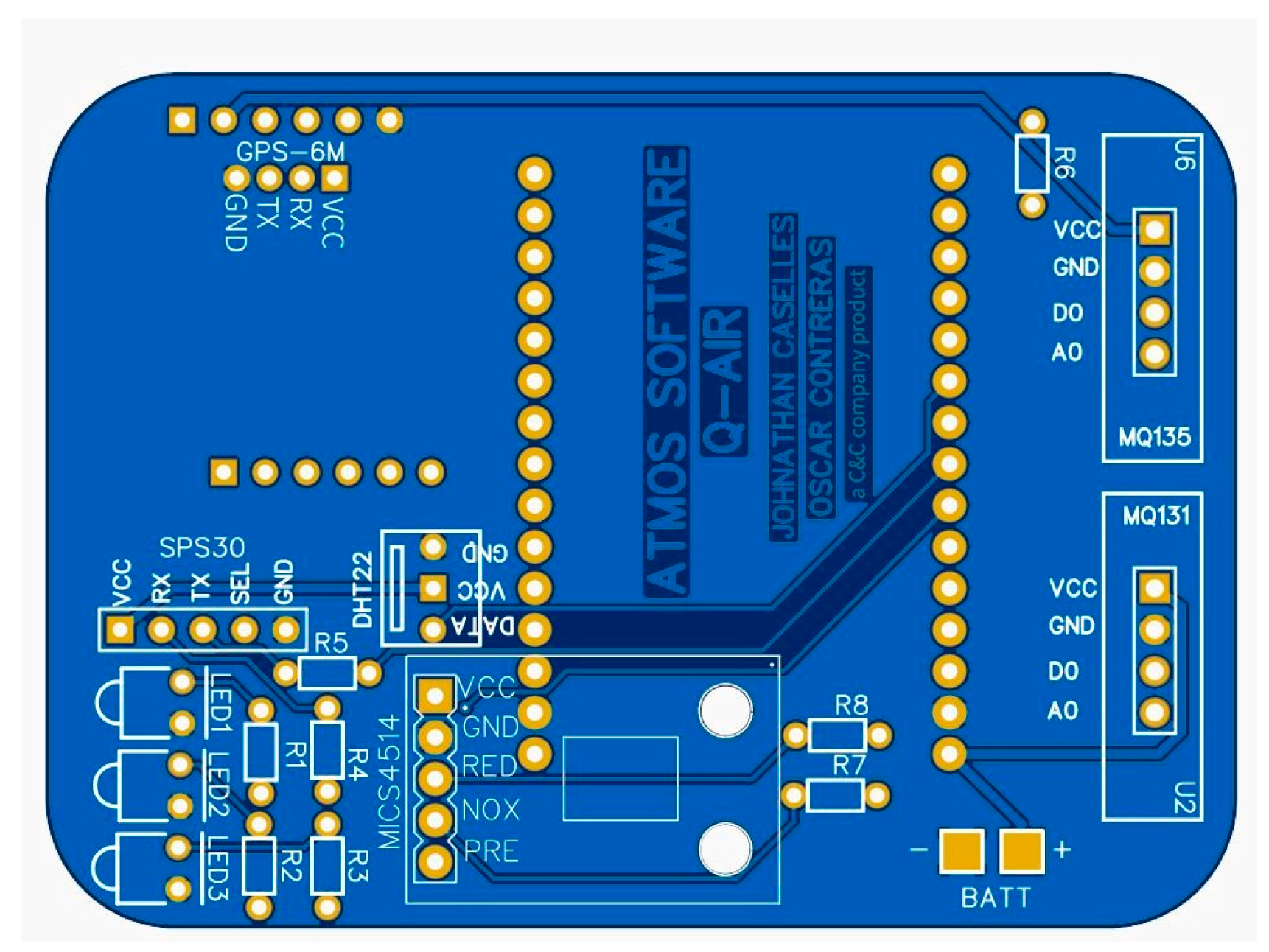
The PCB design of the Q-Air device was conducted with the EasyEDA software v6.5.28, which allows us to import, design printed circuit boards and simulate analog and digital circuits, optionally offering the alternative of manufacturing the printed circuits. The PCB board of the system (Figure 4), integrates the sensors MQ135, MQ131, SPS30, MICS4514, NEO 6M, DHT22, ESP32 microprocessor, SIM800L module, LEDs, and power supply.
Figure 4.
PCB design [9].
A printed circuit board (PCB) was chosen for this project because of the practicality it offers. PCB fabrication and use eliminates the risk of circuit failures caused by sudden jumper disconnections on the breadboard. It also ensures a cleaner and more professional appearance of the project.
3.3. Assembly
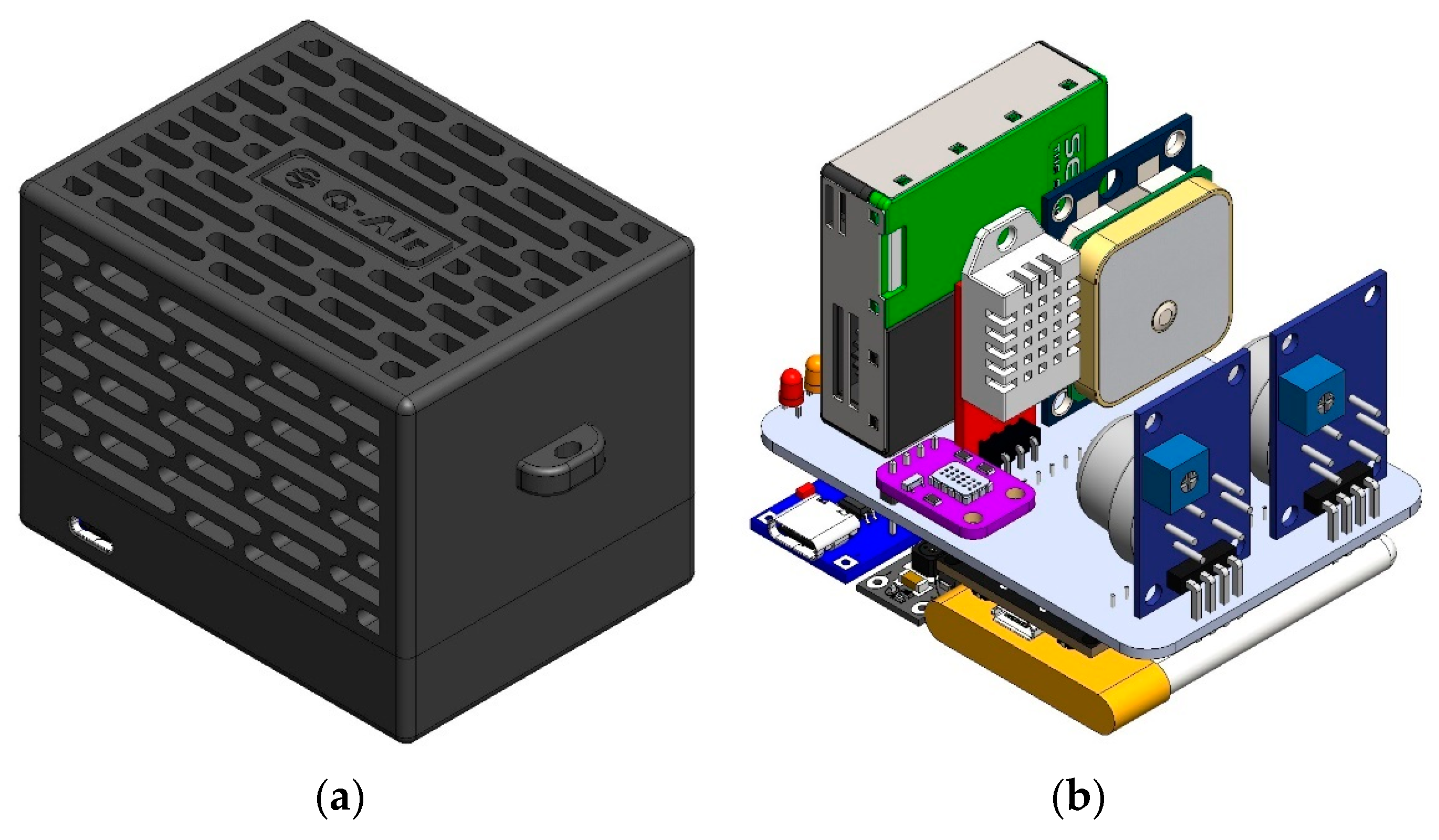
The device consists of six sensors, a microprocessor, two modules, a 3.7 V 2000 mAh lithium battery, a power booster, three 2 mm LEDs, a printed circuit board and a body in which all the components will be integrated (the battery, power booster and LEDs were generics components acquired at a local electronic shop). The body of the device consists of two parts and has a sequence of stripes to allow adequate airflow. Its dimensions are 6 cm × 6 cm × 8 cm.
In Figure 5, image (a) corresponds to an isometric view of the body of the device simulated in SolidWorks software; on the other hand, image (b) shows a simulation of the internal components of Q-Air simulated in the same software and their respective position on the printed circuit board, which ensures that all parts fit perfectly into the housing.
Figure 5.
(a) Assembled device. (b) System components [9].
3.4. Data Visualization Interface Design
BLYNK software v1.2.0 was chosen because it has the necessary components to model the air quality monitoring system in a faster and more intuitive way.
Once Blynk was selected, a real-time data visualization interface strategy was designed. To do this, the different types of air quality monitoring data to be displayed on it were determined, such as the concentration of carbon monoxide (CO), nitrogen dioxide (NO2) and ozone (O3), as well as temperature, ambient humidity and the presence of PM2.5 and PM10 particulate matter.
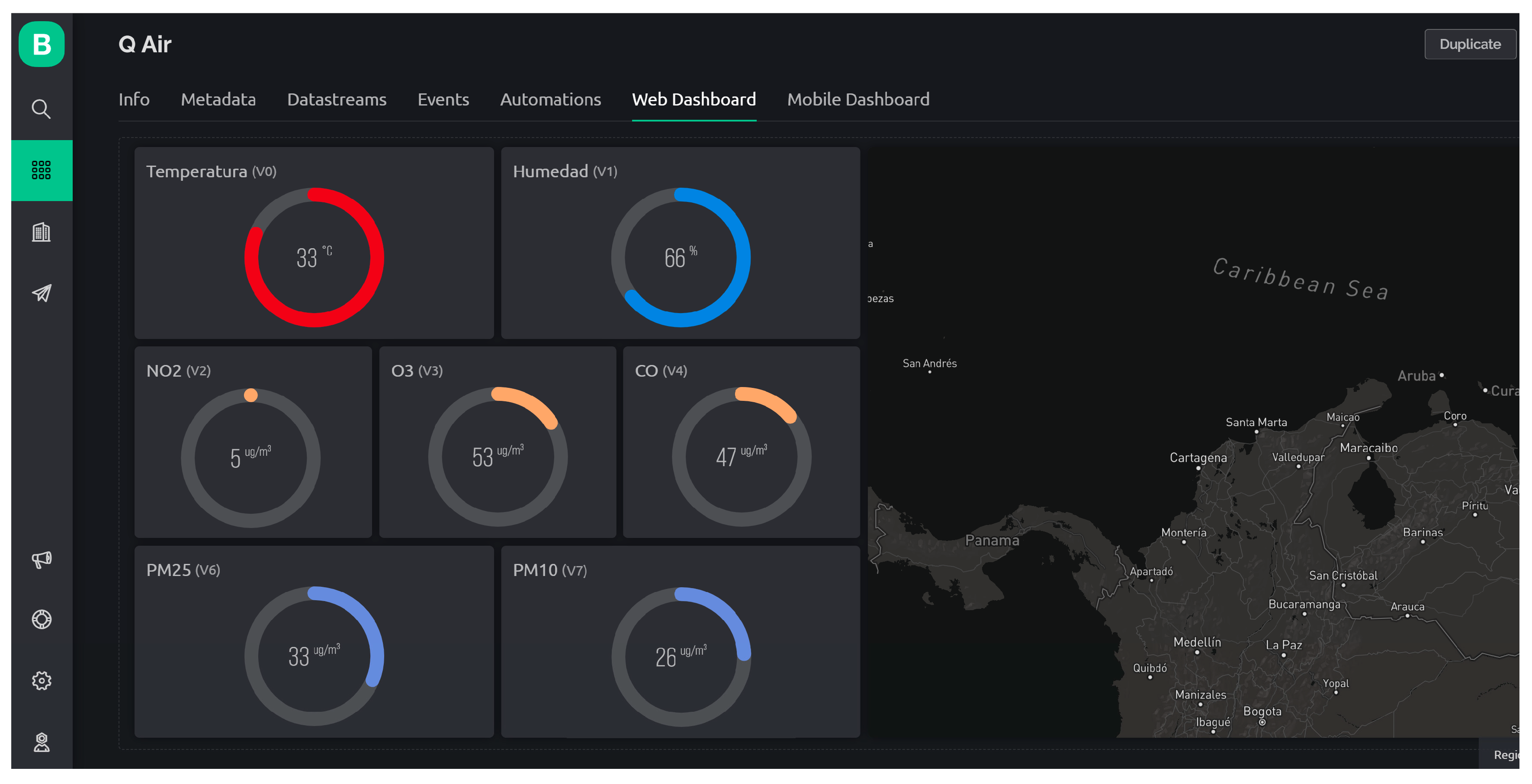
Based on this information, the necessary widgets were selected in Blynk to visualize the data in a clear and organized way. Graphs are used to represent the evolution of gas concentrations, tables to show the measured values of each sensor, indicators to show the current values of temperature and humidity, and progress bars to indicate the degree of air pollution, as shown in Figure 6.
Figure 6.
Data visualization interface design [9].
4. Data Collection, Analysis of the Tests Performed by the Device
4.1. Data Collection
In order to validate the veracity of the data obtained by Q-Air, it was necessary to compare them with reliable sources of information, for this reason, the data published by the two stationary monitoring stations active in the city of Barranquilla, located at the Universidad del Norte and at the electrificadora park, were established as a reference.
For data collection, eight field trips were made to locations located approximately 20 m away from the aforementioned air quality stations in the city.
Four different measurements were taken at each of these locations. In which, the sensors were programmed to take a reading every 30 s, this reading was sent to an Excel sheet for half an hour, giving us a total of 60 readings per measurement. Although the readings were located in locations close to the monitoring stations, the 60 values obtained had to be averaged in order to compare them with the reading published by the stations, since they update their readings every 30 min, these values are published in two different pages, Iqair.com, which publishes the temperature and humidity values, and weather.com, which publishes the values of atmospheric pollutants. This comparison allowed us to perform a more precise calibration of each of the sensors, in order to ensure that each of them performed the readings for each atmospheric pollutant.
Table 4 and Table 5 show a sample of the readings obtained by the sensors every 30 s at the respective measurement points. For the storage of these results, the measurements of the five pollutants and atmospheric variables obtained by the sensors were published through the serial port of the computer and were added line by line to a.csv file, which was later used for data analysis.
Table 4.
Segment of data obtained at the Universidad del Norte [9].
Table 5.
Segment of data obtained at Parque Electrificadora [9].
4.2. Test Analysis Performed by the Device
For the analysis of the results obtained during these measurements, the cut-off index of each of the atmospheric pollutants indicated by the ICA was taken as a reference to evaluate the air quality in different locations of the city. The ICA classifies air quality by means of a numerical scale that increases for every 50 μg/m3, starting at 0 μg/m3 and having a maximum value of 500 μg/m3. The ICA also classifies these scales by color, with green being a low contamination and brown being that the concentration of the pollutant is dangerous in the measurement space.
Similarly, it is important to note that the values obtained by the Q-air air quality device were compared with the values that are published by air quality stations within the city, which are certified to UL-867, which verifies that air purifiers comply with U.S. electrical safety standards. This comparison helps us to rectify that the measurements obtained by Q-air are correct and helps us to know what adjustments should be made to each sensor to make its readings more accurate.
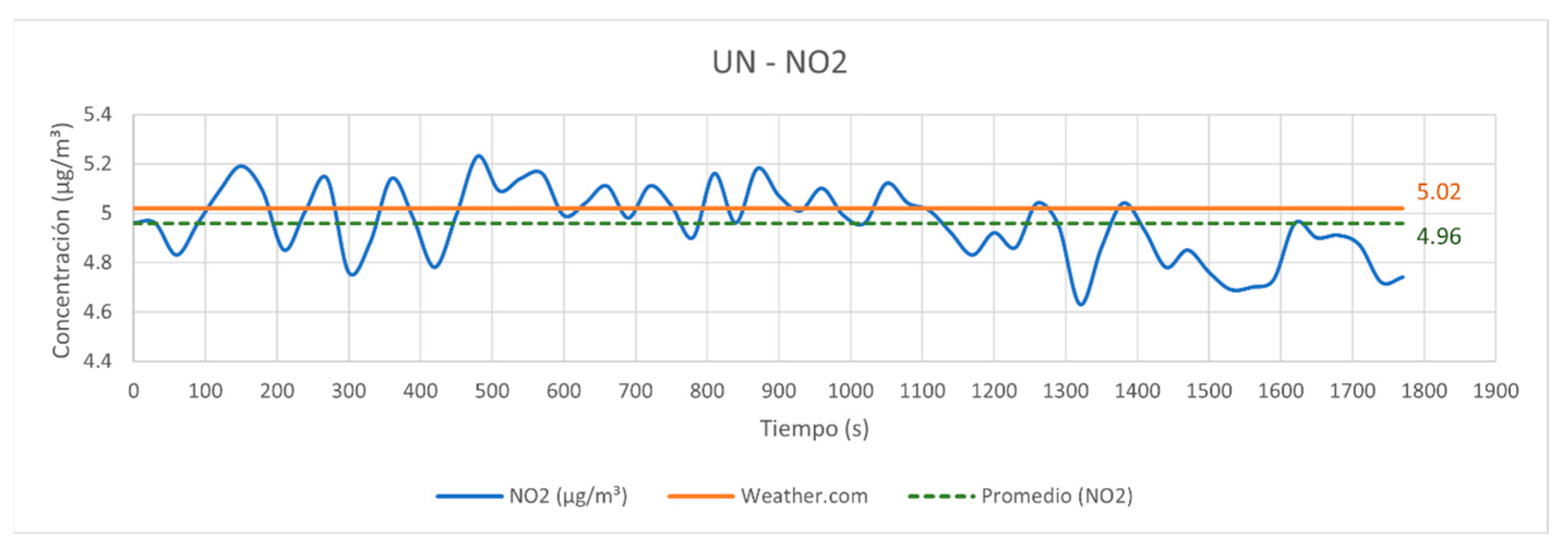
In Figure 7, the blue line represents the nitrogen dioxide readings obtained by the MiCS4514 sensor at 30-s intervals over a half-hour period. It can be seen that the readings range from 4.62 to 5.25 μg/m3. The green interlined line is the average of such data, giving a result of 4.96 μg/m3, and the orange line is the value reported by the fixed monitoring station in that time interval, which corresponds to 5.02 μg/m3, so we can see that the data obtained were quite close to the data published by the monitoring station of the Universidad del Norte.
Figure 7.
Measurement of Nitrogen Dioxide (NO2) at universidad del Norte [9].
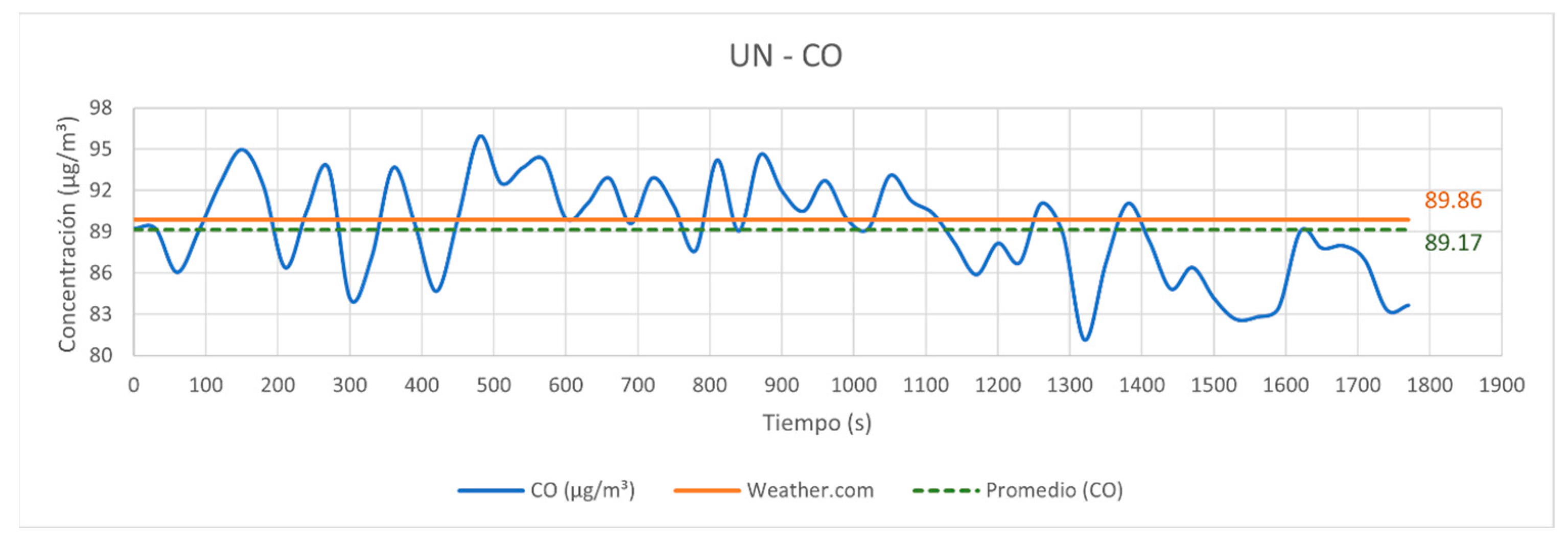
In Figure 8, the blue line represents the carbon monoxide readings obtained by the MQ-135 sensor at 30-s intervals during a half-hour period. It can be seen that the readings range from 81 to 96 μg/m3. The green interlined line is the average of such data, giving a result of 89.17 μg/m3, and the orange line is the value reported by the fixed monitoring station in that time interval, which corresponds to 89.86 μg/m3, with which we can realize that the data obtained were quite close to the data published by the monitoring station of the Universidad del Norte.
Figure 8.
Measurement of Carbon Monoxide (CO) at Universidad del Norte [9].
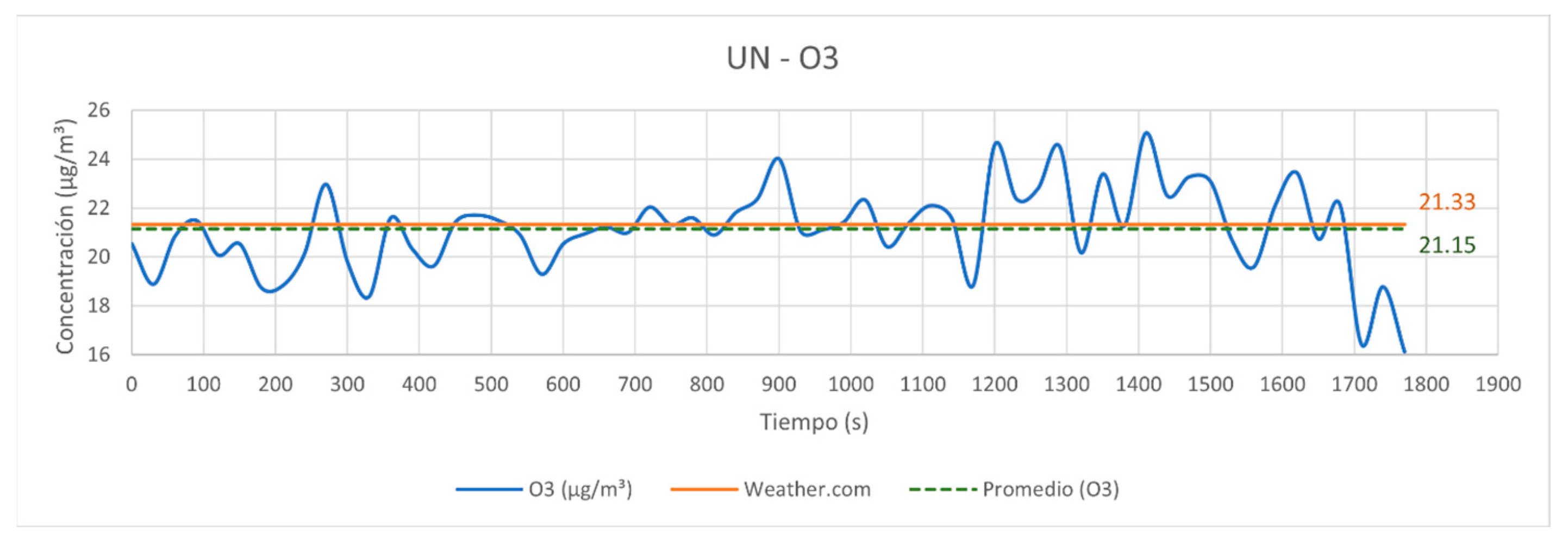
In Figure 9, the blue line represents the ozone readings obtained by the MQ-131 sensor in 30-s intervals during a half-hour period. It can be seen that the readings range between 17 and 25 μg/m3. The green interlined line represents a value of 21.15 μg/m3, being the average of the data obtained and the orange line is the value reported by the fixed monitoring station in that time interval, which corresponds to 21.33 μg/m3, with which we can realize that the data obtained were quite close to the data published by the monitoring station of the Universidad del Norte.
Figure 9.
Ozone Measurement (O3) at Universidad del Norte [9].
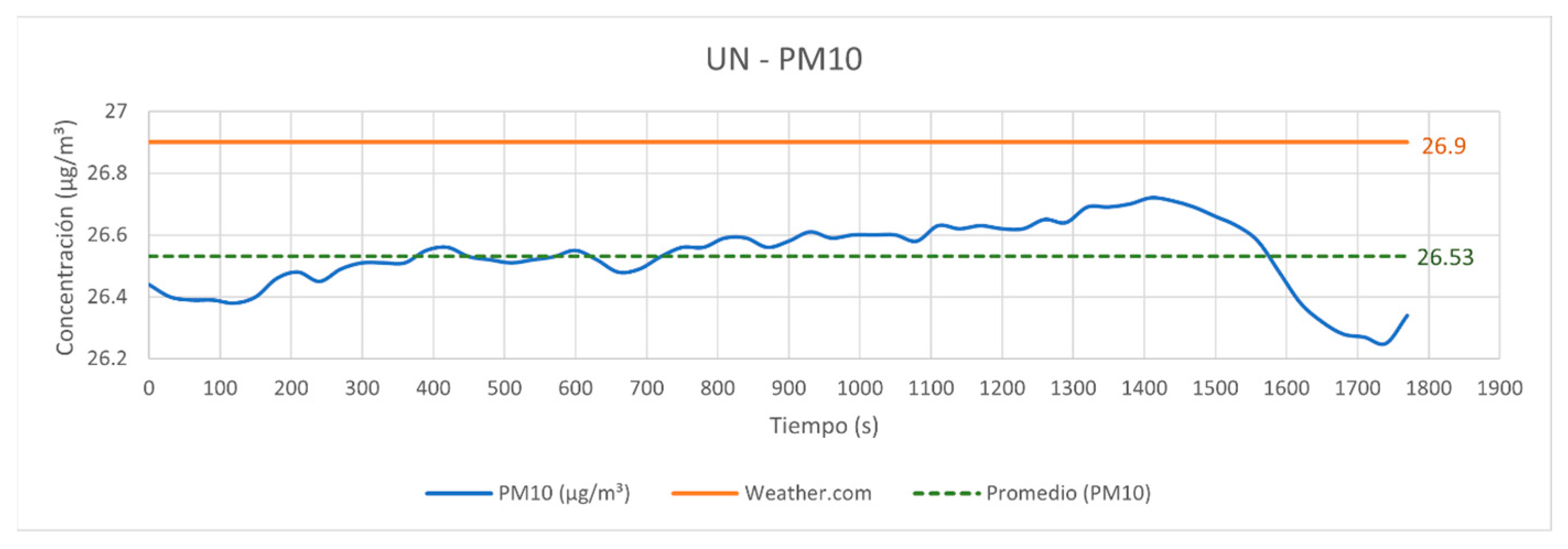
In Figure 10, the blue line represents the PM10 particulate matter readings obtained by the SPS30 sensor in 30-s intervals during a half-hour period. It can be seen that the readings oscillate between 26.3 and 26.7 μg/m3. The green interlined line represents a value of 26.53 μg/m3, being the average of the data obtained and the orange line is the value reported by the fixed monitoring station in that time interval, which corresponds to 26.9 μg/m3, with which we can realize that the data obtained were quite close to the data published by the monitoring station of the Universidad del Norte.
Figure 10.
Particulate Matter Measurement PM10 at Universidad del Norte [9].
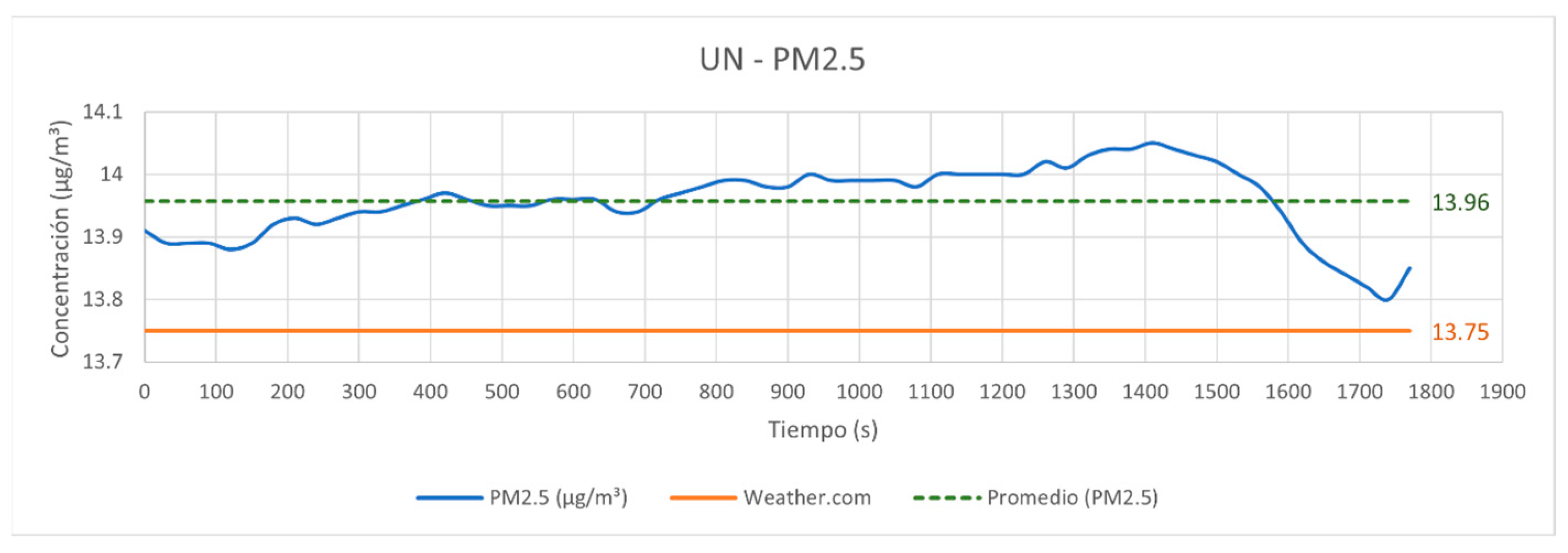
In Figure 11, the blue line represents the PM2.5 particulate matter readings obtained by the SPS30 sensor at 30-s intervals during a half-hour period. It can be seen that the readings range between 13.8 and 14.05 μg/m3. The green interlined line represents a value of 13.96 μg/m3, being the average of the data obtained and the orange line is the value reported by the fixed monitoring station in that time interval, which corresponds to 13.75 μg/m3, so we can see that the data obtained were quite close to the data published by the monitoring station of the Universidad del Norte.
Figure 11.
Measurement of Particulate Matter PM2.5 at Universidad del Norte [9].
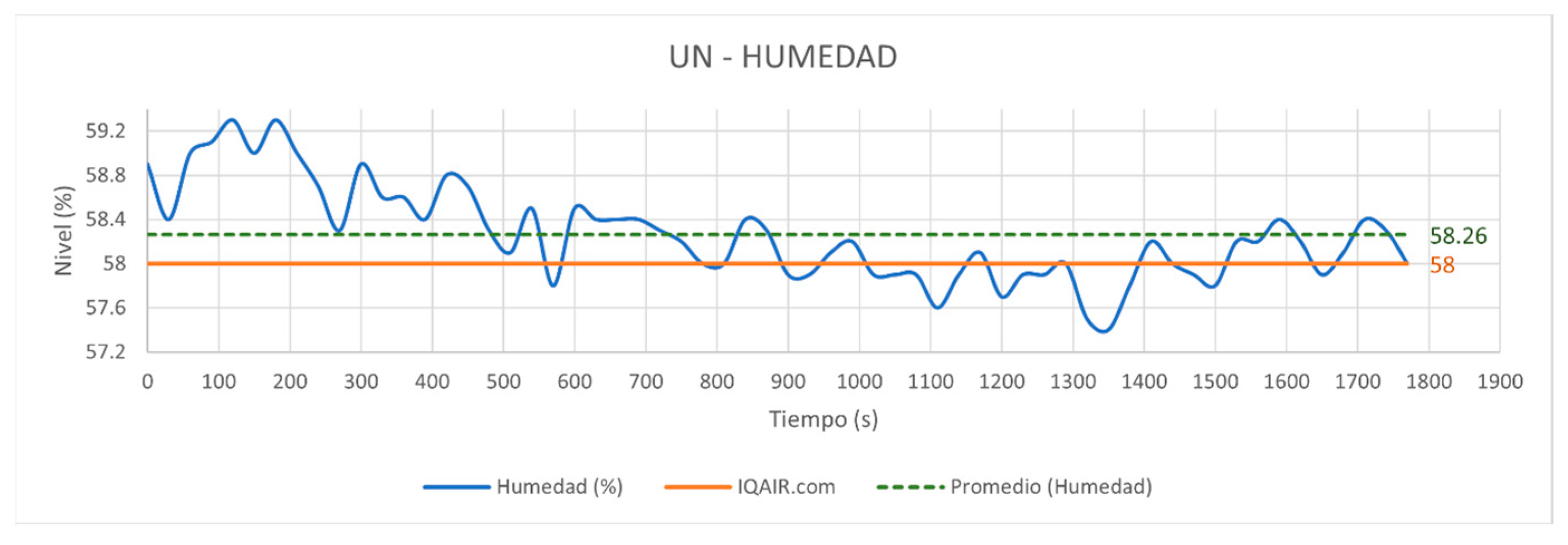
In Figure 12, the blue line represents the humidity readings obtained by the DHT22 sensor at 30-s intervals during a half-hour period. It can be seen that the readings oscillate between 57.25 and 59.25%. The green interlined line represents a value of 58.26%, being this the average of the data obtained and the orange line is the value reported by the fixed monitoring station in that time interval, which corresponds to 58%, so we can see that the data obtained were quite close to the data published by the monitoring station of the Universidad del Norte.
Figure 12.
Humidity Measurement at Universidad del Norte [9].
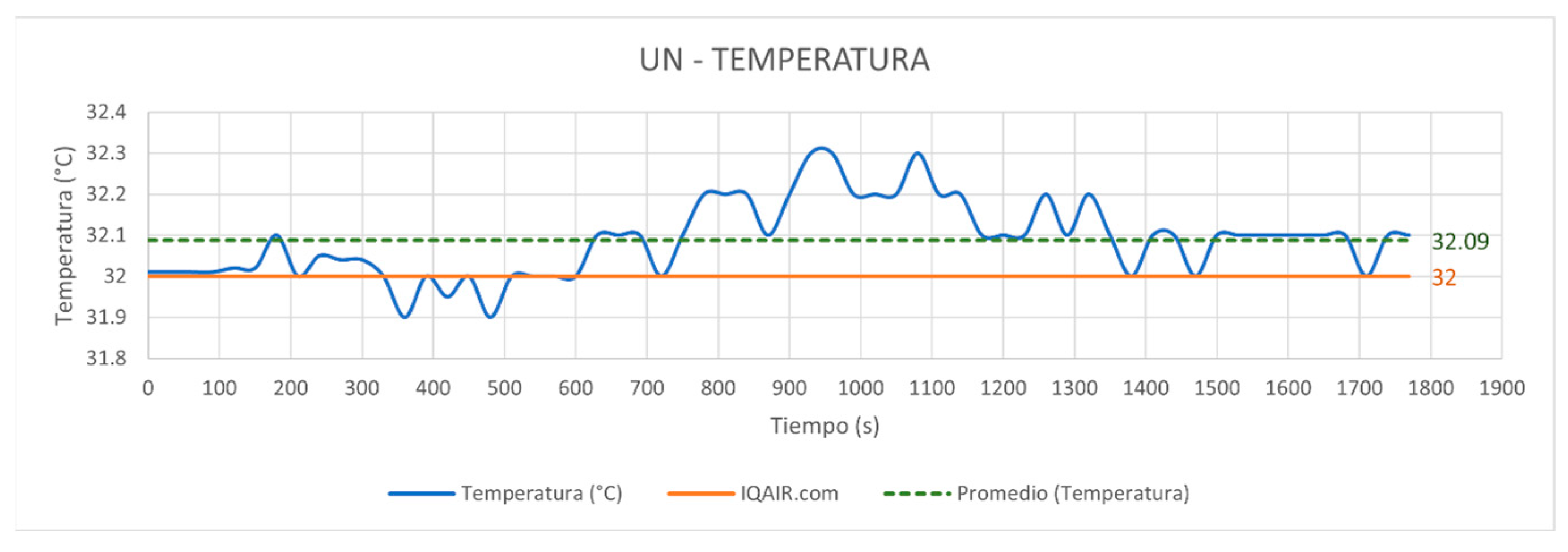
In Figure 13, the blue line represents the temperature readings obtained by the DHT22 sensor in 30-s intervals during a half-hour period. It can be seen that the readings range between 31.9 and 32.3 °C. The green interlined line represents a value of 58.26 °C, being this the average of the data obtained and the orange line is the value reported by the fixed monitoring station in that time interval, which corresponds to 58 °C, so we can see that the data obtained were quite close to the data published by the monitoring station of the Universidad del Norte.
Figure 13.
Temperature Measurement at Universidad del Norte [9].
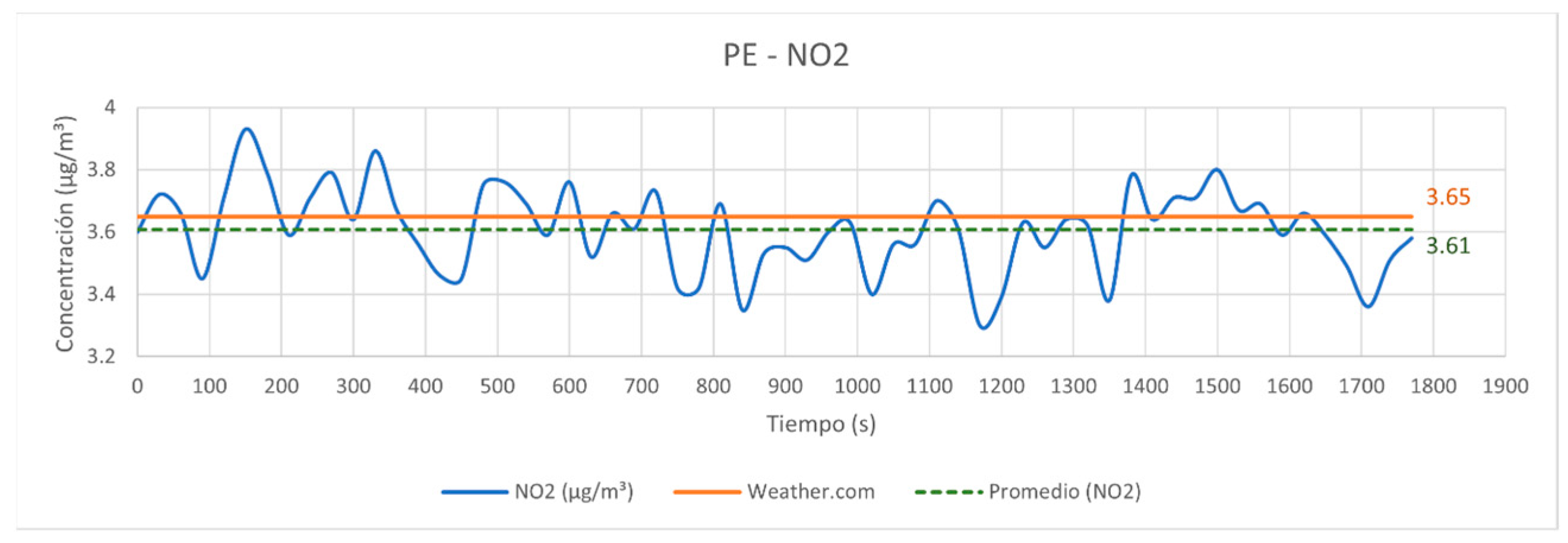
In Figure 14, the blue line represents the nitrogen dioxide readings obtained by the MiCS4514 sensor at 30-s intervals over a half-hour period, this time at the second location. You can see the readings range from 3.3 to 3.9 μg/m3. The green interlined line is the average of these data, giving a result of 3.61 μg/m3, and the orange line is the value reported by the fixed monitoring station in that time interval, which corresponds to 3.65 μg/m3, so we can see that the data obtained were quite close to the data published by the monitoring station of the power plant park.
Figure 14.
Measurement of Nitrogen Dioxide (NO2) at Parque de la Electrificadora [9].
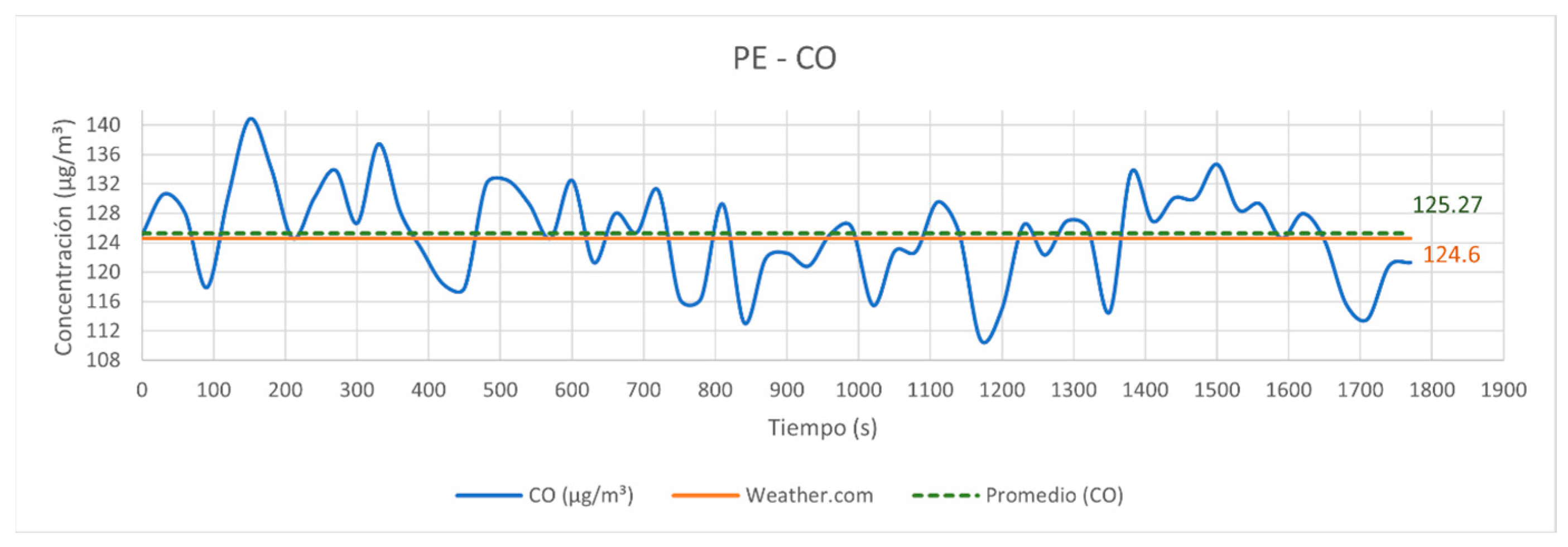
In Figure 15, the blue line represents the carbon monoxide readings obtained by the MQ-135 sensor at 30-s intervals during a half-hour period at the second sampling location. It can be seen that the readings range from 110 to 140 μg/m3. The green interlined line is the average of such data, giving a result of 125.27 μg/m3, and the orange line is the value reported by the fixed monitoring station in that time interval, which corresponds to 124.6 μg/m3, with which we can realize that the data obtained were quite close to the data published by the monitoring station of the electrifier park.
Figure 15.
Measurement of Carbon Monoxide (CO) at Parque de la Electrificadora [9].
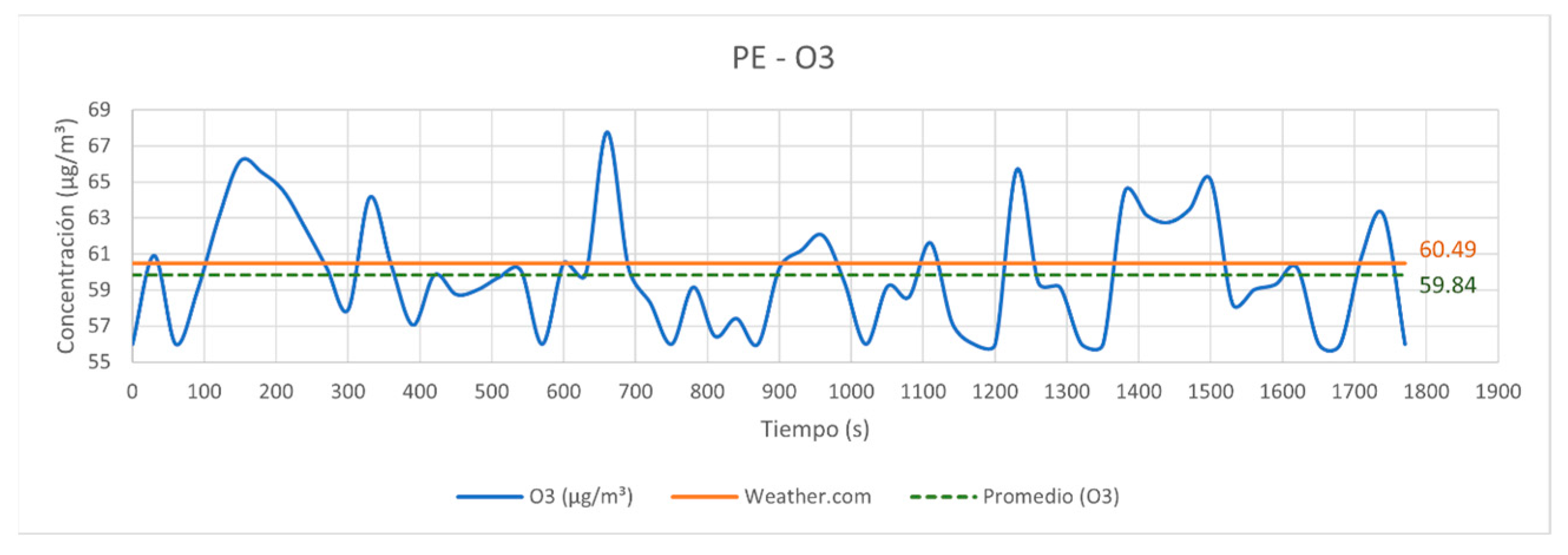
In Figure 16, the blue line represents the ozone readings obtained by the MQ-131 sensor at 30-s intervals during a half-hour period at the second sampling location. It can be seen that the readings range from 56 to 67 μg/m3. The green interlined line represents a value of 59.84 μg/m3, being the average of the data obtained and the orange line is the value reported by the fixed monitoring station in that time interval, which corresponds to 60.49 μg/m3, with which we can realize that the data obtained were quite close to the data published by the monitoring station of the electrifier park.
Figure 16.
Ozone Measurement (O3) at Parque de la Electrificadora [9].
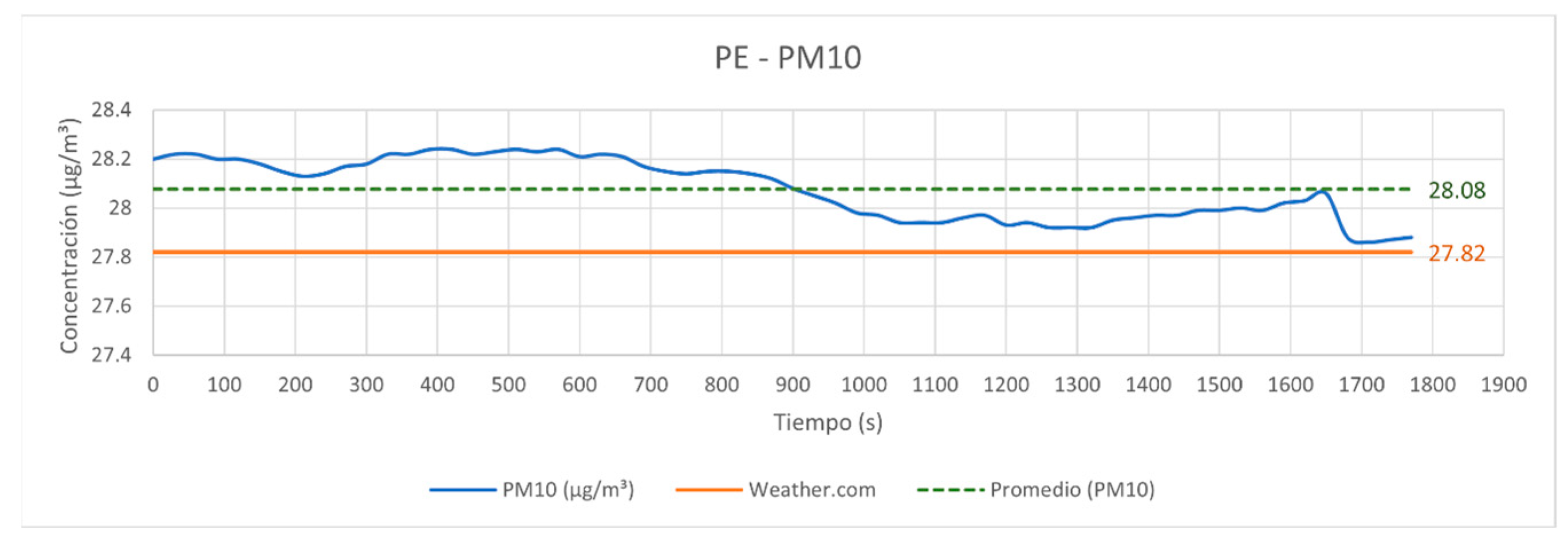
In Figure 17, the blue line represents the PM10 particulate matter readings obtained by the SPS30 sensor at 30-s intervals during a half-hour period at the second sampling location. It can be seen that the readings range from 27.9 to 28.2 μg/m3. The green interlined line represents a value of 28.08 μg/m3, being the average of the data obtained and the orange line is the value reported by the fixed monitoring station in that time interval, which corresponds to 27.82 μg/m3, with which we can realize that the data obtained were quite close to the data published by the monitoring station of the electrifier park.
Figure 17.
PM10 Particulate Matter Measurement at Parque de la Electrificadora [9].
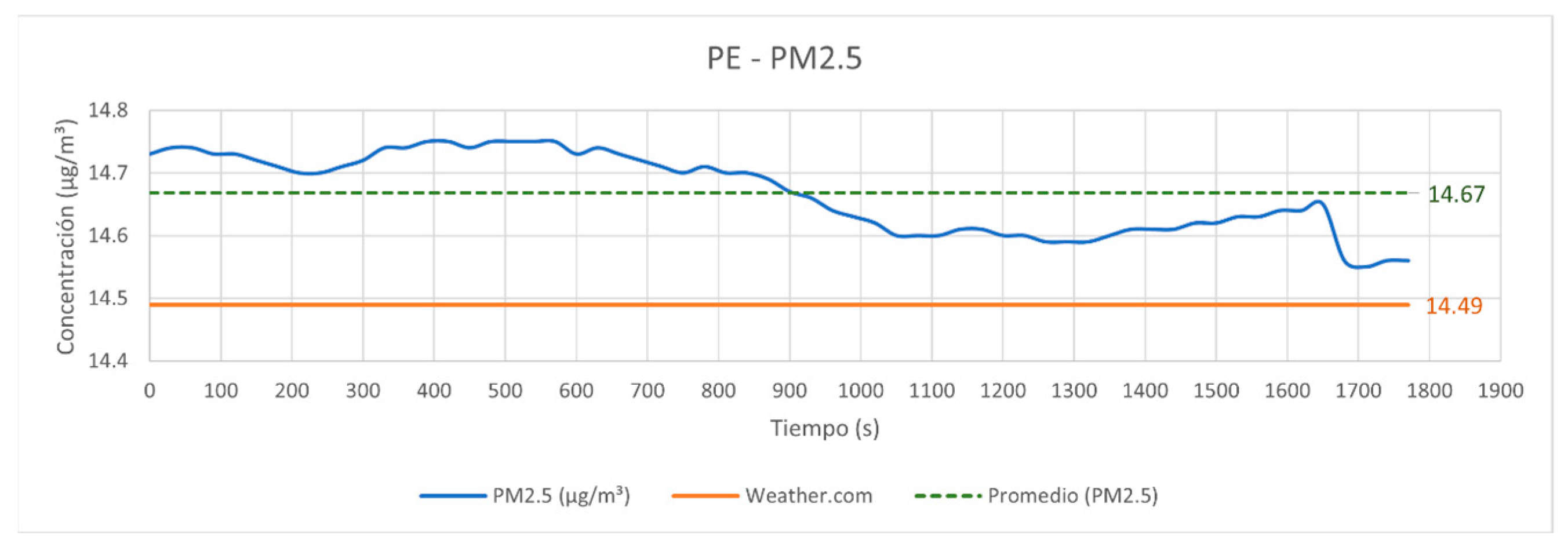
In Figure 18, the blue line represents the PM2.5 particulate matter readings obtained by the SPS30 sensor at 30-s intervals during a half-hour period at the second sampling location. It can be seen that the readings range from 14.55 to 14.75 μg/m3. The green interlined line represents a value of 14.67 μg/m3, being the average of the data obtained and the orange line is the value reported by the fixed monitoring station in that time interval, which corresponds to 14.49 μg/m3, with which we can realize that the data obtained were quite close to the data published by the monitoring station of the electrification park.
Figure 18.
Particulate Matter Measurement PM2.5 at Parque de la Electrificadora [9].
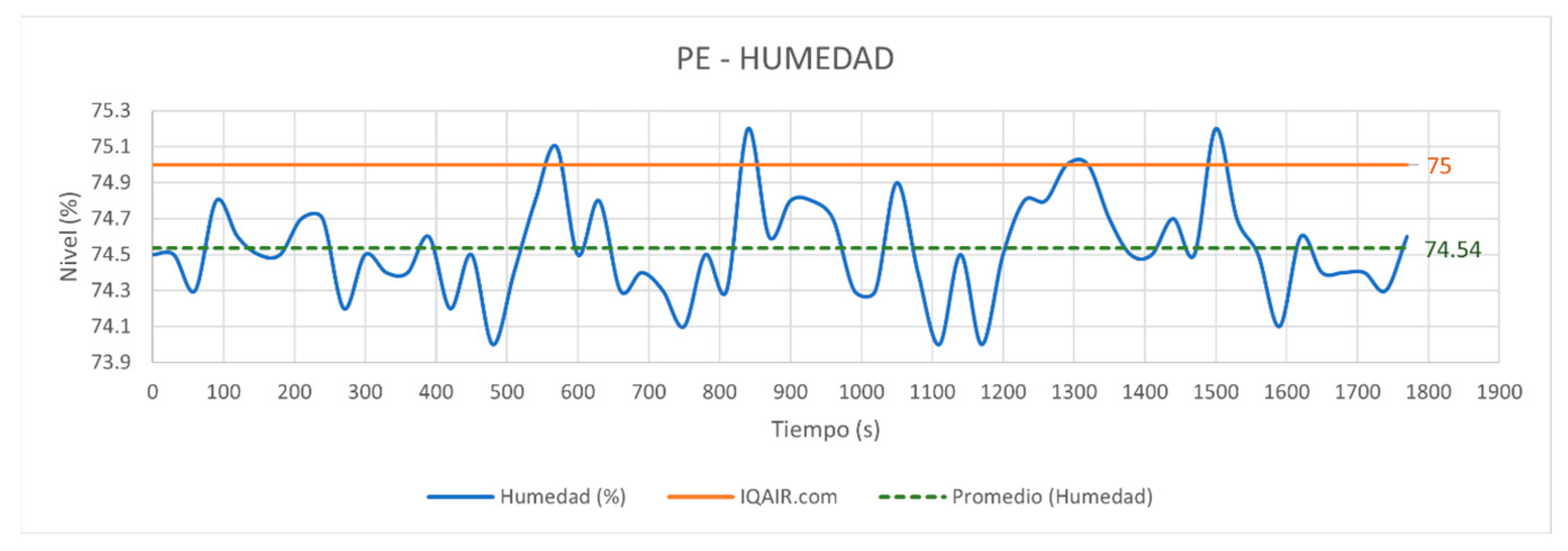
In Figure 19, the blue line represents the humidity readings obtained by the DHT22 sensor at 30-s intervals during a half-hour period at the second sampling location. It can be seen that the readings range between 74 and 75.2%. The green interlined line represents a value of 74.54%, being this the average of the data obtained and the orange line is the value reported by the fixed monitoring station in that time interval, which corresponds to 75%, so we can see that the data obtained were quite close to the data published by the monitoring station of the electrification park.
Figure 19.
Humidity Measurement at Parque de la Electrificadora [9].
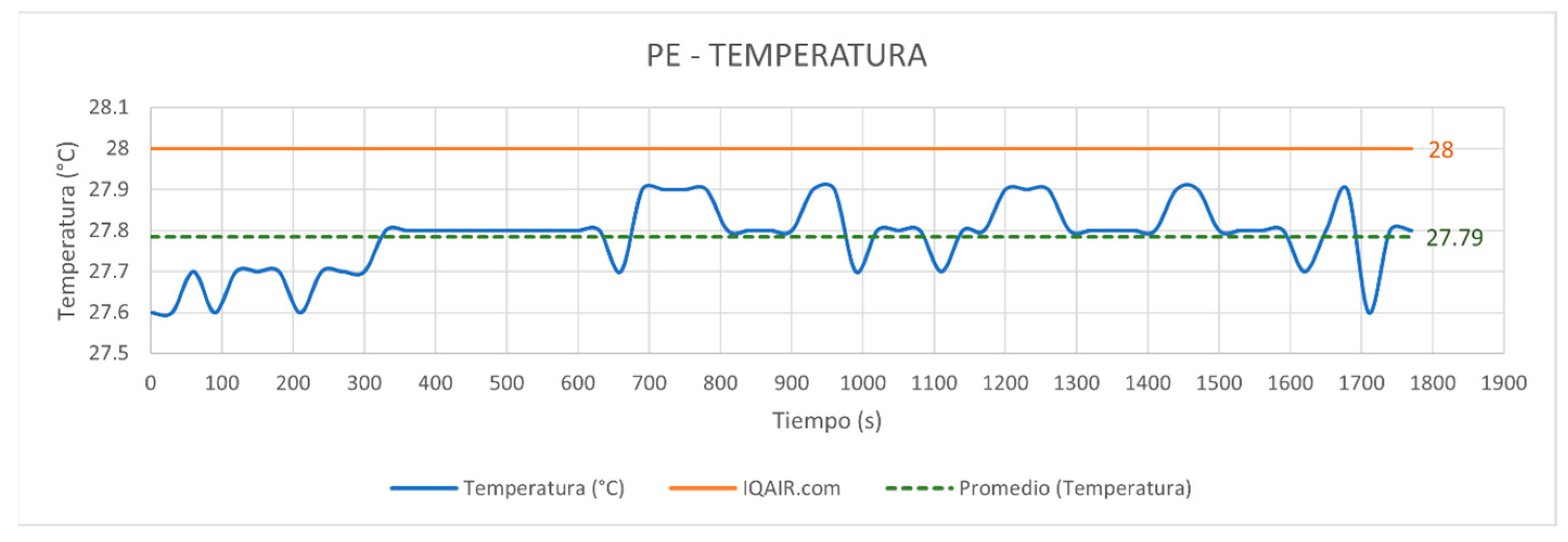
In Figure 20, the blue line represents the temperature readings obtained by the DHT22 sensor at 30-s intervals during a half-hour period at the second parameter acquisition location. It can be seen that the readings range between 27.6 and 27.9 °C. The green interlined line represents a value of 27.79 °C, being this the average of the data obtained, and the orange line is the value reported by the fixed monitoring station in that time interval, which corresponds to 28 °C, so we can see that the data obtained were quite close to the data published by the monitoring station of the electrification plant.
Figure 20.
Temperature Measurement at Parque de la Electrificadora [9].
In Figure 7, Figure 8, Figure 9, Figure 10, Figure 11, Figure 12, Figure 13, Figure 14, Figure 15, Figure 16, Figure 17, Figure 18, Figure 19 and Figure 20 we can observe the values of the readings taken by the sensors for each atmospheric pollutant at the Universidad del Norte and the Electrificadora park. The blue line is the value of the readings taken by each sensor during 30 min, the orange line is the value published by the monitoring station at the Universidad del Norte or at the Electrificadora’s park, respectively, and the green interlined line is the average of the measurements taken during 30 min.
The Q-air air quality device takes air quality readings every 30 s, however, these values could not be compared with the readings displayed by the city’s monitoring stations, since these publish a reading every 30 min.
To evaluate the veracity of the readings produced by each Q-air sensor, Table 6 and Table 7 were made, which show the margin of error of each sensor from the comparison of the average value with the one published in the pages of the monitoring stations.
Table 6.
Percent error measurement at Universidad del Norte [9].
Table 7.
Percent error measurement at Parque de la Electrificadora [9].
In Table 6 and Table 7, we can see how the margins of error of each sensor are quite low, appreciating that the highest margin of error in both measurements is 1.527%, 3.5% below the maximum permissible percentage of error. After analyzing the tables of the margins of error of both locations, we can conclude that the values of the readings made by Q-air are correct, helping us to demonstrate the effectiveness of the device, because despite being tested in different locations and with different environmental conditions, it shows very low margins of error, and when comparing each margin of error in the two different locations, these have similar values.
In the average readings obtained at the Universidad del Norte, the concentrations of 4 of the 5 pollutants measured are within the range of 0–50 μg/m3, this range is represented by the green color, which corresponds to a “Good” status, the missing pollutant (CO) is in the yellow color category, for being within the range of 51–100 μg/m3, and represents an “Acceptable” category.
On the other hand, in the reading averages obtained in the park the electrificadora, the concentrations of NO2, PM2.5 and PM10 are at levels below 50 μg/m3, which positions them in a “Good” concentration level, as established by resolution 2254 of 2017, the level of O3 was 59.84 μg/m3, which classifies it in an “Acceptable” status, and finally, the average concentration of CO was 125.27 μg/m3, which enters in “Harmful to the health of sensitive groups” status, represented by the orange color.
After this classification, most of the pollutants monitored at the data collection points were in the “Good” concentration range, meaning that they were not harmful to any type of population, and only one type of pollutant (CO) was in the “Acceptable” range at both points, which could generate possible respiratory symptoms in sensitive groups of the population.
5. Conclusions and Recommendations
The objective of this work was to develop a compact and portable device capable of measuring and monitoring environmental characteristics and the main pollutant compounds harmful to health present in the air. The aim was to allow the users of the device to know the quality of the air they are inhaling and to notify them in case there were high concentrations of compounds that could threaten their health.
To do this, it was necessary to identify the most common air pollutants worldwide and a series of sensors capable of measuring the concentrations of these compounds.
After the selection and calibration of the components, data were taken at strategic points in the city of Barranquilla, these locations were less than 20 m away from the city’s functional fixed stations.
Four field trips were made to each of the locations where measurements of the environmental conditions were taken every 30 s for periods of 30 min, in order to compare them with the measurements of the stations which updated the concentrations of components every half hour.
The analysis of the data collected in Figure 7, Figure 8, Figure 9, Figure 10, Figure 11, Figure 12, Figure 13, Figure 14, Figure 15, Figure 16, Figure 17, Figure 18, Figure 19 and Figure 20 shows how our measurements of the concentrations oscillated significantly, in order to have a more accurate comparison, we averaged the values taken by our devices, and the result of these averages was very close to the data published by the fixed monitoring stations, the percentages of error are between 0.2% and 1.5%, which indicates that the measurements made have a high accuracy and reliability.
In order to improve the performance of the device and to extend the time we want to use it, the following recommendations are highlighted. Replace the MQ131 and MQ1335 sensors with other sensors more developed and intended for specific gases, the MQ sensor family, despite taking measurements with a very low margin of error and ensuring stability during measurement time, these types of sensors are generic and are intended for the measurement of a wide range of gases and over time are losing sensitivity for the detection of such components which may impair the performance of the device in the medium or long term. On the other hand, it is also recommended to change the lithium battery for one with more mAh, in order to extend the time of use of the device. Finally, we consider it feasible to upgrade the SIM800L module to a version that supports 3G and 4G networks, since the version used in this project only supports 2G, this network is rarely used and is becoming obsolete, so network providers are dismantling the antennas that provide 2G coverage.
Author Contributions
Conceptualization, J.G.C.N., O.A.C.N. and K.d.J.B.S.; methodology, J.G.C.N. and O.A.C.N.; software, J.G.C.N.; validation, J.G.C.N., O.A.C.N., K.d.J.B.S. and C.G.D.S.; formal analysis, J.G.C.N. and O.A.C.N.; investigation, J.G.C.N. and O.A.C.N.; resources, J.G.C.N. and O.A.C.N.; data curation, J.G.C.N.; writing—original draft preparation, O.A.C.N.; writing—review and editing, J.G.C.N. and O.A.C.N.; visualization, J.G.C.N. and O.A.C.N.; supervision, K.d.J.B.S. and C.G.D.S.; project administration, J.G.C.N. and O.A.C.N.; funding acquisition, J.G.C.N. and O.A.C.N. All authors have read and agreed to the published version of the manuscript.
Funding
This research received no external funding.
Institutional Review Board Statement
Not applicable.
Informed Consent Statement
Not applicable.
Data Availability Statement
The raw data supporting the conclusions of this article will be made available by the authors on request.
Conflicts of Interest
The authors declare no conflict of interest.
References
- OMS. [En línea]. 2007. Volume 3, pp. 154–196. Available online: https://www.who.int/data/gho/data/themes/air-pollution?lang=en (accessed on 3 November 2022).
- Minambiente. [En línea]. Personal Communication. 2012. Available online: https://www.minambiente.gov.co/asuntos-ambientales-sectorial-y-urbana/contaminacion-atmosferica/#:~:text=La%20contaminaci%C3%B3n%20atmosf%C3%A9rica%20en%20Colombia,y%20de%20los%20desastres%20naturales (accessed on 3 November 2022).
- Uelectronics. Uelectronics. [En línea]. Available online: https://uelectronics.com/producto/mq-135-modulo-detector-de-calidad-de-aire/ (accessed on 21 October 2022).
- Electronicaplugandplay. Electronicaplugandplay. [En línea]. Available online: https://www.electronicaplugandplay.com/sensores-y-transductores/product/833-module-mq-131-ozone (accessed on 21 October 2022).
- SGX Sensortech. MiCS-4514 Datasheet. 2014. [Online]. Available online: https://www.sgxsensortech.com/content/uploads/2014/08/0278_Datasheet-MiCS-4514.pdf (accessed on 21 October 2022).
- Ryan, J. Hackster. 29 December 2018. [En línea]. Available online: https://www.hackster.io/rpj/atmospheric-particulate-matter-environmental-sensing-fb31a1 (accessed on 21 October 2022).
- Naylampmechatronics. Naylampmechatronics. [En línea]. Available online: https://naylampmechatronics.com/sensores-temperatura-y-humedad/58-sensor-de-temperatura-y-humedad-relativa-dht22-am2302.html (accessed on 21 October 2022).
- Suconel, Suconel. [En línea]. Available online: https://suconel.com/productos/tarjeta-de-desarrollo-con-wifi-bluetooth-38pines-esp32 (accessed on 21 October 2022).
- Caselles Nuñez, J.G.; Contreras Negrette, O.A. Diseño e Implementación de un Dispositivo de Medición de la Calidad del aire en Recintos Abiertos y Cerrados para la Detección y Medición de Gases Nocivos para la Salud. Universidad Autónoma del Caribe, Facultad de Ingeniería, Programa de Ingeniería Mecatrónica, Barranquilla, Colombia. 2023. Available online: http://repositorio.uac.edu.co/bitstream/handle/11619/4111/IMK0161.pdf?isAllowed=y&sequence=1 (accessed on 19 November 2023).
- Ministerio de Ambiente y Desarrollo Sostenible. Resolución 2254 de 2017. Colombia. 2017. [Online]. Available online: https://www.minambiente.gov.co/wp-content/uploads/2021/10/Resolucion-2254-de-2017.pdf (accessed on 21 October 2022).
Disclaimer/Publisher’s Note: The statements, opinions and data contained in all publications are solely those of the individual author(s) and contributor(s) and not of MDPI and/or the editor(s). MDPI and/or the editor(s) disclaim responsibility for any injury to people or property resulting from any ideas, methods, instructions or products referred to in the content. |
© 2025 by the authors. Licensee MDPI, Basel, Switzerland. This article is an open access article distributed under the terms and conditions of the Creative Commons Attribution (CC BY) license (https://creativecommons.org/licenses/by/4.0/).