


Abstract
This study focuses on the instantaneous effects of fast charging technologies, in terms of the daily operation of mobile devices, and specifically on the trade-off between fast charge and discharge efficiency. A controlled experimental layout is used, containing three smart devices, iPhone 17 Pro, iPad 11 Air and MacBook Pro, and four variations in chargers. The research monitored important values like the voltage, current, power and thermal behavior of the selected devices. These comparative results showed that high-speed charging at 67 Watts causes peak temperatures in the battery to be 41.5 °C, which is significantly higher compared to charging under standard protocols of 20 W, with values of 33.1 °C. This thermal stress forces the battery outside of its optimum operating window and consequently increases the internal resistance of the battery which results in a reduction of about 5% of the subsequent discharge runtime. Although fast charging offers a rapid energy replenishment, the thermal penalty incurred by the fast charging process reduces the battery’s short-term utility, suggesting that standard charging is the best option to maximize the single-cycle duration.
Keywords:
lithium battery; management; chargers; performance; aging; temperature; battery efficiency 1. Introduction
Smart devices have become an indispensable part of modern daily life, as they play a key role in personal, professional, and societal workflows [1]. Some of the devices in the smartphone, tablet, and portable computer family are used in a broad array of activities including communication, navigation, productivity, and access to cloud-based services. As these devices continue to integrate deeper into everyday routines, the user expectations of how reliable these devices are and how they can perform their functions have increased significantly over the years [2,3].
Lithium-ion batteries (LiBs) are currently the industry standard for portable electronic devices, as they offer a high energy density and power to weight and low self-discharge rate, without any memory effects. These characteristics make LiBs particularly suitable in compact and high-performance consumer electronics [4]. However, despite continuous improvements in battery chemistry and energy management systems, the fundamental limitations of electrochemical storage remain. High temperature caused by fast chargers shortens battery life, reduces its efficiency and may even cause breakdown of the battery [5,6].
In this regard, fast charging technologies have witnessed a rapid development and have emerged as an important distinctive feature of contemporary devices [7]. Contemporary protocols for charging—from standardized protocols such as power delivery (PD) to proprietary original equipment manufacturer (OEM) implementations—enable batteries to achieve significant charge levels in finite time. However, this accelerated energy transfer creates significant thermal and electrical stresses, which pose a challenge to traditional battery management techniques [8].
Fast charging typically implies higher charging currents leading to increased internal battery temperatures. Temperature is well known to be one of the most important factors affecting the behavior of lithium-ion batteries, in terms of the internal resistance, charge acceptance efficiency, and electrochemical stability [9]. While modern devices have more sophisticated thermal management systems and adaptive charging algorithms to reduce these effects, the basic relationship between charging speed and heat generation is inevitable. As a result, issues have been raised over the wider impacts of fast charging on battery performance [10,11].
The literature has extensively studied the long-term effects of fast charging on lithium-ion battery degradation as many studies offer valuable insights into aging mechanisms such as solid electrolyte interphase (SEI) growth, lithium plating and structural electrode degradation [10,11,12]. However, this long-term view does not necessarily consider the way that fast charging affects battery performance during one or even more daily use cycles. From a user perspective, daily battery is often more important than such abstract considerations of multi-year battery life [13]. In contrast, some users are too conservative in the use of the battery to conserve battery life so that they may not get to use the true capabilities of their device.
Despite the widespread adoption of rapid charging technologies, there remains limited empirical clarity regarding their impact on short-term, day-to-day discharge operation [14]. Many users report subjective observations of reduced daily battery life following fast charging, yet they are frequently conflated with long-term aging effects. Recent advancements in battery state of charge estimation and intelligent fast charging protocols demonstrate that optimizing charging rates can mitigate some of these issues. Furthermore, real-time thermal monitoring and extensive studies on the long-term impacts of fast charging emphasize the critical balance between charging speed, thermal generation, and overall battery efficiency. However, the distinction between immediate daily performance and gradual capacity degradation is not always clearly addressed, contributing to inconsistent charging practices [15]. In addition to OEM chargers, users frequently rely on third-party charging hardware that may vary in power delivery characteristics, thermal behavior, and compliance with charging standards, introducing additional variables which can heavily influence battery performance [16,17].
Motivated by the identified research gap, this study proposes a layout that combines multiple OEM chargers using different power levels and three smart devices, a tablet, a smartphone and a laptop. Key parameters including temperature, state of charge (SoC) and state of health (SoH) are constantly monitored [18]. The primary aim of this work is to clarify the relationship between fast charging, thermal behavior, and battery performance, providing practical insights into the trade-offs between charging convenience and daily usability while emphasizing the importance of appropriate charging practices and certified hardware supported by multi-cycle data to contextualize battery longevity [19].
2. Materials and Methods
For this experiment’s testing requirements, a compact and simple layout was employed. Testbed included 3 smart devices by Apple Inc. (Cupertino, CA, USA) [20,21,22]:
- Apple iPhone 17 Pro (2025);
- Apple iPad 11 Air (2024);
- Apple Macbook Pro with the M2 system on chip (2022).
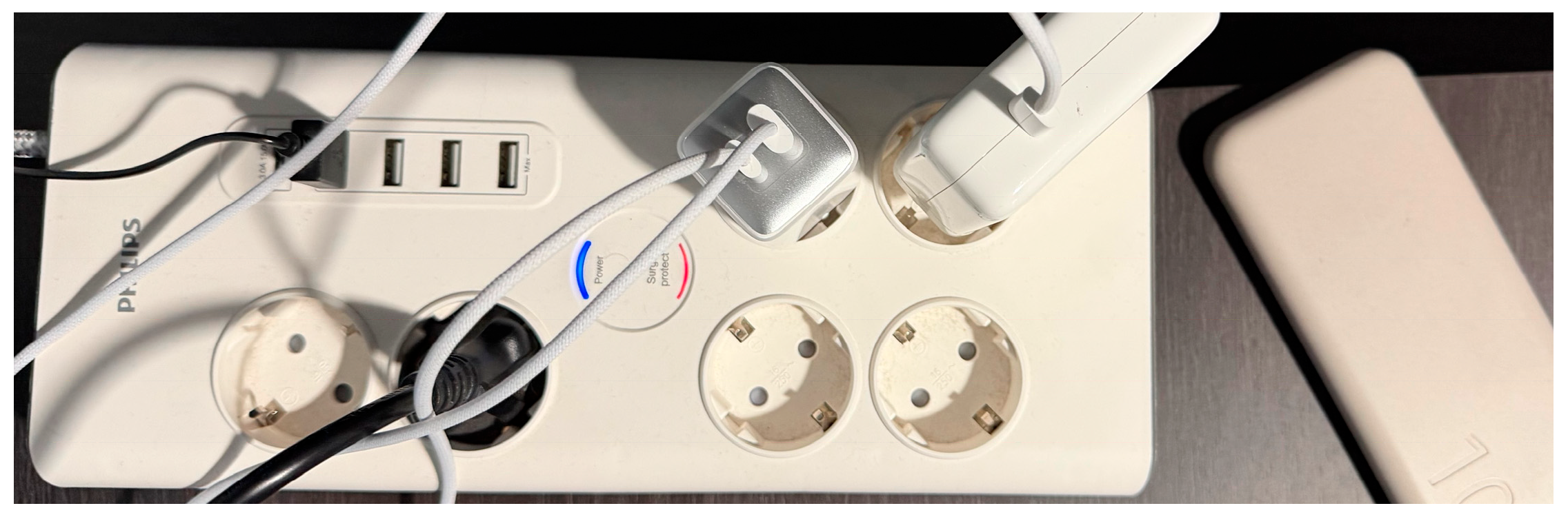
To charge all devices and try different charge and discharge schemes, 4 different chargers were utilized: an official 67 W charger by Apple (Cupertino, CA, USA) originally included in the laptop box, an official 20 W charger by Apple purchased separately (Cupertino, CA, USA), a 521 Nano Pro 40 W charger with two USB Type-C ports by Anker (Changsha, China) and a Samsung EB-P3400 battery pack (Seoul, Republic of Korea), rated at 10,000 mAh [23,24]. All chargers are plugged in and depicted in Figure 1 below.

Figure 1.
Charging Adapters layout on a standard power strip for multi-scenario testing.
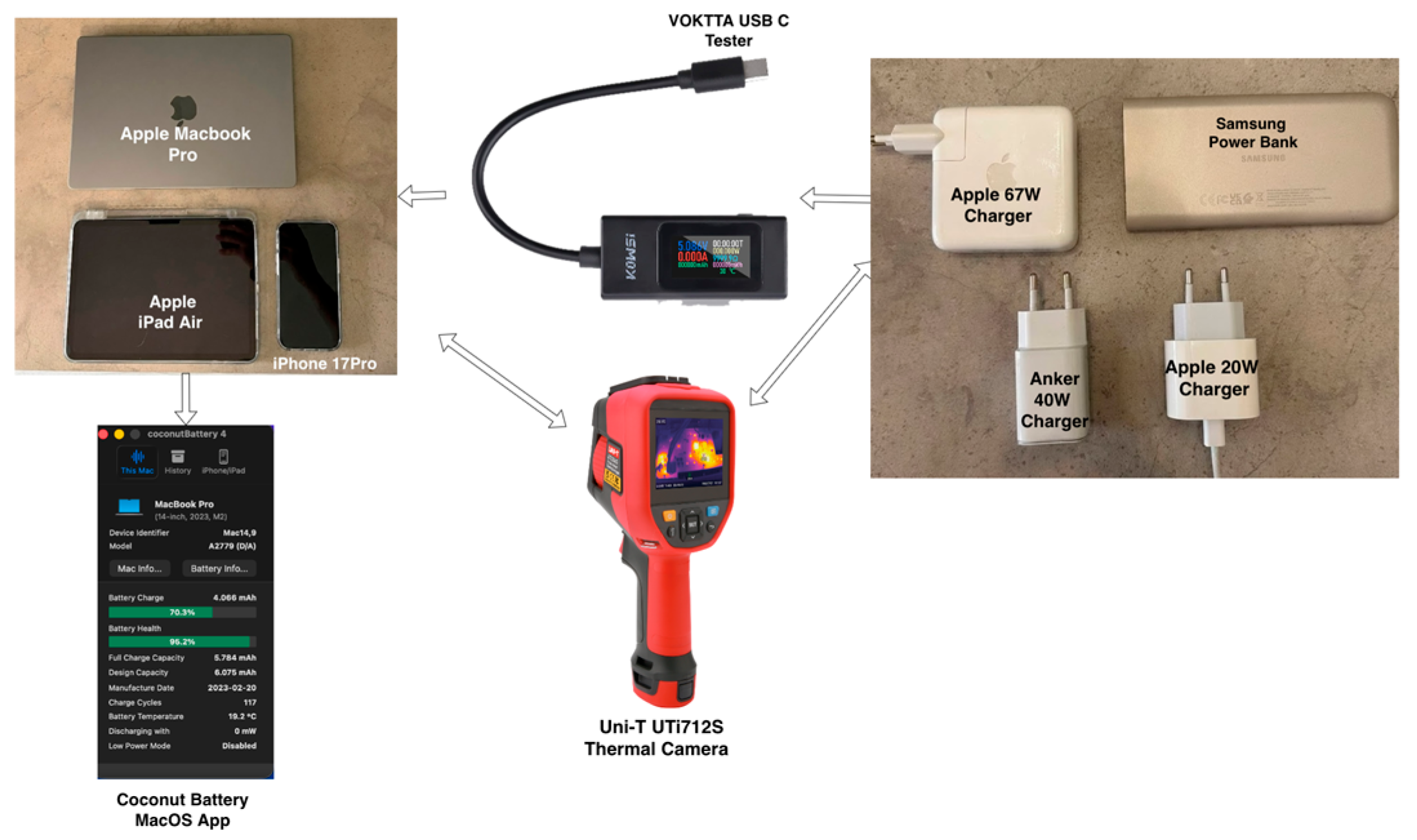
In addition, to monitor battery operation and performance values including voltage, current, charging time and power, the Kowsi KWS-2301C USB-C tester (Shanghai, China) was employed connecting the charger to the specific device during each operation cycle for validation purposes [25]. To measure each device temperature, the Uti712S thermal camera by Uni-T (Dongguan, China) was utilized to manually check the chassis temperature of each device where the battery is located [26]. For comprehensive data logging including voltage, current and SoC-SoH monitoring, the CoconutBattery application for MacOS is used [27].
Testing was conducted at a household located in the province of Peristeri in Athens, Greece (Lat, Long: 37.99976, 23.6931), with 1500 total measurements gathered throughout a 10-day period, between 26 September and 6 October 2025, so that the ambient temperature stays at neutral battery operating zone, approximately 25 °C. To ensure statistical reliability, all charging and discharging cycles were repeated for five iterations per device and charger combination. The complete layout of this experiment is presented below in Figure 2.

Figure 2.
Experiment layout.
3. Results and Discussion
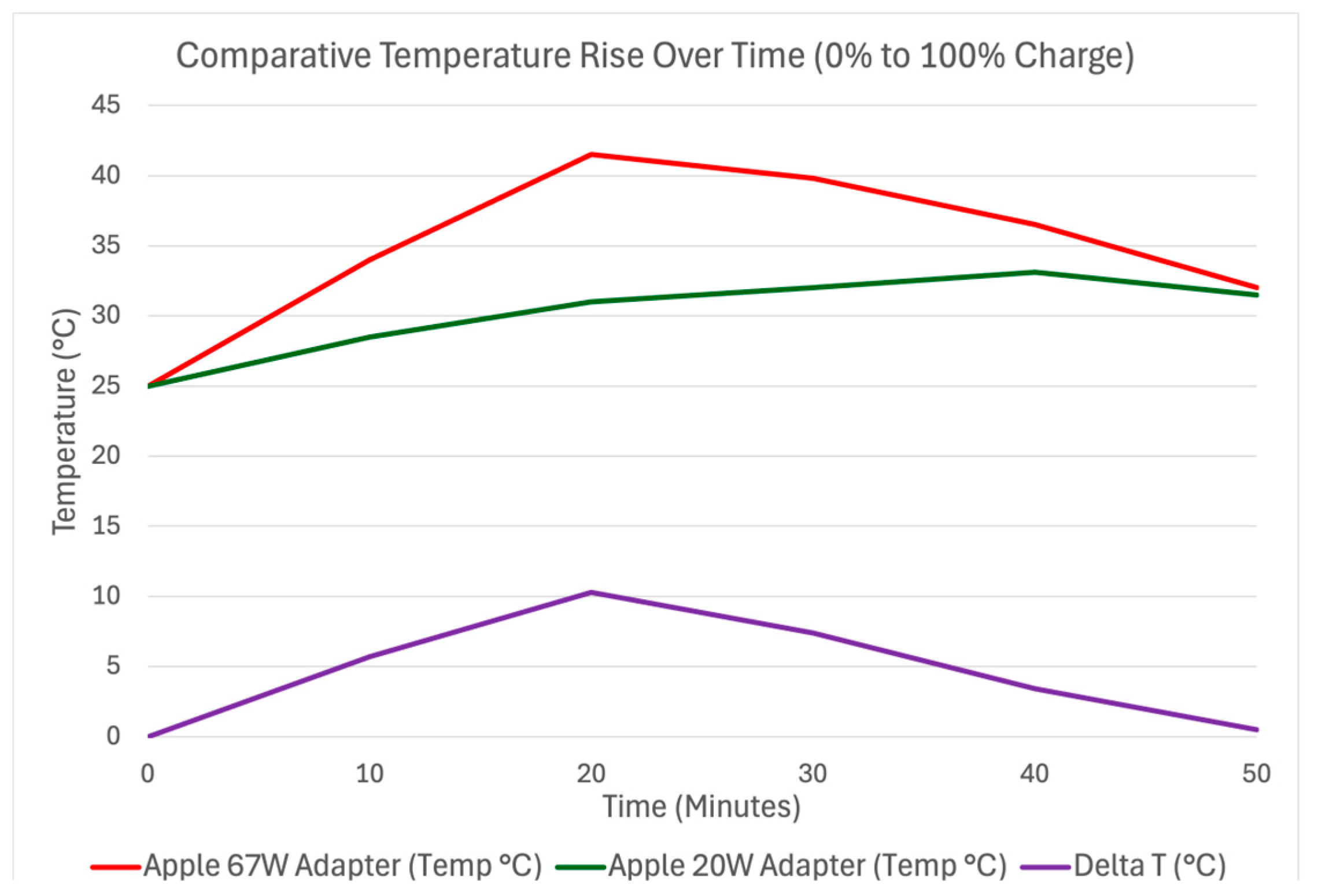
For the first part of testing a comparison of fast and standard charging regimens will be applied by using the Apple 67 W and 20 W chargers on the iPhone 17 Pro with 50% screen brightness and all background apps. The iPhone is specifically selected as the smartphone as the device that every user has in their pockets and uses the most during the day. The fast-charging protocol induced a peak temperature of 41.5 °C. While modern batteries can handle this temperature range without critical failure, this pattern represents a notable elevation compared to the 20 W charger, which maintained a safer thermal profile as summarized in Table 1.

Table 1.
Comparative temperature rise over time (0% to 100% charge).
This comparison is depicted in Figure 3 below.

Figure 3.
Temperature difference for the smartphone between the 20 W and the 67 W Apple adapters.
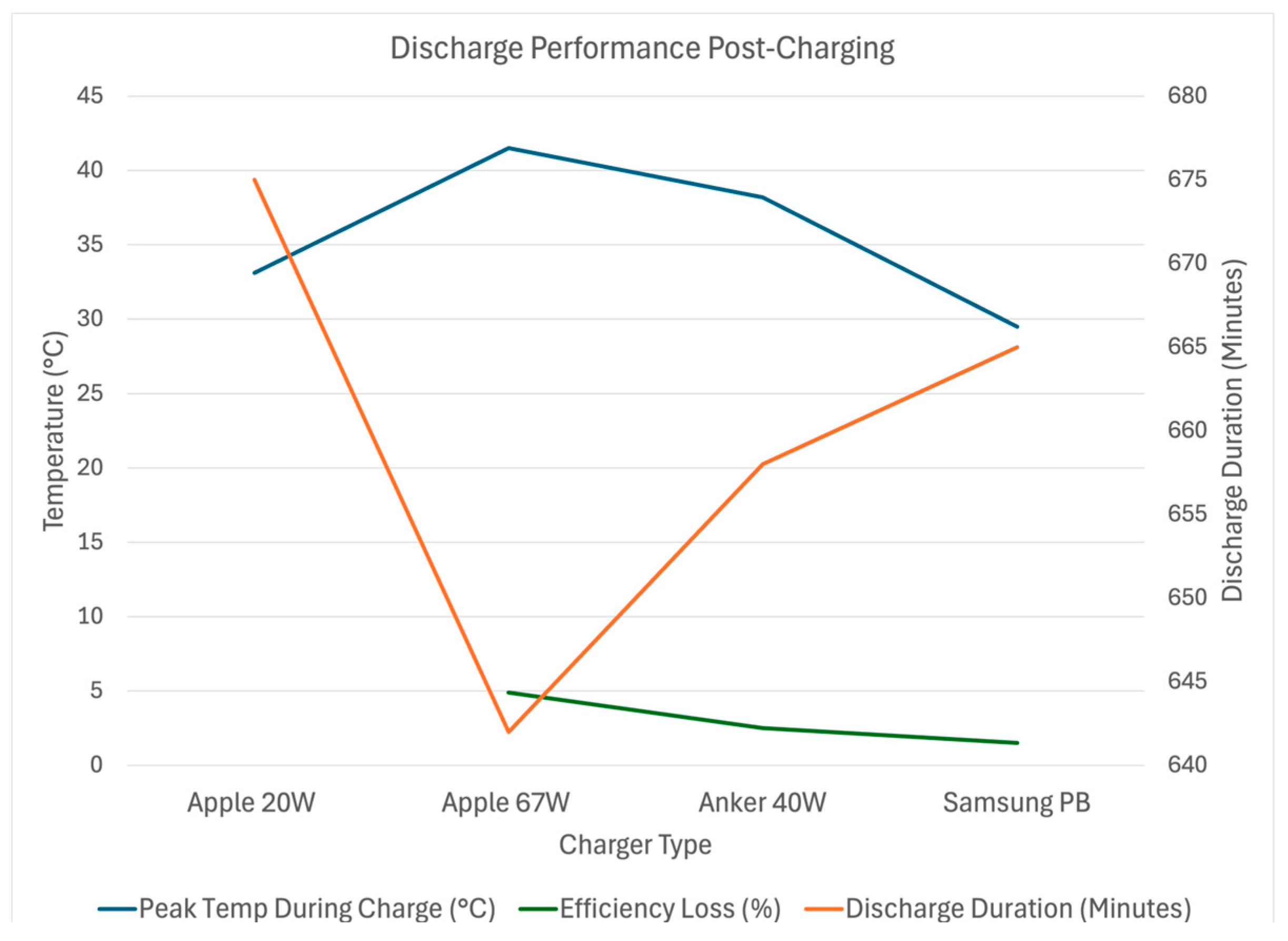
- Next, all three chargers and the battery pack were used separately to charge the smartphone to 100% and then the iPhone was discharged again by running a 4k video loop until it shut down, which is not proper handling for the battery; however, it is necessary to check how charging speeds affect performance. Devices charged via the 67 W adapter exhibited a light, yet statistically observable, 5% reduction in runtime compared to the 20 W baseline as Table 2 reveals. This supports the hypothesis that thermal stress incurred during fast charging results in immediate, temporary capacity inefficiencies, due to increased internal resistance. Standard OEM chargers appear to be the best choice regarding longevity and useful operating time.
Table 2. Discharge performance post-charging pattern.
- As illustrated in Figure 4, even though the standard OEM charger does not have the lowest temperature at high power levels, it appears to be the status quo and the best choice regarding efficiency and useful operating time while also being easy to use in contrast to the Samsung PB that needs charging every 2 to 3 days at least.
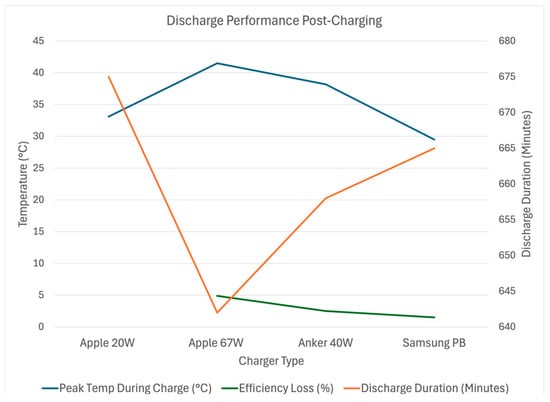 Figure 4. Comparison of discharging duration and efficiency utilizing the 4 different charging schemes on the iPhone 17 Pro.
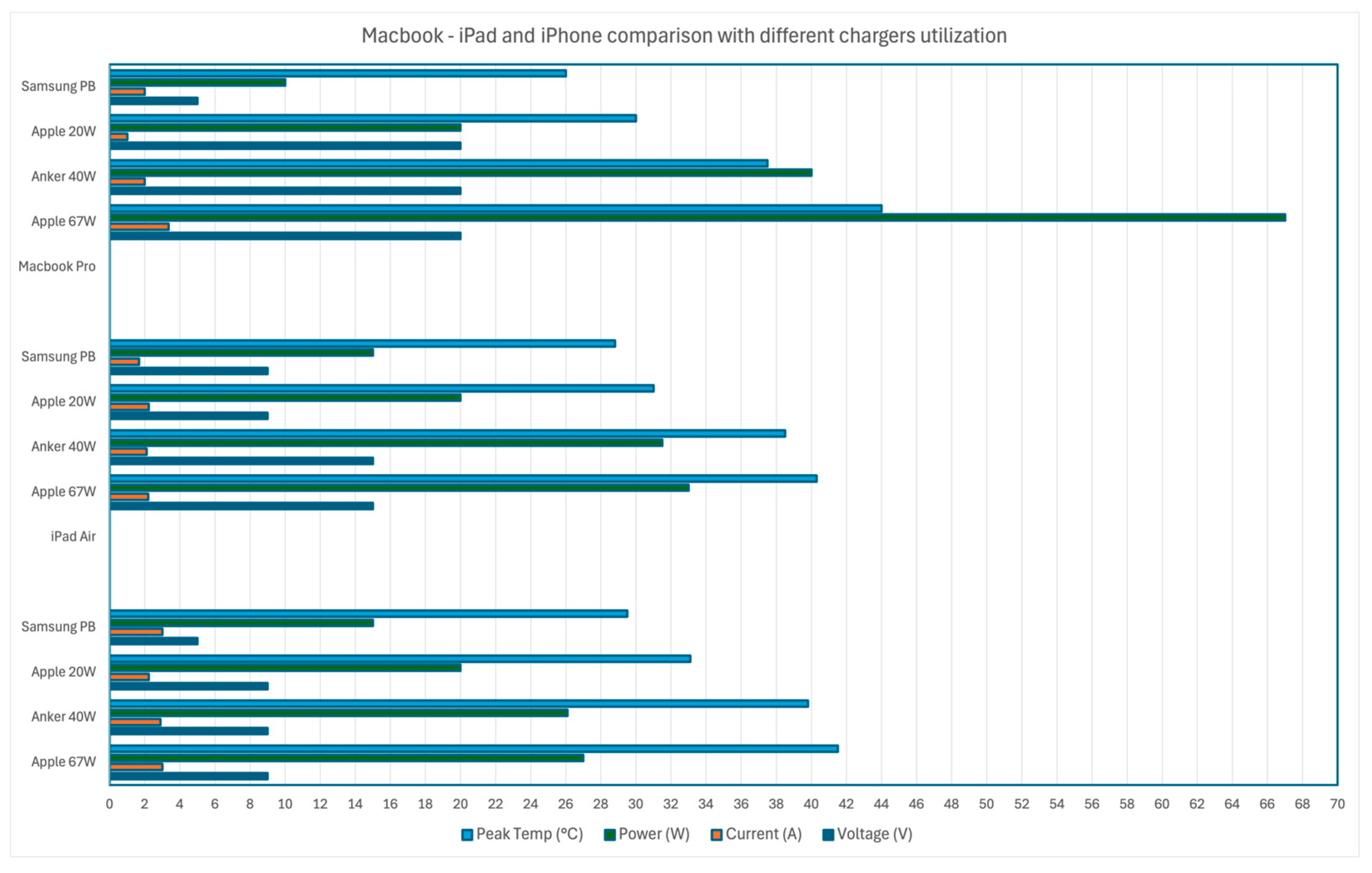
 - Lastly, all three devices were tested using the different chargers available as depicted in Figure 5.
 Figure 5. Comparison of voltage, amperage, power and peak temperature comparison for the three smart devices by utilizing the different charging patterns. The x axis represents the 4 values tested for direct juxtaposition.
Several key results can be drawn from Figure 5. The data shows that while the Apple 67 W charger is capable of 20 V, the iPhone 17 Pro restricts the handshake to 27 Watts of power (9 V-3 A), and hence the device is the one responsible to handle the power output. However, the higher available current at 3 A pushes the battery chemistry to its thermal limit of 41.5 °C compared to the lower point of 33 °C using the standard charger. As for thermal throttling, regarding the laptop and the tablet, the temperature difference reaches up to 10 °C, pushing the devices outside the manufacturer safety zone (up to 40 °C). This scheme leads to increased internal resistance and low efficiency and charging speeds [28]. In addition, the Anker power adapter performs very similarly to the 67 W one but with slightly different thermal characteristics reducing total efficiency, as the battery is forced to work outside of its optimum operational window [11].
Furthermore, in order to better support the impact of aging, multi-cycle data was evaluated. Over 500 projected operation cycles, the cumulative thermal stress from continuous fast charging causes a slightly faster degradation than if the battery was charged normally until the reduction in state of health (SoH) reaches 87% vs. 92% as summarized in Table 3 [29]. Even though it is not high, a difference of 5% in battery health for demanding users can lead to loss of battery performance, or a need for battery replacement, even though many users upgrade their smartphones every 1 or 2 years [30]. However, tablets and laptops should last longer as they are replaced less often. Standard OEM chargers therefore offer a balance in maximizing operational time immediately as well as long-term longevity.
Table 3.
Projected battery health after 500 operation cycles.
4. Conclusions
This study validates a unique thermal trade-off of high-speed energy transfer protocols. When using the 67 W fast charging adapter, the device temperature reached the maximum of 41.5 °C during the Constant Current (CC) period, which is much higher than the 33.1 °C maximum temperature when using standard 20 W charging.
This thermal excursion drives the battery cell far beyond its optimum operating window which demonstrates that higher power throughput poses a huge thermal penalty which translates directly to reduced daily efficiency. The results support the hypothesis that the fast charging has a negative effect on the single-cycle duration, as devices that were subjected to the fast charging regime showed a decrease in runtime of around 5% (±0.5%) on the basis of the baselines set by standard charging. This performance fall is attributed to elevated internal temperatures which are likely to increase the internal resistance, reducing the electrochemical efficiency immediately after the charge cycle.
Consequently, for users who are more interested in achieving the maximum single-cycle duration of the battery, standard charging is still beneficial for starting the discharge cycle from a thermally stable state. Future studies should combine continuous internal resistance monitoring and multi-cycle longitudinal studies in order to further empirically validate the correlation between fast charging thermal profiles and physical battery degradation.
Author Contributions
Conceptualization, D.R. and I.C.; methodology, N.R.; software, D.R.; validation, D.R., I.C. and S.F.; formal analysis, I.C. and S.F.; investigation, D.R. and N.R.; resources, D.R.; data curation, V.A.O.; writing—original draft preparation, D.R. and I.C.; writing—review and editing, V.A.O., I.C. and N.R.; visualization, I.C.; supervision, V.A.O. and S.F.; project administration, V.A.O. and I.C.; funding acquisition, D.R. and N.R. All authors have read and agreed to the published version of the manuscript.
Funding
This research received no external funding.
Institutional Review Board Statement
Not applicable.
Informed Consent Statement
Not applicable.
Data Availability Statement
The original contributions presented in this study are included in the article. Further inquiries can be directed to the corresponding author.
Conflicts of Interest
The authors declare no conflicts of interest.
References
- Villalba-Mora, E.; Ferre, X.; Pérez-Rodríguez, R.; Moral, C.; Valdés-Aragonés, M.; Sánchez-Sánchez, A.; Rodríguez-Mañas, L. Home Monitoring System for Comprehensive Geriatric Assessment in Patient’s Dwelling: System Design and UX Evaluation. Front. Digit. Health 2021, 3, 659940. [Google Scholar] [CrossRef]
- Malik, S.U.R.; Akram, H.; Gill, S.S.; Pervaiz, H.; Malik, H. EFFORT: Energy Efficient Framework for Offload Communication in Mobile Cloud Computing. Softw. Pract. Exp. 2020, 51, 1896–1909. [Google Scholar] [CrossRef]
- Vallina-Rodriguez, N.; Crowcroft, J. Energy Management Techniques in Modern Mobile Handsets. IEEE Commun. Surv. Tutor. 2013, 15, 179–198. [Google Scholar] [CrossRef]
- Goodenough, J.B.; Park, K.-S. The Li-Ion Rechargeable Battery: A Perspective. J. Am. Chem. Soc. 2013, 135, 1167–1176. [Google Scholar] [CrossRef] [PubMed]
- Liu, X.; Zhang, L.; Yu, H.; Wang, J.; Li, J.; Yang, K.; Zhao, Y.; Wang, H.; Wu, B.; Brandon, N.P.; et al. Bridging Multiscale Characterization Technologies and Digital Modeling to Evaluate Lithium Battery Full Lifecycle. Adv. Energy Mater. 2022, 12, 2200889. [Google Scholar] [CrossRef]
- Neumann, J.; Petranikova, M.; Meeus, M.; Gamarra, J.D.; Younesi, R.; Winter, M.; Nowak, S. Recycling of Lithium-Ion Batteries—Current State of the Art, Circular Economy, and next Generation Recycling. Adv. Energy Mater. 2022, 12, 2102917. [Google Scholar] [CrossRef]
- Liang, Z. Advanced Lithium Batteries and Fast-Charging Technology: Challenges and Future Directions. Highlights Sci. Eng. Technol. 2024, 121, 146–152. [Google Scholar] [CrossRef]
- Nagabushanam, P.; Chenchireddy, K.; Dora, R.; Babu, T.S.; Jagan, V.; Manohar, V. The Impact of Fast Charging Technology on Battery Longevity in Electric Vehicles. Int. J. Adv. Appl. Sci. 2025, 14, 936. [Google Scholar] [CrossRef]
- Wang, L.; Tao, Y.; Yang, Z.; Jia, S.; Lin, Z.; Zhang, H.; Xu, C.; Liu, M.; Li, Z.; Wei, B. Lithium-Ion Battery Safety Enhancement via Internal Multi-Parameter Simulation of Thermal and Pressure Conditions. ChemistrySelect 2024, 9, e202303986. [Google Scholar] [CrossRef]
- Zhang, X.; Li, Z.; Luo, L.; Fan, Y.; Du, Z. A Review on Thermal Management of Lithium-Ion Batteries for Electric Vehicles. Energy 2022, 238, 121652. [Google Scholar] [CrossRef]
- Rimpas, D.; Orfanos, V.A.; Chalkiadakis, P.; Christakis, I. Design and Development of a Low-Cost and Compact Real-Time Monitoring Tool for Battery Life Calculation. Eng. Proc. 2023, 58, 17. [Google Scholar] [CrossRef]
- Yang, Z.; Tanim, T.R.; Liu, H.; Bloom, I.; Dufek, E.J.; Key, B.; Ingram, B.J. Quantitative Analysis of Origin of Lithium Inventory Loss and Interface Evolution over Extended Fast Charge Aging in Li Ion Batteries. ACS Appl. Mater. Interfaces 2023, 15, 37410–37421. [Google Scholar] [CrossRef]
- Adejare, A.A.; Okemakinde, F.E.; Tingbari, V.M.; Lee, J.; Kim, J. Comparative Analysis of Charging Protocol for Degradation Reduction and Remaining-Useful-Life Enhancement of a Lithium-Ion Battery. Energy Technol. 2024, 12, 2400584. [Google Scholar] [CrossRef]
- Kumar, R.; Chavan, S. Numerical and Experimental Investigation of Thermal Behaviour for Fast Charging and Discharging of Various 18650 Lithium Batteries of Electric Vehicles. Int. J. Heat Technol. 2022, 40, 1492–1499. [Google Scholar] [CrossRef]
- Garcia, A.; Monsalve-Serrano, J.; Manuel, J.; Bekaert, E.; Herran, A.; Marco-Gimeno, J. Impact of Temperature and Current Rate Protocols on the Aging of Lithium-Ion Batteries from Capacity Testing and Impedance Analysis; SAE Technical Papers on CD-ROM/SAE Technical Paper Series; SAE International: Warrendale, PA, USA, 2025. [Google Scholar] [CrossRef]
- Ahmed, M.M.; Enany, M.A.; Shaier, A.A.; Bawayan, H.M.; Hussien, S.A. An Extensive Overview of Inductive Charging Technologies for Stationary and In-Motion Electric Vehicles. IEEE Access 2024, 12, 69875–69894. [Google Scholar] [CrossRef]
- Gopinathan, N.; Gupta, D.; Shanmugam, P.K.; Nersisson, R.; Gabriel, G.A.; Daniel, G.E. Deep-Cycle Battery Sizing and Strategic Battery Management in Solar-EV Systems Using UDDS Drive Cycles with Real-Time Environment. Eng. Res. Express 2025, 7, 035350. [Google Scholar] [CrossRef]
- Saeed, M.; Khalatbarisoltani, A.; Deng, Z.; Liu, W.; Altaf, F.; Lu, S.; Hu, X. Comparative Analysis of Control Observer-Based Methods for State Estimation of Lithium-Ion Batteries in Practical Scenarios. IEEE/ASME Trans. Mechatron. 2025, 30, 3697–3709. [Google Scholar] [CrossRef]
- Aghili Mehrizi, A.; Yeganehdoust, F.; Madikere Raghunatha Reddy, A.K.; Zaghib, K. Challenges and Issues Facing Ultrafast-Charging Lithium-Ion Batteries. Batteries 2025, 11, 209. [Google Scholar] [CrossRef]
- Apple iPhone 17 Pro Specifications. 2025. Available online: https://support.apple.com/en-gb/125090 (accessed on 18 January 2026).
- Apple M2 iPad Air Specifications. 2024. Available online: https://support.apple.com/en-us/119893 (accessed on 18 January 2026).
- Apple iPhone M2 Pro Macbook Pro Specifications. 2023. Available online: https://support.apple.com/en-us/111340 (accessed on 18 January 2026).
- Anker 521 Nano Pro Specifications. Available online: https://manuals.plus/m/982a948a1d7e7e81838e603da06f789b8c241ade73e4cbe0ed18a5060da244b6 (accessed on 19 January 2026).
- Samsung EB-P3400 10.000 mAh Battery Pack Specifications. Available online: https://www.samsung.com/nz/mobile-accessories/10-000mah-battery-pack-beige-eb-p3400xuegww/ (accessed on 22 January 2026).
- Kowsi KWS-2301C Usb Type-C Tester Specifications. Available online: https://www.diyelectronics.co.za/store/measurement-devices/5624-kowsi-usb-type-c-tester-2-way-powerbank-multimeter.html (accessed on 22 January 2026).
- Uni-T Uti712s Thermal Camera Specifications. Available online: https://www.isecus.com/wp-content/uploads/2022/01/UTi712S-Industrial-Thermal-Imaging-Camera-DATA-SHEET.pdf (accessed on 22 January 2026).
- Rimpas, D.; Kiatipis, A. Charging Strategy Effect on Lithium Polymer Battery Capacity: A Case Study. Int. J. Energy Environ. 2020, 11, 107–118. [Google Scholar]
- Zeng, Y.; Zhang, B.; Fu, Y.; Shen, F.; Zheng, Q.; Chalise, D.; Miao, R.; Kaur, S.; Lubner, S.D.; Tucker, M.C.; et al. Extreme Fast Charging of Commercial Li-Ion Batteries via Combined Thermal Switching and Self-Heating Approaches. Nat. Commun. 2023, 14, 3229. [Google Scholar] [CrossRef]
- Sohail, M.; Saeed, M.; Khalatbarisoltani, A.; Jawaad, H.M.; Ge, L. An Intelligent Control-Based Charging Strategy for Lithium-Ion Batteries. In Proceedings of the 2025 IEEE 16th International Symposium on Power Electronics for Distributed Generation Systems (PEDG); IEEE: Nanjing, China, 2025; pp. 1–6. [Google Scholar]
- Cordella, M.; Alfieri, F.; Clemm, C.; Berwald, A. Durability of Smartphones: A Technical Analysis of Reliability and Repairability Aspects. J. Clean. Prod. 2021, 286, 125388. [Google Scholar] [CrossRef] [PubMed]
Disclaimer/Publisher’s Note: The statements, opinions and data contained in all publications are solely those of the individual author(s) and contributor(s) and not of MDPI and/or the editor(s). MDPI and/or the editor(s) disclaim responsibility for any injury to people or property resulting from any ideas, methods, instructions or products referred to in the content. |
© 2026 by the authors. Licensee MDPI, Basel, Switzerland. This article is an open access article distributed under the terms and conditions of the Creative Commons Attribution (CC BY) license.