1. Introduction
Water and forests together form an inseparable part of the landscape. They are closely interlinked, as both are among the most important resources on Earth. When the availability of water for forests decreases, these ecosystems gradually degrade and disappear; conversely, the water retention capacity of forests is far greater than that of any other type of vegetation [
1]. The aim of watercourse revitalization is to restore its ecological function while maintaining other necessary functions such as flood control, drainage, and water supply [
2].
According to the Environmental Report of the Czech Republic 2023, the condition of Czech forests remains unsatisfactory. Although the regeneration of forest stands continues after extensive bark beetle infestations, their structure still lacks diversity and resilience due to the prevalence of Norway spruce, which continues to dominate new plantings [
3]. In forest ecosystems, revitalization should therefore be approached comprehensively, not only by restoring the watercourse itself but also by rehabilitating surrounding forest stands, ideally through the use of native, site-appropriate species. Such restoration efforts have been shown to significantly improve both habitat quality and water quality in forested catchments [
4].
Moreover, the restoration of riparian vegetation has proven to enhance water quality by intercepting nutrients, filtering pollutants, and stabilizing streambanks, thus acting as a natural buffer between terrestrial and aquatic ecosystems [
5]. At the catchment scale, stream restoration measures can also reduce nitrogen, phosphorus, and suspended sediment loads if interventions are implemented in a coordinated manner across the landscape [
6]. In the Czech context, specific hydrological conditions such as seasonal drought, soil erosion susceptibility, and forest soil composition must be considered when designing revitalization strategies.
The evaluation of such measures is increasingly supported by advanced rainfall–runoff and hydraulic modeling tools, such as HEC-HMS, MIKE-SHE, HEC-RAS, and MIKE 11, which allow for the simulation of hydrological and hydraulic processes under various design and extreme scenarios. These integrated approaches—combining hydrological modeling, vegetation restoration, and channel rehabilitation—represent the most effective path toward achieving long-term ecological and hydrological stability in forested catchments such as the Vortovský and Valčice Streams.
2. Materials and Methods
2.1. Overview of the Vortovský Stream and Valčice Stream
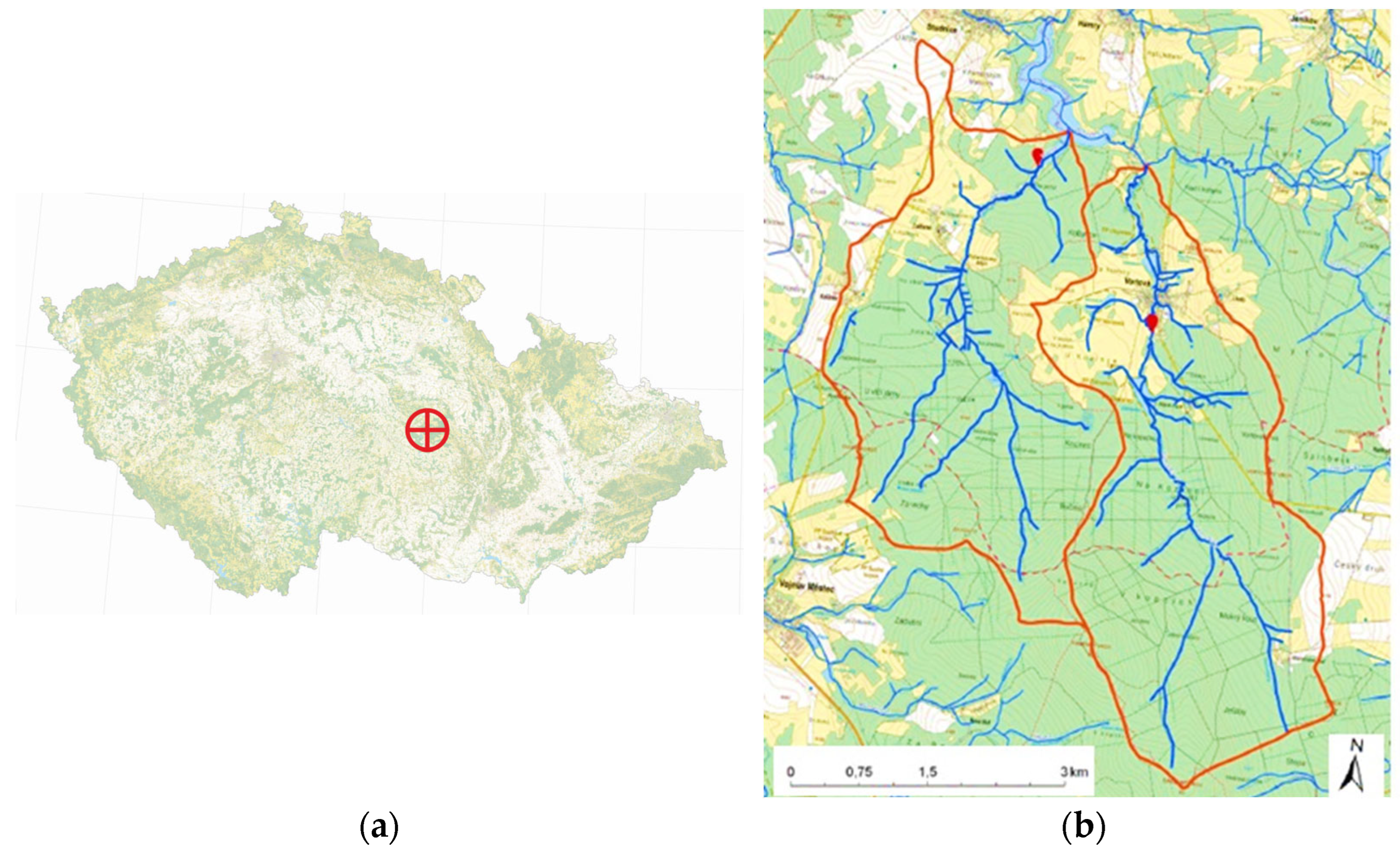
The catchment areas of the Vortovský Stream and Valčice Stream are located in the Žďárské vrchy Protected Landscape Area in the Pardubice region (See in
Figure 1).
The source of the Vortovský Stream rises at an altitude of 790 m above sea level, below Šindelný vrch. The length of the Vortovský Stream is 7822 km, with a catchment area of 12,387 km2. The Valčice Stream covers a catchment area of 11,379 km2 with a length of 6251 km and it rises below Kamenný vrch at an altitude of 730 m above sea level. Both streams flow through protected areas with rare plant species. Peat bogs and wetlands are characteristic features of the region. The average annual precipitation in the area is 850–100 mm per year. Due to high rainfall, the area is classified as a Protected Area of Natural Water Accumulation. Water management modifications were carried out in the Vortovský Stream basin with the aim of improving water retention in the forest complex. Pools and traverse structures were also created.
In the Valčice river basin, the small Malý Černý and Velký Černý reservoirs were reconstructed, and part of the Valčice Stream was revitalized with the aim of achieving a near-natural state. In both river basins, increased water retention and storage capacity in the landscape, slower runoff of precipitation water, and increased biodiversity are expected in the future.
2.2. Rainfall-Runoff Models HEC-HMS and MIKE-SHE
Rainfall-runoff models simulate the transformation of atmospheric precipitation into runoff using hydrological and hydraulic transformation. Atmospheric precipitation is the input into the model, and the output is runoff from the catchment area or runoff loss. (unucka 2014) HEC-HMS was developed by engineers at the U.S. Army Corps of Engineers Hydrologic Engineering Center. It is one of the most widely used models in the field. An indisputable advantage of the program is the fact that it is one of the FEMA/NFIP (Federal Emergency Management Agency/National Flood Insurance Program) industry standards. The results obtained from the model can also be exported to the MIKE-SHE program for further processing. The MIKE-SHE model is based on the SHE model, which has been improved over time by the Danish Hydraulic Institute. The program is suitable for solving balance analyses and provides comprehensive outputs on river basins [
7].
2.3. Hydrodynamic Models HEC-RAS and MIKE 11
Hydrodynamic models such HEC-RAS and MIKE 11 can simulate steady and unsteady flow, including flood simulation. An advantage is the possibility of interaction with GIS (Geographic information system) [
8]. The models are capable of simulating steady or unsteady flows, including the influence of water management structures. The models are used to determine flood zones and simulate the transformation of flood waves in reservoirs. It is also possible to use these models to simulate sediment transport and accumulation or water quality [
7].
2.4. Fieldwork
The fieldwork aimed to geodetically survey the revitalized section of the Valčice Stream using Leica equipment. This data was used in simulation models. Actual water flows were measured using device OTTMF Pro point meters (OTT HydroMet, Kempten, Germany) for the Vortovský Stream and Valčice Stream, and for the Valčice Stream, a Vrtule device was also used. Based on field measurements of flow rates, flow rate values were proposed for use in the model simulation.
3. Results and Discussion
3.1. Runoff Models
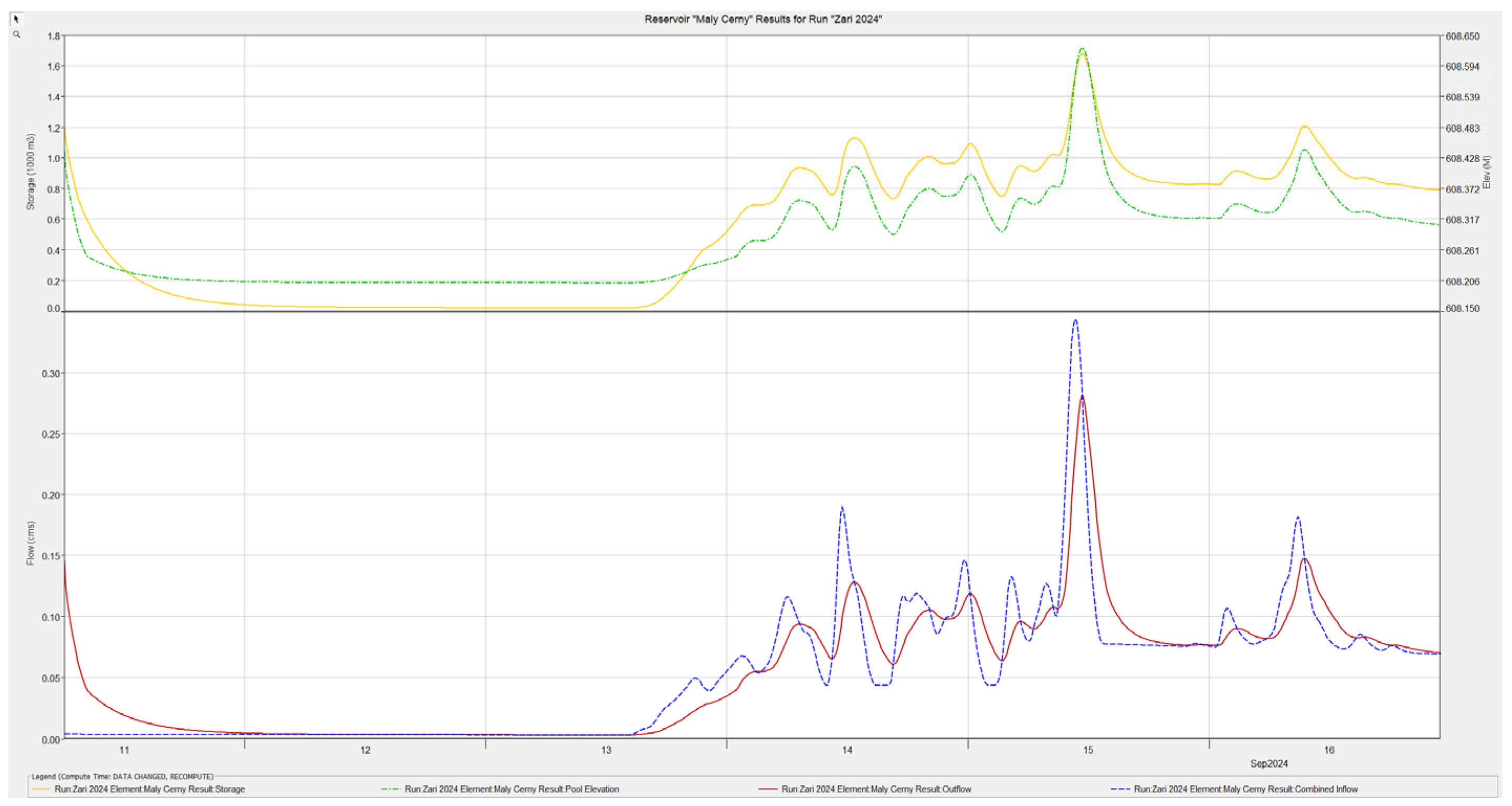
The HEC-HMS model was used to simulate the transformative impact of the reconstructed Malý Černý small water reservoir in the Valčice river basin on the total runoff from the basin.
Figure 2 shows that the reservoir was able to safely transform and transfer flood flow from the rainfall episode in September 2024.
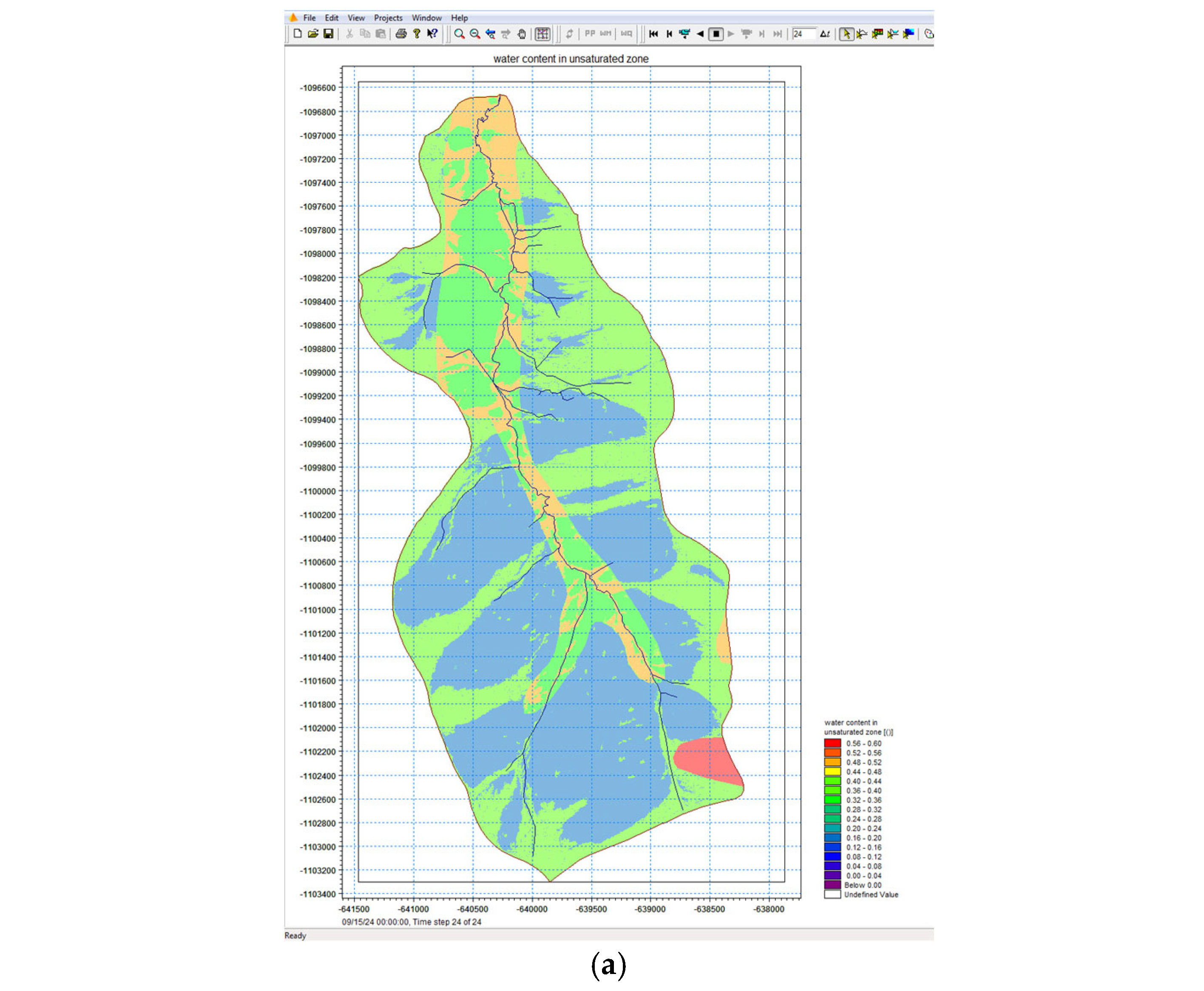
A simulation of changes in soil moisture content was created for the Vortovský Stream basin using the MIKE-SHE model (
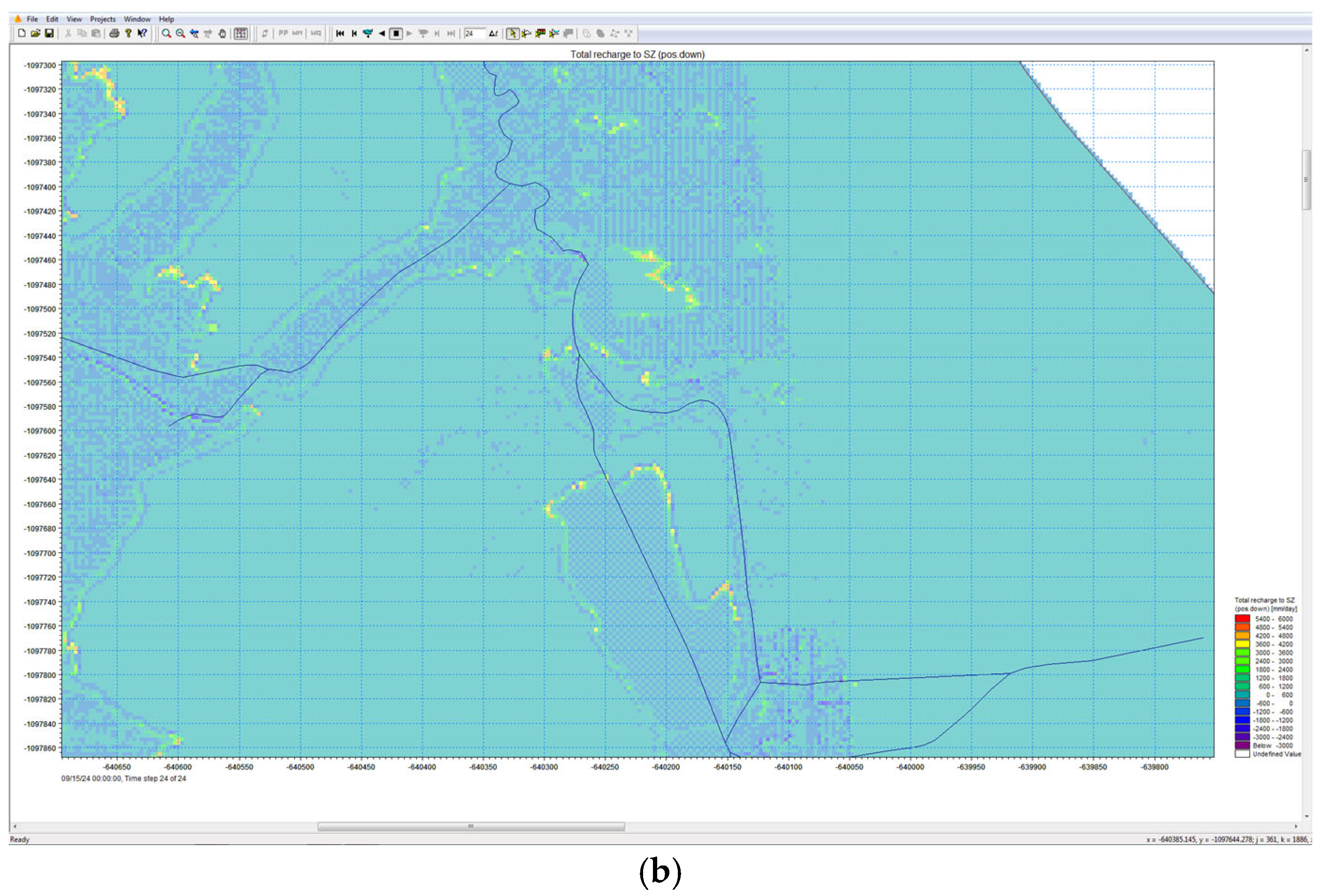
Figure 3a). These represent changes in soil water content during a rainfall flood episode in September 2024. In percentage terms, the values range from 16% (blue) to 52% (orange). 32–44% represents green. Gravity recharge of groundwater reserves from water infiltrated into the soil profile was also simulated for the Vortovský Stream basin using the MIKE-SHE model. The yellow color represents values of 3600–4200 mm per day, as seen in
Figure 3b.
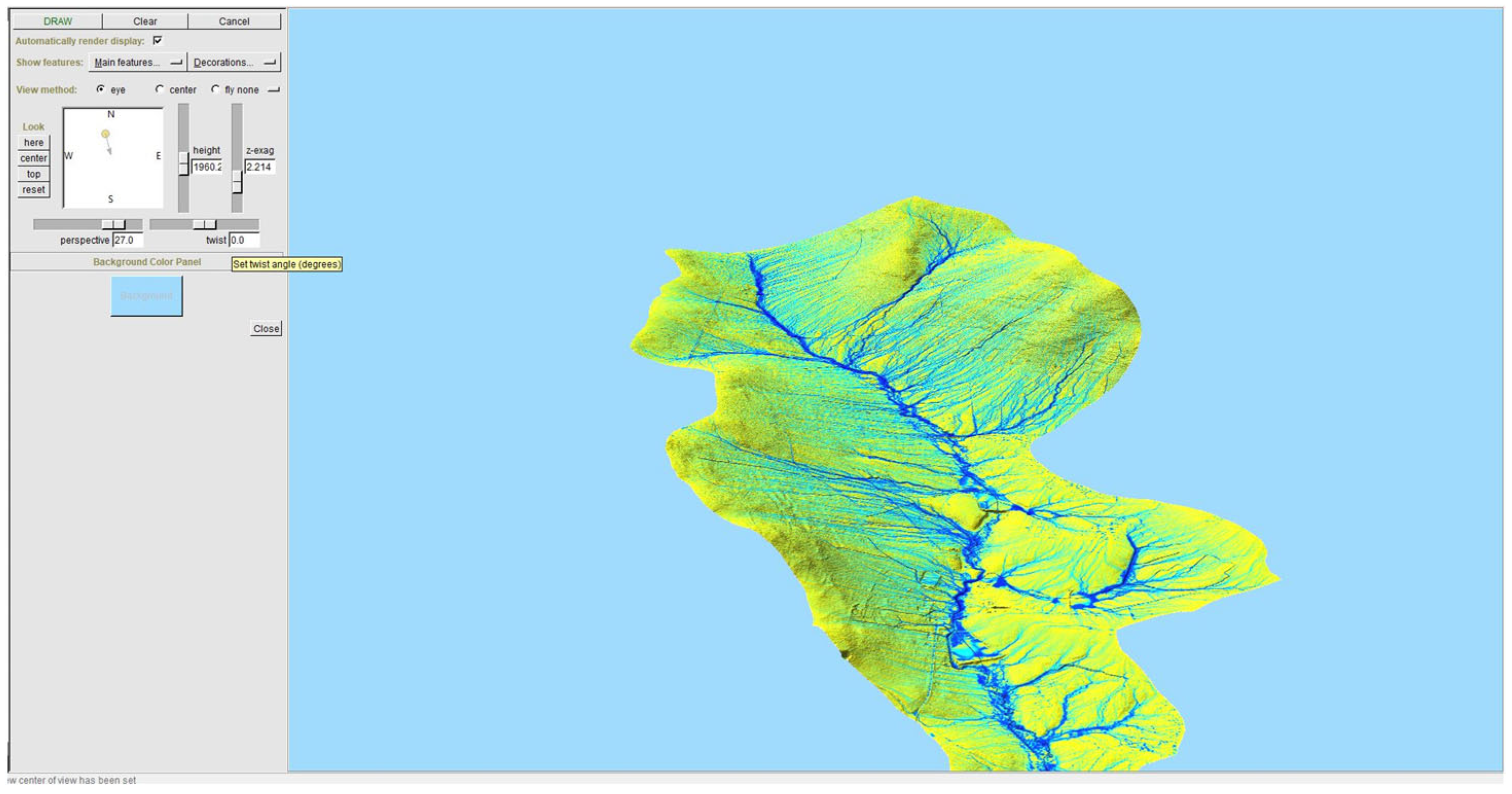
Surface runoff from the catchment area was simulated for the Vortovský Stream catchment area using the SIMWE model for GRASS GIS (Geographic Resources Analysis Support System).
Figure 4 shows the surface slopes in the catchment area, and the preferred paths of surface runoff from the catchment area are visible.
Rainfall-runoff models are now complex tools for evaluating and simulating the dynamics of the rainfall-runoff process and water balance. It is essential to know the hydrometeorological parameters of the catchment area and to have up-to-date data on the territory.
3.2. Hydrodynamic Models
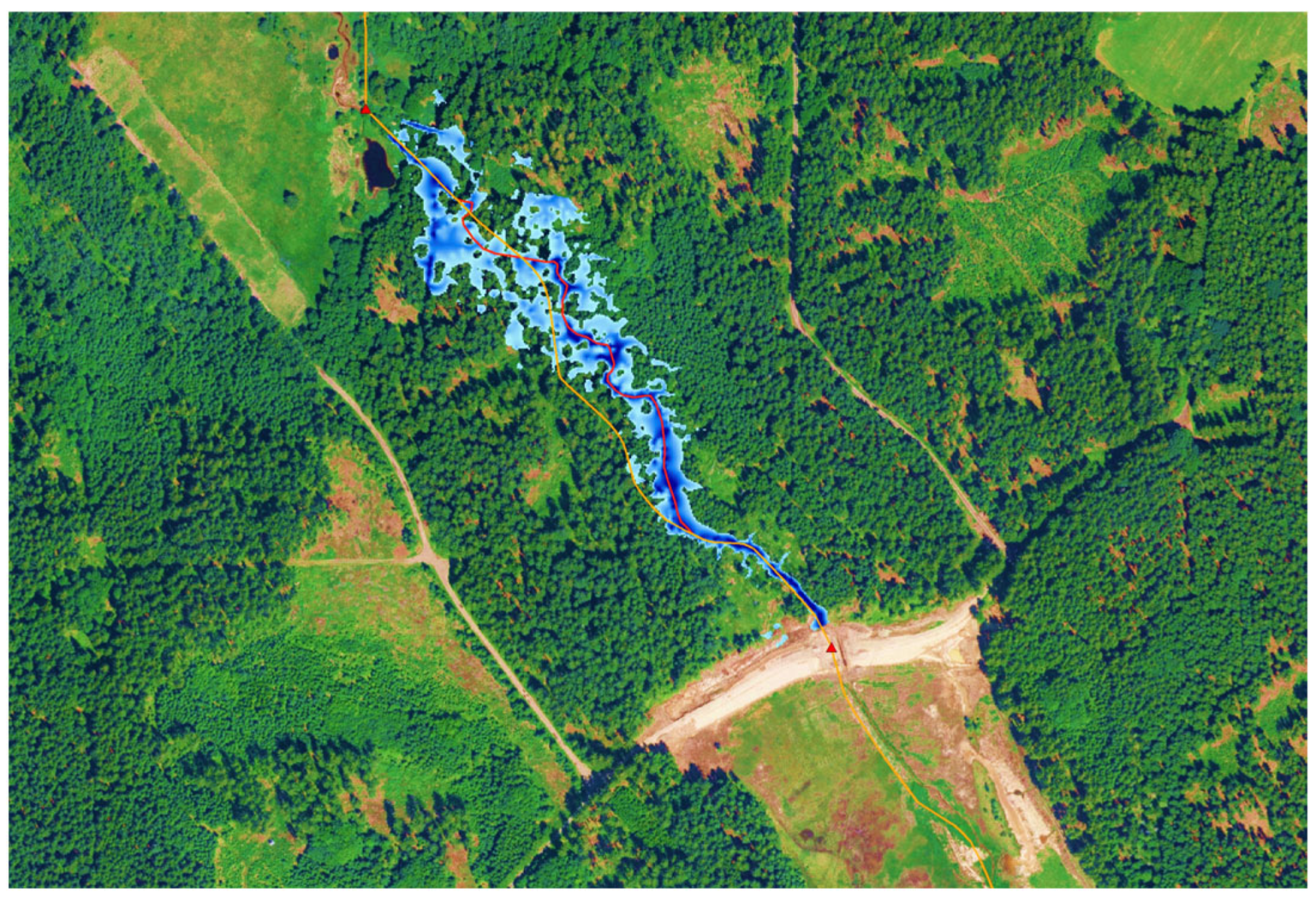
The result of the simulation in the MIKE 11 (
Figure 5) hydrodynamic model shows the original (variant A) and new (variant B) riverbed of the Valčice Stream. The new riverbed (red line) follows a different route than the original river (orange line), and is 51.3 m longer.
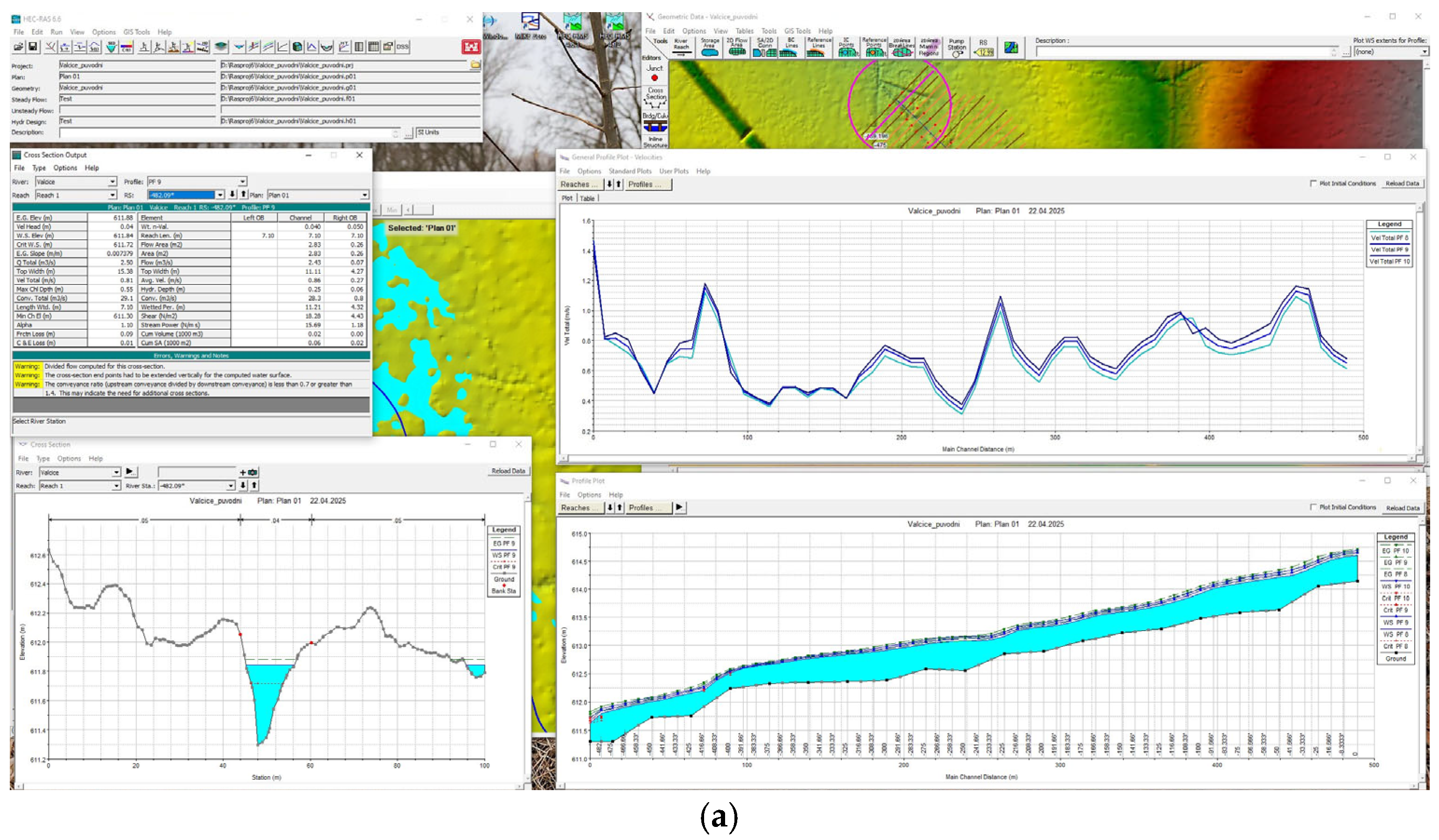
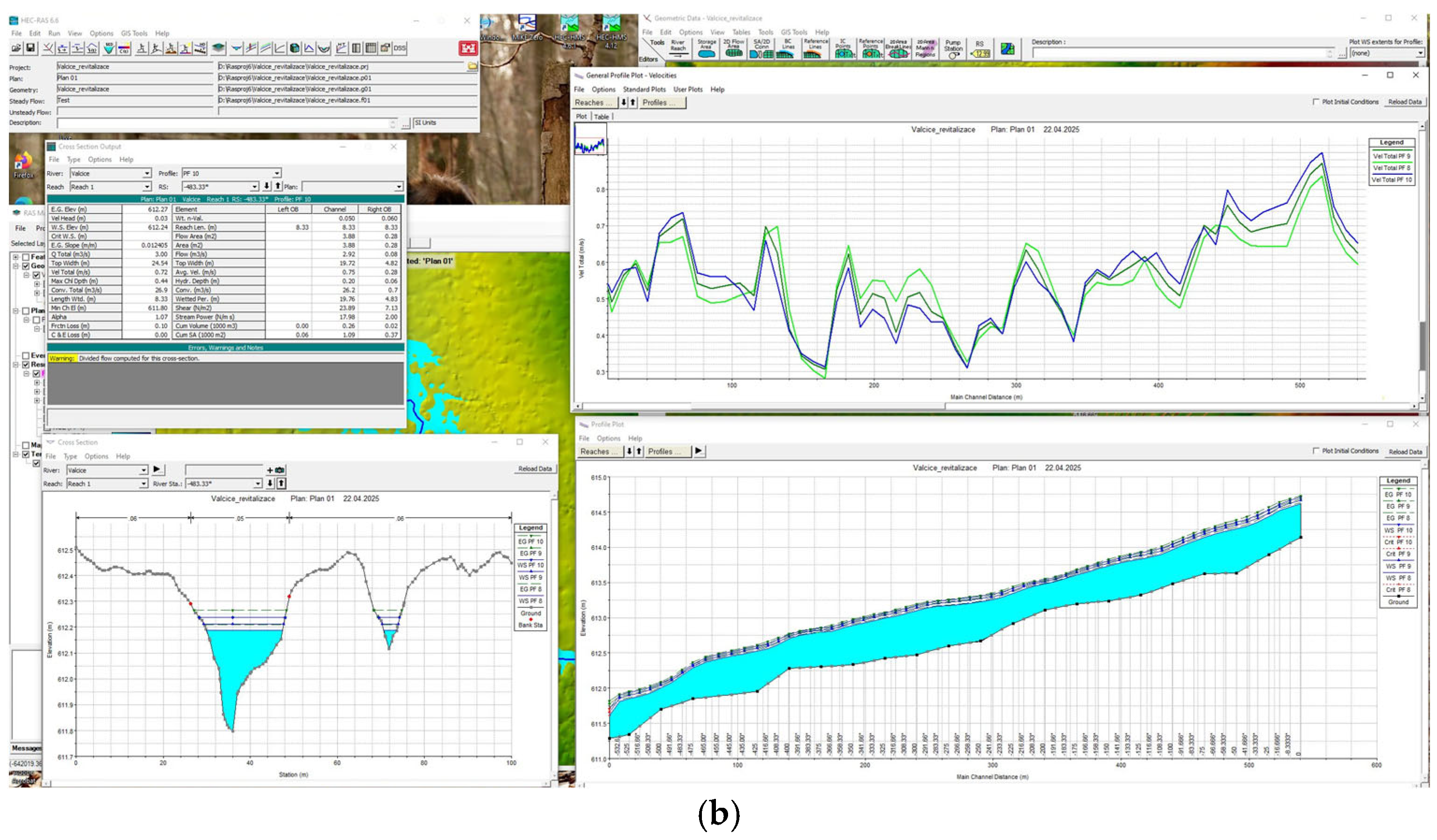
The results obtained from the MIKE 11 simulation were imported into the HEC-RAS model. For both variants A and B, the schematization was adjusted (appropriate roughness coefficient according to Manning). The flow data was selected based on field measurements. After calculating the simulation using the HEC-RAS model for both variants, it was possible to compare the resulting flow velocity values in the riverbed, as shown in
Figure 6.
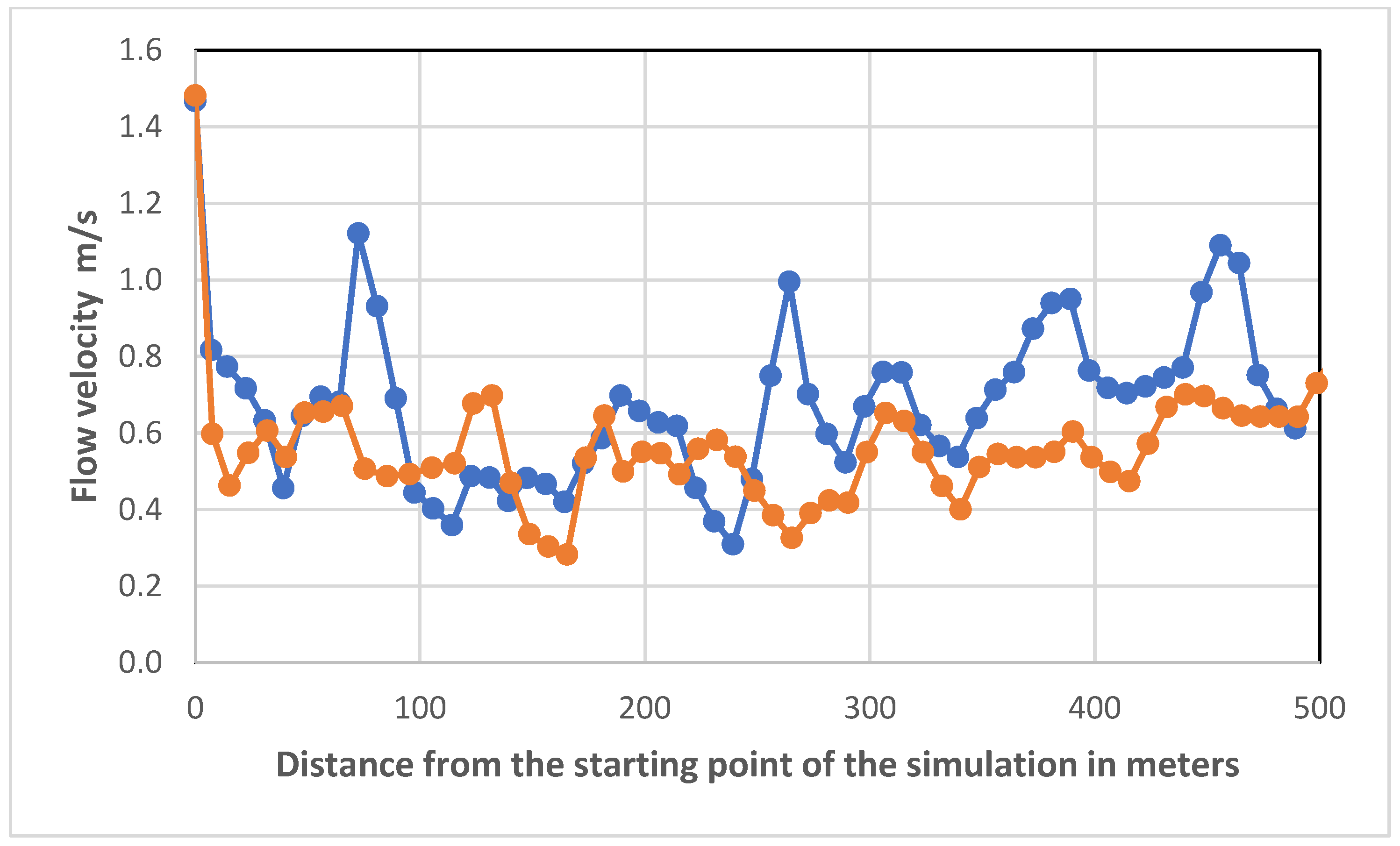
A graphical representation (
Figure 7) comparing the speed of water in the original (blue line) and new (orange line) riverbeds for a simulated flow rate of 2 m
3/s clearly shows and proves that the revitalization measures slow down the speed of water flow and also slow down the overall outflow of water from the river basin.
4. Conclusions
Revitalization measures in the Vortovský and Valčice catchments significantly improved both hydrological and ecological conditions.
Modeling confirmed their efficiency in terms of the following:
Future management should focus on forest diversification (limit monocultures, promote mosaic planting with accompanying tree species like birch, alder, pine), long-term monitoring, maintaining up-to-date GIS databases for future modeling, and integration of climate adaptation principles within landscape planning.
Overall, the applied revitalization techniques have proven to be an effective nature-based solution for mitigating the impacts of climate change and restoring the natural water regime of forested headwater catchments.
Author Contributions
Conceptualization, T.D., V.V. and K.J.Š.; methodology, J.U. and T.D.; investigation, K.J.Š. and J.U.; writing—original draft preparation, T.D. and K.J.Š.; writing—review and editing, K.J.Š. and T.D.; funding acquisition, V.V. All authors have read and agreed to the published version of the manuscript.
Funding
This research received no external funding.
Institutional Review Board Statement
Not applicable.
Informed Consent Statement
Not applicable.
Data Availability Statement
The original contributions presented in this study are included in the article. Further inquiries can be directed to the corresponding author.
Conflicts of Interest
The authors declare no conflicts of interest.
References
- Chang, M. Forest Hydrology, 2nd ed.; CRC Press: Boca Raton, FL, USA, 2006. [Google Scholar]
- Czech Standard ČSN 75 2101; Revitalization of Watercourses. Czech Office for Standards, Metrology and Testing: Prague, Czech Republic, 2011.
- Ministry of the Environment of the Czech Republic (MŽP ČR). Report on the Environment of the Czech Republic 2023; MŽP ČR: Praha, Czech Republic, 2023. [Google Scholar]
- dos Reis Oliveira, P.C.; Gualda, G.A.F.; Rossi, G.F.; Camargo, A.F.M.; Filoso, S.; Brancalion, P.H.; Ferraz, S.F.d.B. Forest Restoration Improves Habitat and Water Quality in Tropical Streams: A Multiscale Landscape Assessment. Sci. Total Environ. 2025, 963, 178256. [Google Scholar] [CrossRef] [PubMed]
- François, M.; de Aguiar, T.R.; Mielke, M.S.; Rousseau, A.N.; Faria, D.; Mariano-Neto, E. Interactions Between Forest Cover and Watershed Hydrology: A Conceptual Meta-Analysis. Water 2024, 16, 3350. [Google Scholar] [CrossRef]
- Thompson, J.; Pelc, C.E.; Brogan, W.R.; Jordan, T.E. The Multiscale Effects of Stream Restoration on Water Quality. Ecol. Eng. 2018, 124, 7–18. [Google Scholar] [CrossRef]
- Unucka, J. Environmental Modelling 1; Faculty of Science, University of Ostrava: Ostrava, Czech Republic, 2014. [Google Scholar]
- Malla, S.; Ohgushi, K. Evaluation of Climate Change Impact on Future Flood in the Bagmati River Basin, Nepal Using CMIP6 Climate Projections and HEC-RAS Modeling. Water Cycle 2026, 7, 164–180. [Google Scholar] [CrossRef]
| Disclaimer/Publisher’s Note: The statements, opinions and data contained in all publications are solely those of the individual author(s) and contributor(s) and not of MDPI and/or the editor(s). MDPI and/or the editor(s) disclaim responsibility for any injury to people or property resulting from any ideas, methods, instructions or products referred to in the content. |
© 2025 by the authors. Licensee MDPI, Basel, Switzerland. This article is an open access article distributed under the terms and conditions of the Creative Commons Attribution (CC BY) license (https://creativecommons.org/licenses/by/4.0/).