Abstract
This study investigates the potential use of black coal mining waste as a feedstock for plasma gasification. A national database of coal waste heaps was developed based on standardized criteria such as heap volume (>100,000 m3), accessibility, and environmental risk. From six initially sampled sites, two active and unreclaimed heaps—Jan Karel (Karviná) and Paskov D (Ostrava)—were selected for detailed material analysis due to their favorable characteristics. Subsequent plasma gasification experiments were conducted using sorted coal waste fractions at a temperature of 1600 °C in a pilot-scale plasma reactor. Four trials were performed with fuel flow rates of 15 and 20 kg/h and varying steam/fuel ratios (0.6, 1.0, and 1.3). The results revealed a high syngas yield of up to 92% by volume. Increasing the steam/fuel ratio led to higher hydrogen and carbon dioxide content in the syngas, while lower ratios favored carbon monoxide and trace methane formation. Volt-ampere characteristics of the plasma torch showed that higher nitrogen flow rates required higher voltage to maintain a stable arc. The findings confirm the technical feasibility and efficiency of converting selected coal mining waste into valuable syngas, supporting its future use in advanced waste-to-energy technologies.
1. Introduction
Coal remains one of the key energy sources in the global fuel–energy balance. According to data from the International Energy Agency (IEA), it maintains a significant position in global electricity production, complementing other dominant fossil fuels—oil and natural gas [1]. Despite the development of renewable energy sources such as solar, wind, and hydropower, coal remains an important energy source for both developed and developing economies, with its global mining, consumption, and trade reaching record levels in 2023, mainly due to growing electricity demand [2,3,4]. According to the IEA, carbon capture, utilization, and storage (CCUS) technologies, which could contribute to emission reductions, are not yet expanding rapidly enough [2].
Coal mining and its subsequent use in energy production represent a significant environmental burden and can negatively impact human health—especially in cases where effective waste management systems are lacking [5]. In many regions where other energy alternatives are not technically or economically feasible, coal remains the cheapest and most accessible solution [6].
One of the main environmental aspects associated with coal mining is the production and storage of mining waste, known as coal mining waste rock (CMWR) or coal mining waste residues. These materials are generated throughout all stages of coal mining and processing, from shaft sinking to technological treatment, and constitute approximately 10–15% of the volume of extracted raw material, corresponding to millions of tons annually [7,8].
The CMWR waste material primarily includes unsorted associated minerals such as silicon dioxide (SiO2), alumina (Al2O3), and iron oxide (Fe2O3), with the residual carbon content varying significantly—from 5% in newer deposits up to 30% in older ones. The ash content may fluctuate between 2% and 90%, depending on the location and geological composition [5].
These wastes have a considerable ecological impact, particularly when disposal is uncontrolled, deposited in heaps [9]. Leachates, chemical weathering, and rainfall can lead to the release of acidic effluents contaminating the surrounding soil and groundwater. The spontaneous combustion of these materials is a source of toxic emissions, including trace metals such as arsenic (As), cadmium (Cd), lead (Pb), zinc (Zn), beryllium (Be), cobalt (Co), chromium (Cr), copper (Cu), manganese (Mn), nickel (Ni), selenium (Se), tin (Sn), and vanadium (V) [10,11,12]. Analyses also show the presence of polycyclic aromatic hydrocarbons (PAHs) [13] bound to PM10 particles, confirming the need for monitoring and revitalization of these sites [14].
Despite the environmental risks, there is a growing interest in the material and energy utilization of these wastes. Mining and coal processing wastes can be used, for example, in co-combustion systems with pulverized coal [15], thereby reducing environmental burden. Furthermore, valuable minerals such as silicon dioxide and alumina can be extracted from these materials via catalytic processes, contributing to economic efficiency and fulfilling circular economy principles [16].
These heaps, particularly from deep black coal mining, pose both environmental challenges and potential opportunities for material and energy recovery. Following mechanical separation, the two principal components—coal-rich fractions and mineral waste (gangue)—can be valorized through distinct technologies aimed at material recovery and circular economy strategies [17,18].
This study focuses on identifying and verifying the potential for the utilization of mining wastes from coal mines in the Czech Republic. Special attention is given to the energy potential of coal concentrates obtained by mechanical separation, particularly in relation to their applicability in gasification technologies.
2. Materials and Methods
2.1. Creation of the Mining Waste
A database system was developed, focusing on black coal mining waste across the Czech Republic. The selection criteria for inclusion in the database were standardized in alignment with similar databases in Poland and Western Europe. These criteria included the following:
- Accessibility and feasibility of sample collection with necessary site agreements;
- Inclusion of waste from deep black coal mining only;
- Heap volume exceeding 100,000 m3;
- Status of the heap (active, inactive, or reclaimed);
- Environmental risk assessment based on chemical composition and potential hazards.
2.2. Sampling Strategy and Site Selection
Six initial locations were sampled (approx. 30 kg per site): Koblov, Eduard Urx, Jeremenko, Paskov D, and Jan Karel. Based on accessibility, volume, and material characteristics, two sites were selected for detailed analysis:
Jan Karel (Karviná);
Paskov D (Ostrava).
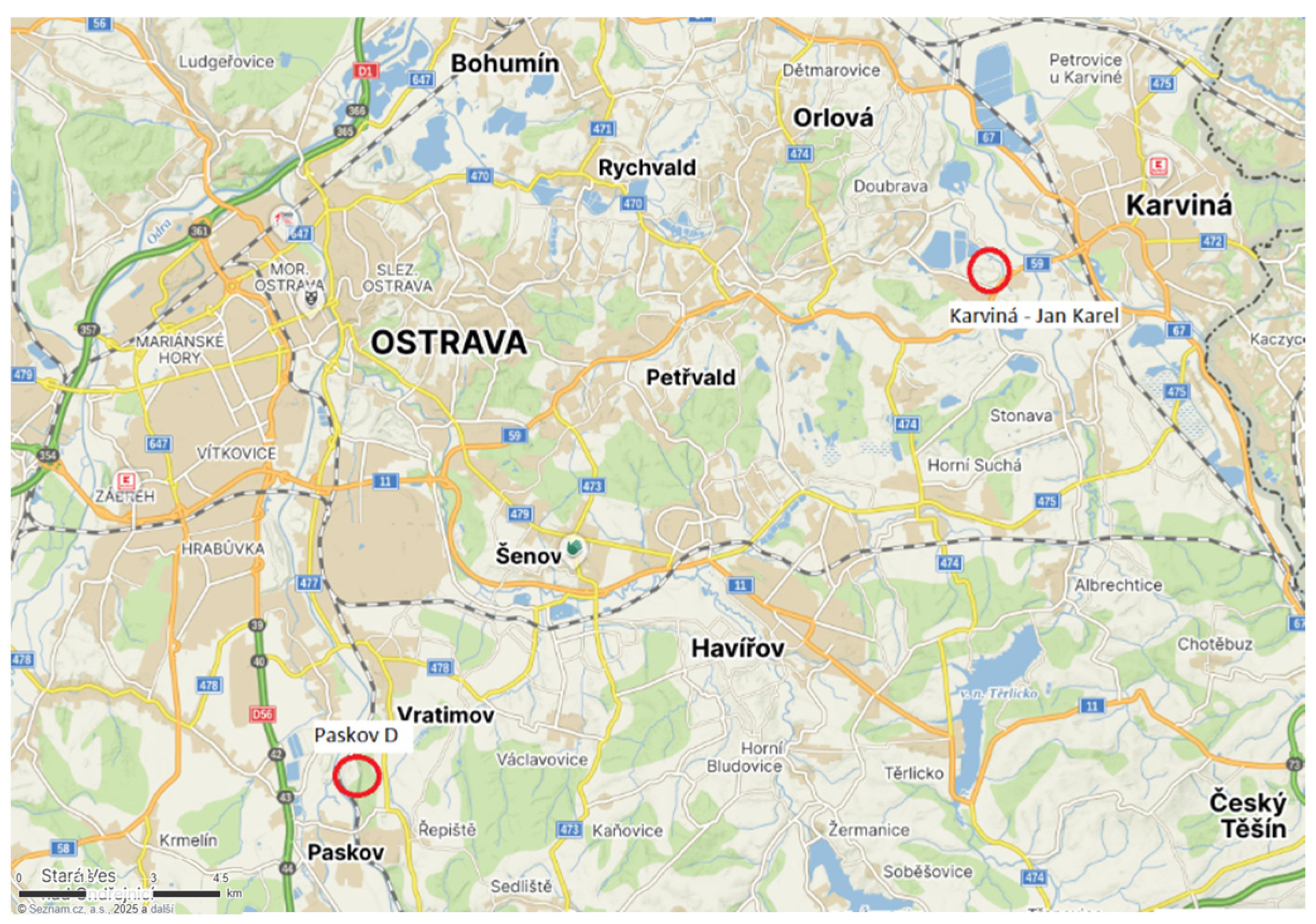
These sites were active and unreclaimed, allowing undisturbed material collection. At each location, 2 samples of 120 kg were collected. Figure 1 shows the location of the selected coal heaps.
Figure 1.
Location of Jan Karel and Paskov D heaps. Moravian-Silesian Region, Czech Republic [19].
2.3. Sample Preparation
Samples were initially air-dried to reduce moisture content and ensure proper crushing. Material from Jan Karel (Karviná) was more homogeneous, while Paskov D exhibited a mix of large overburden pieces and fine coal-rich particles. Both samples were sieved using a 35 mm mesh and then crushed using a jaw crusher BB200 (Retsch, Haan, DE). The prepared materials were homogenized and stored for further processing.
As part of the joint international effort, mechanical separation of the samples was carried out by Polish partners using jig technology. This step successfully separated coal from gangue material. Only the coal-enriched concentrate was returned to the Czech team for further analysis.
The proximate and ultimate analyses of the coal-enriched concentrates are presented in Table 1. Proximate analysis was performed according to ISO 17246:2024 and ISO 1171:2024 standards to determine moisture content, volatile matter, fixed carbon, and ash content. Ultimate analysis was conducted using an elemental analyzer (CHNS/O) according to ISO 29541:2025 to determine the content of carbon (C), hydrogen (H), nitrogen (N), sulfur (S), and oxygen (O). [20,21,22].
Table 1.
Proximate and ultimate analyses of coal-enriched concentrates.
2.4. Gasification Testing
Initial gasification experiments were conducted on the coal-enriched fraction. The primary objective was to evaluate the energy potential and suitability of the separated coal material for thermal utilization. The experiments mark the first step in the energy recovery assessment of mining waste.
2.4.1. Reactor Description
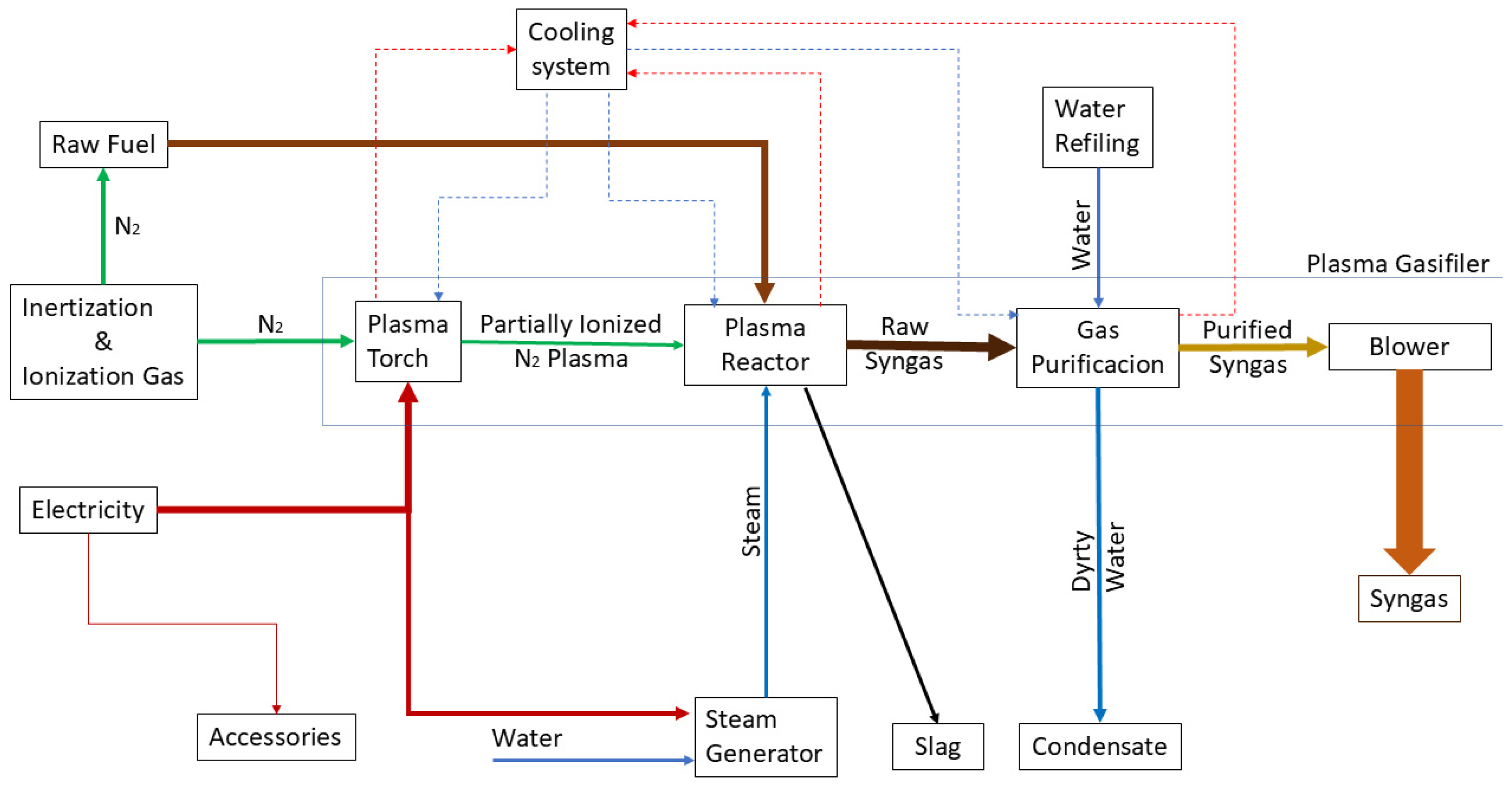
Plasma gasification was carried out in a modular laboratory unit installed at VSB-Technical University of Ostrava at CEET (Centre for Energy and Environmental Technologies); see Figure 2. The device enables the thermochemical conversion of organic materials and alternative fuels into synthesis gas at 1600 °C in a reactor using a DC arc plasma torch. The process takes place in the absence of air, with nitrogen as the ionization gas and water vapour as the gasification medium (250 °C, 4.5 bar, 4.1–8.1 kg/h). The resulting gas, rich in H2 and CO, also contains CO2, H2O, CH4, and N2. The N2 content is due to the fact that it is used as an ionization gas for plasma torches. Other constituents and contaminants in the gas were not determined.
Figure 2.
Scheme of plasma gasification unit.
The gasification reactor is a steel vessel with a multilayer refractory lining and a duplicator jacket to prevent heat loss. It is equipped with three plasma torches (total power input up to 150 kW), a screw feeder for continuous fuel dosing (20–60 kg/h, max. 20%mass moisture), and a slag outlet with a lined collection vessel. Slag formation occurs from the inorganic content of the feedstock.
The syngas exits the reactor and passes through a two-stage gas cooling system. In the first stage, water is sprayed directly into the hot gas (cooling capacity 25–50 kW, water flow 16–25 L/min), lowering its temperature to ~200 °C. The second stage uses ice water in a packed column to cool the gas to ~10 °C. A roots blower maintains system pressure between −2 and +2 kPa and ensures gas transport. A fraction of the syngas was continuously extracted for online analysis using Syngas Analyzer Gasboard 3100P. The individual gas components were determined using the following detectors: CO, CO2, CH4—NDIR; H2—TCD; O2—electrochemically. Nitrogen content was calculated.
The amount of synthesis gas was determined by a KIMO 12975 pitot tube with a KIMO MP210. This probe was placed downstream of the blower during the entire measurement. The gas pressure and temperature were further determined at this point.
2.4.2. Test Description
Four experiments of plasma gasification of the sorted coal fraction were carried out in the plasma gasifier. The experiments took place at a temperature of 1600 °C, and each lasted one hour. Due to the limited amount of input fuel, the tests were carried out with a dose of 20 kg in three trials and 15 kg in one. The main goal of the experiments was to evaluate the effect of the steam/fuel ratio on the yield and composition of syngas, while three different values of this ratio were tested: 0.6, 1, and 1.3. The fuel flow was set to 20 and 15 kg/h.
3. Results and Discussion
3.1. Selection Criteria and Data for Database Creation
Waste Dump Coal Volume Over 100,000 m3
The first selection criterion was the volume of the coal waste dump, with a minimum volume of over 100,000 m3. Large volumes of waste dumps represent significant potential for further utilization and can also have a greater environmental impact. Smaller volume dumps were excluded because their significance is comparatively less than that of larger dumps.
Availability and sampling (Agreement with Owners)
It is essential to ensure access to the coal waste dumps and obtain the site owner’s consent for sampling. Without the possibility of sampling, the research team is unable to analyse and evaluate the materials deposited on the heap. The owner’s consent to utilize the dump is crucial for any future plans concerning the processing (utilization) or disposal of the material. For this reason, for the sites selected based on the first criterion (volume), we identified their owners, including the owners of the land beneath the dumps and access roads, and the possibility of obtaining permission for sampling.
Waste from black coal mining
The database focuses exclusively on waste from underground black coal mining, as it has a specific chemical composition and potential for energy utilization. Based on consultations with companies managing mining waste, it was found that, unlike brown coal spoil heaps, which are primarily used for reclamation, black coal waste remains mostly on the surface and may contain both free and dispersed coal matter in the original rocks, which can be a source of energy utilization.
Coal Waste Dump Activity (Active, Inactive, Reclaimed)
The status of the coal waste dump is a key factor in assessing its potential and risks. Active dumps may still be in the process of disposal, but their advantage is that they are easily accessible and not reclaimed. Inactive coal waste dumps are stabilized, and reclaimed dumps may already be reused for other purposes. This information helps determine the status and potential utilization of the coal waste dump.
Environmental risk
Companies managing coal waste dumps must minimize the environmental risk of stored mining waste. Materials in the dump can impact the surrounding environment in terms of the leachability of potentially hazardous substances or the potential ignition of the material.
3.2. Results of Gasification
3.2.1. Analysis of Syngas Composition
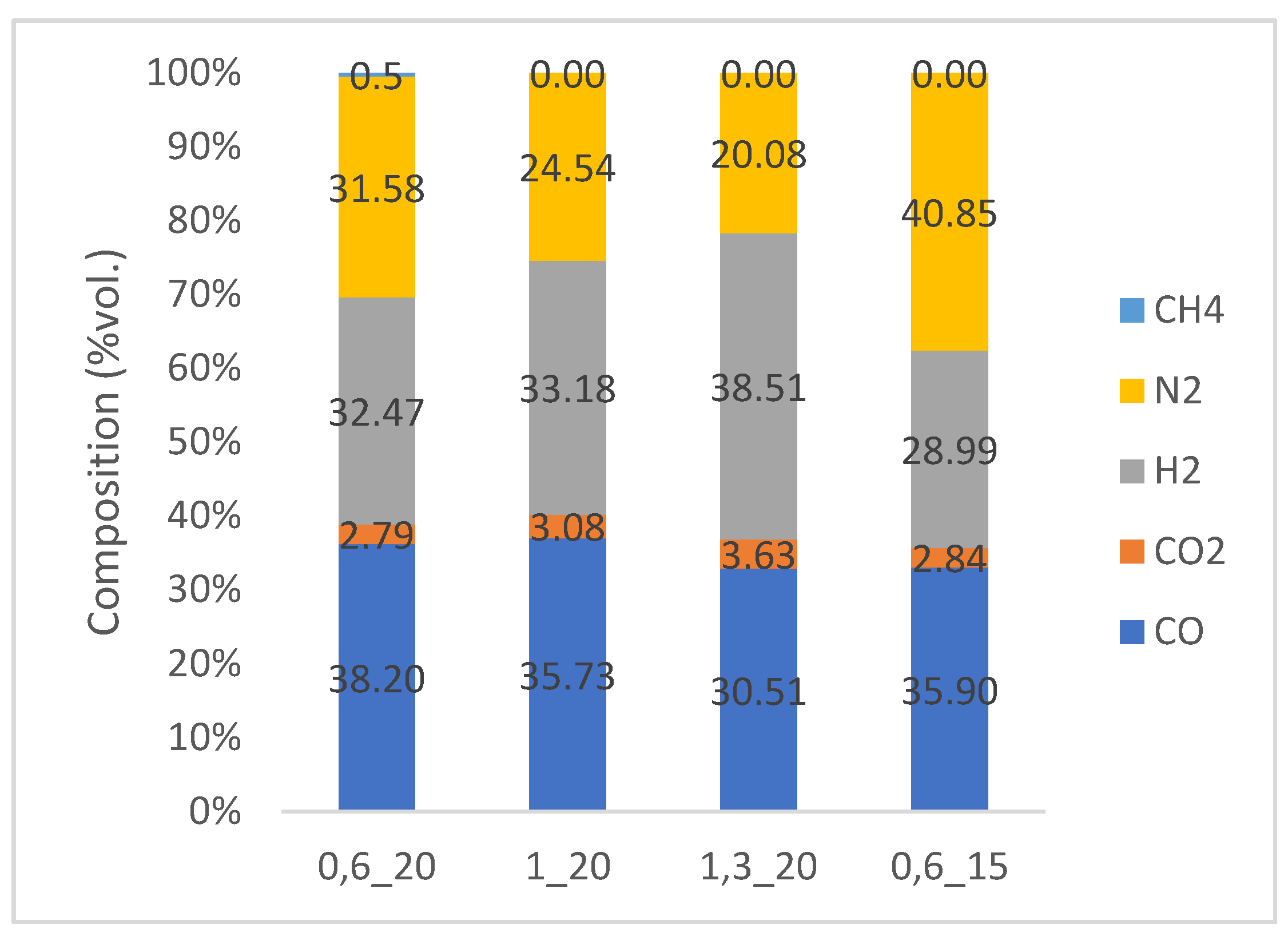
Due to the large reactor volume and limited fuel, the gas composition stabilized slowly. Based on our experience, a stable syngas composition was reached after ~40 min. Fuel was dosed over 60 min, with lower screw fill expected from the 50th minute. Therefore, gas composition was averaged over minutes 40–50 (Figure 3).
Figure 3.
Composition of syngas.
Across all four tests, syngas composition remained relatively constant. N2 ranged from 20.08–40.85%vol, as it served as the ionization gas. The highest N2 value (test 0,6_15) corresponded to reduced fuel flow, while N2 flow remained unchanged.
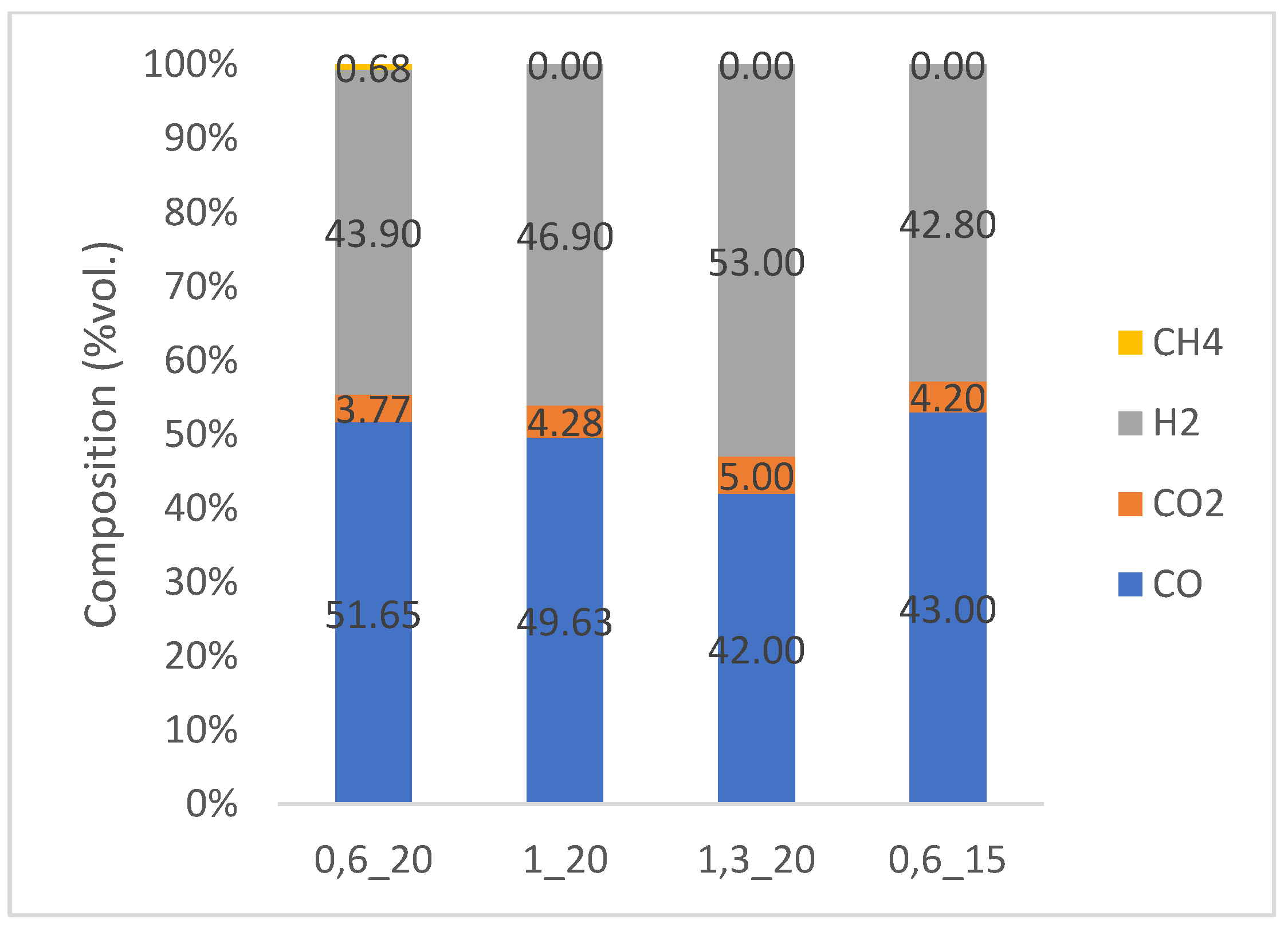
Figure 4 shows syngas without N2. The steam/fuel ratio significantly influenced H2 production. At lower ratios (e.g., 0.6), less steam favored CO and CH4 formation, increasing calorific value. Higher ratios enhanced H2 and CO2 via the water–gas shift reaction (CO + H2O → CO2 + H2), suitable for hydrogen-oriented applications.
Figure 4.
Composition of syngas without N2.
3.2.2. Mass Balance
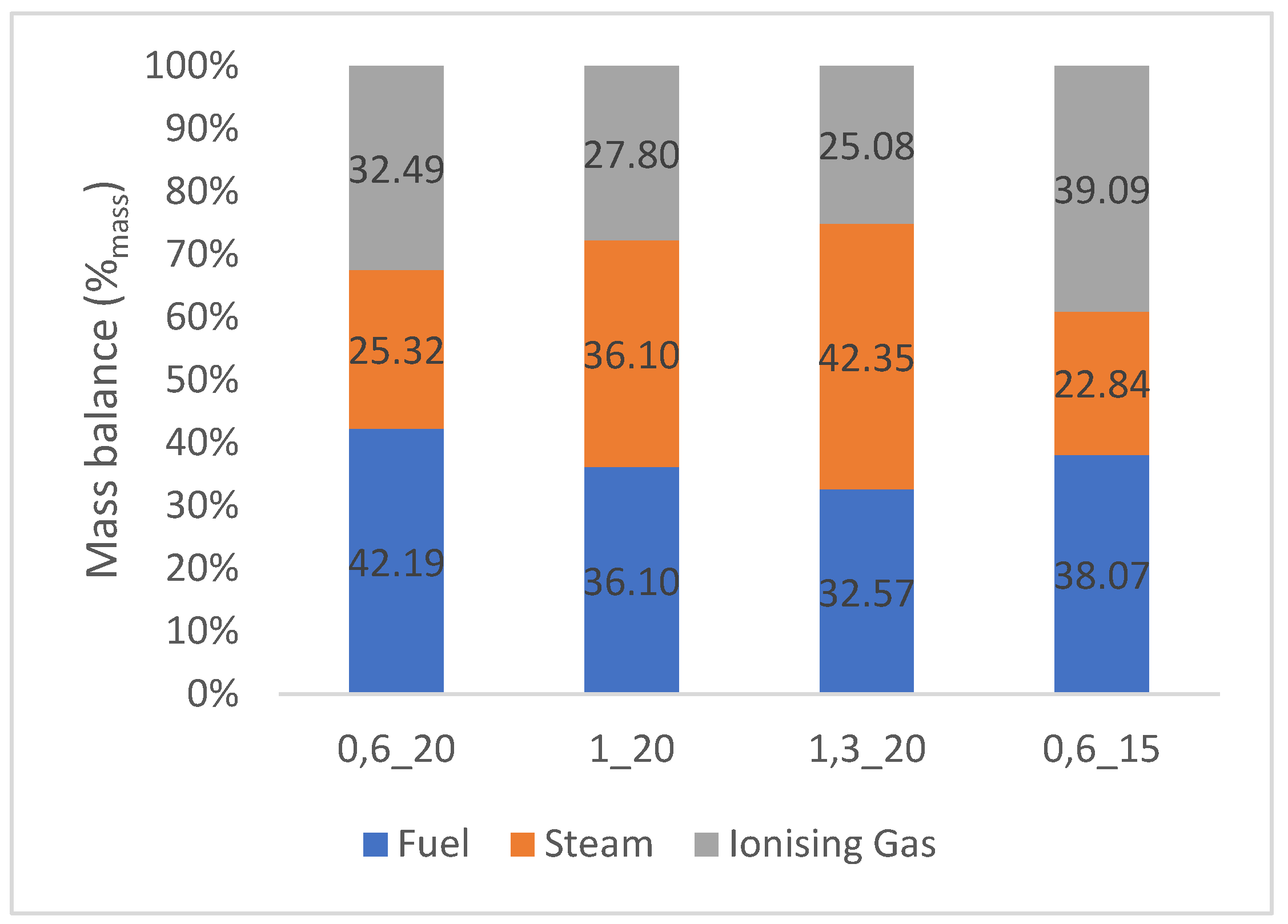
Mass flow measurements enabled the construction of mass balances (Figure 5). Ionization gas input was highest in test 0,6_15 due to reduced fuel/steam flow.
Figure 5.
Mass balance feedstock of gasification.
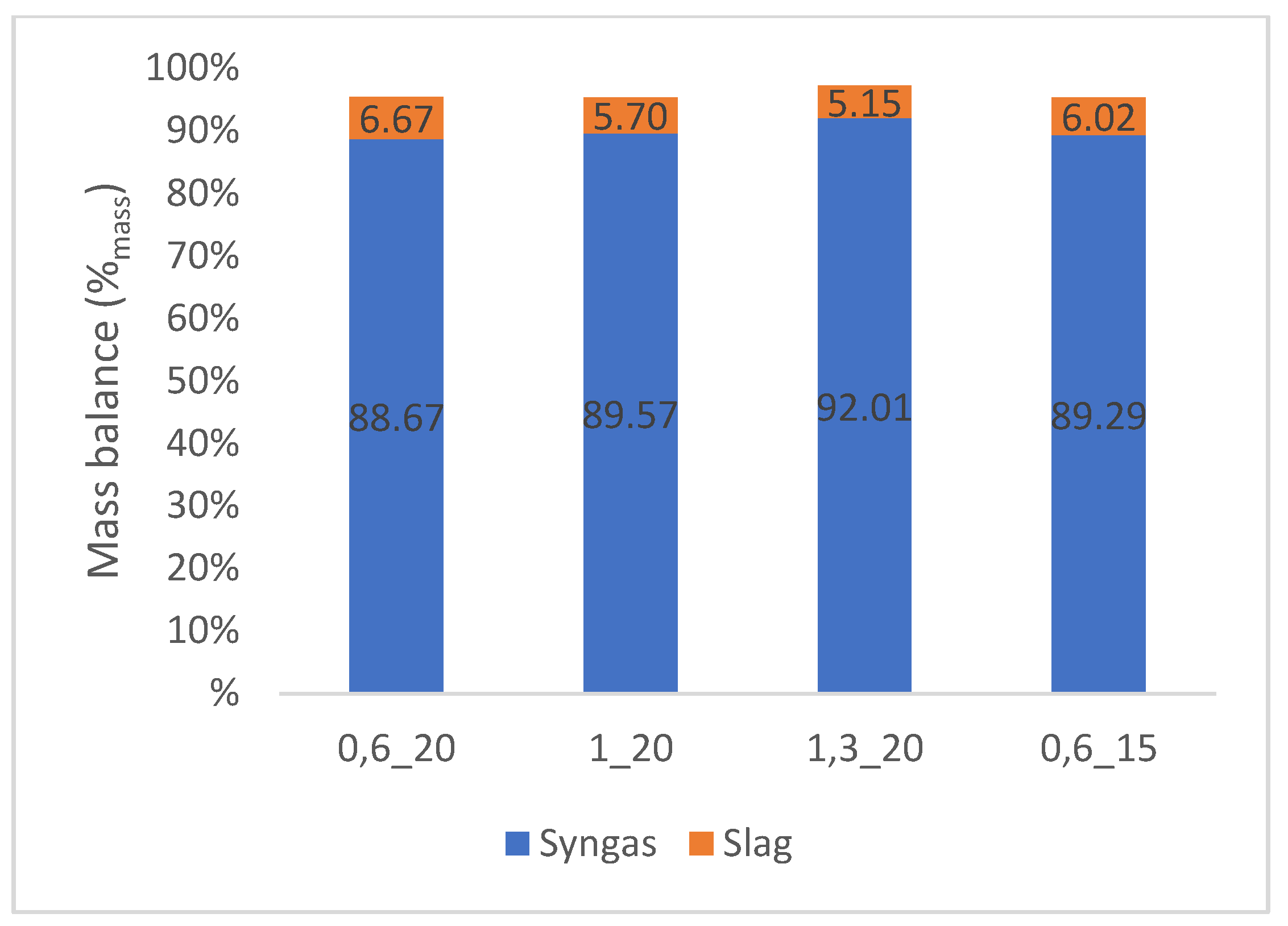
Figure 6 shows product mass yields. The highest gas yield occurred in test 1,3_20 (highest steam input), while the lowest was in test 0,6_20. Lower fuel flow (from 20 to 15 kg/h) kept ionization gas constant, diluting the syngas and aligning with composition results (Figure 3).
Figure 6.
Mass balance yields of gasification.
The mass balance of input materials and products showed a high yield of syngas, which reached up to 92% by volume.
3.2.3. VA Characteristics of Plasma Torch
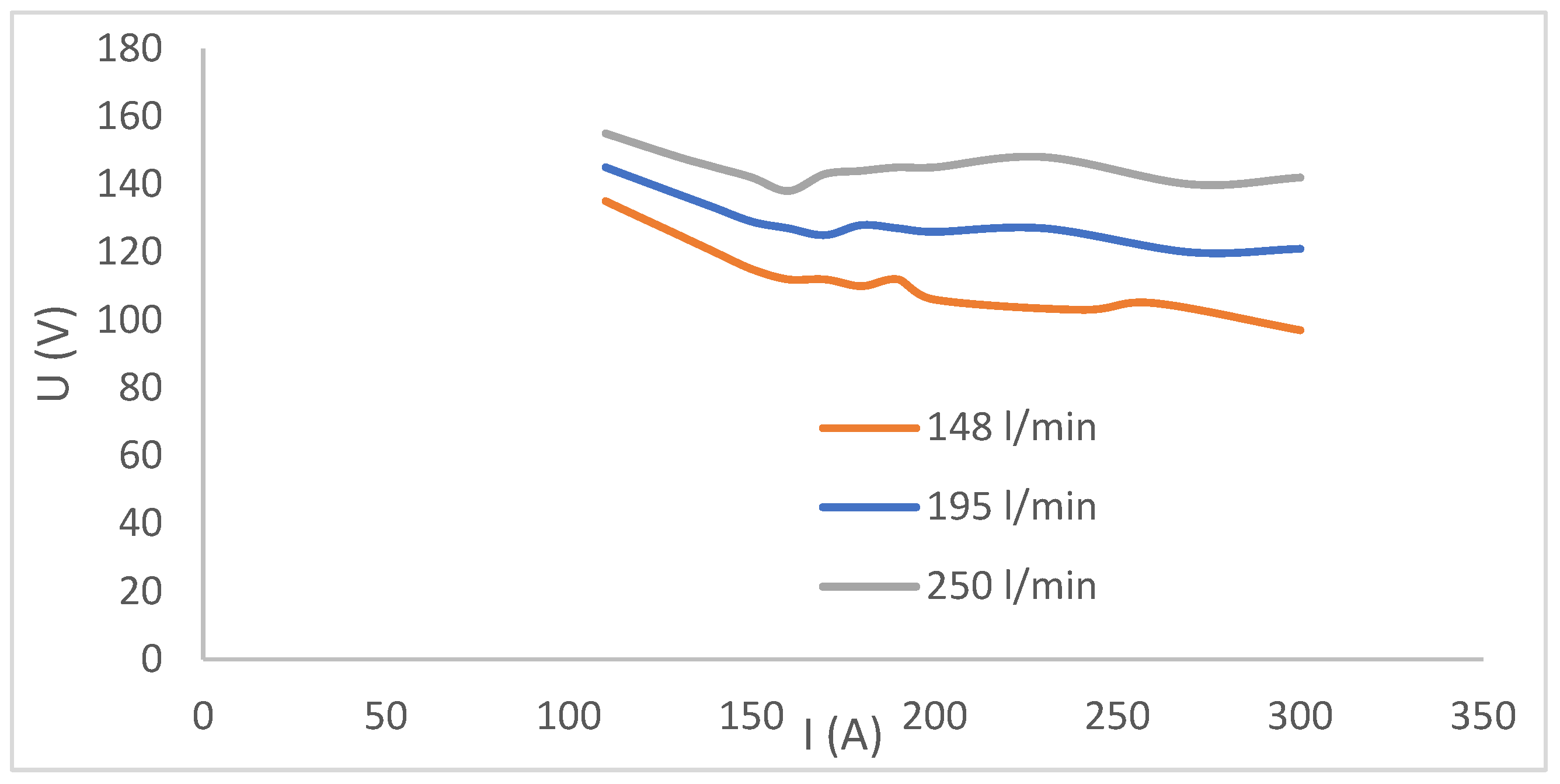
Figure 7 shows voltammograms at nitrogen flow rates of 148, 195, and 250 L/min. Voltage rose with increasing flow at the same current. All curves show voltage drop with increasing current, then stabilization—typical behavior linked to arc temperature and plasma conductivity [23,24,25,26].
Figure 7.
Voltammogram of plasma arc torch.
Higher N2 flow increases voltage due to higher ion/atom density in the arc region, requiring more energy to sustain arc stability.
4. Conclusions
A comprehensive approach was applied to assess the potential of black coal mining waste as a feedstock for plasma gasification. A database of coal waste heaps in the Czech Republic was developed based on standardized criteria, including heap volume, accessibility, and environmental risk. From the initial six sites sampled, two active and unreclaimed heaps—Jan Karel and Paskov D—were selected for detailed material analysis.
The outcomes of this study demonstrate the viability of using selected coal mining wastes in plasma gasification, offering a promising pathway for their energy-efficient and environmentally sound utilization. Beyond laboratory-scale demonstration, the technology presents potential applications in active mining operations, where gasification units could be integrated into coal processing systems for combined heat and power generation, thereby improving energy balance and reducing waste transportation costs. The high hydrogen content in syngas (up to 50% vol. without N2 at a steam/fuel ratio of 1.3) also opens possibilities for hydrogen production to power shunting locomotives on mine industrial railways, contributing to the decarbonization of mining logistics.
Moreover, plasma gasification technology offers potential for environmental remediation, particularly for addressing burning waste heaps such as the one in Heřmanice. The controlled high-temperature processing could eliminate spontaneous combustion sources while recovering energy from the material, serving dual purposes of environmental protection and energy production.
Further research should focus on economic feasibility studies, scale-up considerations, and detailed assessment of specific industrial implementation scenarios to advance this technology toward commercial deployment.
Author Contributions
Conceptualization, I.J. and S.D.; methodology, I.J. and S.H.; validation, S.D., J.K. and S.H.; formal analysis, O.Š.; investigation, I.J. and J.K.; resources, O.Š. and S.D.; data curation, S.H.; writing—original draft preparation, I.J.; writing—review and editing, I.J., S.D., S.H. and J.K.; visualization, O.Š.; supervision, I.J. and J.K.; project administration, S.D.; funding acquisition, S.H. All authors have read and agreed to the published version of the manuscript.
Funding
This research was funded by The Research Fund for Coal and Steel EU-RFCS2027, grant number 101112386 named “New technology for hydrogen and geopolymer composites production from post-mining waste”.
Institutional Review Board Statement
Not applicable.
Informed Consent Statement
Not applicable.
Data Availability Statement
The original contributions presented in this study are included in the article. Further inquiries can be directed to the corresponding author.
Conflicts of Interest
The authors declare no conflicts of interest.
References
- Balat, M. Coal in the Global Energy Scene. Energy Sources B Econ. Plan. Policy 2009, 5, 50–62. [Google Scholar] [CrossRef]
- Bondarenko, V.; Salieiev, I.; Kovalevska, I.; Chervatiuk, V.; Malashkevych, D.; Shyshov, M.; Chernyak, V. A New Concept for Complex Mining of Mineral Raw Material Resources from DTEK Coal Mines Based on Sustainable Development and ESG Strategy. Mining Miner. Depos. 2023, 17, 1–16. [Google Scholar] [CrossRef]
- Dosmukhamedov, N.K.; Zholdasbay, E.E.; Egizekov, M.G. New Opportunities for the Development of the Coal Industry: Technology of Waste Gas Purification from SO2, NOx, CO2. Eng. J. Satbayev Univ. 2022, 144, 5–10. [Google Scholar] [CrossRef]
- International Energy Agency (IEA). Coal Mid Year Update—July 2024. Paris, 2024. Available online: https://www.iea.org/reports/coal-mid-year-update-july-2024 (accessed on 30 June 2025).
- Ribeiro, J.; Suárez Ruiz, I.; Flores, D. Geochemistry of Self Burning Coal Mining Residues from El Bierzo Coal Field (NW Spain): Environmental Implications. Int. J. Coal Geol. 2016, 159, 155–168. [Google Scholar] [CrossRef]
- Babets, Y.K.; Bielov, O.P.; Shustov, O.O.; Barna, T.V.; Adamchuk, A.A. The Development of Technological Solutions on Mining and Processing Brown Coal to Improve Its Quality. Nauk. Visn. Nats. Hirn. Univ. 2019, 36–44. [Google Scholar] [CrossRef]
- Zhao, Y.; Zhang, J.; Chou, C.-L.; Li, Y.; Wang, Z.; Ge, Y.; Zheng, C. Trace Element Emissions from Spontaneous Combustion of Gob Piles in Coal Mines, Shanxi, China. Int. J. Coal Geol. 2008, 73, 52–62. [Google Scholar] [CrossRef]
- Haibin, L.; Zhenling, L. Recycling Utilization Patterns of Coal Mining Waste in China. Resour. Conserv. Recycl. 2010, 54, 1331–1340. [Google Scholar] [CrossRef]
- Šigut, O.; Široký, T.; Janáková, I.; Střelecký, R.; Čablík, V. Assessment of Gravity Deportment of Gold Bearing Ores: Gravity Recoverable Gold Test. Minerals 2024, 14, 1279. [Google Scholar] [CrossRef]
- Wang, W.; Hao, W.; Bian, Z.; Lei, S.; Wang, X.; Sang, S.; Xu, S. Effect of Coal Mining Activities on the Environment of Tetraena mongolica in Wuhai, Inner Mongolia, China—A Geochemical Perspective. Int. J. Coal Geol. 2014, 132, 94–102. [Google Scholar] [CrossRef]
- Makarov, V.; Perov, M.; Bilan, T.; Novoseltsev, O.; Zaporozhets, A. Technological State of Coal Mining in Ukraine. In Geomining; Shukurov, A., Vovk, O., Zaporozhets, A., Zuievska, N., Eds.; Springer Nature Switzerland: Cham, Switzerland, 2024; pp. 31–41. [Google Scholar]
- Querol, X.; Izquierdo, M.; Monfort, E.; Álvarez, E.; Font, O.; Moreno, T.; Alastuey, A.; Zhuang, X.; Lu, W.; Wang, Y. Environmental Characterization of Burnt Coal Gangue Banks at Yangquan, Shanxi Province, China. Int. J. Coal Geol. 2008, 75, 93–104. [Google Scholar] [CrossRef]
- Pertile, E.; Surovka, D.; Sarcaková, E.; Bozon, A. Monitoring of Pollutants in an Active Mining Dump Ema, Czech Republic. Inzyn. Miner.-J. Pol. Miner. Eng. Soc. 2017, 1, 45–50. [Google Scholar] [CrossRef]
- Pertile, E.; Surovka, D.; Božon, A. The Study of Occurrences of Selected PAHs Adsorbed on PM10 Particles in Coal Mine Waste Dumps Hermanice and Hrabuvka (Czech Republic). In Proceedings of the 16th 2016, (SGEM 2016) Energy and Clean Technologies (Extended Scientific Sessions), Vienna, Austria, 2–5 November 2016; STEF92 Technology Ltd.: Sofia, Bulgaria, 2016; pp. 161–168. [Google Scholar]
- Pallarés, J.; Herce, C.; Bartolomé, C.; Peña, B. Investigation on Co Firing of Coal Mine Waste Residues in Pulverized Coal Combustion Systems. Energy 2017, 140, 58–68. [Google Scholar] [CrossRef]
- Liu, F.; Xie, M.; Yu, G.; Ke, C.; Zhao, H. Study on Calcination Catalysis and the Desilication Mechanism for Coal Gangue. ACS Sustain. Chem. Eng. 2021, 9, 10318–10325. [Google Scholar] [CrossRef]
- Guo, F.; Wang, H.; Li, H.; Guo, S.; Guo, Y. Waste Coal Gasification Fine Slag Disposal Mode via a Promising “Efficient Non Evaporative Dewatering & Mixed Combustion”: A Comprehensive Theoretical Analysis of Energy Recovery and Environmental Benefits. Fuel 2023, 339, 126924. [Google Scholar]
- ISO 17246:2024; Coal and Coke—Proximate Analysis. 3rd ed. International Standard: Geneva, Switzerland, 2024.
- Mapy.cz. Available online: https://mapy.com/en/zakladni?x=18.4679454&y=49.8288349&z=12 (accessed on 27 May 2025).
- ISO 1171:2024; Coal and Coke—Determination of Ash. 5th ed. International Standard: Geneva, Switzerland, 2024.
- ISO 29541:2025; Coal and Coke—Determination of Total Carbon, Hydrogen and Nitrogen—Instrumental Method. 2nd ed. International Standard: Geneva, Switzerland, 2025.
- Han, R.; Guo, X.; Guan, J.; Yao, X.; Hao, Y. Activation Mechanism of Coal Gangue and Its Impact on the Properties of Geopolymers: A Review. Polymers 2022, 14, 3861. [Google Scholar] [CrossRef] [PubMed]
- Yugesh, V.; Ganesh, R.; Kandasamy, R.; Goyal, V.; Meher, K. Influence of the Shroud Gas Injection Configuration on the Characteristics of a DC Non-Transferred Arc Plasma Torch. Plasma Chem. Plasma Process. 2018, 38, 759–770. [Google Scholar] [CrossRef]
- Meher, K.; Tirwari, N.; Ghorui, S.; Sahasrabudhe, S.; Das, A. Axial Evolution of Radial Heat Flux Profiles Transmitted by Atmospheric Pressure Nitrogen and Argon Arcs. Plasma Sources Sci. Technol. 2012, 23, 065017. [Google Scholar] [CrossRef]
- Boulos, M.; Fauchais, P.; Pfender, E. Handbook of Thermal Plasmas, 1st ed.; Springer: Cham, Switzerland, 2020. [Google Scholar]
- Kezelis, R.; Grigaitiene, V.; Levinskas, R.; Brinkiene, K. The Employment of a High Density Plasma Jet for the Investigation of Thermal Protection Materials. Phys. Scr. 2014, 2014, 014069. [Google Scholar] [CrossRef]
Disclaimer/Publisher’s Note: The statements, opinions and data contained in all publications are solely those of the individual author(s) and contributor(s) and not of MDPI and/or the editor(s). MDPI and/or the editor(s) disclaim responsibility for any injury to people or property resulting from any ideas, methods, instructions or products referred to in the content. |
© 2025 by the authors. Licensee MDPI, Basel, Switzerland. This article is an open access article distributed under the terms and conditions of the Creative Commons Attribution (CC BY) license (https://creativecommons.org/licenses/by/4.0/).