Proceeding Paper

Prediction and Optimisation of Cr (VI) Removal by Modified Cellulose Nanocrystals from Aqueous Solution Using Machine Learning (ANN and ANFIS) †

by
Banza Jean Claude
1,*,
Vhahangwele Masindi
1 and
Linda L. Sibali
1,2
1
Department of Environmental Science, College of Agriculture and Environmental Sciences, University of South Africa, Christiaan de Wet Road, Florida 1709, South Africa
2
Dean’s Office, Faculty of Science and Agriculture, University of Fort Hare, Dikeni 5700, South Africa
*
Author to whom correspondence should be addressed.
Presented at the 4th International Electronic Conference on Processes, 20–22 October 2025; Available online: https://sciforum.net/event/ECP2025.
Eng. Proc. 2025, 117(1), 12; https://doi.org/10.3390/engproc2025117012
Published: 9 December 2025

Abstract

Cellulose nanocrystals (CNCs) have emerged as highly efficient adsorbents for heavy metal removal owing to their biodegradability, wide availability, and rich surface chemistry. Their abundant hydroxyl and other reactive functional groups provide a high density of active sites, significantly enhancing their affinity and adsorption capacity for toxic metal ions such as chromium (VI). The green adsorbent was characterised using FTIR to identify the functional groups. The optimum conditions were pH 6, concentration 140 mg/L, time 120 min, and adsorbent dosage 6 g/L, with a percentage removal of 95%. Deep machine learning was employed to predict the removal capacity of green and biodegradable adsorbents for chromium (VI) removal from wastewater. The findings show that adaptive neuro-fuzzy inference systems effectively model the prediction of Chromium (VI) adsorption. The Levenberg–Marquardt algorithm (LM) was used to train the network through feedforward propagation. In the training dataset, R2 was 0.966, Mean Square Error (MSE) 0.042, Absolute average relative error (AARE) 0.053, Root means square error (RMSE) 0.077, and average relative error (ARE) 0.053 for the artificial neural network. The RMSE of 0.021, AARE of 0.015, ARE of 0.01, MSE of 0.017, and R2 of 0.998 for the adaptive neuro-fuzzy inference system. These findings confirm the strong adsorption potential of CNCs and the suitability of advanced machine learning models for forecasting heavy metal removal efficiency.

1. Introduction

Water contamination has emerged as a critical and complex environmental concern due to the rapid increase in industrial modernization. Given that many metal ions are highly toxic, resistant to degradation, and capable of bioaccumulating in living organisms, their presence in water systems poses a significant threat to both environmental and human health [1]. Pollution from heavy metals poses serious risks to both human and environmental health. Heavy metal ions are commonly found in wastewater from industries such as printing and dyeing, electroplating, leather manufacturing, and smelting [2]. Cr (VI) is a significant environmental and health risk. The two most common types of Cr (VI) that are encountered during wastewater treatment are hexavalent and trivalent [3]. They may transform various oxidation states depending on temperature and pH, which affects the conversion between them [4]. Compared to Cr (III), Cr (VI) is significantly more toxic and presents a substantial carcinogenic risk to humans because it can readily penetrate cellular membranes. The overall toxicity of chromium is strongly dependent on its oxidation state [5]. This has led to the development of effective methods for treating wastewater containing Cr (VI) ions, which is considered a critical environmental concern that requires immediate attention. There are numerous techniques for treating pollutants in wastewater currently. Ion exchange, flocculation, ultrafiltration, electrodialysis, photocatalytic, and adsorption [4]. The versatility and efficiency of adsorption have made it a method of choice for treating wastewater, outperforming all others. It has a high removal rate, is versatile, and is inexpensive. The treatment equipment is also easy to use, effective, and environmentally safe [6]. Many effective adsorbents have been developed recently for the specific purpose of removing toxic heavy metal ions from bodies of water [4]. Cellulose nanocrystals (CNCs) are high-crystallinity nanocelluloses with various characteristics. The abundance of sources, excellent physicochemical properties (hydrophilicity, chemical stability, ease of degradation, biocompatibility), and unique surface properties make it a desirable adsorbent matrix material today [7]. The nanometre size and high crystallinity provide a large surface area and mechanical strength, making it an ideal material for high-density loading of Ethylenediaminetetraacetic acid (EDTA). However, the restricted adsorption capabilities and difficulty in recycling of primitive cellulose nanocrystals limit their practical applicability. To change the CNC, a functional group-rich material is needed [4].
Overcoming the difficulties of conventional methods is partly made possible by the increasing inclusion of artificial intelligence (AI) in the water treatment sector. Market research indicates that the industry is currently attracting large financial flows into artificial intelligence technologies; projections estimate that by 2030, these investments would total $6.3 billion. The ability of artificial intelligence to enhance chemical efficiency and streamline water treatment techniques accounts for a significant portion of these cost savings [3]. The adaptability and clear design of AI applications are acknowledged as helping improve water treatment techniques. Advanced artificial intelligence techniques, including artificial neural networks (ANNs), convolutional neural networks (CNNs), decision trees (DTs), and recurrent neural networks (RNNs), have emerged as powerful tools for enhancing the operational efficiency and environmental performance of water treatment systems [6]. Adaptive neuro-fuzzy inference systems (ANFIS) combine the strong learning capabilities of ANNs with the robust reasoning abilities of fuzzy systems. Consequently, it combines the benefits of both approaches into a single approach. In engineering applications, it is often more beneficial to integrate fuzzy systems with ANNs rather than relying only on one technique [6]. To better explain non-linear behavior in complex systems, ANFIS is a powerful tool for modeling, mapping, prediction, and problem-solving. The input and output of an ANFIS model are separated into two parts and combined into a network using fuzzy rules. Due to its broad capacity to simulate non-linear variation, its usefulness in forecasting the efficacy of different processes, and its ability to extrapolate based on historical data across various sectors, it is widely recognized as a technology [7].
The primary objective of this study was to predict the behaviour of Cr (VI) removal using both artificial neural network and adaptive neuro-fuzzy inference systems approaches. Using cellulose nanocrystals as an adsorbent is the initial step in removing Cr (VI) from an aqueous solution. Input data include the pH of the solution, contact duration, initial concentration, and dose of the adsorbent. We concluded by comparing the experimental data with the anticipated data obtained from the two models.

2. Materials and Methods

2.1. Materials

A two-step process was employed to activate the isolated cellulose nanocrystals chemically. To start, carboxyl groups were introduced using an esterification process utilising succinic anhydride (98 wt%) at 60 °C for 8 h. After that, to improve the ability to bind metals, it was coupled with EDTA (99 wt%) in phosphate buffer (pH 7.5) and left at room temperature for 48 h. The pH of the solution throughout the processes was controlled using 0.5 M NaOH (98 wt%) and 0.5 M HCl (37 wt%).

2.2. Preparation of the Modified Cellulose Nanocrystals

The reaction was initiated by stirring the reactor containing 20 g CNCs with 200 mL of 0.2 M EDTA at 200 rpm for 180 min. Soon after, the agitation duration was increased to 6 h, and 25 mL of 0.5 M hydrochloric acid was added. The modified cellulose nanocrystals were rinsed until the pH was neutral and then centrifuged at 1500 rpm for 15 min to extract any compounds that had not yet reacted. After 5 h of incubation in a 0.5 M succinic anhydride solution at room temperature, the cellulose nanocrystals exhibited additional modification.

2.3. Batch Adsorption

The effectiveness of modified cellulose nanocrystals in removing Cr(VI) was assessed through batch testing. The functionalized cellulose nanocrystals were combined with a 250 mL Cr (VI) solution in a conical flask. The mixture was then stirred at 250 rpm for 6 h using a rotating shaker. Key operational parameters, such as starting Cr(VI) concentration (50–200 mg/L), solution pH (ranging from 2 to 8), contact duration (ranging from 30 to 120 min), and adsorbent dose (ranging from 0 to 25 mg/L), were fully explored in the studies. A 0.45 μm filter was used to separate the adsorbent from each sample immediately. The filtrate was then analyzed using AAS to determine the concentration of residual Cr (VI).
The Cr (VI) percentage removal was calculated using the equation below.
Removal   ( % ) = C o C t C 0 × 100
where the beginning concentration (Co) in mg/L, and the concentration at time t (Ct) in mg/L.

3. Result and Discussion

The FTIR spectrum in Figure 1 confirms the cellulose nanocrystals composite by showing essential functional groups. A large peak in the O-H stretching vibrations at approximately 3620 cm−1 indicates the presence of hydroxyl groups. The composite of cellulose has a peak at 1610 cm−1, possibly owing to (–COO) asymmetric stretching vibration. The peak at 1320 cm−1 represents the bending vibration of CH2 groups, whereas the band at 1280 cm−1 is indicative of CH2 deformation. A large absorption band at 1010 cm−1 indicates pyranose ring C–O–C skeletal vibration, whereas a lesser band around 890 cm−1 indicates β-glycosidic connections in the cellulose backbone, verifying cellulose structural stability [3,5].
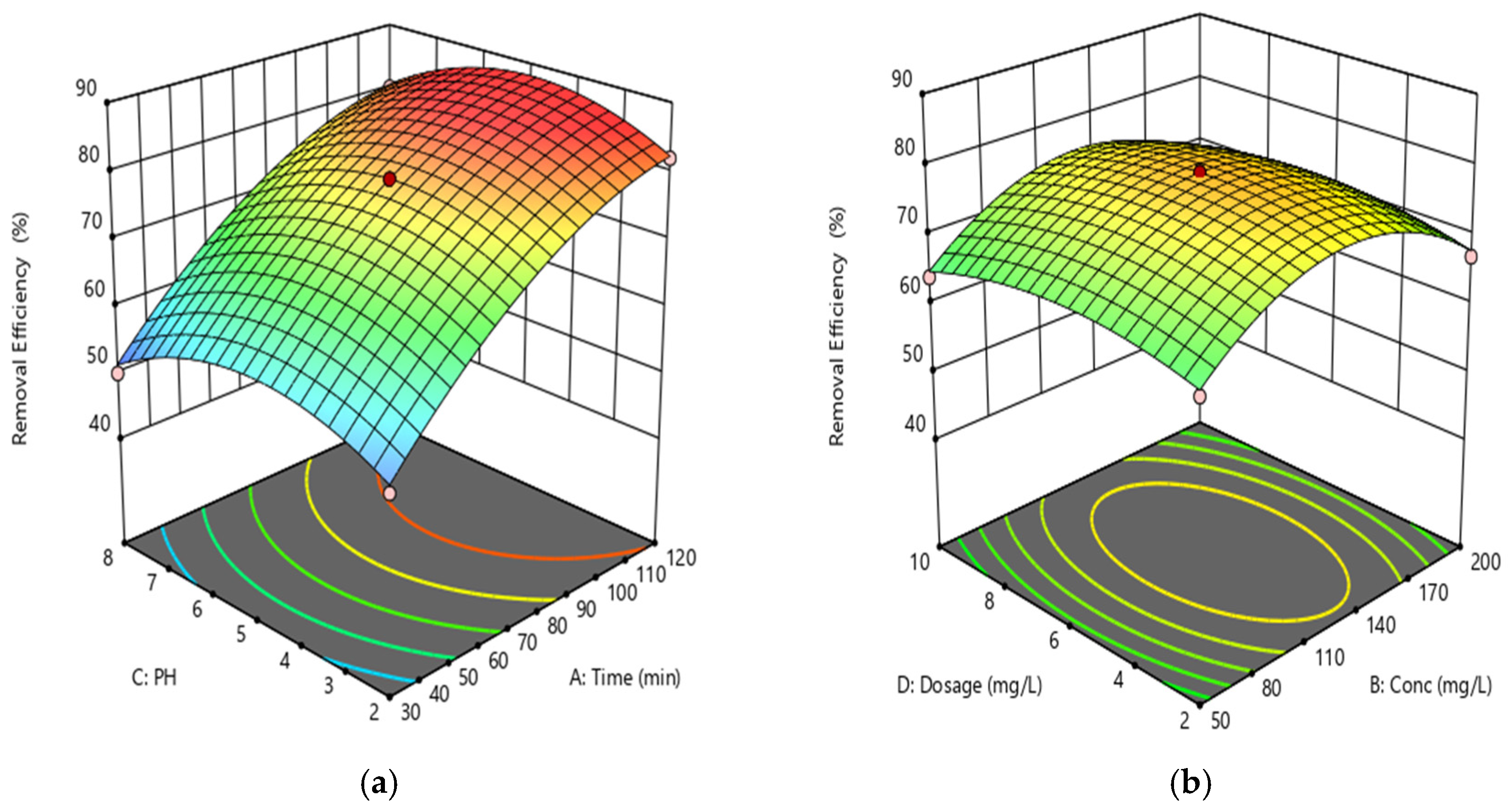
The effect of pH and time on chromium (VI) removal is illustrated in Figure 2a. The solution pH was found to play a crucial role in the adsorption performance of cellulose nanocrystal nanocomposite. As the pH increased from 2 to 6, the removal efficiency increased from 50% to 71%. These results indicate that chromium (VI) removal is most effective at pH 6. At lower pH values, the surface of the cellulose nanocrystal nanocomposite becomes protonated, acquiring a positive charge that repels the positively charged chromium (VI) ions, thereby limiting adsorption [8,9]. The adsorption increases rapidly during the initial phase, as abundant active sites facilitate swift metal uptake. After 120 min, the removal percentage reached 80%, indicating saturation of the available binding sites [10]. Figure 2b illustrates that increasing the adsorbent dosage from 2 to 8 mg/L leads to a decrease in removal percentage, reaching approximately 65%. Similar behaviour was observed in thermally modified cellulose hydrogels for dye removal, where removal efficiency decreases with higher dosage due to site aggregation [11]. An increase in concentration from 50 to 140 mg/L resulted in an enhanced removal of chromium (VI). This trend can be attributed to the stronger concentration gradient driving force at higher initial concentrations, which promotes greater metal ion uptake provided the adsorbent’s active sites remain unsaturated [12].
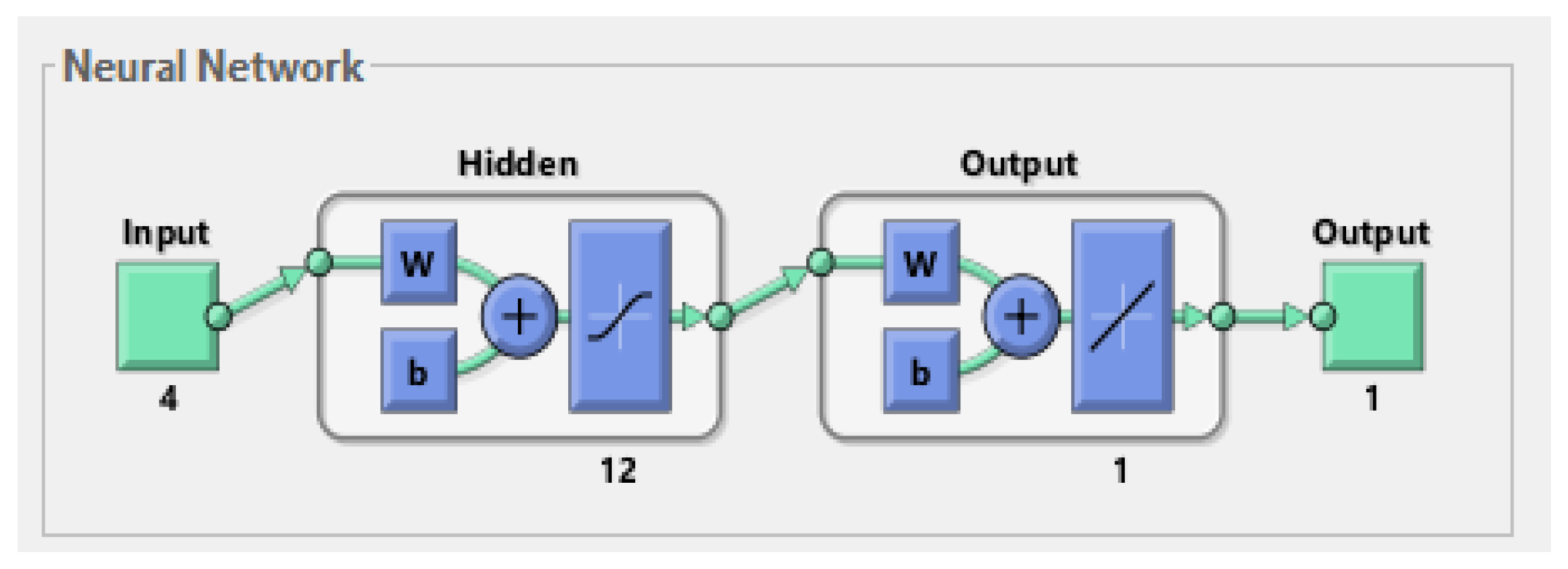
Figure 3 depicts the architecture of a three-layer ANN comprising an input layer with four neurons corresponding to the operational parameters of chromium (VI) concentration, pH, contact time, and adsorbent dosage, with a hidden layer configured with ten processing nodes, and an output layer containing a single neuron, thus forming a 4-12-1 structure. The network was trained using the backpropagation (BP-ANN) algorithm.
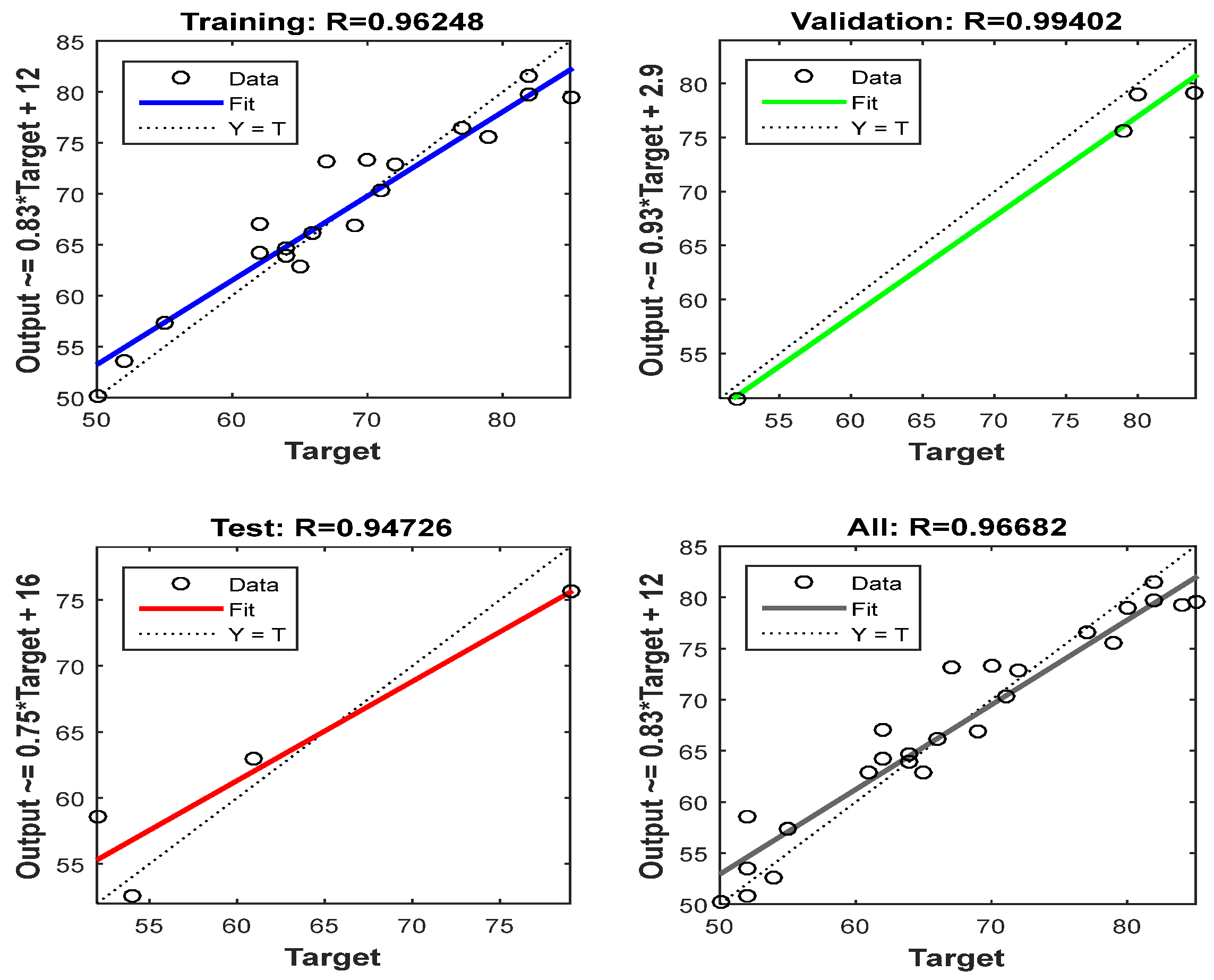
Figure 4 presents the interaction of the ANN model with the training, validation, and testing datasets. The correlation coefficients obtained for training, validation, and testing phases were 0.962, 0.994, and 0.947, respectively, yielding an overall value of 0.966. The plotted straight line reflects a strong linear relationship between the predicted and experimental values [13]. These results indicate a high level of agreement between the model outputs and the actual data, confirming the ANN model’s excellent predictive capability.
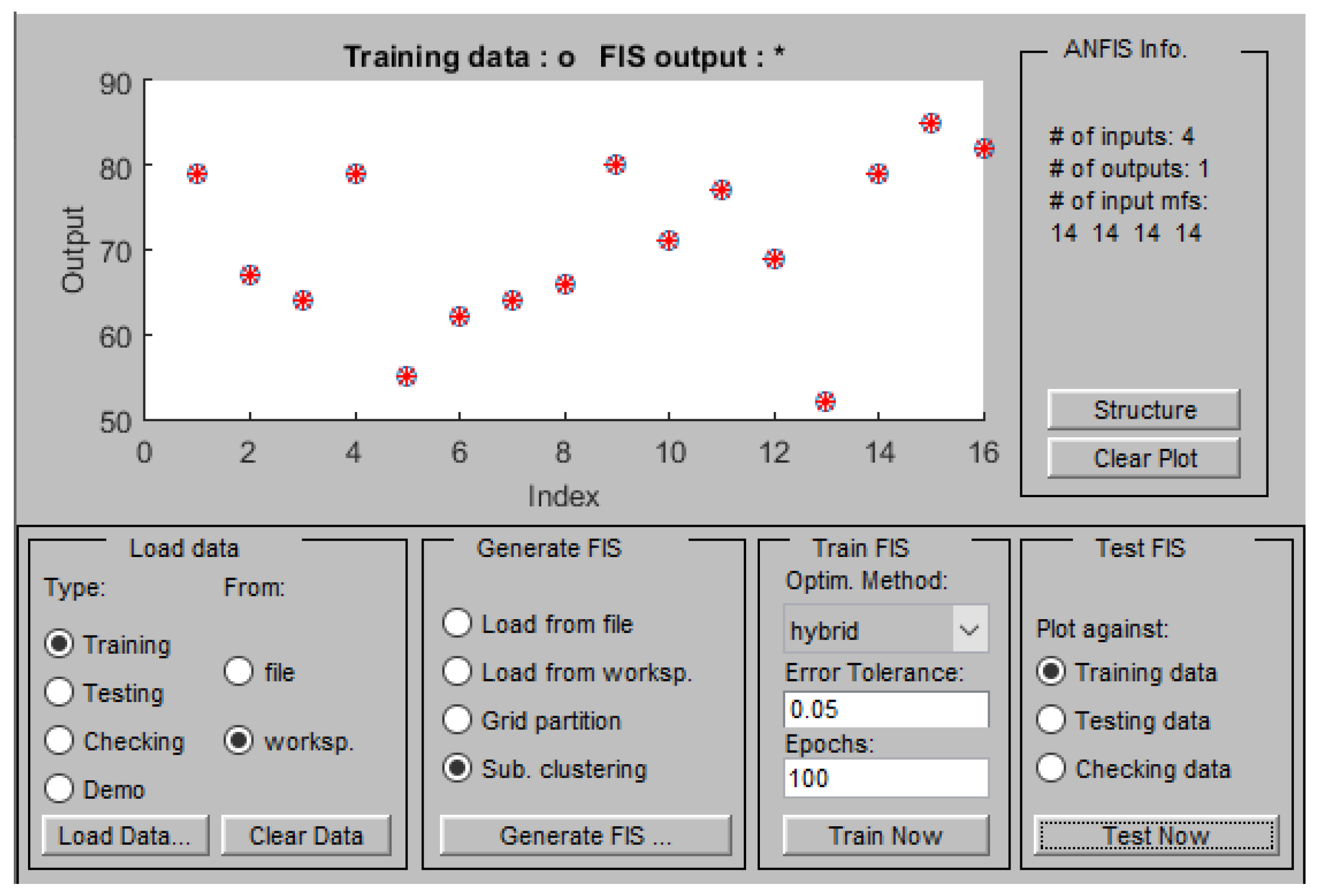
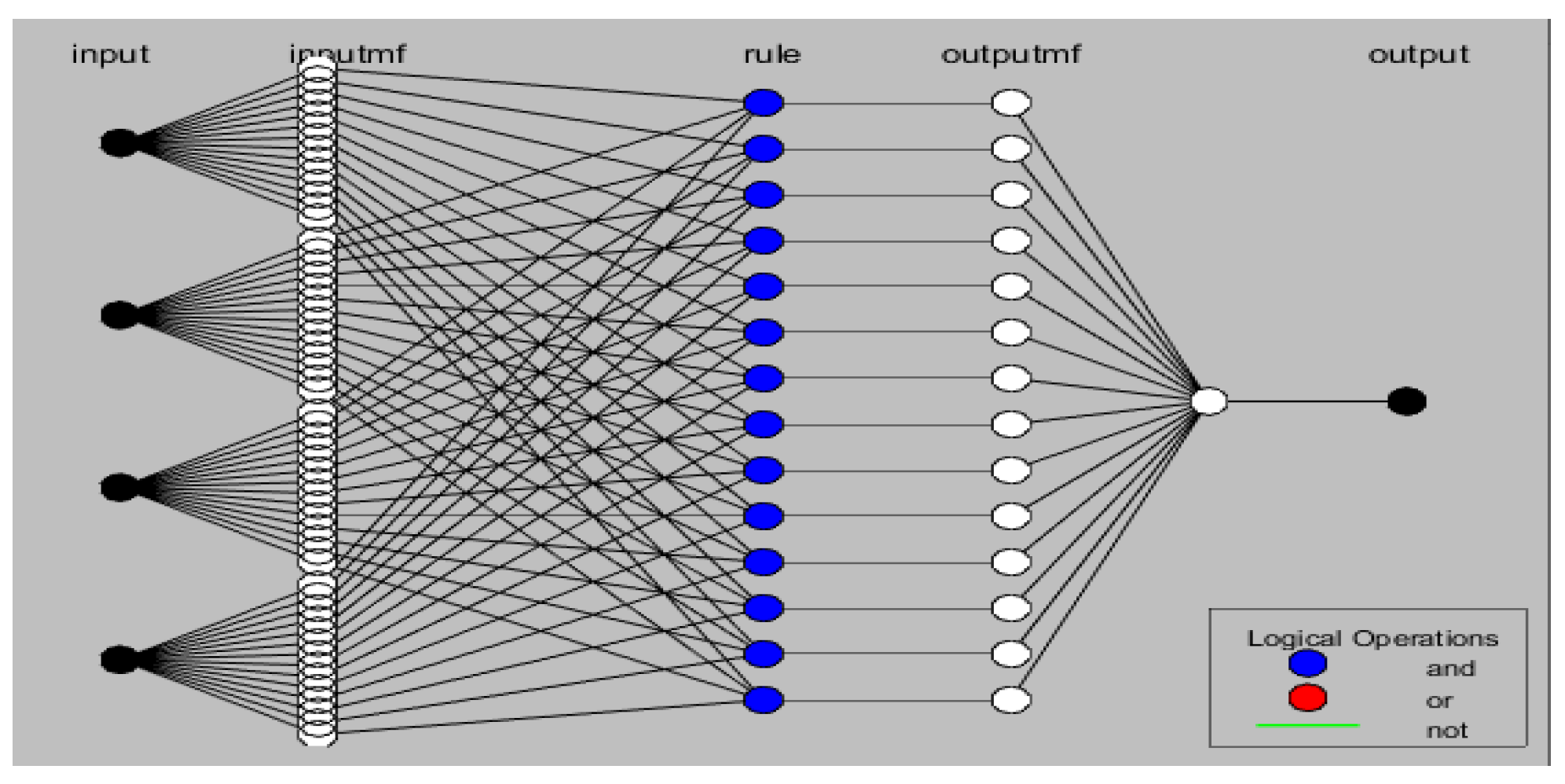
The Adaptive Neuro-Fuzzy Inference System (ANFIS) integrates the strengths of fuzzy logic and artificial neural networks, providing both qualitative reasoning and quantitative modeling capabilities, as shown in Figure 5. While this hybrid approach offers enhanced adaptability and accuracy, it also presents certain limitations [10]. In ANFIS, the parameters and membership functions of the fuzzy system are iteratively adjusted to optimise performance.
The ANFIS was created by assigning one of three membership functions to each element in the input layer (Figure 6). By utilizing a modified cellulose nanocrystal nanocomposite in a fuzzy inference system network, the high correlation value of 0.998 obtained from adaptive neuro-fuzzy inference system modeling may be used to predict the removal of chromium (VI). The primary benefit of ANFIS is the enhancement of fuzzy controller accuracy via the incorporation of self-learning abilities [14].
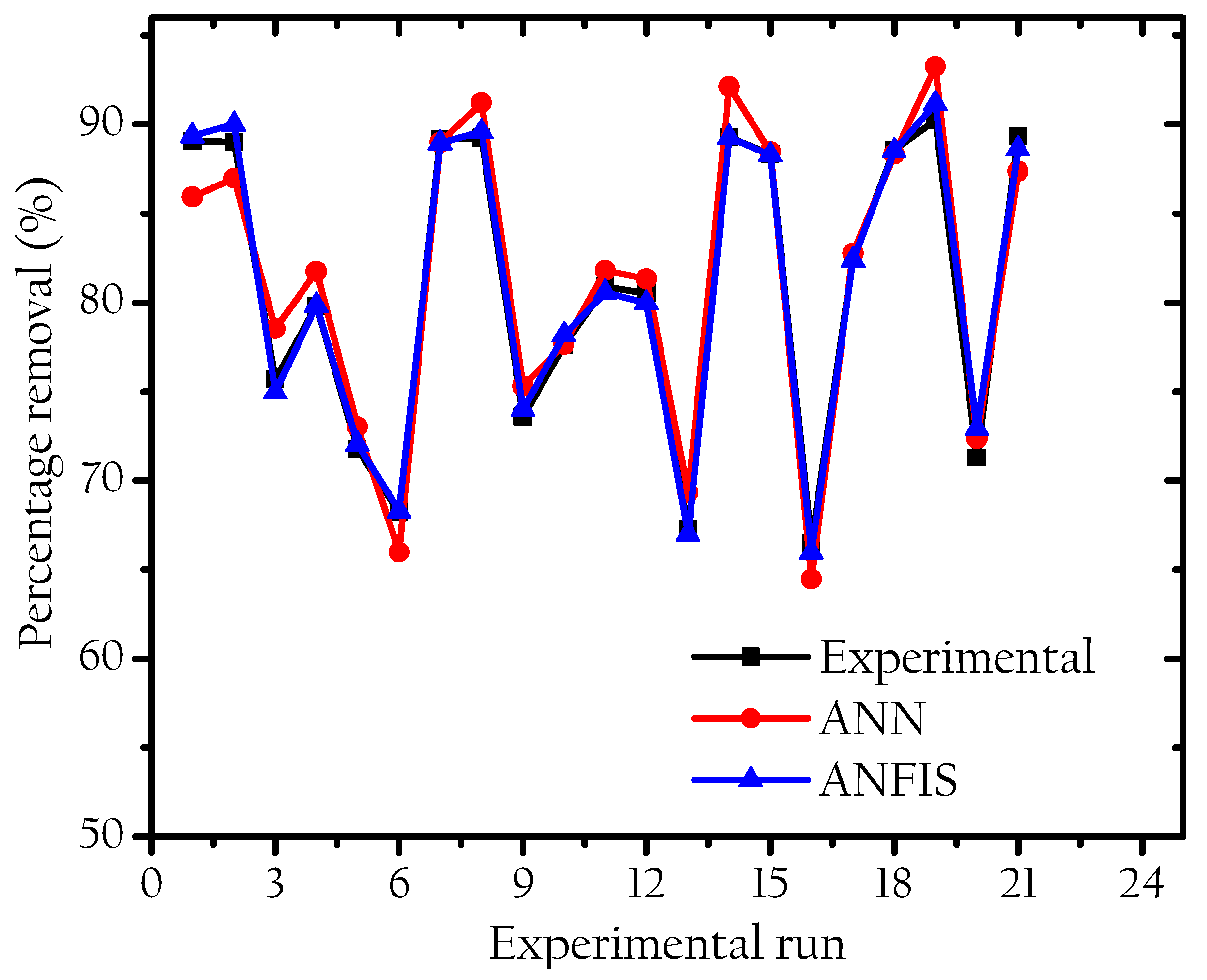
Figure 7 shows the degree of agreement between the two models. Both models exhibit remarkable capabilities, as evident from the linear fit. The ANFIS model outperformed the ANN in terms of R2, RMSE, MSE, and removal % of chromium (VI), but both models are capable of making this prediction [9]. Sample 20 showed outstanding performance from the artificial neural network model, whereas sample 11, which had an absolute error of zero percent, demonstrated excellent performance from the ANFIS model. Although the absolute error was significantly higher in Sample 19 (1.05% for ANFIS and 2.25% for ANN), neither model exceeded the acceptable limit, indicating moderate performance overall [15].

4. Conclusions

The environmentally friendly adsorbent was successfully characterised using FTIR, confirming the presence of functional groups responsible for chromium (VI) uptake. To further understand and predict the adsorption behavior, advanced deep learning techniques were employed, including an artificial neural network and an adaptive neuro-fuzzy inference system. The ANN model trained using the Levenberg–Marquardt optimisation algorithm demonstrated strong predictive capability under the identified optimal operating conditions (pH 6, concentration 50 mg/L, period 120 min, and adsorbent dose 10 g/100 mL). It has been demonstrated that the ANFIS model is capable of accurately predicting the adsorption of Cr (VI). The artificial neural network performed well in the training dataset, with an R2 value of 0.966, an MSE of 0.042, an AARE of 0.053, and an RMSE of 0.077. The adaptive neuro-fuzzy inference system achieved an RMSE of 0.021, an AARE of 0.015, an ARE of 0.01, and an MSE of 0.017, with an R2 of 0.998. The ideal adaptive neuro-fuzzy inference system (ANFIS) model generated reliable and accurate results. Overall, the integration of machine learning techniques with experimental studies offers a powerful tool for optimising adsorption processes and supports the potential of biodegradable adsorbents in sustainable wastewater treatment.

Author Contributions

Conceptualization, B.J.C., V.M. and L.L.S.; methodology, B.J.C.; software, B.J.C.; validation, B.J.C., V.M. and L.L.S.; formal analysis, B.J.C.; investigation, B.J.C.; resources, V.M. and L.L.S.; data curation, B.J.C., V.M. and L.L.S.; writing—original draft preparation, B.J.C.; writing—review and editing, V.M. and L.L.S.; visualization, B.J.C., V.M. and L.L.S.; supervision, V.M. and L.L.S.; project administration, V.M.; funding acquisition, V.M. All authors have read and agreed to the published version of the manuscript.

Funding

This research received no external funding.

Institutional Review Board Statement

Not applicable.

Informed Consent Statement

Not applicable.

Data Availability Statement

The data supporting the findings of this study are available upon request from the corresponding author. The data are not publicly available due to privacy or ethical restrictions.

Acknowledgments

The University of South Africa is acknowledged for providing facilities.

Conflicts of Interest

The authors declare that they have no known competition for financial interests or personal relationships that could have influenced the work reported in this paper.

Abbreviations

The following abbreviations are used in this manuscript:
RMSERoot means square error
AARE Absolute average relative error
AREAverage relative error
MSEMean Square Error
ANFISAdaptive neuro-fuzzy inference system
ANNArtificial neural network
LMLevenberg-Marquardt

References

  1. Ling, C.; Wang, Z.; Ni, Y.; Zhu, Z.; Cheng, Z.; Liu, R. Superior adsorption of methyl blue on magnetic Ni–Mg–Co ferrites: Adsorption electrochemical properties and adsorption characteristics. Environ. Prog. Sustain. Energy 2022, 41, e13923. [Google Scholar] [CrossRef]
  2. Asghar, A.; Jafari, D.; Esfandyari, M.; Ali, S. Prediction of the continuous cadmium removal efficiency from aqueous solution by the packed-bed column using GMDH and ANFIS models. Desalination Water Treat. 2021, 234, 91–101. [Google Scholar] [CrossRef]
  3. Banza, J.C.; Onyango, M.S. Optmisation of cadmium (II) removal onto biodegradable composite using artificial neural networks and response surface methodology: Quantum chemical performance. EQA-Int. J. Environ. Qual. 2024, 60, 1–17. [Google Scholar]
  4. Vincent, S.; Kandasubramanian, B. Cellulose nanocrystals from agricultural resources: Extraction and functionalisation. Eur. Polym. J. 2021, 160, 110789. [Google Scholar] [CrossRef]
  5. Rao, R.A.K.; Rehman, F.; Kashifuddin, M. Removal of Cr (VI) from electroplating wastewater using fruit peel of Leechi (Litchi chinensis). Desalination Water Treat. 2012, 49, 136–146. [Google Scholar] [CrossRef]
  6. Banza, M.; Rutto, H. Removal of Copper (II) and Lead (II) from hydrometallurgical effluent onto cellulose nanocomposites: Mechanistic and Levenberg-Marquardt in Artificial Neural Network modelling. EQA-Int. J. Environ. Qual. 2023, 54, 19–26. [Google Scholar]
  7. Yang, Q.; Yang, S.; Tu, C.; Zhu, X.; Guo, Z.; Liu, X. Journal of Environmental Chemical Engineering Amino-functionalised magnetic humic acid nanoparticles for enhanced Pb (II) adsorption: Mechanism analysis and machine learning prediction. J. Environ. Chem. Eng. 2024, 12, 113956. [Google Scholar] [CrossRef]
  8. Salari, M.; Nikoo, M.R.; Al-Mamun, A.; Rakhshandehroo, G.R.; Mooselu, M.G. Optimizing Fenton-like process, homogeneous at neutral pH for ciprofloxacin degradation: Comparing RSM-CCD and ANN-GA. J. Environ. Manag. 2022, 317, 115469. [Google Scholar] [CrossRef] [PubMed]
  9. Batool, F.; Kurniawan, T.A.; Mohyuddin, A.; Othman, M.H.D.; Ali, I.; Abdulkareem-Alsultan, G.; Anouzla, A.; Goh, H.H.; Zhang, D.; Aziz, F.; et al. Rosa damascena waste as biosorbent for co-existing pollutants removal: Fixed-bed column study and ANN modeling. Chem. Eng. Sci. 2024, 293, 120057. [Google Scholar] [CrossRef]
  10. Ibrahim, A.I.; Vohra, M.S. Novel TiO2@Mg/Fe-LDH for photocatalysis and adsorption of selenium species from wastewater: RSM & ANN/ML modeling. Next Mater. 2025, 8, 100766. [Google Scholar]
  11. Simsek, S.; Uslu, S.; Simsek, H. Proportional impact prediction model of animal waste fat-derived biodiesel by ANN and RSM technique for diesel engine. Energy 2022, 239, 122389. [Google Scholar] [CrossRef]
  12. Igwilo, C.N.; Ude, N.C.; Onoh, I.M.; Enekwe, C.B.; Alieze, B.A. RSM, ANN and ANFIS applications in modeling fermentable sugar production from enzymatic hydrolysis of Colocynthis Vulgaris Shrad seeds shell. Bioresour. Technol. Rep. 2022, 18, 101056. [Google Scholar] [CrossRef]
  13. Banza, M.; Rutto, H. Selective removal of Cr (VI) from hydrometallurgical effluent using modified cellulose nanocrystals (CNCs) with succinic anhydride and ethylenediaminetetraacetic acid: Isotherm, kinetics, and thermodynamic studies. Can. J. Chem. Eng. 2023, 101, 896–908. [Google Scholar] [CrossRef]
  14. Adebayo, G.B.; Jamiu, W.; Okoro, H.K.; Okeola, F.O.; Adesina, A.K.; Feyisetan, O.A. Kinetics, thermodynamics and isothermal modelling of liquid phase adsorption of methylene blue onto moringa pod husk activated carbon. S. Afr. J. Chem. 2019, 72, 263–273. [Google Scholar] [CrossRef]
  15. Azadian, M.; Gilani, H.G. Adsorption of Cu2+, Cd2+, and Zn2+ by engineered biochar: Preparation, characterisation, and adsorption properties. Environ. Prog. Sustain. Energy 2023, 42, e14088. [Google Scholar] [CrossRef]
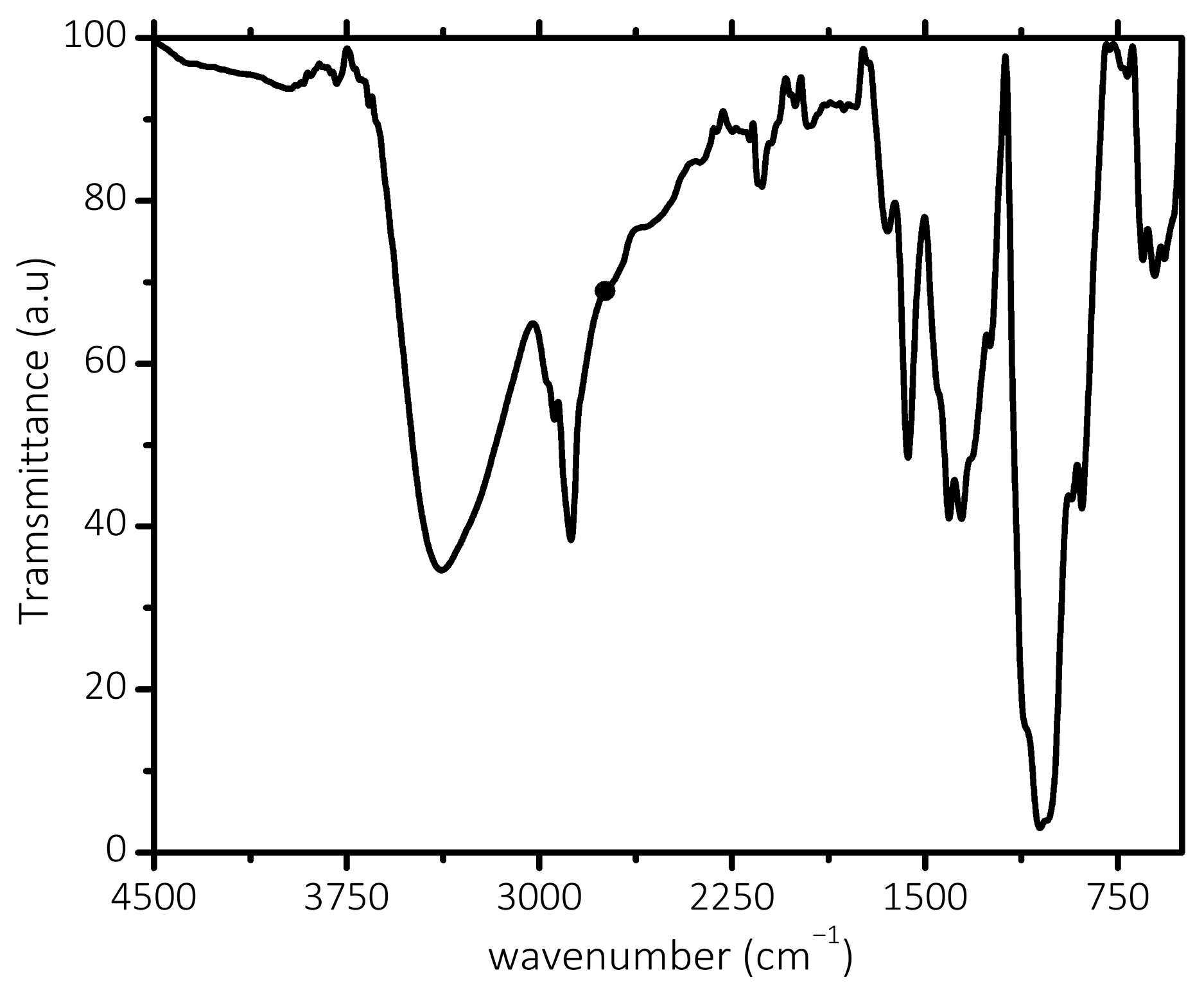
Figure 1. FTIR for modified cellulose nanocrystals.
Engproc 117 00012 g001
Figure 2. The Effect of time and pH (a) and concentration and dosage (b) on the removal of chromium (VI).
Engproc 117 00012 g002
Figure 3. The ANN architecture.
Engproc 117 00012 g003
Figure 4. Regression Analysis of the ANN Model.
Engproc 117 00012 g004
Figure 5. The ANFIS structure.
Engproc 117 00012 g005
Figure 6. Predicted data of the ANFIS model.
Engproc 117 00012 g006
Figure 7. Data comparison between Experimental, ANN, and ANFIS models.
Engproc 117 00012 g007
Disclaimer/Publisher’s Note: The statements, opinions and data contained in all publications are solely those of the individual author(s) and contributor(s) and not of MDPI and/or the editor(s). MDPI and/or the editor(s) disclaim responsibility for any injury to people or property resulting from any ideas, methods, instructions or products referred to in the content.