1. Introduction
Motorcycle performance is a critical factor in competitive motorsport, where small improvements can translate into substantial competitive advantages. With advancements in data acquisition technologies, it has become feasible to collect comprehensive datasets that capture the complex interaction between rider inputs and motorcycle responses [
1,
2]. In motorsport, the human factor remains a decisive element in achieving top performance. Although motorcycle technology is constantly evolving, the final result on the race track is often determined by how the rider perceives, processes and reacts to situations in real time. This is why research focused on analysing visual attention and gaze strategies while riding is becoming increasingly important, with eye-tracking technology becoming a key tool for objectively evaluating these cognitive processes [
3,
4].
Eye tracking allows for detailed monitoring of a driver’s eye movements and thus reveals their strategy for visual processing of space, which is particularly important in sections requiring quick reactions, such as braking zones or cornering [
5]. The importance of stable and targeted visual behaviour as a factor influencing performance has already been proven in many sports, and motorsport is no exception.
Current research combines eye tracking with advanced data processing methods and machine learning to gain a deeper understanding of the interactions between the driver and the machine [
6,
7]. These approaches enable not only retrospective performance analysis but also prediction of the optimal trajectory or braking moment, thereby contributing to an effective training process and personalised motorcycle settings.
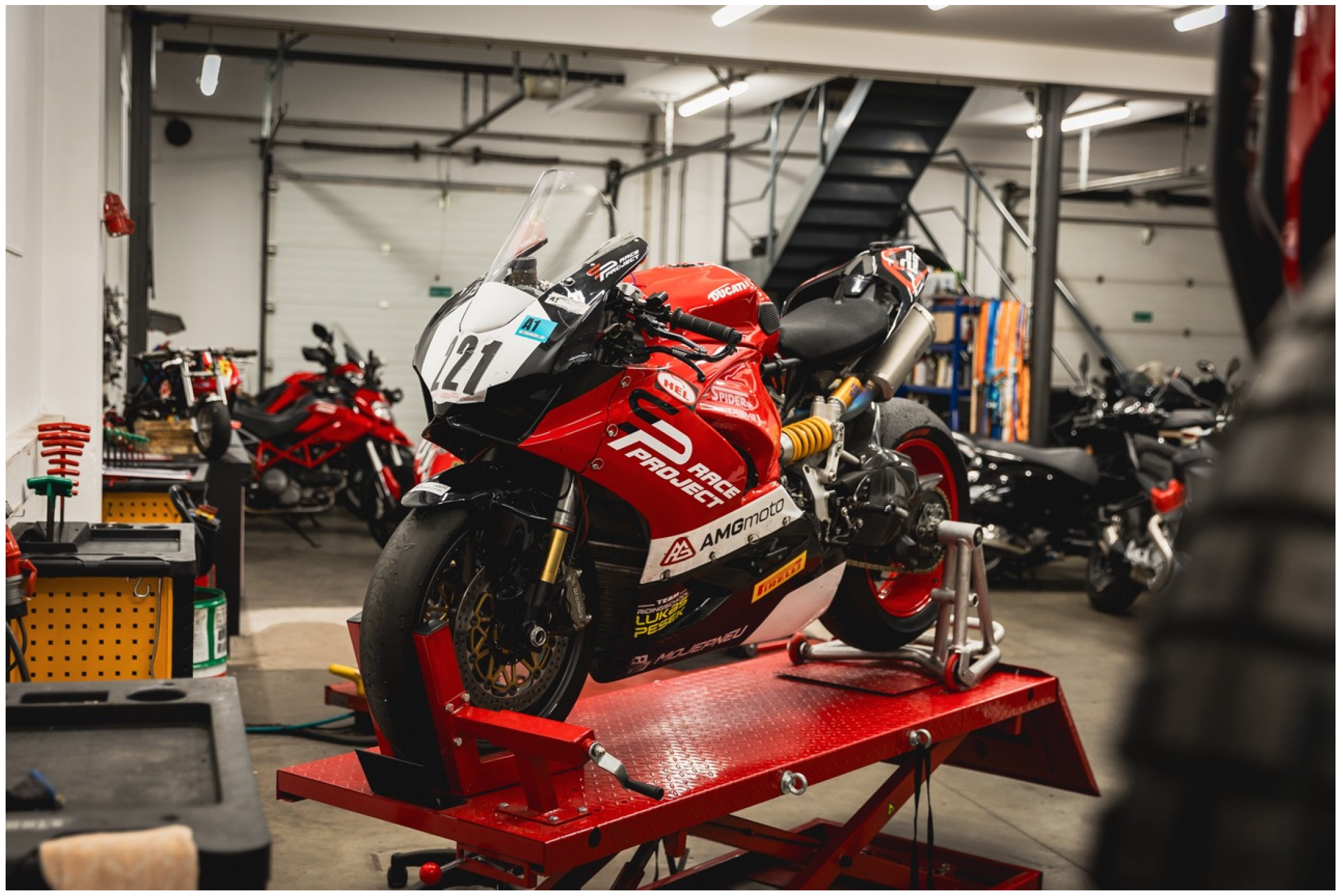
This study draws on data collected from the Ducati Panigale V2, manufactured by Ducati, Borgo Panigale, Bologna, Italy (see
Figure 1), a high-performance motorcycle in the supersport category. The technical specifications of the bike are listed in
Table 1.
The analytical algorithms developed during the research were implemented using the RaceStudio 3 software platform, which is widely adopted by professional racing teams for performance analysis and motorcycle calibration. The proposed methodology is designed to enhance the detection of key events, minimize the time required for data evaluation, and contribute to improving on-track performance. This is especially critical in motorsport, where swift and data-driven decision-making is essential to fine-tune both rider technique and machine configuration.
2. Methodology
2.1. Track Description
The driving data was obtained from testing and training at the Most racetrack (
Table 2), located in Czechia near the town of the same name. This circuit is often used by the AMG Moto SP Race Project for testing and training, making it possible to subsequently verify the modifications made on the same track.
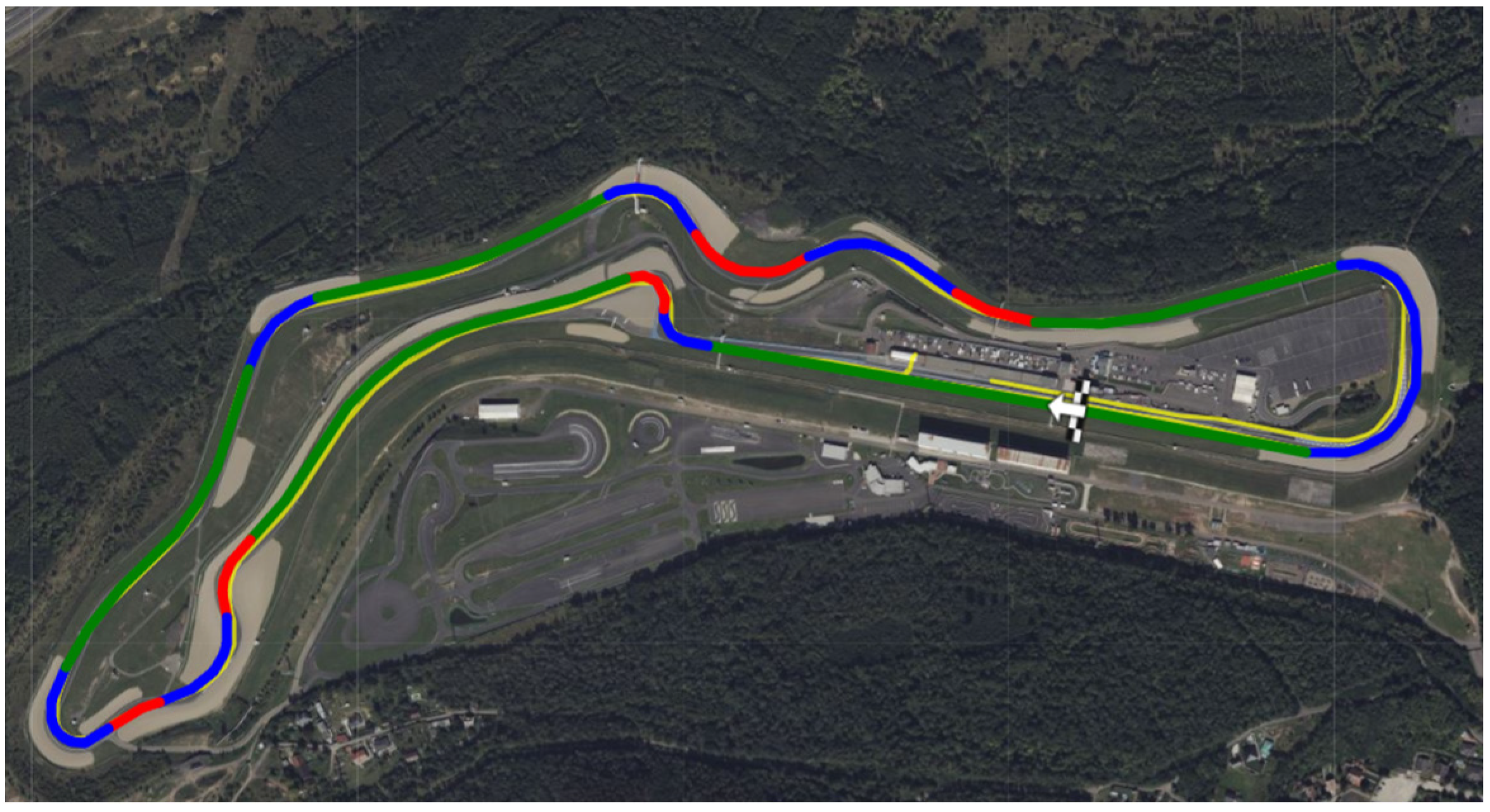
The track was divided into a total of 17 segments (
Figure 2). These segments do not correspond exactly to the division of the track according to the number of turns; the track is divided according to anticipated significant points where there is a drastic change in the point on which the driver’s gaze is focused or in the driving maneuver. Therefore, some sections are combined into a longer straight segment, or two consecutive turns are combined into one. In the figure above, you can see three types of track divisions. Straight sections are shown in green, right-hand turns in blue, and left-hand turns in red.
The test driver was Jonáš Kocourek, a driver for the SP Race Project team, which operates under AMG Moto. This driver was chosen because the subsequent data will be used to analyze data that may be related to both poor machine response and the response of the driver himself, which has a negative impact on vehicle dynamics and overall driving performance.
During testing, a total of 10 full race laps were measured, and the speeds and tracks in each sector were then analyzed for their impact on the overall lap time, with the best time achieved in lap 1. During training, three other drivers were present on the track, but their presence had no effect on the measurements, as the drivers were moving at very large intervals on the track. The measurements had to be taken during training, as these experiments cannot be carried out during the race itself.
2.2. Data Acquisition
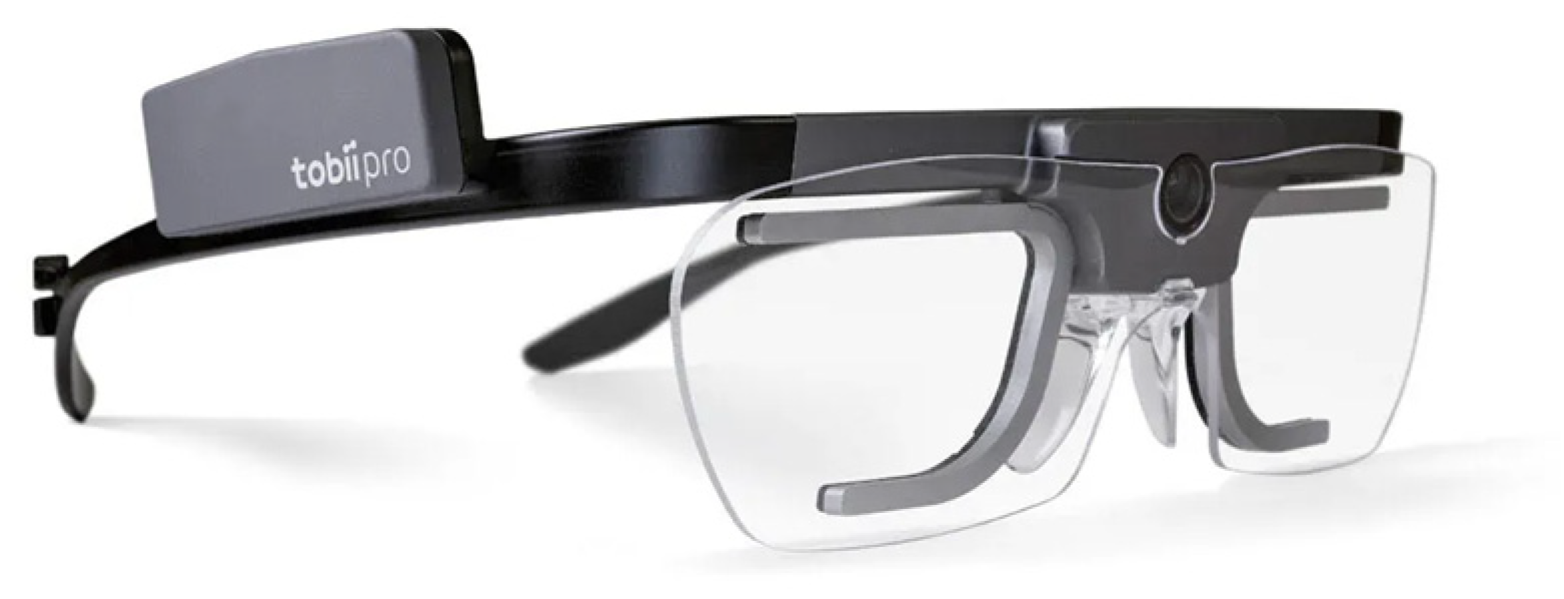
An eye-tracking system (TOBII Pro Glasses 2, manufactured by Tobii, Stockholm, Sweden,
Figure 3) was integrated into the measurement setup to capture rider focus and visual attention during testing. This system provides real-time gaze data, including fixation points and saccades, which are critical for understanding rider behavior and decision-making during high-speed maneuvers. The eye-tracking data were synchronized with the primary telemetry dataset using RaceStudio 3 software, allowing for precise correlation between rider inputs, motorcycle dynamics, and visual attention. This approach provides a more comprehensive understanding of rider performance, including the impact of visual distractions and gaze consistency on lap times. The eye-tracking system records the rider’s gaze direction and focus of attention at a sampling rate of 50 Hz, providing a time-resolved record of visual behavior.
2.3. Gaze Behavior Analysis
Eye-tracking data is analyzed to extract quantitative metrics characterizing the rider’s visual behavior. These metrics include the following:
Fixation Duration (ms): The average duration of gaze fixations within a defined area of interest (AOI).
Saccade Frequency (Hz): The number of rapid eye movements (saccades) per unit time.
Gaze Distribution (%): The percentage of time spent fixating on predefined AOIs, such as the track apex, braking point, and instrument panel.
2.4. Validation
The methodology is further validated using data collected from multiple riding sessions conducted under varying track conditions. The recorded data demonstrates consistency and supports the observed trend linking the rider’s gaze direction with track line selection and braking points. These findings enable the application of eye-tracking technology to analyze suboptimal decision-making in motorcycle control, with a measurable impact on rider performance within specific track sectors.
3. Results and Discussion
3.1. Braking Point Optimisation and Visual Behavior in High-Speed Sections
In the analyzed section (
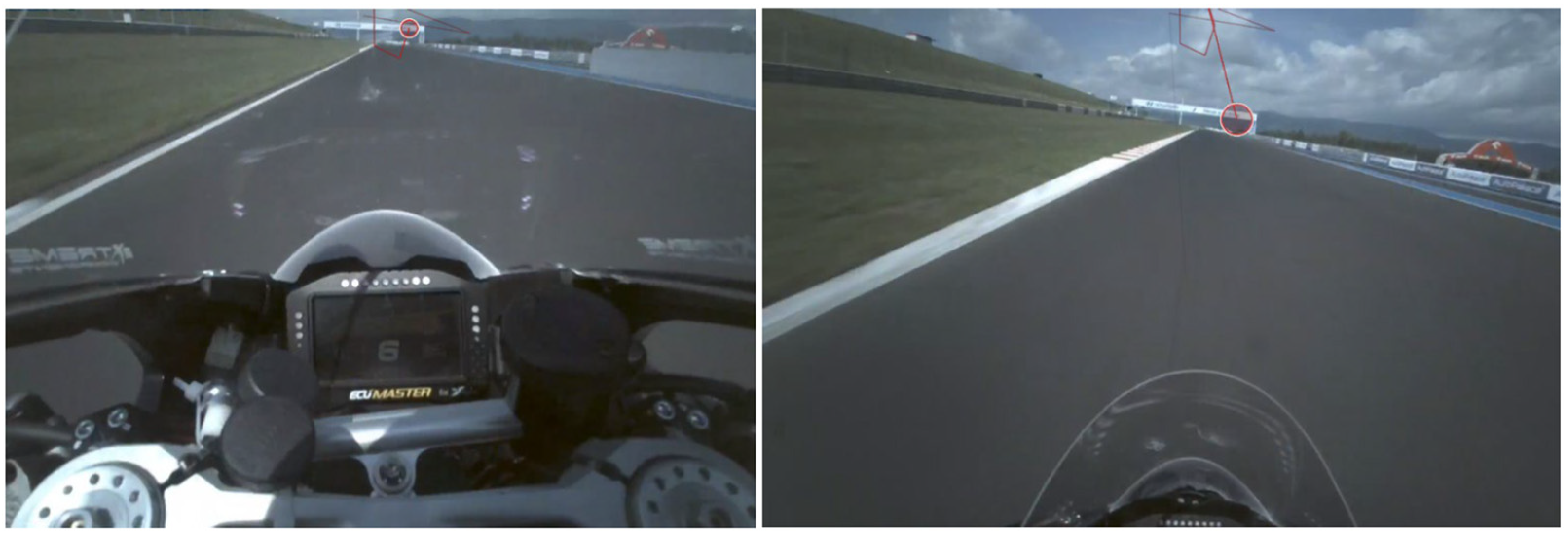
Table 3), maximum speeds exceeding 250 km/h were recorded, underscoring the critical importance of precise braking point timing for optimal performance. The optimal braking point was consistently identified at the termination of the right-side safety barrier, where a characteristic eye movement toward the barrier—indicative of peripheral visual tracking.
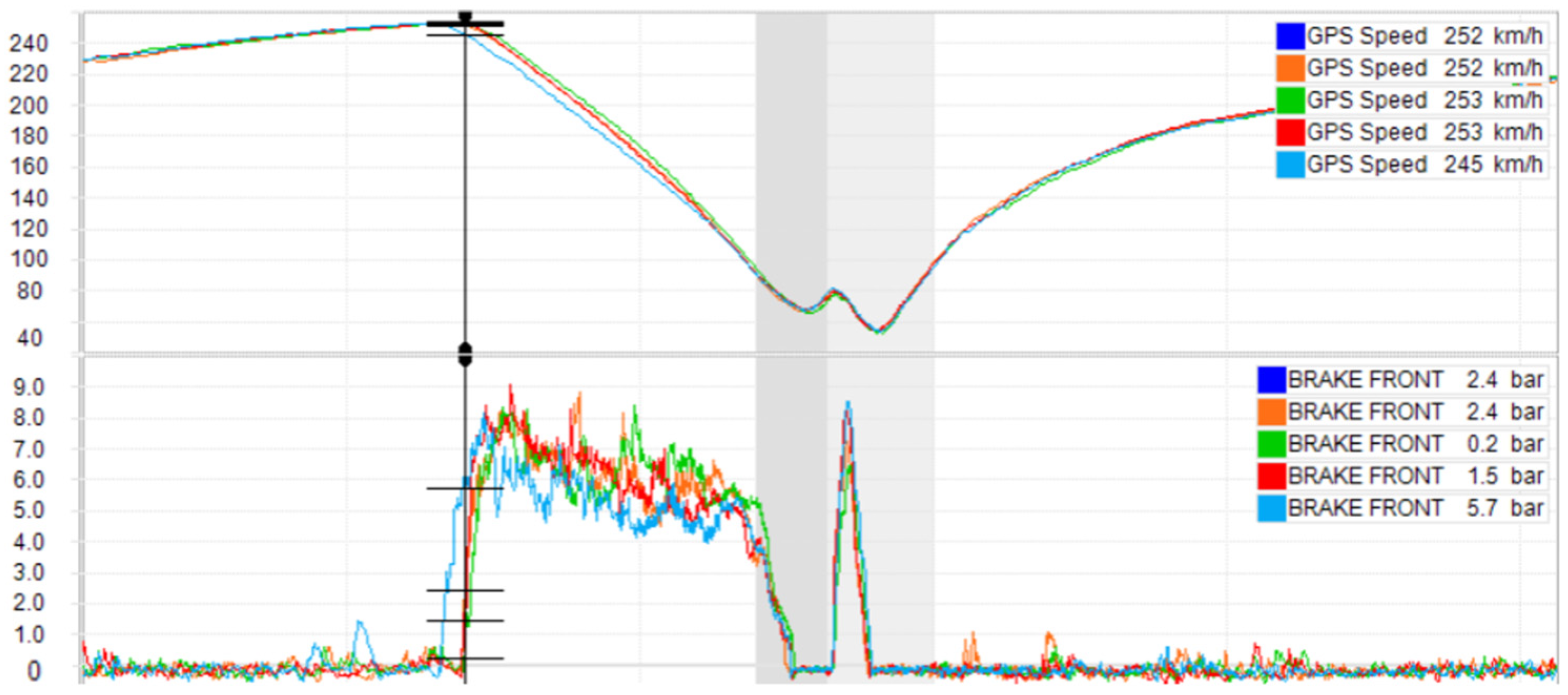
The most favorable performance in this section occurred during the second lap, where a peak velocity of 254 km/h was reached (
Table 3). This lap was also associated with the latest initiation of braking and the steepest gradient in brake pressure increase (
Figure 4). While this late braking resulted in the shortest section traversal time among the observed laps, it negatively affected the entry conditions into the subsequent section due to suboptimal trajectory setup.
The delayed braking point corresponded with unstable ocular behavior. Specifically, a lack of visual fixation and increased eye movement variability prior to braking were evident. During the second lap, the rider repeatedly glanced at the instrument cluster, indicating attentional shifts away from the braking reference point and reduced visual concentration (
Figure 5).
Conversely, the most technically proficient passage through the initial section was observed during the first lap. The rider maintained a stable gaze with no signs of visual distraction or cognitive overload. Braking was initiated near the optimal reference point, resulting in a favorable trajectory and smooth transition into the following segment. This, in turn, contributed positively to the overall lap performance.
3.2. Analysis of Trajectory Selection During Cornering
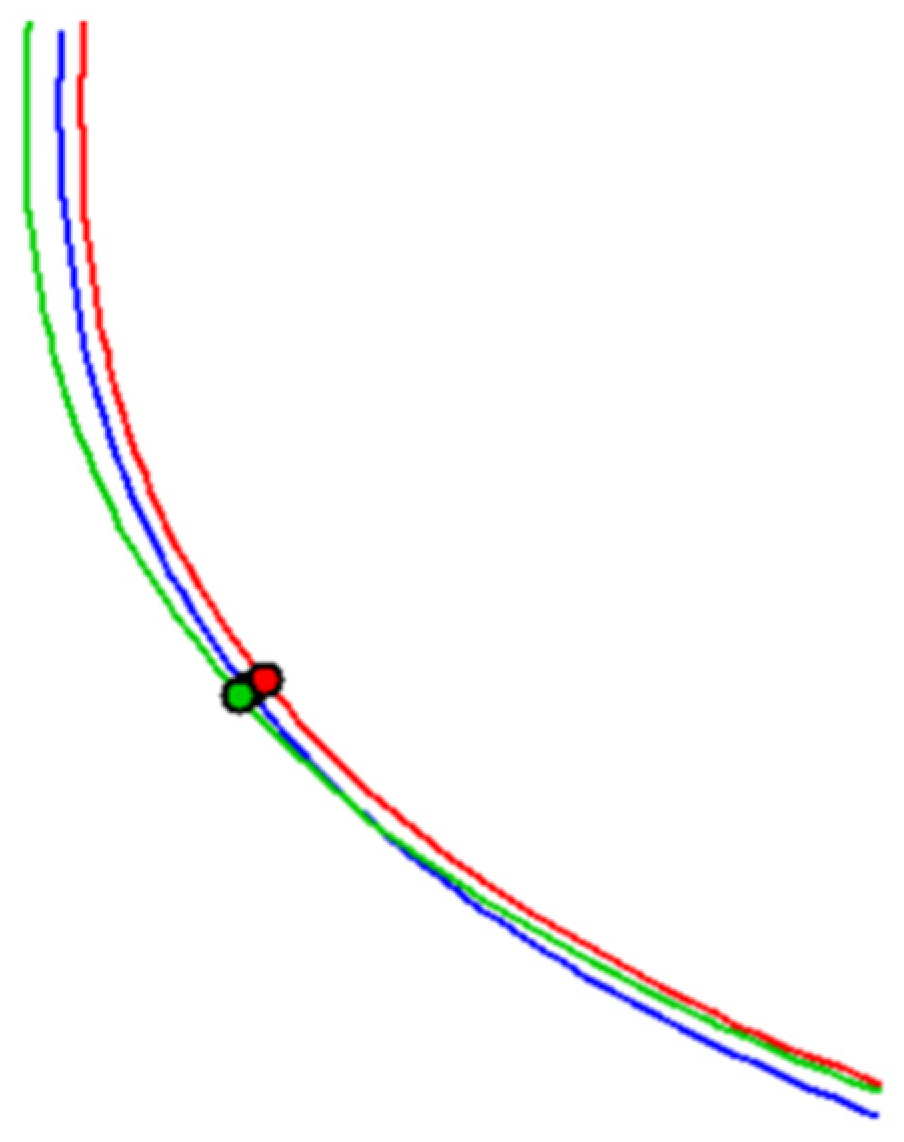
One of the key parameters influencing cornering performance is the selection of the riding trajectory, which is inherently linked to the rider’s approach dynamics. The optimal trajectory, identified during the first lap (depicted in red in
Figure 6), was characterized by a line that closely followed the inner radius of the curve. In contrast, the trajectory observed during the second lap (green) represents a suboptimal path, wherein the rider initiated the turn from a wider position, resulting in a less efficient cornering line. For reference, the blue trajectory represents data from the third lap, serving as a comparative example.
A qualitative comparison between the first and second lap (
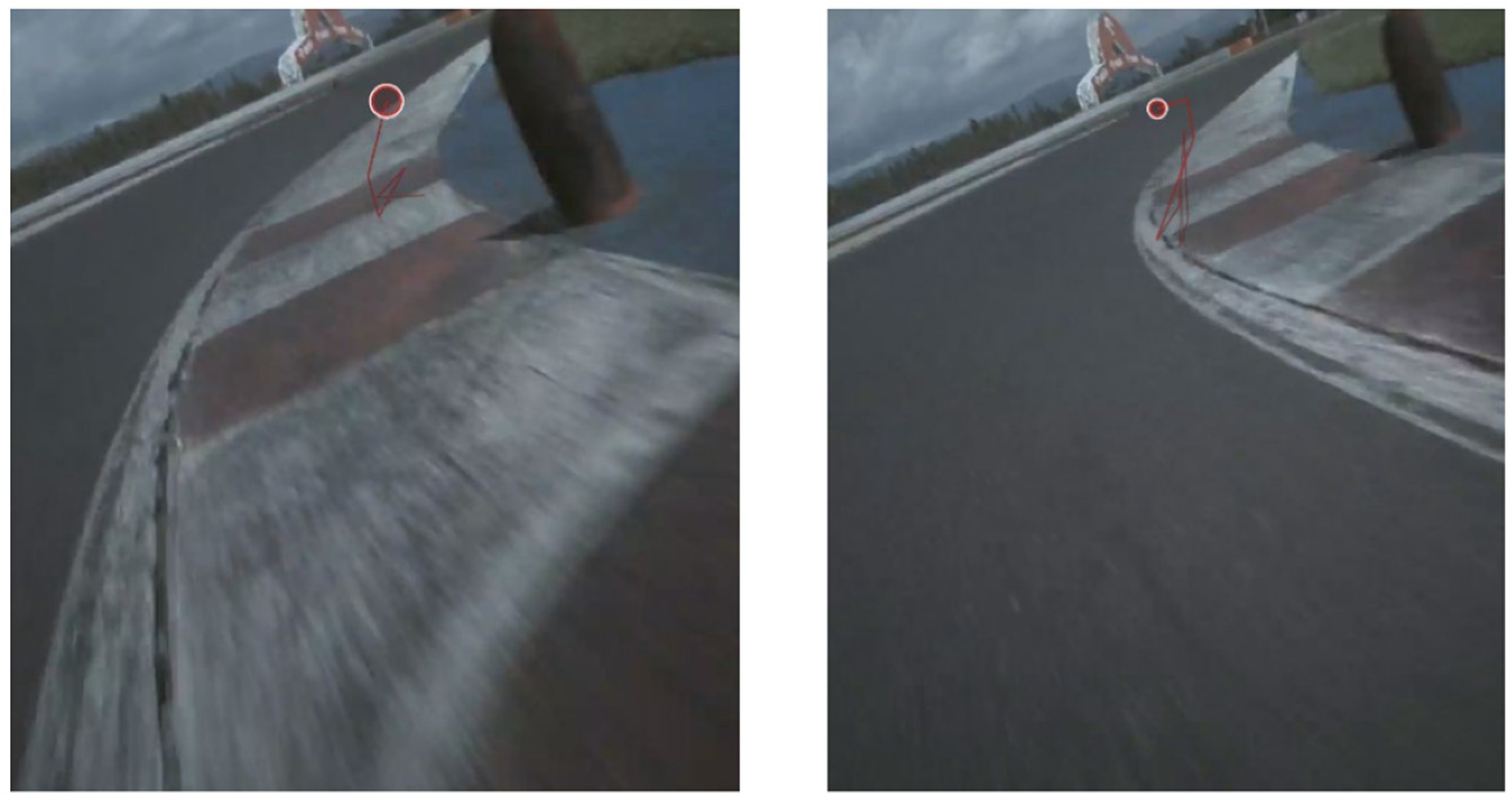
Table 4) reveals marked differences in both trajectory smoothness and visual attention dynamics. During the first and fastest lap, the rider maintained a stable gaze directed toward the corner apex, with minimal visual distraction. In the second lap, however, the rider’s gaze was directed deeper into the turn, accompanied by increased visual dispersion and a less effective trajectory. These findings suggest a strong correlation between visual fixation behavior and optimal trajectory selection (
Figure 7).
Increased corner entry speed during the second lap—although advantageous from a purely time perspective—put the driver in a less predictable and less comfortable situation. This required real-time corrective maneuvers, such as mid-corner steering adjustments and trajectory changes, which were accompanied by a disruption in visual focus.
Such conditions can be interpreted as a sign of increased cognitive load, where the driver switches from automatic, pre-learned driving strategies to cognitive control processes at the executive level. This interpretation is consistent with the cognitive control hypothesis, which states that increased cognitive load selectively impairs tasks requiring conscious attention and decision-making, while automatic performance remains largely unaffected.
The gaze pattern in the second round—with reduced fixation at the apex of the turn and increased visual switching—reflects the rider’s need to reassess the situation and make quick adjustments, suggesting a shift from routine performance to cognitively controlled behavior. These results underscore that subtle variations in entry speed and precision of setup can elicit measurable changes in cognitive load, as evidenced by eye-tracking metrics.
4. Conclusions
This work demonstrates the potential of eye-tracking technology as an effective tool for a deeper understanding of a rider’s visual strategies during racing. The analysis showed that stable and goal-directed visual behavior during demanding driving manoeuvres, especially in the areas of braking and cornering, is closely linked to optimising driving efficiency and dynamics. In contrast, unstable gaze and visual distraction can lead to less efficient line traversal.
Each one of the segments of the circuit was analyzed separately, reflecting the discrete nature of racing maneuvers. This segmentation allowed for higher-resolution analysis of visual and motor behavior, as combining data from the entire lap would obscure critical momentary variations. The best performance of the driver was identified from each segment, allowing for a theoretical reconstruction of the ideal lap composed of the optimal execution of individual sections. This method offers a promising approach to performance benchmarking and individualized feedback in motorsport training.
These findings confirm the importance of integrating eye-tracking into motorsport training and analysis processes and open the way for further development of methods for individual rider skill improvement and motorcycle setup modification. Future work could extend this approach with additional measurements and machine learning for automated detection of behavioral patterns and optimisation of racing strategy.
Author Contributions
Conceptualization, M.B. and J.F.; methodology, M.B. and J.F.; software, M.B. and J.F.; validation, M.B. and J.F.; formal analysis, M.B. and J.F.; investigation, M.B. and J.F.; resources, M.B. and J.F.; data curation, M.B. and J.F.; writing—original draft preparation, M.B.; writing—review and editing, M.B.; visualization, M.B.; supervision, J.F.; project administration M.B. and J.F.; funding acquisition, M.B. and J.F. All authors have read and agreed to the published version of the manuscript.
Funding
The authors gratefully acknowledge funding from the Specific research on BUT FSI-S-23-8235. This publication was supported by the project “Innovative Technologies for Smart Low Emission Mobilities”, funded as project No. CZ.02.01.01/00/23_020/0008528 by Programme Johannes Amos Comenius, call Intersectoral cooperation.
Institutional Review Board Statement
Not applicable.
Informed Consent Statement
Informed consent was obtained from all subjects involved in the study.
Data Availability Statement
This study was produced as part of the IAE FME BUT research group project. Data are available after individual contact between the applicant and one of the authors of the paper.
Acknowledgments
The authors would like to express their sincere thanks to AMG moto and their SP race project team for facilitating the testing and experiments.
Conflicts of Interest
The authors declare no conflict of interest. The funders had no role in the design of the study; in the collection, analyses, or interpretation of data; in the writing of the manuscript; or in the decision to publish the results.
References
- Smith, T.; Kasantikul, V.; Ouellet, J.V.; Thom, D.; Browne, S.; Hurt, H.H., Jr. Visual scanning of Motorcycle Riders: A Preliminary Look; Motorcycle Safety Foundation: Irvine, CA, USA, 2023. [Google Scholar]
- Cheng, W.; Gill, G.S.; Sakrani, T.; Dasu, M.; Zhou, J. Predicting motorcycle crash injury severity using weather data and alternative Bayesian multivariate crash frequency models. Accid. Anal. Prev. 2017, 108, 172–180. [Google Scholar] [CrossRef] [PubMed]
- Broadbent, D.P.; D’Innocenzo, G.; Ellmers, T.J.; Parsler, J.; Szameitat, A.J.; Bishop, D.T. Cognitive load, working memory capacity and driving performance: A preliminary fNIRS and eye tracking study. Transp. Res. Part F Traffic Psychol. Behav. 2022, 92, 121–132. [Google Scholar] [CrossRef]
- Xu, J.; Fard, M.; Zhang, N.; Davy, J.L.; Robinson, S.R. Cognitive load and task switching in drivers: Implications for road safety in semi-autonomous vehicles. Transp. Res. Part F Traffic Psychol. Behav. 2024, 107, 1175–1197. [Google Scholar] [CrossRef]
- Kredel, R.; Hernandez, J.; Hossner, E.-J.; Zahno, S. Eye-tracking technology and the dynamics of natural gaze behavior in sports: An update 2016–2022. Front. Psychol. 2023, 14, 1130051. [Google Scholar] [CrossRef] [PubMed]
- Bartolozzi, M.; Boubezoul, A.; Bouaziz, S.; Savino, G.; Espié, S. Data-driven methodology for the investigation of riding dynamics: A motorcycle case study. IEEE Trans. Intell. Transp. Syst. 2023, 24, 10224–10237. [Google Scholar] [CrossRef]
- Bhavsar, D.; Jaychandra, R.K.; Mittal, M. Data acquisition and performance analysis during real-time driving of a two-wheeler electric vehicle—A case study. World Electr. Veh. J. 2024, 15, 121. [Google Scholar] [CrossRef]
- SP Race Project. Available online: https://spraceproject.cz/pages/nas-pribeh (accessed on 26 May 2025).
- Ducati Panigale V2 2024. Available online: https://www.ducati.com/us/en/bikes/panigale/panigale-v2-my24 (accessed on 26 May 2025).
- Tobii Eye Tracker—Pro Glasses 2. Available online: https://www.tobii.com/ (accessed on 26 May 2025).
| Disclaimer/Publisher’s Note: The statements, opinions and data contained in all publications are solely those of the individual author(s) and contributor(s) and not of MDPI and/or the editor(s). MDPI and/or the editor(s) disclaim responsibility for any injury to people or property resulting from any ideas, methods, instructions or products referred to in the content. |
© 2025 by the authors. Licensee MDPI, Basel, Switzerland. This article is an open access article distributed under the terms and conditions of the Creative Commons Attribution (CC BY) license (https://creativecommons.org/licenses/by/4.0/).