


Abstract
In the context of Industry 4.0, industrial firms are encountering new challenges related to data management, flow traceability, security and process transparency. Blockchain, as a distributed ledger technology, offers innovative solutions to meet these challenges. This study proposes a systematic literature review (SLR) on the recent contributions of blockchain in industrial environments. A total of 20 scientific articles, published over the last ten years, were analyzed to better understand how this technology is being integrated into production processes and supply chains. The analysis identified four major areas in which blockchain is being mobilized: traceability of production processes, transparency of supply chains, integration into digital industrial systems, and its role in decision support. The results show that blockchain enables reliable, real-time monitoring of industrial operations, particularly when coupled with technologies such as IoT, smart contracts or event-driven databases. It also promotes better coordination between players, reinforces trust, and facilitates audits in complex or multi-actor environments. However, despite its potential, several limitations remain. Barriers related to scalability, implementation costs, system interoperability and the integration of manual tasks still limit its widespread adoption. Furthermore, in many cases, blockchain is treated as a secondary technology, reducing the depth of analysis available. This review offers a structured vision of the contributions and limitations of blockchain in industry while identifying future research prospects, particularly around hybrid models and concrete implementation cases.
1. Introduction
The rise of Industry 4.0 has profoundly transformed industrial processes, accelerating the digitization and interconnection of systems. Among emerging technologies, blockchain stands out for its ability to enhance security, transparency, and traceability in various sectors [1]. Initially designed for finance, blockchain is now expanding into areas such as logistics, industrial manufacturing, cybersecurity and the circular economy [2,3]. Thanks to its decentralized and tamper-proof architecture, and, in particular, the integration of smart contracts, it enables operations to be automated and secured, limiting the risk of data falsification.
Combined with tools such as RFID sensors, the Internet of Things (IoT) and artificial intelligence, blockchain enables accurate, real-time tracking of products throughout their lifecycle [4]. This approach is being explored in particular in sensitive sectors such as pharmaceuticals, agri-food and textiles, where product authenticity and regulatory compliance are essential [5,6]. These use cases will be explored in more detail in the Section 3. In the field of logistics, it facilitates the coordination of port flows through improved data circulation [7]. In the automotive sector, it improves the visibility of operations and supports decision-making in complex and uncertain supply chains [8]. The construction sector is also interested in using it to manage contracts and payments, although its adoption remains hampered by regulatory and technical constraints [9]. In IoT environments, blockchain plays a protective role by managing digital identities and access to smart devices [10]. However, its widespread adoption remains limited by obstacles such as scalability, high costs, and lack of interoperability between existing systems and blockchain platforms [11,12]. Through this systematic review, our objective is to analyze the current uses of blockchain in industrial environments while identifying the main technical, organizational, and legal barriers, as well as the most promising research prospects [13].
2. Methodology
2.1. Selection of Sources and Databases
For the purposes of this systematic review, the articles analyzed were extracted from several leading scientific databases, such as Scopus, Web of Science and ScienceDirect. These platforms were chosen because of their quality, their recognition in the academic world, and their broad coverage in the fields of engineering, logistics management and emerging technologies. The analysis focused only on peer-reviewed publications published between 2015 and 2025, to ensure a representative selection of the most recent work on the application of blockchain in industrial environments.
The bibliographic search was conducted using targeted keywords, combined with Boolean operators to refine the selection. We used the following search string to identify relevant articles: (“blockchain” AND (“industrial” OR “manufacturing” OR “supply chain” OR “traceability”) AND (“application” OR “implementation” OR “case study”)). The wording was slightly adjusted for each database (Scopus, Web of Science, and ScienceDirect) to match their search formats. This strategy enabled us to identify a range of relevant studies addressing issues such as traceability, process automation, transaction security and logistics optimization in complex industrial contexts.
2.2. Inclusion and Exclusion Criteria
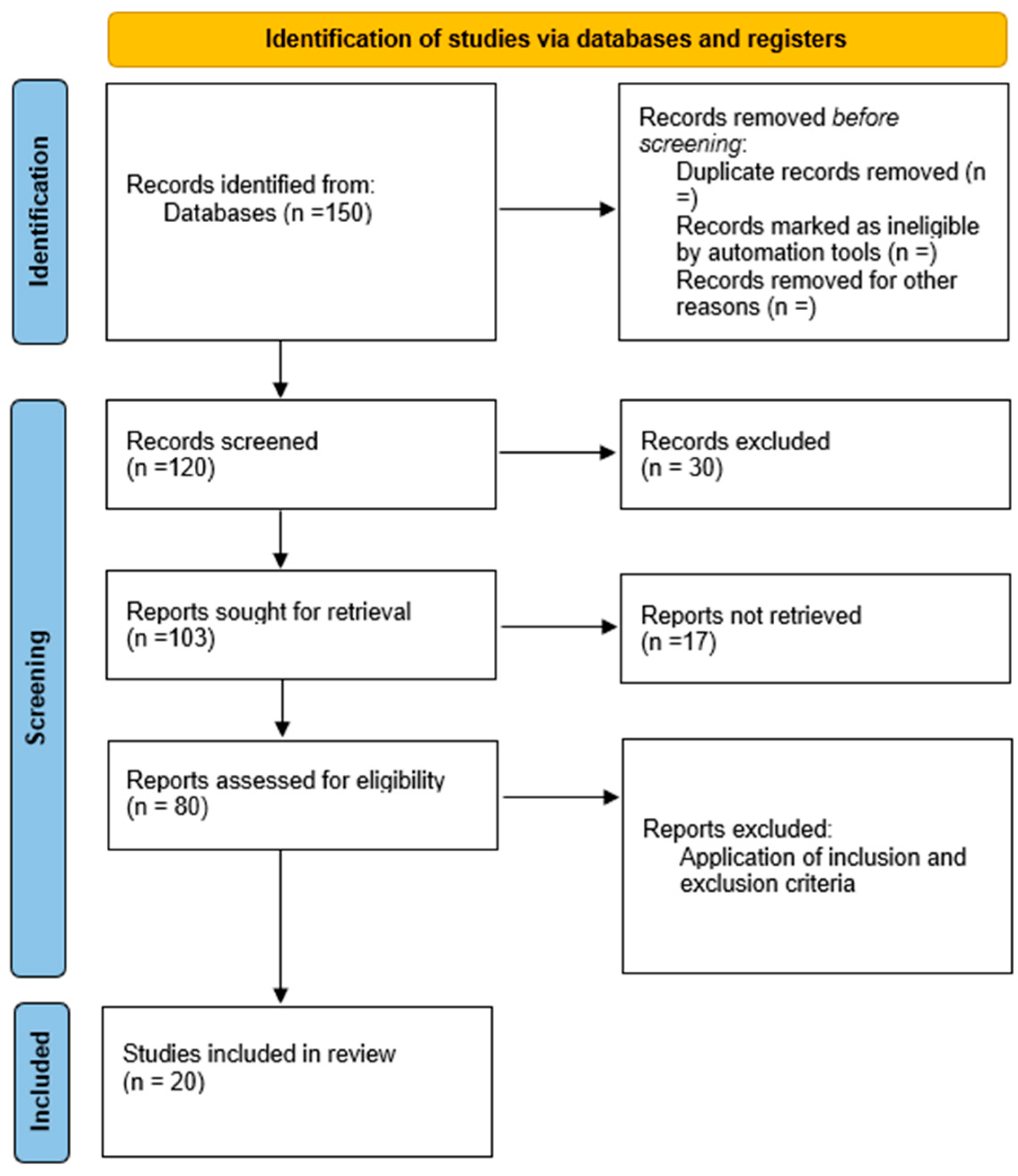
To ensure the relevance and quality of the selected studies, strict inclusion and exclusion criteria were defined. Only articles dealing with the use of blockchain in the targeted areas—such as supply chain, logistics, manufacturing, construction, and cybersecurity—were selected. The analysis focused on work presenting concrete applications (case studies, prototypes, feedback, or in-depth reviews), excluding purely theoretical publications or those mentioning blockchain only marginally [4,5] Articles had to be written in English or French to ensure comprehension. The following were excluded: documents not peer-reviewed (company reports, white papers, unvalidated proceedings), studies focusing on purely cryptographic or financial aspects, and those with no direct link to traceability or industrial optimization. After an initial selection of 150 publications, a thorough screening reduced this number to 80, resulting in a final corpus of 20 articles.
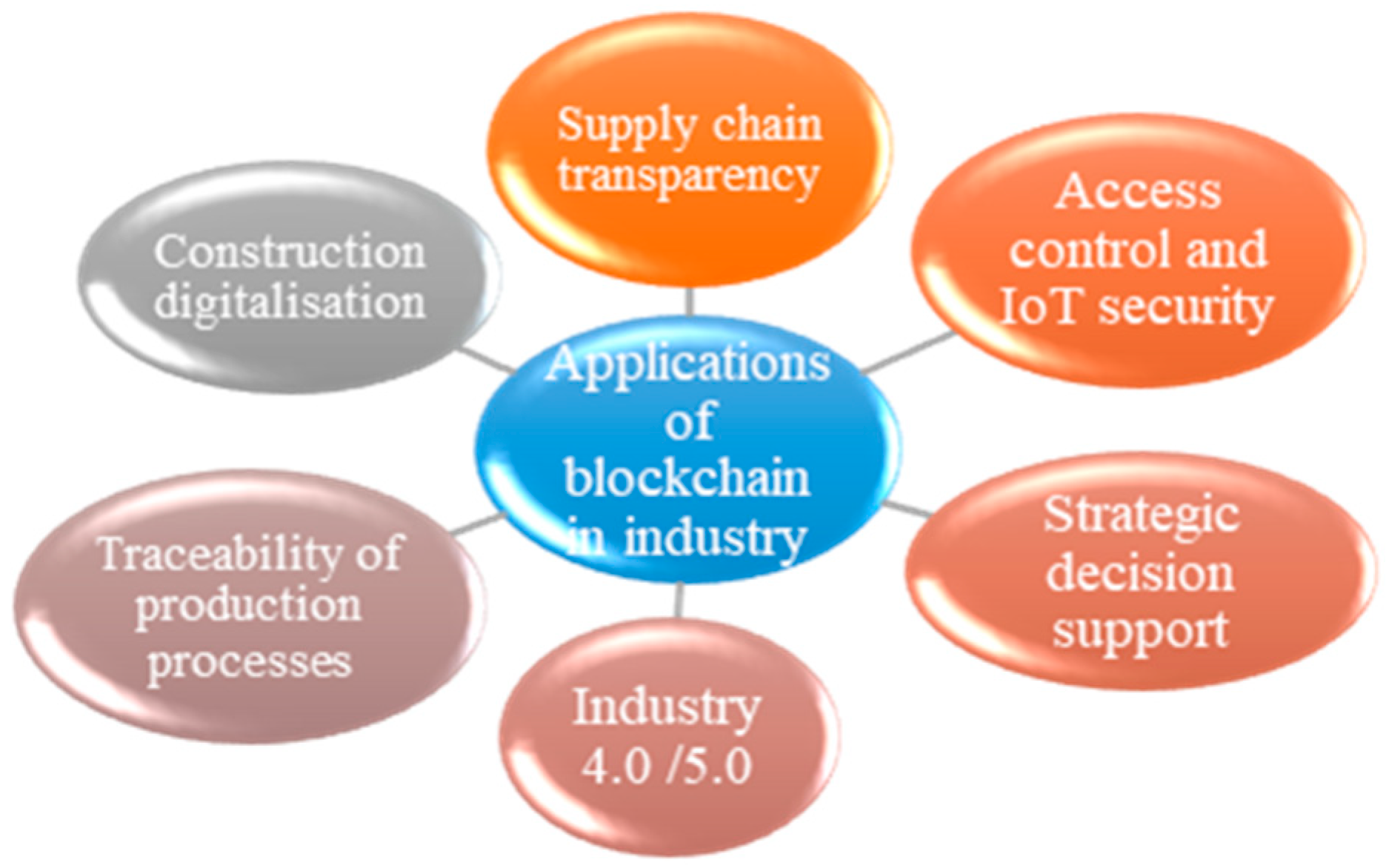
Figure 1 shows the step-by-step flow of the literature selection process, following a PRISMA-inspired structure adapted to our systematic review (Figure 2). Figure 3 provides an overview of the main industrial applications of blockchain identified in the selected studies.
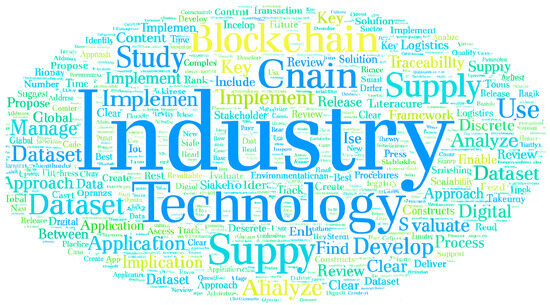
Figure 1.
Word cloud highlighting the most frequent terms and supporting the thematic of the study.
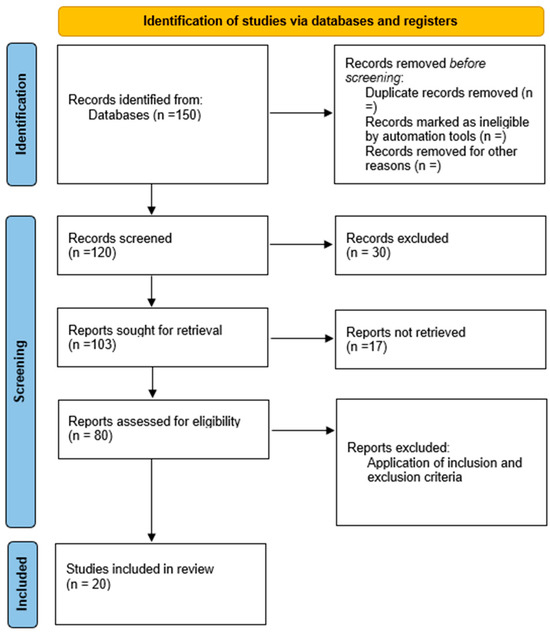
Figure 2.
PRISMA.
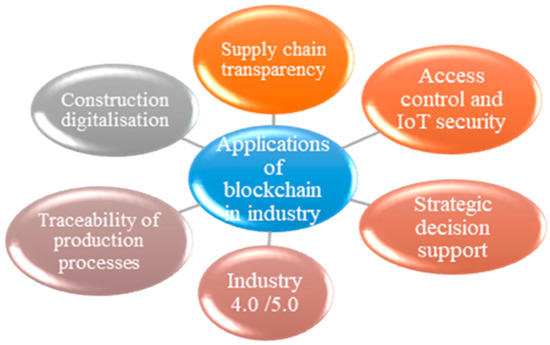
Figure 3.
Representation of the main applications of blockchain in industry, identified through analysis of the selected publications.
2.3. Data Collection and Analysis
The selected articles were analyzed using a thematic coding approach, enabling studies to be structured according to their main lines of research. The publications were thus classified into several broad categories. Each article was examined in detail to extract the key elements of its scientific contribution, including the methodology employed, the use cases explored and the results obtained. This analysis phase identified the dominant trends in blockchain application, as well as the main limitations and challenges encountered in its implementation. Organizing the articles into thematic categories facilitated the identification of points of convergence and divergence between the various studies, highlighting sectors where blockchain is already well established and those where its adoption remains more experimental. In order to visually synthesize the dominant concepts addressed in the selected articles, a word cloud was generated from the corpus titles and abstracts using the online WordArt tool. The most frequent terms, such as industry, blockchain, technology, supply chain and traceability, confirm their central role in recent academic debates. This initial textual analysis provides an overview of recurring themes and supports the structuring of results according to the thematic axes identified in this review.
And to provide a comparative and synthetic view of the results, data from the articles have been grouped together in the form of the Following table (Table 1):

Table 1.
Categorization of results by major application areas for industrial blockchain.
2.4. Research Questions
As Industry 4.0 develops, industrial companies are increasingly faced with the need to enhance the traceability, security and transparency of their processes. Among emerging technologies, blockchain stands out for its ability to make data unforgeable and verifiable, even in complex industrial environments. Its integration does, however, raise certain questions, particularly when it comes to tracing manual operations or coordinating extended, multi-actor supply chains. With this in mind, this study focuses on the following four research questions:
RQ1: How do advanced technologies, and blockchain in particular, contribute to reliable and secure traceability of production processes, including manual tasks, in industrial environments?
RQ2: What are the contributions and limitations of blockchain in optimizing the transparency, tracking and efficiency of supply chains in industrial environments?
RQ3: In which industrial domains is blockchain most commonly applied within IIoT environments?
RQ4: What technical and organizational challenges are most frequently reported when implementing blockchain in industry?
3. Results
Before getting into the detailed analysis of the results, it is worth presenting a synthetic view of the main areas in which blockchain is applied in industrial environments. These areas, illustrated in the figure below, emerged repeatedly in the articles studied and form the basis for structuring this section. In particular, they cover process traceability, the security of connected systems, the transparency of supply chains, and the integration of blockchain into broader dynamics of industrial digitalization and decision support
To provide a clear and structured view of the literature reviewed, we present below a selection of representative studies (Table 2) highlighting the diversity of blockchain applications across industrial sectors. The full comparative table covering all 20 articles is included in Appendix A.
Table 2.
Summary of Blockchain Use Cases, Benefits, and Challenges in Industry.
3.1. Traceability and Transparency in Supply Chains and Industrial Production
Blockchain plays a central role in improving industrial traceability, responding to RQ1. The integration of private blockchains with RFID sensors and tokens (such as ERC-721) enables tamper-proof tracking of parts [1]. In the pharmaceutical sector, it reinforces the serialization of drugs all the way to the end patient [2]. The agri-food industry applies the same principle, ensuring complete traceability “from farm to fork” and reducing document fraud [3].
With regard to RQ2, several sectors show that blockchain improves the transparency and efficiency of supply chains. In textiles, a smart contract-based framework ensures multi-level tracking [4]. In clothing, the Chain Apparel project uses Hyperledger Fabric to track transactions and build shared trust [5]. The port sector, via the RAMI 4.0 architecture, is improving interoperability and real-time tracking [6].
Lightweight models have also been tested to reduce costs while ensuring essential functions [7]. However, some limitations remain: data standardization, integration of manual tasks, and hardware costs remain major obstacles [8].
3.2. Integrating Blockchain into Industrial and Digital Systems
The integration of blockchain relies on complex architectures connecting actors, objects, and systems, which directly addresses RQ1. Some research combines blockchain with graph-oriented databases (Neo4j) and event engines such as Apache Kafka to merge dynamic and historical data [9].
In the construction sector, which is still largely undigitized, conceptual models such as DLT Four-Dimensional and DLT Actors facilitate its technical and organizational adoption [10]. In logistics, cases show that blockchain tracking improves operational reliability, particularly through the use of reusable tags [11].
With regard to RQ2, blockchain coupled with IoT systems and SDN networks enables secure access control with immutable policies and no loss of performance [12]. However, barriers to its widespread adoption remain: interoperability between platforms, high costs, and the lack of universal standards [13]. This highlights the need for hybrid approaches tailored to the specificities of each sector.
3.3. Formatting of Mathematical Components
Industry 4.0 has fostered the emergence of advanced technologies (IoT, AI, big data, blockchain) that are transforming value chains. These technologies are often combined to ensure reliable and automated traceability, addressing RQ1. For example, blockchain coupled with IoT makes it possible to trace the origin of raw materials, manage production, or trigger actions such as recycling or predictive maintenance [18].
In the agri-food industry, these tools facilitate stakeholder integration and reduce information asymmetries while addressing the logistical challenges associated with food insecurity [19]. However, their use in sustainable management is still at an experimental stage [18].
On RQ2, the impact on performance varies depending on the case. While these technologies can streamline chains, they do not always improve their agility. Technological synergy is essential, as blockchain alone remains limited. Industry 5.0, with its human dimension, takes this logic further by promoting customization and resilience [20]. Thus, blockchain becomes a strategic pillar provided it is integrated into a systemic vision [19].
3.4. Others
Faced with the growing complexity of industrial chains, blockchain is increasingly being studied not only as a technology, but also as a strategic lever for decision-making. With regard to RQ1, several studies on supply chains, particularly in the automotive sector, show that blockchain improves the reliability of information and coordination between partners, even in environments characterized by uncertainty and volatility (VUCA) [16].
In terms of RQ2, multi-criteria analyses show that blockchain is one of the priority technological levers for improving the performance of supply chains. For example, the BWM approach has identified 25 digital catalysts, including blockchain, combined with functions such as product tracking and information flow management [20].
In relation to RQ3, this review shows that blockchain is mainly used in industrial sectors such as automotive, logistics, agri-food, pharmaceuticals, textiles, construction, and ports. These sectors exploit the potential of blockchain in IIoT contexts to address critical issues of traceability, compliance, and multi-stakeholder coordination. Finally, with regard to RQ4, the main technical and organizational challenges identified include: lack of interoperability between existing systems, high implementation costs, lack of common standards, and low digital maturity in certain sectors. The benefits of blockchain therefore remain dependent on the context of use and the ability of organizations to align strategy, processes, and technologies.
4. Discussion
An analysis of recent publications highlights the growing recognition of blockchain as a key technology for improving traceability and transparency in industrial environments. On a technical level, blockchain integrates effectively with sensors (e.g., RFID) and IoT systems to enable secure, real-time tracking of objects, products or components across production chains, including during manual tasks recorded via suitable digital devices [1,13]. These solutions offer enhanced visibility on the status of operations, reduce the risk of data falsification, and improve regulatory compliance, particularly in the pharmaceutical, food and textile sectors [2,6,7]. However, this enhanced traceability relies heavily on the integration of complementary technologies (IoT, distributed databases, smart contracts), which places high demands on infrastructure, standardization and coordination between players [3,20]. Interoperability between heterogeneous systems remains a challenge, as does the integration of human activities within automated chains. Further efforts are needed to ensure the reliability of data collection for non-digitized operations, which are often neglected in current models [13].
In terms of supply chain optimization, blockchain enables greater transparency of flows, strengthens inter-organizational trust and facilitates real-time audit mechanisms [4,19]. It also supports risk management, particularly in VUCA (volatile, uncertain, complex and ambiguous) environments, as demonstrated in the automotive industry [11]. However, several studies point out that the benefits of blockchain vary widely depending on the sector, the digital maturity of organizations and their ability to structure shared data governance [5,12]. What’s more, although some applications are at an advanced stage, the majority of cases remain at the prototype or demonstrator stage, with uncertainties over scalability and long-term economic viability [19]. Finally, the analysis reveals strong complementarity between blockchain and other Industry 4.0 technologies, notably AI, big data or cyber-physical systems. These combinations boost the overall performance of value chains, making intelligent automation, better anticipation of events, and increased personalization of production possible [9,20]. Nevertheless, the transition to a truly interconnected ecosystem requires substantial investment and rigorous change management. These findings not only support what previous studies have shown but also highlight new trends—like the growing use of edge computing in combining blockchain and IIoT. This suggests that research is moving from theory toward more practical, real-world applications. Unlike earlier reviews that mainly focused on security or logistics aspects of blockchain [10,19], our study takes a broader approach. It looks across multiple sectors and highlights how blockchain is being used for traceability, integration into digital systems, and alignment with the goals of Industry 4.0 and 5.0. This wider perspective helps address a gap in the existing literature.
5. Conclusions
Through this systematic review of the literature, the authors sought to answer the following questions:
RQ1: How do advanced technologies, particularly blockchain, contribute to reliable and secure traceability of production processes, including manual tasks?
RQ2: What are the contributions and limitations of blockchain in optimizing the transparency, tracking, and efficiency of supply chains?
RQ3: In which industrial sectors is blockchain most commonly applied in IIoT environments?
RQ4: What are the most common technical and organizational challenges encountered during its deployment in industry?
The results show that blockchain, when combined with other technologies (IoT, smart contracts, event databases), enables real-time, reliable, and tamper-proof traceability, even in complex environments. Nevertheless, manual tasks are still largely ignored and require more suitable hybrid solutions. Although its benefits in terms of transparency and security are widely recognized, its integration remains hampered by obstacles related to cost, interoperability, governance, and the digital maturity of organizations. This review stands out by providing an up-to-date and structured overview of the use of blockchain in different industrial sectors. It also highlights methodological limitations, such as the interdisciplinary nature of sources and the sometimes-secondary role of blockchain in studies. Finally, it opens up prospects for future research that is more focused on its operational deployment and integration with human tasks.
Author Contributions
K.B. and L.E.A. contributed equally to this work. Conceptualization, K.B. and L.E.A.; methodology, K.B. and L.E.A.; formal analysis, K.B.; investigation, K.B.; resources, K.B. and L.E.A.; writing—original draft preparation, K.B.; writing—review and editing, L.E.A.; supervision, L.E.A. Both authors contributed equally to the development of the manuscript. L.E.A. carried out the final review and corrections. All authors have read and agreed to the published version of the manuscript.
Funding
This research received no external funding.
Institutional Review Board Statement
Not applicable.
Informed Consent Statement
Not applicable.
Data Availability Statement
No new data were created or analyzed in this study. Data sharing is not applicable to this article.
Acknowledgments
This work was carried out with the support of the Centre Nationale de la Recherche Scientifique et Technique (CNRST) as part of the “PhD-Associate Scholarship-PASS program“ (File No: 3678UIT2023).
Conflicts of Interest
The authors declare no conflict of interest.
Appendix A
Table A1.
Summary of Selected Studies on Blockchain Applications in Industry.
Table A1.
Summary of Selected Studies on Blockchain Applications in Industry.
| Ref. | Year | Sector | Blockchain Use | Key Benefits | Challenges |
|---|---|---|---|---|---|
| [1] | 2023 | IIoT/Industry 4.0 | Use of ERC-721 tokens to ensure traceability of connected devices | Secure and instant traceability of industrial objects | Difficulty integrating into industrial systems |
| [2] | 2020 | Pharmaceutical | Decentralized application to trace pharmaceuticals | Precise tracking of drugs throughout the chain | High costs and privacy concerns |
| [3] | 2023 | Food/Livestock | Blockchain applied to improve food safety in livestock | Improved transparency in the food chain | Limited technology adoption |
| [4] | 2021 | Textile | Blockchain framework for tracing products in the textile chain | Clear and reliable traceability in fashion | Complex implementation on the ground |
| [5] | 2023 | Apparel | IoT and blockchain platform for apparel tracking | Trust between stakeholders through shared data | Scalability and deployment issues |
| [6] | 2021 | Port Logistics | Information architecture for real-time tracking in ports | Increased visibility of logistics flows | Interoperability between heterogeneous systems |
| [7] | 2022 | Manufacturing | Blockchain tracking system in production chains | Operational transparency across production stages | High technical investment required |
| [8] | 2022 | Food Supply Chain | Study of opportunities and barriers in food supply chain | Comprehensive view of blockchain benefits | Inconsistency among actors and processes |
| [9] | 2022 | Cross-sector | Hybrid model combining static and dynamic data | Effective fusion of historical and real-time data | Difficulty modeling complete flows |
| [10] | 2019 | Construction | Systematic review and models for blockchain in construction | Structured approach to blockchain adoption in construction | Low digital maturity in the sector |
| [11] | 2019 | Construction PM | Blockchain integration in construction project management | Better coordination on construction projects | Still limited to experimental stages |
| [12] | 2023 | IoT Security | Secure access control for IoT using smart contracts | Securing access to connected devices | High cost and complexity of network integration |
| [13] | 2025 | Supply Chains | Modeling traceability and pricing efforts | Strategic decision support on traceability costs | Uncertainty about required effort per sector |
| [18] | 2020 | Sustainable Mfg | Research agenda on sustainable manufacturing with 4.0 tech | Strategic framework for sustainable industry | Few concrete application cases |
| [19] | 2023 | Agribusiness | Analysis of logistics challenges in agribusiness | Targeted improvement of agricultural logistics | Fragmented and inconsistent data |
| [14] | 2023 | Circular Economy | Blockchain use in circular economy management | Environmental tracking and sustainable traceability | Integration with existing systems is difficult |
| [20] | 2023 | Industry 5.0 | Strategic improvement proposals in Industry 5.0 | Emphasis on resilience and personalization | Research still mostly conceptual |
| [15] | 2023 | Supply Chains | Link between 4.0 technologies and agile supply chain performance | Performance optimization of production chains | Organizational resistance to change |
| [16] | 2021 | Digitized SC | Identification of tech enablers for high-performing supply chains | Technology as a lever for performance | Scalability challenges |
| [17] | 2021 | Automotive | Systematic review of blockchain in the automotive industry | Recognition of blockchain as a key factor | Lack of unified standards |
References
- Koustas, S.G.; Jalowski, M.; Reichenstein, T.; Oks, S.J. A blockchain-based IIoT traceability system: ERC-721 tokens for Industry 4.0. Procedia CIRP 2023, 120, 1280–1285. [Google Scholar] [CrossRef]
- Chiacchio, F.; Compagno, L.; D’Urso, D.; Velardita, L.; Sandner, P. A decentralized application for the traceability process in the pharma industry. Procedia Manuf. 2020, 42, 362–369. [Google Scholar] [CrossRef]
- Patel, A.S.; Brahmbhatt, M.N.; Bariya, A.R.; Nayak, J.B.; Singh, V.K. Blockchain technology in food safety and traceability concern to livestock products. Heliyon 2023, 9, e16526. [Google Scholar] [CrossRef] [PubMed]
- Agrawal, T.K.; Kumar, V.; Pal, R.; Wang, L.; Chen, Y. Blockchain-based framework for supply chain traceability: A case example of textile and clothing industry. Comput. Ind. Eng. 2021, 154, 107130. [Google Scholar] [CrossRef]
- Faridi, M.S.; Ali, S.; Awan, S.A.; Iqbal, M.Z. ChainApparel: A Trustworthy Blockchain and IoT-Based Traceability Framework for Apparel Industry 4.0. Comput. Mater. Contin. 2023, 77, 1837–1854. [Google Scholar] [CrossRef]
- Fahim, P.B.; An, R.; Rezaei, J.; Pang, Y.; Montreuil, B.; Tavasszy, L. An information architecture to enable track-and-trace capability in Physical Internet ports. Comput. Ind. 2021, 129, 103443. [Google Scholar] [CrossRef]
- Seifermann, S.; Murti, I.H.; Oberle, J. Tracking and tracing in manufacturing supply chains using blockchain technology. Procedia CIRP 2022, 115, 172–177. [Google Scholar] [CrossRef]
- Kayikci, Y.; Subramanian, N.; Dora, M.; Bhatia, M.S. Food supply chain in the era of Industry 4.0: Blockchain technology implementation opportunities and impediments from the perspective of people, process, performance, and technology. Prod. Plan. Control 2022, 33, 301–321. [Google Scholar] [CrossRef]
- Kuhn, M.; Kaminski, E.T.; Franke, J. Track and Trace: Integrating static and dynamic data in a hybrid graph-based traceability model. Procedia CIRP 2022, 112, 250–255. [Google Scholar] [CrossRef]
- Li, J.; Greenwood, D.; Kassem, M. Blockchain in the built environment and construction industry: A systematic review, conceptual models and practical use cases. Autom. Constr. 2019, 102, 288–307. [Google Scholar] [CrossRef]
- Hargaden, V.; Papakostas, N.; Newell, A.; Khavia, A.; Scanlon, A. The Role of Blockchain Technologies in Construction Engineering Project Management. In Proceedings of the 2019 IEEE International Conference on Engineering, Technology and Innovation (ICE/ITMC), Valbonne Sophia-Antipolis, France, 17–19 June 2019. [Google Scholar]
- Khalid, M.; Hameed, S.; Qadir, A.; Shah, S.A.; Draheim, D. Towards SDN-based smart contract solution for IoT access control. Comput. Commun. 2023, 198, 1–31. [Google Scholar] [CrossRef]
- Awasthy, P.; Haldar, T.; Ghosh, D. Blockchain enabled traceability—An analysis of pricing and traceability effort decisions in supply chains. Eur. J. Oper. Res. 2025, 321, 760–774. [Google Scholar] [CrossRef]
- Schöggl, J.P.; Rusch, M.; Stumpf, L.; Baumgartner, R.J. Implementation of digital technologies for a circular economy and sustainability management in the manufacturing sector. Sustain. Prod. Consum. 2023, 35, 401–420. [Google Scholar] [CrossRef]
- de Oliveira-Dias, D.; Maqueira-Marin, J.M.; Moyano-Fuentes, J.; Carvalho, H. Implications of using Industry 4.0 base technologies for lean and agile supply chains and performance. Int. J. Prod. Econ. 2023, 262, 108916. [Google Scholar] [CrossRef]
- Gupta, H.; Kumar, S.; Kusi-Sarpong, S.; Jabbour, C.J.C.; Agyemang, M. Enablers to supply chain performance on the basis of digitization technologies. Ind. Manag. Data Syst. 2021, 121, 1915–1938. [Google Scholar] [CrossRef]
- Reddy, K.R.K.; Gunasekaran, A.; Kalpana, P.; Sreedharan, V.R.; Kumar, S.A. Developing a blockchain framework for the automotive supply chain: A systematic review. Comput. Ind. Eng. 2021, 157, 107334. [Google Scholar] [CrossRef]
- Machado, C.G.; Winroth, M.P.; Ribeiro da Silva, E.H.D. Sustainable manufacturing in Industry 4.0: An emerging research agenda. Int. J. Prod. Res. 2020, 58, 1462–1484. [Google Scholar] [CrossRef]
- Quadras, D.; Rigon, B.; da Silva, E.R.; Frazzon, E. Challenges and perspectives for agribusiness logistics chain in the industry 4.0 era. Procedia CIRP 2023, 120, 1422–1427. [Google Scholar] [CrossRef]
- Khan, M.; Haleem, A.; Javaid, M. Changes and improvements in Industry 5.0: A strategic approach to overcome the challenges of Industry 4.0. Green Technol. Sustain. 2023, 1, 100020. [Google Scholar] [CrossRef]
Disclaimer/Publisher’s Note: The statements, opinions and data contained in all publications are solely those of the individual author(s) and contributor(s) and not of MDPI and/or the editor(s). MDPI and/or the editor(s) disclaim responsibility for any injury to people or property resulting from any ideas, methods, instructions or products referred to in the content. |
© 2025 by the authors. Licensee MDPI, Basel, Switzerland. This article is an open access article distributed under the terms and conditions of the Creative Commons Attribution (CC BY) license (https://creativecommons.org/licenses/by/4.0/).