
Abstract
This study explores the bioleaching potential of indium from Liquid Crystal Display (LCD) screens originating from end-of-life mobile phones using Acidithiobacillus spp. The LCD panels were mechanically processed, including dismantling, crushing, and milling, and separated into four size fractions: <1 mm, 1–1.5 mm, 1.5–2 mm and >2 mm. These fractions were leached for a period of four weeks. During the experiment, changes in pH value were monitored, and the concentrations of indium in the solutions were measured by using inductively coupled plasma optical emission spectrometry (ICP-OES). The results showed that the highest indium was detected after 4 weeks of leaching for fraction FG <1 mm (146.47 mg/L). The study confirms that bioleaching is an effective and environmentally friendly method for the recovery of critical raw materials such as indium from electronic waste, offering a promising alternative to conventional chemical and pyrometallurgical techniques.
1. Introduction
In recent decades, there has been a significant increase in the production and consumption of electrical and electronic equipment, which directly translates into growing amounts of waste generated from these devices. The current trend is that electronics have become an important part of our daily lives. The most used electronic devices include mobile phones, computers, televisions, and tablets. Electrical and electronic waste represents not only an environmental burden but also a significant secondary source of raw materials, especially metals, whose primary extraction is energy-intensive, and environmentally problematic [1].
Due to its high electrical conductivity, indium is widely used, particularly in the electronics and semiconductor industries [2,3]. It plays a significant role in the form of indium tin oxide (ITO), which is used in the production of displays, solar panels, and other devices. Its exceptional combination of transparency and conductivity is currently difficult to replace with alternative materials [4]. Indium does not occur in economically mineable deposits as a standalone metal; its production is highly dependent on the extraction from other raw materials. Given its increasing industrial use and limited availability, indium has been classified by the European Union as a critical raw material [5].
Worldwide indium production is limited to a few countries. China holds a dominant position, with an output of 690,000 tonnes in 2023. South Korea maintains a steady annual production of approximately 180,000 tonnes, followed by Japan with an output of around 65,000–70,000 tonnes per year. Others are Canada, Belgium, and France [6]. Indium tin oxide (ITO), which is produced from indium, is a mixture of indium oxide and tin oxide, typically in a weight ratio of 90:10 or 95:5. It is considered one of the key technological materials due to its unique combination of electrical conductivity and optical transparency. This compound is characterized by chemical and mechanical stability, high light transmittance, and the ability to conduct electricity. The most widespread application of ITO is in transparent electrodes used in LCDs, touch panels, OLED and LED screens, solar cells and more [4]. ITO is mainly manufactured using sputtering or electron beam evaporation techniques, producing thin films deposited onto glass or polymer substrates. The resulting ITO is typically obtained in powder form [7].
The main methods for recovering ITO from waste include the recycling of indium through hydrometallurgical processes, specifically chemical leaching. This process involves dissolving the ITO layer using an appropriate chemical reagent, resulting in the formation of metal ions primarily indium (In3+), which can then be isolated and further processed. Common reagents used for indium leaching include aqua regia, hydrochloric acid (HCl), a mixture of HCl and hydrogen peroxide (H2O2), organic acids and more [8,9,10,11,12]. However, these methods may generate emissions or result in the production of hazardous chemical waste.
There are new, efficient, and environmentally friendly methods, biotechnologies, and more specifically, bioleaching. These methods may offer new possibilities for processing waste containing ITO [13,14]. There are numerous studies and experimental works focused on the use of bioleaching for indium recovery. Among the primary microorganisms used in these methods are Acidithiobacillus ferrooxidans and Acidithiobacillus thiooxidans, which can be used either individually or in combination [14,15,16,17,18]. Another method may involve the use of a fermentation process with Aspergillus niger [19,20].
The aim of this study was to experimentally verify the feasibility of using bioleaching with pure cultures of Acidithiobacillus ferrooxidans and Acidithiobacillus thiooxidans for the recovery of indium from waste LCD screens. Based on the analyses carried out, the suitability of this method for recovering indium and other critical elements was assessed.
2. Materials and Methods
2.1. Material Preparation
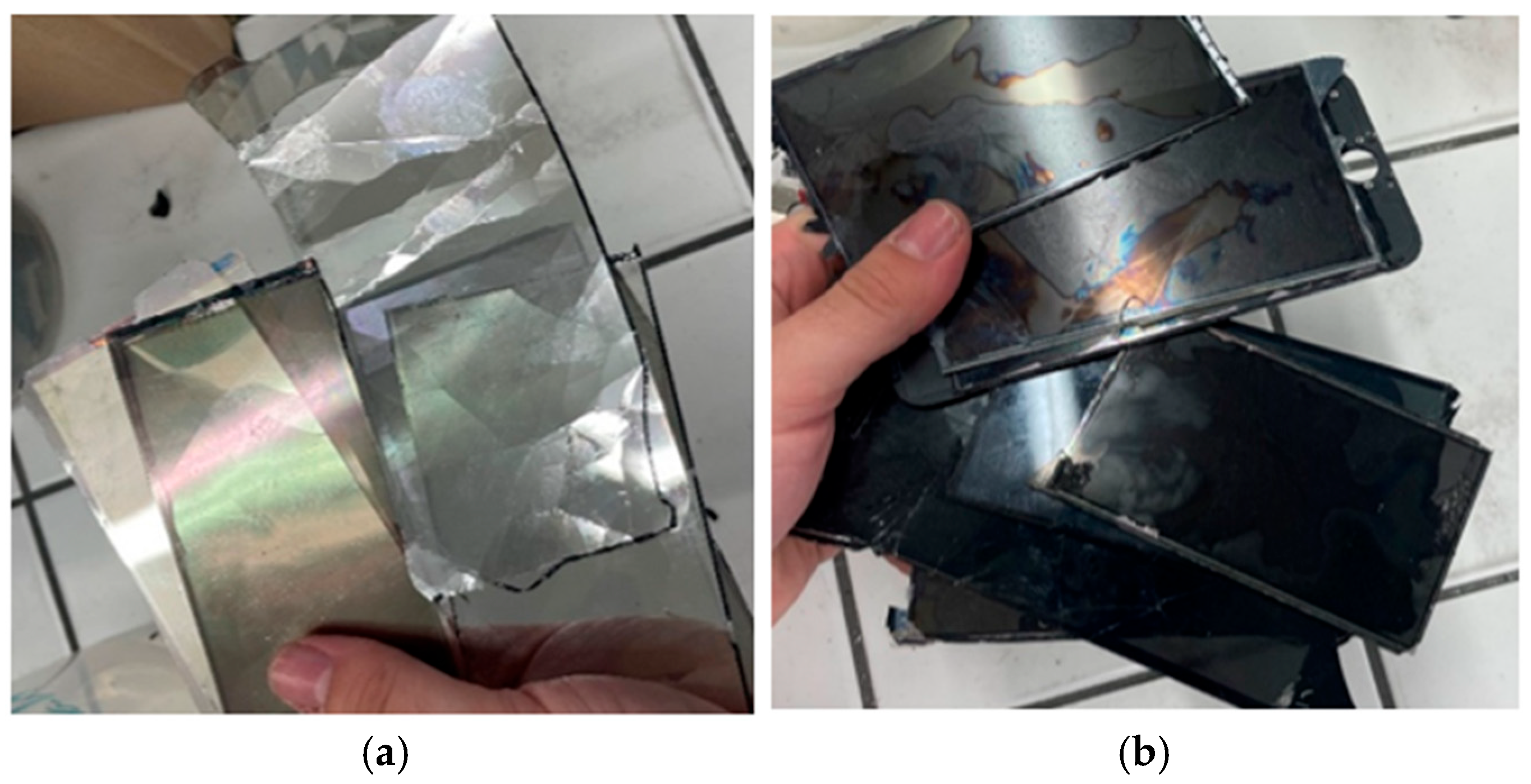
The input material for the experiment consisted of 67 LCD screens from mobile phones. The displays were manually disassembled to separate the layers containing the conductive transparent indium tin oxide (ITO) coating. This layer is typically deposited on the surface of two borosilicate glass plates, which form the basic structure of the display. In addition to the ITO layer, the internal space of the display also contains thin-film transistors and color pigments that create the image. Both glass plates are covered on the outside with a polarizing film that adheres tightly to the glass surface [21,22]. As part of the classification process, the separated layers were divided into two categories—Front Glass (FG) and Back Glass (BG), as shown in Figure 1. The FG layer is oriented toward the interior of the device and is typically attached to a transparent plastic film, whereas the BG layer forms the outer part of the touch surface and is adhered directly to the glass touch layer of the display.
Figure 1.
(a) BG layers; (b) FG layers.
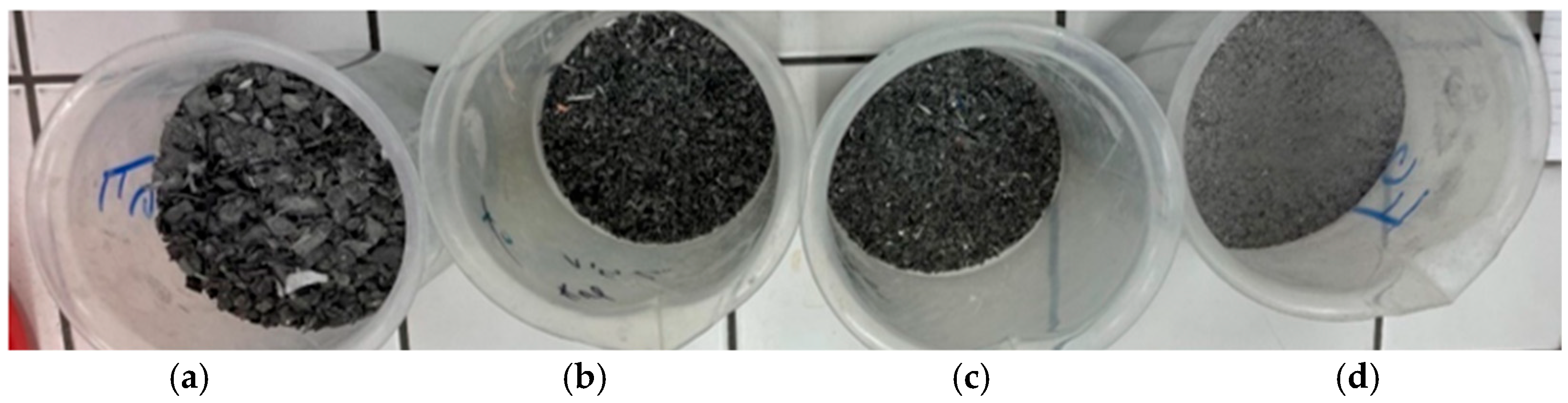
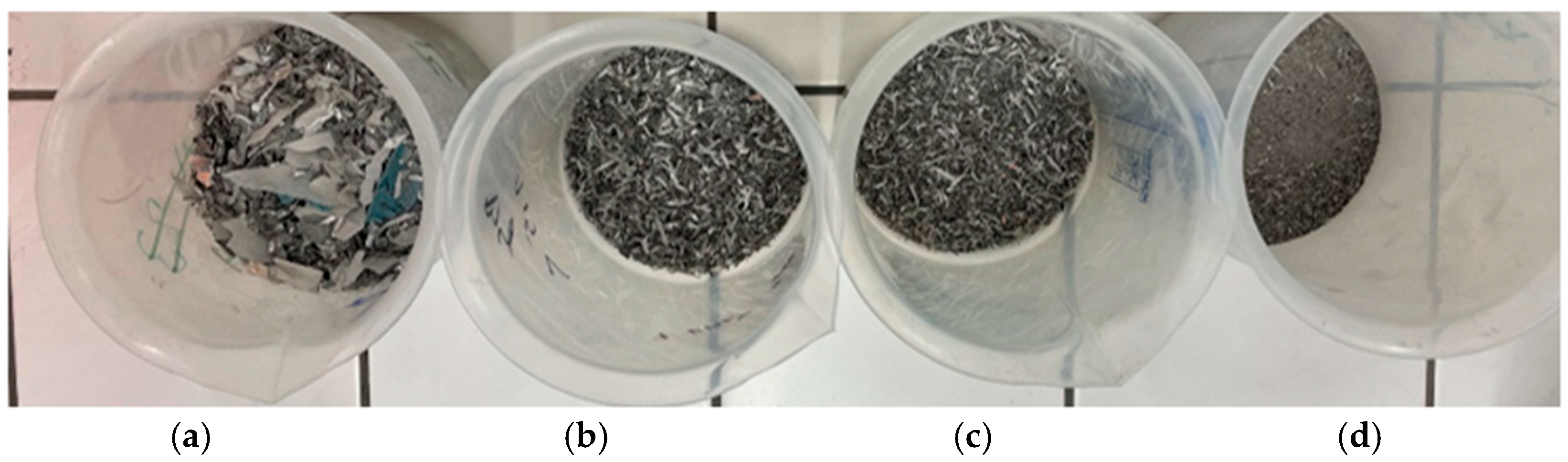
The mechanical processing of the material was carried out using a hammer mill LHM 20/16 (CONDUX-WERK, Mankato, MI, USA). This was followed by milling in a ball mill (LAC, MK Labor, Rajhrad, Czech Republic). The milled material was subjected to granulometric classification, resulting in four particle size fractions from both layers: <1 mm, 1–1.5 mm, 1.5–2 mm, and >2 mm, as shown in Figure 2 and Figure 3. For the experiment, only the <1 mm, 1–1.5 mm, and 1.5–2 mm fractions were used. The >2 mm fraction from both layers was excluded due to its size and the presence of residual materials such as glass, plastic films, and other components that could interfere with the bacterial life cycle.
Figure 2.
Fractions of BG layers; (a) >2 mm; (b) 2–1.5; (c) 1.5 – 1; (d) <1.
Figure 3.
Fractions of FG layers; (a) >2 mm; (b) 2–1.5; (c) 1.5–1; (d) <1.
2.2. Bioleaching
The experiments were conducted using two pure bacterial strains. Acidithiobacillus ferrooxidans, isolated from acidic mine waters from Zlaté Hory, Czech Republic, was obtained from the Czech Collection of Microorganisms in Brno. Acidithiobacillus thiooxidans, isolated from acidic mine waters from the Smolník copper mine in Slovakia, was obtained from the Institute of Geotechnics of the Slovak Academy of Sciences in Košice. The bacterial cultures were applied to the material separately. The optimal pH for the growth of A. ferrooxidans ranges from 2.0 to 2.5, while for A. thiooxidans it ranges from 2.5 to 3. These bacteria obtain energy through the oxidation of reduced compounds of iron (Fe2+) and sulfur (S0) [23].
For the cultivation of A. ferrooxidans, 9K medium was prepared, consisting of two components. The first part was made from distilled 1.4 L, 4 g, KCL 0.2 g, 1 g, 1 g, 0.02 g, second part from destilled 0.6 L, 4 mL a 40 mL [23]. For the cultivation of A. thiooxidans, Waksman and Joffe medium was used, prepared with distilled 2 L, 0.4 g, 6 g, 1 g, 0.1 g, 20 g, 0.5 g [24]. Both media were sterilized by autoclaving using a STERILAB autoclave (BMT Medical Technology s.r.o., Brno, Czech Republic) at 121 °C for 20 min. The media were then inoculated with the respective bacterial cultures. A. ferrooxidans was added at a volume ratio of 10% (v/v), while A. thiooxidans was added at 5% (v/v) [16,17]. The media were then incubated for 14 days at 30 °C to allow the bacterial cultures to reach the exponential growth phase.
After cultivation, individual particle size fractions (<1 mm, 1–1.5 mm, 1.5–2 mm) were weighed into beakers and mixed with the corresponding inoculated medium. The prepared samples were labeled as shown in Table 1 and Table 2. Only a small amount of material was obtained from the FG layer in the 1–1.5 mm and 1.5–2 mm fractions, and therefore only a small quantity of these fractions was used for leaching (Table 1, samples 5 and 6). The samples were sealed with paraffin film and placed in a Multitron Standard shaker (Infors HT, Bottmingen, Switzerland) at 30 °C and 70 rpm. The total leaching period lasted four weeks. During leaching a pH of the solutions was monitored at regular intervals. All pH values were observed and adjusted using 5 mol/L H2SO4 if needed.
Table 1.
Preparation of samples, weighed material mass, and volume of bacterial medium used with A. thiooxidans.
Table 2.
Sample preparation, weighed material mass, and volume of bacterial medium used with A. ferrooxidans.
2.3. Elemental Analysis
2.3.1. XRF Analysis
The material and its individual fractions were subjected to XRF analysis before and after leaching. The indium content was analyzed. A handheld XRF Delta Professional analyzer (Evident, Waltham, MA, USA) was used. X-ray fluorescence spectroscopy (XRF) is a non-destructive analytical method designed for both qualitative and quantitative determination of the elemental composition of solid samples. The principle is based on the irradiation of the sample with primary X-rays, which excites the atoms and causes the emission of secondary (fluorescent) radiation. The energy spectrum of this radiation is characteristic for individual elements, allowing for their accurate identification and concentration determination [25].
2.3.2. ICP-OES Analysis of Solutions During and After Leaching
Samples were taken every week for four weeks, with four samples collected from each leached material. An ICP-OES 5110 (Agilent Technologies, Santa Clara, CA, USA) was used. Inductively Coupled Plasma Optical Emission Spectrometry (ICP-OES) is an analytical method for the simultaneous measurement of multiple elements in liquids and dissolved solid samples. The principle of the method involves introducing the sample as an aerosol into an argon plasma generated by a high-frequency electromagnetic field. This results in the atomization, ionization, and excitation of individual atoms. As the excited atoms and ions return to their ground energy states, they emit electromagnetic radiation at characteristic wavelengths specific to each element [25].
3. Results and Discussion
3.1. Leaching with Acidithiobacillus Thiooxidans
3.1.1. Changes in pH
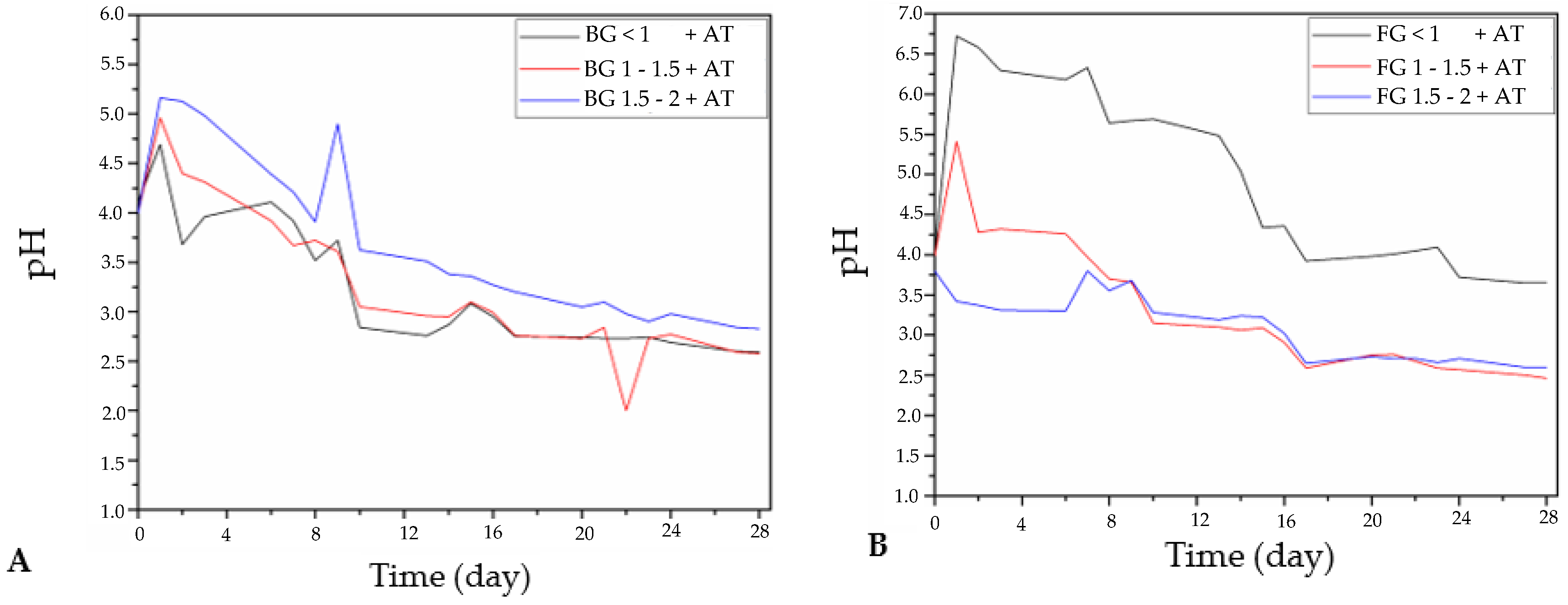
During the bioleaching of BG and FG fractions, a decrease in pH was observed due to the metabolic activity of A. thiooxidans, which oxidizes elemental sulfur to sulfuric acid. In the BG fractions as Figure 4A shows, initial pH ranged from 4.0 to 5.5, with the highest fluctuations in the 1.5–2 mm fraction. Within ten days, pH stabilized between 2.5–3.0 in the finer fractions (<1 mm and 1–1.5 mm), while remaining slightly higher in the roughest fraction. The initial variability of pH likely reflects bacterial adaptation and surface layer dissolution. In the FG fractions as Figure 4B, the initial pH was highest (up to 6.5) in the <1 mm fraction and lower (4.0–4.5) in coarser ones. After ten days, pH values across all size classes also stabilized at 2.5–3.0. The elevated initial pH in the finest FG material may be attributed to the rapid release of alkaline components.
Figure 4.
Changes in pH value during the leaching of BG (A) and FG (B) fractions with A. thiooxidans (AT).
3.1.2. Indium Detected by XRF Analysis
As Table 3 shows the highest indium content in the FG layer fractions was observed in the <1 mm fraction, where its concentration before leaching reached 404 ± 11 mg/kg. Lower contents were recorded in the 1–1.5 mm and 1.5–2 mm fractions, at 279 ± 11 mg/kg and 207 ± 10 mg/kg, respectively. After the application of the A. thiooxidans bacterial culture, a decrease in indium content was observed in all fractions. The largest decrease occurred in the <1 mm fraction, where the concentration dropped to 283 ± 11 mg/kg, representing a reduction of 121 mg/kg. In the other fractions, the decreases were smaller—37 mg/kg (1–1.5 mm) and 19 mg/kg (1.5–2 mm). The FG fractions thus showed both a higher initial indium content and higher bioleaching efficiency compared to the BG fractions, which initially contained lower contents of indium. The highest value in the BG layer was measured in the <1 mm fraction (24 ± 3 mg/kg), while the 1–1.5 mm and 1.5–2 mm fractions contained 14 ± 4 mg/kg and 23 ± 4 mg/kg, respectively. In the <1 mm fraction, the decrease was 5 mg/kg; in the other fractions, the decreases were 7 mg/kg (1–1.5 mm) and 5 mg/kg (1.5–2 mm).
Table 3.
XRF analysis of indium (In) in FG and BG fractions before and after bioleaching with A. thiooxidans.
3.1.3. Indium Detected by ICP-OES Analysis
This method did not have conclusive results. While XRF analysis indicated slight differences in indium content before and after bioleaching, the more accurate ICP-OES method did not detect any measurable concentrations of this element in the leachates. A possible reason for the low efficiency may be the absence of an adaptation phase of the microorganisms to the specific substrate, which could have slowed or even completely inhibited their growth. Insufficient cultivation time and low inoculation intensity may also have negatively affected microbial activity and thus the bioleaching process itself. Another influencing factor was the pH, which in some fractions fluctuated outside the optimal range during the initial stages of leaching. Inappropriate pH values (too low or too high) outside the optimal range for A. thiooxidans (2.5–4.0) could have negatively impacted their metabolic activity. This may have resulted in insufficient indium release, making it undetectable by ICP-OES [26].
3.2. Leaching with Acidithiobacillus Ferrooxidans
3.2.1. Changes in pH
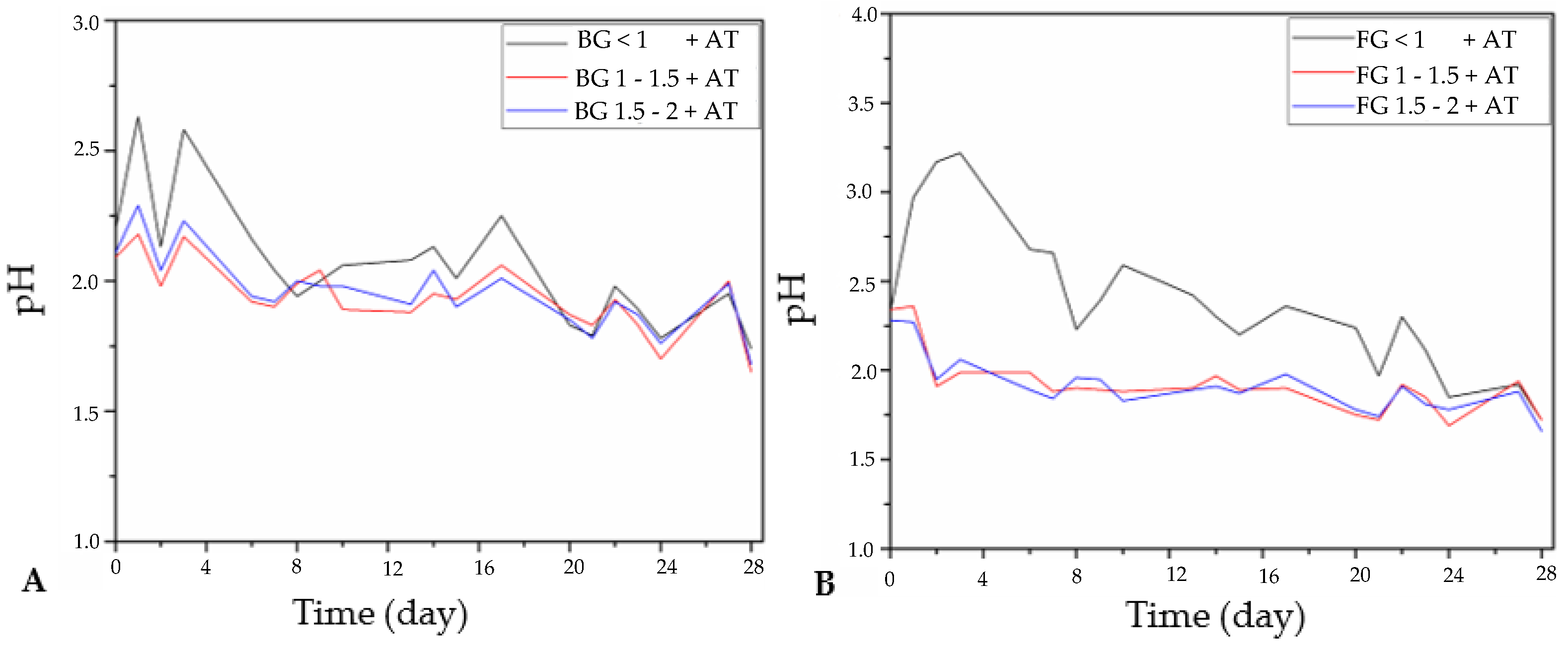
Figure 5A shows pH changes during leaching of BG fractions with Acidithiobacillus ferrooxidans. Initially, pH ranged from 2.0 to 2.2, with a temporary rise to 2.6 in the finest fraction (<1 mm). Over time, pH gradually decreased and stabilized between 1.8 and 2.0 due to bacterial oxidation of sulfur and iron, leading to acid production and metal ion release. Figure 5B displays pH changes during leaching of FG fractions. In the <1 mm fraction, pH peaked at 3.2 early on, then dropped and stabilized between 2.0 and 2.5. Roughest fractions (1–1.5 mm and 1.5–2 mm) had lower, more stable pH levels (1.9–2.1). The initial rise in the finest fraction may result from rapid release of surface compounds affecting the solution’s chemistry.
Figure 5.
Changes in pH value during the leaching of BG (A) and FG (B) fractions with A. ferrooxidans (AF).
3.2.2. Indium Detected by XRF Analysis
As Table 4 shows the initial indium content in BG fractions was 24 ± 3 mg/kg (<1 mm), 14 ± 4 mg/kg (1–1.5 mm), and 23 ± 4 mg/kg (1.5–2 mm). After leaching with A. ferrooxidans, indium remained detectable only in the <1 mm fraction (8 ± 3 mg/kg), indicating a 16 mg/kg reduction; in the other fractions, it was below detection limits. In FG fractions, initial contents were 404 ± 11 mg/kg (<1 mm), 279 ± 11 mg/kg (1–1.5 mm), and 207 ± 10 mg/kg (1.5–2 mm). Post-leaching values dropped to 253 ± 8.53 (<1 mm), 53 ± 5 (1–1.5 mm) and 53 ± 6 (1.5–2 mm), with the greatest reduction (226 mg/kg) in the 1–1.5 mm fraction.
Table 4.
XRF analysis of indium (In) in FG and BG fractions before and after bioleaching with A. ferrooxidans.
3.2.3. Indium Detected by ICP-OES Analysis
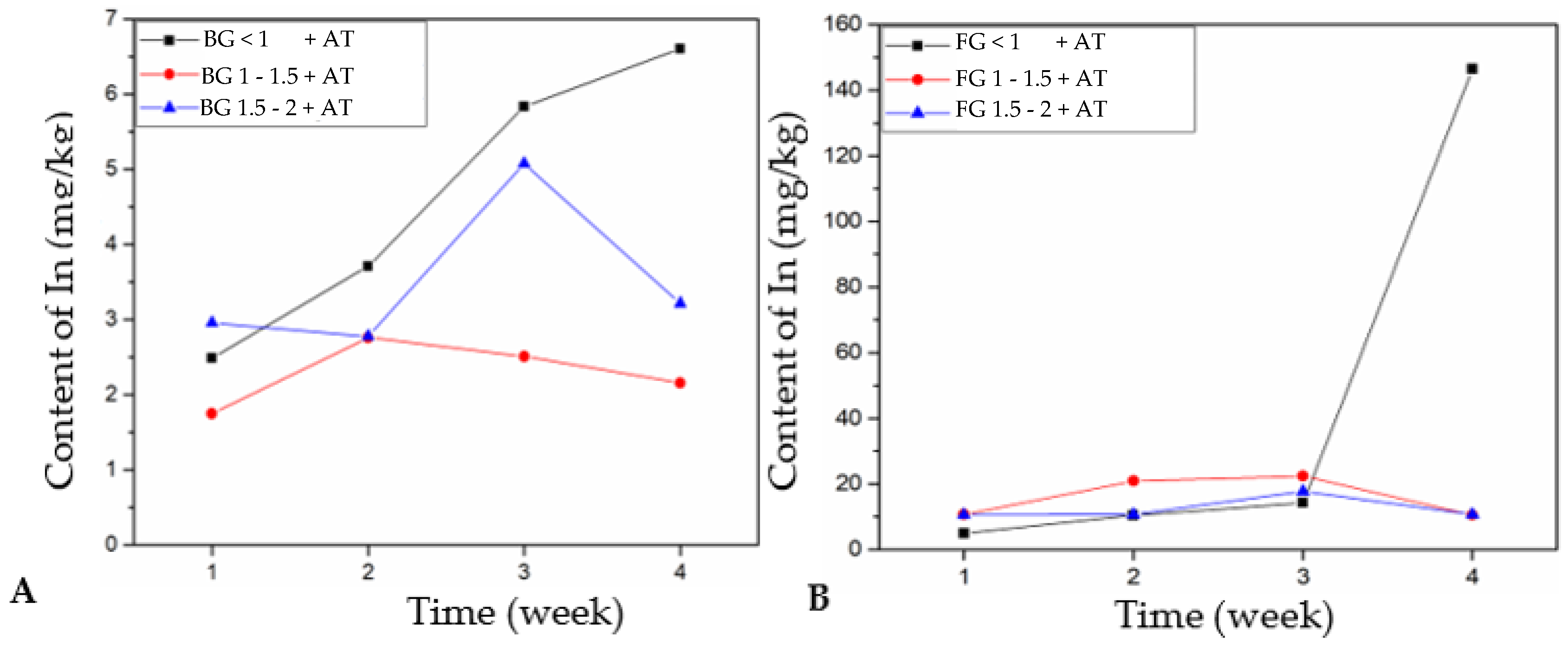
Figure 6A shows indium concentrations in BG leachates during bioleaching with A. ferrooxidans. The <1 mm fraction showed the highest final value (6.5 mg/L), increasing steadily over four weeks. The 1–1.5 mm fraction peaked at 2.76 mg/L in week 2, then slightly declined. The 1.5–2 mm fraction reached its maximum (5.08 mg/L) in week 3. Figure 6B shows indium concentrations in FG leachates. The <1 mm fraction reached the highest value of 146.47 mg/L in week 4. The 1–1.5 mm and 1.5–2 mm fractions peaked in week 3 at 22.38 mg/L and 17.22 mg/L, respectively, followed by a decrease in week 4.
Figure 6.
Amount of indium leached over 4 weeks in BG (A) and FG (B) fractions after leaching with A. ferrooxidans (AF).
These results demonstrate that the finer FG fractions were significantly more susceptible to effective indium leaching by A. ferrooxidans, while the larger particle sizes showed considerably lower efficiency. Overall, the data indicate that FG fractions were generally more prone to indium release during bioleaching with A. ferrooxidans, with the finest fraction showing the most pronounced increase in indium content in the later stages of the experiment. In contrast, indium release from BG fractions was slower and less prominent, likely due to differences in material structure and the accessibility of the ITO layer to microbial activity.
4. Conclusions
The aim of this study was to evaluate the efficiency of indium bioleaching from ITO layers of LCD screens using pure cultures of Acidithiobacillus ferrooxidans and Acidithiobacillus thiooxidans.
Through preparatory processes, two types of ITO layers were separated from the displays, with the FG layer and its fractions showing, based on XRF analysis, a higher indium content than those of the BG layer. The results after leaching indicate that higher bioleaching efficiency was achieved using A. ferrooxidans, particularly in the finer FG fraction (<1 mm), where a significant indium concentration of 146.47 mg/L was detected after four weeks of leaching. In some BG samples, indium was not detected by XRF after leaching, which may indicate either its complete release or concentrations below the detection limit.
In contrast, bioleaching with A. thiooxidans, evaluated using ICP-OES analysis of the leachates, did not result in detectable indium contents in the solution. Although XRF analysis indicated a reduction in indium content, ICP-OES—being a more accurate method—showed no measurable release, and thus the method using A. thiooxidans was considered ineffective. Possible reasons may include the absence of a bacterial adaptation phase, insufficient inoculation, or inadequate cultivation time.
The study confirmed that the FG fraction represents a more suitable substrate for bioleaching of ITO layers than the BG fraction. It was also confirmed that the particle size distribution of the material has a significant impact on the overall efficiency of the process, with finer fractions proving to be more effective. However, further optimization of conditions is necessary to achieve better results, particularly when using A. thiooxidans cultures.
Author Contributions
Conceptualization, D.H., I.J.; investigation, D.H.; formal analysis, D.H., I.J.; data curation, D.H.; visualization, D.H., I.J.; writing—original draft preparation, D.H.; writing—review and editing, D.H. and I.J.; supervision, I.J.; funding acquisition, I.J. All authors have read and agreed to the published version of the manuscript.
Funding
The work was supported by Interreg Danube Region co-funded by the European Union, within project DRP0401069—BioPrep, Biotechnological Innovations for Sustainable FPDs Recycling.
Institutional Review Board Statement
Not applicable.
Informed Consent Statement
Not applicable.
Data Availability Statement
Data are contained within the article.
Conflicts of Interest
The authors declare no conflicts of interest.
References
- Electrical Equipment. Available online: https://www.mzp.cz/cz/elektrozarizeni (accessed on 30 January 2025).
- Indium, In, Atomic Number 49. Available online: https://cs.institut-seltene-erden.de/indium-in-ordnungszahl-49/ (accessed on 30 January 2025).
- Indium. Available online: http://www.prvky.com/49.html (accessed on 30 January 2025).
- Indium–Tin Oxide. Available online: https://cz.sscmaterials.com/non-ferrous-metals/indium/indium-tin-oxide.html (accessed on 30 January 2025).
- European Commission. Report on Critical Raw Materials for the EU. Available online: https://rmis.jrc.ec.europa.eu/uploads/crm-report-on-critical-raw-materials_en.pdf (accessed on 7 April 2025).
- USGS Minerals Yearbook. Available online: https://www.usgs.gov/centers/national-minerals-information-center/indium-statistics-and-information (accessed on 7 April 2025).
- Nakane, Y.; Masuta, H.; Honda, Y.; Fujimoto, F.; Miyazaki, T. Formation of indium–tin oxide (ITO) films by the dynamic mixing method. Nucl. Instrum. Methods Phys. Res. B 2002, 59, 264–267. [Google Scholar] [CrossRef]
- Hydrometallurgy. Available online: https://chem.libretexts.org/Courses/University_of_Missouri/MU%3A__1330H_%28Keller%29/23%3A_Metals_and_Metallurgy/23.3%3A_Hydrometallurgy (accessed on 25 April 2025).
- Rocky, M.M.H.; Rahman, I.M.M.; Endo, M.; Hasegawa, H. Comprehensive insights into aqua regia-based hybrid methods for efficient recovery of precious metals from secondary raw materials. Chem. Eng. J. 2024, 495, 153537. [Google Scholar] [CrossRef]
- Gu, S.; Fu, B.; Dodbiba, G.; Fujita, T.; Fang, B. A sustainable approach to separate and recover indium and tin from spent indium–tin oxide targets. RSC Adv. 2017, 7, 52017–52023. [Google Scholar] [CrossRef]
- Fan, Y.; Liu, Y.; Niu, L.; Zhang, W.; Zhang, T. Efficient extraction and separation of indium from waste indium–tin oxide (ITO) targets by enhanced ammonium bisulfate leaching. Sep. Purif. Technol. 2021, 269, 118766. [Google Scholar] [CrossRef]
- Zhao, M.; Zhang, H.; Jiang, X.; Yang, Y. Differential leaching mechanisms and ecological impact of organic acids on ion-adsorption type rare earth ores. Sep. Purif. Technol. 2025, 362, 131701. [Google Scholar] [CrossRef]
- Fojtová, T. Useful bacteria from waste help recover valuable metals. Universitas. Available online: https://www.universitas.cz/aktuality/6874-uzitecne-bakterie-z-odpadu-pomohou-ziskat-zpet-dulezite-kovy (accessed on 7 April 2025).
- Jaiswal, M.; Srivastava, S. A review on sustainable approach of bioleaching of precious metals from electronic wastes. J. Hazard. Adv. 2024, 14, 100435. [Google Scholar] [CrossRef]
- Jowkar, M.J.; Bahaloo-Horeh, N.; Mousavi, S.M.; Pourhossein, F.P. Bioleaching of indium from discarded liquid crystal displays. J. Clean. Prod. 2018, 180, 417–429. [Google Scholar] [CrossRef]
- Willner, J.; Fornalczyk, A.F.; Saternus, M.S.; Gajda, B.G. Bioleaching of indium and tin from used LCD panels. Physicochem. Probl. Miner. Process. 2018, 54, 639–645. [Google Scholar]
- Willner, J.; Fornalczyk, A.; Saternus, M.; Sedlakova-Kadukova, J.; Gajda, B. LCD panels bioleaching with pure and mixed culture of Acidithiobacillus. Physicochem. Probl. Miner. Process. 2022, 58, 15–23. [Google Scholar] [CrossRef]
- Constantin, A.; Pourhossein, F.; Ray, D.; Farnaud, S. Investigating the acidophilic microbial community’s adaptation for enhancement indium bioleaching from high pulp density shredded discarded LCD panels. J. Environ. Manag. 2024, 365, 121521. [Google Scholar] [CrossRef] [PubMed]
- Cui, J.; Zhu, N.; Mao, F.; Wu, P.; Dang, Z. Bioleaching of indium from waste LCD panels by Aspergillus niger: Method optimization and mechanism analysis. Sci. Total Environ. 2021, 790, 148151. [Google Scholar] [CrossRef] [PubMed]
- Sinharoy, A.; Lens, P.N.L. Indium removal by Aspergillus niger fungal pellets in the presence of selenite and tellurite. J. Water Process Eng. 2023, 51, 103421. [Google Scholar] [CrossRef]
- ITO Glass Used in LCD Modules. Available online: https://focuslcds.com/journals/ito-glass-used-in-lcd-modules/ (accessed on 10 April 2025).
- Resistive vs. Capacitive Touchscreen Monitor. Available online: https://www.codeware.cz/blog/rezistivni-vs-kapacitni-dotykovy-monitor (accessed on 4 February 2025).
- Janáková, I. Mineral Biotechnology I. University Textbook, VSB–Technical University of Ostrava, Ostrava, 2024. Available online: http://hdl.handle.net/10084/152647 (accessed on 5 June 2025).
- Kovalčíková, M.; Luptakova, A.; Estokova, A. Application of granulated blast furnace slag in cement composites exposed to biogenic acid attack. IOP Conf. Ser. Mater. Sci. Eng. 2015, 96, 012014. [Google Scholar] [CrossRef]
- Thermo Fisher Scientific. What is XRF (X-Ray Fluorescence) and How Does It Work? Available online: https://www.thermofisher.com/blog/ask-a-scientist/what-is-xrf-x-ray-fluorescence-and-how-does-it-work/?utm_source=chatgpt.com (accessed on 15 June 2025).
- UniversalLab Blog. Available online: https://universallab.org/blog/blog/ICP-OES-principle-and-pre-treatment-technique/ (accessed on 15 June 2025).
Disclaimer/Publisher’s Note: The statements, opinions and data contained in all publications are solely those of the individual author(s) and contributor(s) and not of MDPI and/or the editor(s). MDPI and/or the editor(s) disclaim responsibility for any injury to people or property resulting from any ideas, methods, instructions or products referred to in the content. |
© 2025 by the authors. Licensee MDPI, Basel, Switzerland. This article is an open access article distributed under the terms and conditions of the Creative Commons Attribution (CC BY) license (https://creativecommons.org/licenses/by/4.0/).