Article

Effects of Plasma Parameters on Ammonia Cracking Efficiency Using Non-Thermal Arc Plasma

1
School of Electromechanical Engineering, Anhui University of Science and Technology, Huainan 232001, China
2
Institute of Energy, Hefei Comprehensive National Science Center (Anhui Energy Laboratory), Hefei 230001, China
*
Authors to whom correspondence should be addressed.
Hydrogen 2026, 7(1), 6; https://doi.org/10.3390/hydrogen7010006 (registering DOI)
Submission received: 4 December 2025 / Revised: 25 December 2025 / Accepted: 28 December 2025 / Published: 3 January 2026
(This article belongs to the Special Issue Green and Low-Emission Hydrogen: Pathways to a Sustainable Future)

Abstract

Ammonia serves as a critical medium for hydrogen storage and energy transportation, making the development of efficient ammonia cracking technologies essential for advancing hydrogen energy applications. Plasma-assisted ammonia cracking has emerged as a promising approach for clean energy conversion, leveraging non-thermal plasma to effectively decompose ammonia into hydrogen and nitrogen. Compared to conventional thermal catalytic cracking, this method offers several advantages, including rapid startup and response, operational flexibility, and the ability to operate under low-temperature and atmospheric pressure conditions. This study presents a novel high-pressure plasma reactor designed to overcome the high-energy barriers associated with conventional methods. Through systematic optimization of discharge parameters, reactor configuration, and catalyst integration, significant improvements in both ammonia conversion efficiency and energy utilization have been achieved. Experimental results demonstrate that increased discharge power and reduced ammonia flow rate enhance cracking performance. In the absence of a catalyst, conversion efficiency initially increases with pressure but subsequently decreases at higher pressures. However, the incorporation of a catalyst markedly improves overall performance across all tested conditions. These advancements support the practical implementation of ammonia-based systems for distributed hydrogen supply and clean propulsion technologies.

1. Introduction

China is accelerating the construction of large-scale renewable energy bases, including integrated hydro–wind–solar complexes and desert/grassland wind–solar farms. By integrating these with scaled green hydrogen production (for immediate consumption) and new storage technologies, the country addresses the spatiotemporal limitations of renewables. This development pathway is building a smart, interconnected multi-energy system and positions China to lead the global transition toward a green, low-carbon future [1,2,3,4]. Hydrogen energy is regarded as one of the top clean energy sources due to its exceptional energy density and the environmentally benign byproduct of water upon combustion. Nevertheless, the physical properties of hydrogen gas, including its low density, high diffusivity, and considerable permeability, impose requirements on the sealing performance of storage and transportation equipment. As a hydrogen carrier, ammonia (NH3), on the other hand, has more benefits when it comes to storage and transportation techniques. Ammonia’s liquid state at standard temperature and pressure eliminates the need for high-pressure containers or cryogenic equipment during storage and transportation, significantly reducing costs and enhancing safety. Ammonia also offers a higher-energy density than liquid hydrogen, which is advantageous for various applications, and can leverage existing petrochemical infrastructure for transport, addressing the challenges posed by hydrogen’s high permeability and low density in storage and transportation [5,6,7].
Conventional ammonia cracking techniques predominantly depend on thermal catalytic processes, which generally operate at extremely high temperatures ranging from 800 to 1000 °C and require expensive or common catalysts such as ruthenium-, nickel-, or iron-based materials [8,9]. These methods not only consume substantial amounts of energy to maintain such elevated temperatures but also suffer from severe drawbacks, including catalyst sintering, deactivation due to carbon deposition or structural collapse at high temperatures, and limited catalyst lifespan. As a result, ammonia decomposition technology faces significant barriers to commercialization and large-scale deployment for on-demand hydrogen production due to inherent limitations such as high energy consumption, complex reactor designs, slow operational cycling, and limited load flexibility. Its application in distributed or mobile systems, especially in fuel cell vehicles, remains particularly constrained. In recent years, the research landscape of ammonia cracking has witnessed a growing shift toward alternative, more sustainable approaches to overcome these bottlenecks. While conventional thermal catalysis remains the benchmark for industrial-scale centralized hydrogen production, emerging technologies such as photocatalytic, electrocatalytic, and especially plasma-assisted cracking are gaining traction due to their potential for milder operating conditions and higher efficiency. Among these, NTP technology stands out as a particularly promising avenue. In contrast to conventional thermal catalytic methods, NTP-assisted ammonia cracking presents distinct advantages, including millisecond-scale startup, high operational flexibility, and the ability to proceed at near-ambient temperature and atmospheric pressure without external heating. These characteristics thus allow for seamless integration with intermittent renewables like solar or wind power. These features make NTP highly suitable for decentralized, on-site hydrogen generation scenarios. NTP contains a variety of high-energy active particles (such as electrons, ions, and free radicals) with high-energy density and non-equilibrium characteristics, which provides new technical methods for hydrogen production from ammonia discharge. Moreover, NTP has demonstrated remarkable potential in activating and driving challenging chemical reactions under mild conditions, such as nitrogen fixation for ammonia synthesis, carbon dioxide reduction to value-added fuels, and methane reforming for syngas production, highlighting its versatility and efficiency in sustainable energy conversion processes [10,11,12,13].
Liu Yajun used two methods to produce hydrogen through ammonia plasma. Initially, fluctuations in the ammonia conversion rate under parameter control without catalysts were observed using negative corona plasma. Iron-based catalysts were then combined with plasma, demonstrating synergistic effects that increased catalytic ammonia decomposition conversion rates compared to standalone plasma techniques [14]. Zhou et al. confirmed the synergistic effect of NTP paired with catalysts, in which NTP can achieve high ammonia conversion rates at lower temperatures and atmospheric pressure. Catalysts such as Fe-based and Co-based ones exhibit significantly enhanced activity in plasma environments, where the reaction process generates active species such as N and H radicals [15]. Hayakawa et al. developed a Dielectric Barrier Discharge (DBD) reactor equipped with a hydrogen separation membrane to efficiently produce hydrogen from ammonia. By reducing gas flow rates, they extended the residence time in the discharge zone, which led to a hydrogen generation rate of 20 mL/min. The approach aligns with the principles of ammonia decomposition for hydrogen production, which discuss the importance of ammonia in hydrogen synthesis and the technical aspects of ammonia decomposition reactors [16]. Q.F. Lin et al. developed a hybrid process combining NTP with catalysts for instantaneous, on-demand hydrogen production from ammonia. The system achieved complete ammonia conversion at atmospheric pressure with relatively low energy consumption, as the plasma generated active species and heat that significantly enhanced catalytic decomposition rates compared to conventional thermal catalysis [17].
The high-pressure ammonia cracking apparatus effectively leverages the inherent high-pressure conditions of conventional ammonia storage cylinders, directly utilizing the pressure energy from the storage and transportation system to significantly reduce additional pressurization energy consumption. Concurrently, the high-pressure environment enhances the molecular density of reactants, thereby improving contact efficiency with catalysts and accelerating cracking reaction kinetics. Furthermore, elevated pressure may exert unique influences on plasma generation and sustenance, as well as on the behavior of active species, consequently affecting the efficiency and product selectivity of the ammonia decomposition reaction. Compared to atmospheric pressure conversion technologies, the high-pressure ammonia cracking approach offers distinct advantages in several key aspects. First, it capitalizes on the intrinsic high pressure (typically exceeding atmospheric levels) of the ammonia storage and transport system, eliminating the need for supplementary compression steps commonly required in atmospheric pressure methods and thus markedly diminishing energy input. Second, under high-pressure conditions, the increased molecular density of reactants promotes higher collision frequencies between ammonia molecules and catalysts, thereby elevating reaction rates and conversion efficiencies. Additionally, in plasma-assisted cracking processes, the high-pressure environment may suppress certain reverse reactions or optimize the distribution of active species. Although high pressure thermodynamically disfavors the ammonia cracking equilibrium due to the volume expansion associated with the reaction, which favors low-pressure conditions, the introduction of high-energy electrons and radicals generated by plasma can partially offset this limitation, thereby enabling more efficient hydrogen production. Studies have demonstrated that plasma-driven ammonia cracking under high pressure, while potentially reducing overall yield, enhances energy efficiency (EE) and selectivity, particularly when micro-discharges and background gases are controlled.
Despite the significant advantages of high-pressure ammonia cracking, such as utilizing inherent storage pressure, minimizing additional pressurization energy requirements, and enhancing reactant density and collision efficiency, research on plasma-assisted ammonia cracking under elevated pressure conditions remains scarce. The majority of existing studies are confined to atmospheric or low-pressure systems, leaving the distinct effects of high pressure on plasma initiation, sustainability, active species formation, and reaction selectivity insufficiently explored. This knowledge gap hinders the practical optimization of hydrogen production processes under realistic ammonia storage conditions. To address this limitation, the present study establishes a high-pressure plasma-assisted ammonia cracking platform and conducts a systematic investigation into ammonia decomposition performance, plasma discharge characteristics, and catalytic synergies under elevated pressures. The results provide insight into the regulation of discharge modes and energy efficiency at high pressure, demonstrating its potential for improving energy efficiency while offering essential experimental and theoretical foundations for the development of efficient, compact hydrogen production systems with considerable engineering significance and application potential.

2. Experimental Setup

The main components of the high-pressure plasma-assisted ammonia cracking experimental setup include an oscilloscope, hydrogen concentration diagnostic system, cracking chamber with catalysts, power supply, plasma generator, and gas supply system. Figure 1a presents a schematic diagram of the experimental system. High-purity NH3 gas, regulated by a mass flow controller, is used in the experiment. High-pressure ammonia gas is consistently supplied to the plasma reactor through a swirl ring. Figure 1b illustrates the structure of the plasma generator utilized in the experiment. The inner electrode (anode), fabricated as a conical stainless-steel rod, is equipped with an axial-flow swirler at its base. The outer electrode (cathode) is a cylindrical stainless-steel tube with an inner diameter of 8 mm, forming a discharge gap of 1.5 mm. Ammonia gas is introduced through a stainless-steel inlet tube mounted at the front end of the outer electrode. The cathode is grounded, while the anode is connected to the high-voltage output of the plasma power supply. When ammonia flows into the chamber and the electric field strength between the electrodes approaches the breakdown threshold, a plasma discharge initiates at the narrowest inter-electrode gap, establishing a conductive channel. Driven by the swirling flow, the resulting plasma rotates and propagates toward the reactor exit, thereby forming a stable discharge zone.
The ammonia gas is cracked under the influence of plasma by activating the high-voltage power supply after the pressure inside the cracking chamber has been controlled at a relatively constant value. A hydrogen concentration detector is then used to analyze the products after the gas has been discharged. The plasma power supply is a high-frequency pulse-modulated power source with a maximum operating power of 1 kW and a maximum breakdown voltage of 20 kV. A digital oscilloscope with high-voltage and current probe is used to record the voltage and current waveforms during plasma discharge. A portable detector (Shanghai Xiyu Equipment Co., Shanghai, China SKY6000-XYH2S) was used for hydrogen concentration detection, which can be converted to the ammonia conversion rate ( η N H 3 ) by the following equations.
2 N H 3 plasma N 2 + 3 H 2
η NH 3 ( % ) = 2 X H 2 3 2 X H 2
where X H 2 denotes the volume fraction of hydrogen in the mixed gas after cracking.
The main parameters in the experiment are shown in Table 1, where P denotes the applied power, f denotes the pulse frequency, and q(NH3) denotes the ammonia gas flow rate. The parameters in this paper represent typical values unless specified.

3. Results

3.1. Analysis of Plasma Discharge

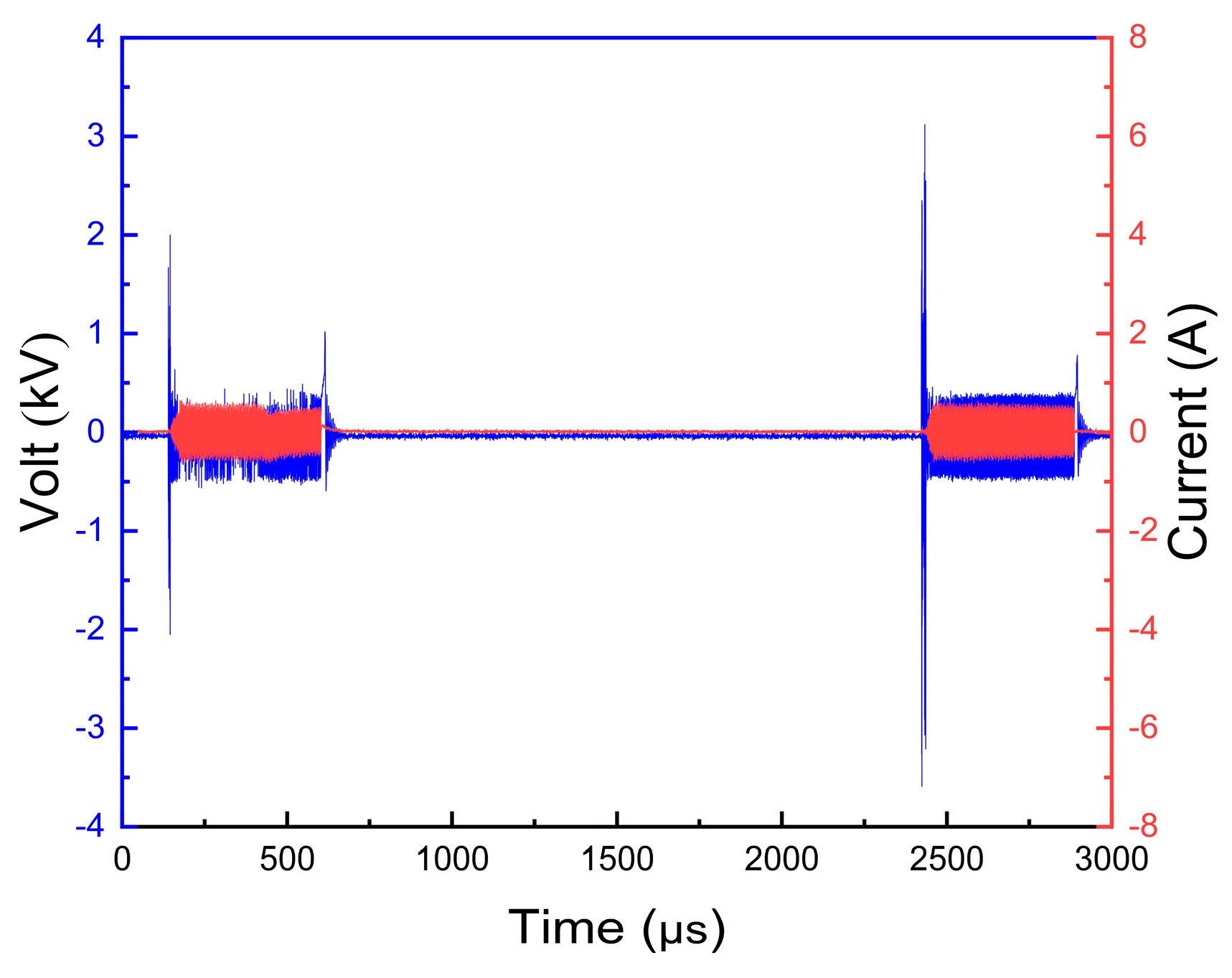
Figure 2 shows the voltage and current characteristics of the pulsed sliding arc discharges under an ammonia gas pressure of 0.2 MPa. The experiments employed a pulsed power supply operating at a frequency of 20 Hz, a duty cycle of 20%, and an output power of 200 W. The average power consumed by the discharge remained relatively constant at approximately 40 W. As illustrated in Figure 2, within a 3000 μs time scale, the voltage waveform exhibits two complete discharge cycles, with peak voltages reaching 2–3 kV during each pulse. When the applied voltage reaches the breakdown threshold of 2–3 kV, a transient plasma channel forms instantaneously between the electrodes, initiating the sliding arc discharge. Due to the limited energy input per pulse, the arc rapidly elongates, contracts, and extinguishes before the next pulse, resulting in a highly repetitive and non-equilibrium plasma state. Under the influence of the high electric field intensity, the discharge plasma generates a large number of high-energy electrons, ions, reactive free radicals, and other active species, which play a crucial role in driving the ammonia cracking process. To accurately capture the voltage and current signals during plasma discharge in the high-pressure ammonia environment, the experimental setup utilized an oscilloscope equipped with a high-voltage probe and a current probe for synchronous acquisition of the applied voltage and discharge current waveforms.
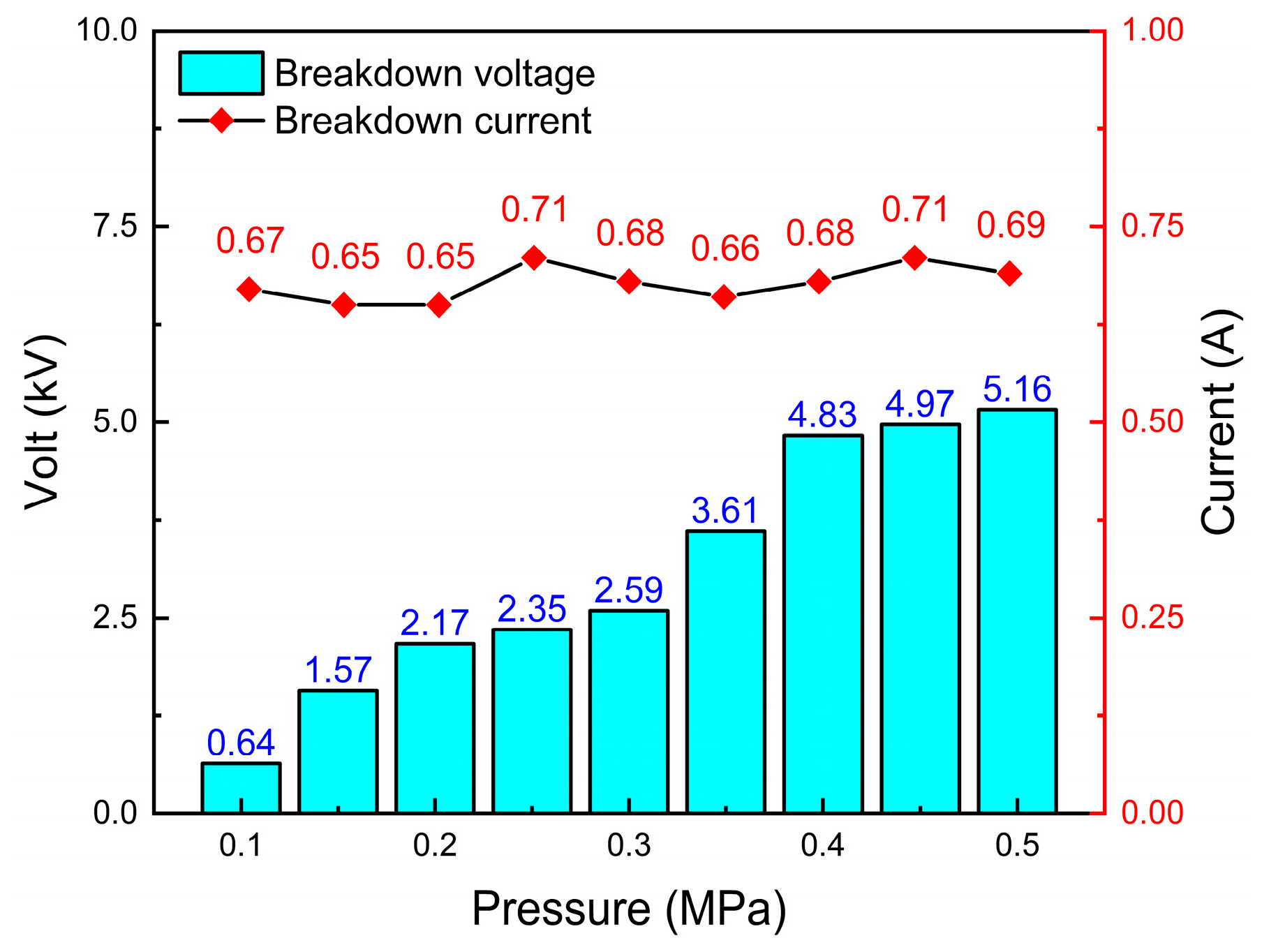
Figure 3 shows the average peak voltage and discharge current curves under various gas pressures that were obtained through statistical analysis of the plasma breakdown voltage and current over a 200 ms discharge period. Notably, there is a notable rising trend in the voltage amplitude as the ambient pressure progressively rises. It is reasonable for this physical phenomenon: as the medium gas pressure rises, gas density and the frequency of collisions between electrons and neutral particles also increase. Generally, the breakdown voltage displays a “U-shaped curve” for a particular electrode gap, first decreasing and then increasing with variations in the product of pressure and gap (pd value), according to Paschen’s law and streamer theory [18]. Paschen’s law describes the breakdown voltage Vb as follows:
V b = B × pd In ( A × pd In ( 1 + 1 γ ) )
where p denotes the gas pressure, d represents the electrode gap (1.5 mm), A and B are gas-specific constants, and γ is the secondary electron emission coefficient. For ammonia, typical values are A ≈ 5 cm−1 Torr−1, B ≈ 180 V cm−1 Torr−1, and γ ≈ 0.01. The pd ranges from 114 Torr·cm (0.1 MPa ≈ 760 Torr) to 570 Torr·cm (0.5 MPa ≈ 3800 Torr), significantly exceeding the Paschen minimum for NH3, which occurs at pdmin ≈ 0.8 Torr·cm with a corresponding minimum breakdown voltage Vmin ≈ 230 V. This positions the operating regime on the right-hand branch of the Paschen curve, where the breakdown voltage Vb increases with pd, consistent with the experimentally observed rise in Vb from 0.64 kV to 5.16 kV. At pd = 114 Torr·cm, Vb ≈ 5.8 kV, while at pd = 570 Torr·cm, Vb increases to approximately 22.5 kV. The lower experimental breakdown voltages compared to theoretical predictions can be attributed to several factors, including the non-uniform electric field inherent in sliding arc discharges, dynamic arc elongation beyond the fixed electrode gap, elevated gas temperatures that reduce the effective gas density, and partial decomposition of NH3 into H2 and N2, which exhibit lower breakdown voltages at high pd values.
The experimental pressure range corresponds to the ascending region of the Paschen curve. With the electrode spacing held constant, the breakdown voltage increases as the ammonia pressure rises [19]. It is necessary to explain that the feedback regulation mechanism of the power supply uses a constant power and “voltage-boost current-limiting” control to redistribute energy, thereby keeping the current I restricted to match the typical power output while preventing overheating damage.

3.2. Effect of Ammonia Feed Rate

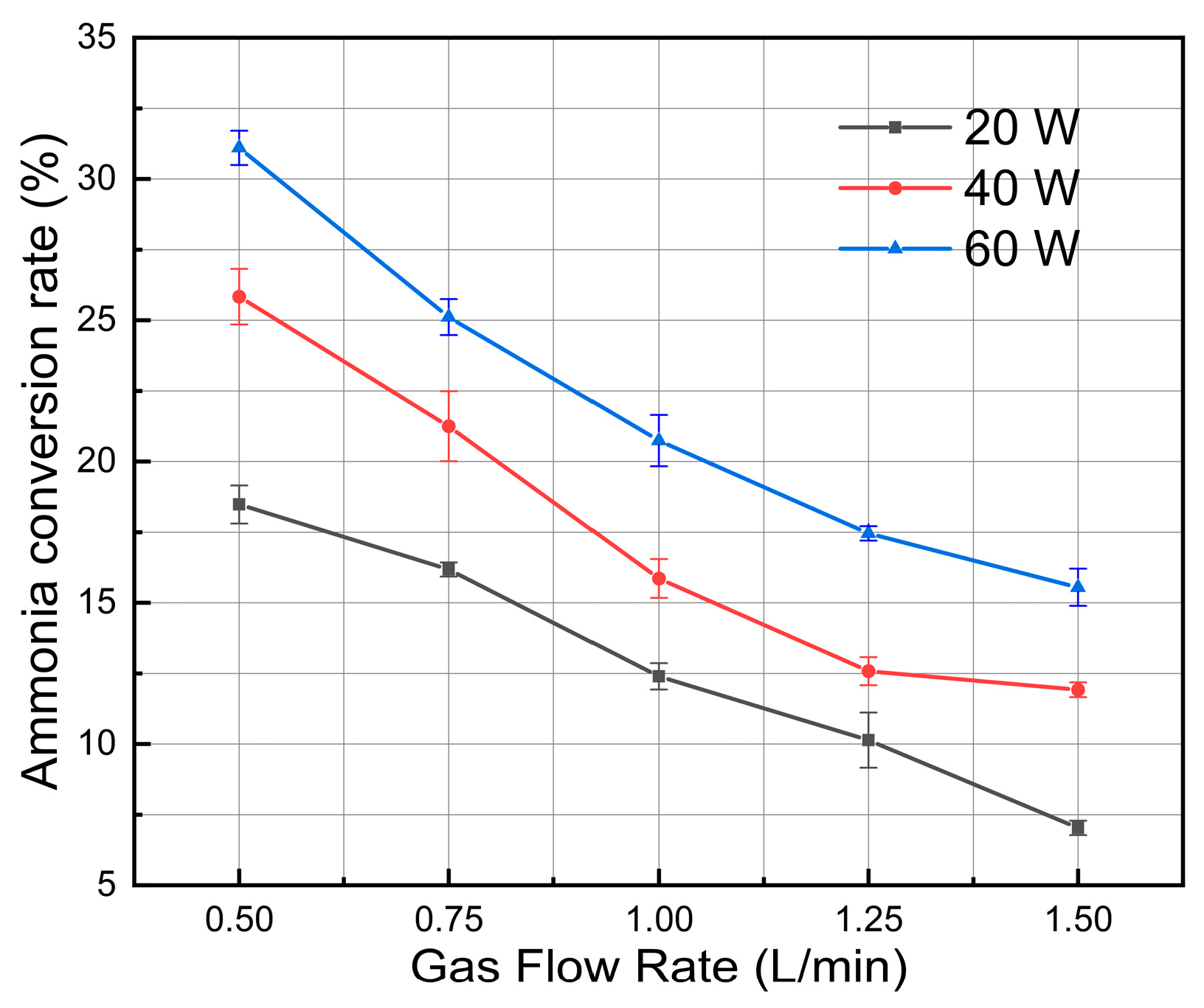
The experiment examined the impact of NH3 gas flow rate on the ammonia conversion rate. Reaction parameters include a discharge pulsed frequency of 20 Hz and a plasma reaction duration of 20 min. Experiments were conducted under various gas flow rates adjusted to 0.5 L/min, 0.75 L/min, 1 L/min, 1.25 L/min, and 1.5 L/min.
Figure 4 shows that the ammonia conversion rate exhibits a decreasing trend as the ammonia feed rate increases under various discharge powers. When ammonia feed rates rise, more ammonia enters the reaction zone overall, and the flow velocity increases, which reduces the ammonia residence time in the plasma area. The effective collision probability between reactant molecules and plasma active species, such as high-energy electrons and OH radicals, is reduced by this substantial reduction in residence time. As a result, partially unreacted ammonia molecules leave the reaction zone before they reach the activation energy threshold. Additionally, there is a significant decrease in the efficiency of plasma interaction, which results in an incomplete gas reaction [20,21]. It is consistent with conventional pyrolysis patterns but at a faster reaction rate and becomes the primary factor controlling cracking efficiency within a feasible temperature range.

3.3. Effect of Discharge Power

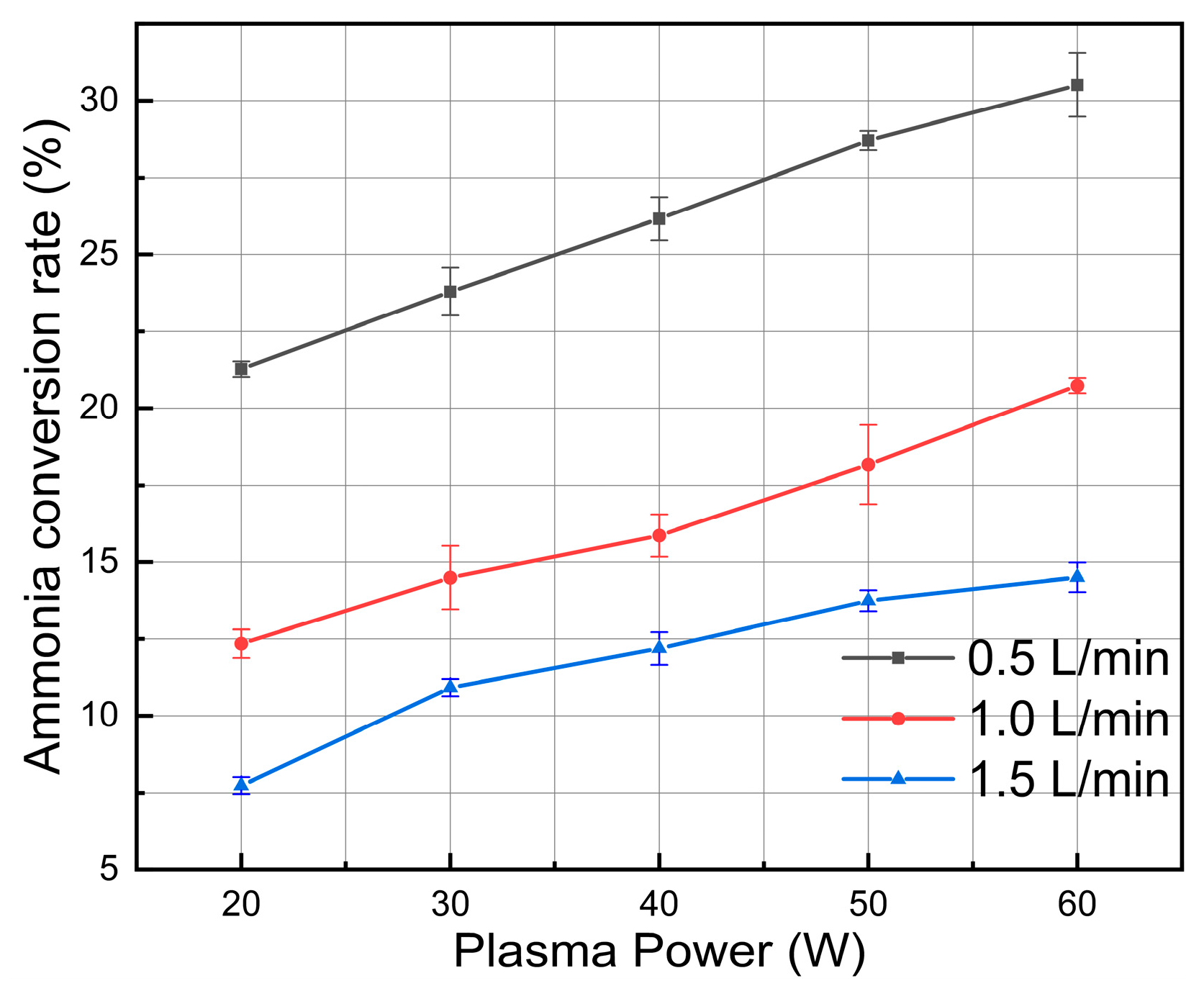
Figure 5 illustrates the effect of discharge power, as the core energy input, on the ammonia cracking rate. The variation curve of ammonia cracking efficiency under identical inlet gas flow (1 NL/min) and pulse frequency (20 Hz) circumstances is presented as the power supply is gradually increased. The NH3 conversion rate in plasma-assisted ammonia cracking shows a consistent upward trend as power steadily increases (growing from 22% at 20 W to 36% at 60 W), mainly because the electric field strength and current density inside the electric channel rise simultaneously, greatly increasing the density and energy of electrons. By effectively transferring their energy to NH3 molecules through inelastic collisions, these high-energy electrons encourage the cleavage of N-H bonds and produce free radicals such NH2, NH, and H [22]. Concurrently, when plasma power increases, the length and volume of the plasma column increase, extending the gas effective residence time in the high-energy plasma zone and strengthening the continuity of the cracking reaction.

3.4. Effect of Plasma Gas Pressure

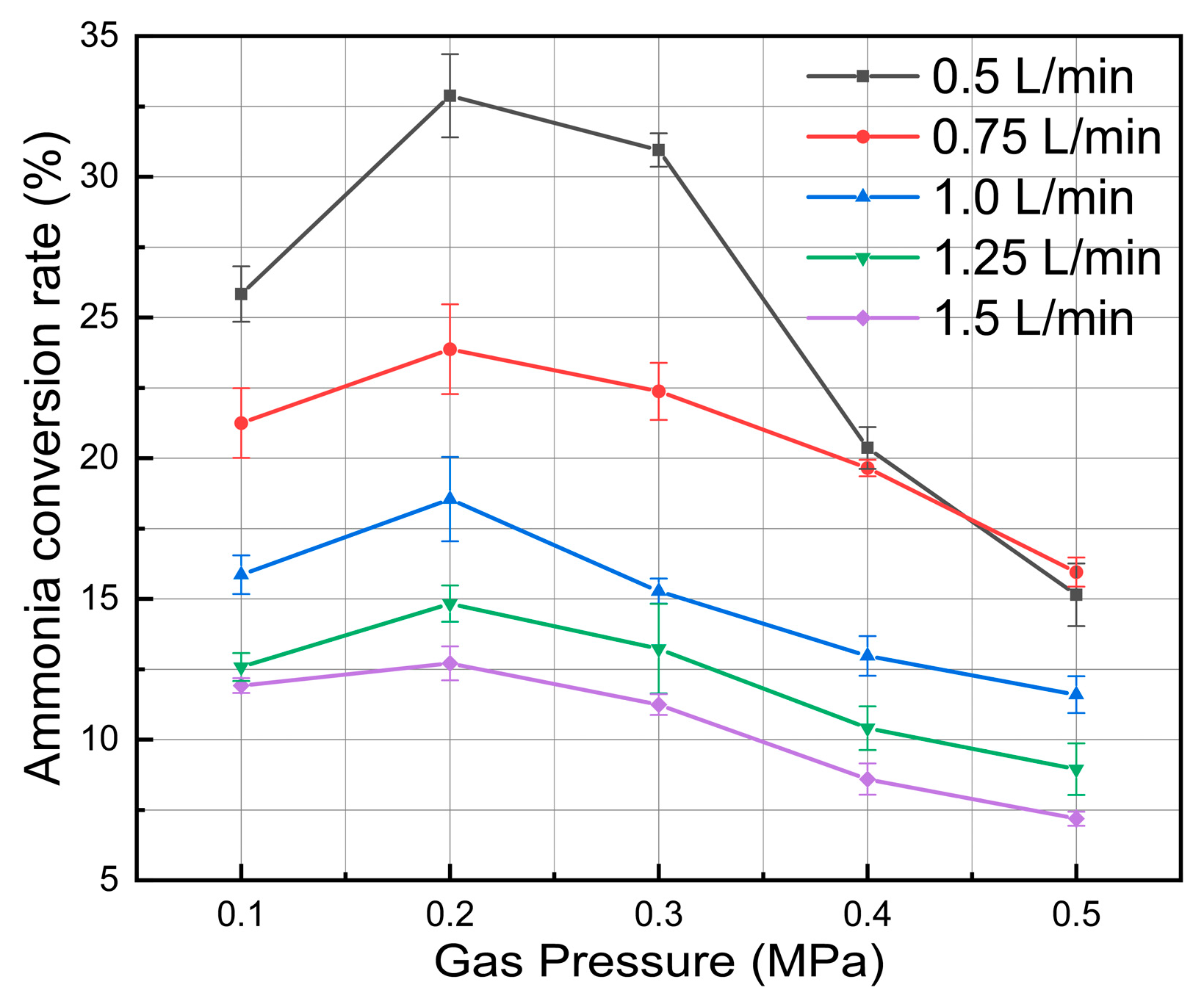
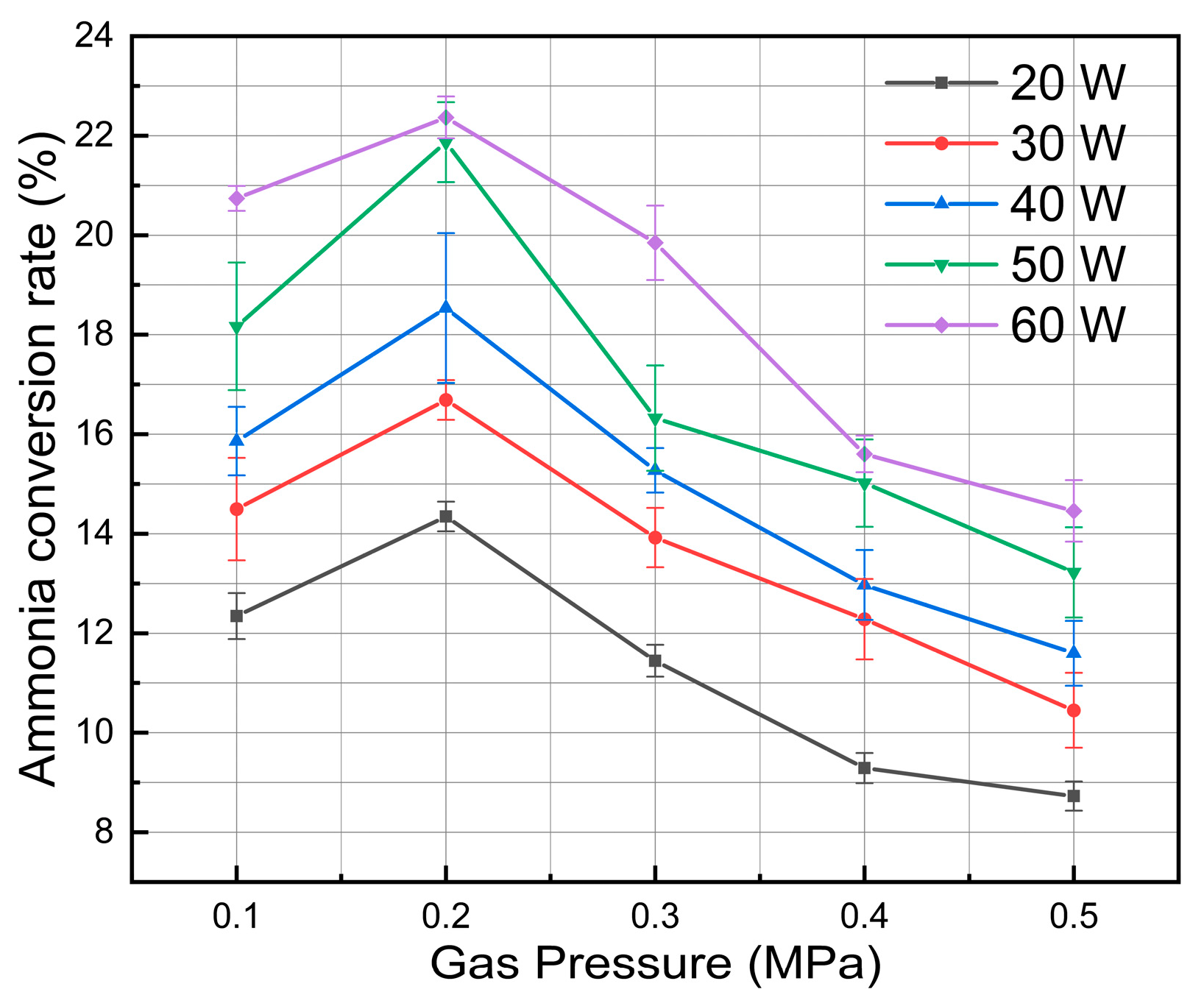
Figure 6 and Figure 7 illustrate that as plasma gas pressure increases from 0.1 MPa to 0.5 MPa, the ammonia cracking rate shows a trend of first increasing and then dropping under the same gas pressure. The main cause of this phenomenon is the conflicting impacts of gas dynamics and plasma discharge characteristics [23]. Gas pressure has a direct impact on electron energy and mean free path. Reactive species (such as NH2 and H radicals) are produced when high-energy electrons more easily undergo effective collisions with NH3 molecules due to the lower mean free path caused by higher gas density. Simultaneously, plasma stability and propagation length increase, improving energy injection efficiency and plasma volume utilization and accelerating the cracking response. Nevertheless, the average electron energy drastically drops at high pressures in the high-pressure zone, which only results in inefficient vibrational excitation rather than effective excitation or ionization, boosting side reactions and reversal processes while also increasing radical quenching. Additionally, under high gas pressure, gas viscosity increases, which shortens plasma paths and causes plasma columns to compress. This affects discharge uniformity and eventually lowers cracking rates [24]. The distinct features of plasma are reflected in the non-monotonic trend, which makes it appropriate for maximizing hydrogen production under ambient-to-medium-pressure scopes. Insufficient energy is the main limiting factor at 0.5 MPa pressure because, as Figure 6 illustrates, although low flow rates prolong residence time, low-energy electrons are unable to efficiently separate ammonia molecules. On the other hand, better turbulent mixing efficiency makes up for the shorter residence period at high flow rates. Ammonia cracking efficiency is improved by the comparatively concentrated energy density in the plasma discharge zone, which raises the percentage of high-energy electrons locally. The conventional benefit of low flow rates in producing high cracking rates is reversed by the high-pressure environment, which modifies energy distribution and transport mechanisms [25]. Under these circumstances, flow rate becomes a crucial factor in maintaining effective cracking through improving mass transport, reducing side reactions, and maximizing energy coupling.
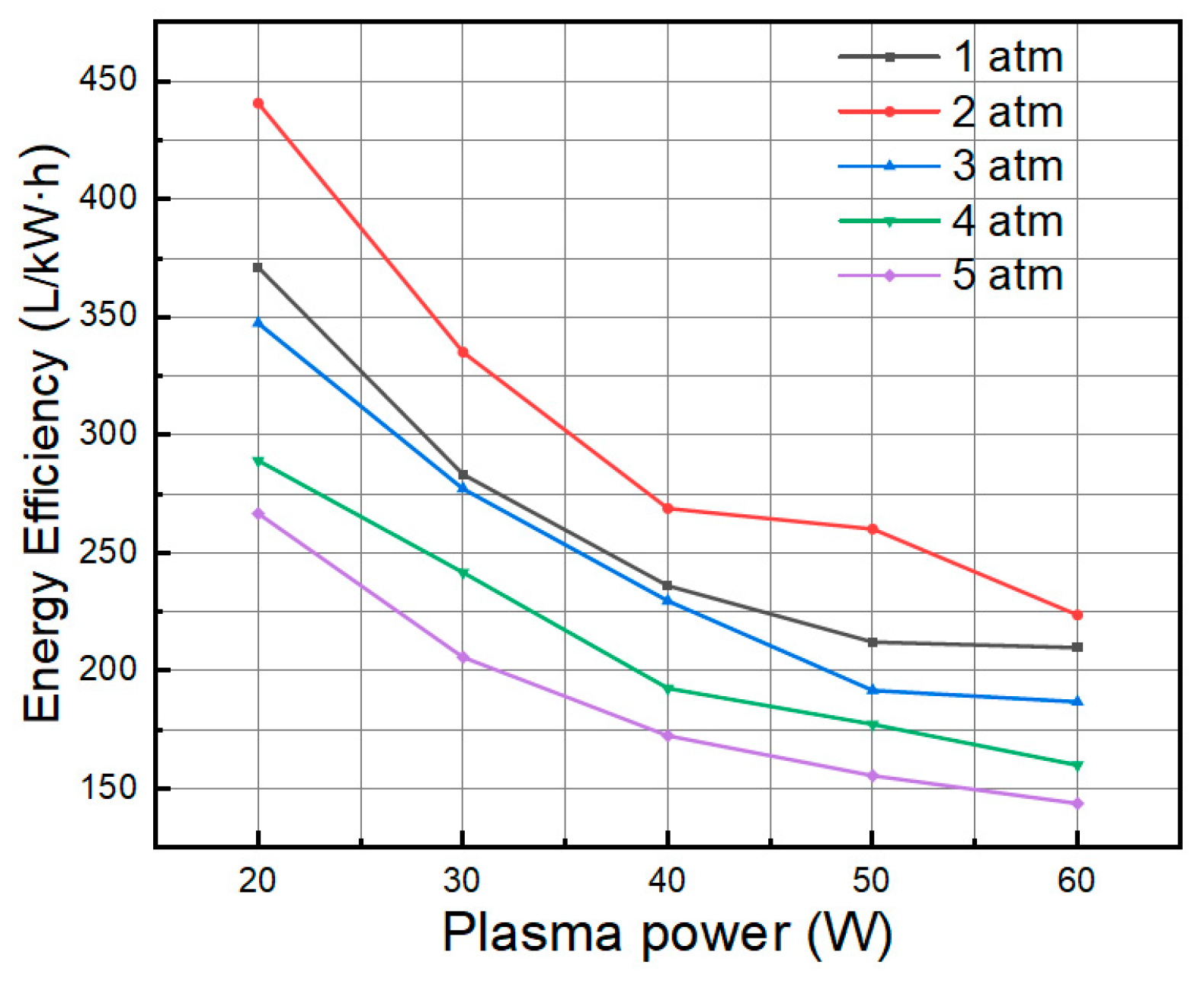
Figure 8 shows the energy efficiency of ammonia cracking under varying pressure conditions. Upon increasing the input power from 20 W to 60 W in the sliding arc plasma-assisted ammonia cracking experiment conducted at 2 atm, a notable decline in the ammonia cracking energy efficiency was observed, dropping from 440.7 L/kW·h to 223.7 L/kW·h. This counterintuitive reduction in energy efficiency, despite elevated power input, can be attributed to several interrelated factors inherent to NTP systems. Primarily, higher-power levels intensify plasma discharge, leading to increased thermal losses through radiative and convective heat dissipation to the reactor walls and surroundings, thereby diverting a larger fraction of the input energy away from dissociation reactions. Additionally, enhanced electric field strength at elevated powers may promote arc instability or elongation in the sliding arc configuration, resulting in uneven energy distribution and reduced residence time for ammonia molecules within the active plasma zone, thereby diminishing the probability of effective vibrational excitation and radical-mediated cracking. Furthermore, secondary effects such as electrode erosion or the formation of competing recombination pathways (e.g., reverse reactions or byproduct formation) could exacerbate inefficiency, as the system shifts from an optimal low-power regime dominated by electron-driven non-equilibrium chemistry to a higher-power state approaching thermal equilibrium. These observations underscore the importance of optimizing power input to balance plasma activation and energy utilization, suggesting potential improvements through flow rate adjustments or electrode geometry refinement to mitigate such efficiency losses in future iterations.
As shown in Table 2, which compares the performance of various plasma-based ammonia decomposition processes for hydrogen production, this study primarily benefits from the non-equilibrium characteristics of non-thermal arc plasma (NTAP). These characteristics enable efficient cracking of NH3 molecules at low discharge power and high gas flow rates while effectively suppressing energy waste and side reactions. Compared to low-power DBD systems reported in the literature, the gliding arc plasma (a type of NTAP) employed in this work achieves lower discharge power and higher gas throughput while maintaining high-energy efficiency. This offers significant potential for the scalable and low energy consumption implementation of plasma-assisted ammonia decomposition for hydrogen production.
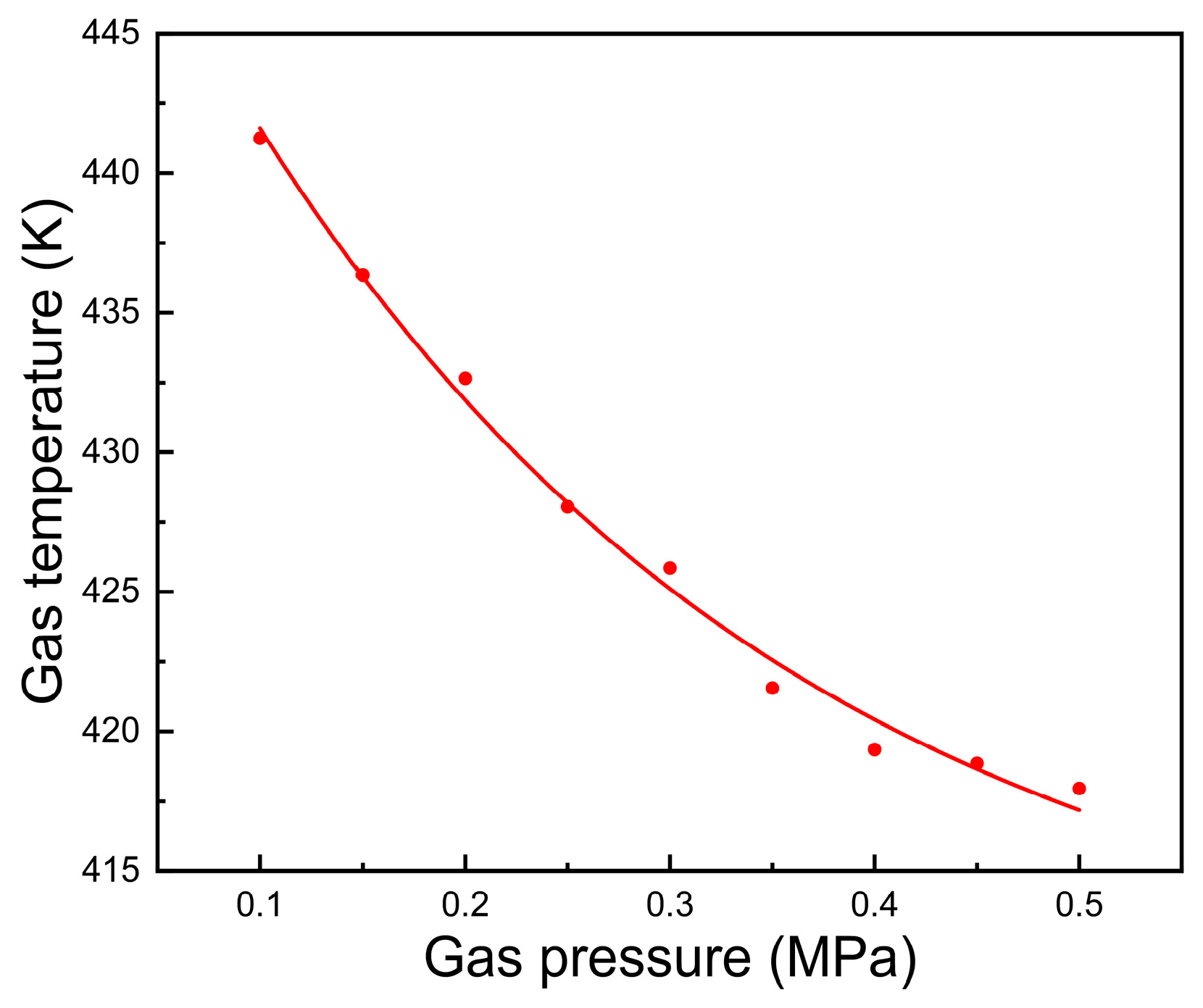
The core advantage of gliding arc plasma-assisted ammonia cracking lies in its utilization of NTP, which distinctly differs from conventional thermal catalytic processes by enabling efficient ammonia dissociation under mild conditions to produce hydrogen and nitrogen. The non-thermal nature of this technology is primarily evidenced through detailed analysis of discharge characteristics. In the experimental setup, the electron temperature of the gliding arc plasma is typically much higher than the gas temperature, reaching 1–3 eV (equivalent to approximately 10,000–30,000 K), while the bulk gas temperature remains at a relatively low level, generally not exceeding a few hundred degrees Celsius. This substantial temperature disparity ensures that the plasma operates in a non-equilibrium state, facilitating highly efficient energy transfer mechanisms. Under such non-equilibrium conditions, energy is predominantly delivered through collisions between high-energy electrons and ammonia molecules, selectively exciting vibrational modes and electronic states rather than indiscriminately heating the entire gas volume. This selective excitation not only enhances energy utilization efficiency but also mitigates potential side reactions and material degradation that are commonly associated with high-temperature operations. To further substantiate that thermal effects do not dominate the reaction, real-time measurements of the outlet gas temperature were conducted during the experiments. As shown in Figure 9, a K-type thermocouple placed approximately 3 cm downstream from the arc tail measured a maximum outlet temperature of only about 438.15 K, which is significantly lower than the 873–1073 K temperature range required for conventional thermal catalytic ammonia cracking [29]. In conventional approaches, such elevated temperatures are necessary to overcome the high activation energy barrier associated with ammonia decomposition, which typically ranges from 200 to 300 kJ/mol. However, these conditions often lead to excessive energy consumption and accelerated catalyst deactivation. In contrast, the relatively low gas temperature observed in the gliding arc plasma system suggests that the reaction is predominantly driven by non-thermal mechanisms mediated by energetic electrons. Specifically, high-energy electron collisions produce vibrationally excited ammonia molecules (NH3*), which subsequently dissociate through radical chain reactions, thereby circumventing the need for bulk thermal heating. This pathway significantly reduces the overall energy input and expands the operational flexibility, rendering the process particularly suitable for distributed hydrogen production. Overall, these results highlight the advantages of NTP technology for ammonia cracking. Future advancements may focus on integrating optimized catalysts or improving electrode configurations to further enhance conversion efficiency and energy performance.
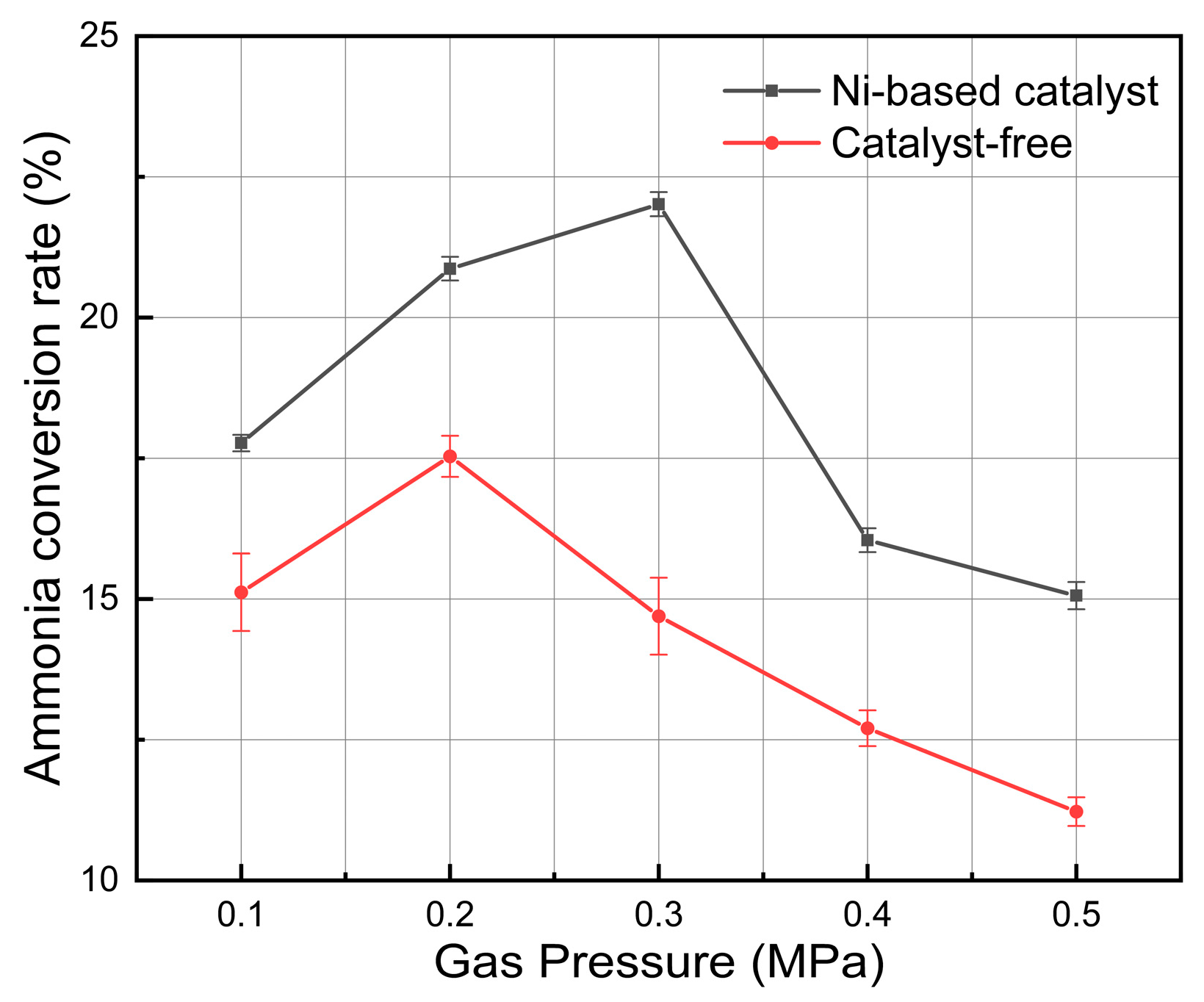
As illustrated in Figure 10, the variation in cracking rates of sliding arc plasma upon catalyst addition under identical medium-pressure conditions was investigated. Experimental data reveal that the introduction of nickel-based catalysts increases the cracking rate by approximately 15% on average. This difference indicates that nickel-based materials exhibit significant advantages in catalytic activity, likely attributed to their surface electronic structure, adsorption capacity, or optimized reaction pathways [30]. The high efficiency of ruthenium-based catalysts contributes to enhanced reaction efficiency and reduced energy consumption, making them more promising for industrial ammonia decomposition or synthetic ammonia processes.
As shown in integrated experiments, ammonia cracking efficiency under plasma alone first increased and then decreased with pressure, reaching a maximum of ~30% at 0.2 MPa. With a nickel-based catalyst, the entire efficiency–pressure curve shifted upward, with the peak moving to 37% at 0.3 MPa. This demonstrates clear plasma–catalyst synergy, characterized by higher cracking efficiency and pressure that cannot be attributed to mere superposition of individual effects. The mechanism of this synergistic effect primarily arises from the complementary roles of plasma and catalyst. High-energy electrons and reactive species generated by the plasma (such as vibrationally excited N2, H radicals, and NHx radicals) significantly lower the activation energy barrier for ammonia dissociation via electron-impact excitation and radical-mediated pathways. On the catalyst surface, these energized species more readily undergo dissociative adsorption, forming key surface intermediates (e.g., NH2* and NH*). The increased gas-phase molecular density under higher pressure further promotes collision frequencies and adsorption rates, while the catalyst facilitates rapid desorption of products (particularly H2) through surface hydrogen spillover effects, mitigating product inhibition and maintaining favorable reaction kinetics. This synergy effectively shifts the dominant reaction pathway from gas-phase dissociation (prevalent in plasma-only conditions) to surface-catalyzed reactions, resulting in reduced sensitivity of the cracking rate to pressure variations. The dynamic equilibrium between reactive species residence time, adsorption–desorption processes, and energy transfer from plasma to surface sites underpins the observed performance improvement [31]. This discovery not only elucidates synergistic energy transfer and regulation mechanisms in multi-field coupled plasma–catalytic systems but also provides valuable guidance for optimizing such systems under high-pressure conditions.

4. Conclusions

This study systematically investigated the influence of gas pressure, inlet flow rate, discharge power, and catalyst on the performance of ammonia plasma cracking. Through multi-parameter synergistic control experiments, the evolution characteristics of ammonia cracking rate under different operating conditions were revealed. It was found that adjusting gas pressure significantly influences the non-equilibrium interaction between active plasma particles and ammonia molecules, while catalyst introduction optimizes the cracking kinetics through surface reaction pathways. The results provide experimental evidence for constructing highly efficient plasma reaction systems for ammonia cracking. The principal conclusions are as follows:
(1)
Reduced gas inlet flow greatly increases the residence time of reactants in the plasma active zone, thereby increasing energy input per molecule and cracking efficiency. Increasing discharge power consistently increases the density of high-energy electrons and the production of reactive species in the non-equilibrium plasma, which facilitates effective ammonia molecule dissociation.
(2)
The introduction of a catalyst enhances the ammonia cracking efficiency by modifying the reaction kinetics through a dual mechanism: reducing the activation energy of the reaction and promoting the adsorption of reactants.
(3)
When the system pressure grew from 0.1 MPa to 0.5 MPa, the ammonia cracking rate first increased and then declined, peaking at about 2 atm, which suggests an existence of an ideal pressure window for ammonia cracking that successfully balances the rate of radical reactions, gas density, and electron energy distribution.

Author Contributions

Y.L.: Investigation and Writing—Original Draft. Z.W.: Data Curation and Methodology. Q.L.: Supervision and Formal Analysis. D.W.: Supervision and Conceptualization. J.G.: Project Administration. Z.L.: Conceptualization. Y.Z.: Project Administration. L.C.: Writing—Review and Editing, Conceptualization, and Funding Acquisition. All authors have read and agreed to the published version of the manuscript.

Funding

This work is supported by the National Natural Science Foundation of China (T2341001, 12405244), and the independent project of the Energy Research Institute of Hefei Comprehensive National Science Center (Anhui Energy Laboratory; 22KZS304, 22KZS301, and 24KZS301).

Data Availability Statement

The original contributions presented in this study are included in the article. Further inquiries can be directed to the corresponding authors.

Conflicts of Interest

The authors declare that they have no known competing financial interests or personal relationships that could have appeared to influence the work reported in this paper.

References

  1. Huang, Y.; Zhou, Y.; Zhong, R.; Wei, C.; Zhu, B. Hydrogen energy development in China: Potential assessment and policy implications. Int. J. Hydrogen Energy 2024, 49, 659–669. [Google Scholar] [CrossRef]
  2. Zhang, G.; Jiang, Z. Overview of hydrogen storage and transportation technology in China. Unconv. Resour. 2023, 3, 291–296. [Google Scholar] [CrossRef]
  3. Gao, X.; An, R. Research on the coordinated development capacity of China’s hydrogen energy industry chain. J. Clean. Prod. 2022, 377, 134177. [Google Scholar] [CrossRef]
  4. Zhang, X. The Development Trend of and Suggestions for China’s Hydrogen Energy Industry. Engineering 2021, 7, 719–721. [Google Scholar] [CrossRef]
  5. Peng, B. China’s Clean Energy Transition: Progress and Challenges Ahead. East Asian Policy 2025, 17, 97–108. [Google Scholar] [CrossRef]
  6. Ali, B.M.; Nemah, A.K.; Al Bahadli, Y.A.; Kianfar, E. Principles and performance and types, advantages and disadvantages of fuel cells: A review. Case Stud. Chem. Environ. Eng. 2024, 10, 100920. [Google Scholar] [CrossRef]
  7. Stenina, I.A.; Yaroslavtsev, A.B. Prospects for the Development of Hydrogen Energy. Polymer Membranes for Fuel Cells and Electrolyzers. Membr. Membr. Technol. 2024, 6, 15–26. [Google Scholar] [CrossRef]
  8. Monge-Palacios, M.; Zhang, X.; Morlanes, N.; Nakamura, H.; Pezzella, G.; Sarathy, S.M. Ammonia pyrolysis and oxidation chemistry. Prog. Energy Combust. Sci. 2024, 105, 101177. [Google Scholar] [CrossRef]
  9. Mauret, F.; Ji, J.; Kinzel, P.; Saxén, H.; Baniasadi, M. Ammonia as a Green Energy Carrier to Lower Blast Furnace CO2 Emissions. ISIJ Int. 2025, 65, 601–612. [Google Scholar] [CrossRef]
  10. Panchal, D.; Lu, Q.; Sakaushi, K.; Zhang, X. Advanced cold plasma-assisted technology for green and sustainable ammonia synthesis. Chem. Eng. J. 2024, 498, 154920. [Google Scholar] [CrossRef]
  11. Jung, S.C.; Chung, H.K. Enhanced hydrogen production through cracking of ammonia water using liquid plasma on titanate-based perovskite catalysts. Energy Convers. Manag. 2024, 311, 118509. [Google Scholar] [CrossRef]
  12. Karakurt, B.; Zhu, H.; Soydal, O.; Sun, G.; Luterbacher, J.S.; Matioli, E. Low-Power Tunable Micro-Plasma Device for Efficient and Scalable CO2 Valorization. Adv. Sci. 2025, 12, e2507687. [Google Scholar] [CrossRef]
  13. Moon, H.-B.; Jeong, H.-B.; Yang, J.-H.; Vinu, A.; Lee, B.-H.; Jeon, C.-H. Enhanced hydrogen production from polypropylene via NiO/Zeolite Y catalyzed high-pressure pyrolysis: Effects of pressure and methanation reactions. J. Energy Inst. 2025, 121, 102162. [Google Scholar] [CrossRef]
  14. Liu, Y.; Guo, H.; Zhao, B. Negative corona plasma and its synergistic catalytic effect with Fe-based catalyst on hydrogen production via ammonia decomposition. J. Northwest Univ. (Nat. Sci. Ed.) 2017, 47, 526–532. [Google Scholar]
  15. Zhou, D.; Zhou, R.; Zhou, R.; Liu, B.; Zhang, T.; Xian, Y.; Cullen, P.J.; Lu, X.; Ostrikov, K. Sustainable ammonia production by non-thermal plasmas: Status, mechanisms, and opportunities. Chem. Eng. J. 2021, 421, 129544. [Google Scholar] [CrossRef]
  16. Hayakawa, Y.; Kambara, S.; Miura, T. Hydrogen production from ammonia by the plasma membrane reactor. Int. J. Hydrogen Energy 2020, 45, 32082–32088. [Google Scholar] [CrossRef]
  17. Lin, Q.; Jiang, Y.; Liu, C.; Chen, L.; Zhang, W.; Ding, J.; Li, J. Instantaneous hydrogen production from ammonia by non-thermal arc plasma combining with catalyst. Energy Rep. 2021, 7, 4064–4070. [Google Scholar] [CrossRef]
  18. Dominguez, A. Derivation of the Paschen curve law. In ALPhA Laboratory Immersion; Princeton Plasma Physics Laboratory: Princeton, NJ, USA, 2014. [Google Scholar]
  19. Masumbuko, R.K.; Kobayashi, N.; Suami, A.; Itaya, Y.; Zhang, B. Effect of High Voltage Electrode Material on Methanol Synthesis in a Pulsed Dielectric Barrier Discharge Plasma Reactor. Catalysts 2024, 14, 891. [Google Scholar] [CrossRef]
  20. Tsolas, N.; Yetter, R.A. Kinetics of plasma assisted pyrolysis and oxidation of ethylene. Part 1: Plasma flow reactor experiments. Combust. Flame 2017, 176, 534–546. [Google Scholar] [CrossRef]
  21. Zhang, H.; Li, X.; Zhu, F.; Bo, Z.; Cen, K.; Tu, X. Non-oxidative decomposition of methanol into hydrogen in a rotating gliding arc plasma reactor. Int. J. Hydrogen Energy 2015, 40, 15901–15912. [Google Scholar] [CrossRef]
  22. Ju, R.; Wang, J.; Zhang, M.; Mu, H.; Zhang, G.; Yu, J.; Huang, Z. Stability and emission characteristics of ammonia/air premixed swirling flames with rotating gliding arc discharge plasma. Energy 2023, 277, 127634. [Google Scholar] [CrossRef]
  23. Morillo-Candas, A.S.; Klarenaar, B.L.M.; Guerra, V.; Guaitella, O. Fast O atom exchange diagnosed by isotopic tracing as a probe of excited states in nonequilibrium CO2–CO–O2 plasmas. J. Phys. Chem. C 2023, 127, 6135–6151. [Google Scholar] [CrossRef]
  24. Wang, Q.; Yan, B.; Jin, Y.; Cheng, Y. Non-thermal arc plasma combined with NiO/Al2O3 catalyst for hydrogen production from ammonia decomposition. Int. J. Hydrogen Energy 2021, 46, 10234–10245. [Google Scholar]
  25. Zhao, G.; Li, Y.; Liu, X.; Wang, B. Gliding arc discharge plasma assisted decomposition of ammonia into hydrogen. J. Fuel Chem. Technol. 2011, 39, 161–166. [Google Scholar]
  26. Soucy, G.; Jurewicz, J.; Boulos, M.I. Kinetic and spectroscopic analysis of NH3 decomposition under R.F. Plasma at moderate pressures. Plasma Chem. Plasma Process. 1995, 15, 693–710. [Google Scholar] [CrossRef]
  27. Akiyama, M.; Aihara, K.; Sawaguchi, T.; Matsukata, M.; Iwamoto, M. Ammonia decomposition to clean hydrogen using non-thermal atmospheric-pressure plasma. Int. J. Hydrogen Energy 2018, 43, 14493–14497. [Google Scholar] [CrossRef]
  28. Zhao, Y.; Wang, L.; Zhang, J.; Guo, H.; Gong, W. Enhancing the ammonia to hydrogen (ATH) energy efficiency of alternating current arc discharge. Int. J. Hydrogen Energy 2014, 39, 7655–7663. [Google Scholar] [CrossRef]
  29. Ogungbemi, E.; Ijaodola, O.; Khatib, F.N.; Wilberforce, T.; El Hassan, Z.; Thompson, J.; Ramadan, M.; Olabi, A.G. Nonthermal plasma-assisted catalysis NH3 decomposition for COx-free H2 production: A review. Int. J. Hydrogen Energy 2024, 56, 452–470. [Google Scholar]
  30. Chung, K.; Park, Y.; Kim, S.; Kim, S.; Jung, S. Green hydrogen production from ammonia water by liquid–plasma cracking on solid acid catalysts. Renew. Energy 2023, 216, 119068. [Google Scholar] [CrossRef]
  31. Ananthanarasimhan, J.; Lakshminarayana, R. Influence of flow regime on the decomposition of diluted methane in a nitrogen rotating gliding arc. Sci. Rep. 2022, 12, 11700. [Google Scholar] [CrossRef]
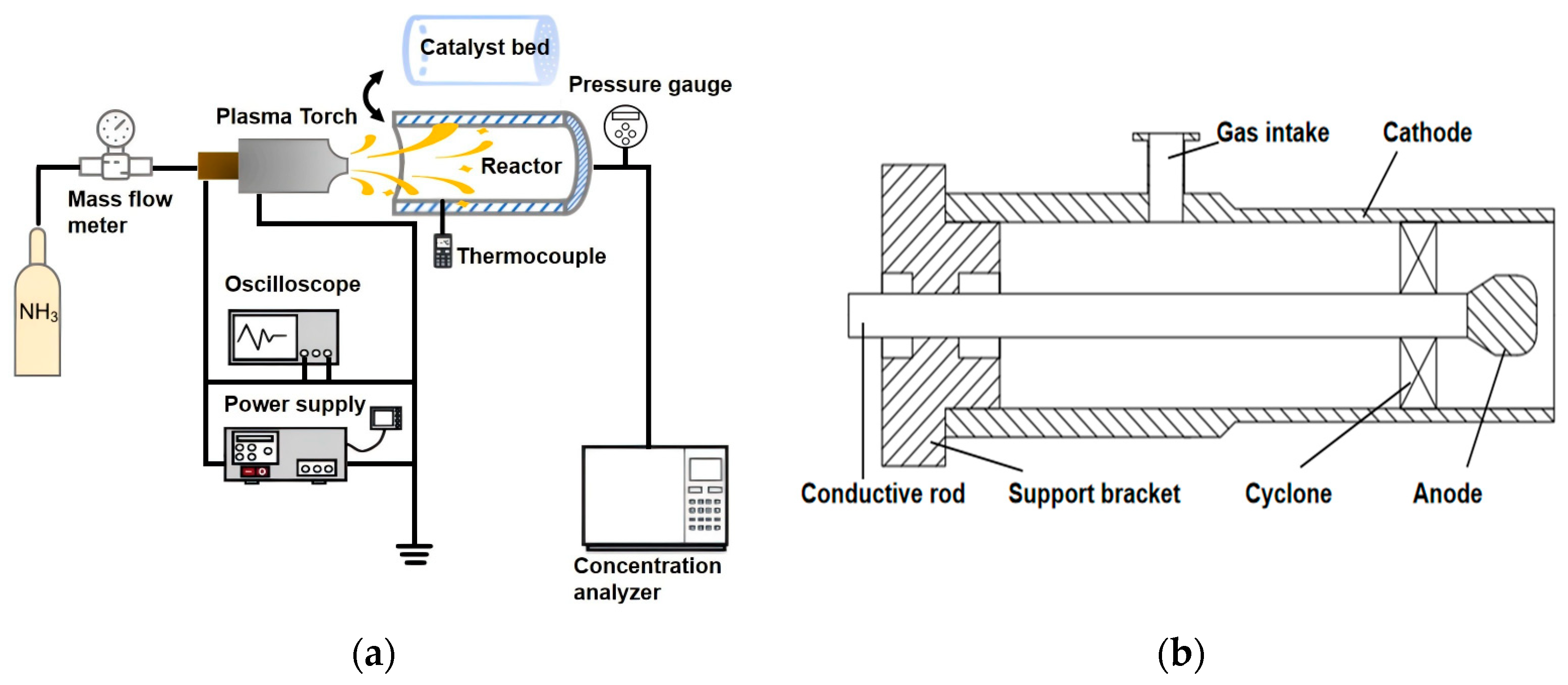
Figure 1. Experimental diagram: (a) platform and (b) structure of the plasma generator.
Hydrogen 07 00006 g001
Figure 2. Pulse discharge voltage–current curve under 0.2 MPa.
Hydrogen 07 00006 g002
Figure 3. Breakdown voltage and current at different pressures.
Hydrogen 07 00006 g003
Figure 4. Cracking rate as a function of inlet gas flow rate at 0.1 MPa.
Hydrogen 07 00006 g004
Figure 5. Cracking rate as a function of plasma power at 0.1 MPa.
Hydrogen 07 00006 g005
Figure 6. Inlet flow rate–pressure curves under varying conditions.
Hydrogen 07 00006 g006
Figure 7. Power–pressure curves under varying conditions.
Hydrogen 07 00006 g007
Figure 8. Ammonia cracking energy efficiency variation curve.
Hydrogen 07 00006 g008
Figure 9. Effect of discharge pressure on gliding arc outlet gas temperature.
Hydrogen 07 00006 g009
Figure 10. Pressure-dependent variation in cracking yield with different catalysts.
Hydrogen 07 00006 g010
Table 1. Key parameters in the experiment.
ParametersTypical ValueScope
P/W4020~60
f/Hz2020
q(NH3)/(L·min−1)10.5~1.5
Table 2. Comparison of the performance of hydrogen production from ammonia decomposition by plasmas.
Plasma TypeDischarge GasNH3 Gas Flow Rate (SLM)Discharge Power (W)EE (L/kW·h)Reference
RF plasmaNH3/Ar/H227.013,00056.1[26]
DBDNH30.54009.3[16]
DBDNH30.00487508.8[27]
NTAPNH30.220331.2[28]
NTAPNH3120440.7This paper
Disclaimer/Publisher’s Note: The statements, opinions and data contained in all publications are solely those of the individual author(s) and contributor(s) and not of MDPI and/or the editor(s). MDPI and/or the editor(s) disclaim responsibility for any injury to people or property resulting from any ideas, methods, instructions or products referred to in the content.