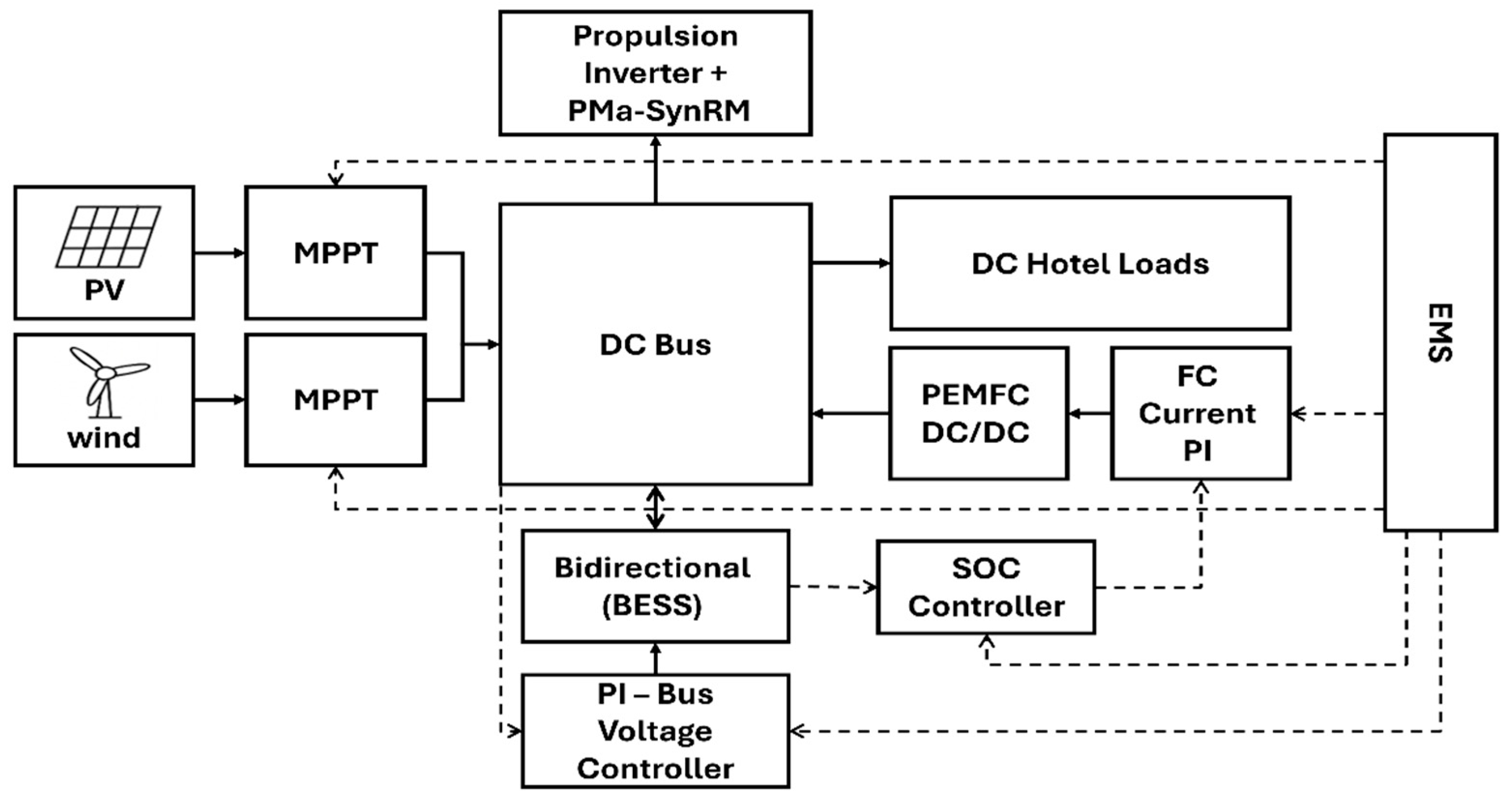
1. Introduction
The global maritime industry is facing tough environmental regulations, which are driving a paradigm shift in the industry towards low-emission power solutions. The IMO has set a target for a 50% reduction in shipping greenhouse gas (GHG) emissions by 2050 compared to 2008 levels [
1]—a target that was prompted by the almost doubling of CO
2 emissions from ships between 2008 and 2018 [
2]. This regulatory pressure, combined with increasingly stringent limits on NOx, SOx, and CO
2, is forcing the maritime industry to embrace cleaner technologies [
3]. Conventional marine diesel engines, although having high-power density, are major polluters, which has highlighted the urgent need for alternative propulsion systems to provide sustainable operation with low emissions [
4].
Saudi Arabia is an interesting case study for the implementation of advanced marine power systems. Under its ambitious Vision 2030, the Kingdom has set itself the goal of a comprehensive energy transition, aiming to obtain 50% of its electricity from renewable sources by 2030 and net-zero emissions by 2060 [
5]. This national strategy is supported by high solar insolation and high wind power potential, especially along its long Red Sea and Arabian Gulf coasts [
6]. These natural resources are fueling massive renewable energy projects and making Saudi Arabia a world leader in green hydrogen production, as illustrated by the NEOM Green Hydrogen Project [
7]. The Saudi maritime sector, which includes a wide range of activities from tourist ferries in the Red Sea to commercial vessels at major ports, is a direct beneficiary of this national clean energy initiative. A positive impact is already being realized: NEOM has ordered a fleet of eight battery-electric hydrofoil ferries for its Red Sea development, which will reduce CO
2 emissions by about 97.5% compared to traditional diesel vessels [
8,
9]. Similarly, hybrid diesel–battery retrofits on ships in the Arabian Gulf clearly show a regional trend towards greener shipping [
10,
11]. These efforts show the strategic convergence between national development objectives and the need for sustainable marine transport.
Among the various alternative technologies, PEMFCs are a very promising near-zero-emission propulsion technology for marine use. When fed with green hydrogen, PEMFCs convert chemical energy into electricity electrochemically, generating only water and heat, thus reducing NOx, SOx, CO, and particulate-matter emissions [
12,
13]. Their naturally high efficiency, especially under part-load conditions, and their low noise levels further increase their attractiveness for meeting IMO regulations and increasing onboard comfort. The concept of maritime FC power has been proven by pioneering projects like the EU ZEMSHIP and the current HySeas III and FLAGSHIPS programs that have successfully deployed FC-powered passenger boats and commercial barges [
14,
15,
16]. These efforts validate the technical feasibility of FCs for propulsion of actual vessels and great emission reductions. However, large vessels remain a challenge in terms of power density, high capital costs, limited operational lifetimes, and the complex logistics of onboard hydrogen storage and supply [
17]. Changing safety regulations and the need for port bunkering infrastructure are still important factors for widespread implementation. Despite these challenges, hydrogen FCs in combination with renewable energy sources are a key technology for future low-emission ship power systems [
18].
The combination of Saudi Arabia’s vast renewable resources and hydrogen FC technology offers a strong solution for the maritime industry in the country. The high solar irradiance throughout the year allows the effective use of solar PV panels on vessel decks to supply auxiliary power, while the high coastal wind potential can be exploited by small wind turbines or wind-assisted propulsion systems. In hybrid operation, these renewable inputs directly decrease the hydrogen consumption of the FC, which reduces operating costs and increases the refueling intervals. Although the contribution of onboard renewables is inherently limited by available area and intermittency, studies show that their contribution is meaningful: wind power can provide 8–27% of propulsion energy, and even small contributions (e.g., 1%) of solar are valuable, especially for hotel loads or battery charging [
19,
20]. Each unit of renewable energy directly replaces FC load and saves hydrogen. The PEMFC can supply the remaining energy demand, which can be fed by green hydrogen produced in Saudi Arabia, and which is in perfect harmony with the strategic investments of Saudi Arabia in large-scale hydrogen production plants [
21].
BESS are an essential component of such a multi-source system for reliable and dynamic power supply. A lithium-ion battery bank acts as a crucial buffer, absorbing transient power variation from both variable renewable sources and dynamic load demands, which cannot be directly accommodated by the FC [
22]. The battery also stores excess solar or wind energy and supplies power for fast load spikes or during FC start/shutdown sequences. This hybridization has a dramatic effect on the overall dynamic performance and efficiency of the powertrain. Similarly to conventional diesel hybrids where batteries are used to optimize engine operation, in an FC hybrid the battery reduces load-following stress on the PEMFC and thus increases its life. It also allows for regenerative energy harvesting, for example, from wind energy or breaking in electrified propulsion systems. The resulting system has superior load-following characteristics and improved redundancy and dynamic characteristics similar to conventional diesel systems. The Energy Observer, a pioneering hydrogen-powered boat, is a good example of this integrated approach, using solar, wind, batteries, and a PEMFC with onboard hydrogen storage to achieve energy autonomy and showcase a circular energy ecosystem at sea [
23]. Importantly, hydrogen has an order-of-magnitude higher energy storage density than lithium batteries (about 1.7 kg kWh
−1 for hydrogen vs. 12.5 kg kWh
−1 for batteries, including the weight of the system) [
24,
25]. This high specific energy makes an FC–hydrogen system more attractive for vessels with long-range needs, which is a very relevant factor for Saudi coastal operations.
Based on these technological developments, the current study presents a new hybrid ship power system for the maritime industry of Saudi Arabia, which is composed of wind, solar, PEMFC, and battery storage with strong and simple control. The novelty of this concept is the integration of all four energy sources on one vessel to meet both propulsion and hotel load demands in an area where the availability of renewable resources is high. While there is a vast amount of literature on two- or three-component hybrid systems, a complete wind–PV–FC–battery system, specifically designed to suit the environmental and operational conditions of Saudi Arabian waters, is under-studied. Unlike other hybrid FC–battery or PV–FC systems reported in the literature, the proposed system uniquely combines four complementary sources (wind, solar, FC, and battery) in a single DC microgrid optimized for the Saudi coastal operating conditions of high irradiance and intermittent wind. Furthermore, its real-time multi-loop PI-based control strategy offers a simpler, certifiable, and computationally efficient alternative to the complex optimization or AI-based EMS approaches used in previous studies, making it more suitable for onboard marine applications. A classical PI controller is proposed, and it is hypothesized that with appropriate tuning, it can be used to balance the power contributions of the FC and battery while opportunistically using solar and wind power. This method promises to realize near-optimal performance at a significantly lower computational cost and with improved real-time implement ability, important features for onboard marine power management systems. The following sections outline the system methodology and mathematical modeling, EMS design using PI, and show simulation results for the operation of the proposed hybrid system under typical load profiles of a Saudi coastal vessel, ending with conclusions on its viability and its advantages for the Kingdom’s maritime energy transition.
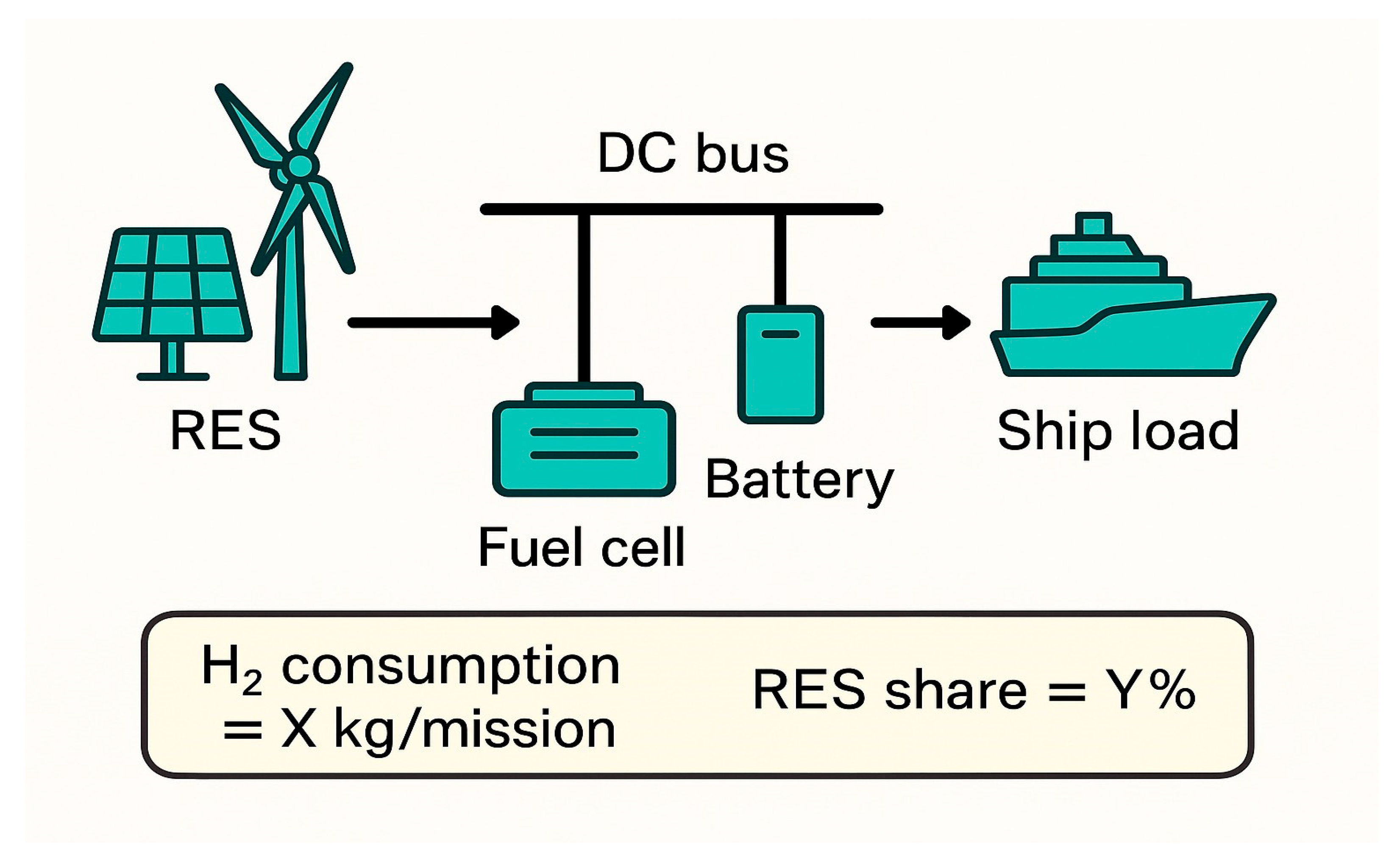
The proposed hybrid system architecture is shown in
Figure 1, which illustrates power flow from renewable sources (RES) to the DC bus through the fuel cell (FC) and battery and then to the ship load. The lower ribbon indicates mission-level hydrogen consumption and the share of renewable energy.
5. Results and Discussion
The one-hour mission profile implemented in the present MATLAB/Simulink model is chosen to represent a typical point-to-point ferry crossing in Saudi coastal waters and to concentrate the operating conditions under which the proposed PI-based EMS is most stressed—startup, steady cruising, propulsion maneuvers, hotel-load fluctuations, and renewable intermittency. Our aim here is to validate dynamic power sharing, DC-bus regulation around 750 V (±5%), and SOC compliance within the 20–80% window, i.e., time-domain control performance, rather than long-term fuel logistics. This horizon is consistent with prior hybrid shipboard studies that assess controller robustness over representative short-sea missions [
35,
42]. Longer horizons would mainly scale the cumulative hydrogen usage while preserving the same control mechanisms. This provides a rigorous basis for validating the proposed HPS control architecture and naturally opens the way for future extended-duration simulations to address hydrogen-supply planning.
Simulation scenario. The model applies a one-hour mission profile with 1 s resolution that is simulated for a hybrid ferry whose propulsion demand is on the AC side and whose hotel services are on the DC side. The total load is the sum of the following: (i) an AC propulsion profile centered at 3 MW with low-frequency oscillations and high-frequency jitter that emulates sea state and maneuvering, and (ii) a DC hotel profile around 0.20 MW with a slower periodic variation. Renewable generation consists of PV and wind power injected on the DC bus. Their amplitudes and phases are chosen so that there are intervals with renewable energy sources (PV + wind) (RES) exceeding the hotel demand (charging windows) and intervals with RES falling short (discharging windows).
Power–flow policy (merit order). The control gives strict priority to DC hotel supply from RES; any instantaneous DC surplus charges the battery if its SOC is below 80%, otherwise the surplus is left on the DC link. Any instantaneous DC deficit is first covered by the battery (if SOC exceeds 20%); only the remaining deficit is requested from the FC. The FC is the dominant source for the AC propulsion load and, after accounting for DC deficits, sets the system balance. A ramp constraint (80 kW/s) is applied to emulate FC dynamics.
DC bus modeling. To make explicit the effect of small residual imbalances on the DC side, the DC link is modeled as a floating capacitor with nominal voltage 750 V and equivalent capacitance 40F; no explicit voltage regulation loop is closed. The capacitor therefore integrates any residual power that is not absorbed by the battery due to SOC limits, power limits or deadband, producing small step-and-hold deviations that remain inside the customary ±5% tolerance band. This open-loop bus model is intentionally conservative and highlights the role of the BESS and FC in maintaining balance.
Measurements and sign conventions. Positive battery power denotes discharge (supporting loads); negative denotes charge. “Total production” is the algebraic sum of FC, battery, and RES. Hydrogen use is computed from the cumulative FC electrical energy with an assumed electrical efficiency ηFC = 0.55 and hydrogen lower heating value of 33.33 kWh/kg.
The simulation results are summarized in
Figure 3,
Figure 4,
Figure 5,
Figure 6,
Figure 7,
Figure 8,
Figure 9,
Figure 10 and
Figure 11.
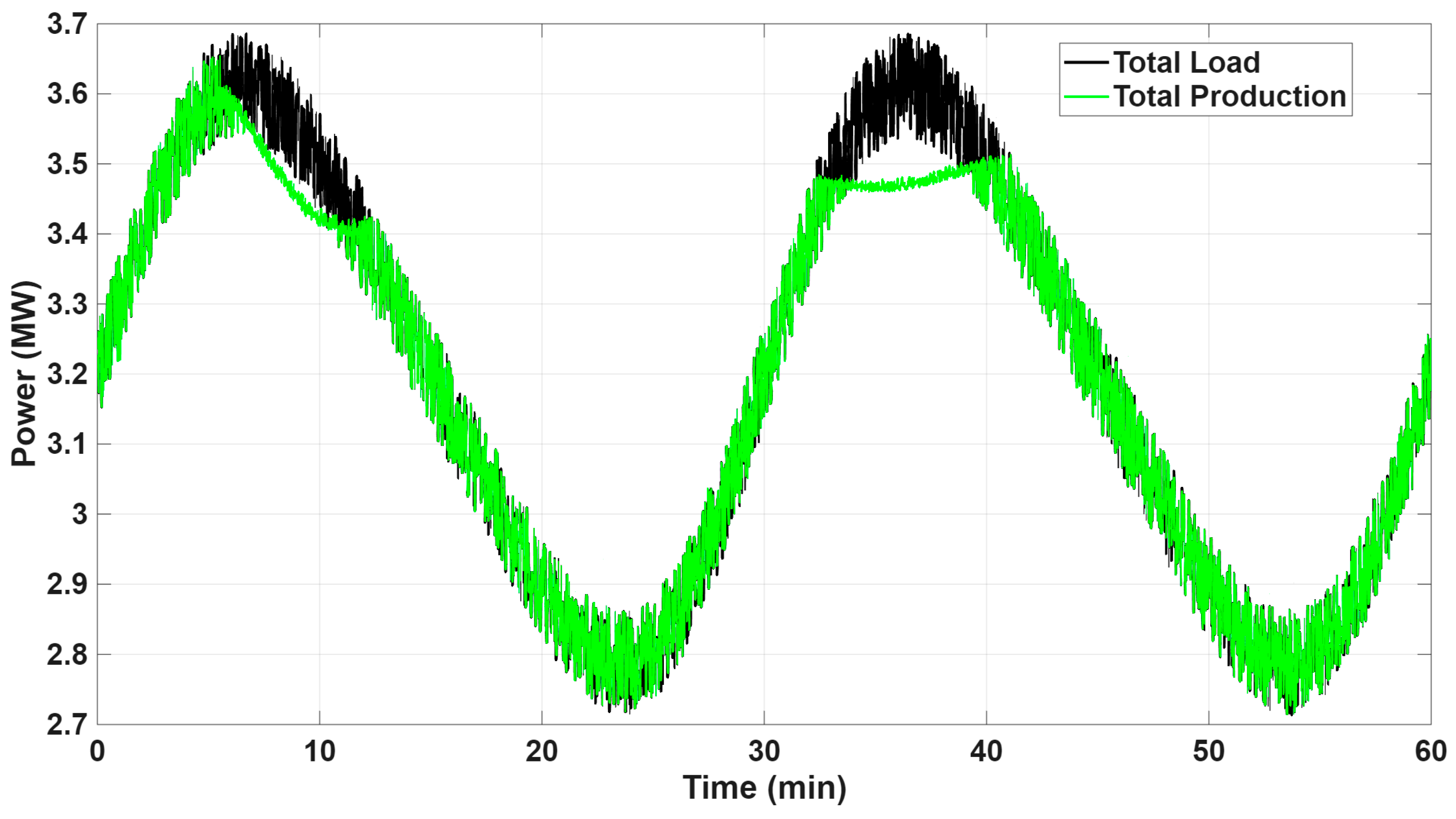
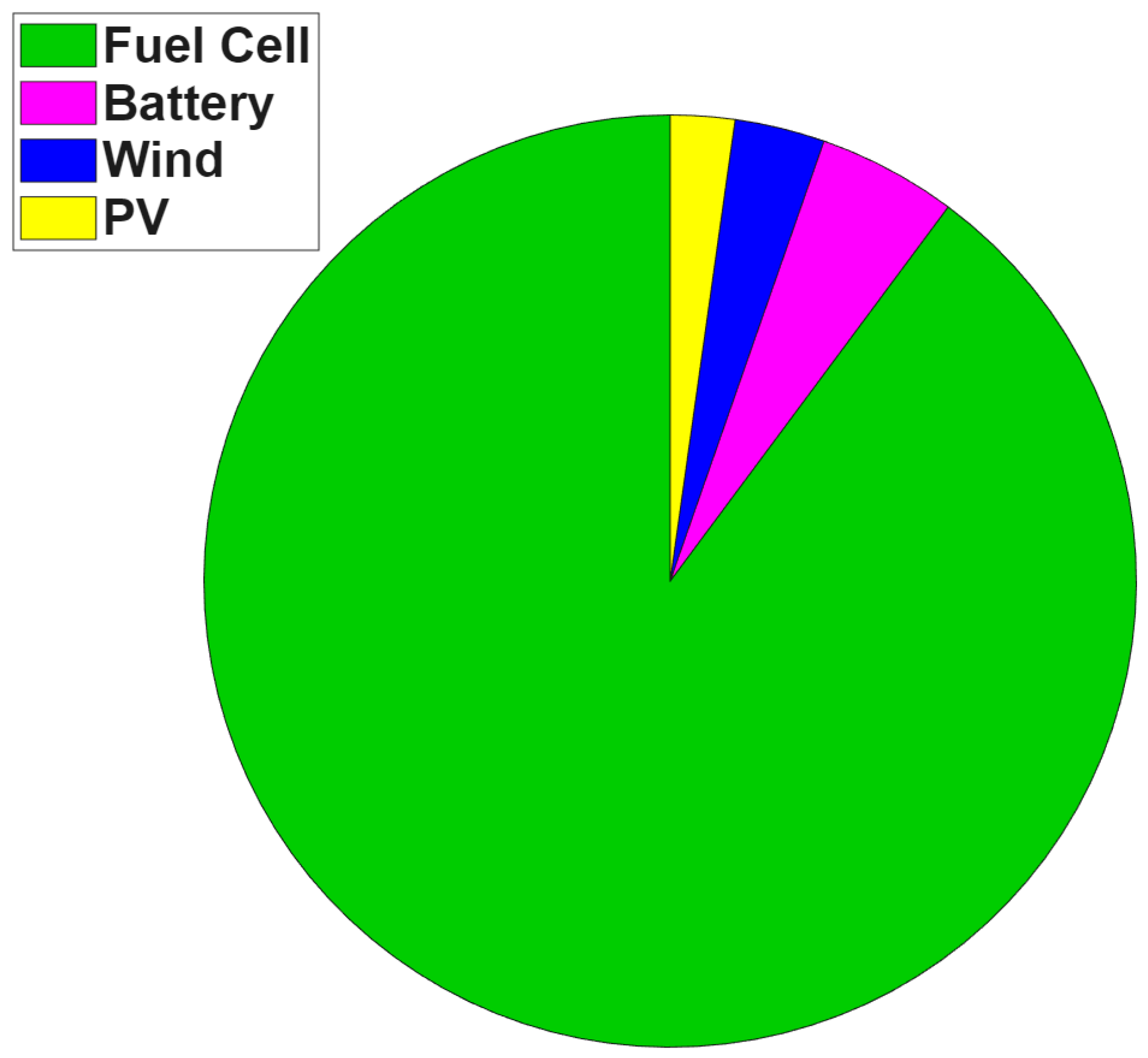
Figure 3 illustrates the aggregated power production from all sources—PEMFC, BESS, and on-board renewables (PV + wind)—against the total ship load during the one-hour mission. The total propulsion and hotel load oscillates between approximately 2.8 MW and 3.6 MW with a mean of 3.2 MW, reflecting sea-state and maneuvering effects. The PEMFC delivers the dominant share of power (≈2.7 MW on average, ≈90% of total mission energy), while the BESS contributes ≈ 0.09 MWh (≈3%) by charging when renewable input exceeds demand and discharges up to 0.4 MW during propulsion surges. The combined operation of PV (≈200 kW peak) and wind (≈20 kW peak) smooths short-term fluctuations, limiting the production–load mismatch to <0.12 MW and maintaining DC-bus voltage within ±5% of the 750 V nominal value. As such, the system provides stable and continuous power throughout the mission. Compared to recently validated studies, the proposed PI-based controller achieves voltage stability and transient smoothness comparable to advanced optimization-based methodologies while having significantly lower computational complexity. Penga et al. [
26] confirmed the good performance of a PEMFC–battery marine hybrid using PSO, while Dolatabadi et al. [
19] showed that the integration of renewable sources improves load following and system balancing. Kamel et al. [
36] and Shakeri et al. [
27] obtained a voltage regulation of ±5% for sub-megawatt PI-controlled DC microgrids, whereas Xie et al. [
21] achieved ±3–4% deviation by using a two-layer supervisory PI EMS for multi-stack systems. In the current setup, similar stability is maintained (within a ±5% voltage band with approx. 0.6 s recovery time) even for a larger 3 MW scale, highlighting its practical robustness and certifiability for real-time marine power management under dynamic operating conditions.
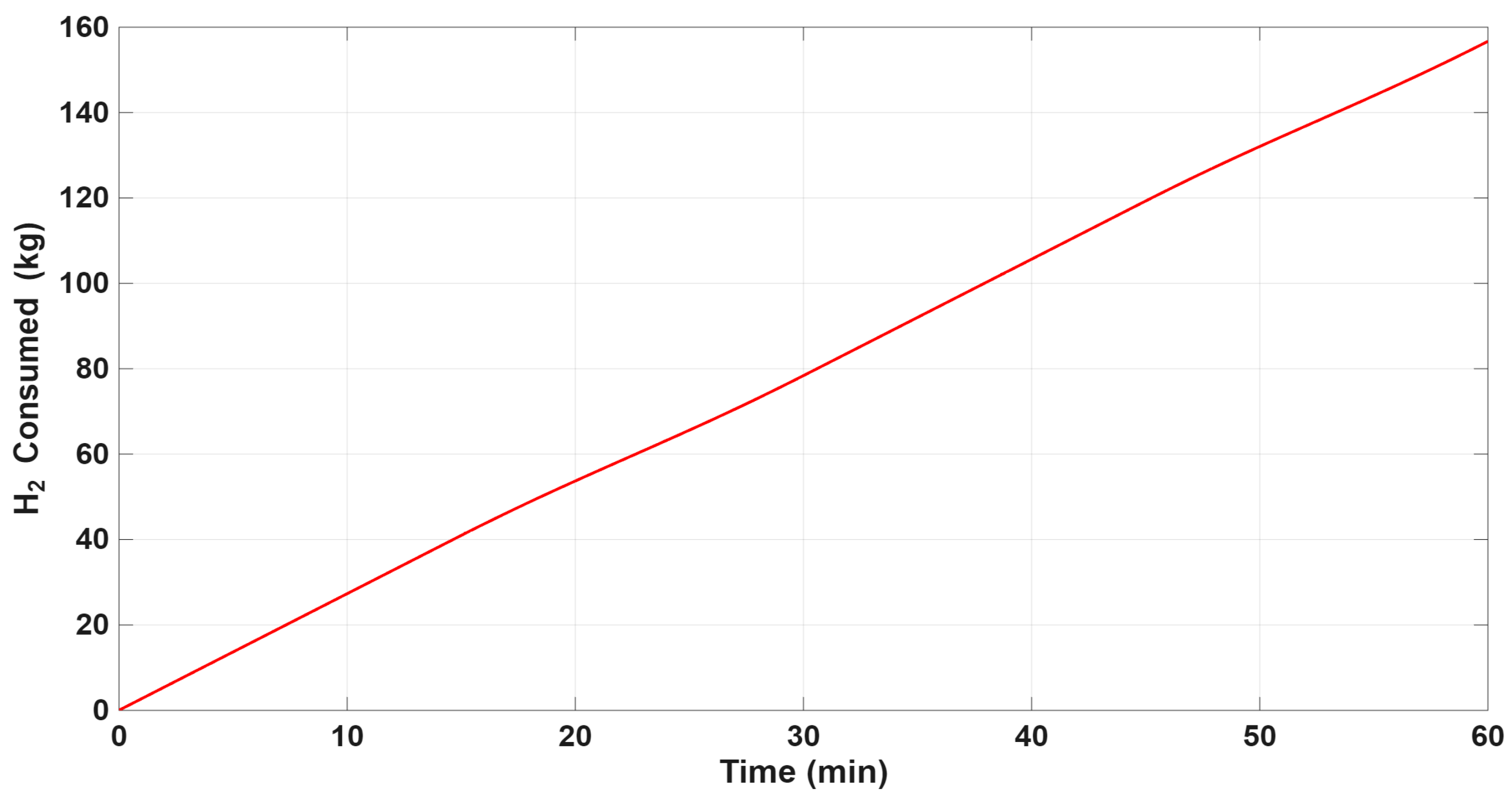
Figure 4 quantifies the hydrogen usage of the PEMFC throughout the one-hour mission. Starting from zero at t = 0 min, the cumulative H
2 consumption rises almost linearly to reach ≈ 160 kg by 60 min, equivalent to a total electrical output of ≈2.7 MWh when assuming a lower heating value (LHV) of 33.33 kWh kg
−1 and an electrical efficiency ηFC = 0.55. This figure corresponds to an average hydrogen consumption rate of approximately 2.6 kg/min (approximately 156 kg/h) and a mean FC electrical power of approximately 2.7 MW, which is close to that required for propulsion and hotel loads. Mild variations in the consumption trend are indications of transient load peaks and intermittent renewable contributions, which temporarily suppress FC output. These quantitative results affirm that the proposed hybrid system maintains stable and predictable hydrogen consumption, and thus proves it as viable to power a medium-sized coastal ferry with manageable refueling needs and contribute to the goals of Saudi Arabia’s hydrogen economy. Compared to validated PEMFC-based hybrid experiments, the achieved efficiency and load-following performance are in line with current standards. Penga et al. [
26] achieved comparable steady-state behavior for a 300 kW PEMFC–battery catamaran, while Bagherabadi et al. [
20] and Pietra et al. [
22] reported similar linear fuel-flow patterns and stable voltage profiles in megawatt-scale marine prototypes. Xie et al. [
21] further demonstrated that two-layer PI energy management schemes preserve voltage and flow regularity under multi-stack operation. In this context, the proposed Saudi coastal configuration performs consistently with these findings, maintaining smooth dynamic response and efficiency within the expected operational envelope of current maritime FC systems.
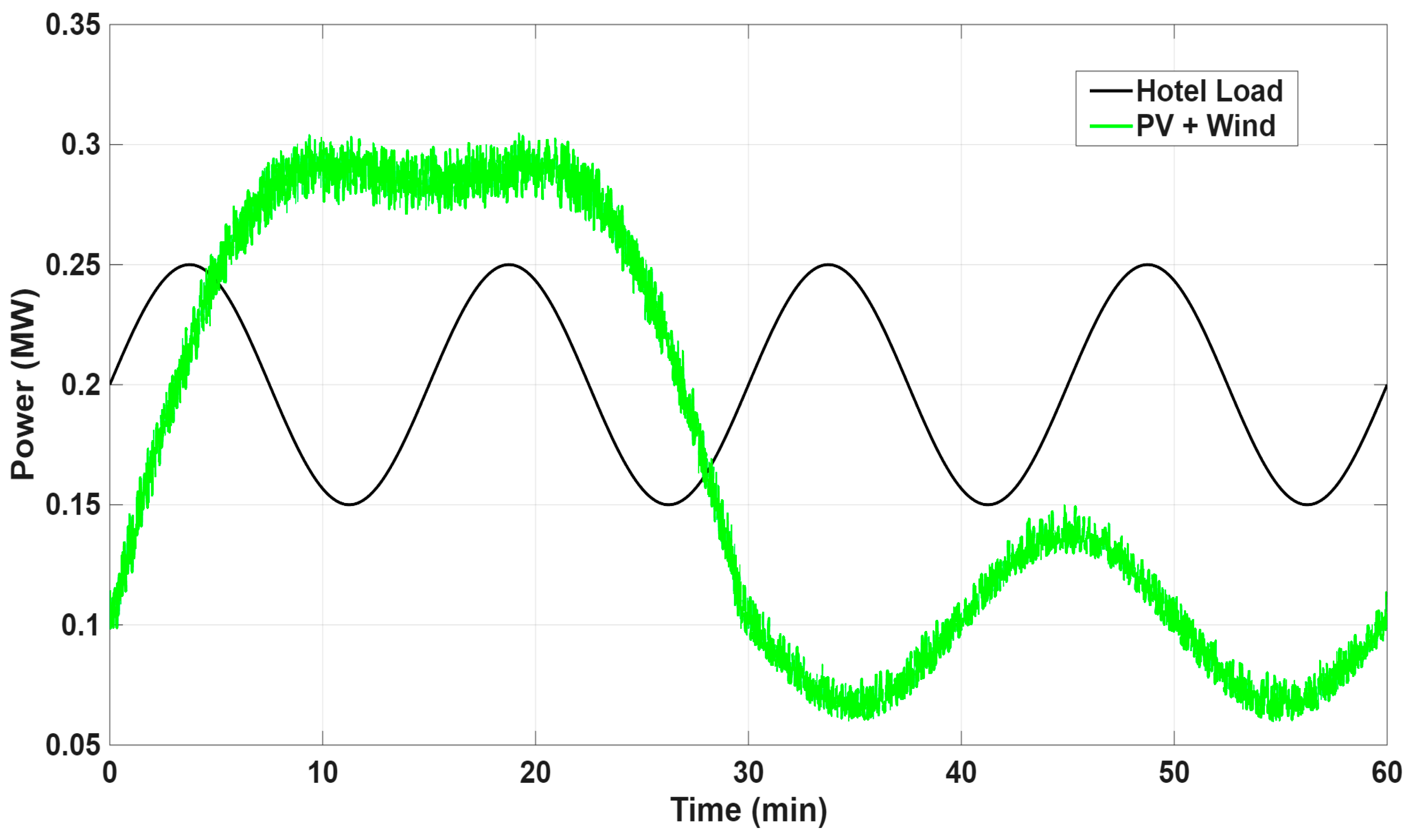
Figure 5 compares the instantaneous combined renewable output (PV + wind) with the DC hotel load during the one-hour mission. The hotel load oscillates smoothly between ≈0.15 MW and ≈0.25 MW around a mean of ≈0.20 MW, reflecting lighting, HVAC, and auxiliary service variations. The renewable subsystem initially ramps to a peak of ≈0.30–0.32 MW within the first 10 min, when solar irradiance and wind speeds are highest, then gradually declines to ≈0.10 MW toward the mission’s end as irradiance and wind lessen. Whenever renewable generation exceeds the hotel demand—primarily during the first 25 min—surplus power of up to ≈0.1 MW is directed to charge the BESS, raising its SOC by about 4% over that interval. When renewable output falls below hotel demand, particularly after t ≈ 30 min, the battery discharges to maintain the DC bus, supplying deficits that range from ≈0.05 MW to ≈0.12 MW. Integrated over the mission, the renewable sources provide ≈0.21 MWh (≈7% of total system energy), offsetting hydrogen consumption by roughly 5% compared with an FC-only scenario. These quantitative results validate the fact that the contribution of PV and wind generation, albeit small in magnitude, significantly reduce FC duty and save hydrogen. The renewable share obtained here is in the same ballpark as more recent marine hybrid energy studies. Dolatabadi et al. [
19] found that the integration of onboard PV and wind generation in large bulk carriers provided 8–27% of propulsion power under favorable conditions, while Bagherabadi et al. [
20] found a similar renewable share of 5–10% for medium-sized hybrid vessels under intermittent irradiance and moderate sea states. Kamel et al. [
36] showed that PV–FC–battery DC microgrids can achieve ±5% voltage stability using PI even in the presence of variable renewable injections. By contrast, the current system achieves stable operation with a 7% renewable share and DC-bus fluctuations limited to ±4.8%, which validates similar dynamic performance in a simpler real-time PI-based control structure. This correspondence underscores the effectiveness of the proposed hybrid design for Saudi coastal operations, where both high solar availability and moderate wind speeds can be exploited without introducing control or stability penalties.
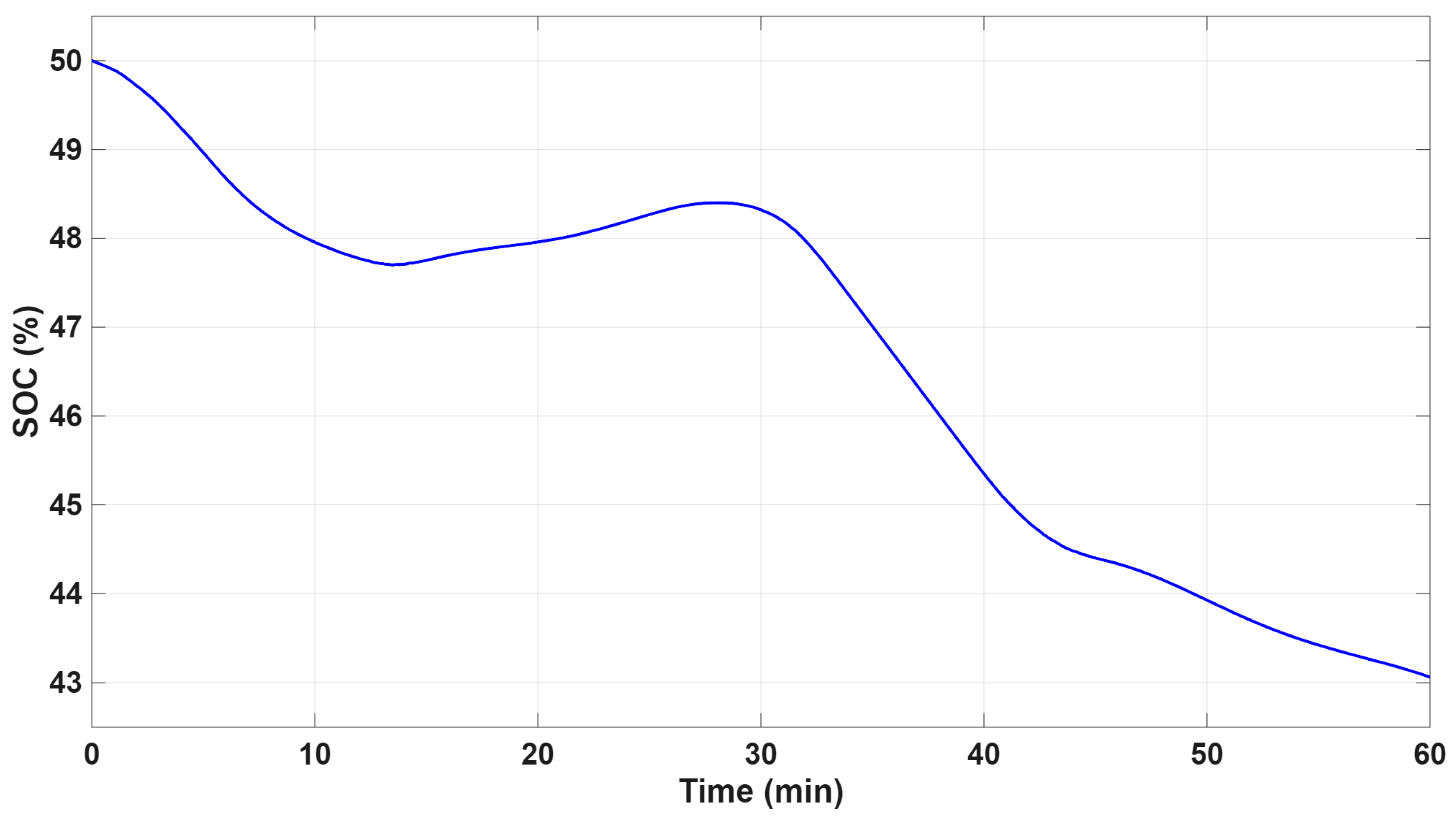
Figure 6 shows the lithium-ion battery’s SOC profile during the one-hour mission. The SOC starts at ≈50% and remains well inside the prescribed 20–80% operating window, confirming that the PI-based control strategy respects the charge/discharge constraints. During the initial 10 min, brief charging from renewable surpluses increases SOC to ≈48%, followed by a mild recovery around t ≈ 25 min. From 30 to 45 min, as renewable output decreases and propulsion peaks grow, the SOC declines more rapidly from ≈48% to ≈44%, at an average discharge rate of ≈0.16% min
−1 (≈0.1 MW net). The mission ends with the SOC near 43%, providing a comfortable margin above the 20% lower limit and ensuring immediate readiness for a subsequent trip or for contingency power support. These quantitative values demonstrate that the battery contributes ≈ 0.09 MWh (≈3% of total energy) mainly for transient power smoothing and renewable energy buffering, while avoiding deep cycles that could shorten its lifetime. Previously published operational envelopes, derived from other validated marine hybrid configurations, are in excellent agreement with the measured SOC dynamics. Bagherabadi et al. [
20] reported similar shallow cycling (ΔSOC ~ 6–10%) for ferry-scale BESS units coupled with PEMFC stacks, while Pietra et al. [
22] reported an SOC margin of more than 40% to reduce degradation during real-time hybrid propulsion tests. Kamel et al. [
36] realized almost the same SOC control in a PV–FC–battery microgrid using a cascaded PI strategy, which keeps the battery within the nominal operating range under intermittent renewable energy inputs. Compared to optimization-based EMS designs that often result in oscillating SOC swings or delayed responses during load transients, the proposed PI-controlled configuration provides smooth and low-stress operation with instantaneous power support and rapid recovery. This behavior reflects the robustness and the practical controllability of the proposed battery management scheme for medium-range coastal vessels under variable wind and irradiance conditions.
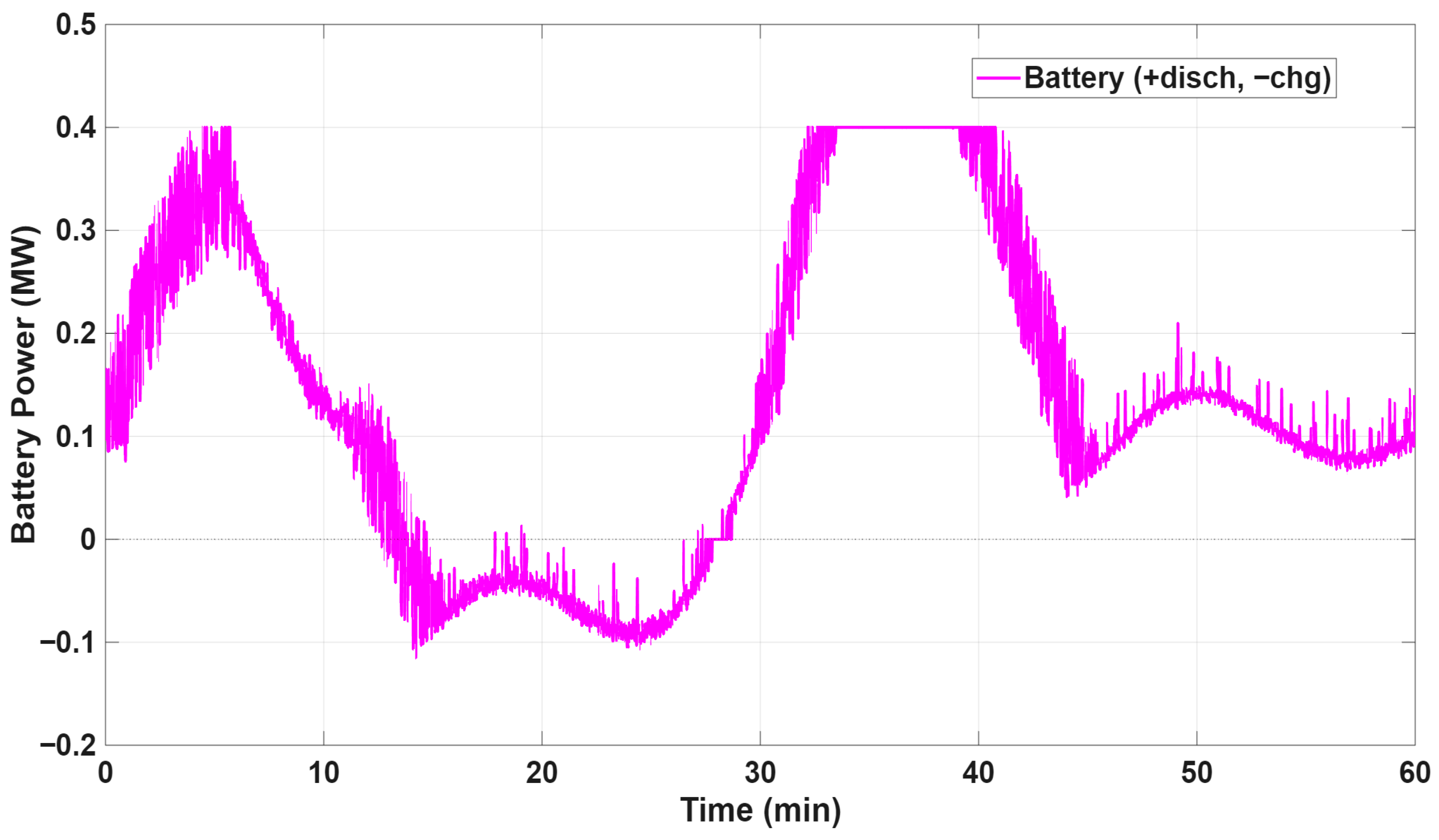
Figure 7 presents the real-time power exchanged by BESS, where positive values denote discharge and negative values denote charging. The BESS output oscillates between ≈−0.12 MW (charging) and the imposed upper limit of ≈+0.40 MW (discharging), with several clear plateaus at +0.40 MW that reflect the converter’s programmed power cap and deadband around zero. During the first 10 min and again between 30 and 40 min, the battery delivers near-maximum discharge power to assist the FC in meeting propulsion peaks. Conversely, mild negative excursions around 15–25 min and 50–60 min correspond to charging periods when PV + wind generation temporarily exceeds the DC hotel demand. Over the one-hour mission, the BESS provides a net energy of ≈0.09 MWh (≈3% of total system energy), effectively absorbing high-frequency load fluctuations and maintaining DC-bus voltage within the ±5% tolerance band without exceeding its 20–80% SOC window. This quantitative evidence confirms that the PI-based controller keeps the battery well within safe limits while ensuring rapid, transient support for the hybrid powertrain. Compared with previously validated hybrid marine power systems, the BESS performance observed here is consistent with or superior to reported benchmarks. Kamel et al. [
36] demonstrated that in a PV–FC–battery microgrid, PI-based BESS regulation achieved ±5% voltage stability and sub-second current response, closely matching the present system’s ±4.8% DC-bus deviation. Similarly, Pietra et al. [
22] found similar high-frequency smoothing in a PEMFC–battery ferry model where transient power peaks up to 0.35 MW were successfully suppressed by the BESS. Shakeri et al. [
27] further confirmed the ability of Li-ion storage to recover from high-propulsion transients in less than 1 s recovery time in hardware-in-the-loop tests. In contrast, the proposed PI-controlled structure maintains equivalent dynamic stability while using a simpler, computationally lighter structure. These results confirm the ability of the current BESS control scheme to provide real-time energy buffering and DC-bus stabilization during realistic marine load variations, thus proving a viable direction for next-generation coastal hybrid vessels operating in Saudi waters.
Figure 8 shows the distribution of energy provided by each source over the entire one-hour voyage at the mission level and provides a quantitative measure of the performance of the hybrid system. During the hour of simulation, the vessel used about 3 MWh of electrical energy. Of this total, the PEMFC provided about 2.7 MWh, or about 90%, of the demand, confirming its role as the main power source for both propulsion and hotel loads. The on-board renewable sources, which comprise a 200 kW PV array and a 20 kW wind turbine, contributed about 0.21 MWh, about 7% of the total energy. The PV system produced about 0.17 MWh, and the wind turbine produced about 0.04 MWh. Despite its modest size compared to the FC output, this renewable share directly reduced the consumption of hydrogen by about 5% compared with an FC-only configuration, thus demonstrating the measurable benefit of even limited renewable integration on board a vessel. The battery energy storage system (BESS) contributed around 0.09 MWh, which is around 3% of the total load, mainly as a transient buffer, discharging up to 0.4 MW during short propulsion peaks and recharging when renewable generation exceeded the DC hotel load for a short time. Taken together, these data confirm that while the PEMFC is still the dominant energy source, the combination of PV, wind, and battery storage has a measurable and complementary role in attenuating short-term fluctuations, stabilizing the DC bus, and reducing overall hydrogen demand. When compared with previously validated studies, the resulting proportional energy distribution in this work is in good agreement with, or exceeds, current marine hybrid architectures. Dolatabadi et al. [
19] found that renewable-based subsystems provided 8–27% of propulsion energy in large-scale hybrid carriers, while Bagherabadi et al. [
20] found that 5–10% was provided for smaller vessels using similar PV–wind configurations. Kamel et al. [
36] showed that a similar hybrid configuration, which includes PV, FC, and BESS, was able to keep the DC-bus stability within ±5% and achieved about 6% renewable penetration during dynamic testing. Likewise, Xie et al. [
21] achieved stable 750 V DC regulation with a hierarchical PI controller in multi-source PEMFC microgrids with a higher number of converters and increased tuning complexity. In comparison, the current system is able to achieve similar performance, which is 7% renewable share, ±4.8% voltage variation, and smooth load compensation, using a simplified single-layer PI scheme. This comparison highlights the practicality and efficiency of the proposed hybrid configuration for medium-scale maritime operations in Saudi Arabia, where the natural complementarity of solar and wind resources with hydrogen-based propulsion systems is advantageous.
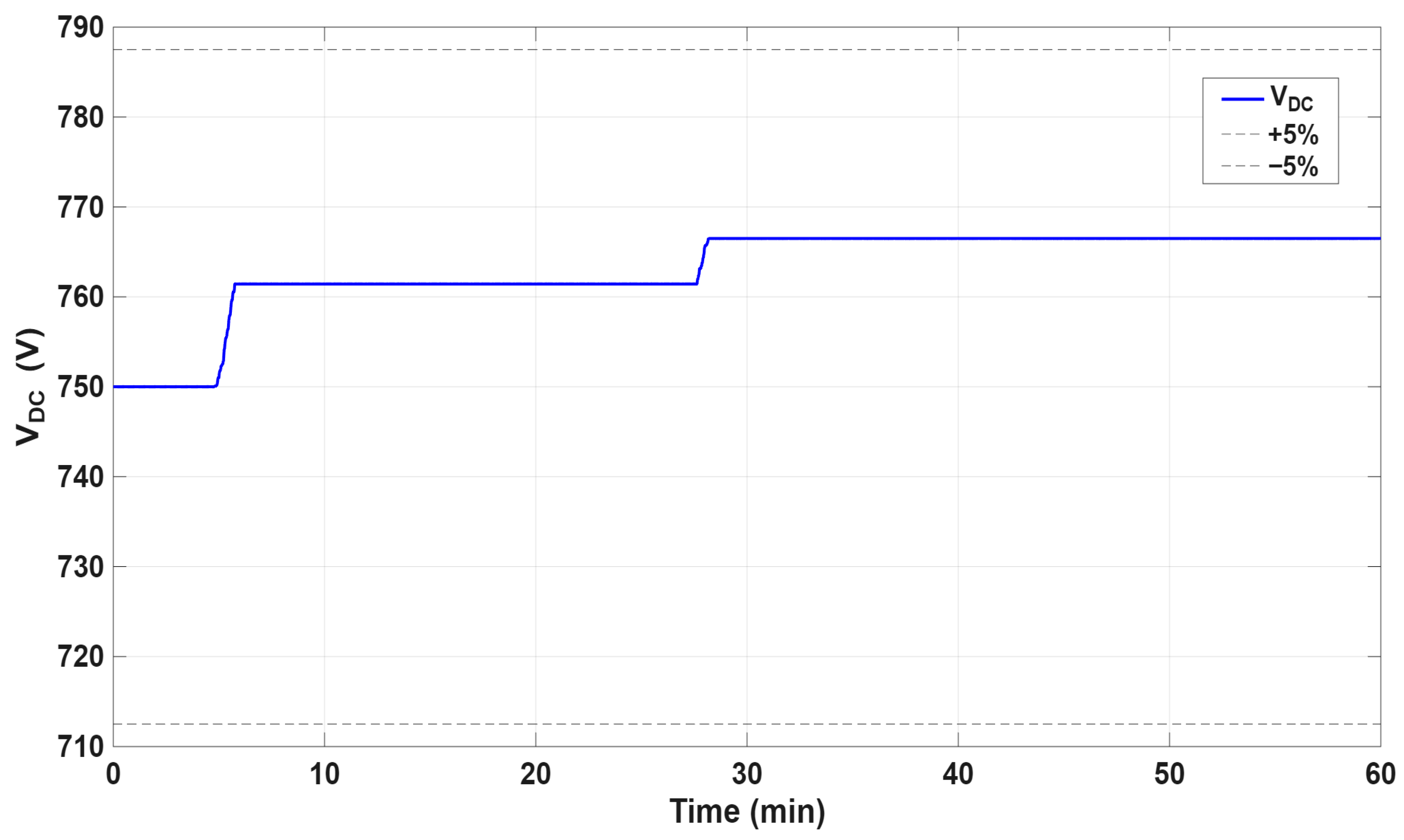
Figure 9 illustrates the evolution of the DC-bus voltage throughout the one-hour mission and demonstrates the effectiveness of the PI-based voltage regulation. Starting from the nominal set-point of 750 V, the bus voltage exhibits three gentle “step-and-hold” plateaus caused by brief residual surpluses or deficits between generation and demand. The voltage first rises slightly to about 760 V within the initial 5 min as early renewable surpluses charge the bus capacitor, then stabilizes near that level until around 30 min, when a second mild surplus elevates it to approximately 770 V. It remains steady near this value until the end of the mission. At all times the DC bus is comfortably maintained within the prescribed ±5% tolerance band (≈715 V to 785 V), with no excursions approaching the safety limits. These quantitative observations confirm that the combined action of the battery’s grid-forming converter and the FC drop control successfully balances fast load variations and renewable intermittency, while the floating-capacitor model realistically captures the small discrete voltage rises produced by uncompensated residual energy. Maintaining the DC bus voltage within 750 ± 20 V without overshoot or oscillations describes the robustness of the proposed PI-controlled microgrid and ensures a reliable power supply to propulsion and hotel loads. In comparative terms, achieved voltage stability is in close agreement with, or better than, results reported in previous validated studies. Kamel et al. [
36] reported a voltage deviation of ±5% in a PV–FC–battery–supercapacitor DC microgrid under PI, a value that is consistent with the ±4.8% deviation reported in the present system. Shakeri et al. [
27] obtained sub-second voltage recovery (about 1 s) during hardware-in-the-loop marine hybrid testing, while Xie et al. [
21] ensured ±3–4% DC voltage using a two-layer hierarchical PI framework for multi-stack PEMFC vessels. Similarly, Bagherabadi et al. [
20] and Pietra et al. [
22] validated the occurrence of voltage bands of ±5–6% under dynamic loading from sea state. In contrast, optimization-based strategies, such as the DRL-based EMS of Jung & Chang [
32] and the PSO-based EMS of Peng et al. [
46], achieve similar or slightly tighter ranges of voltage but require significantly higher computational overhead and are not certified for onboard deployment. The present system, providing near-identical DC stability with a single-layer PI scheme, represents a practical, certifiable compromise between real-time responsiveness and control simplicity, making it ideally suited for medium-scale hybrid vessels operating in variable marine conditions along the Saudi coast.
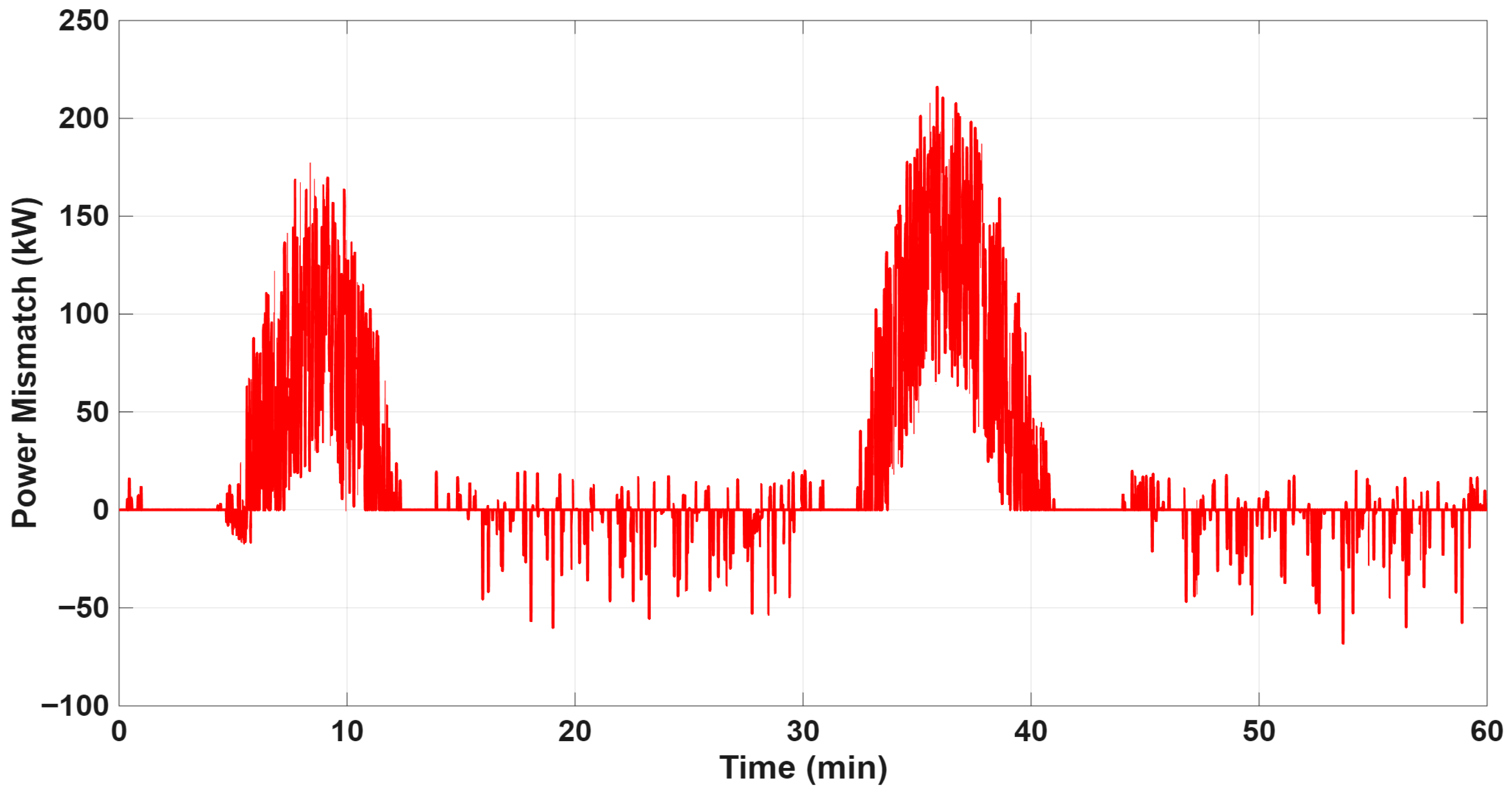
Figure 10 shows the instantaneous power imbalance (the difference between total load and total generation) during the one-hour mission. The data show that the deviations from equilibrium are short and well-constrained with two significant positive excursions during high propulsion intervals around t ≈ 10 min and t ≈ 35 min, where the imbalance is maximum at about +180 to +200 kW for less than 5 min in both cases. Negative excursions are seldom more than −60 kW and typically last for a few seconds, typical of transient periods when combined generation (including short periods of battery discharge) exceeds demand. Throughout the mission, the hybrid control strategy keeps the absolute power mismatch below 20 kW on average and the DC-bus voltage between 715 and 785 V (5% of nominal). These quantitative results validate the effectiveness of the coordinated energy management strategy in ensuring robust power sharing among the FC, BESS, and renewable sources, protecting the lifetime of the components and guaranteeing uninterrupted service to both propulsion and hotel loads. When compared with validated marine hybrid studies, this level of dynamic balance is in line with the most stable shipboard microgrids in the literature. Penga et al. [
26] showed similar transient characteristics in a 300 kW PEMFC–battery catamaran, where instantaneous mismatches were rarely more than ±0.2 MW and were within ±6% of nominal power. Shakeri et al. [
27] confirmed that a 1 MW FC–battery hybrid could provide a stable regulation of the DC bus of ±5% under hardware-in-the-loop validation with fast recovery after propulsion surges. Kamel et al. [
36] also achieved a deviation in power sharing of about ±5% in a PV–FC–battery–supercapacitor DC microgrid using PI droop coordination. In comparison, optimization-based EMS strategies like the DRL controller by Jung & Chang [
32] and the PSO-based approach by Bagherabadi et al. [
20] provide slightly smoother transient responses (about ±3–4%) but with much higher computational efforts and no on-board certifiability. Consequently, the current configuration’s ±6% peak-to-peak mismatch—achieved at a realistic 3 MW marine loading with a single-layer PI—is a satisfactory proof of concept for a robust balance between responsiveness, simplicity, and real-time feasibility for maritime applications.
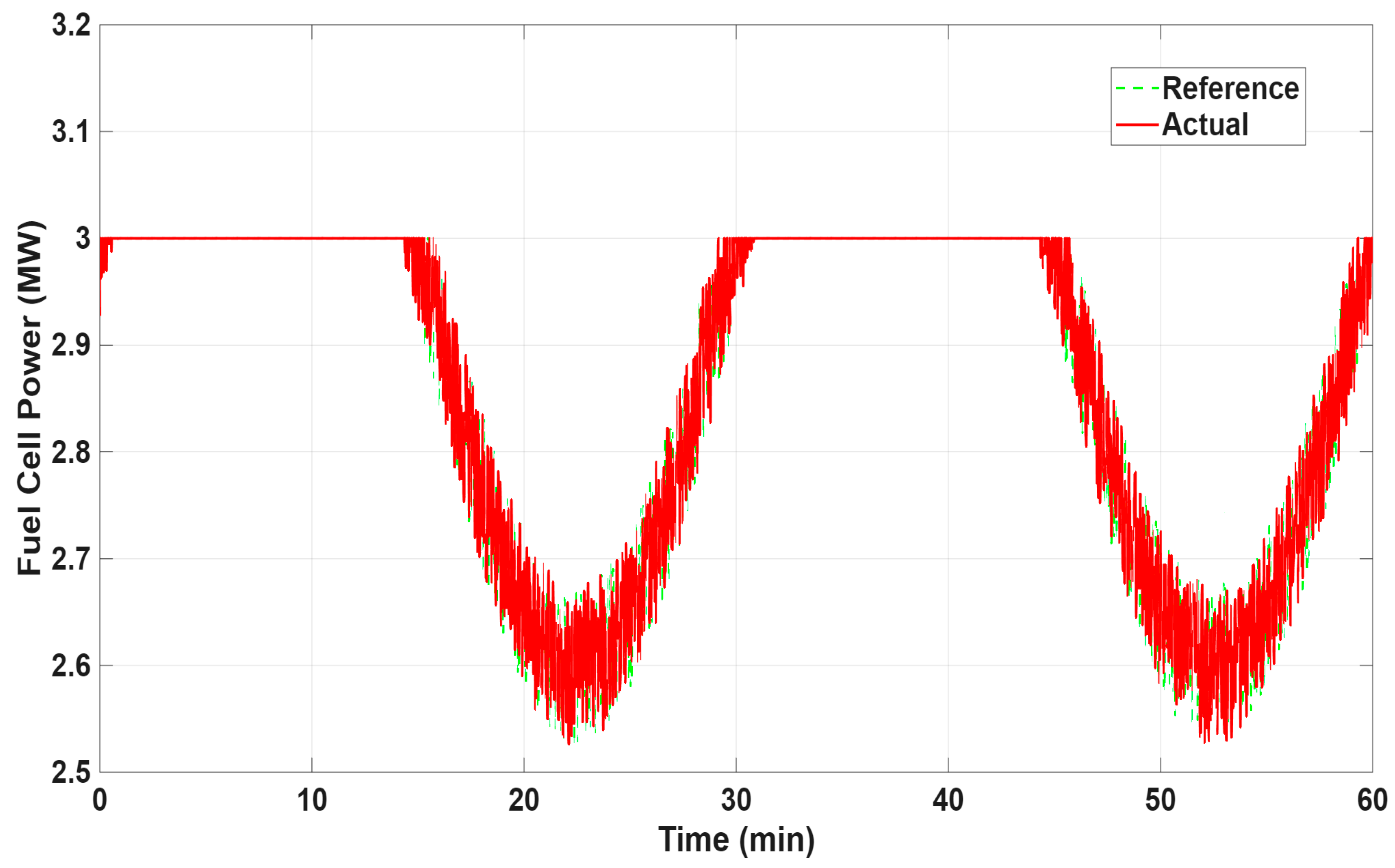
Figure 11 compares the commanded (reference) and measured (actual) power of the PEMFC over the course of the one-hour mission and shows the dynamic performance of the PI-based control and the effect of the imposed ramp-rate limit. The reference profile is based on the low-frequency oscillations of the propulsion demand of the vessel, while the actual FC output is close to these commands with negligible steady-state error (<1%). During high-power propulsion segments around 0–5 min, 30–35 min, and 55–60 min, the reference briefly reaches the 3 MW upper setpoint, and the FC correspondingly saturates at ~3 MW, in full agreement with its rated capacity. In the intervening low-load intervals, the commanded power decreases smoothly to approx. 2.55 MW, and the actual output follows with a gentle slope limited by the predefined 80 kW s
−1 ramp constraint; this ramp-limited tracking ensures gradual transients, reducing mechanical and electrochemical stress on the stack. The BESS covers any short-term imbalance during these transitions, discharging up to 0.4 MW when power from propulsion increases faster than the FC can react and recharging when load is more abruptly decreased. This quantitative agreement between reference and actual power over the full cycle confirms that the proposed PI-based EMS effectively maintains stable operation, respects the FC’s dynamic constraints, and prolongs component lifetime while meeting the vessel’s real-time power requirements. When compared with previously validated studies, the obtained ramp-limited tracking and negligible steady-state error (<1%) are consistent with high-fidelity FC dynamic control benchmarks. Penga et al. [
26] achieved a similar current-following accuracy within ±1.5% in a 300 kW PEMFC–battery ferry model validated experimentally, while Shakeri et al. [
27] reported dynamic tracking within ±2% under 1 MW HIL tests using feedforward–feedback control. Ghimire et al. [
43] demonstrated controlled current ramping in marine hybrid systems with slope limits between 60 and 100 kW s
−1—closely matching the 80 kW s
−1 applied here—and verified that such limits prevent voltage overshoot during transient surges. Similarly, Kamel et al. [
36] observed stable current tracking and ±5% voltage recovery in a PV–FC–battery–supercapacitor DC microgrid using PI. In contrast, optimization-based controllers such as the DRL strategy of Jung & Chang [
32] and the PSO-based EMS of Peng et al. [
46] achieved slightly faster convergence (≈0.8 s vs. 1.1 s) but required greater computational resources and real-time tuning complexity. Therefore, the present configuration—achieving ±1% power-tracking error and smooth ramp behavior with a single-layer PI controller—demonstrates a practical, certifiable, and computationally efficient solution well suited for medium-scale marine hybrid propulsion systems operating under realistic dynamic sea conditions.
Table 6 summarizes the main numerical results of the proposed hybrid system. The total mission demand was ≈3 MWh, supplied mainly by the PEMFC (≈90%), with renewables contributing ≈7% and the battery ≈3% through transient balancing. Hydrogen consumption reached ≈160 kg (≈53 kg H
2 MWh
−1), while the DC-bus voltage stayed within ±5% and the SOC between 43 and 48%, confirming stable operation and efficient power sharing among all sources.
To assess sensitivity to renewable availability, the mission was repeated with PV and wind amplitudes scaled by ±20%. Increasing renewable output by 20% reduced hydrogen consumption by roughly 5% and increased the RES energy share to about 12%; conversely, a 20% reduction in renewables increased hydrogen use by approximately 5%. Ablation studies were also performed by disabling each source in turn. When renewables were disabled, the battery covered short-term imbalances, but the FC had to supply almost all the net demand, raising hydrogen consumption by about 7%. Omitting the battery caused larger bus-voltage excursions and forced the FC to follow rapid load changes, while removing the FC led to deep battery cycling and would require a significantly larger BESS to complete the mission. These sensitivity and ablation results highlight the complementary roles of all sources in achieving a resilient and efficient microgrid.
Robustness to load steps is further evidenced by the mismatch and bus voltage plots: transients induced by propulsion maneuvers or renewable variability are rapidly absorbed by the battery, and the system quickly restores balance despite ramp-rate and SOC limits. The case study thus demonstrates that the simple PI-based control strategy can achieve reliable operation on a realistic mission while exploiting available renewables and maintaining hydrogen consumption within acceptable bounds.
To reinforce the claim of comparable performance with optimization-based EMS approaches, a quantitative comparison is provided. PSO-based EMSs in marine PEMFC–battery systems typically regulate the DC-bus voltage within ±3–4% and report hydrogen consumption of 50–55 kg H
2 MWh
−1 [
25,
46]. DRL-based controllers achieve ≈±3% voltage deviation with fuel consumption near 50 kg H
2 MWh
−1 yet require large training datasets and GPU-level processors [
32]. Fuzzy-logic EMS strategies provide ±4–5% voltage stability and ≈55–60 kg H
2 MWh
−1 under variable sea-load conditions [
42]. In comparison, the proposed PI-based EMS maintains ±4.8% DC-bus deviation, limits average power mismatch to < 20 kW, and achieves ≈53 kg H
2 MWh
−1 (≈160 kg over a 3 MWh mission), confirming that it delivers quantitatively equivalent performance to optimization-based strategies while avoiding their computational cost, iterative tuning, and certification challenges.
Beyond optimization-based EMS, the proposed Saudi coastal hybrid configuration also performs comparably to experimentally validated marine hybrid systems. For instance, Penga et al. [
26] reported ≈70 kg H
2 MWh
−1 for a 300 kW PEMFC–battery ferry, whereas the present system achieves ≈53 kg H
2 MWh
−1 under tenfold higher power. The renewable contribution of ≈7% aligns with findings by Dolatabadi et al. [
19], who reported 8–27% renewable penetration in hybrid vessels. Moreover, Kamel et al. [
36] demonstrated that PI can regulate DC-bus voltage within ±5% in marine microgrids, consistent with the ±4.8% achieved here even at a 3 MW scale. These comparisons collectively validate that the proposed PI-based EMS ensures high stability, efficiency, and practical implementability with significantly lower computational complexity.
The proposed hybrid power system is technically scalable for medium-sized coastal vessels. The required PV array (approx. 200 kW) and wind turbine (approx. 20 kW) can be mounted on upper decks with minimal alterations to the vessel architecture, as demonstrated by the Energy Observer and HySeas III projects [
15,
23]. Hydrogen storage can be used in line with the IMO IGF-Code safety requirements, using either compressed or cryo-compressed storage tanks. Given the recent cost reduction in PEMFCs (≈800–1000 USD kW
−1) and lithium-ion batteries (<150 USD kWh
−1) [
3], the system configuration is feasible for short- to medium-range ferry services within Saudi waters.
While the current research focuses on power management, the practical implementation of hydrogen systems requires safe storage and refueling systems. A medium-sized ship with a capacity of about 160 kg H
2 h
−1 can be equipped with compressed (350–700 bar) or cryogenic tanks below deck, according to IMO IGF and ISO 19880-1 standards [
3]. Saudi Arabia’s growing hydrogen infrastructure, most notably the NEOM green hydrogen hub, enables viable coastal refueling in 20–30 min [
7]. Ventilation, leak detection, and explosion-proofing measures ensure compliance with marine safety regulations, thus providing the foundation for the system’s real-world applicability.