Article

Protecting HWSNs from Super Adversaries with Robust Certificateless Signcryption


1
Department of Electrical and Computer Engineering, Isfahan University of Technology, Isfahan 84156-83111, Iran
2
Electrical and Computer Engineering Group, Golpayegan College of Engineering, Isfahan University of Technology, Golpayegan 87717-67498, Iran
3
School of Science, Technology and Engineering, University of the Sunshine Coast, Brisbane, QLD 4502, Australia
4
College of Engineering and Information Technology, University of Dubai, Dubai 14143, United Arab Emirates
5
College of Engineering, American University of Iraq–Baghdad (AUIB), Baghdad 10001, Iraq
*
Author to whom correspondence should be addressed.
Telecom 2026, 7(2), 37; https://doi.org/10.3390/telecom7020037

Submission received: 22 January 2026 / Revised: 27 February 2026 / Accepted: 24 March 2026 / Published: 1 April 2026

Abstract

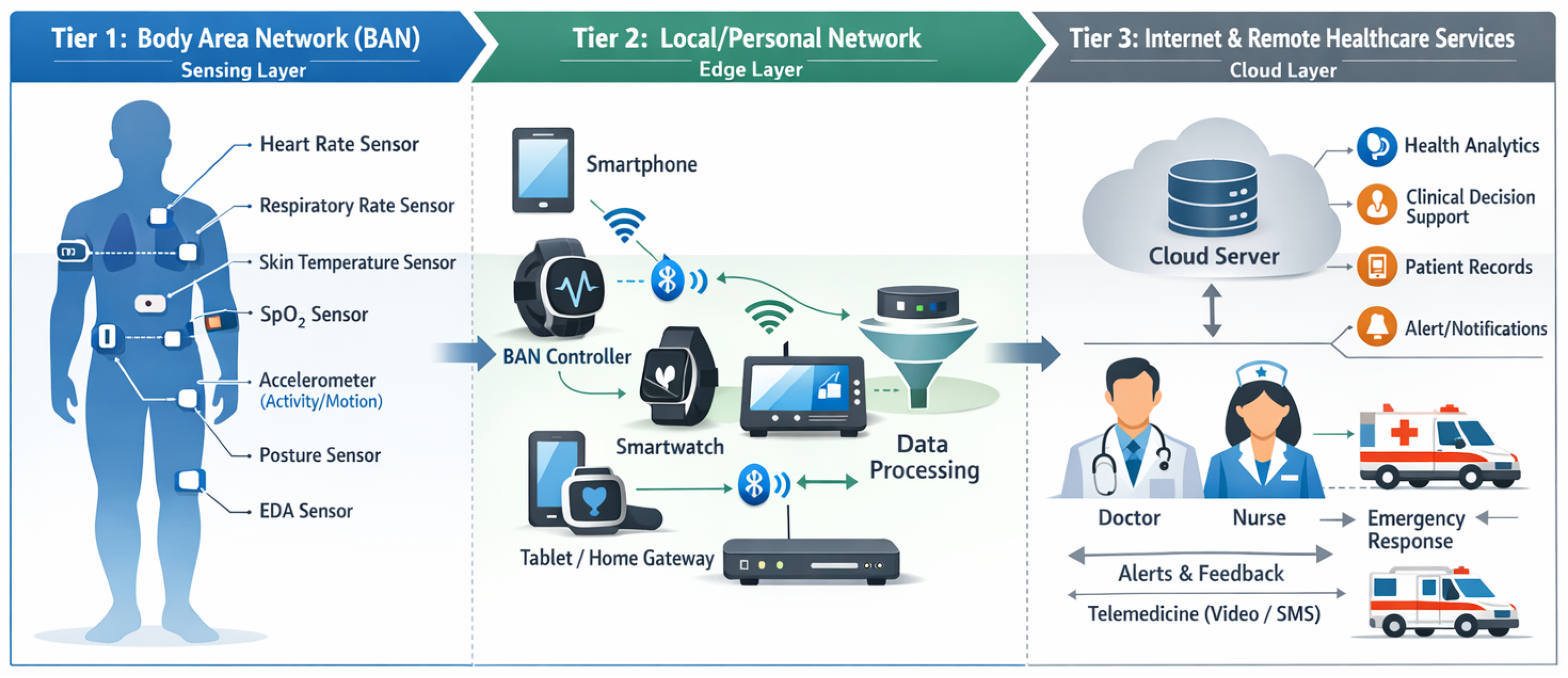
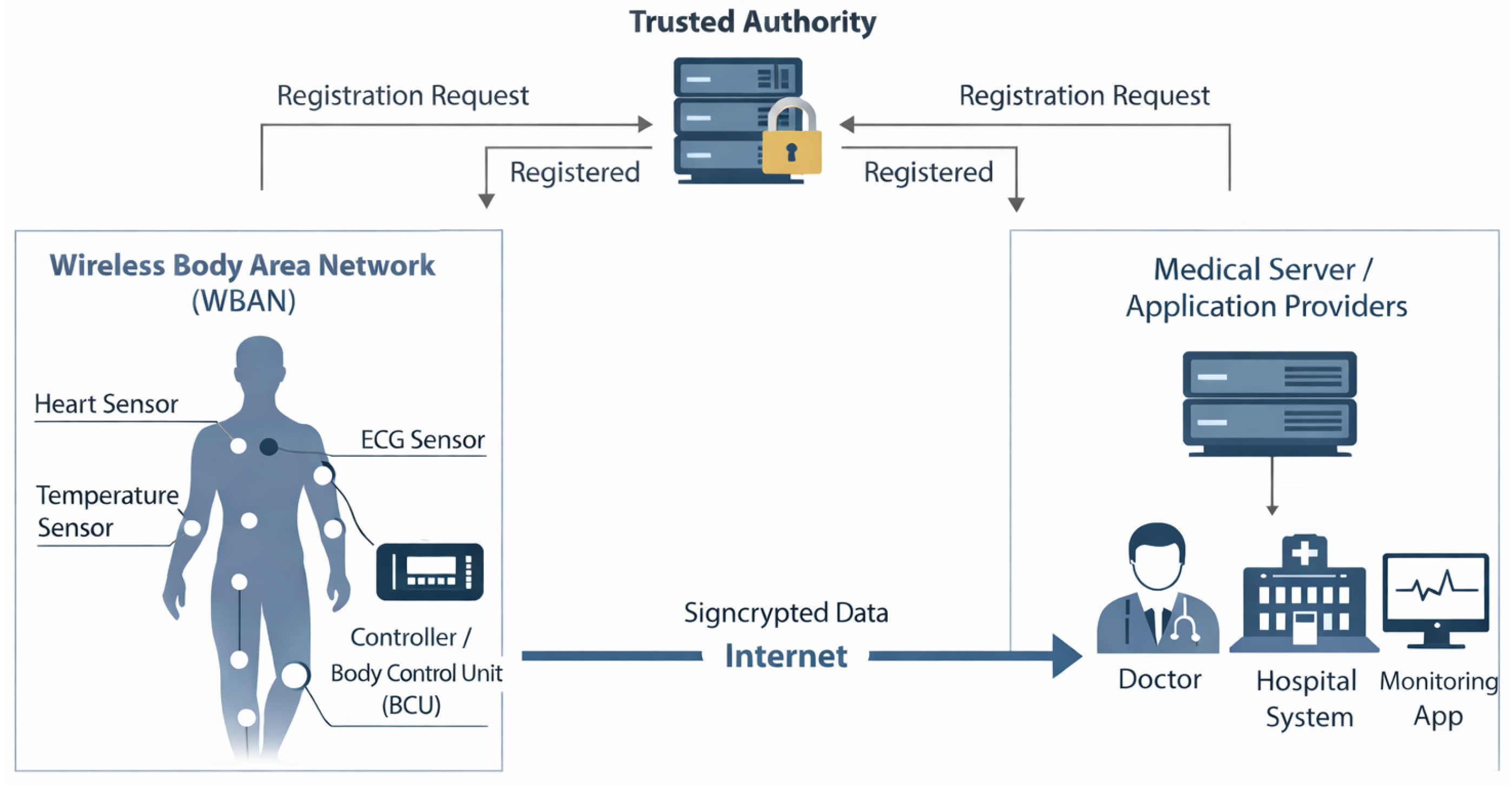
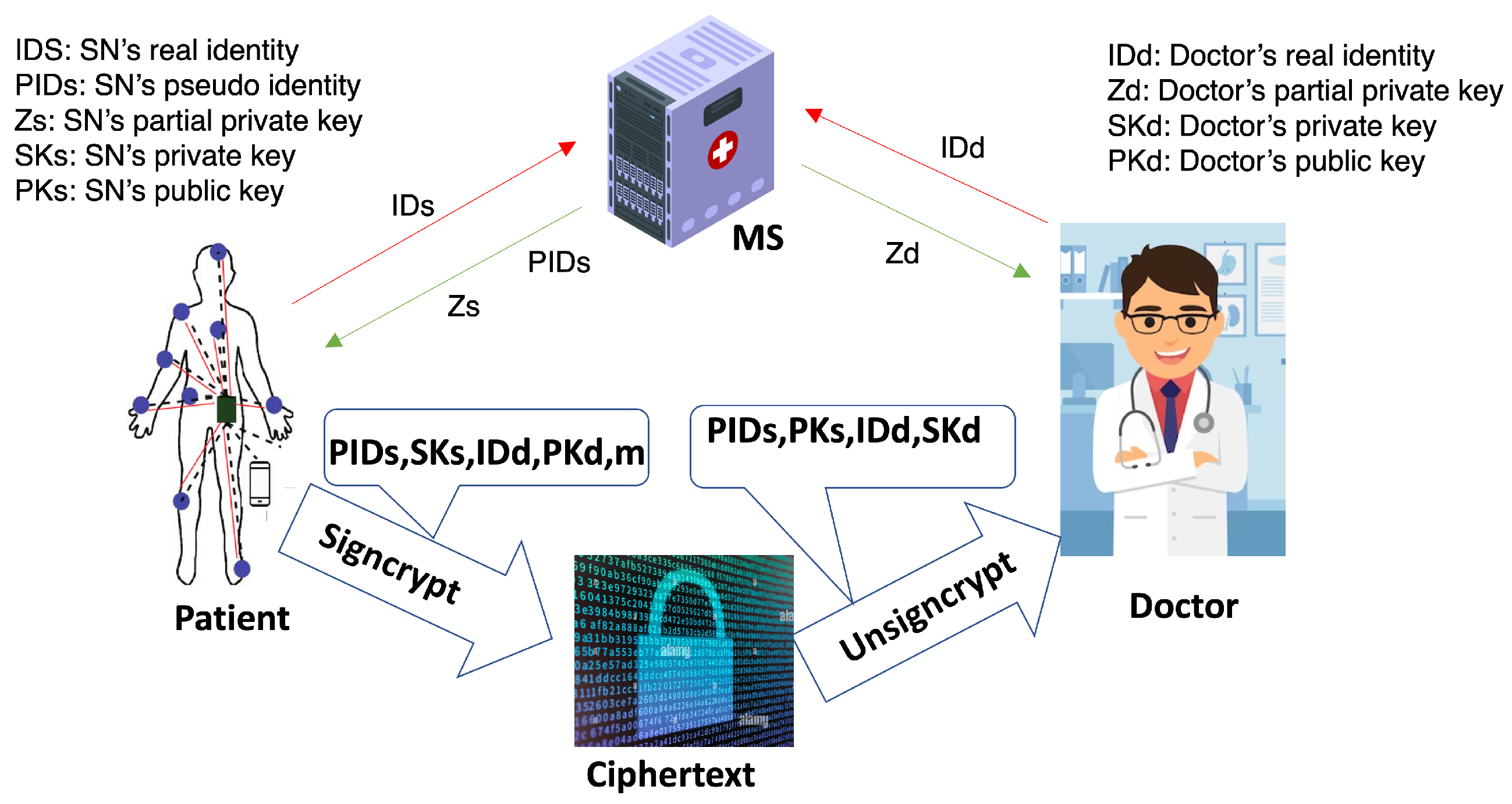
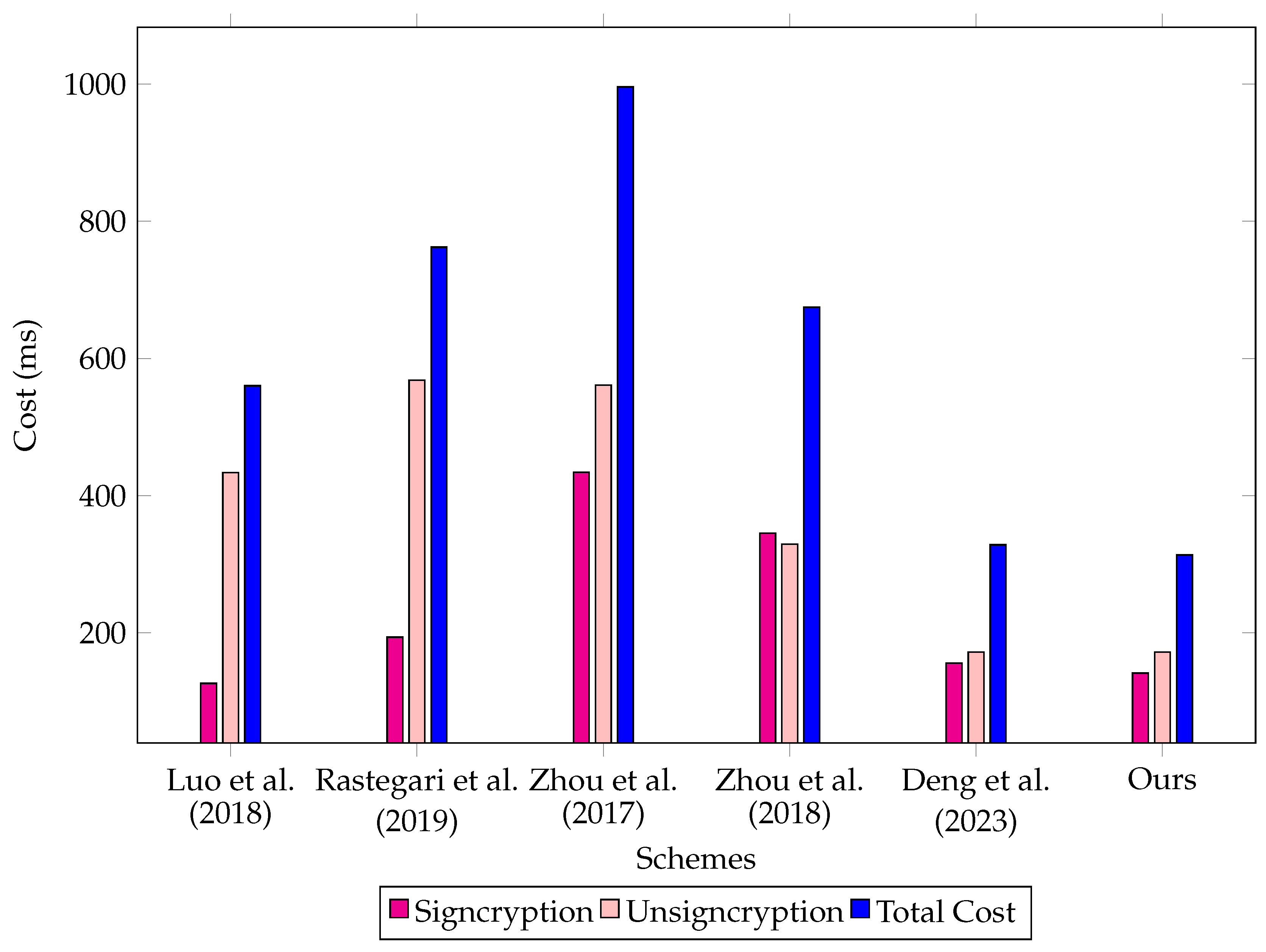
Healthcare Wireless Sensor Networks (HWSNs) have attracted significant attention due to their vital role in diseases’ diagnosis, monitoring, and treatment. By continuously collecting patients’ physiological data and enabling remote medical services, these networks can greatly improve the quality of healthcare. However, the inadequate handling of security and privacy issues poses serious risks to patients. In this context, signcryption schemes are essential cryptographic primitives that simultaneously provide authentication, confidentiality, and data integrity with a low overhead. Recently, Deng et al. proposed a certificateless signcryption (CL-SC) scheme for HWSNs and proved its security in the standard model. In this paper, we demonstrate that their scheme is insecure under an enhanced adversarial model, where a super Type II adversary, which is a malicious key generation center, can replace the system’s master public key using the master secret key under its control, and subsequently forge valid signcryptions on arbitrary messages on behalf of a sensor node. To address this vulnerability, we propose an enhanced CL-SC scheme based on elliptic curve cryptography (ECC). Under the hardness assumptions of the Elliptic Curve Decisional Diffie–Hellman Problem (ECDDHP) and the Computation Attack Algorithm (CAA), the proposed scheme achieves confidentiality and existential unforgeability against both super Type I and super Type II adversaries in the standard model. Performance analysis further shows that our scheme is efficient and well suited for resource-constrained HWSN environments.
Keywords: certificateless; signature; signcryption; HWSN; anonymity; standard model certificateless; signature; signcryption; HWSN; anonymity; standard model