


Highlights
5G technology revolutionizes smart cities by facilitating seamless IoT connectivity, real-time digital twins, and sophisticated urban applications, tackling network problems such as network congestion and energy optimization. It improves resource management, public safety, and the efficiency of urban systems, although it encounters challenges like expensive infrastructure and restricted signal coverage. Working together with stakeholders is important to address these challenges and to develop scalable, secure, and sustainable smart city solutions.
What are the main findings?
- 5G technology provides a seamless integration of IoT devices, live monitoring systems, and real-time digital twins, revolutionizing smart city frameworks.
- Key urban challenges like network overload, energy efficiency, and data security can be addressed through 5G, although infrastructure expenses and signal constraints present difficulties.
What are the implications of the main findings?
- The integration of 5G and real-time digital twins improves urban resource management, public safety, and overall system efficiency in smart cities.
- To address limitations and to realize scalable, secure, and sustainable smart city solutions driven by 5G, collaboration among stakeholders is essential.
Abstract
The arrival of 5G technology is transforming the creation of smart cities by delivering unmatched speed, extremely low latency, and broad device connectivity. These developments allow for the effortless integration of IoT devices, live monitoring systems, and cutting-edge urban applications. This paper examines the impact of 5G in tackling significant urban challenges, including network overload, energy efficacy, and data security, while highlighting its revolutionary potential in improving smart city frameworks. An important emphasis is the fusion of 5G with real-time digital twins, which link physical and digital realms to enhance urban systems, refine resource management, and strengthen public safety. Even with its potential, the rollout of 5G encounters challenges such as expensive infrastructure, significant energy requirements, and limited signal reach. This research explores the present trends, current applications, and new challenges related to 5G in smart cities, providing insights into its constraints and approaches to address them. It summarizes the necessity of cooperation among stakeholders to realize 5G’s complete capabilities and to create scalable, secure, and sustainable solutions for smart cities.
1. Introduction
As cities continue to grow and urban populations increase, the challenges of managing resources, infrastructure, and services become more complex. To address these challenges, many cities are turning to smart solutions consisting of technologies that are designed to improve how urban environments operate and how people experience them [1,2]. At the heart of this shift is 5G technology, known for its high speed, low latency, and ability to support massive numbers of connected devices [3,4]. These features make 5G a key enabler of real-time communication and intelligent decision-making, with the potential to transform how cities function [1,2,3,4].
Despite its promise, the rollout of smart city systems has not been without its setbacks. Limitations such as network congestion, inconsistent real-time performance, and fragmented data systems can hinder the effectiveness of existing infrastructure, preventing the realization of smart city potentials [5,6]. Urbanization concerns about energy use, data security, and latency make it even harder to build reliable and scalable solutions. To overcome these hurdles, creative strategies are needed that fully leverage the advantages of 5G technology while addressing its inherent limitations [7,8].
This paper explores one such approach that involves the combination of 5G technology with real-time digital twins. Digital twins are virtual versions of physical systems, allowing city planners and managers to simulate, monitor, and fine-tune how cities operate. When powered by 5G, these systems can produce live updates and predictive insights that help cities to respond quickly and plan more effectively [9,10,11,12]. The objective of this paper is to explore how the integration of 5G technology with real-time digital twins can enhance urban planning, optimize resource management, and improve public safety within smart cities.
While earlier studies have looked at how 5G supports smart cities in general, this paper takes a closer look at digital twins, a promising but less explored area. The goal is to show how 5G’s capabilities can improve the performance of digital twins and, by extension, the overall efficiency of smart city systems. Beyond examining the advantages, the paper also addresses key challenges that could hinder its progress. These include technical barriers, such as network limitations and system integration issues, as well as broader policy and regulatory concerns. By analyzing these concerns and providing practical recommendations, the study seeks to contribute toward building smarter cities that are not only more connected but also more adaptable and sustainable.
The structure of this paper is categorized into six sections. Section 2 provides an overview of 5G technology and its current applications in smart cities, along with a discussion of its existing limitations. Section 3 outlines the major technical and infrastructural challenges involved in deploying 5G within urban systems. Section 4 delves into the integration of 5G with real-time digital twins and the potential impact this synergy may have on smart city development. Section 5 presents both technological and policy-driven recommendations to help overcome the identified challenges. Section 6 concludes the paper with a summary of key insights and suggests directions for future research.
2. Current Trends for 5G in Smart Cities
The integration of 5G technology into urban infrastructure marks a pivotal moment in the ongoing evolution of smart cities. As cities become more reliant on data-driven systems to manage resources, mobility, and public services, the high-speed connectivity and low latency offered by 5G are proving essential. This section provides an overview of the technological foundations that make 5G suitable for smart city environments, followed by real-world applications in which 5G is already being deployed to improve efficiency, safety, and the standard of living. This section also weighs up the limitations and challenges that come with adopting 5G in urban contexts, such as infrastructure demands, security risks, and socioeconomic barriers. Together, these insights offer a well-rounded view of how 5G is shaping the landscape of modern urban development.
2.1. Technological Overview
5G technology revolutionizes smart cities by offering the strong foundation necessary for intricate, interconnected systems [11,12]. In comparison with 4G, 5G offers unparalleled features. Capable of reaching speeds of up to 10 Gbps, which is ten times faster than 4G, it can facilitate HD video streaming, communication for autonomous vehicles, and smooth connections for AR and VR applications [13,14,15]. This speed greatly cuts down on download and response times, allowing data-heavy urban applications to run more smoothly [11,12,13,14].
Another key characteristic of 5G is its extremely minimal latency, with delays being as low as only 1 millisecond. This timely response is essential for instant-use scenarios like self-driving vehicles, telemedicine, and emergency assistance, as any slight delays can significantly affect the outcomes [16,17]. Moreover, 5G can handle a large number of connected devices, with the capability of supporting up to one million devices within a square kilometer [13,18]. This feature is crucial for smart cities, as IoT devices such as sensors, cameras, and connected appliances produce large volumes of data that need smooth communication and control [19,20].
Figure 1 illustrates the comparison of the performance of different wireless generations in smart city applications, showing how 5G outperforms previous technologies in important performance measures [21,22,23,24,25,26,27]. The logarithmic scale representation highlights the exponential enhancements in speed, latency, and device connectivity provided by 5G.
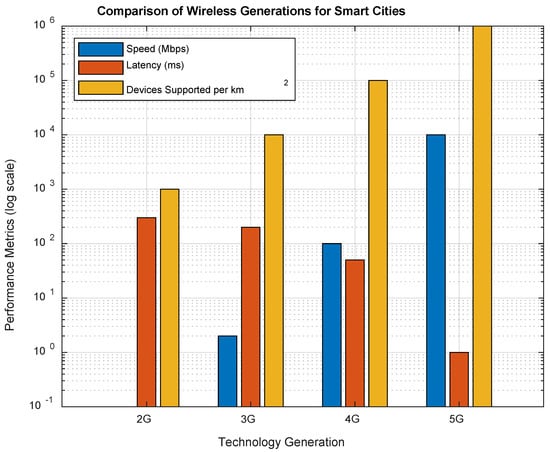
Figure 1.
Performance comparison of wireless generations for smart city applications [24,26,27].
The improvements in speed, latency, and device connectivity represented in Figure 1 have direct and transformative implications for smart cities. The remarkable increase in data transfer speeds with 5G to up to 10 Gbps, means that applications requiring heavy data usage, such as HD video streaming, remote monitoring, and real-time traffic management, can run seamlessly [21,22,23,24]. This enhanced speed supports critical urban functions like autonomous vehicles, which rely on rapid data exchanges for navigation and safety and facilitates advanced augmented and virtual reality applications that are becoming increasingly vital for sectors like healthcare and education. With significantly reduced download and response times, urban services can now respond faster to the needs of citizens, making smart cities more efficient and responsive.
The performance metrics in Figure 1 also highlight how 5G’s extremely low latency can dramatically benefit time-sensitive applications such as self-driving vehicles, telemedicine, and emergency services. A reduction in latency from 50 milliseconds with 4G to just 1 millisecond with 5G ensures that actions requiring immediate responses, such as controlling traffic lights or deploying emergency services, can occur with minimal delay [21,22,23,24]. This is critical in scenarios where a delay of even a fraction of a second could lead to significant consequences. 5G’s ability to handle up to one million devices per square kilometer addresses the growing need for connectivity in densely populated urban environments [25,26,27]. With the proliferation of IoT devices that range from sensors that monitor air quality to cameras used for security, 5G can accommodate the dense data traffic typical in smart cities, ensuring that these systems communicate effectively without interruption.
The graph in Figure 1 was constructed using estimated data from industry standards, technical reports, and academic research on wireless communication technologies. The values for speed, latency, and device density were selected based on general trends observed in ITU and 3GPP specifications, as well as real-world network performance. The speed measurements represent the best possible conditions, while the latency values reflect typical response times in actual networks. The number of devices supported per square kilometer highlights how each generation has improved in handling network congestion, especially with 5G’s advancements in massive MIMO and network slicing.
Network slicing, enabled by 5G, introduces a layer of customization to smart city infrastructure [28,29]. By creating dedicated virtual networks for specific applications or services, operators can prioritize critical functions like emergency response systems, ensuring that they receive the necessary bandwidth and low-latency connections for optimal performance [30,31]. For less urgent tasks, such as entertainment or routine environmental monitoring, a different network slice can be allocated, allowing for a more efficient use of available resources. This flexibility helps to maintain a high level of service across all urban functions, from transportation to public safety, by guaranteeing that essential services are not impacted by non-essential network traffic [28,29,30,31]. 5G’s network slicing ensures that smart cities remain highly adaptable, scalable, and capable of managing diverse and evolving demands.
2.2. Existing Applications of 5G in Smart Cities
The arrival of 5G technology has greatly enhanced the functions of smart cities, ushering in a new age of connectivity and innovation in multiple areas [9,32]. Some of the most revolutionary applications include IoT for urban oversight, intelligent transportation networks, and public safety frameworks, all of which utilize the low latency, high speed, and extensive device connectivity provided by 5G [20,32]. Prior to 5G’s deployment, these applications faced several challenges, such as network congestion, limited device connectivity, and delays in real-time data transmission [9,32]. In urban IoT networks, for instance, limited bandwidth and high latency obstructed the timely collection and analysis of data, decreasing the effectiveness of systems like waste management, environmental monitoring, and smart traffic control. As cities expand and more devices are connected, these limitations have become more apparent, causing inefficiencies in resource management and emergency response times. 5G directly addresses these limitations by providing a high-speed, high-capacity network with ultra-low latency, which is needed for real-time applications that smart cities rely on [20,32].
IoT for urban monitoring is needed for smart cities to effectively manage resources and to enhance the quality of life in urban areas. 5G improves IoT networks by enabling a large volume of connected devices with low latency, facilitating real-time data gathering and analysis throughout different urban systems [18,20,30,31]. For instance, environmental sensors placed in urban areas can track air quality, noise pollution, and water consumption, delivering practical information to city officials [33,34]. In the same way, intelligent waste management solutions utilize IoT-connected bins that relay fill levels, improving collection routes and lowering operational expenses [35,36]. These applications illustrate how 5G enhances data-driven decision-making, ensuring that urban areas become more sustainable and enjoyable to live in.
However, current implementations of IoT in smart cities face limitations, such as network interference, inefficient data processing, and inadequate communication between devices in densely populated environments [18,20,30]. Traditional communication networks, like 4G, struggle with meeting the increasing demand for enhanced device connectivity and data transmission [22,23,24]. 5G’s capability of managing millions of connected devices simultaneously and of transmitting data with minimal delay significantly improves the reliability and responsiveness of these systems [34,35]. By eliminating bandwidth bottlenecks and improving real-time processing, 5G promotes a smoother and more efficient functioning of IoT applications ranging from waste and energy management to environmental monitoring.
Figure 2 depicts how IoT devices are connected in a smart city environment via an urban sensor network. The illustrated network in Figure 2 is a representation of a wireless sensor network (WSN) tailored for urban environments, specifically within the context of smart city infrastructure [32,33,36]. These networks consist of interconnected IoT sensor nodes that collaborate to monitor, collect, and transmit real-time data such as traffic flow, air quality, energy consumption, and infrastructure health across various city systems. In a smart city setting, such networks play a critical role in enabling adaptive services, ensuring efficient resource usage and supporting data-driven governance. The network shown in Figure 2 embodies a decentralized and self-organizing architecture typical of WSNs, where nodes interact without the need for a central controller, mimicking the way IoT devices naturally integrate into urban ecosystems. Its graph-based representation also reflects real-world communication patterns among devices, which is essential for modeling and for improving urban connectivity.
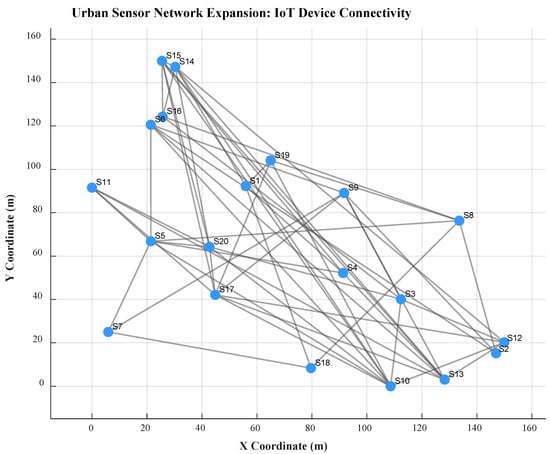
Figure 2.
5G IoT device connectivity: urban sensor network expansion [32,33,36].
To simulate this network, a computational model was employed using a probabilistic graph-based approach, which mirrors how IoT devices might establish communication links in practice. The network was generated using a simulation where 20 sensor nodes were randomly placed within a defined area, with their positions defined within a two-dimensional area. Each node is assigned to a unique pair of X and Y coordinates to reflect the varied geographic deployment.
The connectivity between these sensors was established using a fixed probability-based approach, meaning that each sensor had a 30% chance of being connected to any other sensor in this case. This is used to reflect the real-world uncertainty and dynamic nature of wireless links in urban environments, which can be affected by physical obstructions, interference, or transmission range limitations. The data were stored in an adjacency matrix, a mathematical structure used to define whether nodes are directly connected. The matrix was then used to construct an undirected graph representing the communication network. The visual output not only maps out the spatial layout of the sensor nodes but also provides an intuitive understanding of how urban IoT systems might self-organize and maintain real-time communication. IoT devices in a network are effortlessly combined to oversee and control urban systems in real time [20,32,33]. This network serves as the foundation for digital twins, allowing for the virtual duplication of the city’s infrastructure and dynamics by delivering precise real-time data from physical sensors [32,33,34,35]. The extensive implementation of 5G technology improves this ecosystem by providing ultra-low-latency and high-speed communication, facilitating rapid data transfer between the sensors and the analytical systems [33,35]. Collectively, these technologies facilitate a more intelligent resource distribution, anticipatory maintenance, and enhanced urban living, emphasizing the collaboration among IoT, digital twins, and 5G in defining the future of smart cities [32,33,35].
Before the rollout of 5G, digital twins and real-time data models often encountered delays and data inconsistencies due to slower network speeds and their limited communication capacity. This affected the accuracy and timeliness of simulations, making it difficult to forecast urban dynamics effectively. 5G’s rapid data transfer capabilities ensure the smooth integration of data from multiple IoT sensors into digital twin models, allowing for more accurate and timely predictions of urban behavior. The ultra-low latency of 5G ensures that these predictions can be acted upon almost immediately, enabling smarter decision-making and improving the standard of living in urban areas.
Real-time environmental monitoring in smart city infrastructure is illustrated in Figure 3 by a connected network of IoT sensors powered by 5G [33,37,38,39]. Each node represents a sensor collecting data concerning air quality, temperature, or traffic information [33,37]. The edges indicate strong low-latency 5G links that facilitate uninterrupted communication [37,38,39]. Spatial differences in environmental conditions are accentuated by the heatmap overlay, facilitating dynamic data-driven insights [38,39]. This representation corresponds with digital twin technology by presenting a virtual model of urban areas, enabling predictive simulations and effective city governance [9,13,38]. Through the incorporation of 5G, the system provides scalable, dependable, and high-velocity data transfer for the consistent functionality of smart city environments in real-time [33,37,38,39].
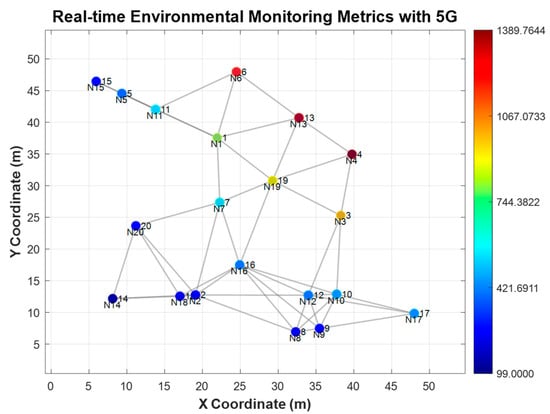
Figure 3.
Real-time environmental monitoring metrics with 5G [33,37,38,39].
Figure 3 was generated through a MATLAB R2024b simulation designed to reflect the operational realities of a 5G-enabled wireless sensor network in an urban environment. The network consists of 20 IoT sensor nodes randomly distributed across a 50 × 50 unit area, representing the spatial unpredictability of sensor deployment in real-world smart cities. Connections between nodes are established based on a distance threshold, where any two nodes within 15 units are considered to be directly connected, simulating the reliable range of 5G communication. This threshold ensures that the network captures the benefits of 5G’s ultra-reliable and low-latency capabilities, particularly in densely packed urban zones. The underlying network structure is visualized as an undirected graph using an adjacency matrix, which monitors all pairwise connections and underpins the visual layout of the sensor web. The heatmap overlay is based on node positions, reflecting variations in the environmental data intensity, such as pollution levels or temperature gradients, thereby transforming static spatial data into an interpretable dynamic metric. This visualization not only illustrates the physical arrangement and communication paths of the network but also underlines the system’s potential for supporting real-time, location-aware environmental analytics, which are essential for smart city decision-making.
Previously, environmental monitoring systems in smart cities faced the challenge of processing large volumes of data from a variety of sources, leading to delays in reporting and decision-making. Traditional networks were often unable to support the fast-paced, real-time demands of environmental monitoring, especially in densely populated areas, where data traffic is particularly heavy. 5G’s ability to control this surge in data traffic without delays ensures that environmental conditions can be monitored in real time, allowing cities to respond faster to pollution spikes, traffic congestion, and other urban challenges [33,37,38]. This provides city officials with the tools they need to manage resources more effectively and to respond to environmental concerns more swiftly.
Within the field of smart transportation, 5G is also used to facilitate the development and implementation of self-driving vehicles and advanced traffic control systems [40,41,42]. The ultra-reliable low-latency communication (URLLC) aspect of 5G ensures that self-driving vehicles can share critical information with other vehicles, infrastructure, and control centers instantly via a reliable communication network [43,44]. This communication is needed for enhancing safety and improving traffic movement in crowded regions [40,41]. Intelligent traffic systems powered by 5G analyze traffic patterns and dynamically adjust signals to alleviate congestion and increase efficiency [40,41,42]. Cities such as Cape Town, eThekwini, Tshwane, and Johannesburg in South Africa are also exploring these technologies and the potential of 5G to transform urban living [45,46]. These smart cities make use of digital technologies to enhance efficiency, optimize resource usage, and reduce emissions, aligning with global sustainability goals.
Before the advent of 5G, smart transportation systems encountered difficulties in handling the vast quantities of data produced by connected vehicles, traffic signals, and road infrastructure [40,41,42]. With their limited bandwidth and higher latency, earlier networks struggled to facilitate instant communication between these systems, leading to slower response times and less accurate traffic predictions [43,44]. The introduction of 5G addresses these limitations by enabling real-time data exchange between self-driving vehicles, traffic management systems, and infrastructure [42,43,44]. This capability enhances the safety and efficiency of transportation networks, contributing to smoother traffic flow, reduced congestion, and safer roads.
Figure 4 demonstrates the significant effect of 5G technology in improving traffic management efficiency at urban intersections of smart cities [40,42,43]. Through ultra-low-latency communication and elevated data transfer rates, 5G promotes real-time data sharing among interconnected infrastructure, vehicles, and central traffic control systems [43,44]. This development increases the accuracy of digital twins, which are virtual representations of urban traffic systems by supplying current data for simulations, forecasts, and choices [40,41,42]. The efficiency improvements in Figure 4 emphasize 5G’s importance in controlling traffic flow, minimizing congestion, and facilitating sustainable urban mobility, aligning with smart city objectives of boosting operational efficiency and enhancing quality of life.
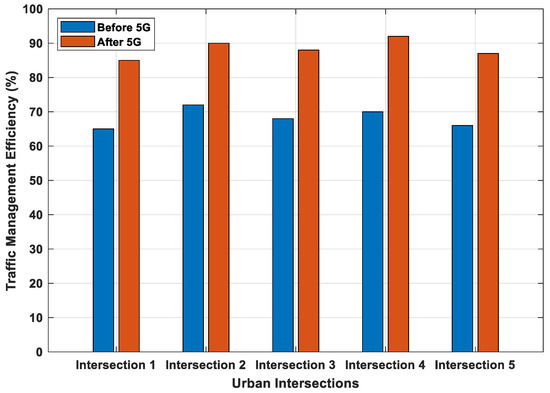
Figure 4.
5G impact on traffic management efficiency [40,42,43].
The communication latency between self-driving vehicles in Figure 5 showcases improvements necessary for efficient and reliable vehicle-to-vehicle (V2V) communication in smart cities [42,47,48,49]. Figure 5 was developed using a MATLAB simulation that models the latency performance of communication links within a network of self-driving vehicles. In the simulation, each vehicle is assigned a unique identifier, and the communication latency between every pair of vehicles is represented as a symmetric matrix, where lower values indicate faster, more responsive connections. The matrix is visualized using a heatmap to intuitively convey the intensity of latency values across the network. This visualization not only emphasizes the critical need for low-latency connections in autonomous vehicle coordination but also reflects real-world complexities where the communication performance may vary between nodes. By capturing these differences, the figure reinforces the necessity for robust, high-speed, and stable vehicle-to-vehicle (V2V) communication systems, particularly in dynamic and unpredictable urban environments. The use of a professional colormap and scaled axes enhances its interpretability. Figure 5 illustrates how 5G technology can significantly reduce communication delays through the support of a safe and synchronized operation of autonomous systems within smart cities.
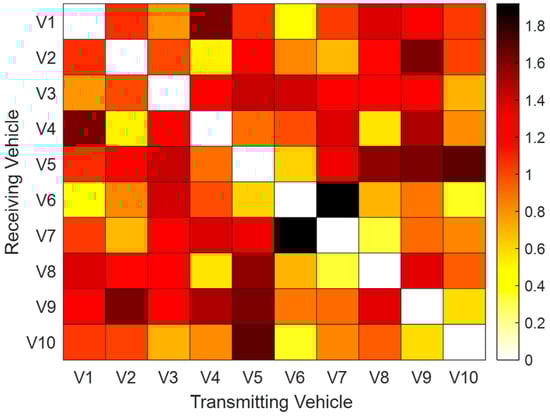
Figure 5.
Self-driving vehicle communication latency improvements [42,47,48,49].
By leveraging 5G technology, these enhancements facilitate real-time communications that are needed for coordinating autonomous vehicles [42,47,49]. This corresponds with the digital twin concept, where digital replicas of urban spaces, such as vehicles, consistently engage with real-time data to improve decision-making, traffic control, and safety [47,49]. The illustration highlights the importance of sophisticated communication networks in incorporating autonomous systems within smart city frameworks.
Public safety systems greatly gain from 5G-enabled solutions, which improve their capacity to handle emergencies and reduce risks [50,51]. 5G enables the implementation of sophisticated surveillance systems equipped with AI-driven video analysis, which can identify anomalies or suspicious behaviors instantly [52,53]. Emergency services, likewise, utilize 5G networks to create dependable communication links, ensuring quicker response times and coordination during urgent situations [50,51,52]. Wearable technology for first responders, like health monitors and location trackers, functions effortlessly on 5G networks, delivering fundamental information during rescue missions [52,53]. These systems, when integrated together, can enhance the safety and robustness of urban regions, cultivating a feeling of security among inhabitants.
A 5G-enabled emergency response communication architecture is depicted in Figure 6, illustrating the seamless connectivity between IoT devices, 5G base stations, and a central command hub [20,51,52,53]. Dashed lines represent IoT-to-base station communications for real-time data collection. Solid lines depict base station-to-hub links for centralized processing and decision-making. To provide visual clarity and contextual relevance, the background of Figure 6 was constructed using MATLAB to simulate a realistic layout of a 5G-enabled emergency communication scenario. In this visualization, multiple IoT devices, each representing various emergency responders and smart sensors, are randomly distributed within a defined urban space. These devices are algorithmically connected to their nearest 5G base stations, which serve as intermediate nodes facilitating high-speed, low-latency communication. The base stations, in turn, maintain direct links to a centralized command hub responsible for aggregating and analyzing the incoming data. This spatial and topological arrangement reflects how such networks would function in real-world smart city deployments.
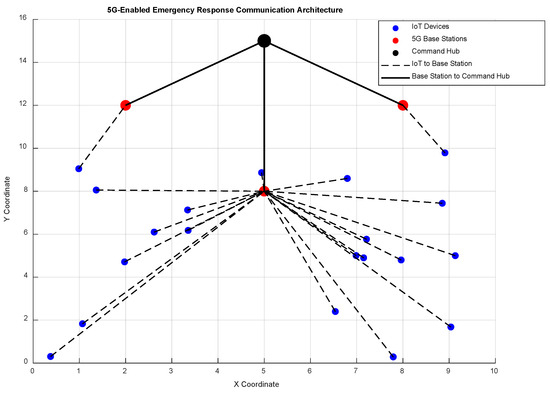
Figure 6.
5G-enabled emergency response communication architecture [20,51,52,53].
The plotted connections, color-coded nodes, and strategic placement of network components aim to capture the architecture’s efficiency and responsiveness in emergency situations. By portraying the dynamic interplay between sensing, transmission, and centralized decision-making, Figure 6 underscores the infrastructure’s role in enabling robust and scalable emergency response systems. This architecture aligns with smart cities’ objectives, where digital twins leverage such infrastructure for predictive analysis and efficient emergency management. The robust integration of IoT and 5G enhances situational awareness and rapid responsiveness, accentuating its potential in advancing urban resilience and safety [20,51].
The relationship between latency and key AI surveillance performance metrics such as accuracy and bandwidth utilization are shown in Figure 7. There are critical trade-offs in 5G network environments [51,52,53]. As the latency decreases, both the accuracy and bandwidth utilization improve, demonstrating the potential of 5G to enhance real-time responsiveness and data efficiency [20,51]. The graph presented in Figure 7 was generated using MATLAB as part of a study on AI surveillance performance metrics under 5G network conditions. The data used for its creation were manually defined rather than sourced from an empirical dataset, with the primary objective of illustrating expected trends in AI-driven systems operating under varying latency conditions. Specifically, the plotted metrics include accuracy (%) and bandwidth utilization (%), both measured as functions of latency (ms). The selected values reflect a trend-based approach, where accuracy increases with latency, potentially due to improved data processing capabilities, while bandwidth utilization also rises, likely because higher latency conditions allow for greater data transmission. These trends align with established principles in networked AI systems, where latency often influences the trade-off between computational performance and resource consumption. While the dataset is not derived from real-world measurements, it was intentionally designed to simulate plausible system behavior, making it useful for conceptual analyses. This approach enables a clear visualization of performance trends, facilitating a deeper understanding of how AI surveillance systems may interact with 5G network parameters. Real-time AI-driven surveillance systems require high precision and seamless data exchange to model, monitor, and predict urban dynamics effectively [51,52]. The adoption of low-latency 5G networks can significantly optimize AI applications, enabling smarter and more responsive urban infrastructure. By incorporating 5G into these applications, smart cities can reach an enhanced level of efficiency, sustainability, and safety.
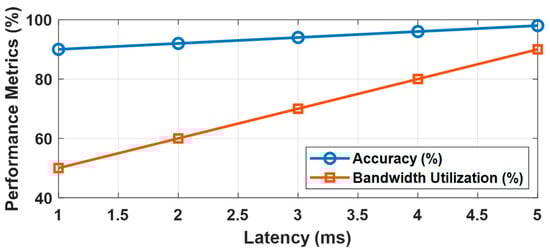
Figure 7.
AI surveillance performance metrics with 5G networks.
2.3. Limitations of Applications of 5G in Smart Cities
Although 5G technology presents exceptional possibilities for the development of smart cities, its actual application does encounter challenges. A major problem is the expensive nature of installing the necessary infrastructure [33,54]. Developing the extensive network of small cell towers needed for 5G’s high-frequency signals demands substantial financial resources [54,55]. These expenses encompass not just the setup of hardware but also continuous maintenance and improvements. This presents a hurdle for financially constrained municipalities, especially in developing areas, where financing for these initiatives competes with other urgent urban requirements [33,54,55].
Another drawback is the restricted coverage and reach of 5G signals. In contrast to earlier generations, 5G networks mainly function on millimeter-wave frequencies, offering fast data speeds but facing signal losses over long ranges and obstructions such as buildings and trees [10,15,36]. This constraint is especially challenging in urban areas, where thick infrastructure may obstruct signals and necessitate extra base stations to guarantee uninterrupted connectivity [18,32,38]. In practical terms, this indicates that obtaining dependable coverage across the entire city can be a challenging and costly endeavor [10,36].
The energy requirements of 5G networks also poses a notable constraint. The greater concentration of base stations and the elevated power demands for handling substantial amounts of data can result in increased energy use relative to 4G networks [11,20,56]. This contradicts the sustainability objectives of smart cities, which seek to minimize environmental effects. In the absence of energy-efficient technologies, the implementation of 5G may worsen urban energy problems [36,38]. Researchers are investigating options like renewable energy integration and sophisticated power-saving algorithms; however, their large-scale implementation is still a work in progress [56,57].
Concerns regarding data privacy and security also limit the extensive use of 5G in smart city applications. As the number of interconnected devices and systems expands, smart cities produce vast amounts of sensitive information [15,19,20]. The low latency and high-speed features of 5G allow for real-time data processing, yet they also widen the attack surface for cyber criminals [13,14]. Reinforcing data security in a vast and ever-changing network landscape necessitates sophisticated encryption techniques and strong cybersecurity structures, which are costly and technically intricate to deploy [36,51].
The absence of interoperability and standardization among smart city platforms obstructs the efficient use of 5G. Various vendors and service providers frequently utilize proprietary technologies, leading to compatibility challenges [13,14]. The combination of transportation systems with environmental monitoring tools might need substantial customization because of non-standard communication protocols [19,20]. This lack of consistency makes it difficult to implement extensive, integrated smart city solutions and restricts their scalability.
While 5G technology offers significant potential for smart cities, its limitations as summarized in Table 1, contribute to broader challenges in its deployment. These challenges, discussed in the next section, encompass security concerns, interoperability concerns, and the complexities of large-scale urban integration.

Table 1.
Summary of the limitations in 5G deployment for smart cities and proposed mitigations.
3. Emerging Challenges in Smart City Deployments
Building upon the limitations outlined in the previous section, this section explores the broader emerging challenges that impact the successful deployment of smart city technologies. The introduction of smart city technologies, although providing revolutionary urban management solutions, encounters various challenges that need to be resolved for their successful and extensive implementation. A key concern is scalability, especially in heavily populated city areas where millions of devices are linked through IoT systems [10,36,51]. With the rise in connected devices, network infrastructure frequently faces challenges in sustaining reliability and low latency, resulting in bottlenecks that hinder real-time decision-making abilities [32,33,35,36].
Songdo, South Korea, exemplifies a smart city that has effectively addressed the scalability challenges linked to IoT networks [58,59]. The city has incorporated millions of interconnected devices that demand significant network resources to guarantee smooth communication and instant decision-making capabilities. The infrastructure of Songdo is built to manage data from multiple sources, including smart buildings, transport networks, and environmental sensors, utilizing a strong IoT framework [58,59]. An essential approach for Songdo in addressing scalability challenges is the implementation of a collaborative communication strategy across business networks [58,59]. Through the implementation of technologies such as distributed multi-user detection systems, Songdo has greatly improved its network dependability, minimizing congestion and bottlenecks that frequently arise in densely populated metropolitan regions. This guarantees that data transition smoothly, even amidst high-demand intervals. Songdo’s method emphasizes dynamic load balancing, wherein network resources are smartly allocated according to real-time demand, enabling the city to sustain low latencies and high availability within its IoT networks [58,59]. These approaches enhance Songdo’s capacity to handle the extensive array of devices and applications in its smart city environment, showcasing how scalability can be successfully managed in highly populated urban settings. Thus, ensuring reliable connectivity in extensive IoT implementations demands significant infrastructure improvements and resource distribution [33,35,36].
The distribution of 5G infrastructure costs across key urban sectors in urban digital-twin smart cities is depicted in Figure 8. The Residential sector accounts for the largest share at 35%, followed by Commercial at 25% and Transport at 15%, reflecting the priority toward connectivity and digital services. Smaller shares are allocated to Healthcare (10%), Education (8%), and Public Services (7%), highlighting a balanced investment approach to enhance urban functionality and smart city objectives. The data used for this visualization are based on a reasonable allocation model of approximation rather than real-world empirical values to highlight key investment areas. If precise cost distributions are required, further validation using updated industry reports and financial studies would be necessary. Factors such as population density, demand for connectivity, and sector-specific digital transformation goals need to be considered for better accuracy [60,61,62]. Differences may occur due to regional variations in urban development approaches and changing rates of technology adoption. Figure 8 provides a conceptual representation of the cost distribution of 5G infrastructure across various urban sectors within the context of urban digital twins and smart cities [33,60,63,64]. The purpose of this figure is to illustrate the relative importance of different sectors in 5G deployment rather than to present an exact financial breakdown.
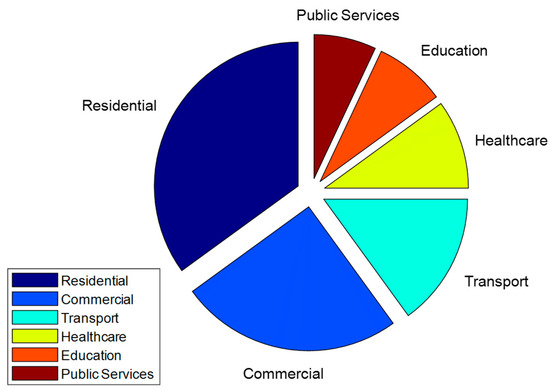
Figure 8.
5G infrastructure cost distribution across urban sectors [33,60,63,64].
Smart city infrastructure, particularly those utilizing 5G networks, require significant energy to operate base stations, edge computing devices, and user-end equipment [36,55]. As the focus on sustainability increases, it has become essential to attain energy-efficient network operations [38,51]. Studies indicate that although 5G provides enhanced data speeds and capacity, its rollout is linked to increased power consumption when compared with earlier generations [36,54,55].
Dubai, in the United Arab Emirates, has pioneered efforts to incorporate sustainable solutions into its 5G network framework, tackling the considerable energy usage linked to these advanced technologies [65,66]. With the rollout of 5G networks, the need for faster data speeds and more dependable connectivity increases, leading to a significant increase in energy requirements [36,54,55]. Dubai, however, has actively begun incorporating renewable energy sources, including solar energy, into its 5G functions [65,66]. The city has established a system whereby solar panels energize numerous 5G base stations and edge computing devices, greatly decreasing the carbon footprint of the infrastructure [65,66]. This combination not only reduces the environmental effects of 5G but also guarantees a more sustainable and energy-efficient functioning. Dubai has investigated flexible power distribution systems that modify the energy usage according to the network demand, lowering energy consumption during times of reduced traffic [65,66]. These initiatives correspond with Dubai’s larger aim of being among the most sustainable cities worldwide, while ensuring the high connectivity standards essential for a smart city [65,66]. The city’s strategy for deploying 5G in an energy-efficient manner serves as a blueprint for other urban regions aiming to harmonize technological progress with sustainability.
Options like dynamic power distribution and the integration of renewable energy are under investigation but need additional improvements and broader acceptance [19,51,54]. The energy consumption of 4G and 5G network deployments across various categories in urban digital-twin smart cities are compared in Figure 9. While 5G offers superior data speeds and connectivity, its energy demands are higher than those of 4G across residential, commercial, industrial, and public spaces [10,28,57,67]. This is attributed to the additional infrastructure required for 5G, such as a larger number of base stations and edge computing devices [57,67]. The data underscore the importance of energy-efficient solutions, including dynamic power distribution and renewable energy integration, to mitigate the sustainability challenges associated with 5G networks.
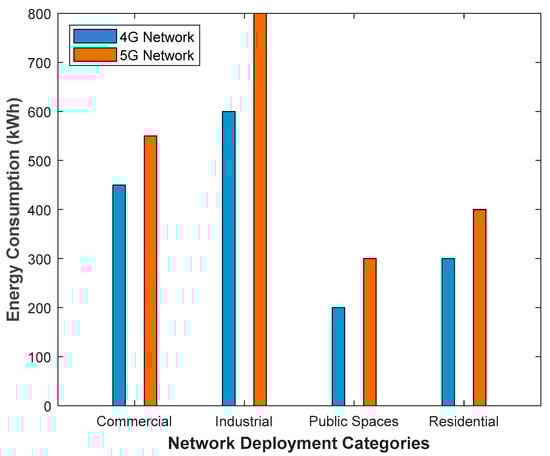
Figure 9.
Energy consumption comparison: 4G vs. 5G network deployment [10,28,57,67].
Data privacy and security present significant challenges in the operation of smart cities [37,51]. The widespread deployment of sensors and data-focused applications produces enormous amounts of confidential information, such as personal, behavioral, and environmental data. It is vital to collect, store, and process these data securely to uphold public trust [19,36]. Nonetheless, cyberattacks aimed at IoT devices and essential urban infrastructure have revealed weaknesses in existing systems [19,36,37]. The development of strong encryption systems, safe access structures, and unified threat identification processes is required to reduce these risks [36,37].
Economic and social obstacles add to the challenges of smart city projects. Introducing 5G-supported smart city solutions demands considerable financial investment in infrastructure, which may be impractical for cities in developing areas. The digital divide worsens inequalities, since economically disadvantaged groups might have restricted access to the advantages of smart city technologies. Decision-makers and city planners need to focus on inclusive strategies that promise fair access and reduce social inequalities. By prioritizing scalable and energy-saving solutions, improving cybersecurity, and promoting interoperability, smart cities can address these challenges to realize their complete potential.
4. Integrating 5G with Real-Time Digital Twins
The basic principle of digital twins revolves around generating a dynamic virtual replica of a physical system, enabling continuous synchronization between the digital and physical worlds [9,10,11]. A digital twin is built using data collected from sensors, IoT devices, and other sources, allowing it to mirror real-world conditions in real time [36,68]. Through the use of advanced analytics, simulations, and artificial intelligence, digital twins provide significant insights into system behavior, predict future states, and optimize performance. This technology has been widely adopted across industries from manufacturing and healthcare to urban planning, where it enhances decision-making, improves efficiency, and reduces operational risks [10,11].
The concept of integrating real-time digital twins into smart cities focuses on a virtual depiction of a physical entity that has surfaced as a game-changing instrument for overseeing intricate systems [9,10]. These digital representations offer an active, real-time perspective of city infrastructure, enabling urban planners and stakeholders to assess performance, anticipate problems, and model scenarios for informed decision-making [9,67]. For instance, a digital twin of an urban water distribution system could provide real-time monitoring of water pressure, consumption, and potential leakages. If a system detects a decrease in water pressure in a particular district, it can alert operators about possible leaks and recommend preemptive maintenance actions, thus minimizing downtime and saving on operational costs.
The efficiency of digital twins relies on the capacity to handle and evaluate large volumes of real-time information. This is where 5G technology is needed for the supply of fast, low-latency, and dependable connectivity to facilitate the smooth functioning of real-time digital twins [10,37,62]. In practice, this means that 5G networks enable faster data transfer between IoT devices (such as sensors and actuators) and digital twin systems, which is needed for applications like autonomous traffic management, real-time disaster response, and energy-grid balancing. For example, 5G enables smart traffic systems that control traffic signals based on current traffic patterns and sensor inputs possess the capability to significantly reduce road congestion and travel time during peak hours.
The 5G network architecture for real-time digital twin infrastructure represented in Figure 10 shows the key components and their interconnections. At the core of this architecture is the Core Network (blue), which serves as the central hub; this manages the data traffic and links with the Radio Access Network (RAN) (green) to facilitate wireless communication [10,60,63]. The Core Network controls essential functions such as authentication, security, mobility management, and data routing, thus ensuring that different digital twin applications operate seamlessly across multiple connected devices and services.
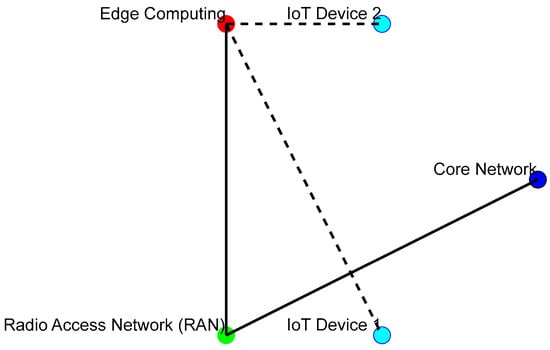
Figure 10.
5G network architecture for real-time digital twin infrastructure [9,10,67].
A fundamental component of this architecture is Edge Computing (red), which is strategically placed close to IoT devices (cyan) to allow for real-time data processing with minimal latency. Unlike traditional cloud computing, where all the data are sent to centralized data centers for processing, edge computing enables computations to occur at network edges, reducing the time needed for data transmission. This radically improves response times, making real-time digital twins highly effective for applications that demand instant decision-making, such as autonomous traffic control, emergency responses, and smart energy management [10,37,60,63].
In a real-time traffic management system, for instance, sensors embedded in roads and traffic lights continuously collect data about vehicle density, pedestrian movement, and environmental conditions. These data are processed at the edge, where AI algorithms can immediately adjust traffic signals to prioritize emergency vehicles and optimize road usage, thereby reducing congestion [9,10,37]. Similarly, in disaster management, edge computing provides instant flood detection by analyzing water level sensors in real time and sending alerts to local authorities before major damage can occur.
The network connections in this architecture, as depicted in Figure 10, are categorized into solid lines and dashed lines to represent the different types of data exchanges. Solid lines represent the direct connections between the Core Network, RAN, and Edge Computing, illustrating that the backbone infrastructure of 5G is stable and capable of handling high-bandwidth and low-latency communication. Dashed lines represent the real-time data flow from Edge Computing to IoT devices to enable bidirectional communication. This is critical for applications that require continuous feedback loops, such as predictive maintenance in smart factories and real-time air-quality monitoring in urban areas.
This 5G-enabled architecture supports real-time data management and processing, which is a requirement for the efficient operation of digital twins. By harnessing the advanced capabilities of 5G technology, particularly its three key attributes, which consist of ultra-reliable low-latency communication (URLLC), massive machine-type communication (mMTC), and enhanced mobile broadband (eMBB), smart cities can successfully deploy and scale real-time digital twin systems with remarkable accuracy and responsiveness [9,10,37,62,67].
Ultra-reliable low-latency communication (URLLC) ensures that digital twin applications requiring instantaneous data transmission, such as autonomous traffic control, remote healthcare, and industrial automation, can operate with minimal delays [9,62,67]. This is vital in situations such as connected vehicle networks, where even milliseconds of communication delay between vehicles and traffic management systems can have a significant impact on road safety and congestion control.
Massive machine-type communication (mMTC) supports the simultaneous connectivity of billions of IoT devices, such as smart sensors, surveillance cameras, environmental monitors, and infrastructure-tracking systems [9,67]. In a smart city, this capability enables large-scale data collection from numerous sources, ensuring that digital twins can comprehensively analyze urban conditions, identify anomalies, and optimize city operations in real time.
Enhanced mobile broadband (eMBB) delivers high-speed, high-bandwidth connectivity, allowing digital twins to process and visualize complex datasets, 3D models, and high-definition simulations without delays [62,67]. This is especially advantageous for virtual city planning, augmented reality (AR) applications, and overseeing infrastructure remotely, enabling urban planners and stakeholders to evaluate possible developments, model disaster situations, and make informed decisions effectively.
Through the integration of these 5G features, smart cities can effortlessly link, oversee, and control extensive digital twin ecosystems, enabling proactive choices, better resource distribution, and strengthened urban resilience in multiple domains like transportation, energy, public safety, and environmental management [62,67].
One of the key best practices in designing 5G-enabled digital twin architectures is network slicing, which partitions the 5G Core Network into multiple virtual networks, each optimized for specific use cases. High-speed, low-latency slices can be allocated to autonomous vehicle networks, providing real-time navigation and enhanced safety through the minimization of communication delays [62,67,69,70]. Large IoT segments can aid sensor networks within the public infrastructure by continuously tracking building integrity, air quality, and water supply systems to improve urban governance [67,69,70]. High-security slices or segments may be designated for governmental functions and emergency response systems, ensuring uninterrupted communication during critical events [62,67,70].
A highly promising use of this architecture is in smart grids, where digital twins of power distribution networks assess voltage variations, energy requirements, and equipment efficiency in real time [40,47,62,71]. By integrating 5G with edge computing, utility providers can detect faults in power lines, predict maintenance needs, and optimize energy distribution, leading to higher efficiency and reduced downtime. For example, when a transformer shows initial signs of malfunction, the digital twin can initiate preventive maintenance, avoiding expensive outages and maintaining a consistent and dependable electricity supply for consumers.
The 5G network architecture for real-time digital twin infrastructure serves as the foundation of advanced smart city environments, facilitating improved efficiency, flexibility, and durability in urban planning and management [9,10,37,62,67]. The integration of high-speed wireless communication, edge computing, and sophisticated data processing allows digital twins to actively engage with their physical equivalents, facilitating data-driven decision-making in diverse industries, including transportation, healthcare, energy, and security.
A major advantage of integrating 5G with digital twins is its capacity to support expansive IoT ecosystems with high-density connectivity and real-time data processing [37,67]. Modern smart cities rely on a vast network of interconnected sensors, cameras, autonomous vehicles, and smart grids that continuously generate and exchange data. The ultra-reliable, low-latency capabilities of 5G ensure that these digital twins receive accurate, real-time updates, enhancing their ability to simulate, predict, and optimize urban systems efficiently [10,55,71]. For instance, 5G-powered digital twins of traffic systems can dynamically analyze sensor data from intersections, vehicles, and pedestrian crossings to modify signal timings, reroute traffic, and prevent congestion in real time [40,47,62,71].
Beyond traffic management, 5G enables edge computing to offload processing tasks from central servers, reducing delays and improving response times for critical urban services. This distributed approach is especially beneficial for applications such as disaster management, where edge-based digital twins of emergency infrastructure can rapidly identify threats, optimize resource allocation, and trigger automated emergency responses within seconds [10,71]. One particularly transformative use case is in urban water management. A real-time digital twin of a city’s water distribution system can monitor pressure fluctuations, contamination levels, and leaks, identifying anomalies that may indicate pipe bursts or contamination risks. When integrated with automated control systems, these digital twins can isolate affected areas, reroute the water supply, and dispatch maintenance crews proactively, reducing disruptions and preventing resource wastage [62,67].
The significant reduction in latency achieved by edge computing compared with traditional cloud-based processing within the context of urban digital twins for smart cities is illustrated in Figure 11. As shown, edge computing (blue line) results in a lower latency across various time steps, enhancing the efficiency of real-time data processing. This reduction in latency is critical for improving the responsiveness and overall performance of smart city applications, enabling faster decision-making and better urban management [44,69,70].
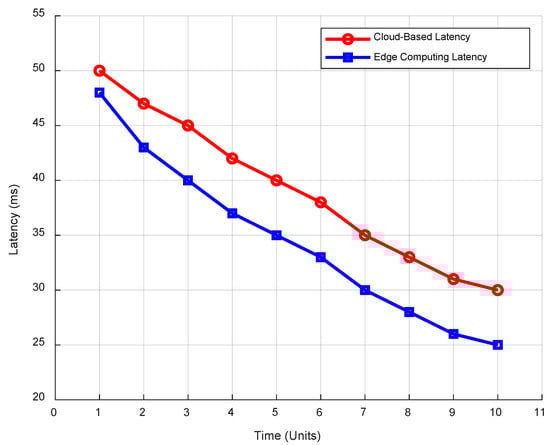
Figure 11.
Edge computing latency reduction in urban digital twins [44,69,70].
Another potential application lies in infrastructure upkeep and predictive analysis. By utilizing 5G-powered digital twins, urban areas can consistently track the status of roads, bridges, and structures [9,10]. By examining patterns in sensor data, the digital twin can foresee possible failures, arrange maintenance in advance, and avert expensive repairs or disastrous incidents [62,67]. This forecasting ability not only prolongs the duration of infrastructure but also improves public safety and lowers long-term operational expenses [36,37,55,71].
Despite its vast potential, the widespread adoption of 5G-powered digital twins comes with significant technical and operational challenges. Deploying high-performance computing resources, secure network infrastructure, and interoperable digital twin frameworks demands substantial investment [69,70,71]. Since real-time digital twins rely on sensitive urban and personal data, ensuring robust cybersecurity measures, encryption protocols, and compliance with data privacy regulations is crucial. Overcoming these challenges is essential to unlocking the full potential of digital twins and realizing the vision of truly intelligent self-optimizing cities [69,70]. By enabling seamless data-driven urban management, the synergy between 5G and digital twins is set to redefine the future of smart cities, enhancing efficiency, sustainability, and quality of life for millions of urban residents.
5. Technological and Policy Recommendations
The effective implementation of 5G in smart cities necessitates a strategic blend of technological progress and policy measures. Certain measures must be considered to promote a smooth, safe, and sustainable incorporation of 5G technology into city landscapes. By addressing key challenges such as infrastructure investment, interoperability, energy efficiency, cybersecurity, data privacy, and stakeholder collaboration, cities can maximize the benefits of 5G while minimizing potential risks.
One of the foremost challenges to 5G implementation is the extensive infrastructure investment required for its deployment. Unlike previous generations of wireless technology, 5G depends on a dense network of small cell towers, fiber-optic cables, and advanced backhaul connections to deliver ultra-low latency and high-speed data transmission [10,29,51]. These components necessitate significant financial investments from both public and private sectors. Without adequate investment, 5G coverage will remain limited to major urban areas, exacerbating the digital divide and leaving rural and underserved communities without access to critical smart city services [36,71].
To address this challenge, governments need to establish policies that encourage infrastructure sharing among service providers to reduce costs and to accelerate deployment. Financial incentives such as tax breaks, subsidies, and public–private partnerships can significantly contribute to attracting investment in 5G infrastructure. Regulatory frameworks should be streamlined to facilitate faster approvals for small-cell deployment in urban areas, reducing bureaucratic hurdles that often delay implementation.
Interoperability between 5G and existing communication networks is crucial for the provision of seamless connectivity across different smart city applications. In the absence of standardization, the merging of 5G with existing systems like 4G LTE, Wi-Fi, and IoT networks may result in inefficiencies, higher expenses, and fragmented systems [13,14]. The establishment of global and national standards for 5G interoperability can ensure that smart city ecosystems function cohesively, allowing diverse technologies to communicate effectively [32,38].
A communication protocol standardization roadmap is essential for achieving interoperability in complex digital ecosystems, particularly within smart cities and urban digital twins [68,72,73]. By establishing a structured roadmap, stakeholders can systematically identify gaps in existing standards, test and refine communication frameworks, and implement scalable solutions that support future advancements [68,72,73]. This approach fosters consistency, reduces fragmentation, and promotes collaboration between industry players, regulatory bodies, and technology developers, ultimately enabling a more unified and efficient smart city infrastructure.
The Communication Protocol Standardization Roadmap presented in Figure 12 is a conceptual framework designed to illustrate the possible progression of communication protocol standardization within urban digital twins. The roadmap was generated based on insights from existing research and general projections within the field of smart cities and communication systems rather than being based on specific empirical data. The hypothetical roadmap delineates four distinct phases: Exploration (2024), where gaps in existing standards are identified; Pilot (2026), involving the development and testing of pilot projects; Implementation (2028), marking the deployment of standardized protocols across smart city systems; and Optimization (2030), focusing on iterative enhancements and scalability to adapt to emerging technologies [68,72,73]. Each phase is strategically aligned to address critical milestones, such as stakeholder collaboration, scalability testing, and interoperability, ensuring a cohesive progression toward achieving a robust and standardized communication framework [68,73].
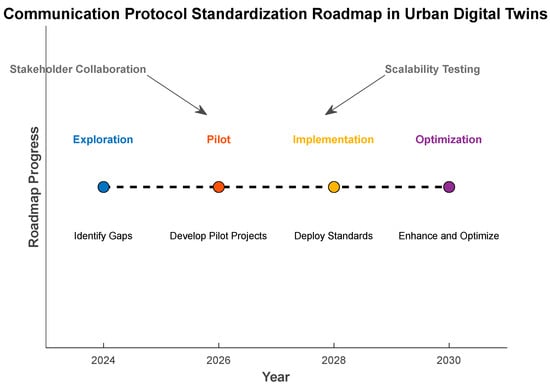
Figure 12.
Communication protocol standardization roadmap [68,72,73].
The high energy consumption of 5G networks poses a significant challenge for cities striving to meet sustainability goals [10,34,51]. Unlike previous network generations, 5G requires a greater number of base stations operating at higher frequencies, leading to increased power consumption. To mitigate the environmental impact of widespread 5G deployment, smart cities must integrate energy-efficient technologies into their network infrastructure.
One approach is to leverage renewable energy sources, such as solar and wind power, to power 5G base stations, decreasing the dependence on fossil fuels. Advancements in energy-efficient hardware, such as dynamic power-saving mechanisms in network equipment, can optimize power usage based on real-time demand [36,38]. Another vital approach is AI-based network optimization, where machine learning algorithms predict and adjust network loads dynamically to minimize unnecessary energy consumption. By adopting these strategies, cities can synchronize 5G growth with worldwide sustainability initiatives, lowering carbon emissions while maintaining high-performance connectivity.
The extensive connectivity enabled by 5G increases the risk of cyber threats that could compromise essential urban infrastructure. Cyberattacks on 5G networks can disrupt critical services such as transportation systems, healthcare facilities, and energy grids, leading to severe societal and economic consequences [33,60]. As smart cities become increasingly dependent on interconnected devices, robust cybersecurity frameworks must be implemented to safeguard sensitive data and to ensure system resilience [3,30].
A comprehensive cybersecurity framework for 5G networks integrates firewalls, real-time threat detection, and end-to-end encryption. Advanced encryption techniques, including quantum-safe cryptography, protect data from cyber threats, while AI-driven intrusion detection systems proactively detect and mitigate security breaches [36,51]. Beyond technology, stringent regulatory policies and regular vulnerability assessments ensure compliance with best practices. Public awareness initiatives further strengthen security by promoting responsible digital practices among individuals and businesses.
The interconnected framework of cybersecurity risk mitigation strategies in 5G networks within urban digital-twin smart cities is depicted in Figure 13. Key nodes, including the 5G tower, data center, IoT devices, and urban control center, represent critical system components that are interconnected through cybersecurity measures [11,74,75]. The dashed lines signify secure communication links, emphasizing the importance of robust encryption and real-time monitoring. Annotations highlight strategies such as firewalls, threat detection, and data encryption, which safeguard against vulnerabilities in the network [76,77]. The layout underscores the centrality of 5G infrastructure in enabling seamless communication and control in urban digital twins while showcasing the layered defense mechanisms necessary to protect sensitive data and to ensure system resilience against cyber threats [75,76,77].
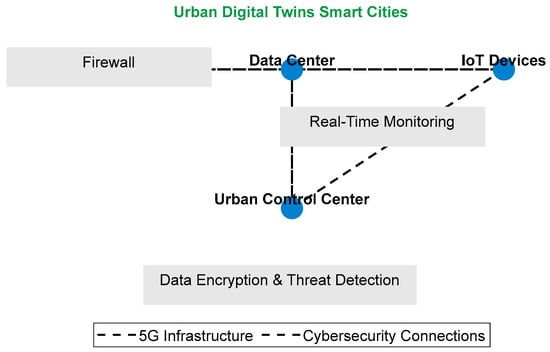
Figure 13.
Cybersecurity risk mitigation strategies in 5G networks [11,74,75,76].
The proliferation of 5G networks in smart cities that are capable of generating vast amounts of personal and operational data raises concerns regarding data privacy and ethical data usage [51,77]. Without clear regulations, there is a risk of unauthorized data collection, misuse, and potential violations of individual privacy rights.
To address these challenges, policymakers must establish comprehensive data protection frameworks that define how data are collected, stored, and utilized within smart city ecosystems [11,75]. Regulations should make provisions for data anonymization, ensuring that personal information remains secure while still enabling data-driven decision-making [75,77]. Individuals should have greater control over their data, with mechanisms such as explicit consent protocols and opt-in policies for data collection.
Ethical considerations must also be considered, ensuring that 5G-powered smart city applications align with societal values [11,75,77]. This consists of addressing potential biases in AI-driven decision-making systems and ensuring transparency in how algorithms process urban data. By implementing robust data privacy laws, cities can build public trust in smart city initiatives and encourage the widespread adoption of 5G-enabled services.
The successful rollout of 5G in smart cities requires collaboration between governments, private sector stakeholders, and research institutions. Public–private partnerships (PPPs) are essential for addressing financial and technical barriers, enabling quicker and more efficient deployment of 5G infrastructure [10,68]. Governments can facilitate PPPs by offering incentive-based collaboration models, where private companies invest in infrastructure in exchange for long-term operational benefits. Joint research initiatives between academia and industry can also drive innovation, leading to the development of novel 5G applications tailored to urban needs. Cross-sector partnerships can promote shared infrastructure models, where multiple network operators utilize the same physical infrastructure, reducing redundancy and lowering deployment costs [68,75,77]. By fostering an ecosystem of cooperation, cities can accelerate the transition to 5G while ensuring that technological advancements benefit all stakeholders.
By tackling crucial technological and policy needs, smart cities can leverage the complete capabilities of 5G to elevate urban life, boost efficiency, and encourage sustainability. Investments in infrastructure, efforts to promote standardization, energy-saving solutions, cybersecurity measures, data privacy laws, and strategic collaborations must all function together to build an inclusive and robust urban ecosystem powered by 5G technology. By achieving the ideal mix of innovation and governance, urban areas can evolve into genuinely smart environments that provide fair access to advanced digital services.
6. Conclusions and Future Recommendations
In conclusion, this research has emphasized the essential importance of 5G technology in facilitating the real-time integration of digital twins in smart cities. Digital twins driven by the high-speed connectivity and low-latency features of 5G offer an enhanced framework for live urban monitoring, predictive analytics, and effective decision-making. By aligning virtual models with actual city infrastructure, municipalities can enhance resource allocation, improve disaster management plans, and boost service delivery. Nonetheless, achieving a smooth integration involves tackling problems related to data interoperability, security, and energy efficiency. Consistent advancements in 5G infrastructure, along with standardized frameworks for digital twin deployment, will be vital to realizing the full potential of this technology in urban development.
In comparison with current state-of-the-art smart city implementations, the proposed integration of 5G with digital twins provides a more dynamic and scalable approach to urban management. Traditional smart city systems often rely on fragmented IoT networks and delayed data processing via centralized cloud infrastructure, which limit their responsiveness and flexibility. In contrast, the 5G-powered digital twin model enables near-instantaneous data synchronization and simulation, allowing for real-time monitoring, predictive maintenance, and rapid decision-making. This marks a significant shift from reactive to proactive urban governance. The proposed model emphasizes interoperability and system-wide integration, areas where existing frameworks frequently fall short due to siloed architectures and non-standardized protocols. Thus, the proposed approach not only builds on the strengths of existing smart city technologies but also addresses key limitations through enhanced connectivity and virtual replication.
Beyond digital twin integration, 5G technology offers unparalleled capabilities in enhancing smart city development. Its ability to support large-scale IoT deployments, facilitate real-time communication, and enable edge computing contributes to advancements in urban infrastructure, public safety, and intelligent transportation systems. The integration of 5G with innovative technologies, such as digital twins, fosters the development of more adaptive and responsive urban ecosystems. Real-time data processing and simulations enabled by 5G networks allow cities to proactively manage resources, anticipate infrastructure challenges, and optimize critical services.
Despite these advantages, the deployment and scaling of 5G networks present challenges, particularly concerning energy efficiency, security, and data privacy. As cities embrace these technologies, addressing these challenges will be eminent in facilitating the sustainable and equitable growth of smart cities. There is a need for more comprehensive policy frameworks that can guide the ethical use of data and regulate the rapid growth of 5G-powered services.
Future research should explore the integration of 5G with emerging technologies such as artificial intelligence (AI) and machine learning (ML) to enhance the decision-making capabilities of smart cities. The development of robust standards and guidelines for data privacy, network security, and cross-sector collaboration is needed for the successful implementation of 5G-powered smart cities. As these technologies evolve, further studies on the socioeconomic impacts of 5G deployment will also be necessary to promote fair access and to prevent widening digital disparities in cities.
Author Contributions
Conceptualization, A.S.M. and A.K.S.; methodology, A.S.M.; software, A.S.M.; validation, A.S.M. and A.K.S.; formal analysis, A.S.M.; investigation, A.S.M.; resources, A.K.S.; data curation, A.S.M.; writing—original draft preparation, A.S.M.; writing—review and editing, A.S.M. and A.K.S.; visualization, A.S.M. and A.K.S.; supervision, A.K.S.; project administration, A.K.S.; funding acquisition, A.K.S. All authors have read and agreed to the published version of the manuscript.
Funding
This research received no external funding.
Data Availability Statement
No new data were created or analyzed in this study.
Conflicts of Interest
The authors declare no conflict of interest.
References
- Trindade, E.P.; Hinnig, M.P.F.; da Costa, E.M.; Marques, J.S.; Bastos, R.C.; Yigitcanlar, T. Sustainable development of smart cities: A systematic review of the literature. J. Open Innov. Technol. Mark. Complex. 2017, 3, 1–14. [Google Scholar] [CrossRef]
- Stratigea, A.; Papadopoulou, C.-A.; Panagiotopoulou, M. Tools and technologies for planning the development of smart cities. J. Urban Technol. 2015, 22, 43–62. [Google Scholar] [CrossRef]
- Korczak, J.; Kijewska, K. Smart Logistics in the development of Smart Cities. Transp. Res. Procedia 2019, 39, 201–211. [Google Scholar] [CrossRef]
- Stratigea, A. The concept of ‘smart cities’. Towards community development? Netcom. Réseaux Commun. Territ. 2012, 26, 375–388. [Google Scholar] [CrossRef]
- Islam, S.; Atallah, Z.A.; Budati, A.K.; Hasan, M.K.; Kolandaisamy, R.; Nurhizam, S. Mobile Networks Toward 5G/6G: Network Architecture, Opportunities and Challenges in Smart City. IEEE Open, J. Commun. Soc. 2024, 1. [Google Scholar] [CrossRef]
- Mishra, P.; Thakur, P.; Singh, G. Sustainable Smart City to Society 5.0: State-of-the-Art and Research Challenges. SAIEE Afr. Res. J. 2022, 113, 152–164. [Google Scholar] [CrossRef]
- Gür, G.; Kalla, A.; De Alwis, C.; Pham, Q.-V.; Ngo, K.-H.; Liyanage, M.; Porambage, P. Integration of ICN and MEC in 5G and beyond networks: Mutual benefits, use cases, challenges, standardization, and future research. IEEE Open, J. Commun. Soc. 2022, 3, 1382–1412. [Google Scholar] [CrossRef]
- Hofmann, F.; Wurster, S.; Ron, E.; Böhmecke-Schwafert, M. The immutability concept of blockchains and benefits of early standardization. In Proceedings of the 2017 ITU Kaleidoscope: Challenges for a Data-Driven Society (ITU K), Nanjing, China, 27–29 November 2017; pp. 1–8. [Google Scholar]
- Ferré-Bigorra, J.; Casals, M.; Gangolells, M. The adoption of urban digital twins. Cities 2022, 131, 103905. [Google Scholar] [CrossRef]
- Al-Sehrawy, R.; Kumar, B.; Watson, R. The pluralism of digital twins for urban management: Bridging theory and practice. J. Urban Manag. 2023, 12, 16–32. [Google Scholar] [CrossRef]
- Rodrigo, M.S.; Rivera, D.; Moreno, J.I.; Àlvarez-Campana, M.; López, D.R. Digital twins for 5G networks: A modeling and deployment methodology. IEEE Access 2023, 11, 38112–38126. [Google Scholar] [CrossRef]
- Nguyen, H.X.; Trestian, R.; To, D.; Tatipamula, M. Digital twin for 5G and beyond. IEEE Commun. Mag. 2021, 59, 10–15. [Google Scholar] [CrossRef]
- Erunkulu, O.O.; Zungeru, A.M.; Lebekwe, C.K.; Mosalaosi, M.; Chuma, J.M. 5G mobile communication applications: A survey and comparison of use cases. IEEE Access 2021, 9, 97251–97295. [Google Scholar] [CrossRef]
- Navarro-Ortiz, J.; Romero-Diaz, P.; Sendra, S.; Ameigeiras, P.; Ramos-Munoz, J.J.; Lopez-Soler, J.M. A survey on 5G usage scenarios and traffic models. IEEE Commun. Surv. Tutor. 2020, 22, 905–929. [Google Scholar] [CrossRef]
- Jabagi, N.; Park, A.; Kietzmann, J. The 5G Revolution: Expectations versus reality. IT Prof. 2020, 22, 8–15. [Google Scholar] [CrossRef]
- Loghin, D.; Cai, S.; Chen, G.; Dinh, T.T.A.; Fan, F.; Lin, Q.; Ng, J.; Ooi, B.C.; Sun, X.; Ta, Q.-T. The disruptions of 5G on data-driven technologies and applications. IEEE Trans. Knowl. Data Eng. 2020, 32, 1179–1198. [Google Scholar] [CrossRef]
- Yang, Y.; Hua, K. Emerging technologies for 5G-enabled vehicular networks. IEEE Access 2019, 7, 181117–181141. [Google Scholar] [CrossRef]
- Tang, Y.; Dananjayan, S.; Hou, C.; Guo, Q.; Luo, S.; He, Y. A survey on the 5G network and its impact on agriculture: Challenges and opportunities. Comput. Electron. Agric. 2021, 180, 105895. [Google Scholar] [CrossRef]
- Gharaibeh, A.; Salahuddin, M.A.; Hussini, S.J.; Khreishah, A.; Khalil, I.; Guizani, M.; Al-Fuqaha, A. Smart cities: A survey on data management, security, and enabling technologies. IEEE Commun. Surv. Tutor. 2017, 19, 2456–2501. [Google Scholar] [CrossRef]
- Akpakwu, G.A.; Silva, B.J.; Hancke, G.P.; Abu-Mahfouz, A.M. A survey on 5G networks for the Internet of Things: Communication technologies and challenges. IEEE Access 2017, 6, 3619–3647. [Google Scholar] [CrossRef]
- 3GPP TR 38.913, Study on Scenarios and Requirements for Next Generation Access Technologies. 3rd Generation Partnership Project. 14 March 2017. Available online: https://www.3gpp.org/ftp/Specs/archive/38_series/38.913/ (accessed on 23 December 2024).
- ITU-R M.2083-0, IMT Vision—Framework for Future IMT for 2020 and Beyond. ITU (International Telecommunication Union). September 2015. Available online: https://www.itu.int/pub/R-REP-M.2083-2015 (accessed on 24 December 2024).
- Ericsson. Ericsson Mobility Report. June 2023. Available online: https://www.ericsson.com/en/reports-and-papers/mobility-report (accessed on 25 December 2024).
- Qualcomm. Qualcomm 5G Latency Analysis: A Technical Overview. 2020. Available online: https://www.qualcomm.com/research/5g (accessed on 28 December 2024).
- 3GPP TR 22.891, Feasibility Study on New Services and Markets Technology Enablers for 5G. 14 September 2016. Available online: https://www.3gpp.org/ftp/Specs/archive/22_series/22.891/ (accessed on 28 December 2024).
- Cisco. Cisco Annual Internet Report (2023–2028). March 2023. Available online: https://www.cisco.com/c/en/us/solutions/executive-perspectives/annual-internet-report/index.html (accessed on 28 December 2024).
- GSMA. 5G and IoT: The Path to 1 Million Devices per Square Kilometer. GSMA Intelligence Report. July 2022. Available online: https://www.gsma.com/futurenetworks/ (accessed on 2 January 2025).
- Foukas, X.; Patounas, G.; Elmokashfi, A.; Marina, M.K. Network slicing in 5G: Survey and challenges. IEEE Commun. Mag. 2017, 55, 94–100. [Google Scholar] [CrossRef]
- Li, X.; Samaka, M.; Chan, H.A.; Bhamare, D.; Gupta, L.; Guo, C.; Jain, R. Network slicing for 5G: Challenges and opportunities. IEEE Internet Comput. 2017, 21, 20–27. [Google Scholar] [CrossRef]
- Wijethilaka, S.; Liyanage, M. Survey on network slicing for Internet of Things realization in 5G networks. IEEE Commun. Surv. Tutor. 2021, 23, 957–994. [Google Scholar] [CrossRef]
- Ravindran, R.; Chakraborti, A.; Amin, S.O.; Azgin, A. 5G-ICN: Delivering ICN services over 5G using network slicing. IEEE Commun. Mag. 2017, 55, 101–107. [Google Scholar] [CrossRef]
- Yang, C.; Liang, P.; Fu, L.; Cui, G.; Huang, F.; Teng, F.; Bangash, Y.A. Using 5G in smart cities: A systematic mapping study. Intell. Syst. Appl. 2022, 14, 200065. [Google Scholar] [CrossRef]
- Shehab, M.J.; Kassem, I.; Kutty, A.A.; Kucukvar, M.; Onat, N.; Khattab, T. 5G networks towards smart and sustainable cities: A review of recent developments, applications and future perspectives. IEEE Access 2021, 10, 2987–3006. [Google Scholar] [CrossRef]
- Santos, J.; Leroux, P.; Wauters, T.; Volckaert, B.; De Turck, F. Anomaly detection for smart city applications over 5g low power wide area networks. In Proceedings of the NOMS 2018—2018 IEEE/IFIP Network Operations and Management Symposium, Taipei, Taiwan, 23–27 April 2018; pp. 1–9. [Google Scholar]
- Dua, A.; Dutta, A.; Zaman, N.; Kumar, N. Blockchain-based E-waste management in 5G smart communities. In Proceedings of the IEEE INFOCOM 2020—IEEE Conference on Computer Communications Workshops (INFOCOM WKSHPS), Toronto, ON, Canada, 6–9 July 2020; pp. 195–200. [Google Scholar]
- Banda, L.; Mzyece, M.; Mekuria, F. 5G-IoT and Sustainability: Smart City Use Case. In Proceedings of the 2024 IEEE 100th Vehicular Technology Conference (VTC2024-Fall), Washington, DC, USA, 7–10 October 2024; pp. 1–5. [Google Scholar]
- Lv, Z.; Hu, B.; Lv, H. Infrastructure monitoring and operation for smart cities based on IoT system. IEEE Trans. Ind. Inform. 2019, 16, 1957–1962. [Google Scholar] [CrossRef]
- Bacco, M.; Delmastro, F.; Ferro, E.; Gotta, A. Environmental monitoring for smart cities. IEEE Sens. J. 2017, 17, 7767–7774. [Google Scholar] [CrossRef]
- Segura-Garcia, J.; Calero, J.M.A.; Pastor-Aparicio, A.; Marco-Alaez, R.; Felici-Castell, S.; Wang, Q. 5G IoT system for real-time psycho-acoustic soundscape monitoring in smart cities with dynamic computational offloading to the edge. IEEE Internet Things, J. 2021, 8, 12467–12475. [Google Scholar] [CrossRef]
- Elassy, M.; Al-Hattab, M.; Takruri, M.; Badawi, S. Intelligent transportation systems for sustainable smart cities. Transp. Eng. 2024, 16, 100252. [Google Scholar] [CrossRef]
- Mamun, M.I.; Rahman, A.; Khaleque, M.A.; Mridha, M.F.; Hamid, M.A. Healthcare monitoring system inside self-driving smart car in 5G cellular network. In Proceedings of the 2019 IEEE 17th International Conference on Industrial Informatics (INDIN), Helsinki, Finland, 22–25 July 2019; Volume 1, pp. 1515–1520. [Google Scholar]
- Hakak, S.; Gadekallu, T.R.; Maddikunta, P.K.R.; Ramu, S.P.; Parimala, M.; De Alwis, C.; Liyanage, M. Autonomous Vehicles in 5G and beyond: A Survey. Veh. Commun. 2023, 39, 100551. [Google Scholar] [CrossRef]
- Khorov, E.; Krasilov, A.; Selnitskiy, I.; Akyildiz, I.F. A framework to maximize the capacity of 5G systems for ultra-reliable low-latency communications. IEEE Trans. Mob. Comput. 2020, 20, 2111–2123. [Google Scholar] [CrossRef]
- Sutton, G.J.; Zeng, J.; Liu, R.P.; Ni, W.; Nguyen, D.N.; Jayawickrama, B.A.; Huang, X.; Abolhasan, M.; Zhang, Z.; Dutkiewicz, E. Enabling technologies for ultra-reliable and low latency communications: From PHY and MAC layer perspectives. IEEE Commun. Surv. Tutor. 2019, 21, 2488–2524. [Google Scholar] [CrossRef]
- Holmes, C.K. South Africa’s Readiness of the Smart Built Environment Towards 2035; Nelson Mandela University, Faculty of Business and Economic Sciences: Gqeberha, South Africa, 2019. [Google Scholar]
- Duca, F.; Mutua, A.; Tetley-Brown, L.; Karuri-Sebina, G.; Backhouse, J. Smart cities governance in the Southern African Development Community (SADC) region: A systematic review of the literature. Res. Sq. 2024. [Google Scholar] [CrossRef]
- Aoki, S.; Rajkumar, R. Dynamic intersections and self-driving vehicles. In Proceedings of the 2018 ACM/IEEE 9th International Conference on Cyber-Physical Systems (ICCPS), Porto, Portugal, 11–13 April 2018; pp. 320–330. [Google Scholar]
- Panwar, S. Breaking the millisecond barrier: Robots and self-driving cars will need completely reengineered networks. IEEE Spectr. 2020, 57, 44–49. [Google Scholar] [CrossRef]
- Ndikumana, A.; Tran, N.H.; Kim, K.T.; Hong, C.S. Deep learning based caching for self-driving cars in multi-access edge computing. IEEE Trans. Intell. Transp. Syst. 2020, 22, 2862–2877. [Google Scholar] [CrossRef]
- Ramu, S.P.; Boopalan, P.; Pham, Q.-V.; Maddikunta, P.K.R.; Huynh-The, T.; Alazab, M.; Nguyen, T.T.; Gadekallu, T.R. Federated learning enabled digital twins for smart cities: Concepts, recent advances, and future directions. Sustain. Cities Soc. 2022, 79, 103663. [Google Scholar] [CrossRef]
- Ali, K.; Nguyen, H.X.; Vien, Q.-T.; Shah, P.; Raza, M.; Paranthaman, V.V.; Er-Rahmadi, B.; Awais, M.; ul Islam, S.; Rodrigues, J.J. Review and implementation of resilient public safety networks: 5G, IoT, and emerging technologies. IEEE Netw. 2021, 35, 18–25. [Google Scholar] [CrossRef]
- Sheraz, M.; Chuah, T.C.; Lee, Y.L.; Alam, M.M.; Al-Habashna, A.A.; Han, Z. A Comprehensive Survey on Revolutionizing Connectivity Through Artificial Intelligence-Enabled Digital Twin Network in 6G. IEEE Access 2024, 12, 49184–49215. [Google Scholar] [CrossRef]
- Wang, S.; Qureshi, M.A.; Miralles-Pechuán, L.; Huynh-The, T.; Gadekallu, T.R.; Liyanage, M. Explainable AI for 6G Use Cases: Technical Aspects and Research Challenges. IEEE Open, J. Commun. Soc. 2024, 5, 2490–2540. [Google Scholar] [CrossRef]
- Banerjee, A.; Costa, B.; Forkan, A.R.M.; Kang, Y.-B.; Marti, F.; McCarthy, C.; Ghaderi, H.; Georgakopoulos, D.; and Jayaraman, P.P. 5G enabled smart cities: A real-world evaluation and analysis of 5G using a pilot smart city application. Internet Things 2024, 28, 101326. [Google Scholar] [CrossRef]
- Agiwal, M.; Roy, A.; Saxena, N. Next generation 5G wireless networks: A comprehensive survey. IEEE Commun. Surv. Tutor. 2016, 18, 1617–1655. [Google Scholar] [CrossRef]
- Wu, Q.; Li, G.Y.; Chen, W.; Ng, D.W.K.; Schober, R. An overview of sustainable green 5G networks. IEEE Wirel. Commun. 2017, 24, 72–80. [Google Scholar] [CrossRef]
- Williams, L.; Sovacool, B.K.; Foxon, T.J. The energy use implications of 5G: Reviewing whole network operational energy, embodied energy, and indirect effects. Renew. Sustain. Energy Rev. 2022, 157, 112033. [Google Scholar] [CrossRef]
- Carrera, B.; Peyrard, S.; Kim, K. Meta-regression framework for energy consumption prediction in a smart city: A case study of Songdo in South Korea. Sustain. Cities Soc. 2021, 72, 103025. [Google Scholar] [CrossRef]
- Raman, R.; Kumar, V.; Sanjay, C.; Rabadiya, D.; Patre, S.; Meenakshi, R. Optimizing Power Consumption for Business Networks through Cooperative Communication in Mixed Wireless Environments. In Proceedings of the 2024 International Conference on Knowledge Engineering and Communication Systems (ICKECS), Chikkaballapur, India, 18–19 April 2024; Volume 1, pp. 1–5. [Google Scholar]
- Kuru, K.; Ansell, D. TCitySmartF: A comprehensive systematic framework for transforming cities into smart cities. IEEE Access 2020, 8, 18615–18644. [Google Scholar] [CrossRef]
- Neirotti, P.; De Marco, A.; Cagliano, A.C.; Mangano, G.; Scorrano, F. Current trends in Smart City initiatives: Some stylised facts. Cities 2014, 38, 25–36. [Google Scholar] [CrossRef]
- Jalali, R.; El-Khatib, K.; McGregor, C. Smart city architecture for community level services through the internet of things. In Proceedings of the 2015 18th International Conference on Intelligence in Next Generation Networks, Paris, France, 17–19 February 2015; pp. 108–113. [Google Scholar]
- Vetrivel, S.; Vidhyapriya, P.; Arun, V. Evaluating the Economic Impact of 5G-6G Implementations Across Diverse Industry Sectors. In 5G/6G Advancements in Communication Technologies for Agile Management; IGI Global Scientific Publishing: Hershey, PA, USA, 2025; pp. 83–116. [Google Scholar]
- Kokkinis, D.; Ioannou, N.; Katsianis, D.; Varoutas, D. A Techno-Economic Modeling Approach to 6G Network Deployment: Exploring Costs and Use Case Feasibility. IEEE Access 2025, 13, 35597–35608. [Google Scholar] [CrossRef]
- Riadh, A.-D. Dubai, the sustainable, smart city. Renew. Energy Environ. Sustain. 2022, 7, 3. [Google Scholar]
- Ye, N.; Miao, S.; Pan, J.; Xiang, Y.; Mumtaz, S. Dancing with Chains: Spaceborne Distributed Multi-User Detection under Inter-Satellite Link Constraints. IEEE J. Sel. Top. Signal Process. 2025, 1–16. [Google Scholar] [CrossRef]
- Mylonas, G.; Kalogeras, A.; Kalogeras, G.; Anagnostopoulos, C.; Alexakos, C.; Muñoz, L. Digital twins from smart manufacturing to smart cities: A survey. IEEE Access 2021, 9, 143222–143249. [Google Scholar] [CrossRef]
- Ahmadi, H.; Nag, A.; Khar, Z.; Sayrafian, K.; Rahardja, S. Networked twins and twins of networks: An overview on the relationship between digital twins and 6G. IEEE Commun. Stand. Mag. 2021, 5, 154–160. [Google Scholar] [CrossRef]
- Zhou, Z.; Jia, Z.; Liao, H.; Lu, W.; Mumtaz, S.; Guizani, M.; Tariq, M. Secure and latency-aware digital twin assisted resource scheduling for 5G edge computing-empowered distribution grids. IEEE Trans. Ind. Inform. 2021, 18, 4933–4943. [Google Scholar] [CrossRef]
- Sun, W.; Zhang, H.; Wang, R.; Zhang, Y. Reducing offloading latency for digital twin edge networks in 6G. IEEE Trans. Veh. Technol. 2020, 69, 12240–12251. [Google Scholar] [CrossRef]
- Tao, F.; Zhang, H.; Liu, A.; Nee, A.Y. Digital twin in industry: State-of-the-art. IEEE Trans. Ind. Inform. 2018, 15, 2405–2415. [Google Scholar] [CrossRef]
- Ma, S.; Flanigan, K.A.; Bergés, M. State-of-the-art review and synthesis: A requirement-based roadmap for standardized predictive maintenance automation using digital twin technologies. Adv. Eng. Inform. 2024, 62, 102800. [Google Scholar] [CrossRef]
- Hribernik, K.; Cabri, G.; Mandreoli, F.; Mentzas, G. Autonomous, context-aware, adaptive Digital Twins—State of the art and roadmap. Comput. Ind. 2021, 133, 103508. [Google Scholar] [CrossRef]
- Karamchandani, A.; Sanz, M.; Burgaleta, Á.; De La Cal, L.; Mozo, A.; Moreno, J.I.; Pastor, A.; López, D.R. Design of an AI-driven Network Digital Twin for advanced 5G-6G network management. In Proceedings of the NOMS 2024—2024 IEEE Network Operations and Management Symposium, Seoul, Republic of Korea, 6–10 May 2024; pp. 1–7. [Google Scholar]
- Rebecchi, F.; Pastor, A.; Mozo, A.; Lombardo, C.; Bruschi, R.; Aliferis, I.; Doriguzzi-Corin, R.; Gouvas, P.; Romero, A.A.; Angelogianni, A. A digital twin for the 5G era: The SPIDER cyber range. In Proceedings of the 2022 IEEE 23rd International Symposium on a World of Wireless, Mobile and Multimedia Networks (WoWMoM), Belfast, UK, 14–17 June 2022; pp. 567–572. [Google Scholar]
- Mohan, J.P.; Sugunaraj, N.; Ranganathan, P. Cyber security threats for 5G networks. In Proceedings of the 2022 IEEE International Conference on Electro Information Technology (eIT), Mankato, MN, USA, 19–21 May 2022; pp. 446–454. [Google Scholar]
- Maksimović, M.; Jokić, S.; Bošković, M.Č. Digital Twins and 5G: Unlocking the Potential in the Energy Sector. In Proceedings of the 2024 23rd International Symposium INFOTEH-JAHORINA (INFOTEH), East Sarajevo, Bosnia and Herzegovina, 20–22 March 2024; pp. 1–6. [Google Scholar]
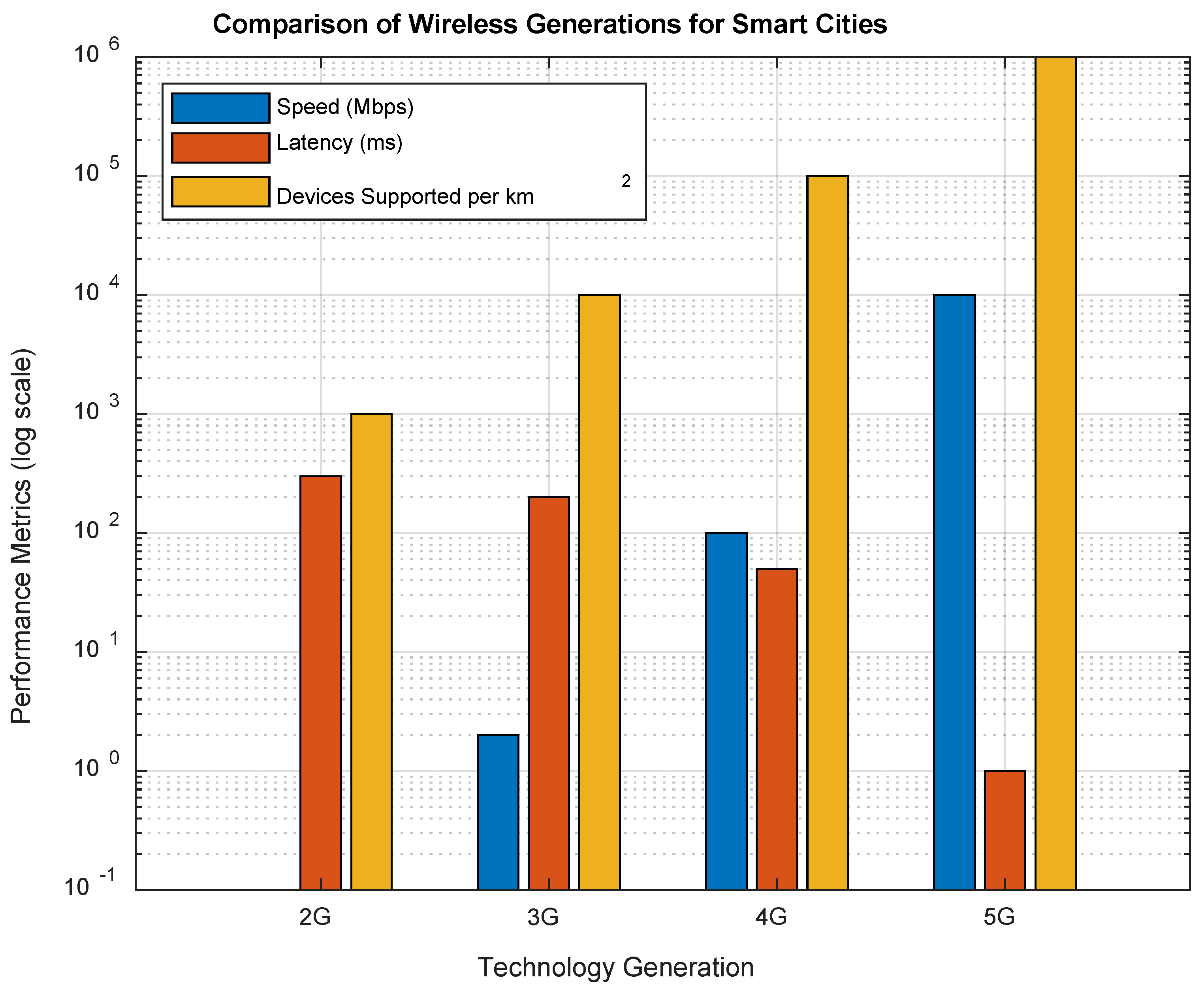
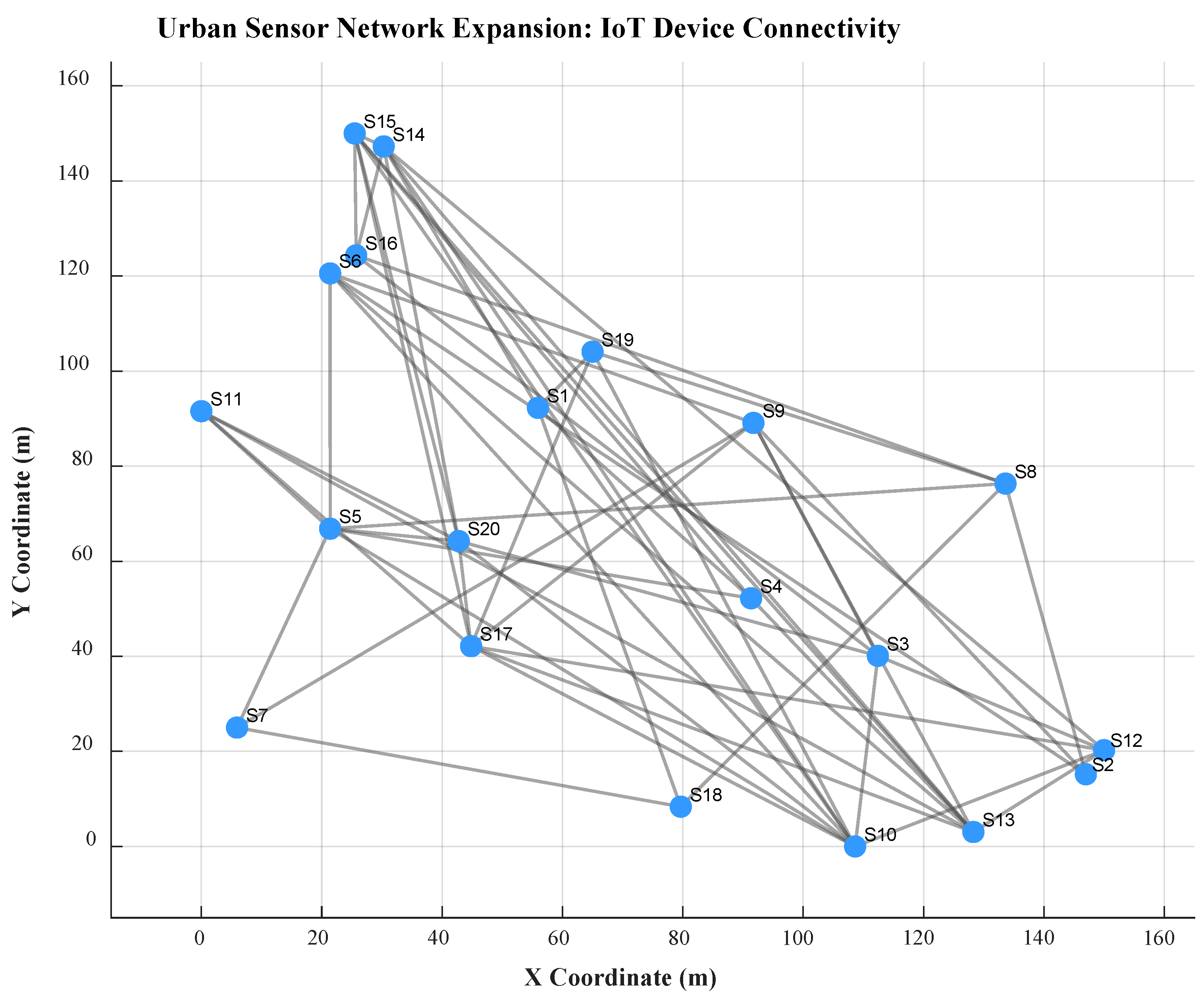
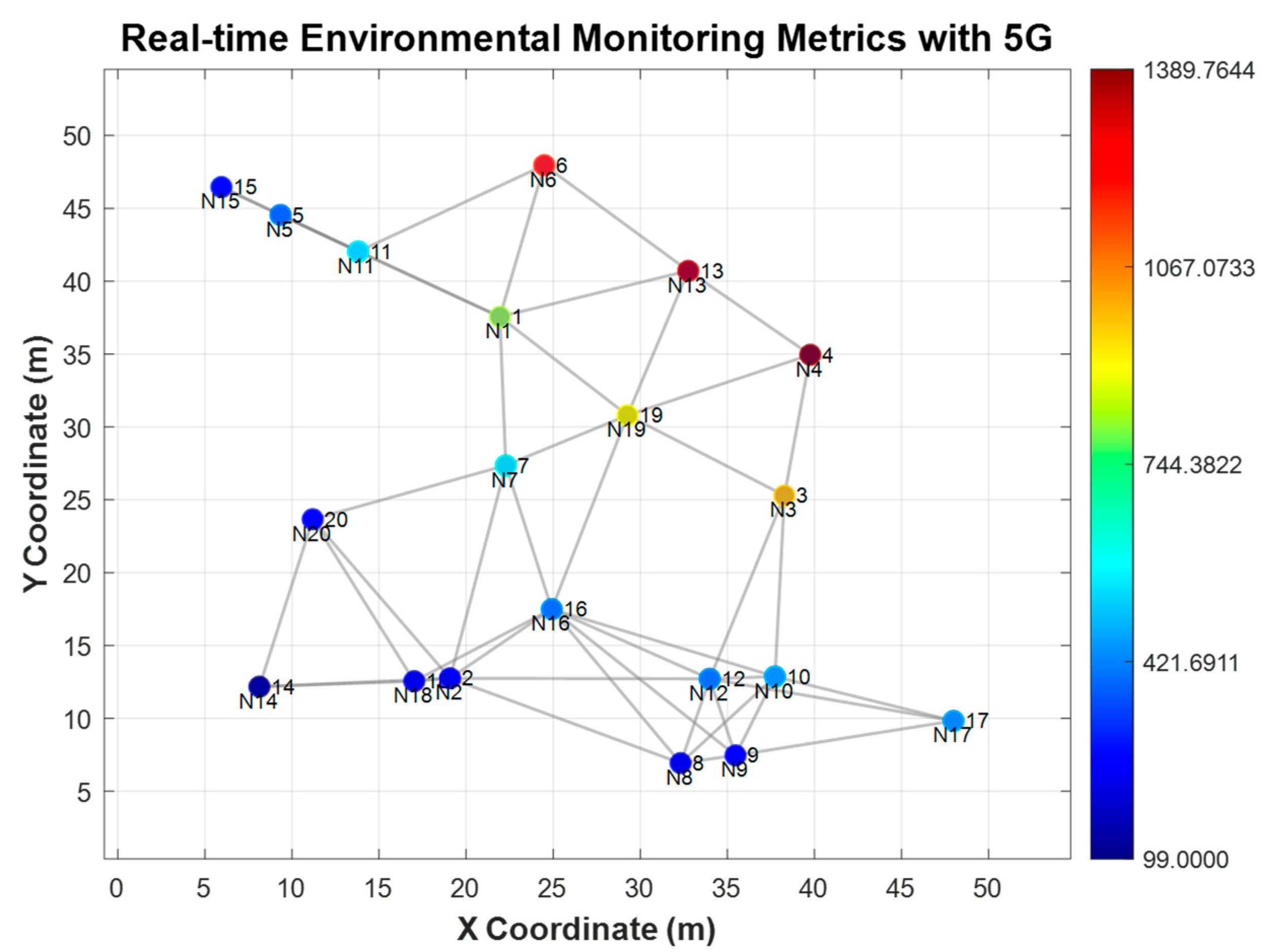
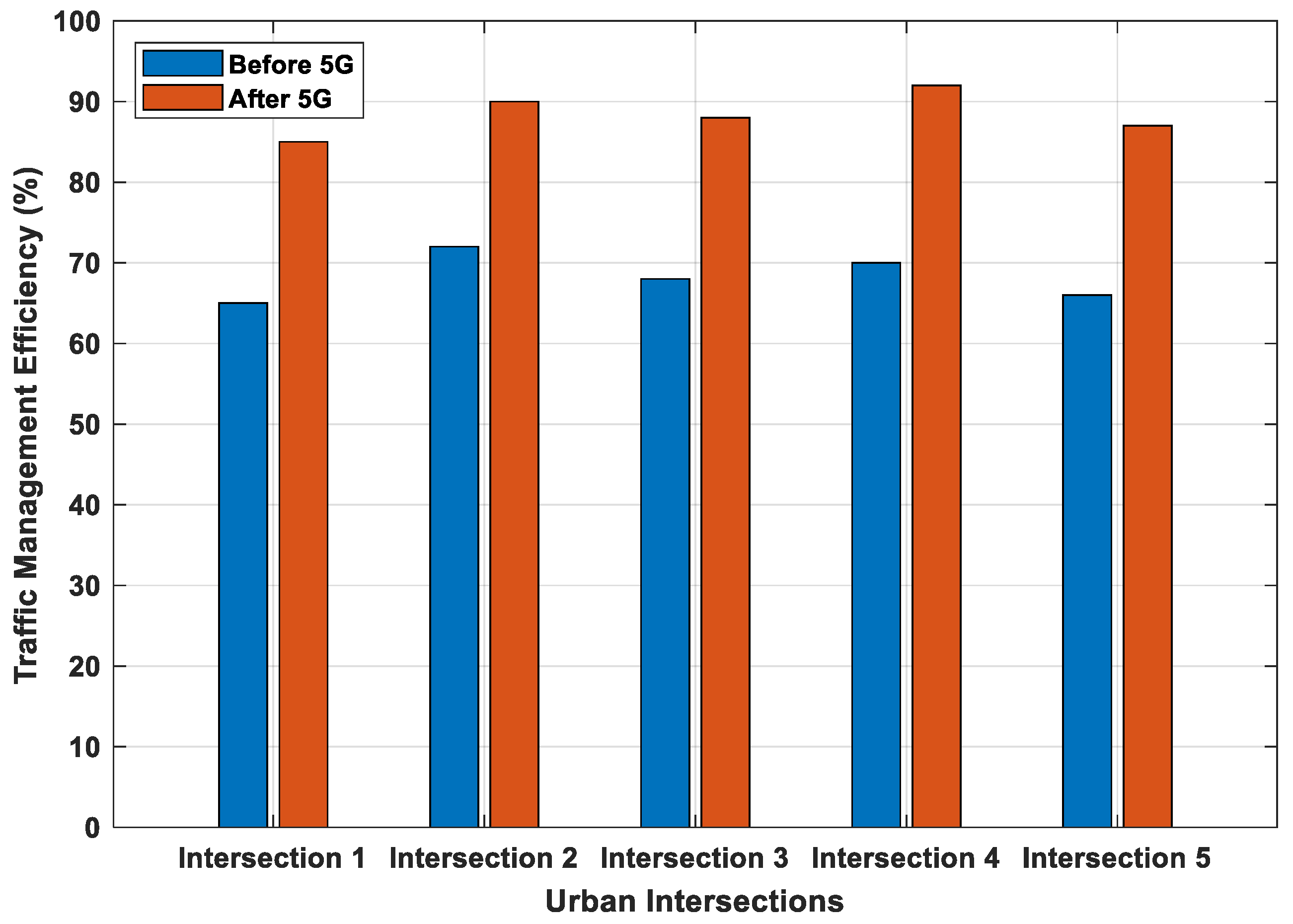
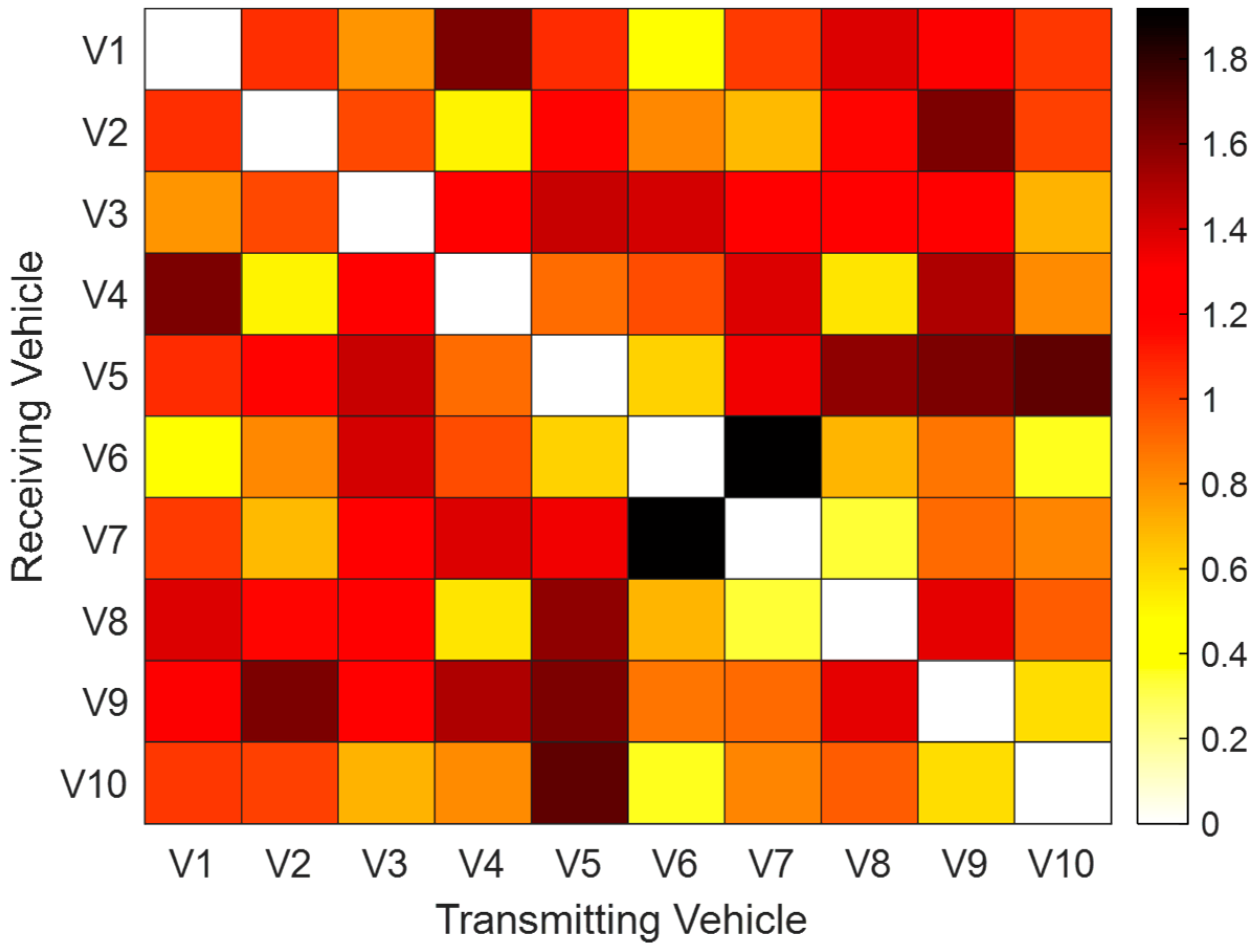
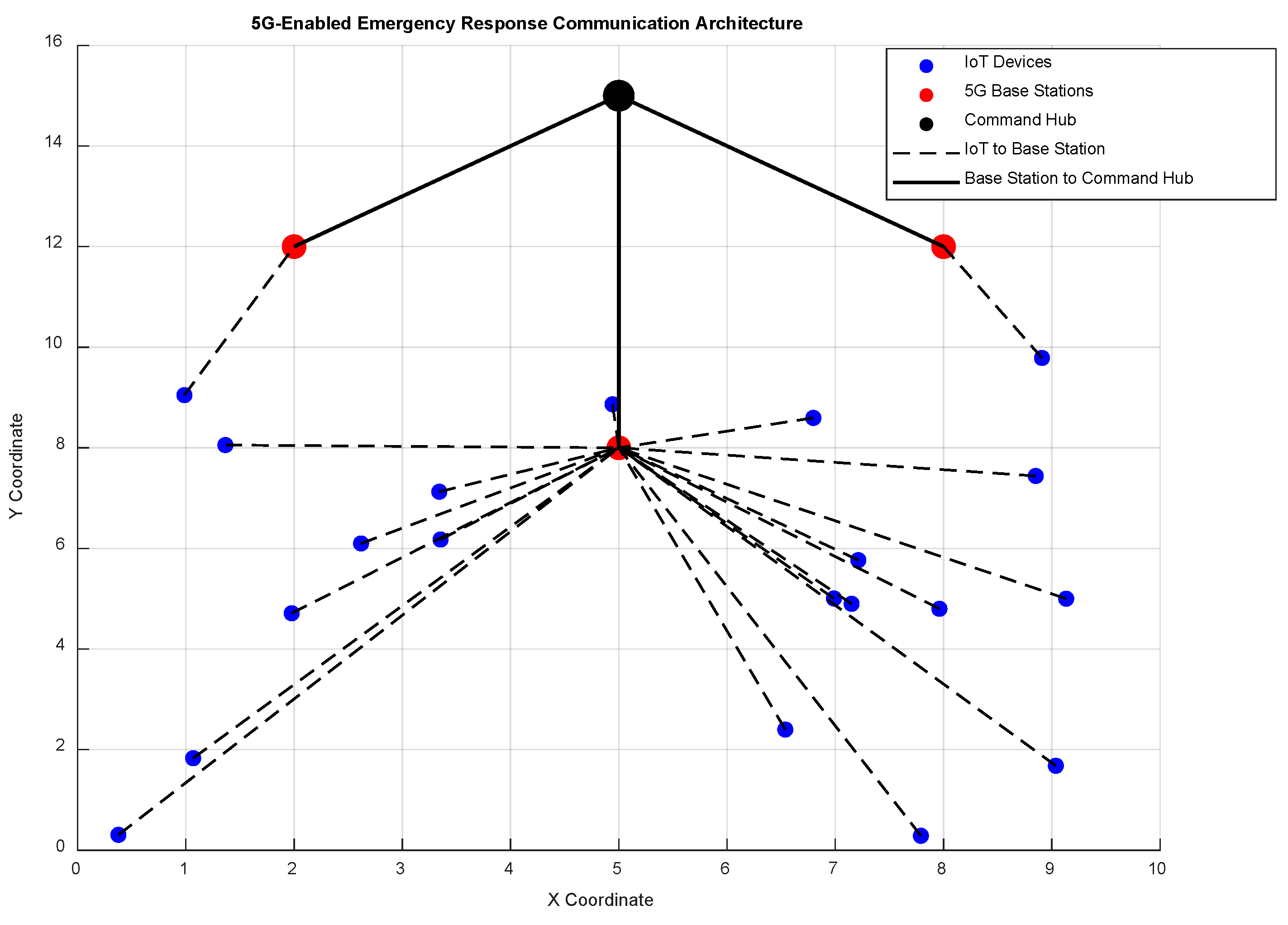
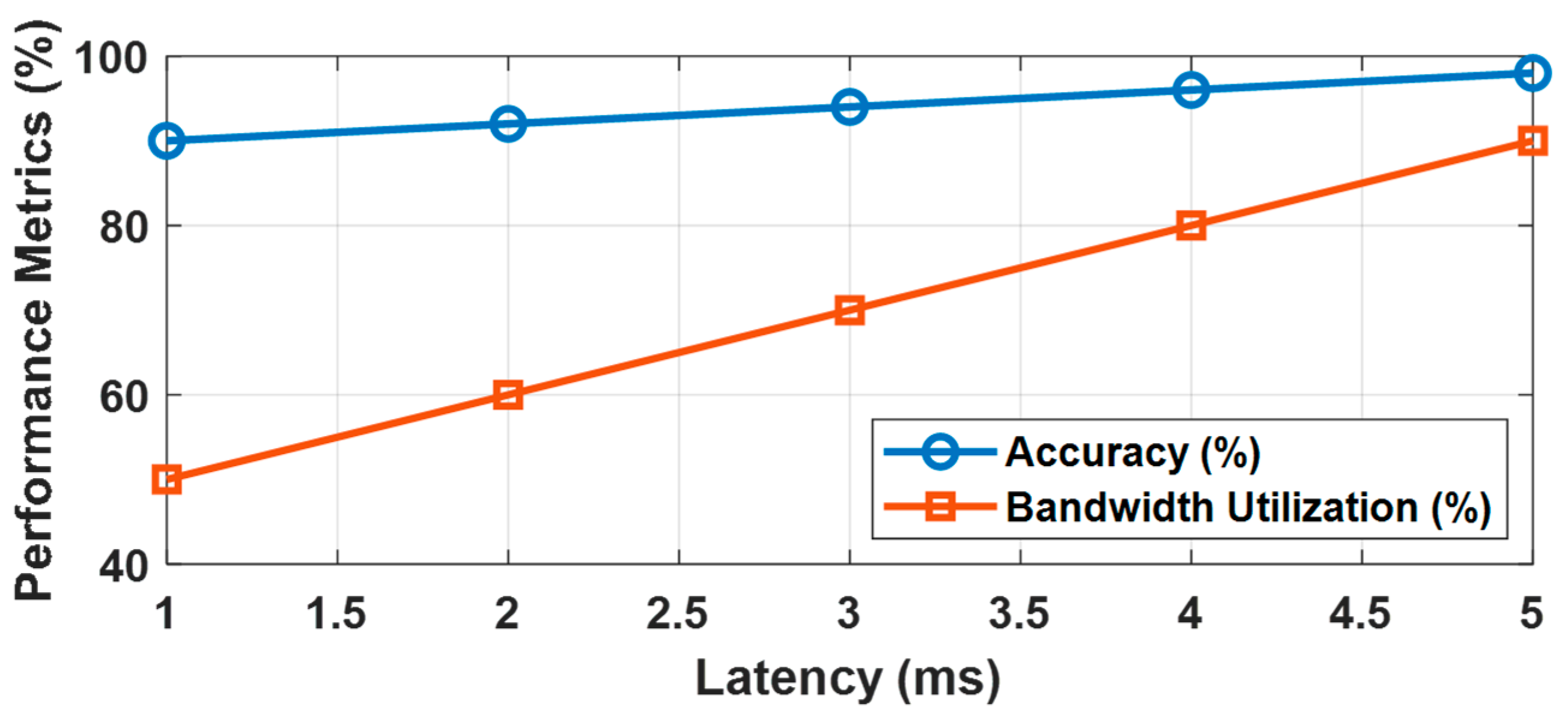
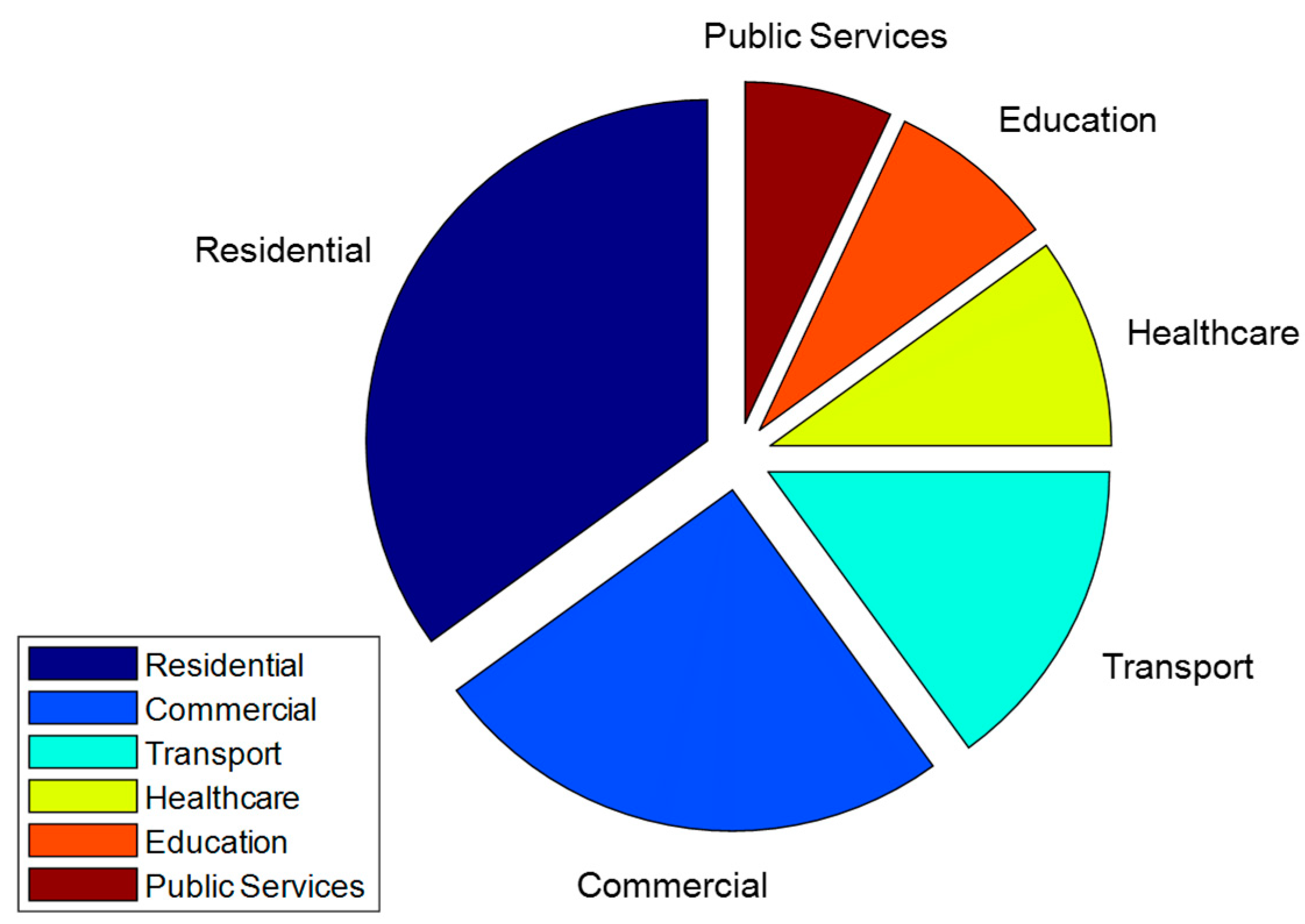
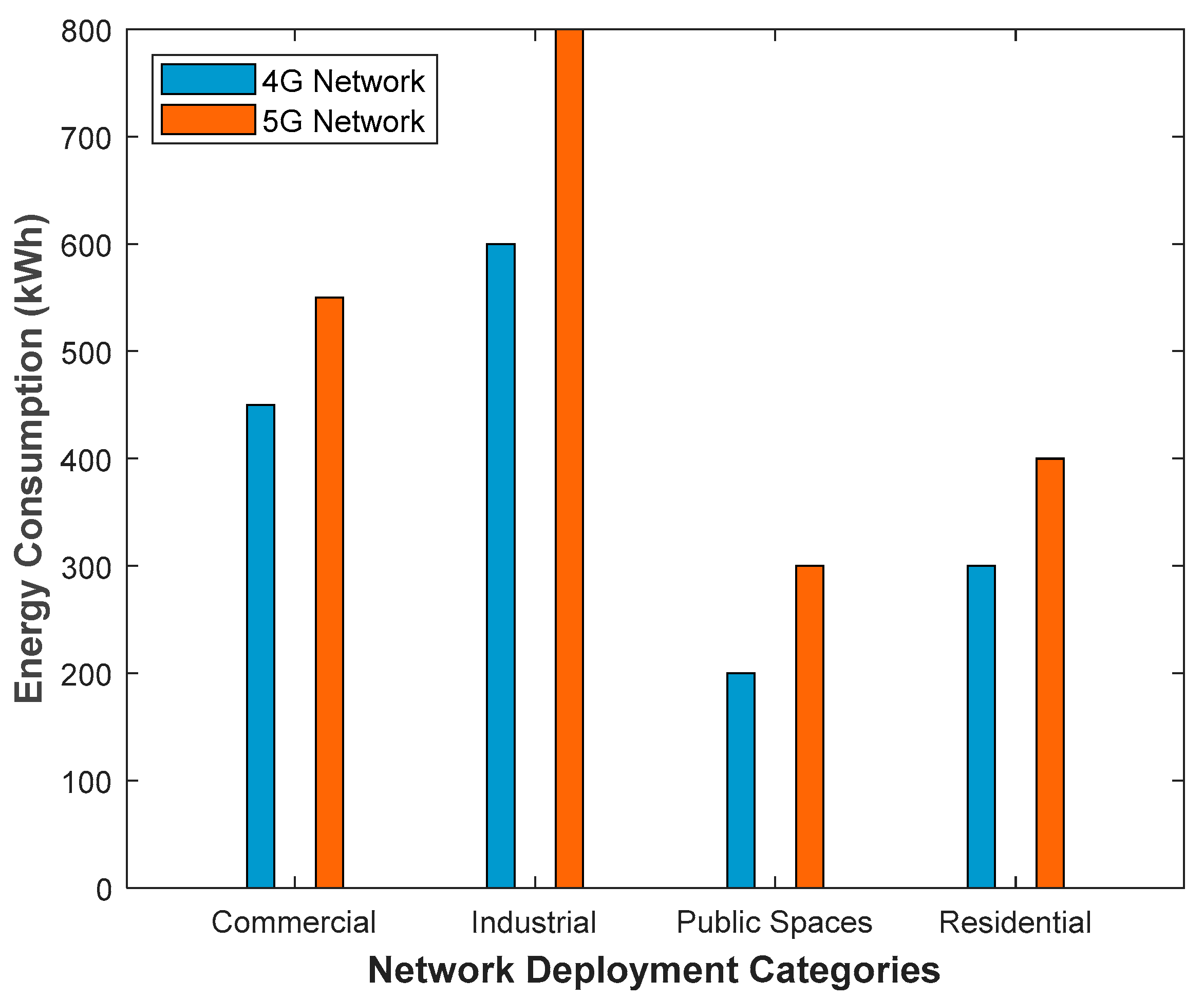
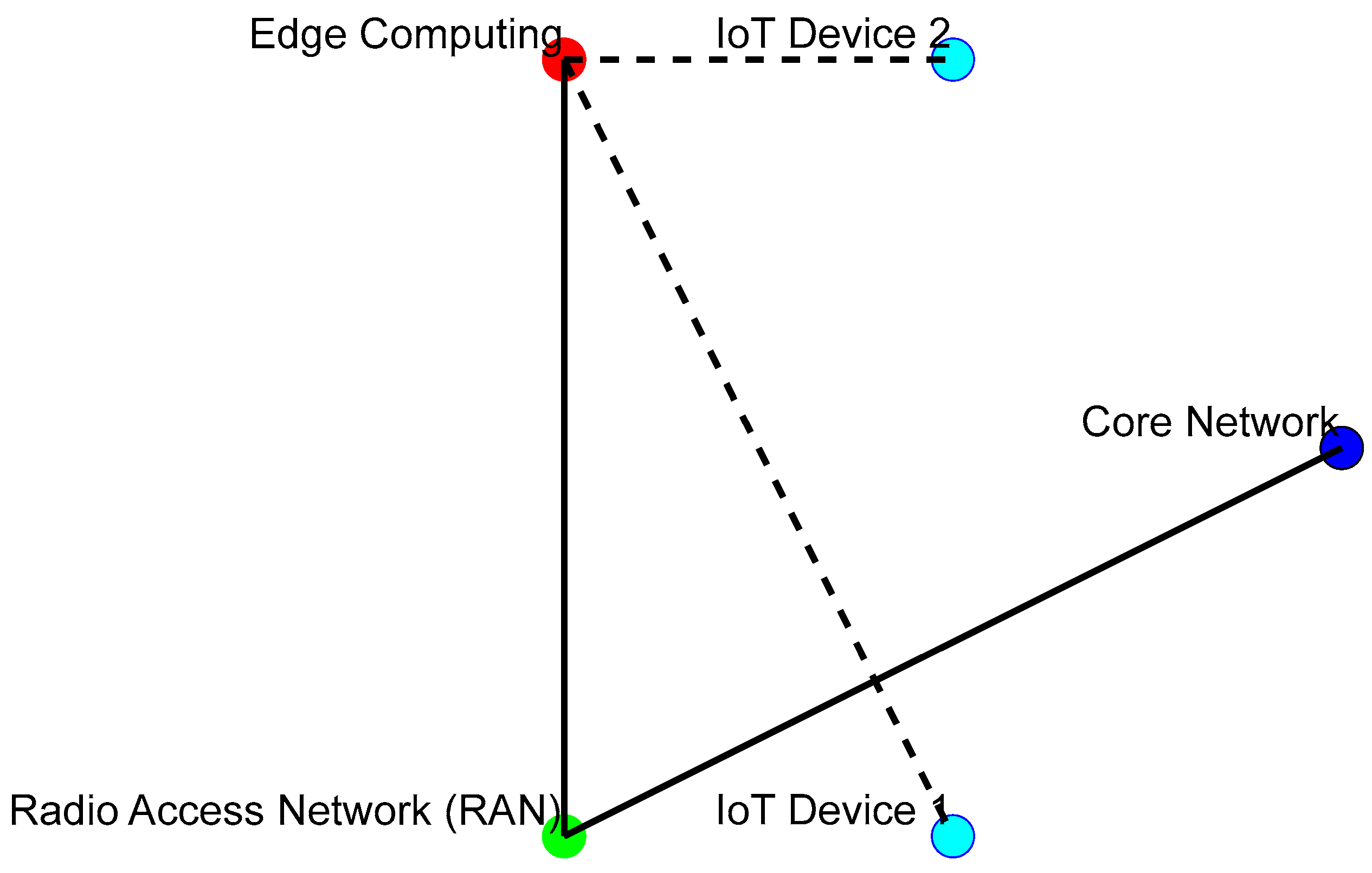
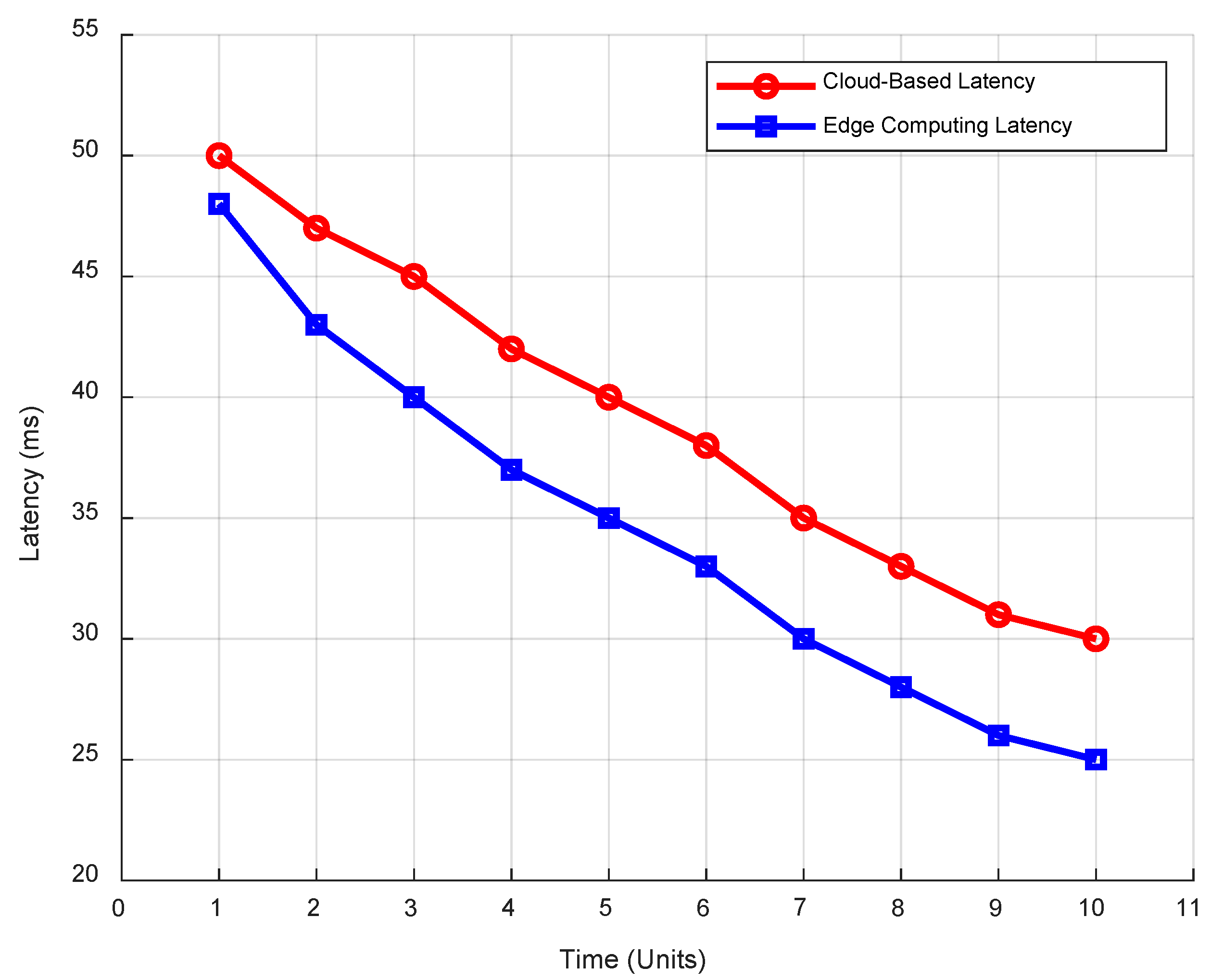
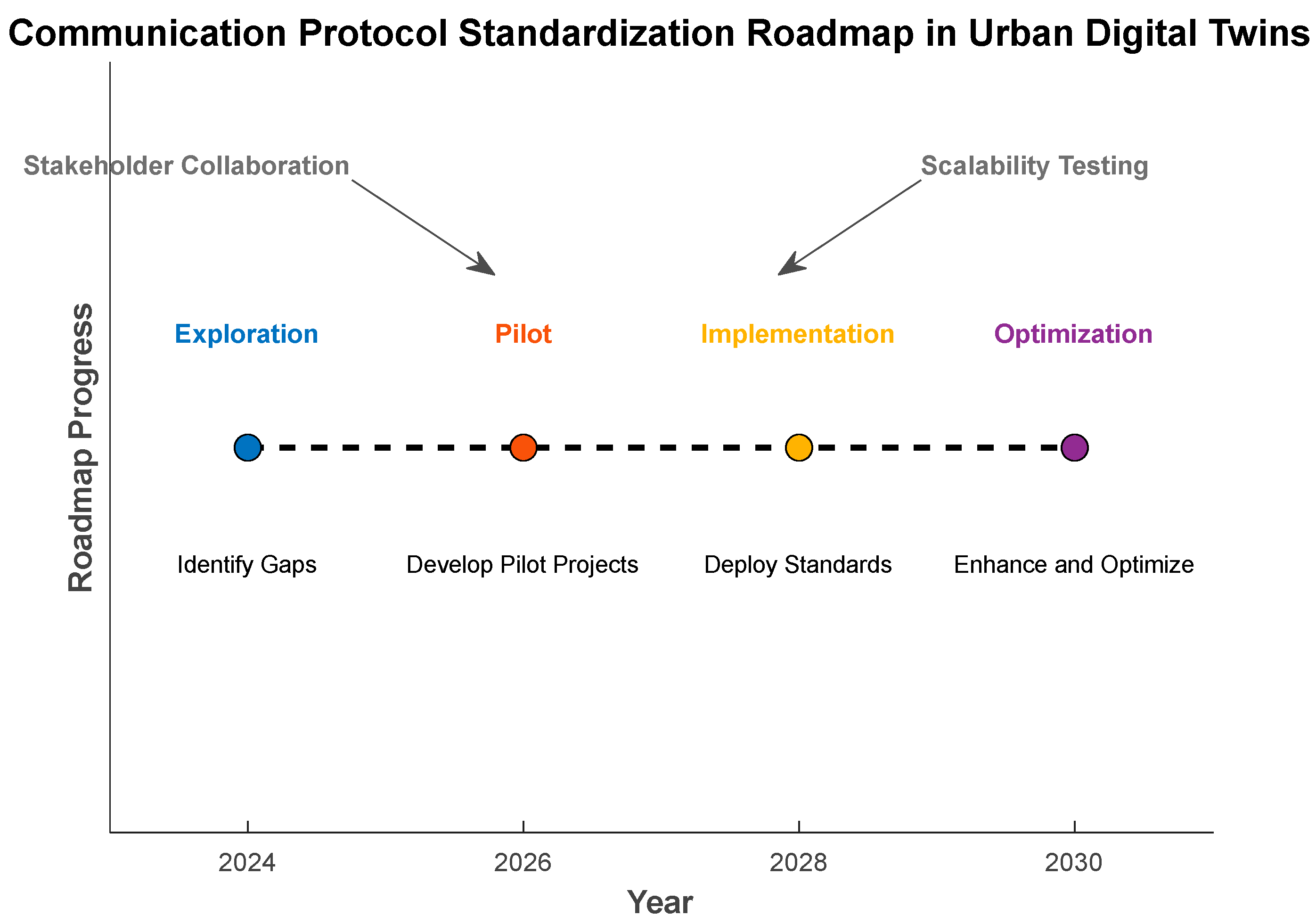
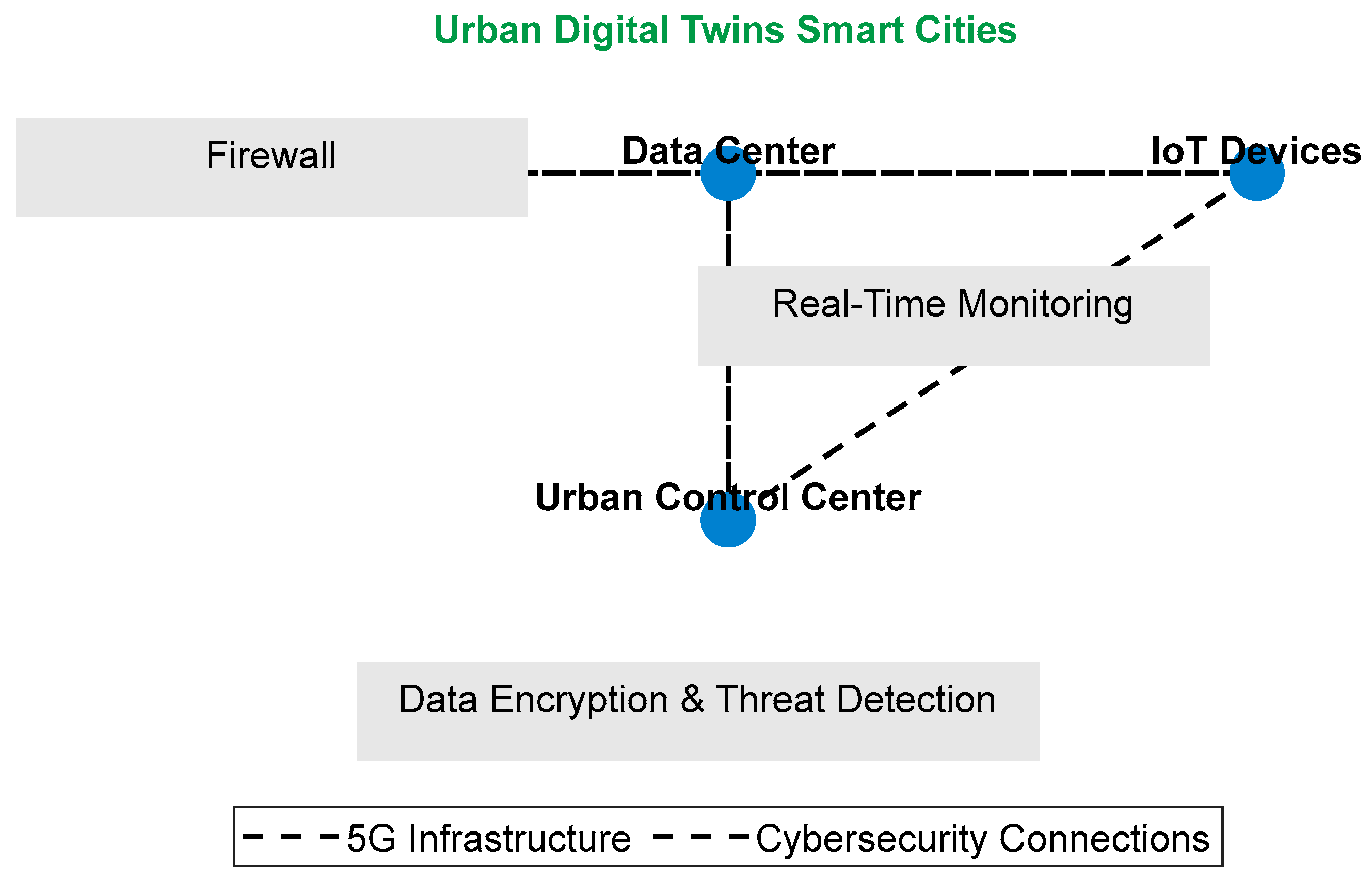
Disclaimer/Publisher’s Note: The statements, opinions and data contained in all publications are solely those of the individual author(s) and contributor(s) and not of MDPI and/or the editor(s). MDPI and/or the editor(s) disclaim responsibility for any injury to people or property resulting from any ideas, methods, instructions or products referred to in the content. |
© 2025 by the authors. Licensee MDPI, Basel, Switzerland. This article is an open access article distributed under the terms and conditions of the Creative Commons Attribution (CC BY) license (https://creativecommons.org/licenses/by/4.0/).