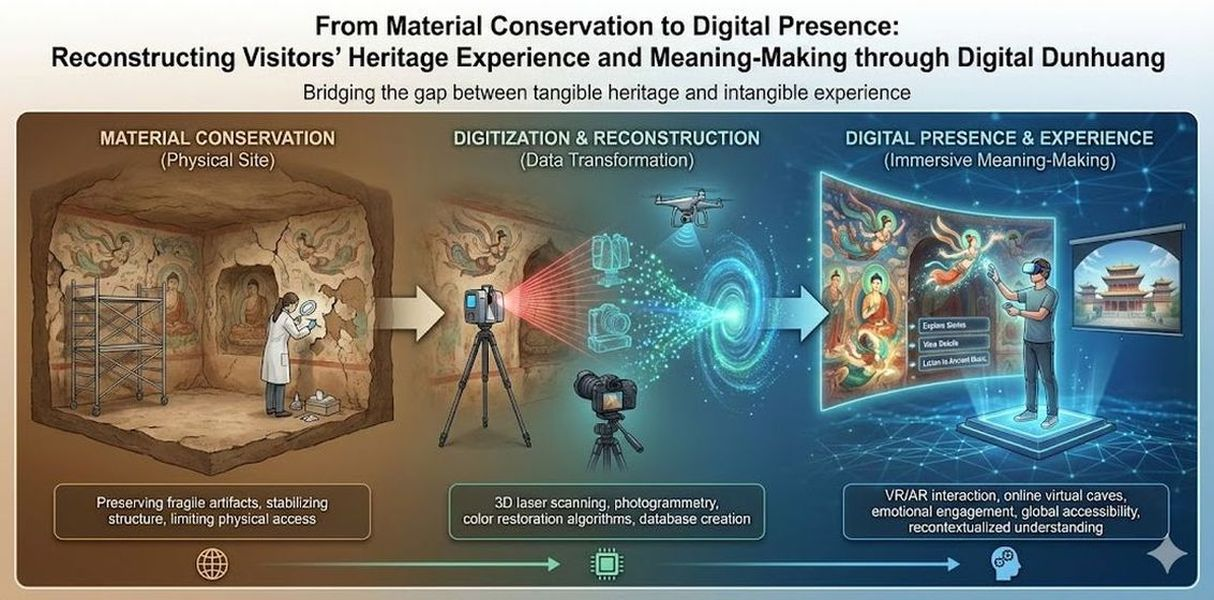

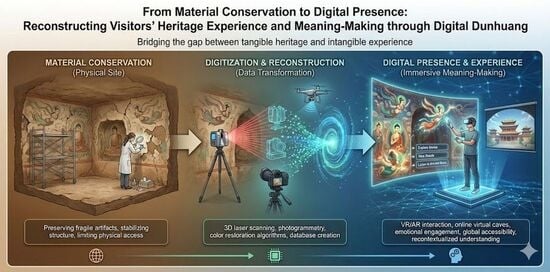
From Material Conservation to Digital Presence: Reconstructing Visitors’ Heritage Experience and Meaning-Making Through Digital Dunhuang



Abstract
1. Introduction
1.1. Global Context: The Challenges of Rock-Cut Heritage and the Turn to Digitalization
- Core Philosophy: While the Lascaux and Pompeii projects primarily focus on visual replication and visitor management, Dunhuang centers on interpretive transformation—not merely showing what it was but revealing why it matters.
- Focus of Experience: Western digital heritage projects often prioritize visual fidelity, whereas Digital Dunhuang seeks experiential authenticity—using digital means to evoke spiritual immersion and cultural resonance. Its virtual authenticity thus derives not only from visual realism but from its ability to recreate the serenity and esthetic resonance of Buddhist art.
1.2. The Chinese Context: The Specificity of Dunhuang and the Paradigmatic Role of “Digital Dunhuang”
1.3. Research Gap: From Technological Focus to Experience and Interpretation
1.4. Research Questions and Significance
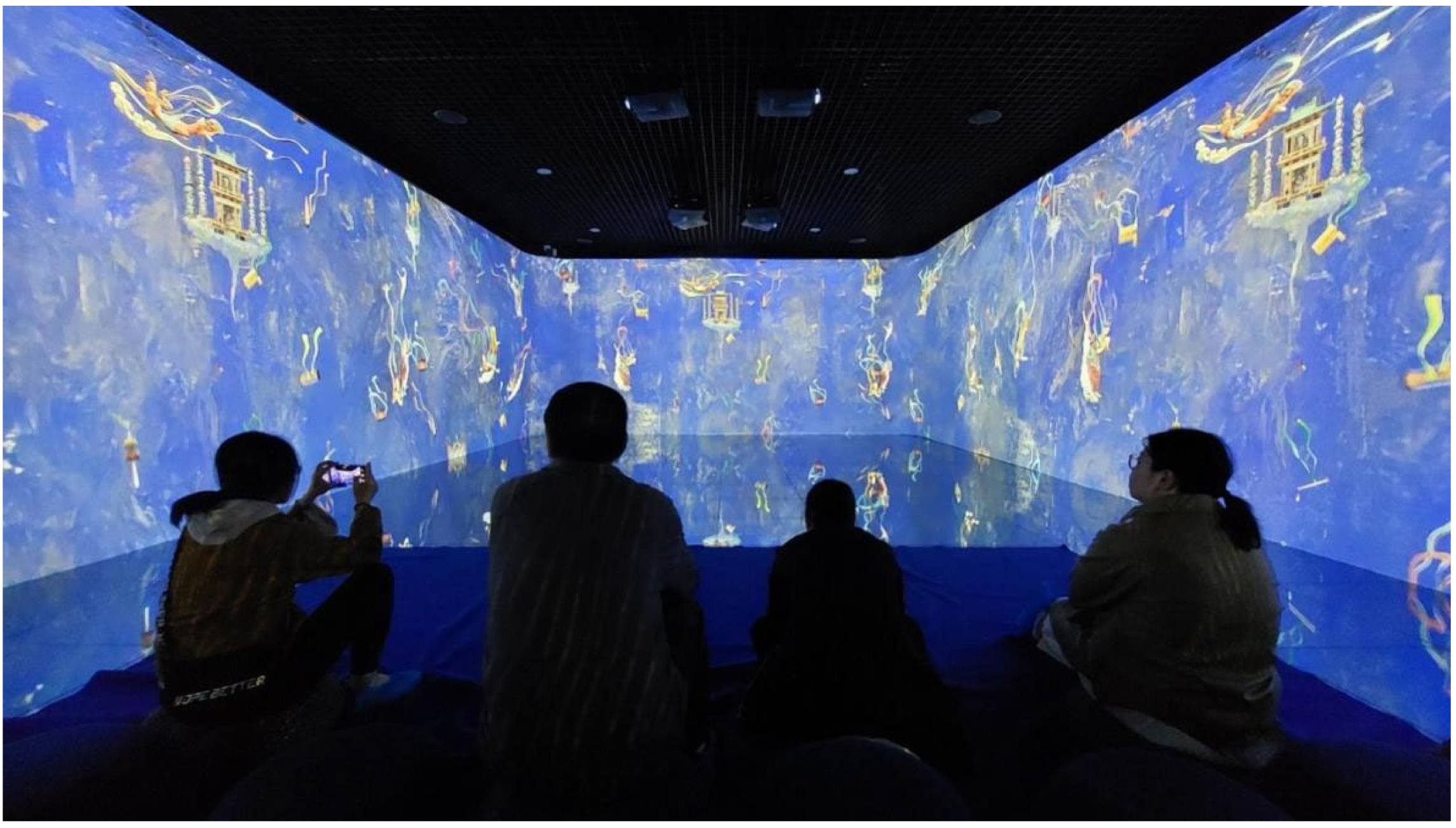
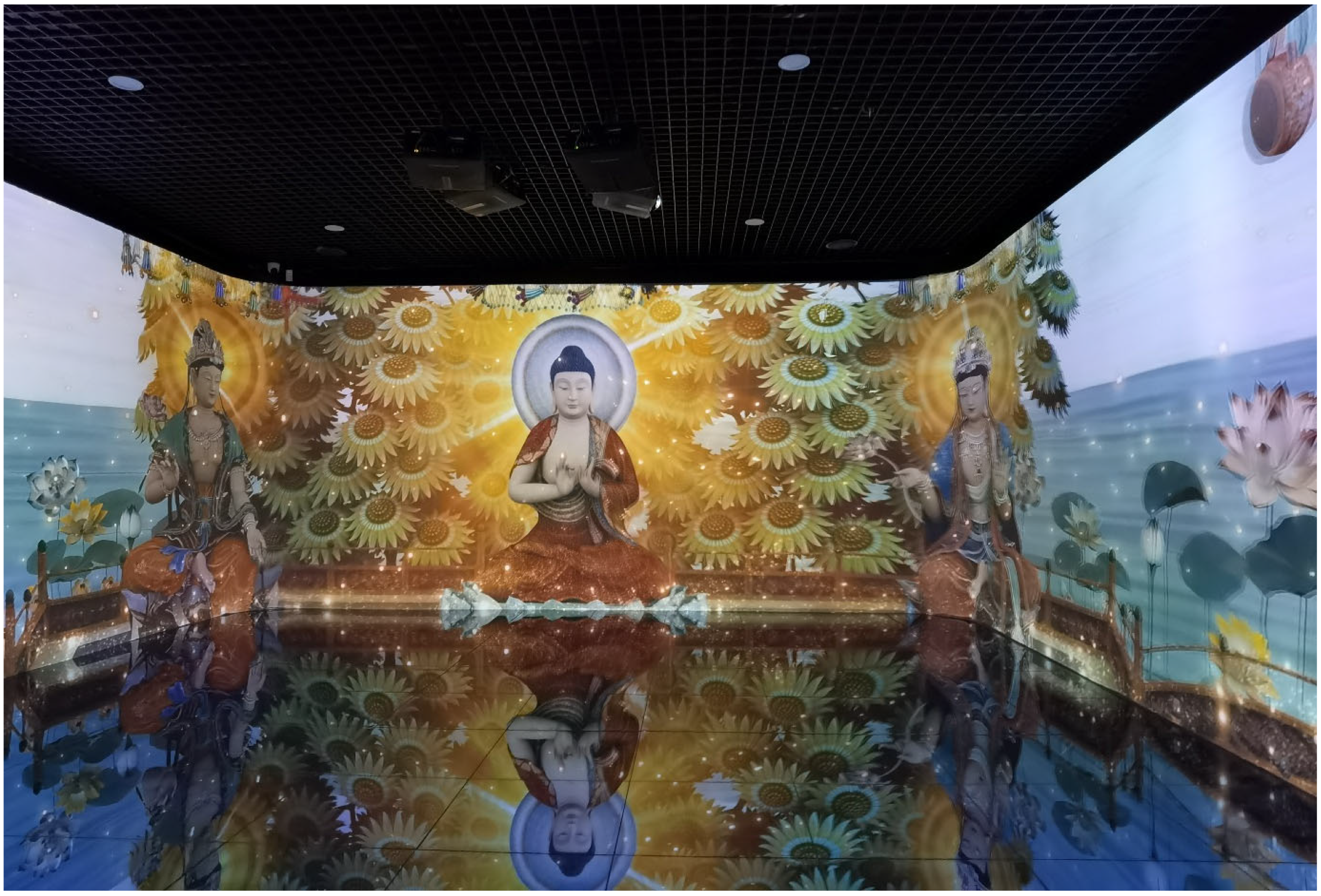
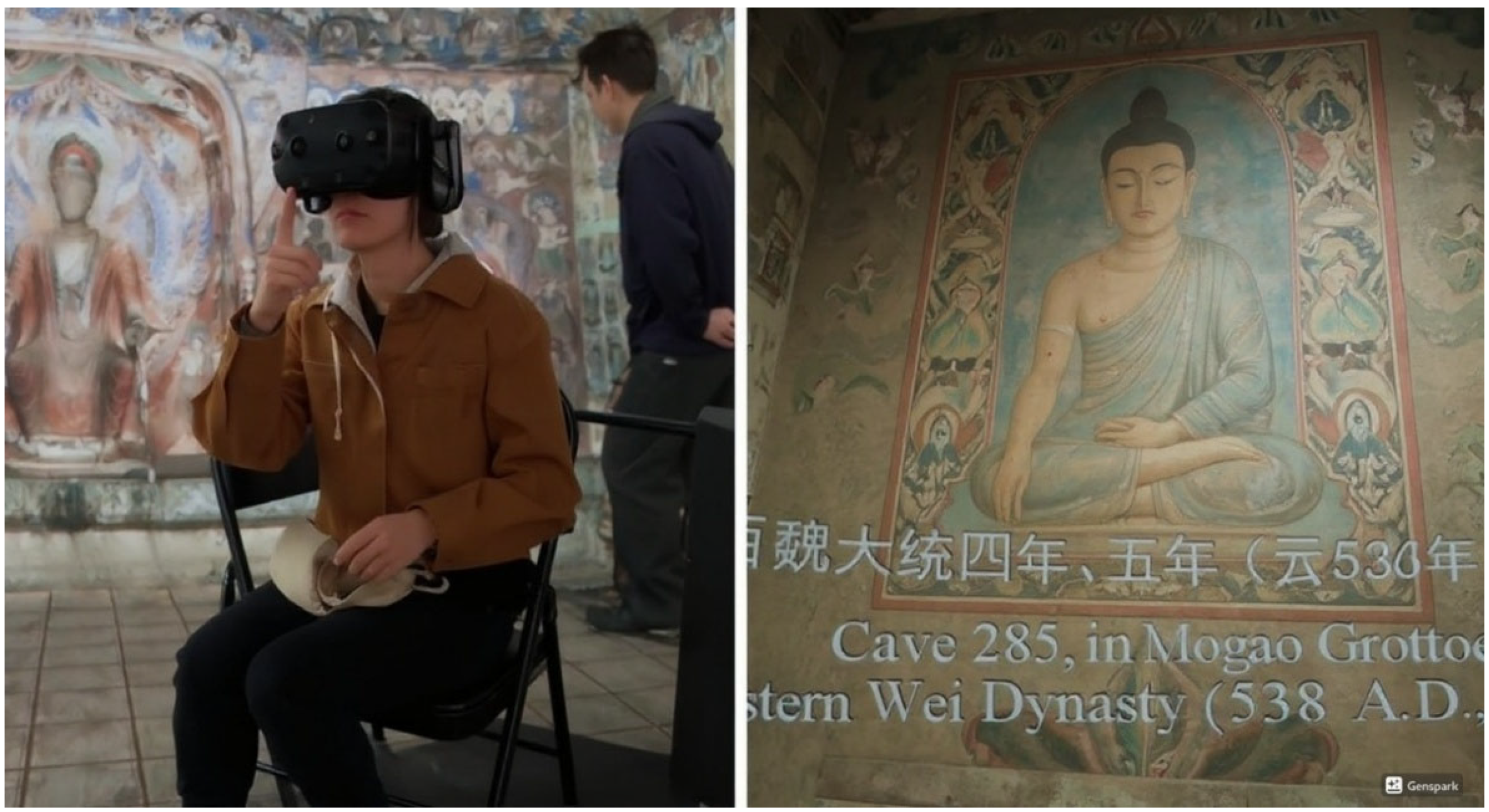
- How does the immersive digital ecosystem of Digital Dunhuang, including dome-screen cinema, virtual caves, and interactive installations, reconstruct visitors’ meaning-making and cognitive understanding of Dunhuang’s cultural heritage?
- Specifically, how do multisensory digital technologies function as interpretive mechanisms that foster deep emotional connections and cultural resonance among visitors?
- Conceptual Contribution: Proposes the Digital Interpretive Hierarchy Model, integrating Tilden’s interpretive principles with Chinese hermeneutic logic (“from material perception to rational understanding, and from rational understanding to emotional resonance”). This model theorizes how digital media reshape heritage meaning-making across cognitive, emotional, and ethical dimensions.
- Empirical Contribution: Provides qualitative, interview-based evidence on how visitors experience Digital Dunhuang differently from on-site encounters—generating insights into narrative comprehension, emotional immersion, perceived authenticity, and conservation awareness in digitally mediated environments.
- Theoretical Contribution: Introduces the notion of post-authenticity and digital spiritual heritage, arguing that authenticity in digital heritage emerges relationally through affective resonance and cultural empathy rather than material originality.
- Scope and Limitations: This study does not claim to offer a universal model applicable to all forms of digital heritage or all cultural contexts. Rather, it provides an interpretive framework grounded in the specific case of Digital Dunhuang, offering transferable concepts that may inform—but not generalize to—other heritage environments.
2. Theoretical Framework
2.1. Reinterpreting Tilden in the Digital Age
2.2. Digital Authenticity and Re-Mediated “Aura”
2.3. Chinese Hermeneutics and the Logic of “From the Tangible to the Emotional”
2.4. Mapping Tilden’s Principles to the Mechanisms of Digital Dunhuang
2.5. Toward a Synthesis: Digital Interpretation as Cultural Re-Mediation
3. Research Design
3.1. Research Orientation and Methodological Rationale
- To identify how digital technologies shape visitors’ perception and meaning-making processes;
- To interpret how these processes translate into emotional and ethical engagement;
- To evaluate how the overall digital interpretive ecosystem contributes to heritage appreciation and conservation awareness.
3.2. Research Participants and Sampling Strategy
- Age range: 18 to 70 years old
- Educational background: Humanities, sciences, and arts
- Nationalities represented: China, Japan, and several European countries
3.3. Ethical Considerations and Reflexivity
3.4. Data Collection Methods
3.4.1. Semi-Structured Interviews
- Perceived authenticity and emotional engagement;
- Comparative reflections between digital and on-site heritage experiences;
- Awareness of preservation and cultural significance after the visit.
3.4.2. Participant Observation
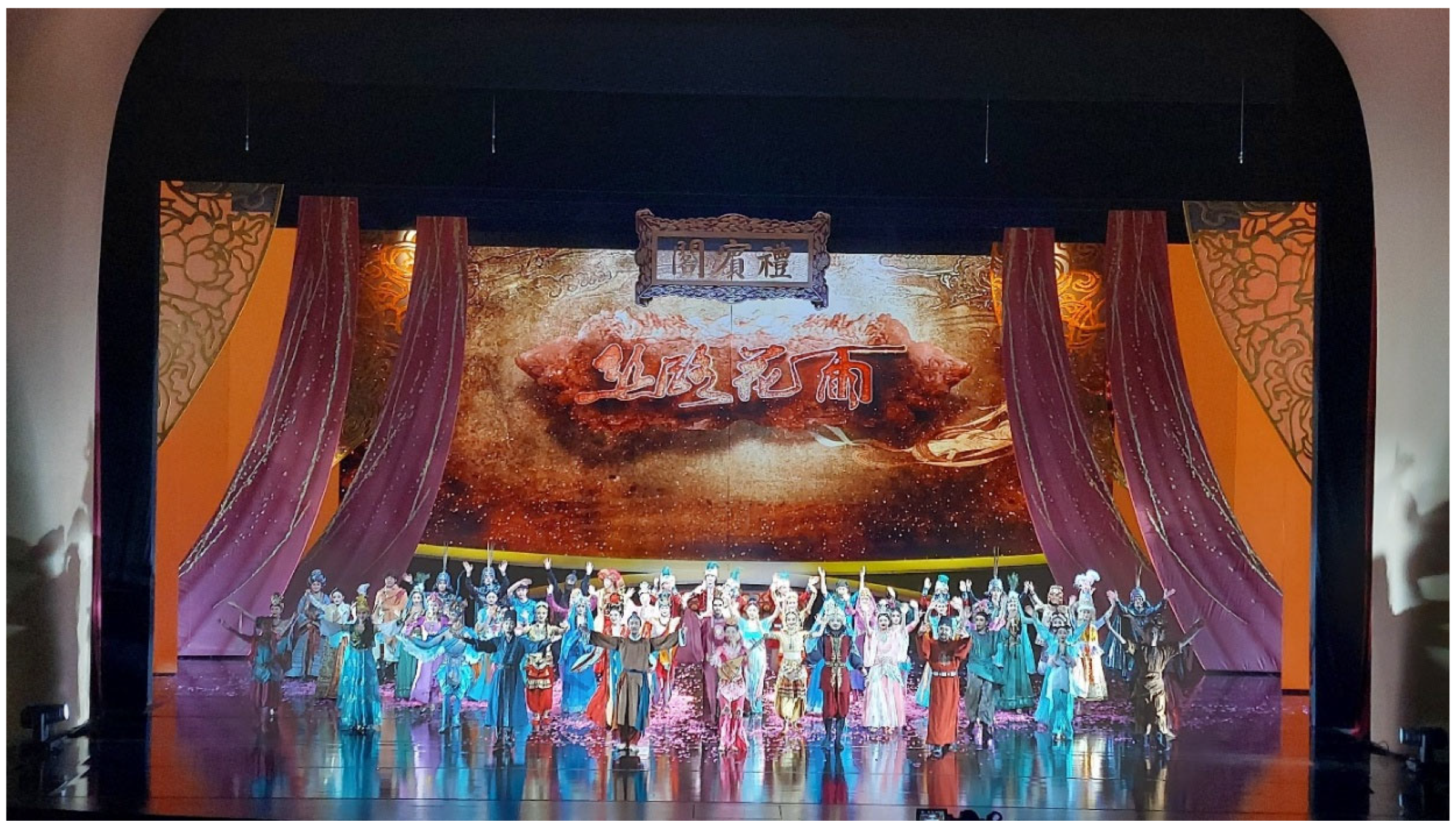
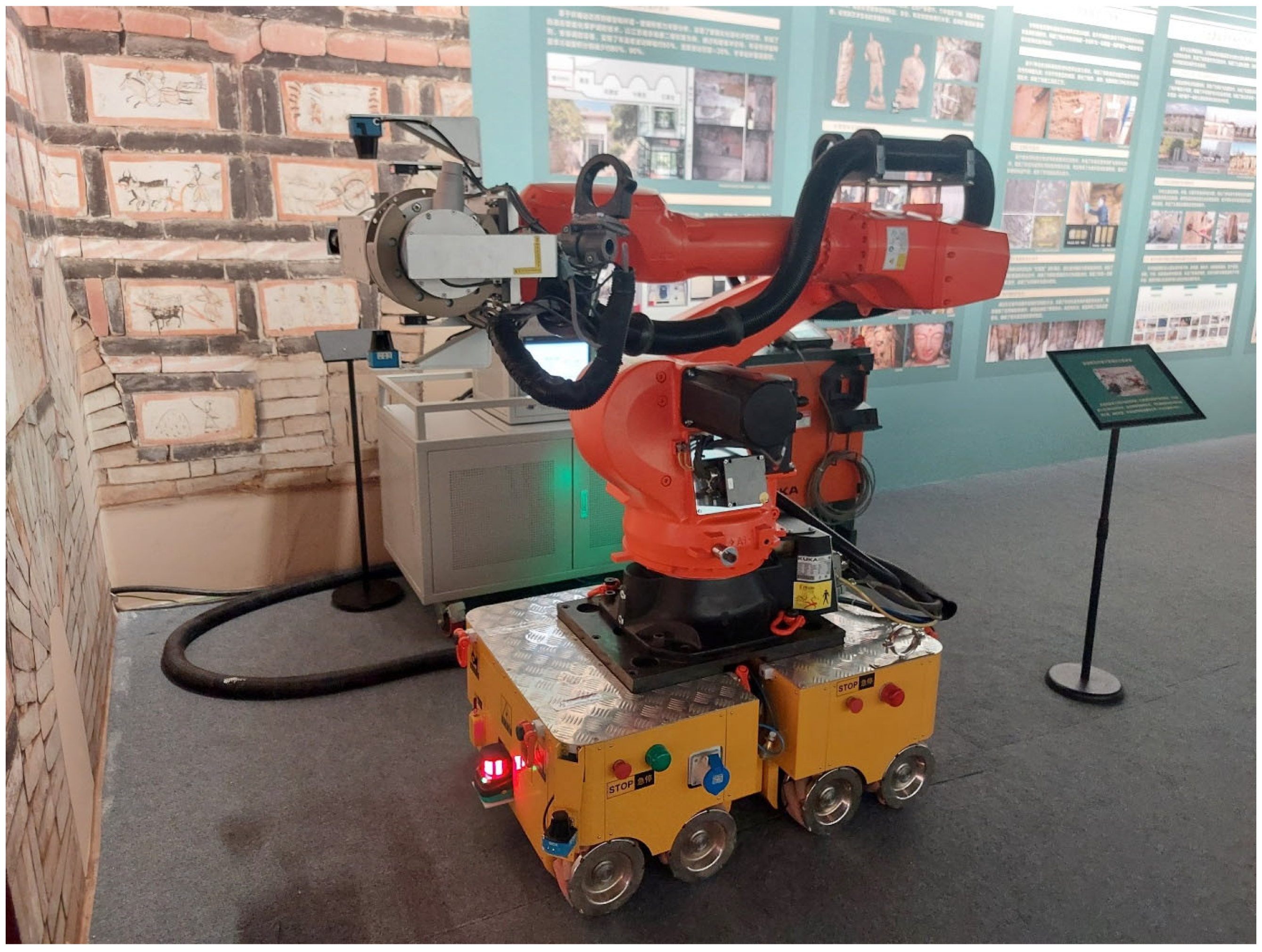
- On-site observation was conducted at the Digital Dunhuang Exhibition Centre, focusing on how visitors interacted with dome-screen films, virtual caves, and interactive installations.
- Online observation examined user behavior on the Digital Dunhuang International Website and its virtual browsing interface, documenting how remote users engage with immersive narratives and interpretive cues.
3.5. Data Analysis
- 1.
- Open Coding:Each transcript and observation note was read line-by-line to identify initial concepts and recurrent patterns (e.g., “emotional resonance,” “virtual sacredness,” “time collapse”).
- 2.
- Axial Coding:Relationships between codes were examined to form subthemes (e.g., “embodied immersion,” “historical empathy,” “knowledge contextualization”). These subthemes were linked to the theoretical dimensions of revelation, relation, and provocation derived from Tilden’s framework [26].
- 3.
- Selective Coding:Core themes were integrated to construct an overarching interpretive model that aligns with the Digital Interpretive Hierarchy. This final synthesis explicates how digital experiences progress from cognitive reconstruction to emotional elevation and value internalization.
3.6. Comparative Design: Integrating Online and On-Site Experiences
- On-site component: Examined sensory, spatial, and communal dimensions of embodied experience in the exhibition space, with particular attention to visitors’ responses to the dome-screen films and interactive installations.
- Online component: Explored interpretive engagement in remote settings, focusing on digital immersion, comprehension depth, and perceived authenticity during virtual browsing.
3.7. Ensuring Validity and Trustworthiness
4. Findings and Discussion
4.1. Cognitive Reconstruction: From “Knowledge Viewing” to “Contextual Understanding”
4.2. Emotional Elevation: From “Static Gaze” to “Empathic Presence”
4.3. Value Internalization: From “Cultural Appreciation” to “Protective Consciousness”
4.4. Theoretical Reflection: The Duality and New Trajectories of Digital Interpretation
4.5. Summary
- Cognitive Reconstruction—digital mediation transforms factual observation into contextual understanding.
- Emotional Elevation—immersive presence evokes empathy and reconstitutes digital aura.
- Value Internalization—emotional engagement translates into ethical responsibility and conservation awareness.
5. Reconstructing Heritage Experience Through Digital Dunhuang
5.1. Research Conclusions
- 1.
- Cognitive DimensionDigital technologies facilitate a transition from “knowledge observation” to “contextual understanding.” Through multimodal narratives and the “temporal folding” effect, Digital Dunhuang situates static and isolated artifacts within a dynamic and coherent historical-cultural context, effectively guiding visitors from perceiving the forms (“wu”) to understanding their underlying principles (“li”). This cognitive leap exemplifies Tilden’s principle of “revelation” [26] in interpretation, demonstrating the potential of digital mediation to enhance intellectual comprehension of cultural heritage.
- 2.
- Emotional DimensionDigital experiences elevate engagement from “static gazing” to “empathetic presence.” The immersive environments foster a sense of bodily presence, while the carefully reconstructed “digital sacredness” elicits profound emotional identification and spiritual resonance. This constitutes a form of digital authenticity, grounded in both information fidelity and affective projection, facilitating a transformation from rational cognition (“li”) to emotional engagement (“qing”).
- 3.
- Value DimensionDigital interpretation ultimately promotes a transition from “cultural appreciation” to the internalization of “conservation consensus.” By visualizing both the vulnerability and extraordinary significance of heritage, Digital Dunhuang successfully stimulates visitors’ consciousness of responsibility and stewardship, thereby achieving the ultimate goal of Tilden’s interpretive philosophy [26]: cultivating protective behaviors through understanding and esthetic appreciation.
5.2. Theoretical Contributions and Practical Implications
5.2.1. Theoretical Contributions
- 1.
- Introducing the Concept of “Digital Spiritual Heritage”This research is among the first to explicitly define and theorize “digital spiritual heritage” as a form of cultural transmission mediated by digital technologies, capable of transcending material boundaries. Unlike conventional perspectives that emphasize digital heritage primarily as a technical tool for preservation or a sensory medium for display, this concept highlights its capacity to evoke esthetic, religious, and humanistic comprehension. It underscores an intrinsic human need for meaning-making and transcendence in technologically mediated environments, signaling a shift in heritage theory from material preservation to the cultivation of experiential and reflective engagement.
- 2.
- Expanding Interpretive Frameworks in Heritage StudiesBy integrating Tilden’s principles [26] with traditional Chinese cognition—specifically the “from form to principle, from principle to emotion” logic—this study demonstrates a comprehensive interpretive framework in which cognitive understanding, emotional resonance, and value internalization are interconnected. This framework offers a theoretical lens for examining how digital mediation can simultaneously activate intellectual, affective, and ethical dimensions of heritage experience, providing a model for future empirical investigations in diverse cultural contexts.
- 3.
- Bridging Technology and Heritage Meaning-MakingThe study empirically validates the mechanisms through which immersive technologies mediate relational authenticity, offering a nuanced understanding of how digital artifacts function not only as conveyors of information but also as catalysts for affective and ethical engagement. This advances theoretical discussions in digital heritage, suggesting that the evaluative criteria of authenticity and value are contextually co-constructed rather than intrinsically fixed.
5.2.2. Practical Implications
5.3. Future Directions
6. Conclusions
Author Contributions
Funding
Data Availability Statement
Acknowledgments
Conflicts of Interest
Appendix A. Semi-Structured Interview Guide
| Topic | Sample Questions/Prompts | Notes for Interviewers |
| Perceptions of Authenticity | – How authentic did you feel the Digital Dunhuang experience was compared to visiting the actual site? – Which aspects of the digital presentation (e.g., visuals, sounds, animations) contributed most to your sense of authenticity? – Did any elements feel artificial or detract from the sense of heritage authenticity? | Encourage participants to provide examples or describe specific moments. |
| Narrative Comprehension | – How clear and understandable did you find the storytelling or narrative of the digital experience? – Were there any parts that helped you better understand the history, culture, or symbolism in Dunhuang art? – Did the digital format (animations, interactive elements) enhance or hinder your comprehension? | Probe for specific features or interactions that aided understanding. |
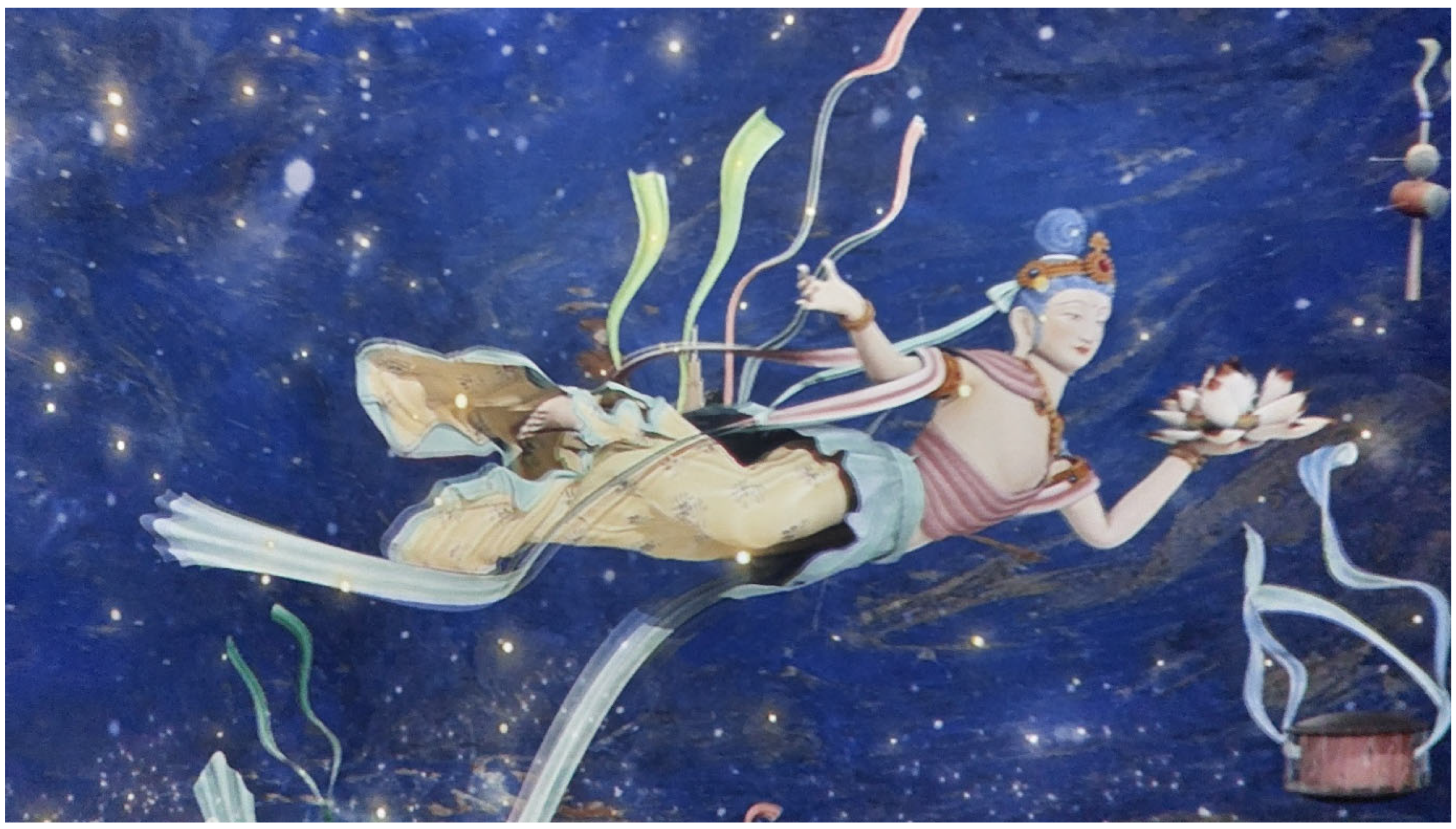
| Emotional Immersion | – How emotionally engaging did you find the experience? – Were there any moments that evoked strong feelings, such as awe, curiosity, or reflection? – How did interactive or animated features (e.g., Flying Apsaras, flowing scarves, immersive spatial design) affect your sense of presence and immersion? | Ask participants to describe their emotional responses in detail. |
| Comparisons Between On-Site and Online Experiences | – If you have visited the physical site, how did the digital experience compare? – Which aspects of Digital Dunhuang helped replicate or enhance your on-site experience? | Note differences and perceived advantages/disadvantages of digital vs. on-site experience. |
Additional Notes
- Interviews were conducted in Mandarin or English, depending on participant preference.
- All responses were recorded and anonymized to ensure confidentiality.
References
- Agnew, N.; Demas, M. Conservation of Ancient Sites on the Silk Road; Getty Conservation Institute: Los Angeles, CA, USA, 2010. [Google Scholar]
- Brandi, C. Teoria Del Restauro; Einaudi: Turin, Italy, 1963. [Google Scholar]
- Leask, A. Progress in visitor attraction research: Towards more effective management. Tour. Manag. 2010, 31, 155–166. [Google Scholar] [CrossRef]
- Poria, Y.; Reichel, A.; Biran, A. Heritage site management: Motivations and expectations. Ann. Tour. Res. 2003, 30, 238–254. [Google Scholar] [CrossRef]
- Bruno, F.; Bruno, S.; De Sensi, G.; Luchi, M.L.; Mancuso, S.; Muzzupappa, M. From 3D reconstruction to virtual reality: A complete methodology for digital archaeological exhibition. J. Cult. Herit 2010, 11, 42–49. [Google Scholar] [CrossRef]
- Huvila, I.; Börjesson, L.; Dell’Unto, N.; Löwenborg, D.; Petersson, B.; Stenborg, P. Archaeological information work and the digital turn. In Archaeology and Archaeological Information in the Digital Society; Routledge: Oxfordshire, UK, 2018; pp. 143–158. [Google Scholar]
- UNESCO. Ethics of Cultural Heritage; UNESCO: Paris, France, 2021. Available online: https://unesdoc.unesco.org/ark:/48223/pf0000231047 (accessed on 12 November 2025).
- Carpenter, T.; Doerfler, G.; Way, T.; Klassner, F. An Approach to Maintaining Viewer Perspective in Interactive Virtual Tours. In Proceedings of the 2011 International Conference on Computer Graphics and Virtual Reality (CGVR 2011), Las Vegas, NV, USA, 18–21 July 2011; pp. 1–6. Available online: http://www.csc.villanova.edu/~tway/publications/Way_%20InteractiveTour_final_CGV4847.pdf (accessed on 9 December 2025).
- SensiLab. Virtual Angkor; Monash University: Melbourne, Australia, 2018; Available online: https://sensilab.monash.edu/research/virtual-angkor/ (accessed on 9 December 2025).
- Chandler, T.; Clulow, A. Modeling Virtual Angkor: An evolutionary approach to a single urban space. IEEE Comput. Graph. Appl. 2020, 40, 9–16. [Google Scholar] [CrossRef] [PubMed]
- Kenderdine, S.; Chan, L.K.Y.; Shaw, J. Pure Land: Futures for Embodied Museography. J. Comput. Cult. Herit. 2014, 7, 1–15. [Google Scholar] [CrossRef]
- Han, M. Digital exhibition of intangible heritage and the role of digital tools in the COVID-19 era. Heritage 2022, 5, 140–155. [Google Scholar] [CrossRef]
- Spennemann, D.H.R. Exhibiting the heritage of COVID-19—A conversation with curators and conservators. Heritage 2023, 6, 5634–5653. [Google Scholar] [CrossRef]
- Volanakis, A. Assessing the long-COVID impact on heritage organisations. Heritage 2024, 7, 3126–3145. [Google Scholar] [CrossRef]
- Li, Y. Aesthetic interpretation in Digital Dunhuang. Dunhuang Res. 2019, 175, 92–101. (In Chinese) [Google Scholar]
- Giaccardi, E. (Ed.) Heritage and Social Media: Understanding Heritage in a Participatory Culture; Routledge: Oxfordshire, UK, 2012. [Google Scholar]
- Parry, R. Recoding the Museum: Digital Heritage and the Technologies of Change; Routledge: Oxfordshire, UK, 2007. [Google Scholar]
- Avrami, E.; Macdonald, S.; Mason, R.; Myers, D. Values in Heritage Management: Emerging Approaches and Research Directions; Getty Conservation Institute: Los Angeles, CA, USA, 2019. [Google Scholar]
- Europeana. Europeana Strategy 2020; Europeana Foundation: The Hague, The Netherlands, 2016; Available online: https://pro.europeana.eu/ (accessed on 12 November 2025).
- European Commission. Independent Evaluation of Europeana; Publications Office of the European Union: Luxembourg, 2018; Available online: https://ec.europa.eu/information_society/newsroom/image/document/2017-46/03_evaluationdche_E2934317-C49A-C9D1-40FE5E68C64180F7_48399.pdf (accessed on 12 November 2025).
- Simon, N. The Participatory Museum. Museum 2.0, 2010. Available online: https://www.participatorymuseum.org (accessed on 12 November 2025).
- Frisch, M. A Shared Authority: Essays on the Craft and Meaning of Oral and Public History; State University of New York Press: New York, NY, USA, 1990. [Google Scholar]
- Benjamin, W. The work of art in the age of mechanical reproduction. In Illuminations; Arendt, H., Ed.; Zohn, H., Translator; Schocken Books: New York, NY, USA, 1969; pp. 217–251. [Google Scholar]
- Hu, X.; Ho, E.M.Y.; Qiao, C. Digitizing Dunhuang cultural heritage: A user evaluation of Mogao Cave Panorama Digital Library. J. Data Inf. Sci. 2017, 2, 49–67. [Google Scholar] [CrossRef]
- Chen, J.; Cao, L. AI enabled rendering technology for the construction and development of Dunhuang Virtual Pavilion. Front. Comput. Intell. Syst. 2024, 7, 1–5. [Google Scholar] [CrossRef]
- Tilden, F. Interpreting Our Heritage, 4th ed.; The University of North Carolina Press: Chapel Hill, NC, USA, 2007. [Google Scholar]
- Ham, S.H. Interpretation: Making a Difference on Purpose; Fulcrum Publishing: Wheat Ridge, CO, USA, 2013. [Google Scholar]
- Bolter, J.D.; Grusin, R. Remediation: Understanding New Media; The MIT Press: Cambridge, MA, USA, 1999. [Google Scholar]
- McLuhan, M. Understanding Media: The Extensions of Man; McGraw-Hill: New York, NY, USA, 1964. [Google Scholar]
- Lister, M.; Dovey, J.; Giddings, S.; Grant, I.; Kelly, K. New Media: A Critical Introduction, 2nd ed.; Routledge: Oxfordshire, UK, 2009. [Google Scholar]
- Giannini, T.; Bowen, J.P. Museums and Digital Culture: From Reality to Digitality in the Age of COVID-19. Heritage 2022, 5, 192–214. [Google Scholar] [CrossRef]
- Parry, R. The trusted art object: A new authenticity paradigm for the museum. In Museum Ontologies; Parry, R., Ed.; Routledge: Oxfordshire, UK, 2019; pp. 145–160. [Google Scholar]
- Jones, S. Negotiating authentic objects and authentic selves: Beyond the deconstruction of authenticity. J. Mater. Cult. 2010, 15, 181–203. [Google Scholar] [CrossRef]
- Parry, R. How museums made and remade their digital user. In Museums and Digital Culture: New Perspectives and Research; Giannini, T., Bowen, J.P., Eds.; Series on Cultural Computing; Springer: Berlin/Heidelberg, Germany, 2019; Chapter 15; pp. 275–293. [Google Scholar] [CrossRef]
- Gadamer, H.-G. Truth and Method; Weinsheimer, J.; Marshall, D.G., Translators; Continuum: Singapore, 2004. [Google Scholar]
- British Sociological Association. BSA Statement of Ethical Practice; British Sociological Association: Durham, UK, 2017. Available online: https://www.britsoc.co.uk/media/24310/bsa_statement_of_ethical_practice.pdf (accessed on 12 November 2025).
- Braun, V.; Clarke, V. Using thematic analysis in psychology. Qual. Res. Psychol. 2006, 3, 77–101. [Google Scholar] [CrossRef]
- Denzin, N.K. The Research Act: A theoretical Introduction to Sociological Methods; Routledge: Oxfordshire, UK, 2017. [Google Scholar]
- Geertz, C. Thick description: Toward an interpretive theory of culture. In The Interpretation of Cultures: Selected Essays; Basic Books: New York, NY, USA, 1973; pp. 3–30. [Google Scholar]
- Lincoln, Y.S.; Guba, E.G. Naturalistic Inquiry; SAGE Publications: Thousand Oaks, CA, USA, 1985. [Google Scholar]
- Bowen, J.P. Digital cultural heritage and artificial intelligence: Whence and whither? In Dunhuang Forum: Academic Symposium on Digital-Intelligent Technologies for Cultural Heritages; Dunhuang Academy: Gansu, China, 2025; pp. 204–213. Available online: https://www.researchgate.net/profile/Jonathan-Bowen-2/publication/396046180 (accessed on 12 November 2025).
- Bowen, J.P. The Metaverse and Expo 2020: VR. AR, MR, and XR. In The Arts and Computational Culture: Real and Virtual Worlds; Giannini, T., Bowen, J.P., Eds.; Series on Cultural Computing; Springer: Berlin/Heidelberg, Germany, 2024; Chapter 12; pp. 299–317. [Google Scholar] [CrossRef]





| Tilden’s Principle | Digital Dunhuang Mechanism | Experiential Level (From the Tangible to the Emotional) |
|---|---|---|
| 1. Relation (Connect the subject to the visitor’s personal experience) | Interactive virtual design (e.g., deity adornment) and emotional storytelling (e.g., historical figures) link millennia-old cultural heritage with visitors’ modern sensibilities and lived experience. | Material → Rational & Emotional fusion: establishes initial empathy through connecting tangible objects with personal meaning. |
| 2. Revelation (Reveal meaning rather than state facts) | High-resolution zooming, animated sequences (e.g., pigment layering, painting techniques), and cross-media narratives visualize the invisible—Buddhist philosophy, history, and social context. | From Material to Rational: visitors move from perceiving the “object” to understanding the “principle” embedded within it. |
| 3. Provocation (Inspire curiosity and reflection) | Dome-screen films and interactive installations (e.g., digital mural restoration) foster exploratory learning environments, provoking reflection on creation, decline, and preservation. | From Rational to Emotional: cognitive insight transforms into affective identification and conservation awareness. |
| 4. The Art of Interpretation (Interpretation as creative art) | The esthetic sophistication of digital media—grand narrative dome films, digitally reconstructed music, and light simulations—creates an artistic interpretive language. | Sensory Level: activates embodied perception, allowing visitors to be “within the object.” |
| 5. Wholeness (The whole rather than the part) | Integrated multimedia (film + music + VR + text) weaves scattered caves and artifacts into a coherent Silk Road narrative. | Comprehensive Cognition: synthesizes fragmented “objects” and “principles” into a holistic cultural narrative. |
Disclaimer/Publisher’s Note: The statements, opinions and data contained in all publications are solely those of the individual author(s) and contributor(s) and not of MDPI and/or the editor(s). MDPI and/or the editor(s) disclaim responsibility for any injury to people or property resulting from any ideas, methods, instructions or products referred to in the content. |
© 2025 by the authors. Licensee MDPI, Basel, Switzerland. This article is an open access article distributed under the terms and conditions of the Creative Commons Attribution (CC BY) license (https://creativecommons.org/licenses/by/4.0/).
Share and Cite
Bao, H.; Bowen, J.P. From Material Conservation to Digital Presence: Reconstructing Visitors’ Heritage Experience and Meaning-Making Through Digital Dunhuang. Heritage 2025, 8, 534. https://doi.org/10.3390/heritage8120534
Bao H, Bowen JP. From Material Conservation to Digital Presence: Reconstructing Visitors’ Heritage Experience and Meaning-Making Through Digital Dunhuang. Heritage. 2025; 8(12):534. https://doi.org/10.3390/heritage8120534
Chicago/Turabian StyleBao, Han, and Jonathan P. Bowen. 2025. "From Material Conservation to Digital Presence: Reconstructing Visitors’ Heritage Experience and Meaning-Making Through Digital Dunhuang" Heritage 8, no. 12: 534. https://doi.org/10.3390/heritage8120534
APA StyleBao, H., & Bowen, J. P. (2025). From Material Conservation to Digital Presence: Reconstructing Visitors’ Heritage Experience and Meaning-Making Through Digital Dunhuang. Heritage, 8(12), 534. https://doi.org/10.3390/heritage8120534