Article

Temporal Evolution of the Hydrodynamics of a Swimming Eel Robot Using Sparse Identification: SINDy-DMD


Group of Biomechatronics, Fachgebiet Biomechatronik, Technische Universität Ilmenau, D-98693 Ilmenau, Germany
*
Author to whom correspondence should be addressed.
Submission received: 31 October 2024 / Revised: 29 December 2024 / Accepted: 7 January 2025 / Published: 12 January 2025

Abstract

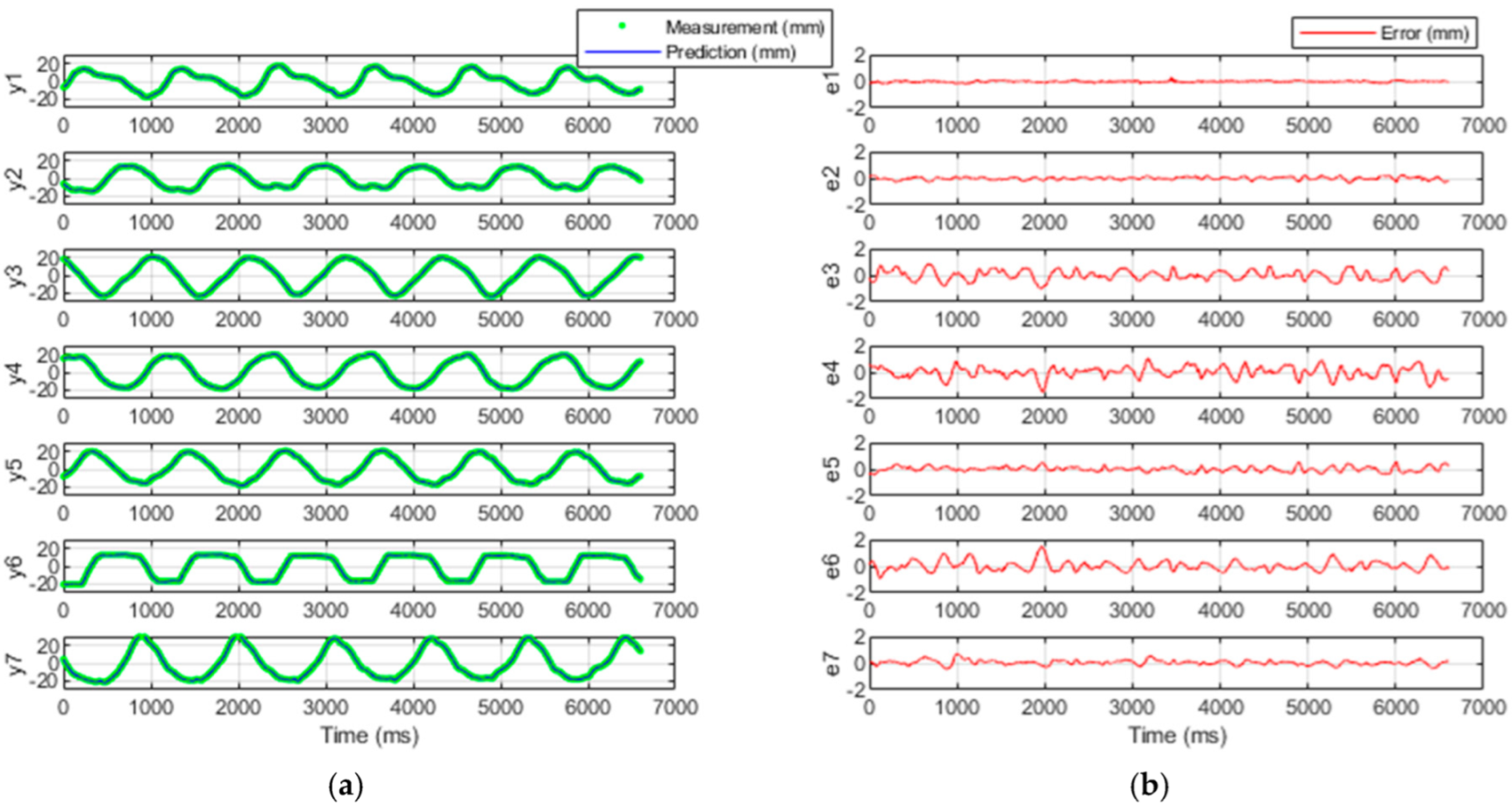
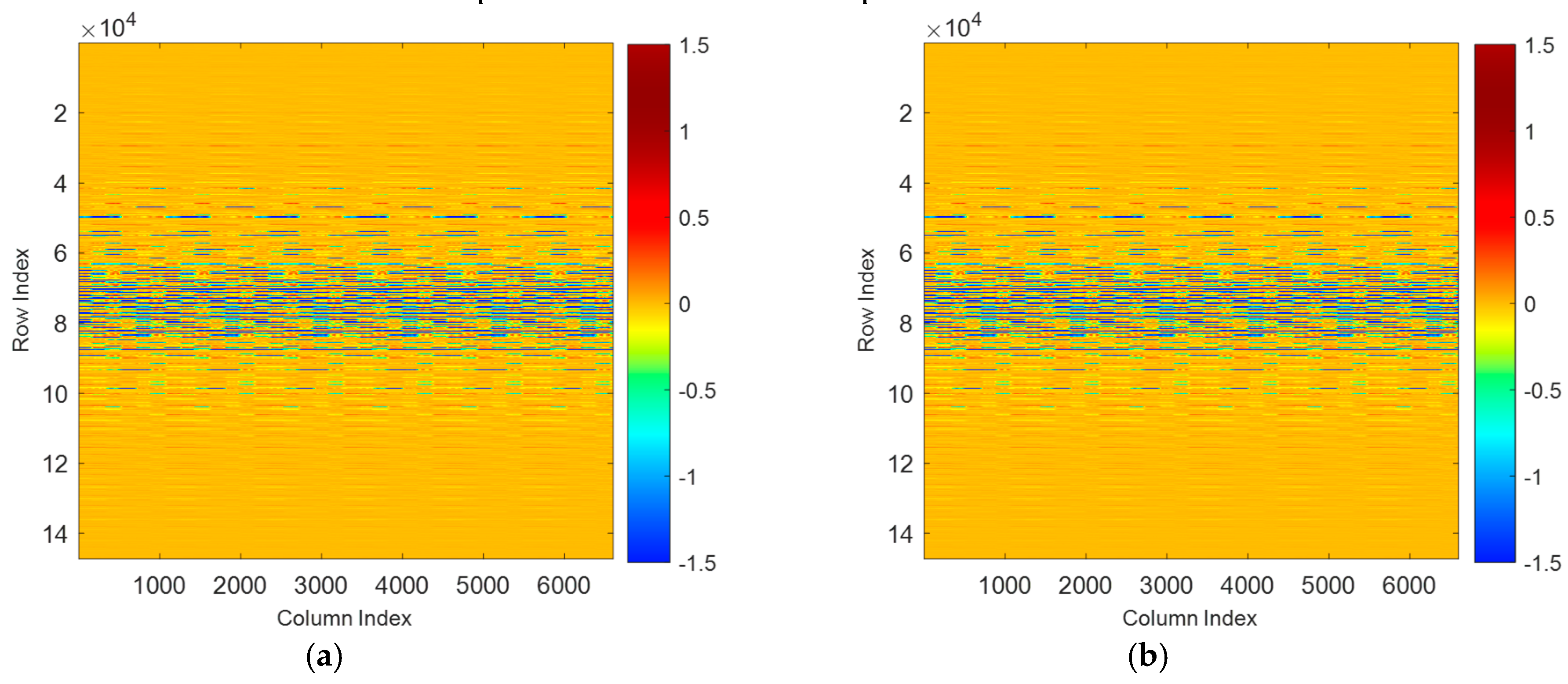
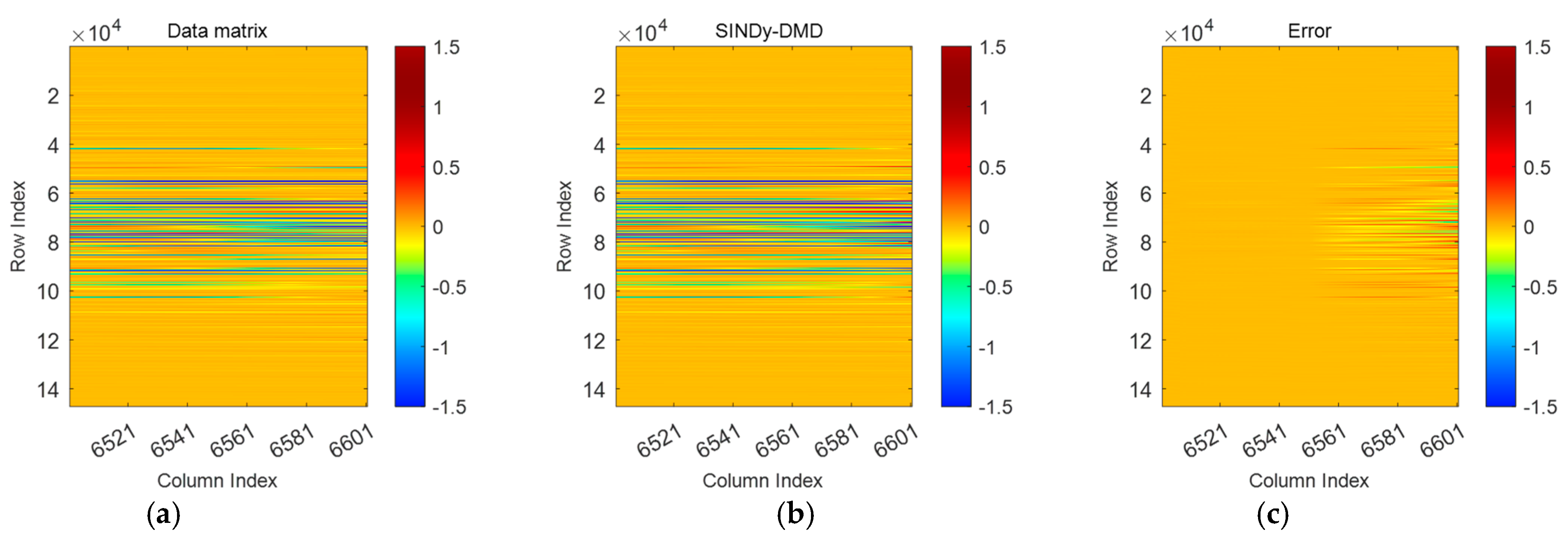
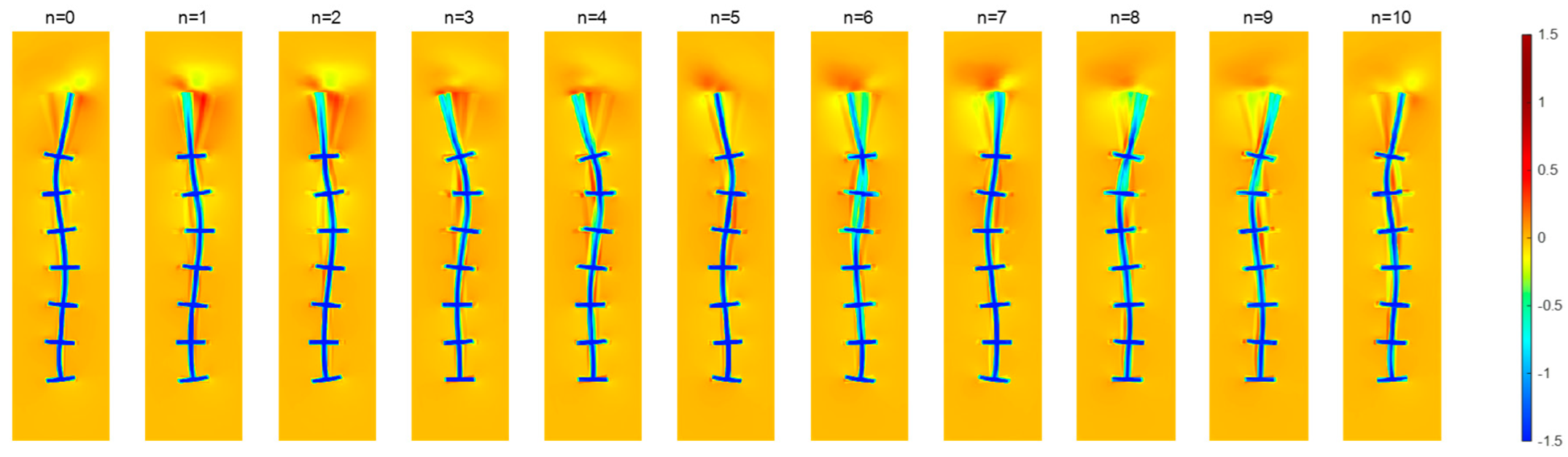
Anguilliform swimming is one of the most complex locomotion modes, involving various interacting phenomena, necessitating multidisciplinary studies. Eel robots are designed to incorporate biological principles and achieve efficient locomotion by replicating natural anguilliform swimming. These robots are simpler to engineer and study compared to their natural counterparts. Nevertheless, characterizing the robot–environment interaction is complex, demanding computationally expensive fluid dynamics simulations. In this study, we employ machine learning strategies to investigate the temporal evolution of the system and discover a data-driven model. Three methods were studied, including dynamic mode decomposition (DMD), sparse system identification (SINDy using PySINDy package), and autoencoder neural network (AE NN), as a general function approximator. The models were simulated using MATLAB® R2022 to obtain the prediction errors. The results show that the SINDy model presents less error within the regression range and performs better in extrapolation. Additionally, the SINDy model has a compact form and can explicitly formulate the coupling phenomena amongst the modes. Thus, instead of the standard DMD, we propose the SINDy-DMD approach to describe the anguilliform locomotion of the soft robot. The identified model was employed to recover the system state data matrix. It is concluded that the proposed model with quadratic terms provides a parsimonious representation of the system dynamics.
Keywords: data-driven modeling; swimming robot; aquatic locomotion; dynamic mode decomposition; PySINDy; SINDy-DMD data-driven modeling; swimming robot; aquatic locomotion; dynamic mode decomposition; PySINDy; SINDy-DMD