
Investigating the Application of Epoxy Adhesive Monomer Diffusion in Thermoplastic Surface Layers for Structural Bonding of FRPs

Abstract
1. Introduction
1.1. Challenges in Structural Bonding
1.2. The Role of Surface Treatment
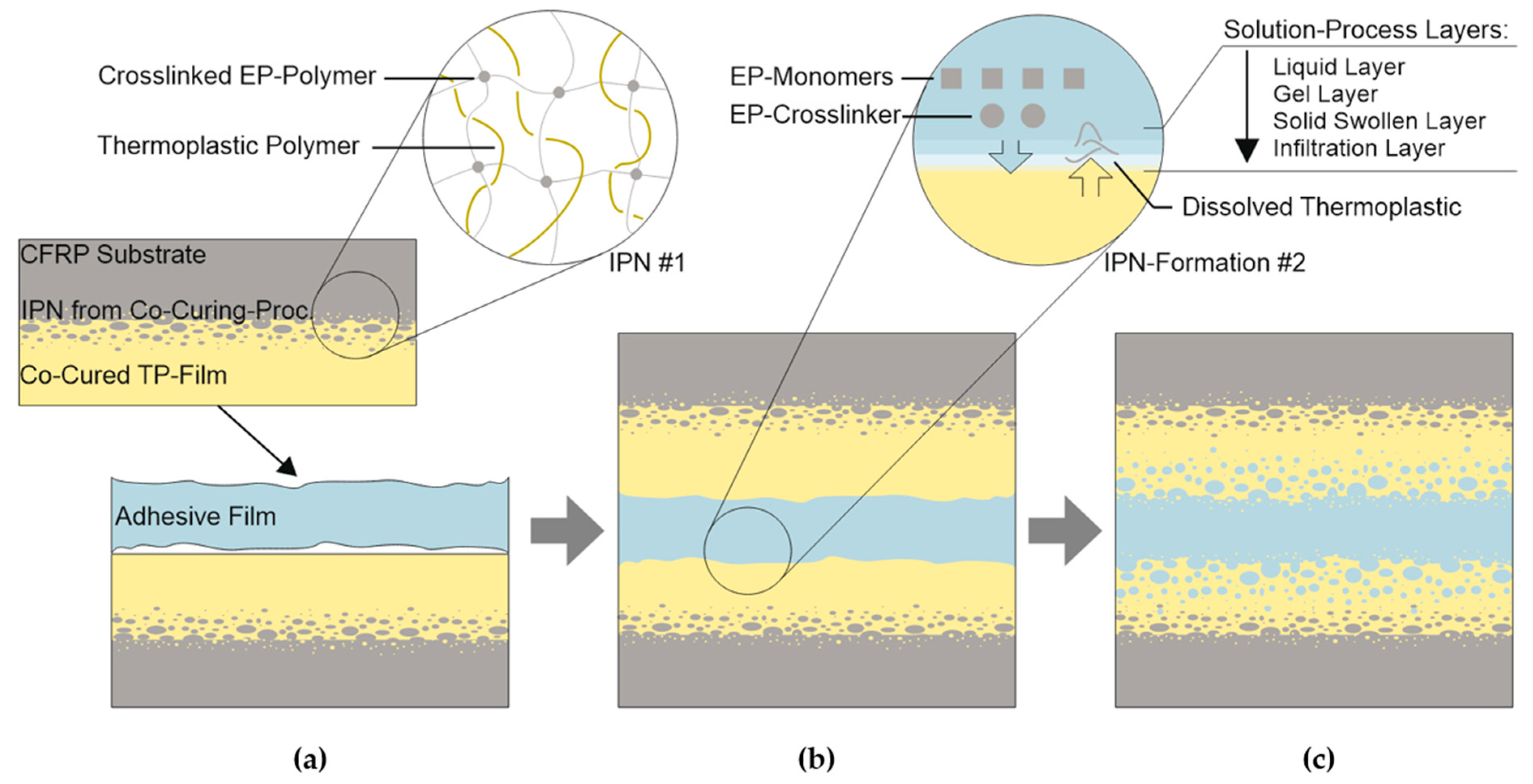
1.3. Diffusion-Based Adhesion
2. Materials and Methods
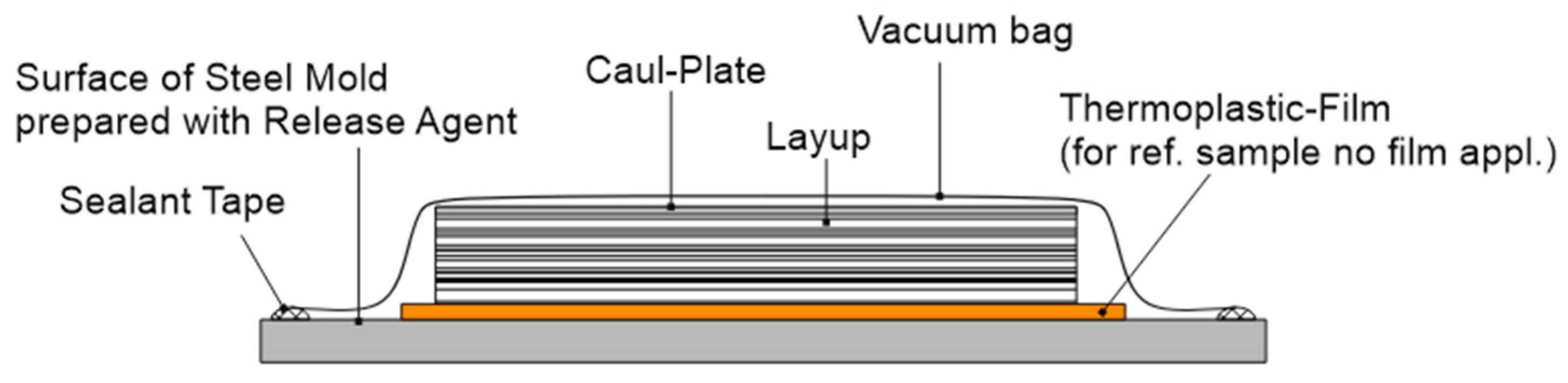
2.1. Selection of Materials and Method for Surface Modification
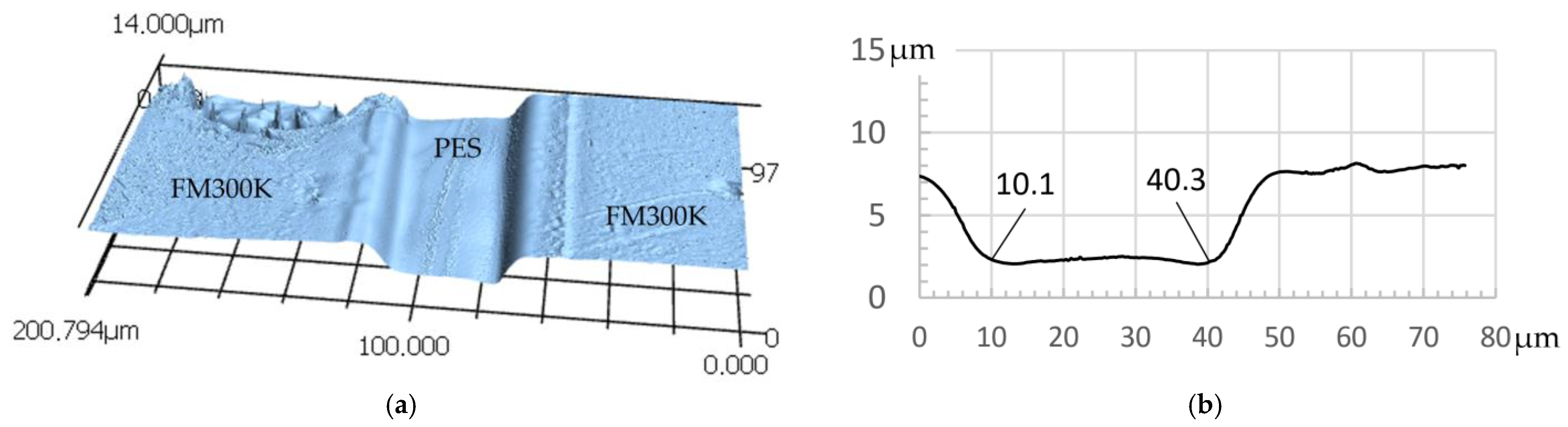
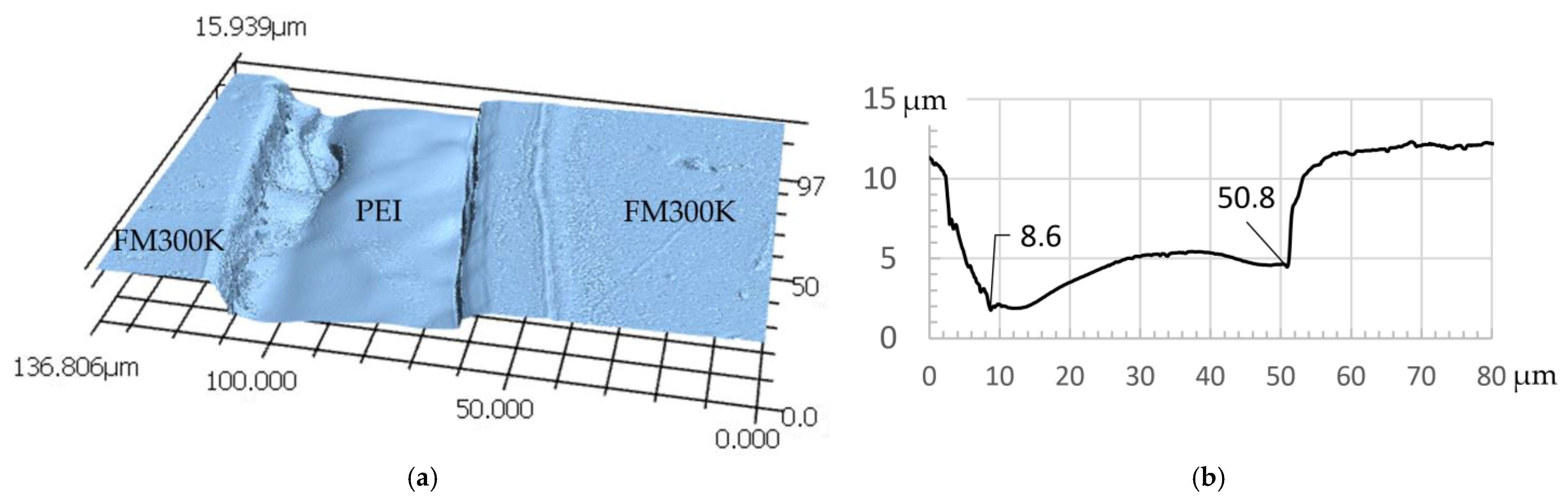
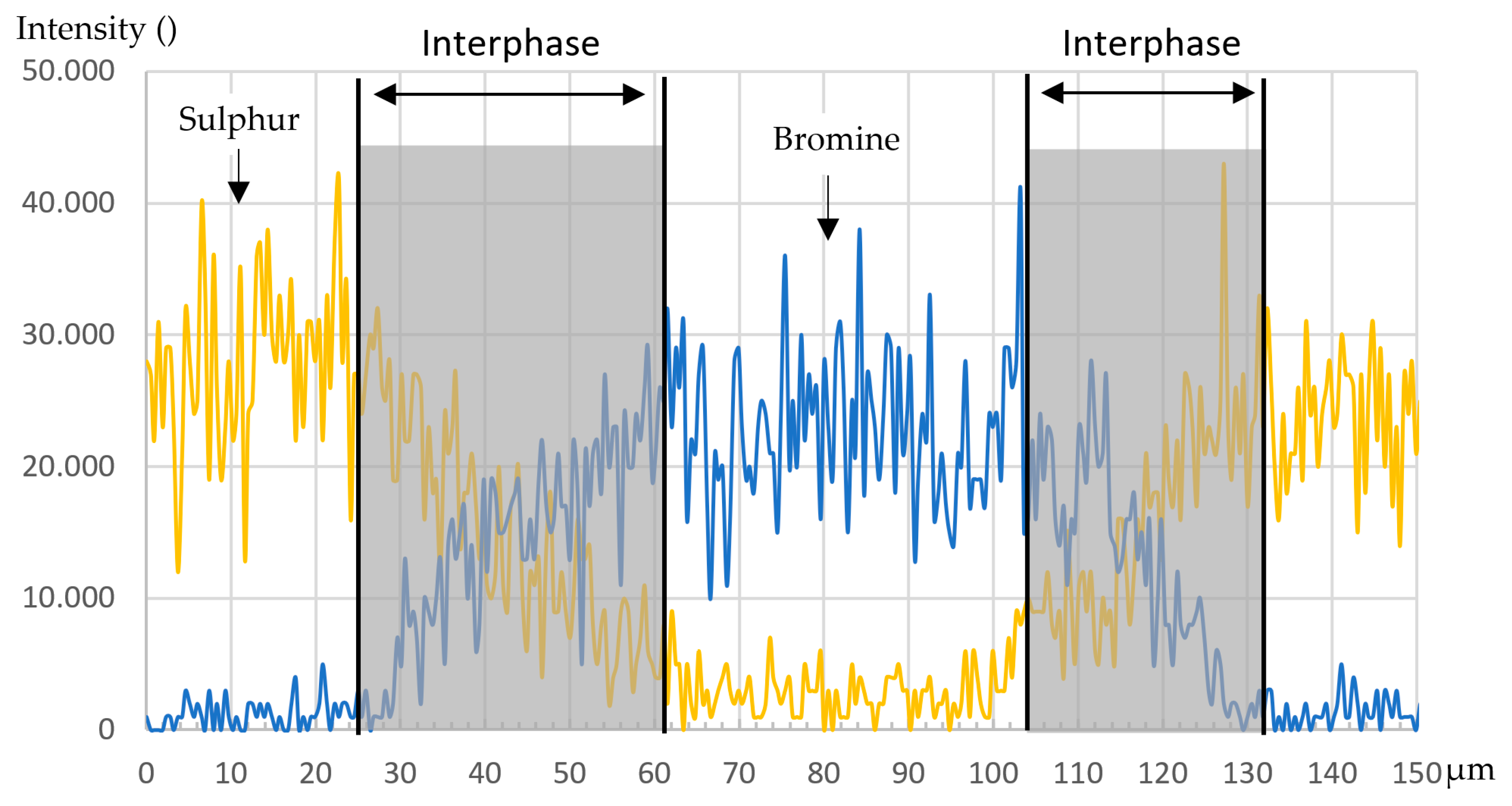
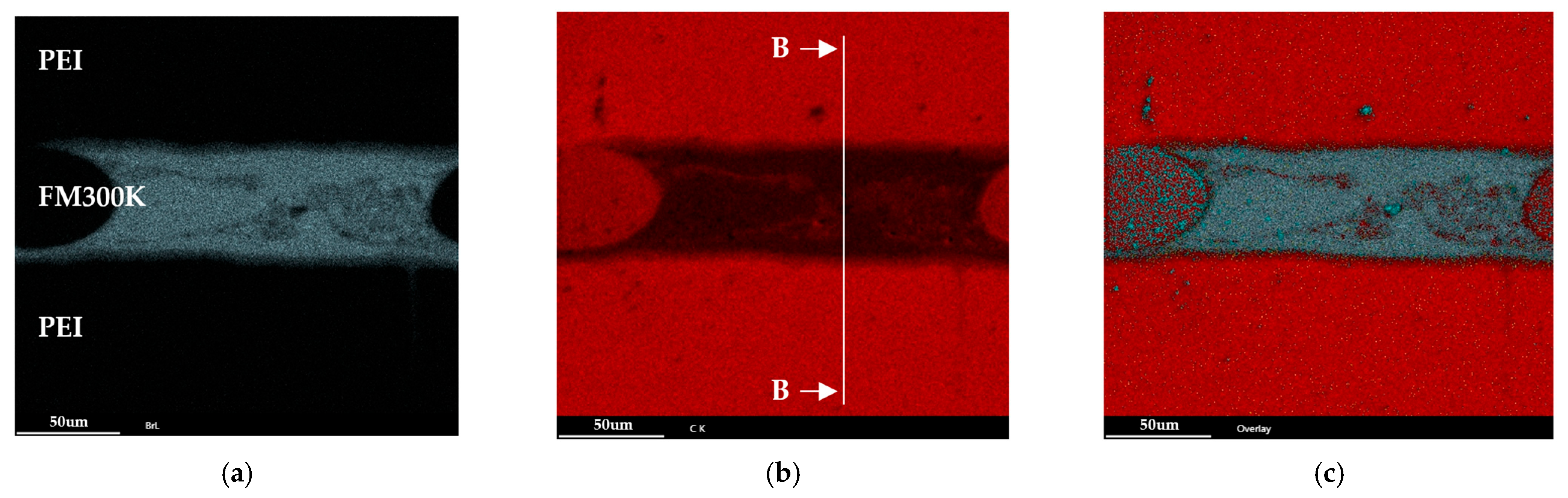
2.2. Procedures for Inspection of Interphase Formation
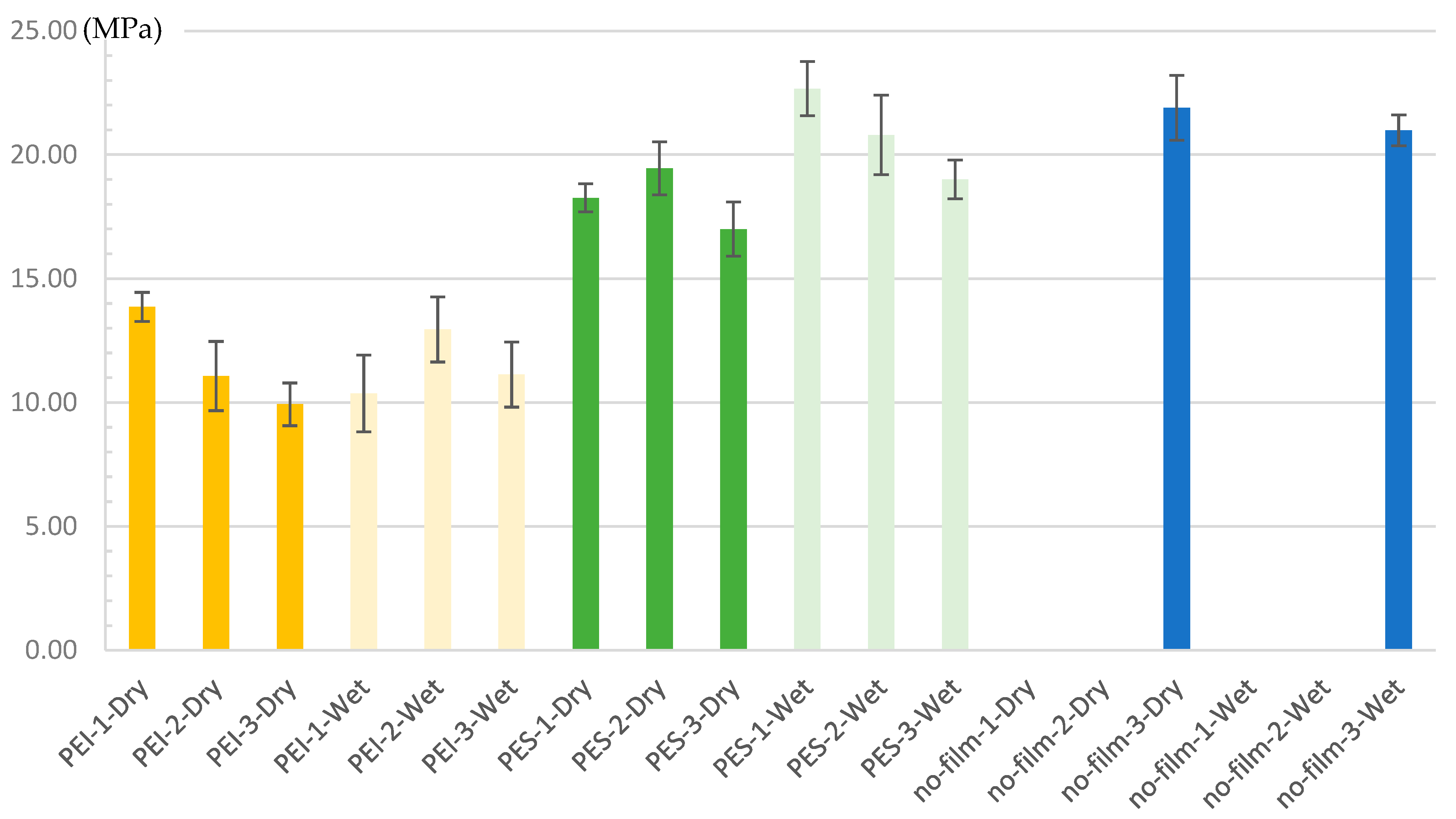
2.3. Sample Preparation and Procedures for SLS
- Dry wiping: Before bonding, the sample batches of a set had to be cut out of a larger panel using a water-cooled circular saw. During sawing, the samples became wet due to the cooling water. The samples were simply dried with a cotton wipe; no further cleaning took place.
- Wet wiping with isopropyl alcohol: Before bonding, the samples were first dried with a cotton wipe. The samples were then wiped twice over their entire surface with a wipe soaked in isopropyl alcohol
- Surface roughening by sanding: The samples were first wiped dry and then wiped with isopropyl alcohol. The surfaces were then manually sanded with an abrasive fleece (scotch brite red/very fine) and cleaned with de-ionized water, and finally wiped dry.
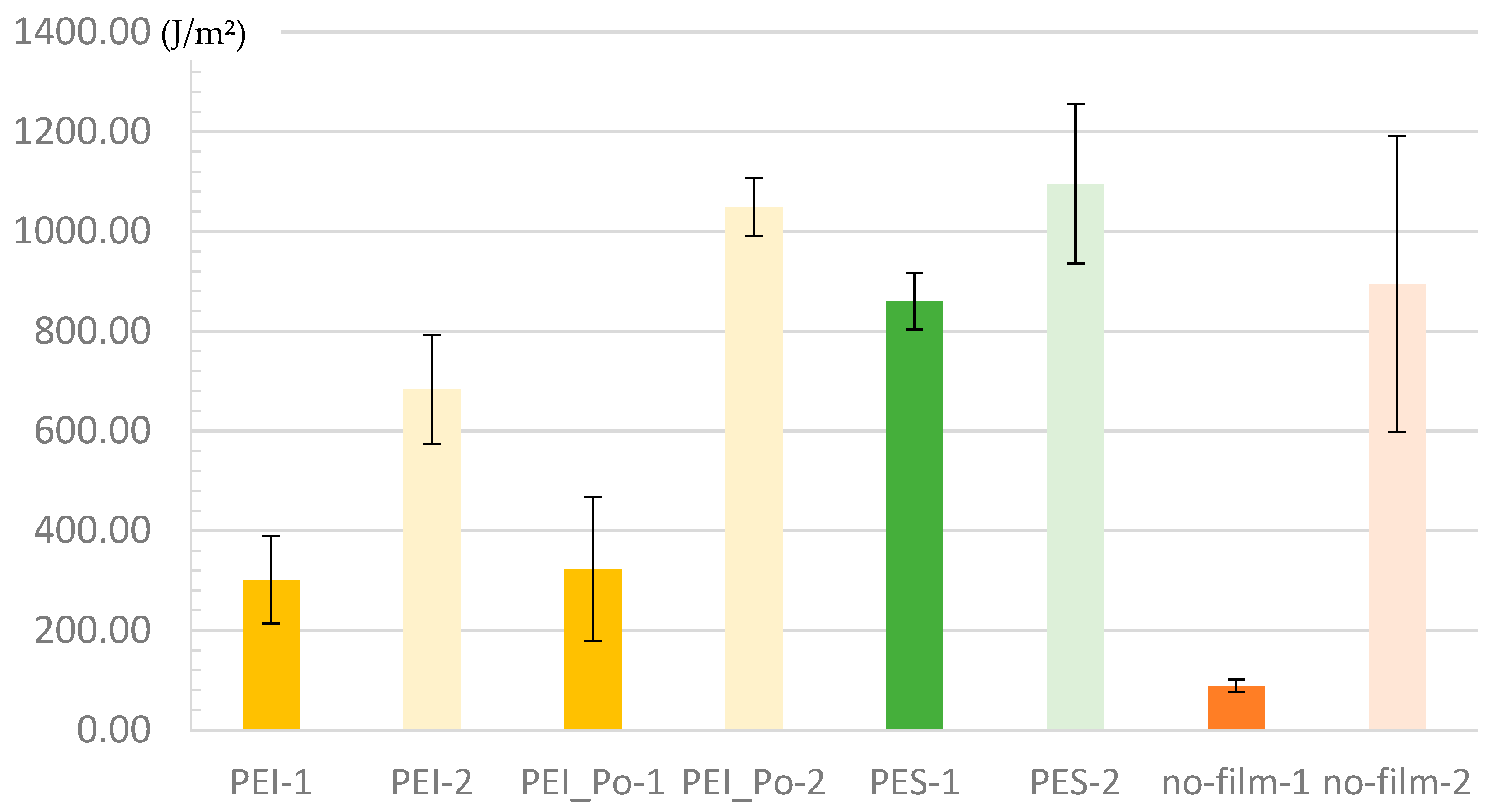
2.4. Sample Preparation and Procedures for Mode-I Fracture Toughness Testing
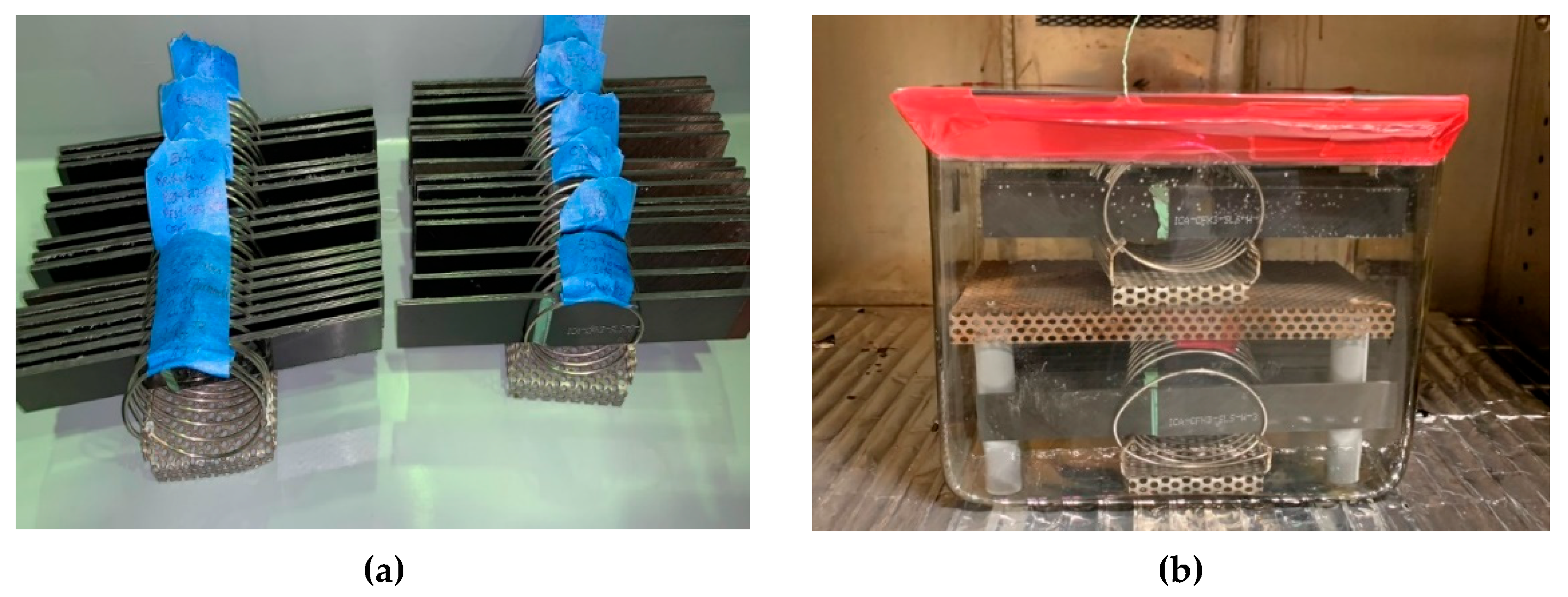
- Dry wiping: All samples were dried with a cotton cloth following the same procedure as for the SLS tests; no further cleaning was performed.
- Surface roughening by sanding: The sanding process was more complex compared to the SLS tests. A three-stage wet-sanding process was carried out with 120, 150, and 240 grit sandpaper, followed by cleaning with de-ionized water and isopropyl alcohol. The surface condition was checked with a water break test and the panels were re-dried at 100 °C for 1 h.
3. Results and Discussion
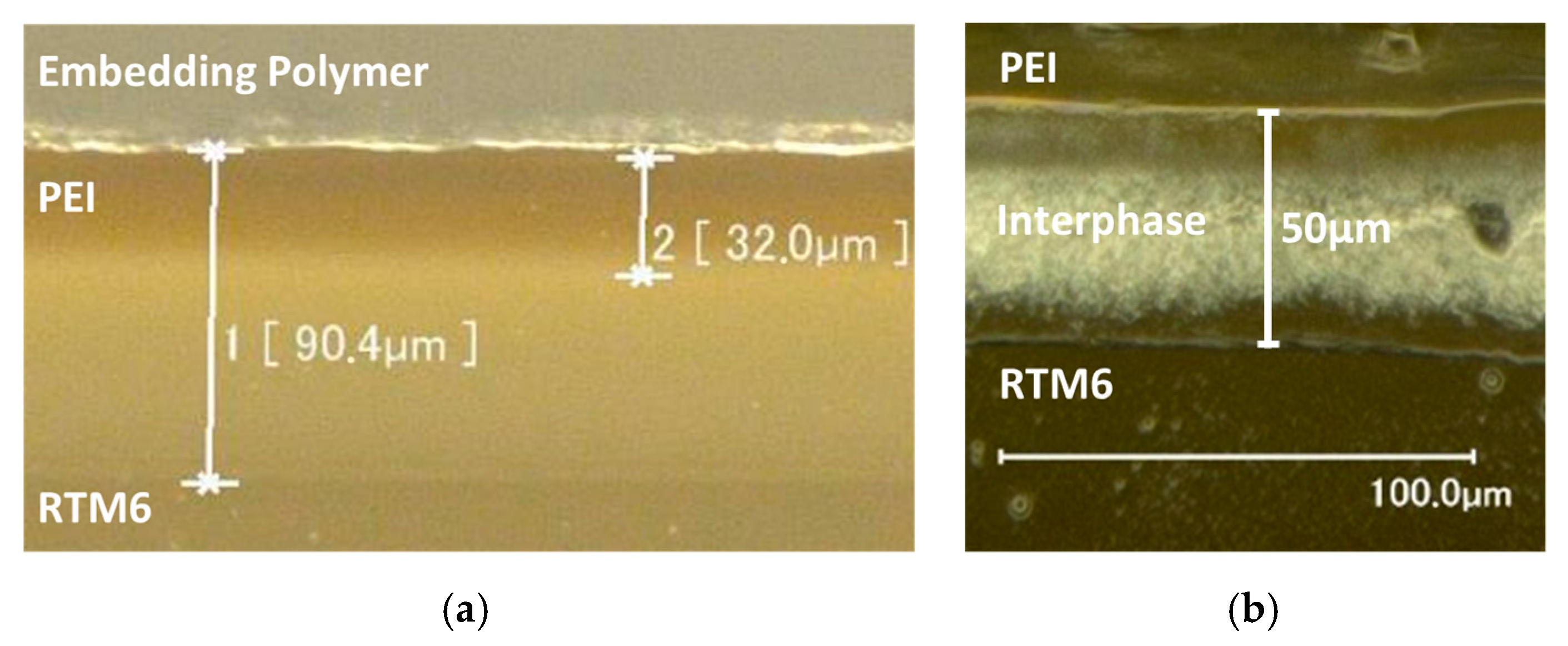
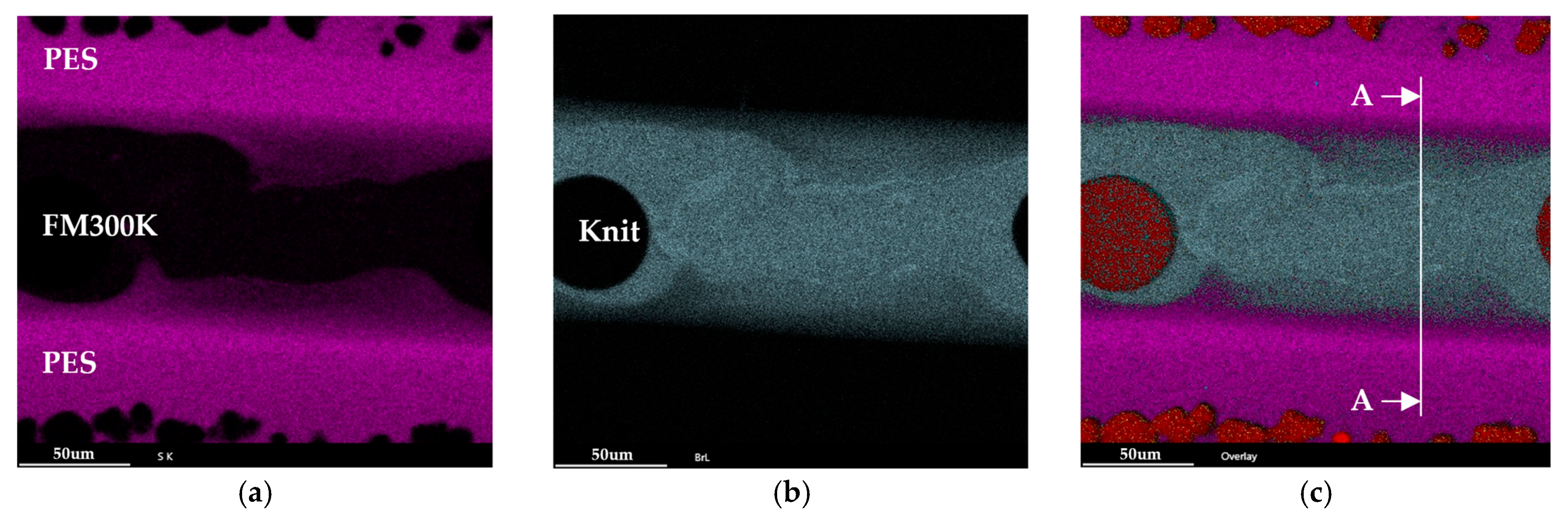
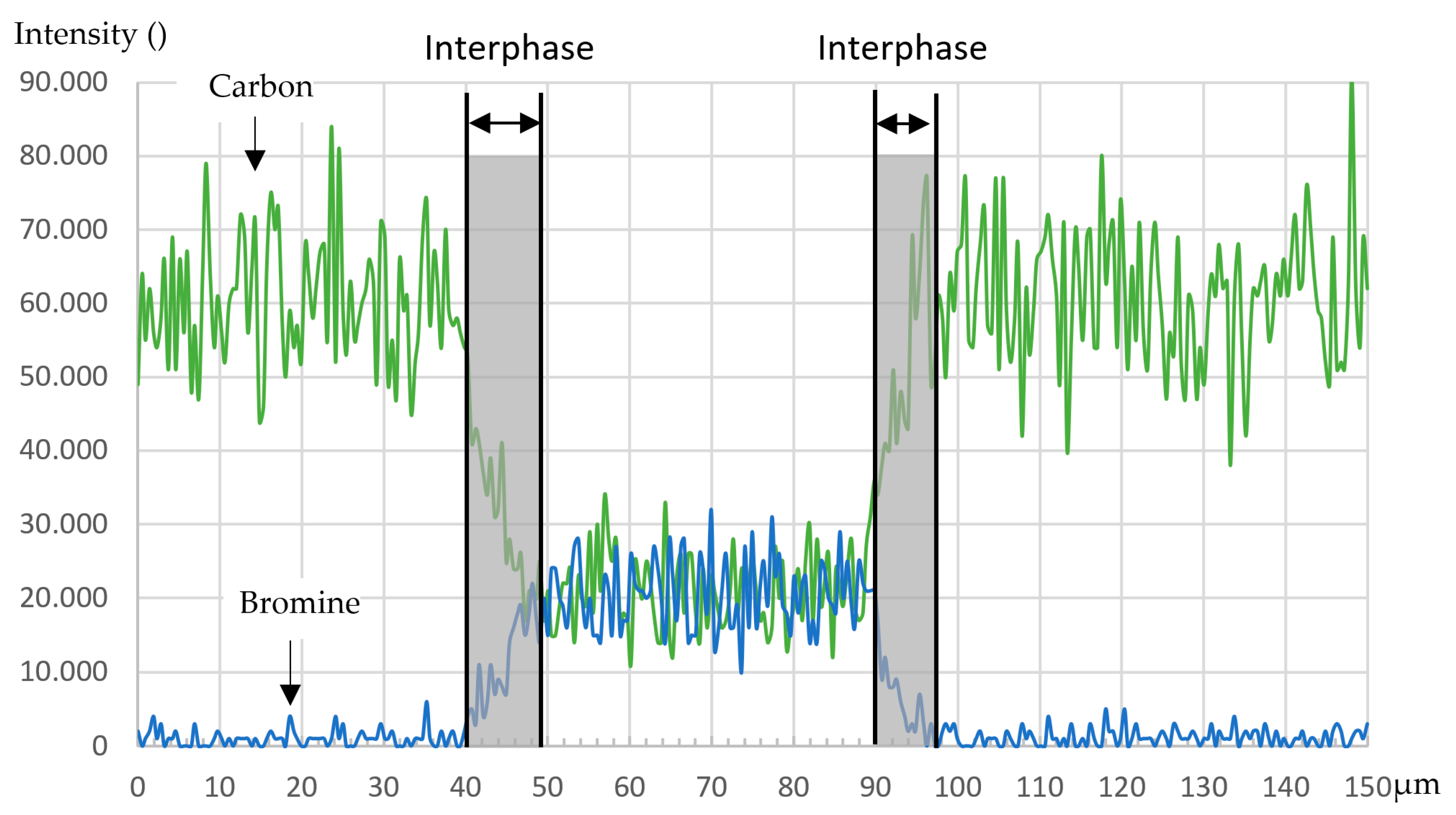
3.1. Interphase Formation
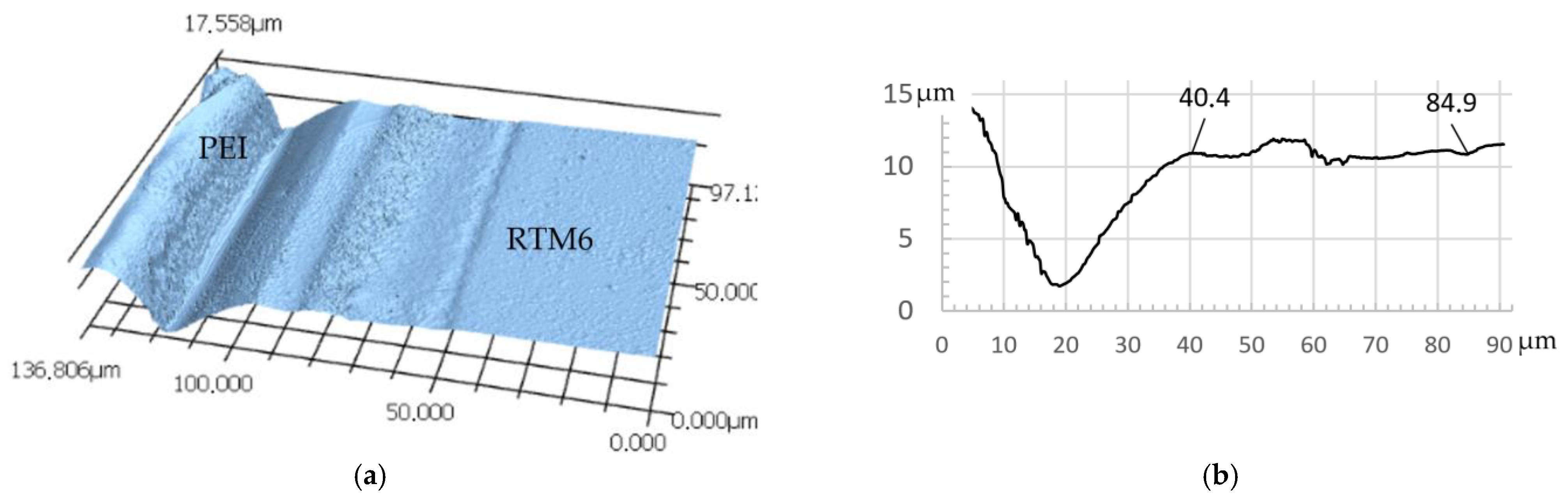
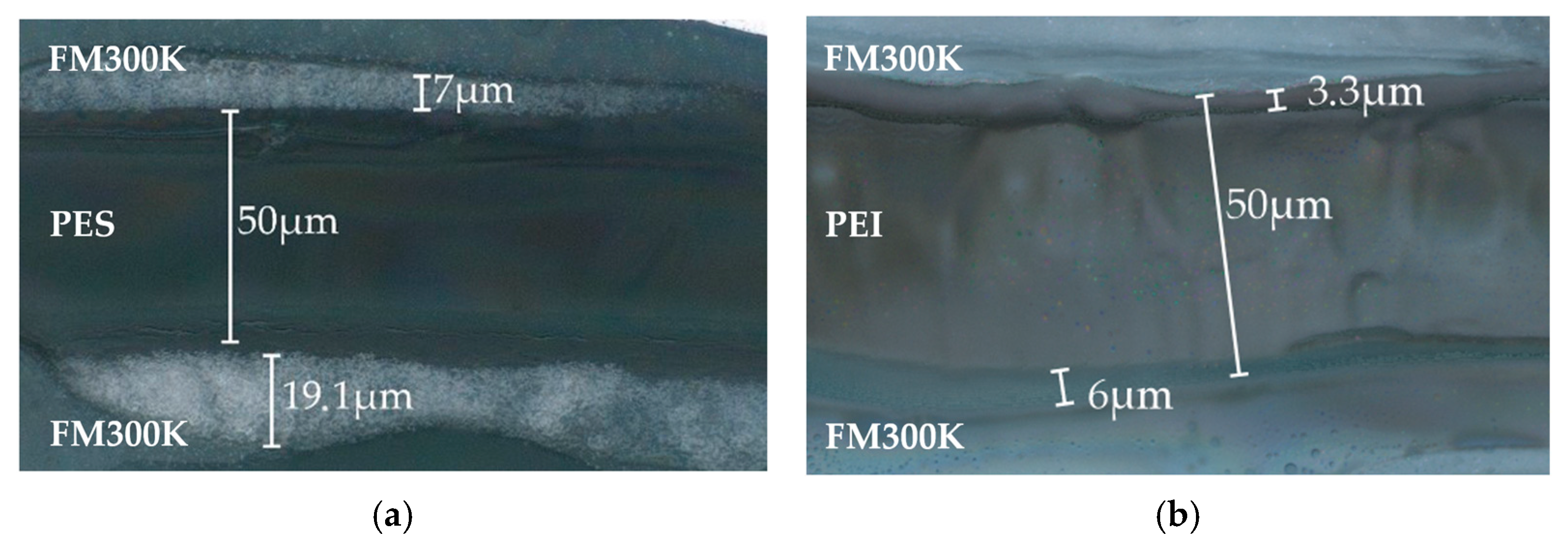
- The diffused thermoset can partially fixate the thermoplastic polymer, i.e., make dissolution in DCM more difficult;
- Thermoplastic phases can be found and also dissolved by DCM beyond the previously placed film. The phase separation that occurs during curing is thought to have a significant influence on this.
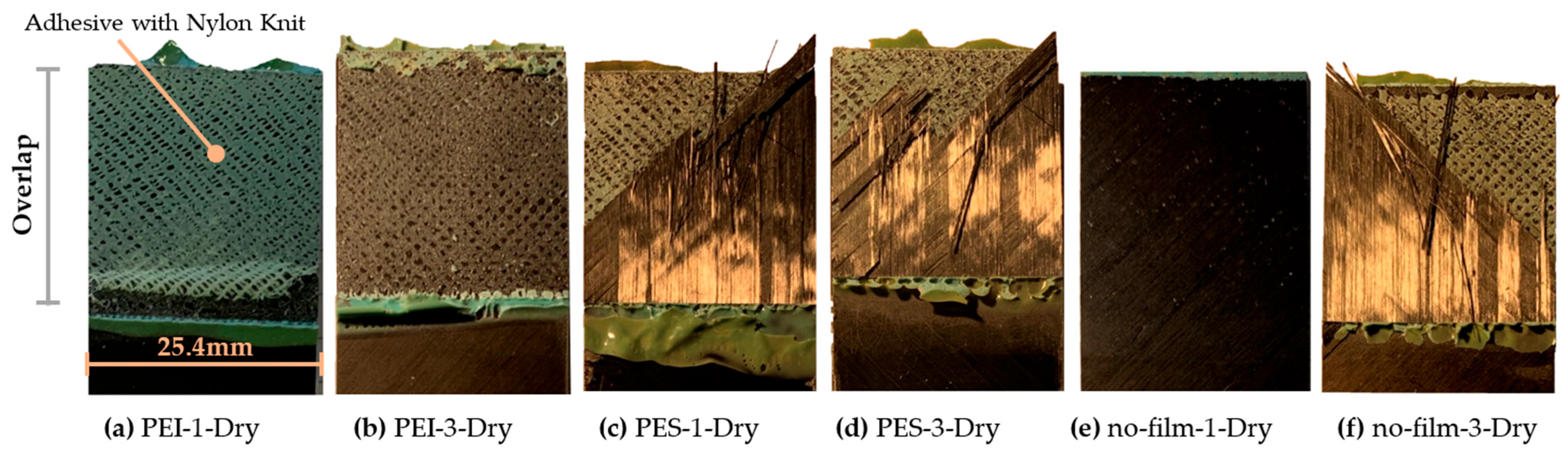
3.2. Shear Strength
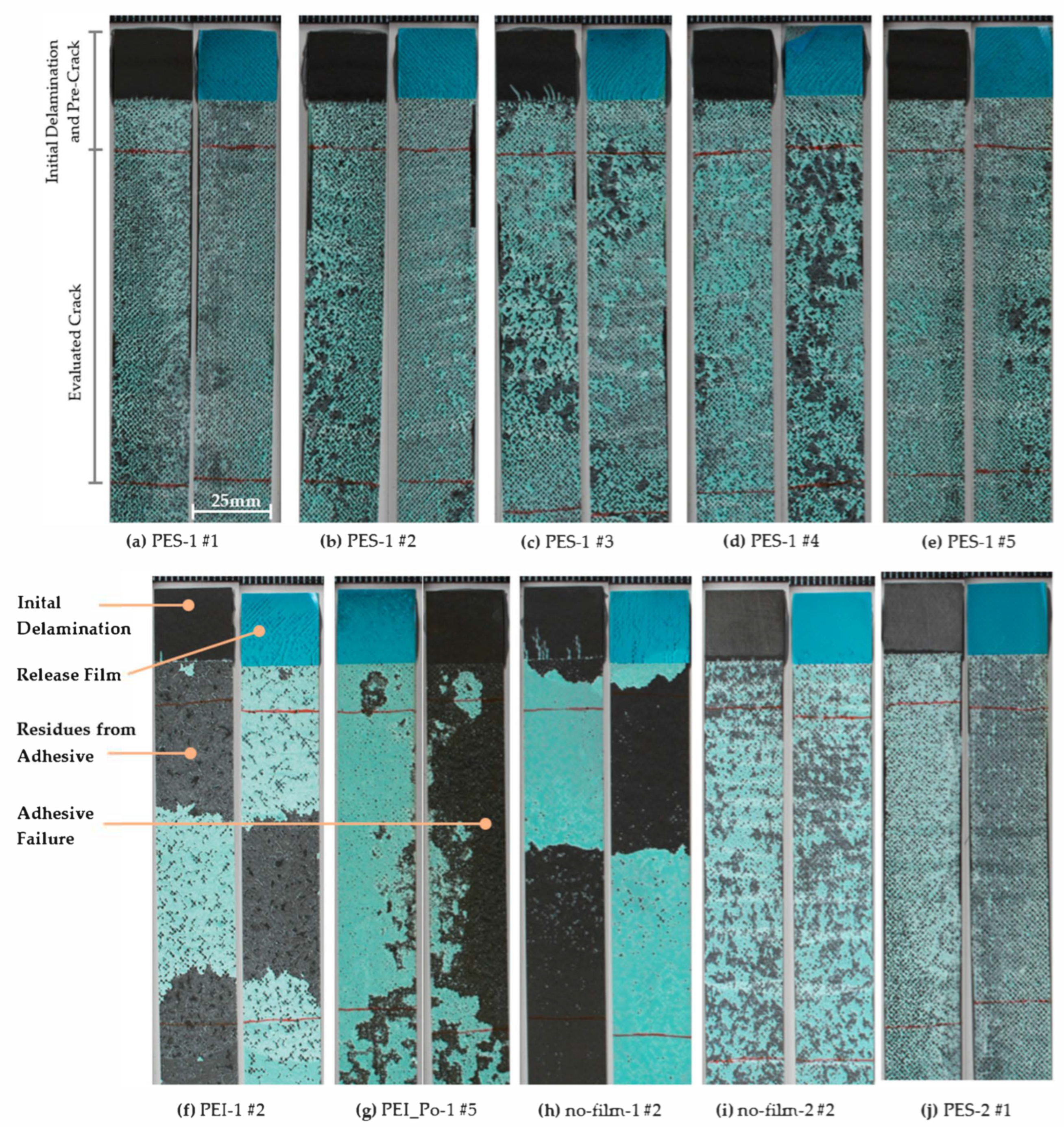
3.3. Fracture Toughness
4. Conclusions
Funding
Data Availability Statement
Acknowledgments
Conflicts of Interest
References
- Da Silva, L.F.M.; Öchsner, A.; Adams, R. (Eds.) Handbook of Adhesion Technology, 2nd ed.; Springer International Publishing: Cham, Switzerland, 2018; ISBN 9783319554105. [Google Scholar]
- Cavalcanti, W.L.; Brune, K.; Noeske, M.; Tserpes, K.; Ostachowicz, W.M.; Schlag, M. (Eds.) Adhesive Bonding of Aircraft Composite Structures: Non-Destructive Testing and Quality Assurance Concepts; Springer: Cham, Switzerland, 2021; ISBN 978-3-319-92809-8. [Google Scholar]
- Schmid Fuertes, T.A.; Kruse, T.; Körwien, T.; Geistbeck, M. Bonding of CFRP primary aerospace structures–discussion of the certification boundary conditions and related technology fields addressing the needs for development. Compos. Interfaces 2015, 22, 795–808. [Google Scholar] [CrossRef]
- Blass, D.; Dilger, K. CFRP-Part Quality as the Result of Release Agent Application–Demoldability, Contamination Level, Bondability. Procedia CIRP 2017, 66, 33–38. [Google Scholar] [CrossRef]
- Parker, B.M.; Waghorne, R.M. Surface pretreatment of carbon fibre-reinforced composites for adhesive bonding. Composites 1982, 13, 280–288. [Google Scholar] [CrossRef]
- Encinas, N.; Oakley, B.R.; Belcher, M.A.; Blohowiak, K.Y.; Dillingham, R.G.; Abenojar, J.; Martínez, M.A. Surface modification of aircraft used composites for adhesive bonding. Int. J. Adhes. Adhes. 2014, 50, 157–163. [Google Scholar] [CrossRef]
- Shi, H.; Sinke, J.; Benedictus, R. Surface modification of PEEK by UV irradiation for direct co-curing with carbon fibre reinforced epoxy prepregs. Int. J. Adhes. Adhes. 2017, 73, 51–57. [Google Scholar] [CrossRef]
- Yudhanto, A.; Alfano, M.; Lubineau, G. Surface preparation strategies in secondary bonded thermoset-based composite materials: A review. Compos. Part A Appl. Sci. Manuf. 2021, 147, 106443. [Google Scholar] [CrossRef]
- Wei, Y.; Jin, X.; Luo, Q.; Li, Q.; Sun, G. Adhesively bonded joints–A review on design, manufacturing, experiments, modeling and challenges. Compos. Part B Eng. 2024, 276, 111225. [Google Scholar] [CrossRef]
- Liu, J.; Xue, Y.; Dong, X.; Fan, Y.; Hao, H.; Wang, X. Review of the surface treatment process for the adhesive matrix of composite materials. Int. J. Adhes. Adhes. 2023, 126, 103446. [Google Scholar] [CrossRef]
- Venkatappagari, S.; Mutra, R.R.; Mallikarjuna Reddy, D. State-of-the-art in adhesive joint technology: A comprehensive review of recent progress. J. Mater. Res. Technol. 2025, 37, 2593–2615. [Google Scholar] [CrossRef]
- Parameswaranpillai, J.; Hameed, N.; Pionteck, J.; Woo, E.M. (Eds.) Handbook of Epoxy Blends; Springer: Cham, Switzerland, 2017; ISBN 9783319400419. [Google Scholar]
- Solvay Specialty Polymers. Virantage PESU: Tougheners for Thermoset Matrix Systems. 2016. Available online: https://www.solvay.com/sites/g/files/srpend616/files/2018-07/virantage-pesu-tougheners-for-thermoset-matrix-systems-en.pdf (accessed on 14 August 2025).
- Paris, C. Étude et Modélisation de la Polymérisation Dynamique de Composites à Matrice Thermodurcissable. Ph.D. Thesis, Institut National Polytechnique de Toulouse, Toulouse, France, 2011. [Google Scholar]
- Deng, S.; Djukic, L.; Paton, R.; Ye, L. Thermoplastic–epoxy interactions and their potential applications in joining composite structures–A review. Compos. Part A Appl. Sci. Manuf. 2015, 68, 121–132. [Google Scholar] [CrossRef]
- Ageorges, C.; Ye, L. Fusion Bonding of Polymer Composites; Springer: London, UK, 2002; ISBN 978-1-4471-1087-3. [Google Scholar]
- Kaps, R. Kombinierte Prepreg- und Infusionstechnologie für Integrale Faserverbundstrukturen; Zugl.: Braunschweig, Germany, 2010. [Google Scholar]
- Bruckbauer, P. MAIfo-Entwicklung Einer Prozesskette zur Herstellung von Teilfolierten Faserverbundbauteilen: Abschlussbericht: Berichtszeitraum: 01.05.2013–30.04.2016; TUM-Lehrstuhl für Carbon Composites: Garching, Germany, 2015. [Google Scholar]
- Villegas, I.F.; van Moorleghem, R. Ultrasonic welding of carbon/epoxy and carbon/PEEK composites through a PEI thermoplastic coupling layer. Compos. Part A Appl. Sci. Manuf. 2018, 109, 75–83. [Google Scholar] [CrossRef]
- Brauner, C.; Nakouzi, S.; Zweifel, L.; Tresch, J. Co-curing behaviour of thermoset composites with a thermoplastic boundary layer for welding purposes. Adv. Compos. Lett. 2020, 29, 2633366X2090277. [Google Scholar] [CrossRef]
- Vandi, L.-J. Understanding the Co-Cured Epoxy/Thermoplastic Interface in Thermoset Composite Welding (TCW). Ph.D. Thesis, University of Queensland, Brisbane, Australia, 2014. [Google Scholar]
- Taubert, M.; Diez, J.G.; Musil, B.; Höfer, P. Comparing interphase formation in different thermoplastics combined with RTM6/M18 epoxy systems. Adv. Manuf. Polym. Compos. Sci. 2025, 11, 2482280. [Google Scholar] [CrossRef]
- Bois, M. Mechanical Properties of Thermoplastic/Thermoset Interphases. Masterarbeit; Katholische Universität Louvain: Louvain, Belgium, 2016. [Google Scholar]
- Meer, T.; Geistbeck, M. Automatisiertes Schweißen von thermoplastischen Verbindungselementen auf CFK. Light. Des. 2017, 10, 40–45. [Google Scholar] [CrossRef]
- Sperling, L.H. Interpenetrating Polymer Networks: An Overview. In Interpenetrating Polymer Networks; Klempner, D., Sperling, L.H., Utracki, L.A., Eds.; American Chemical Society: Washington, DC, USA, 1994; pp. 3–38. ISBN 9780841225282. [Google Scholar]
- Zhou, J.L.; Cheng, C.; Zhang, H.; Sun, Z.Y.; Zhu, S.; Yu, M.H. Dissolution behaviour of polyethersulfone in diglycidyl ether of bisphenol-A epoxy resins. IOP Conf. Ser. Mater. Sci. Eng. 2017, 213, 12038. [Google Scholar] [CrossRef]
- Ueberreiter, K. The solution process. In Diffusion in Polymers; Academic Press: London, UK, 1968; pp. 220–257. [Google Scholar]
- Robeson, L.M. Polymer Blends: A Comprehensive Review, 1st ed.; Hanser: Munich, Germany, 2007; ISBN 9783446436503. [Google Scholar]
- Tercjak, A. Phase separation and morphology development in thermoplastic-modified thermosets. In Thermosets; Elsevier: Amsterdam, The Netherlands, 2018; pp. 147–171. ISBN 9780081010211. [Google Scholar]
- Bruckbauer, P. Polyetherimid-Epoxidharz Interphasen zur Anbindung von Funktionsschichten auf Faserverbundwerkstoffen. Z. Für Kunststofftechnik 2017, 1, 35–56. [Google Scholar] [CrossRef][Green Version]
- Dumont, D.; Seveno, D.; de Coninck, J.; Bailly, C.; Devaux, J.; Daoust, D. Interdiffusion of thermoplastics and epoxy resin precursors: Investigations using experimental and molecular dynamics methods. Polym. Int. 2012, 61, 1263–1271. [Google Scholar] [CrossRef]
- Kim, B.-J.; Oh, C.-B.; Won, J.S.; Lee, H.I.; Lee, M.Y.; Kwon, S.H.; Lee, S.G.; Park, H.; Seong, D.G.; Jeong, J.; et al. Development of high-toughness aerospace composites through polyethersulfone composition optimization and mass production applicability evaluation. Compos. Part A Appl. Sci. Manuf. 2025, 189, 108590. [Google Scholar] [CrossRef]
- Kwon, S.H.; Kang, H.; Kim, B.-J.; Lee, H.I.; Lee, J.M.; Kim, J.; Lee, S.G. Addressing diffusion behavior and impact in an epoxy-amine cure system using molecular dynamics simulations. Sci. Rep. 2023, 13, 138. [Google Scholar] [CrossRef]
- Ichikawa, I.; Sugizaki, T.; Akasaka, S.; Asai, S. Quantitative analysis of the phase-separated structure and mechanical properties of acrylic copolymer/epoxy thermosetting resin composites. Polym. J. 2015, 47, 779–788. [Google Scholar] [CrossRef]
- Rosetti, Y.; Alcouffe, P.; Pascault, J.-P.; Gérard, J.-F.; Lortie, F. Polyether Sulfone-Based Epoxy Toughening: From Micro- to Nano-Phase Separation via PES End-Chain Modification and Process Engineering. Materials 2018, 11, 1960. [Google Scholar] [CrossRef] [PubMed]
- Konrad, J.; Meißner, R.H.; Bitzek, E.; Zahn, D. A Molecular Simulation Approach to Bond Reorganization in Epoxy Resins: From Curing to Deformation and Fracture. ACS Polym. Au 2021, 1, 165–174. [Google Scholar] [CrossRef] [PubMed]
- Dötschel, V.; Richter, E.M.; Possart, G.; Steinmann, P.; Ries, M. Reactive coarse-grained MD models to capture interphase formation in epoxy-based structural adhesive joints. Eur. J. Mech. -A/Solids 2025, 116, 105801. [Google Scholar] [CrossRef]
- Cheng, X.; Wu, Q.; Morgan, S.E.; Wiggins, J.S. Morphologies and mechanical properties of polyethersulfone modified epoxy blends through multifunctional epoxy composition. J. Appl. Polym. Sci. 2017, 134. [Google Scholar] [CrossRef]
- Kinugawa, Y.; Kawagoe, Y.; Shirasu, K.; Ryuzono, K.; Okabe, T. Multiscale modeling of residual deformation in CFRP with reaction-induced phase separation. Int. J. Mech. Sci. 2025, 306, 110779. [Google Scholar] [CrossRef]
- Soutis, C.; Hodzic, A.; Beaumont, P.W.R. (Eds.) Structural Integrity and Durability of Advanced Composites; Elsevier: Amsterdam, The Netherlands, 2015; ISBN 9780081001370. [Google Scholar]
- Hou, M. Thermoplastic Adhesive for Thermosetting Composites. MSF 2012, 706–709, 2968–2973. [Google Scholar] [CrossRef]
- Löbel, T. The Hybrid Bondline: A Novel Disbond-Stopping Design for Adhesively Bonded Composite Joints. Ph.D. Thesis, Technische Universität Carolo-Wilhelmina zu Braunschweig, Braunschweig, Germany, 2016. [Google Scholar]
- Schollerer, M.J. Steigerung der Robustheit von Strukturellen Verklebungen in der Luftfahrt Mittels Lokaler Oberflächenzähmodifikation. Ph.D. Thesis, Technische Universität Carolo-Wilhelmina zu Braunschweig, Braunschweig, Germany, 2024. [Google Scholar]
- Cheng, C.; Chen, Z.; Huang, Z.; Zhang, C.; Tusiime, R.; Zhou, J.; Sun, Z.; Liu, Y.; Yu, M.; Zhang, H. Simultaneously improving mode I and mode II fracture toughness of the carbon fiber/epoxy composite laminates via interleaved with uniformly aligned PES fiber webs. Compos. Part A Appl. Sci. Manuf. 2020, 129, 105696. [Google Scholar] [CrossRef]
- van Velthem, P.; Ballout, W.; Daoust, D.; Sclavons, M.; Cordenier, F.; Henry, E.; Dumont, D.; Destoop, V.; Pardoen, T.; Bailly, C. Influence of thermoplastic diffusion on morphology gradient and on delamination toughness of RTM-manufactured composites. Compos. Part A Appl. Sci. Manuf. 2015, 72, 175–183. [Google Scholar] [CrossRef]
- Bruckbauer, P. Struktur-Eingenschafts-Beziehungen von Interphasen zwischen Epoxidharz und thermoplastischen Funktionsschichten für Faserverbundwerkstoffe; Verlag Dr. Hut: München, Germany, 2019; ISBN 9783843938945. [Google Scholar]
- D14 Committee. Test Method for Lap Shear Adhesion for Fiber Reinforced Plastic (FRP) Bonding; ASTM International: West Conshohocken, PA, USA, 2001. [Google Scholar]
- DIN EN 6033:2016-02; Luft- und Raumfahrt_-Kohlenstofffaserverstärkte Kunststoffe_-Prüfverfahren_-Bestimmung der Interlaminaren Energiefreisetzungsrate_-Mode_I_- GIC. Deutsche und Englische Fassung EN_6033:2015. DIN Media GmbH: Berlin, Germany.
- Markatos, D.N.; Tserpes, K.I.; Rau, E.; Markus, S.; Ehrhart, B.; Pantelakis, S. The effects of manufacturing-induced and in-service related bonding quality reduction on the mode-I fracture toughness of composite bonded joints for aeronautical use. Compos. Part B Eng. 2013, 45, 556–564. [Google Scholar] [CrossRef]



| Surface Modification | Surface Preparation | Conditioning |
|---|---|---|
| CFRP: reference/none | 1: Dry wiping | Dry: 7 days at 23 °C and 50% humidity |
| PEI: 50 um PEI film | 2: Wet wiping with isopropyl alcohol | Wet: 7 days at 70 °C in water |
| PES: 50 um PES film | 3: Surface roughening by sanding |
| Surface Modification | Surface Preparation |
|---|---|
| CFRP: reference/none | 1: Dry wiping |
| PEI: 50 um PEI film | 2: Surface roughening by sanding |
| PES: 50 um PES film | |
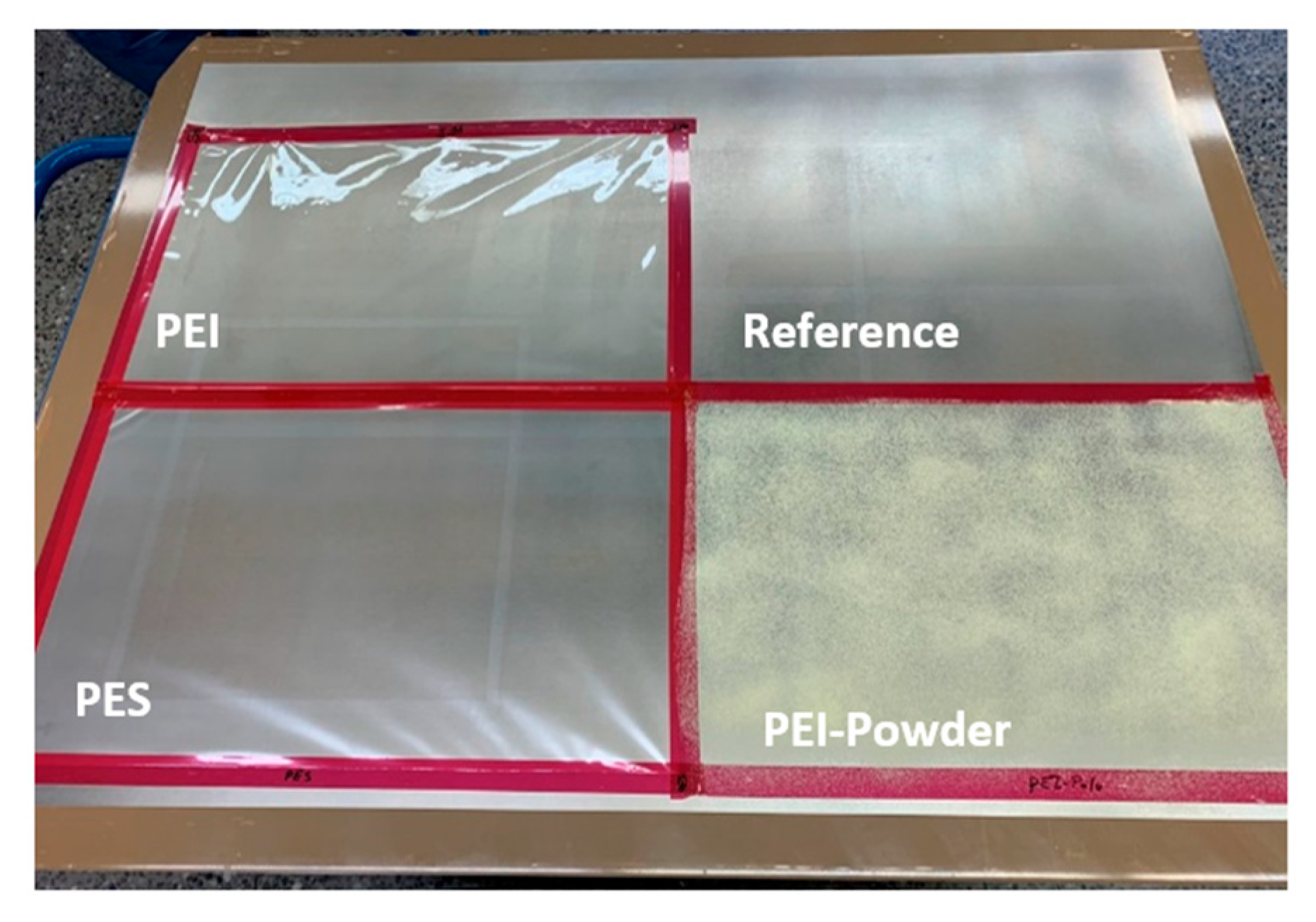
| PEI_Po: PEI powder with a particle size between 250 µm and 355 µm |
Disclaimer/Publisher’s Note: The statements, opinions and data contained in all publications are solely those of the individual author(s) and contributor(s) and not of MDPI and/or the editor(s). MDPI and/or the editor(s) disclaim responsibility for any injury to people or property resulting from any ideas, methods, instructions or products referred to in the content. |
© 2025 by the author. Licensee MDPI, Basel, Switzerland. This article is an open access article distributed under the terms and conditions of the Creative Commons Attribution (CC BY) license (https://creativecommons.org/licenses/by/4.0/).
Share and Cite
Ropte, S. Investigating the Application of Epoxy Adhesive Monomer Diffusion in Thermoplastic Surface Layers for Structural Bonding of FRPs. J. Compos. Sci. 2025, 9, 695. https://doi.org/10.3390/jcs9120695
Ropte S. Investigating the Application of Epoxy Adhesive Monomer Diffusion in Thermoplastic Surface Layers for Structural Bonding of FRPs. Journal of Composites Science. 2025; 9(12):695. https://doi.org/10.3390/jcs9120695
Chicago/Turabian StyleRopte, Sven. 2025. "Investigating the Application of Epoxy Adhesive Monomer Diffusion in Thermoplastic Surface Layers for Structural Bonding of FRPs" Journal of Composites Science 9, no. 12: 695. https://doi.org/10.3390/jcs9120695
APA StyleRopte, S. (2025). Investigating the Application of Epoxy Adhesive Monomer Diffusion in Thermoplastic Surface Layers for Structural Bonding of FRPs. Journal of Composites Science, 9(12), 695. https://doi.org/10.3390/jcs9120695