Article

Airflow Sensing with Miniaturized UAVs in Semi-Lagrangian Mode

Bremen Institute for Metrology, Automation and Quality Science, University of Bremen, Linzer Str. 13, 28359 Bremen, Germany
*
Author to whom correspondence should be addressed.
Drones 2026, 10(9), 710; https://doi.org/10.3390/drones10090710 (registering DOI)

Submission received: 19 June 2026 / Revised: 14 September 2026 / Accepted: 16 September 2026 / Published: 18 September 2026
(This article belongs to the Section Drone Design and Development)

Abstract

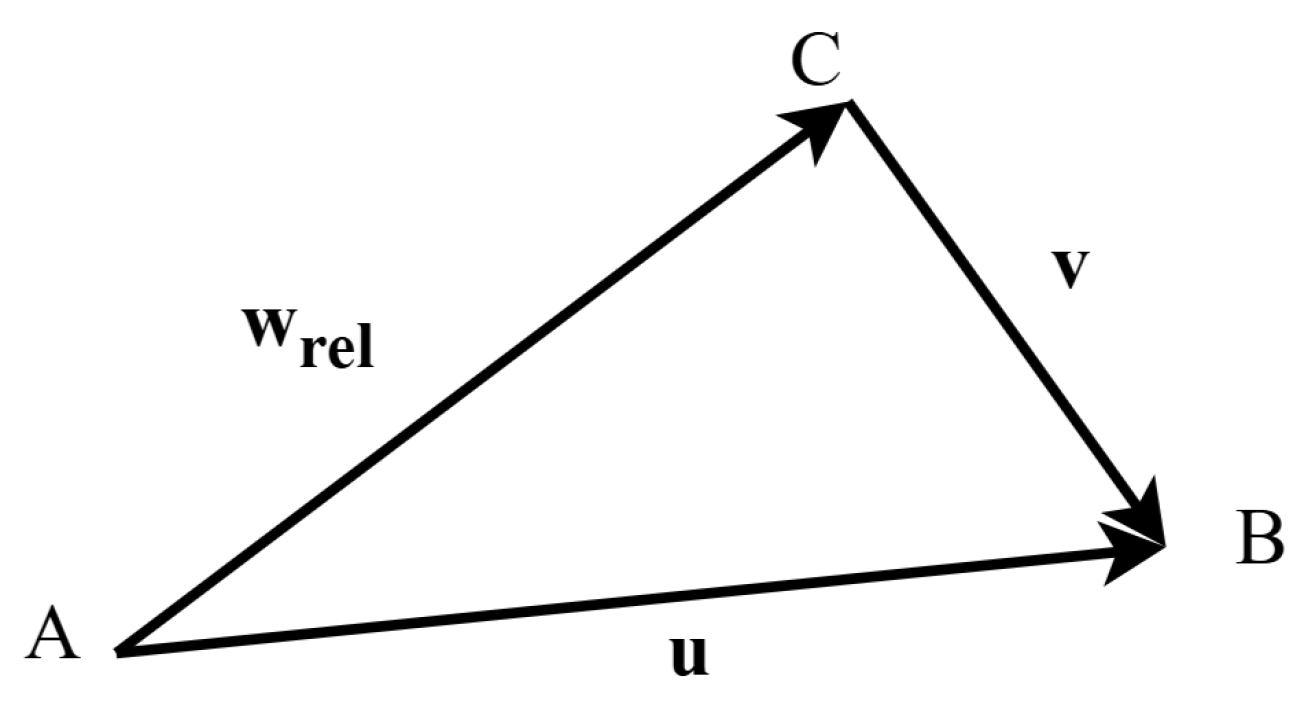
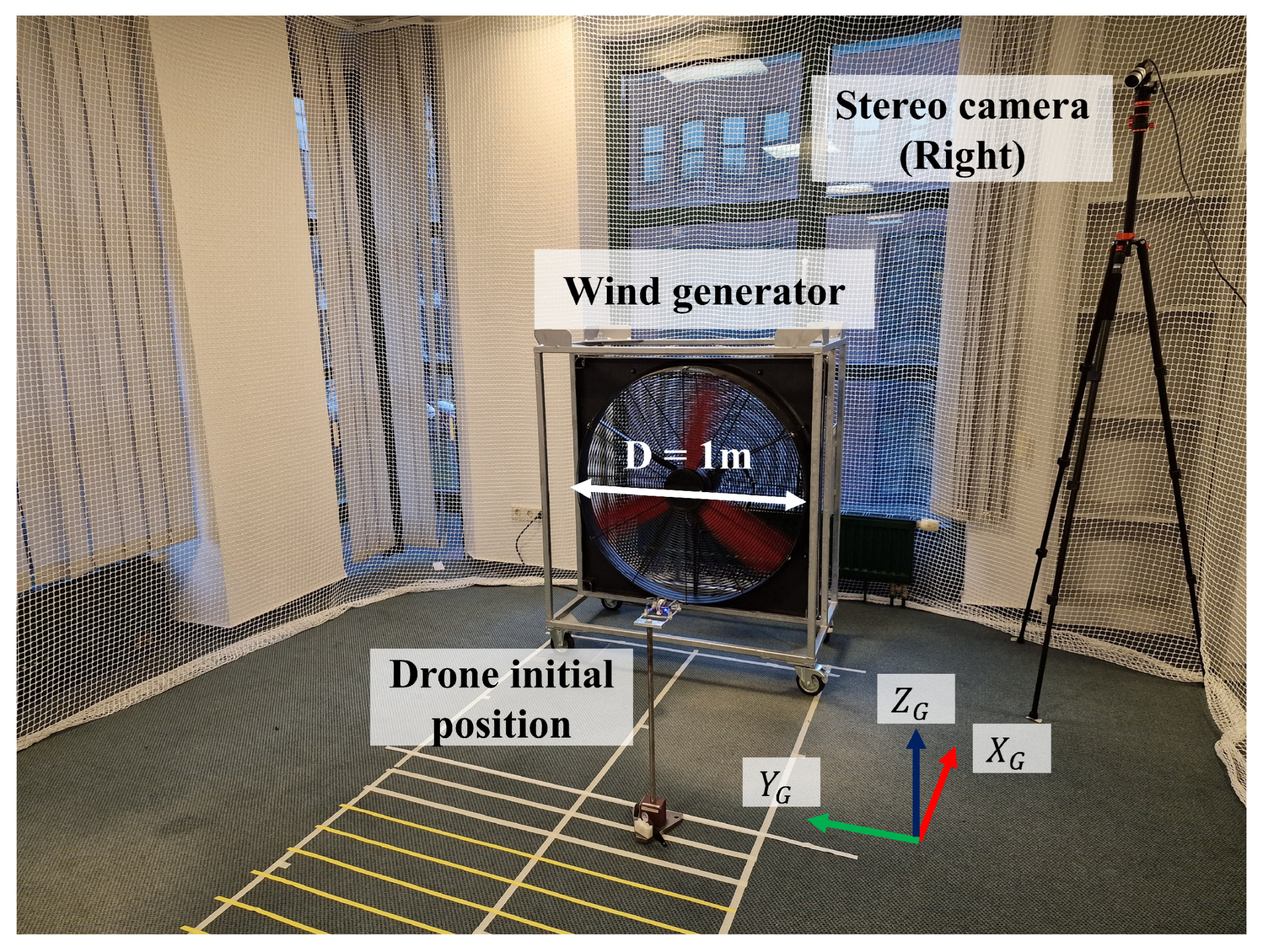
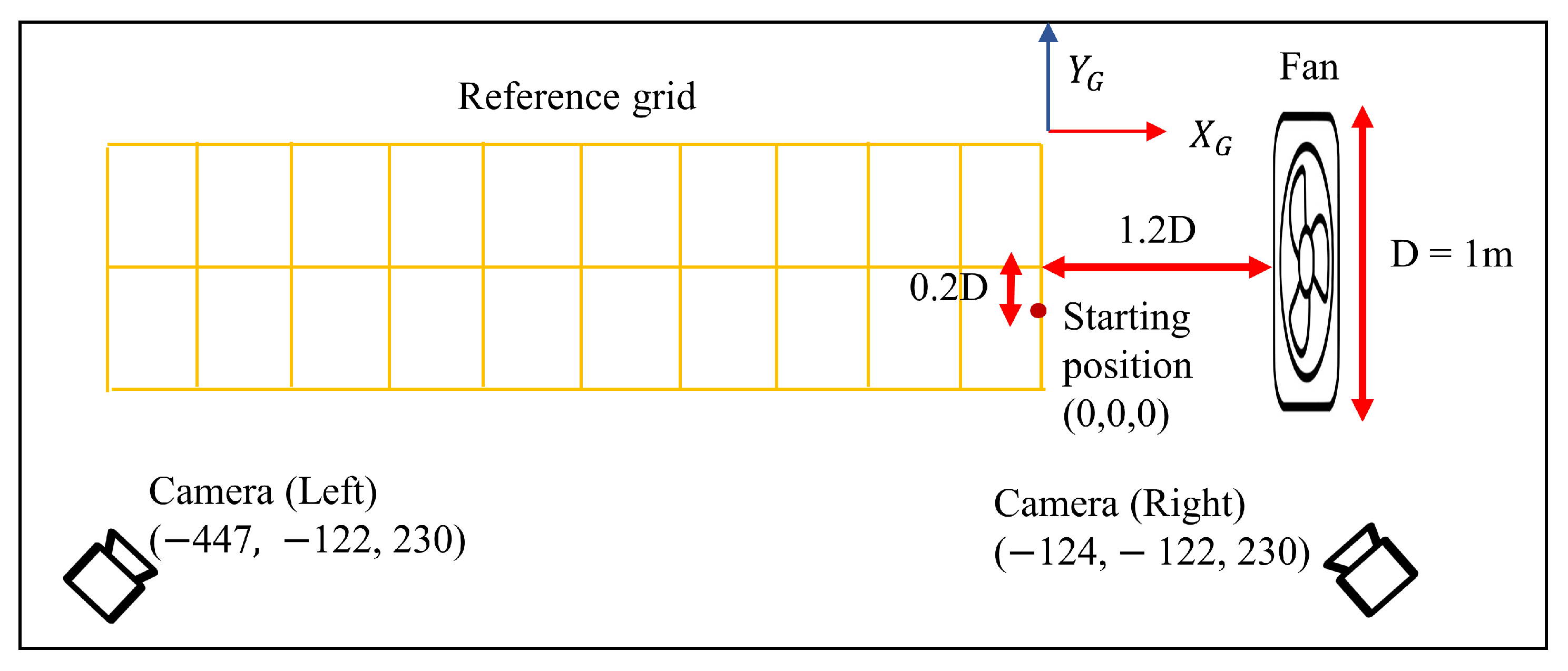
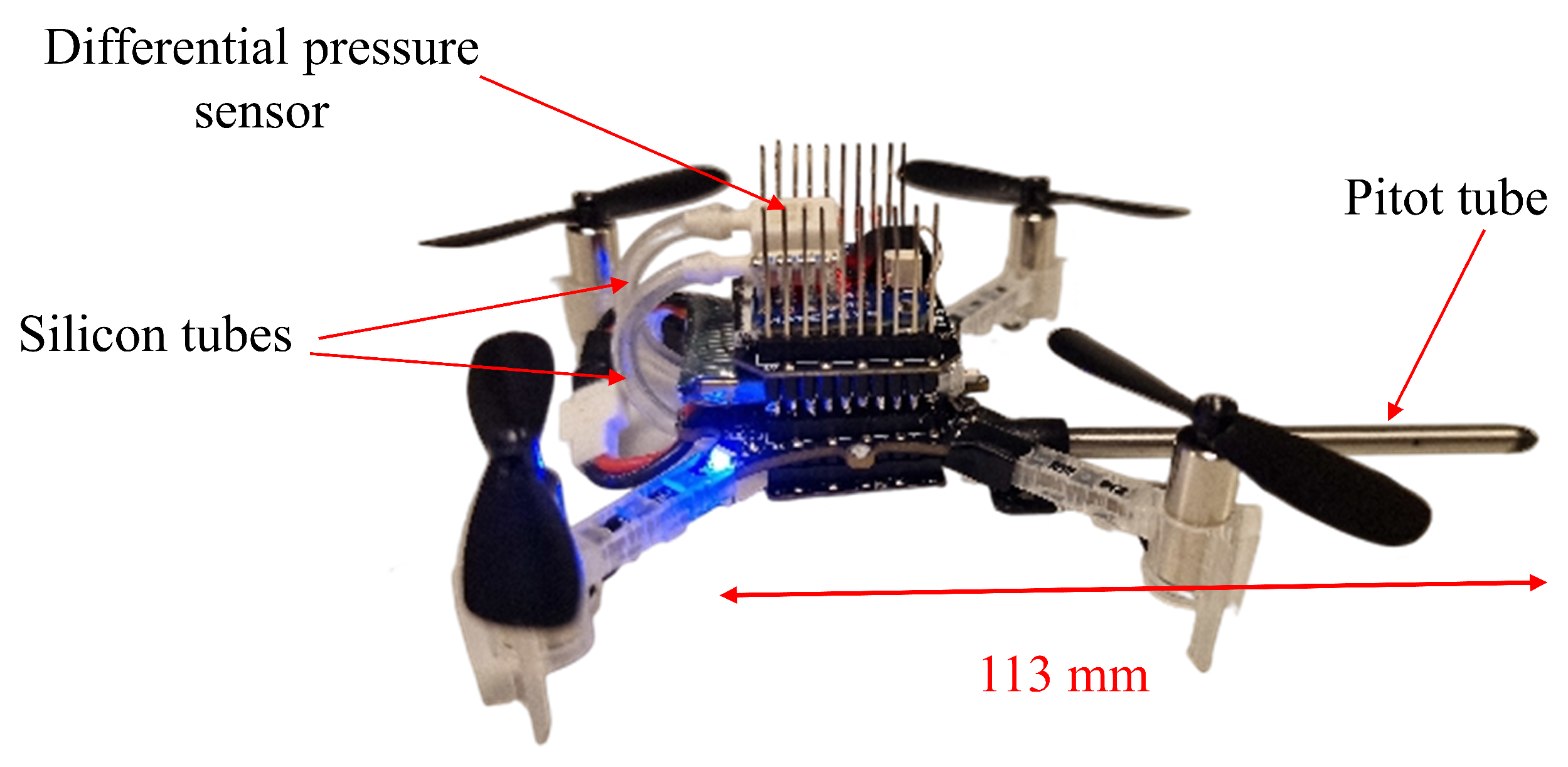
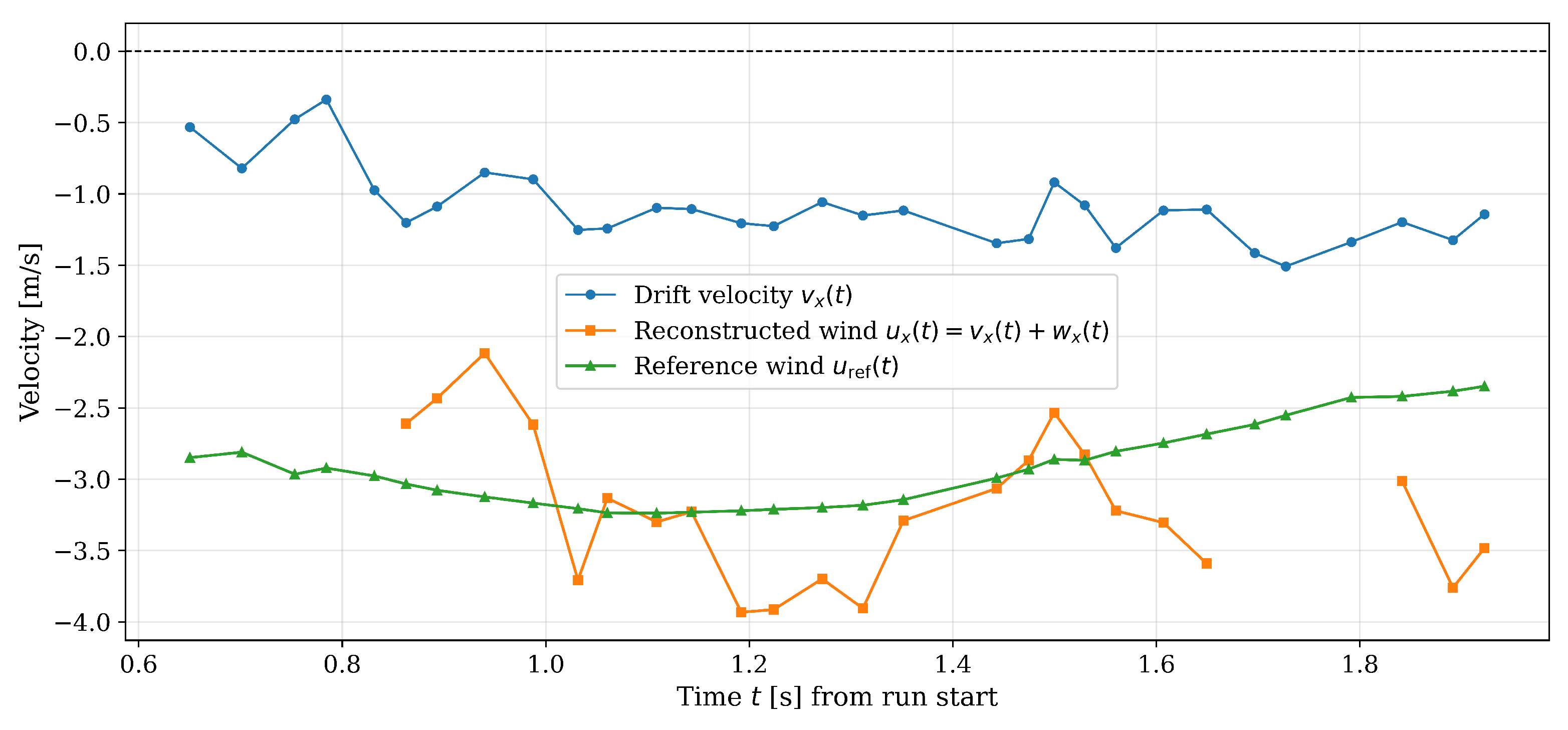
Unmanned aerial vehicles (UAVs) are increasingly used for airflow measurements because they enable sensing where traditional instrumentation is difficult to deploy. However, most existing approaches rely on hovering or predefined trajectories, which can introduce aerodynamic disturbances and limit operation in confined environments. This study investigates a semi-Lagrangian measurement concept for miniaturized UAVs in which drift is permitted and explicitly accounted for in the reconstruction. Experiments were conducted using a Crazyflie 2.1+ quadrotor (≈35 g total mass, 92 mm footprint) equipped with a differential pressure sensor to measure relative airflow. A stereo-vision system measured the UAV ground-relative motion. Wind velocity was reconstructed by combining the UAV drift velocity with the relative airflow. Laboratory experiments over 2–7m/s show that the combined reconstruction improves the wind estimate compared with drift velocity alone. The propagated standard uncertainty is approximately 0.881.28m/s, and the proposed platform reduces UAV mass by nearly a factor of 20 compared with previously reported setups. However, signal filtering and the time-averaged reference field limit the assessment of instantaneous measurement accuracy. These results demonstrate the feasibility of semi-Lagrangian airflow sensing with very small UAVs while identifying aerodynamic interference and the onboard pressure measurement as the main limitations.
Keywords: UAV-based wind measurement; semi-Lagrangian drift; miniaturized quadrotor; Pitot tube airspeed sensing; stereo-vision tracking; measurement uncertainty quantification UAV-based wind measurement; semi-Lagrangian drift; miniaturized quadrotor; Pitot tube airspeed sensing; stereo-vision tracking; measurement uncertainty quantification