Article

The Effect of Larval Exposure to Heavy Metals on the Gut Microbiota Composition of Adult Anopheles arabiensis (Diptera: Culicidae)


1
Wits Research Institute for Malaria, School of Pathology, Faculty of Health Sciences, University of the Witwatersrand, Johannesburg 2193, South Africa
2
Centre for Emerging Zoonotic and Parasitic Diseases, National Institute for Communicable Diseases, Division of the National Health Laboratory Service, Johannesburg 2193, South Africa
3
Department of Genetics and Genomics, College of Medicine and Health Sciences, United Arab Emirates University, Abu Dhabi 15551, United Arab Emirates
4
Antimicrobial Research Unit, School of Health Sciences, University of KwaZulu-Natal, Durban 4041, South Africa
5
Department of Biochemistry, Genetics and Microbiology (BGM), Forestry and Agricultural Biotechnology Institute (FABI), University of Pretoria, Pretoria 0028, South Africa
6
Sequencing Core Facility, National Institute for Communicable Diseases, Division of the National Health Laboratory Service, Johannesburg 2193, South Africa
7
Department of Biochemistry and Microbiology, Faculty of Science, Engineering and Agriculture, University of Venda, Thohoyandou 0950, South Africa
8
Institute for Water and Wastewater Technology, Durban University of Technology, Durban 4000, South Africa
*
Authors to whom correspondence should be addressed.
Trop. Med. Infect. Dis. 2024, 9(10), 249; https://doi.org/10.3390/tropicalmed9100249

Submission received: 28 August 2024 / Revised: 5 October 2024 / Accepted: 17 October 2024 / Published: 21 October 2024

Abstract

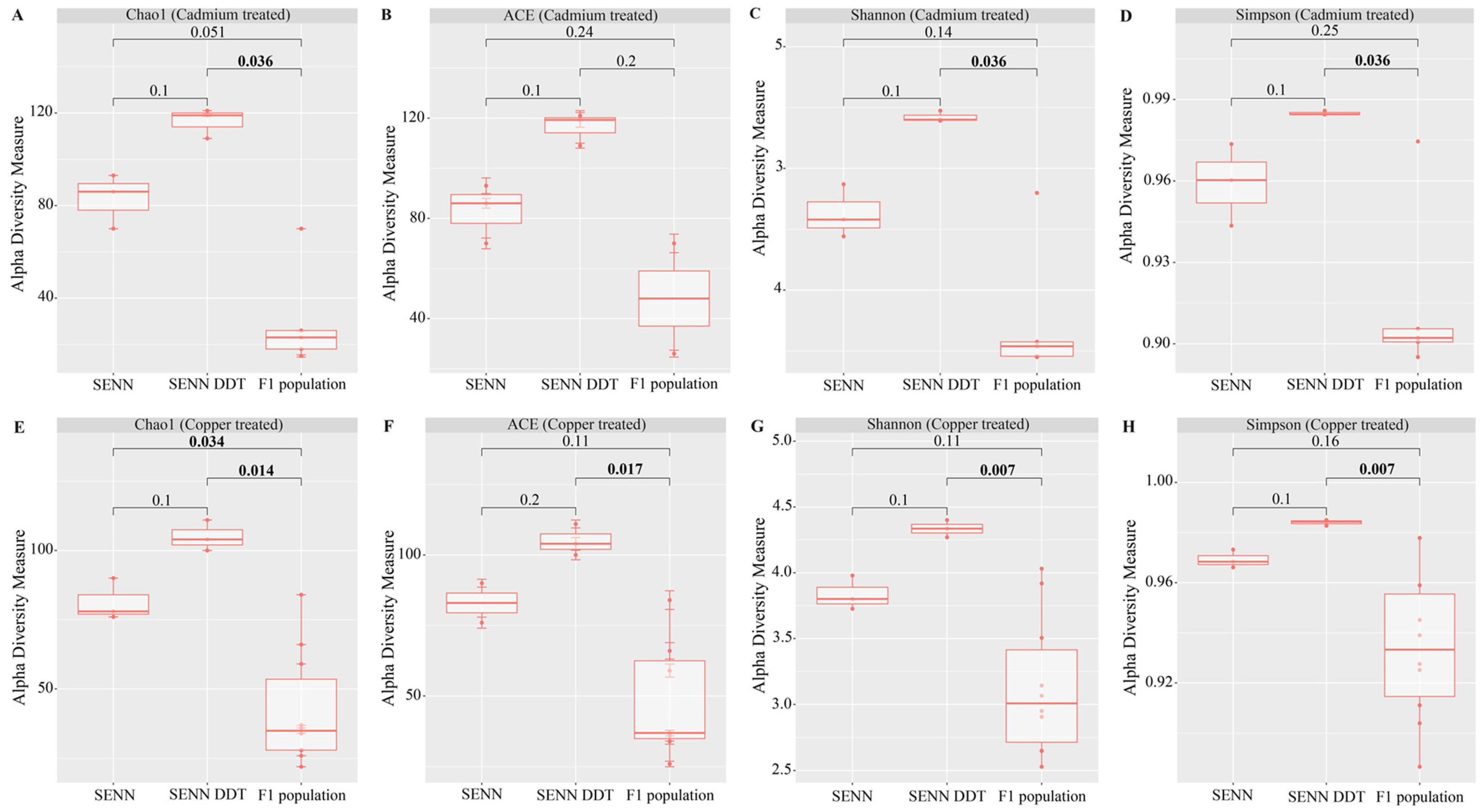
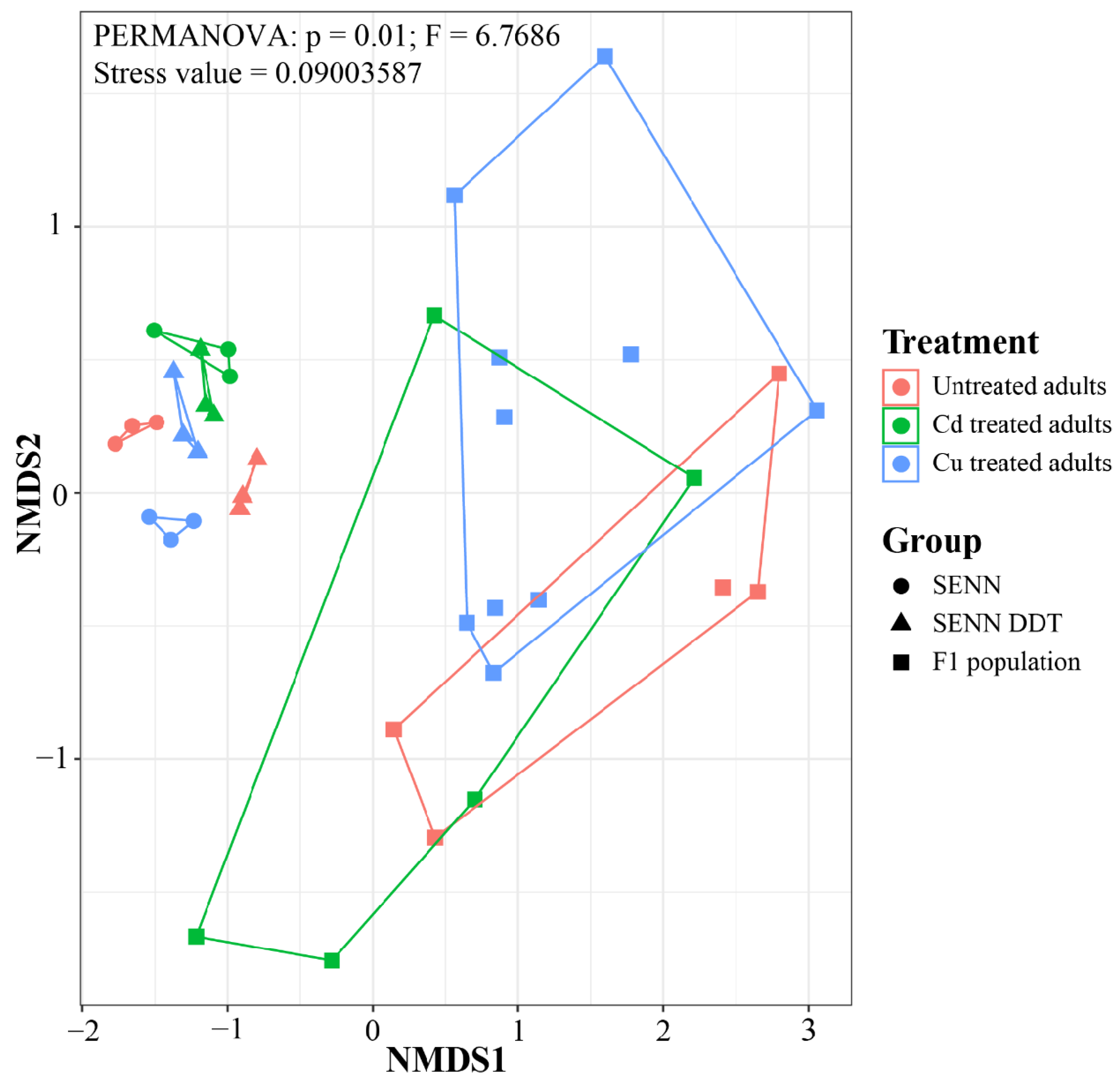
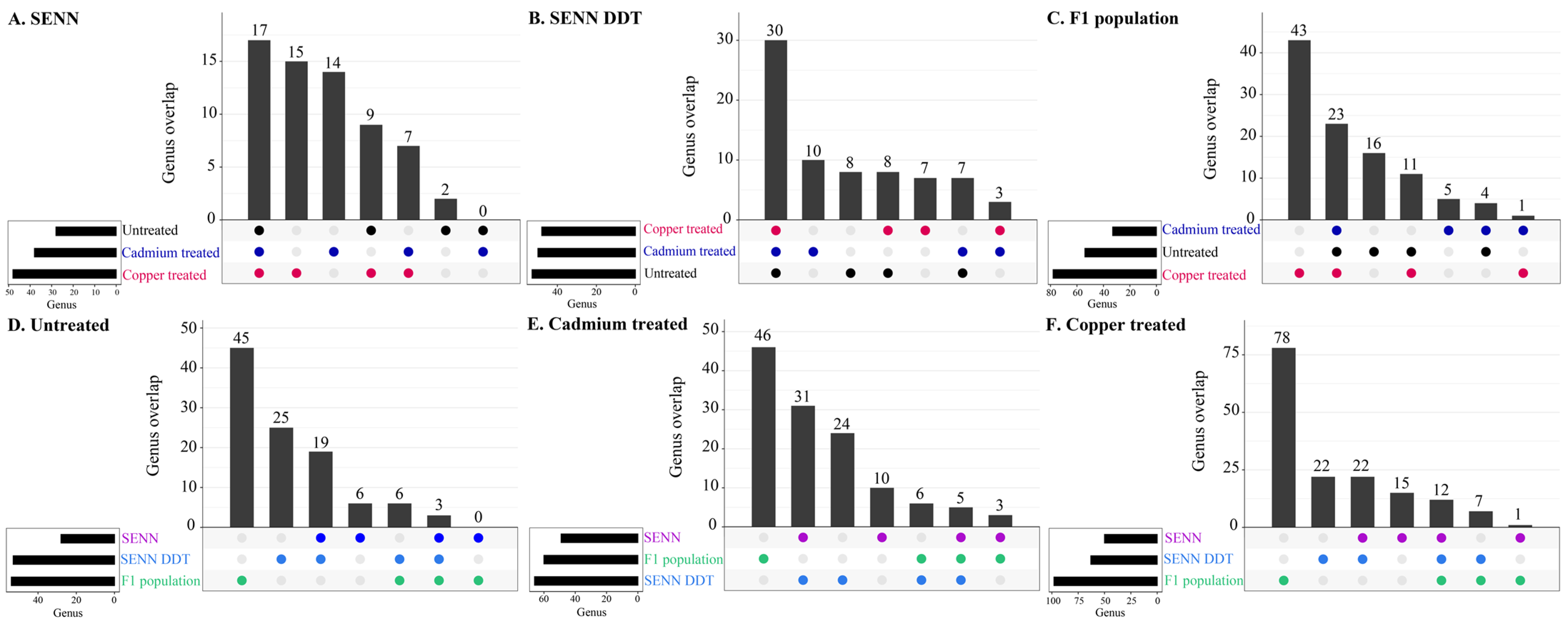
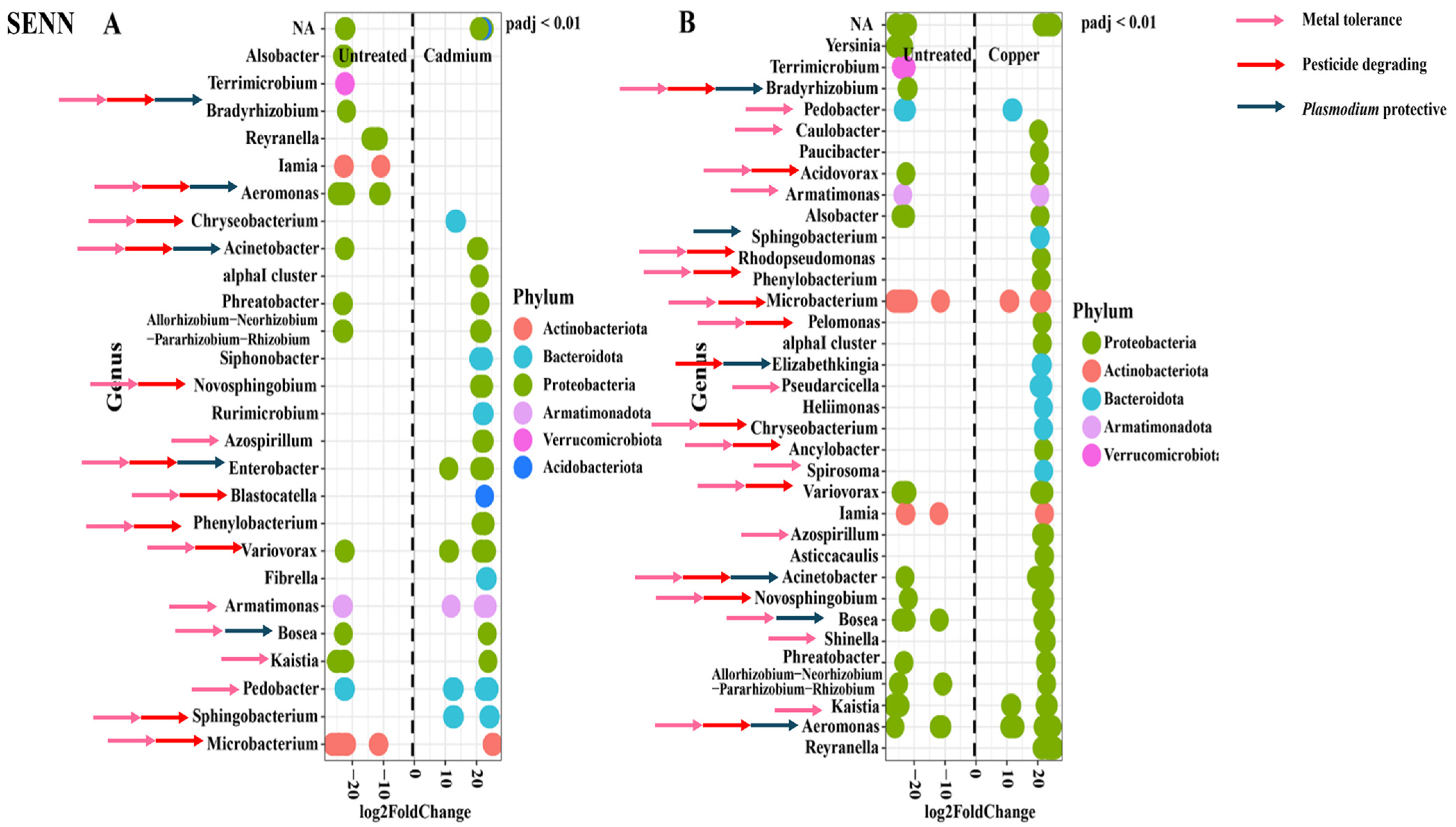
Anopheles arabiensis is a highly adaptable member of the An. gambiae complex. Its flexible resting behaviour and diverse feeding habits make conventional vector control methods less effective in controlling this species. Another emerging challenge is its adaptation to breeding in polluted water, which impacts various life history traits relevant to epidemiology. The gut microbiota of mosquitoes play a crucial role in their life history, and the larval environment significantly influences the composition of this bacterial community. Consequently, adaptation to polluted breeding sites may alter the gut microbiota of adult mosquitoes. This study aimed to examine how larval exposure to metal pollution affects the gut microbial dynamics of An. arabiensis adults. Larvae of An. arabiensis were exposed to either cadmium chloride or copper nitrate, with larvae reared in untreated water serving as a control. Two laboratory strains (SENN: insecticide unselected, SENN-DDT: insecticide selected) and F1 larvae sourced from KwaZulu-Natal, South Africa, were exposed. The gut microbiota of the adults were sequenced using the Illumina Next Generation Sequencing platform and compared. Larval metal exposure affected alpha diversity, with a more marked difference in beta diversity. There was evidence of core microbiota shared between the untreated and metal-treated groups. Bacterial genera associated with metal tolerance were more prevalent in the metal-treated groups. Although larval metal exposure led to an increase in pesticide-degrading bacterial genera in the laboratory strains, this effect was not observed in the F1 population. In the F1 population, Plasmodium-protective bacterial genera were more abundant in the untreated group compared to the metal-treated group. This study therefore highlights the importance of considering the larval environment when searching for local bacterial symbionts for paratransgenesis interventions.
Keywords: paratransgenesis; pollution; 16S rRNA; malaria; copper; cadmium paratransgenesis; pollution; 16S rRNA; malaria; copper; cadmium