
You are currently on the new version of our website. Access the old version .
InfrastructuresInfrastructures
  • Article
  • Open Access

12 January 2026

Seismic Behaviour of Concrete-Filled End-Bearing Fibre-Reinforced Polymer (FRP) Piles in Cohesionless Soils Using Shaking Table Test

and
Geoengineering Research Group, Department of Civil and Environmental Engineering, Carleton University, 1125 Colonel By Frive, Ottawa, ON K1S 5B6, Canada
*
Author to whom correspondence should be addressed.
This article belongs to the Special Issue Fiber Reinforced Polymer-Ultra High Performance Concrete (FRP-UHPC): Design, Performance, and Application

Abstract

This study evaluates the performance of single concrete-filled frictional Fibre-Reinforced Polymer (FRP) piles embedded in saturated liquefiable sand and subjected to seismic loading using a shaking table. A unidirectional shaking table equipped with a 1000 mm × 1000 mm × 1000 mm laminar shear box with 27 lamina rings was utilized in the study. FRP tubes manufactured from epoxy-saturated Carbon Fibre-Reinforced Polymer (CFRP) and Glass Fibre-Reinforced Polymer (GFRP) fabrics were filled with 35 MPa concrete and allowed to cure for 28 days, serving as model piles for the experimental programme, with cylindrical concrete prisms employed to represent the behaviour of traditional piles. Pile dimensions and properties based on scaling relationships were selected to account for the nonlinear nature of soil–pile systems under seismic loading. Scaled versions of ground motions from the 2010 Val-des-Bois and 1995 Hyogo-Ken Nambu earthquakes were implemented as input motions in the tests. The results show limited variation in the inertial and kinematic responses of the piles, especially before liquefaction. Head rocking displacements were within 5% of each other during liquefaction. Post liquefaction, the concrete-filled FRP piles showed lower response compared to the traditional concrete pile. The results suggests that concrete-filled FRP piles, especially those made from carbon fibre, provide practical alternatives for use.

1. Introduction

Fibre-Reinforced Polymer (FRP) materials have had their use in the field of civil engineering and construction increased as a result of improved production technics and scales of production. These uses have been in the areas of retrofitting or strengthening of existing structures [1]. Composites of FRP with timber or concrete have been subjects of much research [2,3,4,5,6], where benefits such as improved axial capacities have been identified. In the use of FRP as composites for piling, Sakr et al. [7] observed the improved overall performance of concrete-filled FRP tubes in comparison to steel piles. The researchers employed limited experimental test results in the proposition of an analytical solution to determine shaft friction and toe resistance. In a field assessment of FRP piles in comparison to steel piles in soft clays, Giraldo & Rayhani [8] noted that, while steel piles showed superior lateral performance, FRP piles showed better axial capacity. It was noted that, in particular, Carbon FRP (CFRP) piles showed superior axial capacity as a result of its rugged surface condition, with alternating ridges and troughs from the FRP fabric. In the study of the behaviour of recycled aggregate, concrete-filled tubular columns with FRP-confined concrete, Long et al. [9] noted improvements in both the axial performance and ductility of the FRP-confined concrete columns. Similarly, Xiong et al. [10] noted improvements in the ultimate load capacities and deformation abilities of recycled tubular columns with FRP wraps under dynamic loading conditions.
A numerical study on concrete-filled FRP by Elmasry et al. [11] in a 5 × 3 grouped configuration under seismic loading found the potential for excessive lateral deformation on the piles. In the study, the pile cap was modelled with a lumped mass, with the piles divided into strips of masses and connected laterally to springs with variable stiffnesses. Laboratory experimental programmes using shaking table tests have also been investigated by researchers, including Hosseini [12], who carried out shaking table tests on both end-bearing and frictional FRP piles in clays and liquefiable soil and observed a high dependence of pile behaviour on soil stiffness, especially in clays. In a similar study, Hosseini [12] observed that the hollow aluminum grouped piles exhibited higher near-field amplification and pile head rocking response compared to the FRP piles and that the FRP piles provided a good alternative to the traditional piling system.
Soil–structure interaction (SSI) effects under seismic loading have also received varying interest from many researchers [13,14,15,16,17], where the effects of kinematic and inertial responses have been evaluated through experimental and numerical approaches. The 1 g shaking table tests provide efficient and cost-effective experimental approaches to assessing the performance of piles under seismic loads. As the test specimen/models are scaled down from the actual or prototype models, appropriate scaling factors are required to achieve transferrable results. Pioneering works by Rocha [18] provided the basis for researchers like Moncarz & Krawinkler [19] and Schofield [20] to investigate and propose scaling laws for centrifuge tests, which have been adopted, with variations, for shaking table tests. Dimensional analysis was employed by Gohl [21] to derive a scale factor between prototype piles based on the flexural rigidities, where difficulties in achieving true replicas was underscored. In particular, Gohl [21] noted that, for materials like steel, a true replica model has to be impractically small to meet its scaling requirements. Therefore, adequate scaling could be achieved by using different materials with lower elastic moduli in order to conserve some of the critical scaling parameters.
Similitude relationships using shaking tables were derived by Iai [22] using a saturated soil-structure-fluid model in a 1 g gravitational field and relying on basic equilibrium equations and mass balance between the pile, pore water, and soil skeleton. The relationship also assumed independence of the constitutive relationship of the soil. For a geometric scaling factor λ under a 1 g shaking table condition, the scaling factors for critical quantities such mass density, strain, and acceleration were found to be unity, while those for modulus, displacement, length, and stress were found to be λ. Additionally, for quantities such as stiffness and rigidity, the scale factors were found to be the second and fifth exponents of λ (i.e., λ2 and λ5, respectively), while the scaling factors for time and shear wave velocities were found to be the square root of λ (i.e., λ1/2).
The current study seeks to evaluate the behaviour of single concrete-filled end-bearing FRP piles embedded in saturated liquefiable sand and subjected to seismic excitation and forms part of an ongoing study of the behaviour of FRP piles at the Geoengineering Research Group (GRG) of Carleton University and is preceded by the testing of grouped piles.

2. Experimental Programme

2.1. Shake Table and Test Container

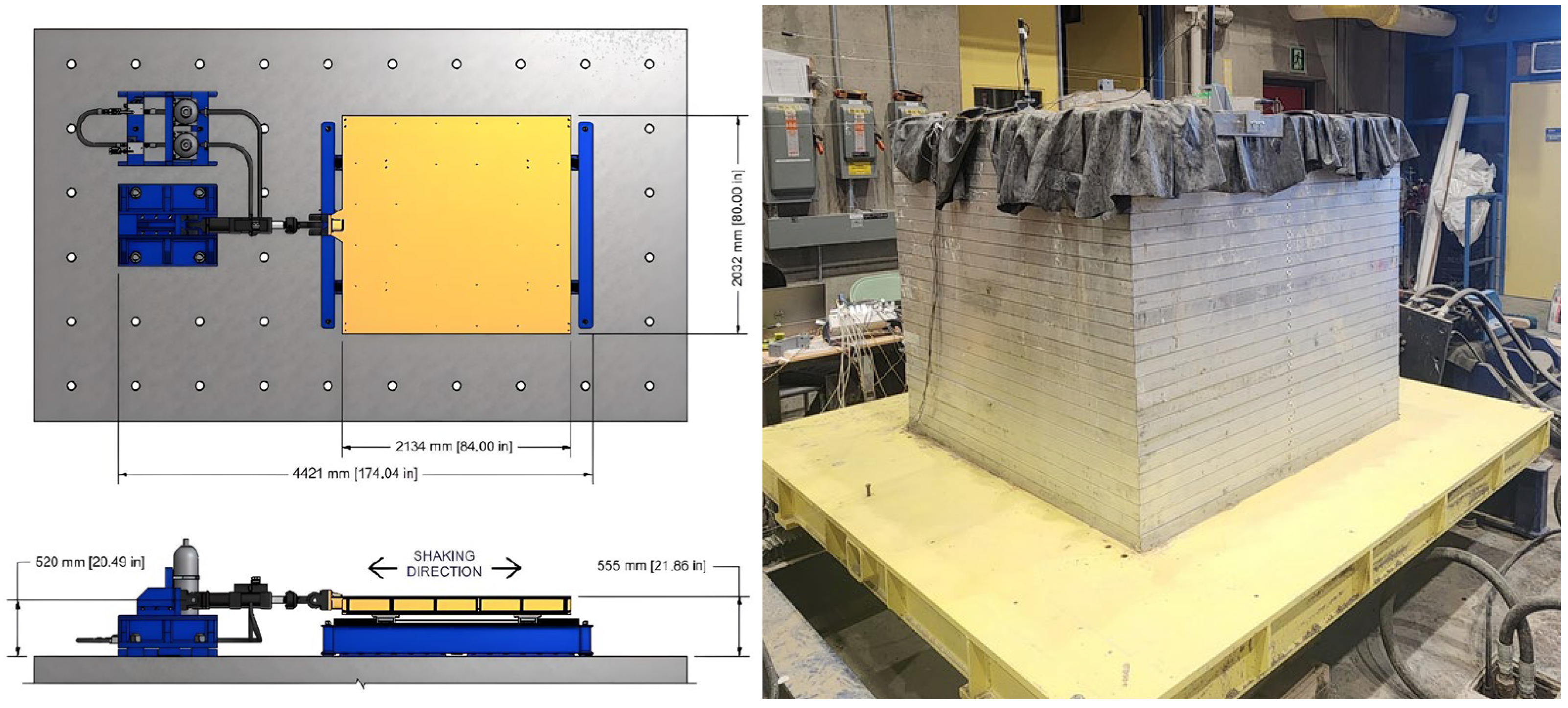
The shake table (SS10K-05) system shown in Figure 1, comprising a high-performance servo-hydraulic shaker and a series of laminae, was employed in the experimental investigation. The hydraulic shaker is driven by an MTS actuator, with capacity of imparting 98 kN at a nominal frequency up to 50 Hz and is installed on a slip table to guide the movement. The laminae are arranged to form a confining rectangular shear box to accommodate the soil and pile samples. The mounting surface of the slip table has a maximum dimension of 2134 mm × 2032 mm and can support up to 10 tons of payload. Additionally, the slip table has a 250 mm stroke capacity in a back-and-forth direction. The confining volume of the laminae on the slip table was 1000 mm × 100 mm × 1000 mm for containment of the model sand and pile samples to simulate free-field soil deformation and minimize boundary effects with the passage of the seismic waves.
Figure 1. Shaking table and laminar shear box.
Use of laminar shear containers on shaking table tests is well documented and has been employed by Chidichimo et al. [23], Hokmabadi et al. [24,25], Durante et al. [26], and Dong et al. [27] to assess seismic SSI. The evaluation of kinematic bending stiffness at both pile head and sub-surface layers were explored by Chidichimo et al. [23] using laminar shear containers, while Hokmabadi et al. [24,25] employed the same to assess the effects of soil–pile structure interaction of buildings in soft soils. Additionally, to investigate effects of period elongation on pile-supported structures, Durante et al. [26] utilized laminar containers, while model piles from the Puqian Bridge in China were successfully tested by Dong et al. [27] using laminar containers on shaking tables with inputs ranging from 0.15 g to 0.6 g. As part of the ongoing research at the GRG in Carleton, Hosseini [12] investigated the behaviour of grouped hollow FRP piles subjected to seismic excitation in both liquefiable and non-liquefiable soils.
The laminar shear box used in this study is made of a stack of 27 laminates supported and guided by an array of roller bearings, spaced and guided within HDPE bearing cages. The bottom laminate is fixed to the shaking table, while the remaining 26 can slip over each other to approximate a continuous shear strain field in the soil during the shaking. By design, the maximum allowable relative displacement between adjacent laminates is 7 mm, resulting in a maximum displacement between the top and bottom rings of 172 mm. The laminates are manufactured from high-strength aluminum alloy extrusions to achieve a high strength-to-stiffness ratio and a low mass.

2.2. Model Piles

The scaling factors required for dynamic similarity between the model and prototype piles were originally evaluated by Hosseini [12] and have been adopted as part of this work under the ongoing research of the GRG Carleton University team. The geometric scaling factor of 1:10 (i.e., λ = 10) applied to a prototype pile of 550 mm in diameter, 10 m in length, and with a wall thickness of 13 mm to obtain a model pile 55 mm in diameter, 1000 mm in length, and 5.2 mm in wall thickness.
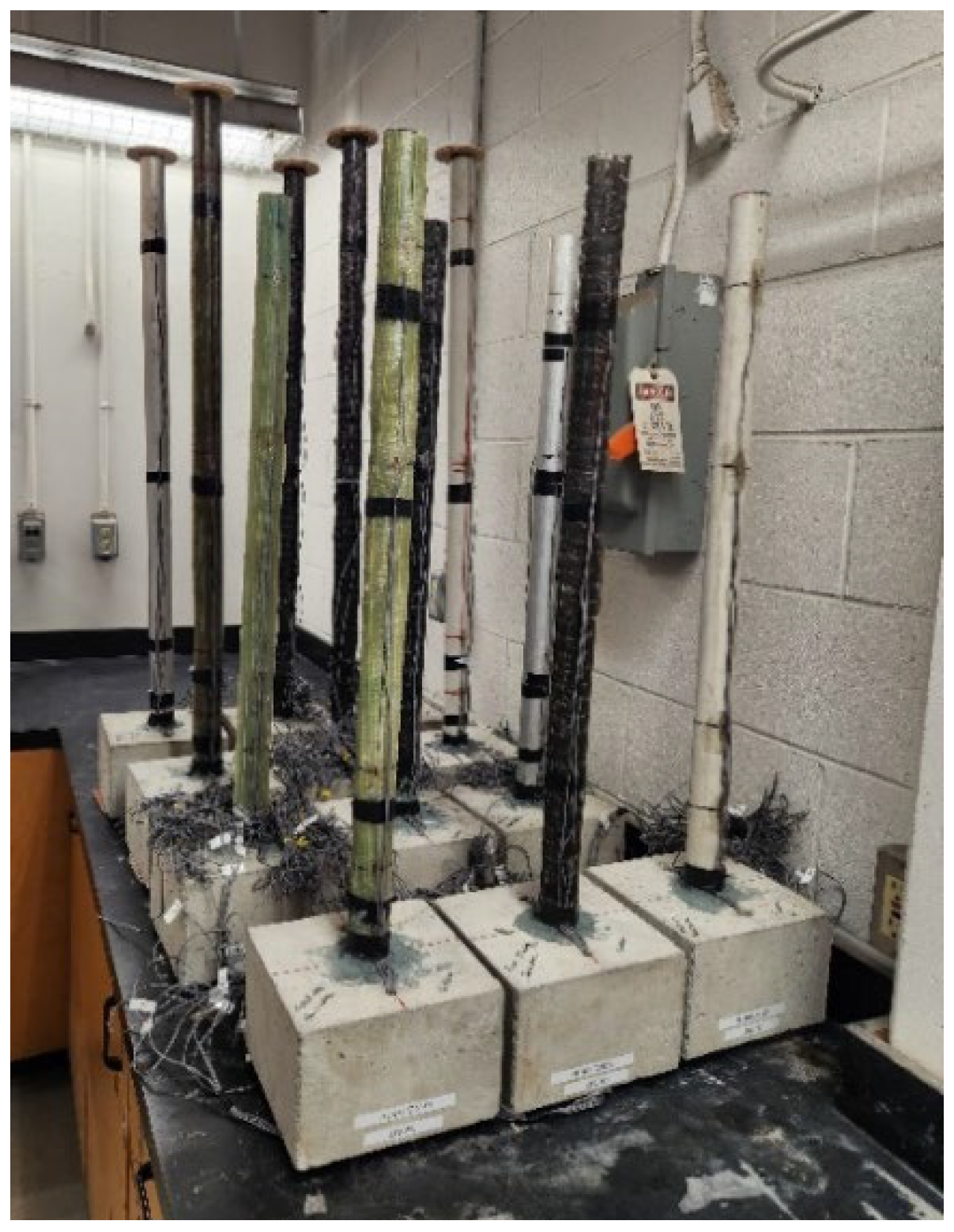
The hollow cylindrical piles were fabricated using commercially available Tyfo unidirectional GFRP and CFRP sheets supplied by Fyfe®. Similarly, a two-component epoxy from Fyfe® was mixed as per manufacturer’s instructions and applied to fully saturate the FRP sheets to make CFRP and GFRP composites. To make the cylindrical forms, the saturated FRP sheets were wound around the carefully selected steel tubes and allowed to cure for at least 48 h prior to extraction from the steel tubes (Figure 2). The FRP tubes were then filled with carefully mixed 35 MPa concrete and cured up to the 28-day strength. The control piles for this investigation were cylindrical piles of the same dimensions made from the same concrete mix. Pile caps made from concrete were installed at the top of the piles to simulate the structural loads on the piles. The weight of the pile cap was based on the static capacity of the piles considering shaft friction and base resistance.
Figure 2. Pile samples mounted on concrete pile caps.

2.3. Scale Factors for Piles

True replica models are challenging to achieve in experimental 1 g shaking table tests [19,21]; thus, the objective was to arrive at a model which adequately simulates the prototype and can serve as a calibration for full-scale modelling. Meymand [28] also notes that an effective model pile design considers pile response parameters including the slenderness ratio (L/d), the flexural stiffness, yield behaviour, and moment curvature. To preserve the overall pile slenderness and relative soil–pile contact surface in the model, geometric similitude/similarity was adopted in this experimental programme. The geometric scaling factor was appropriately applied to both the length and diameter of the prototype pile to obtain the dimensions of the model pile. The slenderness ratio was thus preserved as a result of this approach. The moment curvature requirement was preserved by selecting the hollow pile thickness to meet the flexural rigidity within the constraints of the scaling factor λ5. Given a prototype steel pile diameter of 550 mm thickness, 13 mm with corresponding flexural rigidity, EI of 1.58 × 10¹⁴ N·mm2, a geometric scaling factor of 10 was found to be most efficient. A resulting flexural rigidity of 1.58 × 10⁹ N·mm2 for the model pile based on the prototype dimensions was required to be satisfied based on the geometric scaling factor. This requirement could only be achieved using a material with elastic modulus much smaller than steel. The use of steel will result in a model pile as small as it is impracticable for handling in our current testing programme. A commercially available Grade 6061 aluminum of 55 mm in diameter and 5.2 mm in wall thickness with EI of 1.78 × 10⁹ N·mm2 was thus settled on for this research. This selection ensured that, while the slenderness criteria was fully met, the rigidity was within 13% of the requirement and was deemed to be acceptable. FRP tubes of comparable dimensions were fabricated to meet the geometric and wall thickness requirement for the experimental programme.

2.4. Soil Sample

The model soil for the investigation is a readily available sand in the Ottawa region. Gradation analysis was conducted as per ASTM D6913/D6193M-17 [29] on the soil sample and showed poorly graded sand (SP) with fine content of about 1%. Additionally, based on the results of the gradation test, the effective particle size (D10) of the sand was 0.15 mm, with uniformity coefficient (Cu) of 1.87 and coefficient of gradation (Cc) of 0.95. The specific gravity of the soil obtained as per ASTM D854/854M-14 [30] was 2.66. Maximum dry density and optimum water content obtained using the Modified Proctor Test as per ASTM D698-12 [31] were 17.2 kN/m3 and 12%, respectively, while a friction angle of 33.6 degrees and cohesion of 7.95 kPa were obtained from direct shear test results. Soil water content was measured prior to each test, and an adequate amount of water was added to the model to ensure saturation prior to the commencement of the test. Soil deposition was carried out using sand raining (pluviation) technique to ensure uniform deposition into the sand container.

2.5. Pile Placement and Instrumentation

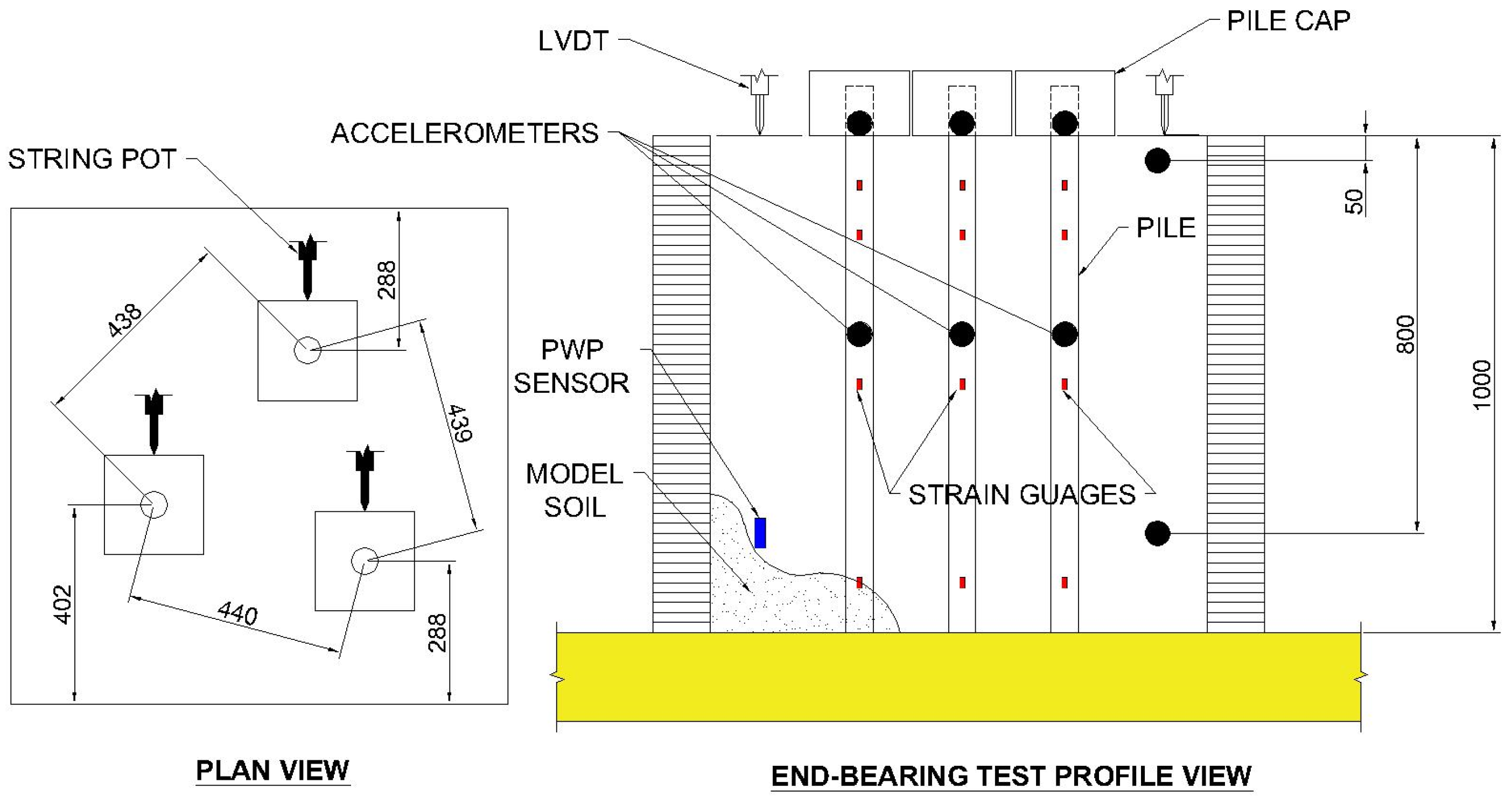
Three model piles were installed in the laminar box, as shown on Figure 3, spaced 440 mm and at least 287 mm from the laminar box walls in each test. The spacing agrees with the minimums recommended by Gohl [21] to preclude interaction and allows for the placement of free-field instruments during the testing. As part of the instrumentation for the tests, two accelerometers were installed on each pile, one on the shaft (bottom) and another on the pile cap (top), with two free-field accelerometers installed in the soil 200 mm above the shaking table and 50 mm from the top of the soil. Additionally, four (4) pairs of complementary strain gauges to capture flexural strains were installed on each pile. String potentiometers were installed as well at pile cap and at three different elevations on the laminar rings to capture the displacement profile of the pile head and soil, respectively. Finally, the subsidence of the soil was measured using linear variable potentiometers, while a pore pressure sensor was installed 200 mm above the shaking table to monitor pore pressure variations during shaking and assess the onset of liquefaction. Watertightness of the shear box was achieved with a 0.4 mm thick latex membrane.
Figure 3. Arrangement of model piles in shaking table.
Accelerometer used in the study was Model CMCP786A-LF-IP, with sensitivity of 500 mV/g at a working frequency of 0.2 to 15 kHz, with measurement range up to +/−16 g and connected through an 8-Channel PCB Model 483C Series signal conditioner. Strain gauge was FLAB-5-115LJC-F, with calibration factor of 2.11 +/− 1. Additionally, string potentiometer utilized was SP2-25, with accuracy of +/−0.25%, with extension of over 1200 mm and capability of performance in submersible conditions. Pore pressure was measured using a VW2106 vibrating wire piezometer from RST (Maple Ridge, BC, Canada), with a corresponding VW2106 readout logger.

2.6. Earthquake Input Motion

Input ground motions for the experiment were scaled versions of the 2010 Ottawa (Val-des-Bois) [32,33] and the 1995 Hyogo-Ken Nambu (Kobe) [34,35] earthquakes. While the high-intensity Kobe earthquake resulted in significant loss of life and complete destruction to private and public infrastructure [14,36,37,38], there was limited destruction from the 2010 Ottawa earthquake, which was among the strongest earthquakes recorded in the region [33]. The limited destruction of the 2010 Ottawa earthquake was mainly attributed to the levels of recorded ground motion being below the code-defined design levels [32].
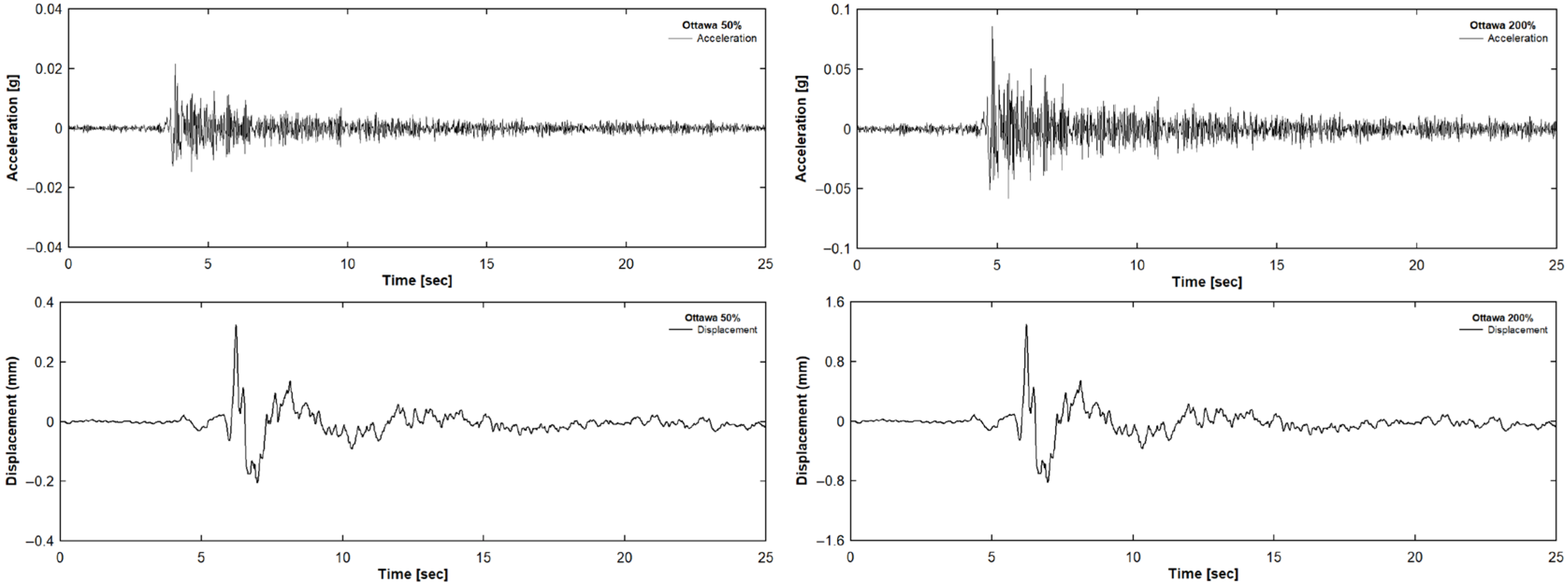
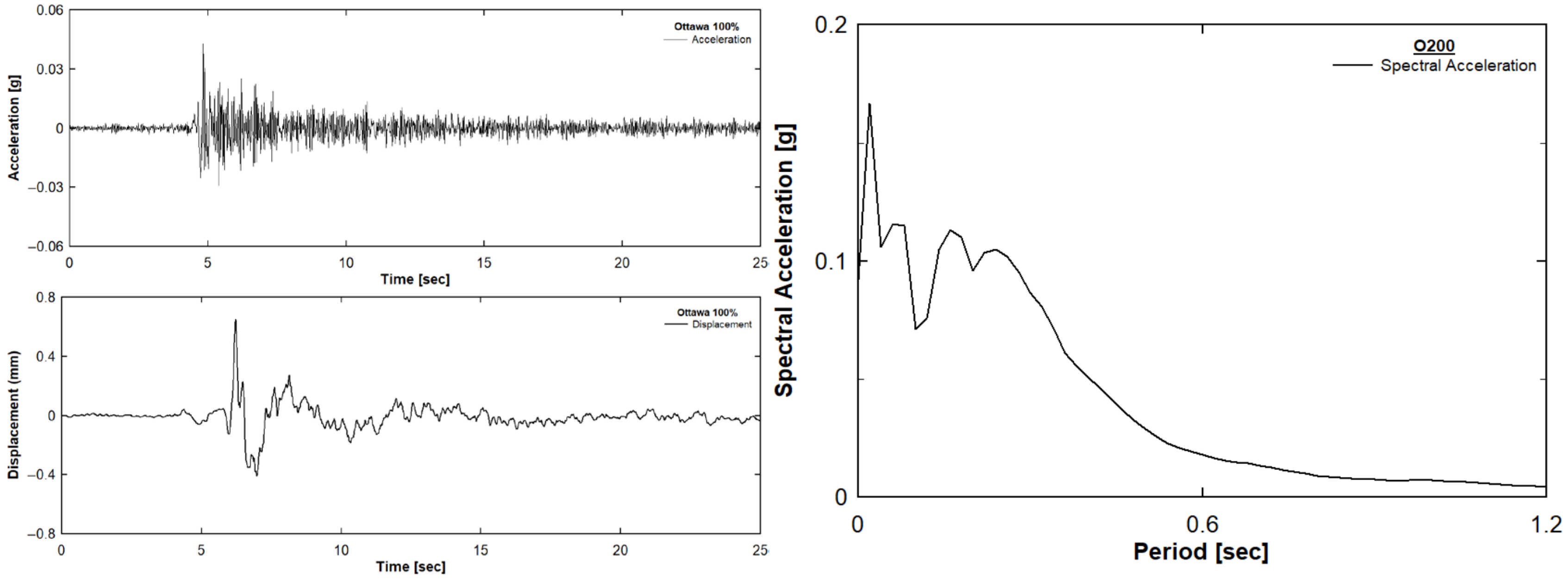
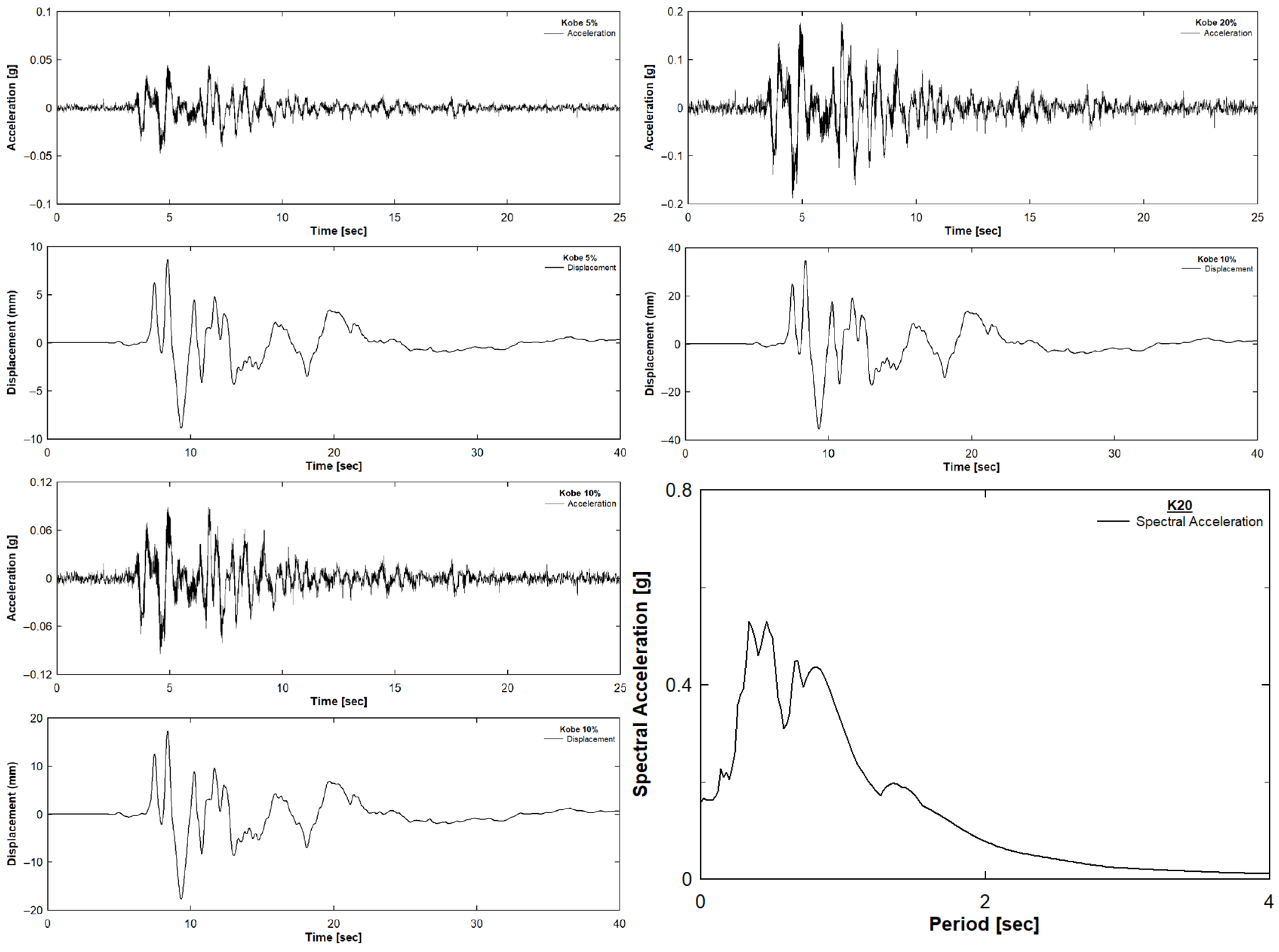
Input seismic motion for the shaking events corresponded to 50%, 100%, and 200% scaled values of the 2010 Ottawa earthquake and 5%, 10%, and 20% of the 1995 Kobe earthquake, respectively. These values corresponded to peak horizontal acceleration (PHA) range of 0.02 to 0.18 g, representing low to high signal ranges for the testing programme. Amplitudes of 0.33 mm to 1.3 mm with PHA of 0.02 to 0.08 g and amplitudes of 8.7 mm to 35 mm with PHA of 0.09 g to 0.18 g corresponded to the Ottawa and Kobe earthquakes, respectively. The test commenced with 50% scaled-down values for Ottawa, followed by 100% Ottawa, and then 200% Ottawa, denoted by O50, O100 and O200, respectively, and then 5% Kobe, 10% Kobe, and 20% Kobe, also denoted by K05, K10, and K20, respectively. Figure 4 and Figure 5 show the scaled input acceleration–time plots and 5% spectral acceleration for O100 and K20, respectively.
Figure 4. Scaled input data for 2010 Val-des-Bois earthquake with 5% damped spectral acceleration.
Figure 5. Scaled input data for 1995 Kobe earthquake with 5% damped spectral acceleration for 20% scaled acceleration.

2.7. Validation of Shaking Table Input Displacement

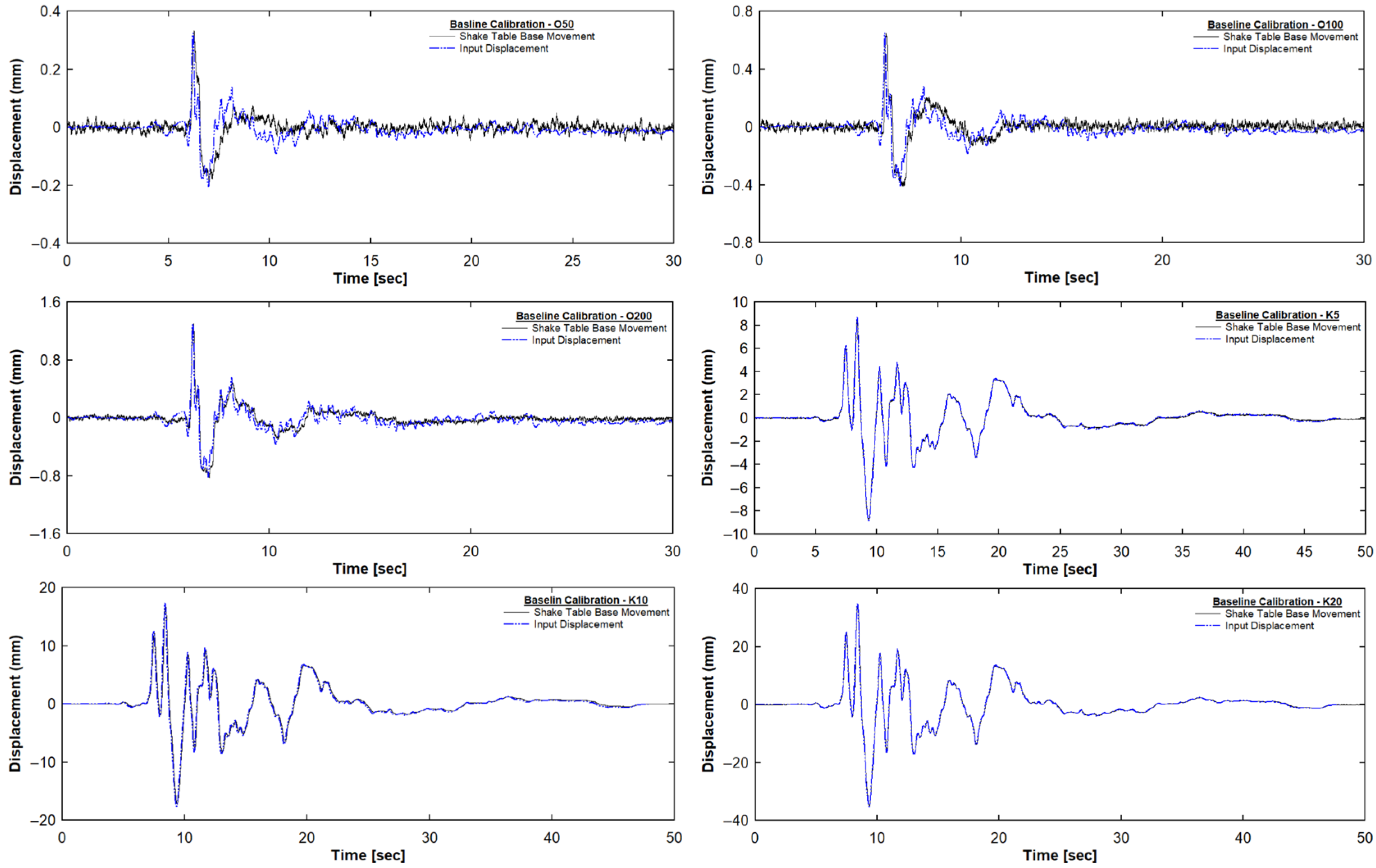
The validity of the input displacement time histories, as per Figure 4 and Figure 5, for the various earthquakes was verified by conducting a baseline calibration shaking test using a string potentiometer and accelerometer connected to the base of the shake table. The displacement time histories from the string potentiometer were compared with the input displacement time histories for the various input earthquakes and are presented in Figure 6 below.
Figure 6. Validation curves for input motions.
Although acceptable agreement was achieved between the input displacement and measured shake table response, response for the lower-amplitude earthquakes in Ottawa (O50, O100, and O200) showed a lower degree of matching with the input displacement time profiles compared to that of the higher-amplitude earthquakes (K05, K10, and K20). This behaviour is due to the level of noise and sensitivity of the string potentiometers during the low-amplitude shaking range. On the other hand, limited post-processing was required, especially for the Kobe earthquakes, as the shaking range was well above the noise levels present in the experimental setup.

3. Experimental Results and Discussion

3.1. Acceleration Time Histories of Shaking Events

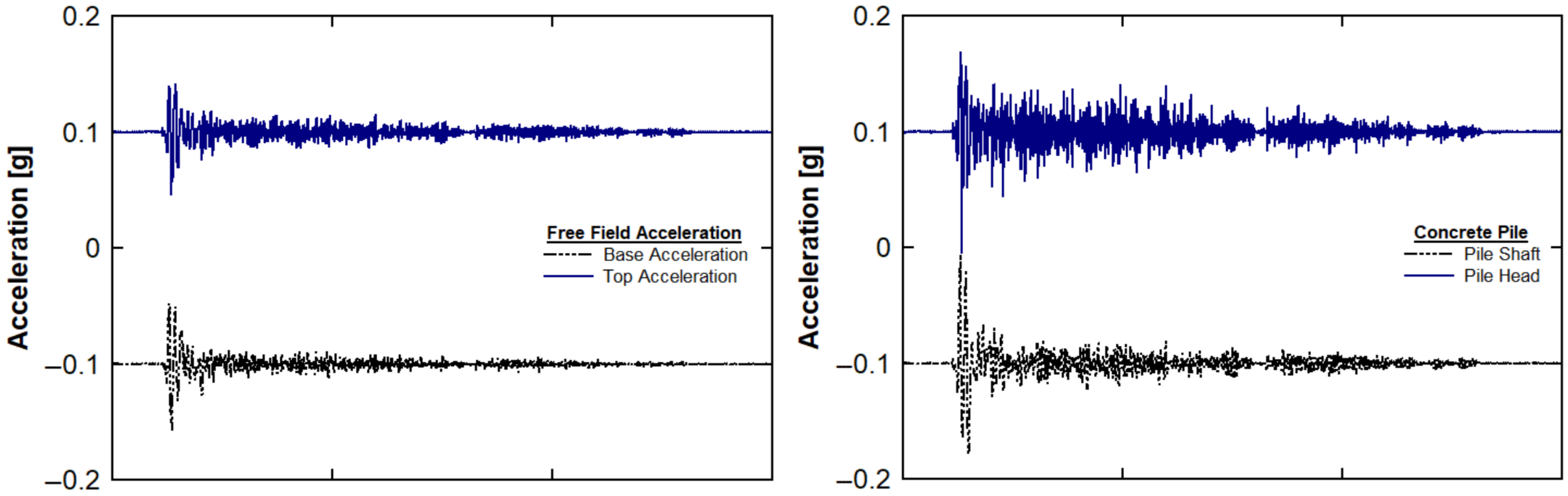
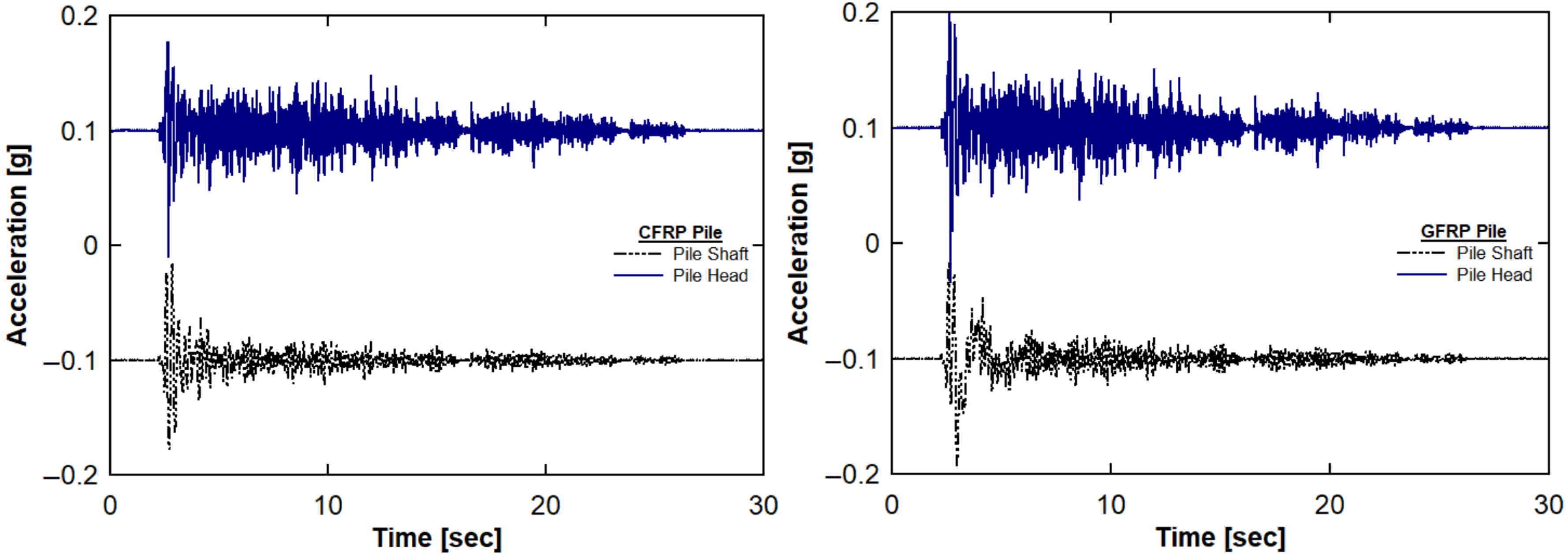
Peak accelerations during the shaking events are summarized Table 1 below for all six seismic excitations. The data shows that, for the peak free-field acceleration between the base and top accelerometers, while there was amplification during the O50, O100, and K5 shaking events, there was a general pattern of de-amplification during the O200, K10, and K20 shaking events. The free-field amplifications from the bottom to the top were 50%, 30%, and 5% during the O50, O100, and K5 shaking events, respectively. On the other hand, the de-amplification during the O200, K10, and K20 shaking events were 5%, 20%, and 15%, respectively. Compared to the base peak input accelerations, peak free-field bottom acceleration had attenuated by about 80% for the O50 and O100 and 33% for the O200 shaking events. During the Kobe shaking events, however, amplifications of about 14%, 38%, and 87% were recorded between the peak base input acceleration and peak bottom free-field accelerations.
Table 1. Peak accelerations from shaking events.
The kinematic acceleration response of the piles showed that, while there was little variation in peak response amongst the piles during the Ottawa shaking events, peak responses during the high-intensity Kobe events (K10 and K20) generally showed higher acceleration for the concrete piles, while the concrete-filled FRP piles showed responses with little variation. The peak kinematic accelerations of the concrete-filled FRP piles during K10 were about 46% of the peak acceleration of the concrete pile for both the CFRP and GFRP piles and 70% and 60% of the peak acceleration of the concrete pile, respectively, for the CFRP and GFRP piles during the K20 shaking event.
Inertial acceleration responses, on the other hand, showed that peak response accelerations in all three piles showed a limited range of variability. The data shows that, while the concrete-filled GFRP pile exhibited the highest peak responses in five of the six shaking events (except K20), the peak responses of the concrete-filled CFRP and concrete piles showed a mixed pattern. Whereas the concrete-filled CFRP pile showed a slightly higher peak acceleration during the O50, O200, and K10 shaking events, the concrete pile showed a higher response during the O100, K05, and K20 shaking events.
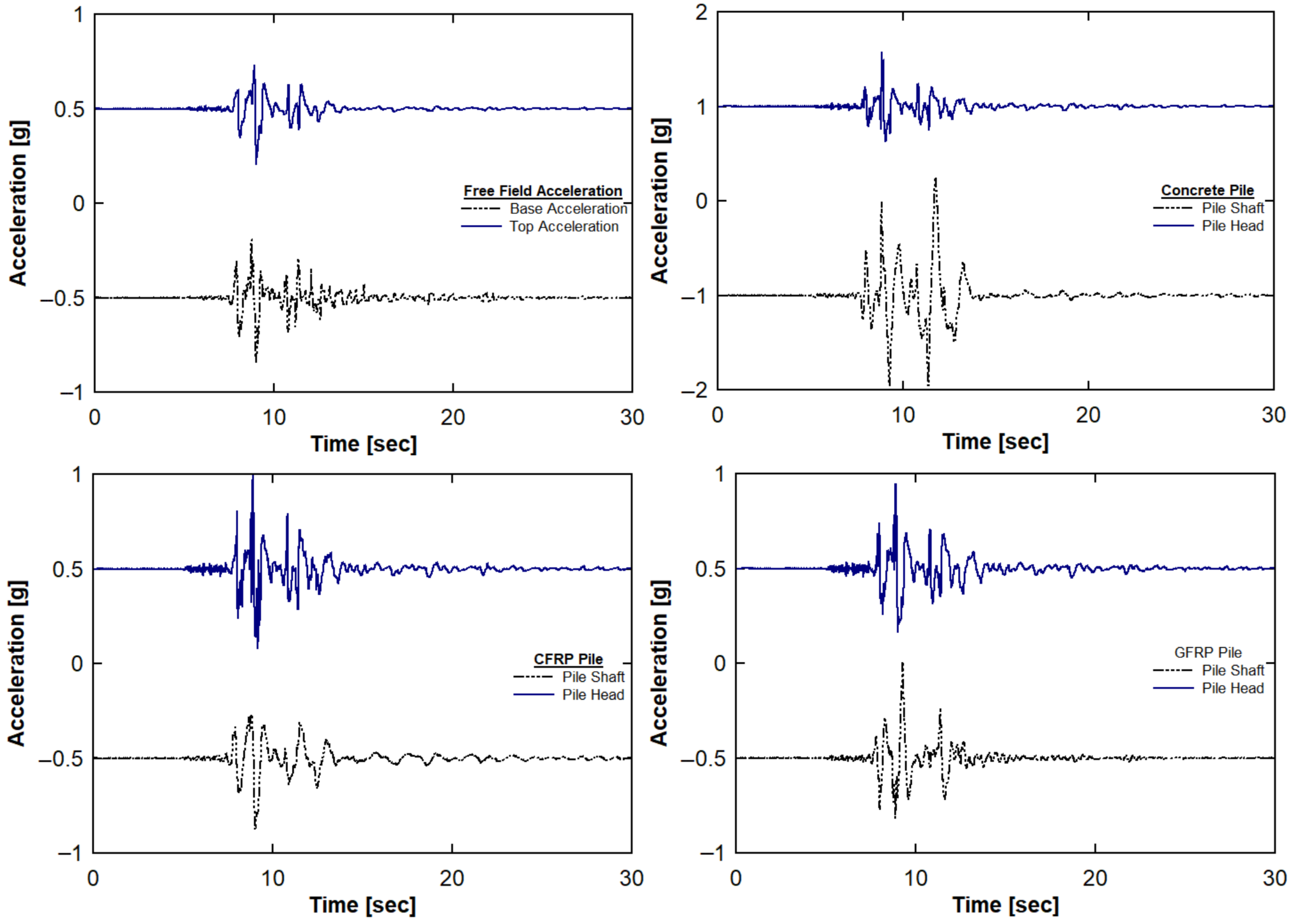
Acceleration time histories from O200 and K20 shaking events, as per Figure 7 and Figure 8, respectively, also show the comparative behaviour of the various accelerometers installed at different elevations within the free-field soil and on the piles. A general overview of the acceleration time histories shows that, similar to the input motions, both soil and pile responses during the Ottawa shaking events were of a higher frequency than the responses during the Kobe shaking events. This shows that the frequency contents were generally conserved between the input and the response acceleration time histories. The result also showed that there was amplification as the seismic wave moved through the piles from the shaft to the head during the Ottawa shaking events. Amplification was higher in the concrete-filled GFRP piles, followed by the concrete-filled CFRP and then the concrete piles. The average amplification from the shaft to the pile head of the concrete-filled FRP piles during the Ottawa shaking events were 69%, while that of the concrete pile was about 64%. The reverse, however, was observed during the Kobe shaking events, where the intensity was within the moderate to high-intensity ranges. During these shaking events, as evidenced in Figure 8 for the K20 shaking event, the average de-amplification of peak acceleration from the shaft to the pile head was 42% for the concrete pile and 11% for the concrete-filled GFRP pile. For the concrete-filled CFRP pile, however, there was an average de-amplification of 25% during the K05 and K10 shaking events and an amplification of 52% during the K20 shaking event.
Figure 7. Acceleration time histories for O200 shaking event.
Figure 8. Acceleration time histories for K20 shaking event.
The evolution of the pile response with increasing shaking intensity reflects the progressive loss of lateral soil confinement as excess pore water pressure develops within loose sand. During low-intensity shaking, the soil remains partially effective in providing lateral restraint, which results in distributed bending and strong kinematic coupling between the pile and the free-field motion.
With the increase in shaking intensity and initiation of liquefaction, the effective stress in the soil decreases significantly, leading to a reduction in lateral confinement and a redistribution of curvature and deformation along the pile shaft. Under these conditions, localized shaft deformation becomes more pronounced, specifically in areas of reduced bending stiffness. This can cause significant variation in acceleration amplification and response spectra. Therefore, this mechanism verifies the increased differentiation observed among pile types during the K10 and K20 shaking events when the soil–pile system transitions from a confined to a partially unconfined state.
A post-event review showed an extensive amount of cracking along the shaft of the concrete piles, resulting in a more flexible pile during the high-intensity shaking events. The concrete-filled FRP piles, on the other hand, showed no sign of cracking or deformation after they were extracted from the soil. The extensive cracking of the concrete piles may have accounted for the more than double peak accelerations recorded during the K10 and K20 events compared to the concrete-filled FRP piles.

3.2. Variation in Frequency Content

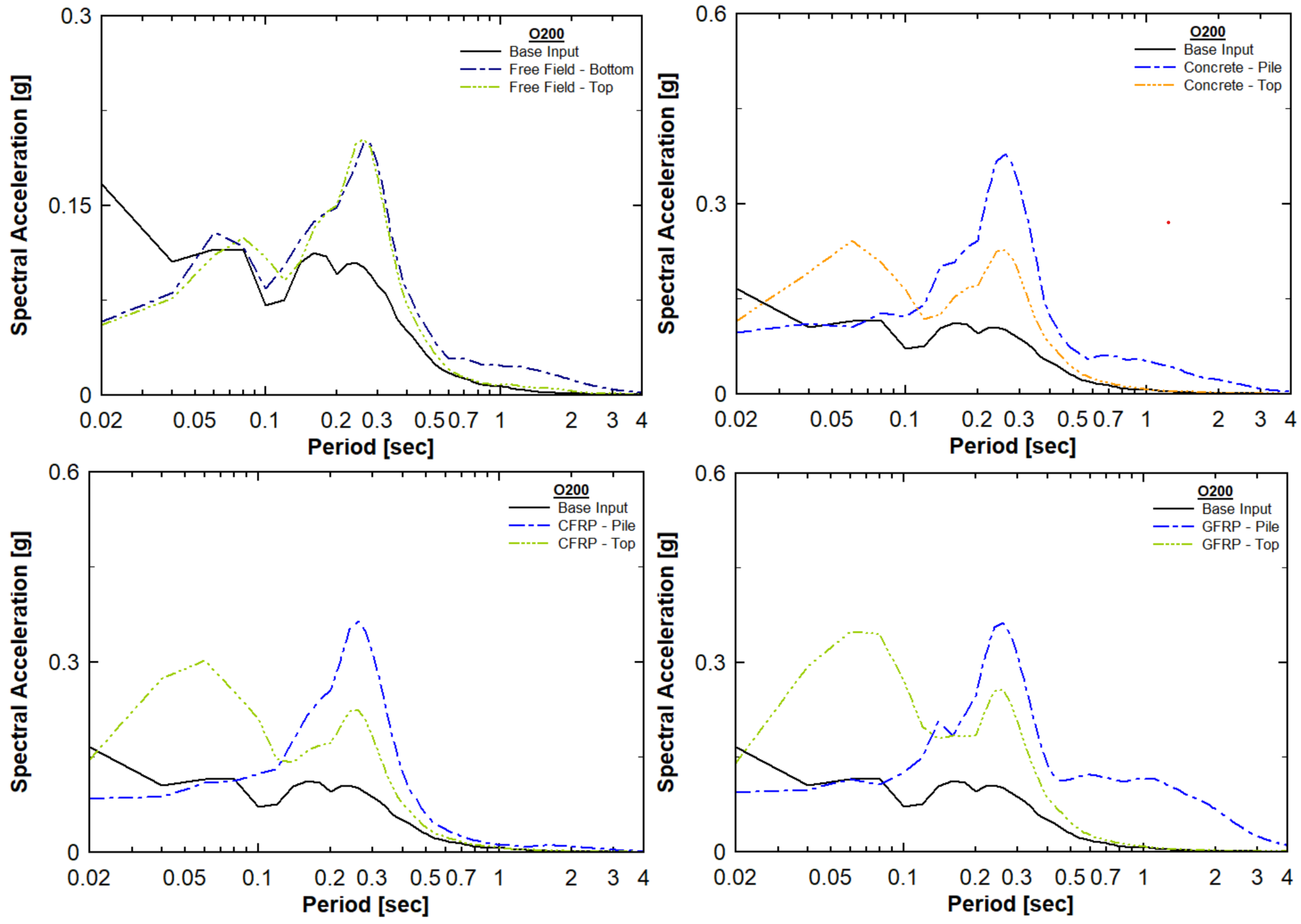
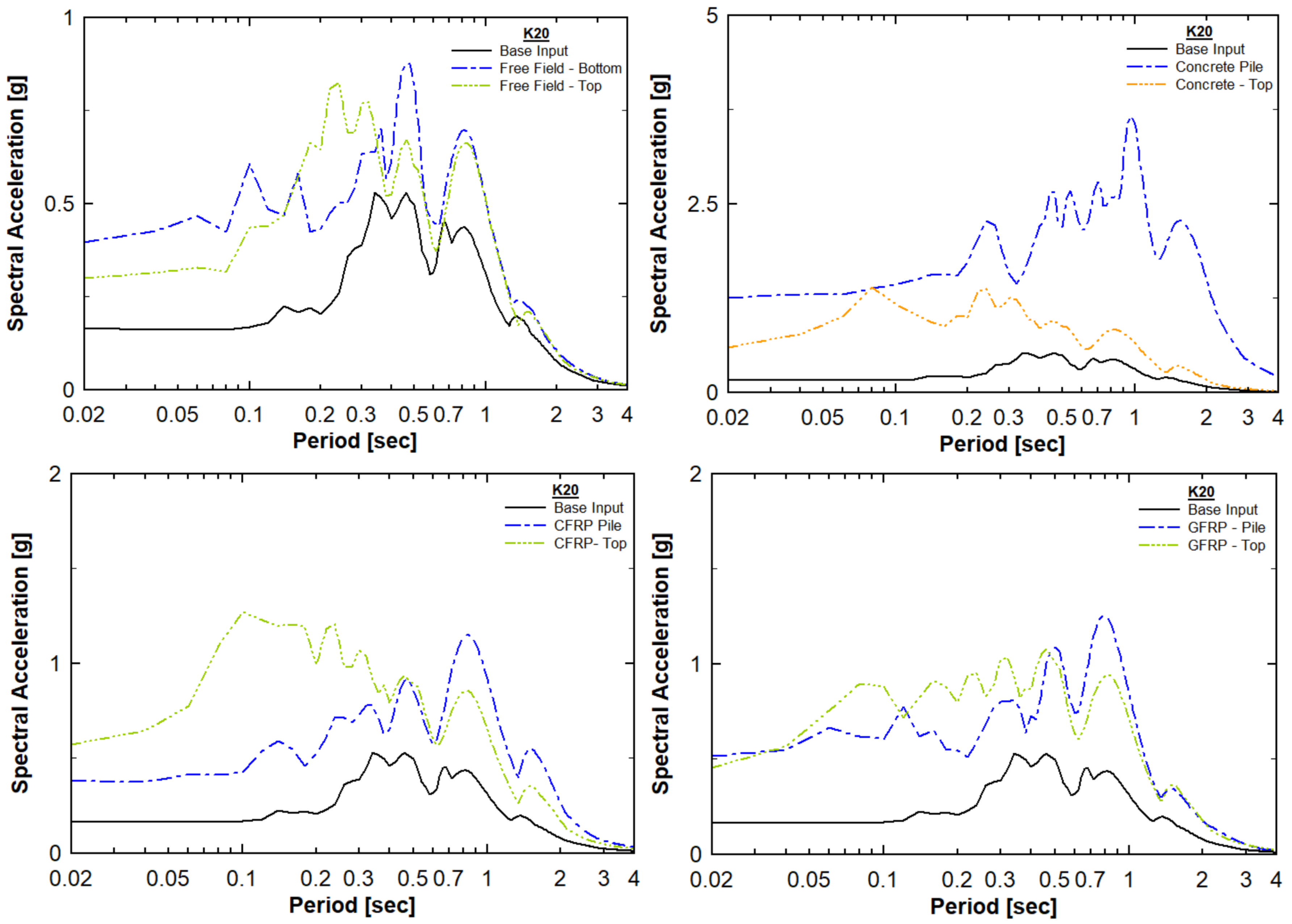
Frequency content variation at different elevations both within the free-field soil strata and on the piles were evaluated using the 5% damped response spectra for the O200 and K20 shaking events compared to that of the base input motion, as per Figure 9 and Figure 10, respectively. The data shows that, while the predominant response period for the base input for the O200 shaking event was around 0.08 s (12.5 Hz), the predominant response from the soil and piles ranged from 0.06 s to 0.26 s (16.7 to 3.8 Hz). It is also evident from the plots that, while both the free-field top and bottom response accelerations were consistent in terms of both peak values and predominant periods, there was marked variation in the responses of the piles. For all three piles, the predominant period at the shaft was consistent at 0.26 s, with response accelerations within 5% of each other. For the pile heads, however, even though two distinct peaks are observed, the major predominant response period was 0.06 s for all three piles. The response acceleration during this period was higher in the concrete-filled CFRP pile, followed by the concrete-filled GFRP, and then the concrete pile. The response acceleration of the concrete-filled CFRP pile was 25% more than that of the concrete pile, while that of the concrete-filled GFRP pile was 15% more than that of the concrete pile. For all three pile heads, the minor response period was similar to that of the shaft at 0.26 s, while the response accelerations were within 15% of each other, with the concrete-filled GFRP recording the highest acceleration, followed by the concrete, and then the concrete-filled CFRP pile heads.
Figure 9. The 5% damped response spectra for the O200 shaking event.
Figure 10. The 5% damped response spectra for the K20 shaking event.
For the K20 shaking event (Figure 10), the predominant response period of 0.34 s (2.9 Hz) at the base resulted in a predominant response of the free-field soil and pile ranging from 0.08 s to 0.96 s (1 Hz to 1.0 Hz). For the free-field soil response, there was a 6% de-amplification of the spectral acceleration between the lower depth (Free-Field Bottom Accelerometer) and the upper layer of the soil (free-field top). Additionally, the peak response of the soil (free-field top) moved towards a higher frequency (low period) region during this shaking event from the bottom to the top. The predominant period at the bottom and top layers of the soil were 0.46 s and 0.24 s, respectively, compared to that of the input base motion of 0.34 s.
For the piles, the predominant periods of vibration ranged between 0.8 and 0.96 s for the shaft and 0.08 and 0.46 s for the pile head. The spectral response accelerations for the pile shaft were higher for the concrete pile, which was more than 200% of the concrete-filled FRP piles (peak values between the FRP piles were within 10% of each other). The peak response accelerations at the pile heads showed less of a steep variation compared to the peak response of the shaft. The concrete-filled GFRP pile showed the lowest peak head spectral acceleration, followed by the concrete-filled CFRP, and then the concrete pile. Compared to the concrete pile, the peak spectral acceleration of the CFRP pile was about 91%, whereas that of the GFRP pile was about 85%. The extreme acceleration recorded at the shaft of the concrete pile during the K20 shaking event may be attributed to the occurrence of liquefaction.

3.3. Pile Response Comparison

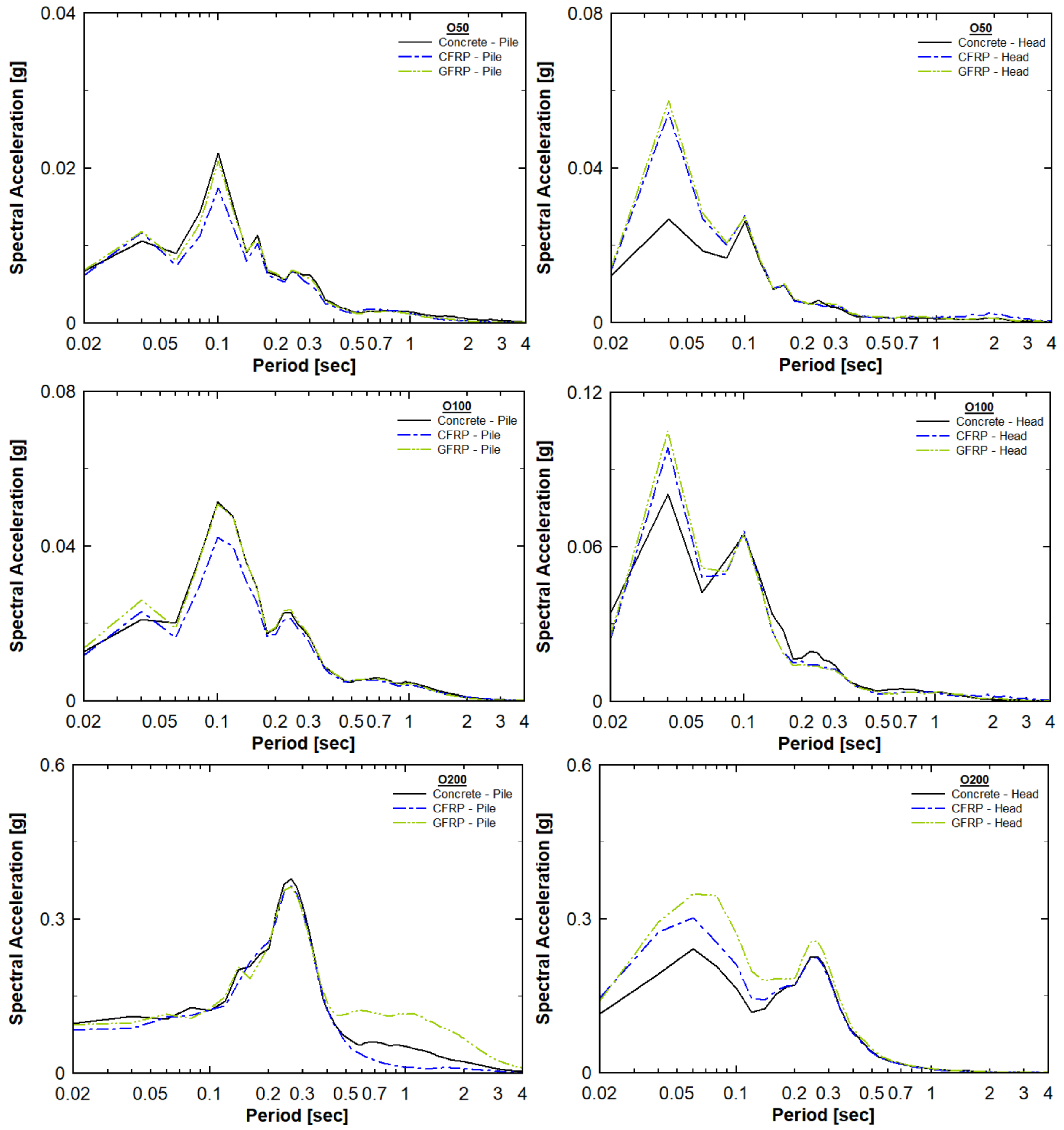
Damped spectral acceleration curves to compare the response of the piles both at the shaft and at the head are shown in Figure 11 for the Ottawa shaking event. At the pile shaft (left plots) where the kinematic responses are measured, the result shows a consistent pattern of response, with the peak response of the concrete-filled CFRP pile shaft slightly lower than that of the concrete-filled GFRP and concrete piles. While the variation in peak kinematic response acceleration was within 5% of each other, for the O50 and O200 shaking events, the peak acceleration of the concrete-filled CFRP pile was about 83% of both the concrete-filled CFRP and concrete piles.
Figure 11. The 5% damped response spectra for piles under Ottawa shaking events.
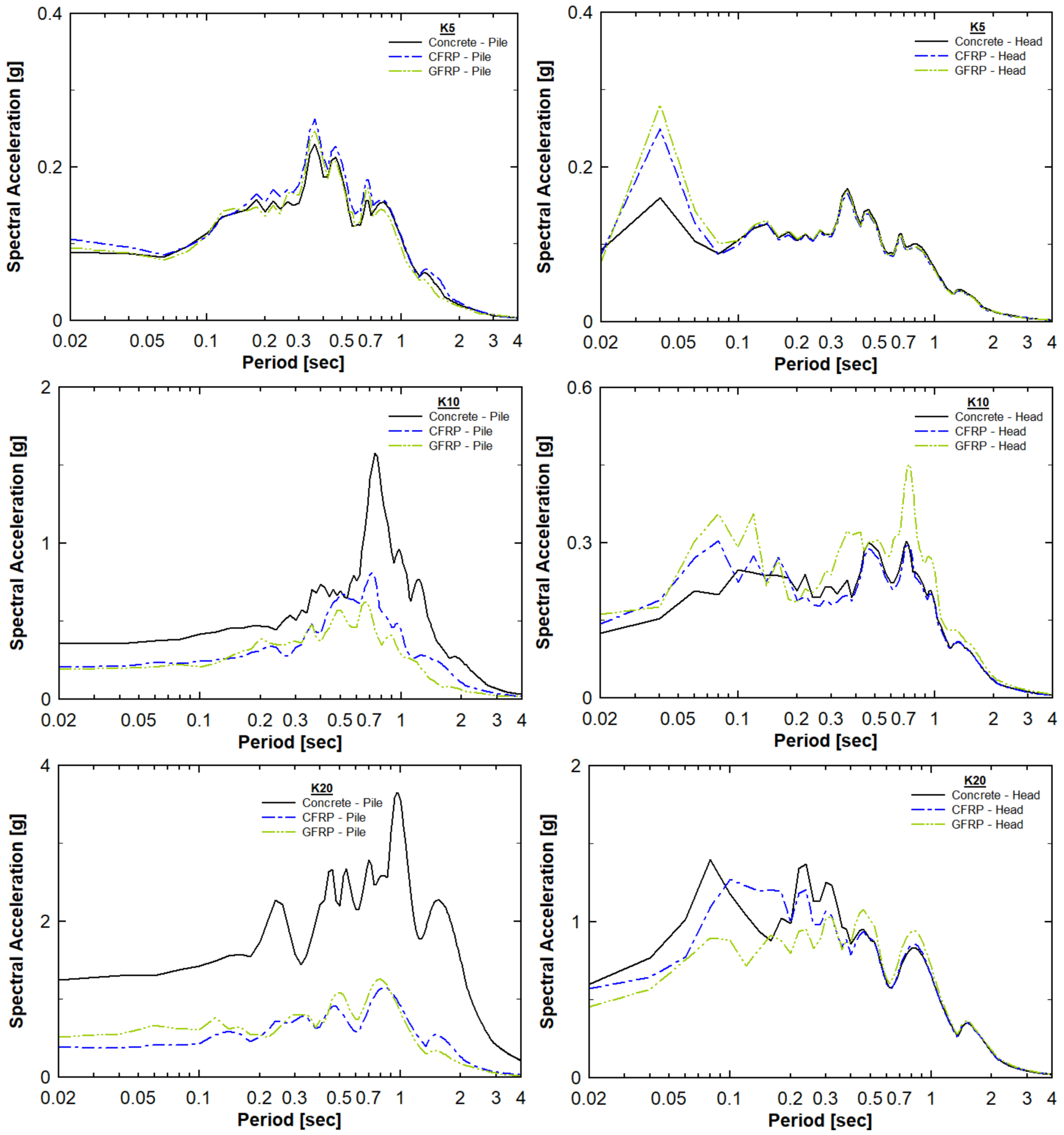
For the Kobe shaking events (left plots of Figure 12), a similar pattern of consistent spectral response is seen for the K5 event, where the peak response accelerations are within 10% of each other, with the highest recorded in the concrete-filled CFRP, followed by concrete-filled GFRP, and then the concrete pile. Response patterns are, however, different during the K10 and K20 shaking events, where liquefaction may have occurred from the intense shaking. During these two events, the concrete pile recorded much higher spectral accelerations compared to the concrete-filled FRP piles. For the K10 event, the peak response accelerations of the concrete-filled CFRP and GFRP piles were 52% and 40%, respectively, of the concrete pile, whereas during the K20 shaking events, these values were down to about 31% and 34% of the concrete pile.
Figure 12. The 5% damped response spectra for piles exposed to Kobe shaking events.
At the pile head (right plots of Figure 11 and Figure 12) where the inertial acceleration responses were measured, however, the concrete-filled FRP pile heads showed higher peak values during the low period ranges of the shaking event. This pattern is consistent with the O50 to K5 shaking events, where shaking events were low to medium. During these events, even though the peak response accelerations of the concrete-filled FRP were generally within 10% of each other, the concrete-filled GFRP pile showed a higher response than the CFRP pile.
While the peak inertial response accelerations of the concrete-filled FRP piles were about twice that of the concrete pile during the O50 shaking event, they reduced to about 26% more, on average, than that of the concrete pile during the O100 shaking event and then back up to about 35% and 53% more during the O200 and K05 shaking events. For the K10 shaking event, while the concrete-filled CFRP and concrete pile responded similarly with comparable peak accelerations, the concrete-filled GFRP pile responded with a peak spectral acceleration of about 50% more than those of the two piles. The response during the K20 event, on the other hand, showed less variation. The concrete-filled CFRP pile exhibited a peak spectral acceleration of about 90% of the concrete pile, while the concrete-filled GFRP pile exhibited a peak response acceleration of about 77% of the concrete pile.
At higher shaking events (K10 and K20), the loss of soil confinement allows for a shift in the dominant deformation mechanism from soil-controlled kinematic bending to pile-controlled flexural response. This means that liquefaction develops as the bending demand moves along the pile shaft, which follows deformation patterns governed primarily by the pile’s flexural stiffness rather than by soil resistance. This redistribution is reflected in the observed results in shaft accelerations, spectral characteristics, and pile head displacement. As noted earlier, the extensive crack patterns on the concrete piles made them susceptible to higher responses at the onset of liquefaction compared to the concrete-filled FRP piles, which benefited from the confinements of the FRP wraps.

3.4. Ratio of Response Spectra

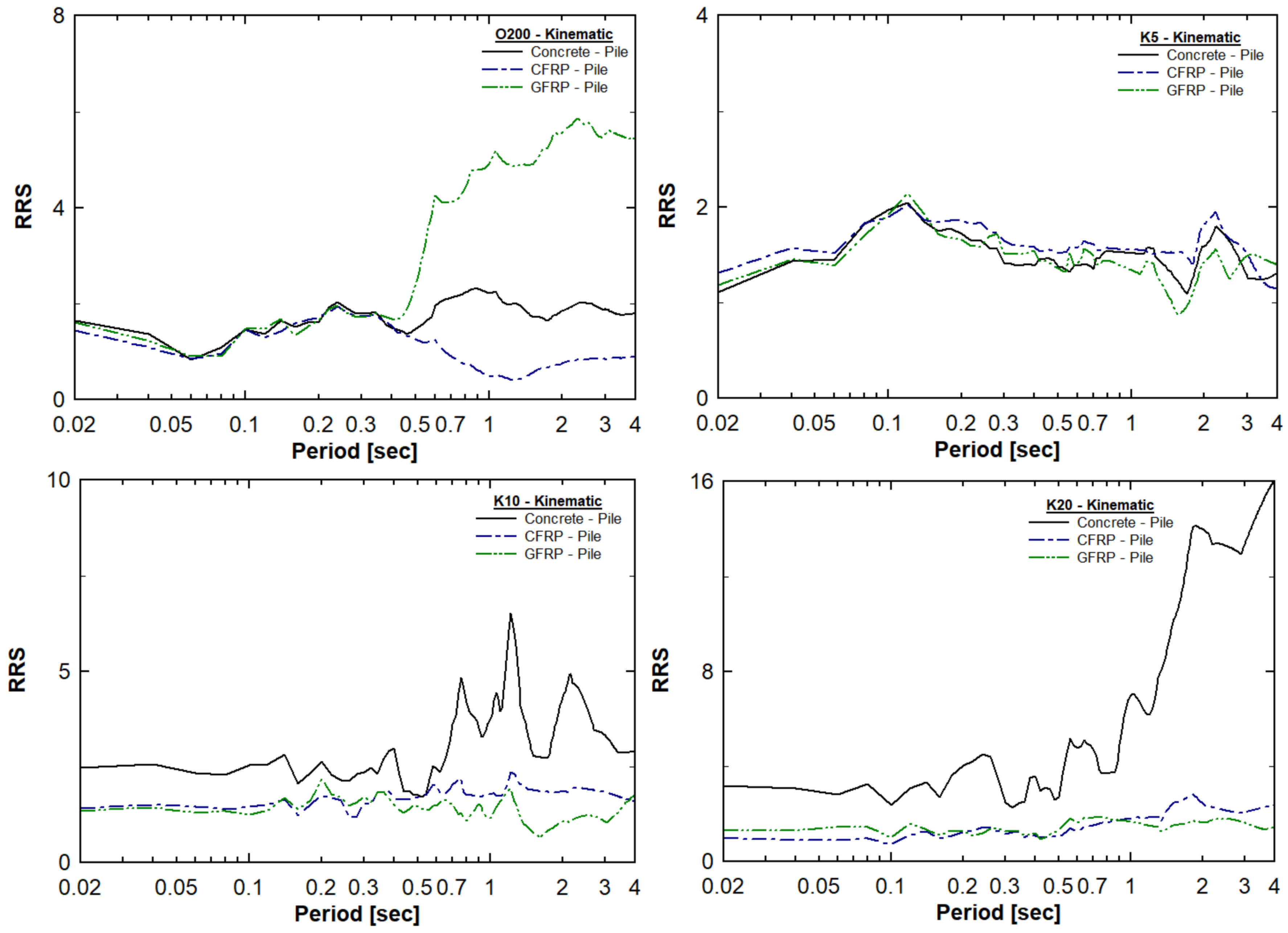
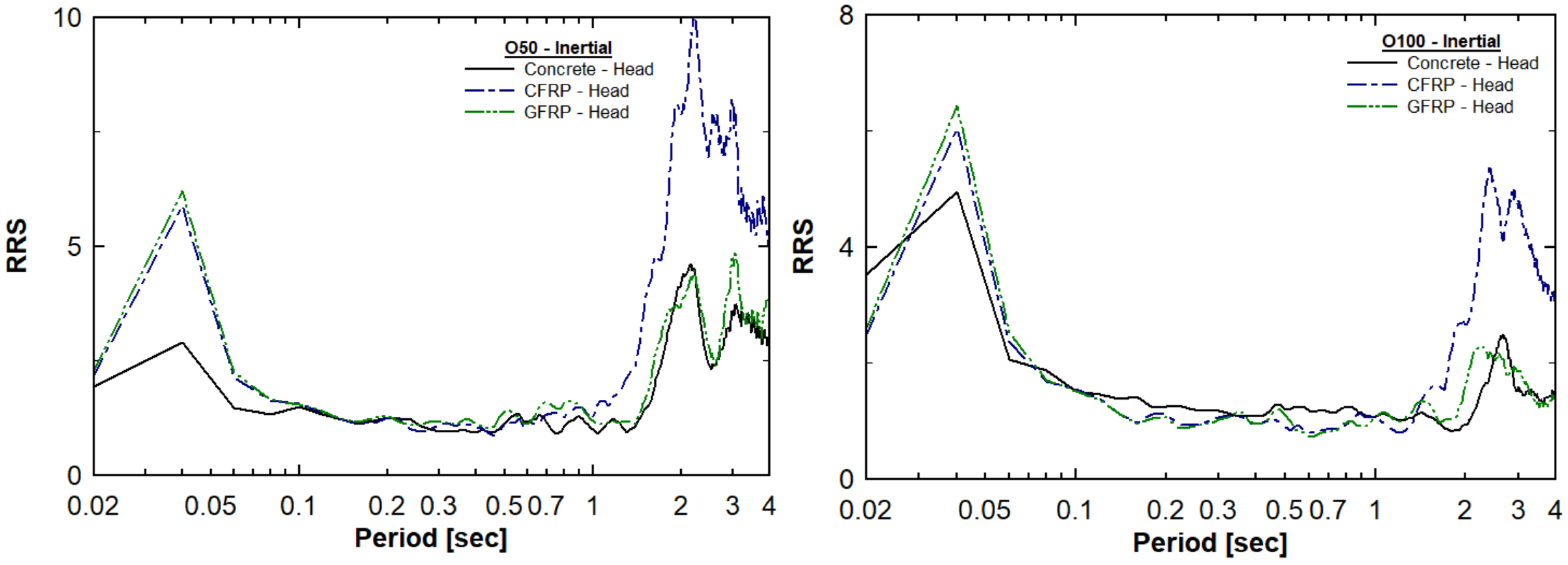
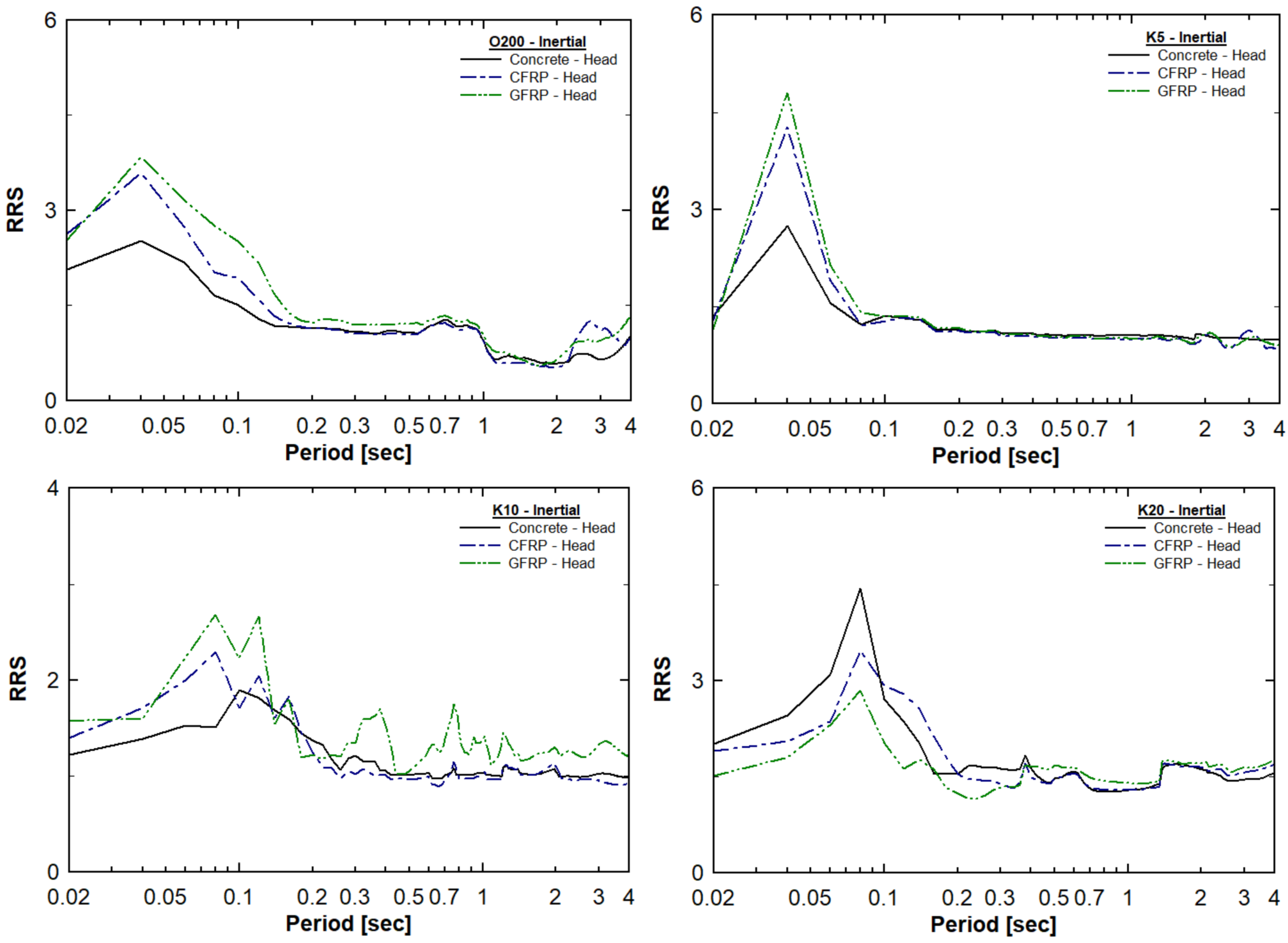
Soil–structure interaction is generally divided in two main categories—inertial response, where the effect of the earthquake is assessed at the top of the foundation, and kinematic effects, where distortions in the free-field motion in the soil is assessed at the interface with the pile. To understand these effects, a dimensionless acceleration spectrum, known as the ratio of response spectra (RRS), is computed as the ratio of the response acceleration at the pile location to the free-field response acceleration for each period. This ratio measures the magnitude of transfer or changes in the seismic wave from the free-field to the near-field pile or foundation due to the stiffness contrast between the free-field soil and the near-field pile interface.
The inertial RRS for the entire shaking event is shown in Figure 13. The data shows that, for the low-intensity shaking events (O50 and O100), amplification of the free-field wave through the pile shaft was higher during the low period (<0.04 s) ranges and high period (>1 s) ranges compared to the medium-frequency ranges. While transfer ratios remained between 1 and 2 during the mid-period ranges for these two shaking events, amplification ratios of up to 10 were recorded for the low-frequency range and about 6 for the high-frequency range of responses. The plots also show that the concrete-filled FRP piles exhibited the highest ratios during these extreme frequencies, with the highest variation seen during the low-frequency range, where the concrete-filled CFRP pile showed the highest ratios.
Figure 13. Inertial ratio of response spectra plots.
For the medium to high-intensity shaking events (O200 to K20), the peak transfers occurred during the low period region and then fell off in the mid to high period ranges. Except during the K20 shaking event, the concrete-filled GFRP pile exhibited the highest transfer ratio, followed by the CFRP, and then the concrete pile. This order reversed during the K20 event, where the concrete pile recorded the highest transfer ratio, followed by the concrete-filled CFRP, and then the GFRP pile.
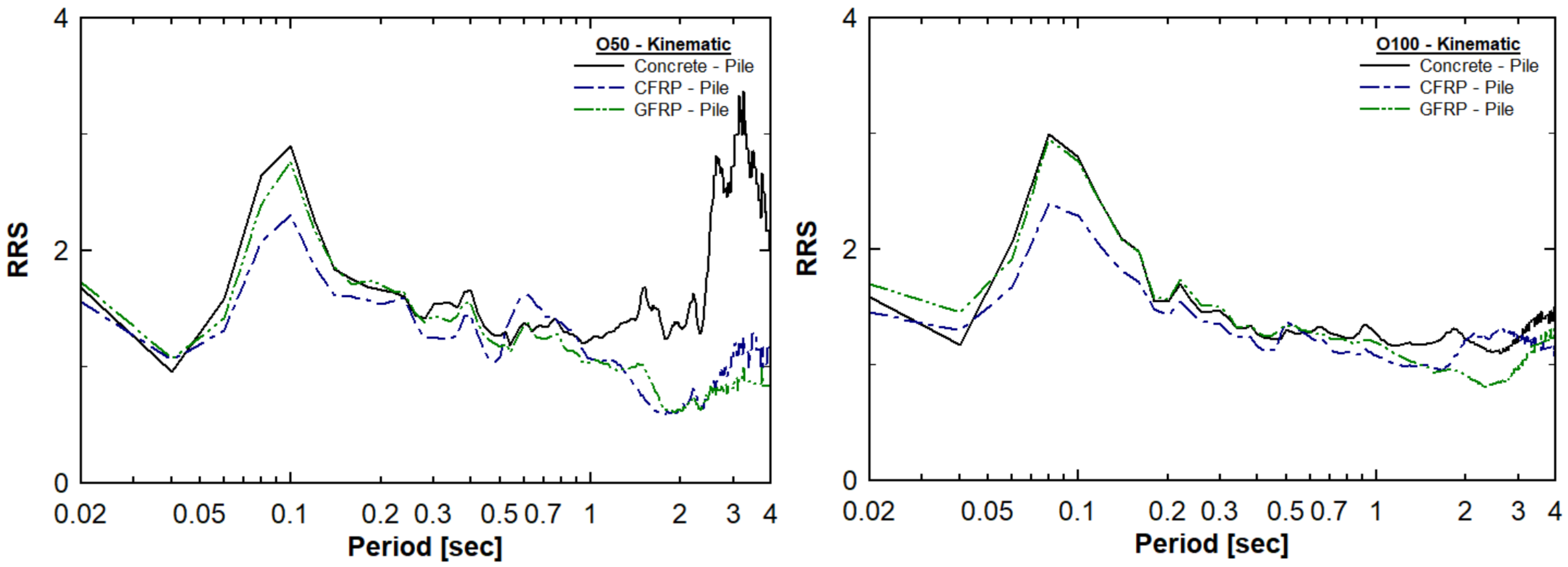
Kinematic response ratio plots, shown in Figure 14, illustrate the ratio of the pile shaft response to the free-field soil response. For the low-intensity shaking events (O50 and O100), the general peak transfer occurred within a period range of less than 0.1 s, with transfer ratios highest in the concrete pile, followed by the concrete-filled GFRP, and then the CFRP piles. Similarly to the inertial ratios, the concrete pile shows off an additional peak transfer at the high period region for the O50 shaking event. This pattern was not seen in the FRP piles during this shaking event or in all of the piles during the O100 shaking event. For the medium-intensity shaking events (O200 and K5), transfer ratios are generally between 1 and 2, except for the higher mid to high period regions of O200, where the transfer ratio for the GFRP increases to about 6. For the high-intensity shaking events (K10 and K20), while transfer ratios among the concrete-filled FRP piles remained within the ranges of 1 to 2, the transfer for the concrete piles reached 6.5 during the K10 event and over 15 for the K20 event. The high ratios recorded in the concrete piles during these shaking events may have been a result of the increased flexibility of the concrete piles as a consequence of the intense cracking from the liquefied soil during these shaking events.
Figure 14. Kinematic ratio of response spectra plots.

3.5. Inertial Pile Head Displacement

The inertial displacement of the piles, measured by the head deflection during seismic excitation, was measured by means of string potentiometers attached to a stationary beam and connected to each of the pile heads/caps. The absolute displacement of the pile heads was obtained by subtracting the displacement of the shaking table base from the corresponding pile head displacements. A summary of the peak head displacement is presented in Table 2 below.
Table 2. Peak inertial head deflection.
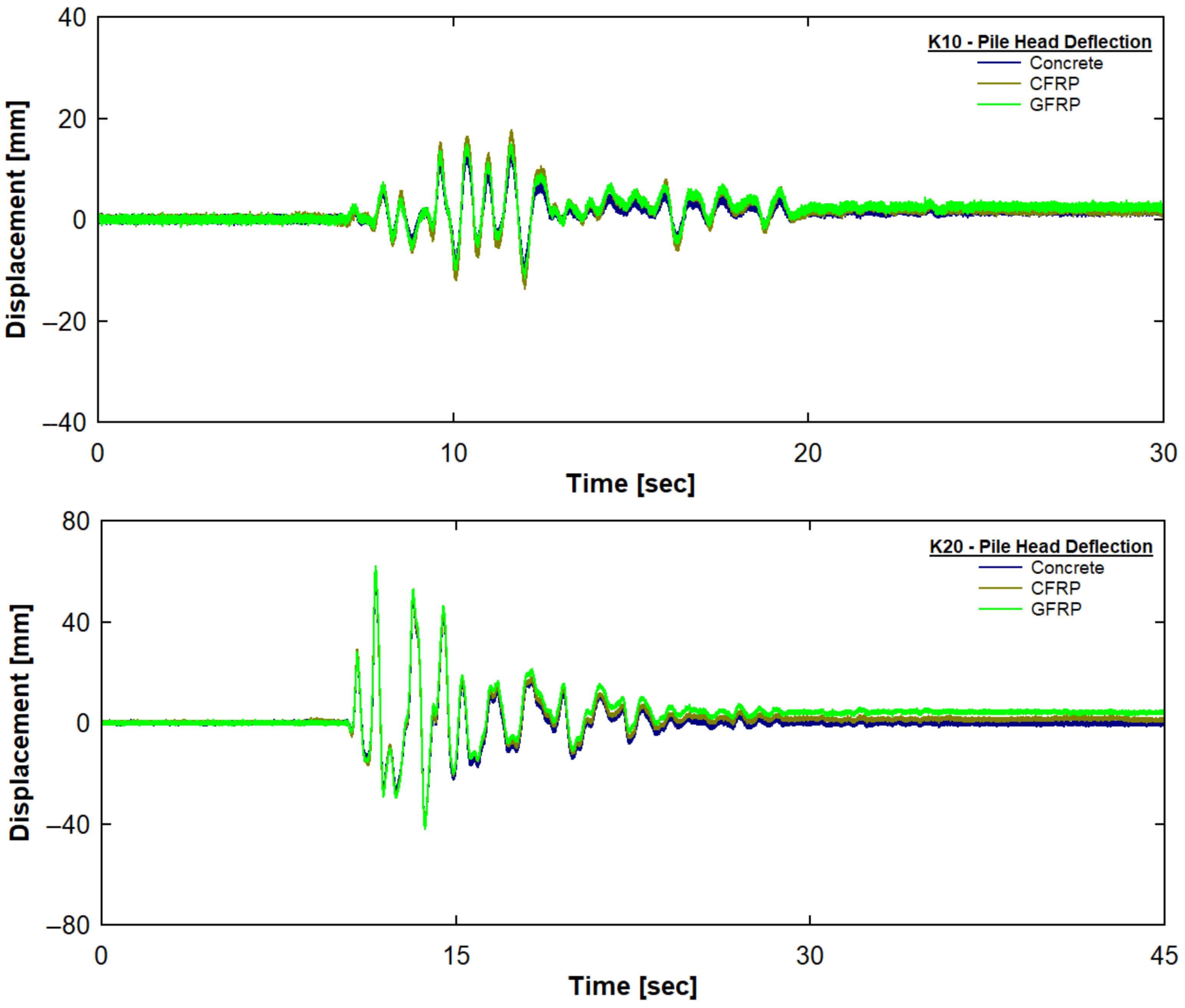
Limited variation in head displacement is seen in the initial phases of testing for the piles, except during the K10 shaking event. The concrete-filled FRP piles generally exhibited higher head rocking during this event compared to the concrete pile, with 12% and 19% higher deflection for the GFRP and CFRP, respectively, during the K10 event. The variation, however, reduced markedly during the K20 to within 5% of one another. The entire behaviour of the pile heads for K10 and K20 shaking events, as per Figure 15, shows a consistent deformation pattern of the piles throughout the test. During these high-intensity shaking events, as per Table 2, the concrete-filled CFRP pile exhibited the highest head deformation of 17.9 mm compared to 15 mm and 13.4 mm for the concrete-filled GFRP and concrete piles, respectively. For the K20 shaking event, the concrete-filled GFRP pile exhibited the highest head deformation of 62.2 mm compared to 61 mm and then 59.5 mm for the concrete-filled CFRP and concrete piles, respectively. The limited variation in response at the pile head underscores the dominance of kinematic pile effects over inertial head effects in soil–structure interactions.
Figure 15. Lateral pile head deflection of piles—K10 (top) and K20 (bottom).

3.6. Pore Pressure Development and Liquefaction Confirmation

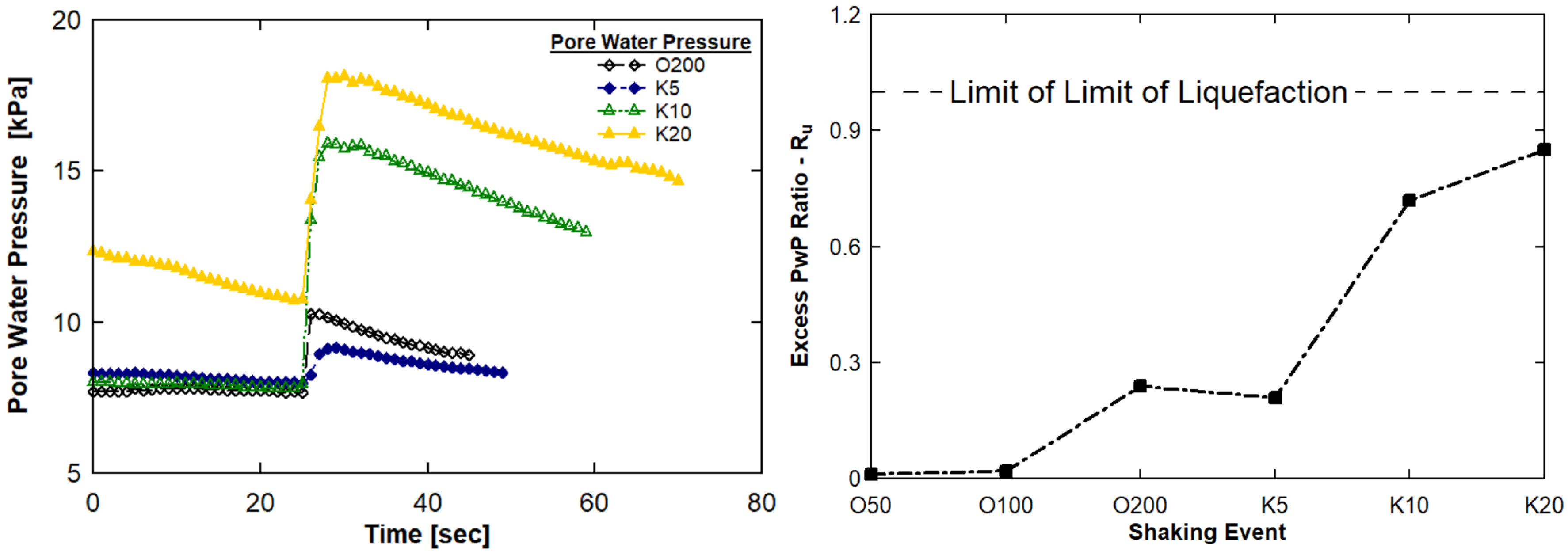
The generation of excess pore water pressure in saturated cohesionless soils during earthquakes presents a potential for liquefaction during the earthquakes. For a given elevation/depth during the shaking event, the buildup in excess pore water pressure results in the gradual degradation of the effective stress until there is complete loss in effective stress. The excess pore water pressure ratio (Ru), measured as the ratio between the increased pore water pressure and initial effective stress at the start of the shaking event, serves as an important criterion to confirm the occurrence of liquefaction [12,39]. For liquefaction to occur, the excess pore water pressure ratio must be greater than or equal to 1. In this regard, pore water pressure sensor was installed at a depth of 800 mm from the top of the soil to measure the change in pore water pressure and to estimate the occurrence of liquefaction during the event.
During the low to medium shaking events, the buildup of excess pore water pressure (Figure 16 left plot) was gradual and was only captured properly for the O200 event when an appreciable excess pore water pressure was recorded. For the K5 event, an excess pore pressure of 1.65 kPa was recorded during the peak shaking period. A much more rapid buildup was observed during the K10 and K20 events, where excess pressures of about 7.4 kPa were recorded. Compared to an initial effective stress of 7.8 kPa, the Ru for K20 approached the limit of unity, showing imminent liquefaction in the soil.
Figure 16. (Left) evolution of PWP with time; (right) excess pore water pressure ratio.
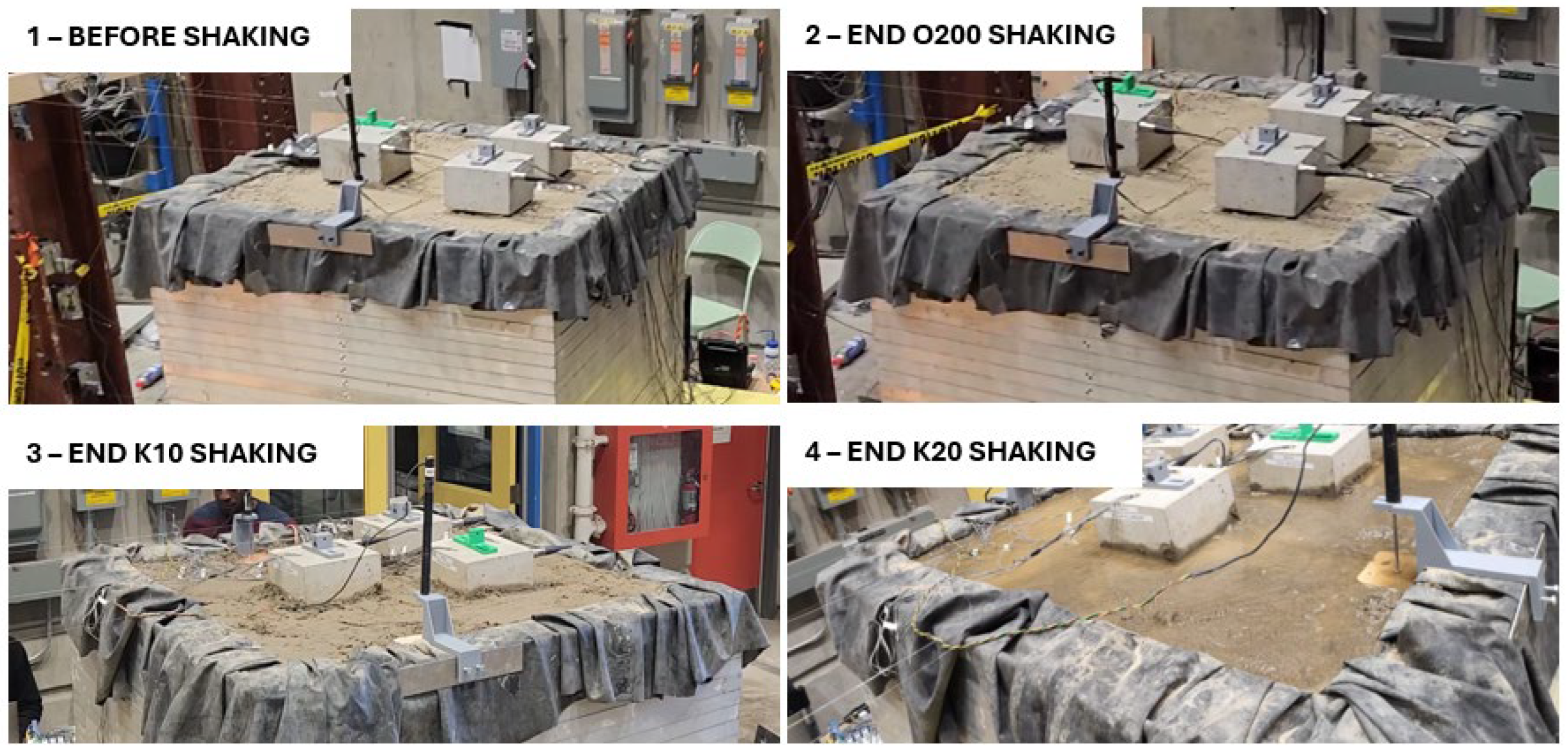
The evidence of liquefaction as the intensity of shaking increased from the start of the testing programme to the end of K20; the event is summarized in Figure 17. Pictures 1 and 2 show the surface condition of the setup before the start of the shaking events and after the O200 event, signifying the end of the low-intensity shaking events. It is evident from these two pictures that liquefaction had not taken place and that the surface conditions were unchanged. The evidence of the onset of liquefaction can be seen at the end of the K10 shaking event, where the surface shows visible signs of saturation. By the end of the K20 shaking events, the entire top surface is submerged in water, showing that liquefaction had completely occurred.
Figure 17. Evolution of liquefaction from surface pictures.

4. Conclusions

A series of shaking table tests were carried out to evaluate the performance of end-bearing concrete-filled FRP piles made from epoxy-saturated fabrics of glass and carbon against the performance of a traditional cylindrical concrete pile. The soil medium under which the testing was carried out was a saturated cohesionless soil capable of liquefaction under intense shaking, with liquefaction confirmed at the end of the intense shaking events. Base input motions utilized for the testing programme were scaled-up bedrock displacement profiles from the 2010 Ottawa Earthquake and a scaled-down displacement profile for the 1995 Kobe earthquake. The following conclusions are drawn from the results of the testing:
  • Ground motion was amplified through both the free-field soil medium and piles as the seismic wave travelled vertically upwards before the onset of ground liquefaction. A general pattern of de-amplification was observed at the onset of liquefaction in the free-field soil medium. Similarly, the pattern of de-amplification was observed in the concrete piles as the seismic waves travelled from the shaft to the pile cap, in contrast to the behaviour of the concrete-filled FRP piles. The split behaviour arises from the stiffness degradation of the concrete piles due to the extensive cracking pattern observed after the tests.
  • Inertial response acceleration and RRS showed a higher transfer ratio in the concrete-filled FRP piles compared to the traditional concrete piles, generally at frequencies greater than 10 Hz. For frequencies lower than 10 Hz (period of 0.1 s), the transfer ratios of both concrete-filled FRP and traditional concrete piles were within 5% of each other.
  • Inertial head deflection of the piles showed limited variation in the rocking responses of all three piles. The head deflections at the onset of liquefaction were within 5% of each other, signifying that SSI effects were less dependent on the inertial response.
  • Kinematic response acceleration and RRS showed a generally consistent pattern of response between the concrete-filled FRP piles and the concrete piles, except at the onset of liquefaction, where the concrete pile showed much higher accelerations and transfer ratios. This is explained by the initiation of cracks along the shaft of the concrete pile, which significantly reduced its stiffness in the liquefied soil, compared to the concrete-filled FRP piles, which benefited from the confining effects of the FRP wraps.
  • The overall results showed the dominance of the concrete core in the behaviour of concrete-filled piles while leveraging on the confining resistance the FRP can provide. The higher acceleration response and emanating cracks of the concrete pile at the onset of liquefaction underscores the absence of the confining layers of the FRP sheaths. Overall, the study shows that concrete-filled FRP piles, especially those made from carbon fibre, provide a viable alternative for use as piling materials.

Author Contributions

All authors contributed to the study conception and design. Material preparation was performed by A.A.-H. Data collection and analysis were performed by A.A.-H. The first draft of the manuscript was written by A.A.-H., while initial review was carried out by M.T.R. All authors have read and agreed to the published version of the manuscript.

Funding

This study was financially supported by research grants provided by Natural Sciences and Engineering Research Council of Canada (NSERC) with Award Number 315879. The funding enabled the research team to purchase equipment and provide research assistantship grants for the studies. The funding was awarded to Prof. Mohammad Rayhani.

Data Availability Statement

The datasets generated during and/or analyzed during the current study are available from Aliu Abdul-Hamid on reasonable request.

Acknowledgments

This study was financially supported by Natural Sciences and Engineering Research Council of Canada (NSERC).

Conflicts of Interest

The authors have no relevant financial and non-financial interests to disclose.

References

  1. Tumialan, G.; Nanni, A.; Ibell, T.; Fukuyama, H. FRP composites for strengthening civil infrastructure around the world. SAMPE J. 2002, 38, 9–15. [Google Scholar]
  2. Caiza, P.; Shin, M.; Andrawes, B. Flexure-Compression Testing of Bridge Timber Piles Retrofitted with Fiber Reinforced Polymers. Open J. Civ. Eng. 2012, 2, 115–124. [Google Scholar] [CrossRef]
  3. Chung, W.; Jang, H.; An, Z. Numerical and Experimental Investigation of Concrete-Filled FRP Tube. In Proceedings of the CICE 2010—The 5th International Conference on FRP Composites in Civil Engineering, Beijing, China, 27–29 September 2010; pp. 224–227. [Google Scholar]
  4. Kim, K.E.; Andrawes, B. Analysis of FRP Retroffited Timber Piles Under Multi- Hazard Loading. In Proceedings of the 16th World Conference on Earthquake, Santiago, Chile, 9–13 January 2017. [Google Scholar]
  5. Mirmiran, A.; Shahawy, M. A New Concrete-Filled Hollow FRP Composite Column. Composites 1996, 8368, 263–268. [Google Scholar] [CrossRef]
  6. Zaghi, A.E.; Saiidi, M.S.; Mirmiran, A. Shake table response and analysis of a concrete-filled FRP tube bridge column. Compos. Struct. 2012, 94, 1564–1574. [Google Scholar] [CrossRef]
  7. Sakr, M.; El Naggar, M.H.; Nehdi, M. Load transfer of Fibre-Reinforced Polymer (FRP) Composite Tapered Piles in Dense Sand. Can. Geotech. J. 2004, 41, 70–88. [Google Scholar] [CrossRef]
  8. Giraldo Valez, J.; Rayhani, M.T. Axial and lateral load transfer of fibre-reinforced polymer (FRP) piles in soft clay. Int. J. Geotech. Eng. 2016, 11, 149–155. [Google Scholar] [CrossRef]
  9. Long, Y.; Li, B.; Liu, Y.; Chen, G.; Xiong, M. Compressive behavior of recycled aggregate concrete-filled square steel tubular columns with FRP—Confined concrete core. Structures 2025, 78, 108915. [Google Scholar] [CrossRef]
  10. Xiong, Z.; Cai, Q.; Liu, F.; Li, L.; Long, Y. Dynamic performance of RAC-filled double-skin tubular columns subjected to cyclic axial compression. Constr. Build. Mater. 2020, 248, 118665. [Google Scholar] [CrossRef]
  11. Elmasry, M.I.S.; Abd-El-Aziz, T.M.; Kamel, A.M. Studying the Impact of using Tubular Concrete-Filled FRP Pile Foundations on the Seismic Response of Structures. In Proceedings of the International Conference on Structural Dynamic, EURODYN, Porto, Portugal, 30 June–2 July 2014; pp. 477–484. [Google Scholar]
  12. Hosseini, M. Evaluation of Seismic Behaviour of Hollow Fibre-Reinforced Polymer (FRP) Piles Using Shake Table Testing. Ph.D. Thesis, Carleton University, Ottawa, ON, Canada, 2021. [Google Scholar]
  13. Fan, K.; Gazetas, G.; Kaynia, A.; Kausel, E.; Ahmad, S. Kinematic Seismic Response of Single Piles and Pile Groups. J. Geotech. Eng. 1991, 117, 1860–1879. [Google Scholar] [CrossRef]
  14. Mylonakis, G. The Collapse of Fukae (Hanshin Expressway) Bridge, Kobe, 1995: The Role of Soil and Soil-Structure Interaction. In Proceedings of the Fifth International Conference on Case Histories in Geotechnical Engineering, New York, NY, USA, 13–17 April 2004; OSP 14. pp. 1–12. [Google Scholar]
  15. Mylonakis, G.; Gazetas, G. Seismic soil-structure interaction: Beneficial or detrimental? J. Earthq. Eng. 2000, 4, 277–301. [Google Scholar] [CrossRef]
  16. Nikolaou, S.; Mylonakis, G.; Gazetas, G.; Tazoh, T. Kinematic pile bending during earthquakes: Analysis and field measurements. Geotechnique 2001, 51, 425–440. [Google Scholar] [CrossRef]
  17. Rayhani, M.H.T.; El Naggar, H. Physical and Numerical Modeling of Dynamic Soil-Structure Interaction. In Proceedings of the Geotechnical Earthquake Engineering and Soil Dynamics IV, Sacramento, CA, USA, 18–22 May 2008; pp. 1–11. [Google Scholar] [CrossRef]
  18. Rocha, M. The Possibility of Solving Soil Mechanics Problems by the use of Models. Int. Soc. Soil Mech. Geotech. Eng. 1957, 1, 183–188. [Google Scholar]
  19. Moncarz, P.D.; Krawinkler, H. Theory and Application of Experimental Model Analysis in Earthquake Engineering; John A. Blume Earthquake Engineering Center, Stanford University: Stanford, CA, USA, 1981. [Google Scholar]
  20. Schofield, A.N. Dynamic and Earthquake Geotechnical Centrifuge Modelling. In Proceedings of the International Conference on Recent Advances in Geotechnical Earthquake Engineering and Soil Dynamics, St. Louis, MI, USA, 26 April–3 May, 1981; pp. 1081–1100. [Google Scholar]
  21. Gohl, B.W. Response of Pile Foundations to Simulated Earthquake Loading: Experimental and Analytical Results. Ph.D. Thesis, University of British Columbia, Vancouver, BC, Canada, 1991. [Google Scholar]
  22. Iai, S. Similitude for shaking table tests on soil-structure-fluid model in 1g gravitational field. Soils Found. 1989, 29, 105–118. [Google Scholar] [CrossRef]
  23. Chidichimo, A.; Cairo, R.; Dente, G.; Taylor, C.A.; Mylonakis, G. 1-g Experimental investigation of bi-layer soil response and kinematic pile bending. Soil Dyn. Earthq. Eng. 2014, 67, 219–232. [Google Scholar] [CrossRef]
  24. Hokmabadi, A.S.; Fatahi, B.; Samali, B. Physical Modeling of Seismic Soil-Pile-Structure Interaction for Buildings on Soft Soils. Int. J. Geomech. 2015, 15, 1–18. [Google Scholar] [CrossRef]
  25. Hokmabadi, A.S. Effect of Dynamic Soil-Pile-Structure Interaction on Seismic Response of Mid-Rise Moment Resisting Frames of the Requirement for the Degree of Faculty of Engineering and Information Technology. Ph.D. Thesis, University of Technology Sydney, Sydney, Australia, 2014. [Google Scholar]
  26. Durante, M.G.; Di Sarno, L.; Mylonakis, G.; Taylor, C.A.; Simonelli, A.L. Soil-Pile-Structure Interaction: Experimental Outcomes from Shaking Table Tests. Earthq. Eng. Struct. Dyn. 2015, 45, 1041–1061. [Google Scholar] [CrossRef]
  27. Dong, Y.; Feng, Z.; He, J.; Chen, H.; Jiang, G.; Yin, H. Seismic Response of a Bridge Pile Foundation during a Shaking Table Test. Shock Vib. 2019, 2019, 9726013. [Google Scholar] [CrossRef]
  28. Meymand, P.J. Shaking Table Scale Model Tests of Nonlinear Soil-Pile-Superstructure Interaction in Soft Soil. Ph.D. Thesis, University of Carlifornia, Berkeley, CA, USA, 1998. [Google Scholar] [CrossRef]
  29. ASTM D6913/D6913M; Standard Test Methods for Particle-size Distribution (Gradation) of Soils Using Sieve Analysis. ASTM International: West Conshohocken, PA, USA, 2017. [CrossRef]
  30. ASTM D854/D854M; Standard Test Methods for Specific Gravity of Soil Solids by Water Pycnometer. ASTM International: West Conshohocken, PA, USA, 2014. [CrossRef]
  31. ASTM D698/D698M-12; Standard Test Methods for Laboratory Compaction Characteristics of Soil Using Standard Effort (12,400 ft-lbf/ft3 (600 kN-m/m3)). ASTM International: West Conshohocken, PA, USA, 2021. [CrossRef]
  32. Atkinson, G.M.; Assatourians, K. Attenuation and source characteristics of the 23 June 2010 M 5.0 Val-des-Bois, Quebec, earthquake. Seismol. Res. Lett. 2010, 81, 849–860. [Google Scholar] [CrossRef]
  33. NRC. The 2010 Val-des-Bois Quebec Earthquake; Natural Resources Canada (NRC): Ottawa, ON, Canda, 2010; pp. 1–2.
  34. Fukushima, Y.; Irikura, K. Attenuation characteristics of peak ground motions in the 1995 Hyogo-ken Nanbu earthquake. J. Phys. Earth 1997, 45, 135–146. [Google Scholar] [CrossRef]
  35. Fukushima, Y.; Irikura, K.; Uetake, T.; Matsumoto, H. Characteristics of observed peak amplitude for strong ground motion from the 1995 Hyogoken Nanbu (Kobe) earthquake. Bull. Seismol. Soc. Am. 2000, 90, 545–565. [Google Scholar] [CrossRef]
  36. Azizinamini, A.; Ghosh, S.K. Steel Reinforced Concrete Structures in 1995 Hyogoken-Nanbu Earthquake. J. Struct. Eng. 1997, 123, 986–992. [Google Scholar] [CrossRef]
  37. Bruneau, M.; Wilson, J.C.; Tremblay, R. Performance of Steel Bridges during the 1995 Hyogo-ken Nambu (Kobe, Japan) Earthquake. Can. J. Civ. Eng. 1996, 23, 678–713. [Google Scholar] [CrossRef]
  38. Cubrinovski, M.; Ishihara, K. Liquefaction-Induced Ground Deformation and Damage to Piles in the 1995 Kobe Earthquake. In Proceedings of the International Conference Skopje Earthquake 40 Years of European Earthquake Engineering, Skopje & Ohrid, North Macedonia, 27–31 August 2003. [Google Scholar]
  39. Zayed, M.; Ebeido, A.; Prabhakaran, A.; Kim, K.; Qiu, Z.; Elgamal, A. Shake table testing: A high-resolution vertical accelerometer array for tracking shear wave velocity. Geotech. Test. J. 2021, 44, 1097–1118. [Google Scholar] [CrossRef]
Disclaimer/Publisher’s Note: The statements, opinions and data contained in all publications are solely those of the individual author(s) and contributor(s) and not of MDPI and/or the editor(s). MDPI and/or the editor(s) disclaim responsibility for any injury to people or property resulting from any ideas, methods, instructions or products referred to in the content.

Article Metrics

Citations

Article Access Statistics

Article metric data becomes available approximately 24 hours after publication online.