Article

Anion Intercalation/De-Intercalation Mechanism Enabling High Energy and Power Densities of Lithium-Ion Capacitors


Department of Materials, Henry Royce Institute, University of Manchester, Manchester M13 9PL, UK
*
Author to whom correspondence should be addressed.
Batteries 2024, 10(9), 296; https://doi.org/10.3390/batteries10090296

Submission received: 23 July 2024 / Revised: 13 August 2024 / Accepted: 21 August 2024 / Published: 23 August 2024

Abstract

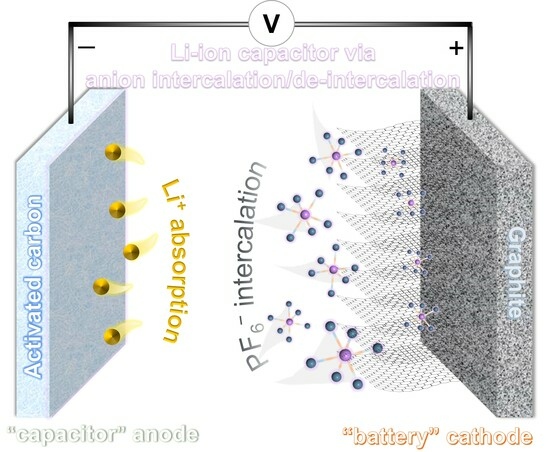
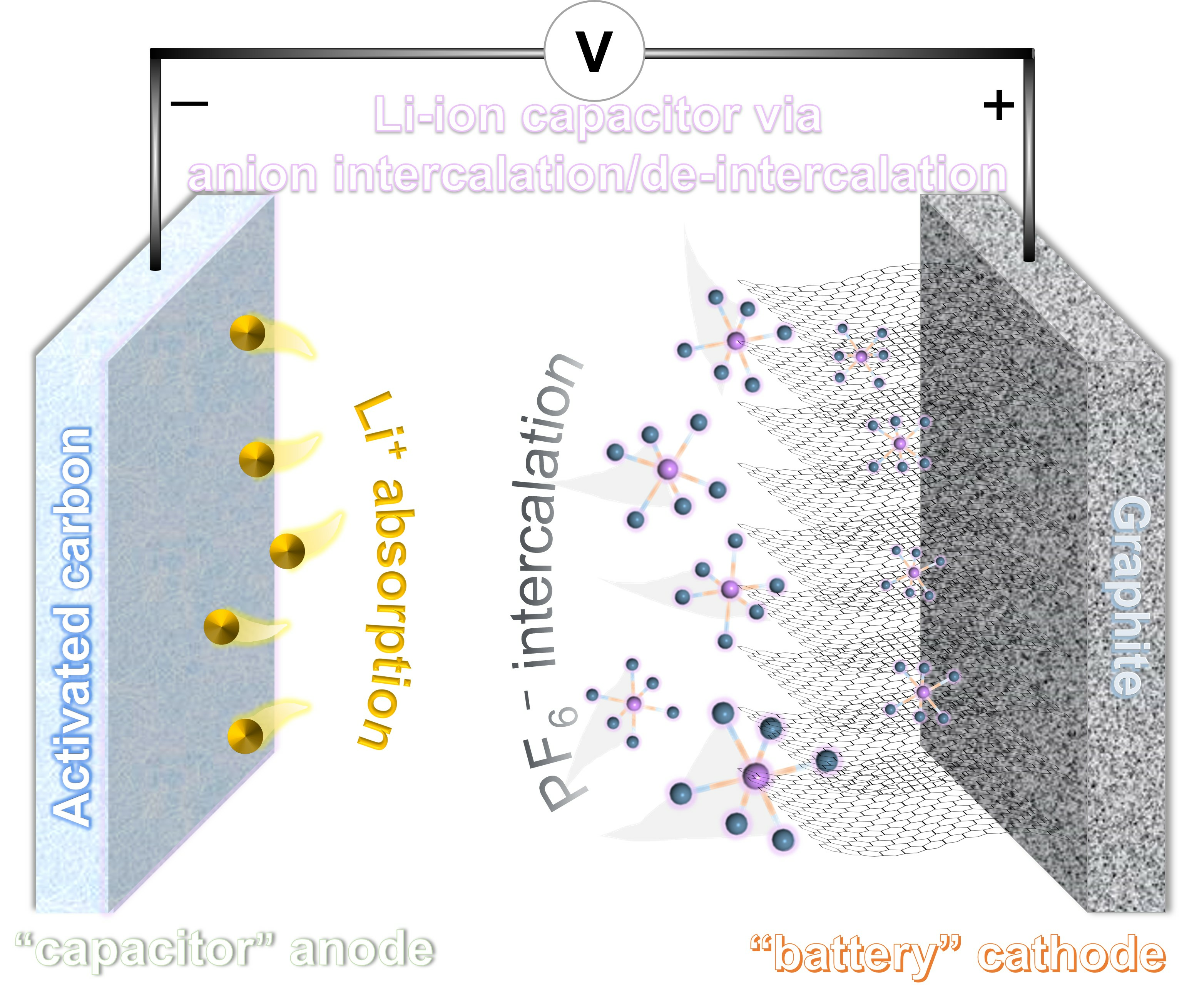
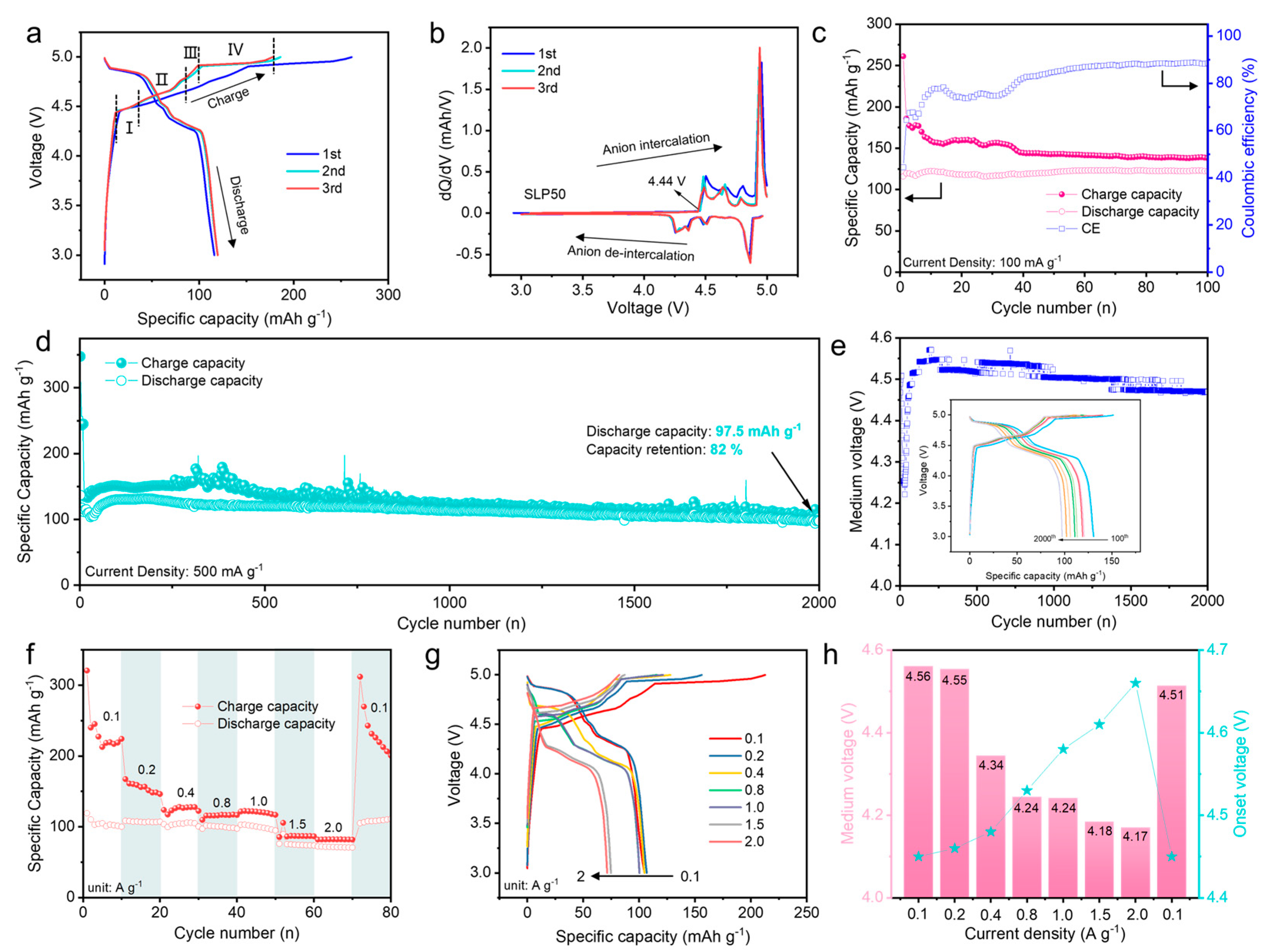
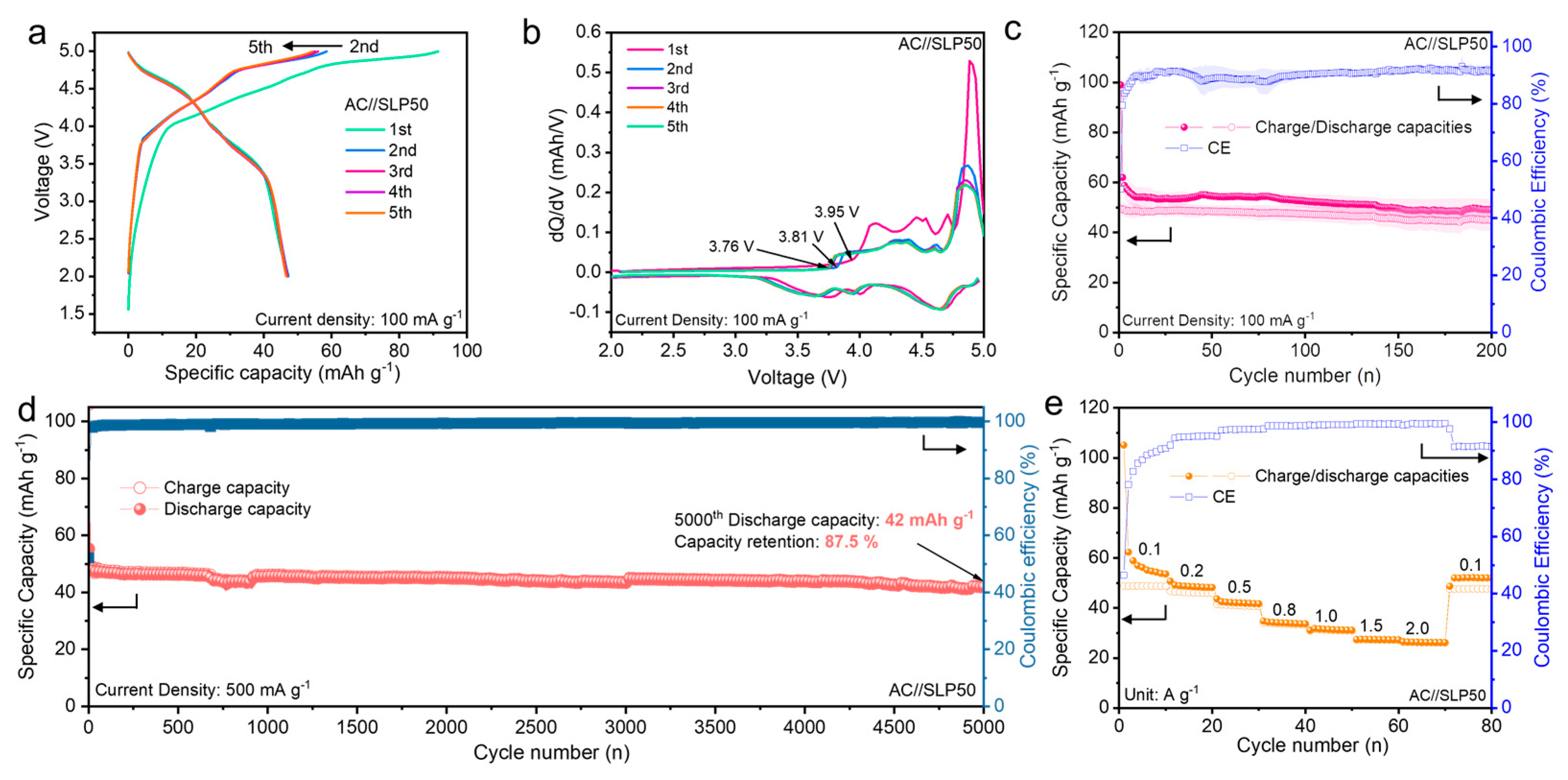
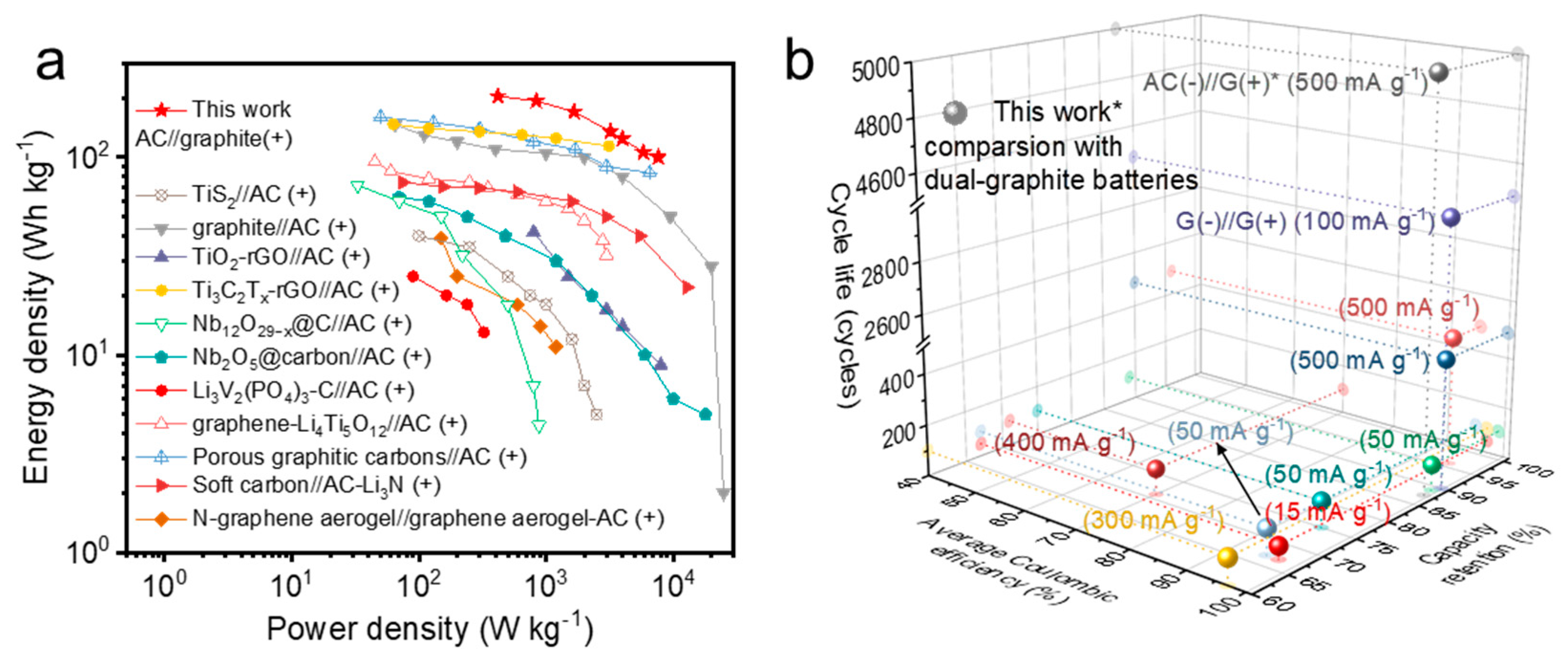
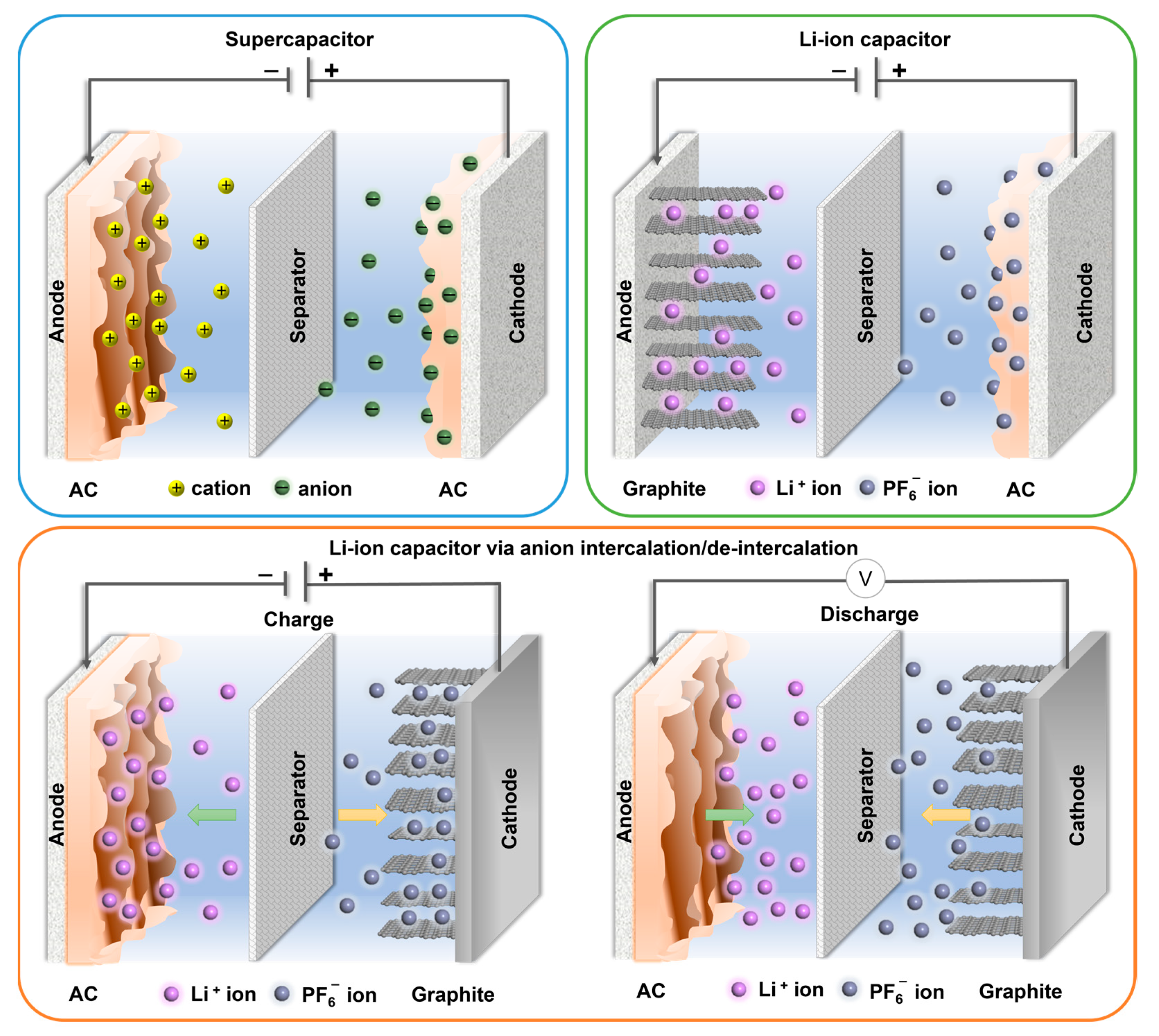
The growing demands for electrochemical energy storage systems is driving the exploration of novel devices, with lithium-ion capacitors (LICs) emerging as a promising strategy to achieve both high energy density and fast charge capability. However, the low capacitance of commercial activated carbon (AC) cathode based on anion absorption/desorption limits LIC applications. Herein, commercial graphite is proposed as the cathode to construct an innovative AC (−)//graphite (+) system. The graphite cathode functions as anion hosting, allowing reversible intercalation/de-intercalation of anions into/from its interlayers. The as-designed AC (−)//graphite (+) full cell achieves stable cycling with 90.6% capacity retention after 200 cycles at 0.1 A g−1 and a prolonged lifespan with 87.5% capacity retention after 5000 cycles at 0.5 A g−1 with the upper cut-off voltage of 5.0 V, yielding a high average Coulombic efficiency (CE) of 99.3%. Moreover, the full cell exhibits a high energy density (>200 Wh kg−1) and power density of 7.7 kW kg−1 (calculated based on active mass in both electrodes). These performances exceed most LICs based on anions absorption/desorption on the surface of AC cathodes. This work explores an effective electrode revolution with the assistance of anion intercalation/de-intercalation chemistry for developing novel LICs with high energy and power densities.
Keywords: lithium-ion capacitor; hybrid dual-ion system; graphite cathode; anion intercalation/de-intercalation; energy density lithium-ion capacitor; hybrid dual-ion system; graphite cathode; anion intercalation/de-intercalation; energy density
Graphical Abstract