Overexpression of SlERF.F4 in Tomato Delays Fruit Ripening and Enhances Drought Tolerance

 and
and
Abstract
1. Introduction
2. Materials and Methods
2.1. Plant Growth and Stress Treatments
2.2. Gene Cloning and Sequence Analysis
2.3. Quantitative Real-Time PCR (qRT-PCR) Analysis
2.4. Subcellular Localization
2.5. Generation of Transgenic Tomato Plants
2.6. Phenotype Analysis
2.7. Drought Stress Treatment and Measurement of Physiological Indicators
2.8. Statistical Analysis
3. Results
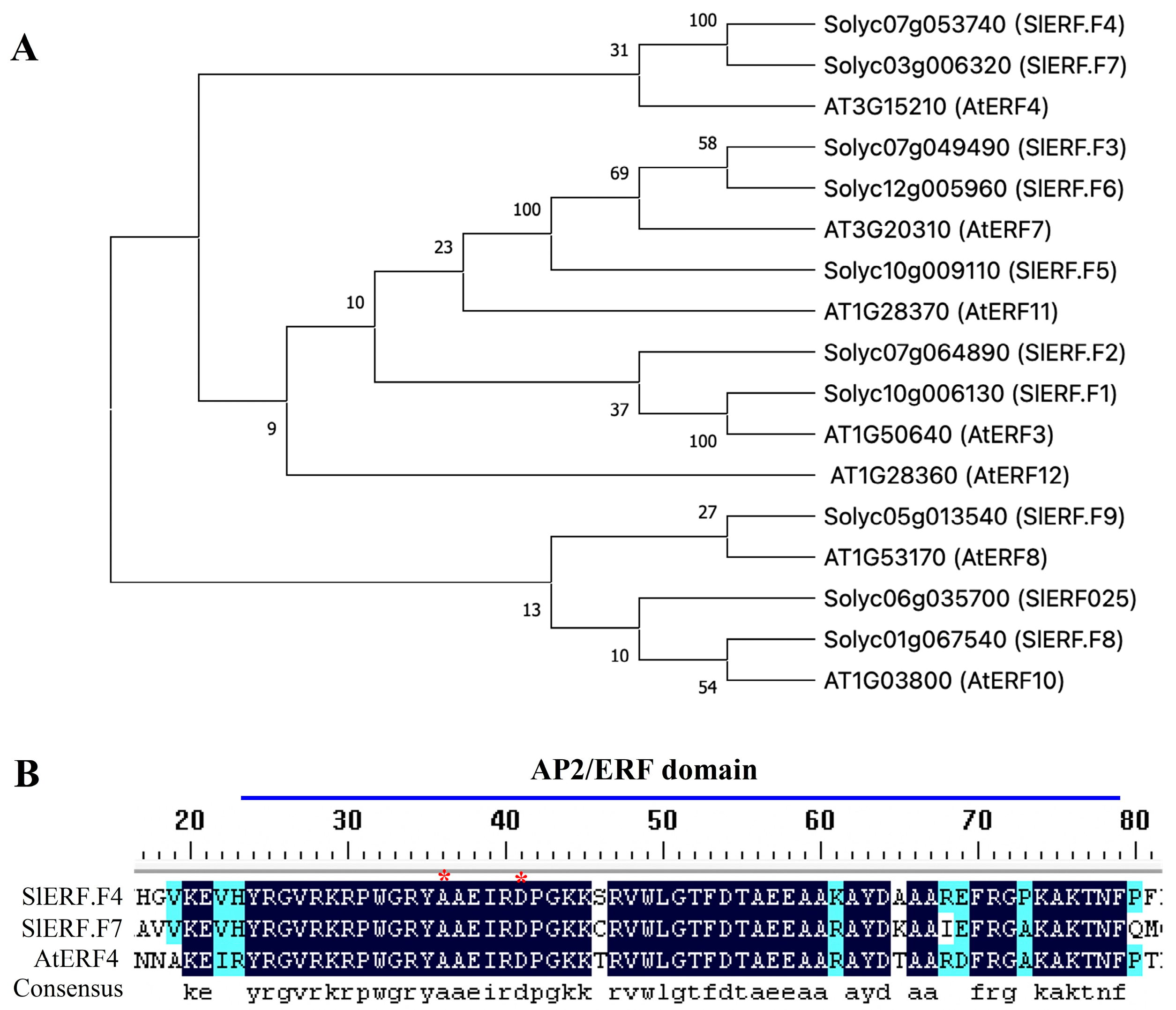
3.1. Sequence Analysis and Domain Characterization of SlERF.F4
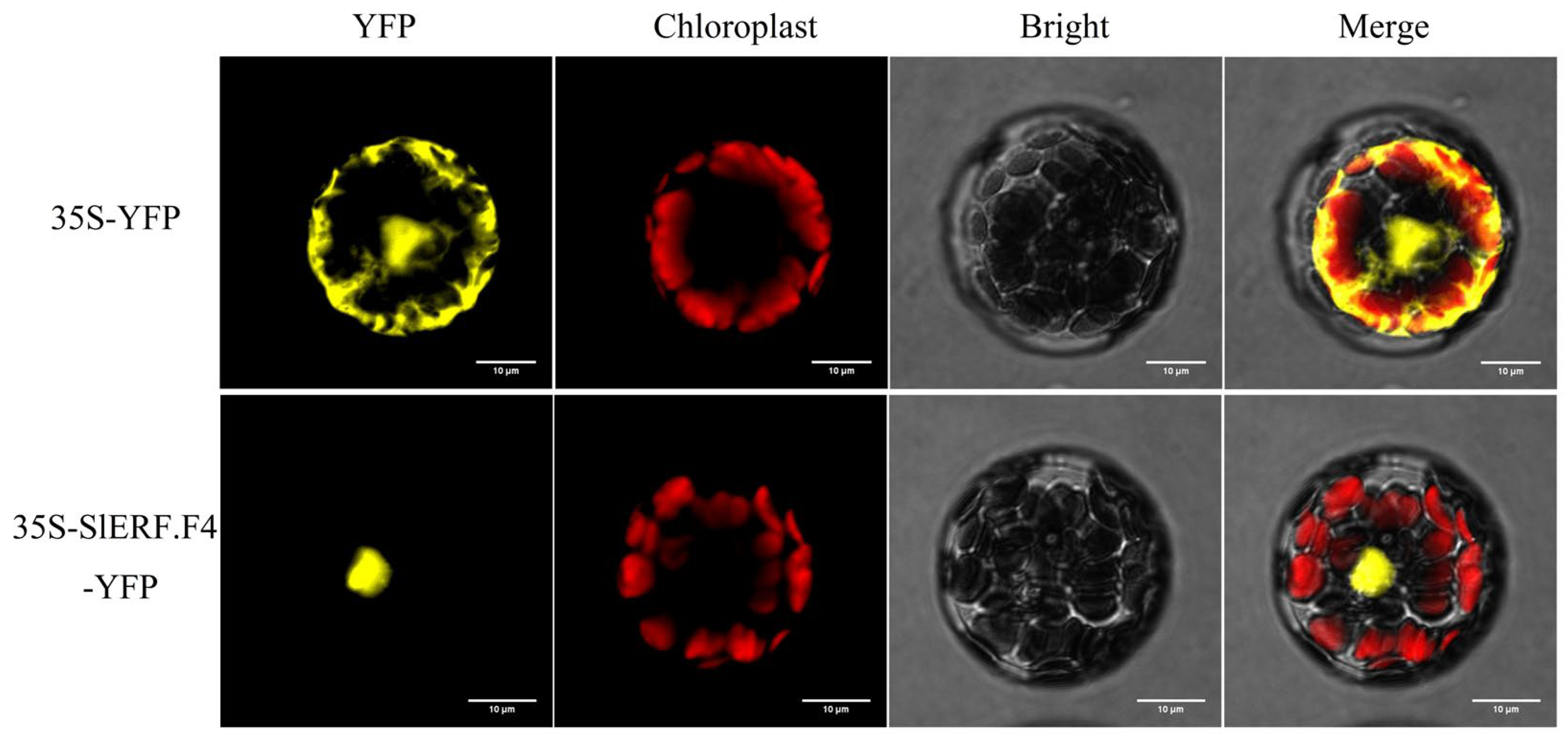
3.2. Subcellular Localization of SlERF.F4
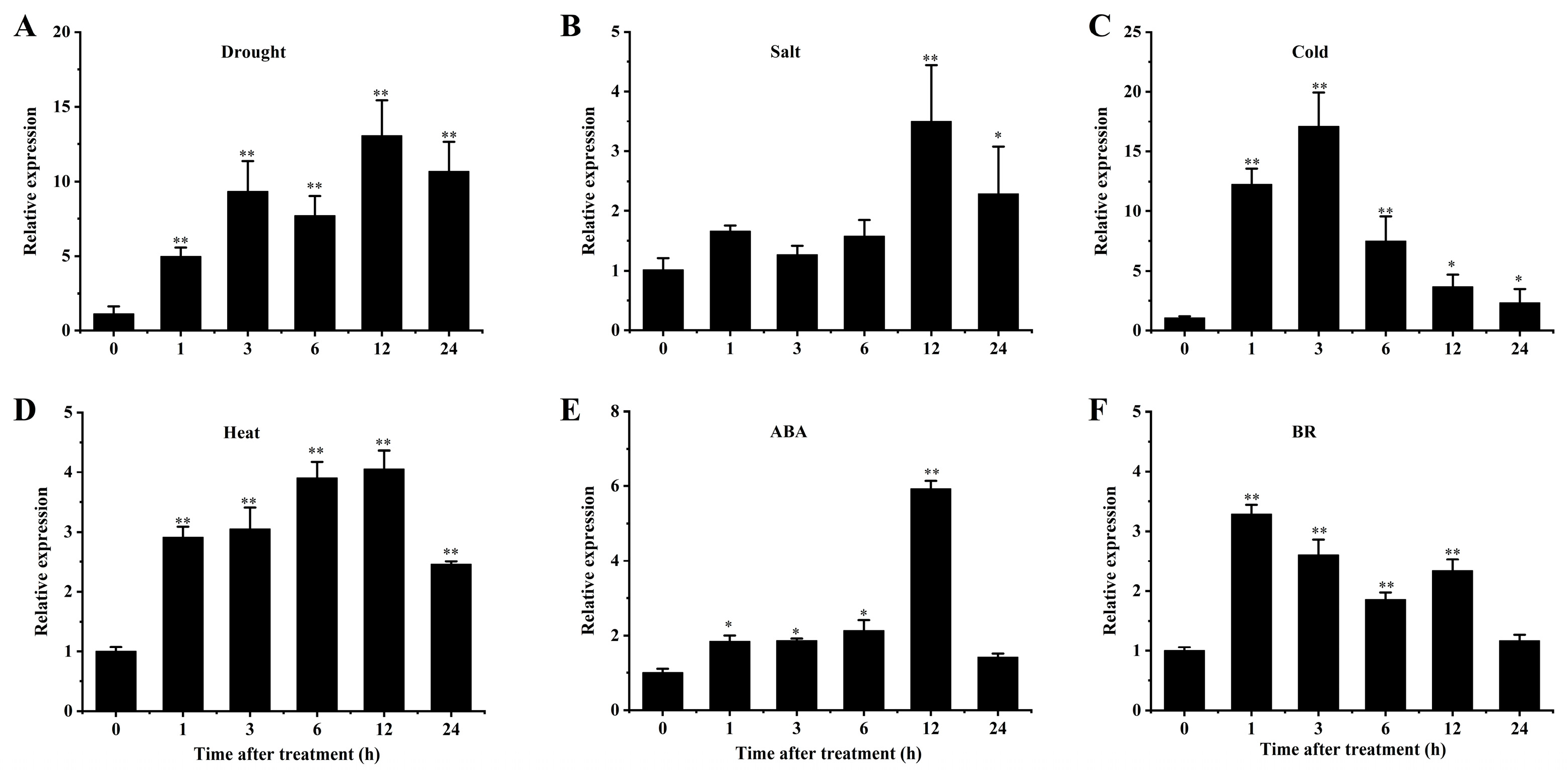
3.3. Expression Profile of SlERF.F4 in Response to Stresses and Hormones
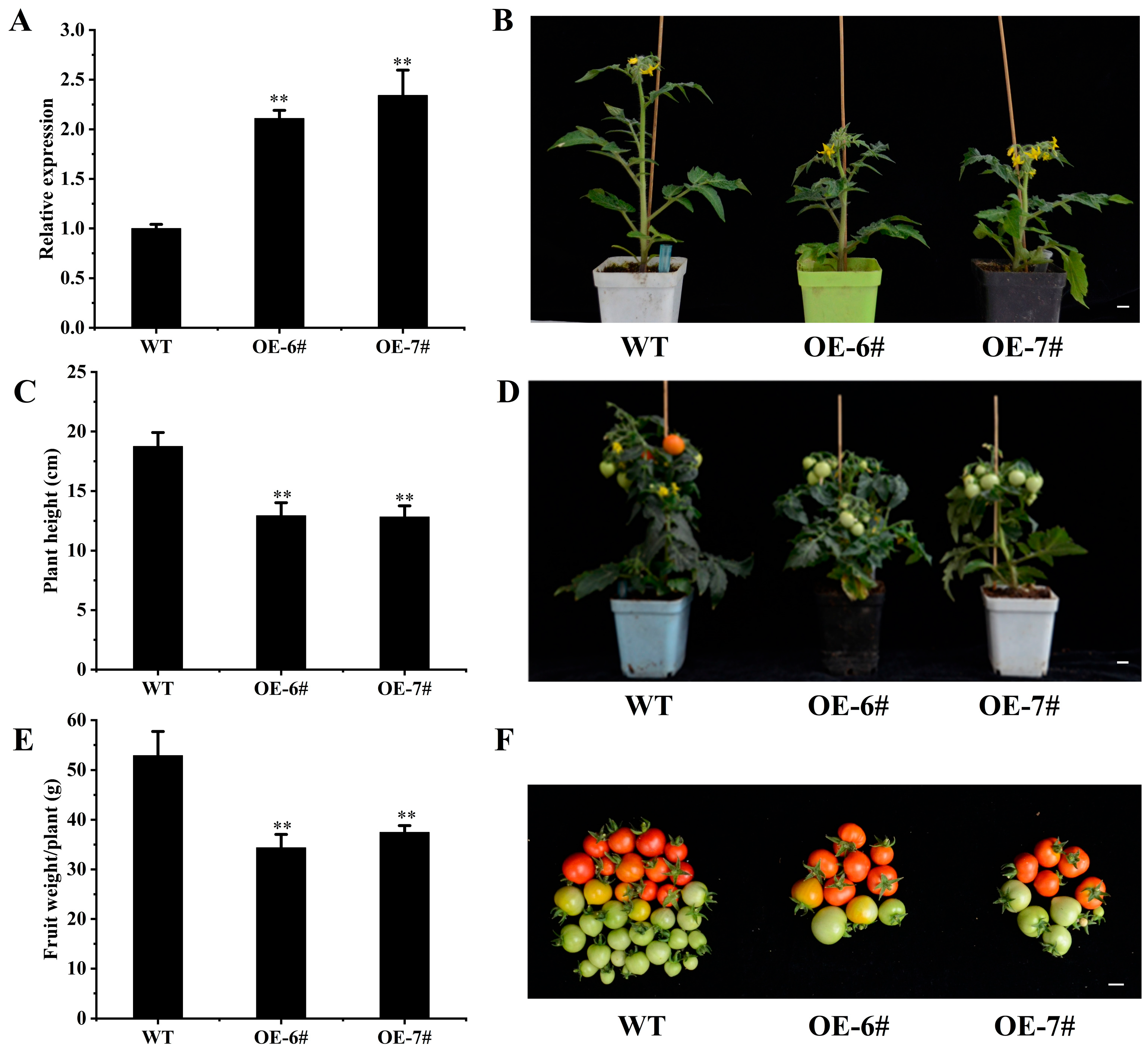
3.4. Phenotypic Analysis of SlERF.F4 Transgenic Plants
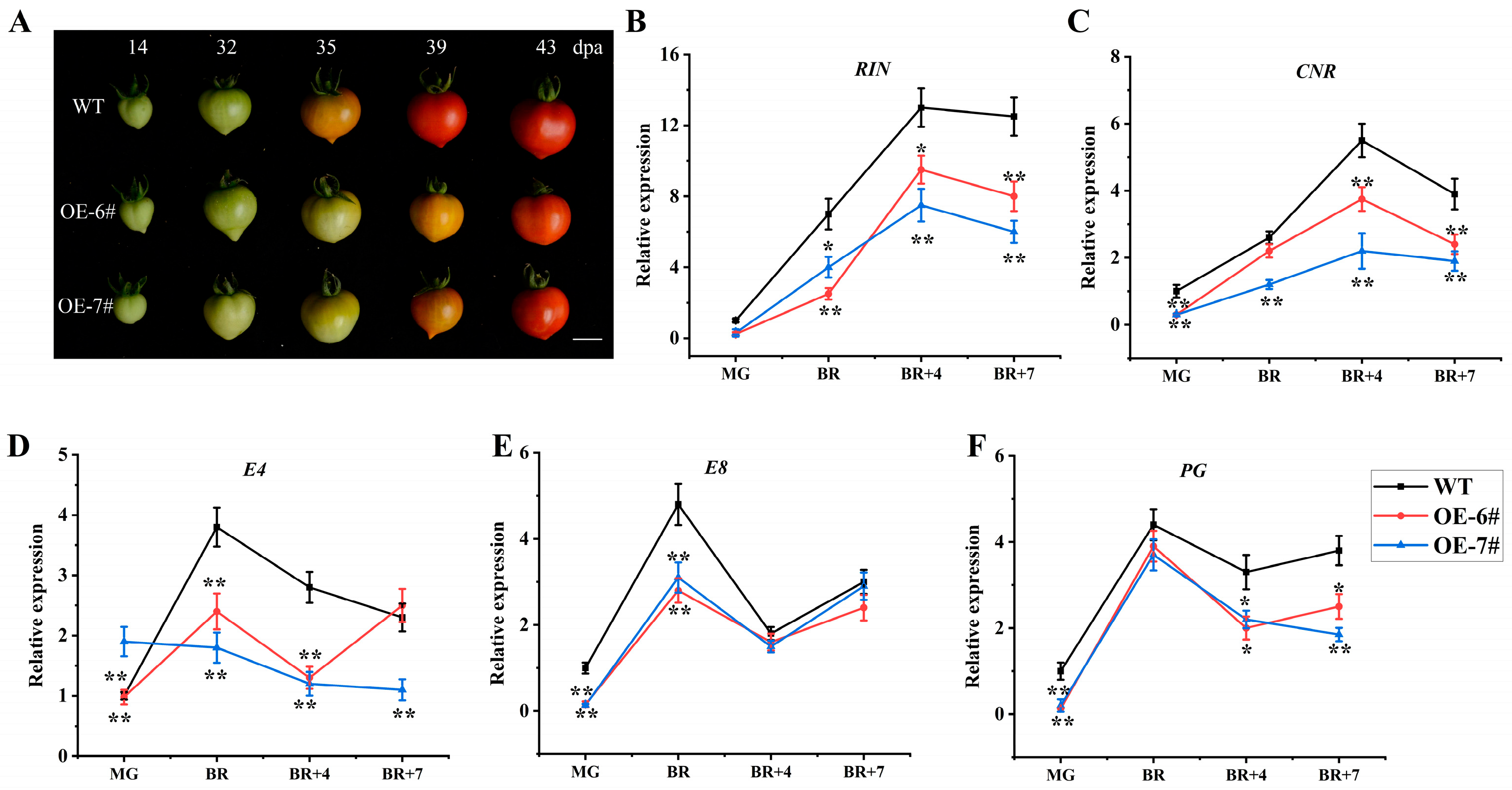
3.5. Overexpression of SlERF.F4 Delays Fruit Ripening and Suppresses the Expression of Ripening-Related Genes
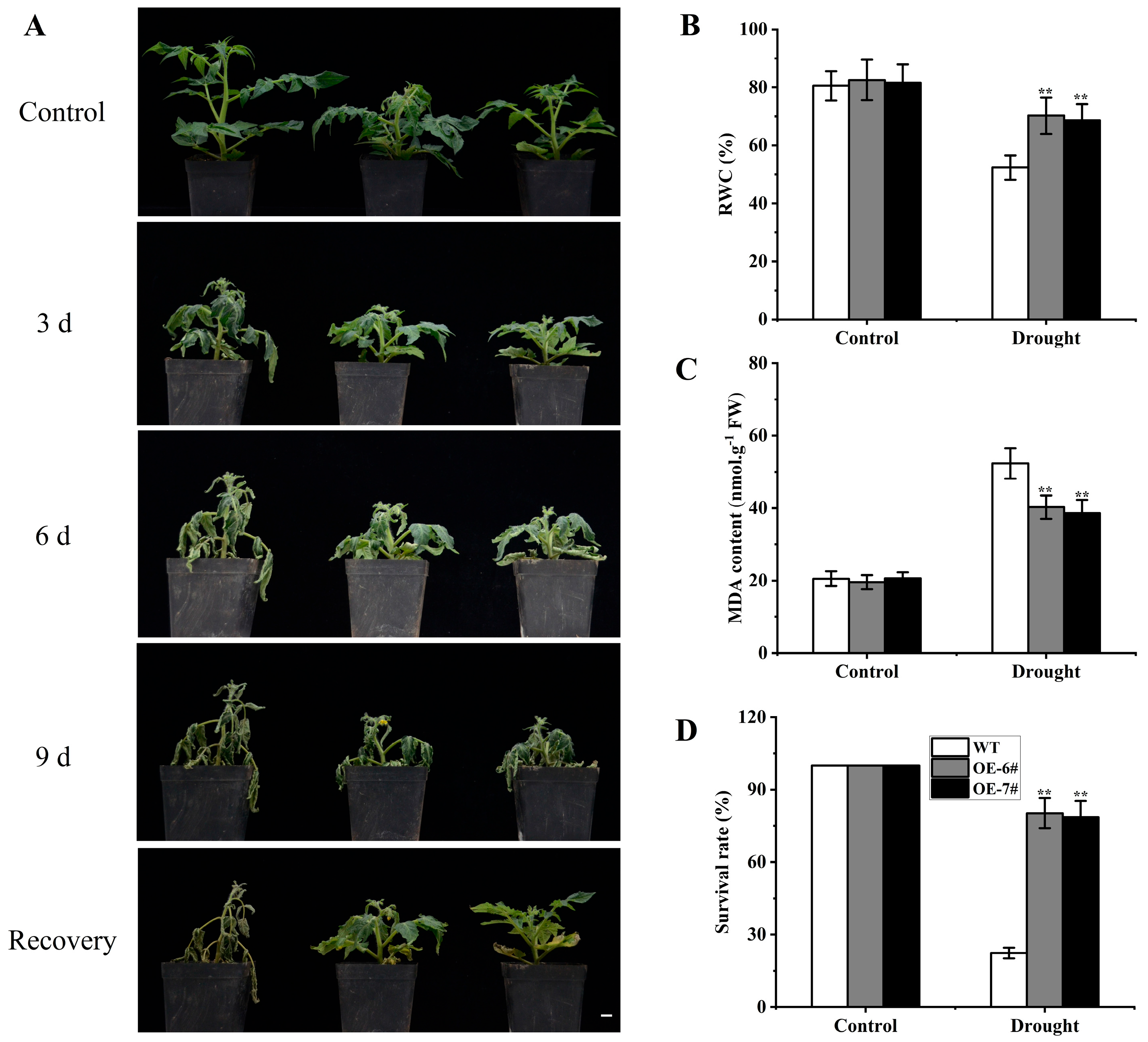
3.6. Overexpression of SlERF.F4 Enhances Drought Tolerance in Tomato
4. Discussion
5. Conclusions
Supplementary Materials
Author Contributions
Funding
Data Availability Statement
Conflicts of Interest
Abbreviations
| ABA | abscisic acid |
| BR | brassinosteroids |
| MS | Murashige and Skoog |
| MDA | malondialdehyde |
| AP2/ERF | APETALA2/ethylene-responsive factor |
| DRE | Dehydration-responsive element |
| DREB | Dehydration Responsive Element-Binding |
| RAV | Related to ABI3/VP |
| RIN | RIPENING INHIBITOR |
| CNR | COLORLESS NON-RIPENING |
| EAR | ERF-associated Amphiphilic Repression |
| JA | jasmonic acid |
| ROS | reactive oxygen species |
| WT | wild-type |
| EBL | 24-epibrassinolide |
| qRT-PCR | quantitative Real-Time PCR |
| ARE | anaerobic induction |
| DPA | days post-anthesis |
| MG | mature green |
| RWC | relative water content |
| GA | gibberellin |
| HDA | histone deacetylases |
References
- Feng, K.; Hou, X.L.; Xing, G.M.; Liu, J.X.; Duan, A.Q.; Xu, Z.S.; Li, M.Y.; Zhuang, J.; Xiong, A.S. Advances in AP2/ERF super-family transcription factors in plant. Crit. Rev. Biotechnol. 2020, 40, 750–776. [Google Scholar] [CrossRef]
- Okamuro, J.K.; Caster, B.; Villarroel, R.; Van Montagu, M.; Jofuku, K.D. The AP2 domain of APETALA2 defines a large new family of DNA binding proteins in Arabidopsis. Proc. Natl. Acad. Sci. USA 1997, 94, 7076–7081. [Google Scholar] [CrossRef]
- Riechmann, J.L.; Meyerowitz, E.M. The AP2/EREBP family of plant transcription factors. Biol. Chem. 1998, 379, 633–646. [Google Scholar] [CrossRef]
- Allen, M.D.; Yamasaki, K.; Ohme-Takagi, M.; Tateno, M.; Suzuki, M. A novel mode of DNA recognition by a β-sheet revealed by the solution structure of the GCC-box binding domain in complex with DNA. EMBO J. 1998, 17, 5484–5496. [Google Scholar] [CrossRef] [PubMed]
- Sakuma, Y.; Liu, Q.; Dubouzet, J.G.; Abe, H.; Shinozaki, K.; Yamaguchi-Shinozaki, K. DNA-binding specificity of the ERF/AP2 domain of DREBs, transcription factors involved in dehydration-and cold-inducible gene expression. Biochem. Biophys. Res. Commun. 2002, 290, 998–1009. [Google Scholar] [CrossRef]
- Ma, Z.; Hu, L.; Jiang, W. Understanding AP2/ERF transcription factor responses and tolerance to various abiotic stresses in plants: A comprehensive review. Int. J. Mol. Sci. 2024, 25, 893. [Google Scholar] [CrossRef] [PubMed]
- Tian, Z.; He, Q.; Wang, H.; Liu, Y.; Zhang, Y.; Shao, F.; Xie, C. The potato ERF transcription factor StERF3 negatively regulates resistance to Phytophthora infestans and salt tolerance in potato. Plant Cell Physiol. 2015, 56, 992–1005. [Google Scholar] [CrossRef]
- Liu, M.; Gomes, B.L.; Mila, I.; Purgatto, E.; Peres, L.E.P.; Frasse, P.; Maza, E.; Zouine, M.; Roustan, J.P.; Bouzayen, M.; et al. Comprehensive profiling of ethylene response factor expression identifies ripening-associated ERF genes and their link to key regulators of fruit ripening in tomato. Plant Physiol. 2016, 170, 1732–1744. [Google Scholar] [CrossRef] [PubMed]
- Xie, X.L.; Yin, X.R.; Chen, K.S. Roles of APETALA2/Ethylene-Response Factors in regulation of fruit quality. Crit. Rev. Plant Sci. 2016, 35, 120–130. [Google Scholar] [CrossRef]
- Liu, M.; Pirrello, J.; Chervin, C.; Roustan, J.P.; Bouzayen, M. Ethylene control of fruit ripening: Revisiting the complex network of transcriptional regulation. Plant Physiol. 2015, 169, 2380–2390. [Google Scholar] [CrossRef]
- Liu, M.C.; Chen, Y.; Chen, Y.; Shin, J.H.; Mila, I.; Audran, C.; Zouine, M.; Pirrello, J.; Bouzayen, M. The tomato Ethylene Response Factor Sl-ERF.B3 integrates ethylene and auxin signaling via direct regulation of Sl-Aux/IAA27. New Phytol. 2018, 219, 631–640. [Google Scholar] [CrossRef]
- Liu, M.C.; Diretto, G.; Pirrello, J.; Roustan, J.P.; Li, Z.G.; Giuliano, G.; Regad, F.; Bouzayen, M. The chimeric repressor version of an Ethylene Response Factor (ERF) family member, Sl-ERF.B3, shows contrasting effects on tomato fruit ripening. New Phytol. 2014, 203, 206–218. [Google Scholar] [CrossRef] [PubMed]
- Lee, J.M.; Joung, J.G.; McQuinn, R.; Chung, M.Y.; Fei, Z.; Tieman, D.; Klee, H.; Giovannoni, J. Combined transcriptome, genetic diversity and metabolite profiling in tomato fruit reveals that the ethylene response factor SlERF6 plays an important role in ripening and carotenoid accumulation. Plant J. 2012, 70, 191–204. [Google Scholar] [CrossRef]
- Deng, H.; Chen, Y.; Liu, Z.Y.; Liu, Z.Q.; Shu, P.; Wang, R.C.; Hao, Y.W.; Su, D.; Pirrello, J.; Liu, Y.S.; et al. SlERF.F12 modulates the transition to ripening in tomato fruit by recruiting the co-repressor TOPLESS and histone deacetylases to repress key ripening genes. Plant Cell 2022, 34, 1250–1272. [Google Scholar] [CrossRef]
- Chung, M.Y.; Vrebalov, J.; Alba, R.; Lee, J.; McQuinn, R.; Chung, J.D.; Klein, P.; Giovannoni, J. A tomato (Solanum lycopersicum) APETALA2/ERF gene, SlAP2a, is a negative regulator of fruit ripening. Plant J. 2010, 64, 936–947. [Google Scholar] [CrossRef]
- He, X.; Liu, K.; Wu, Y.; Xu, W.; Wang, R.; Pirrello, J.; Bouzayen, M.; Wu, M.; Liu, M. A transcriptional cascade mediated by two APETALA2 family members orchestrates carotenoid biosynthesis in tomato. J. Integr. Plant Biol. 2024, 66, 1227–1241. [Google Scholar] [CrossRef]
- Mueller, M.; Munne-Bosch, S. Ethylene Response Factors: A key regulatory hub in hormone and stress signaling. Plant Physiol. 2015, 169, 32–41. [Google Scholar] [CrossRef] [PubMed]
- Cheng, M.C.; Liao, P.M.; Kuo, W.W.; Lin, T.P. The Arabidopsis Ethylene Response Factor1 regulates abiotic stress-responsive gene expression by binding to different cis-acting elements in response to different stress signals. Plant Physiol. 2013, 162, 1566–1582. [Google Scholar] [CrossRef] [PubMed]
- Li, H.; Ye, K.; Shi, Y.; Cheng, J.; Zhang, X.; Yang, S. BZR1 positively regulates freezing tolerance via CBF-dependent and CBF-independent pathways in Arabidopsis. Mol. Plant. 2017, 10, 545–559. [Google Scholar] [CrossRef]
- Ye, K.; Li, H.; Ding, Y.; Shi, Y.; Song, C.; Gong, Z.; Yang, S. BRASSINOSTEROID-INSENSITIVE2 negatively regulates the stability of transcription factor ICE1 in response to cold stress in Arabidopsis. Plant Cell 2019, 31, 2682–2696. [Google Scholar] [CrossRef]
- Lee, D.K.; Jung, H.; Jang, G.; Jeong, J.S.; Kim, Y.S.; Ha, S.H.; Choi, Y.D.; Kim, J.K. Overexpression of the OsERF71 transcription factor alters rice root structure and drought resistance. Plant Physiol. 2016, 172, 575–588. [Google Scholar] [CrossRef] [PubMed]
- Zhu, J.T.; Wei, X.N.; Yin, C.S.; Zhou, H.; Yan, J.H.; He, W.X.; Yan, J.B.; Li, H. ZmEREB57 regulates OPDA synthesis and enhances salt stress tolerance through two distinct signalling pathways in Zea mays. Plant Cell Environ. 2023, 46, 2867–2883. [Google Scholar] [CrossRef]
- Rong, W.; Qi, L.; Wang, A.; Ye, X.; Du, L.; Liang, H.; Xin, Z.; Zhang, Z. The ERF transcription factor TaERF3 promotes tolerance to salt and drought stresses in wheat. Plant Biotechnol. J. 2014, 12, 468–479. [Google Scholar] [CrossRef]
- Li, Z.; Tian, Y.; Xu, J.; Fu, X.; Gao, J.; Wang, B.; Han, H.; Wang, L.; Peng, R.; Yao, Q. A tomato ERF transcription factor, SlERF84, confers enhanced tolerance to drought and salt stress but negatively regulates immunity against Pseudomonas syringae pv. tomato DC3000. Plant Physiol. Biochem. 2018, 132, 683–695. [Google Scholar] [CrossRef]
- Wang, Y.; Xia, D.; Li, W.; Cao, X.; Ma, F.; Wang, Q.; Zhan, X.; Hu, T. Overexpression of a tomato AP2/ERF transcription factor SlERF.B1 increases sensitivity to salt and drought stresses. Sci. Hortic. 2022, 304, 111332. [Google Scholar] [CrossRef]
- He, S.; Xia, X.; Yang, J.; Xin, J.; Chen, S.; Jia, C. Overexpression of AtBES1D in tomato enhances BR response and accelerates fruit ripening. J. Plant Physiol. 2025, 312, 154563. [Google Scholar] [CrossRef]
- Livak, K.; Schmittgen, T. Analysis of relative gene expression data using real-time quantitative PCR and the 2−ΔΔCT Method. Methods 2001, 25, 402–408. [Google Scholar] [CrossRef] [PubMed]
- Wang, S.; Tiwari, S.; Hagen, G.; Guilfoyle, T. AUXIN RESPONSE FACTOR7 restores the expression of auxin-responsive genes in mutant Arabidopsis leaf mesophyll protoplasts. Plant Cell 2005, 17, 1979–1993. [Google Scholar] [CrossRef] [PubMed]
- Kovtun, Y.; Chiu, W.; Tena, G.; Sheen, J. Functional analysis of oxidative stress-activated mitogen-activated protein kinase cascade in plants. Proc. Natl. Acad. Sci. USA 2000, 97, 2940–2945. [Google Scholar] [CrossRef]
- Shao, Z.; Zhao, Y.; Liu, L.; Chen, S.; Li, C.; Meng, F.; Liu, H.; Hu, S.; Wang, J.; Wang, Q. Overexpression of FBR41 enhances resistance to sphinganine analog mycotoxin-induced cell death and stem canker in tomato. Plant Biotechnol. J. 2020, 18, 141–154. [Google Scholar] [CrossRef]
- Ma, Z.M.; Jin, Y.M.; Wu, T.; Hu, L.J.; Zhang, Y.; Jiang, W.Z.; Du, X.L. OsDREB2B, an AP2/ERF transcription factor, negatively regulates plant height by conferring GA metabolism in rice. Front. Plant Sci. 2022, 13, 1007811. [Google Scholar] [CrossRef] [PubMed]
- Ma, Z.M.; Wu, T.; Huang, K.; Jin, Y.M.; Li, Z.; Chen, M.J.; Yun, S.; Zhang, H.J.; Yang, X.; Chen, H.Y.; et al. A novel AP2/ERF transcription factor, OsRPH1, negatively regulates plant height in rice. Front. Plant Sci. 2020, 11, 709. [Google Scholar] [CrossRef] [PubMed]
- Chen, Y.; Yang, H.; Tang, B.; Li, F.; Xie, Q.; Chen, G.; Hu, Z. The AP2/ERF transcription factor SlERF.J2 functions in hypocotyl elongation and plant height in tomato. Plant Cell Rep. 2023, 42, 371–383. [Google Scholar] [CrossRef]
- Xu, L.; Xu, Y.; Jiang, J.R.; Cheng, C.X.; Yang, W.W.; Deng, L.L.; Mi, Q.L.; Zeng, W.L.; Li, J.; Gao, Q.; et al. A novel AP2/ERF transcription factor, NtERF10, positively regulates plant height in tobacco. Transgenic Res. 2024, 33, 195–210. [Google Scholar] [CrossRef]
- Zhou, X.; Zhang, Z.L.; Park, J.; Tyler, L.; Yusuke, J.; Qiu, K.; Nam, E.A.; Lumba, S.; Desveaux, D.; McCourt, P.; et al. The ERF11 transcription factor promotes internode elongation by activating gibberellin biosynthesis and signaling. Plant Physiol. 2016, 171, 2760–2770. [Google Scholar] [CrossRef] [PubMed]
- Zhai, Y.; Cui, Y.; Fan, Z.; Huang, H.; Wang, Z.; Chen, S.; Ma, H. Ficus carica ERF12 improves fruit firmness at ripening. Hortic. Plant J, 2024; in press. [Google Scholar] [CrossRef]
- Wang, Z.Y.; Zhao, X.; Ren, Z.Z.; Abou-Elwafa, S.F.; Pu, X.Y.; Zhu, Y.F.; Dou, D.D.; Su, H.H.; Cheng, H.Y.; Liu, Z.X.; et al. ZmERF21 directly regulates hormone signaling and stress-responsive gene expression to influence drought tolerance in maize seedlings. Plant Cell Environ. 2022, 45, 312–328. [Google Scholar] [CrossRef]
- Zhai, Y.; Shao, S.L.; Sha, W.; Zhao, Y.; Zhang, J.; Ren, W.W.; Zhang, C. Overexpression of soybean GmERF9 enhances the tolerance to drought and cold in the transgenic tobacco. Plant Cell Tiss. Org. Cult. 2017, 128, 607–618. [Google Scholar] [CrossRef]
- Jung, H.; Chung, P.J.; Park, S.H.; Redillas, M.C.F.R.; Kim, Y.S.; Suh, J.W.; Kim, J.K. Overexpression of OsERF48 causes regulation of OsCML16, a calmodulin-like protein gene that enhances root growth and drought tolerance. Plant Biotechnol. J. 2017, 15, 1295–1308. [Google Scholar] [CrossRef]
- Tian, J.W.; Yuan, P.H.; Gao, X.; Wang, H.T.; Wang, M.M.; Zhang, K.X.; Hao, P.B.; Song, C.H.; Zheng, X.B.; Bai, T.H. The AP2/ERF transcription factor MhERF113-like positively regulates drought tolerance in transgenic tomato and apple. Plant Physiol. Biochem. 2025, 221, 109598. [Google Scholar] [CrossRef]
- Yu, Y.W.; Yang, D.X.; Zhou, S.R.; Gu, J.T.; Wang, F.R.; Dong, J.G.; Huang, R.F. The ethylene response factor OsERF109 negatively affects ethylene biosynthesis and drought tolerance in rice. Protoplasma 2017, 254, 401–408. [Google Scholar] [CrossRef]
- Wang, S.J.; Fan, Y.; Du, S.H.; Zhao, K.; Liu, Q.; Yao, W.J.; Zheng, T.C.; Han, Y.Z. PtaERF194 inhibits plant growth and enhances drought tolerance in poplar. Tree Physiol. 2022, 42, 1678–1692. [Google Scholar] [CrossRef] [PubMed]


Disclaimer/Publisher’s Note: The statements, opinions and data contained in all publications are solely those of the individual author(s) and contributor(s) and not of MDPI and/or the editor(s). MDPI and/or the editor(s) disclaim responsibility for any injury to people or property resulting from any ideas, methods, instructions or products referred to in the content. |
© 2025 by the authors. Licensee MDPI, Basel, Switzerland. This article is an open access article distributed under the terms and conditions of the Creative Commons Attribution (CC BY) license (https://creativecommons.org/licenses/by/4.0/).
Share and Cite
Yang, J.; Liu, Z.; Li, H.; Zhang, W.; Xu, J.; Li, B.; Shi, W.; Jia, C. Overexpression of SlERF.F4 in Tomato Delays Fruit Ripening and Enhances Drought Tolerance. Horticulturae 2025, 11, 1511. https://doi.org/10.3390/horticulturae11121511
Yang J, Liu Z, Li H, Zhang W, Xu J, Li B, Shi W, Jia C. Overexpression of SlERF.F4 in Tomato Delays Fruit Ripening and Enhances Drought Tolerance. Horticulturae. 2025; 11(12):1511. https://doi.org/10.3390/horticulturae11121511
Chicago/Turabian StyleYang, Junhui, Zhenle Liu, Hepeng Li, Wenxin Zhang, Jingting Xu, Bin Li, Wuliang Shi, and Chengguo Jia. 2025. "Overexpression of SlERF.F4 in Tomato Delays Fruit Ripening and Enhances Drought Tolerance" Horticulturae 11, no. 12: 1511. https://doi.org/10.3390/horticulturae11121511
APA StyleYang, J., Liu, Z., Li, H., Zhang, W., Xu, J., Li, B., Shi, W., & Jia, C. (2025). Overexpression of SlERF.F4 in Tomato Delays Fruit Ripening and Enhances Drought Tolerance. Horticulturae, 11(12), 1511. https://doi.org/10.3390/horticulturae11121511