1. Introduction
Grain fermented food is a type of food fermented by lactic acid bacteria (LAB), yeast and other beneficial microorganisms using raw food crops including cereal crops (rice, wheat), legume crops (beans), and potato crops (potatoes), thereby changing the nutritional composition and producing unique flavor [
1]. Compared to foods cooked directly from raw food crops, fermented grain foods not only increase the shelf life of food, but are generally more palatable, easier to digest, and rich in a variety of nutrients, such as vitamins, organic acids, and free amino acids [
2]. Grain Fermented foods are consumed as a rich source of probiotic microbes, and can inhibit the growth of most pathogens [
3].
Suanzhou is a traditional organic acid fermented food in northwest China, naturally fermented from proso millet (Panicum miliaceum, a specific drought-tolerant cereal with small, oval grains) and millet (a broad term encompassing other cereal species such as foxtail millet Setaria italica, characterized by slender, cylindrical grains, commonly used in Chinese traditional food). It has a pleasant sour and refreshing taste and great market development potential. Our previous study collected 59 samples of homemade Suanzhou, determined the contents of lactic acid, acetic acid and free amino acid in Suanzhou, and systematically analyzed the diversity of microbial community in Suanzhou using the combination of microbial isolation methods and microbial diversity composition spectrum sequencing. It was clear that Suanzhou is a nutritious food rich in free amino acids and organic acids, and LAB are the main bacterial species involved in Suanzhou fermentation [
4].
LAB, as the initial culture, not only enhance the flavor of fermented products but can also be better preserved in fermented food due to their widespread antibacterial activity [
5]. The metabolites secreted by LAB during the fermentation process, including lactic acid, hydrogen peroxide, and bacteriocins, contribute to inhibiting or killing three categories of harmful microbes: (1) spoilage-causing bacteria (e.g.,
Clostridium spp. and
Pseudomonas spp.), (2) pathogenic bacteria (e.g.,
Salmonella spp. and
Listeria spp.), and (3) toxin-producing bacteria (e.g.,
Staphylococcus aureus,
Bacillus cereus, and
Clostridium botulinum), which cause foodborne illness primarily through their production of toxic metabolites [
6,
7]. Using the method of artificially adding LAB during the fermentation process of Suzhou can inhibit the production of pathogenic microorganisms.
In addition, bacteria have developed various mechanisms to resist environmental stresses in nature, including extreme temperature, pH, osmotic pressure, and nutrient loss [
8]; and the formation of biofilms is one of the mechanisms for survival. Bacteria that form biofilms can be protected from immune or drug clearance, thereby enhancing antimicrobial activity [
9,
10]. A previous study showed that
Lactiplantibacillus plantarum and
Lactiplantibacillus fermentum could form biofilms on non-biological surfaces, and the density and ability to form biofilms varied between the strains; as well as the biofilm lifestyle is related to beneficial probiotic properties of
Lactobacillus in a strain dependent manner [
10]. Generally, microorganisms with good intestinal colonization ability tend to have strong biofilm-forming capacity—this is supported by literature showing that biofilms protect bacteria from gut environmental stresses (e.g., acidic pH, immune clearance) to enhance survival [
11,
12]. In our study, biofilm formation ability was quantified via crystal violet staining, where the optical density at 595 nm (OD
595) directly reflected biofilm biomass [
10,
13].
Gut microbiome, the trillions of bacteria that inhabit the gastrointestinal tract, has been found to be not only an essential component of immune and metabolic health, but also appears to influence the occurrence and development of gut and central nervous system diseases [
14]. It is well known that probiotics such as LAB colonize in the gut, thereby regulating the gut microbiota and preventing diseases [
15]. Mu et al. showed that
Lactiplantibacillus reuteri could generate antibacterial molecules, and have the ability to strengthen the intestinal barrier, and its colonization could reduce microbial translocation from the intestinal lumen to tissues, thus improving inflammatory bowel diseases by increasing colonization of
L. reuteri [
16]. Another research analyzed the gut microbial structure and diversity of the mice treated with
Lactiplantibacillus casei by gavage once (short-term) and 27 times (long-term) using 16S rRNA gene sequencing, and found that long-term gavage of
L. casei sy13 isolated from fermented dairy products could enhance the ability of colonization in the intestinal tract, but a single oral administration of
L. casei sy13 had a greater impact on the gut microbiota structure at the phylum and genus levels than long-term treatment [
15]. These indicated that LAB and the bioactive ingredients secreted by them proved to be beneficial to intestinal health by inhibiting the growth of harmful bacteria and affecting microbial diversity.
Pseudomonas aeruginosa (PAK) is a zoonotic pathogen. PAK infection in chicks leads to sepsis, respiratory and intestinal infections, and high mortality, whereas infection in humans results in severe lung damage, especially in immunocompromised patients [
17]. Due to the development of antibiotic resistance, PAK infections are extremely difficult to treat, and the transfer of antibiotic resistance genes from poultry products to humans also creates additional public health concerns [
18]. Therefore, in this study, diverse LAB strains isolated from Suanzhou were characterized for their biofilm-forming ability, optimal growth temperature, pH preferences, and antimicrobial activity, to identify potential starter strains suitable for Suanzhou fermentation processes. Subsequently, two selected LAB strains were administered to Specific Pathogen-Free (SPF) chicks. Fecal samples were collected during and after the LAB supplementation period. The structure and diversity of the bacterial and fungal communities in the chick intestinal microbiota were analyzed by 16S rRNA V3–V4 region sequencing for bacteria, 16S rRNA V4–V5 region sequencing for archaea, and internal transcribed spacer 1 (ITS1) sequencing for fungi, to elucidate the in vivo intestinal colonization of the LAB and their associated gut-protective mechanisms.
2. Materials and Methods
2.1. Experimental Strains
In this study, a total of 70 LAB strains were isolated from Suanzhou, which were identified and preserved by the Center for Agricultural Genetic Resources Research, Shanxi Agricultural University (Taiyuan, China). Detailed protocols for their isolation and identification have been reported previously [
4]. Briefly, LAB were selectively isolated using DeMan-Rogosa-Sharpe (MRS) agar, and their species identities were confirmed by 16S rRNA gene sequencing (≥97% sequence similarity to reference strains in the NCBI GenBank database) (
Table S1).
Additionally, the strains of Staphylococcus aureus, Bacillus subtilis, Pseudomonas aeruginosa (PAK), Escherichia coli and Plesiomonas shigelloides, used as indicator bacteria, were kindly provided by Hongjiang Yang, professor of Tianjin University of Science and Technology (Tianjin, China). The characteristics of these indicator strains and their relevance to chick health or food safety are as follows: (1) S. aureus: A facultative pathogenic bacterium, not an indigenous chick gut colonizer. It contaminates the gut via feed, water, or environment and causes infections (e.g., dermatitis, septicemia) in young chicks. (2) B. subtilis (specific strain used here): A Gram-positive, spore-forming bacterium. Unlike probiotic B. subtilis strains, this strain was selected as an indicator for its ability to form biofilms, enabling evaluation of LAB activity against spore-forming microbes relevant to poultry gut health. (3) PAK: An opportunistic pathogen that contaminates chick guts via contaminated water systems (e.g., water lines). It is not a normal gut resident but causes systemic infections in chicks, with its detection indicating poor water hygiene. (4) E. coli (pathogenic strain): A variant related to avian pathogenic E. coli (APEC). While non-pathogenic E. coli is part of the normal chick gut microbiota, this strain causes colibacillosis, a major disease leading to diarrhea and mortality in chicks. (5) P. shigelloides: A zoonotic pathogen with low pathogenicity to healthy chicks but potential to induce diarrhea in immunocompromised individuals. It poses a food safety risk, as it can transmit to humans via contaminated poultry products and cause gastrointestinal illness.
2.2. Screening of the Optimum Medium and Determination of Biofilm Production Capacity of LAB
Nine LAB strains were selected to screen for the optimum medium and determine biofilm production capacity, including h9-c (
Lactiplantibacillus coryniformis), h12-c1 (
Lactiplantibacillus parafarraginis), h24-c (
Lactiplantibacillus pentosus), h27-c1 (
Lactiplantibacillus rossiae), h28-c1 (
L. casei), h29-c2 (
Lactiplantibacillus harbinensis), p1-c2 (
Limosilactobacillus brevis), p2-c1 (
L. reuteri), and p30-c (
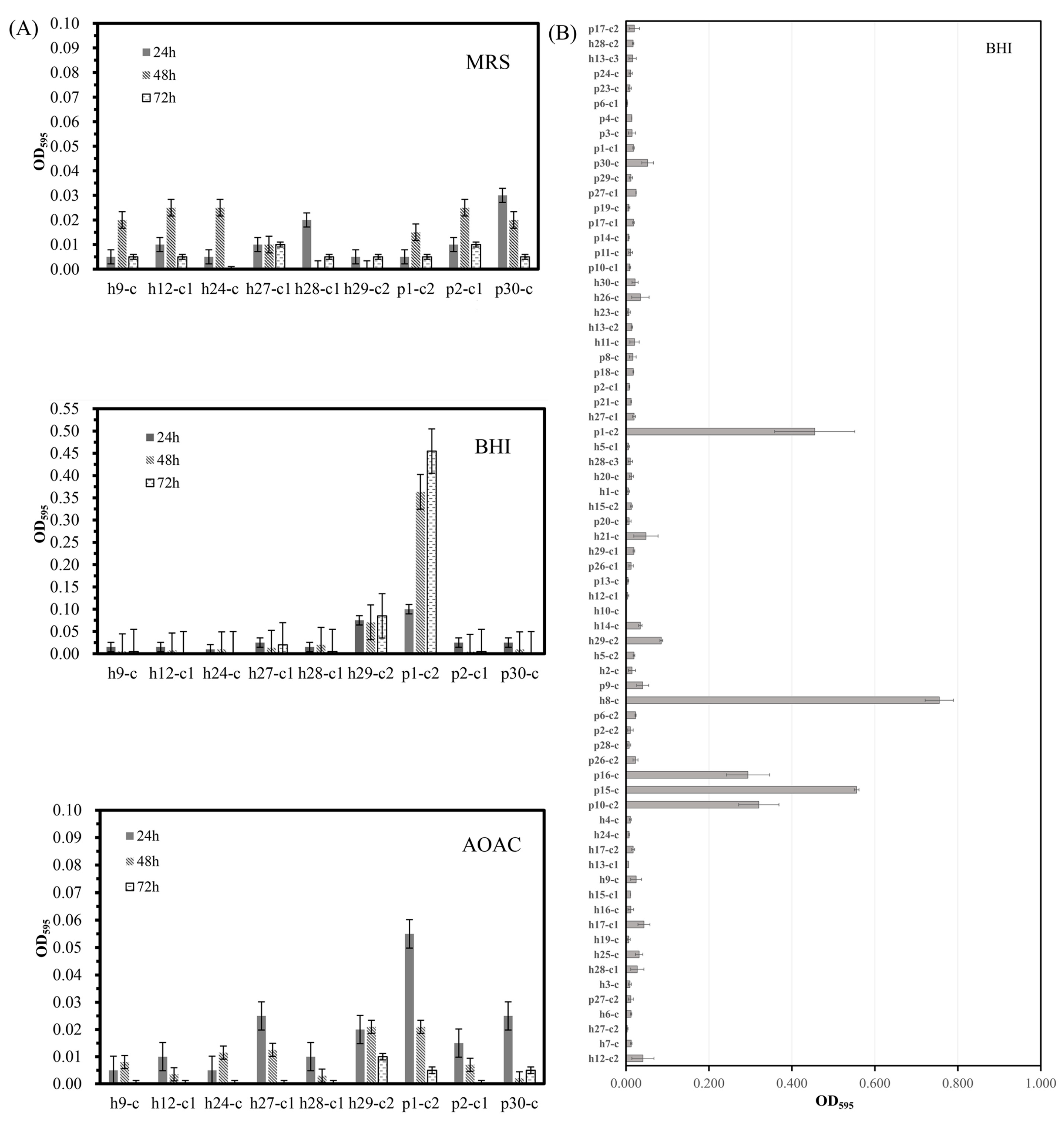
L. fermentum). The strains were first inoculated into 5 mL of DeMan-Rogosa-Sharpe (MRS) liquid medium (Beijing Luqiao Technology Co., Ltd., Beijing, China), and cultured at 30 °C for 48 h. After centrifugation at 6000 rpm for 5 min, the pallets were resuspended with 1 mL sterile water, and the concentrations of the strains were adjusted so that the initial culture concentrations were consistent. Then, 80 μL of bacterial suspension was added to 7.92 mL MRS liquid medium, and mixed by vortex shaking. After that, 200 μL bacterial suspension was inoculated to each well of a 96-well plate in triplicate for each strain and cultured at 30 °C for 72 h. The same amount of medium was used as a blank control. Similarly, the bacterial solution was inoculated to Brain-Heart Infusion (BHI) medium (Qingdao Hopebio, Qingdao, China) and Pantothenate Assay (Lactobacilli Broth, AOAC) medium (ELITE-MEDIA, Shanghai Sanshu Biotechnology Co., Ltd., Shanghai, China) using the same procedure. After being cultured at 30 °C for 72 h, crystal violet staining was used to measure the biofilm formation ability of different LAB strains by measuring the optical density (OD) of 595 nm [
19].
Subsequently, all strains of lactic acid bacteria (LAB) were inoculated into 5 mL of BHI liquid medium (Brain Heart Infusion medium). Then, 80 μL of bacterial suspension was transferred to 7.92 mL of the optimized medium. Afterwards, 200 μL of bacterial suspension was added to each well of a 96-well plate, with an equal volume of BHI medium serving as a blank control. The plates were incubated at 30 °C for 48 h. Finally, the biofilm formation ability of all strains was assessed using crystal violet staining and then determining the OD595nm.
2.3. Determination of the Optimum Growth Temperature and pH of LAB
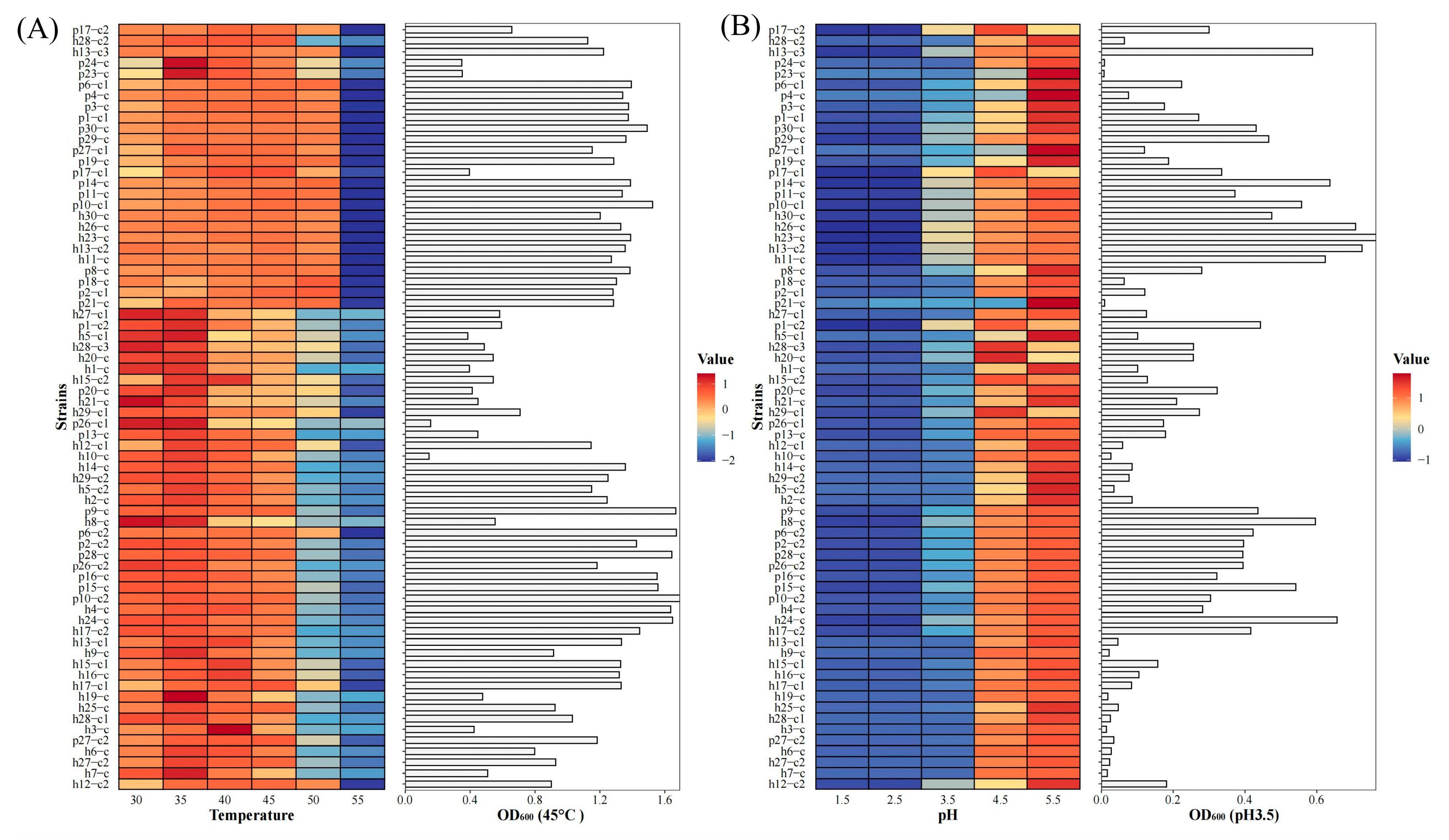
All 70 LAB strains were included for determining the optimum growth temperature and pH. The strains were firstly inoculated into the MRS liquid medium, and cultured at 30 °C for 18 h. After the concentrations of LAB were adjusted to be consistent (OD600nm = 0.4~0.5), the bacterial suspension was inoculated into fresh MRS liquid medium at a 1% inoculating rate, and cultured for 24 h under different temperature conditions (30 °C, 35 °C, 40 °C, 45 °C, 50 °C, and 55 °C) or different pH conditions (1.5, 2.5, 3.5, 4.5, and 5.5). After culturing for 24 h, the OD values at 600 nm were measured using a microplate reader.
2.4. Antibacterial Effects of Different LAB Strains Using Agar Diffusion
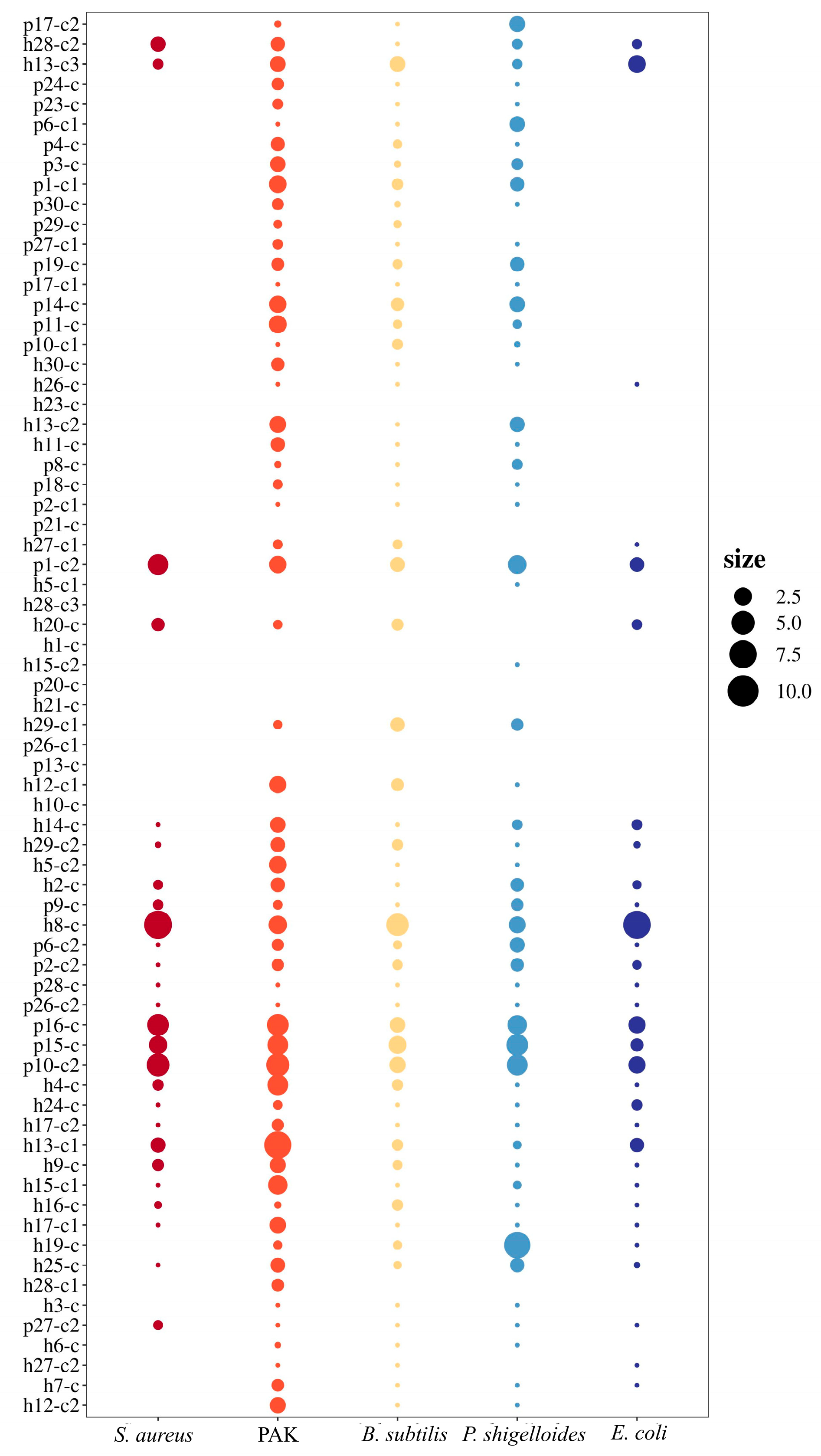
The 70 LAB strains were first streaked on MRS agar plates and cultured at 30 °C for 48 h to obtain pure colonies. Single colonies from each strain were then inoculated into 3 mL of liquid MRS medium, cultured at 30 °C for 18 h, and subsequently transferred to 20 mL of fresh liquid MRS medium at a 2% inoculation rate for an additional 24 h of culture. For the antibacterial assay, a double-layer agar system was used: the lower layer was MRS agar medium, and the upper layer was vegan agar medium (to support indicator bacteria growth). The LAB bacterial suspension (containing LAB metabolites such as lactic acid, bacteriocins, and hydrogen peroxide) was directly used for the subsequent antibacterial test, without centrifugation or filtration steps, to ensure the integrity of the bacterial cells and their metabolites involved in antimicrobial activity. The indicator bacteria S. aureus, PAK, B. subtilis, P. Shigelomonas and E. coli were inoculated into 3 mL of Luria–Bertani (LB) medium, and cultured overnight at 37 °C with shaking at 180 r/min. Then, the bacterial suspension was inoculated into a 20 mL of fresh LB medium at a 1% inoculation rate.
The antibacterial effect was evaluated using the agar diffusion method with the Oxford cup technique [
20]. Briefly, 20 mL of nutrient agar medium was poured into the plate. After solidification, the Oxford cup was gently pressed into the agar layer. Then, the indicator bacterial suspension was spread onto the plate. After solidification, the Oxford cup was removed, and 150 μL of LAB metabolites were added into each well, with a medium of the same pH value used as a control. To exclude potential pH-related effects on antimicrobial activity, the control group used MRS medium (the same medium for LAB culture) whose pH was adjusted to match that of the LAB bacterial suspension using lactic acid. Following diffusion at 4 °C for 1 h, the plates were incubated at 37 °C for 14 h. The diameter of the inhibition zone was measured using a vernier caliper. The antibacterial ability of the LAB strains was determined by subtracting the inhibition zone diameter of the pH-adjusted MRS control from that of the LAB bacterial suspension, confirming that the activity was derived from soluble components in the bacterial suspension.
2.5. Animal Experiment and Sample Collection
A total of 50 one-day-old SPF chicks were purchased from Beijing Boehringer Ingelheim Vetec Biotechnology Co., Ltd. (Beijing, China), and were maintained at a room temperature of 25 °C and a humidity of 50–70%, with a 12 h light/dark cycle. During the experiment, all chickens had free access to feed and water, and both feed and water were sterilized [
21]. After a 7-day adaptation period, the chicks were randomly divided into two groups (
n = 25 per group). Two isolated LAB strains (h8-c and p15-c,
L. pentosus) were selected for incorporation into the feed, based on their comprehensive superior traits: (1) high biofilm-producing capacity (OD
595nm values in BHI medium), (2) strong antibacterial activity against five indicator pathogens (largest inhibition zones), and (3) excellent stress tolerance (robust growth at pH 3.5 and 30–45 °C). During the subsequent 3-day administration period, the chicks in the two groups were fed daily with 20 mL of LAB suspensions at a concentration of 10
8 CFU/mL each. The process of administering lactic acid bacteria involved students preparing the bacterial suspension and adding it to the feed. The caretakers treated the two experimental groups as parallel trials and were not informed of the differences between the groups. After the 3-day administration period, a recovery phase began, during which all chicks received normal feeding for an additional three weeks. Fecal samples were collected from each group at five time points: D0 (day before the administration period), D3 (day 3 of the administration period), R7 (day 7 of the recovery period), R14 (day 14 of the recovery period), and R21 (day 21 of the recovery period). After the experiment was completed, the chicks were given to local farmers to continue raising them.
Our experimental design focused on two key comparisons to evaluate LAB-induced gut microbiota changes: (1) Intra-group temporal comparison (primary focus): For each group, fecal samples were collected at five time points (D0: pre-administration baseline; D3: end of administration; R7/R14/R21: 7/14/21 days post-administration) to compare the abundance and diversity of gut Lactobacillus (and overall microbiota) before, during, and after LAB supplementation. This directly assessed whether LAB addition altered the gut microbiota relative to the group’s own baseline. (2) Inter-group reference: The two strains served as mutual references to compare differences in their effects on gut microbiota structure (e.g., Lactobacillus colonization efficiency, fiber-degrading bacterial enrichment). No external commercial probiotic strain was used as a control, as our core goal was to validate the gut-modulating potential of these Suanzhou-isolated strains rather than compare them to commercial probiotics.
All animal experiments were conducted in accordance with the National Medical Advisory Committee guidelines using approved procedures of the Institutional Animal Care and Use committee at Tianjin University of Science and Technology.
2.6. Microbial Diversity Composition Profile Analysis
The fecal samples were sent to Personalbio Technology Co., Ltd. (Shanghai, China) for 16S rRNA gene sequencing and ITS sequencing. Briefly, total microbial genomic DNA was extracted from each fecal sample using the QIAamp DNA isolation kit (Qiagen, Hilden, Germany) according to the manufacturer’s instructions. Then, One part of the DNA samples was used to amplify the V3–V4 region of the 16S rRNA gene with the barcoded primers 338F (5′-ACTCCTACGGGAGGCAGCA-3′) and 806R (5′-GGACTACHVGGGTWTCTAAT-3′); another part of the DNA samples were used to amplify the V4-V5 region of the archaeal 16S rRNA gene with the barcoded primers 524F (5′-TGYCAGCCGCCGCGGTAA-3′) and 958R (5′-YCCGGCGTTGAVTCCAATT-3′); and the final part of the DNA samples was used to amplify the V1 region of ITS with the barcoded primers 5F (5′-GGAAGTAAAAGTCGTAACAAGG-3′) and ITS2 (5′-GCTGCGTTCTTCATCGATGC-3′). PCR amplification products were separated by 2.0% agarose gel electrophoresis, then extracted and purified using the AXYGEN gel recovery kit(Axygen, Union City, CA, USA). The purified products were quantified using the Quant-iT PicoGreen dsDNA Assay Kit (Molecular Probes by Thermo Fisher Scientific, Eugene, OR, USA), and pooled into equal concentrations. An equal amount of DNA from the pool was used to prepare the sequencing libraries with the TruSeq Nano DNA LT Library Prep Kit (Illumina, San Diego, CA, USA). The quality of sequencing libraries was assessed using an Agilent High Sensitivity DNA Kit (Agilent Technologies, Santa Clara, CA, USA), and quantified with the Quant-iT PicoGreen dsDNA Assay Kit (Promega, Madison, WI, USA) on the Promega QuantiFluor system following the manufacturer’s instructions. Finally, an illumina MiSeq sequencer with the MiSeq Reagent Kit V3 (Illumina, San Diego, CA, USA) (600 cycles) was used for 16S rRNA gene sequencing and ITS sequencing.
2.7. Sequencing Data Analysis
The QIIME software (version 1.8.0) was used to analyze the raw sequencing data. Quality filtering, sequence assembly, and removal of chimeric sequences were performed using the USEARCH method (v5.2.236) to generate operational taxonomic unit (OTU) information for each sample at a 97% similarity threshold, followed by taxonomic classification. Subsequently, the Greengenes reference database (release 13.8) and the UNITE reference database (release 8.0) were employed to annotate OTUs obtained from 16S rRNA gene sequencing and ITS sequencing, respectively. Alpha and beta diversity analyses were then conducted using QIIME.
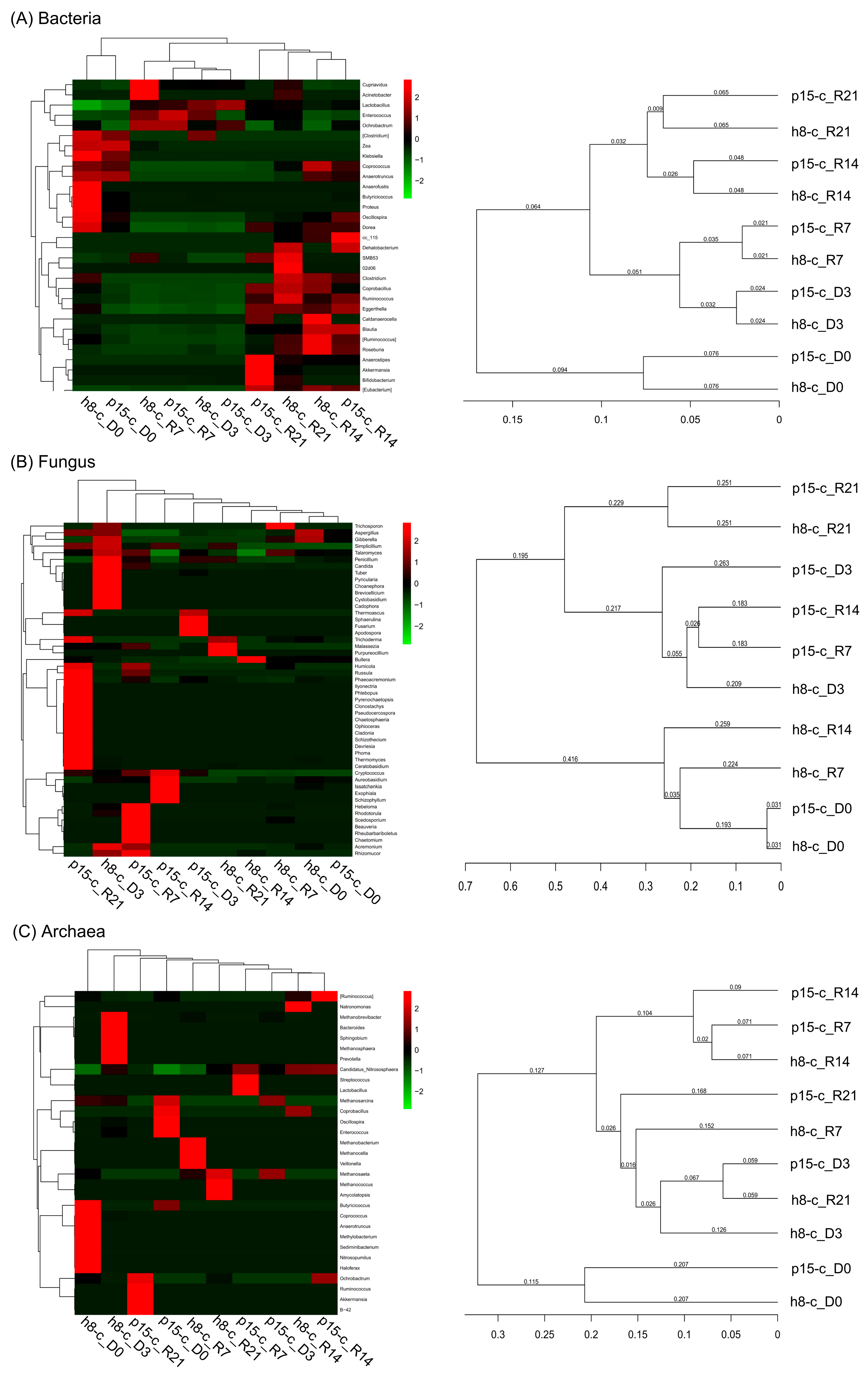
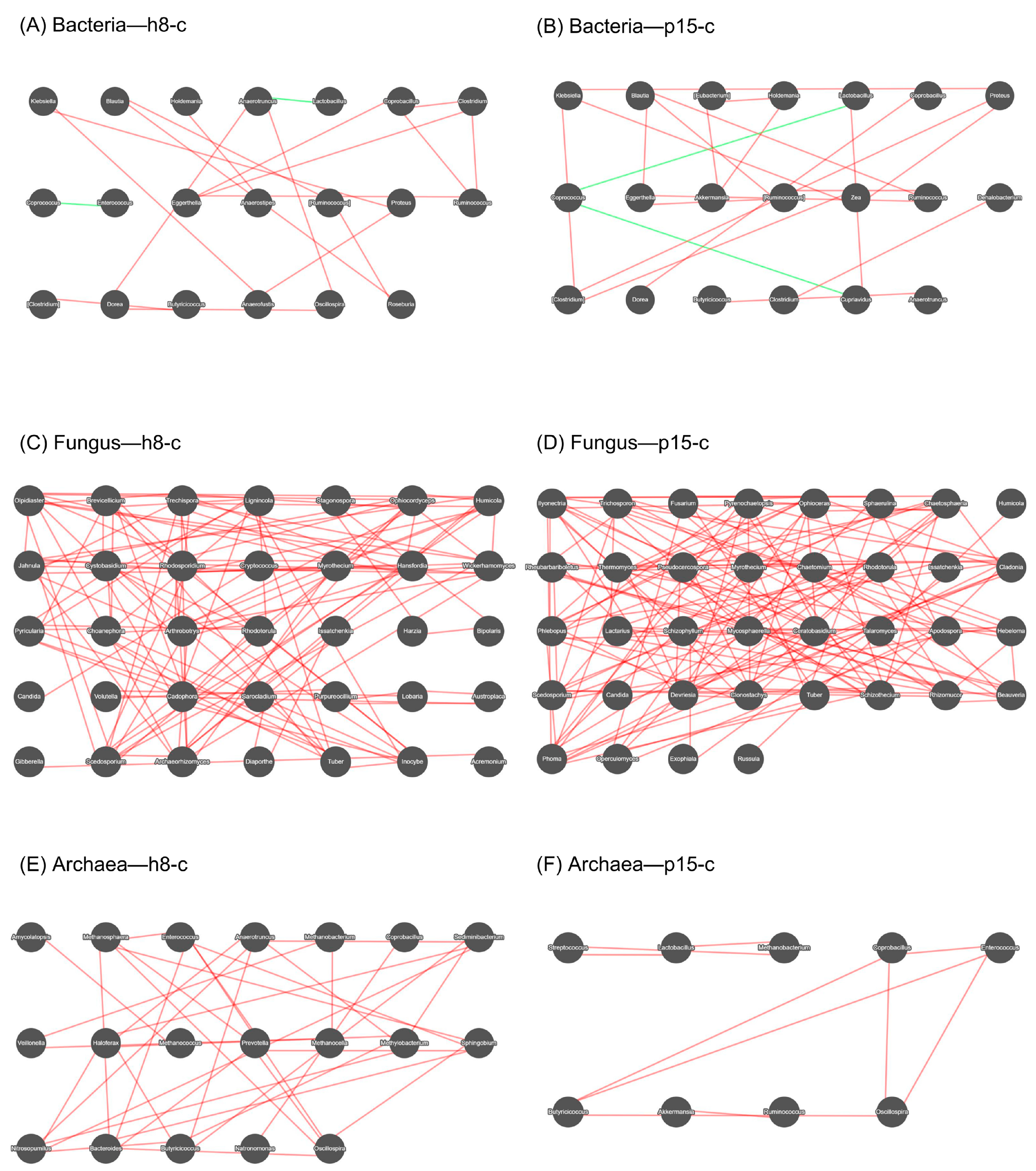
Species composition and abundance distribution tables at the phylum and genus levels were generated for each sample using QIIME, and the results were visualized as bar plots with R software (version 3.3.1). Cluster analysis was performed on the top 50 most abundant genera using the pheatmap package in R (version 3.3.1), and a heatmap was generated. UPGMA clustering analysis was applied to the Weighted UniFrac distance matrix using QIIME, and the results were visualized with R software. Spearman’s rank correlation coefficients (Spearman’s rho) among the top 50 most abundant dominant genera (across bacteria, fungi, and archaea) were calculated using Mothur (v1.39.5). Correlation networks were constructed based on two strict criteria: (1) Spearman’s rho > 0.6 (indicating a strong association) and (2) a
p-value < 0.01 (ensuring statistical significance). The filtered networks were imported into Cytoscape (
http://www.cytoscape.org/, accessed on 15 April 2025) for visualization.
2.8. Statistical Analysis
Each experiment was repeated three times, and data are expressed as mean ± standard deviation. The Excel software was used to draw the figures and to perform statistical analysis. Heatmap_barplot analysis was performed using the OmicStudio tools at
https://www.omicstudio.cn/tool, accessed on 25 August 2025.
4. Discussion
Lactic acid bacteria, a group of Gram-positive microorganisms naturally present in fermented foods and used as probiotics, have been of interest to researchers for many years as an effective source of bioactive compounds with a variety of functions and activities [
22]. Suanzhou is a homemade dish naturally fermented by grains, and our previous study found that lactic acid bacteria are the primary strains in Suanzhou fermentation [
4]. Our study identified the strains of lactic acid bacteria isolated from Suanzhou, as well as observed that h8-c (
L. pentosus), p15-c (
L. pentosus), p10-c2 (
L. pentosus), p16-c (
L. pentosus), and p1-c2 (
L. brevis) had higher biofilm formation ability, and that the suspension of h8-c and p15-c (
L. pentosus) with high-yielding biofilms exhibited better inhibitory properties against all the indicator pathogens (
S. aureus,
B. subtilis, PAK,
E. coli and
Shigelomonas). This aligns with previous findings that LAB-derived metabolites (secreted into the supernatant) are key mediators of antimicrobial activity against spoilage and pathogenic bacteria [
23,
24]. Subsequently, the intestinal colonization and related intestinal protective mechanisms of h8-c and p15-c were investigated in the intestinal tract of SPF chicks using 16S rRNA gene sequencing and ITS sequencing, which represents a novel and innovative aspect of this study.
Biofilms are communities of microorganisms that adhere to the surface, and exist within a self-produced matrix of extracellular polymeric material [
17]. Biofilms provide a higher survival advantage for bacteria, allowing them to persist and resist host immunity and antimicrobial therapy [
25]. A previous study of Stivala et al. [
26] demonstrated that
L. rhamnosus AD3 had stronger biofilm formation ability, resistance to low pH and bile salts (before and after exposure), and higher adhesion and auto-aggregation, suggesting its potential as a promising probiotic to promote vaginal health in women. Based on our results, h8-c and p15-c, which belong to
L. pentosus, had stronger biofilm formation ability and inhibitory effects against the pathogens, as well as good tolerance to low pH values, and the optimal growth temperature and pH for the h8-c and p15-c strains were 30 °C and 5.5, respectively.
L. pentosus, a species of lactic acid bacteria, was reported to consume xylose more efficiently and to hydrolyze sugarcane bagasse to produce lactic acid, thus improving the economic feasibility of lactic acid production through low-cost substrate fermentation [
27]. Another study used chestnut residue as the fermentation substrate, and discovered that the yield of lactic acid fermented by
L. pentosus was higher compared with the other two strans,
L. plantarum and
Lactococcus lactis [
28]. Taken together, h8-c and p15-c (
L. pentosus) with better inhibitory effects against pathogens in vitro and high-yielding biofilm ability could be selected for further in vivo experiments, and may be suitable candidates for Suanzhou fermentation.
The robust in vitro characteristics of h8-c and p15-c provide a plausible mechanistic basis for their in vivo performance. First, the strains’ high biofilm-forming capacity (OD
595 = 0.747 for h8-c, 0.556 for p15-c) and robust acid tolerance (OD
600 > 0.5 at pH 3.5) directly facilitated their persistent intestinal colonization. At R21 (21 days post-supplementation), Lactobacillus abundance remained 68% (h8-c) and 63% (p15-c), significantly higher than baseline (D0), a outcome likely enabled by biofilms protecting the strains from the acidic chick gut environment and immune clearance [
29,
30]. Their adaptability to 30–45 °C (
Figure 2A) further aligned with the chick gut’s physiological temperature (~40 °C), ensuring metabolic activity and competitive exclusion of pathogens. To further investigate the effects of the strains h8-c and p15-c (
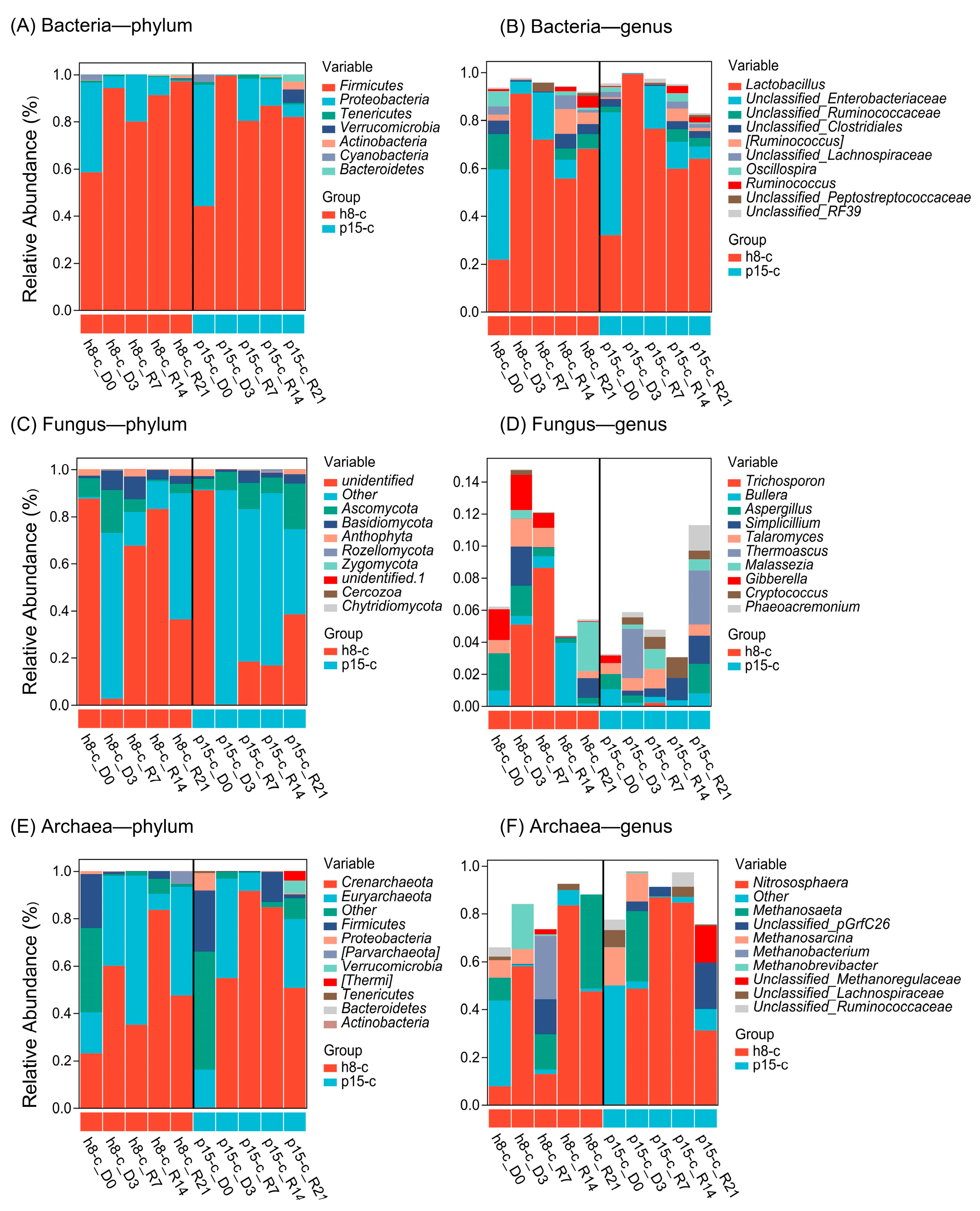
L. pentosus) on intestinal colonization and health in vivo, SPF chicks were administered with h8-c and p15-c separately. At the phylum level, both the h8-c and p15-c groups were dominated by
Firmicutes and
Proteobacteria, which collectively accounted for 80% to 99% of the total sequences in each group. At the genus level,
Lactobacillus was the predominant genus in both groups. On day 3 after administration of
Lactobacillus strains h8-c or p15-c, the relative abundance of
Lactobacillus significantly increased to 91% and 99%, respectively. Even after discontinuation of
Lactobacillus supplementation, by day 21 of the recovery period, the abundance of
Lactobacillus remained high at 68% and 63%, values significantly elevated compared to those before administration (D0). This indicates that both h8-c and p15-c exhibited strong colonization capacity in the chick intestine. The decrease in
Lactobacillus abundance during the recovery period was accompanied by an increase in Unclassified_
Enterobacteriaceae, which is consistent with the antagonistic interaction between these two taxa observed in the network analysis.
Lactobacillus, which belongs to
Firmicutes, is one of the most important probiotics in the gut microbiome. These intestinal resident
Lactobacillus species not only communicate with each other, but also with the intestinal epithelial cells to help maintain intestinal barrier integrity, enhance mucosal barrier defense and improve host immune response [
31]. A growing body of evidence supports the important roles of
Lactobacillus and their components (such as metabolites, peptidoglycan, and/or surface proteins) in the regulation of immune responses, primarily through the exchange of immune signals between the gastrointestinal tract and distant organs [
31,
32].
Prevotella, commonly distributed in the gut microbiome, has been reported to increase in abundance in association with Th17-mediated immune responses in many inflammatory diseases [
33]. Rahayu et al. [
34] demonstrated that
L. plantarum Dad-13 could survive and colonize in the human gastrointestinal tract, and that consumption of its powdered form could result in a decrease in
Firmicutes abundance and an increase in
Bacteroides abundance (especially
Prevotella), thereby reducing body weight and BMI in obese people. Another study illustrated that
L. plantarum DP189 could alleviate neurodegeneration in Parkinson’s disease (PD) mice by reducing the abundance of pathogenic bacteria (
Actinomycetes and
Proteobacteria) and increasing the abundance of beneficial bacteria (
Lactobacillus and
Prevotella), thereby reshaping the intestinal microbiome of PD mice [
35]. Combined with our results, we speculate that h8-c and p15-c (
L. pentosus) may promote the intestinal colonization of
Lactobacillus, thereby balancing the intestinal flora of chicks and promoting intestinal health.
This colonization drove distinct, beneficial shifts across all three microbial domains. For bacteria, h8-c maintained a stable
Lactobacillus-dominant community, which suppressed the proliferation of opportunistic
Enterobacteriaceae (a common source of chick gut dysbiosis) and reinforced intestinal barrier integrity via
Lactobacillus-derived metabolites (e.g., bacteriocins) [
36]. In contrast, p15-c enriched fiber-degrading taxa (
unclassified-Ruminococcaceae,
Oscillospira), which enhance carbohydrate fermentation and short-chain fatty acid (SCFA) production, key for nutrient absorption and gut epithelial health [
37,
38]. For fungi, h8-c reduced the abundance of potentially pathogenic genera (
Trichosporon,
Cryptococcus), while p15-c transiently enriched
Gibberella (a genus linked to plant fiber degradation) during supplementation, reflecting strain-specific fungal modulation. For archaea, both strains elevated
Euryarchaeota (the dominant archaeal phylum), but h8-c favored
Methanobrevibacter (hydrogenotrophic methanogens, supporting efficient hydrogen scavenging), whereas p15-c enriched
Nitrososphaera (acetoclastic methanogens, aligning with its fiber-degrading bacterial profile) [
29]. These archaeal shifts indicate improved gut fermentation balance, a often-overlooked marker of gut health [
39]. Collectively, these data demonstrate that h8-c and p15-c may exert strain-specific, multifaceted benefits: h8-c prioritizes stable Lactobacillus colonization to strengthen barrier function, while p15-c enhances metabolic diversity via fiber-degrading microbes, both supported by their in vitro biofilm and stress tolerance traits. This integration confirms the strains’ suitability as Suanzhou fermentation starters and probiotics for chick gut health.
However, it should be noted that this study has certain limitations. The animal experiments were conducted under SPF conditions with a relatively small sample size, which may limit the generalizability of the results to commercial poultry farming environments. Additionally, while 16S rRNA and ITS sequencing provided insights into microbial community changes, metagenomic or metabolomic analyses would be necessary to fully elucidate the functional mechanisms underlying the observed effects. Future studies should consider larger-scale trials under practical farming conditions and incorporate multi-omics approaches to validate these preliminary findings.




 ,
,