Article

Revisiting Mean Flow and Mixing Properties of Negatively Round Buoyant Jets Using the Escaping Mass Approach (EMA)


by
Aristeidis A. Bloutsos
1,2 and
Panayotis C. Yannopoulos
1,*
1
Environmental Engineering Laboratory, Department of Civil Engineering, University of Patras, 265 04 Patras, Greece
2
Hydraulics & Geotechnical Engineering Division, Department of Civil Engineering, University of West Attica, 122 43, Athens, Greece
*
Author to whom correspondence should be addressed.
Fluids 2020, 5(3), 131; https://doi.org/10.3390/fluids5030131
Submission received: 2 July 2020 / Revised: 23 July 2020 / Accepted: 6 August 2020 / Published: 8 August 2020
(This article belongs to the Special Issue Advances in Turbulent Buoyant Jets)

Abstract

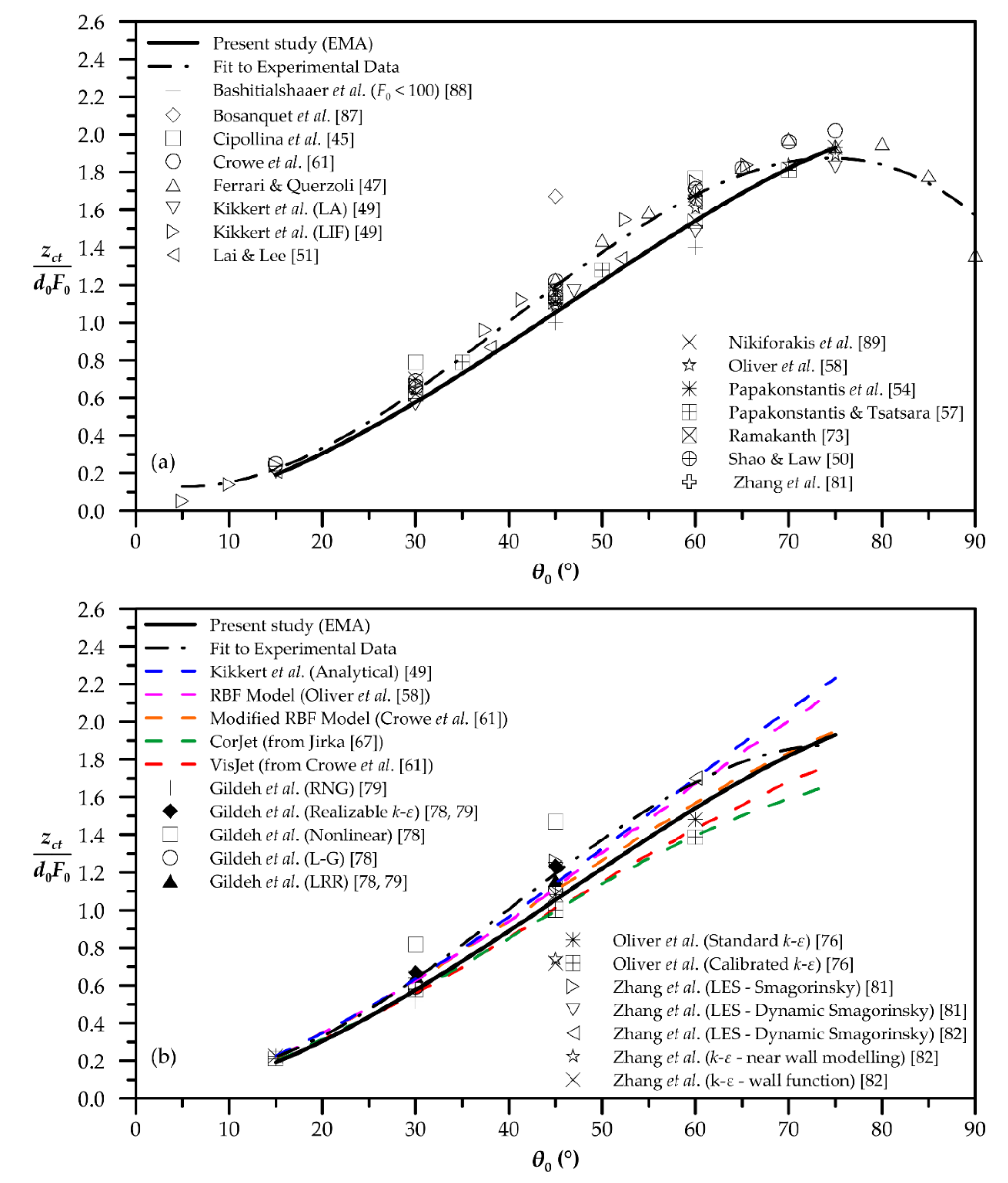
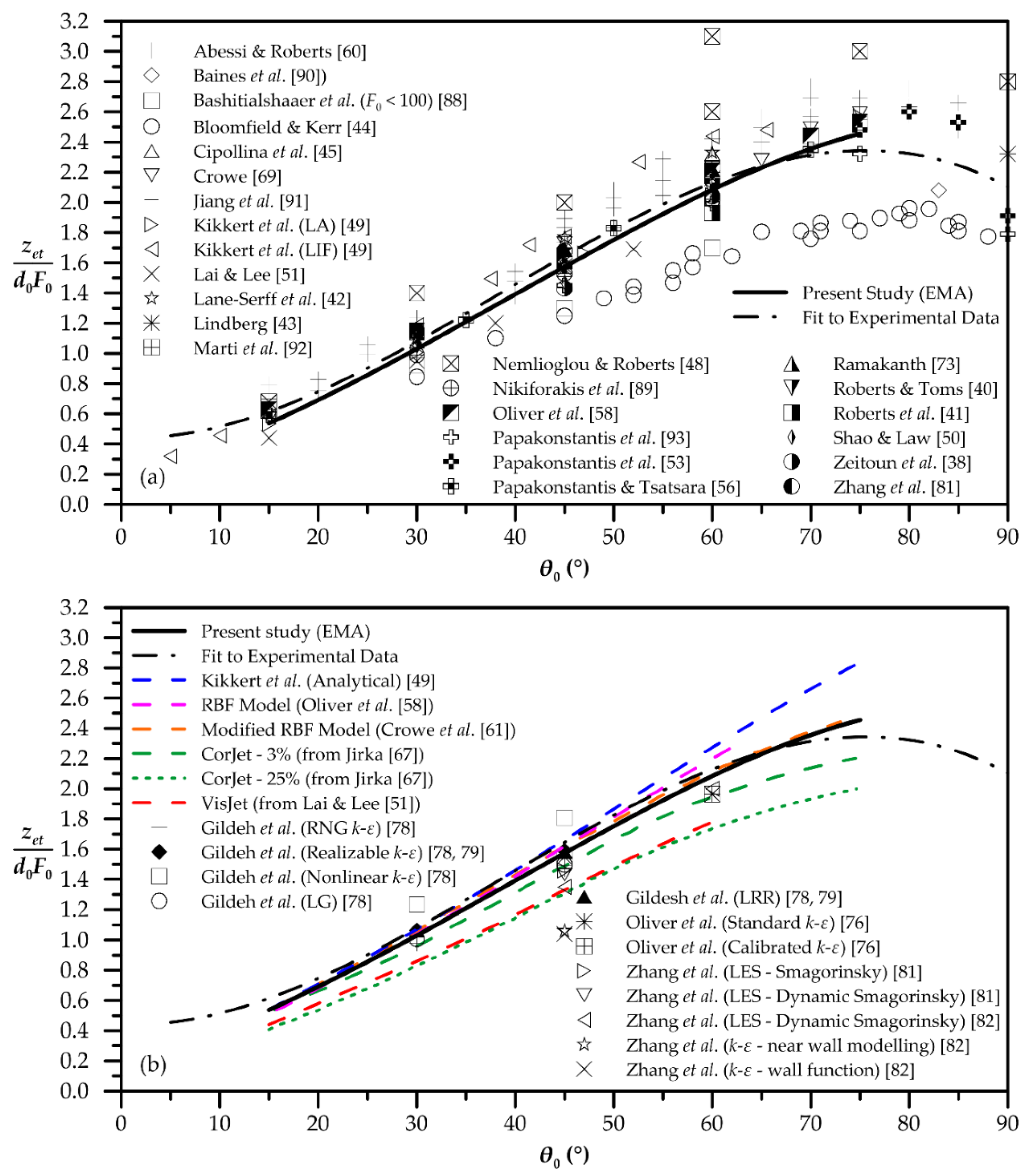
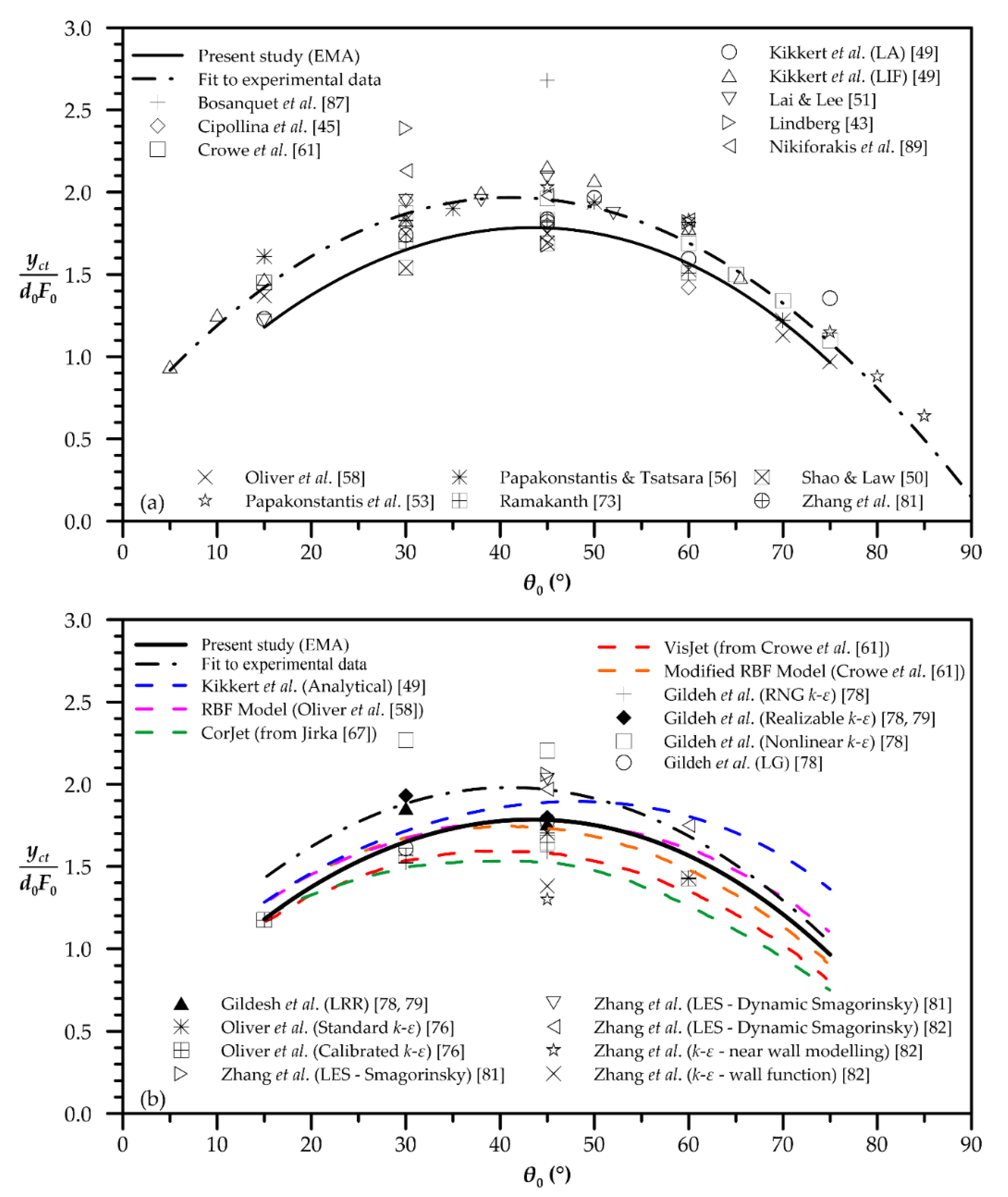
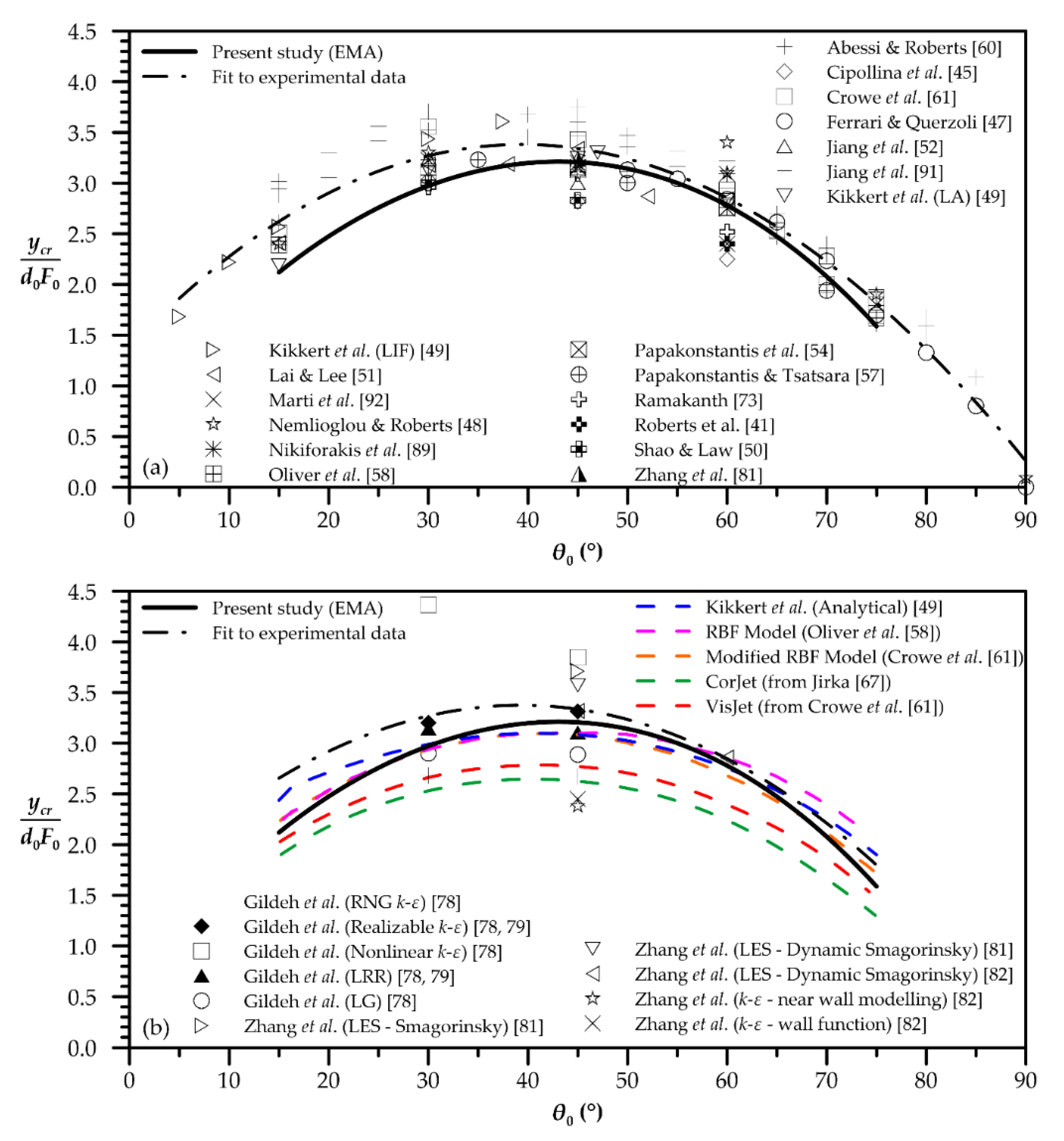
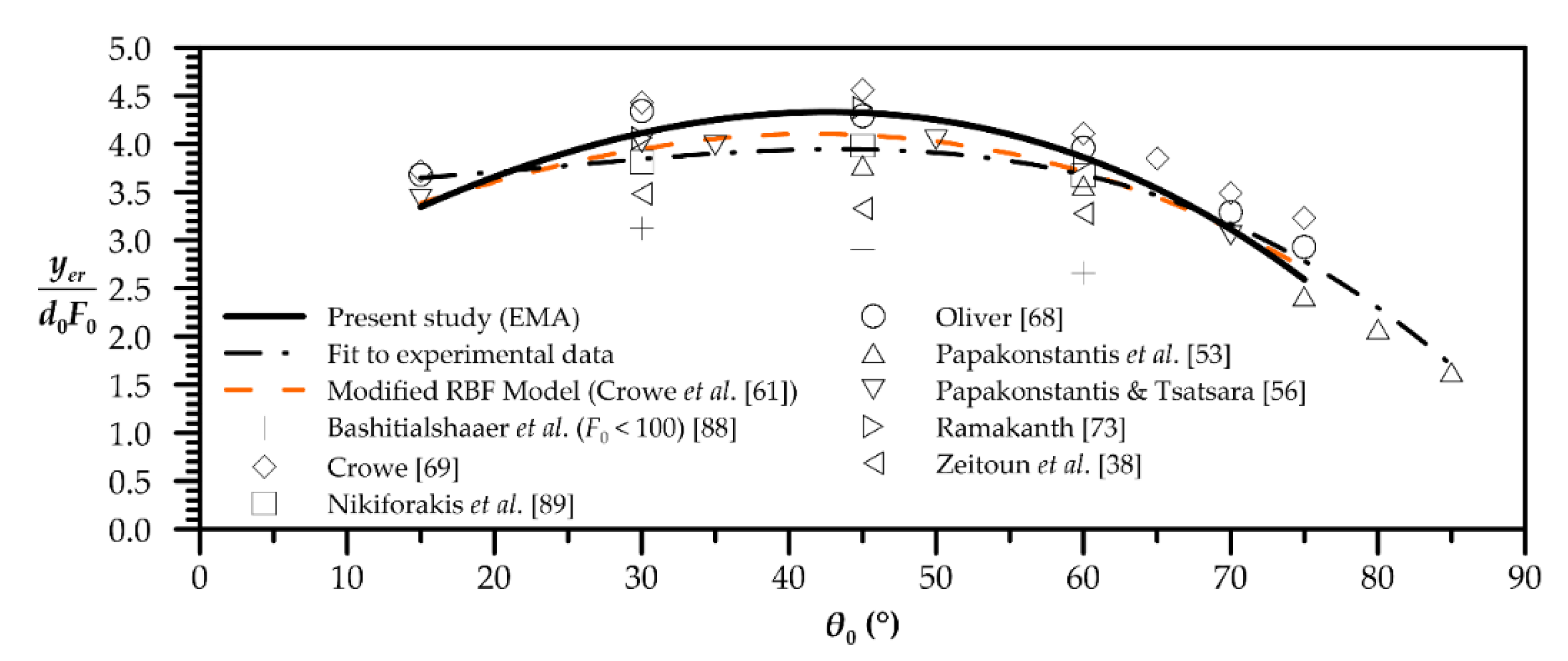
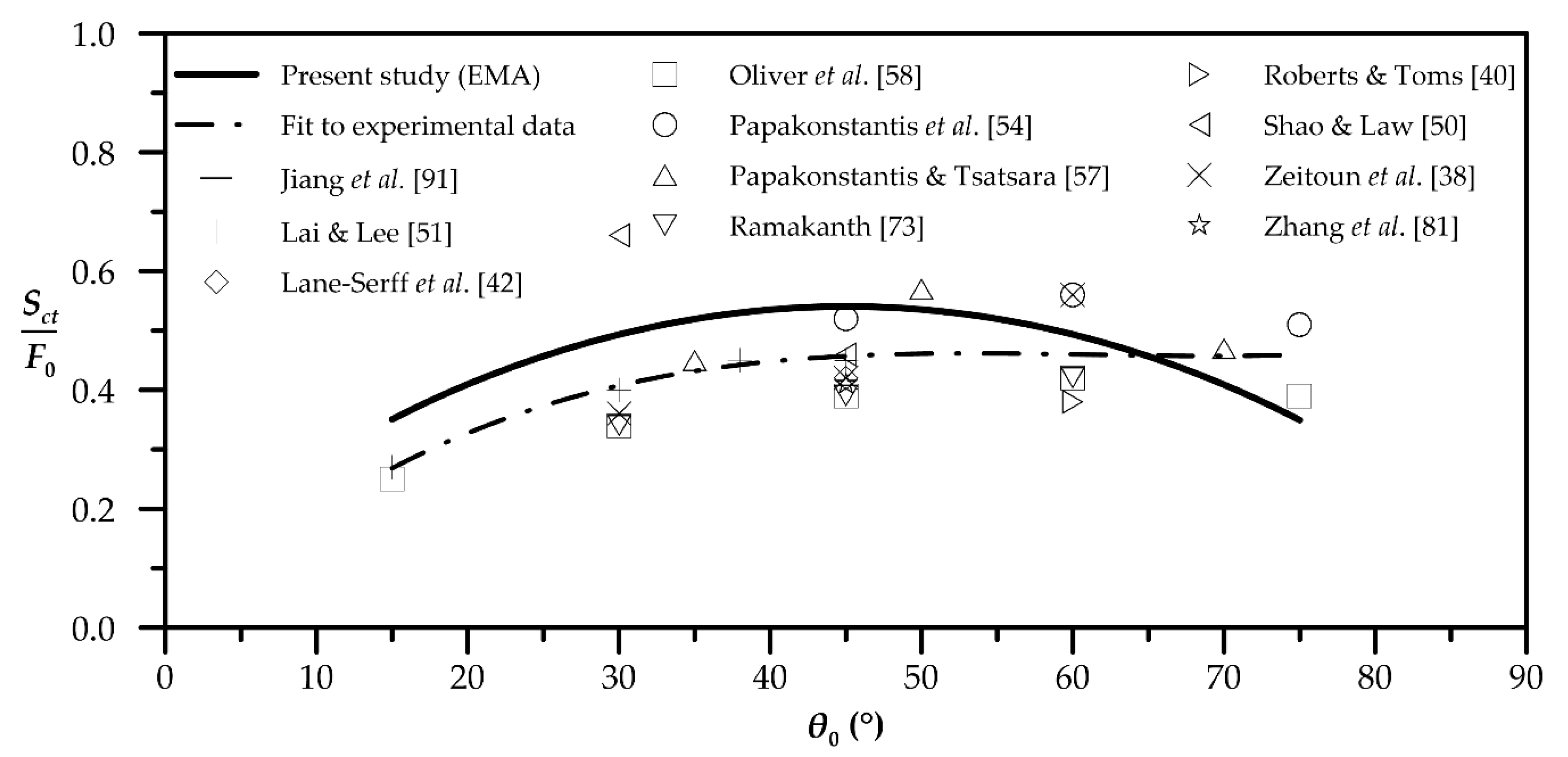
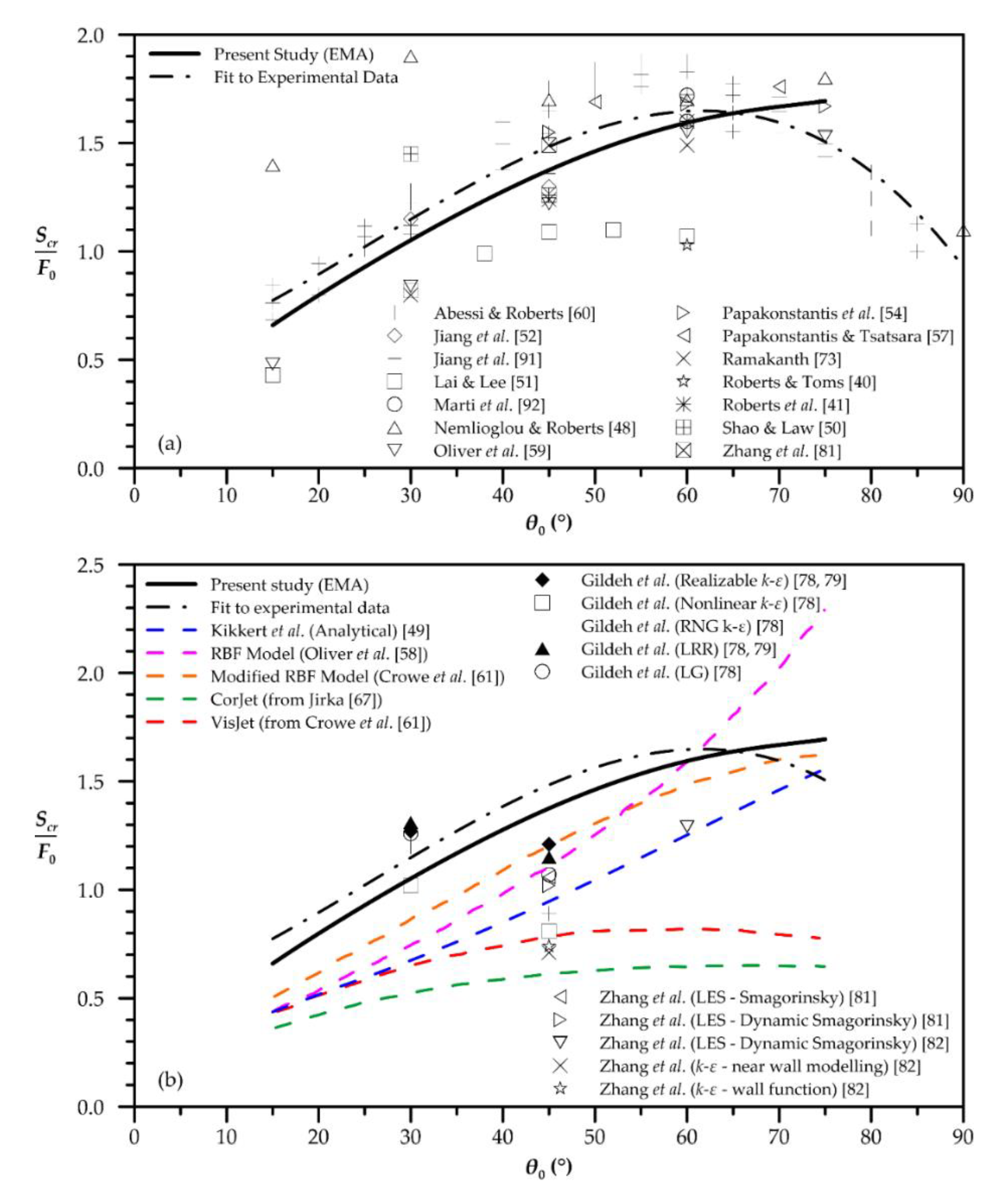
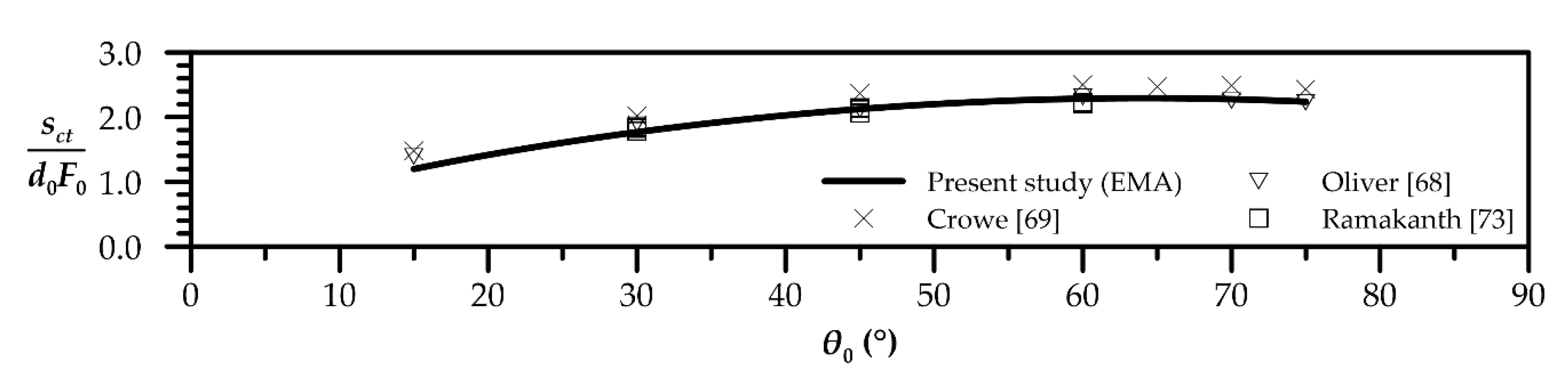
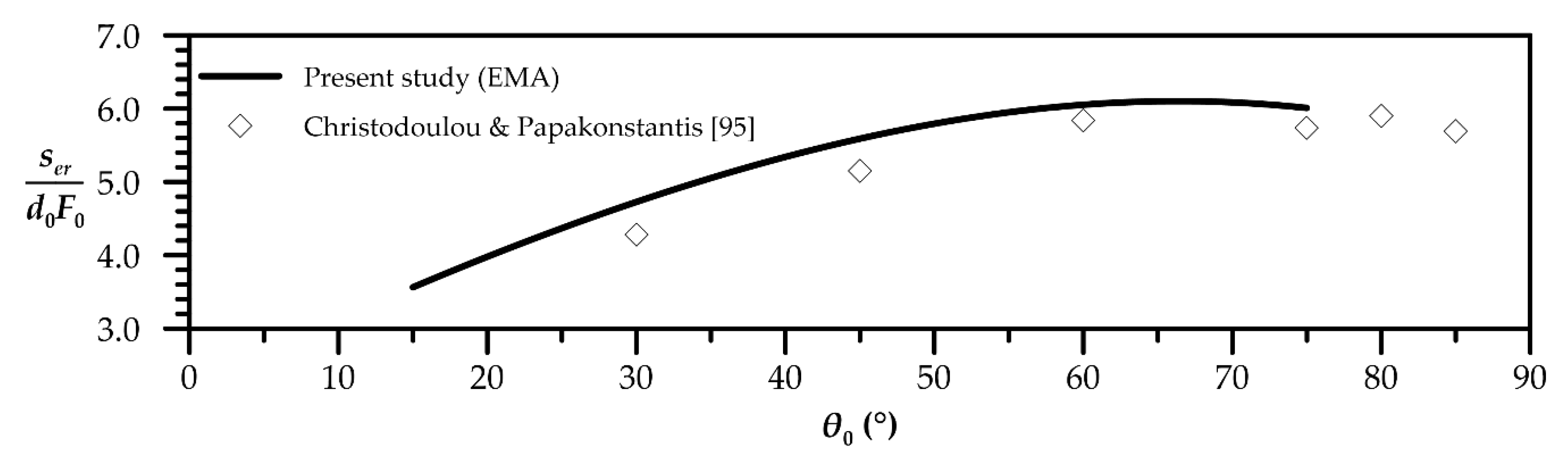
The flow formed by the discharge of inclined turbulent negatively round buoyant jets is common in environmental flow phenomena, especially in the case of brine disposal. The prediction of the mean flow and mixing properties of such flows is based on integral models, experimental results and, recently, on numerical modeling. This paper presents the results of mean flow and mixing characteristics using the escaping mass approach (EMA), a Gaussian model that simulates the escaping masses from the main buoyant jet flow. The EMA model was applied for dense discharge at a quiescent ambient of uniform density for initial discharge inclinations from 15° to 75°, with respect to the horizontal plane. The variations of the dimensionless terminal centerline and the external edge’s height, the horizontal location of the centerline terminal height, the horizontal location of centerline and the external edge’s return point as a function of initial inclination angle are estimated via the EMA model, and compared to available experimental data and other integral or numerical models. Additionally, the same procedure was followed for axial dilutions at the centerline terminal height and return point. The performance of EMA is acceptable for research purposes, and the simplicity and speed of calculations makes it competitive for design and environmental assessment studies.
Keywords: negatively buoyant jets; inclined turbulent jets; brine; curvilinear coordinate system; turbulent mixing; integral model negatively buoyant jets; inclined turbulent jets; brine; curvilinear coordinate system; turbulent mixing; integral model