



J. Cardiovasc. Dev. Dis., Volume 12, Issue 11 (November 2025) – 38 articles
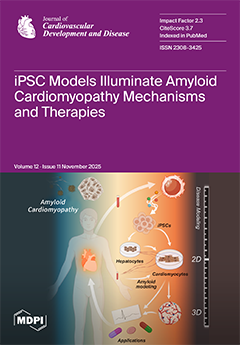
Cover Story (view full-size image):
Amyloid cardiomyopathy (ACM) is a progressive and often fatal heart disease caused by misfolded transthyretin (TTR) or immunoglobulin light chains that infiltrate and stiffen the myocardium. Human-induced pluripotent stem cells (iPSCs) now turn this challenge into an opportunity by providing a patient-specific window into ACM pathogenesis. In this review, Liu & Riaz illustrate how hepatocytes derived from patient-specific TTR-mutant iPSCs recapitulate amyloid secretion, whereas iPSC-derived cardiomyocytes model amyloid-induced proteotoxic stress in both two- and three-dimensional engineered tissues. The integration of CRISPR-Cas9 genome editing and dynamic 3D conditioning further enhances mechanistic fidelity and enables drug screening. Together, these human-relevant platforms link genotype to phenotype and accelerate precision drug discovery for ACM. View this paper
- Issues are regarded as officially published after their release is announced to the table of contents alert mailing list.
- You may sign up for e-mail alerts to receive table of contents of newly released issues.
- PDF is the official format for papers published in both, html and pdf forms. To view the papers in pdf format, click on the "PDF Full-text" link, and use the free Adobe Reader to open them.
Previous Issue
Next Issue
