Exploring the Role of Salt Supplementation on Milk Composition, Fatty Acids, and Insulin Response in Lactating Camels
by
 , and
, and
Riyadh S. Aljumaah
1, 
Ahmed A. K. Salama
2,
Mutassim M. Abdelrahman
1,
Moez Ayadi
1,3,
Gerardo Caja
2,
Mohammed A. Alshaikh
1,
Mohammed A. Al-Badwi
1 and
Abdulkareem M. Matar
1,*
1
Department of Animal Production, College of Food and Agriculture Sciences, King Saud University, P.O. Box 2460, Riyadh 11451, Saudi Arabia
2
Group of Research in Ruminants (G2R), Department of Animal and Food Sciences, Universitat Autònoma de Barcelona, 08193 Bellaterra, Spain
3
Department of Animal Biotechnology, Higher Institute of Biotechnology of Beja, University of Jendouba, Beja 9000, Tunisia
*
Author to whom correspondence should be addressed.
Vet. Sci. 2025, 12(1), 22; https://doi.org/10.3390/vetsci12010022
Submission received: 24 November 2024
/
Revised: 31 December 2024
/
Accepted: 3 January 2025
/
Published: 6 January 2025
Simple Summary
This study looked at how adding extra salt to the diet of dairy camels affects their milk and overall metabolism. The camels that consumed more salt drank more water and had higher levels of insulin in their blood. However, the milk from the salt-fed camels contained lower levels of healthy fats, specifically unsaturated fats, which are important for heart health. These results suggest that adding a high amount of salt to the diet may affect the quality of milk and potentially make it less healthy due to the shift in fat types. In simple terms, a moderate increase in dietary salt for dairy camels changes the type of fat in their milk and increases blood insulin levels, which could affect the health benefits of the milk and the camels’ insulin metabolism.
Abstract
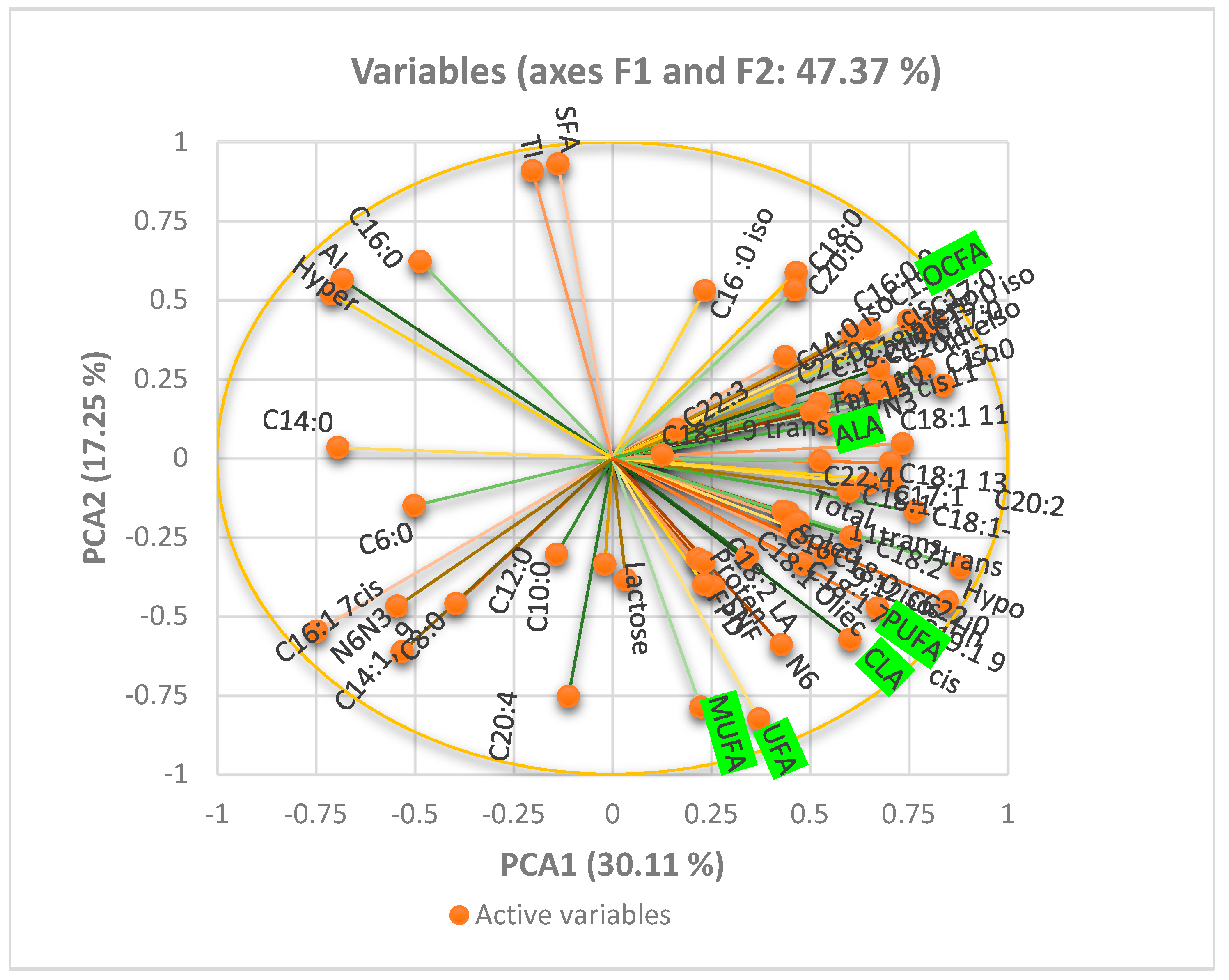
Camel milk is a valuable food source with unique nutritional properties and potential health benefits. This study investigated the influence of high dietary salt on milk composition and fatty acid (FA) profile as well as insulin regulation in dairy camels. Twelve multiparous female camels were used in a crossover design with two treatments: control concentrate (CON; 1.3% salt) and high-salt concentrate (SAL; 3.9% salt). Each period lasted 3 weeks, with camels switched between treatments in the second period. The measured variables included milk yield, milk composition, blood metabolites, and insulin levels in blood and milk. The SAL group exhibited higher (p < 0.01) water consumption. Nevertheless, milk yield and composition (fat, protein, lactose) remained unaffected. Notably, SAL camels had elevated blood insulin levels (p < 0.05) compared to the CON group, suggesting enhanced pancreatic activity possibly driven by osmotic balance changes. Milk FA profiles revealed a reduction in unsaturated fatty acids (UFA, p < 0.04), particularly monounsaturated (MUFA, p < 0.05) and odd-chain fatty acids (OCFA, p < 0.05). Furthermore, lipid quality indices such as the atherogenic index (p < 0.01) and the hypocholesterolemic/hypercholesterolemic FA ratio (h/H, p < 0.01) indicated a less favorable milk fat profile in the SAL group. These findings suggest that while moderate salt supplementation may not negatively impact milk yield in dairy camels, it alters both metabolic and milk fat composition variables, with potential implications for the nutritional quality of milk.
Keywords:
dromedary camel; dietary salt; milk composition; fatty acids; insulin