Article

Integrated Molecular Informatics and Sensory-Omics Study of Core Trace Components and Microbial Communities in Sauce-Aroma High-Temperature Daqu from Chishui River Basin


1
School of Brewing Engineering, Moutai Institute, Renhuai 564501, China
2
School of Food Science and Engineering, South China University of Technology, Guangzhou 510640, China
*
Author to whom correspondence should be addressed.
Foods 2026, 15(3), 599; https://doi.org/10.3390/foods15030599
Submission received: 21 January 2026 / Revised: 26 January 2026 / Accepted: 28 January 2026 / Published: 6 February 2026
(This article belongs to the Special Issue Sensory Detection and Analysis in Food Industry)

Abstract

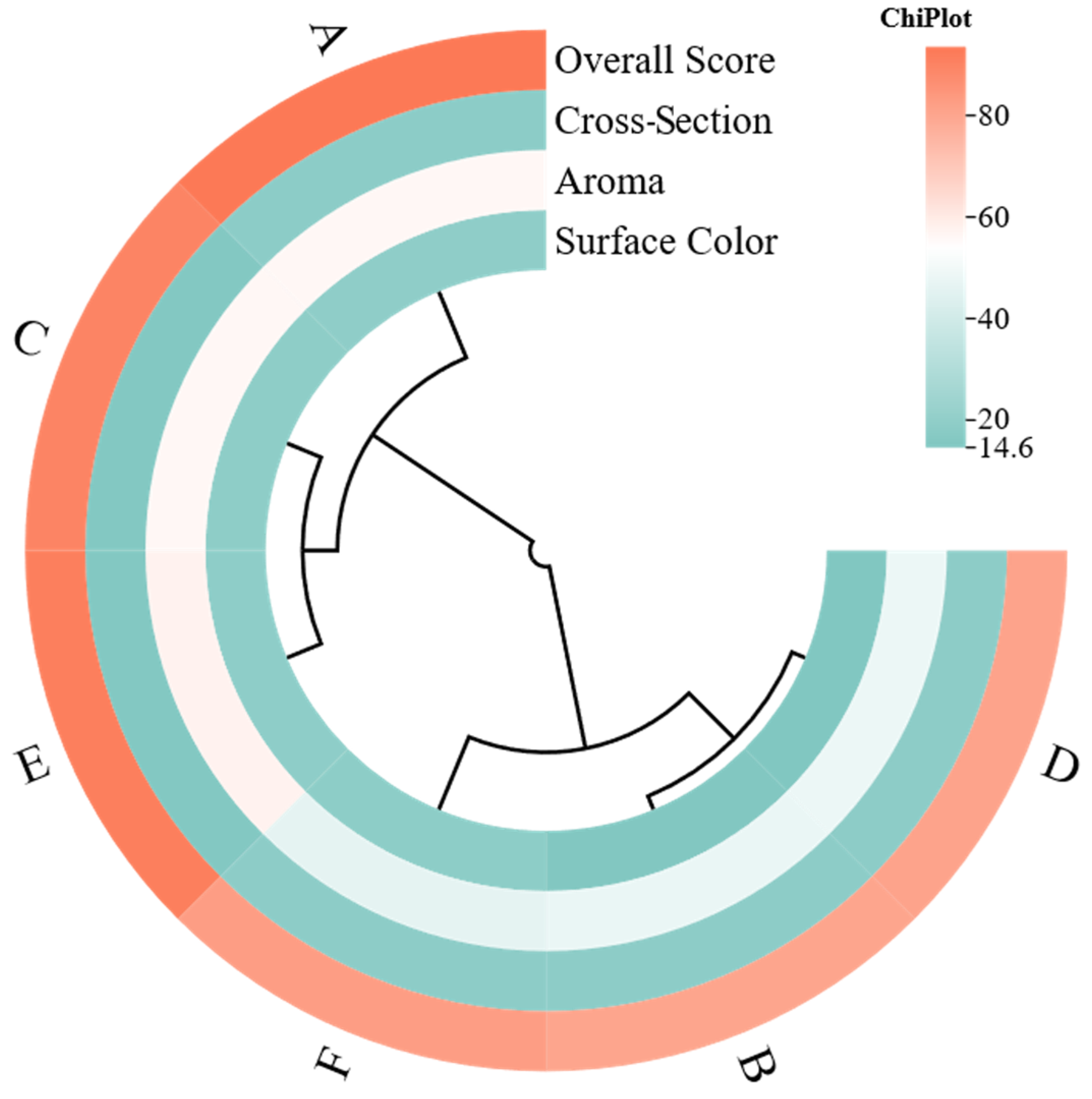
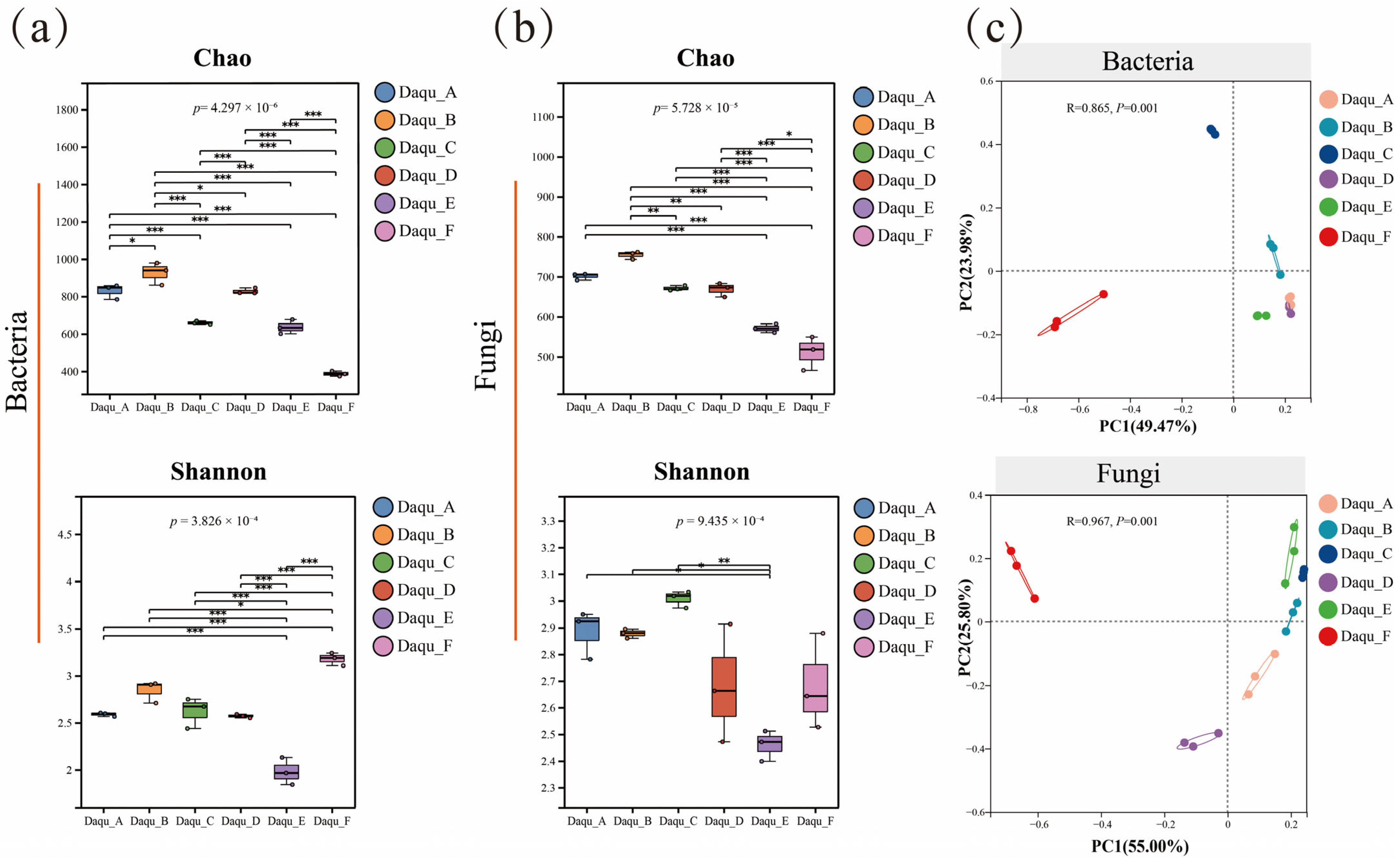
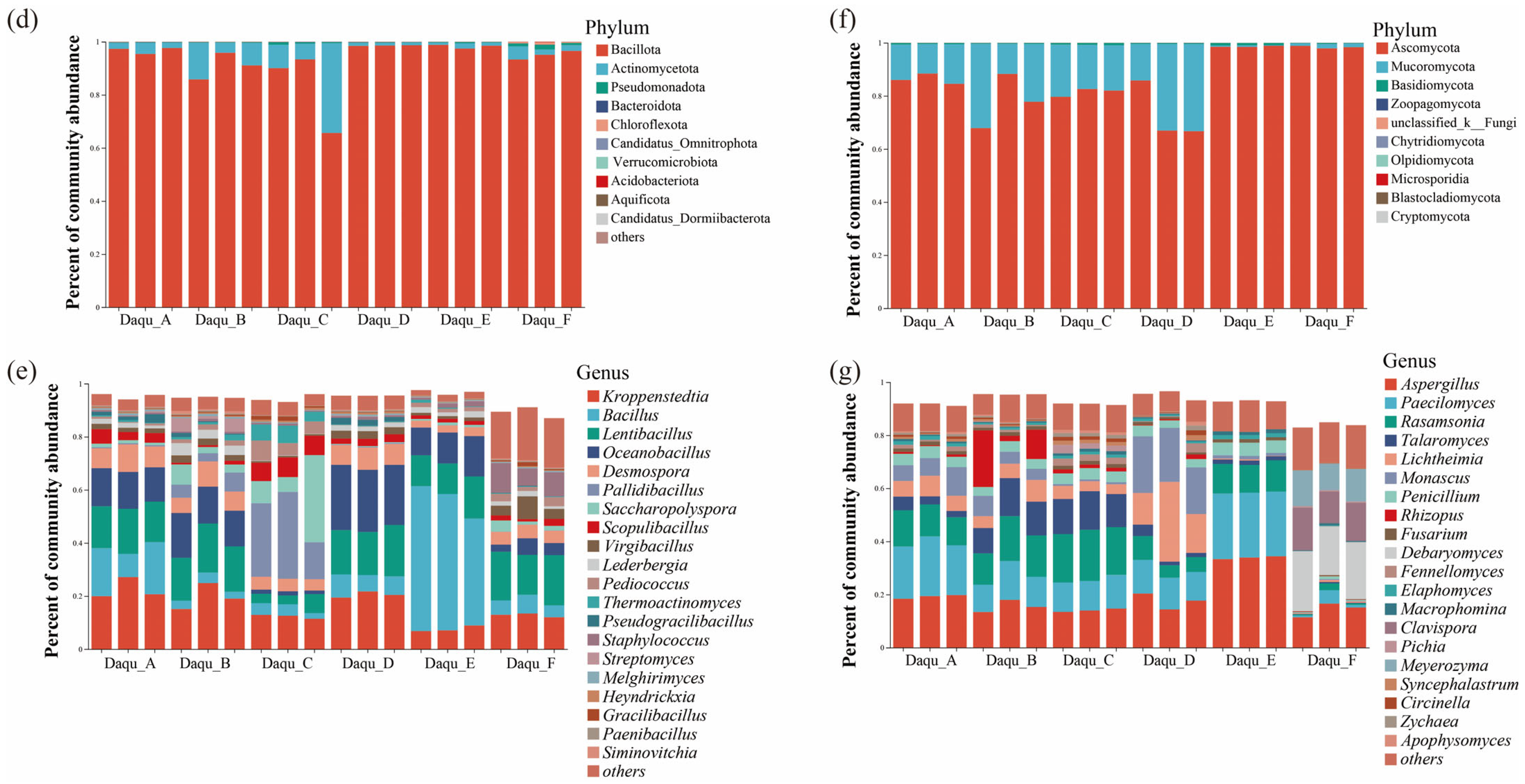
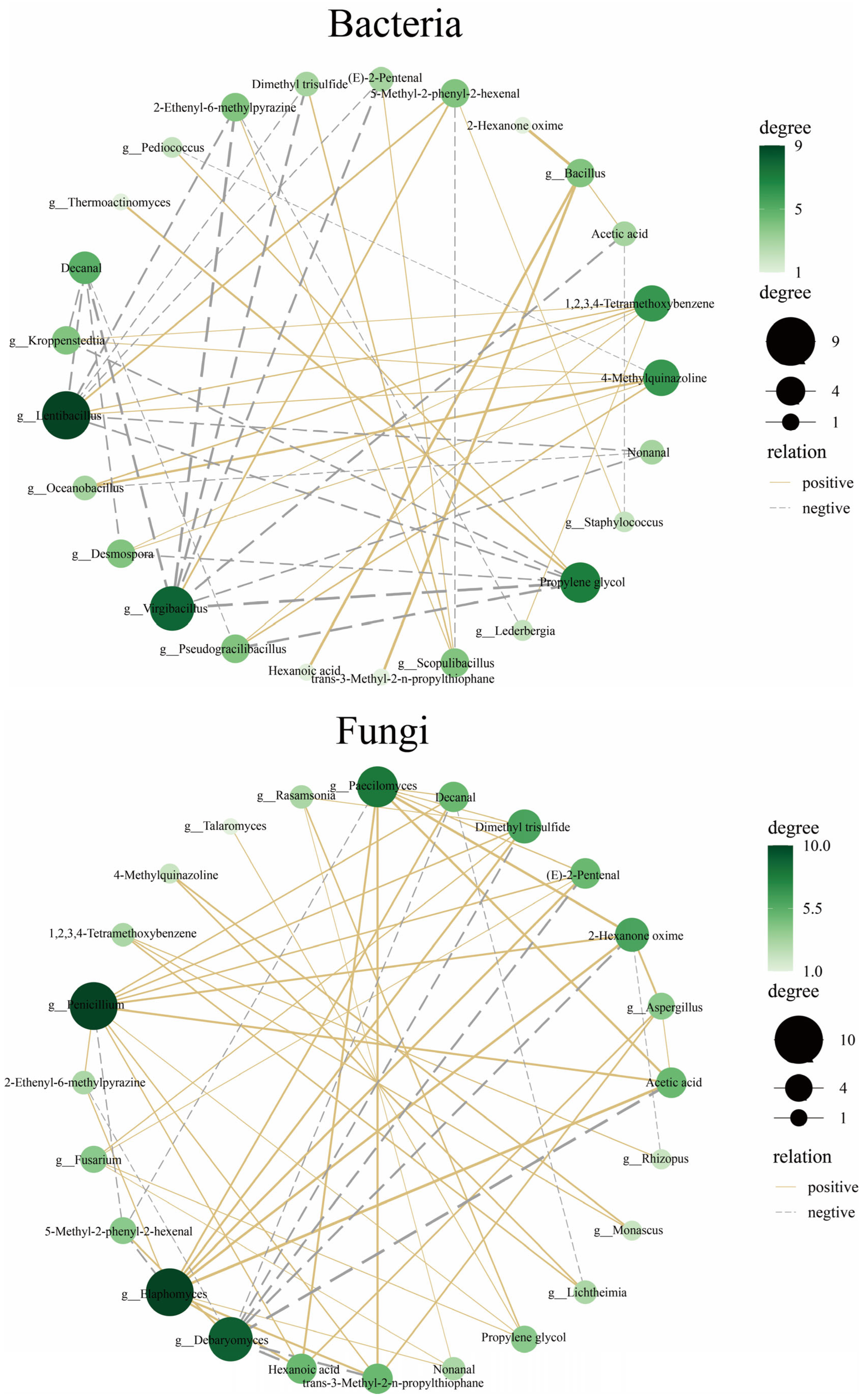
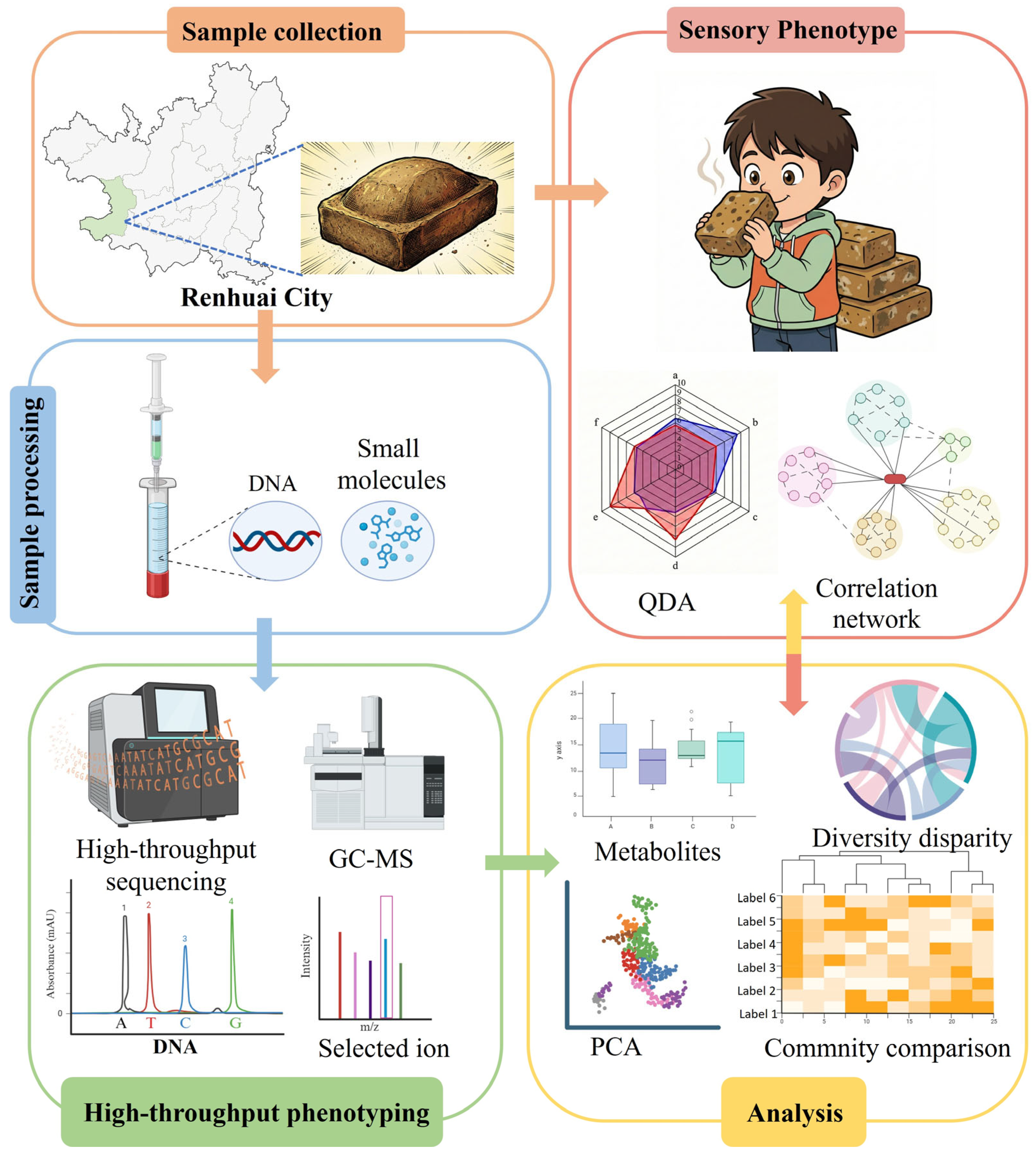
Flavor-relevant trace volatiles and microbial communities were examined in six sauce-aroma high-temperature Daqu samples. Headspace solid-phase microextraction coupled with gas chromatography–mass spectrometry (HS-SPME-GC-MS) quantified 210 trace volatile compounds across 14 chemical classes. Orthogonal partial least squares discriminant analysis (OPLS-DA) with variable importance in projection (VIP) screening was integrated with sensory scoring, correlation analysis, and molecular docking to an olfactory receptor model. Volatile profiles showed clear stratification in total abundance. Pyrazines dominated the high-total group. Tetramethylpyrazine served as a major driver. Sensory evaluation indicated that aroma explained overall quality best. (E)-2-pentenal and dimethyl trisulfide showed significant positive associations with aroma and overall scores. In the olfactory receptor, the polar residue module that provides directional constraints for Daqu odor activation was formed by Ser75, Ser92, Ser152, Ser258, Thr74, Thr76, Thr98, Thr200, Gln99, and Glu94. The hydrogen-bond or charge network was further reinforced by Arg150, Arg262, Asn194, His180, His261, Asp182, and Gln181. The core discriminant set comprised acetic acid, hexanoic acid, (E)-2-pentenal, nonanal, decanal, dimethyl trisulfide, trans-3-methyl-2-n-propylthiophane, 2-hexanone oxime, ethyl linoleate, propylene glycol, 2-ethenyl-6-methylpyrazine, 4-methylquinazoline, 5-methyl-2-phenyl-2-hexenal, and 1,2,3,4-tetramethoxybenzene. Sequencing revealed higher bacterial diversity than fungal. Bacillus and Kroppenstedtia were dominant bacterial genera. Aspergillus, Paecilomyces, Monascus, and Penicillium were major fungal genera. Correlation patterns suggested that Bacillus and Monascus were positively linked to acetic acid and 1,2,3,4-tetramethoxybenzene. Together, these results connected chemical fingerprints, sensory performance, receptor-level plausibility, and microbial ecology. Concrete targets are provided for quality control of high-temperature Daqu.
Keywords: sauce-aroma high-temperature Daqu; core trace components; core microorganisms; Baijiu; molecular informatics and sensory omics sauce-aroma high-temperature Daqu; core trace components; core microorganisms; Baijiu; molecular informatics and sensory omics