The Hawthorn (Crataegus spp.) Value Chain: An Integrated Analysis of Resource Availability, Phytochemical Characterization, and Therapeutic Applications


 and
and 
Abstract
1. Introduction
2. Classification and Evolution of Hawthorn
3. Distribution, Cultivation, and Characteristics of Hawthorn
4. Active Chemical Substances and Functional Effects
4.1. Basic Nutrients
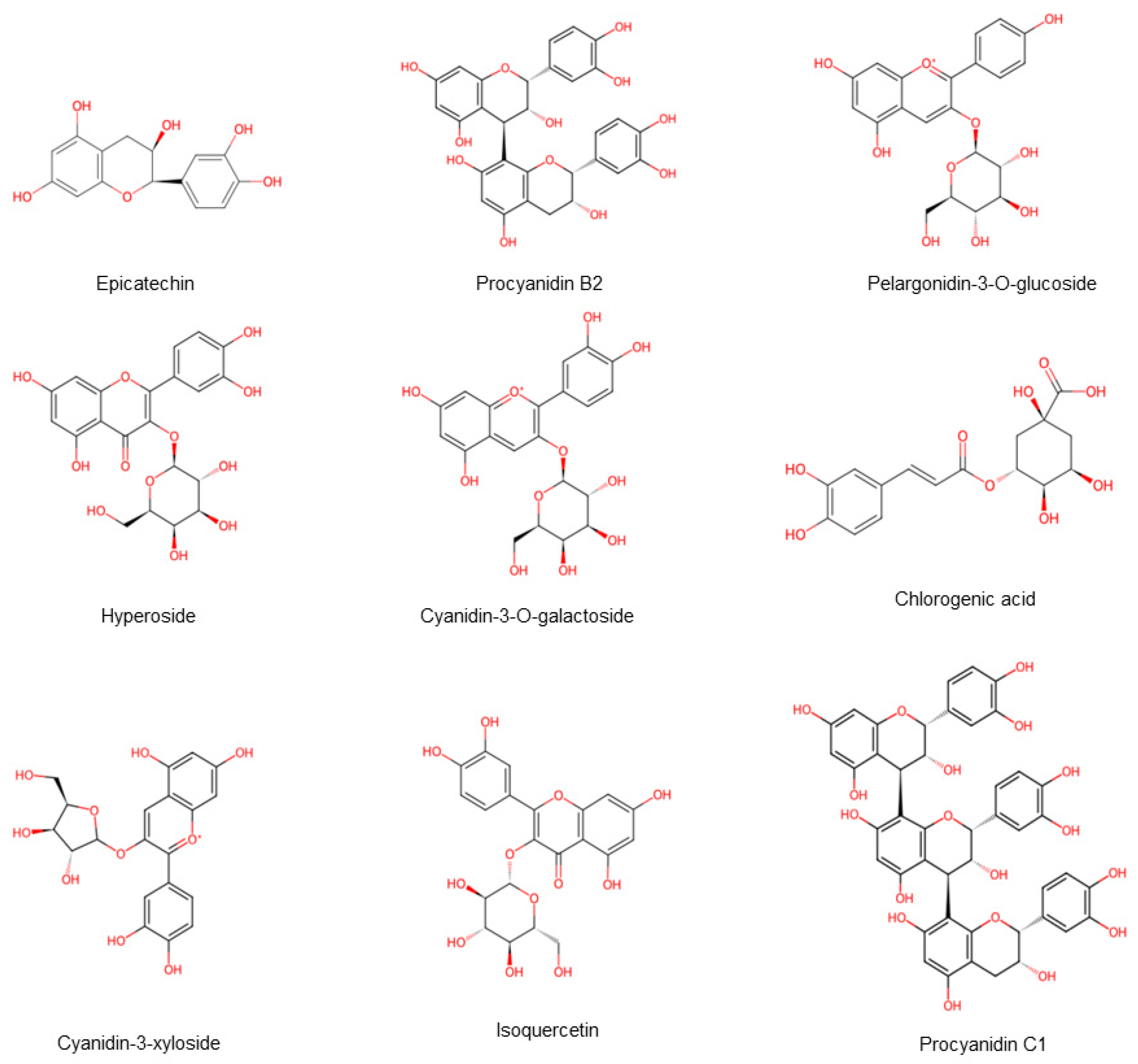
4.2. Phenylpropanoids
4.3. Phenolic Compounds
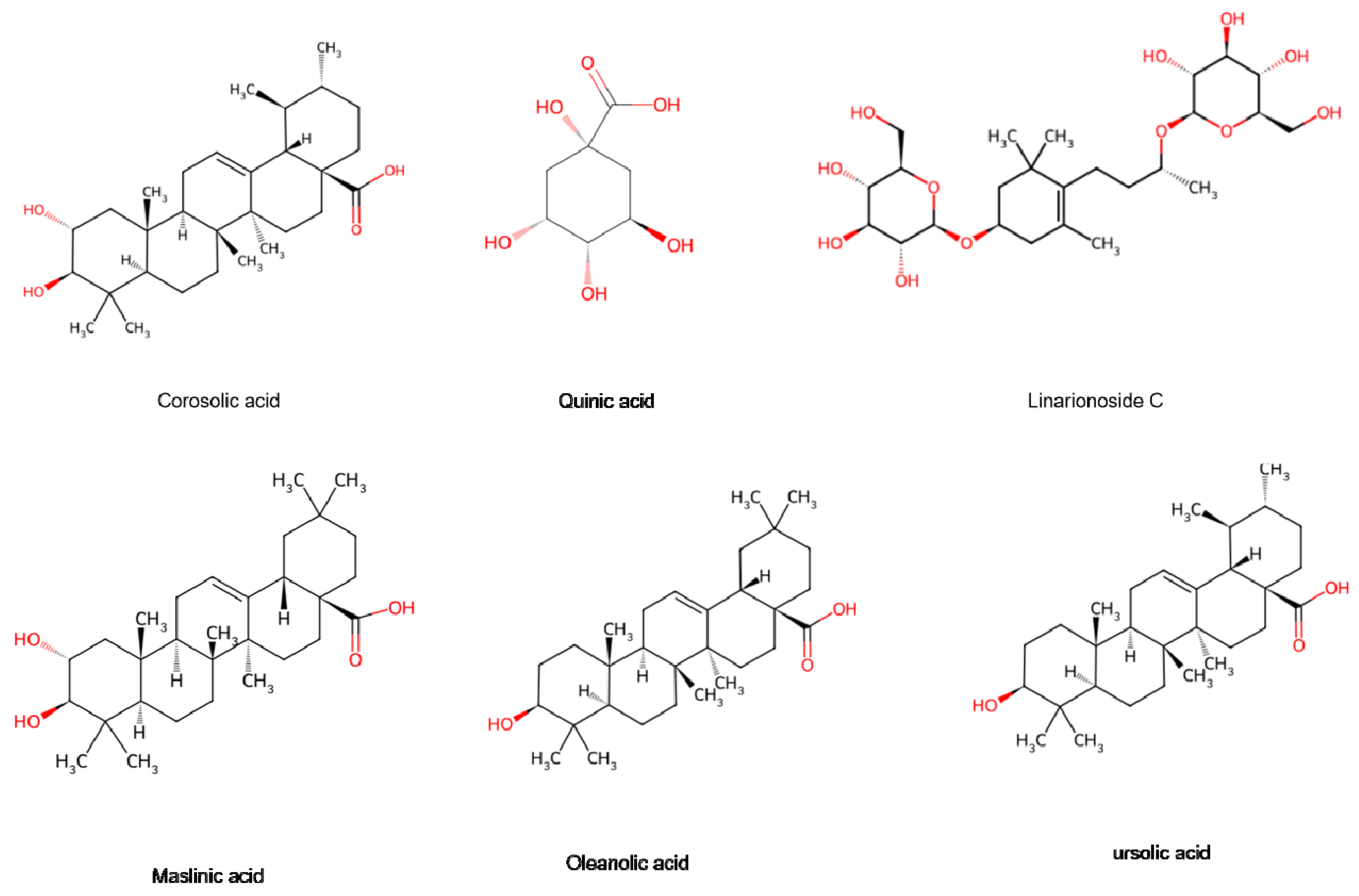
4.4. Terpenoids
4.5. Other Components
5. Extraction Process for Functional Materials
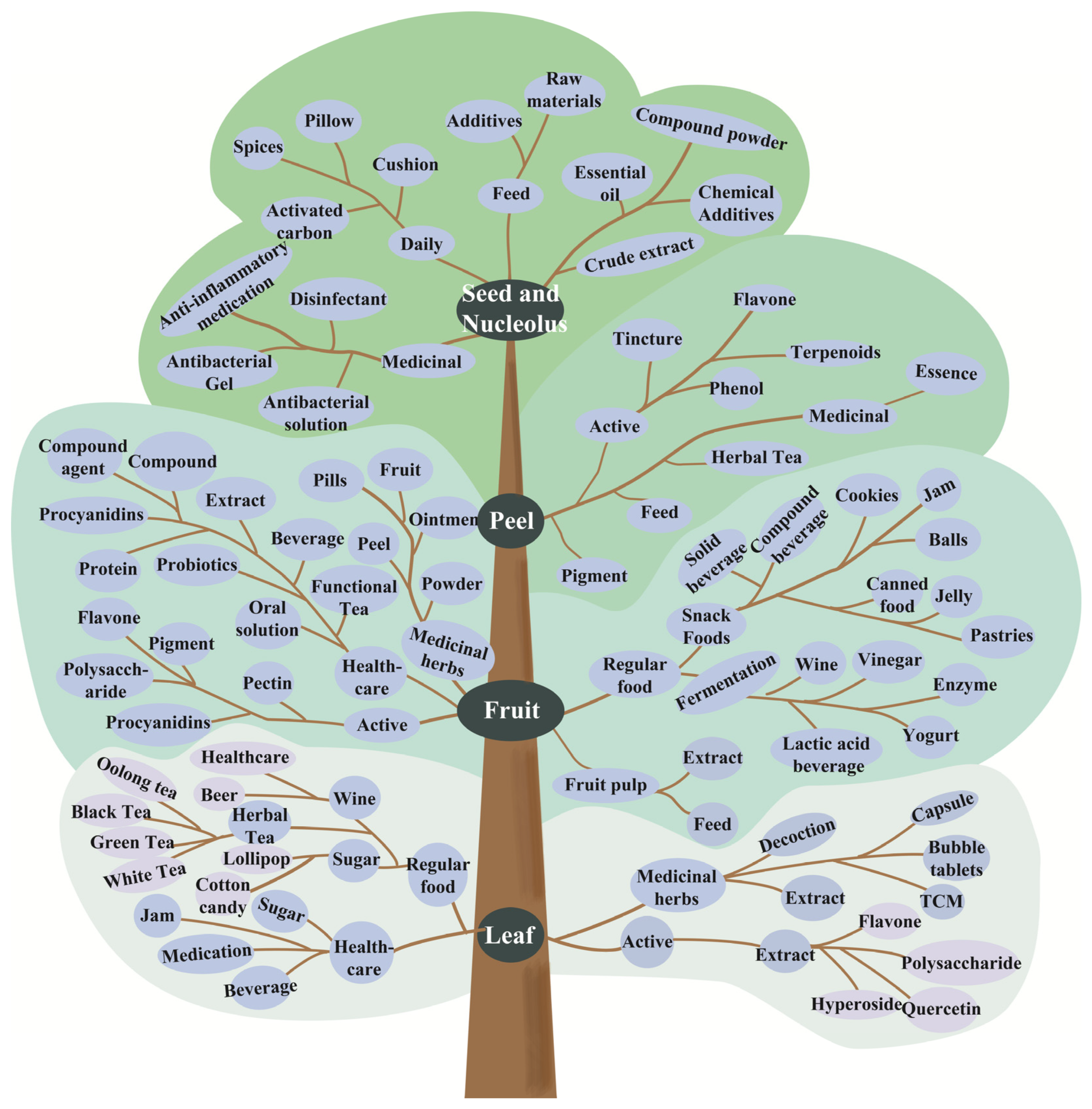
6. Current Research on Hawthorn Processing Applications
6.1. Hawthorn Leaf
6.2. Hawthorn Peel
6.3. Hawthorn Fruit
6.3.1. Traditional Hawthorn Products
6.3.2. Hawthorn Juice Drinks and Fermented Hawthorn Products
6.3.3. Other Products
6.4. Hawthorn Kernel
6.5. Current Status and Prospects of Hawthorn Industry Development
7. Conclusions and Future Outlook
Author Contributions
Funding
Institutional Review Board Statement
Informed Consent Statement
Data Availability Statement
Acknowledgments
Conflicts of Interest
References
- Jia, J.X.; Jia, D.X.; Ren, Q.M. Crops and their wild relatives in China. In Volume of Fruit Crops; China Agriculture Press: Beijing, China, 2006; pp. 57–58. (In Chinese) [Google Scholar]
- Jiang, H. Research progress on character identification and organic acid compositions of Shanzha (Crataegus pinnatifida), Nanshanzha (south Crataegus) and Guangshanzha (cantonese Crataegus). J. Liaoning Univ. Tradit. Chin. Med. 2023, 25, 132–137, (In Chinese with English abstract). [Google Scholar] [CrossRef]
- Phipps, J.B. Biogeographic, taxonomic, and cladistic relationships between East Asiatic and North American Crataegus. Ann. Mo. Bot. Gard. 1983, 70, 667–700. [Google Scholar] [CrossRef]
- Zeng, Y.; Tang, C.; Zhou, Y. Study of Characteristics and Utilization Value of Malus Doumeri in Guangxi. For. Investig. Des. 2014, 2, 85–88. [Google Scholar]
- Hu, X.M. Chinese Materia Medica; Shanghai Science and Technology Press: Shanghai, China, 1999; Volume 1, pp. 1–252. (In Chinese) [Google Scholar]
- Du, X.; Zhang, X.; Bu, H.; Zhang, T.; Lao, Y.; Dong, W. Molecular analysis of evolution and origins of cultivated Hawthorn (Crataegus spp.) and related species in China. Front. Plant Sci. 2019, 10, 443. [Google Scholar] [CrossRef] [PubMed]
- Li, L.; Gao, X.; Liu, J.; Chitrakar, B.; Wang, B.; Wang, Y. Hawthorn pectin: Extraction, function and utilization. Curr. Res. Food Sci. 2021, 4, 429–435. [Google Scholar] [CrossRef]
- Paun, G.; Neagu, E.; Albu, C.; Alecu, A.; Seciu-Grama, A.-M.; Radu, G.L. Antioxidant and antidiabetic activity of Cornus mas L. and Crataegus monogyna Fruit Extracts. Molecules 2024, 29, 3595. [Google Scholar] [CrossRef]
- Wang, Y.; Hao, R.; Guo, R.; Nong, H.; Qin, Y.; Dong, N. Integrative analysis of metabolome and transcriptome reveals molecular insight into metabolomic variations during hawthorn fruit development. Metabolites 2023, 13, 423. [Google Scholar] [CrossRef]
- Pieczykolan, A.; Pietrzak, W.; Gawlik-Dziki, U.; Nowak, R. Antioxidant, anti-inflammatory, and anti-diabetic activity of phenolic acids fractions obtained from Aerva lanata (L.) Juss. Molecules 2021, 26, 3486. [Google Scholar] [CrossRef]
- Nazhand, A.; Lucarini, M.; Durazzo, A.; Zaccardelli, M.; Cristarella, S.; Souto, S.B.; Silva, A.M.; Severino, P.; Souto, E.B.; Santini, A. Hawthorn (Crataegus spp.): An updated overview on its beneficial properties. Forests 2020, 11, 564. [Google Scholar] [CrossRef]
- Hou, Y.; Bu, A.; Wang, B.; Sun, M.; Wang, P.; Wang, B.; Wang, A. Sugar and organic acid metabolism and accumulation in different cultivars during fruit development in hawthorn (Crataegus pinnatifida). Food Qual. Saf. 2025, 9, fyaf010. [Google Scholar] [CrossRef]
- Liu, X.; Liu, D.; Lin, G.; Wu, Y.; Gao, L.; Ai, C.; Huang, Y.; Wang, M.; El-Seedi, H.R.; Chen, X.; et al. Anti-ageing and antioxidant effects of sulfate oligosaccharides from green algae Ulva lactuca and Enteromorpha prolifera in SAMP8 mice. Int. J. Biol. Macromol. 2019, 139, 342–351. [Google Scholar] [CrossRef]
- Lim, D.W.; Han, T.; Jung, J.; Song, Y.; Um, M.Y.; Yoon, M.; Kim, Y.T.; Cho, S.; Kim, I.; Han, D.; et al. Chlorogenic acid from Hawthorn berry (Crataegus pinnatifida Fruit) prevents stress hormone-induced depressive behavior, through monoamine oxidase B-reactive oxygen species signaling in hippocampal astrocytes of mice. Mol. Nutr. Food Res. 2018, 62, e1800029. [Google Scholar] [CrossRef] [PubMed]
- Zhang, S.; Sun, X.; Yang, X.; Shi, P.; Xu, L.; Guo, Q. Botany, traditional uses, phytochemistry and pharmacological activity of Crataegus pinnatifida (Chinese hawthorn): A review. J. Pharm. Pharmacol. 2022, 74, 1507–1545. [Google Scholar] [CrossRef]
- Guo, R.; Lv, T.; Shang, X.; Yao, G.; Lin, B.; Wang, X.; Huang, X.; Song, S. Racemic neolignans from Crataegus pinnatifida: Chiral resolution, configurational assignment, and cytotoxic activities against human hepatoma cells. Fitoterapia 2019, 137, 104287. [Google Scholar] [CrossRef] [PubMed]
- Cui, M.; Cheng, L.; Zhou, Z.; Zhu, Z.; Liu, Y.; Li, C.; Liao, B.; Fan, M.; Duan, B. Traditional uses, phytochemistry, pharmacology, and safety concerns of hawthorn (Crataegus genus): A comprehensive review. J. Ethnopharmacol. 2024, 319, 117229. [Google Scholar] [CrossRef]
- Li, R.; Luan, F.; Zhao, Y.; Wu, M.; Lu, Y.; Tao, C.; Zhu, L.; Zhang, C.; Wan, L. Crataegus pinnatifida: A botanical, ethnopharmacological, phytochemical, and pharmacological overview. J. Ethnopharmacol. 2023, 301, 115819. [Google Scholar] [CrossRef] [PubMed]
- Zhao, P.; Lou, L.L.; Zhang, H.; Guo, R.; Wang, X.B.; Huang, X.X.; Song, S.J. A new dineolignan with anti-β-amyloid aggregation activity from the fruits of crataegus pinnatifida bge. Nat. Prod. Res. 2021, 35, 2112–2115. [Google Scholar] [CrossRef]
- Yang, B.; Liu, P. Composition and health effects of phenolic compounds in hawthorn (Crataegus spp.) of different origins. J. Sci. Food Agric. 2012, 92, 1578–1590. [Google Scholar] [CrossRef]
- Wahyuningsih, S.; Wulandari, L.; Wartono, M.W.; Munawaroh, H.; Ramelan, A.H. The effect of pH and color stability of anthocyanin on food colorant. IOP Conf. Ser. Mater. Sci. Eng. 2017, 193, 012047. [Google Scholar] [CrossRef]
- Ying, X.; Wang, R.; Xu, J.; Zhang, W.; Li, H.; Zhang, C.; Li, F. HPLC Determination of eight polyphenols in the leaves of Crataegus pinnatifida Bge. var. major. J. Chromatogr. Sci. 2009, 47, 201–205. [Google Scholar] [CrossRef]
- Gupta, M.; Dey, S.; Marbaniang, D.; Pal, P.; Ray, S.; Mazumder, B. Grape seed extract: Having a potential health benefits. J. Food Sci. Technol. 2020, 57, 1205–1215. [Google Scholar] [CrossRef]
- Zhang, J.; Chai, X.; Zhao, F.; Hou, G.; Meng, Q. Food applications and potential health benefits of hawthorn. Foods 2022, 11, 2861. [Google Scholar] [CrossRef]
- Kurkin, V.A.; Pravdivtseva, O.E.; Shaikhutdinov, I.K.; Kurkina, A.V.; Volkova, N.A. Quantitative determination of total flavonoids in blood-red hawthorn fruit. Pharm. Chem. J. 2020, 54, 36–39. [Google Scholar] [CrossRef]
- Lou, X.; Guo, X.; Wang, K.; Wu, C.; Jin, Y.; Lin, Y.; Xu, H.; Hanna, M.; Yuan, L. Phenolic profiles and antioxidant activity of Crataegus pinnatifida fruit infusion and decoction and influence of in vitro gastrointestinal digestion on their digestive recovery. LWT 2021, 135, 110171. [Google Scholar] [CrossRef]
- Niu, Z.; Yan, M.; Zhao, X.; Jin, H.; Gong, Y. Effect of hawthorn seed extract on the gastrointestinal function of rats with diabetic gastroparesis. S. Afr. J. Bot. 2020, 130, 448–455. [Google Scholar] [CrossRef]
- Yu, J.; Jiang, W.; Wang, S.; Liu, S.; Shi, D.; Wang, H.; Chang, X. Microencapsulated hawthorn berry polyphenols alleviate exercise fatigue in mice by regulating AMPK signaling pathway and balancing intestinal microflora. J. Funct. Foods 2022, 97, 105255. [Google Scholar] [CrossRef]
- Edwards, J.E.; Brown, P.N.; Talent, N.; Dickinson, T.A.; Shipley, P.R. A review of the chemistry of the genus Crataegus. Phytochemistry 2012, 79, 5–26. [Google Scholar] [CrossRef] [PubMed]
- Jayalakshmi, R.; Devaraj, S.N. Cardioprotective effect of tincture of Crataegus on isoproterenol-induced myocardial infarction in rats. J. Pharm. Pharmacol. 2004, 56, 921–926. [Google Scholar] [CrossRef]
- Cheng, F.; Jiang, W.; Xiong, X.; Chen, J.; Xiong, Y.; Li, Y. Ethanol extract of Chinese hawthorn (Crataegus pinnatifida) fruit reduces inflammation and oxidative stress in rats with doxorubicin-induced chronic heart failure. Med. Sci. Monit. 2020, 26, e926654. [Google Scholar] [CrossRef]
- Vijayan, N.A.; Thiruchenduran, M.; Devaraj, S.N. Anti-inflammatory and anti-apoptotic effects of Crataegus oxyacantha on isoproterenol-induced myocardial damage. Mol. Cell. Biochem. 2012, 367, 1–8. [Google Scholar] [CrossRef]
- Min, Q.; Bai, Y.; Zhang, Y.; Yu, W.; Zhang, M.; Liu, D.; Diao, T.; Lv, W. Hawthorn leaf flavonoids protect against diabetes-induced cardiomyopathy in rats via PKC-α signaling pathway. Evid.-Based Complement. Altern. Med. 2017, 2017, 2071952. [Google Scholar] [CrossRef] [PubMed]
- Shi, G.J.; Li, Y.; Cao, Q.H.; Wu, H.X.; Tang, X.Y.; Gao, X.H.; Yu, J.Q.; Chen, Z.; Yang, Y. In vitro and in vivo evidence that quercetin protects against diabetes and its complications: A systematic review of the literature. Biomed. Pharmacother. 2019, 109, 1085–1099. [Google Scholar] [CrossRef] [PubMed]
- Lien, H.; Lin, H.; Huang, S.; Chen, Y.; Huang, C.; Chen, C.; Chyau, C. Protective effect of hawthorn fruit extract against high fructose-induced oxidative stress and endoplasmic reticulum stress in pancreatic β-cells. Foods 2022, 12, 1130. [Google Scholar] [CrossRef] [PubMed]
- Zhang, L.L.; Zhang, L.F.; Xu, J.G. Chemical composition, antibacterial activity and action mechanism of different extracts from hawthorn (Crataegus pinnatifida Bge.). Sci. Rep. 2020, 10, 8876. [Google Scholar] [CrossRef]
- Wen, L.; Guo, R.; You, L.; Abbasi, A.M.; Li, T.; Fu, X.; Liu, R.H. Major triterpenoids in Chinese hawthorn “Crataegus pinnatifida” and their effects on cell proliferation and apoptosis induction in MDA-MB-231 cancer cells. Food Chem. Toxicol. 2017, 100, 149–160. [Google Scholar] [CrossRef]
- Bakkali, F.; Averbeck, S.; Averbeck, D.; Idaomar, M. Biological effects of essential oils—A review. Food Chem. Toxicol. 2008, 46, 446–475. [Google Scholar] [CrossRef]
- Bouville, A.S.; Erlich, G.; Azoulay, S.; Fernandez, X. Forgotten perfumery plants—Part I: Balm of Judea. Chem. Biodiversity 2019, 16, e1900506. [Google Scholar] [CrossRef]
- Fernandez, X.; Bouville, A.S.; Portes, P.; Lhommet, J.C.; Azoulay, S. Forgotten perfumery plants: Hawthorn volatile extract study. J. Essent. Oil Res. 2024, 36, 532–543. [Google Scholar] [CrossRef]
- Havsteen, B.H. The biochemistry and medical significance of the flavonoids. Pharmacol. Ther. 2002, 96, 67–202. [Google Scholar] [CrossRef]
- Jain, R.; Grover, A. Maslinic acid differentially exploits the MAPK pathway in estrogen-positive and triple-negative breast cancer to induce mitochondrion-mediated, caspase-independent apoptosis. Apoptosis 2020, 25, 817–834. [Google Scholar] [CrossRef]
- Lu, K.-W.; Yang, M.-D.; Peng, S.-F.; Chen, J.-C.; Chen, P.-Y.; Chen, H.-Y.; Lu, T.-J.; Chueh, F.-S.; Lien, J.-C.; Lai, K.-C.; et al. Maslinic acid induces DNA damage and impairs DNA repair in human cervical cancer HeLa cells. Anticancer Res. 2020, 40, 6869–6877. [Google Scholar] [CrossRef] [PubMed]
- Liu, Y.; Lu, H.; Dong, Q.; Hao, X.; Qiao, L. Maslinic acid induces anticancer effects in human neuroblastoma cells mediated via apoptosis induction and caspase activation, inhibition of cell migration and invasion and targeting MAPK/ERK signaling pathway. AMB Express 2020, 10, 104. [Google Scholar] [CrossRef]
- Wu, J.; Peng, W.; Qin, R.; Zhou, H. Crataegus pinnatifida: Chemical constituents, pharmacology, and potential applications. Molecules 2014, 19, 1685–1712. [Google Scholar] [CrossRef] [PubMed]
- Yao, Y.; Cui, L.; Liu, S.; Fei, Y.; Tao, Q.; Chang, X. Research progress on functional components and processing of hawthorn. Food Res. Dev. 2017, 15, 211–215. [Google Scholar] [CrossRef]
- Lee, J.; Cho, E.; Kwon, H.; Jeon, J.; Jung, C.J.; Moon, M.; Jun, M.; Lee, Y.C.; Kim, D.H.; Jung, J.W. The fruit of Crataegus pinnatifida ameliorates memory deficits in β-amyloid protein-induced Alzheimer’s disease mouse model. J. Ethnopharmacol. 2019, 243, 112107. [Google Scholar] [CrossRef]
- Ngoc, P.C.; Leclercq, L.; Rossi, J.-C.; Desvignes, I.; Hertzog, J.; Fabiano-Tixier, A.-S.; Chemat, F.; Schmitt-Kopplin, P.; Cottet, H. Optimizing water-based extraction of bioactive principles of hawthorn: From experimental laboratory research to homemade preparations. Molecules 2019, 24, 4420. [Google Scholar] [CrossRef]
- Pan, G.; Yu, G.; Zhu, C.; Qiao, J. Optimization of ultrasound-assisted extraction (UAE) of flavonoids compounds (FC) from hawthorn seed (HS). Ultrason. Sonochem. 2012, 19, 486–490. [Google Scholar] [CrossRef]
- Hu, S.S.; Yi, L.; Li, X.Y.; Cao, J.; Ye, L.H.; Cao, W.; Da, J.H.; Dai, H.B.; Liu, X.J. Ionic liquid-based one-step micellar extraction of multiclass polar compounds from hawthorn fruits by ultrahigh-performance liquid chromatography coupled with quadrupole time-of-flight tandem mass spectrometry. J. Agric. Food Chem. 2014, 62, 5275–5280. [Google Scholar] [CrossRef]
- Jiao, P.; He, X.; Zhou, Z.; Wang, X.; Zhang, Y.; Chang, P.; Zhang, X.; Wang, P.; Yang, P.; Niu, Q. Enhanced deep eutectic solvent extraction of phenolic compounds from hawthorn seeds with ultrasonic and resin in-situ adsorption assistance: Process optimization, component analysis, and extraction mechanism. Food Chem. 2025, 480, 143885. [Google Scholar] [CrossRef]
- Qixin, Z.; Yong, W.; Suwen, L.; Yongping, X.; Shuyu, W.; Xuedong, C. The effects of different extraction methods on structure and functional properties of soluble dietary fiber in hawthorn pomace. Food Ferment. Indust. 2024, 50, 164–173. [Google Scholar] [CrossRef]
- Li, R.; Shi, G.; Liu, Y.; Lin, X.; Gao, P.; Wang, F.; Zhou, L.; Li, L. Bioactive compounds from Crataegus pinnatifida Bge. leaves: Potential health benefits. Org. Biomol. Chem. 2025, 23, 920–930. [Google Scholar] [CrossRef]
- Guo, W.; Shao, T.; Peng, Y.; Wang, H.; Chen, Z.; Su, H. Chemical composition, biological activities, and quality standards of hawthorn leaves used in traditional Chinese medicine: A comprehensive review. Front. Pharmacol. 2023, 14, 1275244. [Google Scholar] [CrossRef]
- Żurek, N.; Świeca, M.; Kapusta, I.T. Berries, leaves, and flowers of six hawthorn species (Crataegus L.) as a source of compounds with nutraceutical potential. Molecules 2024, 29, 5786. [Google Scholar] [CrossRef]
- Ma, L.Y.; Liu, R.H.; Xu, X.D.; Yu, M.Q.; Zhang, Q.; Liu, H.L. The pharmacokinetics of C-glycosyl flavones of Hawthorn leaf flavonoids in rat after single dose oral administration. Phytomedicine 2010, 17, 640–645. [Google Scholar] [CrossRef]
- Wu, P.; Li, F.; Zhang, J.; Yang, B.; Ji, Z.; Chen, W. Phytochemical compositions of extract from peel of hawthorn fruit, and its antioxidant capacity, cell growth inhibition, and acetylcholinesterase inhibitory activity. BMC Complement Altern. Med. 2017, 17, 151. [Google Scholar] [CrossRef]
- Han, X.; Li, W.; Huang, D.; Yang, X. Polyphenols from hawthorn peels and fleshes differently mitigate dyslipidemia, inflammation and oxidative stress in association with modulation of liver injury in high fructose diet-fed mice. Chem.-Biol. Interact. 2016, 257, 132–140. [Google Scholar] [CrossRef] [PubMed]
- Nurmamat, G.; Zuoshan, F.; Yujia, B. Effect of packing method on storage quality of apricot and rose paste composite fruit peel and establishment of shelf life model. Food Ferment. Indust. 2025, 51, 298–308. [Google Scholar] [CrossRef]
- Li, T.; Xu, L.-H.; Liu, J.; Yan, Q.J.; Jiang, Z.Q. Preventive effects of sugar-free hawthorn rolls on constipation in mice. Sci. Technol. Food Ind. 2020, 41, 271–277. [Google Scholar] [CrossRef]
- Zhao, X.L. Research on processing technology of low sugar hawthorn preserved fruits. Food Nutr. China 2015, 4, 59–62. [Google Scholar]
- Yan, L.; Xiao-xian, T.; Qiao, Z.; Fei-fei, S.; Ding-jin, L.; Wen, C.; Zhen-hua, D. Processing technology of low-sugar preserved Malus domeri (Bois) Chev. by microwave-assisted sugar permeation. J. Food Sci. Technol. 2020, 40, 52–57. [Google Scholar] [CrossRef]
- Yang, W.; Gao, Q.; Ran, K.; Jiao, M.; Fu, X.; Han, Z.; Liu, C.; Li, N. The nutritional and bioactive components, potential health function and comprehensive utilization of hawthorn: A review. Food Front. 2025, 6, 2108–2128. [Google Scholar] [CrossRef]
- Lou, X.; Jin, Y.; Tian, H.; Yu, H.; Chen, C.; Hanna, M.; Lin, Y.; Yuan, L.; Wang, J.; Xu, H. High-pressure and thermal processing of cloudy hawthorn berry (Crataegus pinnatifida) juice: Impact on microbial shelf-life, enzyme activity and quality-related attributes. Food Chem. 2022, 372, 131313. [Google Scholar] [CrossRef]
- Wang, C.; Wang, Y.; Shan, W.; Han, Y.; Li, X. Solid-state fermentation with lactic acid bacteria of citric acid degrading for hawthorn fruit improvement: Sensory, flavor, antioxidant properties. Food Biosci. 2024, 62, 105402. [Google Scholar] [CrossRef]
- Huang, H.; Zhou, Y.; Chen, J.; Lei, H. Effect of lactic acid bacteria fermentation on physicochemical properties, phenolic compounds, antioxidant activity and volatile components of hawthorn juice. Food Sci. 2022, 43, 97–106. [Google Scholar] [CrossRef]
- Cui, H.; Song, Z.; Zhang, Y.; Chen, X.; Zhang, Z.; Zhan, Y.; Guo, X. Optimization of blanching process of hawthorn using central composite design and response surface method. IOP Conf. Ser. Earth Environ. Sci. 2021, 632, 032001. [Google Scholar] [CrossRef]
- Ma, R.; Zhang, Z.; Cheng, S. Effects of yam powder produced by different drying ways on the quality and antioxidant activity of greek style yogurt during refrigeration. Sci. Technol. Food Ind. 2025, 46, 200−207, (In Chinese with English abstract). [Google Scholar] [CrossRef]
- Li, G.; Liu, J.; Li, X.; Ma, L. Storage quality and antioxidant properties of yam and hawthorn yogurt under gastrointestinal fluid environment. China Brew. 2021, 40, 124–128, (In Chinese with English abstract). [Google Scholar]
- Tian, H.; Xiong, J.; Sun, J.; Du, F.; Xu, G.; Yu, H.; Chen, C.; Lou, X. Dynamic transformation in flavor during hawthorn wine fermentation: Sensory properties and profiles of nonvolatile and volatile aroma compounds coupled with multivariate analysis. Food Chem. 2024, 456, 139982. [Google Scholar] [CrossRef]
- Pan, Z.; Chen, Z.; Luo, L. Optimization of brewing technology and quality evaluation of sparkling hawthorn Huangjiu. China Brew. 2022, 41, 188–193. [Google Scholar] [CrossRef]
- Chen, J.; Chen, J.; Guo, N.; Tong, H.; Ye, J. Optimization of vacuum distillation process of hawthorn distilled liquor and effect of the process on flavor components. China Brew. 2022, 41, 177–182. [Google Scholar] [CrossRef]
- Liu, J.; Yang, W.; Lv, Z.; Liu, H.; Zhang, C.; Jiao, Z. Effects of different pretreatments on physicochemical properties and phenolic compounds of hawthorn wine. CyTA—J. Food 2020, 18, 518–526. [Google Scholar] [CrossRef]
- Zhang, J.; Cai, W.; Chen, S.; Chen, A.; Li, C. Development of Polygonatum sibiricum-haw wine and analysis of its volatile compounds. Liquor.-Mak. Sci. Technol. 2019, 9, 71–77. [Google Scholar] [CrossRef]
- Gasiński, A.; Kawa-Rygielska, J.; Szumny, A.; Gąsior, J.; Głowacki, A. Assessment of volatiles and polyphenol content, physicochemical parameters and antioxidant activity in beers with dotted hawthorn (Crataegus punctata). Foods 2020, 9, 775. [Google Scholar] [CrossRef]
- Zhao, M.; Mu, Y.; Shi, Z.; Wang, X.; Liu, W.; Zhou, Y.; Yi, H.; Zhang, L.; Zhang, Z. Effects of different lactic acid bacteria on the physicochemical properties, functional characteristics and metabolic characteristics of fermented hawthorn juice. Food Chem. 2025, 470, 142672. [Google Scholar] [CrossRef] [PubMed]
- Lorenc, F.; Jarošová, M.; Bedrníček, J.; Nohejl, V.; Míková, E.; Smetana, P. Effect of wine yeast (Saccharomyces sp.) strains on the physicochemical, sensory, and antioxidant properties of plum, apple, and hawthorn wines. Foods 2025, 14, 2844. [Google Scholar] [CrossRef]
- Özdemir, G.B.; Özdemir, N.; Ertekin-Filiz, B.; Gökırmaklı, Ç.; Kök-Taş, T.; Budak, N.H. Volatile aroma compounds and bioactive compounds of hawthorn vinegar produced from hawthorn fruit (Crataegus tanacetifolia (lam.) pers.). J. Food Biochem. 2022, 46, e13676. [Google Scholar] [CrossRef]
- Liu, B.; Cheng, Y.; Bian, H.J.; Bao, J.K. Molecular mechanisms of Polygonatum cyrtonema lectin-induced apoptosis and autophagy in cancer cells. Autophagy 2009, 5, 253–255. [Google Scholar] [CrossRef] [PubMed]
- Miao, Y.; Tian, J.; Bi, J.; Peng, X.; Gao, J. Optimization of fermentation technology and its in-vitro activity of hawthorn enzyme. Food Mach. 2025, 40, 26. [Google Scholar] [CrossRef]
- Du, Y.; Wang, M.; Yang, L.; Tong, L.; Guo, D.; Ji, X. Optimization and scale-up of fermentation processes driven by models. Bioengineering 2022, 9, 473. [Google Scholar] [CrossRef]
- Nie, H.; Gao, Z.; Luo, Y.; Wang, Y.; Wu, F.; Mu, G.; Wu, X. Influence of soaking Malus domeri (Bois) Chev. Leaves on gut microbiota and metabolites of long-living elderly individuals in Hezhou city, Guangxi, China. Food Sci. Hum. Wellness 2024, 13, 1311–1321. [Google Scholar] [CrossRef]
- Liu, S.; Chang, X.; Liu, X.; Shen, Z. Effects of pretreatments on anthocyanin composition, phenolics contents and antioxidant capacities during fermentation of hawthorn (Crataegus pinnatifida) drink. Food Chem. 2016, 212, 87–95. [Google Scholar] [CrossRef]
- Belabdelli, F.; Bekhti, N.; Piras, A.; Benhafsa, F.M.; Ilham, M.; Adil, S.; Anes, L. Chemical composition, antioxidant and antibacterial activity of Crataegus monogyna leaves’ extracts. Nat. Prod. Res. 2022, 36, 3234–3239. [Google Scholar] [CrossRef]
- Chen, C.Y.; Li, H.; Yuan, Y.N.; Dai, H.Q.; Yang, B. Antioxidant activity and components of a traditional chinese medicine formula consisting of Crataegus pinnatifida and Salvia miltiorrhiza. BMC Complement. Altern. Med. 2013, 13, 99. [Google Scholar] [CrossRef]
- Zhang, Z.; Ho, W.K.; Chen, Z.; Huang, Y.; James, A.E.; Lam, L.W. Hawthorn fruit is hypolipidemic in rabbits fed a high cholesterol diet. J. Nutr. 2001, 132, 5–10. [Google Scholar] [CrossRef]
- Zhang, X.; Li, H.; Jiang, G.; Wang, X.; Huang, X.; Li, C.; Wu, D.; Dai, Q. Effects of enzyme supplementation on the nutrient, amino acid, and energy utilization efficiency of citrus pulp and hawthorn pulp in Linwu ducks. Trop. Anim. Health Prod. 2018, 50, 1405–1410. [Google Scholar] [CrossRef] [PubMed]
- Prasain, J.K.; Peng, N.; Dai, Y.; Moore, R.; Arabshahi, A.; Wilson, L.; Barnes, S.; Michael Wyss, J.; Kim, H.; Watts, R.L. Liquid chromatography tandem mass spectrometry identification of proanthocyanidins in rat plasma after oral administration of grape seed extract. Phytomedicine 2009, 16, 233–243. [Google Scholar] [CrossRef] [PubMed]
- GB 1886.127-2016; National Food Safety Staandards-Food Additives—Hawthorn Nuclear Smoked Flavouring Material I, II. China Quality and Standards Publishing & Media Co., Ltd.: Beijing, China, 2016. Available online: https://www.ChineseStandard.net/PDF.aspx/GB1886.127-2016 (accessed on 1 January 2017).
- Kwek, E.; Yan, C.; Ding, H.; Hao, W.; He, Z.; Liu, J.; Ma, K.Y.; Zhu, H.; Chen, Z.Y. Effects of hawthorn seed oil on plasma cholesterol and gut microbiota. Nutr. Metab. 2022, 19, 55. [Google Scholar] [CrossRef] [PubMed]
- Rao, H.; Li, P.; Wu, H.; Liu, C.; Peng, W.; Su, W. Simultaneous determination of six compounds in destructive distillation extracts of hawthorn seed by GC-MS and evaluation of their antimicrobial activity. Molecules 2019, 24, 4328. [Google Scholar] [CrossRef]



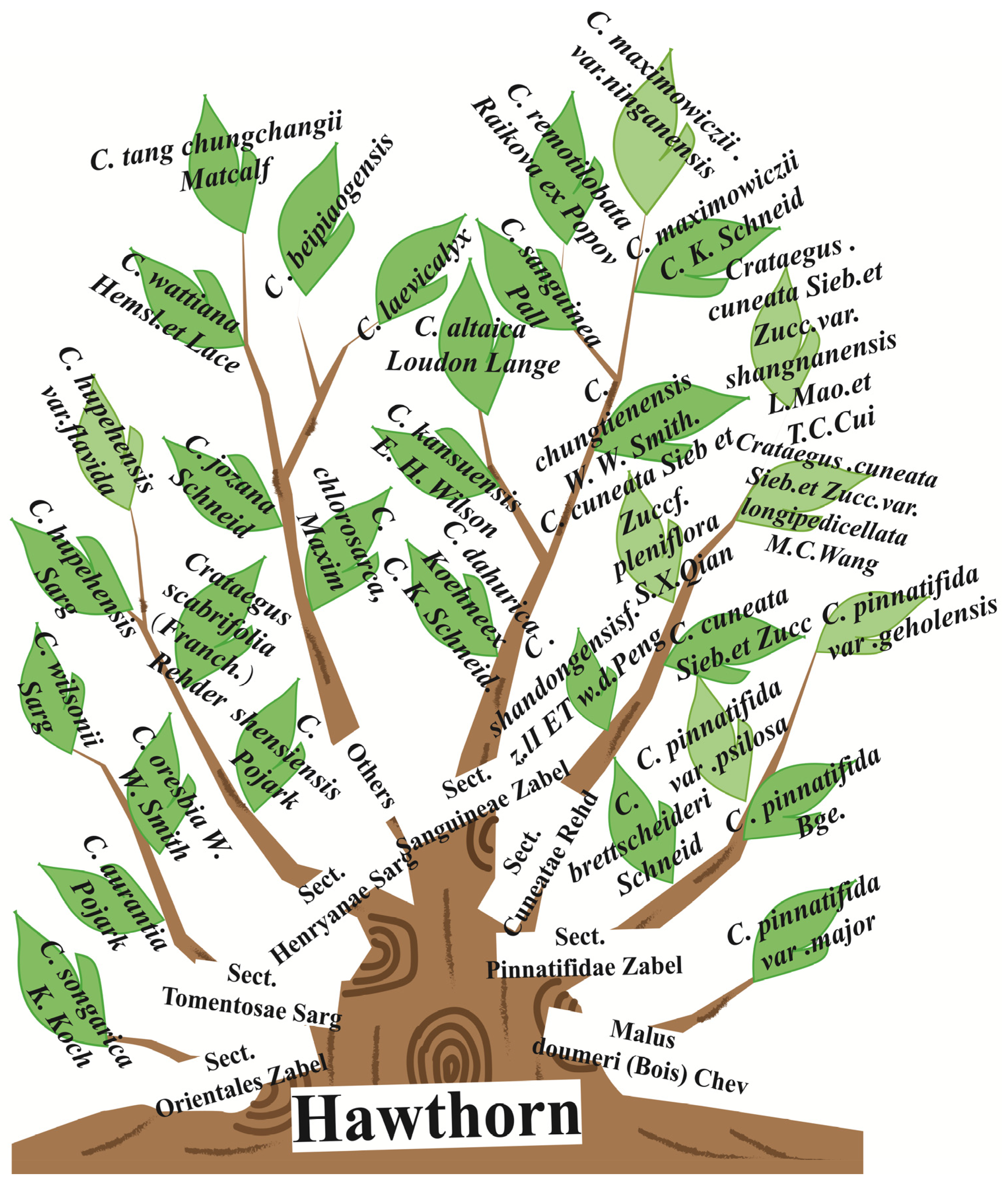
| Genus and Species | Genus and Species Grouping | Species/Latin Name | Variant | Classification/Geographical Distribution | Growth Distribution Especially in China | Growth Environment | Plant Characteristics |
|---|---|---|---|---|---|---|---|
| Crataegus L. genus, Maloideae subfamily, Rosaceae family | Sect. Pinnatifidae Zabel (2 species) | Crataegus pinnatifida Bge. | C. pinnatifida var. major | Widely distributed species | Northeast China, Inner Mongolia, Hebei, Henan, Shanxi, Shaanxi, Shandong, Jiangsu, and Zhejiang in China, etc.; North Korea and Siberia | Grown on the edge of hillside forests and riverbank thickets, at an altitude of more than 100 m | The leaves are deeply or shallowly pinnately lobed, with veins extending to the apex and the division of the lobes; the inflorescence is slightly pubescent; the fruit is red; there are three to five small cores, with smooth inner surfaces on both sides. |
| C. pinnatifida var. psilosa | |||||||
| C. pinnatifida var. geholensis | |||||||
| Crataegus brettscheideri Schneid. | / | Narrowly distributed species | Jilin and Liaoning in China; Leningrad, Moscow, Bryansk, Kiev, Almaty and other places in Russia | Grown in Changbai Mountain and other places in the central and northern parts of Northeast China | |||
| Sect. Henryanae Sarg. (3 species) | Crataegus scabrifolia (Franch.) Rehder | / | Mid-range distribution species | Yunnan, Guizhou, Guangxi, Sichuan | Sunny mountainous areas, stream banks, mixed woods, and forest edge thickets at an altitude of 1400–3000 m | Leaves are shallowly lobed or undivided, with veins extending to the tips of the lobes; inflorescences are glabrous; fruits are yellow or red; there are three to five small cores, with smooth inner surfaces. | |
| Crataegus hupehensis Sarg. | Crataegus hupehensis var. flavida | Widely distributed species | Hubei, Hunan, Anhui, Shanxi, Hebei, Jiangxi, Jiangsu, Zhejiang, Guangdong, Yunnan, Guizhou, Chongqing, Sichuan, Shaanxi, Gansu provinces in China | Grown in bushes on hillsides, at an altitude of 500–2000 m | |||
| Crataegus shensiensis Pojark | / | Narrowly distributed species | Shaanxi, Shanxi, Gansu | Grown on hillsides and mixed woods, at an altitude of 1100–1800 m | |||
| Sect. Cuneatae Rehd (2 species) | Crataegus shandongensis f.z. lI ET w.d.Peng | / | Narrowly distributed species | Shandong | Grown on hillsides, 500–700 m above sea level | Leaves are undivided or shallowly lobed, often cuneate at the base; inflorescences are slightly pubescent; fruit is red; three to five small cores, smooth on both sides. | |
| Crataegus cuneata Sieb. et Zucc. | Crataegus cuneata Sieb et Zucc var. shangnanensis L. Mao et T. C. Cui | Widely distributed species | Henan, Anhui, Jiangsu, Zhejiang, Fujian, Jiangxi, Hunan, Hubei, Shaanxi, Shanxi, Sichuan, Guizhou, Yunnan, Guangdong, Guangxi in China; Japan | Grown on sunny slopes, barren hills, stream banks, and thickets; 250–2000 m above sea level | |||
| Crataegus cuneata Sieb. et Zucc. var. longipedicellata M. C. Wang | |||||||
| Crataegus cuneata Sieb et Zucc f. pleniflora S.X. Qian | |||||||
| Sect. Tomentosae Sarg (3 species) | Crataegus wilsonii Sarg. | / | Mid-range distribution species | Hubei, Anhui, Jiangxi, Shanxi, Henan, Zhejiang, Guizhou, Chongqing, Sichuan, Shaanxi, Gansu, Tibet | Grown on hillsides, valleys and shady forests, at an altitude of 800–2500 m | The leaves are shallowly lobed, with veins extending to the tips of the lobes; the inflorescence is densely hairy; the fruit is red; there are two to three small cores with indentations on both sides of the inner surface. | |
| Crataegus oresbia W. W. Smith. | / | Narrowly distributed species | Yunnan, Guizhou, Sichuan in China | Grown in bushes on light slopes, at an altitude of 2500~3300 m | |||
| Crataegus aurantia Pojark. | / | Mid-range distribution species | Hebei, Inner Mongolia, Shanxi, Henan, Gansu | In mixed woods, forest edges, and thickets on hillsides, at an altitude of 1000–1800 m | |||
| Sect. Sanguineae Zabel (9 species) | Crataegus maximowiczii C. K. Schneid. | Ningan hawthorn Crataegus maximowiczii var. ninganensis | Mid-range distribution species | Heilongjiang, Jilin, Inner Mongolia, Hebei, Shanxi, Hubei, Sichuan, Shaanxi, Ningxia; Siberia, Sakhalin Island, North Korea, and Japan | In mixed woods or on the edge of forests, river banks, ditches, and roadsides, at an altitude of 200–1000 m | Leaves are shallowly to deeply lobed, with veins extending to the tips of the lobes; inflorescences are glabrous or slightly pubescent; fruits are red, yellow, or black; there are three to five small cores, with indentations or honeycomb-like holes on both sides of the inner surface. | |
| Crataegus sanguinea Pall. | / | Mid-range distribution species | Heilongjiang, Jilin, Liaoning, Inner Mongolia, Hebei, Shanxi, Henan, Guizhou, Sichuan, Xinjiang; Volga River Basin of Russia, Siberia, and Mongolia | In mixed woods on hillsides or beside rivers, at an altitude of 900~3000 m | |||
| Crataegus dahurica Koehne ex C. K. Schneid. | Mid-range distribution species | Heilongjiang, Jilin, Inner Mongolia, Hebei, Shanxi; Siberia and Mongolia | River valleys, hillsides, foothills, sand dunes, mixed woods, etc., with an altitude of 200–1800 m | ||||
| Crataegus chungtienensis W. W. Smith. | / | Narrowly distributed species | Yunnan and Jiangxi | In mixed woods or bushes beside mountain streams, at an altitude of 2500–3500 m | |||
| Crataegus kansuensis E. H. Wilson | / | Mid-range distribution species | Hebei, Beijing, Shanxi, Henan, Shaanxi, Sichuan, Gansu, Qinghai, Ningxia, Xinjiang | In mixed woods, on shady hillsides, and beside ravines, at an altitude of 1000–3000 m | |||
| Crataegus altaica (Loudon) Lange | / | Narrowly distributed species | Xinjiang, Sichuan; European Russia, western lower Volga River, Siberia | Hillsides, under forests or beside rivers, at an altitude of 450–1900 m | |||
| Crataegus remotilobata Raikova ex Popov | / | Narrowly distributed species | Inner Mongolia, Shanxi, Xinjiang; Kyrgyzstan, Uzbekistan | Hillside ditch or roadside | |||
| Sect. Orientales Zabel | Crataegus songarica K. Koch | / | Narrowly distributed species | Xinjiang; Iran, Afghanistan, and Central Asia | River valleys, rocky hillsides or canyon bushes, 500–2700 m above sea level | Leaves are shallowly lobed or undivided, with veins extending to the tips of the lobes; inflorescences are glabrous; fruits are yellow or red; there are three to five small cores with smooth inner surfaces. | |
| / | Crataegus beipiaogensis | / | Narrowly distributed species | Liaoning | Hillside, 400 m above sea level | The leaves are deeply lobed, the inflorescence is hairy and yellow or red fruit; there are three to five small cores. | |
| / | Crataegus laevicalyx | / | Mid-range distribution species | Hebei, Beijing, | Foot of the mountain, sand slope, bush, 150–900 m above sea level | The leaves are undivided, with veins reaching the tips of the teeth; the inflorescence is hairless; the fruit is dark red, with a bluish-white powder on the surface; there are three to four small cores. | |
| / | Crataegus wattiana Hemsl. et Lace | / | Widely distributed species | Kunming, Yunnan (trial planting), Moganshan, Zhejiang (garden cultivation), Panzhihua, Sichuan (dry–hot valley trial) | Low and river banks | The leaves are shallowly lobed with veins reaching the tips of the lobes; orange-yellow to amber when ripe; three to five cores. | |
| / | Crataegus jozana Schneid | / | Narrowly distributed species | Jilin and Heilongjiang; northern East Asia (Sakhalin Island, Hokkaido, Japan, and the Russian Far East) | Mountain forest edge or shrub and, 500–1500 m above sea level | The leaves are shallowly lobed with veins extending to the top of the lobes; the fruit is dark green with white powder and two to three small cores. | |
| / | Crataegus chlorosarca Maxim | / | Mid-range distribution species | Liaoning, Jilin, Beijing, Shandong, Zhejiang; Sakhalin Island (Kankhalin Island), Kamchatka and even Japan | River valley area, 50–800 m above sea level | The leaves are shallowly lobed, with veins extending to the top of the lobes; hairless; bright green to yellow-green fruit (a few individuals have a slight red blush) with three to five small cores. | |
| / | Crataegus tang-chungchangii Matcalf | / | Mid-range distribution species | Fujian, Zhejiang, Jiangxi, Guangdong, etc. | Low-altitude mountains, forest edges, shrubs or roadsides; 200–1500 m above sea level | The leaves are shallowly lobed with veins extending to the top of the lobes; the inflorescence is glabrous or slightly pubescent; the fruit is red or orange-red; there are two to five small cores, | |
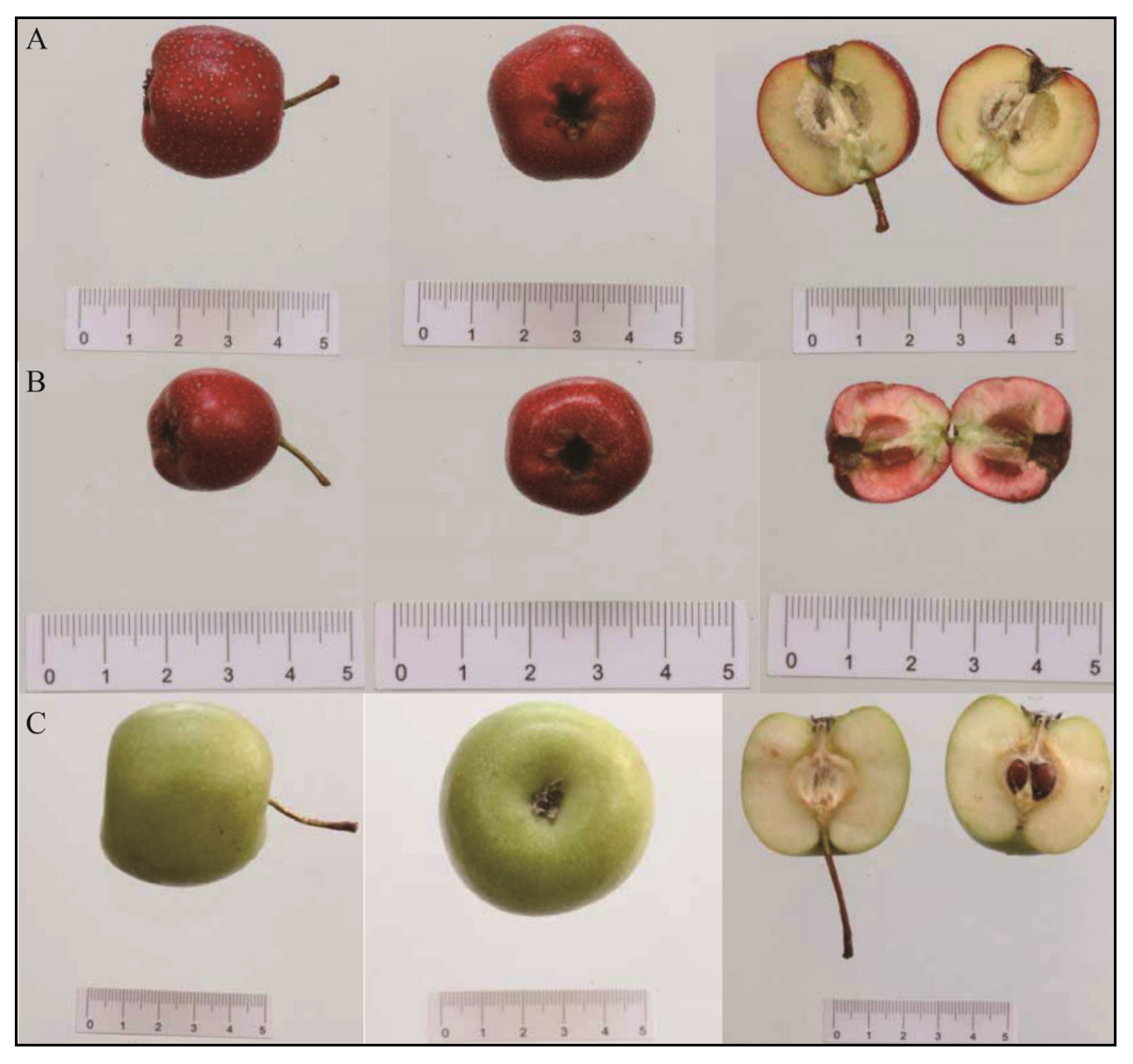
| Malus genus, Maloideae subfamily, Rosaceae family | Malus doumeri (Bois) Chev | C. pinnatifida var. major (Large-fruited hawthorn) | / | Widely distributed species | Guizhou, Jiangxi, Zhejiang, Hunan, Guangdong, Guangxi, Yunnan; Taiwan | Deciduous, sparsely semi-evergreen shrubs or small trees | The fruit is large (80–200 g each), with oblate or pear-spherical. The skin is light yellow with a light red hue on the sun-facing side. The top of the fruit is concave, and the stalk is medium-long. The flesh is yellowish-white, thick, and dense. The fruit has six to eight ventricles and three to six seeds. |
| Taste | Traits | North Crataegus (Bei Shanzha) | South Crataegus (Nan Shanzha) | Cantonese Crataegus (Guang Shanzha) | |
|---|---|---|---|---|---|
| Fruit | Shape | Nearly spherical or pear-shaped | Nearly spherical or oblate | Nearly spherical | |
| Diameter (cm) | 1.0~2.5 | 0.8~1.2 | 1.5~2.5 | ||
| Outer skin | Reddish brown to brownish red with small grayish white spots | Brown to brownish red, with fine wrinkles | Brownish red to brownish brown, with fine wrinkles | ||
| Top part | There is a round deep depression at the top (commonly known as the pomegranate mouth), persistent calyx | Elongated cylindrical calyx | |||
| Base part | With fruit stalk scars or residual fruit stalks, hairless | Depressed residual stem | |||
| Carpel | Hard bone, paper-like | ||||
| Taste | Sour, slightly sweet | Sour and astringent | Sour | ||
| Seeds | Number of seeds per chamber | One | One | Two | |
| Shape | Long withered petal-shaped | Withered petal-shaped | flat oval | ||
| Size (cm) | long | 0.7~1.2 | 0.5~0.6 | 0.8~1.4 | |
| Width | 0.3~0.6 | 0.3~0.5 | 0.5~0.7 | ||
| Surface View | Light yellow to light brown, with a deeper dorsal groove | Earthy yellow, shallow back groove | Light brown, shiny | ||
| Texture | Hard bone, not easy to break | ||||
Disclaimer/Publisher’s Note: The statements, opinions and data contained in all publications are solely those of the individual author(s) and contributor(s) and not of MDPI and/or the editor(s). MDPI and/or the editor(s) disclaim responsibility for any injury to people or property resulting from any ideas, methods, instructions or products referred to in the content. |
© 2026 by the authors. Licensee MDPI, Basel, Switzerland. This article is an open access article distributed under the terms and conditions of the Creative Commons Attribution (CC BY) license.
Share and Cite
Zheng, F.; Chen, J.; Tan, Y.; Dai, X.; Wei, X.; Lin, B.; Verma, K.K.; Chen, G.-L. The Hawthorn (Crataegus spp.) Value Chain: An Integrated Analysis of Resource Availability, Phytochemical Characterization, and Therapeutic Applications. Foods 2026, 15, 148. https://doi.org/10.3390/foods15010148
Zheng F, Chen J, Tan Y, Dai X, Wei X, Lin B, Verma KK, Chen G-L. The Hawthorn (Crataegus spp.) Value Chain: An Integrated Analysis of Resource Availability, Phytochemical Characterization, and Therapeutic Applications. Foods. 2026; 15(1):148. https://doi.org/10.3390/foods15010148
Chicago/Turabian StyleZheng, Fengjin, Jing Chen, Yuan Tan, Xiaohua Dai, Xiangying Wei, Bo Lin, Krishan K. Verma, and Gan-Lin Chen. 2026. "The Hawthorn (Crataegus spp.) Value Chain: An Integrated Analysis of Resource Availability, Phytochemical Characterization, and Therapeutic Applications" Foods 15, no. 1: 148. https://doi.org/10.3390/foods15010148
APA StyleZheng, F., Chen, J., Tan, Y., Dai, X., Wei, X., Lin, B., Verma, K. K., & Chen, G.-L. (2026). The Hawthorn (Crataegus spp.) Value Chain: An Integrated Analysis of Resource Availability, Phytochemical Characterization, and Therapeutic Applications. Foods, 15(1), 148. https://doi.org/10.3390/foods15010148