Application of Saccharomyces cerevisiae var. boulardii for Biological Detoxification of Chemical Contaminants in Foods: A Comprehensive Review
 , , , , ,
  and
and 
Abstract
1. Introduction
2. Overview of Food Contaminants Assessed for Detoxification by S. cerevisiae var. boulardii
2.1. Mycotoxins
2.2. Pesticides
2.3. Packaging Migrants (Phthalates and Bisphenol A)
2.4. Potentially Toxic Elements
3. Detoxification of Food Contaminants by S. cerevisiae var. boulardii
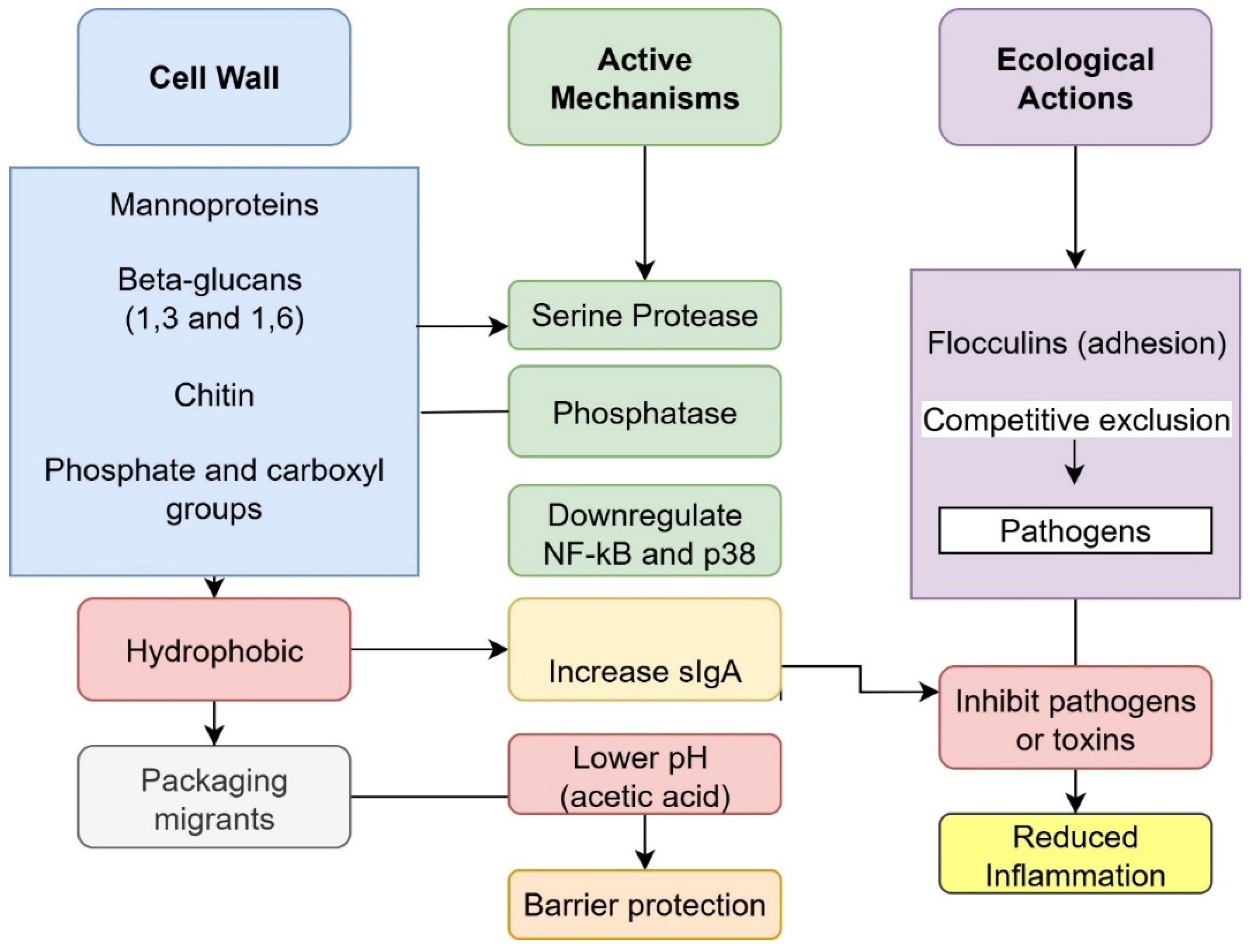
3.1. Mechanisms of Detoxification
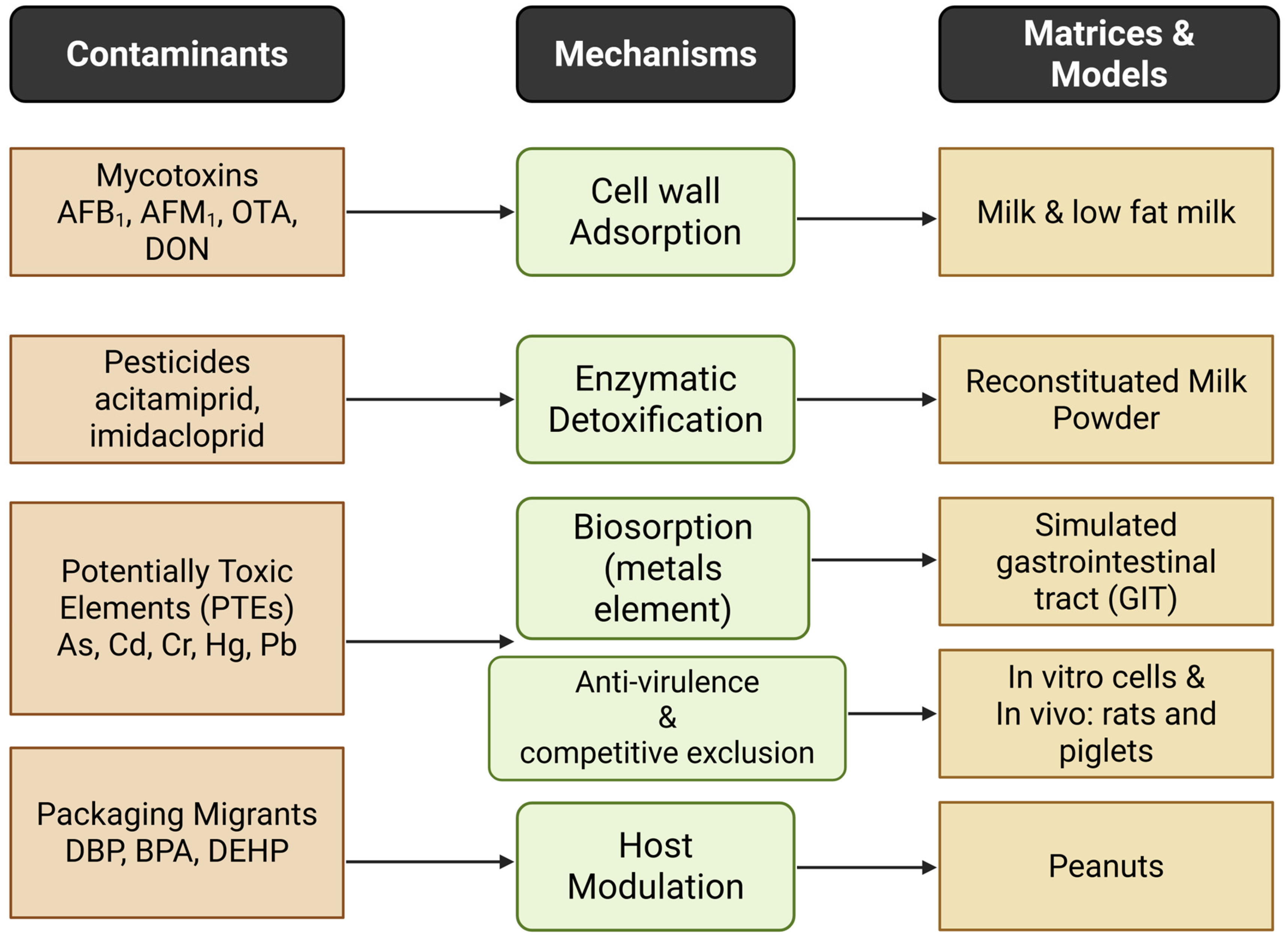
3.2. Applications of Saccharomyces cerevisiae var. boulardii for Detoxification of Food Contaminants
4. Future Perspectives and Research Directions
4.1. Enhancing Efficacy Through Genetic and Metabolic Engineering
4.2. Elucidating Novel Mechanisms with Multi-Omics Technologies
4.3. Synergistic Biocontrol Communities for Scalable Food Detoxification
5. Conclusions
Author Contributions
Funding
Institutional Review Board Statement
Informed Consent Statement
Data Availability Statement
Acknowledgments
Conflicts of Interest
References
- Średnicka, P.; Juszczuk-Kubiak, E.; Wójcicki, M.; Akimowicz, M.; Roszko, M.Ł. Probiotics as a Biological Detoxification Tool of Food Chemical Contamination: A Review. Food Chem. Toxicol. 2021, 153, 112306. [Google Scholar] [CrossRef] [PubMed]
- Rather, I.A.; Koh, W.Y.; Paek, W.K.; Lim, J. The Sources of Chemical Contaminants in Food and Their Health Implications. Front. Pharmacol. 2017, 8, 830. [Google Scholar] [CrossRef] [PubMed]
- Feng, P.; Ye, Z.; Kakade, A.; Virk, A.K.; Li, X.; Liu, P. A Review on Gut Remediation of Selected Environmental Contaminants: Possible Roles of Probiotics and Gut Microbiota. Nutrients 2018, 11, 22. [Google Scholar] [CrossRef] [PubMed]
- Fung, F.; Wang, H.S.; Menon, S. Food Safety in the 21st Century. Biomed. J. 2018, 41, 88–95. [Google Scholar] [CrossRef]
- Kamboj, S.; Gupta, N.; Bandral, J.D.; Gandotra, G.; Anjum, N. Food Safety and Hygiene: A Review. Int. J. Chem. Stud. 2020, 8, 358–368. [Google Scholar] [CrossRef]
- Pinela, J.; Ferreira, I.C.F.R. Nonthermal Physical Technologies to Decontaminate and Extend the Shelf-Life of Fruits and Vegetables: Trends Aiming at Quality and Safety. Crit. Rev. Food Sci. Nutr. 2017, 57, 2095–2111. [Google Scholar] [CrossRef]
- Lebelo, K.; Malebo, N.; Mochane, M.J.; Masinde, M. Chemical Contamination Pathways and the Food Safety Implications along the Various Stages of Food Production: A Review. Int. J. Environ. Res. Public Health 2021, 18, 5795. [Google Scholar] [CrossRef]
- Ali, S.; Freire, L.; Rezende, V.; Noman, M.; Ullah, S.; Abdullah; Badshah, G.; Afridi, M.; Tonin, F.; de Oliveira, C. Occurrence of Mycotoxins in Foods: Unraveling the Knowledge Gaps on Their Persistence in Food Production Systems. Foods 2023, 12, 4314. [Google Scholar] [CrossRef]
- Ullah, S.; Ali, S.; Rezende, V.T.; Nabi, G.; Tonin, F.G.; de Oliveira, C.A.F. Global Occurrence and Levels of Mycotoxins in Infant Foods: A Systematic Review (2013–2024). Food Control 2025, 171, 111135. [Google Scholar] [CrossRef]
- Agriopoulou, S.; Stamatelopoulou, E.; Varzakas, T. Advances in Occurrence, Importance, and Mycotoxin Control Strategies: Prevention and Detoxification in Foods. Foods 2020, 9, 137. [Google Scholar] [CrossRef]
- Das, T.K.; Pradhan, S.; Chakrabarti, S.; Mondal, K.C.; Ghosh, K. Current Status of Probiotic and Related Health Benefits. Appl. Food Res. 2022, 2, 100185. [Google Scholar] [CrossRef]
- Jan, T.; Negi, R.; Sharma, B.; Kour, D.; Kumar, S.; Rai, A.K.; Rustagi, S.; Singh, S.; Sheikh, M.A.; Kumar, K.; et al. Diversity, Distribution and Role of Probiotics for Human Health: Current Research and Future Challenges. Biocatal. Agric. Biotechnol. 2023, 53, 102889. [Google Scholar] [CrossRef]
- Luo, Y.; Liu, X.; Yuan, L.; Li, J. Complicated Interactions between Bio-Adsorbents and Mycotoxins during Mycotoxin Adsorption: Current Research and Future Prospects. Trends Food Sci. Technol. 2020, 96, 127–134. [Google Scholar] [CrossRef]
- Chiocchetti, G.M.; Jadán-Piedra, C.; Monedero, V.; Zúñiga, M.; Vélez, D.; Devesa, V. Use of Lactic Acid Bacteria and Yeasts to Reduce Exposure to Chemical Food Contaminants and Toxicity. Crit. Rev. Food Sci. Nutr. 2019, 59, 1534–1545. [Google Scholar] [CrossRef]
- Muhialdin, B.J.; Saari, N.; Meor Hussin, A.S. Review on the Biological Detoxification of Mycotoxins Using Lactic Acid Bacteria to Enhance the Sustainability of Foods Supply. Molecules 2020, 25, 2655. [Google Scholar] [CrossRef]
- Corassin, C.H.; Bovo, F.; Rosim, R.E.; Oliveira, C.A.F. Efficiency of Saccharomyces Cerevisiae and Lactic Acid Bacteria Strains to Bind Aflatoxin M1 in UHT Skim Milk. Food Control 2013, 31, 80–83. [Google Scholar] [CrossRef]
- Luo, Y.; Wang, J.; Liu, B.; Wang, Z.; Yuan, Y.; Yue, T. Effect of Yeast Cell Morphology, Cell Wall Physical Structure and Chemical Composition on Patulin Adsorption. PLoS ONE 2015, 10, e0136045. [Google Scholar] [CrossRef]
- Salem-Bekhit, M.M.; Riad, O.K.M.; Selim, H.M.R.M.; Tohamy, S.T.K.; Taha, E.I.; Al-Suwayeh, S.A.; Shazly, G.A. Box–Behnken Design for Assessing the Efficiency of Aflatoxin M1 Detoxification in Milk Using Lactobacillus Rhamnosus and Saccharomyces Cerevisiae. Life 2023, 13, 1667. [Google Scholar] [CrossRef]
- Guimarães, J.T.; Balthazar, C.F.; Silva, R.; Rocha, R.S.; Graça, J.S.; Esmerino, E.A.; Silva, M.C.; Sant’Ana, A.S.; Duarte, M.C.K.H.; Freitas, M.Q.; et al. Impact of Probiotics and Prebiotics on Food Texture. Curr. Opin. Food Sci. 2020, 33, 38–44. [Google Scholar] [CrossRef]
- Gu, Y.; Wang, C.; Qin, X.; Zhou, B.; Liu, X.; Liu, T.; Xie, R.; Liu, J.; Wang, B.; Cao, H. Saccharomyces Boulardii, a Yeast Probiotic, Inhibits Gut Motility through Upregulating Intestinal Serotonin Transporter and Modulating Gut Microbiota. Pharmacol. Res. 2022, 181, 106291. [Google Scholar] [CrossRef]
- Chan, M.Z.A.; Liu, S.Q. Fortifying Foods with Synbiotic and Postbiotic Preparations of the Probiotic Yeast, Saccharomyces Boulardii. Curr. Opin. Food Sci. 2022, 43, 216–224. [Google Scholar] [CrossRef]
- Martínez, M.P.; Magnoli, A.P.; González Pereyra, M.L.; Cavaglieri, L. Probiotic Bacteria and Yeasts Adsorb Aflatoxin M1 in Milk and Degrade It to Less Toxic AFM1-Metabolites. Toxicon 2019, 172, 1–7. [Google Scholar] [CrossRef] [PubMed]
- Khadivi, R.; Razavilar, V.; Anvar, S.A.A.; Akbari-Adergani, B. Aflatoxin M1-Binding Ability of Selected Lactic Acid Bacteria Strains and Saccharomyces Boulardii in the Experimentally Contaminated Milk Treated with Some Biophysical Factors. Arch. Razi Inst. 2020, 75, 63–73. [Google Scholar] [CrossRef] [PubMed]
- Staniszewski, A.; Kordowska-Wiater, M. Probiotic and Potentially Probiotic Yeasts—Characteristics and Food Application. Foods 2021, 10, 1306. [Google Scholar] [CrossRef] [PubMed]
- Altmann, M. The Benefits of Saccharomyces Boulardii. In The Yeast Role in Medical Applications; InTech: London, UK, 2018. [Google Scholar][Green Version]
- Czerucka, D.; Dahan, S.; Mograbi, B.; Rossi, B.; Rampal, P. Saccharomyces Boulardii Preserves the Barrier Function and Modulates the Signal Transduction Pathway Induced in Enteropathogenic Escherichia Coli-Infected T84 Cells. Infect. Immun. 2000, 68, 5998–6004. [Google Scholar] [CrossRef] [PubMed]
- Łukaszewicz, M. Saccharomyces Cerevisiae Var. Boulardii—Probiotic Yeast. In Probiotics; InTech: London, UK, 2012. [Google Scholar]
- Czerucka, D.; Piche, T.; Rampal, P. Review Article: Yeast as Probiotics—Saccharomyces Boulardii. Aliment. Pharmacol. Ther. 2007, 26, 767–778. [Google Scholar] [CrossRef]
- de Souza, H.F.; Carosia, M.F.; Pinheiro, C.; de Carvalho, M.V.; de Oliveira, C.A.F.; Kamimura, E.S. On Probiotic Yeasts in Food Development: Saccharomyces Boulardii, a Trend. Food Sci. Technol. 2022, 42, e92321. [Google Scholar] [CrossRef]
- Lip, K.Y.F.; García-Ríos, E.; Costa, C.E.; Guillamón, J.M.; Domingues, L.; Teixeira, J.; van Gulik, W.M. Selection and Subsequent Physiological Characterization of Industrial Saccharomyces Cerevisiae Strains during Continuous Growth at Sub- and- Supra Optimal Temperatures. Biotechnol. Rep. 2020, 26, e00462. [Google Scholar] [CrossRef]
- Karimi, R.; Hosseinzadeh, D. Probiotics and Gastro-Intestinal Disorders Augmentation, Enhancement, and Strengthening of Epithelial Lining. In Probiotics: A Comprehensive Guide to Enhance Health and Mitigate Disease; CRC Press: Boca Raton, FL, USA, 2024; pp. 188–215. ISBN 9781040036167. [Google Scholar]
- Krasowska, A.; Murzyn, A.; Dyjankiewicz, A.; Łukaszewicz, M.; Dziadkowiec, D. The Antagonistic Effect of Saccharomyces Boulardii on Candida Albicans Filamentation, Adhesion and Biofilm Formation. FEMS Yeast Res. 2009, 9, 1312–1321. [Google Scholar] [CrossRef]
- Martins, F.S.; Dalmasso, G.; Arantes, R.M.E.; Doye, A.; Lemichez, E.; Lagadec, P.; Imbert, V.; Peyron, J.F.; Rampal, P.; Nicoli, J.R.; et al. Interaction of Saccharomyces Boulardii with Salmonella Enterica Serovar Typhimurium Protects Mice and Modifies T84 Cell Response to the Infection. PLoS ONE 2010, 5, e8925, Erratum in PLoS ONE 2022, 17, e0267067. [Google Scholar] [CrossRef] [PubMed]
- Pontier-Bres, R.; Munro, P.; Boyer, L.; Anty, R.; Imbert, V.; Terciolo, C.; André, F.; Rampal, P.; Lemichez, E.; Peyron, J.F.; et al. Saccharomyces Boulardii Modifies Salmonella Typhimurium Traffic and Host Immune Responses along the Intestinal Tract. PLoS ONE 2014, 9, e103069. [Google Scholar] [CrossRef] [PubMed]
- Goodman-Davis, R.; Figurska, M.; Cywinska, A. Gut Microbiota Manipulation in Foals—Naturopathic Diarrhea Management, or Unsubstantiated Folly? Pathogens 2021, 10, 1137. [Google Scholar] [CrossRef] [PubMed]
- Moré, M.I.; Swidsinski, A. Saccharomyces Boulardii CNCM I-745 Supports Regeneration of the Intestinal Microbiota after Diarrheic Dysbiosis—A Review. Clin. Exp. Gastroenterol. 2015, 8, 237–255. [Google Scholar] [CrossRef]
- Pais, P.; Almeida, V.; Yılmaz, M.; Teixeira, M.C. Saccharomyces Boulardii: What Makes It Tick as Successful Probiotic? J. Fungi 2020, 6, 78. [Google Scholar] [CrossRef]
- Kaźmierczak-Siedlecka, K.; Ruszkowski, J.; Fic, M.; Folwarski, M.; Makarewicz, W. Saccharomyces Boulardii CNCM I-745: A Non-Bacterial Microorganism Used as Probiotic Agent in Supporting Treatment of Selected Diseases. Curr. Microbiol. 2020, 77, 1987–1996. [Google Scholar] [CrossRef] [PubMed]
- Sen, S.; Mansell, T.J. Yeasts as Probiotics: Mechanisms, Outcomes, and Future Potential. Fungal Genet. Biol. 2020, 137, 103333. [Google Scholar] [CrossRef]
- McFarland, L.V. Systematic Review and Meta-Analysis of Saccharomyces Boulardii in Adult Patients. World J. Gastroenterol. 2010, 16, 2202. [Google Scholar] [CrossRef]
- Fu, J.; Liu, J.; Wen, X.; Zhang, G.; Cai, J.; Qiao, Z.; An, Z.; Zheng, J.; Li, L. Unique Probiotic Properties and Bioactive Metabolites of Saccharomyces Boulardii. Probiotics Antimicrob. Proteins 2023, 15, 967–982. [Google Scholar] [CrossRef]
- Awuchi, C.G.; Ondari, E.N.; Ogbonna, C.U.; Upadhyay, A.K.; Baran, K.; Okpala, C.O.R.; Korzeniowska, M.; Guiné, R.P.F. Mycotoxins Affecting Animals, Foods, Humans, and Plants: Types, Occurrence, Toxicities, Action Mechanisms, Prevention, and Detoxification Strategies—A Revisit. Foods 2021, 10, 1279. [Google Scholar] [CrossRef]
- Niaz, W.; Iqbal, S.Z.; Ahmad, K.; Majid, A.; Haider, W.; Li, X. Mycotoxins: A Comprehensive Review of Its Global Trends in Major Cereals, Advancements in Chromatographic Detections and Future Prospectives. Food Chem. X 2025, 27, 102350. [Google Scholar] [CrossRef]
- Thanushree, M.P.; Sailendri, D.; Yoha, K.S.; Moses, J.A.; Anandharamakrishnan, C. Mycotoxin Contamination in Food: An Exposition on Spices. Trends Food Sci. Technol. 2019, 93, 69–80. [Google Scholar] [CrossRef]
- Patial, V.; Asrani, R.K.; Thakur, M. Food-Borne Mycotoxicoses: Pathologies and Public Health Impact. In Foodborne Diseases; Elsevier: Amsterdam, The Netherlands, 2018; pp. 239–274. [Google Scholar]
- Iqbal, S.Z. Mycotoxins in Food, Recent Development in Food Analysis and Future Challenges; a Review. Curr. Opin. Food Sci. 2021, 42, 237–247. [Google Scholar] [CrossRef]
- Janik, E.; Niemcewicz, M.; Ceremuga, M.; Stela, M.; Saluk-Bijak, J.; Siadkowski, A.; Bijak, M. Molecular Aspects of Mycotoxins—A Serious Problem for Human Health. Int. J. Mol. Sci. 2020, 21, 8187. [Google Scholar] [CrossRef] [PubMed]
- IARC. IARC Monographs on the Identification of Carcinogenic Hazards to Humans. Available online: https://monographs.iarc.who.int/agents-classified-by-the-iarc/ (accessed on 15 August 2025).
- Zhao, Y.; Yang, J.; Ren, J.; Hou, Y.; Han, Z.; Xiao, J.; Li, Y. Exposure Level of Neonicotinoid Insecticides in the Food Chain and the Evaluation of Their Human Health Impact and Environmental Risk: An Overview. Sustainability 2020, 12, 7523. [Google Scholar] [CrossRef]
- Shi, Y.-H.; Xiao, J.-J.; Liu, Y.-Y.; Fu, Y.-Y.; Ye, Z.; Liao, M.; Cao, H.-Q. Interactions of Food Matrix and Dietary Components on Neonicotinoid Bioaccessibility in Raw Fruit and Vegetables. Food Funct. 2019, 10, 289–295. [Google Scholar] [CrossRef]
- Zhang, Z.; Wu, H.; Zhang, A.; Tan, M.; Yan, S.; Jiang, D. Transfer of Heavy Metals along the Food Chain: A Review on the Pest Control Performance of Insect Natural Enemies under Heavy Metal Stress. J. Hazard. Mater. 2024, 478, 135587. [Google Scholar] [CrossRef] [PubMed]
- Mostafalou, S.; Abdollahi, M. Pesticides and Human Chronic Diseases: Evidences, Mechanisms, and Perspectives. Toxicol. Appl. Pharmacol. 2013, 268, 157–177. [Google Scholar] [CrossRef]
- Ahmad, M.F.; Ahmad, F.A.; Alsayegh, A.A.; Zeyaullah, M.d.; AlShahrani, A.M.; Muzammil, K.; Saati, A.A.; Wahab, S.; Elbendary, E.Y.; Kambal, N.; et al. Pesticides Impacts on Human Health and the Environment with Their Mechanisms of Action and Possible Countermeasures. Heliyon 2024, 10, e29128. [Google Scholar] [CrossRef]
- Baralić, K.; Pavić, A.; Javorac, D.; Živančević, K.; Božić, D.; Radaković, N.; Antonijević Miljaković, E.; Buha Djordjevic, A.; Ćurčić, M.; Bulat, Z.; et al. Comprehensive Investigation of Hepatotoxicity of the Mixture Containing Phthalates and Bisphenol A. J. Hazard. Mater. 2023, 445, 130404. [Google Scholar] [CrossRef]
- Bridson, J.H.; Masterton, H.; Theobald, B.; Risani, R.; Doake, F.; Wallbank, J.A.; Maday, S.D.M.; Lear, G.; Abbel, R.; Smith, D.A.; et al. Leaching and Transformation of Chemical Additives from Weathered Plastic Deployed in the Marine Environment. Mar. Pollut. Bull. 2024, 198, 115810. [Google Scholar] [CrossRef]
- Blaauwendraad, S.M.; Shahin, S.; Duh-Leong, C.; Liu, M.; Kannan, K.; Kahn, L.G.; Jaddoe, V.W.V.; Ghassabian, A.; Trasande, L. Fetal Bisphenol and Phthalate Exposure and Early Childhood Growth in a New York City Birth Cohort. Environ. Int. 2024, 187, 108726. [Google Scholar] [CrossRef]
- Monisha, R.S.; Mani, R.L.; Sivaprakash, B.; Rajamohan, N.; Vo, D.-V.N. Remediation and Toxicity of Endocrine Disruptors: A Review. Environ. Chem. Lett. 2023, 21, 1117–1139. [Google Scholar] [CrossRef]
- Dueñas-Moreno, J.; Mora, A.; Kumar, M.; Meng, X.-Z.; Mahlknecht, J. Worldwide Risk Assessment of Phthalates and Bisphenol A in Humans: The Need for Updating Guidelines. Environ. Int. 2023, 181, 108294. [Google Scholar] [CrossRef] [PubMed]
- Feruke-Bello, Y.M. Contamination of Fermented Foods with Heavy Metals. In Indigenous Fermented Foods for the Tropics; Elsevier: Amsterdam, The Netherlands, 2023; pp. 549–559. [Google Scholar]
- Rajkumar, V.; Lee, V.R.; Gupta, V. Heavy Metal Toxicity. In StatPearls [Internet]; StatPearls Publishing: Treasure Island, FL, USA, 2025. [Google Scholar]
- Meng, R.; Zhu, Q.; Long, T.; He, X.; Luo, Z.; Gu, R.; Wang, W.; Xiang, P. The Innovative and Accurate Detection of Heavy Metals in Foods: A Critical Review on Electrochemical Sensors. Food Control 2023, 150, 109743. [Google Scholar] [CrossRef]
- Angon, P.B.; Islam, M.d.S.; KC, S.; Das, A.; Anjum, N.; Poudel, A.; Suchi, S.A. Sources, Effects and Present Perspectives of Heavy Metals Contamination: Soil, Plants and Human Food Chain. Heliyon 2024, 10, e28357. [Google Scholar] [CrossRef]
- Rai, P.K.; Lee, S.S.; Zhang, M.; Tsang, Y.F.; Kim, K.-H. Heavy Metals in Food Crops: Health Risks, Fate, Mechanisms, and Management. Environ. Int. 2019, 125, 365–385. [Google Scholar] [CrossRef]
- Balali-Mood, M.; Naseri, K.; Tahergorabi, Z.; Khazdair, M.R.; Sadeghi, M. Toxic Mechanisms of Five Heavy Metals: Mercury, Lead, Chromium, Cadmium, and Arsenic. Front. Pharmacol. 2021, 12, 643972. [Google Scholar] [CrossRef]
- Thompson, L.A.; Darwish, W.S. Environmental Chemical Contaminants in Food: Review of a Global Problem. J. Toxicol. 2019, 2019, 1–14. [Google Scholar] [CrossRef]
- Koppel, N.; Maini Rekdal, V.; Balskus, E.P. Chemical Transformation of Xenobiotics by the Human Gut Microbiota. Science 2017, 356, 1246–1257. [Google Scholar] [CrossRef]
- Abdelsalam, N.A.; Ramadan, A.T.; ElRakaiby, M.T.; Aziz, R.K. Toxicomicrobiomics: The Human Microbiome vs. Pharmaceutical, Dietary, and Environmental Xenobiotics. Front. Pharmacol. 2020, 11, 390. [Google Scholar] [CrossRef]
- Pfliegler, W.P.; Pusztahelyi, T.; Pócsi, I. Mycotoxins—Prevention and Decontamination by Yeasts. J. Basic Microbiol. 2015, 55, 805–818. [Google Scholar] [CrossRef]
- Chlebicz, A.; Śliżewska, K. In Vitro Detoxification of Aflatoxin B1, Deoxynivalenol, Fumonisins, T-2 Toxin and Zearalenone by Probiotic Bacteria from Genus Lactobacillus and Saccharomyces Cerevisiae Yeast. Probiotics Antimicrob. Proteins 2020, 12, 289–301. [Google Scholar] [CrossRef]
- Baek, K.-R.; Rani Ramakrishnan, S.; Kim, S.-J.; Seo, S.-O. Yeast Cell Wall Mannan Structural Features, Biological Activities, and Production Strategies. Heliyon 2024, 10, e27896. [Google Scholar] [CrossRef]
- Utama, G.L.; Oktaviani, L.; Balia, R.L.; Rialita, T. Potential Application of Yeast Cell Wall Biopolymers as Probiotic Encapsulants. Polymers 2023, 15, 3481. [Google Scholar] [CrossRef]
- de Carvalho, B.T.; Subotić, A.; Vandecruys, P.; Deleu, S.; Vermeire, S.; Thevelein, J.M. Enhancing Probiotic Impact: Engineering Saccharomyces Boulardii for Optimal Acetic Acid Production and Gastric Passage Tolerance. Appl. Environ. Microbiol. 2024, 90, e0032524. [Google Scholar] [CrossRef] [PubMed]
- Ting, T.Y.; Lee, W.J.; Goh, H.H. Molecular Genetics and Probiotic Mechanisms of Saccharomyces cerevisiae var. boulardii. Probiotics Antimicrob. Proteins 2025, 1–15. [Google Scholar] [CrossRef] [PubMed]
- Pothoulakis, C. Review Article: Anti-Inflammatory Mechanisms of Action of Saccharomyces Boulardii. Aliment. Pharmacol. Ther. 2009, 30, 826–833. [Google Scholar] [CrossRef] [PubMed]
- Stier, H.; Bischoff, S.C. Influence of Saccharomyces Boulardii CNCM I-745 on the Gut-Associated Immune System. Clin. Exp. Gastroenterol. 2016, 9, 269–279. [Google Scholar] [CrossRef]
- Abid, R.; Waseem, H.; Ali, J.; Ghazanfar, S.; Ali, G.M.; Elasbali, A.M.; Alharethi, S.H. Probiotic Yeast Saccharomyces: Back to Nature to Improve Human Health. J. Fungi 2022, 8, 444. [Google Scholar] [CrossRef]
- Terciolo, C.; Dapoigny, M.; Andre, F. Beneficial Effects of Saccharomyces Boulardii CNCM I-745 on Clinical Disorders Associated with Intestinal Barrier Disruption. Clin. Exp. Gastroenterol. 2019, 12, 67–82. [Google Scholar] [CrossRef]
- Jantzi, S. The Effects of Saccharomyces Cerevisiae Boulardii CNCM I-1079 Supplementation on Gut Barrier Function and Systemic Inflammation in Transition Dairy Cows. Master’s Thesis, The University of Guelph, Guelph, ON, Canada, 2024. [Google Scholar]
- Lesage, G.; Bussey, H. Cell Wall Assembly in Saccharomyces Cerevisiae. Microbiol. Mol. Biol. Rev. 2006, 70, 317–343. [Google Scholar] [CrossRef] [PubMed]
- Petruzzi, L.; Corbo, M.R.; Sinigaglia, M.; Bevilacqua, A. Ochratoxin A Removal by Yeasts after Exposure to Simulated Human Gastrointestinal Conditions. J. Food Sci. 2016, 81, M2756–M2760. [Google Scholar] [CrossRef] [PubMed]
- Hegazy, E.M.; Sadek, Z.I.; El-Shafei, K.; Abd El-Khalek, A.B. Aflatoxins Binding by Saccharomyces cerevisiae and S. boulardii in Functional Cereal Based Ice-cream. Life Sci. J. 2011, 8, 75–81. [Google Scholar]
- Rezasoltani, S.; Ebrahimi, N.A.; Boroujeni, R.K.; Aghdaei, H.A.; Norouzinia, M. Detoxification of Aflatoxin M1 by Probiotics Saccharomyces Boulardii, Lactobacillus Casei, and Lactobacillus Acidophilus in Reconstituted Milk. Gastroenterol. Hepatol. Bed Bench 2022, 15, 263–270. [Google Scholar] [CrossRef]
- Harris, R.A.; Anniballi, F.; Austin, J.W. Adult Intestinal Toxemia Botulism. Toxins 2020, 12, 81. [Google Scholar] [CrossRef]
- Vahidimehr, A.; Khiabani, M.S.; Mokarram, R.R.; Kafil, H.S.; Ghiasifar, S.; Vahidimehr, A. Saccharomyces Cerevisiae and Lactobacillus Rhamnosus Cell Walls Immobilized on Nano-Silica Entrapped in Alginate as Aflatoxin M1 Binders. Int. J. Biol. Macromol. 2020, 164, 1080–1086. [Google Scholar] [CrossRef]
- Chen, X.; Tian, Z.; Cheng, H.; Xu, G.; Zhou, H. Adsorption Process and Mechanism of Heavy Metal Ions by Different Components of Cells, Using Yeast (Pichia Pastoris) and Cu2+ as Biosorption Models. RSC Adv. 2021, 11, 17080–17091. [Google Scholar] [CrossRef]
- Shao, Q.; Yan, S.; Sun, X.; Chen, H.; Lu, Y.; Li, S.; Huang, Y.; Wang, S.; Zhang, M.; Li, Z. Applications of Yeasts in Heavy Metal Remediation. Fermentation 2025, 11, 236. [Google Scholar] [CrossRef]
- Grujić, S.M.; Radojević, I.D.; Vasić, S.M.; Čomić, L.R.; Ostojić, A.M. Heavy metal tolerance and removal efficiency of the Rhodotorula Mucilaginosa AND Saccharomyces Boulardii planktonic cells and biofilm. Kragujev. J. Sci. 2018, 40, 217–226. [Google Scholar] [CrossRef]
- Popoola, S.; Mudassar, M.; Fazio, F.; Noreen, S.; Quayson, A.; Mandal, S. Application of Probiotic-Based Diets in Enhancing Immune Response and Disease Resistance in Farmed Tilapia. 2020. Available online: https://www.researchgate.net/publication/394425649_Application_of_Probiotic-Based_Diets_in_Enhancing_Immune_Response_and_Disease_Resistance_in_Farmed_Tilapia (accessed on 8 December 2025).
- Wang, J.; Chen, C. Biosorption of Heavy Metals by Saccharomyces Cerevisiae: A Review. Biotechnol. Adv. 2006, 24, 427–451. [Google Scholar] [CrossRef]
- Yılmaz, M. Predicting the Mechanisms of Probiotic Activity in Saccharomyces Boulardii: A Contribution to the Development of the ProBioYeastract Database. Master’s Thesis, Universidade de Lisboa, Lisbon, Portugal, 2019. [Google Scholar]
- Tomicic, Z.; Colovic, R.; Cabarkapa, I.; Vukmirovic, D.; Djuragic, O.; Tomicic, R. Beneficial Properties of Probiotic Yeast Saccharomyces Boulardii. Food Feed. Res. 2016, 43, 103–110. [Google Scholar] [CrossRef]
- Alassane-Kpembi, I.; Pinton, P.; Hupé, J.F.; Neves, M.; Lippi, Y.; Combes, S.; Castex, M.; Oswald, I.P. Saccharomyces Cerevisiae Boulardii Reduces the Deoxynivalenol-Induced Alteration of the Intestinal Transcriptome. Toxins 2018, 10, 199. [Google Scholar] [CrossRef] [PubMed]
- Pontier-Bres, R.; Rampal, P.; Peyron, J.F.; Munro, P.; Lemichez, E.; Czerucka, D. The Saccharomyces Boulardii CNCM I-745 Strain Shows Protective Effects against the B. Anthracis LT Toxin. Toxins 2015, 7, 4455–4467. [Google Scholar] [CrossRef] [PubMed]
- da Silva, J.F.M.; Peluzio, J.M.; Prado, G.; Madeira, J.E.G.C.; Silva, M.O.; de Morais, P.B.; Rosa, C.A.; Pimenta, R.S.; Nicoli, J.R. Use of Probiotics to Control Aflatoxin Production in Peanut Grains. Sci. World J. 2015, 2015, 959138. [Google Scholar] [CrossRef]
- Pereyra, C.M.; Gil, S.; Cristofolini, A.; Bonci, M.; Makita, M.; Monge, M.P.; Montenegro, M.A.; Cavaglieri, L.R. The Production of Yeast Cell Wall Using an Agroindustrial Waste Influences the Wall Thickness and Is Implicated on the Aflatoxin B1 Adsorption Process. Food Res. Int. 2018, 111, 306–313. [Google Scholar] [CrossRef]
- Poloni, V.L.; Bainotti, M.B.; Vergara, L.D.; Escobar, F.; Montenegro, M.; Cavaglieri, L. Influence of Technological Procedures on Viability, Probiotic and Anti-Mycotoxin Properties of Saccharomyces Boulardii RC009, and Biological Safety Studies. Curr. Res. Food Sci. 2021, 4, 132–140. [Google Scholar] [CrossRef]
- Chang, C.; Wang, K.; Zhou, S.-N.; Wang, X.-D.; Wu, J.-E. Protective Effect of Saccharomyces Boulardii on Deoxynivalenol-Induced Injury of Porcine Macrophage via Attenuating P38 MAPK Signal Pathway. Appl. Biochem. Biotechnol. 2017, 182, 411–427. [Google Scholar] [CrossRef]
- Alassane-Kpembi, I.; Canlet, C.; Tremblay-Franco, M.; Jourdan, F.; Chalzaviel, M.; Pinton, P.; Cossalter, A.M.; Achard, C.; Castex, M.; Combes, S.; et al. 1H-NMR Metabolomics Response to a Realistic Diet Contamination with the Mycotoxin Deoxynivalenol: Effect of Probiotics Supplementation. Food Chem. Toxicol. 2020, 138, 111222. [Google Scholar] [CrossRef]
- Sevim, Ç.; Akpınar, E.; Aksu, E.H.; Ömür, A.D.; Yıldırım, S.; Kara, M.; Bolat, İ.; Tsatsakis, A.; Mesnage, R.; Golokhvast, K.S.; et al. Reproductive Effects of S. Boulardii on Sub-Chronic Acetamiprid and Imidacloprid Toxicity in Male Rats. Toxics 2023, 11, 170. [Google Scholar] [CrossRef]
- Baralić, K.; Živančević, K.; Jorgovanović, D.; Javorac, D.; Radovanović, J.; Gojković, T.; Buha Djordjevic, A.; Ćurčić, M.; Mandinić, Z.; Bulat, Z.; et al. Probiotic Reduced the Impact of Phthalates and Bisphenol A Mixture on Type 2 Diabetes Mellitus Development: Merging Bioinformatics with in Vivo Analysis. Food Chem. Toxicol. 2021, 154, 112325. [Google Scholar] [CrossRef]
- Chattopadhyay, S.; Khatun, S.; Maity, M.; Jana, S.; Perveen, H.; Dash, M.; Dey, A.; Jana, L.R.; Maity, P.P. Association of Vitamin B12, Lactate Dehydrogenase, and Regulation of NF-ΚB in the Mitigation of Sodium Arsenite-Induced ROS Generation in Uterine Tissue by Commercially Available Probiotics. Probiotics Antimicrob. Proteins 2019, 11, 30–42. [Google Scholar] [CrossRef]
- Visciano, P. Arsenic in Water and Food: Toxicity and Human Exposure. Foods 2025, 14, 2229. [Google Scholar] [CrossRef] [PubMed]
- Jomova, K.; Jenisova, Z.; Feszterova, M.; Baros, S.; Liska, J.; Hudecova, D.; Rhodes, C.J.; Valko, M. Arsenic: Toxicity, Oxidative Stress and Human Disease. J. Appl. Toxicol. 2011, 31, 95–107. [Google Scholar] [CrossRef] [PubMed]
- Carvalho, J.P.; Moreno, D.S.; Domingues, L. Genetic Engineering of Saccharomyces Boulardii: Tools, Strategies and Advances for Enhanced Probiotic and Therapeutic Applications. Biotechnol. Adv. 2025, 84, 108663. [Google Scholar] [CrossRef] [PubMed]
- Liu, L.; Helal, S.E.; Peng, N. CRISPR-Cas-Based Engineering of Probiotics. BioDesign Res. 2023, 5, 0017. [Google Scholar] [CrossRef]
- Liu, J.J.; Kong, I.I.; Zhang, G.C.; Jayakody, L.N.; Kim, H.; Xia, P.F.; Kwak, S.; Sung, B.H.; Sohn, J.H.; Walukiewicz, H.E.; et al. Metabolic Engineering of Probiotic Saccharomyces Boulardii. Appl. Environ. Microbiol. 2016, 82, 2280–2287. [Google Scholar] [CrossRef]
- Aeini, K.; Zoghi, A.; Khosravi-Darani, K. Application of Yeasts as Pollutant Adsorbents. Curr. Microbiol. 2025, 82, 368. [Google Scholar] [CrossRef]
- Culpepper, T.; Senthil, K.; Vlcek, J.; Hazelton, A.; Heavey, M.K.; Sellers, R.S.; Nguyen, J.; Arthur, J.C. Engineered Probiotic Saccharomyces Boulardii Reduces Colitis-Associated Colorectal Cancer Burden in Mice. Dig. Dis. Sci. 2025, 70, 2348–2367. [Google Scholar] [CrossRef]
- Kumar, R.S.; Singh, D.; Bose, S.K.; Trivedi, P.K. Biodegradation of Environmental Pollutant through Pathways Engineering and Genetically Modified Organisms Approaches. In Microorganisms for Sustainable Environment and Health; Elsevier: Amsterdam, The Netherlands, 2020; pp. 137–165. ISBN 9780128190012. [Google Scholar]
- Hudson, L.E.; Fasken, M.B.; McDermott, C.D.; McBride, S.M.; Kuiper, E.G.; Guiliano, D.B.; Corbett, A.H.; Lamb, T.J. Functional Heterologous Protein Expression by Genetically Engineered Probiotic Yeast Saccharomyces Boulardii. PLoS ONE 2014, 9, e112660. [Google Scholar] [CrossRef]
- Jeyachandran, S.; Vibhute, P.; Kumar, D.; Ragavendran, C. Random Mutagenesis as a Tool for Industrial Strain Improvement for Enhanced Production of Antibiotics: A Review. Mol. Biol. Rep. 2024, 51, 19. [Google Scholar] [CrossRef]
- Ferrocino, I.; Rantsiou, K.; McClure, R.; Kostic, T.; de Souza, R.S.C.; Lange, L.; FitzGerald, J.; Kriaa, A.; Cotter, P.; Maguin, E.; et al. The Need for an Integrated Multi-OMICs Approach in Microbiome Science in the Food System. Compr. Rev. Food Sci. Food Saf. 2023, 22, 1082–1103. [Google Scholar] [CrossRef] [PubMed]
- Rinschen, M.M.; Ivanisevic, J.; Giera, M.; Siuzdak, G. Identification of Bioactive Metabolites Using Activity Metabolomics. Nat. Rev. Mol. Cell Biol. 2019, 20, 353–367. [Google Scholar] [CrossRef] [PubMed]
- Stastna, M. The Role of Proteomics in Identification of Key Proteins of Bacterial Cells with Focus on Probiotic Bacteria. Int. J. Mol. Sci. 2024, 25, 8564. [Google Scholar] [CrossRef] [PubMed]
- Hedin, K.A.; Mirhakkak, M.H.; Vaaben, T.H.; Sands, C.; Pedersen, M.; Baker, A.; Vazquez-Uribe, R.; Schäuble, S.; Panagiotou, G.; Wellejus, A.; et al. Saccharomyces Boulardii Enhances Anti-Inflammatory Effectors and AhR Activation via Metabolic Interactions in Probiotic Communities. ISME J. 2024, 18, wrae212. [Google Scholar] [CrossRef]
- Niamah, A.K. Physicochemical and Microbial Characteristics of Yogurt with Added Saccharomyces Boulardii. Curr. Res. Nutr. Food Sci. J. 2017, 5, 300–307. [Google Scholar] [CrossRef]
- Magalhães, K.T.; da Silva, R.N.A.; Borges, A.S.; Siqueira, A.E.B.; Puerari, C.; Bento, J.A.C. Smart and Functional Probiotic Microorganisms: Emerging Roles in Health-Oriented Fermentation. Fermentation 2025, 11, 537. [Google Scholar] [CrossRef]
- Wang, A.; Zhong, Q. Drying of Probiotics to Enhance the Viability during Preparation, Storage, Food Application, and Digestion: A Review. Compr. Rev. Food Sci. Food Saf. 2024, 23, 1–30. [Google Scholar] [CrossRef]
- Sun, C.; Zhang, Z.; Sun, Y.; Sun, X.; Jin, Y.; Zhu, J.; Yu, J.; Wu, T. Enteric Delivery of Probiotics: Challenges, Techniques, and Activity Assays. Foods 2025, 14, 2318. [Google Scholar] [CrossRef]
- Koutsoumanis, K.; Allende, A.; Alvarez-Ordóñez, A.; Bolton, D.; Bover-Cid, S.; Chemaly, M.; Davies, R.; De Cesare, A.; Hilbert, F.; Lindqvist, R.; et al. Scientific Opinion on the Update of the List of QPS-recommended Biological Agents Intentionally Added to Food or Feed as Notified to EFSA (2017–2019). EFSA J. 2020, 18, e05966. [Google Scholar] [CrossRef]
- Duche, R.T.; Singh, A.; Wandhare, A.G.; Sangwan, V.; Sihag, M.K.; Nwagu, T.N.T.; Panwar, H.; Ezeogu, L.I. Antibiotic Resistance in Potential Probiotic Lactic Acid Bacteria of Fermented Foods and Human Origin from Nigeria. BMC Microbiol. 2023, 23, 142. [Google Scholar] [CrossRef]
- Mendonça, A.A.; Pinto-Neto, W.d.P.; da Paixão, G.A.; Santos, D.d.S.; De Morais, M.A., Jr.; De Souza, R.B. Journey of the Probiotic Bacteria: Survival of the Fittest. Microorganisms 2023, 11, 95. [Google Scholar] [CrossRef] [PubMed]



| Trait | Saccharomyces cerevisiae var. boulardii | Saccharomyces cerevisiae |
|---|---|---|
| Growth temperature | Optimal at 37 °C | Optimal at 30 °C |
| pH and bile salt tolerance | Enhanced survival under simulated gastric (pH ≤ 2) and bile stress | Strong acid tolerance in fermentation range (pH 3–3.5); lower survival than boulardii under combined low-pH and bile stress |
| Sporulation | Does not form ascospores | Forms ascospores |
| Galactose metabolism | Cannot digest galactose | Digests galactose |
| Genetic features | Extra copies of FLO genes (flocculins); mutations in MATa locus; altered copy numbers in stress-response genes | Lower FLO copy number; functional MATa locus (sporulation); standard copy numbers |
| Contaminant | Initial Concentration | Adsorbent Dose | Matrix/Model | Strain | Contact Time | Outcome (Removal%, Binding, or Protective Effect) | Ref. |
|---|---|---|---|---|---|---|---|
| AFB1 | 0.8–0.88 ng/mL | 8.0 log10 CFU/mL | Peanuts | S. cerevisiae var. boulardii-17 | 7 days | Removal: 65.8% | [94] |
| AFB1 | 150 ng/mL | 7.0 log10 CFU/mL | Simulated GIT | S. cerevisiae var. boulardii RC009 | 40 min | Binding capacity: 3.77 μg/g | [95] |
| AFB1 | 50 ng/mL | 9.0 log10 CFU/mL | Simulated GIT | S. cerevisiae var. boulardii RC009 | 4 h | Removal: 79.5–86.7% (encapsulated)/40–33% (formulation-dependent) | [96] |
| AFM1 | 0.75 ng/mL | 7.0–9.0 log10 CFU/mL | Reconstituted low-fat milk powder | NS | 90 min | Removal: 45.93%/96.88% | [82] |
| AFM1 | 50 ng/mL | 7.0 log10 CFU/mL | Milk | S. cerevisiae var. boulardii RC009 | 60 min | Removal: 25% | [22] |
| AFM1 | 0.75 ng/mL | 7.0 and 9.0 log10 CFU/mL | Low-fat milk | NS | 90 min | Removal: 90.66%/75.42% | [23] |
| DON | 10 μM | 5.5 log10 CFU/mL | Male piglet jejunal explants | S. cerevisiae var. boulardii CNCM I-1079 | 30 min or 4 h | Protective effect: Pathway modulation | [92] |
| DON | NA | NA | Porcine alveolar macrophage cells (in vitro) | NS | 45 min | Protection vs. apoptosis/necrosis; ↓ IL-6, TNF-α, IL-1β | [97] |
| DON | 2.82 mg/kg feed | 4 × 10⁹ CFU/kg feed | Male piglets (intestine, liver, kidney) | S. cerevisiae var. boulardii CNCM I-1079 | 28 days | Histological restoration; metabolic normalization | [98] |
| Acetamiprid | 12.4 mg/kg | 9.0 log10 CFU/mL | Wistar rats (testis) | NS | 90 days | Protective effect vs. tissue degeneration | [99] |
| Imidacloprid | 5.7 mg/kg | NS | Wistar rats | NS | 90 days | Protective effect vs. tissue degeneration | [99] |
| DEHP (phthalate) | Corn oil: 1.0 mL/kg body weight | 8.8 × 10⁸ CFU/kg/day | Wistar rats (organs) | Mix including S. cerevisiae var. boulardii | 28 days | Protection vs. hepato/renal toxicity | [54] |
| DEHP, DBP, BPA (mix, in vivo) | DEHP/DBP 50; BPA 25 mg/kg/day | 8.8 log10 CFU/mL | Male albino rats | Mix including S. cerevisiae var. boulardii | 28 days | Reduced oxidative/pancreatic damage | [100] |
| DEHP, DBP, BPA (mix, in vitro) | Same doses | 9.4 log10 CFU/mL | In vitro | S. cerevisiae var. boulardii + Lactobacillus spp. | 4 h | Binding: 29.25% (DEHP), 29.04% (DBP), 41.75% (BPA) | [54] |
| As | 1.0 mg/100 g bw | Probiotic mix (100 mg) | Wistar rats (blood, uterus, ovaries) | Mix incluing S. cerevisiae var. boulardii | 16 days | Protection; serum B12 restoration; ↓ NF-κB activation | [101] |
Disclaimer/Publisher’s Note: The statements, opinions and data contained in all publications are solely those of the individual author(s) and contributor(s) and not of MDPI and/or the editor(s). MDPI and/or the editor(s) disclaim responsibility for any injury to people or property resulting from any ideas, methods, instructions or products referred to in the content. |
© 2025 by the authors. Licensee MDPI, Basel, Switzerland. This article is an open access article distributed under the terms and conditions of the Creative Commons Attribution (CC BY) license (https://creativecommons.org/licenses/by/4.0/).
Share and Cite
Pereira, K.N.; de Oliveira, A.C.D.; de Souza, H.F.; Ullah, S.; Nasir, U.; Ali, S.; de Oliveira, C.A.F. Application of Saccharomyces cerevisiae var. boulardii for Biological Detoxification of Chemical Contaminants in Foods: A Comprehensive Review. Foods 2025, 14, 4260. https://doi.org/10.3390/foods14244260
Pereira KN, de Oliveira ACD, de Souza HF, Ullah S, Nasir U, Ali S, de Oliveira CAF. Application of Saccharomyces cerevisiae var. boulardii for Biological Detoxification of Chemical Contaminants in Foods: A Comprehensive Review. Foods. 2025; 14(24):4260. https://doi.org/10.3390/foods14244260
Chicago/Turabian StylePereira, Karina Nascimento, Amanda Cristina Dias de Oliveira, Handray Fernandes de Souza, Sana Ullah, Usama Nasir, Sher Ali, and Carlos Augusto Fernandes de Oliveira. 2025. "Application of Saccharomyces cerevisiae var. boulardii for Biological Detoxification of Chemical Contaminants in Foods: A Comprehensive Review" Foods 14, no. 24: 4260. https://doi.org/10.3390/foods14244260
APA StylePereira, K. N., de Oliveira, A. C. D., de Souza, H. F., Ullah, S., Nasir, U., Ali, S., & de Oliveira, C. A. F. (2025). Application of Saccharomyces cerevisiae var. boulardii for Biological Detoxification of Chemical Contaminants in Foods: A Comprehensive Review. Foods, 14(24), 4260. https://doi.org/10.3390/foods14244260