1. Introduction
Food spoilage and deterioration represent a significant global challenge, resulting in substantial economic losses and resource waste annually. Microbial contamination and lipid oxidation constitute the primary factors contributing to food quality degradation, particularly for aquatic products which are highly susceptible to spoilage due to their high moisture content, elevated protein levels, and abundant polyunsaturated fatty acids, resulting in limited shelf life. Although traditional chemical preservatives are effective, their potential health risks and consumer preference for natural foods have motivated researchers to seek safer and more environmentally friendly alternatives. Edible coating technology, functioning as both a physical barrier and active carrier, can effectively extend food shelf life and has emerged as a research hotspot in the field of food preservation [
1].
Chitosan, the deacetylated derivative of chitin, possesses excellent biocompatibility, biodegradability, and antibacterial activity, and has been extensively applied in food preservation, drug delivery, and tissue engineering. The antibacterial mechanism of chitosan primarily stems from its cationic nature, which disrupts bacterial cell membranes through electrostatic interactions [
2]. However, native chitosan exhibits certain application limitations: poor solubility, dissolving only in acidic solutions; relatively weak antibacterial efficacy against Gram-negative bacteria; and suboptimal mechanical strength and barrier properties in films. Consequently, enhancing chitosan functionality through chemical or biological modification has become an important research direction [
3].
Nisin is a polypeptide bacteriocin produced by
Lactococcus lactis, comprising 34 amino acid residues with a molecular weight of approximately 3.5 kDa [
4]. As the only bacteriocin approved by the FDA for food applications, nisin demonstrates potent antibacterial activity against Gram-positive bacteria through its mechanism of pore formation in bacterial cell membranes, leading to the leakage of intracellular contents [
5]. Nisin has been widely employed in the preservation of dairy products, meat products, and canned foods. However, nisin application faces several challenges: limited efficacy against Gram-negative bacteria, poor stability in complex food systems, and susceptibility to protease degradation [
6]. Immobilizing nisin on polymeric carriers can enhance its stability and achieve controlled release.
Existing strategies for preparing chitosan–peptide conjugates primarily employ chemical crosslinking or enzymatic grafting to overcome the limitations of physical blending, which often suffers from burst release and activity loss. Previous studies have explored various strategies for nisin–chitosan conjugation. Chemical grafting methods using bio-based diisocyanates and homo-bifunctional crosslinkers have successfully immobilized nisin onto chitosan films under non-toxic conditions [
7]. Enzymatic approaches using microbial transglutaminase (MTGase) have also been developed for grafting nisin onto chitosan [
4] or hydroxypropyl chitosan derivatives at moderate temperatures (typically 30 °C) [
8]. While these methods achieved successful conjugation with retained antibacterial activity, certain challenges remain: chemical crosslinking may involve multi-step reactions or specific solvent requirements; meanwhile, enzymatic grafting using MTGase typically requires either the pre-modification of chitosan (e.g., hydroxypropylation) to improve substrate accessibility or operates at temperatures that may partially affect the conformational stability of heat-sensitive antimicrobial peptides such as nisin [
9].
Papain is a cysteine protease with broad substrate specificity, capable of catalyzing peptide bond synthesis under specific conditions [
10]. Previous studies have demonstrated that papain can catalyze amidation reactions between amino acids and polysaccharides at solid–liquid interfaces, avoiding β-elimination reactions often associated with traditional alkaline conditions. Notably, papain exhibits temperature-dependent dual catalytic functions: at ambient temperatures, it primarily catalyzes amide bond hydrolysis, whereas at ultra-low temperatures (below 0 °C), its catalytic activity shifts toward amide bond formation [
11,
12,
13]. This unique property not only provides an opportunity to preserve the bioactive structures of thermolabile peptides, but also the essential thermodynamic conditions for driving the amidation reaction in the desired synthetic direction. However, papain-catalyzed grafting of antimicrobial peptides onto chitosan under ultra-low-temperature conditions has not been reported. Furthermore, the potential advantages of this approach for preserving nisin’s lanthionine ring structures—essential for its pore-forming antibacterial mechanism—remain unexplored.
Based on the above background, this study proposes the following scientific hypotheses: papain can catalyze the amidation reaction between the carboxyl groups of nisin and the amino groups of chitosan, forming stable covalent bonds; nisin grafting may disrupt the crystalline structure of chitosan, thereby improving its solubility and processability; in the grafted products, the cationic action of chitosan and the pore-forming mechanism of nisin may generate synergistic effects, enhancing broad-spectrum antibacterial activity against both Gram-negative and Gram-positive bacteria; and nisin-grafted chitosan as a coating material may effectively extend the shelf life of aquatic products through dual mechanisms of antimicrobial activity and barrier properties.
To verify these hypotheses, this study employed papain to catalyze nisin grafting onto chitosan molecular chains, preparing chitosan derivatives with enhanced antibacterial activity. Through systematic characterization of the structure, physicochemical properties, and antibacterial performance of grafted products, the enzymatic grafting mechanism and structure–activity relationships were elucidated. Furthermore, the grafted products were applied to sea bass preservation to evaluate their potential as edible coating materials. This study provides a novel method for functional modification of chitosan and establishes theoretical and technical foundations for developing efficient food preservation materials.
2. Materials and Methods
2.1. Materials
Sea bass was purchased from a local market. Chitosan (degree of deacetylation ≥ 90%, molecular weight 300–500 kDa), nisin (purity ≥ 95%, approximately 1000 IU/mg), and papain (≥2000 units/mg, casein as substrate) were purchased from Shanghai Aladdin Reagent Co., Ltd. (Shanghai, China). L-cysteine hydrochloride, ethylenediaminetetraacetic acid (EDTA), trichloroacetic acid (TCA), and potassium bromide were obtained from Xilong Chemical Co., Ltd. (Shantou, China). Disodium hydrogen phosphate dodecahydrate, sodium dihydrogen phosphate dihydrate, calcium chloride, and absolute ethanol were acquired from Sinopharm Chemical Reagent Co., Ltd. (Shanghai, China). Mueller-Hinton Broth was purchased from Beijing Land Bridge Technology Co., Ltd., Beijing, China. Escherichia coli (E. coli, ATCC 25922) and Staphylococcus aureus (S. aureus, ATCC 6538) were purchased from the Guangdong Microbial Culture Collection Center. All reagents were of analytical grade.
2.2. Preparation of Nisin-Grafted Chitosan
The preparation method was adapted from previous studies with slight modifications [
11,
12,
13]. Papain (2 g) was dissolved in 180 mL phosphate buffer (pH 7.0, 0.05 mol/L), purged with nitrogen, sealed, and stirred at 0 °C for 30 min. Subsequently, 20 mL L-cysteine hydrochloride solution (0.4 mol/L) and 40 mg EDTA were added, followed by stirring for 10 min to activate the papain.
Nisin was dissolved at two different amounts (15 and 30 mmol) in 100 mL phosphate buffer (pH 7.0, 0.2 mol/L) and mixed with 50 mL activated papain solution (10 mg/mL). Chitosan (5 g) was dissolved in 150 mL phosphate buffer (pH 7.0, 0.2 mol/L) and mixed with the nisin/papain solution. Anhydrous ethanol (100 mL) was slowly added, the mixture was purged with nitrogen, sealed, and stirred at −5 °C for 24 h.
After the reaction, 200 mL anhydrous ethanol was added to precipitate the product. The precipitate was collected by centrifugation (1500× g, 5 min), resuspended in 100 mL 15% trichloroacetic acid solution, and stirred for 15 min to completely inactivate papain. Finally, the samples underwent continuous dialysis (48 h, MWCO: 30000) and freeze-drying.
According to nisin amount, the grafted products were designated as Ni1-Cs (15 mmol nisin, grafting ratio 8.56%) and Ni2-Cs (30 mmol nisin, grafting ratio 14.35%). Native chitosan was designated as Na-Cs.
2.3. Structure Characterization
Fourier transform infrared spectra (FTIR) a of samples were acquired using a Nicolet IS 10 Fourier transform infrared spectrometer (Thermo Fisher Scientific Co., Ltd., Waltham, MA, USA). Samples were prepared by the potassium bromide pellet method, with a scanning range of 400–4000 cm−1, resolution of 16, and 64 scans.
X-ray diffraction (XRD) patterns were obtained using a Bruker D8 Advance X-ray diffractometer (Bruker Co., Ltd., Bremen, Germany). Test conditions: Cu Kα radiation (λ = 1.5418 Å), tube voltage 40 kV, tube current 40 mA, scanning range 5–80° (2θ), scanning speed 2°/min.
Weight-average molecular weights were determined by gel permeation chromatography (GPC) using a Waters 1515 gel permeation chromatograph (Waters Co., Ltd., Milford, MA, USA), with 0.2 mol/L acetic acid−0.1 mol/L sodium acetate solution as mobile phase, flow rate 0.8 mL/min, and column temperature 30 °C.
X-ray photoelectron spectra of samples were obtained using a Thermo Scientific K-Alpha+ XPS (Thermo Fisher Scientific Co., Ltd., Waltham, MA, USA). Analysis chamber vacuum was approximately 5 × 10⁻⁹ mbar, X-ray source was monochromatic Al Kα (1486.6 eV), and C1s (284.80 eV) was used as the energy standard for charge correction.
2.4. Physicochemical Properties
2.4.1. Solubility Determination
Sample (100 mg) was accurately weighed and added to 10 mL distilled water in a 50 mL centrifuge tube. The suspension was stirred at 200×
g for 24 h at 25 °C. After stirring, the mixture was centrifuged at 6000×
g for 10 min. The undissolved precipitate was washed twice with 5 mL distilled water, frozen at −80 °C for 4 h, and freeze-dried for 48 h. The dried residue was weighed. Solubility was calculated as
where m
0 is the initial mass (mg) of the sample and m
1 is the mass (mg) of undissolved material after freeze-drying.
2.4.2. Water Absorption Determination
Freeze-dried sample (approximately 300 mg, m
0) was immersed in 20 mL distilled water at 25 °C for 16 h. The swollen sample was centrifuged at 13,000×
g for 20 min at 2 °C. Excess surface water was removed by blotting with filter paper (Whatman No.1, Maidstone, UK) for 30 s on each side. The swollen sample was immediately weighed (m
w). Water absorption was calculated as
2.4.3. Apparent Viscosity
Sample solutions (5% w/v) were prepared by dissolving samples in distilled water with stirring at 200× g for 2 h at 25 °C. Apparent viscosity was measured using an RH20 rheometer (Shanghai Bosin Industrial Development Co., Ltd., Shanghai, China). An aliquot of 8 mL sample solution was transferred to the small sample chamber maintained at 25 ± 0.1 °C. Measurements were conducted at rotational speeds of 0.5, 1, 2, 2.5, 4, 5, 10, 20, 50, and 100 rpm. At each speed, the system was allowed to stabilize for 2 min before recording. For temperature-dependent measurements, viscosity was measured at 5 rpm while temperature varied from 25 °C to 80 °C in 5 °C increments with 10 min equilibration at each temperature.
2.5. Film Preparation and Characterization
Film-forming solutions were prepared by dissolving samples (2.0 g) in 100 mL of 1% (v/v) acetic acid solution with stirring at 200× g for 4 h at room temperature. The solution was ultrasonicated for 15 min at 40 kHz to remove air bubbles and allowed to stand for 30 min. Film casting was performed by pouring 40 mL of solution into polystyrene Petri dishes (diameter 15 cm) and drying at 45 °C for 24 h. Films were conditioned in a desiccator at 25 °C and 53% relative humidity for 48 h before testing. Film thickness was measured at five random locations using a digital micrometer.
2.5.1. Tensile Strength and Elongation at Break
Tensile strength and elongation at break were measured using a CT3 10K texture analyzer (Brookfield Engineering Laboratories, Middleboro, MA, USA). Film samples were cut into 10 mm × 80 mm strips, initial clamp distance was 50 mm, and tensile speed was 1 mm/s.
2.5.2. Water Vapor Permeability (WVP)
Glass permeation cells (internal diameter 50 mm, depth 20 mm) were filled with approximately 5 g anhydrous calcium chloride and sealed with film specimens (diameter 60 mm, exposed area 19.63 cm
2). The cells were placed in a desiccator at 25 ± 0.5 °C and 75 ± 2% relative humidity. Mass gain was recorded every 24 h for 7 days. Water vapor permeability (WVP) was calculated as
where Δm is the mass gain (g), d is film thickness (mm), A is the exposed area (m
2), t is time (days), and ΔP is the vapor pressure difference (kPa) calculated as ΔP = S × (R
1 − R
2), where S is the saturation vapor pressure at 25 °C (3.169 kPa), R
1 = 0.75, and R
2 = 0.00.
2.5.3. Light Transmittance
Light transmittance was measured using a T9 UV-visible spectrophotometer (Beijing Purkinje General Instrument Co., Ltd., Beijing, China) in the wavelength range of 400–800 nm, with air as reference.
2.6. Antibacterial Activity
2.6.1. Minimum Inhibitory Concentration (MIC)
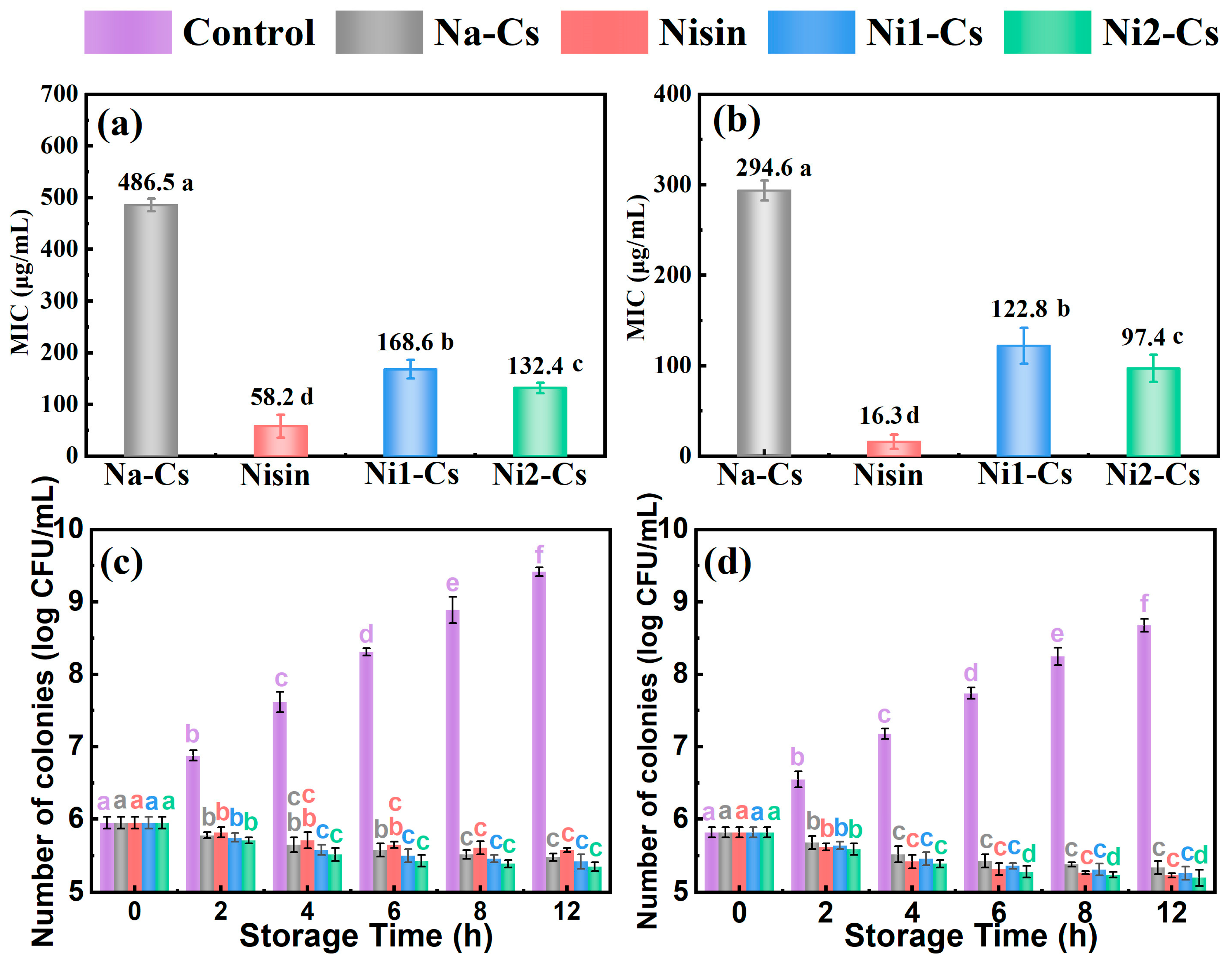
MIC was determined by the microbroth dilution method using Mueller-Hinton Broth as the culture medium. Samples were prepared in sterile water at serial concentrations, added to 96-well plates, inoculated with bacterial suspension (initial concentration approximately 106 CFU/mL), and incubated at 37 °C for 24 h. The lowest concentration showing no visible growth was defined as the MIC value.
2.6.2. Antibacterial Kinetics Test
Bacterial suspension was treated with samples at MIC concentration and incubated at 37 °C. Samples were collected at 0, 2, 4, 6, 8, and 12 h for plate counting.
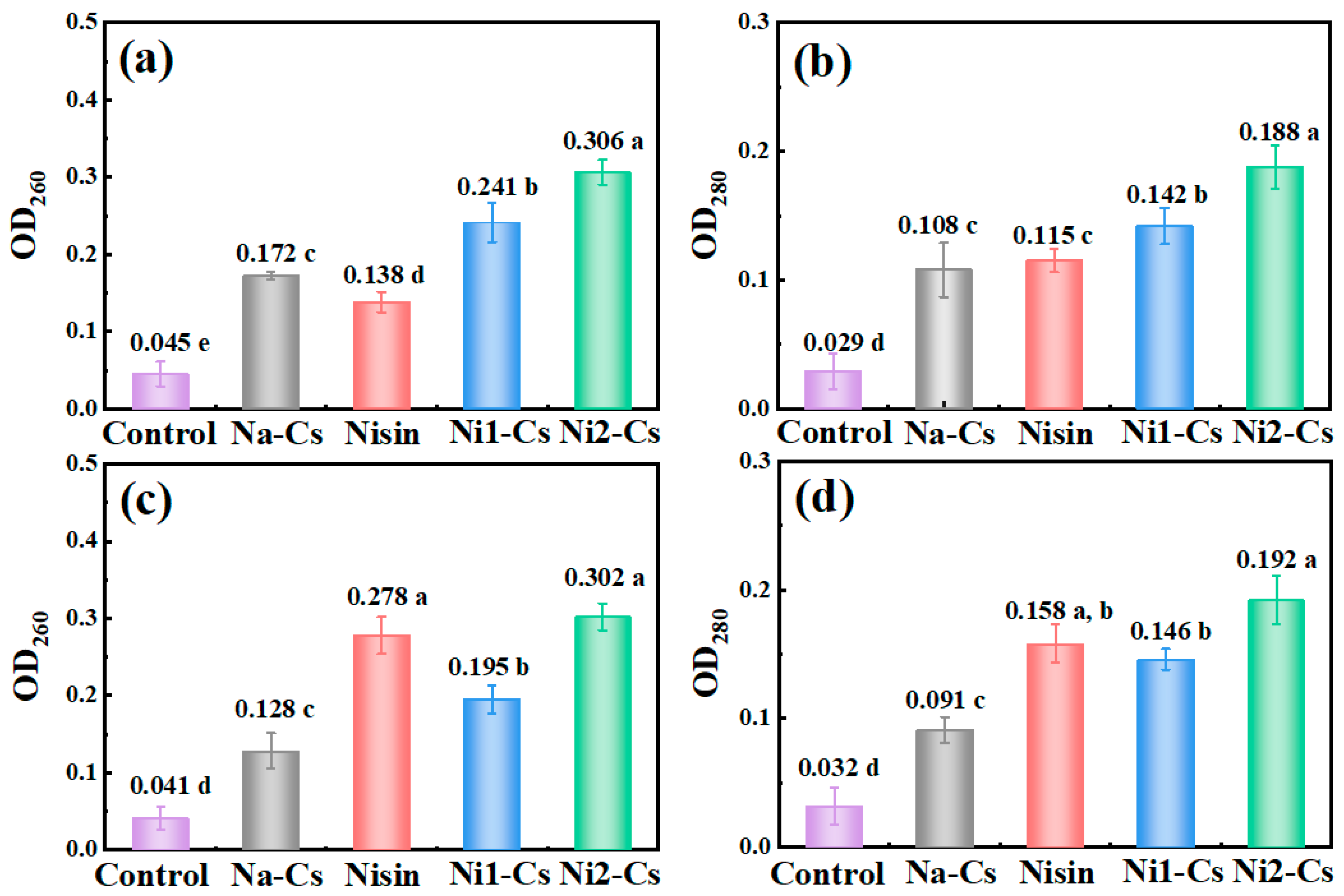
2.6.3. Antibacterial Mechanism
Bacterial suspension (10
8 CFU/mL) was mixed with samples (at MIC concentration) and incubated at 37 °C for 4 h. Supernatant was collected by centrifugation (6000×
g, 10 min), and absorbance was measured at 260 and 280 nm wavelengths, representing the degree of nucleic acid and protein leakage, respectively [
14].
2.7. Application in Sea Bass Preservation
2.7.1. Sample Preparation and Coating Treatment
Fresh sea bass was purchased from local markets, eviscerated, washed, and cut into approximately 50 g pieces. Samples were prepared as 2% (
w/
v) solutions, fish pieces were immersed in coating solution for 2 min, drained, and stored at 4 °C. Sampling was performed at intervals of 1, 5, 10, and 15 days. The control group consisted of untreated fish pieces [
15,
16,
17].
2.7.2. Sensory Evaluation
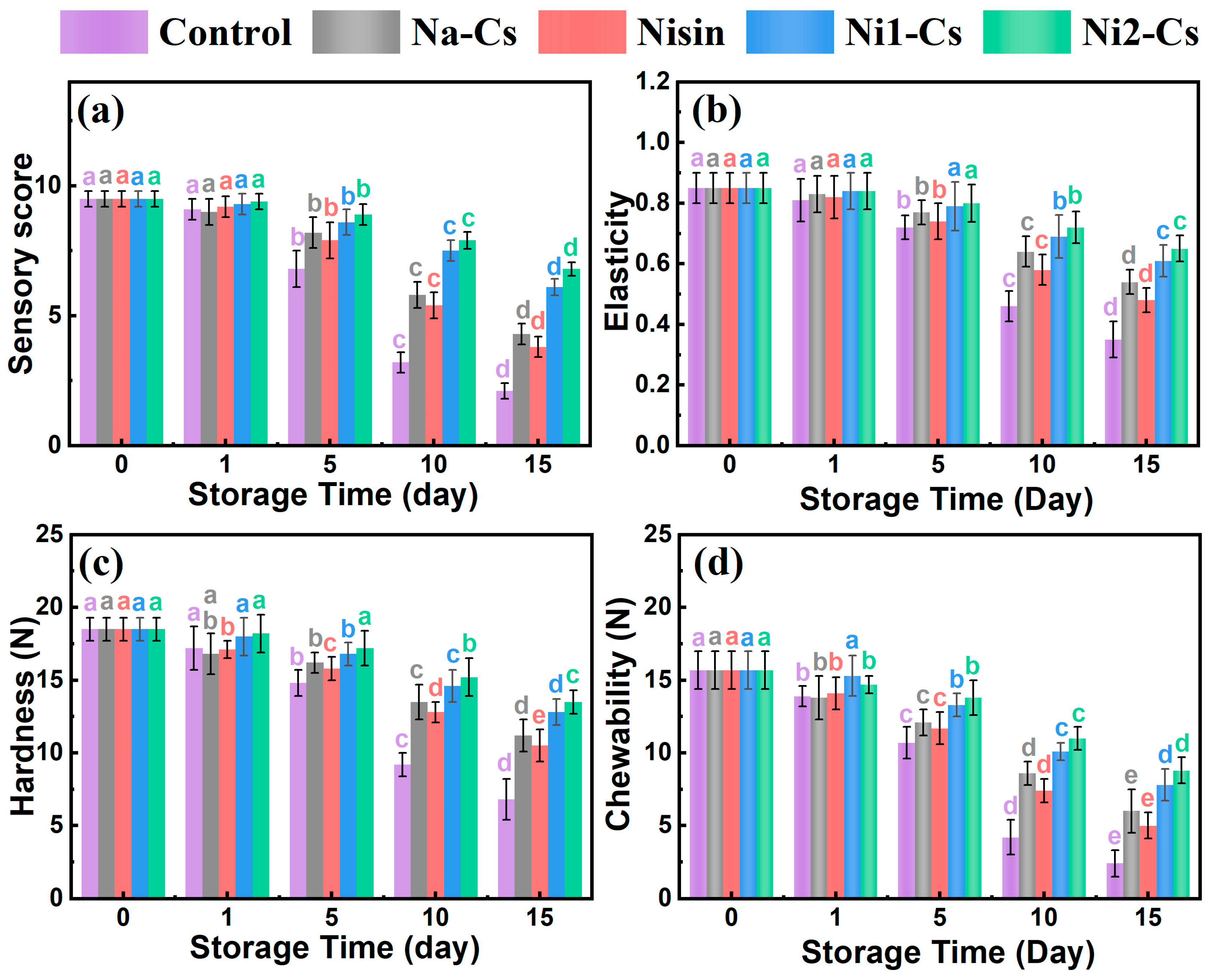
Sensory evaluation was conducted by a panel of 10 trained assessors (5 males and 5 females, aged 25–45 years) with prior experience in seafood quality assessment [
18]. Prior to the evaluation, panelists underwent a training session to familiarize themselves with the evaluation criteria and scoring system. Fish samples were retrieved from refrigerated storage, cut into uniform pieces (approximately 30 g), placed in identical white plates coded with three-digit random numbers, and presented to panelists under standard fluorescent lighting conditions (6500 K, 1000 lux) at room temperature.
Panelists evaluated four sensory attributes using a 10-point hedonic scale: (1) appearance—surface condition, presence of discoloration or slime (10 = bright, natural appearance; 1 = severe discoloration, excessive slime); (2) color—muscle color and uniformity (10 = translucent white, firm; 1 = opaque, yellowish, soft); (3) odor—freshness of smell (10 = fresh, seaweed-like; 1 = strong ammonia or putrid odor); and (4) texture—firmness and elasticity by finger pressing (10 = firm, elastic; 1 = very soft, no elasticity). The overall sensory score was calculated as the average of the four attributes. Samples with scores below 4 were considered unacceptable for consumption. Panelists rinsed their mouths with water between samples, and evaluation sessions were limited to 30 min to prevent sensory fatigue. The final score for each sample was reported as the mean ± standard deviation of all panelist evaluations.
2.7.3. Texture Analysis
Texture properties (springiness, hardness, and chewiness) were measured using a CT3 10K texture analyzer (Bolefield Co., Ltd., Middleboro, MA, USA). Probe diameter was 36 mm, compression speed was 1 mm/s, compression depth was 10 mm, and trigger force was 5 g.
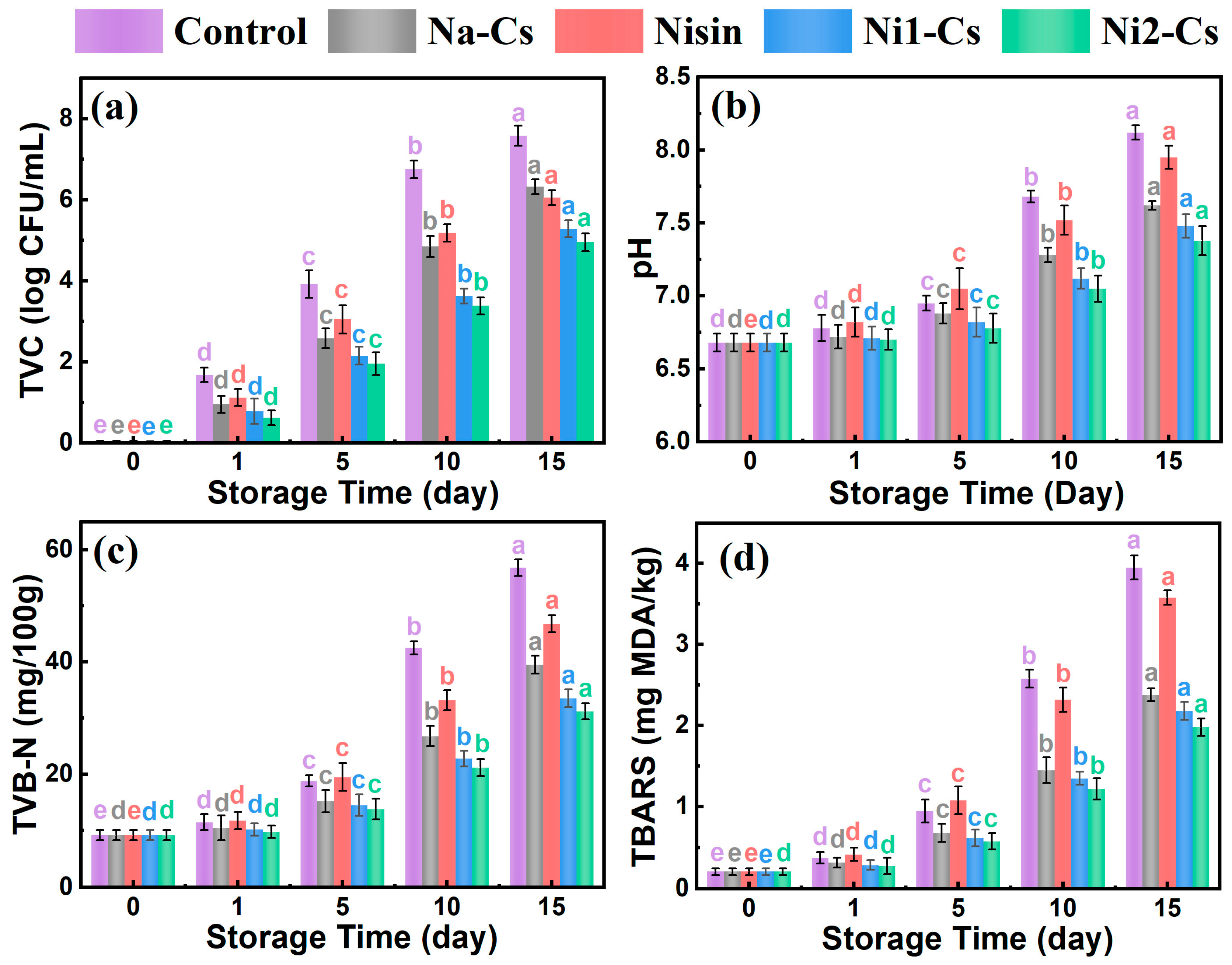
2.7.4. Total Viable Count (TVC) Determination
TVC was determined by the plate count method [
19,
20,
21]. The fish meat sample (10 g) was aseptically excised from the fish filet and transferred to a sterile stomacher bag containing 90 mL of sterile physiological saline (0.85% NaCl,
w/
v). The sample was homogenized in a stomacher for 2 min at 200 ×g to obtain a 10
−1 dilution. Serial decimal dilutions (10
−2, 10
−3, 10
−4, 10
−5, and 10
−6) were prepared by transferring 1 mL of each dilution into 9 mL sterile saline. From appropriate dilutions, 1 mL aliquots were transferred onto sterile Petri dishes, and approximately 15–20 mL of plate count agar (pre-cooled to 45–50 °C) was poured into each plate. The agar and inoculum were mixed thoroughly by gentle swirling in a figure-eight motion and allowed to solidify at room temperature. After solidification, plates were inverted and incubated at 37 °C for 48 h. Following incubation, colonies on plates containing 30–300 colonies were counted using a colony counter. TVC was calculated using the following formula and expressed as log CFU/g:
where ∑C is the sum of colonies counted on all plates, n
1 is the number of plates counted at the lower dilution factor, n
2 is the number of plates counted at the next consecutive higher dilution factor, and d is the dilution factor corresponding to the lower dilution.
2.7.5. pH Value Determination
The pH value was measured using a calibrated pH meter (Sartorius Co., Göttingen, Germany). The fish meat sample (10 g) was homogenized with 90 mL of distilled water in a high-speed homogenizer at 7000× g for 1 min. The homogenate was allowed to stand for 30 min at room temperature with occasional stirring to facilitate equilibration. The pH electrode was rinsed with distilled water and blotted dry with tissue paper before each measurement. The electrode was immersed in the homogenate to a depth sufficient to cover the sensing element, and the pH value was recorded when the reading stabilized (typically within 1–2 min). Between measurements, the electrode was rinsed thoroughly with distilled water.
2.7.6. Total Volatile Basic Nitrogen (TVB-N) Determination
TVB-N was determined by the semi-micro Kjeldahl method [
19,
20,
21]. The fish meat sample (10 g) was accurately weighed and homogenized with 50 mL of distilled water. The homogenate was transferred to a 100 mL volumetric flask and made up to volume with distilled water, then filtered through Whatman No.1 filter paper. An aliquot of 5 mL filtrate was transferred to a Kjeldahl distillation apparatus, followed by the addition of 5 mL of 10 g/L magnesium oxide suspension and several drops of liquid paraffin to prevent foaming. The mixture was immediately subjected to steam distillation. The distillate was collected in a conical flask containing 10 mL of 20 g/L boric acid solution with mixed indicator (methyl red and bromocresol green). Distillation was continued until approximately 50 mL of distillate was collected (approximately 5 min). The absorbed ammonia in the boric acid solution was titrated with 0.01 mol/L standardized hydrochloric acid solution until the color changed from green to pale pink. A blank control was conducted using distilled water instead of sample filtrate under identical conditions. TVB-N content was calculated using the following formula:
where V
1 is the volume (mL) of hydrochloric acid consumed for the sample, V
0 is the volume (mL) of hydrochloric acid consumed for the blank, C is the concentration (mol/L) of hydrochloric acid standard solution, m is the mass (g) of fish meat sample, V
2 is the total volume (mL) of sample extract (100 mL), V
3 is the volume (mL) of filtrate used for distillation (5 mL), and 14 represents the molar mass of nitrogen.
2.7.7. Thiobarbituric Acid Reactive Substances (TBARS) Determination
The fish meat sample (5 g) was homogenized with 25 mL 7.5% TCA solution and filtered. Filtrate (5 mL) was mixed with 5 mL 0.02 mol/L thiobarbituric acid solution, heated in boiling water bath for 20 min, cooled, and absorbance was measured at 532 nm. TBARS values were expressed as malondialdehyde (MDA) equivalents [
19,
20,
21]:
where A is the absorbance at 532 nm, V
1 is the total volume of extraction solution (30 mL), V
2 is the volume of filtrate used for reaction (5 mL), m is the mass of fish sample (g), and ε is the slope of the MDA standard curve.
2.8. Statistical Analysis
All experiments were performed in triplicate. Statistical analyses were conducted using SPSS 16.0 software. One-way analysis of variance (ANOVA) and independent sample t-tests were employed to compare differences, with p ≤ 0.05 considered statistically significant.
4. Discussion
This study developed a novel antibacterial coating material through papain-catalyzed grafting of nisin onto chitosan under ultra-low-temperature conditions. The systematic characterization and application evaluation revealed several key findings that collectively demonstrate the potential of this approach for food preservation.
4.1. Enzymatic Grafting Strategy and Structural Modifications
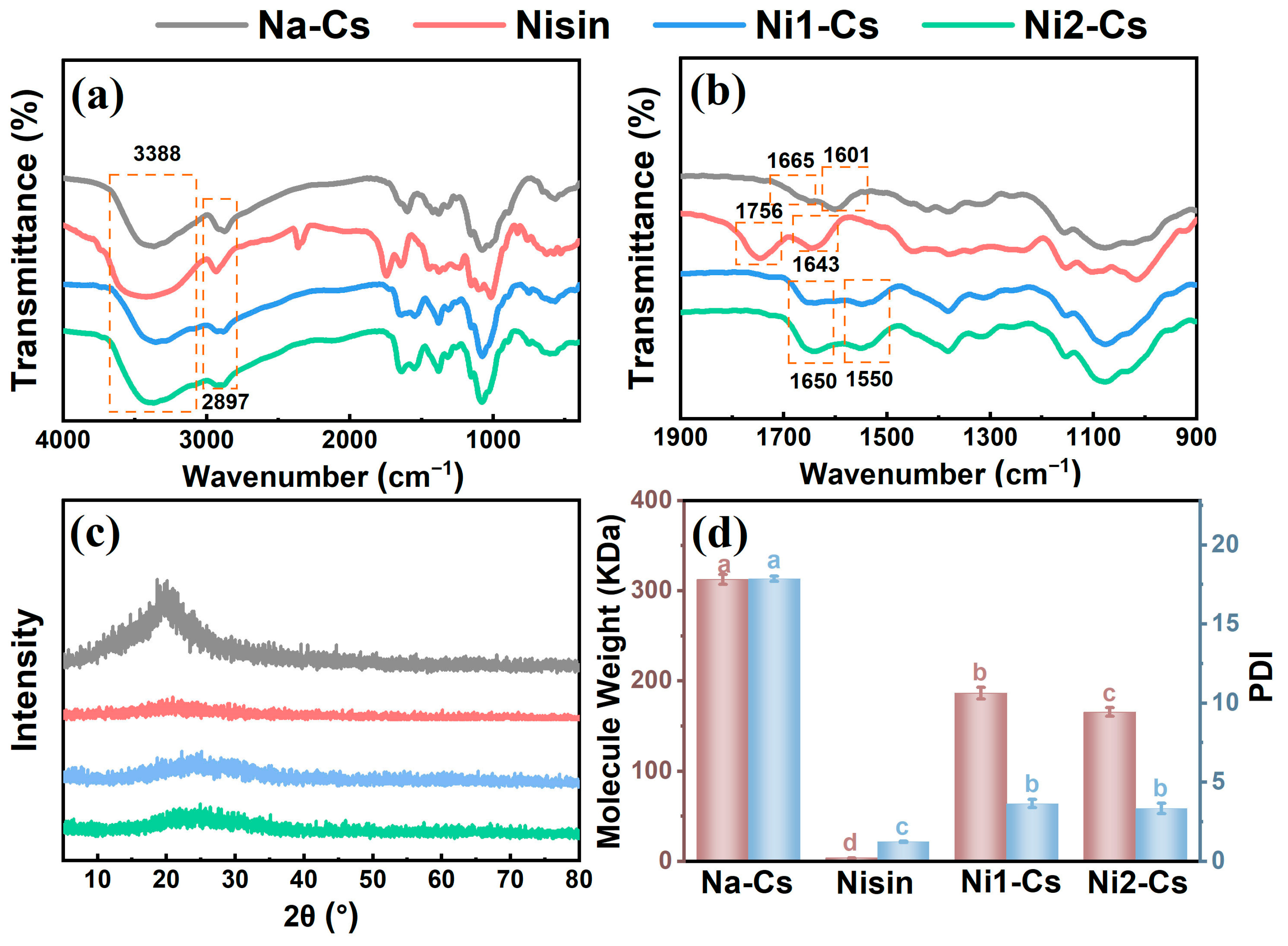
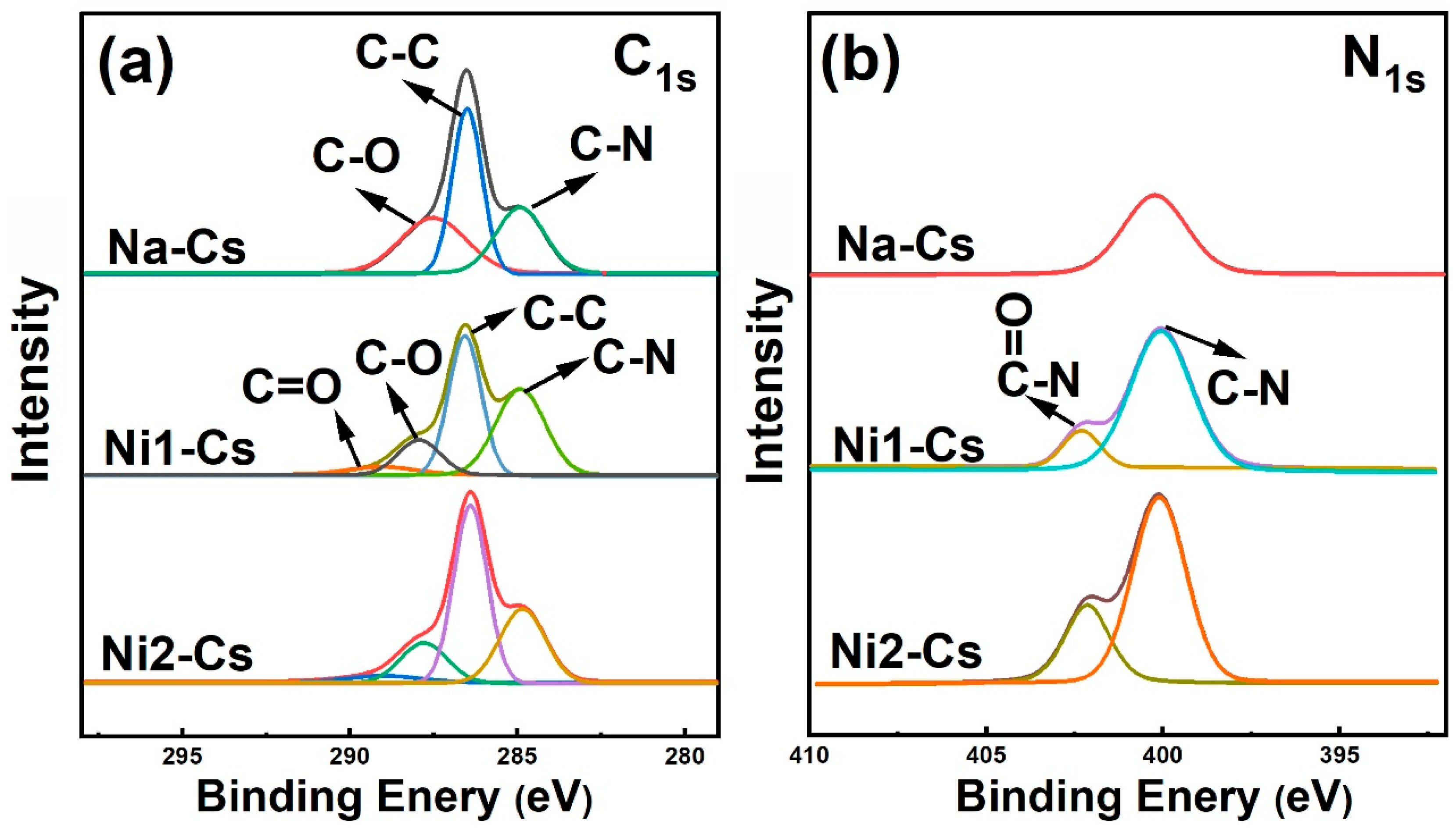
The successful amidation between nisin and chitosan, confirmed by FTIR, XRD, and XPS analyses, represents a significant advancement in chitosan functionalization. The appearance of new amide I (1650 cm−1) and amide II (1550 cm−1) peaks, along with the characteristic C=O peak at 289.2 eV and O=C-N peak at 402.1 eV in XPS spectra, provided unambiguous evidence for covalent bond formation rather than simple physical mixing. The controlled grafting ratios (8.56% for Ni1-Cs and 14.35% for Ni2-Cs) demonstrated the tunability of this enzymatic approach.
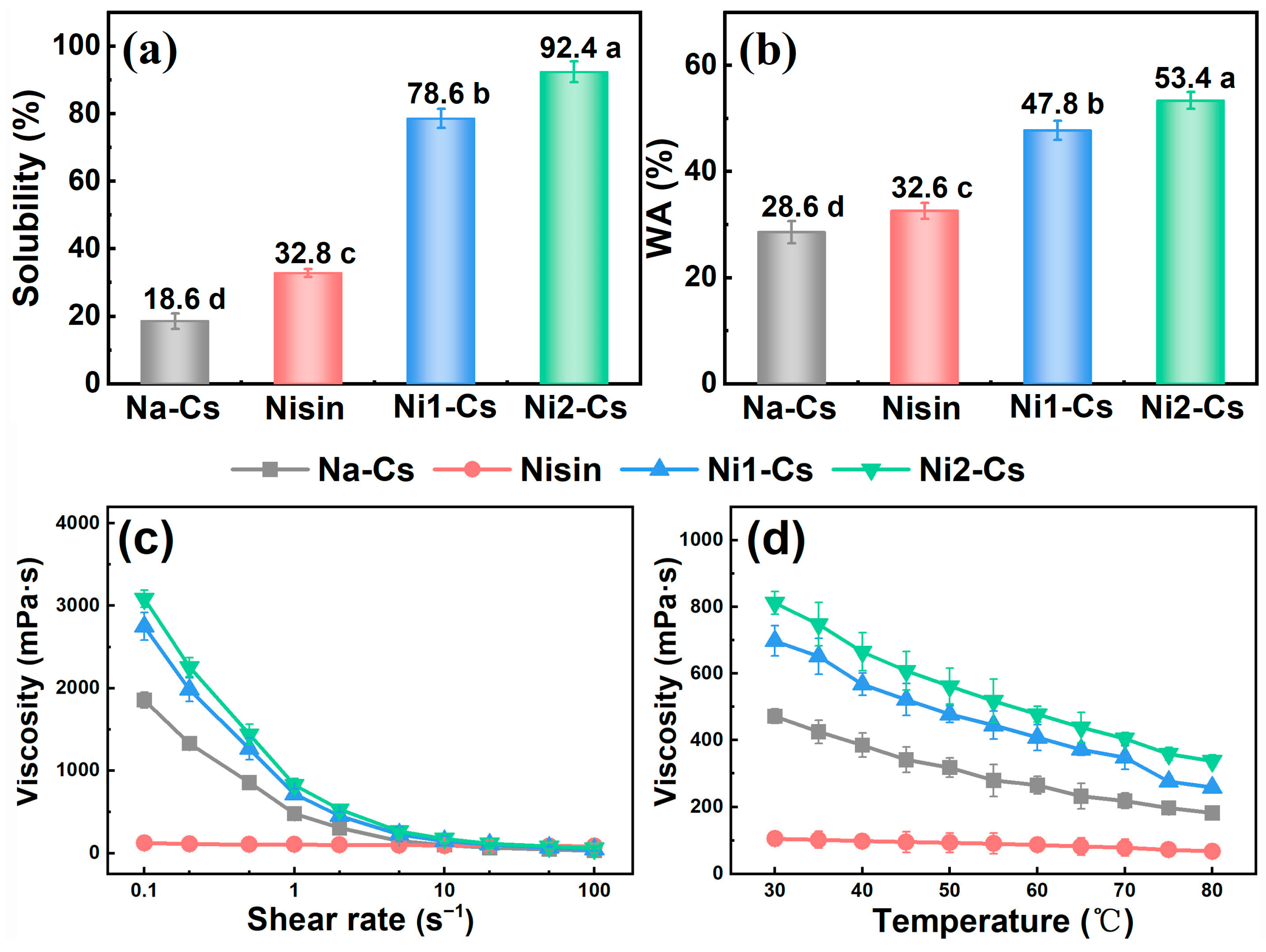
The structural modifications induced by nisin grafting had profound impacts on material properties. The reduction in crystallinity, as evidenced by weakened and broadened XRD peaks, directly correlated with the dramatic improvement in solubility from 18.6% to 92.4%. This enhancement can be attributed to three synergistic factors: disruption of the regular hydrogen bonding network of chitosan by nisin insertion, reduced molecular weight (from 312.57 to 165.64 kDa) decreasing chain entanglement, and the introduction of hydrophilic amino acid residues (such as Lys, Ser, and Thr in nisin) that increased overall material hydrophilicity. The improved water absorption (from 28.6% to 53.4%) further confirmed enhanced hydrophilic character, which is crucial for aqueous-based coating applications.
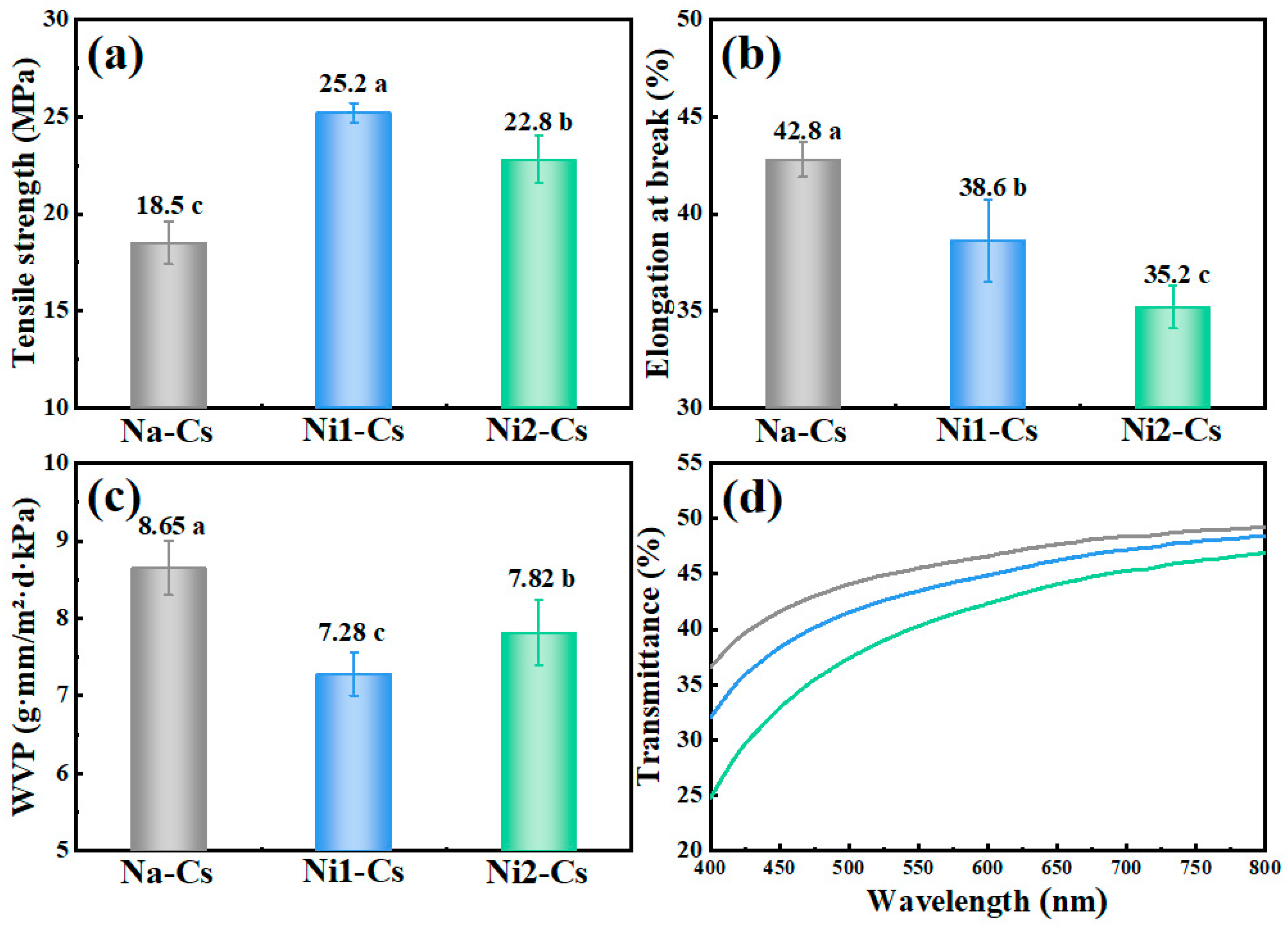
Notably, despite the reduction in molecular weight—typically associated with decreased mechanical strength—Ni1-Cs films achieved 36% higher tensile strength than Na-Cs (25.2 vs. 18.5 MPa). This paradoxical enhancement suggests that nisin grafting introduced new intermolecular interactions that created a more robust network structure. Nisin molecules contain multiple sites capable of forming hydrogen bonds (peptide backbones, hydroxyl groups) and hydrophobic interactions (Ile, Leu, Pro residues), which may establish physical crosslinks between chitosan chains during film formation. It is noteworthy that while moderate grafting (Ni1-Cs) enhanced the tensile strength compared to native chitosan, excessive grafting (Ni2-Cs) led to a slight reduction in mechanical performance and transparency, a phenomenon attributed to synergistic molecular mechanisms. Specifically, the preparation of Ni2-Cs resulted in a lower molecular weight (165.64 kDa) compared to Ni1-Cs, creating shorter polymer chains with fewer intermolecular entanglements that weaken the overall structural integrity of the film matrix. Simultaneously, the higher density of bulky nisin peptides in Ni2-Cs introduces significant steric hindrance that restricts the sliding and mobility of chitosan chains during stretching, directly accounting for the continuous decrease in elongation at break. Furthermore, the hydrophobic amino acid residues inherent in nisin likely induce micro-phase separation or aggregation within the hydrophilic chitosan matrix at high grafting ratios, creating micro-domains that act as light-scattering centers and thereby reducing the transparency of the Ni2-Cs films.
The key advantage of this ultra-low-temperature enzymatic approach over traditional chemical modification methods lies in its preservation of nisin’s bioactive structure. Conventional chemical grafting often employs harsh conditions (high temperature, strong alkali) that can denature antimicrobial peptides and destroy their critical structural features, such as the five lanthionine bridges in nisin that are essential for its pore-forming activity. The mild conditions of enzymatic catalysis (−5 °C, neutral pH, solid–liquid interface) protected these sensitive structures, as evidenced by the retained antibacterial activity of grafted products. Regarding the grafting site on nisin, it should be noted that nisin contains multiple carboxyl groups, including the C-terminal carboxyl and the side chains of aspartic acid and glutamic acid residues. Based on steric accessibility considerations, it is speculated that the C-terminal carboxyl group is the preferential site for papain-catalyzed amidation, as it is located at the molecular periphery with minimal steric hindrance compared to the internal residues. This preferential grafting at the C-terminus would leave the N-terminal region—which contains the critical lipid II-binding motif essential for nisin’s pore-forming mechanism—unhindered, thereby explaining the excellent retention of antibacterial activity observed in our grafted products. However, it was acknowledged that the current enzymatic method does not provide absolute site-specific control, and heterogeneous grafting at multiple carboxyl sites cannot be excluded. Future studies employing site-directed mutagenesis or tandem mass spectrometry analysis would be valuable for definitive identification of the grafting sites and further optimization of the conjugation strategy.
4.2. Synergistic Antibacterial Mechanism
The antibacterial evaluation revealed a clear synergistic effect between chitosan and nisin, providing both quantitative evidence and mechanistic insights. Grafted products achieved MIC values significantly lower than Na-Cs alone (132.4 vs. 486.5 μg/mL against E. coli, 97.4 vs. 294.6 μg/mL against S. aureus) while maintaining substantial activity compared to pure nisin. The fact that Ni2-Cs, with only 14.35% nisin content, approached the efficacy of pure nisin treatment demonstrated exceptional efficiency of the grafted configuration.
The nucleic acid and protein leakage experiments provided direct mechanistic evidence for the synergistic mode of action. The progressive increase in leakage from Na-Cs to Ni1-Cs to Ni2-Cs, with absorbance at 260 nm and 280 nm showing parallel trends, confirmed that both chitosan and nisin contributed to membrane damage through complementary mechanisms. Chitosan, as a cationic polysaccharide, electrostatically interacts with negatively charged components on bacterial cell surfaces (lipopolysaccharides in Gram-negative bacteria, teichoic acids in Gram-positive bacteria), causing membrane depolarization and surface structure disruption. This initial damage creates favorable conditions for nisin action: the disrupted membrane becomes more permeable, facilitating nisin insertion, and the destabilized lipid bilayer offers reduced resistance to pore formation.
The spatial organization created by covalent grafting may amplify this synergistic effect. When nisin molecules are anchored onto chitosan chains, multiple nisin units are brought into close proximity. Upon chitosan adsorption to the bacterial surface, these locally concentrated nisin molecules can simultaneously attack the membrane, creating larger or more numerous pores than would result from randomly distributed free nisin. This “clustered attack” mechanism may explain why grafted products induced significantly more leakage than Na-Cs alone, despite having lower total nisin content than pure nisin treatments [
33].
Particularly noteworthy was the improved efficacy against Gram-negative bacteria. The MIC ratio between
E. coli and
S. aureus decreased from 3.57 for pure nisin to 1.36 for Ni2-Cs, indicating a narrowed performance gap between bacterial types. This improvement likely stems from chitosan’s ability to disrupt the outer membrane of Gram-negative bacteria—a unique barrier absent in Gram-positive bacteria that normally limits nisin penetration. By breaching this outer membrane first, chitosan enables nisin to access the cytoplasmic membrane more effectively, thus extending the antimicrobial spectrum. This finding has important implications for food preservation applications where both Gram-positive and Gram-negative spoilage organisms are common [
34].
4.3. Multifunctional Preservation Efficacy
The sea bass preservation trials validated the practical application potential by demonstrating comprehensive protection through multiple synergistic mechanisms. At day 15 of refrigerated storage, Ni2-Cs coatings maintained all critical quality indicators within acceptable ranges: total viable count at 5 log CFU/mL (below the 6 log CFU/mL safety limit), TVB-N at 30 mg/100 g (at the freshness threshold), springiness above 0.6, hardness at 13 N, and TBARS at 2.2 mg MDA/kg. In contrast, control samples had completely deteriorated by day 10, with TVC exceeding 7 log CFU/mL and TVB-N surpassing 55 mg/100 g.
This multifunctional preservation efficacy arose from the integration of antimicrobial, barrier, and antioxidant properties. The potent antibacterial activity, confirmed by in vitro tests, translated effectively to real food systems, suppressing microbial growth throughout storage. The sustained antibacterial effect, rather than an initial burst followed by rapid decline, suggested a controlled release mechanism: as the coating gradually hydrates and partially degrades in the aqueous fish surface environment, nisin is progressively released, maintaining inhibitory concentrations over extended periods. This sustained release is advantageous over direct nisin application, where rapid diffusion and degradation often limit efficacy duration [
31].
The rheological properties of the coating solutions contributed significantly to their practical applicability. The shear-thinning behavior exhibited by all chitosan-based samples is particularly advantageous for food coating applications. During the coating process, which involves high shear conditions such as dipping or mechanical spreading, the reduced apparent viscosity facilitates uniform spreading and effective adhesion to the irregular surface of sea bass filets. After application, under low shear conditions, the viscosity recovers, enabling the coating to remain stable on the product surface and form a continuous protective film without dripping. Notably, the grafted products (Ni1-Cs and Ni2-Cs) exhibited lower viscosity than native chitosan while retaining shear-thinning characteristics, suggesting improved processability and ease of coating application without compromising film-forming ability.
Beyond antimicrobial action and favorable rheological behavior, the physical barrier properties of the coating played crucial roles in quality maintenance. The improved water vapor barrier (WVP reduced from 8.65 to 7.28 g·mm/m2·d·kPa) helped retain moisture in fish tissues, which directly impacts texture preservation. The maintenance of springiness (>0.6) and hardness (>13 N) at day 15, compared to dramatic declines in uncoated samples (0.4 and 6 N, respectively), demonstrated the effectiveness of moisture retention. Additionally, the oxygen barrier properties retarded lipid oxidation, as evidenced by TBARS values. Fish muscle is rich in polyunsaturated fatty acids highly susceptible to oxidative rancidity, which not only produces off-flavors, but also degrades nutritional value and produces toxic compounds. The coating’s oxygen barrier, combined with potential antioxidant activity of nisin peptide (certain amino acid residues like His and Cys can scavenge free radicals), provided dual protection against lipid deterioration.
The controlled pH increase (from 6.6 to 7.4 in Ni2-Cs vs. 8.0 in control) and reduced TVB-N accumulation further illustrated the comprehensive preservation mechanism. Both pH rise and TVB-N formation result primarily from microbial metabolism (deamination and decarboxylation of amino acids and nucleotides), with secondary contributions from endogenous enzyme activity. The coating’s suppression of microbial growth reduced exogenous protease production, while the physical barrier may also restrict endogenous enzyme activity by limiting substrate availability or oxygen required for certain degradative pathways. The fact that TVB-N in Ni2-Cs remained at the freshness limit (30 mg/100 g) while control exceeded it nearly two-fold (55 mg/100 g) indicated effective control of protein degradation from both microbial and enzymatic sources [
1].
The superior performance of grafted coatings over pure nisin or Na-Cs alone confirmed that covalent integration achieved synergistic preservation effects exceeding simple additive combinations. Pure nisin, despite its potent antimicrobial activity, lacks film-forming ability and provides no physical barrier; Na-Cs forms films, but has limited antibacterial efficacy. Only through covalent grafting were these complementary functionalities unified into a single material, enabling “1 + 1 > 2” synergistic performance in real food preservation applications.
4.4. Implications and Future Directions
This study demonstrates that enzymatic modification under ultra-low-temperature conditions provides a green and effective strategy for developing multifunctional food preservation materials. The success of nisin-grafted chitosan suggests broader applicability of this approach for grafting other bioactive peptides (such as ε-polylysine, lactoferricin, or plant-derived antimicrobial peptides) onto polysaccharide carriers, potentially creating a library of tailored antibacterial materials for diverse food preservation needs.
However, several aspects require further investigation before commercial implementation. First, the economic feasibility must be assessed. Nisin, although FDA-approved and widely used, has relatively high costs compared to conventional preservatives. Optimization of grafting efficiency to reduce nisin usage while maintaining efficacy, or exploration of less expensive antimicrobial peptide alternatives, would improve commercial viability. Second, the long-term stability of grafted products under various storage conditions (light exposure, temperature fluctuations, humidity variations) needs systematic evaluation to ensure consistent performance throughout the product shelf life. Third, while chitosan and nisin are both GRAS (Generally Recognized As Safe) substances, the potential effects of covalent grafting on their metabolism and degradation pathways warrant investigation through in vivo studies to confirm food safety. Fourth, sensory attributes deserve attention: the introduction of nisin and reduced film transparency may affect product appearance and consumer acceptance, requiring optimization through formulation adjustments or incorporation of plasticizers and opacifiers.
From a mechanistic perspective, the precise molecular interactions underlying the synergistic effects warrant deeper investigation. Advanced techniques such as molecular dynamics simulations could elucidate the conformational changes in nisin upon grafting and predict optimal grafting sites and densities. High-resolution microscopy (atomic force microscopy, transmission electron microscopy) could visualize the membrane-disrupting processes in real-time, providing direct evidence for the proposed “disruption-perforation” mechanism. Understanding these molecular details would enable rational design of next-generation materials with optimized antimicrobial efficiency.
Finally, expansion of the application scope beyond sea bass to other perishable foods (crustaceans, fruits, vegetables, fresh-cut produce) would demonstrate the versatility of this technology and facilitate its adoption across the food industry. Each food matrix presents unique challenges in terms of indigenous microflora, biochemical composition, and surface characteristics, requiring tailored coating formulations. Systematic investigation of these applications would establish comprehensive guidelines for implementing nisin-grafted chitosan coatings in diverse food preservation scenarios.
5. Conclusions
This study proposed and validated four scientific hypotheses regarding papain-catalyzed nisin–chitosan conjugation under ultra-low-temperature conditions.
First, the hypothesis that papain can catalyze amidation between nisin’s carboxyl groups and chitosan’s amino groups was confirmed by FTIR, XRD, and XPS analyses, which provided unambiguous evidence for covalent amide bond formation. Second, the hypothesis that nisin grafting would disrupt chitosan’s crystalline structure and improve its processability was validated, as grafted products exhibited dramatically enhanced solubility and film-forming properties. Third, the proposed synergistic antibacterial mechanism combining chitosan’s membrane-disrupting capability with nisin’s pore-forming action was supported by the nucleic acid and protein leakage assays, demonstrating a “disruption-perforation” mechanism that enhanced antibacterial efficiency. Fourth, the practical application hypothesis was confirmed through sea bass preservation trials, where nisin-grafted chitosan coatings effectively extended shelf life to 15 days by maintaining quality indicators within acceptable limits.
These findings establish ultra-low-temperature enzymatic grafting as a green and effective strategy for developing multifunctional food preservation materials, with the temperature-dependent catalytic behavior of papain being essential for achieving amide bond formation while preserving nisin’s bioactive structure. Future research should focus on optimizing grafting parameters, exploring applications in other perishable food systems, and conducting comprehensive safety evaluations for commercial implementation.