


Abstract
This study centers on the adsorption–flotation coupling extraction of rubidium (Rb+) and cesium (Cs+) within a titanium silicate (CTS)–cetyltrimethylammonium bromide (CTAB) system, systematically investigating the impacts of pH, aeration rate, CTAB concentration, and flotation time on the extraction efficiency of these elements. Single-factor experiments revealed that the optimal flotation efficiency was achieved when the pH ranged from 6 to 10, the aeration rate was set at 1000 r/min, the CTAB concentration was 0.2 mmol/L, and the flotation duration was 18 min. Under these conditions, the adsorption capacities for Rb+ and Cs+ were recorded as 128.32 mg/g and 185.47 mg/g, respectively. Employing the response surface optimization method to analyze the interactive effects of these four factors, we found that their order of significance was as follows: pH > aeration rate > CTAB concentration > flotation time. The optimized parameters were determined as pH 8.64, bubble formation rate 1121 r/min, CTAB concentration 0.26 mmol/L, and flotation time 18.47 min. Under these refined conditions, the flotation efficiency for both CTS–Rb and CTS–Cs surpassed any single-factor experiment scenario, with the flotation efficiencies for Rb+ and Cs+ reaching 95.05% and 94.82%, respectively. This methodology effectively extracts Rb+ and Cs+ from low-concentration liquid systems, while addressing the challenges of solid–liquid separation for powdered adsorption materials. It holds significant theoretical and practical reference value for enhancing the separation processes of low-grade valuable components and boosting overall separation performance.
1. Introduction
Rubidium and cesium are extremely important rare metal resources. Rubidium and cesium metals and their various compounds possess irreplaceable photoelectric effects and special properties that cannot be replaced by other substances [1]. They have extensive and irreplaceable applications in fields such as aviation, communication, catalysis, and biology [2,3]. Large amounts of rubidium and cesium resources are stored in both solid ore resources and liquid mineral deposits [4,5]. However, due to the relatively low absolute content of rubidium and cesium in salt lake brine, it basically has no value for independent development [6]. For a long time, the extraction of rubidium and cesium from salt lake brine has not received sufficient attention. The content of rubidium and cesium in the brine of salt lakes is relatively low, and they often coexist with other alkali metals and alkaline earth metal elements [7]. The physical and chemical properties of these associated metal elements are very close to those of rubidium and cesium, making their separation rather difficult [8]. Therefore, the rational development and utilization of rubidium and cesium resources in salt lakes is of great significance for the comprehensive utilization of resources. At present, although certain progress has been made in research on separation and extraction technology for rubidium and cesium from salt lakes, most studies are still at the experimental stage and have not yet been applied at industrial scale. With the continuous expansion of the application and demand for cesium and rubidium in the industrial field, the commercial application of rubidium and cesium is bound to be further developed [2]. Therefore, the effective development and utilization of rubidium and cesium resources in salt lake brine is extremely important for ensuring resource security.
At present, the main methods for extracting rubidium and cesium are the precipitation method [9,10,11], extraction method [12,13], and adsorption method [14,15,16]. In recent years, due to the advantages of the adsorption method in the separation of low-content liquid systems, it has been widely applied and studied [8,17]. Common inorganic adsorbents for Rb+ and Cs+ include ferrocyanide, titanosilicate, zeolite, and heteropolysaccharide [18,19,20]. Among these adsorbents, titanosilicates have a high adsorption capacity and selectivity for Rb+ and Cs+. Due to differences in components and crystal structures, their adsorption performances for Rb+ and Cs+ are not the same, and their mechanisms of influence on rubidium and cesium are also different [21]. Among them, CTS has excellent adsorption performance for both Rb+ and Cs+ [22]. However, titanium silicates are usually in powder form, and the solid–liquid separation after adsorption is difficult, which limits the practical application of titanium silicates, especially in brine systems.
Adsorption–flotation involves the addition of an adsorbent to a solution, which reacts to produce microfine particles, and solid–liquid separation is achieved by flotation [23,24]. Soliman, M.A. et al. [9] evaluated the performance of the adsorption–flotation method for the removal of 137Cs from a low concentration radioactive waste solution using sodium tetraphenylboron as adsorbent, and the separation of cesium particulate matter was successfully achieved using a surfactant after coating cesium tetraphenylboron particles with iron oxide. Hu et al. [23] used silica nanoparticles (SNPs) as adsorption carriers to adsorb Cu2+, and then performed flotation experiments with cetyltrimethylammonium bromide (CTAB) as a trapping agent. The results showed that the SNPs, in addition to acting as adsorption carriers, also acted as foam stabilizers, which significantly improved the stability of the foam. Adsorption flotation has the ability to enrich and separate trace components with high efficiency, especially for low-concentration metal ion solutions. In addition, the simple process, low cost, and high separation efficiency of this method can significantly reduce the treatment time.
In this study, CTS was used as the adsorbent, with CTAB as the collector and foaming agent, to construct an adsorption–flotation system. The influence of solution pH, aeration rate, concentration of CTAB, and flotation time on the turbidity of the bottom liquid after flotation was systematically investigated. Process optimization of the interacting influencing factors was carried out in combination with the response surface method, and the appropriate flotation separation process parameters were explored and obtained.
2. Materials and Methods
2.1. Chemicals
Cetyltrimethylammonium bromide and sodium hydroxide were purchased from Shanghai McLean Biochemical Reagent Co., Ltd. (Shanghai, China) (AR); hydrochloric acid was purchased from Sichuan Xilong Science Co., Ltd. (Chengdu, China) (AR); and rubidium and cesium chloride were purchased from Xinjiang Nonferrous Metals Research Institute Chemical Reagent Factory (Urumqi, China) (AR).
2.2. Experimental Methods
2.2.1. Single-Factor Experiment
A 100 mL aliquot of 1 mmol/L RbCl (CsCl) solution was placed in the flotation cell, and the pH was adjusted to the appropriate value. Subsequently, 0.05 g of CTS was added, and the mixture was stirred at 700 r/min for 50 min to achieve adsorption equilibrium. An appropriate concentration of surfactant was then introduced to the flotation cell, followed by stirring for 10 min. The stirring speed was subsequently adjusted, and inflation was initiated to conduct the flotation experiment. After completion of flotation, the turbidity of the bottom liquid was measured using a turbidity meter. Flotation efficiency was analyzed based on the measured turbidity, where higher turbidity indicated lower efficiency and vice versa.
2.2.2. Response Surface Optimization Method
In order to further improve the flotation efficiency, the conditions of the interacting influencing factors were optimized using the response surface method. Based on the optimization of single-factor conditions, an optimization experiment using the Box–Behnken (BBD) model was conducted. pH (A), aeration rate (B), concentration of CTAB (C), and flotation time (D) were selected as independent variables, and turbidity was taken as the response value, for a combined design of four factors and three levels. Table 1 lists the horizontal parameter values of the four independent variables, namely the concentration of CTAB, bubble formation rate, flotation time, and aeration volume.

Table 1.
Independent variable parameters and horizontal values of the response surface.
3. Results and Discussion
3.1. Effect of pH on the Effectiveness of Adsorption–Flotation
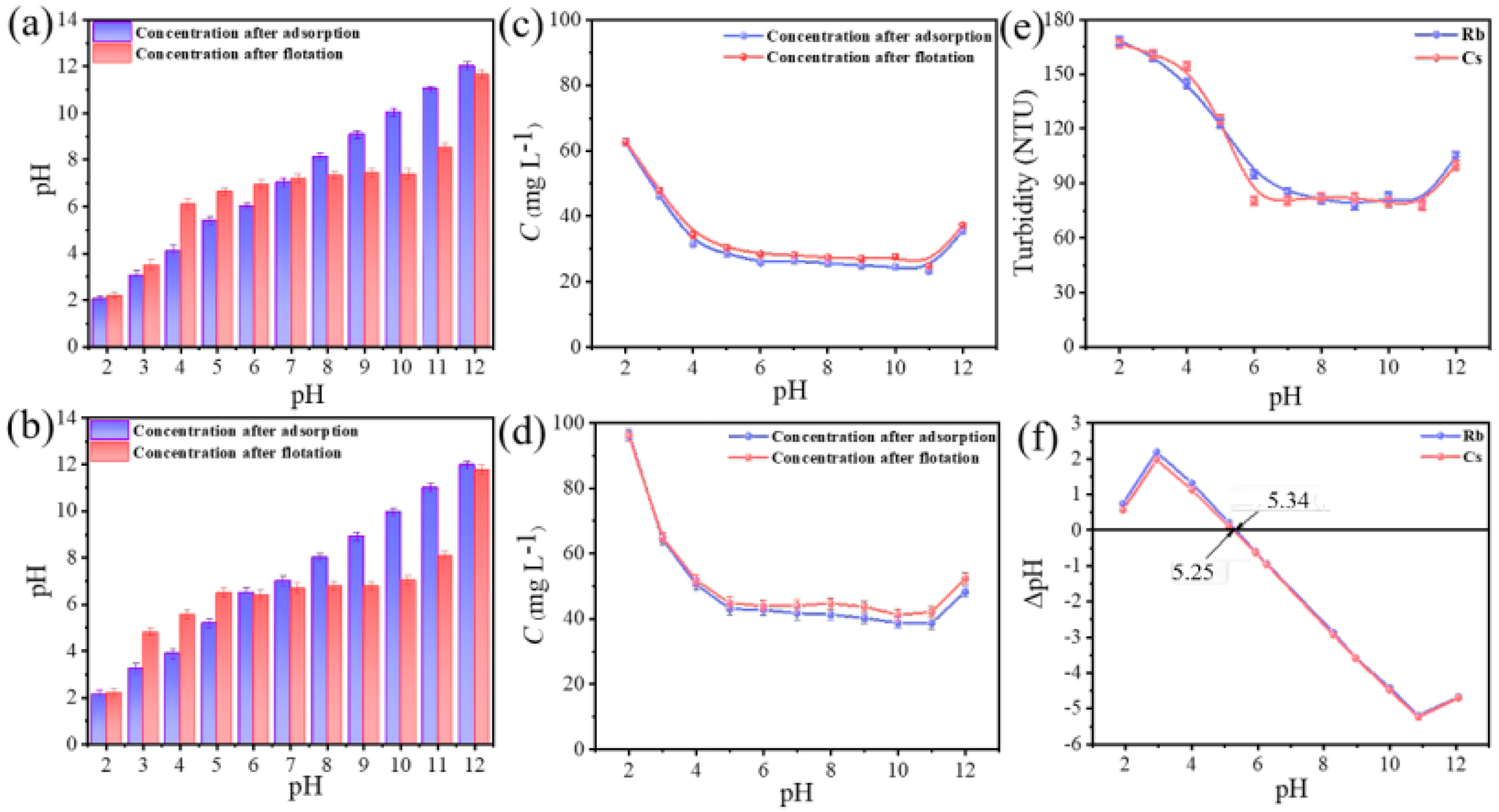
Through calculation, the adsorption capacities of Rb+ and Cs+ were determined to be 128.32 mg/g and 185.47 mg/g, respectively. Figure 1a,b show the changes in pH before and after flotation. It can be seen from the figures that when the initial pH was 2–5, the pH after adsorption–flotation of Rb+ and Cs+ increased to a certain extent compared with the pH of the initial solution. When the initial pH was between 5 and 12, the pH decreased after adsorption and flotation, indicating that within a wide pH range, the particle surface of sodium titanosilicate was negatively charged after adsorbing Rb+ and Cs+. Figure 1c,d show the effect of pH on the concentration of Rb+ and Cs+. The results showed that the adsorption capacity of the adsorbent on Rb+ and Cs+ first increased, and then decreased with the increase in the initial solution pH (the lower the concentration of Rb+ and Cs+ in the bottom solution after adsorption–flotation, the stronger the adsorption–flotation capacity); when the pH value was from 2 to 4, the adsorption capacity increased sharply. With the pH from 5 to 11, the adsorption capacity increased slowly, and the adsorption capacity was lower at a pH of 12. In terms of the effect of solution pH, low pH was unfavorable for adsorption because a large amount of H+ competed with the Rb+ and Cs+ for adsorption sites [17]. Figure 1e shows the effect of pH on the turbidity in the bottom liquid after CTS adsorption–flotation of Rb+ and Cs+. From the figure, it can be seen that, at pH 2–5, the turbidity in the bottom liquid was higher, indicating poor flotation performance, and at pH 6–11 the turbidity was lower, indicating a higher flotation performance in this range, while at pH 12, the turbidity in the bottom liquid increased and the flotation performance decreased [24]. The zero charge points of rubidium titanosilicate and cesium titanosilicate were 5.34 and 5.25, respectively, as can be seen in Figure 1f. This better explains the reason for the excellent flotation effect in the range of pH greater than 5. At a pH greater than the zero charge point, the surface of the titanosilicates was negatively charged, and they were removed by electrostatic interactions with the positively charged CTAB.
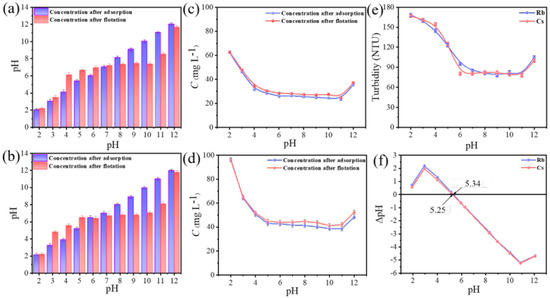
Figure 1.
(a) pH changes before and after CTS adsorption flotation of Rb+. (b) pH changes before and after CTS adsorption flotation of Cs+. (c) Effect of pH on the residual concentration in the bottom liquid after CTS adsorption of Rb+ for flotation. (d) Effect of pH on the residual concentration in the bottom liquid after CTS adsorption of Cs+ for flotation. (e) Effect of pH on the residual concentration in the bottom liquid after CTS adsorption of Rb+ and Cs+ for flotation. (f) Determination of zero-charge point after adsorption of Rb+ and Cs+ by CTS.
3.2. Effect of Aeration Rate on the Effectiveness of Adsorption Flotation
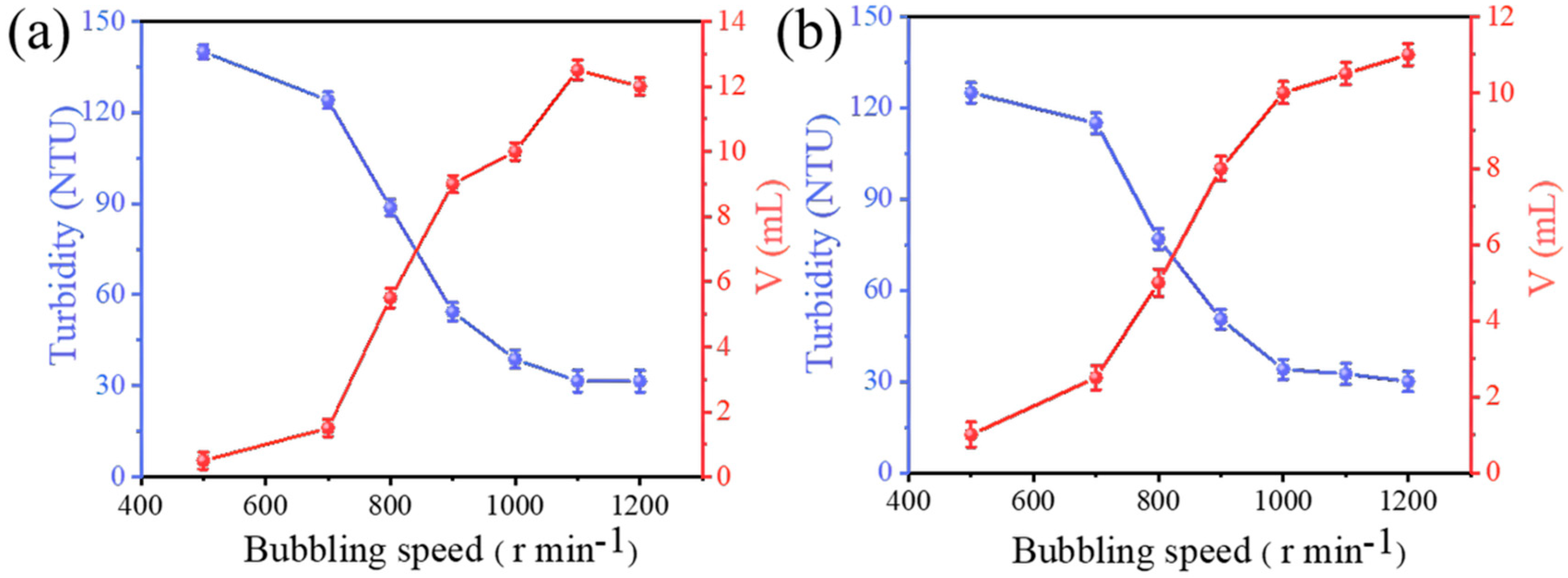
Figure 2 shows the influence of aeration rate on the turbidity of the bottom liquid and the volume of the liquid affected by flotation after adsorption–flotation of rubidium and cesium ions. From the results, it can be seen that with the increase in the aeration rate, the turbidity in the bottom liquid was gradually reduced. With the aeration rate of 500–900 r min−1, the reduction was faster, while at 1000–1200 r min−1, the change was slower. At the same time, with the increase in the aeration rate, the volume of flotation caused by the liquid gradually increased [25]. This indicates that when the other conditions were the same, the aeration rate had a more obvious influence on the flotation performance, and we chose the aeration rate of 1000 r min−1 for comprehensive consideration.
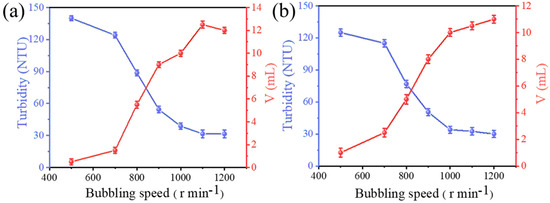
Figure 2.
(a) Effect of bubble speed on the turbidity of the bottom liquid after CTS adsorption–flotation Rb+ and the volume of liquid removed by flotation. (b) Effect of bubble speed on the turbidity of the bottom liquid after CTS adsorption–flotation Cs+ and the volume of liquid removed by flotation.
3.3. Effect of Concentration of CTAB on the Effectiveness of Adsorption–Flotation
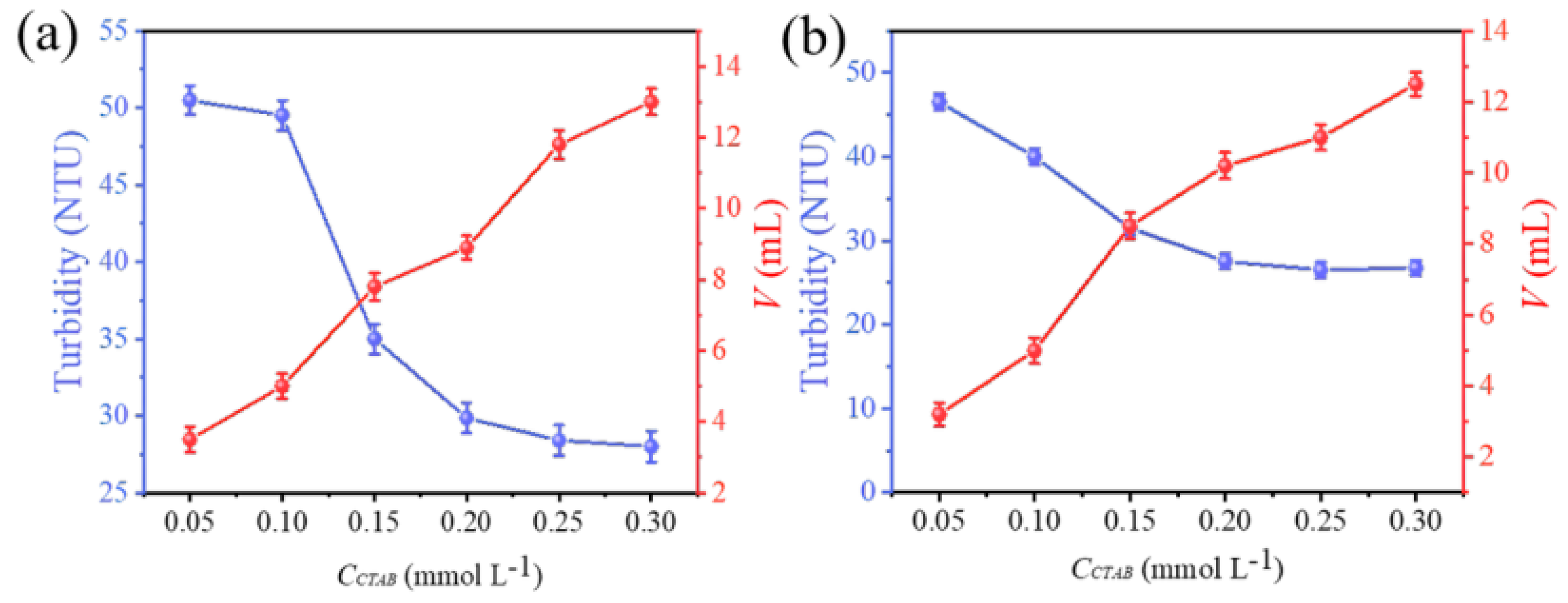
In the experiments, CTAB had the dual functions of trapping agent and foaming agent, and its concentration not only affected the coupling efficiency of adsorption–flotation, but also determined the foaming performance of the foam [26]. Figure 3 shows the effect of surfactant concentration on the turbidity in the bottom liquid and the volume of liquid removed by flotation after extraction of Rb+ and Cs+ by adsorption–flotation. From the figure, it can be seen that with the increase in CTAB concentration, the turbidity decreased faster at a CTAB concentration of 0.05–0.1 mmol L−1, and changed more slowly at 0.2–0.3 mmol L−1. As the surfactant concentration was increased, the volume of liquid removed by flotation increased, because the increase in cetyltrimethylammonium bromide concentration resulted in higher liquid retention in the froth, which increased the volume of the froth [23]. Lower concentrations of cetyltrimethylammonium bromide were not favorable for the subsequent separation and extraction of adsorbates. Therefore, 0.2 mmol L−1 was comprehensively selected as a suitable concentration for the subsequent experiments.
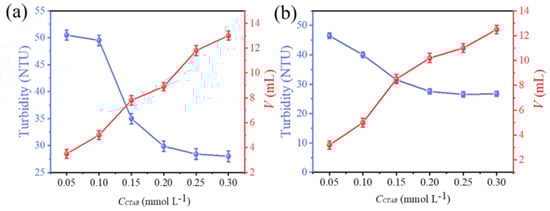
Figure 3.
(a) Effect of the concentration of CTAB on the turbidity of the bottom liquid after CTS adsorption–flotation of Rb+ and the volume of liquid removed by flotation. (b) Effect of the concentration of CTAB on the turbidity of the bottom liquid after CTS adsorption–flotation of Cs+ and the volume of liquid removed by flotation.
3.4. Effect of Flotation Time on the Effectiveness of Adsorption–Flotation
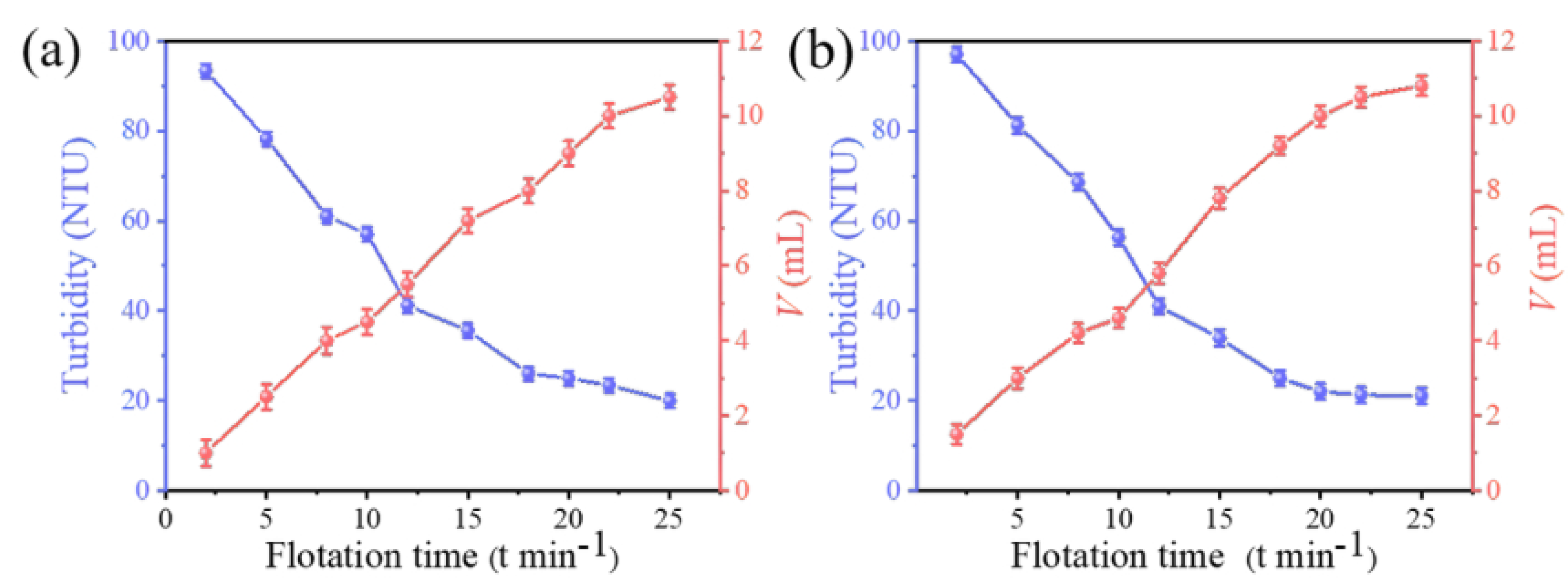
Flotation time has a significant influence on the flotation of adsorbed particles. Therefore, the influence of flotation time on the separation and extraction of rubidium and cesium ions through adsorption–flotation was investigated. From Figure 4, it can be seen that with the increase in flotation time, the turbidity in the bottom liquid gradually decreased, and after a flotation time of 18 min, its turbidity changed more slowly. With the increased flotation time, the volume of liquid removed by flotation also increased, which was due to the fact that with the increase in flotation time, cetyltrimethylammonium bromide also produced foam continuously, so the volume of liquid trapped in the foam separated by flotation also increases. When the flotation time was short, the amount of foam produced was small, and the contact time between the precipitate and the foam was short, which was insufficient to separate all the solids through flotation [27]. Therefore, 18 min was selected as the flotation time for comprehensive consideration. The turbidity after adsorption–flotation of Rb+ and Cs+ was 180.08 and 180.15, respectively, and the turbidity after flotation was 19.90 and 21.12, respectively, under the above preferred conditions, and thus the flotation efficiency was calculated to be 88.95% and 88.28, respectively.
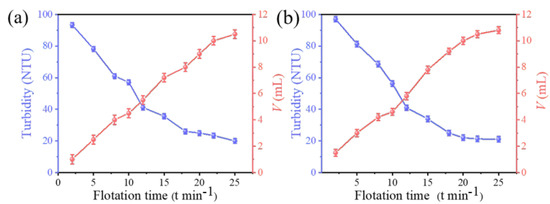
Figure 4.
(a) Effect of turbidity of bottom liquid after CTS adsorption–flotation of Rb+ and volume of liquid removed by flotation. (b) Effect of flotation time on turbidity of bottom liquid after CTS adsorption–flotation of Cs+ and volume of liquid removed by flotation.
3.5. Response Surface Optimization
- (1)
- Variance analysis
A response surface optimization experiment was conducted by taking the adsorption flotation of Rb+ by CTS as an example. The variance analysis results of Rb+ adsorption–flotation in the CTS–Rb system are shown in Table 2. Regression fitting was conducted on the experimental data to obtain a prediction model of the system: Turbidity = 29.7068.53 A − 20.99 B − 9.28 C − 3.42 D − 9.77 AB − 12.40 AC − 6.18 AD + 3.81 BC − 0.77 BD + 0.24 CD + 127.98 A2 + 18.36 B2 + 9.55 C2 + 7.42 D2. In the equation, A, B, C, and D represent pH, bubble formation rate, concentration of CTAB, and flotation time, respectively. AB, AC, AD, BC, BD, and CD are the interaction terms between these variables in pairs, and A2, B2, C2, and D2 are the square terms of the independent variables. In the above equation, the positive coefficient had a negative impact on the turbidity of the bottom liquid after adsorption flotation of Rb+, and the positive coefficient increased the turbidity [28].
Table 2.
Variance analysis table of Rb+ in CTS adsorption–flotation.
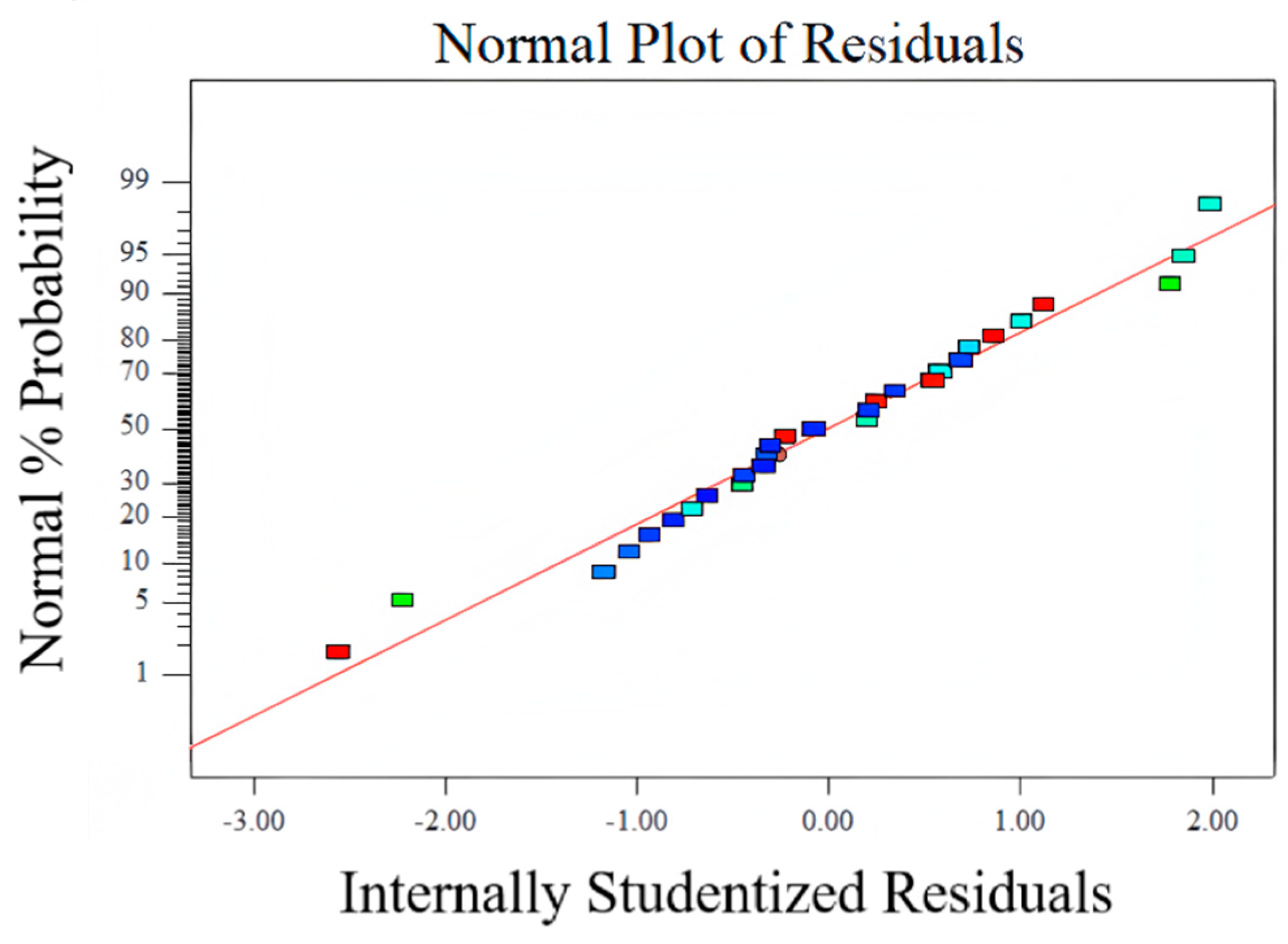
According to the results in Table 2, the F-value of the model was 29.77, and the low error probability value [P < 0.0001] indicated that the generated model represented the experimental data statistically significantly. The misfit term was not significant, indicating that the model could accurately predict the turbidity of the bottom liquid after adsorption of flotation Cs+. Figure 5 demonstrates the relationship between the predicted and actual values, and it can be seen that the distribution of the predicted values was consistent with the response of the actual values, which indicates that the obtained regression model could explain the relationship between the response values and the independent variables [29]. The data were normally distributed along a straight line, with a small error within the experimental parameters.
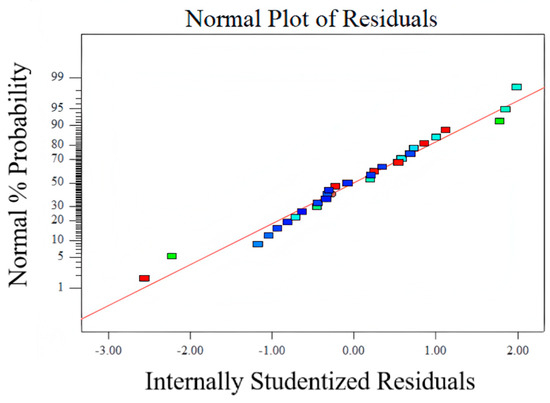
Figure 5.
Normal distribution plot of the residuals.
- (2)
- The influence of flotation operation parameters on the turbidity of the flotation bottom liquid
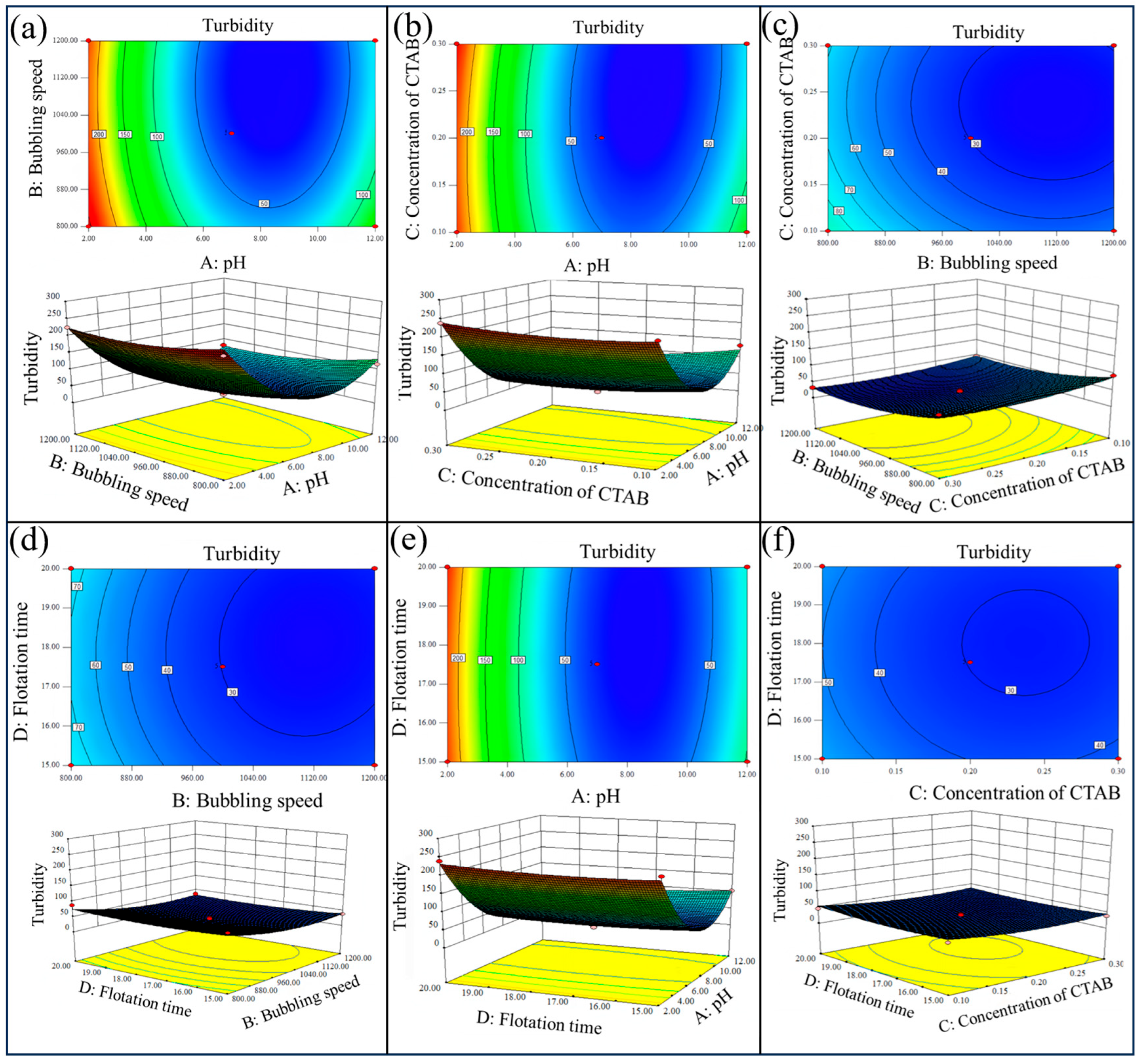
The effects of four variables on the turbidity of the bottom liquid after flotation were analyzed. Response surface plots showing the change in turbidity under the influence of two interacting factors were plotted and projected onto a plane to obtain the corresponding contour plots. The contour plots and three-dimensional response surface maps both show the effect of two independent variables on turbidity, with the other factors held at zero. The steeper the slope of the response surface, the greater the change in contour density, indicating that changes in operating conditions had a greater impact on the response values. Figure 6a shows the effect pattern of pH and aeration rate on turbidity; as the pH increased from 2 to 12, the aeration rate increased from 800 r/min to 1200 r/min, and the turbidity gradually decreased. Meanwhile, from the change in contour density, pH had a greater effect on turbidity compared with the aeration rate. Figure 6b shows that as the pH increased from 2 to 12, the concentration of CTAB increased from 0.1 mmol/L to 0.3 mmol/L, and the turbidity first decreased and then increased, while the change in contour density shows that pH had a greater effect. Figure 6c shows the influence of aeration rate and CTAB concentration on turbidity, with the increase in aeration rate from 800 r/min to 1200 r/min, the concentration of CTAB increased from 0.1 mmol/L to 0.3 mmol/L, and the turbidity of the bottom liquid was gradually reduced. At the same time, as seen from the change in contour density, the aeration rate had a greater influence on turbidity compared with the concentration of CTAB. Figure 6d shows the effect of aeration rate and flotation time on turbidity. When 800 r/min was increased to 1200 r/min, and the flotation time was increased from 15 min to 20 min, the turbidity gradually decreased, and from the change in contour density, it can be seen that the aeration rate had a greater effect. Figure 6e indicates that as the pH increased from 2 to 12 and the flotation time increased from 15 min to 20 min, the turbidity of the substrate decreased and then increased, and the change in contour density shows that the pH had a greater effect. From Figure 6f, it can be seen that the concentration of CTAB increased from 0.1 mmol/L to 0.3 mmol/L, the flotation time increased from 15 min to 20 min, and the turbidity of the bottom liquid decreased. From the change in contour density, it can be seen that the concentration of CTAB had a greater influence on the turbidity compared with the flotation time. In summary, in the process of CTS–TTAB adsorption–flotation of Rb+, the size of the influence of the four factors on the turbidity of the bottom liquid after flotation was as follows: pH > aeration rate > concentration of CTAB > flotation time.
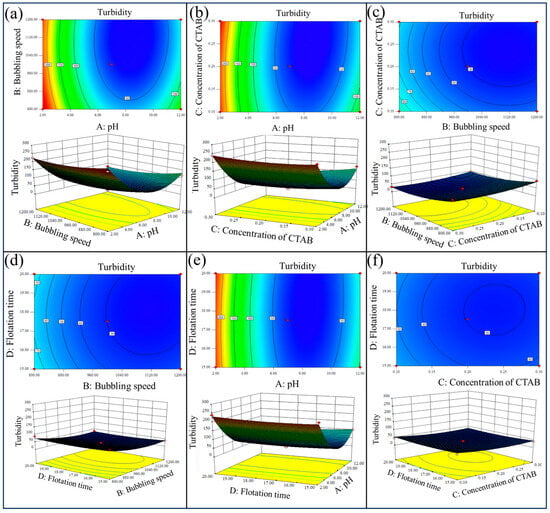
Figure 6.
(a) Contour plots and response surface plots of pH and bubble speed on bottom liquid turbidity. (b) Contour plots and response surface plots of pH and CTAB concentration on bottom liquid turbidity. (c) Contour plots and response surface plots of CTAB concentration and bubble speed on bottom liquid turbidity. (d) Contour plots and response surface plots of bubble speed and flotation time on bottom liquid turbidity. (e) Contour plots and response surface plots of pH and flotation time on bottom liquid turbidity. (f) Contour plots and response surface plots of CTAB concentration and flotation time on bottom liquid turbidity.
- (3)
- Verification of optimized conditions
The optimal reaction conditions for pH (8.64), aeration rate (1121 r/min), concentration of CTAB (0.26 mmol/L), and flotation time (18.47 min) were determined. The experimental results showed that the turbidity of the bottom liquid after flotation of CTS–Rb was 8.92 NTU under the above process conditions and at an adsorbent addition of 0.5 g/L−1. The relative error between the predicted value (8.76 NTU) and the experimental value was 1.79%. Adsorption and flotation experiments with Cs+ were also carried out under the optimal process conditions, and the turbidity was 9.33 NTU, which was lower than that of the one-factor experimental process. After adsorption of Rb+ and Cs+, the flotation efficiency was 95.05% and 94.82%, respectively, under the optimal conditions. The experimental validation results show that the relative error between the predicted value and the experimental value was relatively small, which indicates that the model obtained through the response surface method was reasonable and reliable, and had a certain guiding effect.
3.6. Adsorption–Flotation Machine
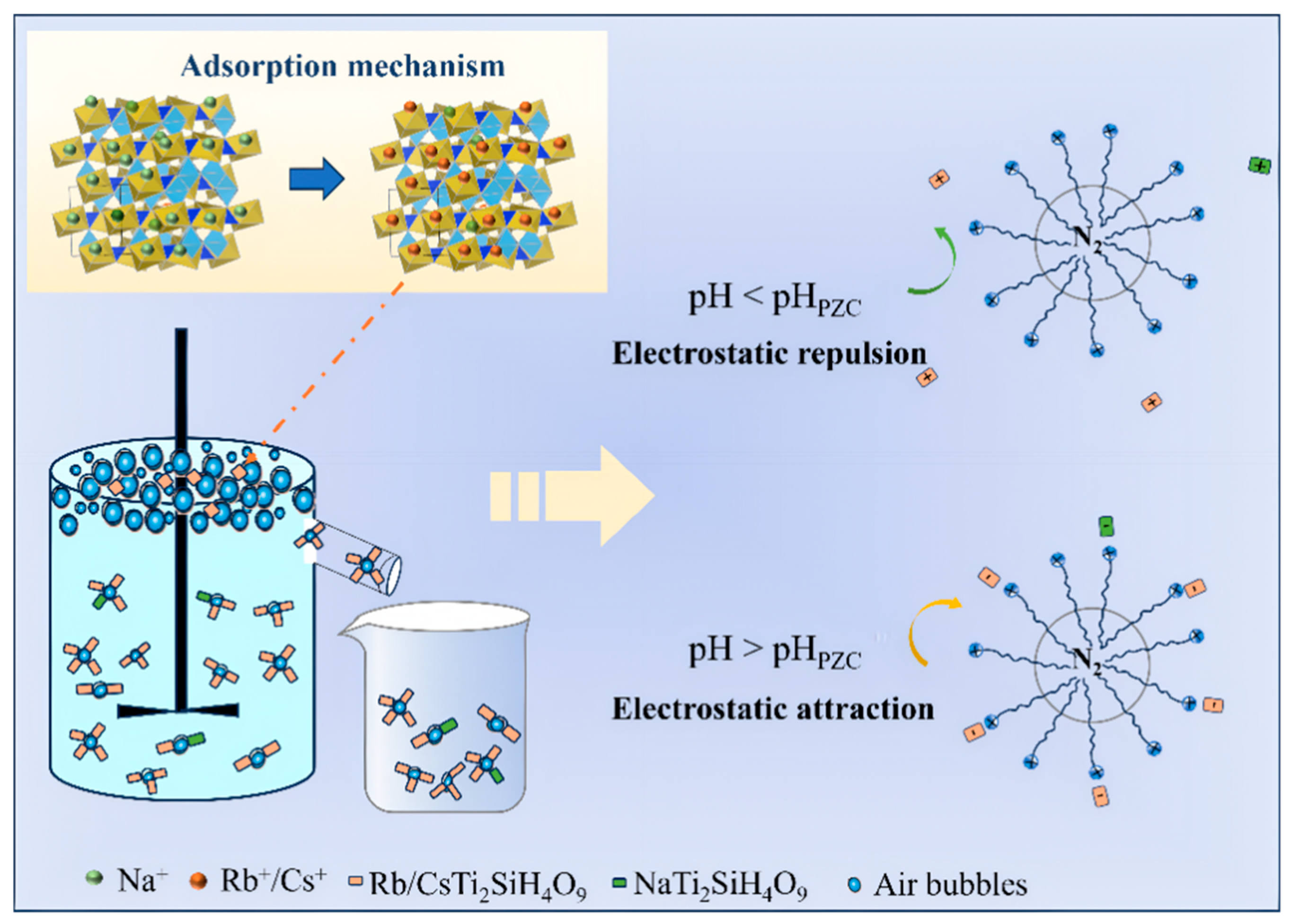
The adsorption process mainly takes place through the mechanism of ion exchange action, where Rb+ and Cs+ replace Na+ in the CTS structure in solution [30]. The flotation process could be analyzed in conjunction with a zero-charge point analysis, which revealed that the pHpzc after adsorption of Rb+ and Cs+ by CTS was 5.34 and 5.25, respectively, as shown in Figure 1f. The trapping agent used for flotation in the experiments, CTAB, is positively charged in solution. Therefore, when pH < pHpzc, the products after adsorption are positively charged, and then the adsorbent cannot be floated by electrostatic repulsion with CTAB. When pH > pHpzc, the surface charge of the products after adsorption of Rb+ and Cs+ by CTS is negative, and they can be combined with positively charged CTAB through electrostatic attraction, and then separated from the liquid phase through the flotation process. Based on the previous discussion, a schematic of adsorption–flotation coupling is proposed, as shown in Figure 7, where the precipitates are mainly floated by CTAB through electrostatic attraction to realize solid–liquid separation.
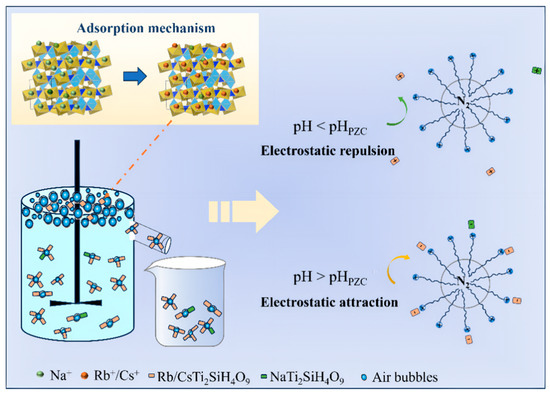
Figure 7.
Schematic diagram of adsorption–flotation of Rb+ and Cs+ in CTS–CTAB system.
4. Conclusions
This study validated the efficacy of a titanium-silicate (CTS)—CTAB system for the separation and extraction of rubidium (Rb+) and cesium (Cs+) via the adsorption–flotation coupling method. Through a systematic investigation of the key factors influencing separation efficiency—pH, aeration rate, CTAB concentration, and flotation time—and utilizing the response surface optimization method to analyze the interactions among these factors, the optimal combination of process parameters was established. This approach significantly enhances separation efficiency and effectively addresses the challenges of solid–liquid separation associated with traditional powdered adsorption materials. The findings indicate that the CTS–CTAB system holds promise for separating and extracting valuable components from low-concentration liquid systems, offering both a theoretical foundation and practical guidance for optimizing the separation processes of rare and precious metals. The specific data supporting these conclusions are as follows: When pH was maintained within the range of 6–10, the aeration rate was set at 1000 r/min, the CTAB concentration was 0.2 mmol/L, and the flotation time was 18 min, the flotation efficiency was relatively high. Under these conditions, the adsorption capacities for Rb+ and Cs+ were recorded as 128.32 mg/g and 185.47 mg/g, respectively, providing baseline data for subsequent optimization. The order of significance of the factors affecting separation efficiency was determined to be pH > aeration rate > CTAB concentration > flotation time. The optimized parameters were identified as pH 8.64, bubble formation rate 1121 r/min, CTAB concentration 0.26 mmol/L, and flotation time 18.47 min. Under these refined conditions, the flotation efficiencies for Rb+ and Cs+ reached 95.05% and 94.82%, respectively, with experiments confirming the rationality and reliability of the model.
5. Future Directions
Building on the findings of this study, future work can prioritize the regeneration and cyclic utilization of the adsorbent, to enhance the economic viability and sustainability of the titanium-silicate (CTS)–CTAB system. Specifically, acid desorption technology is expected to emerge as a pivotal strategy for efficient adsorbent regeneration. By optimizing parameters such as the type of acid (e.g., diluted hydrochloric or nitric acid), concentration, temperature, and contact time, the desorption of Rb+ and Cs+ ions adsorbed onto the CTS surface could be effectively promoted. Simultaneously, the crystal structure and integrity of active sites of the adsorbent could be preserved, enabling its repeated use in multiple cycles. The eluent could be collected after the desorption experiment. Evaporation, crystallization, and suction filtration two to three times could remove most of the HCl and NH4Cl solids. The mother liquor after evaporation and crystallization would be dried at 90 °C. The dried substance could be calcined in a muffle furnace at a temperature of 400 °C, and finally the crude CsCl product could be obtained.
Author Contributions
Conceptualization, D.F. and X.Y.; methodology, W.H.; software, Y.W.; validation, Y.W., D.F. and H.L.; formal analysis, H.L.; investigation, W.H.; resources, W.H.; data curation, D.F.; writing—original draft preparation, D.F.; writing—review and editing, W.H.; visualization, W.H.; supervision, Y.W.; project administration, Y.W.; funding acquisition, D.F. All authors have read and agreed to the published version of the manuscript.
Funding
This research was supported by the Natural Science Foundation Project of Qinghai Province (Project No.: 2025-ZJ-936Q), the Youth Science Foundation Project of Qinghai University (Project No.: 2024-QGY-4) and Postdoctoral program(ISL). We express our sincere gratitude here. Special thanks go to Teacher Ye Xiushen for her meticulous guidance on research ideas and experimental design, as well as to the team members for their significant assistance during the implementation of the experiments and data analysis.
Data Availability Statement
The original contributions presented in this study are included in the article. Further inquiries can be directed to the corresponding author(s).
Conflicts of Interest
The authors declare no conflict of interest.
References
- Vinichuk, M.; Dahlberg, A.; Rosén, K. Cesium (137Cs and 133Cs), potassium and rubidium in macromycete fungi and sphagnum plants. In Radioisotopes—Applications in Physical Sciences; IntechOpen: Rijeka, Croatia, 2011. [Google Scholar]
- Kaczorowska, M.-A. Novel and Sustainable Materials for the Separation of Lithium, Rubidium, and Cesium Ions from Aqueous Solutions in Adsorption Processes—A Review. Materials 2024, 17, 6158. [Google Scholar] [CrossRef]
- Yan, J.; Zhang, B.; Li, J.; Yang, Y.; Wang, Y.-N.; Zhang, Y.-D.; Liu, X.-Z. Rapid and Selective Uptake of Radioactive Cesium from Water by a Microporous Zeolitic-like Sulfide. Inorg. Chem. 2023, 62, 12843–12850. [Google Scholar] [CrossRef] [PubMed]
- Liu, L. Status of Rubidium and Cesium Resources and Technology in China. Xinjiang Nonferrous Met. 2013, 1, 158–165. [Google Scholar]
- Bao, A.; Qian, Z.; Zheng, H.; Liu, Z.-Y.; Huang, D.-F.; Wang, S.-Y.; Li, B. Separation and extraction methods of rubidium and cesium and their research progress. Appl. Chem. Ind. 2017, 46, 1377–1382. [Google Scholar]
- Sun, H.; Bao, Y.; Cao, H.; Zhou, L. Research progress on brine water resources and analysis methods in Qinghai Salt Lake. Guangdong Chem. Ind. 2012, 39, 11–12. [Google Scholar]
- Li, Z.; Pranolo, Y.; Zhu, Z.; Cheng, C.Y. Solvent extraction of cesium and rubidium from brine solutions using 4-tert-butyl-2-(α-methylbenzyl)-phenol. Hydrometallurgy 2017, 171, 1–7. [Google Scholar] [CrossRef]
- Liu, H.; Wang, Y.; Zhang, Q.; Han, W.; Zhang, H.; Ye, X. High-Efficiency Selective Adsorption of Rubidium and Cesium from Simulated Brine Using a Magnesium Ammonium Phosphate Adsorbent. Separations 2024, 11, 277. [Google Scholar] [CrossRef]
- Soliman, M.A.; Rashad, G.M.; Mahmoud, M.R. Fast and Efficient Cesium Removal from Simulated Radioactive Liquid Waste by an Isotope Dilution–precipitate Flotation Process. Chem. Eng. J. 2015, 275, 342–350. [Google Scholar] [CrossRef]
- Yan, M.; Zhong, H.; Zhang, Y. Research Progress on Separation and Extraction of Rubidium and Cesium in Brine. Salt Lake Res. 2006, 14, 67–72. [Google Scholar]
- Li, C.; Li, K.; Li, S.; Ma, R. Efficient Enrichment of Rubidium and Cesium from High-Salt Solution by Copper Hexacyanoferrate Co-Precipitation. ChemistrySelect 2025, 10, e202406007. [Google Scholar] [CrossRef]
- Tan, X.M.; Zhang, L.Z.; Zhang, X.F. Research on Separating Rubidium from Deep Potassium-Rich Old Brine by Solvent Extraction. Appl. Mech. Mater. 2015, 700, 572–575. [Google Scholar] [CrossRef]
- Shi, Z.; Du, X.; Wang, S.; Guo, Y.; Deng, T. Application Status of Rubidium, Cesium and Research Situation of Its Separation from Brine with Solvent Extraction, IOP Conference Series. Mater. Sci. Eng. 2017, 274, 12081–12085. [Google Scholar]
- Wang, Y.; Zhang, Q.; Li, K.; Wang, C.; Fang, D.; Han, W.; Wu, Z. Efficient Selective Adsorption of Rubidium and Cesium from Practical Brine Using a Metal–Organic Framework-Based Magnetic Adsorbent. Langmuir 2024, 40, 9688–9701. [Google Scholar] [CrossRef]
- Wang, G.; Zhang, H.; Qian, W.; Tang, A.; Cao, H.; Feng, W.; Zheng, G. Synthesis and assessment of spherogranular composite tin pyrophosphate antimonate adsorbent for selective extraction of rubidium and cesium from salt lakes. Desalination 2024, 581, 117540. [Google Scholar] [CrossRef]
- Wang, M.; Xu, J.; Zhao, L.; Lin, C.; Gao, J.; Xia, Y. Adsorption of Rubidium/Cesium From Aqueous Solution Using Silane-Modified Prussian Blue-Based Composites. J. Sep. Sci. 2025, 48, e70164. [Google Scholar] [CrossRef] [PubMed]
- Ye, X.; Wu, Z.; Li, W.; Liu, H.; Li, Q.; Qing, B.; Ge, F. Rubidium and cesium ion adsorption by an ammonium molybdophosphate–calcium alginate composite adsorbent. Colloids Surf. A 2009, 342, 76–83. [Google Scholar] [CrossRef]
- Mimura, H.; Wu, Y.; Wang, Y.; Niibori, Y.; Yamagishi, I.; Ozawa, M.; Koyama, S. Selective separation and recovery of cesium by ammonium tungstophosphate-alginate microcapsules. In Proceedings of the 18th International Conference on Nuclear Engineering, Xi’an, China, 17–21 May 2010; pp. 419–427. [Google Scholar]
- Lei, H.; Muhammad, Y.; Wang, K.; Yi, M.; He, C.; Wei, Y.; Fujita, T. Facile fabrication of metakaolin/slag-based zeolite microspheres (M/SZMs) geopolymer for the efficient remediation of Cs+ and Sr2+ from aqueous media. J. Hazard. Mater. 2021, 406, 124292. [Google Scholar] [CrossRef] [PubMed]
- Cardoso, S.-P.; Lito, P.-F.; Rocha, J.; Lin, Z.; Silva, C.-M. Synthesis and permeation properties of small-pore Titanosilicate AM-3 membranes. Procedia Eng. 2021, 44, 926–927. [Google Scholar] [CrossRef]
- Oleksiienko, O.; Wolkersdorfer, C.; Sillanpää, M. Titanosilicates in cation adsorption and cation exchange—A review. Chem. Eng. J. 2017, 317, 570–585. [Google Scholar] [CrossRef]
- Clearfield, A.; Tripathi, A.; Medvedev, D.; Celestian, A.J.; Parise, J.B. In situ type study of hydrothermally prepared titanates and silicotitanates. J. Mater. Sci. 2006, 41, 1325–1333. [Google Scholar] [CrossRef]
- Hu, N.; Liu, W.; Jin, L.; Li, Y.; Li, Z.; Liu, G.; Yin, H. Recovery of trace Cu2+ using a process of nano-adsorption coupled with flotation: SNP as an adsorbing carrier. Sep. Purif. Technol. 2017, 184, 257–263. [Google Scholar] [CrossRef]
- Taşdemir, T.; Başaran, H.K. Removal of suspended particles from wastewater by conventional flotation and floc-flotation. El-Cezeri 2021, 8, 421–431. [Google Scholar] [CrossRef]
- Wang, J.Y.; Wang, L.; Cheng, H.Z.; Runge, K. A comprehensive review on aeration methods used in flotation machines: Classification, mechanisms and technical perspectives. J. Clean. Prod. 2024, 435, 140335. [Google Scholar] [CrossRef]
- Wang, J.; Cao, Y.; Li, G.; Deng, L.; Li, S. Effect of CTAB concentration on foam properties and discussion based on liquid content and bubble size in the foam. Int. J. Oil Gas Coal Eng. 2018, 6, 18–24. [Google Scholar] [CrossRef]
- Koh, P.T.L.; Smith, L.K. The effect of stirring speed and induction time on flotation. Miner. Eng. 2011, 24, 442–448. [Google Scholar] [CrossRef]
- Bai, C.; Guo, M.; Liu, Z.; Wu, Z.; Li, Q. A novel method for removal of boron from aqueous solution using sodium dodecyl benzene sulfonate and D-mannitol as the collector. Desalination 2018, 431, 47–55. [Google Scholar] [CrossRef]
- Ali, M.B.; Kairouani, L. Multi-objective optimization of operating parameters of a MSF-BR desalination plant using solver optimization tool of Matlab software. Desalination 2016, 381, 71–83. [Google Scholar] [CrossRef]
- Ding, D.; Li, K.; Fang, D.Z.; Ye, X.S.; Hu, Y.Q.; Tan, X.L.; Liu, H.N.; Wu, Z.J. Novel biomass-derived adsorbents grafted sodium titanium silicate with high adsorption capacity for Rb+ and Cs+ in the salt lake brine. ChemistrySelect 2019, 4, 13630–13637. [Google Scholar] [CrossRef]
Disclaimer/Publisher’s Note: The statements, opinions and data contained in all publications are solely those of the individual author(s) and contributor(s) and not of MDPI and/or the editor(s). MDPI and/or the editor(s) disclaim responsibility for any injury to people or property resulting from any ideas, methods, instructions or products referred to in the content. |
© 2025 by the authors. Licensee MDPI, Basel, Switzerland. This article is an open access article distributed under the terms and conditions of the Creative Commons Attribution (CC BY) license (https://creativecommons.org/licenses/by/4.0/).