The Influence of Ethanol on the Liquid Phase of Hydrothermal Carbonization of Sewage Sludge



Abstract
1. Introduction
2. Materials and Methods
2.1. Analysis of Raw Material
2.2. Experimental Process
2.3. Analysis Procedure
2.4. Limitations of the Study
3. Results and Discussion
3.1. Analysis of Sewage Sludge
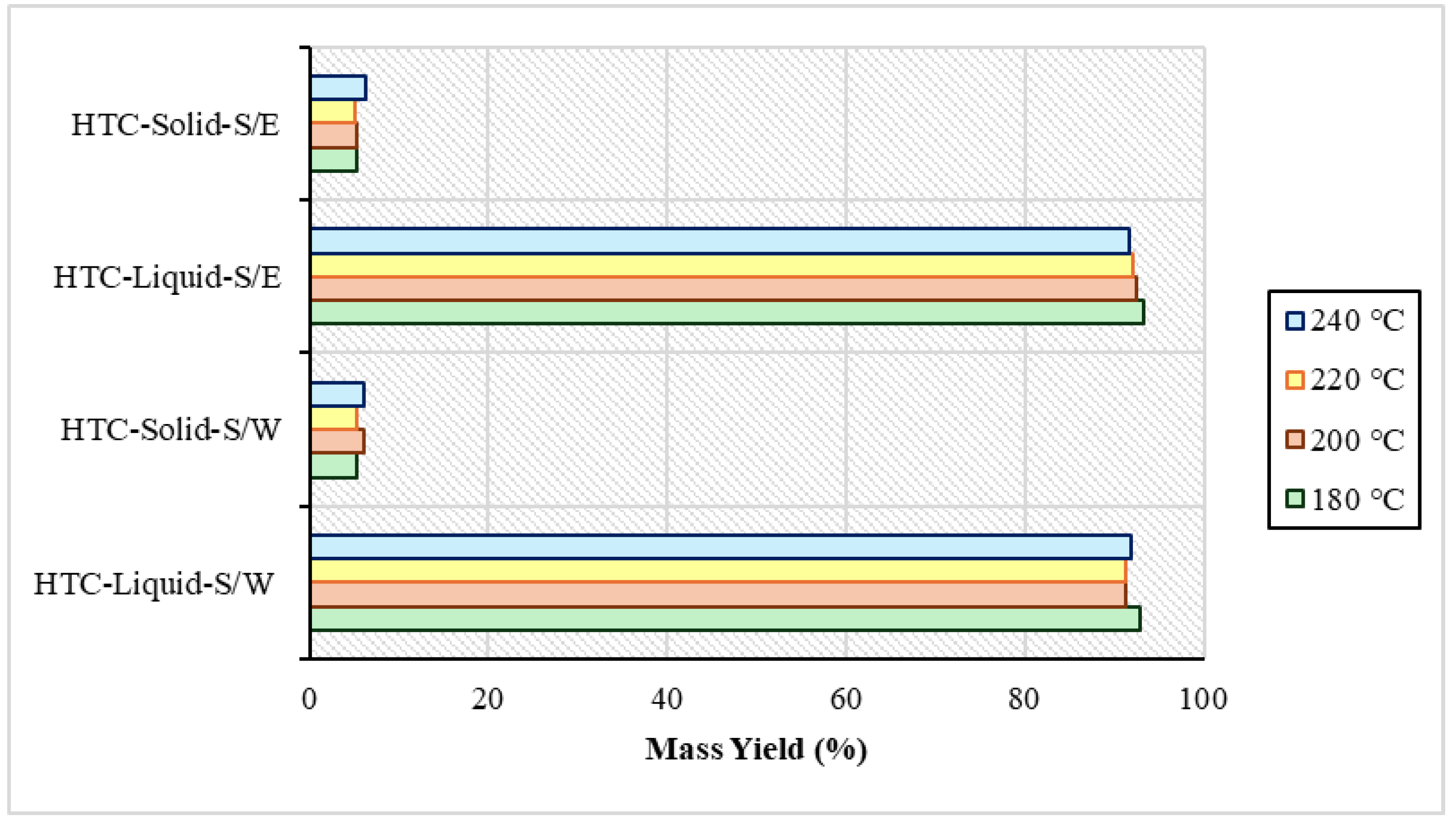
3.2. Mass Yield After Experimental Process
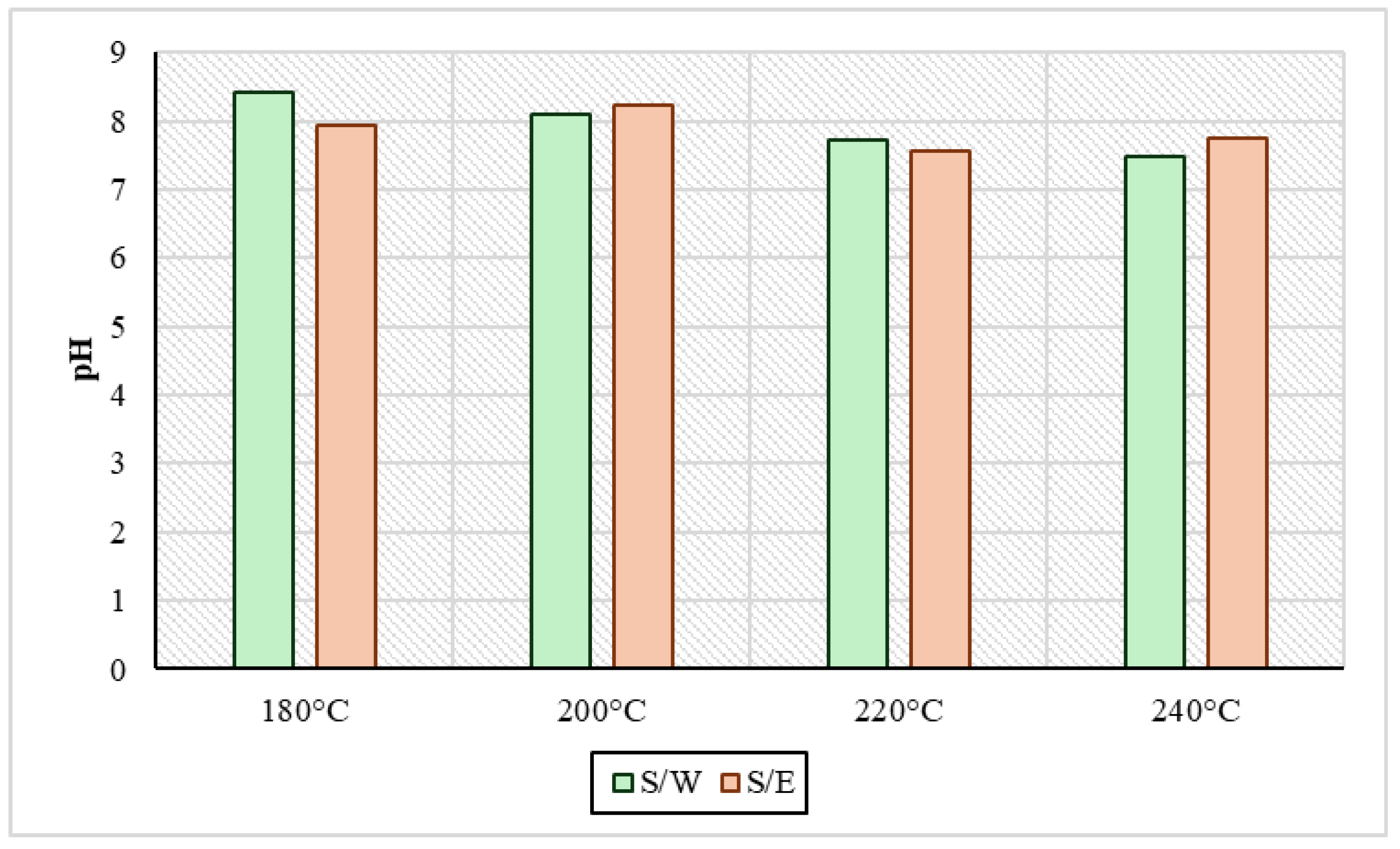
3.3. pH Values of Liquid Products
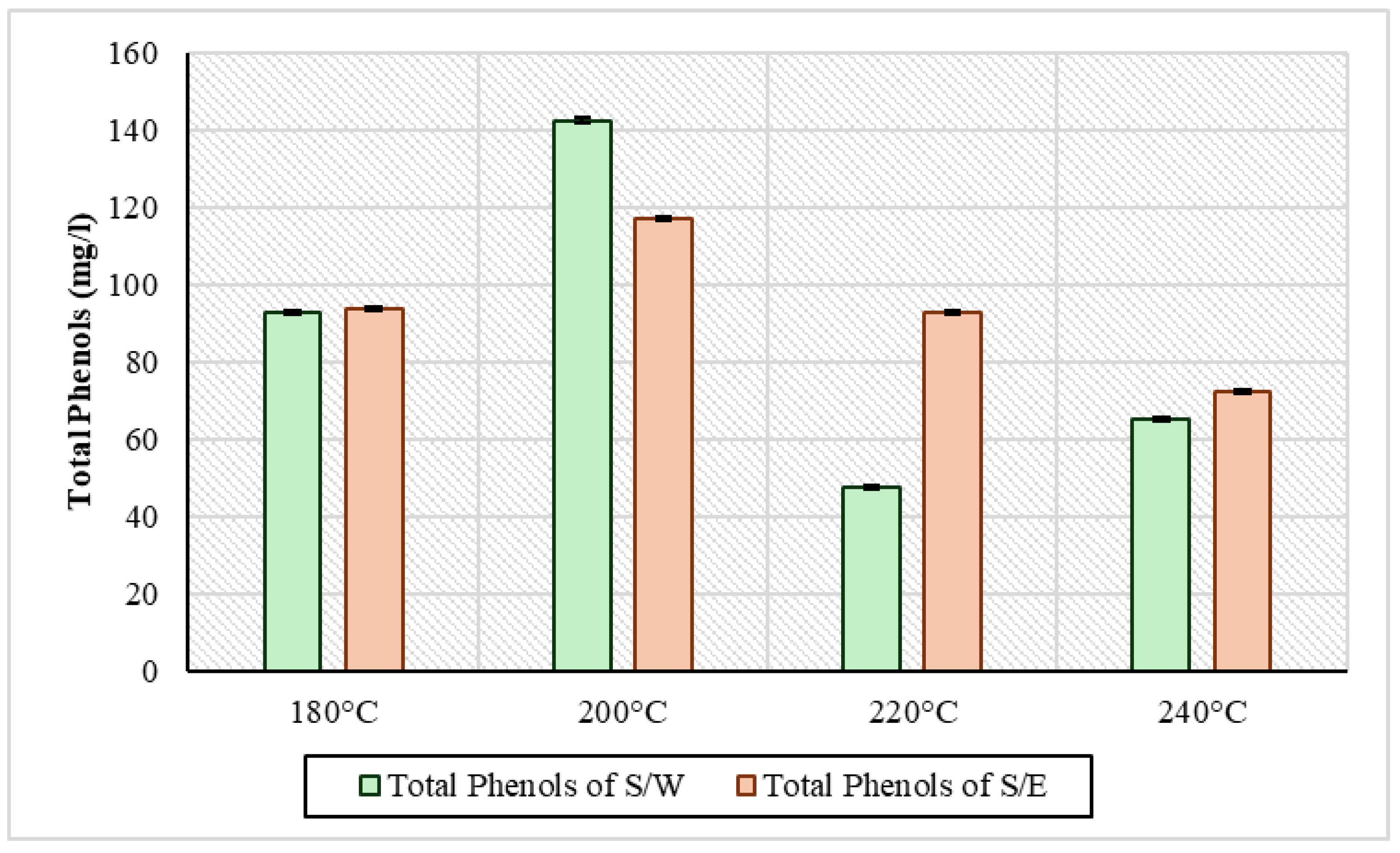
3.4. Total Phenolic Content
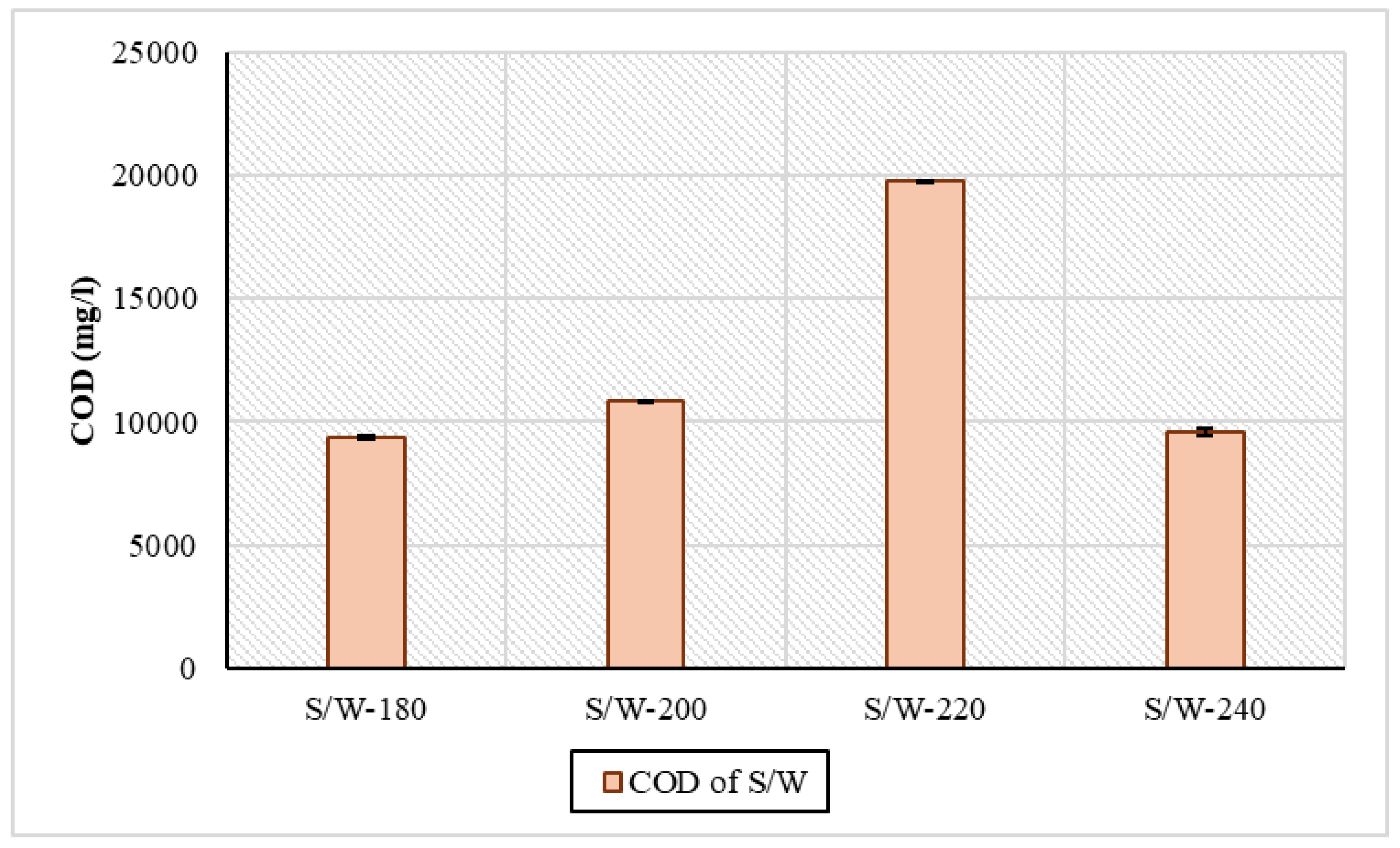
3.5. COD Concentration
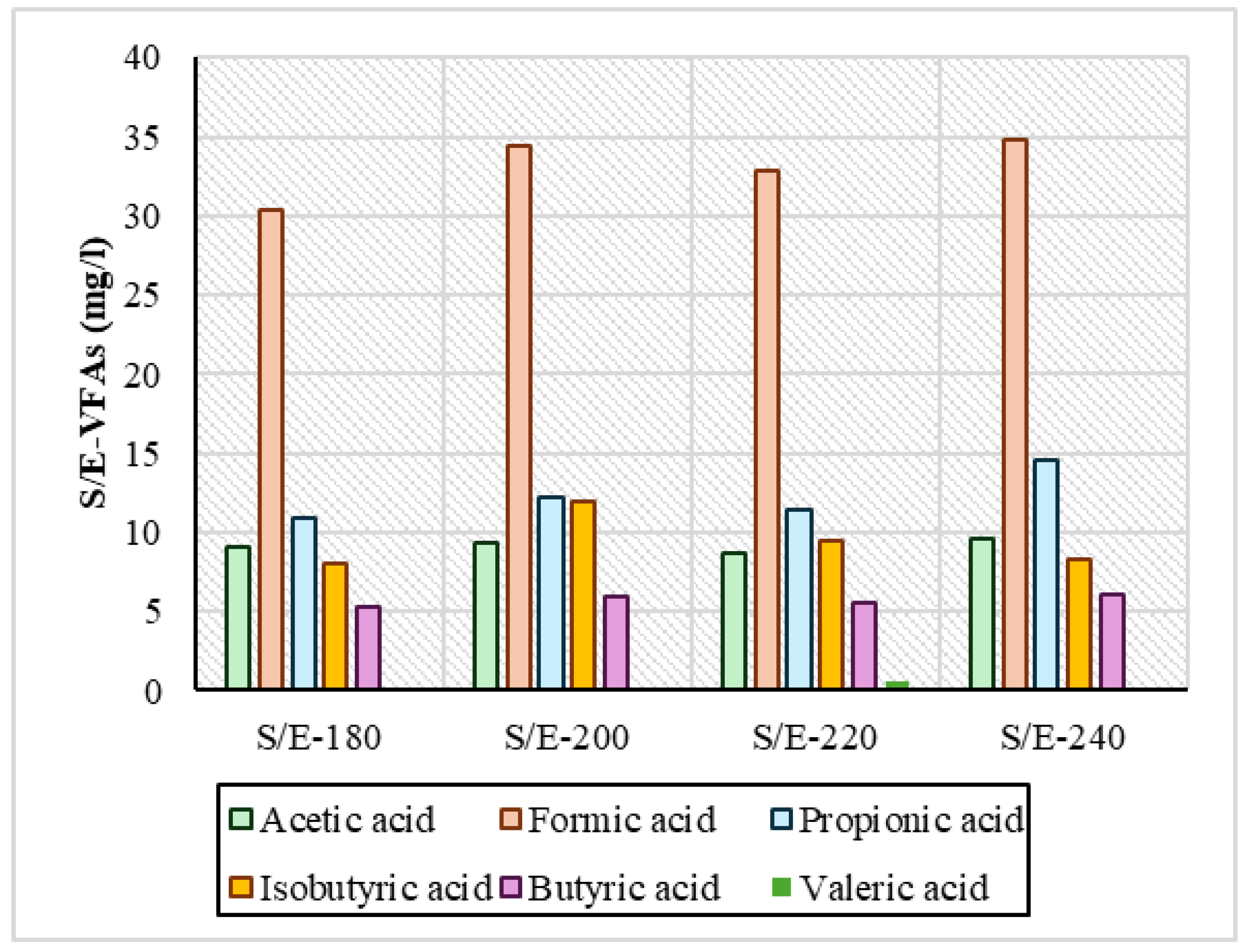
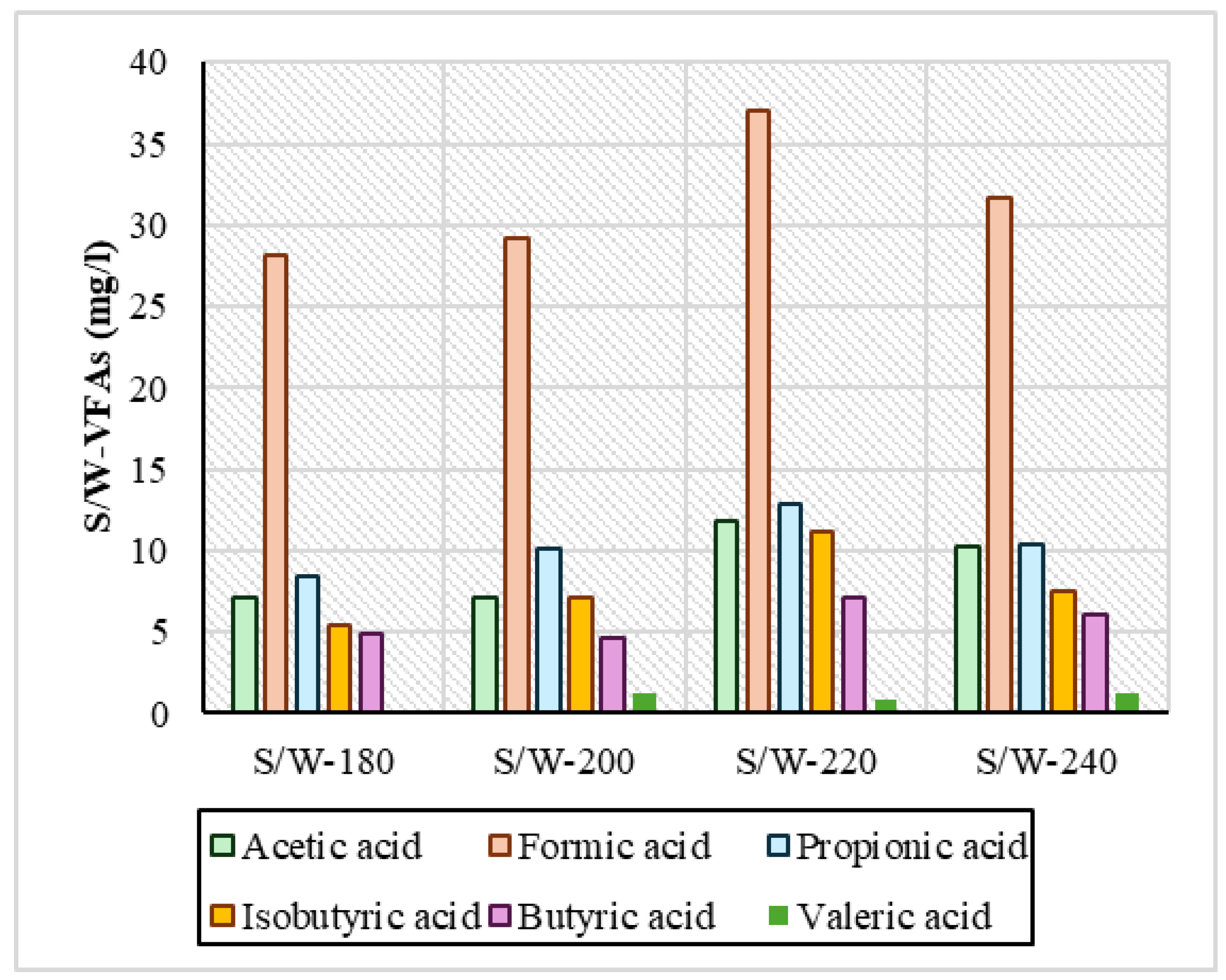
3.6. Concentration of VFAs
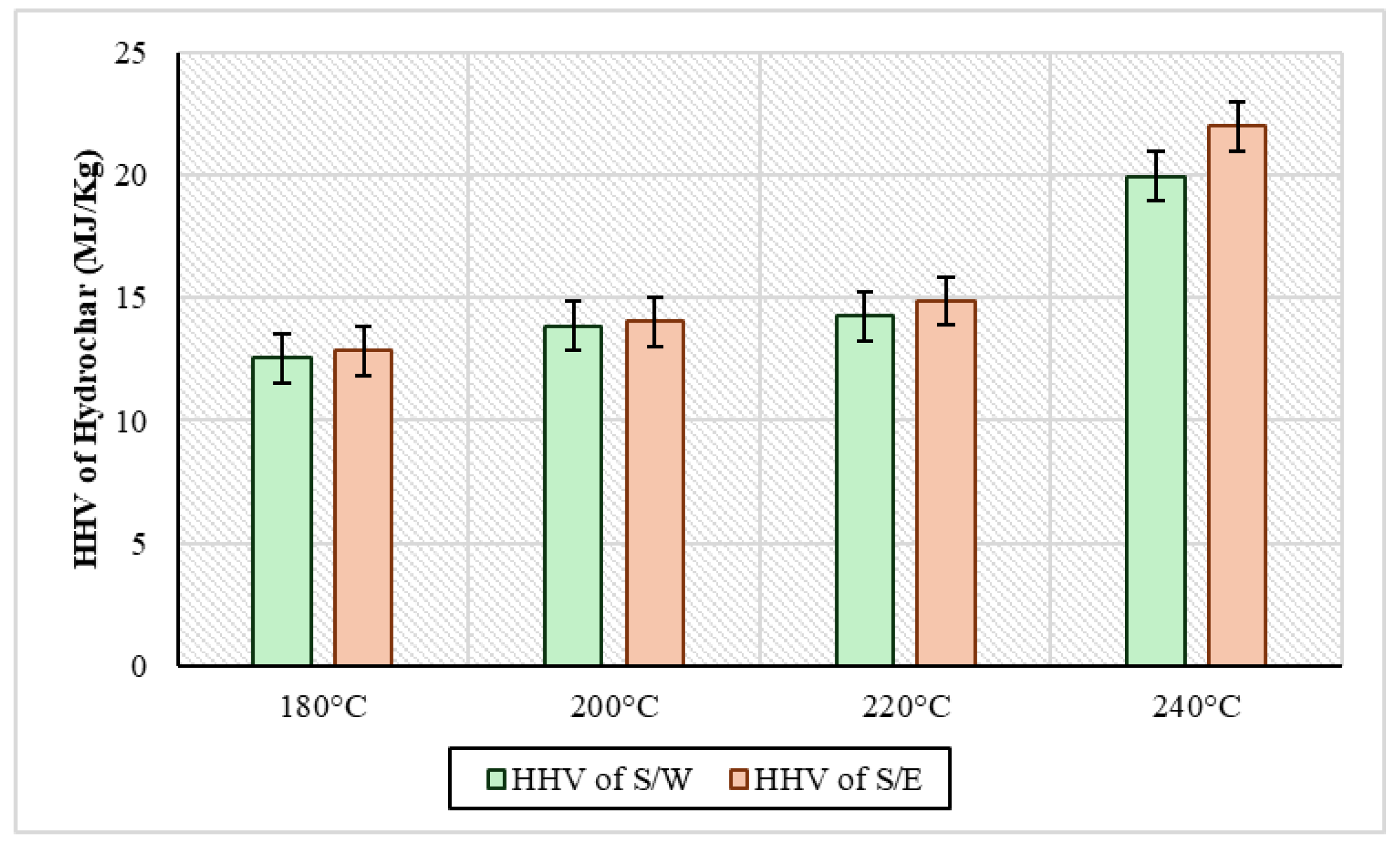
3.7. HHV of Hydrochar
4. Conclusions
Author Contributions
Funding
Data Availability Statement
Acknowledgments
Conflicts of Interest
Abbreviations
| COD | Chemical Oxygen Demand |
| °C | Degrees of Celsius |
| HHV | High Heating Value |
| HTC | Hydrothermal Carbonization |
| MJ/kg | Megajoule per kilogram |
| mg/L | Milligram per liter |
| TSs | Total Solids |
| VFAs | Volatile Fatty Acids |
| VSs | Volatile Solids |
References
- Wang, W.; Zhou, W.; Wang, Y.; Wang, M.; Wang, Q.; Hu, Y.; Wu, J.; Hu, J.; Luo, T.; Fan, L. Production of low-nitrogen and oxygen biocrude and coupling recovery of nitrogen and phosphorus from hydrothermal liquefaction of sewage sludge with MgCl2. Chem. Eng. J. 2025, 505, 159184. [Google Scholar] [CrossRef] [Scilit]
- Yang, Y.; Du, Z.; Cao, C.; Duan, P. Production of high value-added carbon material precursors via direct hydrothermal conversion of municipal sewage sludge coupled with air flotation separation: A review. Sci. Total Environ. 2025, 982, 179655. [Google Scholar] [CrossRef] [Scilit] [PubMed]
- Zhang, X.P.; Zhang, C.; Li, X.; Yu, S.H.; Tan, P.; Fang, Q.Y.; Chen, G. A two-step process for sewage sludge treatment: Hydrothermal treatment of sludge and catalytic hydrothermal gasification of its derived liquid. Fuel Process. Technol. 2018, 180, 67–74. [Google Scholar] [CrossRef] [Scilit]
- Yu, Y.; Lei, Z.; Yang, X.; Yang, X.; Huang, W.; Shimizu, K.; Zhang, Z. Hydrothermal carbonization of anaerobic granular sludge: Effect of process temperature on nutrients availability and energy gain from produced hydrochar. Appl. Energy 2018, 229, 88–95. [Google Scholar] [CrossRef] [Scilit]
- Qian, L.; Wang, S.; Savage, P.E. Hydrothermal liquefaction of sewage sludge under isothermal and fast conditions. Bioresour. Technol. 2017, 232, 27–34. [Google Scholar] [CrossRef] [Scilit]
- He, C.; Chen, C.L.; Giannis, A.; Yang, Y.; Wang, J.Y. Hydrothermal gasification of sewage sludge and model compounds for renewable hydrogen production: A review. Renew. Sustain. Energy Rev. 2014, 39, 1127–1142. [Google Scholar] [CrossRef] [Scilit]
- Gao, N.; Kamran, K.; Quan, C.; Williams, P.T. Thermochemical conversion of sewage sludge: A critical review. Prog. Energy Combust. Sci. 2020, 79, 100843. [Google Scholar] [CrossRef] [Scilit]
- Fan, Y.; Hornung, U.; Dahmen, N. Hydrothermal liquefaction of sewage sludge for biofuel application: A review on fundamentals, current challenges and strategies. Biomass Bioenergy 2022, 165, 106570. [Google Scholar] [CrossRef] [Scilit]
- Gude, V.G. Energy positive wastewater treatment and sludge management. Edorium J. Waste Manag. 2015, 1, 10–15. [Google Scholar]
- Fonts, I.; Gea, G.; Azuara, M.; Ábrego, J.; Arauzo, J. Sewage sludge pyrolysis for liquid production: A review. Renew. Sustain. Energy Rev. 2012, 16, 2781–2805. [Google Scholar] [CrossRef] [Scilit]
- Thomsen, L.B.S.; Carvalho, P.N.; Dos Passos, J.S.; Anastasakis, K.; Bester, K.; Biller, P. Hydrothermal liquefaction of sewage sludge; energy considerations and fate of micropollutants during pilot scale processing. Water Res. 2020, 183, 116101. [Google Scholar] [CrossRef] [Scilit]
- Wang, L.; Chang, Y.; Li, A. Hydrothermal carbonization for energy-efficient processing of sewage sludge: A review. Renew. Sustain. Energy Rev. 2019, 108, 423–440. [Google Scholar] [CrossRef] [Scilit]
- Huang, H.J.; Yuan, X.Z.; Li, B.T.; Xiao, Y.D.; Zeng, G.M. Thermochemical liquefaction characteristics of sewage sludge in different organic solvents. J. Anal. Appl. Pyrolysis 2014, 109, 176–184. [Google Scholar] [CrossRef] [Scilit]
- Colin, J.; Sarrion, A.; Diaz, E.; de la Rubia, M.A.; Mohedano, A.F. Ecotoxicity assessment of hydrochar from hydrothermal carbonization of biomass waste. Sustain. Chem. Pharm. 2025, 44, 101909. [Google Scholar] [CrossRef] [Scilit]
- Masoumi, S.; Borugadda, V.B.; Nanda, S.; Dalai, A.K. Hydrochar: A review on its production technologies and applications. Catalysts 2021, 11, 939. [Google Scholar] [CrossRef] [Scilit]
- Wang, C.; Lin, X.; Zhang, X.; Show, P.L. Research advances on production and application of algal biochar in environmental remediation. Environ. Pollut. 2024, 348, 123860. [Google Scholar] [CrossRef] [Scilit]
- Liakos, D.; Altiparmaki, G.; Kalampokidis, A.; Lekkas, D.F.; Vakalis, S. The role of hydrochar on the production of biogas and volatile fatty acids during anaerobic digestion of cheese whey wastewater. Sustain. Chem. Pharm. 2023, 35, 101153. [Google Scholar] [CrossRef] [Scilit]
- Toor, S.S.; Rosendahl, L.; Rudolf, A. Hydrothermal liquefaction of biomass: A review of subcritical water technologies. Energy 2011, 36, 2328–2342. [Google Scholar] [CrossRef] [Scilit]
- Román, S.; Nabais, J.M.V.; Laginhas, C.; Ledesma, B.; González, J.F. Hydrothermal carbonization as an effective way of densifying the energy content of biomass. Fuel Process. Technol. 2012, 103, 78–83. [Google Scholar] [CrossRef] [Scilit]
- Guvenatam, B. Catalytic Pathways for Lignin Depolymerization. Ph.D. Thesis, Eindhoven University of Technology, Eindhoven, The Netherlands, 2015. Available online: https://research.tue.nl/en/publications/08fcceb0-6ab6-45e9-ab13-69fc9f076fae (accessed on 15 November 2025).
- Ouyang, X.; Huang, X.; Zhu, Y.; Qiu, X. Ethanol-enhanced liquefaction of lignin with formic acid as an in situ hydrogen donor. Energy Fuels 2015, 29, 5835–5840. [Google Scholar] [CrossRef] [Scilit]
- Pothoczki, S.; Pethes, I.; Pusztai, L.; Temleitner, L.; Ohara, K.; Bakó, I. Properties of hydrogen-bonded networks in ethanol–water liquid mixtures as a function of temperature: Diffraction experiments and computer simulations. J. Phys. Chem. B 2021, 125, 6272–6279. [Google Scholar] [CrossRef] [Scilit] [PubMed]
- Masoumi, S.; Boahene, P.E.; Dalai, A.K. Biocrude oil and hydrochar production and characterization obtained from hydrothermal liquefaction of microalgae in methanol-water system. Energy 2021, 217, 119344. [Google Scholar] [CrossRef] [Scilit]
- Flores–Oña, D.; Fullana, A. Carbon nanoparticles production using solvent assisted hydrothermal carbonization. Diam. Relat. Mater. 2020, 108, 107960. [Google Scholar] [CrossRef] [Scilit]
- Zhang, B.; Zhang, J.; Xia, A.; Tang, X.; Zhu, X.; Huang, Y.; Zhu, X.; Liao, Q. Co-production and upgrading of multiple products from hydrothermal carbonization of microalgae with organic solvent assistance. Bioresour. Technol. 2025, 429, 132514. [Google Scholar] [CrossRef] [Scilit]
- Zhang, Q.; Mu, K.; Han, J.; Qin, L.; Zhao, B.; Yi, L. Low nitrogen and high value hydrochar preparation through co-hydrothermal carbonization of sludge and saw dust with acid/alcohol assistance. Energy 2023, 278, 128012. [Google Scholar] [CrossRef] [Scilit]
- Sklavos, S.; Gatidou, G.; Stasinakis, A.S.; Haralambopoulos, D. Use of solar distillation for olive mill wastewater drying and recovery of polyphenolic compounds. J. Environ. Manag. 2015, 162, 46–52. [Google Scholar] [CrossRef] [Scilit]
- APHA. Standard Methods for the Examination of Water and Wastewater, 20th ed.; American Public Health Association, Port City Press: Baltimore, MD, USA, 1998. [Google Scholar]
- Wang, R.; Lin, K.; Peng, P.; Lin, Z.; Zhao, Z.; Yin, Q.; Ge, L. Energy yield optimization of co-hydrothermal carbonization of sewage sludge and pinewood sawdust coupled with anaerobic digestion of the wastewater byproduct. Fuel 2022, 326, 125025. [Google Scholar] [CrossRef] [Scilit]
- Roslan, S.Z.; Zainudin, S.F.; Mohd Aris, A.; Chin, K.B.; Musa, M.; Mohamad Daud, A.R.; Syed Hassan, S.S.A. Hydrothermal carbonization of sewage sludge into solid biofuel: Influences of process conditions on the energetic properties of hydrochar. Energies 2023, 16, 2483. [Google Scholar] [CrossRef] [Scilit]
- Blach, T.; Engelhart, M. Optimizing the hydrothermal carbonization of sewage sludge—Response surface methodology and the effect of volatile solids. Water 2021, 13, 1225. [Google Scholar] [CrossRef] [Scilit]
- Tasca, A.L.; Stefanelli, E.; Raspolli Galletti, A.M.; Gori, R.; Mannarino, G.; Vitolo, S.; Puccini, M. Hydrothermal carbonization of sewage sludge: Analysis of process severity and solid content. Chem. Eng. Technol. 2020, 43, 2382–2392. [Google Scholar] [CrossRef] [Scilit]
- Altiparmaki, G.; Liakos, D.; Artikopoulos, A.; Vakalis, S. Hydrothermal Carbonization Treatment as a Pathway for Energy Utilization of Municipal Sludge and Agricultural Residues Through Co-Gasification. Processes 2025, 13, 2713. [Google Scholar] [CrossRef] [Scilit]
- Xu, Z.; Ma, X.; Liao, J.; Osman, S.M.; Wu, S.; Luque, R. Effects on the physicochemical properties of hydrochar originating from deep eutectic solvent (urea and ZnCl2)-assisted hydrothermal carbonization of sewage sludge. ACS Sustain. Chem. Eng. 2022, 10, 4258–4268. [Google Scholar] [CrossRef] [Scilit]
- Nasir, N.A.; Davies, G.; McGregor, J. Tailoring product characteristics in the carbonisation of brewers’ spent grain through solvent selection. Food Bioprod. Process. 2020, 120, 41–47. [Google Scholar] [CrossRef] [Scilit]
- Wilk, M.; Magdziarz, A.; Jayaraman, K.; Szymańska-Chargot, M.; Gökalp, I. Hydrothermal carbonization characteristics of sewage sludge and lignocellulosic biomass. A comparative study. Biomass Bioenergy 2019, 120, 166–175. [Google Scholar] [CrossRef] [Scilit]
- Xu, Z.X.; Song, H.; Li, P.J.; He, Z.X.; Wang, Q.; Wang, K.; Duan, P.G. Hydrothermal carbonization of sewage sludge: Effect of aqueous phase recycling. Chem. Eng. J. 2020, 387, 123410. [Google Scholar] [CrossRef] [Scilit]
- Ischia, G.; Sudibyo, H.; Miotello, A.; Tester, J.W.; Fiori, L.; Goldfarb, J.L. Identifying the transition from hydrothermal carbonization to liquefaction of biomass in a batch system. ACS Sustain. Chem. Eng. 2024, 12, 4539–4550. [Google Scholar] [CrossRef] [Scilit]
- Vakalis, S.; Georgiou, A.; Moustakas, K.; Fountoulakis, M. Assessing the effect of hydrothermal treatment on the volatile solids content and the biomethane potential of common reed (Phragmites australis). Bioresour. Technol. Rep. 2022, 17, 100923. [Google Scholar] [CrossRef] [Scilit]
- Czerwińska, K.; Śliz, M.; Wilk, M. Thermal disposal of post-processing water derived from the hydrothermal carbonization process of sewage sludge. Waste Biomass Valorization 2024, 15, 1671–1680. [Google Scholar] [CrossRef] [Scilit]
- Escala, M.; Zumbuhl, T.; Koller, C.; Junge, R.; Krebs, R. Hydrothermal carbonization as an energy-efficient alternative to established drying technologies for sewage sludge: A feasibility study on a laboratory scale. Energy Fuels 2013, 27, 454–460. [Google Scholar] [CrossRef] [Scilit]
- Langone, M.; Basso, D. Process waters from hydrothermal carbonization of sludge: Characteristics and possible valorization pathways. Int. J. Environ. Res. Public Health 2020, 17, 6618. [Google Scholar] [CrossRef] [Scilit]
- Stutzenstein, P.; Weiner, B.; Köhler, R.; Pfeifer, C.; Kopinke, F.D. Wet oxidation of process water from hydrothermal carbonization of biomass with nitrate as oxidant. Chem. Eng. J. 2018, 339, 1–6. [Google Scholar] [CrossRef] [Scilit]
- Aragón-Briceño, C.; Ross, A.B.; Camargo-Valero, M.A. Evaluation and comparison of product yields and bio-methane potential in sewage digestate following hydrothermal treatment. Appl. Energy 2017, 208, 1357–1369. [Google Scholar] [CrossRef] [Scilit]
- Huezo, L.; Vasco-Correa, J.; Shah, A. Hydrothermal carbonization of anaerobically digested sewage sludge for hydrochar production. Bioresour. Technol. Rep. 2021, 15, 100795. [Google Scholar] [CrossRef] [Scilit]
- Zhang, Z.; Yan, T.; Zhang, T.; Zhang, Z.; Wang, W.; Peng, H.; Li, D.; Zhu, Z. Volatile fatty acid release and metal ion concentration in hydrothermal carbonization liquid. J. Anal. Appl. Pyrolysis 2024, 183, 106815. [Google Scholar] [CrossRef] [Scilit]
- Hossain, N.; Nizamuddin, S.; Shah, K. Comparative study of solvothermal and catalytic solvothermal carbonization of rice husk for Fe (III), Zn (II), Cu (II), Pb (II) and Mn (II) adsorption, kinetics, surface chemistry and reaction mechanism. Environ. Sci. Water Res. Technol. 2023, 9, 1829–1848. [Google Scholar] [CrossRef] [Scilit]
- Wang, P.; Kim, M.S.; Bohutskyi, P.; dos Passos, J.S.; Collett, J.; Johnson, Z.; Subramaniam, S.; Kilgore, U.J.; Fox, S.P.; Cronin, D.J.; et al. Continuous wet air oxidation of the hydrothermal liquefaction aqueous product from various wet wastes. ACS Sustain. Resour. Manag. 2025, 2, 1562–1570. [Google Scholar] [CrossRef] [Scilit]
- Koido, K.; Ishida, Y.; Kumabe, K.; Matsumoto, K.; Hasegawa, T. Kinetics of ethanol oxidation in subcritical water. J. Supercrit. Fluids 2010, 55, 246–251. [Google Scholar] [CrossRef] [Scilit]
- Youn, H.S.; Kim, S.J.; Kim, G.H.; Um, B.H. Enhancing the characteristics of hydrochar via hydrothermal carbonization of Korean native kenaf: The effect of ethanol solvent concentration as co-solvent and reaction temperature. Fuel 2023, 331, 125738. [Google Scholar] [CrossRef] [Scilit]
- Kousar, S.; Javed, K.; Begum, B.; Naeem, M.M.; Zhang, S.; Hu, X. Organic solvent assisted hydrothermal processing of cooked rice to get insights into the evolution of chemical structure of hydrochar. Waste Manag. 2025, 205, 115007. [Google Scholar] [CrossRef] [Scilit]
- Dou, R.; Gao, F.; Tan, Y.; Xiong, H.-R.; Xu, Z.X.; Osman, S.M.; Zheng, L.-J.; Luque, R. Phosphorus species transformation and recovery in deep eutectic solvent-assisted hydrothermal carbonization of sewage sludge. Sustain. Chem. Pharm. 2024, 37, 101408. [Google Scholar] [CrossRef] [Scilit]




| HTC Experiments with Water as Solvent | ||||
|---|---|---|---|---|
| Samples | Content | Temperature (°C) | Pressure (bar) | Residence Time (h) |
| S/W-180 | 500 g Sludge + 100 mL Water | 180 | 8.6 | 2 |
| S/W-200 | 500 g Sludge + 100 mL Water | 200 | 14.1 | 2 |
| S/W-220 | 500 g Sludge + 100 mL Water | 220 | 21.7 | 2 |
| S/W-240 | 500 g Sludge + 100 mL Water | 240 | 32.2 | 2 |
| HTC Experiments with Ethanol as Solvent | ||||
| Samples | Content | Temperature (°C) | Pressure (bar) | Residence Time (h) |
| S/E-180 | 500 g Sludge + 100 mL Ethanol | 180 | 11.8 | 2 |
| S/E-200 | 500 g Sludge + 100 mL Ethanol | 200 | 17.5 | 2 |
| S/E-220 | 500 g Sludge + 100 mL Ethanol | 220 | 25.3 | 2 |
| S/E-240 | 500 g Sludge + 100 mL Ethanol | 240 | 36.8 | 2 |
Disclaimer/Publisher’s Note: The statements, opinions and data contained in all publications are solely those of the individual author(s) and contributor(s) and not of MDPI and/or the editor(s). MDPI and/or the editor(s) disclaim responsibility for any injury to people or property resulting from any ideas, methods, instructions or products referred to in the content. |
© 2026 by the authors. Licensee MDPI, Basel, Switzerland. This article is an open access article distributed under the terms and conditions of the Creative Commons Attribution (CC BY) license.
Share and Cite
Liakos, D.; Malamis, S.; Vakalis, S. The Influence of Ethanol on the Liquid Phase of Hydrothermal Carbonization of Sewage Sludge. Processes 2026, 14, 628. https://doi.org/10.3390/pr14040628
Liakos D, Malamis S, Vakalis S. The Influence of Ethanol on the Liquid Phase of Hydrothermal Carbonization of Sewage Sludge. Processes. 2026; 14(4):628. https://doi.org/10.3390/pr14040628
Chicago/Turabian StyleLiakos, Dimitrios, Simos Malamis, and Stergios Vakalis. 2026. "The Influence of Ethanol on the Liquid Phase of Hydrothermal Carbonization of Sewage Sludge" Processes 14, no. 4: 628. https://doi.org/10.3390/pr14040628
APA StyleLiakos, D., Malamis, S., & Vakalis, S. (2026). The Influence of Ethanol on the Liquid Phase of Hydrothermal Carbonization of Sewage Sludge. Processes, 14(4), 628. https://doi.org/10.3390/pr14040628