


Abstract
Introduction: Despite proven efficacy of anti-TNF agents in inflammatory bowel disease, primary non-response affects up to one-third of patients, while secondary loss of response occurs at 13–21% per patient-year, often requiring dose optimization or switching to alternative advanced therapies. Methods: The present single-center cohort study at the University Hospital of Ioannina included biologic-naïve patients receiving anti-TNF therapy as their first biologic treatment. First anti-TNF treatment failure was defined as discontinuation due to persistent IBD activity despite maximal dose optimization (infliximab 10 mg/kg every 4 weeks, adalimumab 40 mg weekly). Patients with measurable anti-drug antibodies prior to anti-TNF dose intensification or discontinuation were excluded. Of 528 anti-TNF-treated patients, 286 (173 with CD, 113 with UC) met the inclusion criteria and were included in the final statistical analysis. Results: Anti-TNF failure occurred in 32.7% of Crohn’s (CD) and 32.9% of ulcerative colitis (UC) patients. Multivariable Cox regression identified complicated phenotype (stricturing or/and penetrating CD; HR = 1.9, p = 0.032) and concomitant corticosteroid use at anti-TNF initiation (HR = 2.03, p = 0.012) as independent predictors of anti-TNF failure in CD. Age at CD diagnosis showed a trend for statistical significance (HR = 1.02, p = 0.061), and after stratification, age at diagnosis ≥ 40 years conferred higher risk (HR = 1.93, p = 0.016), alongside persistent effects of complicated phenotype (HR = 1.83, p = 0.027) and corticosteroid use (HR = 2.01, p = 0.013). In UC patients, female sex predicted anti-TNF failure (HR = 2.13, p = 0.025). IBD-related bowel resection occurred in 26.6% of patients with CD and in 5.3% of patients with UC. Conclusions: Anti-TNF failure remains common despite optimization. Identifying immunogenicity-independent predictors may enable personalized treatment strategies and improve outcomes.
1. Introduction
Inflammatory bowel diseases (IBD) comprise a group of chronic, immune-mediated inflammatory disorders of the gastrointestinal tract, encompassing Crohn’s disease (CD) and ulcerative colitis (UC) [1]. CD disease can affect any segment of the gastrointestinal tract, from the oral cavity to the anus, and is characterized by transmural inflammation and a discontinuous pattern of involvement [1]. In contrast, UC is limited to the colon and rectum, with inflammation confined to the mucosal layer and typically presents in a continuous manner [1].
Given their chronic relapsing-remitting course and progressive nature, IBD is associated with substantial morbidity and a significant impairment in patients’ quality of life [2]. Disease-related complications, including strictures, fistulas, recurrent hospitalizations, and the need for surgical intervention, are common, particularly in cases of suboptimal disease control [3]. Consequently, early and effective therapeutic strategies aimed at inducing and maintaining remission, preventing complications, and improving long-term outcomes represent a cornerstone of contemporary gastroenterological practice [4].
The therapeutic landscape of IBD underwent a major transformation with the introduction of biologic agents in the late 1990s [5]. Infliximab, a chimeric monoclonal antibody targeting tumor necrosis factor alpha (TNF-α), was the first biologic therapy approved for IBD and the first anti-TNF agent used in this patient population [5]. Subsequently, additional anti-TNF agents, including adalimumab, certolizumab-pegol, and golimumab, were introduced into clinical practice [6]. Among these, infliximab and adalimumab remain the most widely prescribed anti-TNF agents worldwide, supported by robust efficacy data, long-term safety profiles, and extensive clinical experience [7,8].
Despite their established efficacy, approximately 30% of patients with IBD fail to achieve an initial therapeutic response to anti-TNF therapy, reflecting primary non-response [9]. Moreover, secondary loss of response to anti-TNF therapy following successful induction of remission occurs at an estimated rate of 13–21% per patient-year, frequently necessitating dose optimization or switching to alternative advanced therapies [10].
Therefore, the identification of prognostic factors associated with anti-TNF treatment failure and the subsequent need for anti-TNF therapy discontinuation is of critical clinical importance [11,12].
Accordingly, we conducted a single-center, real-world cohort study at a tertiary referral center for the monitoring and management of patients with IBD in Epirus and Northwestern Greece. The primary objective of this study was to investigate potential predictors of first anti-TNF treatment failure. The secondary outcome of the study involved the proportion of patients requiring IBD-related bowel resection following the initiation of the first anti-TNF agent.
2. Materials and Methods
2.1. Patients
Patients with histologically confirmed IBD, treated with Infliximab or adalimumab, were included in this single-center cohort study. Clinical and demographic data for each patient were obtained retrospectively and/or prospectively from medical records and the hospital’s electronic database between October 2023 and July 2025. A combined retrospective and prospective follow-up of patients was conducted until the end of July 2025. It should be mentioned that patients with unclassified IBD, as well as patients treated with golimumab or certolizumab-pegol were excluded from the study due to small sample sizes (8 patients).
2.2. Definitions
Treatment failure was defined as discontinuation of anti-TNF therapy due to persistent or recurrent IBD activity (as determined by the treating physician’s clinical judgment) despite optimization to the maximum feasible dose [13,14]. The absence of measurable anti-drug antibodies prior to anti-TNF dose intensification and anti-TNF discontinuation was essential. Maximal dose escalation was 10 mg/kg every 4 weeks for infliximab and for adalimumab, preferably 40 mg weekly. Other reasons for anti-TNF withdrawal were categorized as potential anti-TNF-related adverse events, patient preference, clinical remission, and pregnancy. Data from endoscopic procedures performed up to three months prior to anti-TNF initiation were extracted from endoscopy reports and considered as baseline characteristics in the analysis of predictors of first anti-TNF treatment failure. Short-term use of immunomodulators or corticosteroids (<30 days) was disregarded. Baseline immunomodulator or corticosteroid use was defined as either initiation within 30 days before or continued administration for at least 30 days after anti-TNF initiation. Anti-TNF treatment interruptions of less than three months were allowed.
2.3. Inclusion and Exclusion Criteria
Patients were eligible for inclusion in the study if they met all of the following inclusion criteria:
- (1)
- IBD diagnosis is based on clinical, laboratory, endoscopic, and histological findings.
- (2)
- Minimum follow-up period of 6 months after the first anti-TNF therapy initiation.
- (3)
- Treatment with an anti-TNF agent was administered in the Department of Gastroenterology at the University Hospital of Ioannina.
- (4)
- Biologic-naïve status prior to the first anti-TNF agent initiation.
- (5)
- Absence of anti-drug antibodies before anti-TNF treatment dose escalation and anti-TNF discontinuation. This exclusion focused on identifying potential immunogenicity-independent potential predictors of anti-TNF treatment failure.
Patients were excluded if any of the following criteria applied:
- (1)
- Failure to attend, for any reason, scheduled follow-up visits at the Department of Gastroenterology or the outpatient clinic.
- (2)
- Presence of measurable anti-drug antibodies prior to dose intensification or before the first anti-TNF treatment discontinuation.
- (3)
- Non-biologic-naïve status prior to first anti-TNF agent initiation.
- (4)
- Discontinuation of first anti-TNF therapy due to potential anti-TNF-related adverse effects, patients’ wishes, clinical remission, or pregnancy.
2.4. Statistical Analysis
Patient characteristics were expressed as absolute and relative frequencies for categorical variables and as medians along with interquartile range (q1, q3) for continuous variables. Univariate and multivariate Cox regression analyses were conducted to identify potential predictors of anti-TNF treatment failure. Variables with a p-value < 0.1 in the univariate analysis were included in the multivariate analysis. Hazard ratios (HRs) and 95% confidence intervals (CIs) were reported. A p-value ≤ 0.05 in the multivariate analysis was considered statistically significant. Time-to-event outcomes were analyzed using Kaplan–Meier curves with 95% confidence intervals (CIs). All statistical analyses were performed using SPSS software (version 29.0.2) and R (version 4.5.0; R Foundation for Statistical Computing, Vienna, Austria).
2.5. Study Flowchart
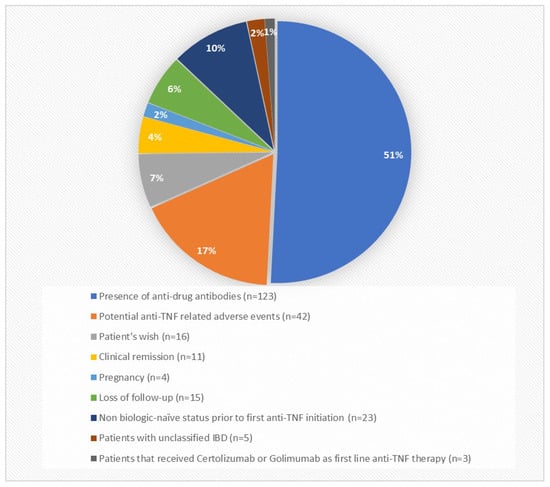
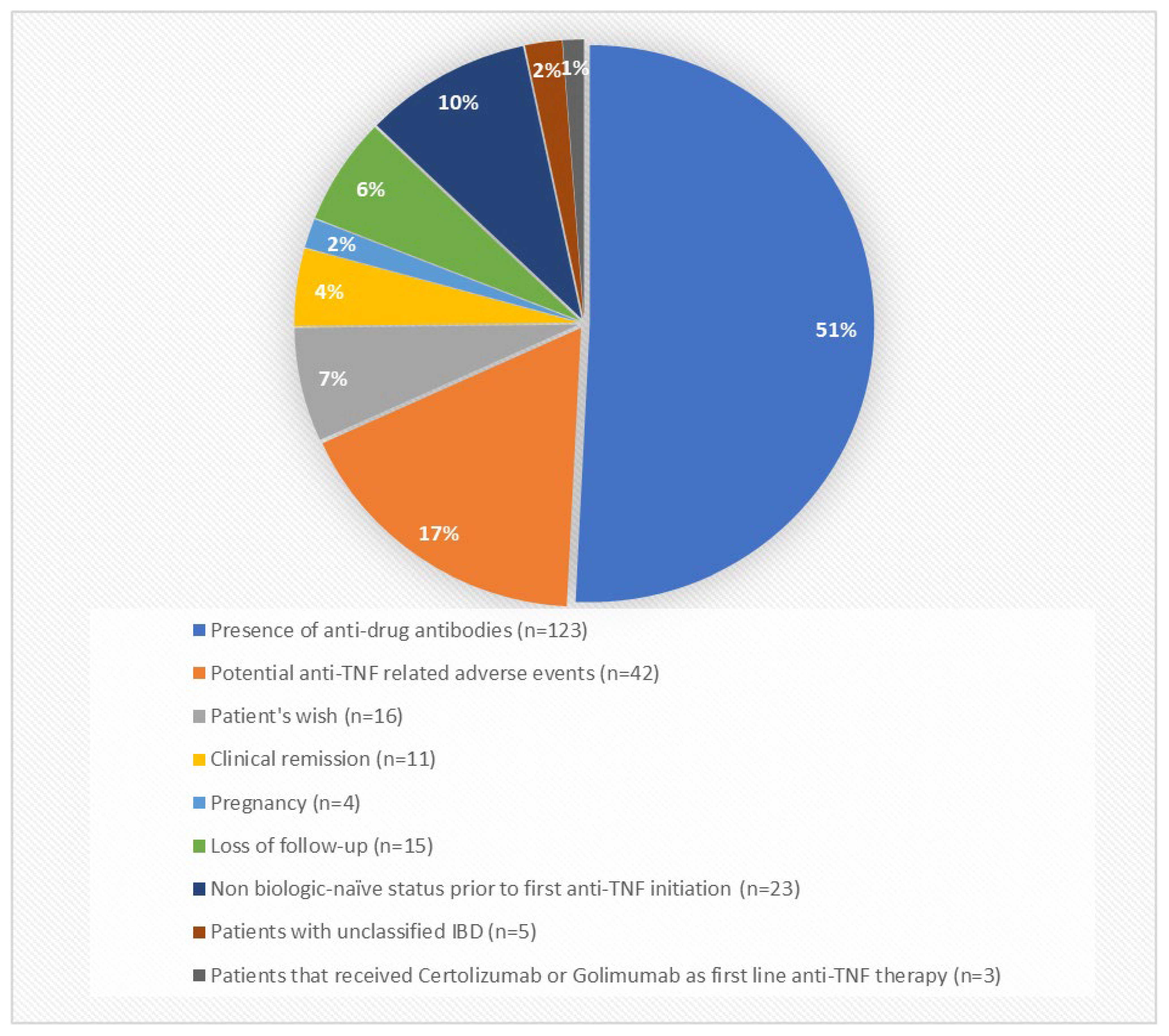
A total of 528 patients were initially included in the present cohort study. A total of 242 patients were excluded from the final statistical analysis as they met one of the aforementioned exclusion criteria. Specifically, 15 patients excluded due to loss of follow-up observation, 23 patients because they were not biologic-naïve prior to first anti-TNF agent initiation, 5 patients that diagnosed with unclassified IBD, 3 patients that received certolizumab or golimumab, while 123 discontinued anti-TNF agent due to measurable anti-drug antibodies, 42 patients discontinued due to potentially treatment-related adverse events, 16 patients withdrew from anti-TNF therapy due to their own preference, 11 patients discontinued biologic treatment due to clinical remission, and 4 patients due to pregnancy (Figure 1 and Figure 2).
Figure 1.
Reasons for patient exclusion from the final statistical analysis.
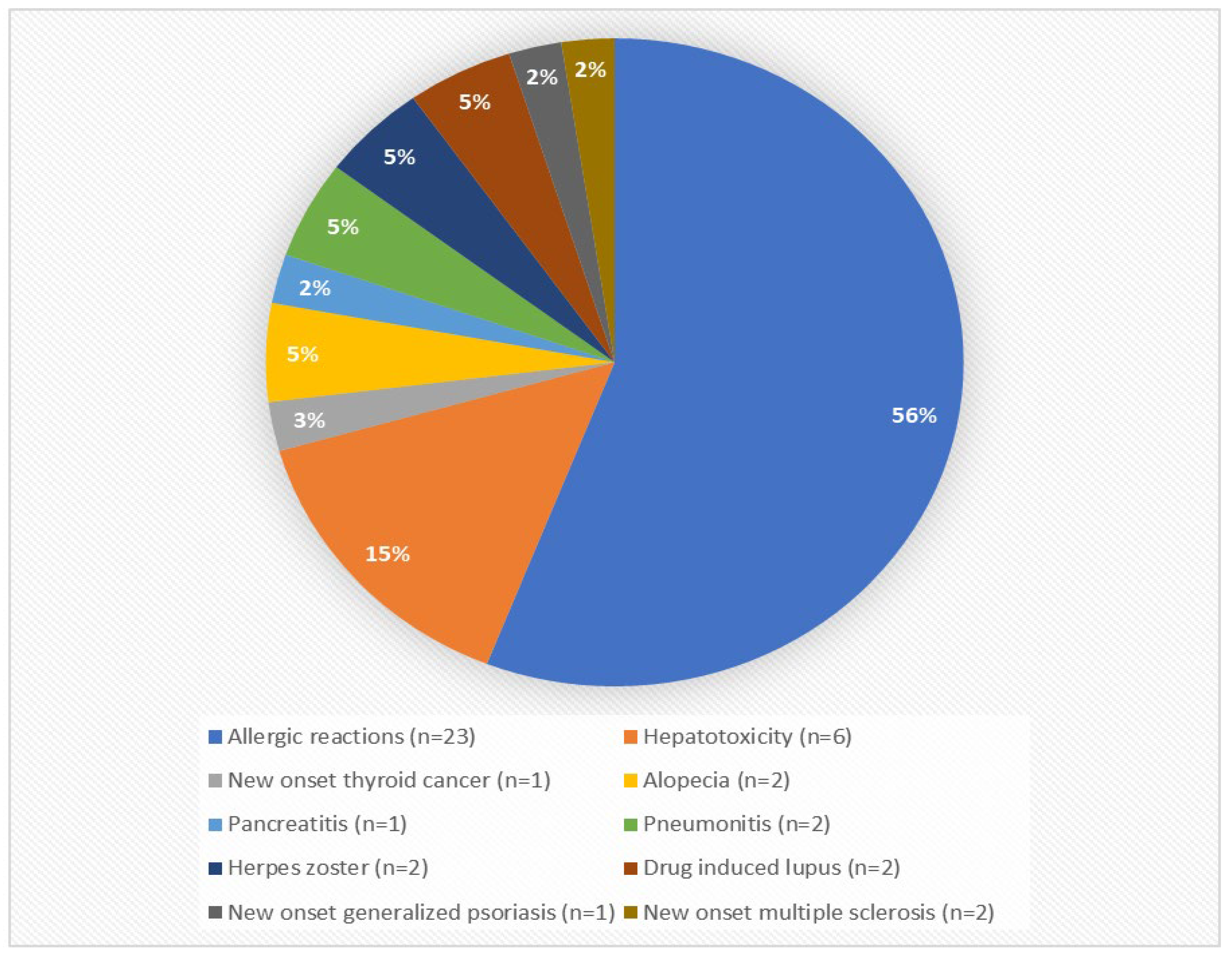
Figure 2.
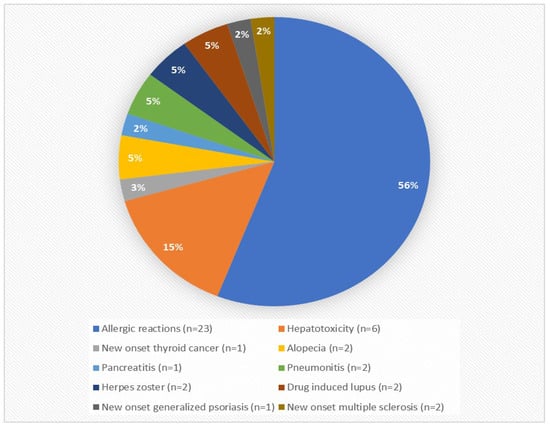
Potential Anti-TNF-related adverse events.
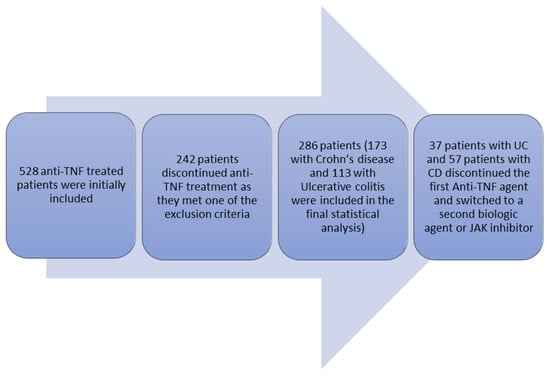
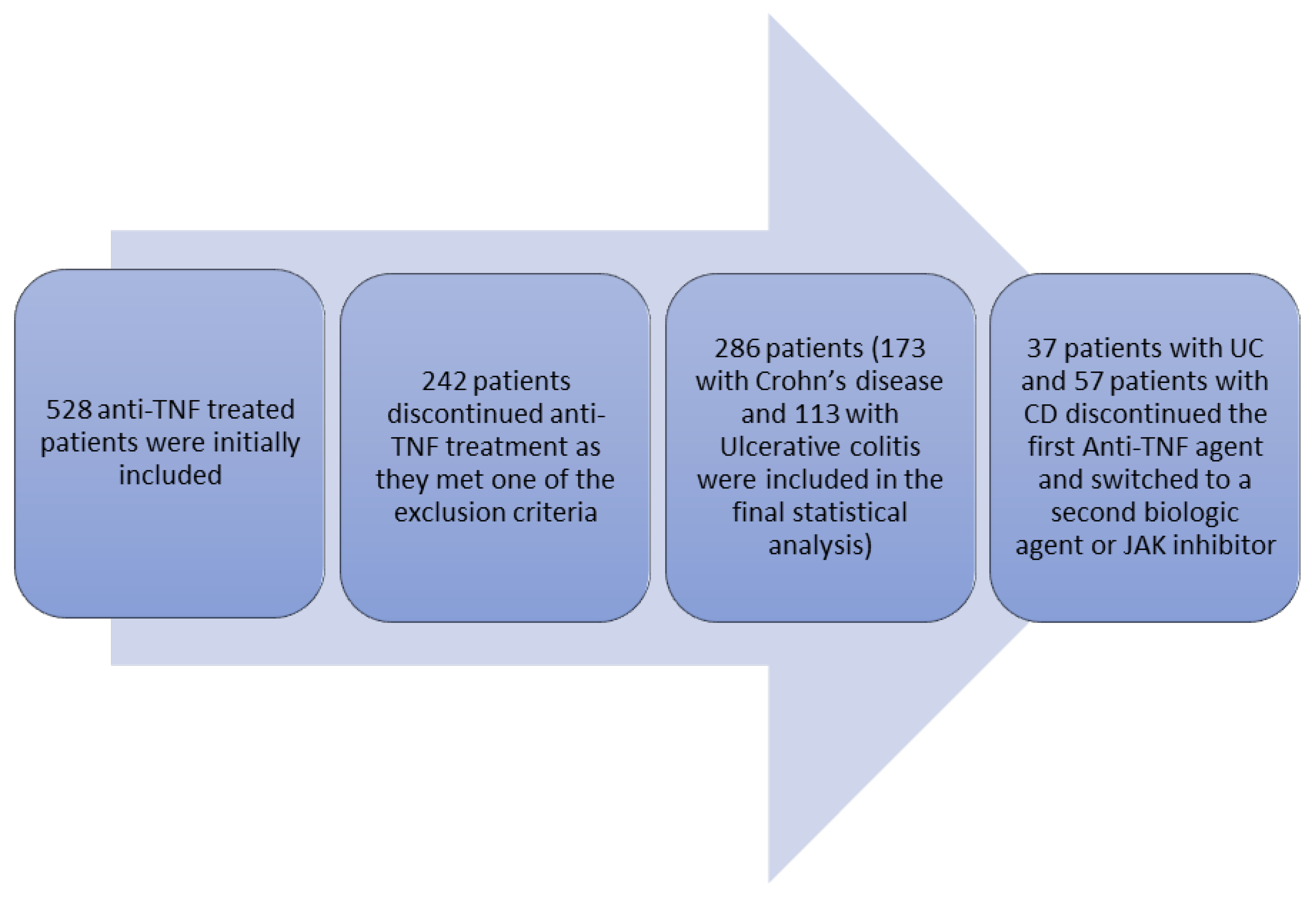
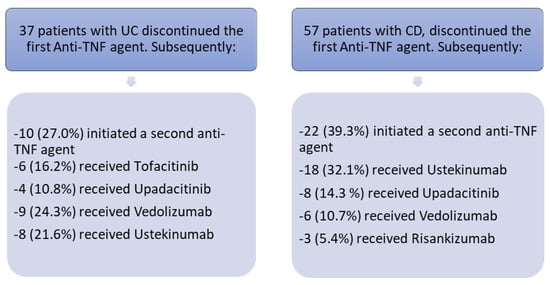
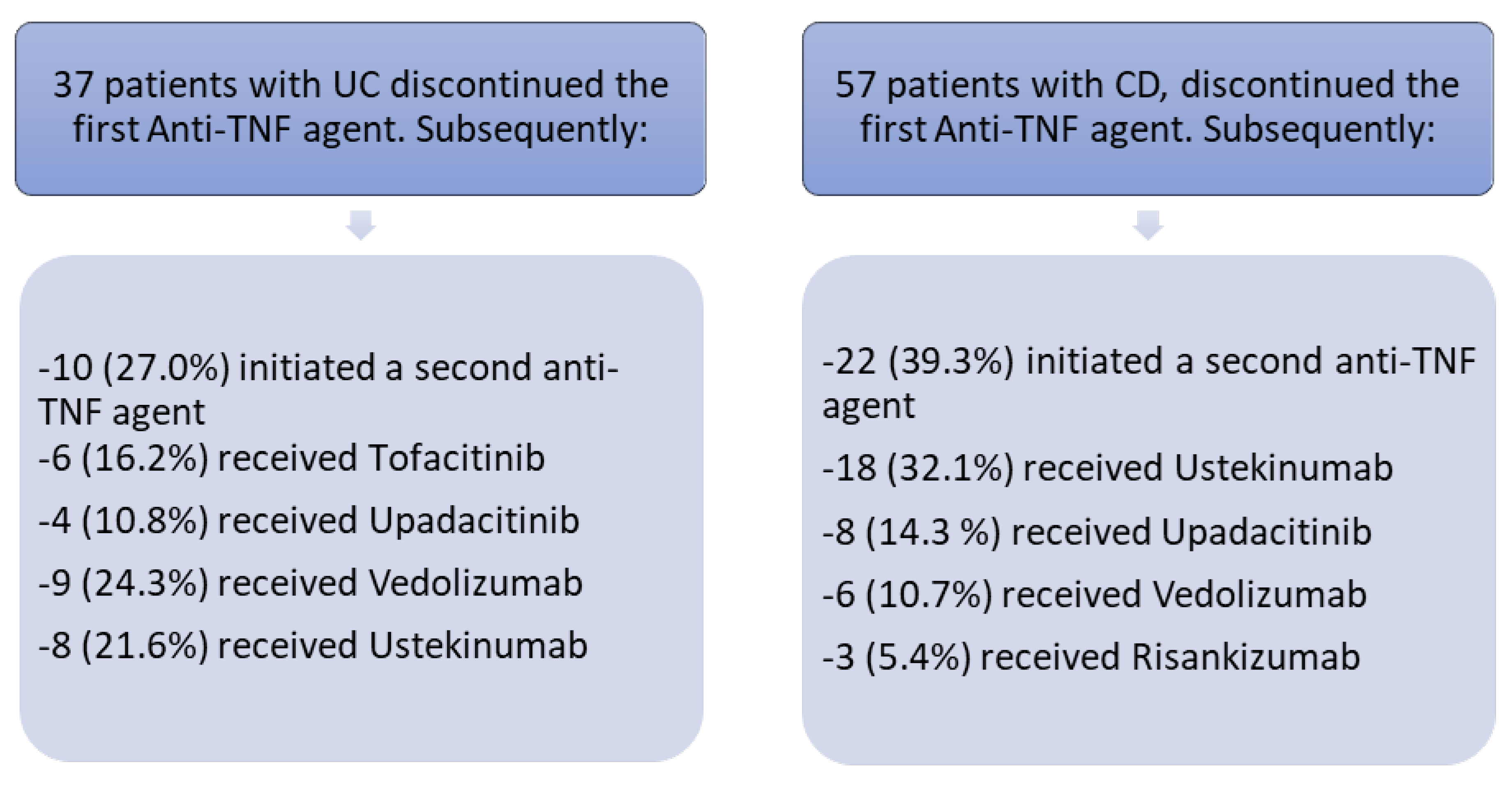
Ultimately, 286 patients were included in the final statistical analysis. During the follow-up period, 37 patients with UC (32.7%) and 57 patients with CD (32.9%) discontinued first-line anti-TNF therapy due to treatment failure. The study flowchart is illustrated in Figure 3. The second treatment choice after the first anti-TNF treatment is summarized in Figure 4.
Figure 3.
Study flowchart.
Figure 4.
Second treatment choice after first anti-TNF treatment failure.
3. Results
3.1. Cohort Characteristics
3.1.1. Baseline Patients’ Characteristics
A total of 286 patients (173 with CD and 113 with UC) were included in the final statistical analysis, with comparable median follow-up durations (CD: 9.5 years; UC: 10 years). Among patients with CD, 42.2% were females, while the corresponding percentage among patients with UC was 40.7%. Other characteristics involved the family history of IBD (CD: 26.6%, UC: 30.1%), as well as laboratory parameters at anti-TNF initiation, including C-reactive protein (CD: 10 mg/L, UC: 9 mg/L), albumin (CD = 41 g/L, UC = 39 g/L), hemoglobin (CD: 13.1 g/dL, UC: 12.9 g/dL), leukocyte count (CD: 8610/μL, UC: 7960/μL), and platelet count (CD: 363,000/μL, UC: 305,000/μL).
3.1.2. Baseline Disease Characteristics
Among CD patients, disease location at anti-TNF initiation included ileal (L1) involvement in 36.4%, colonic (L2) in 9.8%, and ileocolonic (L3) in 53.8%, with upper gastrointestinal involvement present in 12.1% of CD cases. The corresponding CD phenotypes were non-stricturing, non-penetrating (B1) in 49.7%, stricturing (B2) in 31.8%, penetrating/fistulizing (B3) in 18.5%, and perianal disease in 16.2%, while 11.0% had a history of bowel resection before anti-TNF initiation. Among UC patients, disease extent at anti-TNF initiation was proctitis (E1) in 12.4%, left-sided colitis (E2) in 35.4%, and extensive colitis (E3) in 52.2%, and pseudopolyps were present in 27.4% of patients.
3.1.3. Treatment Characteristics
Patients with CD were diagnosed at a younger median age than those with UC (29 vs. 34 years), though this difference lacked statistical significance (p = 0.248). However, CD patients initiated the first anti-TNF therapy at a significantly younger age (35 vs. 42 years; p = 0.005) and after a shorter disease duration (0.9 vs. 2.2 years; p = 0.003). Median persistence (defined as the time between onset and discontinuation of the first anti-TNF treatment) on first anti-TNF therapy was longer among CD than UC patients (2.7 vs. 1.5 years), but this difference did not achieve statistical significance (p = 0.271). Infliximab was the predominant first anti-TNF agent for both CD (116/173, 67.1%) and UC (86/113, 76.1%) patients, with adalimumab administered in the remaining cases (CD: 32.9%; UC: 23.9%). Among patients who discontinued first-line anti-TNF therapy, median treatment duration did not differ significantly between adalimumab and infliximab, either among CD patients (2.7 vs. 2.3 years; p = 0.225) or UC patients (1.8 vs. 1.5 years; p = 0.91). Concomitant immunomodulator therapy at anti-TNF initiation was administered to 33.5% of CD patients and 29.2% of UC patients, while corticosteroid co-administration occurred in 20.2% of CD patients and 23% of UC patients. The aforementioned baseline demographic and clinical characteristics are summarized in Table 1.
Table 1.
Baseline demographic and clinical characteristics.
3.2. Predictors of First Anti-TNF Treatment Failure
As already mentioned, during the follow-up period, 37 of 113 patients with UC (32.7%) discontinued anti-TNF due to treatment failure. The corresponding percentage in patients with CD was 32.9% (57 of 173 patients). To assess predictors of treatment failure, univariable and multivariable Cox regression analyses were conducted. Complicated phenotype (stricturing or/and penetrating CD) (HR = 1.9, p-value = 0.032) as well as the concomitant use of steroids at anti-TNF initiation (HR = 2.03, p-value = 0.012) were identified as independent predictors of anti-TNF failure among patients with CD. Female sex emerged as an independent predictor of anti-TNF therapy failure in patients with UC (HR = 2.13, p-value = 0.025). Additionally, it should be underlined that age at CD diagnosis showed a trend toward statistical significance as an independent predictor (HR = 1.02, p = 0.061), suggesting that older age at diagnosis may increase the risk of anti-TNF failure. The results of univariable and multivariable Cox regression analyses are summarized in Table 2 and Table 3.
Table 2.
Univariable and multivariable Cox regression analysis of potential anti-TNF failure predictors in Crohn’s disease.
Table 3.
Univariable and multivariable Cox regression analysis of potential anti-TNF failure predictors in ulcerative colitis.
The age at CD diagnosis was further stratified into two categories: <40 years and ≥40 years. Age at diagnosis ≥ 40 years emerged as an independent predictor of anti-TNF treatment failure (HR = 1.93, p = 0.016). Complicated CD phenotype (HR = 1.83, p = 0.027) and concomitant corticosteroid use (HR = 2.01, p = 0.013) at anti-TNF initiation also remained statistically significant predictors of first-line anti-TNF treatment failure after stratification for age at CD diagnosis. The results of univariate and multivariate analyses after stratification for age at CD diagnosis are summarized in Table 4.
Table 4.
Univariable and multivariable Cox regression analysis of potential anti-TNF failure predictors in Crohn’s disease after stratification for age at CD diagnosis.
3.3. Persistence on Anti-TNF Treatment
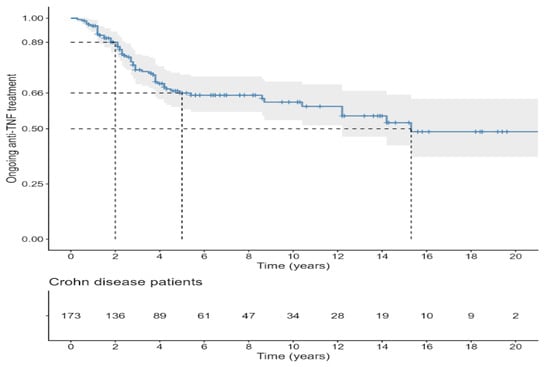
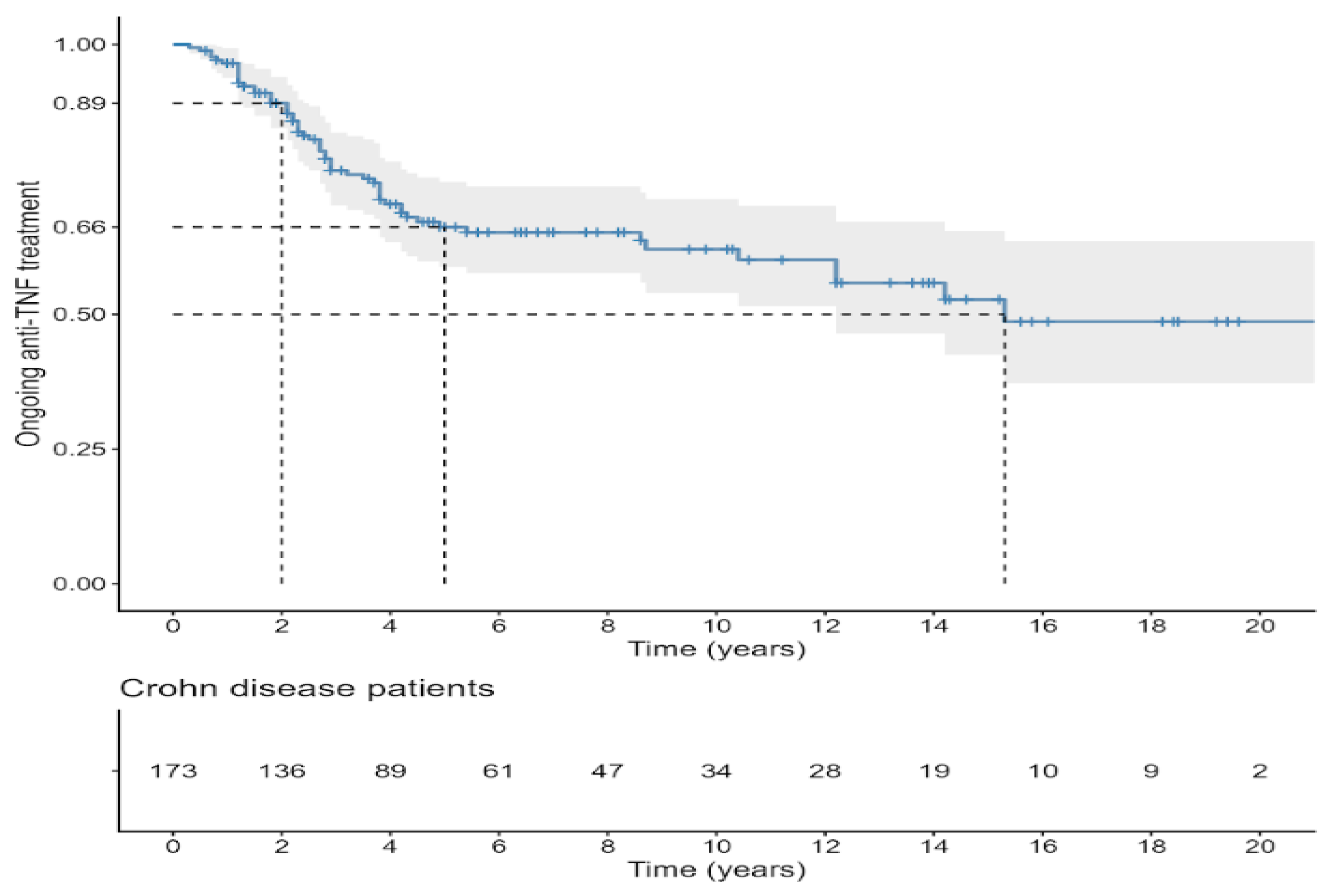
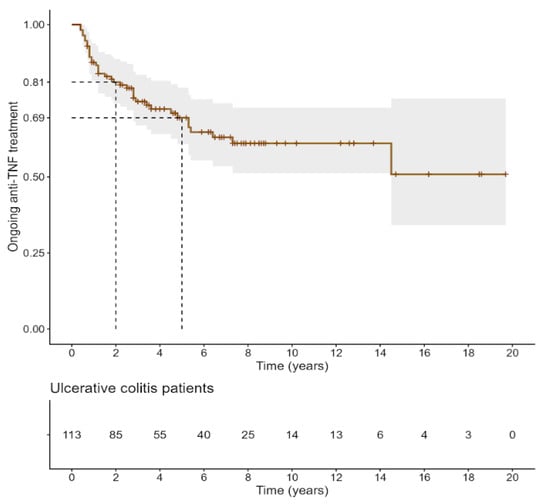
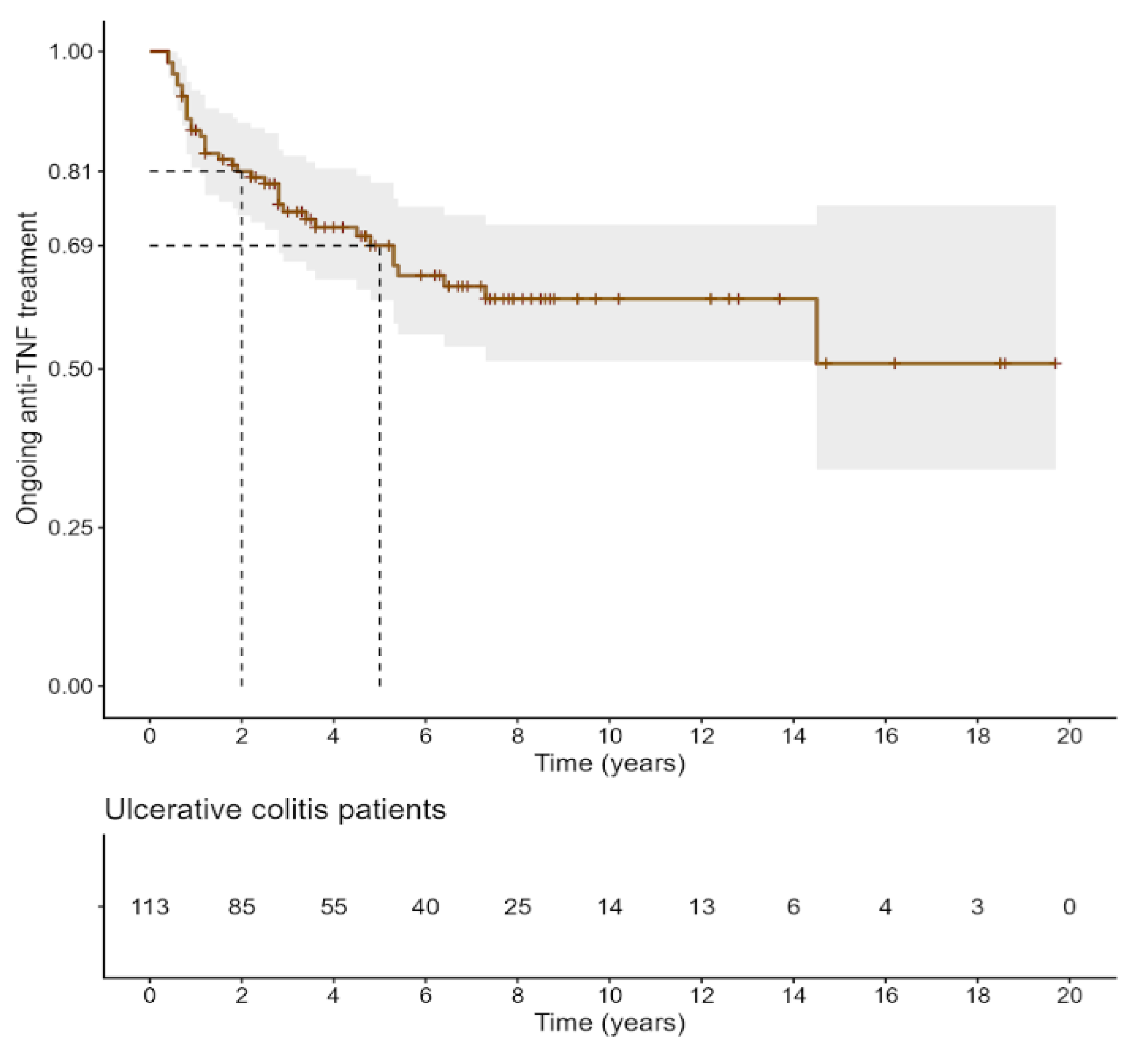
Kaplan–Meier curves of first anti-TNF treatment persistence in patients with CD and UC are illustrated in Figure 5 and Figure 6, respectively. In both diseases, the probability of remaining on the initial anti-TNF agent declined progressively over time. In patients with CD, treatment persistence was approximately 89% at 2 years, 66% at 5 years, and around 50% at 15 years of follow-up. Similarly, in UC, persistence rates were about 81% at 2 years and 69% at 5 years, with nearly half of the patients remaining on therapy in the long term.
Figure 5.
First anti-TNF treatment persistence in patients with CD.
Figure 6.
First anti-TNF treatment persistence in patients with UC.
3.4. Secondary Outcome of the Study
Following initiation of the first anti-TNF agent, IBD-related bowel resection was required in 6 of 113 patients with UC (5.3%) and in 46 of 173 patients with CD (26.6%). Among patients with UC, four underwent bowel resection for colorectal cancer, while two required colectomies for acute severe UC refractory to medical therapy. Among patients with CD, three underwent bowel resection due to colorectal cancer (two patients) and small bowel cancer (one patient). In addition, 35 of 55 patients with stricturing CD (63.6%) required at least one bowel surgery at a median follow-up period of 10 years. In this subgroup of patients, the median time from anti-TNF initiation to surgery was 37 (8,94) months. In addition, eight patients with CD underwent bowel surgery due to other CD-related complications.
4. Discussion
In this real-world cohort study, approximately one-third of patients with CD and UC discontinued first-line anti-TNF therapy due to treatment failure. Our study demonstrates higher anti-TNF persistence rates than reported in the real-world literature. For CD, persistence was 89% at 2 years and 66% at 5 years, while for UC it was 81% at 2 years and 69% at 5 years, with nearly half of patients maintaining long-term therapy. Published cohort studies report lower persistence for CD (60–70% at 1 year, 40–50% at 2 years, 30–40% at 5 years) and UC (50–60% at 1 year, 30–40% at 5 years) [15,16,17]. The higher anti-TNF persistence rates in our cohort likely reflect methodological differences. We involved only biologic-naïve patients who discontinued first-line anti-TNF therapy due to treatment failure after maximal dose escalation and in the absence of detectable anti-drug antibodies, while excluding from the final statistical analysis anti-TNF treatment discontinuations due to adverse events, remission, patient preference, or pregnancy.
In patients with CD, a complicated phenotype at first anti-TNF therapy initiation was independently associated with anti-TNF treatment failure. This aligns with prior evidence demonstrating superior clinical outcomes, including sustained remission and long-term anti-TNF response rates in non-stricturing, non-penetrating CD compared to stenotic or fistulizing phenotypes [10,18,19,20,21,22]. TNF-α is a key pro-inflammatory cytokine that holds a central role in the pathogenesis of CD [23]. However, it remains challenging to separate the direct effects of anti-TNF therapy on fibrosis or fistula formation from its broader effect of reducing underlying inflammation [24,25]. Patients with fistulizing CD exhibit higher serum TNF-α levels and greater TNF-α expression in resected fistula tissues than individuals with non-fistulizing CD or controls, thereby reinforcing the rationale for anti-TNF therapy in penetrating CD [26,27]. Adegbola et al. performed a pilot study to measure anti-TNF drug concentrations in perianal fistula tract biopsies, contrasting samples from CD patients with those from idiopathic (cryptoglandular) fistulas [28]. Anti-TNF agents were detectable in idiopathic fistula tissues but were absent from all CD-associated fistula samples, implicating suboptimal tissue penetration as a key mechanism of anti-TNF failure in fistulizing CD [28]. Furthermore, while anti-TNF agents reduce TIMP-1 production in myofibroblasts by inhibiting TNF-α-mediated mesenchymal activation, which upregulates TIMP-1 and suppresses MMP-2 activity/collagen degradation, their ability to reverse established strictures in CD remains uncertain [29,30,31]. Furthermore, although early initiation of anti-TNF therapy has been associated with improved clinical outcomes in patients with fibrostenotic CD, the inflammatory component within fibrostenotic segments is less pronounced than in patients presenting with a purely inflammatory phenotype, a factor that may further limit anti-TNF efficacy in stricturing CD [18,21,32,33]. Concomitant corticosteroid use at anti-TNF initiation independently predicted first anti-TNF failure in CD patients. This likely reflects confounding by indication—steroid-dependent patients have more active, treatment-resistant disease inherently at higher risk of biologic failure, rather than direct corticosteroid effects on anti-TNF pharmacokinetics. Additional studies have emerged that corticosteroid use at anti-TNF initiation increases the risk of anti-TNF therapy failure, while also delaying therapeutic drug monitoring and optimization [34,35]. Notably, a recent meta-analysis revealed that corticosteroid use during anti-TNF induction in patients with CD was not associated with higher rates of clinical remission or response compared with patients not receiving corticosteroids, underscoring the potential absence of additive efficacy of corticosteroids in this therapeutic context [36]. Also, in our study, age at CD diagnosis showed a trend toward independent prediction of anti-TNF failure, with older age at diagnosis conferring a higher risk. After stratification, age at diagnosis ≥ 40 years was documented as an independent predictor of anti-TNF failure. These findings align with prior real-world data indicating that increasing age at diagnosis is an independent risk factor for reduced clinical benefit of infliximab and adalimumab in CD patients [37]. Indeed, older adults with new-onset inflammatory rheumatic diseases often have lower serum anti-TNF levels than younger patients, which may contribute to higher rates of anti-TNF treatment failure in this patient population [38]. However, other studies found no correlation between the age of CD onset and anti-TNF response [39,40].
Among patients with UC, female sex emerged as an independent predictor of anti-TNF treatment failure. Previous studies also emerged that women with rheumatologic diseases exhibited higher discontinuation rates of anti-TNF agents compared with male patients [41,42,43,44]. Notably, similarly to our study results, Blesl et al. identified female sex as an independent predictive factor for anti-TNF failure in patients with UC, a conclusion potentially attributable to augmented body fat and diminished hepatic clearance observed in females [17]. Nevertheless, other UC cohorts either documented male sex as a risk factor for anti-TNF failure or demonstrated no association between gender and anti-TNF failure [45,46,47,48,49]. These discrepancies highlight the need for further studies that will examine sex-based pathophysiological mechanisms and the effects of sex hormones on gastrointestinal inflammation and therapeutic response to anti-TNF agents [50].
A substantial proportion of patients with CD (26.6%) required IBD-related bowel surgery following anti-TNF initiation, compared with only 5.3% of those with UC. This disparity underscores the fibrostenotic and transmural nature of CD [51]. Notably, in patients with stricturing CD, surgery was required in nearly two-thirds, with a median interval of 37 months after anti-TNF onset, a finding that underscores the limited efficacy of current biologic therapies in preventing surgery in stenotic disease [52]. Cases of bowel resection due to IBD-associated colorectal cancer were rare (7 of 286 patients), a fact possibly supporting the chemopreventive role of current IBD medical therapies against colorectal cancer occurrence [53,54].
The present study has several methodological strengths. The study focused on clinical and therapeutic variables available at the onset of anti-TNF therapy, enabling the assessment of early predictors of response based on real-world data. Importantly, the exclusion of patients with detectable anti-drug antibodies prior to dose intensification or biologic discontinuation eliminated immunogenic failure bias. Moreover, treatment failure was defined as a loss of therapeutic efficacy after maximal dose optimization, ensuring that only cases of pharmacodynamic nonresponse were captured. Nevertheless, certain limitations must be acknowledged. The retrospective part of the study introduces potential risks of selection and regional bias. Also, a major limitation of our study is its single-center design, which may limit the generalizability of findings to other populations or healthcare settings with different patient demographics, disease management practices, or genetic backgrounds. Patients from our cohort may not fully represent the broader population of patients with CD or UC. Baseline fecal calprotectin levels and endoscopic activity assessment (Mayo score, CDAI) were not available, precluding additional assessment of inflammatory burden before anti-TNF initiation. Similarly, body mass index data and drug levels were absent, further limiting exploration of pharmacokinetic influences. Furthermore, the choice of the initial anti-TNF agent was partly determined by physician preference and drug availability within the national healthcare system. Similarly, discontinuation of the first anti-TNF agent was based on the clinical judgment of the treating physician, which introduces subjectivity into the results of our study. Despite these limitations, the present study provides valuable real-world evidence on potential predictors of first anti-TNF treatment failure, with findings from daily clinical practice and the treatment of patients with IBD.
5. Conclusions
Our observational findings emphasize the value of identifying clinical predictors of anti-TNF failure, particularly in the absence of anti-drug antibody formation. Recognizing patients who are at higher risk of anti-TNF treatment failure may help identify earlier therapeutic optimization through drug monitoring or switching to other biologics or JAK inhibitors. Future multicenter prospective studies are warranted to validate these predictors and refine personalized treatment approaches in IBD management.
Author Contributions
Conceptualization, K.C.M. and P.C.; software, K.C.M. and P.C.; validation, I.N.M.; formal analysis, K.H.K.; investigation, F.S.F.; resources, F.S.F.; data curation, K.C.M. and P.C.; writing—original draft preparation, K.C.M.; writing—review and editing, K.C.M., I.N.M. and F.S.F.; visualization, P.C.; supervision, F.S.F.; project administration, K.H.K. All authors have read and agreed to the published version of the manuscript.
Funding
This research received no external funding.
Institutional Review Board Statement
The present cohort study was conducted in accordance with the Ethical Guidelines for Medical and Health Research Involving Human Subjects and was approved by the Ethics Review Committee of the University of Ioannina (Approval No.: 889/25-10-2023/25 October 2023). No additional authorization was required for the review of patient records obtained from the University Hospital of Ioannina.
Informed Consent Statement
Patient consent was waived due to the primarily retrospective nature of the study.
Data Availability Statement
The data presented in this study are available on request from the corresponding author.
Conflicts of Interest
The authors declare no conflicts of interest.
Abbreviations
The following abbreviations are used in this manuscript:
| IBD | Inflammatory bowel diseases |
| UC | Ulcerative colitis |
| CD | Crohn’s disease |
References
- Corridoni, D.; Arseneau, K.O.; Cominelli, F. Inflammatory Bowel Disease. Immunol. Lett. 2014, 161, 231–235. [Google Scholar] [CrossRef] [Scilit]
- Swaminathan, A.; Fan, D.; Borichevsky, G.M.; Mules, T.C.; Hirschfeld, E.; Frampton, C.M.; Day, A.S.; Siegel, C.A.; Gearry, R.B. The Disease Severity Index for Inflammatory Bowel Disease Is Associated with Psychological Symptoms and Quality of Life, and Predicts a More Complicated Disease Course. Aliment. Pharmacol. Ther. 2022, 56, 664–674. [Google Scholar] [CrossRef] [Scilit] [PubMed]
- McDowell, C.; Farooq, U.; Haseeb, M. Inflammatory Bowel Disease. In StatPearls [Internet]; StatPearls Publishing: Treasure Island, FL, USA, 2023. Available online: https://www.ncbi.nlm.nih.gov/books/NBK470312/ (accessed on 21 April 2026).
- Triantafillidis, J.K.; Merikas, E.; Georgopoulos, F. Current and Emerging Drugs for the Treatment of Inflammatory Bowel Disease. Drug Des. Dev. Ther. 2011, 5, 185–210. [Google Scholar] [CrossRef] [Scilit] [PubMed]
- Peyrin-Biroulet, L.; Sandborn, W.J.; Panaccione, R.; Domènech, E.; Pouillon, L.; Siegmund, B.; Danese, S.; Ghosh, S. Tumour Necrosis Factor Inhibitors in Inflammatory Bowel Disease: The Story Continues. Ther. Adv. Gastroenterol. 2021, 14, 17562848211059954. [Google Scholar] [CrossRef] [Scilit] [PubMed]
- Ruder, B.; Atreya, R.; Becker, C. Tumour Necrosis Factor Alpha in Intestinal Homeostasis and Gut Related Diseases. Int. J. Mol. Sci. 2019, 20, 1887. [Google Scholar] [CrossRef] [Scilit]
- Gómez-Labrador, C.; Ricart, E.; Iborra, M.; Iglesias, E.; Martín-Arranz, M.D.; de Castro, L.; De Francisco, R.; García-Alonso, F.J.; Sanahuja, A.; Gargallo-Puyuelo, C.J.; et al. Trends in Targeted Therapy Usage in Inflammatory Bowel Disease: TRENDY Study of ENEIDA. Pharmaceutics 2024, 16, 629. [Google Scholar] [CrossRef] [Scilit]
- Kamal, M.E.; Werida, R.H.; Radwan, M.A.; Askar, S.R.; Omran, G.A.; El-Mohamdy, M.A.; Hagag, R.S. Efficacy and Safety of Infliximab and Adalimumab in Inflammatory Bowel Disease Patients. Inflammopharmacology 2024, 32, 3259–3269. [Google Scholar] [CrossRef] [Scilit]
- Ben-Horin, S.; Kopylov, U.; Chowers, Y. Optimizing Anti-TNF Treatments in Inflammatory Bowel Disease. Autoimmun. Rev. 2014, 13, 24–30. [Google Scholar] [CrossRef] [Scilit]
- Schultheiss, J.P.D.; Mahmoud, R.; Louwers, J.M.; van der Kaaij, M.T.; van Hellemondt, B.P.; van Boeckel, P.G.; Mahmmod, N.; Jharap, B.; Fidder, H.H.; Oldenburg, B. Loss of Response to Anti-TNFα Agents Depends on Treatment Duration in Patients with Inflammatory Bowel Disease. Aliment. Pharmacol. Ther. 2021, 54, 1298–1308. [Google Scholar] [CrossRef] [Scilit]
- Wang, L.-F.; Chen, P.-R.; He, S.-K.; Duan, S.-H.; Zhang, Y. Predictors and Optimal Management of Tumor Necrosis Factor Antagonist Nonresponse in Inflammatory Bowel Disease: A Literature Review. World J. Gastroenterol. 2023, 29, 4481–4498. [Google Scholar] [CrossRef] [Scilit]
- Atreya, R.; Neurath, M.F.; Siegmund, B. Personalizing Treatment in IBD: Hype or Reality in 2020? Can We Predict Response to Anti-TNF? Front. Med. 2020, 7, 517. [Google Scholar] [CrossRef] [Scilit] [PubMed]
- Lamb, C.A.; Kennedy, N.A.; Raine, T.; Hendy, P.A.; Smith, P.J.; Limdi, J.K.; Hayee, B.; Lomer, M.C.E.; Parkes, G.C.; Selinger, C.; et al. British Society of Gastroenterology Consensus Guidelines on the Management of Inflammatory Bowel Disease in Adults. Gut 2019, 68, s1–s106. [Google Scholar] [CrossRef] [Scilit] [PubMed]
- Cheifetz, A.S.; Abreu, M.T.; Afif, W.; Cross, R.K.; Dubinsky, M.C.; Loftus, E.V.; Osterman, M.T.; Saroufim, A.; Siegel, C.A.; Yarur, A.J.; et al. A Comprehensive Literature Review and Expert Consensus Statement on Therapeutic Drug Monitoring of Biologics in Inflammatory Bowel Disease. Am. J. Gastroenterol. 2021, 116, 2014–2025. [Google Scholar] [CrossRef] [Scilit] [PubMed]
- Yiu, T.H.; Ko, Y.; Pudipeddi, A.; Natale, P.; Leong, R.W. Meta-analysis: Persistence of Advanced Therapies in the Treatment of Inflammatory Bowel Disease. Aliment. Pharmacol. Ther. 2024, 59, 1312–1334. [Google Scholar] [CrossRef] [Scilit]
- Pouillon, L.; Baumann, C.; Rousseau, H.; Choukour, M.; Andrianjafy, C.; Danese, S.; Peyrin-Biroulet, L. Treatment Persistence of Infliximab Versus Adalimumab in Ulcerative Colitis: A 16-Year Single-Center Experience. Inflamm. Bowel Dis. 2019, 25, 945–954. [Google Scholar] [CrossRef] [Scilit]
- Blesl, A.; Binder, L.; Högenauer, C.; Wenzl, H.; Borenich, A.; Pregartner, G.; Berghold, A.; Mestel, S.; Kump, P.; Baumann-Durchschein, F.; et al. Limited Long-Term Treatment Persistence of First Anti-TNF Therapy in 538 Patients with Inflammatory Bowel Diseases: A 20-Year Real-World Study. Aliment. Pharmacol. Ther. 2021, 54, 667–677. [Google Scholar] [CrossRef] [Scilit]
- Moran, G.W.; Dubeau, M.; Kaplan, G.G.; Yang, H.; Seow, C.H.; Fedorak, R.N.; Dieleman, L.A.; Barkema, H.W.; Ghosh, S.; Panaccione, R. Phenotypic Features of Crohn’s Disease Associated With Failure of Medical Treatment. Clin. Gastroenterol. Hepatol. 2014, 12, 434–442.e1. [Google Scholar] [CrossRef] [Scilit]
- Peters, C.P.; Eshuis, E.J.; Toxopeüs, F.M.; Hellemons, M.E.; Jansen, J.M.; D’Haens, G.R.A.M.; Fockens, P.; Stokkers, P.C.F.; Tuynman, H.A.R.E.; van Bodegraven, A.A.; et al. Adalimumab for Crohn’s Disease: Long-Term Sustained Benefit in a Population-Based Cohort of 438 Patients. J. Crohns Colitis 2014, 8, 866–875. [Google Scholar] [CrossRef] [Scilit]
- Zorzi, F.; Zuzzi, S.; Onali, S.; Calabrese, E.; Condino, G.; Petruzziello, C.; Ascolani, M.; Pallone, F.; Biancone, L. Efficacy and Safety of Infliximab and Adalimumab in Crohn’s Disease: A Single Centre Study. Aliment. Pharmacol. Ther. 2012, 35, 1397–1407. [Google Scholar] [CrossRef] [Scilit]
- Bouhnik, Y.; Carbonnel, F.; Laharie, D.; Stefanescu, C.; Hébuterne, X.; Abitbol, V.; Nachury, M.; Brixi, H.; Bourreille, A.; Picon, L.; et al. Efficacy of Adalimumab in Patients with Crohn’s Disease and Symptomatic Small Bowel Stricture: A Multicentre, Prospective, Observational Cohort (CREOLE) Study. Gut 2018, 67, 53–60. [Google Scholar] [CrossRef] [Scilit]
- Campos, C.; Perrey, A.; Lambert, C.; Pereira, B.; Goutte, M.; Dubois, A.; Goutorbe, F.; Dapoigny, M.; Bommelaer, G.; Hordonneau, C.; et al. Medical Therapies for Stricturing Crohn’s Disease: Efficacy and Cross-Sectional Imaging Predictors of Therapeutic Failure. Dig. Dis. Sci. 2017, 62, 1628–1636. [Google Scholar] [CrossRef] [Scilit] [PubMed]
- Pagnini, C.; Cominelli, F. Tumor Necrosis Factor’s Pathway in Crohn’s Disease: Potential for Intervention. Int. J. Mol. Sci. 2021, 22, 10273. [Google Scholar] [CrossRef] [Scilit] [PubMed]
- Jiang, H.; Shen, J.; Ran, Z. Epithelial–Mesenchymal Transition in Crohn’s Disease. Mucosal Immunol. 2018, 11, 294–303. [Google Scholar] [CrossRef] [Scilit] [PubMed]
- Rieder, F.; Zimmermann, E.M.; Remzi, F.H.; Sandborn, W.J. Crohn’s Disease Complicated by Strictures: A Systematic Review. Gut 2013, 62, 1072–1084. [Google Scholar] [CrossRef] [Scilit]
- Siegmund, B.; Feakins, R.M.; Barmias, G.; Ludvig, J.C.; Teixeira, F.V.; Rogler, G.; Scharl, M. Results of the Fifth Scientific Workshop of the ECCO (II): Pathophysiology of Perianal Fistulizing Disease. J. Crohns Colitis 2016, 10, 377–386. [Google Scholar] [CrossRef] [Scilit]
- Ruffolo, C.; Scarpa, M.; Faggian, D.; Romanato, G.; De Pellegrin, A.; Filosa, T.; Prando, D.; Polese, L.; Scopelliti, M.; Pilon, F.; et al. Cytokine Network in Chronic Perianal Crohn’s Disease and Indeterminate Colitis After Colectomy. J. Gastrointest. Surg. 2007, 11, 16–21. [Google Scholar] [CrossRef] [Scilit]
- Adegbola, S.O.; Sarafian, M.; Sahnan, K.; Pechlivanis, A.; Phillips, R.K.S.; Warusavitarne, J.; Faiz, O.; Haddow, J.; Knowles, C.; Tozer, P.; et al. Lack of Anti-TNF Drugs Levels in Fistula Tissue—A Reason for Nonresponse in Crohn’s Perianal Fistulating Disease? Eur. J. Gastroenterol. Hepatol. 2022, 34, 18–26. [Google Scholar] [CrossRef] [Scilit]
- Fousekis, F.S.; Mpakogiannis, K.; Mastorogianni, I.N.; Lianos, G.D.; Christodoulou, D.K.; Katsanos, K.H. Intestinal Fibrosis in Crohn’s Disease: Pathophysiology, Diagnosis, and New Therapeutic Targets. J. Clin. Med. 2025, 14, 4060. [Google Scholar] [CrossRef] [Scilit]
- Di Sabatino, A.; Pender, S.L.F.; Jackson, C.L.; Prothero, J.D.; Gordon, J.N.; Picariello, L.; Rovedatti, L.; Docena, G.; Monteleone, G.; Rampton, D.S.; et al. Functional Modulation of Crohn’s Disease Myofibroblasts by Anti-Tumor Necrosis Factor Antibodies. Gastroenterology 2007, 133, 137–149. [Google Scholar] [CrossRef] [Scilit]
- Theiss, A.L.; Simmons, J.G.; Jobin, C.; Lund, P.K. Tumor Necrosis Factor (TNF) α Increases Collagen Accumulation and Proliferation in Intestinal Myofibroblasts via TNF Receptor 2. J. Biol. Chem. 2005, 280, 36099–36109. [Google Scholar] [CrossRef] [Scilit]
- Bettenworth, D.; Baker, M.E.; Fletcher, J.G.; Jairath, V.; Lu, C.; Bemelman, W.; d’Haens, G.; d’Hoore, A.; Dignass, A.; Dotan, I.; et al. A Global Consensus on the Definitions, Diagnosis and Management of Fibrostenosing Small Bowel Crohn’s Disease in Clinical Practice. Nat. Rev. Gastroenterol. Hepatol. 2024, 21, 572–584. [Google Scholar] [CrossRef] [Scilit]
- Rodríguez-Lago, I.; Hoyo, J.D.; Pérez-Girbés, A.; Garrido-Marín, A.; Casanova, M.J.; Chaparro, M.; Fernández-Clotet, A.; Castro-Poceiro, J.; García, M.J.; Sánchez, S.; et al. Early Treatment with Anti-Tumor Necrosis Factor Agents Improves Long-Term Effectiveness in Symptomatic Stricturing Crohn’s Disease. United Eur. Gastroenterol. J. 2020, 8, 1056–1066. [Google Scholar] [CrossRef] [Scilit]
- Lenti, M.V.; Santacroce, G.; Lepore, F.; Mordà, F.; Lo Bello, A.; Aronico, N.; Mengoli, C.; Delliponti, M.; Frondana, R.; Frondana, I.M.; et al. Factors Driving Persistence to First-Line Advanced Therapies in Inflammatory Bowel Disease: A Real-World Study from a Tertiary Referral Centre. Intern. Emerg. Med. 2025, 20, 1361–1370. [Google Scholar] [CrossRef] [Scilit]
- Mahlich, J.; May, M.; Feig, C.; Straub, V.; Schmelz, R. Persistence with Biologic Therapy and Associated Costs of Patients with Inflammatory Bowel Disease: A German Retrospective Claims Data Analysis. Crohns Colitis 360 2021, 3, otab011. [Google Scholar] [CrossRef] [Scilit] [PubMed]
- Faleck, D.M.; Shmidt, E.; Huang, R.; Katta, L.G.; Narula, N.; Pinotti, R.; Suarez-Farinas, M.; Colombel, J.-F. Effect of Concomitant Therapy with Steroids and Tumor Necrosis Factor Antagonists for Induction of Remission in Patients with Crohn’s Disease: A Systematic Review and Pooled Meta-Analysis. Clin. Gastroenterol. Hepatol. 2021, 19, 238–245.e4. [Google Scholar] [CrossRef] [Scilit] [PubMed]
- Macaluso, F.S.; Fries, W.; Privitera, A.C.; Cappello, M.; Siringo, S.; Inserra, G.; Magnano, A.; Di Mitri, R.; Mocciaro, F.; Belluardo, N.; et al. A Propensity Score-Matched Comparison of Infliximab and Adalimumab in Tumour Necrosis Factor-α Inhibitor-Naïve and Non-Naïve Patients with Crohn’s Disease: Real-Life Data from the Sicilian Network for Inflammatory Bowel Disease. J. Crohns Colitis 2019, 13, 209–217. [Google Scholar] [CrossRef] [Scilit] [PubMed]
- Lahaye, C.; Tatar, Z.; Dubost, J.-J.; Tournadre, A.; Soubrier, M. Management of Inflammatory Rheumatic Conditions in the Elderly. Rheumatology 2019, 58, 748–764. [Google Scholar] [CrossRef] [Scilit]
- Choi, C.H.; Do Song, I.; Kim, Y.-H.; Koo, J.S.; Kim, Y.S.; Kim, J.S.; Kim, N.; Kim, E.S.; Kim, J.H.; Kim, J.W.; et al. Efficacy and Safety of Infliximab Therapy and Predictors of Response in Korean Patients with Crohn’s Disease: A Nationwide, Multicenter Study. Yonsei Med. J. 2016, 57, 1376. [Google Scholar] [CrossRef] [Scilit]
- Sprakes, M.B.; Ford, A.C.; Warren, L.; Greer, D.; Hamlin, J. Efficacy, Tolerability, and Predictors of Response to Infliximab Therapy for Crohn’s Disease: A Large Single Centre Experience. J. Crohns Colitis 2012, 6, 143–153. [Google Scholar] [CrossRef] [Scilit]
- Souto, A.; Maneiro, J.R.; Gómez-Reino, J.J. Rate of discontinuation and drug survival of biologic therapies in rheumatoid arthritis: A systematic review and meta-analysis of drug registries and health care databases. Rheumatology 2016, 55, 523–534. [Google Scholar] [CrossRef] [Scilit]
- Rosales-Alexander, J.L.; Balsalobre Aznar, J.; Pérez-Vicente, S.; Magro-Checa, C. Drug Survival of Anti-Tumour Necrosis Factor α Therapy in Spondyloarthropathies: Results from the Spanish EmAR II Study. Rheumatology 2015, 54, 1459–1463. [Google Scholar] [CrossRef] [Scilit]
- Heiberg, M.S.; Koldingsnes, W.; Mikkelsen, K.; Rødevand, E.; Kaufmann, C.; Mowinckel, P.; Kvien, T.K. The Comparative One-year Performance of Anti–Tumor Necrosis Factor α Drugs in Patients with Rheumatoid Arthritis, Psoriatic Arthritis, and Ankylosing Spondylitis: Results from a Longitudinal, Observational, Multicenter Study. Arthritis Care Res. 2008, 59, 234–240. [Google Scholar] [CrossRef] [Scilit]
- Pavelka, K.; Forejtová, S.; Stolfa, J.; Chroust, K.; Buresová, L.; Mann, H.; Vencovský, J. Anti-TNF Therapy of Ankylosing Spondylitis in Clinical Practice. Results from the Czech National Registry ATTRA. Clin. Exp. Rheumatol. 2009, 27, 958–963. [Google Scholar] [PubMed]
- Beswick, L.; Rosella, O.; Rosella, G.; Headon, B.; Sparrow, M.P.; Gibson, P.R.; van Langenberg, D.R. Exploration of Predictive Biomarkers of Early Infliximab Response in Acute Severe Colitis: A Prospective Pilot Study. J. Crohns Colitis 2018, 12, 289–297. [Google Scholar] [CrossRef] [Scilit] [PubMed]
- Rutgeerts, P.; Sandborn, W.J.; Feagan, B.G.; Reinisch, W.; Olson, A.; Johanns, J.; Travers, S.; Rachmilewitz, D.; Hanauer, S.B.; Lichtenstein, G.R.; et al. Infliximab for Induction and Maintenance Therapy for Ulcerative Colitis. N. Engl. J. Med. 2005, 353, 2462–2476. [Google Scholar] [CrossRef] [Scilit] [PubMed]
- Gonzalez-Lama, Y.; Fernandez-Blanco, I.; Lopez-SanRoman, A.; Taxonera, C.; Casis, B.; Tabernero, S.; Bermejo, F.; Martinez-Silva, F.; Mendoza, J.L.; Martinez-Montiel, P.; et al. Open-Label Infliximab Therapy in Ulcerative Colitis: A Multicenter Survey of Results and Predictors of Response. Hepatogastroenterology 2008, 55, 1609–1614. [Google Scholar] [CrossRef] [Scilit]
- Nasuno, M.; Miyakawa, M.; Tanaka, H.; Motoya, S. Short- and Long-Term Outcomes of Infliximab Treatment for Steroid-Refractory Ulcerative Colitis and Related Prognostic Factors: A Single-Center Retrospective Study. Digestion 2017, 95, 67–71. [Google Scholar] [CrossRef] [Scilit]
- Arias, M.T.; Vande Casteele, N.; Vermeire, S.; de Buck van Overstraeten, A.; Billiet, T.; Baert, F.; Wolthuis, A.; Van Assche, G.; Noman, M.; Hoffman, I.; et al. A Panel to Predict Long-Term Outcome of Infliximab Therapy for Patients With Ulcerative Colitis. Clin. Gastroenterol. Hepatol. 2015, 13, 531–538. [Google Scholar] [CrossRef] [Scilit]
- Rustgi, S.D.; Kayal, M.; Shah, S.C. Sex-Based Differences in Inflammatory Bowel Diseases: A Review. Ther. Adv. Gastroenterol. 2020, 13, 1756284820915043. [Google Scholar] [CrossRef] [Scilit]
- Wilkens, R.; Novak, K.L.; Maaser, C.; Panaccione, R.; Kucharzik, T. Relevance of Monitoring Transmural Disease Activity in Patients with Crohn’s Disease: Current Status and Future Perspectives. Ther. Adv. Gastroenterol. 2021, 14, 17562848211006672. [Google Scholar] [CrossRef] [Scilit]
- Fansiwala, K.; Spartz, E.J.; Roney, A.R.; Kwaan, M.R.; Sauk, J.S.; Chen, P.-H.; Limketkai, B.N. Increasing Rates of Bowel Resection Surgery for Stricturing Crohn’s Disease in the Biologic Era. Inflamm. Bowel Dis. 2025, 31, 935–943. [Google Scholar] [CrossRef] [Scilit]
- Alkhayyat, M.; Abureesh, M.; Gill, A.; Khoudari, G.; Abou Saleh, M.; Mansoor, E.; Regueiro, M. Lower Rates of Colorectal Cancer in Patients with Inflammatory Bowel Disease Using Anti-TNF Therapy. Inflamm. Bowel Dis. 2021, 27, 1052–1060. [Google Scholar] [CrossRef] [Scilit]
- Fousekis, F.S.; Mpakogiannis, K.; Filis, P.; Skamnelos, A.; Christodoulou, D.K.; Mauri, D.; Katsanos, K.H. Exploring Chemoprevention in Colorectal Cancer for Patients with Inflammatory Bowel Disease: Mechanisms of Action and Clinical Aspects. Cancers 2025, 17, 229. [Google Scholar] [CrossRef] [Scilit]

Disclaimer/Publisher’s Note: The statements, opinions and data contained in all publications are solely those of the individual author(s) and contributor(s) and not of MDPI and/or the editor(s). MDPI and/or the editor(s) disclaim responsibility for any injury to people or property resulting from any ideas, methods, instructions or products referred to in the content. |
© 2026 by the authors. Licensee MDPI, Basel, Switzerland. This article is an open access article distributed under the terms and conditions of the Creative Commons Attribution (CC BY) license.