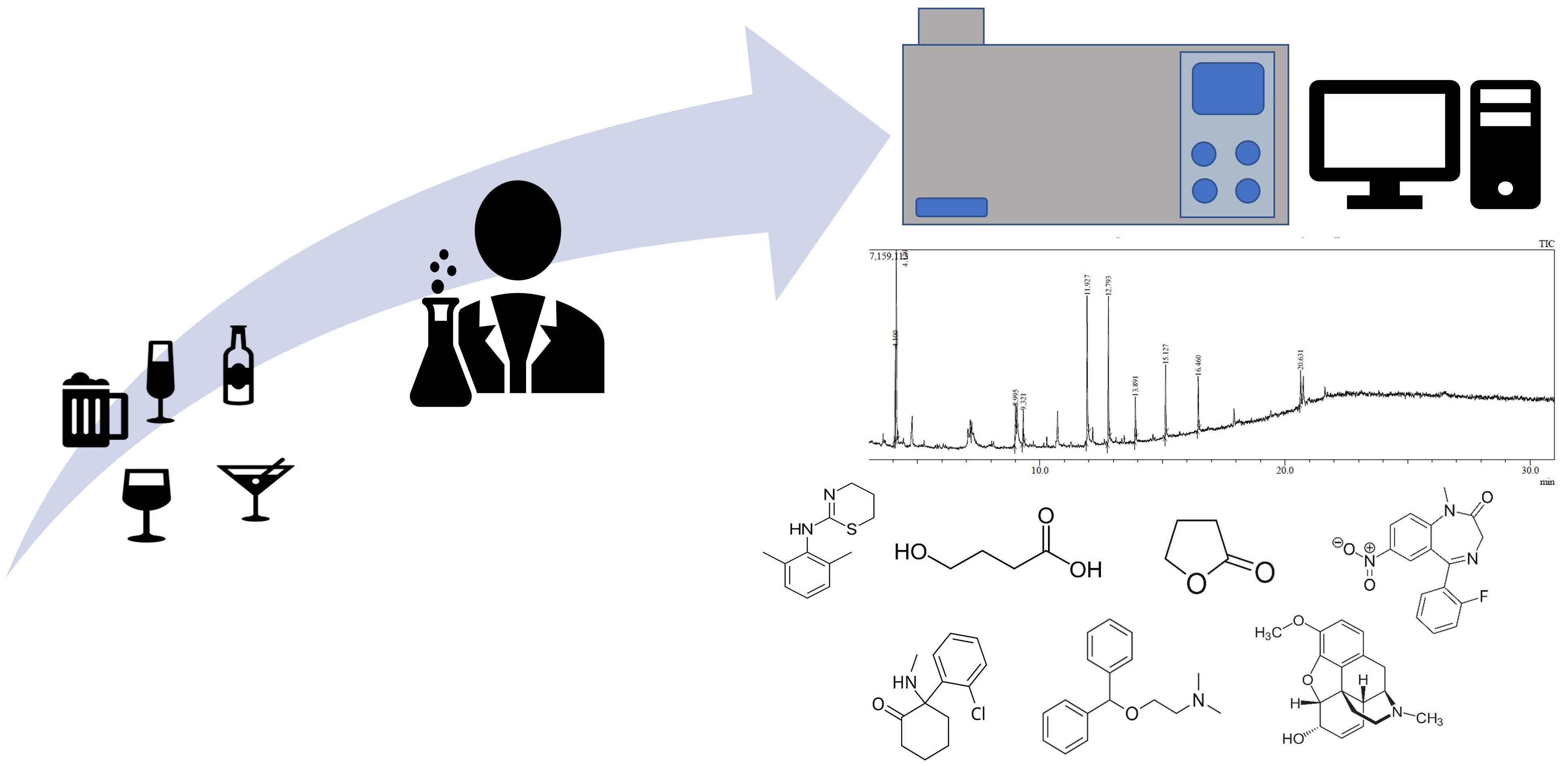
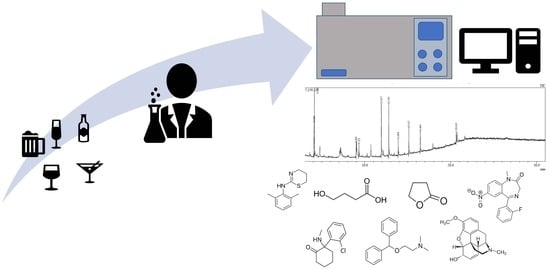
Applications of Gas Chromatography and Gas Chromatography-Mass Spectrometry for the Determination of Illegal Drugs Used in Drink Spiking




Abstract
Share and Cite
Kisher, H.; Gould, O.; Honeychurch, K.C. Applications of Gas Chromatography and Gas Chromatography-Mass Spectrometry for the Determination of Illegal Drugs Used in Drink Spiking. Chemosensors 2025, 13, 205. https://doi.org/10.3390/chemosensors13060205
Kisher H, Gould O, Honeychurch KC. Applications of Gas Chromatography and Gas Chromatography-Mass Spectrometry for the Determination of Illegal Drugs Used in Drink Spiking. Chemosensors. 2025; 13(6):205. https://doi.org/10.3390/chemosensors13060205
Chicago/Turabian StyleKisher, Hesham, Oliver Gould, and Kevin C. Honeychurch. 2025. "Applications of Gas Chromatography and Gas Chromatography-Mass Spectrometry for the Determination of Illegal Drugs Used in Drink Spiking" Chemosensors 13, no. 6: 205. https://doi.org/10.3390/chemosensors13060205
APA StyleKisher, H., Gould, O., & Honeychurch, K. C. (2025). Applications of Gas Chromatography and Gas Chromatography-Mass Spectrometry for the Determination of Illegal Drugs Used in Drink Spiking. Chemosensors, 13(6), 205. https://doi.org/10.3390/chemosensors13060205