


Abstract
Rural educators face persistent structural barriers to accessing professional development that supports instructional change, particularly in disciplines such as engineering that require specialized knowledge and resources. This study examines a needs-driven professional development initiative designed to support rural K–12 educators in integrating engineering concepts through a school–university partnership in Southwest Virginia. Using a mixed-methods needs assessment consisting of a regional survey and in-depth interviews with teachers and administrators, we identified key challenges related to professional development access, relevance, and sustainability. These findings informed the design of a two-day professional development workshop grounded in place-based education and teacher pedagogical choice. Results highlight educators’ preferences for contextually relevant, hands-on learning experiences and the importance of ongoing support and professional community-building. While situated in a rural region, the findings have broader implications for professional development policy and practice across diverse educational settings. By explicitly examining how needs assessment findings were translated into professional development design decisions, this study contributes practice-based evidence for creating more equitable and context-responsive professional learning models.
1. Introduction
Access to high-quality professional development remains a persistent challenge for educators, particularly in rural contexts where geographic dispersion, limited institutional presence, and resource constraints shape instructional practice (Cadero-Smith, 2020; Tytler et al., 2011). These dynamics are especially salient in disciplines such as engineering, which require specialized content knowledge, materials, and pedagogical approaches that are often difficult to access in rural school systems (Lopez et al., 2017; Paradise et al., 2022). These constraints do not simply limit access to professional development but shape the broader professional learning ecosystems in which rural educators work.
Southwest Virginia is characterized by geographically dispersed school systems, mountainous terrain, and communities historically shaped by agriculture, manufacturing, and extractive industries. These regional characteristics shape the professional learning environments in which educators work. As a result, opportunities for K–12 teacher professional development are often unevenly available or misaligned with the needs of the local educational context. The rurality of this region—classified as highly rural by the U.S. Department of Agriculture’s Rural–Urban Continuum Codes (USDA ERS, 2023)—presents both unique challenges and the potential for innovative solutions to broadening student participation in engineering and STEM disciplines.
1.1. Characteristics of Rural Educational Systems
Rural educational systems operate within structural and contextual conditions that influence teaching, learning, and access to professional development in ways that differ meaningfully from urban and suburban settings. Schools in rural regions are often geographically isolated, serve smaller and more dispersed student populations, and operate with limited financial and human resources (Clark et al., 2022; Lavalley, 2018). At the same time, rural schools frequently function as central community institutions, with educators assuming multiple roles that extend beyond classroom instruction (Showalter et al., 2017; Zinger et al., 2020).
Rather than viewing rurality as a deficit or a simplified version of urban schooling, research characterizes rural schools as distinct educational ecosystems shaped by place, relationships, and local context (Schafft & Jackson, 2010; Tytler et al., 2011). Teachers in rural settings often teach across multiple subjects or grade levels and work within small professional communities, conditions that influence both instructional practice and opportunities for professional learning (Goodpaster et al., 2012; Wingert et al., 2022). These contextual demands shape not only what rural teachers teach, but also how and whether they are able to engage in sustained professional learning.
Geographic distance further constrains access to professional development opportunities beyond local contexts. Professional learning experiences are frequently located far from rural school systems, requiring travel time, substitute coverage, and personal expense. As a result, rural educators may rely more heavily on district-mandated or online professional development offerings that do not fully align with their instructional contexts or professional goals (Cadero-Smith, 2020). Additionally, in smaller school systems, teachers may be the sole instructor for a given subject or grade level, further limiting opportunities for collaboration and peer learning (Zinger et al., 2020).
These characteristics position rurality as a structuring condition rather than a background variable shaping professional learning. In this sense, rural school systems operate within distinct professional learning ecosystems defined by geographic context, local industries, community relationships, and the organizational structures of small school systems. Professional development models and policies that do not account for these contextual conditions—such as educators’ instructional roles, resource constraints, and professional networks—risk being perceived as irrelevant or infeasible regardless of their theoretical quality. At the same time, rural contexts offer meaningful assets, including strong community ties, place-based knowledge, and connections to local industries, that can support teaching and learning when professional development is intentionally designed to engage with them (Gruenewald & Smith, 2014; Smith & Sobel, 2014).
Recent scholarship in rural education further emphasizes the importance of foregrounding place when examining educational systems and practices. Rather than treating rural schools as simplified or resource-limited versions of urban systems, scholars argue that rural contexts should be understood through the specific social, economic, and cultural conditions that shape local educational environments (Guenther et al., 2026). This perspective calls for examining the “parts” that constitute rural places—such as local industries, community relationships, and regional knowledge systems—that influence teaching and learning (Reid et al., 2010). By attending to these contextual elements, rural education research shifts away from deficit-oriented narratives and toward recognizing the generative possibilities of rural communities and the pedagogical opportunities embedded in local contexts (Walker-Gibbs et al., 2018). In this study, this place-conscious perspective informed the design of the professional development initiative by intentionally engaging with regional contexts, including local industries, community expertise, and place-based data sources that reflect the educational environment of Southwest Virginia.
1.2. Characteristics of Quality Teacher Professional Development and Current Practices
Research on teacher professional development has identified several features associated with effective professional learning. High-quality professional development is commonly described as content-focused, active, collaborative, and sustained over time, with clear connections to teachers’ instructional practice (Darling-Hammond, 2017; Desimone & Garet, 2015). Professional development that incorporates hands-on learning, collaboration, and alignment with classroom contexts is more likely to support instructional change than isolated or lecture-based sessions.
In practice, however, professional development often diverges from these principles. PD offerings are frequently shaped by policy and accountability structures that prioritize compliance, standardized delivery, or participation metrics over contextual relevance and long-term impact. Teachers may experience professional development as fragmented, repetitive, or disconnected from classroom realities, limiting its usefulness for supporting sustained instructional improvement.
This theory–practice gap is particularly pronounced in rural contexts. Limited district capacity and financial resources can restrict the availability and diversity of PD opportunities, while geographic distance and staffing constraints further limit participation (Cadero-Smith, 2020). Rural educators may be expected to adapt professional development learning across multiple roles or subjects, increasing the importance of PD that is flexible and directly applicable.
Collaborative professional learning models offer one response to these challenges. Sustained collaboration with peers supports reflection, experimentation, and adaptation of instructional practices over time (Opfer & Pedder, 2011; Tytler et al., 2011). Access to such collaborative structures, however, remains uneven, particularly in rural settings.
Understanding how educators experience professional development within these constraints underscores the value of needs assessment approaches that center teachers’ perspectives and instructional contexts. This perspective is particularly important in disciplines that require educators to integrate unfamiliar content or instructional approaches, such as engineering. Examining professional development through the lens of teacher needs and contextual constraints therefore provides an important foundation for understanding how STEM and engineering integration can be supported in diverse educational settings.
1.3. STEM and Engineering-Focused Professional Development for Teachers
Professional development aimed at supporting STEM and engineering integration presents additional considerations for PK–12 educators. Engineering education often requires teachers to engage with unfamiliar content, tools, and pedagogical approaches, particularly when engineering is integrated into non-traditional subject areas or taught by educators without formal engineering backgrounds (Lopez et al., 2017). At the same time, engineering has the potential to support interdisciplinary teaching by connecting problem solving, design, and real-world applications across subject areas.
Research on STEM and engineering-focused professional development emphasizes the importance of grounding learning in authentic, real-world contexts and engaging teachers in hands-on, problem-based experiences (Daugherty, 2010; Mesutoglu & Baran, 2021). Professional development that mirrors the kinds of learning experiences educators may later facilitate with students—such as design-based teaching and collaborative problem solving—can support both conceptual understanding and instructional confidence (Capobianco et al., 2018). These features align closely with broader research on effective teacher professional development, but they may be especially important in engineering education, where teachers are often asked to enact unfamiliar content in flexible and contextually responsive ways.
At the same time, educators face persistent barriers to implementation. Teachers frequently report challenges related to limited instructional time, lack of materials or resources, and difficulty aligning engineering content with existing curricular demands (Lopez et al., 2017; Paradise et al., 2022). In rural contexts, these challenges may be further shaped by long travel distances, limited access to specialized equipment or institutional partnerships, and the need to adapt engineering concepts across multiple grade levels, subject areas, or instructional roles. As a result, engineering-focused professional development cannot be understood solely in terms of content delivery; it must also be considered within the broader professional learning ecosystems in which educators work.
Community-based and place-based approaches offer one response by connecting engineering concepts to local contexts, industries, and environmental features, thereby increasing relevance and feasibility for rural educators (Paradise et al., 2022). Such approaches position engineering not as an externally imposed subject area, but as a way of thinking and problem-solving that can be meaningfully connected to local communities and lived experiences. Examining educators’ articulated needs therefore provides insight into how engineering-focused professional development can be situated within existing professional learning structures and aligned with local instructional contexts. From this perspective, engineering becomes one pathway within a broader professional development ecosystem shaped by policy environments, institutional capacity, and educators’ lived experiences.
1.4. Teacher Pedagogical Choice
Teacher pedagogical choice offers a useful way to think about how educators engage with professional development and how new ideas ultimately show up, or do not show up, in classroom practice. Pedagogical choice refers to teachers’ ability to make instructional decisions that reflect their students’ needs, subject areas, and local contexts, drawing on professional judgment rather than following a prescribed set of practices (Burridge, 2018). This framing positions teachers as active agents in instructional change, rather than as implementers of externally defined solutions.
A consistent finding across the professional development literature is that learning experiences are more likely to lead to sustained change when teachers are given space to adapt ideas and make decisions about how those ideas fit within their own classrooms. Professional development that emphasizes flexibility, experimentation, and contextual adaptation tends to be more impactful than models that prioritize uniform implementation or compliance (Darling-Hammond, 2017; Desimone & Garet, 2015). When teachers are constrained by rigid expectations or narrow topic areas, even well-designed professional development may be difficult to translate into practice.
Pedagogical choice is particularly important in rural contexts, where educators often teach across multiple subjects or grade levels and must balance competing instructional demands within small school systems. In these settings, teachers frequently need to integrate new content into existing courses or instructional routines rather than adding entirely new units or programs (Tytler et al., 2011). Professional development that assumes standardized classroom conditions or a single pathway for implementation may therefore feel misaligned with rural educators’ realities.
This issue is especially salient for engineering and interdisciplinary integration. Engineering concepts can be introduced through a range of instructional approaches, such as systems thinking, problem-based learning, data analysis, or design challenges, depending on teachers’ subject areas, grade levels, and curricular constraints (Grohs et al., 2018). Allowing educators to identify their own entry points supports integration that feels both feasible and instructionally meaningful.
Together, this work suggests that professional development intended to support rural educators should prioritize flexibility and teacher agency. Framing professional learning around pedagogical choice acknowledges the expertise educators bring to their classrooms and creates space for them to adapt new ideas in ways that make sense for their students and communities. This perspective informed the design of the professional development initiative described in this study, shaping both the structure of the workshop and the emphasis on adaptable, cross-disciplinary approaches discussed in later sections.
1.5. Purpose of the Study
Building on place-conscious perspectives in rural education research, this study examines professional development needs among rural PK–12 educators in Southwest Virginia through a mixed-methods needs assessment. By centering educators’ perspectives, the study identifies key barriers and priorities shaping professional development access, relevance, and implementation, with particular attention to interdisciplinary and engineering integration.
Consistent with the emphasis on place in rural education scholarship, the professional development initiative described in this study was intentionally designed to engage with regional contexts, including local industries, community expertise, and place-based data sources relevant to Southwest Virginia. The partnership-based professional development workshop described in this paper is therefore presented as an illustrative response to the needs identified through the study rather than as an intervention evaluation. Although situated in a rural region, the findings inform broader discussions of professional development practice and policy across diverse educational contexts.
1.6. Research Questions
To guide the study, the following research questions were developed:
- What professional development needs, motivations, and barriers do rural PK–12 educators identify in relation to their instructional contexts?
- How do rural educators describe the contextual factors that shape access to and implementation of professional development opportunities?
- How can these identified needs inform the design of professional development experiences intended to support interdisciplinary and engineering integration?
These questions guided the overall design of the study. Survey data provided a broad view of educators’ professional development experiences and preferences. Follow-up interviews offered deeper insight into the contextual factors shaping those experiences. The next section describes the study context, participant recruitment, and data collection and analysis procedures.
2. Materials and Methods
2.1. Study Context and Research Design
This study employed a sequential mixed-methods design (Creswell, 2013) to examine the professional development needs of rural K–12 educators and to inform the design of a needs-driven engineering professional development program. A mixed-methods approach was selected to allow for both breadth, through survey data, and depth, through follow-up interviews that explored how educators interpreted and navigated professional development within their local contexts.
The study was conducted in Virginia Department of Education (VDOE) Regions 6 and 7, which encompass 29 counties in Southwest Virginia. According to the U.S. Department of Agriculture’s Rural–Urban Continuum Codes, the majority of counties in this region are classified as highly rural, with geographically dispersed populations, long travel distances, and educational systems shaped by regional economic and community contexts (USDA ERS, 2023). Examining professional development within this context provides insight into how professional learning is shaped by broader structural, geographic, and community conditions in rural school systems. Figure 1 below shows population data for VDOE Regions 6 and 7.
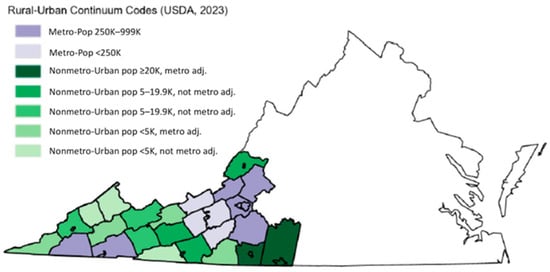
Figure 1.
VDOE Regions 6 and 7 population, according to USDA Rural–Urban Continuum Codes (USDA ERS, 2023).
2.2. Participants and Recruitment
Participants included PK–12 teachers and administrators employed in public school systems across the VDOE Regions 6 and 7. Recruitment occurred through existing school system partnerships, regional education networks, and district leadership, including outreach supported by superintendents and administrative personnel. These stakeholders assisted in disseminating the survey to educators within their school systems.
Survey invitations were distributed electronically via email and educators participated voluntarily. Recruitment messaging emphasized that the purpose of the study was to inform the design of effective, locally responsive professional development, rather than to evaluate individual educators or school systems. To acknowledge participants’ time and encourage broad participation, respondents who completed the survey were given the option to enter a drawing for one of several $50 electronic gift cards. One $50 gift card was included in the drawing for every 15 completed survey responses.
The survey yielded responses from 62 teachers and administrators, representing a range of grade levels, subject areas, and professional roles. Participants taught across disciplines including mathematics, science, English, career and technical education, and family and consumer sciences. From the survey respondents, eight educators elected to participate in follow-up interviews, allowing for multiple perspectives on professional development needs and constraints.
2.3. Needs Assessment Data Collection
2.3.1. Survey Instrument and Procedures
To examine educators’ professional development (PD) needs and preferences in Southwest Virginia, we developed and administered an online needs assessment survey using QuestionPro. The survey was designed to be broadly applicable to PK–12 educators across grade levels and subject areas, including teachers and administrators, regardless of prior experience with or interest in engineering. This design choice allowed the study to capture perspectives beyond those already engaged in engineering-related instruction.
Survey items were developed by the research team to examine educators’ prior professional development experiences, motivations for participating in professional learning, and preferences related to professional development logistics such as timing, modality, and accessibility. The instrument included a combination of structured response items and open-ended prompts, allowing respondents to both indicate general patterns and describe their experiences in greater detail. The survey was designed as an exploratory needs assessment to identify broad trends and priorities among educators across the region. Findings from the survey informed the development of the follow-up interview protocol.
The survey began with an information sheet describing the study purpose, voluntary participation, estimated time burden (approximately 10–20 min), and confidentiality protections. Participants were also given the option to indicate interest in a follow-up interview.
The instrument included a combination of item types, including multiple-choice items, multiple-select items, rank-order items implemented through a drag-and-drop interface, and open-ended prompts. Survey items collected demographic information such as professional role, years of experience, grade level(s) and/or subject area(s), and school district affiliation, with school name provided optionally.
The project was funded through a grant focused on engineering education; therefore, in addition to items addressing general professional development experiences and preferences, the survey included optional, interest-based modules focused on engineering integration. An additional interest-based module focused on arts integration was included to align with regional professional learning initiatives during the 2023–2024 academic year. Participants were able to opt into the engineering and arts modules, allowing the survey to remain broadly applicable while also capturing more targeted insights. The complete survey instrument is provided in Appendix A.1.
2.3.2. Survey Measures
The survey captured five primary domains:
- Professional background and instructional context. Respondents reported their role in education, years of experience, grade level(s) and/or subject area(s), and district affiliation.
- Prior PD experiences and perceived effectiveness. Participants indicated whether they had previously participated in professional development and responded to open-ended prompts describing PD experiences they perceived as effective and ineffective.
- Motivations and preferences for future PD. Respondents ranked motivations for participating in PD (e.g., improving teaching practice, serving students, professional growth, or compliance requirements) and ranked factors influencing PD participation decisions, such as cost, relevance, timing, modality, and availability of continued support. Timing and modality preferences were assessed using both standard and “reduced barrier” items (e.g., assuming no cost and the availability of a stipend).
- Barriers to implementing PD learning. Participants identified barriers that limited their ability to implement PD learnings in their classrooms, including a lack of time, resources, or institutional support, with opportunities to elaborate through open-ended responses.
- Interest-based integration pathways. Respondents indicated interest in integrating additional subject areas beyond their primary discipline. Those who selected engineering completed an engineering-specific module assessing motivations, anticipated challenges, desired PD formats, preferred modalities, and requested connections to resources, individuals, or organizations. Parallel items were included for arts integration, and respondents selecting other areas of interest were prompted to describe them in open-ended form.
2.3.3. Branching Logic and Survey Flow
To minimize participant burden and preserve broad applicability, integration-focused items were displayed only to respondents who indicated interest in integrating additional subject areas and selected the relevant pathway(s). Engineering- and arts-specific modules were therefore optional and completed by a subset of respondents, while general PD experience and preference items were available to all participants.
2.3.4. Follow-Up Interview Recruitment
At the conclusion of the survey, respondents were invited to indicate interest in participating in a follow-up interview. Those who opted in provided contact information to support interview scheduling. This resulted in eight interview participants representing diverse instructional roles, subject areas, and school contexts.
2.4. Interviews
Semi-structured interviews were conducted with eight teachers and administrators who volunteered through the survey. Interview participants represented a range of subject areas, grade levels, and geographic regions within Southwest Virginia. An overview of interview participant characteristics, including subject taught, grade level(s), and region, is provided in Table 1. Although the research team’s broader work focuses on supporting engineering integration, the professional development initiative was intentionally designed to be accessible to educators with little or no prior engineering experience. Participation in the professional development was voluntary, and designing an experience that was broadly relevant allowed educators across disciplines to engage in ways aligned with their own pedagogical choices and instructional contexts. This approach also reflects the regional context of Southwest Virginia, where industries such as manufacturing and related engineering fields shape local workforce pathways and may influence educators’ interest in exploring engineering-related concepts within a variety of subject areas.

Table 1.
Interview participants.
Interview protocols were informed by preliminary survey findings and guided by the teacher pedagogical choice framework, which provided a lens for exploring how educators make instructional decisions within the constraints of their local contexts. Interview questions were designed to explore educators’ experiences with professional development access, perceived barriers to implementation, and perspectives on how professional learning opportunities could better align with their instructional and regional contexts. Questions also probed educators’ interest in integrating new subject areas, including engineering, into existing curricula. To illustrate the focus of the interviews, sample questions included:
- “Imagine you were designing a professional development experience for yourself or other educators that you would be excited to participate in. What would the focus of the experience be?”
- “Can you describe the kinds of professional development opportunities that are currently available to you, as well as opportunities you would like to pursue but cannot access?”
- “Can you share any specific examples of challenges you have encountered when implementing something new or novel in your classroom?”
- “What kinds of support, resources, or training would make it easier to integrate a new topic or subject, such as engineering, into your existing curriculum?”
Additional questions examined perceptions of effective professional development, desired takeaways and formats, and how professional learning could be better tailored to the unique contexts of rural schools in Southwest Virginia. The full interview protocol is provided in Appendix A.2. Interviews were conducted via Zoom, audio-recorded with participant consent, and transcribed verbatim. Each interview lasted approximately 30 min.
2.5. Data Analysis
Survey data were analyzed using descriptive statistics to identify trends related to professional development access, participation barriers, and instructional needs. Open-ended survey responses and interview transcripts were analyzed using inductive thematic analysis.
Initial open coding was conducted by the lead researcher to identify recurring ideas across survey responses and interview transcripts. These preliminary codes were iteratively refined and organized into broader themes in collaboration with the research team. After themes were established, generative AI tools were used in a limited capacity to assist with organizing excerpts from interview transcripts and open-ended survey responses within the predefined thematic categories. All coding decisions, theme interpretation, and analytic conclusions remained the responsibility of the research team.
To further support the credibility of the findings, preliminary themes were shared with educator liaisons involved in the broader research–practice partnership supporting this work. These educators provided feedback on how the identified themes aligned with their experiences in local school systems and helped inform the design of the subsequent professional development workshop. This process allowed the research team to refine interpretations while ensuring that the findings reflected the perspectives and contextual realities of educators in the region.
2.6. Ethical Considerations
This study was conducted under Virginia Tech Institutional Review Board protocol [21-622]. Participation was voluntary, and informed consent was obtained from all participants. Survey and interview data were anonymized prior to analysis, and identifying information was removed from all reported findings.
2.7. Generative AI Statement
Initial qualitative coding and theme development were conducted by the lead researcher and reviewed with the research team. Preliminary themes were also discussed with educator liaisons involved in the regional partnership supporting this work, allowing the research team to confirm that the themes reflected educators’ experiences and to inform the design of the professional development workshop. After themes were established, generative AI tools were used to assist with organizing excerpts from interview transcripts and open-ended survey responses within the predefined thematic categories.
3. Results
Survey findings provided an overview of educators’ professional development experiences, motivations, and participation constraints across the region. Interview data were then used to contextualize these patterns and provide deeper insight into how educators interpreted and navigated professional development opportunities within rural school systems.
3.1. Overview of Survey and Interview Data
A total of 62 PK–12 educators and administrators completed the needs assessment survey. Of these respondents, 56% identified as classroom teachers, and 69% reported more than 12 years of professional experience. Participants represented all grade levels as well as administrative roles. Table 2, below, summarizes participant demographics.
Table 2.
Survey participants.
To provide deeper insight into survey findings, follow-up interviews were conducted with eight teachers and administrators. Interview data contextualized survey responses and highlighted how professional development experiences and needs were shaped by rural educational settings.
3.2. Characteristics of Effective Professional Development
Survey respondents consistently emphasized that effective professional development (PD) must be relevant, practical, and immediately applicable. In many cases, educators described effectiveness not as a universal set of features, but as the degree to which professional development could be adapted to their local instructional and community contexts. Three attributes emerged most frequently when educators described PD experiences they perceived as successful.
First, educators highlighted the importance of tangible takeaways, such as ready-to-use lesson plans, classroom activities, or instructional resources that required little to no additional preparation (n = 18). These resources were valued because they reduced the time required for teachers to translate new ideas into classroom practice. Interview participants echoed this preference for immediately usable materials, describing a desire for professional development that demonstrates specific strategies that can be adapted to local contexts. As one educator explained, “Show me how, then I’ll use it as a roadmap and add to it” (Interview participant).
In addition to practical takeaways, educators emphasized the importance of relevance to their specific teaching contexts (n = 10). Participants expressed frustration with professional development that was overly general or disconnected from their instructional realities. Many respondents noted that professional development was most effective when it addressed specific subject areas, classroom challenges, or student needs. Several participants also highlighted the importance of differentiating professional learning opportunities based on teacher experience. As one educator noted, “You’ve got a brand-new teacher, and then you’ve got teachers who have been working for 20 years who need something different”. These comments suggest that professional development designed for broad audiences may struggle to meet the diverse needs of educators at different career stages.
Finally, respondents emphasized a preference for professional development formats that are interactive and engaging rather than lecture-based (n = 10). Hands-on learning experiences, opportunities for collaboration, and activities that allow teachers to practice new strategies were consistently described as more effective than passive formats. Survey respondents frequently described successful professional development as experiences that allowed them to actively engage with new tools or instructional approaches and leave with concrete strategies they could implement in their classrooms.
3.3. Characteristics of Ineffective Professional Development
Educators also identified several features that diminished the perceived value of PD experiences. The most frequently cited concern was PD that was not engaging, particularly sessions dominated by lecture-based formats (n = 16). Teachers expressed a strong preference for experiential learning opportunities over passive content delivery.
A second common concern was lack of relevance (n = 15). PD that focused on generalized strategies or assumed access to resources, schedules, or institutional supports not available in participants’ local settings was frequently described as ineffective. Participants noted that PD designed for larger or better-resourced schools often failed to translate to their instructional contexts.
Finally, educators identified a lack of materials or implementation support as a barrier to applying PD learning (n = 10). Without access to resources or concrete examples, participants reported difficulty translating PD content into classroom practice.
3.4. Barriers to Professional Development Access and Implementation
Across both survey and interview data, educators identified time, cost, and resource limitations as primary barriers to accessing and implementing PD. Many respondents indicated that the cost of attending PD—along with the cost of implementing new strategies—limited participation, particularly in small rural school systems with constrained budgets. As one survey respondent noted, “some PD I have looked at are $250 or higher for the day,” making participation difficult without institutional support.
Time constraints were also frequently cited as a challenge. Teachers described balancing professional development with existing instructional responsibilities and other school obligations. One educator summarized this pressure by explaining that “the push is to teach, teach, teach. Time is crunched and having to do other non-teaching duties can get in the way.” Others noted that limited planning time made it difficult to translate professional learning into classroom practice, particularly when professional development occurred immediately before the start of the school year.
Participants also highlighted the importance of contextual fit when attempting to implement new ideas from professional development experiences. Strategies presented in workshops or conferences did not always align with the realities of rural classrooms. As one respondent explained, “we’re a different type of school with a different type of population,” which can make it difficult to apply approaches designed for larger or more urban school systems. Another participant similarly reflected that educators sometimes encounter ideas in professional development settings that seem impractical in their local context, thinking, “that’s definitely not going to work with my students”.
Geographic distance further constrained access to professional learning opportunities. Educators described the challenges of traveling to conferences or workshops located far from their schools, particularly when travel required additional time away from the classroom. One interview participant explained that “[my county] is far from most places. Having things at the high school would make it not such a strain on teachers”.
Together, these findings suggest that access to and implementation of professional development in rural contexts are shaped less by individual motivation than by the structural and contextual conditions of educators’ professional learning environments, including funding, time, travel, and institutional fit.
3.5. Desired Professional Development Topics and Focus Areas
Survey respondents identified several PD topic areas of interest, including technology (n = 14), curriculum development (n = 10), teaching and instruction (n = 8), classroom management and behavior (n = 8), subject-specific training (n = 8), and leadership development (n = 7). Fewer respondents prioritized assessment-focused PD (n = 3).
When asked how the Virginia Tech Center for Educational Networks and Impacts, a university-based center focused on research–practice partnerships and community-engaged educational initiatives, could better support educators, participants emphasized the importance of subject-specific training, professional development addressing student populations and experiences (e.g., trauma-informed practices, special education), and connections between instructional content and real-world career pathways. These priorities reflected not only individual interests but also the practical demands of educators’ local school contexts, including changing student needs, available technologies, and connections between schooling and regional workforce pathways.
Interview data further highlighted educators’ interest in PD addressing classroom management and social-emotional learning, particularly in response to changes in student behavior following the COVID-19 pandemic. Participants also expressed concern about over-reliance on technology in classrooms and a desire for PD that addressed responsible and effective technology use.
3.6. Interest in Engineering and Other Subject Integration Pathways
Although the needs assessment was designed to capture teachers’ professional development needs broadly, the project was funded through a grant focused on engineering education, and the survey therefore included items examining interest in and challenges related to engineering integration. In total, 28 respondents indicated interest in integrating engineering into their curriculum. Among these educators, the most frequently cited motivation was enhancing students’ problem-solving skills, with approximately half of the respondents identifying this as their primary reason for pursuing engineering integration.
Educators interested in engineering integration identified several challenges, including insufficient training or knowledge of engineering concepts, limited instructional time, and a lack of resources or materials. The most desired PD format was workshops focused on engineering concepts and their classroom applications, with in-person and hybrid modalities preferred.
Parallel patterns emerged for arts integration. Respondents expressed interest in enhancing creativity and critical thinking but identified barriers related to limited resources, time constraints, and lack of formal training. Educators also described interest in interdisciplinary integration beyond engineering and the arts, including combinations such as computer science and world languages or agriculture and culinary arts.
3.7. Professional Isolation and the Need for Collaboration
Interview participants consistently described limited opportunities for sustained collaboration across schools and districts, particularly in settings where educators were the only teacher in a given subject area or worked within small professional communities. Educators expressed a desire for networking opportunities with colleagues in neighboring counties and suggested incentivizing participation to encourage engagement, particularly among veteran teachers.
These findings highlight the importance of professional development models that extend beyond individual workshops to foster sustained collaboration and community-building across rural educators’ professional networks.
3.8. Implications of Needs Assessment Findings for Professional Development Design
Guided by these findings, the research team designed and implemented a professional development workshop intended to directly respond to educators’ expressed needs while minimizing commonly cited barriers to participation. The workshop was piloted in 2024 and prioritized relevance, flexibility, practical application, and responsiveness to regional context while also addressing structural conditions that shape educators’ ability to engage in professional learning. It was held on the Virginia Tech campus, located within reasonable driving distance of participating school systems, and financial barriers were mitigated through the provision of travel support, lodging when needed, and a participation stipend.
The overall approach emphasized three guiding principles derived from the needs assessment and the place-conscious framing of the study: (1) centering professional learning around adaptable instructional frameworks rather than prescriptive practices; (2) foregrounding hands-on, application-oriented activities that could be translated across subject areas; and (3) creating structured opportunities for collaboration and relationship-building among educators from different schools and districts. These principles reflected educators’ preferences for practical, relevant professional development and their expressed desire for connection beyond their own schools. Several instructional components also reflected priorities of the NSF-funded project supporting this work, which emphasizes emerging computational approaches within engineering education, including data science and artificial intelligence. These focus areas therefore reflected both the needs assessment findings and the broader goals of the project, supporting the development and implementation of the workshop.
The workshop followed a two-day structure that combined interactive sessions, applied learning activities, and facilitated planning time. Day one focused on establishing a shared instructional framing through systems thinking, selected as both an entry point for engineering integration and a cross-cutting approach applicable across disciplines. Participants then engaged in a data science-based activity grounded in a regional trail system dataset, modeling how local contexts could be leveraged to teach engineering-related concepts while remaining adaptable to diverse classrooms. This activity was intentionally designed to connect engineering-related problem-solving to a place familiar to participants, reinforcing the broader goal of grounding professional learning in regional contexts rather than abstract or decontextualized examples. Day one also incorporated regional industry and community expertise, including engagement with local engineers and examples connected to manufacturing in Southwest Virginia, to ensure that engineering integration was framed through contexts meaningful to participants’ schools and communities. Day two emphasized applied exploration and instructional translation, including hands-on engagement with programmable technologies and a session focused on the use of artificial intelligence as a tool to support curriculum development and instructional planning. The inclusion of artificial intelligence was a direct response to educators’ requests for professional development addressing emerging technologies in ways that complemented, rather than supplanted, teacher expertise.
The workshop also incorporated dedicated time for collaborative lesson planning and reflection, allowing participants to identify how workshop content could be integrated into their own instructional contexts. These sessions were intentionally unstructured to support pedagogical choice and to enable educators to engage with the material in ways aligned with their subject areas, grade levels, and curricular constraints. Opportunities for informal interaction, including shared meals and facilitated discussions, supported relationship-building and the development of professional networks across school systems. The workshop model was subsequently implemented again in 2025, with minor adjustments to specific instructional examples and subject-area emphasis while maintaining the same overall structure and design principles.
Rather than positioning the workshops as standalone experiences, the design emphasized ongoing engagement through follow-up communication and individualized support. Participants were invited to continue conversations related to instructional implementation, resource sharing, and curriculum development beyond the workshop itself, reflecting educators’ expressed desire for sustained professional learning opportunities.
Together, these design decisions illustrate how needs assessment findings were translated into concrete professional development structures and experiences. The following discussion section situates these design choices within existing literature on rural professional development, engineering integration, and school–university partnerships, and considers their implications for future practice and policy.
4. Discussion
This study examined rural educators’ professional development experiences and needs through a mixed-methods needs assessment conducted in Southwest Virginia. Findings indicate that educators’ interest in integrating engineering and other interdisciplinary content is shaped less by individual motivation and more by structural and contextual conditions that influence access, relevance, and sustainability of professional learning. These findings underscore the importance of professional development models that are responsive not only to local instructional contexts, but also to the place-based conditions that shape professional learning in rural school systems.
Educators in this study described effective professional development as practical, relevant, and immediately applicable, aligning with prior research emphasizing active, teacher-centered professional learning experiences (Darling-Hammond, 2017; Desimone & Garet, 2015). At the same time, participants highlighted how the structural and geographic conditions of rural school systems shape professional development participation and implementation in distinct ways. Long travel distances, uneven access to resources, and the organizational realities of small school systems influenced not only whether educators could attend professional development, but also whether they were able to implement new instructional approaches in their classrooms.
Importantly, educators did not frame these challenges as a lack of interest or willingness to innovate. Instead, they described systemic barriers—such as cost, time, and lack of institutional support—that limited their capacity to engage meaningfully with professional learning. This distinction reinforces the need to frame professional development challenges as structural rather than individual and to recognize rural professional learning environments as contextually distinct rather than simply under-resourced versions of urban systems.
4.1. From Needs Assessment to Professional Development Design
The purpose of this discussion is to make explicit how findings from the needs assessment informed the design of a professional development workshop focused on engineering integration. Rather than treating the workshop as an outcome to be evaluated, this section foregrounds the design rationale that connected educators’ articulated needs, constraints, and interests to instructional, logistical, and relational design decisions.
This framing aligns with rural education scholarship that emphasizes the importance of practice-based evidence for informing educational design in diverse and contextually complex settings. Eppley et al. (2018) argue that evidence grounded in educators’ lived experiences is essential for developing responsive interventions in rural schools, where standardized or externally defined models often fail to account for local realities. In this study, the needs assessment functioned as a source of practice-based evidence that guided design decisions, allowing professional development to be shaped by educators’ perspectives and by the regional characteristics of the communities in which they worked.
This approach also reflects recent conceptualizations of rural engineering education as embedded within broader learning ecosystems, where meaningful design requires attention to place, relationships, and structural conditions (Schilling & Grohs, 2024a). Viewed through this lens, the needs assessment served not only to identify gaps but to inform a professional development design that was responsive to both constraints and assets within the regional educational context.
4.2. Systems Thinking as an Integrative and Engineering-Centered Framework
A central design decision informed by the needs assessment was the use of systems thinking as the primary instructional framework for the workshop. Educators across disciplines expressed interest in interdisciplinary integration while also voicing concern about the relevance and feasibility of engineering-related professional development. Systems thinking addressed this tension by offering a shared language that could connect diverse subject areas while maintaining a clear link to engineering practice.
From an engineering education perspective, systems thinking represents a foundational way of reasoning about complex, ill-structured problems through attention to relationships, feedback, and trade-offs (Grohs et al., 2018). Framing engineering integration through systems thinking therefore aligned the workshop with core engineering competencies while allowing educators flexibility in how concepts were enacted instructionally. This approach also resonates with research emphasizing the need to reconcile formal engineering education goals with the everyday realities of rural classrooms, where instructional relevance and adaptability are critical (Schilling & Grohs, 2024b).
By positioning systems thinking as both an engineering way of thinking and an interdisciplinary entry point, the workshop design supported educator agency while remaining explicitly grounded in engineering education.
4.3. Signature Instructional Areas Aligned with Educator Needs and Program Goals
In addition to systems thinking, needs assessment findings informed the selection of two additional signature instructional areas: data science and artificial intelligence. Educators consistently expressed interest in professional learning related to emerging technologies and in instructional approaches that connected classroom learning to real-world applications. At the same time, the selection of systems thinking, data science, and artificial intelligence aligned with the objectives of the NSF-funded project supporting this work, which emphasizes emerging computational approaches within engineering education. Together, these considerations shaped the workshop’s instructional focus, ensuring that the selected areas reflected both educators’ interests and the broader goals of the project funding the development and implementation of the workshop.
The data science component was implemented through an activity using data from a regional trail system familiar to participants. This place-based approach aligned with educators’ preference for experiential learning and demonstrated how engineering problem-solving and data analysis can be grounded in community contexts (Inouye et al., 2024). It also builds on prior work highlighting the value of leveraging local contexts to support engineering integration and capacity-building in rural settings (Grohs et al., 2020; Paradise et al., 2022). The activity reinforced systems thinking by requiring participants to interpret patterns, constraints, and relationships within a real-world system while engaging in collaborative problem solving.
Educators also explicitly requested professional development related to artificial intelligence during the needs assessment, citing uncertainty about appropriate classroom use and concerns about student misuse. In response, the workshop framed AI as a tool to support instructional planning, differentiation, and efficiency rather than replace educator expertise. This framing aligns with calls in rural engineering education to situate emerging technologies within educators’ professional judgment and local instructional contexts rather than positioning them as externally driven innovations (Schilling & Grohs, 2024b).
4.4. Addressing Structural Barriers Through Logistical and Relational Design
Structural barriers identified in the needs assessment directly informed logistical and relational design decisions, shifting attention from participation expectations to conditions that made participation possible. To reduce access constraints related to cost and travel, the program covered participants’ travel and lodging expenses and provided a stipend for participation. Locating the workshop at Virginia Tech further reduced geographic barriers while offering access to institutional resources and facilities within reasonable proximity to participating school systems.
Participants also described feeling valued and respected as professionals, referencing the provision of meals, materials, and opportunities for informal interaction. Prior research highlights that responsive professional development in rural contexts must attend not only to instructional content but also to relational and material conditions that communicate care, mutuality, and respect for educators’ labor (Biddle, 2025). From a policy perspective, such design choices can be understood as intentional responses to systemic constraints rather than individual shortcomings, aligning with rural critical policy analyses that foreground structural inequities shaping educators’ professional opportunities (Brenner, 2021).
4.5. Designing for Sustained Engagement and Collaboration
Educators’ dissatisfaction with one-time professional development experiences and their desire for collaboration informed the design of an ongoing support model. Rather than positioning the workshop as a standalone event, it served as an entry point into continued engagement, including follow-up communication and individualized support as educators began integrating engineering-related ideas into their classrooms.
This emphasis on sustained engagement reflects broader findings that rural engineering education initiatives are more effective when they prioritize continuity, relationship-building, and educator agency over episodic interventions (Grohs et al., 2020; Schilling & Grohs, 2024a). Designing professional development as an ongoing process embedded within educators’ instructional contexts also builds on the relational dimensions of rural education contexts, where trust, continuity, and cross-community connection can strengthen professional learning over time.
4.6. Transferability Beyond the Regional Context
To support transparency and transferability, Table 3 summarizes how key needs assessment findings informed specific professional development design decisions. This mapping illustrates a process for translating empirical insights into professional learning design rather than prescribing a fixed model.
Table 3.
Alignment between needs assessment findings and workshop design decisions.
4.7. Implications for Practice and Policy
Findings from this study suggest that needs assessment can function as more than a preliminary diagnostic exercise. When treated as an integral part of professional development design, needs assessment can surface not only content interests, but also the structural and relational conditions that shape educators’ capacity to engage in and sustain instructional change. In this study, attending simultaneously to instructional relevance, logistical constraints, and professional isolation created a clearer pathway for translating educators’ expressed needs into professional development structures that felt feasible, meaningful, and responsive.
From a practice perspective, these findings align with calls to value practice-based evidence and locally grounded design in rural professional development efforts (Eppley et al., 2018). Designing professional learning that acknowledges educators’ lived contexts—including time limitations, geographic distance, and access to resources—may increase the likelihood that professional development extends beyond participation toward classroom enactment. Partnership-based models that foreground care, responsiveness, and mutuality may be particularly well suited to rural contexts, where educators often navigate layered responsibilities and limited support (Biddle, 2025).
From a policy perspective, these findings highlight limitations of professional development models that prioritize short-term participation metrics or compliance-based accountability structures. Such approaches risk overlooking the contextual constraints that rural educators face and may inadvertently reinforce one-off professional development experiences that educators perceive as misaligned or ineffective. Supporting needs-driven, partnership-based professional development may require funding and accountability structures that recognize rurality as a structuring condition rather than a deficit, and that value sustained engagement, adaptation, and relationship-building over seat time alone (Brenner, 2021; Eppley et al., 2018). Such an approach also requires recognizing local knowledge, regional industries, and community relationships as resources for professional learning design rather than as peripheral contextual details. At the same time, implementing such approaches may require shifts in how professional development is conceptualized and supported within existing educational systems. Many current professional development structures remain oriented toward standardized, short-term programming, which may limit the feasibility of more relational, place-responsive models such as those described in this study.
5. Conclusions
This study demonstrates how a mixed-methods needs assessment can inform the intentional design of professional development that is responsive to rural educators’ contexts and priorities. Survey and interview findings highlighted the importance of relevance, practical applicability, and sustained support, as well as the structural and place-based conditions that shape access to professional learning in rural settings.
Rather than indicating a lack of interest in innovation or instructional change, educators’ responses emphasized how participation in and implementation of professional development are influenced by factors such as time, travel distance, institutional resources, and alignment with local instructional realities. Understanding these conditions is critical for designing professional learning experiences that are both accessible and meaningful within rural educational systems.
By explicitly translating these findings into instructional, logistical, and relational design decisions, the professional development workshop addressed educators’ articulated needs while maintaining a clear focus on engineering integration. Centering systems thinking, data science, and artificial intelligence as signature instructional areas supported interdisciplinary engagement while allowing educators flexibility in how these ideas could be adapted to their own classrooms. Grounding activities in locally meaningful contexts—including regional data sources, industry connections, and familiar community settings—demonstrated how place can function not only as a contextual constraint but also as a generative resource for professional learning design.
This study has several limitations. Firstly, the research was conducted within a specific regional context in Southwest Virginia, and the findings may not fully represent the experiences of educators in other rural settings. Secondly, while the survey captured perspectives from a range of school systems, the interview phase included a smaller number of participants and therefore reflects a more limited set of qualitative perspectives. Finally, this study examined educators’ perceptions of professional development needs and design rather than evaluating the effectiveness of a formal professional development intervention.
This work provides a transparent example of how needs assessment data can function as a design resource for professional development. Making these connections explicit may support more meaningful, equitable, and sustainable professional learning efforts across diverse rural and non-rural educational contexts. More broadly, this study reinforces the importance of recognizing rurality as a structuring condition of educational systems rather than a deficit, and of designing professional learning experiences that engage with the assets, relationships, and contexts that shape teaching and learning in rural communities.
Author Contributions
Conceptualization, H.G., J.G., F.B. and M.S.; Methodology, H.G., J.G., F.B. and M.S.; Formal analysis, H.G.; Writing—original draft, H.G.; Writing—review & editing, H.G., J.G., F.B. and M.S.; Project administration, J.G.; Funding acquisition, J.G. All authors have read and agreed to the published version of the manuscript.
Funding
This material is based on work supported by the National Science Foundation under Grant No. 1943098. Any opinions, findings, and conclusions or recommendations expressed in this material are those of the authors and do not necessarily reflect the views of the National Science Foundation.
Institutional Review Board Statement
The study was approved by the Institutional Review Board of Virginia Tech.
Informed Consent Statement
Informed consent was obtained from all subjects involved in the study.
Data Availability Statement
The data presented in this study are not publicly available due to ethical and privacy considerations. The dataset includes survey responses and interview transcripts collected under an Institutional Review Board-approved protocol, and contains information that could compromise participant confidentiality. De-identified data may be made available from the corresponding author upon reasonable request and with appropriate institutional approvals.
Acknowledgments
During the preparation of this manuscript/study, the authors used ChatGPT (version 5.2) for the purposes of generating and refining portions of the written text and to support the organization and flow of the survey instrument. The authors have reviewed and edited the output and take full responsibility for the content of this publication.
Conflicts of Interest
The authors declare no conflicts of interest. The funders had no role in the design of the study; in the collection, analyses, or interpretation of data; in the writing of the manuscript; or in the decision to publish the results.
Abbreviation
The following abbreviation is used in this manuscript:
| VDOE | Virginia Department of Education |
Appendix A
Appendix A.1. Survey Items
- Background Information
- What is your role in the education sector? (Select one)
- Classroom teacher
- Administrator
- Other (please specify)
- How many years of teaching experience do you have?
- Less than 1 year
- 1–3 years
- 4–8 years
- 9–12 years
- More than 12 years
- Which grade level(s) do you teach? (Select all that apply)
- Kindergarten
- Grades 1–12 (individual grade options provided)
- I am in a non-teaching administrative role
- Which subject(s) do you teach? (Open-ended)
- Tell us a bit about what you do. (Open-ended)
- What school district are you affiliated with? (Open-ended)
- [Optional] Please specify the name of your school.
- Professional Development Experiences
- 8.
- Have you participated in professional development opportunities in the past?
- Yes
- No
- 9.
- Describe a professional development opportunity you found interesting and effective. What made it effective? (Open-ended)
- 10.
- Describe professional development experiences that were less effective or interesting. What do you think contributed to that? (Open-ended)
- Motivations and Preferences for Professional Development
- 11.
- What motivates you to pursue professional development? (Select and rank applicable items)
- Improving teaching practices
- Career advancement
- Better serving students
- Professional development requirements
- Other (please specify)
- 12.
- Which topics or areas are you most interested in for professional development? (Open-ended)
- 13.
- When considering professional development offerings, which factors are most important to you? (Select and rank applicable items)
- Cost of attendance
- Content relevance
- Timing
- Modality
- Continued support after the experience
- Other (please specify)
- 14.
- What timing works best for professional development opportunities? (Select and rank applicable items)
- During school hours
- After school hours
- On school breaks
- Over the summer
- Ongoing semi-regular interactions
- Other (please specify)
- 15.
- If a multi-day professional development program were offered at no cost and included a stipend, what timing would you consider? (Select all that apply; same options as above)
- 16.
- Which modality do you most prefer for professional development?
- In-person
- Online synchronous
- Online asynchronous
- Hybrid
- 17.
- If a multi-day professional development program were offered at no cost and included a stipend, which modalities would you consider? (Select all that apply; same options as above)
- 18.
- What factors hinder your ability to implement changes from professional development in your classroom? (Select all that apply)
- Lack of resources/materials
- Limited time
- Insufficient training/support
- Resistance from students or colleagues
- Other (please specify)
- 19.
- Please provide any additional context to explain the challenges selected above. (Open-ended)
- 20.
- If Virginia Tech’s Center for Educational Networks and Impacts could better support educators in the region, what opportunities or initiatives would you like to see offered? (Open-ended)
- Subject Integration Interest
- 21.
- Are you interested in integrating subjects beyond the traditional curriculum into your classroom (e.g., engineering, arts, or other subjects)?
- Yes—Engineering
- Yes—Arts
- Yes—Other (please specify)
- No, I prefer to stick to the traditional curriculum
- Engineering Integration Section (Shown if Engineering Selected)
- 22.
- What motivates you to integrate engineering into your classroom? (Select and rank applicable items)
- Enhancing problem-solving skills
- Fostering creativity and innovation
- Connecting STEM concepts to real-world applications
- Addressing real-world challenges through design thinking
- Meeting curriculum standards
- Other (please specify)
- 23.
- What challenges do you anticipate when integrating engineering into your classroom? (Select and rank applicable items)
- Lack of resources or materials
- Insufficient training or knowledge
- Limited time
- Difficulty aligning with existing subjects
- Resistance from students or colleagues
- Other (please specify)
- 24.
- Which professional development experiences would be most beneficial for supporting engineering integration? (Select all that apply)
- Workshops on engineering concepts
- Collaborative sessions with engineers or industry professionals
- Online courses tailored to engineering integration
- Networking with experienced educators
- Exposure visits to engineering-related industries
- Other (please specify)
- 25.
- Preferred modality for learning about engineering integration:
- In-person
- Online
- Hybrid
- Reading materials
- Other (please specify)
- 26.
- Are there specific people, resources, or organizations you would like to be connected with regarding engineering integration? (Open-ended)
- 27.
- What else would you like to share about your interest in engineering integration? (Open-ended)
- Arts Integration Section (Shown if Arts Selected)
- 28.
- What motivates you to integrate arts into your classroom? (Select and rank applicable items)
- Enhancing creativity and self-expression
- Encouraging critical thinking and problem-solving
- Making learning more engaging
- Interdisciplinary connections
- Supporting socio-emotional development
- Other (please specify)
- 29.
- What challenges do you anticipate when integrating arts into your classroom? (Select and rank applicable items)
- Limited resources or materials
- Lack of formal training
- Time constraints
- Difficulty integrating with existing subjects
- Resistance from students or colleagues
- Other (please specify)
- 30.
- Which professional development experiences would be most beneficial for supporting arts integration? (Select all that apply)
- Workshops on arts integration
- Collaborative sessions with artists or arts educators
- Online courses tailored to arts integration
- Networking with experienced educators
- Exposure visits to arts-related institutions
- Other (please specify)
- 31.
- Preferred modality for learning about arts integration:
- In-person
- Online
- Hybrid
- Reading materials
- Other (please specify)
- 32.
- Are there specific people, resources, or organizations you would like to be connected with regarding arts integration? (Open-ended)
- 33.
- What else would you like to share about your interest in arts integration? (Open-ended)
- Final Items
- 34.
- Please tell us more about your interest in integrating any other subjects you named. (Open-ended)
- 35.
- Is there anything else you would like us to know about your professional development needs or preferences? (Open-ended)
- 36.
- Would you be interested in participating in a 30-min interview to discuss your professional development needs further?
- Yes
- No
- 37.
- If yes, please provide your contact information:
- First Name
- Last Name
- Phone
- Email Address
Appendix A.2. Interview Protocol
- Demographic Information
- Can you please provide some background information about yourself, including your role in education and your experience working in rural communities?
- General Pro Dev Interests
- Imagine you were designing a professional development experience for yourself or other educators. Something you would be excited to participate in and the topic is something you really want to learn more about.
- What would the focus of the experience be?
- Who would you want to be facilitating and/or presenting the workshop? What sorts of experts and/or organizations would be represented?
- Explain the structure—how long? What format?
- How would you encourage others to participate?
- Availability of Pro Dev
- Can you describe the kinds of professional development opportunities that are available for you to pursue?
- Are there professional development opportunities you would like to pursue that you do not currently have access to?
- What is preventing you from being able to access these opportunities?
- What would it take to overcome these barriers and make these opportunities accessible?
- Implementing New Things
- Can you share any specific examples of challenges you’ve encountered when implementing something new or novel into your classroom?
- What kinds of support, resources, or training would it take to overcome these challenges?
- How about the integration of a new topic or subject into your existing curriculum? E.g., arts, engineering
- What kinds of support, resources, or training would it take to overcome these challenges?
- Are there people who are resistant to this kind of change? Who and why?
- Professional Development Needs
- What does a successful professional development opportunity look like for you?
- What deliverables or takeaways do you find most useful when participating in professional development? (e.g., new activity; curriculum to implement; physical resources; new teaching frameworks)
- What thoughts do you have on how professional development opportunities can be tailored to meet the unique needs and challenges of educators in rural communities in Southwest Virginia?
- Conclusion
- Is there anything else you would like to add or any additional insights you’d like to share about the challenges and opportunities in rural education, particularly related to engineering education?
- What else would you like for us to know about your personal professional development needs, desires, or interests?
References
- Biddle, C. (2025). Rural school redesign: Enacting care and mutuality through responsive professional development. Rural Educator, 46(4), 17–34. [Google Scholar] [CrossRef]
- Brenner, D. (2021). Toward a rural critical policy analysis. In The Bloomsbury handbook of rural education in the United States (pp. 30–42). Bloomsbury Publishing. [Google Scholar]
- Burridge, P. (2018). Teacher pedagogical choice. In New pedagogical challenges in the 21st century-contributions of research in education. BoD–Books on Demand. Available online: https://books.google.com/books?hl=en&lr=&id=hwiQDwAAQBAJ&oi=fnd&pg=PA141&dq=teacher+pedagogical+choice&ots=yPzc1jE7HB&sig=qPjG1tx1ESE0Od_Gn_wr7BpUMvY (accessed on 5 January 2026).[Green Version]
- Cadero-Smith, L. A. (2020). Teacher professional development challenges faced by rural superintendents. Online submission. Available online: https://eric.ed.gov/?id=ED605531 (accessed on 5 January 2026).
- Capobianco, B. M., DeLisi, J., & Radloff, J. (2018). Characterizing elementary teachers’ enactment of high-leverage practices through engineering design-based science instruction. Science Education, 102(2), 342–376. [Google Scholar] [CrossRef]
- Clark, S., Harper, S., & Weber, B. (2022). Growing up in rural America. RSF: The Russell Sage Foundation Journal of the Social Sciences, 8(4), 1–47. [Google Scholar] [CrossRef]
- Creswell, J. W. (2013). Mixed methods procedures (3rd ed.). Springer. [Google Scholar]
- Darling-Hammond, L. (2017). Effective teacher professional development. Learning Policy Institute. Available online: https://eric.ed.gov/?id=ED606743 (accessed on 5 January 2026).
- Daugherty, J. L. (2010). Engineering professional development design for secondary school teachers: A multiple case study. Journal of Technology Education, 21(1), 10. [Google Scholar] [CrossRef]
- Desimone, L. M., & Garet, M. S. (2015). Best practices in teacher’s professional development in the United States. Psychology, Society, & Education, 7(3), 252–263. [Google Scholar]
- Eppley, K., Azano, A. P., Brenner, D. G., & Shannon, P. (2018). What counts as evidence in rural schools.pdf. The Rural Educator, 39(2), 36–40. [Google Scholar] [CrossRef]
- Goodpaster, K., Adedokun, O., & Weaver, G. (2012). Teachers’ perceptions of rural STEM teaching: Implications for rural teacher retention. The Rural Educator, 33(3), 9–22. [Google Scholar] [CrossRef]
- Grohs, J. R., Gillen, A. L., Matusovich, H. M., Kirk, G. R., Lesko, H. L., Brantley, J., & Carrico, C. (2020). Building community capacity for integrating engineering in rural middle school science classrooms. Journal of STEM Outreach, 3(1), 1–12. Available online: https://eric.ed.gov/?id=EJ1337460 (accessed on 5 January 2026). [CrossRef]
- Grohs, J. R., Kirk, G. R., Soledad, M. M., & Knight, D. B. (2018). Assessing systems thinking: A tool to measure complex reasoning through ill-structured problems. Thinking Skills and Creativity, 28, 110–130. [Google Scholar] [CrossRef]
- Gruenewald, D. A., & Smith, G. A. (2014). Place-based education in the global age: Local diversity. Routledge. [Google Scholar]
- Guenther, J., Fuqua, M., & Hudson, C. (2026). What’s rural about rural education research? Australian and International Journal of Rural Education, 36(1), i–x. [Google Scholar] [CrossRef]
- Inouye, M., Macias, M., Boz, T., Lee, M. J., Hammack, R., Iveland, A., Johansen, N., Inouye, M., Macias, M., Boz, T., Lee, M. J., Hammack, R., Iveland, A., & Johansen, N. (2024). Defining rural: Rural teachers’ perspectives and experiences. Education Sciences, 14(6), 645. [Google Scholar] [CrossRef]
- Lavalley, M. (2018). Out of the loop: Rural schools are largely left out of research and policy discussions, exacerbating poverty, inequity, and isolation. Center for Public Education. Available online: https://eric.ed.gov/?id=ED608842 (accessed on 5 January 2026).
- Lopez, S. E., Goodridge, W. H., Tajvidi, M., & Becker, K. H. (2017, June 24). Assessing the need for professional development in engineering among rural high school science teachers (fundamental). 2017 ASEE Annual Conference & Exposition, Columbus, OH, USA. Available online: https://peer.asee.org/assessing-the-need-for-professional-development-in-engineering-among-rural-high-school-science-teachers-fundamental (accessed on 5 January 2026).
- Mesutoglu, C., & Baran, E. (2021). Integration of engineering into K-12 education: A systematic review of teacher professional development programs. Research in Science & Technological Education, 39(3), 328–346. [Google Scholar] [CrossRef]
- Opfer, V. D., & Pedder, D. (2011). Conceptualizing teacher professional learning. Review of Educational Research, 81(3), 376–407. [Google Scholar] [CrossRef]
- Paradise, T., Schilling, M., Grohs, J., & Laney, J. (2022). Teacher experiences in a community-based rural partnership: Recognizing community assets. Journal of Pre-College Engineering Education Research (J-PEER), 12(1), 39–59. [Google Scholar] [CrossRef]
- Reid, J., Green, B., Cooper, M., Hastings, W., Lock, G., & White, S. (2010). Regenerating rural social space? Teacher education for rural-regional sustainability. Australian Journal of Education, 54(3), 262–267. [Google Scholar] [CrossRef]
- Schafft, K. A., & Jackson, A. Y. (2010). Rural education for the twenty-first century: Identity, place, and community in a globalizing world. Penn State University Press. Available online: https://library.oapen.org/handle/20.500.12657/103424 (accessed on 5 January 2026).
- Schilling, M. R., & Grohs, J. R. (2024a). A conceptual model for engineering educators in rural places: Critical reflection and engagement. Studies in Engineering Education, 4(2), 201–221. Available online: https://par.nsf.gov/servlets/purl/10489488 (accessed on 5 January 2026). [CrossRef]
- Schilling, M. R., & Grohs, J. R. (2024b). Reconciling modern engineering education with the everyday of rural schools and youths. Journal of Pre-College Engineering Education Research (J-PEER), 14(1), 26–35. Available online: https://par.nsf.gov/servlets/purl/10567639 (accessed on 5 January 2026). [CrossRef]
- Showalter, D., Klein, R., Johnson, J., & Hartman, S. L. (2017). Why rural matters 2015–2016: Understanding the changing landscape. A report of the rural school and community trust. Rural School and Community Trust. Available online: https://eric.ed.gov/?id=ED590169 (accessed on 5 January 2026).
- Smith, G. A., & Sobel, D. (2014). Place-and community-based education in schools. Routledge. Available online: https://api.taylorfrancis.com/content/books/mono/download?identifierName=doi&identifierValue=10.4324/9780203858530&type=googlepdf (accessed on 5 January 2026).
- Tytler, R., Symington, D., Darby, L., Malcolm, C., & Kirkwood, V. (2011). Discourse communities: A framework from which to consider professional development for rural teachers of science and mathematics. Teaching and Teacher Education, 27(5), 871–879. [Google Scholar] [CrossRef]
- USDA ERS—Rural-urban continuum codes. (2023). Available online: https://www.ers.usda.gov/data-products/rural-urban-continuum-codes.aspx (accessed on 5 January 2026).
- Walker-Gibbs, B., Ludecke, M., & Kline, J. (2018). Pedagogy of the rural as a lens for understanding beginning teachers’ identity and positionings in rural schools. Pedagogy, Culture & Society, 26(2), 301–314. [Google Scholar] [CrossRef]
- Wingert, K., Jacobs, J., Lindsay, W., Lo, A., Herrmann-Abell, C., & Penuel, W. (2022). Understanding the priorities and practices of rural science teachers: Implications for designing professional learning. The Rural Educator, 43(3), 26–40. [Google Scholar] [CrossRef]
- Zinger, D., Sandholtz, J. H., & Ringstaff, C. (2020). Teaching science in rural elementary schools: Affordances and constraints in the age of NGSS. The Rural Educator, 41(2), 14–30. [Google Scholar] [CrossRef]
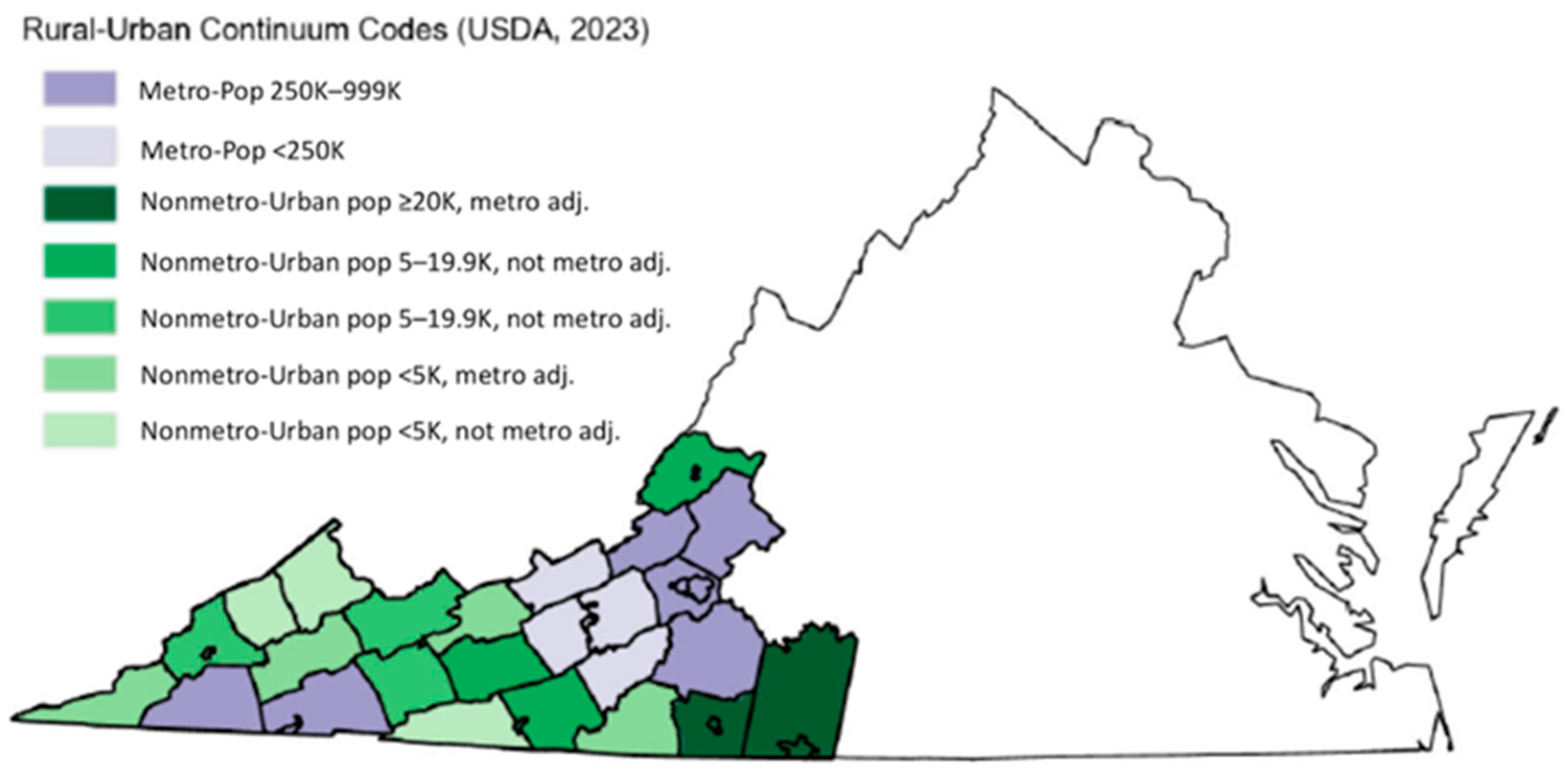
Disclaimer/Publisher’s Note: The statements, opinions and data contained in all publications are solely those of the individual author(s) and contributor(s) and not of MDPI and/or the editor(s). MDPI and/or the editor(s) disclaim responsibility for any injury to people or property resulting from any ideas, methods, instructions or products referred to in the content. |
© 2026 by the authors. Licensee MDPI, Basel, Switzerland. This article is an open access article distributed under the terms and conditions of the Creative Commons Attribution (CC BY) license.