Article

Reflections of Former CLIL Pupils on Their Motivations, Expectations and Perceived Learning Outcomes

Department of Translation, Interpreting and Communication, Ghent University, 9000 Gent, Belgium
*
Author to whom correspondence should be addressed.
Educ. Sci. 2026, 16(3), 495; https://doi.org/10.3390/educsci16030495
Submission received: 13 January 2026 / Revised: 23 February 2026 / Accepted: 19 March 2026 / Published: 21 March 2026
(This article belongs to the Special Issue Bilingual Education and Second Language Acquisition)

Abstract

This paper explores how former CLIL pupils who have completed secondary school reflect on their experiences with Content and Language Integrated Learning (CLIL) through a survey with both open- and closed-ended questions. Data was gathered on former pupils’ initial expectations, their motivations, their evaluations of their teachers’ competence, and the perceived impact of CLIL on their language proficiency and content understanding. The sample consisted of 75 participants (ages 18–23) who had taken at least one CLIL subject in a Flemish secondary school. The results reveal that many pupils initially viewed CLIL primarily as a means of enhancing their language skills. This expectation was only partially fulfilled: while some reported increased proficiency and confidence, others were less certain of concrete linguistic gains. In terms of subject content, most pupils felt that learning in a second language had not negatively affected their content understanding. Teachers were mostly deemed competent as to subject knowledge, but language competence was more critically evaluated. Pupils who viewed their teachers’ language competence favorably were also more likely to report personal language improvement. Motivations for participating in CLIL included an interest in languages, a desire for an academic challenge, and perceived future benefits. These insights underscore the need for CLIL programmes to align expectations, teacher support, and target-language use with learners’ perceived experiences.

1. Introduction

In a world where interconnection increases every day, the need for multilingualism is more pressing than ever before. Traditional language-learning approaches are becoming insufficient to meet the evolving demands of a globalised society. As such, alternative methodologies that integrate language learning with content instruction have been on the rise and gained popularity. Content and Language Integrated Learning (CLIL) is one of these approaches. By immersing learners in meaningful contexts, CLIL seems to improve not only language acquisition but also content knowledge (Surmont et al., 2016; Van De Craen et al., 2012). Van De Craen et al. (2012, p. 92) go as far as to say that “it is highly likely that the implementation of CLIL goes much further than a mere organizational and didactic improvement but potentially creates learners with different—or tentatively called ‘better’—brains”.
However, while the pedagogical promise of CLIL is widely celebrated, its actual impact remains contested. A growing body of research questions whether the positive results attributed to CLIL are due to the programme itself or to confounding variables, such as socioeconomic status (SES) (Bruton, 2013; Feddermann et al., 2021). Selectivity, both voluntary and institutional, appears to play a substantial role in shaping the outcomes of CLIL programmes, potentially favouring high-achieving or privileged pupils (Feddermann et al., 2022, 2021; Van Mensel et al., 2020). These critiques call for a more nuanced and critical examination of who participates in CLIL and how they experience it.
Despite the extensive academic interest in CLIL, the perspectives of those most directly involved, the pupils themselves, are often overlooked. Most studies assess language proficiency gains, cognitive outcomes, or test scores, but relatively few explore how (former) pupils reflect on their CLIL experience. This research aims to fill that gap by centring the voices of former CLIL learners, asking them how they look back on their education, how they perceived its benefits and challenges, and whether their experiences align with the broader academic discourse. Navigating the very diverse implementations of CLIL programmes, this study focuses on the specific context of CLIL education in Flanders, Belgium.

1.1. The CLIL Approach

CLIL, or Content and Language Integrated Learning, is an educational approach that intertwines the teaching of language and content through the medium of a foreign language (Coyle et al., 2010; Feddermann et al., 2021). This approach has gained prominence across Europe and beyond, offering benefits such as improved language proficiency and a deeper understanding of academic subjects (Jaekel, 2022). Gabillon (2020) emphasises CLIL’s overarching aim of augmenting pupils’ knowledge of various disciplines while using language to nurture skills in problem solving and critical thinking. Other key principles that set CLIL apart from other approaches include respecting plurilingual teaching philosophies, creating naturalistic learning environments, allowing collaborative knowledge building, and providing tasks that promote cognitive engagement and creativity (Gabillon, 2020). Originally conceived as a means to address evolving language-learning needs, CLIL gained traction in response to initiatives established by the Council of Europe and the European Commission from the mid-1980s onwards aimed at promoting the acquisition of two or more foreign languages from an early age (Gabillon, 2020; Jaekel, 2022). While CLIL shares some similarities with practices such as bilingual education, immersion, content-based language teaching and English as an Additional Language (EAL), Coyle et al. (2010) highlight its distinctive feature: a focus on content-driven instruction that extends beyond traditional language-teaching approaches.
In recent years, CLIL has attracted considerable attention from educators and policymakers, driven by the dual objectives of enhancing language proficiency while maintaining a strong emphasis on subject content (Busse, 2011). This evolution underscores CLIL’s transition from “a mere offshoot of other types of bilingual programmes” to “an increasingly acknowledged trend in foreign language (FL) teaching” (Pérez Cañado, 2012, pp. 318–319). The growing interest in CLIL can be attributed to various factors and motivations, such as the recognition of challenges within traditional language-teaching approaches. Concerns about insufficient language-teaching hours, the need for better linguistic and communicative competence, more appropriate methodologies, and higher levels of authenticity have prompted educators to explore alternative approaches, such as CLIL, to provide pupils with more exposure to the language while learning other subjects. Globalisation also has its role, although it should be noted that the shift towards CLIL is not merely a response to globalisation; it also aligns with broader social perspectives and has demonstrated effectiveness in addressing the challenges associated with globalisation (Coyle et al., 2010). Additionally, the increasing importance of English proficiency has been identified as a key factor. Fuelled by its rapid spread through media and the internet, this factor has greatly contributed to the international success of CLIL (Jaekel, 2022).
Throughout its existence, several frameworks have been developed to help us understand and implement the CLIL approach. Coyle et al. (2010)’s 4Cs Framework presents four fundamental principles that educators can leverage to shape their CLIL curriculum (Gabillon, 2020). This framework integrates contextualised Content (subject matter), Communication (language learning and using), Cognition (learning and thinking processes), and Culture (developing intercultural understanding and global citizenship) into CLIL teaching and learning practices (Coyle et al., 2010). Additionally, it underscores the importance of enhancing cognitive skills, fostering creative learning, and promoting collaborative social interaction. Gabillon (2020) further elaborates on the essence of these four principles. Firstly, content acts as a catalyst for cognitive development. While pupils engage with content in specific subject areas such as science and history, they simultaneously utilise and refine their cognitive abilities (including remembering, understanding, applying, analysing, evaluating, and creating) along with their metacognitive skills (such as planning, goal setting, self-assessment, and self-reflection). Secondly, concerning communication, language use in CLIL is multifaceted, encompassing social, cultural, and personal dimensions. Learners engage in interpersonal interactions, supporting each other’s learning through scaffolding, mediation, and negotiation, that is, by providing temporary structured support (scaffolding), clarifying and making meaning accessible (mediation), and collaboratively reaching mutual understanding (negotiation). They also partake in intrapersonal interactions, where they employ various cognitive skills. Next, in terms of cognition, CLIL promotes the development of both lower-order and higher-order processing skills through task-based learning. Lastly, cultural elements are integral to the fusion of content and language in CLIL. CLIL encourages learners to cultivate intercultural understanding and awareness, as well as an appreciation for the cultural conventions inherent in both language and subject content. In addition to these four principles, the component Context encompasses three of the other components: content, communication, and cognition. The framework acknowledges the intricate interplay of these components (Gabillon, 2020).
Coyle et al. (2010)’s Language Triptych, then, conceptualises the pivotal role of language in CLIL. The framework emphasizes that knowledge and culture are inseparable from language, and that learning necessarily involves engaging with language. The language triptych elucidates the three primary functions of language in CLIL: language of learning, language for learning, and language through learning. Both Coyle et al. (2010) and Gabillon (2020) elaborate on these functions. The first function, language of learning, entails learners’ reflection on and analysis of the language specific to the subject and thematic matter they are studying. With the second function, language for learning, language serves as a tool that allows learners to effectively navigate the classroom environment and engage in various academic tasks. With the third function, language through learning, learners acquire language proficiency and content knowledge through active involvement and concurrent reflection and use. This integrated framework underscores the dynamic relationship between language and learning, positioning language as an indispensable component in the acquisition of knowledge and skills within the CLIL classroom.
As to different types of CLIL, Eurydice (2023) classified two main categories: CLIL type A and CLIL type B. CLIL type A involves teaching different subjects in a foreign language designated in the curriculum, with variations in the number of subjects taught in the foreign language. CLIL type B, on the other hand, entails teaching subjects in a regional or minority language or a non-territorial language, alongside other subjects taught in a second language. It is added to the descriptions of the types that, while in CLIL type A, some subjects are taught in the state language and some in a foreign language, in CLIL type B, subjects other than languages are always taught in two or more languages. Eurydice (2023)’s investigation into the prevalence of different CLIL types in Europe revealed that the most common CLIL type is teaching some subjects in the state language and others in a foreign language (type A). While various language combinations are available, English, French, German, Spanish and Italian have emerged as the most popular foreign languages. The second most prevalent CLIL type identified was teaching some subjects in the state language and others in a minority or regional language (type B). Here too, various language combinations exist both within and across countries. In countries with more than one state language, such as Belgium and Ireland, the option to teach subjects in two or more state languages also exists (also type B).
Importantly, Gabillon (2020) states that CLIL itself is not a programme; however, the CLIL approach can be integrated into programmes. Their study illustrates that the implementation of CLIL practices can take various forms, such as teaching all or some subjects using CLIL, incorporating CLIL into interdisciplinary projects, or integrating CLIL into vocational programmes. Additionally, they note that CLIL implementation may involve tandem teaching by two teachers using different languages, teaching sequences in both the initial language and an additional language or introducing CLIL into extracurricular learning projects. The adaptability of CLIL allows for its customisation to different educational contexts, age groups, and learner requirements.

1.2. CLIL in Belgium

Within the Belgian context, CLIL has been an integral part of the educational landscape since 1998 (Baten et al., 2020; Van De Craen et al., 2012). Started in the French-speaking region, the CLIL implementation resulted in an instantaneous positive response (Baten et al., 2020; Van De Craen et al., 2012). Schools were given the freedom to choose the target language for instruction, whether it be Dutch, English, or German, and to organise CLIL classes according to their preferences. This flexibility contributed to the success and widespread adoption of CLIL in French-speaking Belgium. In Brussels, CLIL programmes were introduced in some Dutch-speaking schools as from 2001 through the STIMOB project, short for ‘Stimulerend Meertalig Onderwijs in Brussel’ or stimulating multilingual education in Brussels. Flanders, on the other hand, experienced a delayed introduction to CLIL (Van De Craen et al., 2012). Due to Flanders’ complex linguistic history, it only started using the CLIL approach sixteen years after Wallonia, in the school year 2014–2015 (Baten et al., 2020; Onderwijsinspectie, 2016), and only in secondary education. The study by the Onderwijsinspectie (2016) found that Flemish schools have encountered several barriers, including regulatory requirements such as the need for teachers to possess a C1 level in the target language, limitations on the percentage of class hours (max 20%, i.e., approximately 6 h per week) devoted to CLIL, and the necessity of offering a parallel Dutch trajectory. Additionally, it was noted that the expansion of CLIL programmes was hindered due to limited resources and support from the government.
To address these challenges and maximise the benefits of CLIL, recommendations have been proposed at various levels. At the macro level, policymakers are urged to streamline regulations and provide adequate support to CLIL schools. At the meso level, the expertise in language-oriented subject teaching should be enhanced, including investigating methods to support schools in measuring pupil learning progress and integrating this expertise into the initial teacher training across all subjects. At the micro level, schools are encouraged to foster a supportive environment for CLIL implementation and enhance teacher expertise through collaboration and professional development initiatives (Onderwijsinspectie, 2016). Overall, CLIL in Belgium reflects the complex interplay between language policies, educational structures, and regional identities, highlighting the importance of context specific approaches to language education.

1.3. CLIL Effects

CLIL has garnered significant attention for its potential to not only enhance language proficiency but also foster cognitive development among pupils. Numerous studies have delved into the effects of CLIL, highlighting its positive impact across various domains. One notable aspect of CLIL, as highlighted by Baten et al. (2020), is its ability to provide pupils with ample opportunities to engage in meaningful communication in the target language. Through authentic language use in diverse contexts, pupils develop a deeper understanding of vocabulary and linguistic structures. Moreover, research conducted by Surmont et al. (2016) suggests that CLIL has a beneficial impact on pupils’ academic performance, particularly in subjects such as mathematics. Remarkably, even a short period of CLIL instruction has been shown to lead to noticeable improvements in pupils’ mathematical proficiency.
Coyle et al. (2010) shed light on the transformative nature of CLIL pedagogy, noting that teachers transition from being mere knowledge providers to facilitators of learning. In CLIL classrooms, learners are empowered to actively engage in the process of acquiring knowledge, thereby enhancing their perceptual, communicative, and reasoning abilities. Pérez Cañado (2012) further corroborates the positive effects of CLIL on language learning outcomes. Her study demonstrates that CLIL pupils exhibit elevated levels of target language proficiency, including enhanced fluency, vocabulary acquisition, writing skills, and more. Additionally, Van De Craen et al. (2012) highlight the benefits of CLIL on pupils’ subject knowledge, attitudes, motivation, and cognitive development, especially when CLIL is introduced at a younger age. In summary, these studies suggest that CLIL holds substantial promise for promoting language proficiency, academic achievement, and cognitive development among pupils.
Nonetheless, research on the effectiveness of CLIL presents a complex and sometimes conflicting picture. While many studies highlight the advantages of CLIL, including improvements in language proficiency, content knowledge, cognitive skills, and motivation (Baten et al., 2020; Coyle et al., 2010; Gabillon, 2020; Jaekel, 2022; Pérez Cañado, 2020, 2012; Surmont et al., 2016; Van De Craen et al., 2012), other studies urge caution. For example, they emphasise the need to account for confounding variables such as selection and preparation effects, which may significantly alter perceived benefits (Bruton, 2015; Feddermann et al., 2022, 2021).
Moreover, mixed opinions are not limited to researchers: pupils and teachers report both positive and negative experiences (Aguilar & Rodríguez, 2012; Bulté et al., 2020; Coyle, 2013; Zanoni, 2021). It is crucial to consider the perspectives of those directly involved, since the success of CLIL not only depends on its theoretical foundations but also on how it is experienced in practice. Coyle (2013) emphasises the importance of understanding learning from the pupils’ perspective, as their perception of their own motivation and achievement is a key indicator of CLIL’s impact. Many pupils describe their overall experience as positive (Aguilar & Rodríguez, 2012; Bulté et al., 2020): they feel that CLIL enhances their speaking skills (Coyle, 2013) and consider it beneficial for their future (Zanoni, 2021). However, not all pupils have a favourable view. Some struggle to fully understand lessons, despite believing their language proficiency to be adequate. Others express dissatisfaction due to their teachers’ limited language skills or the oversimplification of content (Zanoni, 2021).
Furthermore, while most pupils expect CLIL to improve their language abilities, only a minority see it as an opportunity for deeper content learning (Sugimoto, 2021), which raises questions about the balance CLIL aims to strike. This issue is further highlighted by Bruton (2013), who identifies three main approaches to CLIL: learning the foreign language separately before using it for subject learning, acquiring the foreign language through content already known in the first language, or learning both language and content simultaneously. While the third approach aligns most closely with CLIL’s dual focus, research suggests that in practice, teachers do not always set explicit goals for both content and language learning (Mehisto, 2008).

1.4. CLIL Teacher Competence

The success of CLIL programmes heavily depends on the competence of teachers. Ideally, CLIL teachers should possess not only strong subject knowledge but also a high level of proficiency in the target foreign language, as well as familiarity with CLIL-specific pedagogical approaches. However, the reality varies significantly across education systems. While some countries impose strict requirements, such as language certifications at a minimum of level C1 of the Common European Framework of Reference for Languages (CEFR) in Flemish Belgium or mandatory CLIL methodology training, others have no additional requirements beyond the standard teaching qualifications such as a teacher’s degree (Eurydice, 2023). This raises concerns about whether all CLIL teachers are sufficiently prepared to deliver effective instruction in a foreign language (Bruton, 2013).
One of the most debated aspects of CLIL teacher competence is linguistic proficiency. Pupils frequently highlight insufficient teacher language skills as a major drawback of CLIL (Aguilar & Rodríguez, 2012; Zanoni, 2021). In some cases, pupils report that their teachers’ proficiency in the target language is too close to their own, leading to limited exposure to rich language input (Aguilar & Rodríguez, 2012). In other cases, pupils worry that their teacher’s insufficient language skills may lead to an oversimplification of CLIL course content (Zanoni, 2021). Thus, it appears that both main components of CLIL, language learning and content learning, are at times perceived to be hindered by the teacher’s limited TL proficiency.
Despite these concerns, not all studies paint a negative picture of CLIL teachers’ competence. Some research suggests that pupils perceive their teachers positively and do not view language proficiency as a major issue. However, Oxbrow (2018) also acknowledges that many instructors themselves feel insecure about their linguistic abilities, highlighting the need for ongoing language training. Given the crucial role teachers play in developing pupils’ foreign language skills, it is important to examine their qualifications, subject expertise, and the training opportunities available to them (Eurydice, 2023).
Beyond language proficiency, effective CLIL teaching requires a broad set of competencies. It is argued that CLIL educators need pedagogical skills tailored to pupil centred learning environments, subject-specific expertise, and an understanding of CLIL’s theoretical foundations. Additionally, organisational and interpersonal competencies are essential for managing diverse classroom settings and fostering collaboration (Pérez Cañado, 2017). Recognizing these demands, several European countries have established specific training requirements for CLIL teachers. In France, for example, prospective CLIL teachers must obtain a qualification that certifies both their language proficiency and their knowledge of CLIL methodology. Similarly, in some Spanish regions, teachers are required to complete CLIL training courses as part of their professional development (Eurydice, 2023).
In summary, teacher competence remains a critical factor in the effectiveness of CLIL. While some countries have established clear training and certification requirements, others lack formal regulations, raising concerns about inconsistencies in teacher preparedness. Research highlights linguistic proficiency as a common challenge, but also underscores the importance of pedagogical skills, subject knowledge, and professional development. As CLIL continues to evolve, ensuring that teachers are adequately trained remains a priority for improving the quality and sustainability of these programmes.

1.5. Aims and RQs

The preceding literature review has mapped out the theoretical underpinnings, pedagogical principles, and potential requirements surrounding CLIL, both in general and, where needed, specifically for the Flemish-Belgian CLIL context. Building on that framework, this study now turns to the experiences of Flemish-Belgian individuals who once enrolled in CLIL programmes. By examining how these former pupils look back on their CLIL education, this research aims to bridge the gap between theory and practice. The central research question guiding this study is thus how former Flemish-Belgian pupils reflect on their CLIL experience. To explore this overarching question in more depth, the following sub-questions were formulated:
RQ1: What expectations did former CLIL pupils have prior to enrolling in a CLIL programme?
RQ2: What motivated former CLIL pupils to enrol in a CLIL programme?
RQ3: According to former CLIL pupils, what perceived impact did CLIL have on their language proficiency?
RQ4: According to former CLIL pupils, what perceived impact did CLIL have on their understanding of subject content?
RQ5: How do former CLIL pupils evaluate the competence of their CLIL teachers?
By addressing these questions, the study has not only sought to evaluate the perceived impact of CLIL but also to understand how these experiences align, or contrast, with claims found in existing research. In doing so, it offers a nuanced, qualitative perspective that may inform future policy, teaching practice, and academic inquiry into the effects of CLIL education.


2. Materials and Methods

2.1. Survey

The survey used in this study was created and distributed using Qualtrics survey software (https://www.qualtrics.com/) (Qualtrics, Provo, UT, USA). In the introductory section of the questionnaire, participants were informed of the study’s aim and ethical guidelines. Respondents were explicitly told that participation was voluntary, that they could withdraw at any time, and that their data would be processed anonymously for research purposes only. By continuing with the survey, participants confirmed that they were 18 years old or over and consented to the use of their answers in the present study.
The survey included both open-ended and closed-ended questions. The first part collected demographic data and background information about the respondent’s CLIL experience. These questions covered variables such as age, gender identity, native language, school attended, academic track, and average school performance. It also asked participants to specify which CLIL subjects they had taken, in what language(s), for how many years, and for how many hours per week. In order to explore participants’ perceptions and experiences in more depth, a number of open-ended questions were included, aiming to elicit personal reflections on their expectations, perceived language development and their motivation to join CLIL. By leaving these questions open, the survey intentionally avoided steering participants’ answers in a particular direction. In addition, the survey included 15 Likert-scale statements divided into thematic clusters based on the sub-questions of this study: expectations, perceived language impact, perceived subject comprehension, teacher competence, and motivation. Each statement was evaluated on a 7-point scale, where 1 indicated strong disagreement and 7 indicated strong agreement. Finally, participants were given the opportunity to leave additional comments or questions in an open response field at the end of the survey.
The survey was conducted over a period of approximately three and a half weeks, from 5 January to 29 January 2025. It was distributed primarily through informal channels including Instagram and Facebook stories, direct messages, Facebook groups, and personal networks. Because the survey was distributed through informal networks and relied on participants forwarding the link within their social circles, the study constitutes a convenience and snowball sample. As a result, the sample is geographically clustered, with many respondents originating from Ghent and the East and West Flanders regions. The findings should therefore be interpreted as reflecting the experiences of this particular group of former CLIL pupils rather than as a representative sample of all former Flemish pupils.

2.2. Respondents

This study targeted individuals who previously participated in CLIL programmes during secondary education. The choice to focus on former CLIL pupils was driven by both practical and ethical considerations. Since participants had to be at least 18 years old to give informed consent without parental approval, it was more feasible to survey individuals who had already graduated from secondary school. The only inclusion criteria were that respondents had taken at least one CLIL subject and were 18 years old or over. The snowball sampling method resulted in a sample of predominantly young adults, most of whom were approximately 20 years old and all of them having attended a Flemish secondary school offering a CLIL program.
In total, 129 individuals responded to the survey. However, only 75 responses were retained after excluding incomplete submissions. Of these 75 respondents, 24 identified as male and 51 as female. The age distribution was fairly narrow, with the youngest participants being 18 years old (N = 6) and the oldest 23 (N = 3). The largest age group was 21-year-olds (N = 28), followed by 22-year-olds (N = 15), 19-year-olds (N = 14), and 20-year-olds (N = 9).
In terms of language background, nearly all participants reported having Dutch as their native language (74 out of 75), with one respondent indicating both Dutch and Bulgarian. Respondents came from various schools across Flanders, with the largest number (N = 25) having previously attended a school in Ghent. Most other schools were situated in East Flanders (N = 28) and West Flanders (N = 19), with a few located in the province of Antwerp (N = 3).
Participants had pursued diverse academic tracks in secondary school, most commonly Latin–Science (N = 19) and Mathematics–Science (N = 18). An overview of the academic tracks can be found in Table 1a. The variety of curricula suggests that CLIL was not limited to language- or humanities-focused tracks but was implemented across a broad academic spectrum.
Regarding their CLIL experience, participants reported a wide range of subjects. Geography (N = 31), history (N = 21), and biology (N = 17) were the most frequently taught CLIL subjects, followed by aesthetics (N = 8), economics (N = 6), and Latin (N = 6). Table 1b lists all reported CLIL subjects, reflecting the diverse and school-specific nature of CLIL implementation. Several participants indicated having taken CLIL courses in multiple subjects, in some cases up to five different ones.
In terms of CLIL language(s), the vast majority of participants had taken courses in English (N = 60). Smaller groups had received instruction in French (N = 18) or German (N = 3). An overview of the number of years during which participants taken CLIL is included in Table 1c. Most respondents reported one (N = 32) or two (N = 25) years of participation, whereas a smaller group had three to six years of CLIL participation. Table 1d shows the estimated number of CLIL hours per week, the most common weekly load being two hours. In Flanders, CLIL participation is legally limited to a maximum of 20% of a pupil’s timetable (Onderwijsinspectie, 2016). Given that secondary-school timetables typically consist of approximately 28–32 weekly hours, this corresponds to a maximum of roughly 6 CLIL hours per week. Two implausible weekly hour values (12 and 125) exceeded the legally permissible maximum for CLIL and were treated as implausible entries. For these cases, the ‘hours per week’ variable was set to missing, so they were excluded from analyses using this predictor while the rest of the response was retained.

2.3. Analysis

The dataset comprised both qualitative and quantitative components. For the open-ended questions, a qualitative content analysis was conducted using an inductive approach. Themes were derived directly from participants’ responses rather than based on a predefined framework. Coding was performed by a single researcher, who systematically reviewed all responses and assigned them to one or more emerging thematic categories. Throughout the process, the researcher maintained a reflexive coding log to document coding decisions and evolving interpretations, functioning as a check against confirmation bias and ensuring consistency in theme development. As themes were generated inductively, no pre-existing codebook was used; instead, a coding scheme was constructed iteratively during the analysis. Responses were multi-coded when relevant, meaning a single response could contribute to multiple themes. Percentages reported in the Results refer to coded instances, which in this dataset correspond to the number of participants whose responses included that theme.
Quantitative data were derived from 7-point Likert-scale items. Descriptive statistics were computed for each item, including median, mode, mean, and standard deviation, using the statistical software JASP (Version 0.95.0) (JASP Team, 2024). Histograms were generated to visually represent the distribution of responses. Where appropriate, linear regression models were employed to examine associations with variables such as CLIL exposure and CLIL target language on other outcome measures. In such cases, the 7-point Likert-scale outcomes were treated as approximately interval, which is common practice in educational and psychological research using scales with five or more response options. This approach is generally robust to minor violations of interval-level assumptions. Nonetheless, future work could explore ordinal models as a complementary robustness check. Because the German-CLIL subgroup was very small (N = 3), analyses involving the target-language factor have limited power and potentially unstable estimates. These contrasts are therefore reported as exploratory, and the results should be interpreted with caution.

3. Results

3.1. RQ1: What Expectations Did Former CLIL Pupils Have Prior to Enrolling in a CLIL Programme?

3.1.1. Open Question

As mentioned before, pupils were first asked to respond to an open question about their expectations when they started taking CLIL classes. This question allowed them to express their thoughts freely, without the influence of predefined statements. Several clear trends emerged from their answers. Below, the six themes will be discussed.
The most prevalent expectation, mentioned by 42 out of the 75 respondents (56%), was the improvement of their language skills. These pupils hoped that CLIL would help them develop a better grasp of the target language, including speaking and listening fluency, vocabulary, grammar, and even a “language instinct”. Many also expected a general improvement that would transfer beyond the classroom. One respondent, for instance, wrote: “I hoped I would become more fluent in speaking and understanding French, and maybe even start thinking in French like a native speaker.” Others were motivated by a more general belief that any extra exposure would be beneficial. As one pupil put it: “It was more a case of: why not? It could only help me with my languages.” Overall, this shows that many pupils entered the CLIL programme with the primary goal of strengthening their language competencies, sometimes in quite ambitious ways.
Fourteen pupils (19%) explicitly mentioned the acquisition of specialised vocabulary or terminology as part of their expectations. They saw CLIL as a chance to go beyond the everyday language taught in regular language classes, and to engage with domain-specific terms in subjects such as geography, history, or science. One pupil explained: “I just hoped to improve my English. It’s also useful to know the terminology in English because then you can easily talk about the subject with people from all over the world.” Another added: “Mainly receiving extra vocabulary in a completely different context than usual.” These answers suggest that pupils not only hoped to improve general language fluency but also saw added value in mastering the language of specific academic disciplines.
For some, CLIL was appealing as a refreshing educational experience or a personal challenge. Ten respondents (13%) described their expectations in terms of curiosity, novelty, or motivation to go beyond the ordinary. One pupil wrote: “I was enthusiastic. I hoped to learn something new and challenge myself at the same time. I thought it was really ‘cool’ to take maths in another language, especially French, since I was very bad at it.” Another stated: “I hoped to improve my competencies in French and English. I wanted an extra challenge to make the lessons more fun.” These responses show that for a number of pupils, CLIL offered more than language learning, it was a way to break routine and test their abilities.
Another theme, mentioned by six respondents, (8%) was the expectation that CLIL would serve as useful preparation for higher education or the professional world. These pupils saw the classes as an opportunity to gain relevant experience that could help them in international or academic contexts later on. One pupil, for example, stated: “I hoped this would help me learn and use more scientific English, which would be beneficial for following English-taught courses in higher education.” Another described it as a rehearsal for professional life: “A bit like how it would be in the workplace, but in French.” These responses suggest that, even at secondary school level, some pupils already had their eyes on long-term language use in academic or professional settings.
Interestingly, five respondents (7%) expected CLIL to be easier than regular lessons, often because of the perception that the focus would shift from content mastery to language learning, or because they had heard that the assessment would be more lenient. One respondent stated: “I expected the subject matter to be easier, because you’re not working in your native language.” Another admitted: “I initially chose it because I thought it would be easier.” These answers reveal a perception among some pupils that CLIL lessons might be less demanding, either in content or assessment standards.
A smaller group of pupils (three respondents, 4%) expected CLIL to be more difficult than regular courses, either due to the added cognitive load of using a foreign language, or because of an assumed increase in academic depth. One pupil noted: “I expected that I would have to pay extra attention because it was in English and that it might be harder.” Another said: “I hoped to learn more professional English and make geography a bit more difficult”.

3.1.2. Statements

Participants were asked to what extent they agreed with two statements related to their expectations before starting CLIL. Both statements were assessed using a 7-point Likert scale (1 = “strongly disagree”, 7 = “strongly agree”).
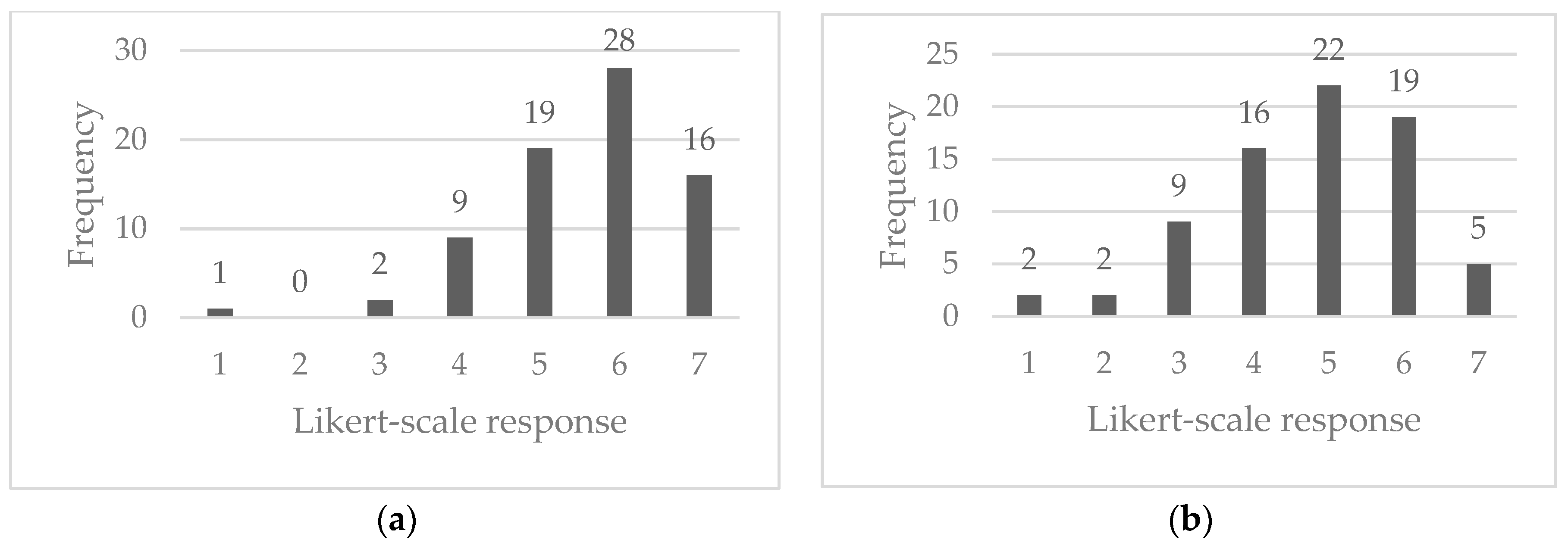
The responses to Statement 1, “I expected CLIL to improve my language skills”, reflect a generally strong expectation that CLIL would enhance language proficiency (Figure 1a). The mean score was 5.57, with a relatively low standard deviation of 1.16, suggesting a high level of agreement and limited variation among respondents. The median and mode were both 6, which was chosen by 28 out of 75 participants. Notably, over 80% of participants selected a score above the midpoint of the scale (i.e., 5 or higher), confirming that most pupils expected CLIL to enhance their language skills.
Expectations regarding increased confidence in using foreign languages were slightly more varied (Figure 1b, Statement 2). The mean score was lower at 4.75, and the standard deviation was slightly higher at 1.36. Both the median and mode were 5, chosen by 22 respondents. These results suggest that while pupils generally expected CLIL to support their confidence in using foreign languages, this expectation was less pronounced and a bit more heterogeneous compared with their expectations about linguistic improvement.

3.2. RQ2: What Motivated Former CLIL Pupils to Enroll in a CLIL Programme?

3.2.1. Open Question

In examining the responses to the open-ended question, “What motivated you at the time to take CLIL classes? Consider both personal and external reasons,” several clear trends emerged, reflecting a combination of personal aspirations, external influences, and opportunities for academic and language development. The majority of respondents were motivated by the prospect of improving their language skills, experiencing a new challenge, and engaging with different teachers or classmates. Below is a detailed breakdown of the main trends, along with examples from the respondents.
The most frequently mentioned motivation was the appeal of a new learning experience or intellectual challenge (29 respondents, 39%). For many, CLIL represented a departure from routine and a chance to explore alternative educational approaches. As one pupil remarked: “It was something different. I saw it as a way to try something new.” Some respondents were also driven by a desire for academic stimulation: “Taking on an extra challenge, getting the most out of secondary school”.
A commonly cited motivation (27 respondents, 36%) was the desire to improve language proficiency, particularly in English. Many pupils viewed CLIL as an effective way to strengthen their linguistic abilities in a more immersive setting. One respondent explained: “I thought my English would improve.” Others explicitly referred to the opportunity to broaden their vocabulary or gain greater fluency. For instance, one participant stated: “The experience and an extra opportunity to improve my language. It seemed useful for future education”.
Social dynamics also played a notable role for 17 respondents (23%). Several pupils mentioned that their choice to enrol in CLIL was partly shaped by the decisions of friends or family. One pupil noted: “Many of my friends did it, but mostly to improve my English and discover new words.” Others mentioned parental encouragement: “Mainly my parents; I was too young to make a conscious choice myself”.
For some pupils, CLIL was perceived as an investment in their future academic or professional trajectory. Thirteen respondents (17%) explicitly referred to the long-term advantages of language immersion for university education or job prospects. One participant stated: “Extra preparation for English-taught courses in higher education.” Another remarked: “I knew from a young age that I wanted an international job later, and now I am studying ‘international business management,’ which is a programme entirely in English”.
For 12 respondents (16%), a general enthusiasm for language learning formed the basis for their decision. These pupils tended to express a long-standing interest in foreign languages and viewed CLIL as a means to deepen that engagement. One pupil reflected: “I had a strong interest in languages, and it seemed like a good way to further develop my English skills. It also seemed like a new challenge in secondary education.” Another noted a specific appreciation for English: “I find English a beautiful language and it is useful to speak it fluently”.
Eight pupils (11%) gave responses that either lacked a clear rationale or referred to highly individual circumstances. One respondent wrote: “Not really anyone specific or an external reason.” Others were attracted by incidental benefits, such as participation in extracurricular activities: “If you followed CLIL, you were allowed to join the school trip to Liège…”.
A smaller group of seven pupils (9%) indicated that their decision was closely linked to specific teachers or their teaching style. The perceived quality of instruction or personal rapport with the teacher played a significant role in their choice. One pupil shared: “My two favourite French teachers collaborated on the CLIL project for history in French, which definitely played a role in my decision. On the other hand, I already had an interest in both languages and history, which CLIL combined perfectly”.
A minority of five respondents (7%) admitted they chose CLIL due to the perception that it would be less demanding than the regular curriculum. This perception was often based on peer rumours or past pupil experiences. As one pupil recalled: “At that age, I chose CLIL because there was a rumour that the tests and exams were easier since they were in another language”.

3.2.2. Statements

Pupils were asked to further reflect on their motivations through five Likert-scale statements (1 = strongly disagree, 7 = strongly agree).
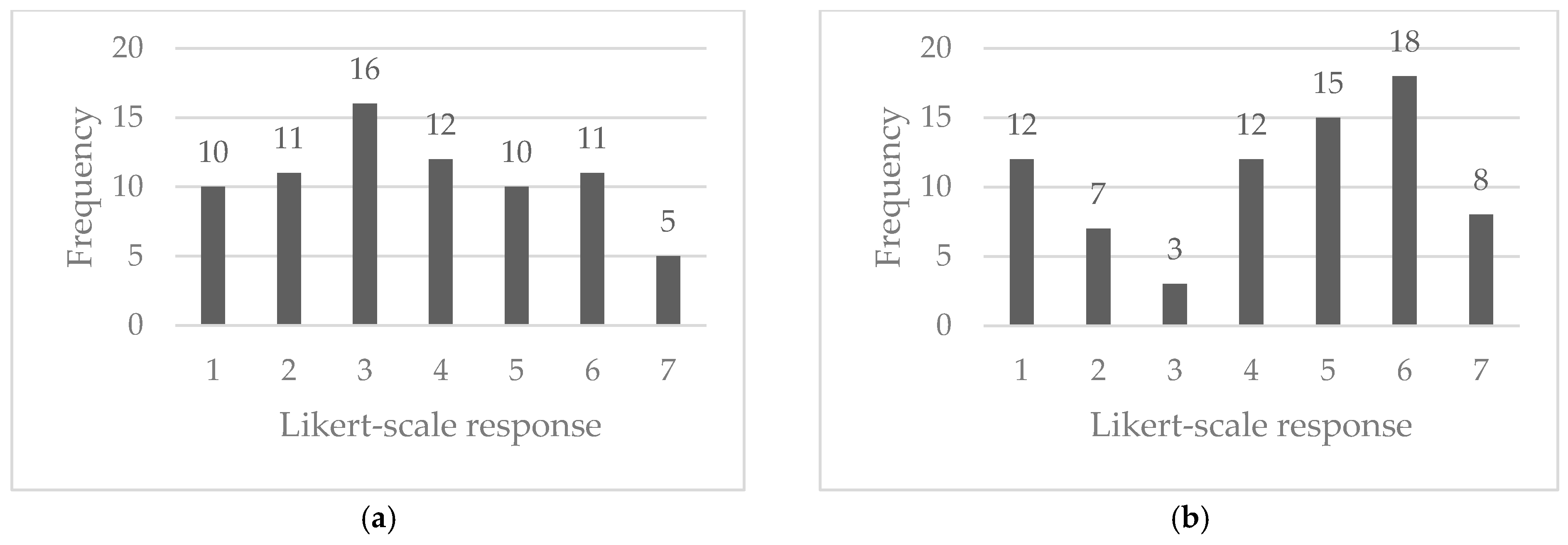
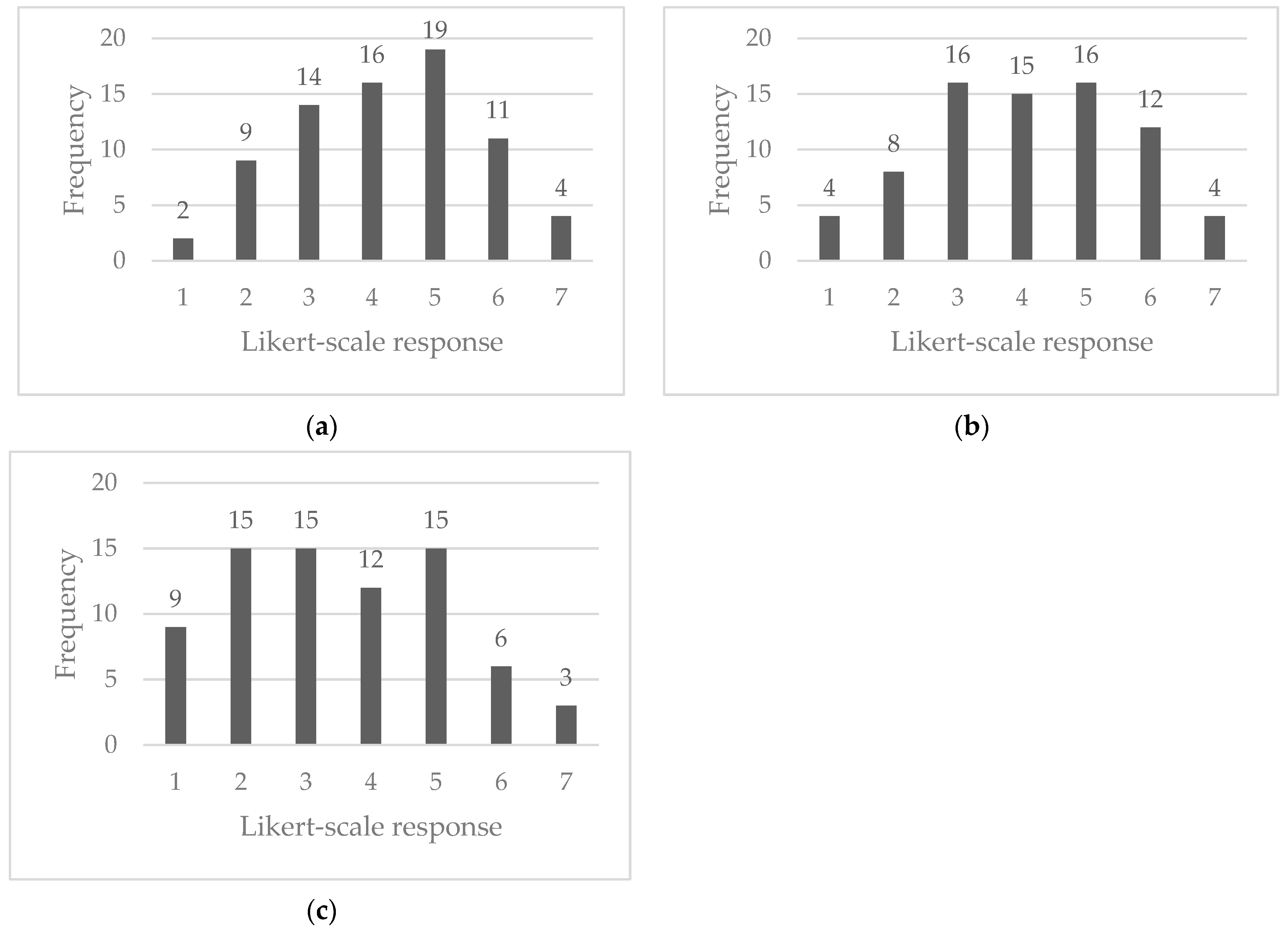
The results for Statement 3 “I chose CLIL because I was encouraged by others (e.g., family, friends, teachers, etc.)” showed quite some variation, with a mean score of 3.72 (SD = 1.81) and a median of 4 (Figure 2a). The most frequent response (mode) was 3, chosen by 16 pupils, suggesting that while some participants did feel encouraged by external influences, it was not a major motivating factor for the majority. Nearly 49% of pupils disagreed to some extent, highlighting that encouragement from others was not a dominant reason for choosing CLIL.
Statement 4 “I chose CLIL because I thought the lessons would be more interesting than regular lessons” elicited a more positive response, with a mean score of 4.29 (SD = 1.99) and a median of 5 (Figure 2b). The mode was 6, selected by 18 respondents, indicating that many pupils believed CLIL lessons would be more interesting than traditional lessons. Notably, 55% of pupils agreed to some extent, suggesting that this was a significant motivating factor for many.
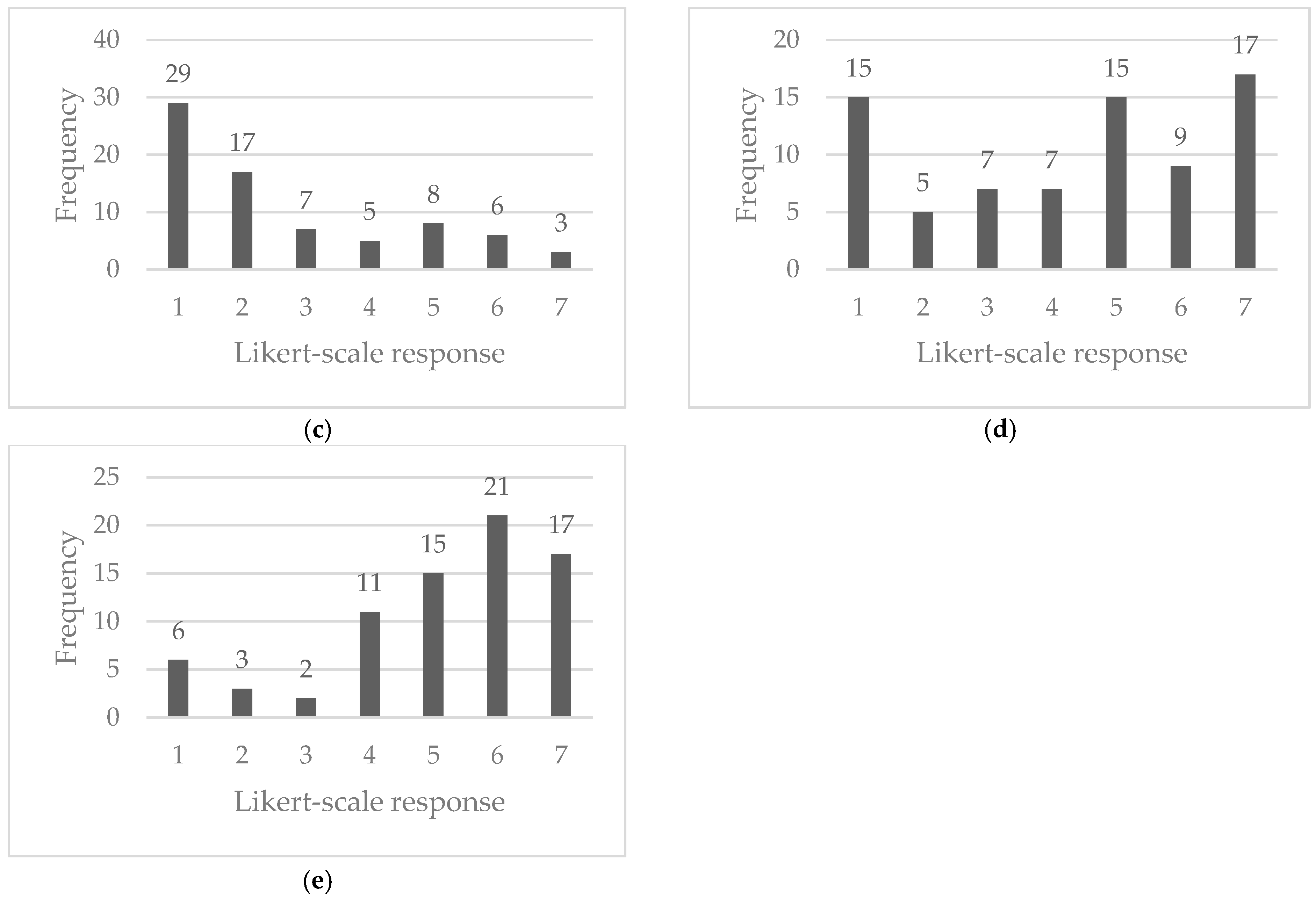
Responses to Statement 5 “I chose CLIL because I thought the subject content would be easier than in regular lessons” were negatively skewed, with a mean score of 2.68 (SD = 1.89) and a median of 2 (Figure 2c). The mode was 1, selected by 29 respondents, suggesting that most pupils did not perceive the subject content to be easier in CLIL. In fact, 61% of pupils either disagreed or strongly disagreed with this statement, reflecting a clear sentiment that CLIL did not promise easier content.
Responses to Statement 6 “I chose CLIL because I enjoy(ed) working with language” were more favourable, with a mean score of 4.29 (SD = 2.20) and a median of 5 (Figure 2d). The mode was 7, chosen by 17 respondents, suggesting a strong interest in language as a motivating factor. 55% of pupils expressed some level of agreement, indicating that enjoyment of language was an important consideration for many in choosing CLIL.
Statement 7 “I chose CLIL because I thought it would be useful in the future” yielded highly positive results, with a mean score of 5.09 (SD = 1.76) and a median of 6 (Figure 2e). The mode was also 6, selected by 21 respondents, showing that a substantial proportion of pupils believed that CLIL would be beneficial in their future careers or studies. In fact, 71% of pupils agreed to some extent, reinforcing the idea that the perceived future utility of CLIL was a key motivator.

3.3. RQ3: According to Former CLIL Pupils, What Perceived Impact Did CLIL Have on Their Language Proficiency?

3.3.1. Open Question

To gain insight into pupils’ perceptions of their own language development, participants were first invited to respond to the following open-ended question: “Do you feel that your foreign language skills have changed because of CLIL? How do you notice that in your daily life?”. Their answers provided a nuanced view of how they themselves experienced the perceived impact of CLIL on their language proficiency. While some reported clear improvements in their proficiency, others noted little or no noticeable change. The answers can be grouped into six thematic categories, which are discussed below.
Thirty-two respondents (43%) explicitly stated they did not perceive any significant improvement in their language skills due to CLIL. Some attributed this to the limited amount of exposure—only a few hours a week—while others pointed to the teacher’s lack of language proficiency or inconsistent language use in class. One respondent stated: “My skills didn’t improve much from just one or two lessons a week in English. An English-taught degree me has a much greater impact.” Another was even more critical: “No. The CLIL programme was rather disappointing as the teacher didn’t even master the language at a basic level.” Some admitted their language skills were already strong and therefore didn’t expect a notable change: “No, I had already mastered the foreign language, so this didn’t change much”.
In contrast, 24 respondents (32%) felt that CLIL positively influenced their overall language skills. They referred to increased fluency in speaking, greater ease in understanding, and better writing skills. For many, these improvements translated into more confidence and comfort in real-life communication situations. One pupil wrote: “I particularly noticed that I dared to speak French more quickly during the series of lessons, because I felt I had better command of the language.” Another respondent described their progress as follows: “Yes, enormously. I really couldn’t speak English when I started—barely at A2 level—and by the end of secondary school I had reached C1. Above all, my ability to think in the foreign language improved. Speaking became more fluent; I no longer had to think about the translation of words. I also became better at working independently because we often worked on tasks in groups instead of just sitting and listening (and falling asleep).” For some, these perceived improvements were not only limited to language use in the classroom but also extended to their personal lives, such as one respondent who shared: “I can now communicate better with my foreign partner”.
Another common theme, mentioned by 15 respondents (20%), was vocabulary growth thanks to CLIL, particularly related to subject-specific terminology. This was often described as helpful in both academic and informal contexts. For example, one pupil remarked: “I notice that I know certain English words related to history that many other pupils don’t know. In everyday life, this makes a difference when I watch a historical documentary or visit a museum.” Another added: “Certainly in the context of biology! Some concepts are named very differently in English. The Master’s programme I’m taking is also taught in English, so having that foundational knowledge of biology in English was definitely an advantage”.
Eight respondents (11%) focused not necessarily on the technical aspects of language, but on their increased confidence and ease when using the foreign language. They felt that CLIL helped lower the psychological threshold to use the language in informal and academic contexts. As one participant put it: “Although I already knew a lot of English, I wasn’t always comfortable speaking and using the language. Participating in CLIL gave me more self-confidence in using a foreign language. I learned this more in CLIL lessons than in regular English classes. Very useful, in other words.” Another respondent described a change in their speaking habits: “I noticed that I had much less trouble understanding and reading French. In daily life, I have also become less reserved when it comes to speaking or writing in another language”.
Seven respondents (9%) offered answers that pointed to a mixed or uncertain effect. Some were unsure whether the progress they had made was due to CLIL or other external factors, such as age or general exposure to the language. As one respondent expressed: “I think it must have had some impact, but whether that’s specifically due to the CLIL lessons or to getting older and being more in contact with the language, I don’t know. During my studies, I sometimes notice that certain concepts seem more familiar to me.” Another added: “My listening skills have improved. When I hear English, I follow along more quickly in a conversation. My writing skills, however, haven’t really improved. I still often hesitate over spelling mistakes.” This nuance shows that the perceived impact of CLIL can be highly individual and depends on both internal and external factors.
Lastly, six participants (8%) expressed that CLIL had prepared them for their future studies or professional life. These respondents typically mentioned they found academic or scientific English easier to process and apply, and were more comfortable in multilingual academic environments. One respondent explained: “The main thing is that the threshold was lowered to read academic texts in other languages. (This was due to knowledge of scientific vocabulary.)” Another stated: “It’s now slightly easier to read English scientific texts”.

3.3.2. Statements

To assess CLIL’s perceived impact on pupils’ language development, participants were presented with three statements rated on a 7-point Likert scale ranging from 1 (strongly disagree) to 7 (strongly agree). The statements addressed perceived improvement in language proficiency, willingness to use foreign languages during lessons, and willingness to use them outside of school.
Responses to the statement “I feel that my language skills have improved thanks to CLIL” were positively skewed (Figure 3a). The mean score was 4.20 (SD = 1.49), with a median of 4 and a mode of 5. Almost half of the participants perceived at least a moderate improvement in their language skills. Still, a notable portion of the sample expressed disagreement or remained neutral.
For “I feel that CLIL made me more willing to use foreign languages during lessons”, responses were largely divided (Figure 3b). The mean decreased to 4.11 (SD = 1.57), with the same median of 4 and mode of 5 but also with a lower mode of 3. While 32 participants selected a value of 5 or above, 28 selected 3 or below. These results suggest that the association between CLIL participation and pupils’ willingness to actively use foreign languages in the classroom was less consistent than the association with their perceived language improvement.
The statement on increased willingness to use foreign languages outside of school showed negatively skewed responses (Figure 3c). With a mean of 3.52, a median of 3, and the modes of 5, 3 and 2, it is clear that most participants were less convinced that CLIL was associated with increased foreign-language use beyond the classroom. The standard deviation was the highest among the three statements (1.66), confirming that participants’ opinions were more varied. Only 24 out of 75 respondents chose a score of 5 or higher, while 39 selected 3 or lower, indicating a generally sceptical view of CLIL’s transferability to real-world language use.

3.3.3. Associations with CLIL Exposure and CLIL Target Language

Three factors were considered to possibly moderate perceived language proficiency in the CLIL language. Specifically, the effects of number of CLIL education years, number of CLIL hours per week, and CLIL target language were investigated through linear regression models with responses to the statements as dependent variables and the abovementioned factors as predictors.
For Statement 8 (perceived improved language skills), the overall model was statistically significant, F(6, 62) = 3.839, p < 0.01, and explained approximately 27.1% of the variance in the outcome variable (R2 = 0.271, Adjusted R2 = 0.200). However, only the number of years of CLIL experience was a significant positive predictor, B = 0.551, t = 2.983, p < 0.01, indicating that more years of CLIL were associated with higher ratings. In contrast, the number of CLIL hours per week was not a significant predictor, B = 0.090, t = 0.803, p = 0.425. Likewise, none of the language categories showed a statistically significant difference compared with the English reference group (p > 0.05 for all language contrasts). As noted in the Methods, the German-CLIL subgroup was very small (N = 3). Therefore, language-contrast estimates should be interpreted with caution, as these comparisons remain exploratory.
For Statement 9 (foreign language use during class), neither any individual predictor nor the overall model was significant, F(6,62) = 1.944, p = 0.09. The linear regression model for Statement 10 (foreign language use outside of class), however, was significant, F(6,62) = 3.458, p < 0.01. Once more, only the number of CLIL education years was a significant predictor, B = 0.704, t = 3.411, p < 0.01. The number of CLIL hours per week was nonsignificant, B = −0.064, t = −0.515, p = 0.608. None of the language categories showed a statistically significant difference compared with the English reference group (p > 0.05 for all language contrasts).
Full regression tables for Statements 8–10, including coefficients, standard errors, confidence intervals, exact p-values, and model-fit statistics, are provided in Appendix A.1, Appendix A.2 and Appendix A.3.

3.4. RQ4: According to Former CLIL Pupils, What Perceived Impact Did CLIL Have on Their Understanding of Subject Content?

Statements

To evaluate participants’ perceptions of how CLIL was related to their understanding and retention of subject content, three statements were analysed. Participants responded using a seven-point Likert scale ranging from 1 (“strongly disagree”) to 7 (“strongly agree”).
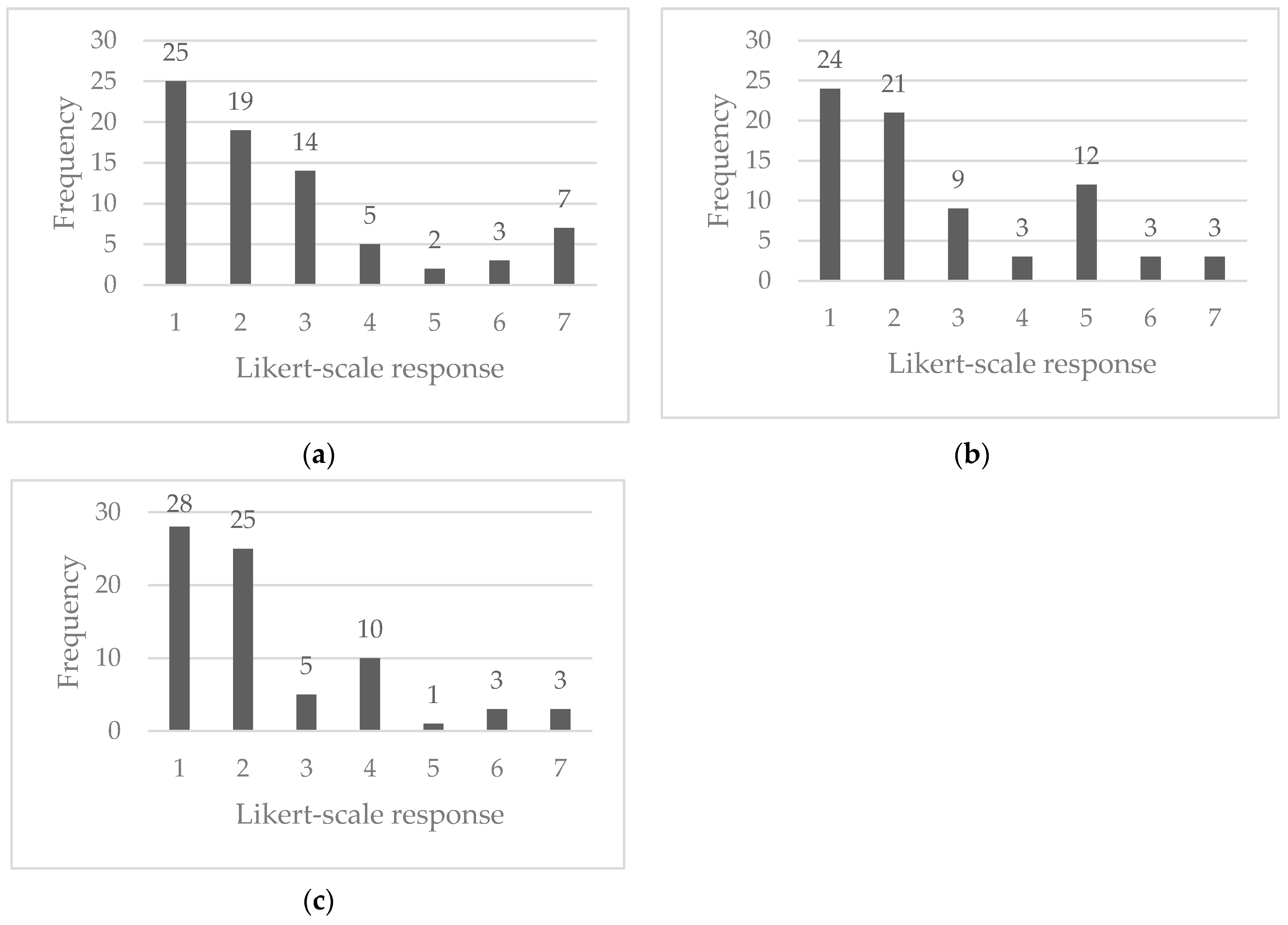
The results suggest that most respondents disagreed with Statement 11 “I feel that I would have scored better in CLIL subjects if the lessons had been taught in Dutch” (Figure 4a). The mean score was relatively low (M = 2.69, SD = 1.89), indicating general disagreement. The median was 2, and the mode was 1 (“strongly disagree”), chosen by 25 participants. Interestingly, approximately 77% (58 out of 75) of participants disagreed to some extent (responses between 1 and 3). This reinforces the finding that most participants did not feel disadvantaged by the use of a foreign language in CLIL courses.
Similarly, for Statement 12 on increased subject difficulty due to CLIL, the mean score was low, M = 2.72, SD = 1.79 (Figure 4b). The median response was again 2, and the mode was 1 (“strongly disagree”), selected by 24 participants. This pattern indicates that most respondents did not perceive the use of a foreign language in CLIL as having made the subject content significantly harder to understand.
Statement 13 “I feel that I can apply the subject content from CLIL Lessons less well now because the lessons were not taught in Dutch” received strong disagreement (Figure 4c). The mean score was 2.36 (SD = 1.62), with a median of 2 and a mode of 1 (“strongly disagree”), selected by 28 participants. This suggests that the majority of respondents did not perceive a negative impact of the use of a foreign language during CLIL lessons on their ability to apply the subject matter later on.
For all three statements, linear regression models were fitted to examine associations with CLIL exposure (both in years and per week) and CLIL target language. None of the models yielded significant results, with F(6,62) = 1.665, p = 0.145 for Statement 11, F(6,62) = 1.278, p = 0.280 for Statement 12, and F(6,62) = 1.632, p = 0.153 for Statement 13. Full regression tables for Statements 11–13, including coefficients, standard errors, confidence intervals, exact p-values, and model-fit statistics, are provided in Appendix A.4, Appendix A.5 and Appendix A.6.

3.5. RQ5: How Do Former CLIL Pupils Evaluate the Competence of Their CLIL Teachers?

3.5.1. Statements

Pupils were asked to evaluate their CLIL teachers’ language proficiency and subject knowledge through two Likert-scale statements (1 = strongly disagree, 7 = strongly agree).
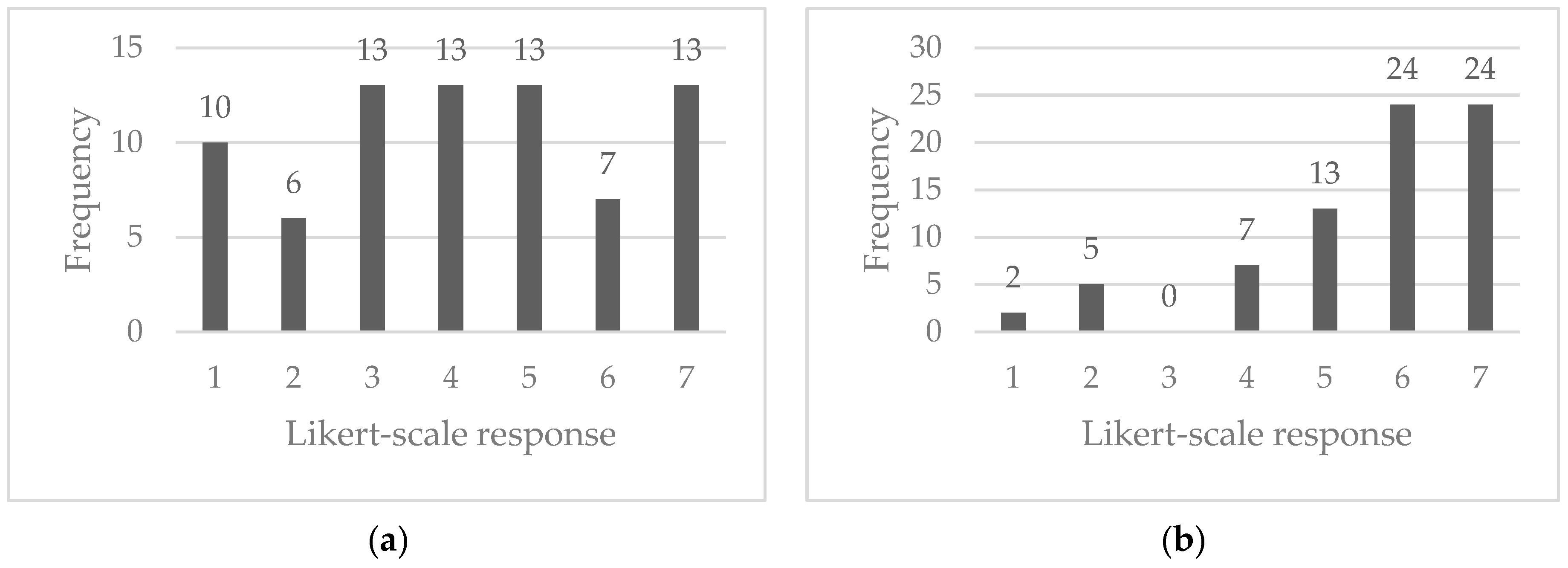
For Statement 14 on teacher language competence (Figure 5a), the results showed a mean score of 4.15 (SD = 1.96), with a median of 4. Interestingly, the mode was multimodal, with scores of 3, 4, 5, and 7 occurring most frequently (each selected by 13 respondents). This suggests a broad spread of opinions, reflected in the relatively high standard deviation. The distribution of responses indicates that pupils were fairly divided: almost 40% (29 out of 75 pupils) disagreed to some extent, while another 44% (33 out of 75 pupils) rather agreed. The neutral response rate was also notable at 17%.
For Statement 15 on teacher subject competence (Figure 5b), pupils expressed much more positive views. The mean score was considerably higher at 5.56 (SD = 1.56), with a median of 6 and modes of 6 and 7. A majority of pupils (64%) selected one of those options, suggesting a high level of confidence in their teachers’ subject expertise. Only a small minority disagreed (9% in total across the three disagreement categories).

3.5.2. Associations with Perceived Language Skills

To explore whether pupils’ perceptions of their CLIL teachers’ language proficiency were related to how they rated their own language improvement on the corresponding Likert statement, three linear regression models were fitted. In each model, one of the three perceived language proficiency statements was the dependent variable, and both the teacher competence statements served as predictors.
For Statement 8 (perceived language improvement due to CLIL), the overall regression model was significant, F(2,72) = 3.707, p < 0.05. None of the individual predictors, however, were significant (p > 0.05 for both). Although the overall model reached significance, this indicates only a modest association at the model level, and the variance explained cannot be clearly attributed to either predictor.
The linear regression models for Statement 9 (willingness to use foreign languages during class) and Statement 10 (willingness to use foreign languages outside of class) were also significant, F(2,72) = 4.542, p < 0.05 and F(2,72) = 6.720, p < 0.01 respectively. In both models, teacher language competence was a significant predictor (B = 0.208, t = 2.204, p < 0.05 and B = 0.304, t = 3.116, p < 0.01). Teacher subject competence was not a significant predictor in either model (p > 0.05), suggesting that primarily the teacher’s language competence is associated with whether pupils are willing to use their foreign language.
Full regression tables, including coefficients, standard errors, confidence intervals, exact p-values, and model-fit statistics, are provided in Appendix A.7, Appendix A.8 and Appendix A.9.

4. Discussion

This discussion interprets the findings in relation to the research questions and situates them within the broader scholarly discourse on CLIL. By juxtaposing former pupils’ reflections with theoretical frameworks and empirical evidence, it seeks to identify convergences, discrepancies, and underlying factors that may explain the results. Particular attention is given to the Flemish educational context, where CLIL implementation has been relatively recent and shaped by specific regulatory and institutional constraints. This contextual lens is essential for understanding how pupils’ motivations, expectations, and perceived outcomes align with or diverge from patterns reported in other European settings. The discussion is structured around the five research questions, addressing expectations, motivations, perceived language and content outcomes, and evaluations of teacher competence in turn.

4.1. RQ1: What Expectations Did Former CLIL Pupils Have Before Attending CLIL Lessons?

The data clearly show that pupils approached CLIL with language development as their primary goal, a finding that echoes existing research but also reveals nuances worth discussing. The fact that over half of the respondents spontaneously mentioned language improvement, without prompting, suggests a deeply ingrained association between CLIL and linguistic gain. This perception is further supported by the high level of agreement with the statement (84%). These findings align with Sugimoto (2021)’s conclusion that pupils primarily perceive CLIL as a language learning opportunity rather than a content-oriented one. Rather than expecting a balanced development of both language and subject mastery, most pupils seemed to prioritise the linguistic component of the dual focus.
Despite this emphasis, pupils’ expectations were also diverse. They were, for example, not purely instrumental or shaped by the programme’s curriculum. Several respondents expressed personal ambitions, such as native-like proficiency or improving their confidence, which goes beyond what school programmes typically promise. This personal investment supports Coyle (2013)’s view that learners’ motivations are crucial indicators of engagement in CLIL. The expectation of becoming more confident in target-language use, while slightly less pronounced, further reinforces this idea of empowerment. Coyle et al. (2010) argued that CLIL classrooms can foster learner autonomy and perceptual growth—something some pupils (13%) seemed to anticipate when describing CLIL as a challenge or a novel learning experience.
Nevertheless, the wide range of expectations among pupils may partly reflect the emphasis that schools or teachers place when introducing CLIL. Some institutions might highlight long-term benefits such as enhanced vocabulary, future career opportunities, or academic preparation—and this emphasis can legitimately differ depending on the form CLIL takes. As Bruton (2013) notes, CLIL programmes can vary in focus, ranging from language-driven to content-oriented or integrated models. While this diversity is not inherently problematic, it does suggest that the manner in which CLIL is presented could influence pupils’ initial perceptions. In addition to this institutional framing, pupils’ expectations are also likely shaped by informal impressions—such as remarks from older pupils—about whether a CLIL subject is easier or more difficult than its non-CLIL counterpart. Although this study did not investigate these mechanisms directly, they may help explain why these former CLIL pupils hold such diverse assumptions about what the programme entails.
In sum, pupils’ expectations reflected both enthusiasm and ambiguity. Enthusiasts generally hoped to enhance their target-language proficiency and viewed CLIL as a valuable and even empowering experience. While expectations were largely positive and in line with literature on motivation and learner autonomy, the diversity in perceptions may be shaped by differences in how CLIL is framed across schools as well as by informal sources such as peer accounts. These factors could influence how pupils experience and ultimately benefit from CLIL instruction.

4.2. RQ2: What Motivated Former CLIL Pupils to Enrol in a CLIL Programme?

The findings regarding pupils’ motivations for enrolling in CLIL reveal a multifaceted decision-making process shaped by personal interests, perceived academic benefits, and social influences. The most frequently cited reasons—seeking a new learning experience and improving target-language proficiency—suggest that CLIL is perceived not only as an educational alternative but also as a meaningful challenge. This aligns with previous research highlighting CLIL’s appeal as a cognitively engaging and linguistically enriching approach (e.g., Coyle et al., 2010; Dalton-Puffer, 2008).
The strong emphasis on language development underscores the instrumental value pupils attach to CLIL. Many respondents viewed the programme as a strategic investment in their future academic or professional trajectories. This is further supported by the high agreement levels on the statement regarding CLIL’s future utility, suggesting that pupils are motivated by long-term goals such as university readiness or international career prospects. These findings reinforce the importance of framing CLIL not only as a pedagogical innovation but also as a pathway to global competence.
Interestingly, while social dynamics such as peer and parental influence were mentioned by several pupils, the Likert-scale data indicate that external encouragement was not a dominant factor. This suggests that the decision to enrol in CLIL is largely autonomous and driven by internal motivations. Nonetheless, the role of teachers and teaching style, though less frequently cited, emerged as a meaningful influence for some pupils, pointing to the importance of teacher engagement and the perceived quality of instruction in shaping pupils’ choices.
A minority of pupils reported motivations that were either incidental (e.g., access to extracurricular activities) or based on misconceptions (e.g., perceived ease of CLIL content). These responses highlight the need for clear communication about the nature and expectations of CLIL programmes to ensure that pupils make informed decisions.
Overall, the data suggest that CLIL attracts pupils who are curious, academically ambitious, and linguistically motivated. These insights can inform the design and promotion of CLIL programmes by emphasizing their challenging nature, future relevance, and potential for personal growth. Moreover, understanding pupils’ motivations can help educators tailor support strategies that sustain engagement and maximize the benefits of CLIL participation.

4.3. RQ3: According to Former Pupils, What Perceived Impact Did CLIL Have on Their Language Proficiency?

Former pupils’ perceptions of CLIL’s impact on their target-language proficiency were nuanced and, at times, divided. While a considerable number of respondents (43%) reported perceived linguistic gains—particularly in general proficiency, vocabulary acquisition, and communicative confidence—others did not notice any significant perceived improvement. This variation suggests that the language-related benefits of CLIL are not experienced uniformly by all participants and may depend on individual factors such as motivation, language background, or the quality of implementation.
Nonetheless, the findings reveal a more nuanced picture than the literature might suggest. While some pupils clearly indicated that CLIL had improved their perceived language proficiency—particularly in the area of subject-specific vocabulary, echoing Baten et al. (2020)—this was not a universal experience. The Likert-scale responses showed moderate levels of agreement with the statement on increased language skills, but lower and more variable scores for the statements on increased willingness to use foreign languages during or outside of class. This contrasts somewhat with Coyle (2013)’s observation that CLIL enhances pupils’ speaking skills, suggesting that while some learners may indeed feel more comfortable using the target language, this outcome is far from guaranteed. Similarly, whereas Pérez Cañado (2012) reported elevated levels of fluency, vocabulary, and writing skills among CLIL pupils, the present study’s participants reflected a broader spectrum of experiences. This indicates that associations between CLIL participation and perceived language development may be highly individual and influenced by factors such as programme duration, teaching quality, and pupil motivation.
Interestingly, while the average scores across the three language-related statements hovered around the midpoint of the scale, a linear regression analysis revealed the number of years spent in CLIL to be a predictor perceived language proficiency improvement. This supports the idea that long-term immersion may be necessary to fully realise CLIL’s linguistic benefits. In contrast, CLIL hours per week was not a significant predictor, suggesting that consistent exposure over time may matter more than short-term intensity. Likewise, the CLIL target language (whether it be French, English, German or a combination of those) was not a significant predictor for perceived language improvement. One possible explanation for this could be that respondents already had similarly high levels of language proficiency in both French and English. It should be noted that in Flanders, obligatory French classes start at least 2 school years prior to taking up CLIL classes (that is, if CLIL classes are taken from the first year of secondary education on). Exposure to English is generally high outside of educational settings. As to German, only three respondents indicated to have taken CLIL classes in at least German leading to limited generalisability.
The fact that a substantial portion of pupils, particularly in the open question, did not perceive a major improvement also warrants attention. This could point to limitations in how CLIL was implemented in some contexts or to mismatches between pupils’ initial expectations and actual outcomes. It also raises the question of whether CLIL programmes sufficiently differentiate between linguistic input and opportunities for active language use (these findings are based on self-reported perceptions, not objective proficiency scores).
Taken together, the findings reinforce what much of the literature has already suggested: CLIL can support language development, particularly in terms of vocabulary and communicative confidence, but the effects are neither automatic nor universal. The pupil voice is a reminder that meaningful language learning through CLIL depends not just on exposure, but on quality, duration, and learner engagement.

4.4. RQ4: According to Former Pupils, What Perceived Impact Did CLIL Have on Their Understanding of Subject Content?

The findings from this study suggest that most pupils did not perceive CLIL as having a negative impact on their understanding of subject content. Across all three statements related to content comprehension and application, average scores were low, and the majority of pupils disagreed with negative statements. These results indicate that, according to pupil perceptions, being taught in a foreign language did not hinder their ability to grasp, process, or later apply subject-specific knowledge.
This finding stands in contrast to common concerns in the literature about the possible trade-off between language learning and content mastery in CLIL contexts. Mehisto (2008) and Bruton (2013), for example, have highlighted that while CLIL is theoretically built on a dual focus—integrating both content and language learning—teachers often fail to articulate explicit goals for both domains in practice. Bruton (2013) even questions whether the balance is ever truly achieved, suggesting that one element often takes precedence, either by design or due to practical constraints. Despite such concerns, the pupil feedback in this study suggests that content learning was not perceived as significantly compromised by the CLIL format. Moreover, no effects of CLIL exposure or CLIL target language were found. It should be noted, however, that these conclusions are based on self-reported perceptions rather than objective academic results.
One explanation for the predominantly positive outlook might be that, contrary to what Zanoni (2021) warned for, most pupils in this sample did not experience a language barrier strong enough to hinder content access. While Zanoni cautioned that low teacher proficiency could lead to oversimplified instruction and diminished content depth, the present findings suggest that such simplification, if it occurred, was not widely noticed or viewed as detrimental by pupils themselves. Additionally, the average age at which pupils begin CLIL in Flanders (typically around 14 years old) and their prior exposure to foreign languages in earlier schooling may have helped mitigate potential comprehension barriers. However, this remains speculative, as prior language proficiency was not measured in the current study.
In sum, although content learning is often cited as a potential casualty of CLIL’s language focus, the pupil voice in this study offers a more optimistic perspective. Most participants appeared confident in their subject comprehension, regardless of the language of instruction, and did not feel disadvantaged by the CLIL format. However, the relatively low salience of content improvement in both their expectations and their reflections may suggest that, for many pupils, language gains remained the central perceived benefit of their CLIL experience.

4.5. RQ5: How Do Former CLIL Pupils Evaluate the Competence of CLIL Teachers?

Pupils’ perceptions of CLIL teacher competence in this study were notably mixed, especially regarding language proficiency. While their assessment of subject content knowledge was largely positive—with most pupils agreeing that their teachers had strong command of the material—the evaluations of teachers’ foreign language skills revealed a more divided picture. The variability in responses, as reflected in the wide spread of scores and high standard deviation, suggests inconsistency in pupils’ experiences across different schools or teachers.
This heterogeneity aligns with earlier concerns raised in the literature. Aguilar and Rodríguez (2012) found that a significant portion of pupils believed their lecturers’ English proficiency was insufficient, especially when their level seemed too close to that of their pupils. Similar sentiments were echoed by Zanoni (2021), who warned that poor teacher language skills might result in oversimplified lessons and reduced satisfaction with CLIL. While not all pupils in the present study were critical, the scattered ratings suggest that such issues may still be present in some CLIL settings.
Interestingly, a significant effect was found of how pupils rated their teachers’ language proficiency on how much they felt they had improved their own language skills. This association implies that pupils may internalise their teachers’ proficiency as a reference point in shaping their own linguistic development. Additionally, it is plausible that teachers with lower language proficiency may offer fewer opportunities for meaningful input or interaction, which in turn could limit pupils’ potential for language growth. This observation resonates with Pérez Cañado (2017) and Eurydice (2023), who argue that strong teacher language skills, alongside methodological training, are crucial for the success of CLIL programmes.
Overall, the findings suggest that pupils are generally confident in their CLIL teachers’ subject knowledge, but more divided when it comes to their language proficiency. This discrepancy may stem from differences in teacher preparation or uneven access to CLIL-specific training—issues highlighted by Bruton (2013) and Eurydice (2023). Given CLIL’s dual focus, it remains crucial that teachers are equipped to deliver both content and language instruction effectively.
Although the present study is based on retrospective perceptions rather than objective measures, the findings offer several considerations for CLIL programme design. Clearer communication about the aims and expected outcomes of CLIL may help align pupils’ expectations with programme realities. The association between perceived language improvement and positive evaluations of teacher target-language proficiency suggests that continued investment in teacher language support remains important. In addition, some pupils’ uncertainty about linguistic gains underscores the value of providing meaningful, sustained opportunities for active target-language use within content lessons. Future research incorporating more detailed information on programme characteristics could help translate these perceptual insights into more concrete design recommendations.

5. Conclusions

This study set out to answer the central research question: “How do former pupils reflect on their CLIL experience?” Drawing on five sub-questions, the findings present a nuanced and multifaceted picture of how pupils perceive the long-term impact of their CLIL education.
Overall, most participants entered the programme with high expectations, particularly regarding language acquisition (RQ1). In terms of their motivation (RQ2), pupils reported a combination of intrinsic drivers—such as a desire for a challenge and language learning—and extrinsic factors like future academic or career benefits, with social influences playing a more limited role. The pupils’ expectations were only partially met: whereas many pupils reported improved perceived language skills and increased confidence, others remained sceptical about the actual linguistic gains (RQ3). Pupils’ perceptions of content understanding were rather uniform, with most pupils indicating that CLIL had not negatively affected their grasp of the subject matter (RQ4). Teacher competence emerged as a key factor: pupils generally praised their CLIL teachers’ subject knowledge, while opinions on their language proficiency were more mixed. Interestingly, pupils who rated their teachers’ language skills highly were also more likely to feel that their own language skills had improved (RQ5).
Taken together, the findings suggest that former CLIL pupils reflect on their experiences in nuanced and varied ways. While many highlighted clear benefits in terms of perceived language development, academic engagement, and long-term utility, others expressed reservations or reported limited perceived impact. These mixed reflections underscore the importance of considering individual learner characteristics, teacher quality, and programme design when evaluating the perceived success of CLIL.
While this study provides valuable insights into the reflections and experiences of former CLIL pupils, several limitations must be acknowledged. First, the sampling strategy relied on informal dissemination and snowball recruitment, resulting in a convenience sample that is geographically clustered, with many respondents originating from Ghent and the East and West Flanders regions. As such, the findings cannot be generalised to all former Flemish CLIL pupils and should be interpreted as reflecting the experiences of this specific sample. Second, the sample consisted exclusively of pupils who had completed a CLIL programme. Including non-CLIL pupils could have offered a useful point of comparison, especially for exploring why they chose not to participate. Their reasoning—such as a lack of interest in language learning, practical concerns about academic requirements (e.g., entrance exams), or preconceived notions about CLIL being easier—could shed light on the perceived barriers or stigmas surrounding the programme. Third, the retrospective nature of the data limits the ability to capture pupils’ evolving perceptions. While this study focused on former pupils, it would be beneficial for future research to include current CLIL participants as well. Comparing their expectations prior to starting CLIL with their experiences during and after the programme would offer a more complete and dynamic understanding of the CLIL trajectory. Longitudinal research could further clarify how opinions and outcomes shift over time. Finally, the sample likely reflects a higher-SES or academically advantaged subgroup, given that many participants reported attendance in academically demanding secondary-school tracks. However, because SES was not directly measured, this should be understood as a plausible selection bias rather than an observed sample characteristic. Future studies could aim for greater variation in socio-economic and linguistic backgrounds and include additional data points such as teachers’ perspectives, classroom observations, and objective measures of language proficiency and academic achievement to triangulate the results.

Author Contributions

Conceptualization, N.P., Z.C. and E.W.; methodology, Z.C. and E.W.; formal analysis, N.P. and Z.C.; investigation, Z.C.; resources, E.W.; data curation, N.P. and Z.C.; writing—original draft preparation, N.P. and Z.C.; writing—review and editing, N.P.; visualization, N.P. and Z.C.; supervision, E.W.; project administration, E.W.; funding acquisition, E.W. All authors have read and agreed to the published version of the manuscript.

Funding

This research was funded by Research Foundation – Flanders grant number G004922N.

Institutional Review Board Statement

This research was conducted as part of a Master’s thesis at Ghent University. According to the guidelines of the Ethics Committee of the Faculty of Arts and Philosophy at Ghent University, ethical approval is not required for Master’s thesis projects involving healthy, non-vulnerable adult participants who are able to provide informed consent.

Informed Consent Statement

Informed consent was obtained from all subjects involved in the study.

Data Availability Statement

The raw data supporting the conclusions of this article will be made available by the authors on request.

Acknowledgments

During the preparation of this manuscript, the author(s) used Microsoft 365 Copilot (https://copilot.microsoft.com/) to support language refinement and provide suggestions for structuring and presenting analyses. All outputs were critically reviewed and edited by the authors, who take full responsibility for the final content.

Conflicts of Interest

The authors declare no conflict of interest. The funding sponsors had no role in the design of the study; in the collection, analyses, or interpretation of data; in the writing of the manuscript, and in the decision to publish the results.

Appendix A

Appendix A.1

Table A1 depicts the output for a linear regression model including Statement 8 (perceived language improvement) as the dependent variable, and CLIL target language, CLIL hours per week, and CLIL years as predictors. Model fit: R = 0.520, R2 = 0.271, Adjusted R2 = 0.200, F(6, 62) = 3.839, p < 0.01, N = 69.
Table A1. Linear regression model predicting Statement 8.
PredictorBSE95% CItp
Intercept4.321.00[2.33, 6.30]4.33<0.001
CLIL years0.550.19[0.18, 0.93]2.98<0.01
CLIL hours0.0900.11[−0.13, 0.31]0.8030.43
CLIL EN−1.581.00[−3.58, 0.43]−1.570.12
CLIL FR−1.1261.09[−3.30, 1.05]−1.030.31
CLIL EN+GER−1.601.69[−4.96, 1.77]−0.940.35
CLIL EN+FR−0.9371.15[−3.23, 1.35]−0.820.42

Appendix A.2

Table A2 depicts the output for a linear regression model including Statement 9 (foreign language use during class) as the dependent variable, and CLIL target language, CLIL hours per week, and CLIL years as predictors. Model fit: R = 0.398, R2 = 0.158, Adjusted R2 = 0.077, F(6, 62) = 1.944, p = 0.088, N = 69.
Table A2. Linear regression model predicting Statement 9.
PredictorBSE95% CItp
Intercept4.061.13[1.82, 6.30]3.61<0.001
CLIL years0.360.21[−0.06, 0.78]1.720.090
CLIL hours0.050.13[−0.20, 0.31]0.420.67
CLIL EN−0.971.13[−3.23, 1.29]−0.860.40
CLIL FR−0.161.23[−2.62, 2.30]−0.130.90
CLIL EN+GER−2.891.91[−6.69, 0.92]−1.510.14
CLIL EN+FR−0.331.30[−2.91, 2.25]−0.250.80

Appendix A.3

Table A3 depicts the output for a linear regression model including Statement 10 (foreign language use outside of class) as the dependent variable, and CLIL target language, CLIL hours per week, and CLIL years as predictors. Model fit: R = 0.501, R2 = 0.251, Adjusted R2 = 0.178, F(6, 62) = 3.458, p < 0.01, N = 69.
Table A3. Linear regression model predicting Statement 10.
PredictorBSE95% CItp
Intercept3.891.11[1.71, 6.07]3.50<0.001
CLIL years0.700.21[0.30, 1.11]3.410.001
CLIL hours−0.060.13[−0.31, 0.18]−0.520.61
CLIL EN−1.791.12[−3.99, 0.40]−1.600.12
CLIL FR−0.611.22[−3.01, 1.80]−0.500.62
CLIL EN+GER−3.171.89[−6.88, 0.54]−1.680.10
CLIL EN+FR−1.601.28[−4.12, 0.93]−1.240.22

Appendix A.4

Table A4 depicts the output for a linear regression model including Statement 11 as the dependent variable and CLIL target language, CLIL hours per week, and CLIL years as predictors. Model fit: R = 0.372, R2 = 0.139, Adjusted R2 = 0.055, F(6, 62) = 1.665, p = 0.145, N = 69.
Table A4. Linear regression model predicting Statement 11.
PredictorBSE95% CItp
Intercept1.621.34[−1.02, 4.26]1.200.23
CLIL years0.200.25[−0.29, 0.69]0.810.42
CLIL hours−0.210.15[−0.51, 0.08]−1.410.16
CLIL EN1.041.35[−1.62, 3.69]0.770.45
CLIL FR2.781.47[−0.11, 5.67]1.890.06
CLIL EN+GER2.402.28[−2.07, 6.88]1.050.30
CLIL EN+FR0.941.55[−2.17, 4.04]0.610.55

Appendix A.5

Table A5 depicts the output for a linear regression model including Statement 12 as the dependent variable and CLIL target language, CLIL hours per week, and CLIL years as predictors. Model fit: R = 0.33, R2 = 0.11, Adjusted R2 = 0.02, F(6, 62) = 1.28, p = 0.28, N = 69.
Table A5. Linear regression model predicting Statement 12.
PredictorBSE95% CItp
Intercept2.761.30[0.22, 5.30]2.12<0.05
CLIL years0.160.24[−0.31, 0.64]0.680.50
CLIL hours0.050.15[−0.24, 0.35]0.370.72
CLIL EN−0.691.31[−3.25, 1.88]−0.530.60
CLIL FR1.161.42[−1.63, 3.95]0.820.42
CLIL EN+GER−1.192.21[−5.51, 3.14]−0.540.59
CLIL EN+FR−0.681.50[−3.61, 2.26]−0.450.65

Appendix A.6

Table A6 depicts the output for a linear regression model including Statement 13 as the dependent variable and CLIL target language, CLIL hours per week, and CLIL years as predictors. Model fit: R = 0.37, R2 = 0.14, Adjusted R2 = 0.05, F(6, 62) = 1.63, p = 0.15, N = 69.
Table A6. Linear regression model predicting Statement 13.
PredictorBSE95% CItp
Intercept0.951.11[−1.22, 3.12]0.850.40
CLIL years0.130.21[−0.28, 0.54]0.630.53
CLIL hours−0.050.12[−0.28, 0.17]−0.410.69
CLIL EN1.101.12[−1.11, 3.30]0.990.33
CLIL FR2.731.21[0.37, 5.08]2.250.03
CLIL EN+GER0.901.89[−2.80, 4.60]0.480.64
CLIL EN+FR0.901.28[−1.60, 3.40]0.700.49

Appendix A.7

Table A7 depicts the output for a linear regression model including Statement 8 (perceived language improvement) as the dependent variable and Statement 14 (perceived teacher language proficiency) and Statement 15 (perceived teacher content competence) as predictors. Model fit: R = 0.31, R2 = 0.09, Adjusted R2 = 0.07, F(2, 72) = 3.71, p < 0.05, N = 75.
Table A7. Linear regression model predicting Statement 8 based on teacher competence.
PredictorBSE95% CItp
Intercept2.600.64[1.35, 3.85]4.07<0.001
Teacher language proficiency0.140.09[−0.04, 0.32]1.520.13
Teacher content competence0.190.11[−0.03, 0.40]1.630.11

Appendix A.8

Table A8 depicts the output for a linear regression model including Statement 9 (foreign language use during class) as the dependent variable and Statement 14 (perceived teacher language proficiency) and Statement 15 (perceived teacher content competence) as predictors. Model fit: R = 0.34, R2 = 0.11, Adjusted R2 = 0.09, F(2, 72) = 4.54, p = 0.01, N = 75.
Table A8. Linear regression model predicting Statement 9 based on teacher competence.
PredictorBSE95% CItp
Intercept2.440.67[1.12, 3.76]3.65<0.001
Teacher language proficiency0.210.10[0.01, 0.41]2.20<0.05
Teacher content competence0.140.12[−0.09, 0.38]1.210.23

Appendix A.9

Table A9 depicts the output for a linear regression model including Statement 10 (foreign language use outside of class) as the dependent variable and Statement 14 (perceived teacher language proficiency) and Statement 15 (perceived teacher content competence) as predictors. Model fit: R = 0.40, R2 = 0.16, Adjusted R2 = 0.13, F(2, 72) = 6.72, p < 0.001, N = 75.
Table A9. Linear regression model predicting Statement 10 based on teacher competence.
PredictorBSE95% CItp
Intercept1.720.69[0.37, 3.06]2.50<0.001
Teacher language proficiency0.300.10[0.10, 0.50]3.12<0.05
Teacher content competence0.100.12[−0.15, 0.34]0.790.23

References

  1. Aguilar, M., & Rodríguez, R. (2012). Lecturer and student perceptions on CLIL at a Spanish university. International Journal of Bilingual Education and Bilingualism, 15(2), 183–197. [Google Scholar] [CrossRef] [Scilit]
  2. Baten, K., Van Hiel, S., & De Cuypere, L. (2020). Vocabulary development in a CLIL context: A comparison between French and English L2. Studies in Second Language Learning and Teaching, 10(2), 307–336. [Google Scholar] [CrossRef] [Scilit]
  3. Bruton, A. (2013). CLIL: Some of the reasons why … and why not. System, 41(3), 587–597. [Google Scholar] [CrossRef] [Scilit]
  4. Bruton, A. (2015). CLIL: Detail matters in the whole picture. More than a reply to J. Hüttner and U. Smit (2014). System, 53, 119–128. [Google Scholar] [CrossRef] [Scilit]
  5. Bulté, B., Martens, L., & Surmont, J. (2020). CLIL in vlaanderen: Eindrapport. UCLL. [Google Scholar]
  6. Busse, V. (2011). CLIL: Content and language integrated learning. System, 39(1), 123–125. [Google Scholar] [CrossRef] [Scilit]
  7. Coyle, D. (2013). Listening to learners: An investigation into ‘successful learning’across CLIL contexts. International Journal of Bilingual Education and Bilingualism, 16(3), 244–266. [Google Scholar] [CrossRef] [Scilit]
  8. Coyle, D., Hood, P., & Marsh, D. (2010). CLIL: Content and language integrated learning. Cambridge University Press. [Google Scholar] [CrossRef] [Scilit]
  9. Dalton-Puffer, C. (2008). Outcomes and processes in content and language integrated learning (CLIL): Current research from Europe. In Future perspectives for English language teaching. Winter. [Google Scholar]
  10. Eurydice. (2023). Key data on teaching languages at school in Europe—2023 edition (Eurydice report). Publications Office of the European Union. Available online: https://eurydice.ba/wp-content/uploads/2023/03/Key-data-on-teaching-languages-at-school-in-Europe.pdf (accessed on 18 March 2026).
  11. Feddermann, M., Baumert, J., & Möller, J. (2022). Just selection and preparation? CLIL effects on second language learning. Learning and Instruction, 80, 101578. [Google Scholar] [CrossRef] [Scilit]
  12. Feddermann, M., Möller, J., & Baumert, J. (2021). Effects of CLIL on second language learning: Disentangling selection, preparation, and CLIL-effects. Learning and Instruction, 74, 101459. [Google Scholar] [CrossRef] [Scilit]
  13. Gabillon, Z. (2020). Revisiting CLIL: Background, pedagogy, and theoretical underpinnings. Contextes et Didactiques. Revue Semestrielle en Sciences de L’éducation, 15. [Google Scholar] [CrossRef] [Scilit]
  14. Jaekel, N. (2022). Does a positive selection bias into CLIL streams explain higher language proficiency?: The impact of cognitive abilities and SES on the selection process. Cognition and Second Language Acquisition: Studies on Pre-School, Primary School and Secondary School Children, 4, 265. [Google Scholar]
  15. JASP Team. (2024). JASP (Version 0.95.0). JASP Team. [Google Scholar]
  16. Mehisto, P. (2008). CLIL counterweights: Recognising and decreasing disjuncture in CLIL. University of Jyväskylä. [Google Scholar]
  17. Onderwijsinspectie. (2016). Beleidssamenvatting. Twee jaar CLIL in het vlaams secundair onderwijs: Een evaluatie. Available online: https://www.onderwijsinspectie.be/sites/default/files/2023-02/Beleidssamenvatting%20CLIL%20-%2020170112docx.pdf (accessed on 18 March 2026).
  18. Oxbrow, G. (2018). Students’ perspectives on CLIL programme development: A quantitative analysis. Porta Linguarum, 29, 137–158. [Google Scholar] [CrossRef] [Scilit]
  19. Pérez Cañado, M. L. (2012). CLIL research in Europe: Past, present, and future. International Journal of Bilingual Education and Bilingualism, 15(3), 315–341. [Google Scholar] [CrossRef] [Scilit]
  20. Pérez Cañado, M. L. (2017). CLIL teacher education: Where do we stand and where do we need to go? In Bilingual education: Educational trends and key competences (pp. 129–144). Ministerio de Educación, Cultura y Deporte. [Google Scholar] [CrossRef] [Scilit]
  21. Pérez Cañado, M. L. (2020). CLIL and elitism: Myth or reality? The Language Learning Journal, 48(1), 4–17. [Google Scholar] [CrossRef] [Scilit]
  22. Sugimoto, S. (2021). Comparison of students’ expectations of CLIL and EMI. OnCUE, 14(1), 4–31. Available online: https://jaltcue.org/files/OnCUE/OCJ14.1/OCJ14.1_1_Sugimoto.pdf (accessed on 18 March 2026).
  23. Surmont, J., Struys, E., Van Den Noort, M., & Van De Craen, P. (2016). The effects of CLIL on mathematical content learning: A longitudinal study. Studies in Second Language Learning and Teaching, 6(2), 319–337. [Google Scholar] [CrossRef] [Scilit]
  24. Van De Craen, P., Surmont, J., Mondt, K., & Ceuleers, E. (2012). Twelve years of CLIL practice in multilingual Belgium. In Primary CLIL around Europe: Learning in two languages in primary education (pp. 81–97). Tectum Verlag-Marburg. [Google Scholar]
  25. Van Mensel, L., Hiligsmann, P., Mettewie, L., & Galand, B. (2020). CLIL, an elitist language learning approach? A background analysis of English and Dutch CLIL pupils in French-speaking Belgium. Language, Culture and Curriculum, 33(1), 1–14. [Google Scholar] [CrossRef] [Scilit]
  26. Zanoni, F. (2021). Students’ view on CLIL: Perceived benefits and limitations. EL.LE, 10(2), 261–278. [Google Scholar] [CrossRef] [Scilit]
Figure 1. Expectations prior to CLIL statements (1 = strongly disagree, 7 = strongly agree) (a) Statement 1: I expected CLIL to improve my language skills; (b) Statement 2: I expected CLIL to help me feel more confident using foreign languages.
Education 16 00495 g001
Figure 2. Motivation statements (1 = strongly disagree, 7 = strongly agree) (a) Statement 3: I chose CLIL because I was encouraged by others (e.g., family, friends, teachers, etc.); (b) Statement 4: I chose CLIL because I thought the lessons would be more interesting than regular lessons; (c) Statement 5: I chose CLIL because I thought the subject content would be easier than in regular lessons; (d) Statement 6: I chose CLIL because I enjoy(ed) working with language; (e) Statement 7: I chose CLIL because I thought it would be useful in the future.
Education 16 00495 g002aEducation 16 00495 g002b
Figure 3. Perceived language improvement statements (1 = strongly disagree, 7 = strongly agree) (a) Statement 8: I feel that my language skills have improved thanks to CLIL; (b) Statement 9: I feel that CLIL made me more willing to use foreign languages during lessons; (c) Statement 10: I feel that CLIL made me more willing to use foreign languages outside of school (e.g., at work, in social situations).
Education 16 00495 g003
Figure 4. Subject content understanding statements (1 = strongly disagree, 7 = strongly agree) (a) Statement 11: I feel that I would have scored better in CLIL subjects if the lessons had been taught in Dutch; (b) Statement 12: I feel that the subject content of CLIL Courses was more difficult because the lessons were not taught in Dutch; (c) Statement 13: I feel that I can apply the subject content from CLIL Lessons less well now because the lessons were not taught in Dutch.
Education 16 00495 g004
Figure 5. Teacher competence statements (1 = strongly disagree, 7 = strongly agree) (a) Statement 14: I feel that my CLIL teacher had a very good command of the language in which they taught; (b) Statement 15: I feel that my CLIL teacher had a very good grasp of the subject content they explained.
Education 16 00495 g005
Table 1. Distribution of different background variables among participants.
TrackFrequencySubjectFrequency
Latin—Science19Geography31
Mathematics—Science18History21
Economics—Modern Languages9Biology17
Latin—Greek8Aesthetics8
Latin5Economics6
Latin—Modern Languages3Latin6
Science—Modern Languages3Chemistry4
Human Sciences3Religion3
STEM3Physical education3
Latin—Mathematics2Music education2
Modern Sciences2Science seminar1
Modern Languages2Cultural history1
Economics—Mathematics1Computer science1
Economics—Science1Plastic arts1
Economics1Physics1
SEI1
a. Secondary education tracksb. CLIL subjects
YearsFrequencyHoursFrequency
132111
225238
3637
4549
5152
6161
121
1251
c. Reported CLIL yearsd. Reported weekly CLIL hours
Disclaimer/Publisher’s Note: The statements, opinions and data contained in all publications are solely those of the individual author(s) and contributor(s) and not of MDPI and/or the editor(s). MDPI and/or the editor(s) disclaim responsibility for any injury to people or property resulting from any ideas, methods, instructions or products referred to in the content.